Baños
Baños, Ecuador
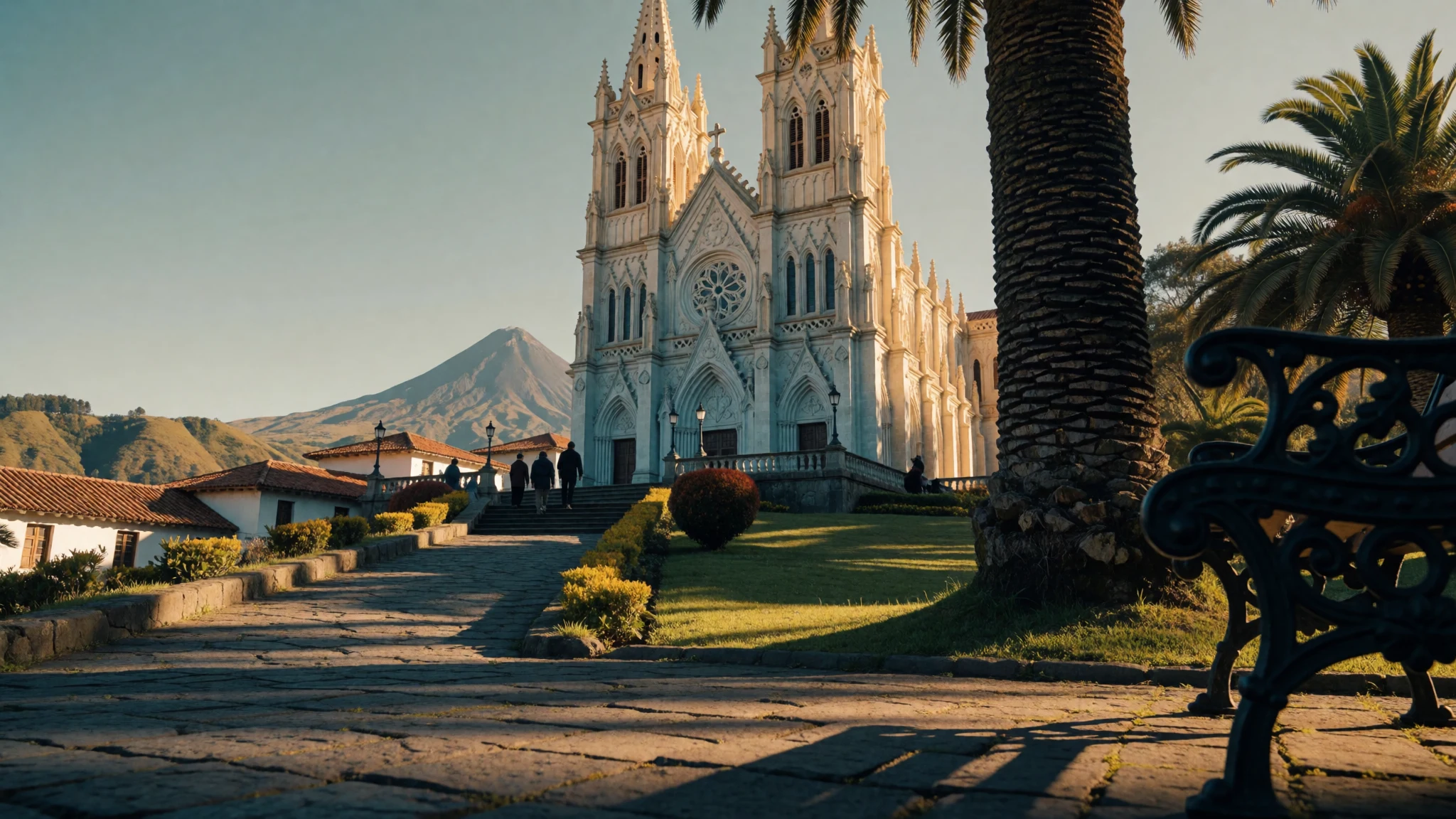
Baños pairs hot springs, waterfalls and jungle-edge adventure with a pilgrim church, all in a small Andean town beneath an active volcano.
The place
Baños sits at 1,820 metres on the northern foothills of the Tungurahua volcano, in the Andean province of the same name in Ecuador. The town, officially Baños de Agua Santa, has about 14,100 residents, so it is small enough to cross on foot in a few minutes, yet it receives far more visitors than its size suggests. It is the last mountain town on the road east before the land drops away toward the Amazon basin, and that position shapes everything. Backpackers arrive to book jungle trips, families come for the hot springs, and pilgrims come for the church. The name means roughly 'baths of holy water', after the thermal springs that rise nearby. The centre is a tight grid of eateries, souvenir stalls, tour agencies and guesthouses, with a central park beside the cathedral. Some travellers find it commercial, and a nickname, Gringobamba, circulates for that reason. The honest verdict is that it gets busy at weekends and on holidays, but the setting redeems it. Green walls of the Pastaza valley rise on every side, waterfalls drop into the gorge, and Tungurahua looms to the south. East of town a valley road passes several falls, ziplines, a botanical garden and cable cars. Baños also works as a starting point for the remote Llanganates National Park. The volcano is active, and locals live with that every day.
Its story
Baños has always lived in the shadow of Tungurahua, and its history reads as a long conversation with the volcano. The mountain is active, with ash explosions and lava flows visible from town, and the community has learned to treat warnings as part of ordinary life. Late in the last century the activity became serious enough that the entire population was ordered out of Baños and stayed away for weeks. Residents came back to a town short of visitors and rebuilt slowly. Today the volcano is as much an attraction as a risk, with tours towards its flanks when conditions allow.
The other thread is faith. Local Catholic tradition holds that the Virgin Mary appeared near a waterfall close to the town. A statue, the Virgen de Agua Santa, was placed in the church in her honour, and the building became a pilgrimage site where people come to give thanks for miracles they believe she granted. The town's name joins the two threads: the thermal springs that gave Baños its 'baths', and the holy water of the Virgin.
The springs belong to the same volcanic setting as the mountain itself, which is why bathing and eruptions share a story here. Pilgrims, hot-spring visitors and now adventure-sport crowds have all been drawn by the same steep, green slopes, and the town has adapted to each wave without losing its devotion to the Virgin.
What to see
- Church of the Virgin of the Holy Water — Town centre
The neo-Gothic Church of the Virgin of the Holy Water stands a short walk from the central park and is the spiritual heart of Baños. Pilgrims come to give thanks for answered prayers, and the Virgin's statue is the focus. Visit in the morning, when worshippers outnumber tour groups, and look at the stone façade from the lively park beside it.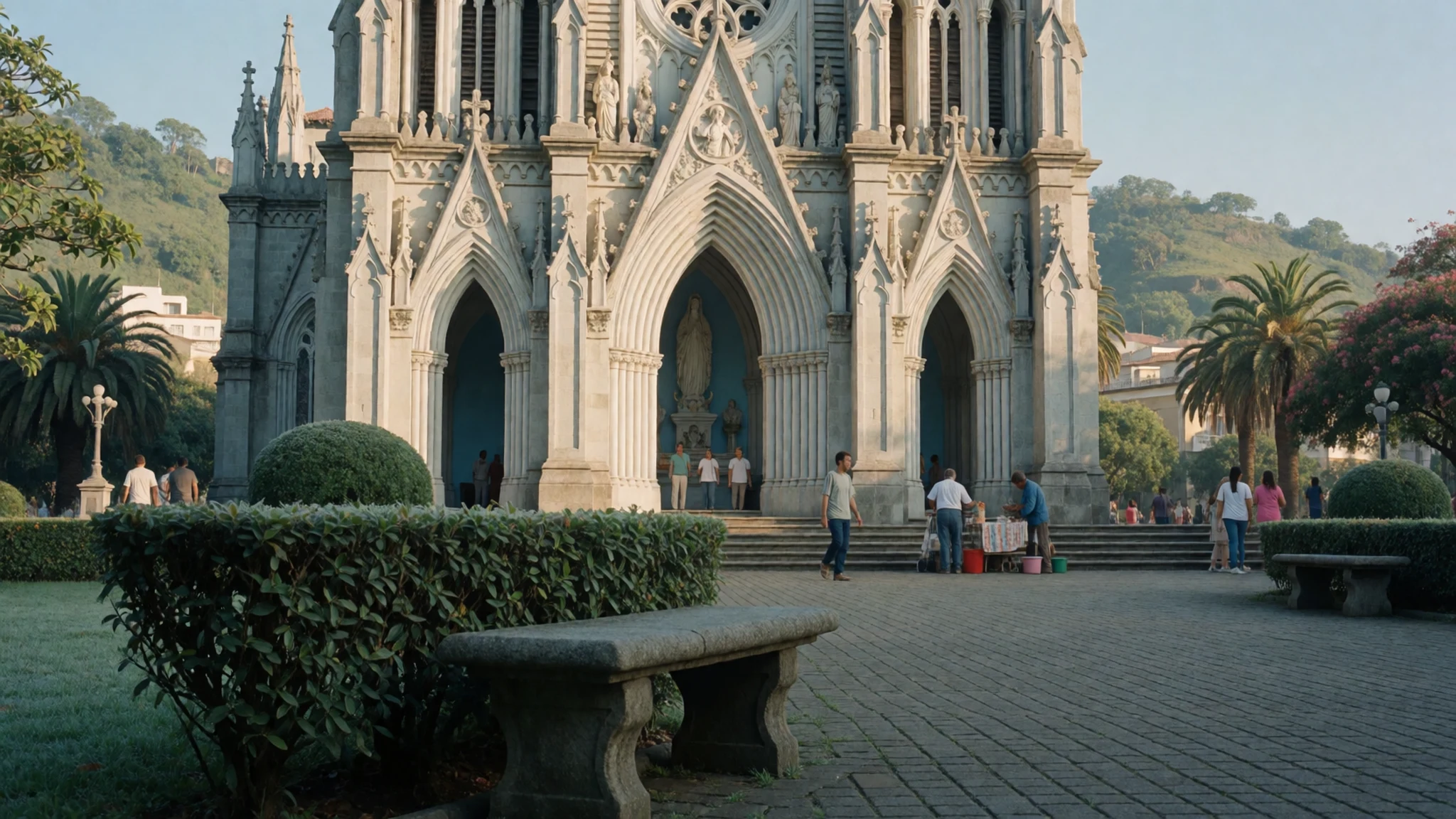
- Cascada de la Virgen and the thermal baths — Eastern edge of the centre
The Cascada de la Virgen drops close to the town centre and ends near the thermal baths, which makes it the easiest waterfall to reach on foot. Spray and the sound of falling water carry along the paths. The baths draw bathers in the evening and at weekends, so plan a short soak and go early for quiet.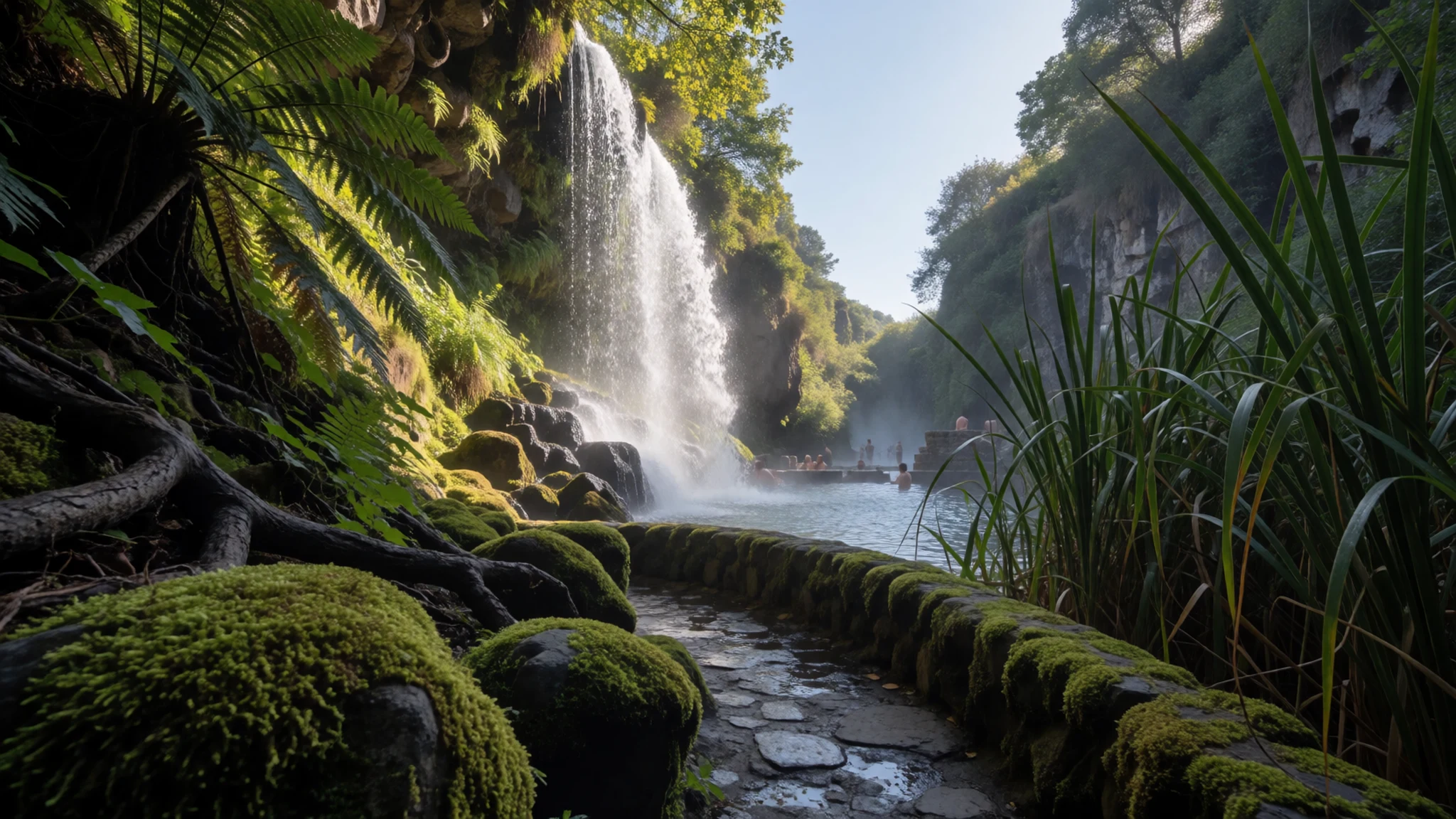
- Mirador de Bellavista — Hillside east of town
The Mirador de Bellavista sits on the hillside east of the centre and gives a clear view of Baños folded into the Pastaza river valley. Go early, before cloud gathers around the peaks, and carry water for the climb. On a clear morning the town, the valley walls and the volcano all sit in one frame.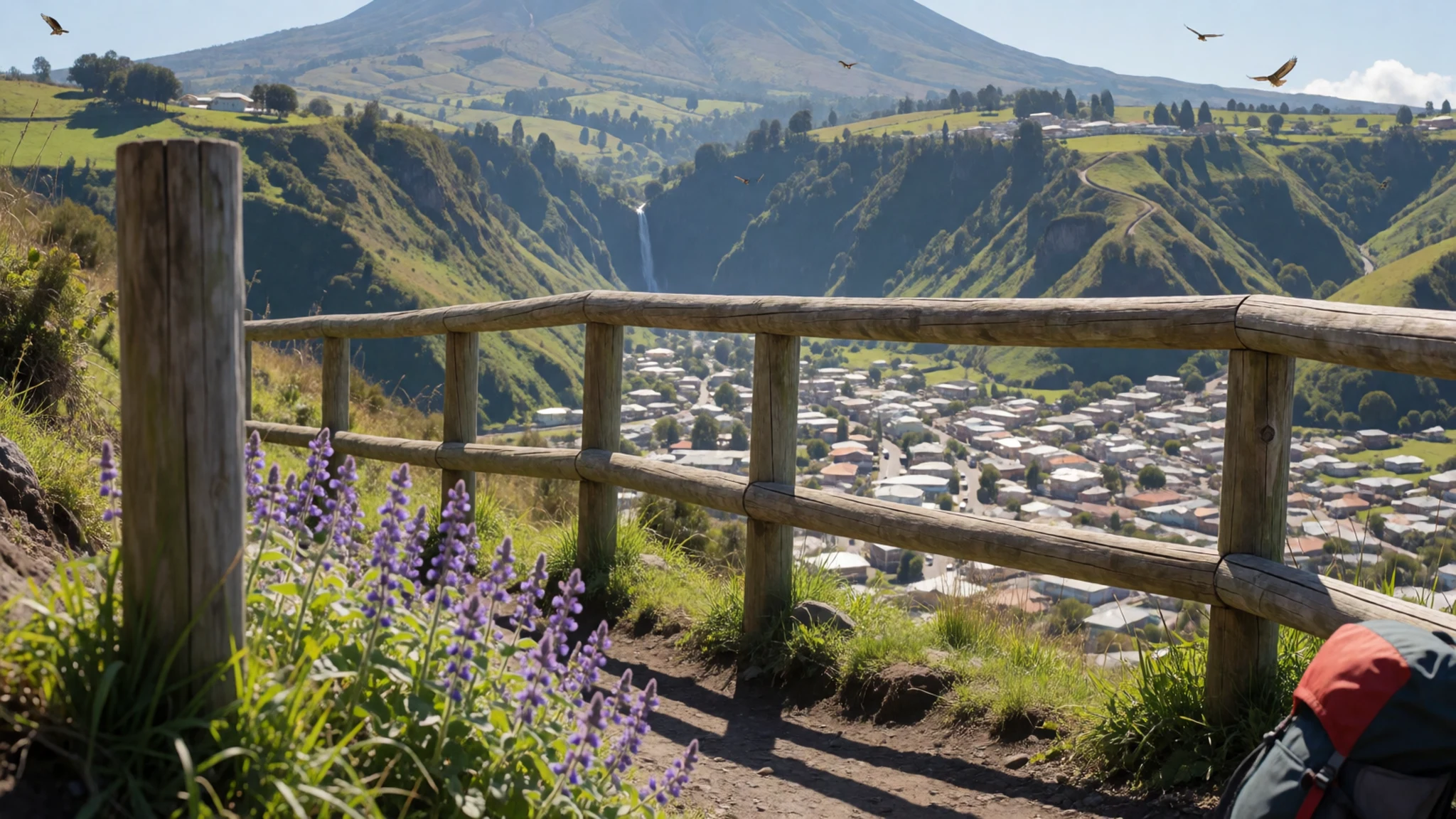
- Puente San Francisco — North of the centre
The Puente San Francisco crosses the deep Pastaza Gorge just north of the centre. Most people come to watch, or to try, the bungee jumping from the bridge, while others simply stand at the rail and look down at the river. Operators set their own rules and gear, so ask about safety checks before signing up.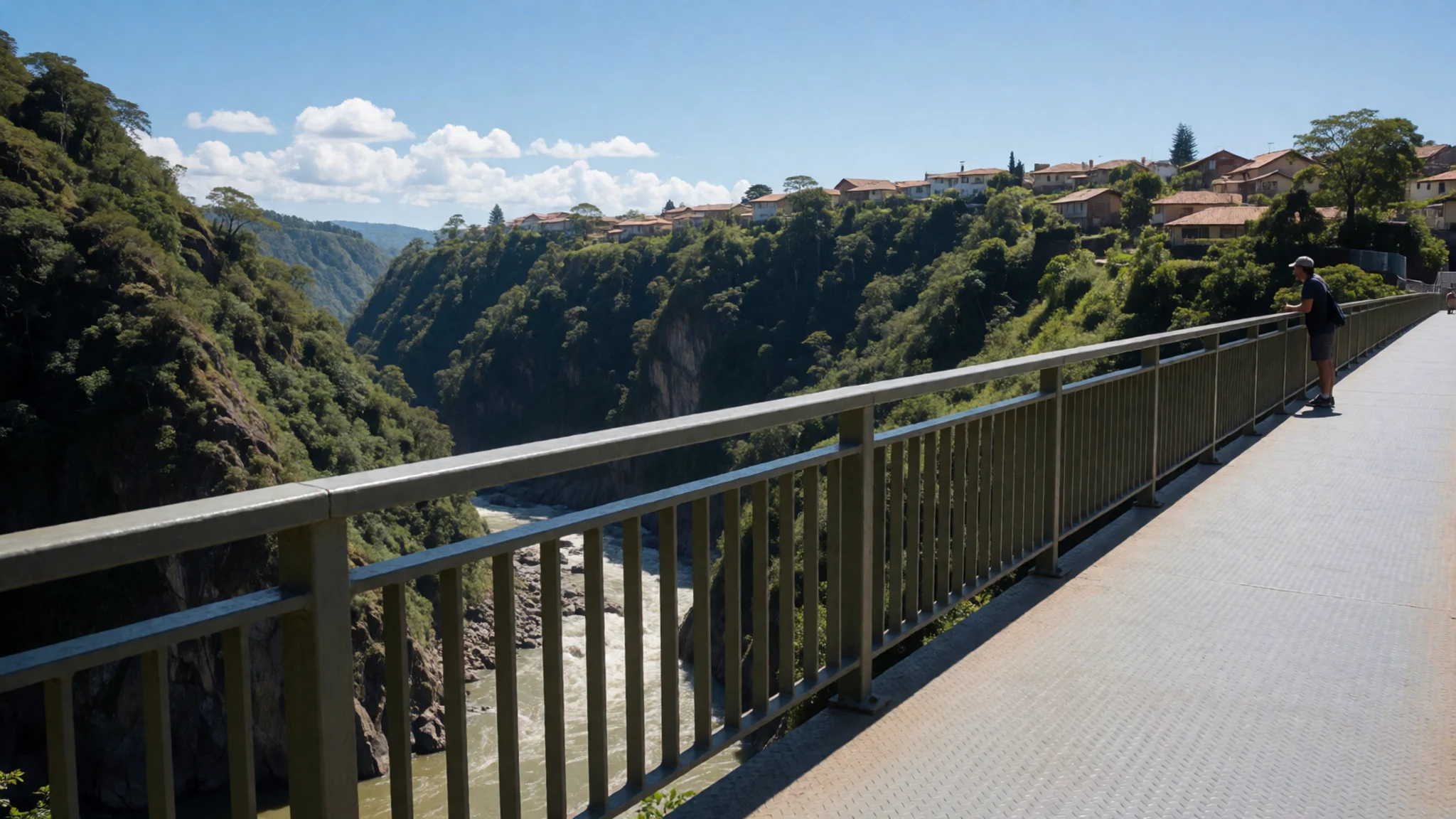
- Manto de la Novia — Pastaza valley, east of Baños
Manto de la Novia is a waterfall east of town, reached along the valley road, where the water sometimes splits into two chutes. A cable car crosses the gorge nearby and gives a view of the falls from above. Heavy rain makes the falls louder and the paths muddier, so wear shoes with good grip.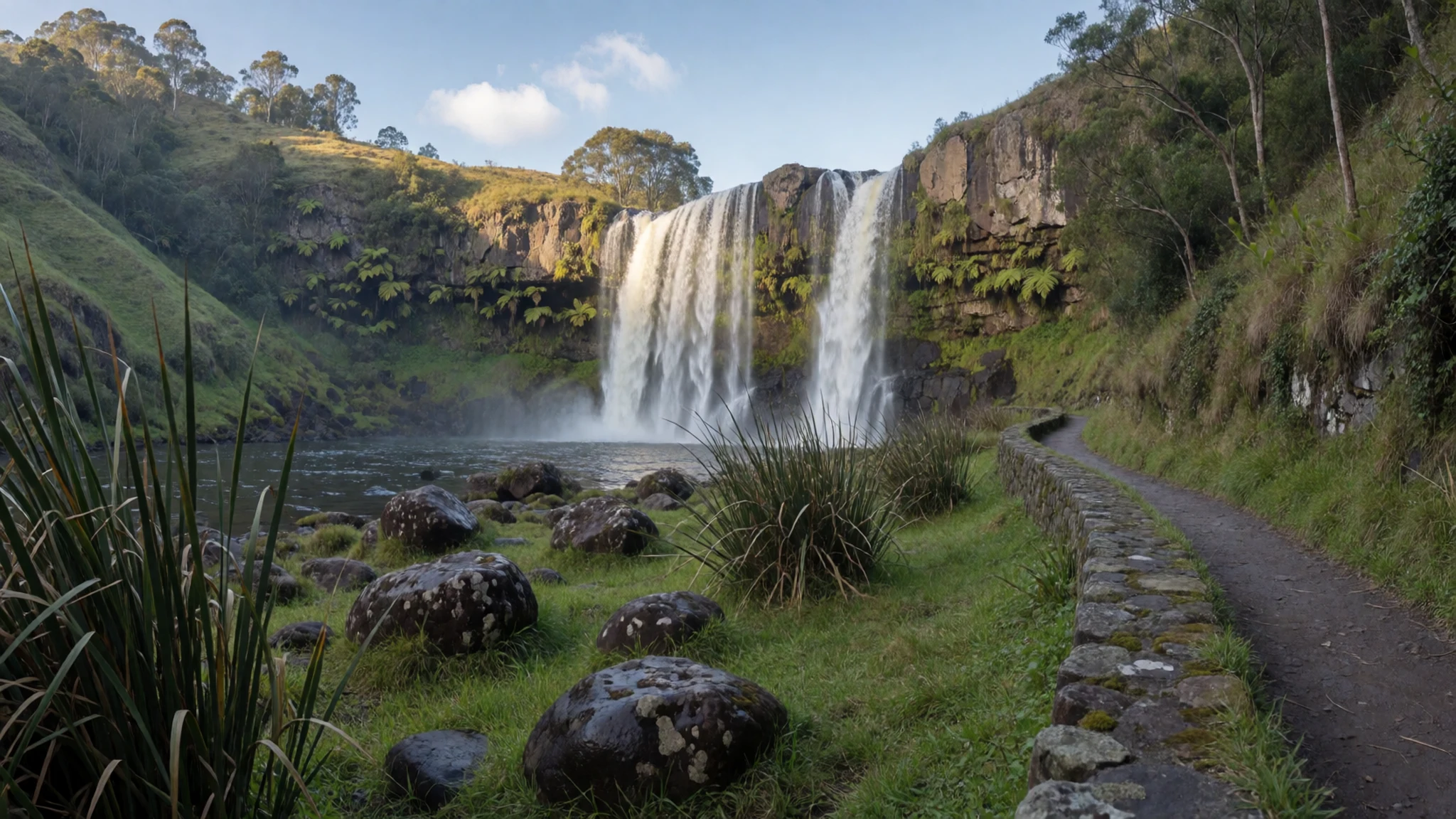
- Pailón del Diablo — Pastaza valley, east of Baños
Pailón del Diablo is a thunderous waterfall further down the Pastaza valley. Paths lead to it from both sides: the shorter one looks down on the falls from above, while the other goes closer to the base. Expect wet steps and spray, so carry a rain jacket and keep cameras in a dry bag.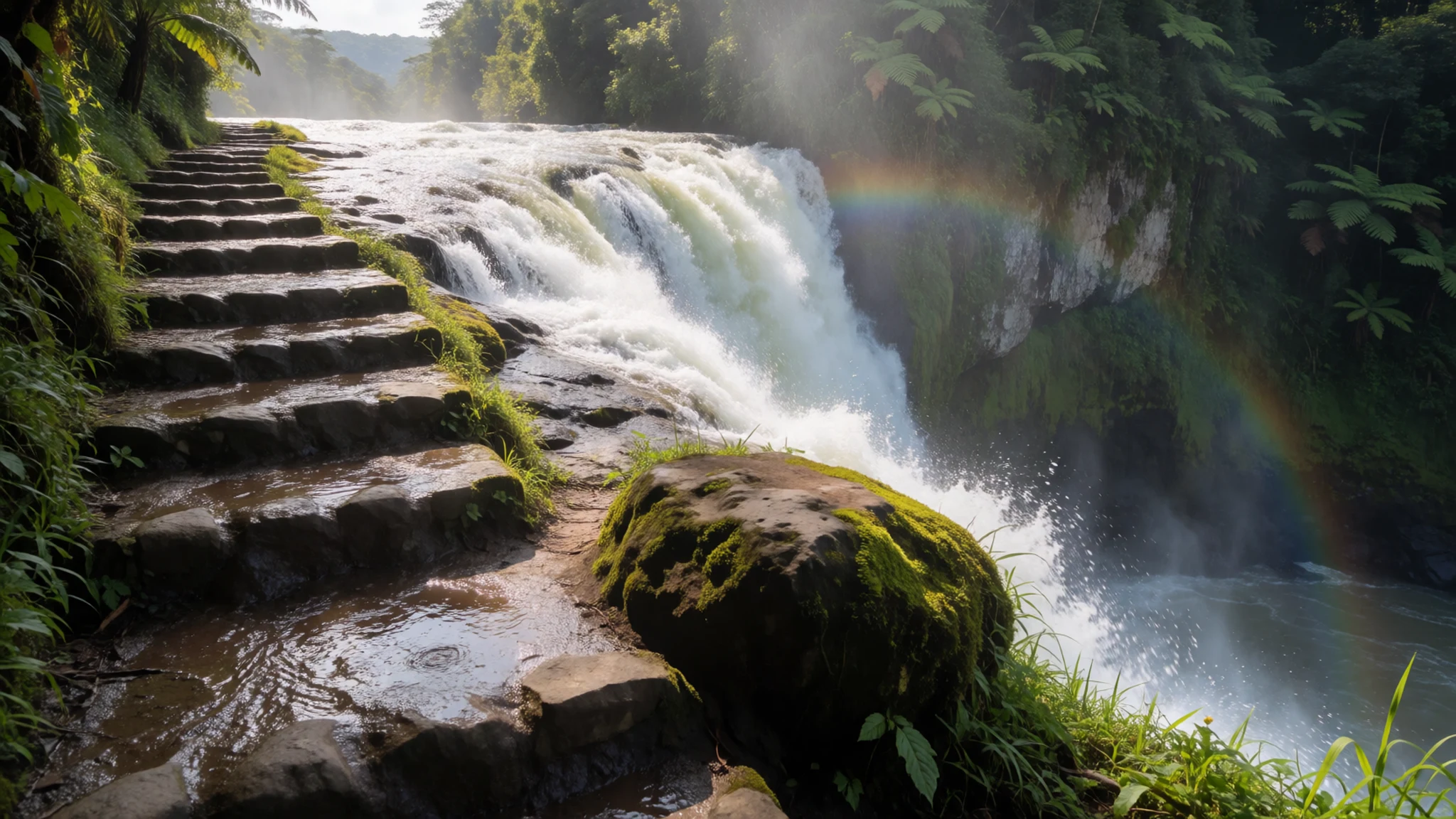
Culture
Baños is a town where devotion, volcano and leisure sit close together, and the mix explains much of its character. The Catholic tradition is strong. The church of the Virgin of the Holy Water draws pilgrims throughout the year, and local celebrations in her honour fill the streets with music, processions and food stalls. Many families here have a story about the Virgin or about the volcano, and often about both.
Tungurahua adds a practical kind of culture. Residents follow its activity, know the evacuation routes and speak of it with a mixture of respect and humour. That calm attitude to risk is part of what makes the town welcoming rather than anxious.
The highland and Amazon worlds also meet here. The market and the stalls around the centre sell fruit, sugar-cane products and craftwork from both the mountains and the jungle lowlands, and Spanish is the common language, with Kichwa heard in the surrounding region. Outdoor sport has become a second local identity, and the streets are full of people in muddy boots and wet clothes who have just come back from the valley.
People in Baños are generally friendly to visitors, and a greeting in Spanish is returned warmly. When you enter the church of the Virgin, dress modestly, keep your voice low and do not photograph worshippers at prayer without asking first.
What to wear
Baños has no single costume of its own, so traditional dress here comes from the wider Andean and Amazon traditions of Ecuador. In the highlands, Kichwa communities have long worn woollen ponchos, felt hats, woven belts and layered skirts with embroidered blouses, often made from sheep wool and sometimes alpaca. These appear mainly at festivals, markets and religious celebrations, and in the surrounding villages rather than in the tourist centre. Lowland Amazon communities use cotton, seeds and feathers for ornament, and those are worn mostly at cultural events.
Day to day, Baños dresses casually. Locals wear jeans, light jackets, fleeces and trainers, and shopkeepers and tour guides favour outdoor kit. Churchgoers dress a little more formally for services and on feast days, and on Sundays families turn out in their best clothes.
Visitors should dress for a mild, changeable mountain climate on the edge of the jungle. Bring layers, a waterproof jacket and a sun hat, because mornings can be cool and the sun strong at this height. Shoes with good grip are essential for waterfall paths and viewpoints, and sandals or quick-dry swimwear are useful for the hot springs. For church visits, cover shoulders and knees, and carry a light scarf or shirt in a daypack. Bring spare dry clothes if you plan to hike to the falls, since spray soaks everyone.
What to eat
- Almuerzo (set lunch) — Mercado Central and side-street eateries
Baños serves a daily set lunch of soup, a plate of rice with meat or fish, and a fruit juice. Look for it at the stalls inside the central market, where locals eat, and at small family eateries on the side streets.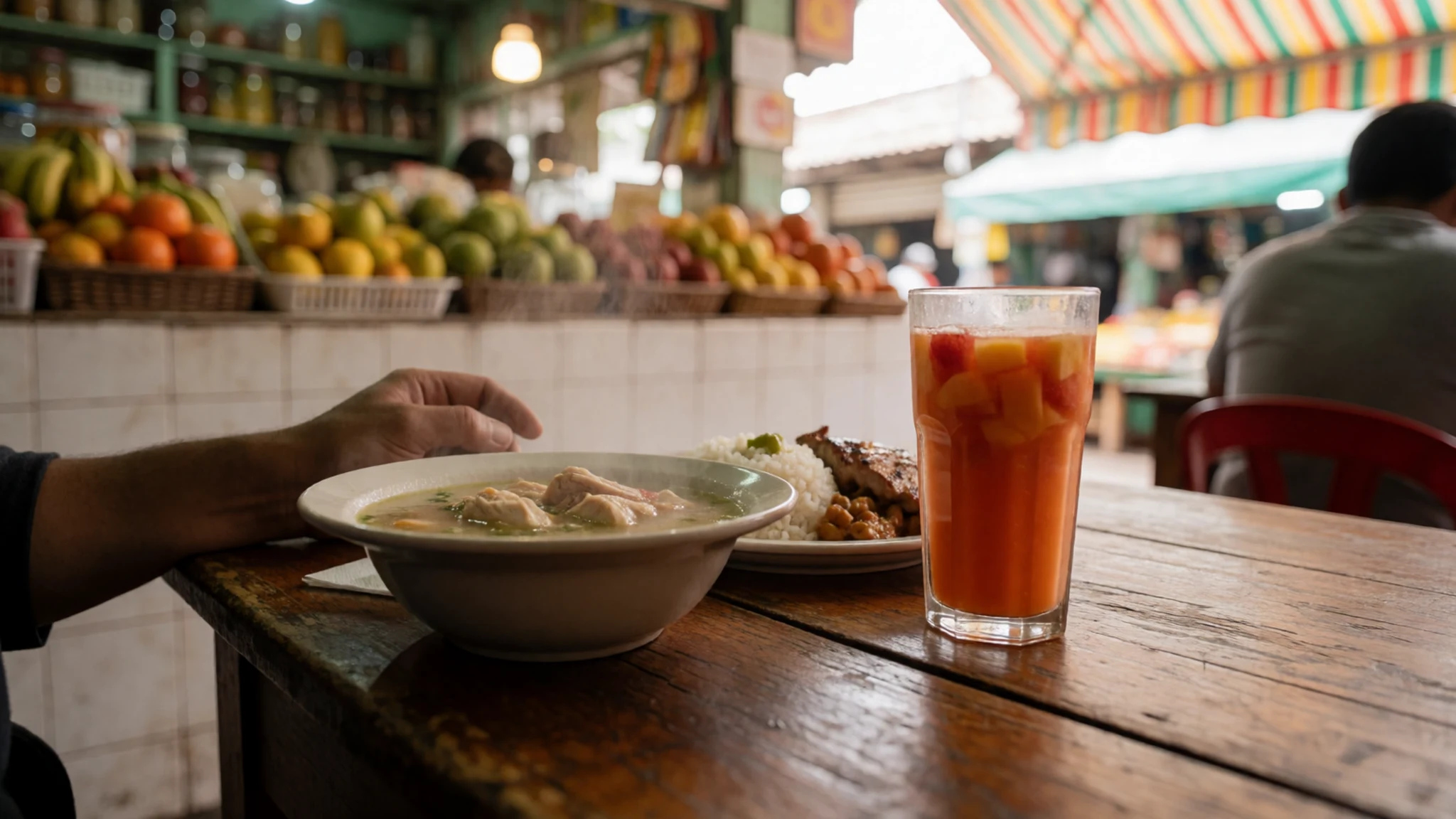
- Llapingachos — Market stalls and Ecuadorian restaurants in the centre
Llapingachos are griddled potato patties, often stuffed with cheese and served with a fried egg, avocado, salad and sometimes sausage or pork. They are a highland staple and appear on set menus at the market and in restaurants that focus on Ecuadorian cooking.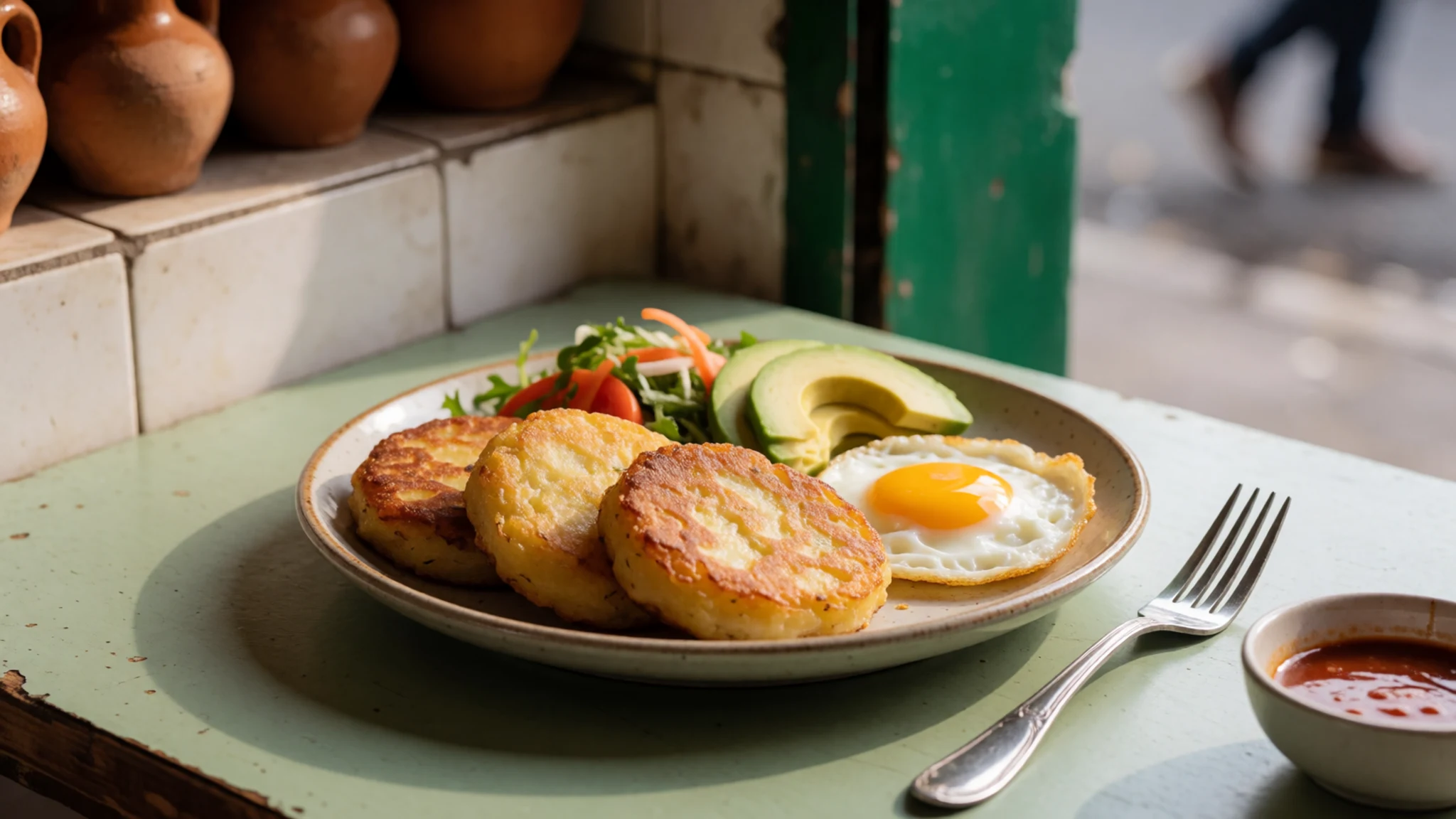
- Trucha al ajillo (garlic trout) — Restaurants along the central tourist streets
Trout cooked with garlic is a mountain-cooking favourite in the Andes, and restaurants in Baños serve it grilled or fried with rice and salad. It suits a cooler evening after a day outside, and many tourist-street kitchens list it. - Melcocha — Candy shops and doorways on the main streets
Melcocha is a chewy sugar-cane taffy, traditionally pulled and stretched by hand on hooks until it turns pale and glossy. Baños is well known for it. Watch the makers at work at doorways and small shops, and buy it fresh as a snack for the road. - Canelazo — Evening stalls and bars around the central park
Canelazo is a warm drink of cane spirit, cinnamon and sugar, often with fruit juice, served on cool evenings. It is popular in the Andes and sold at bars and street stalls. A non-alcoholic version with just spiced juice is easy to find too.
Plan it
Best time. October to February is usually the more settled stretch for walking and viewpoints, although Baños sits on the Amazon side of the Andes and rain is possible in any month. The climate is a mild subtropical highland one, so evenings can be cool year-round. Weekends and school holidays are busiest.
How long. 2–3
Getting there. The closest airport is Quito, and since there are no train links, you finish the journey by land. Take a long-distance bus from Quito's southern Quitumbe terminal, or travel via Ambato, the closest bigger town, which has frequent buses to Baños. The bus terminal is on the north edge of town, within walking distance of the centre.
Budget. low
Tips
- Book rooms ahead for weekends and public holidays, or arrive midweek when the streets are quieter
- Start waterfall and viewpoint walks early, before cloud and rain build up
- Carry some cash for markets, small operators and bus fares, as cards are not accepted everywhere
- Choose adventure operators carefully and ask about gear, guides and safety briefings before paying
- Check local news and the municipal site (http://www.municipiobanos.gob.ec) for volcano alerts before booking tours
Etiquette
- Dress modestly and speak quietly inside the church of the Virgin
- Ask before photographing people, especially worshippers and market sellers
- Greet shopkeepers and drivers in Spanish before asking a question
Nearby
Sources
- Wikidata Q812717 (CC0)
- Wikipedia, Baños de Agua Santa (rev 1373993677) (CC BY-SA 4.0)
- Wikivoyage, Baños (rev 5433762) (CC BY-SA 4.0)
- Photo 01-banos.jpg, Roar Johansen (CC BY-SA 2.5)
- Photo 02-ba-os-ecuador.jpg, Eddyl (CC BY 3.0)
- Photo 03-bandera-de-ba-os.png, David C. S. (CC BY 3.0)
- Photo 04-banos-churchvirgendeaguasanta-court.jpg, unknown author (CC BY 3.0)
- Photo 05-thermal-baths-in-ba-os.jpg, DickClarkMises (Public domain)
- Photo 06-ba-os-de-agua-santa-street-2-ecuador-2009.jpg, Mill 1 (CC BY-SA 4.0)
- Photo 07-northside-of-ba-os-de-agua-santa-ecuador-2009.jpg, Mill 1 (CC BY-SA 4.0)
- Photo 08-ba-os-de-agua-santa-street-3-ecuador-2009.jpg, Mill 1 (CC BY-SA 4.0)


