Okefenokee Swamp
Okefenokee Swamp, United States
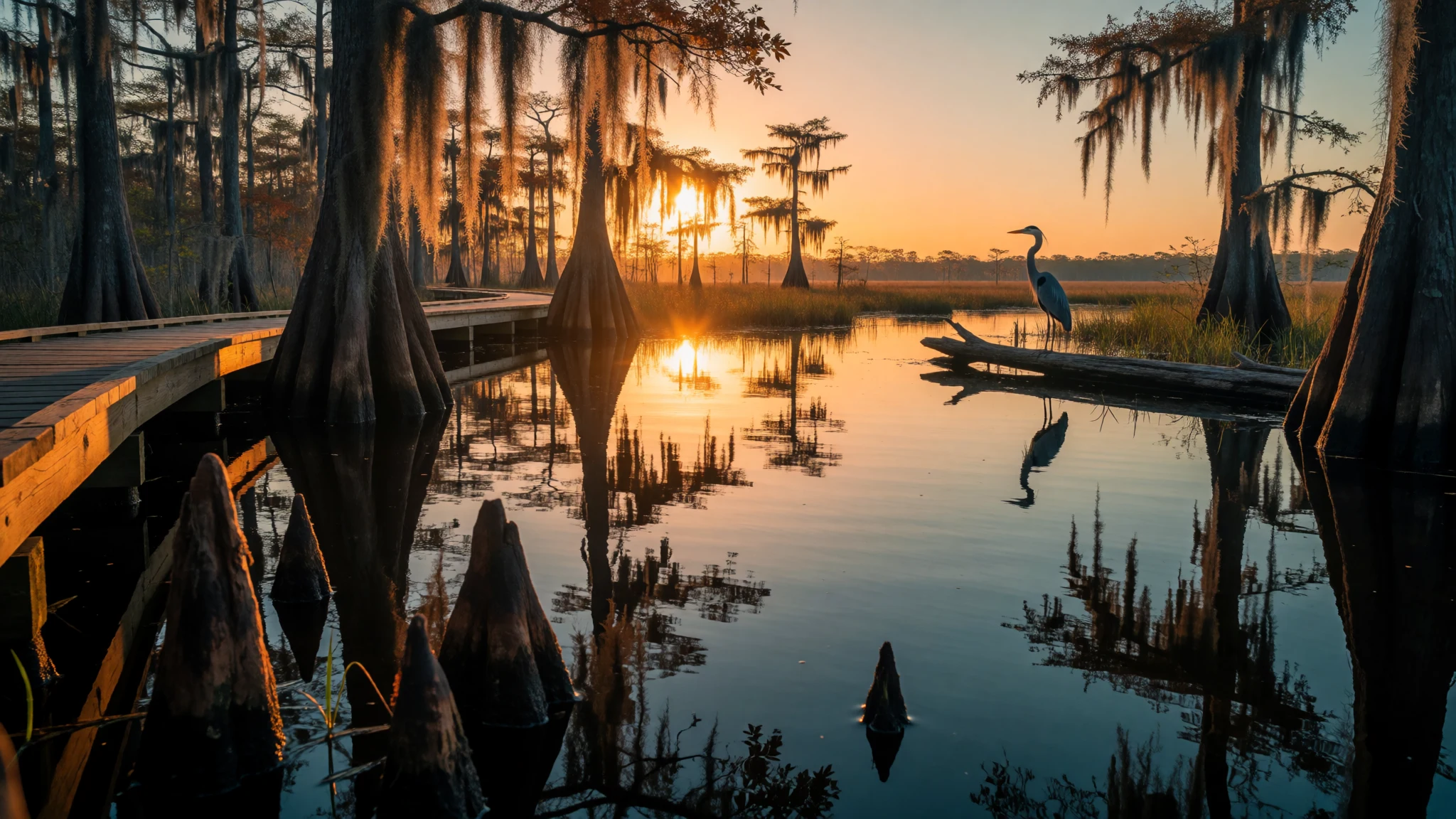
Okefenokee Swamp is a vast tea-dark wetland in Georgia and Florida where you paddle between cypress trees and alligators.
The place
Okefenokee Swamp is a shallow, peat-filled wetland that straddles the border between Georgia and Florida in the south-east of the United States. Most of it is protected as a national wildlife refuge and as designated wilderness, so much of the interior has no roads at all, only water trails, boardwalks and a few raised platforms for overnight stays. The water is the colour of strong tea, stained by tannins from rotting plants, which is why the swamp is called a blackwater system; it is described as the largest of its kind in North America. On a still morning that dark surface works as a mirror, doubling the bald cypress, the hanging moss and the sky. The landscape is not one swamp but several habitats stitched together: open grassy prairies, forested islands, cypress stands and patches of floating peat that quake underfoot. Alligators are the animal everyone asks about, and they are easy to spot on sunny days, along with turtles, herons and ibis, and sandhill cranes in the cooler months. Summer is hot, humid and loud with mosquitoes and deer flies, and the sun on open water is fierce, so the swamp rewards early starts and slow paddling more than rushed visits. Access is mostly from three directions: the east near Folkston, the west near Fargo and the north near Waycross, each with its own character and its own boat operators. The nearest big city is Jacksonville in Florida. Mobile signal fades inside the swamp, and distances on water feel longer than they look on a map.
Its story
Okefenokee Swamp has been lived in and fought over for far longer than it has been protected. The earliest people known there were the Oconi, who spoke a Timucua language and settled in the swamp or along its edges. Spanish friars founded a mission among them, and the Oconi's skill with boats, honed on difficult waters, later made them useful to the Spanish as ferrymen on the St. Johns River. Later settlers, known locally as Swampers, were mostly of English descent. Because the swamp kept them cut off, their speech held on to turns of phrase that had faded in England long before, and outsiders were still noticing this well into the twentieth century. The big change came in the late nineteenth century, when a company dug the Suwannee Canal across the swamp, hoping to drain it for farmland. The scheme failed and the company went bankrupt, but the canal remains, and paddlers now use stretches of it as a ready-made trail. The land then passed to the Hebard family of Philadelphia, who cut its cypress heavily in the early twentieth century. Other timber firms laid railway lines into the swamp and kept hauling out logs until the Second World War; a few remnants of those tracks still cross the waterways. What visitors see today is a landscape recovering from drainage and logging, which is a good reason to think of its wildness as something regained rather than untouched.
What to see
- Suwannee Canal Recreation Area — East side, near Folkston, Georgia
The eastern entrance near Folkston is a main way into the swamp, with a visitor centre, a boardwalk and boat access to the old Suwannee Canal. Paddlers and slow motorboats share the water, and alligators often lie on the banks within sight of the dock. Check the refuge's official site for boat rentals, guided tours and water levels before driving out.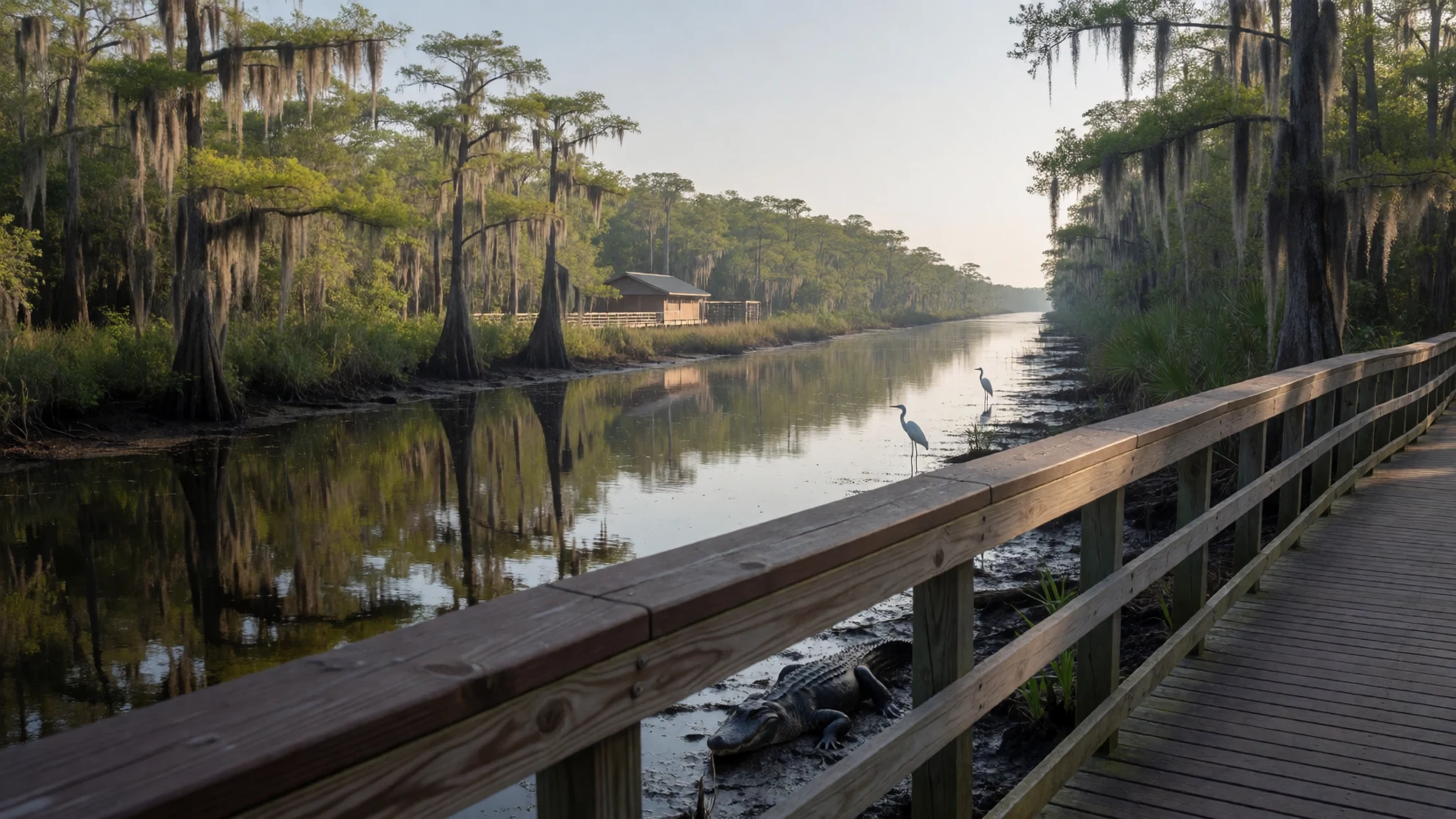
- Canal Diggers Trail — East side, Suwannee Canal area
Canal Diggers Trail is a walking route in the Suwannee Canal area, tracing the work of the crews who dug the channel to drain the swamp. The path runs flat and shaded beside dark water, with moss-hung trees and plenty of birds. It suits a short outing, with the history close at hand.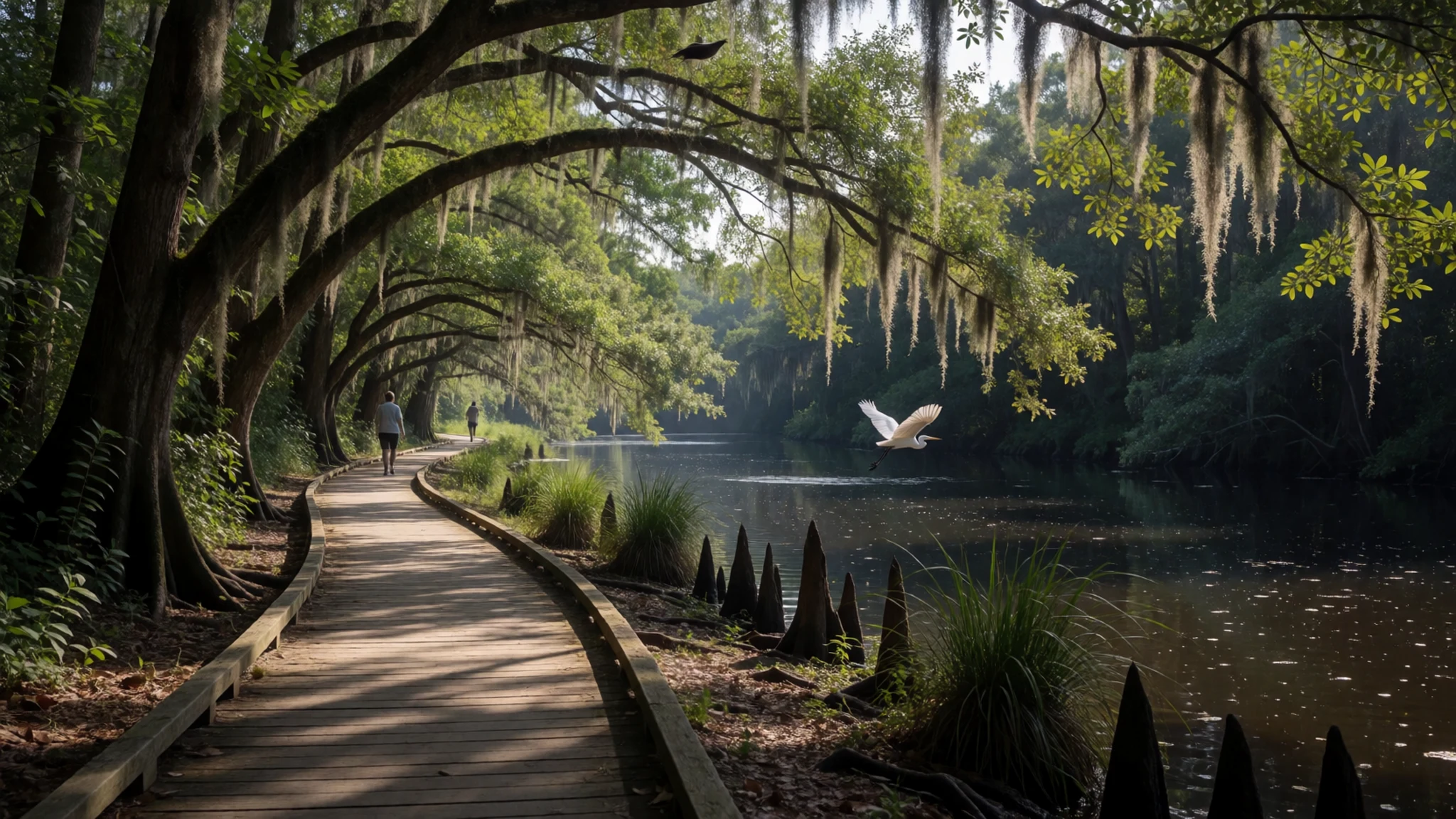
- Stephen C. Foster State Park — West side, near Fargo, Georgia
The western side, near Fargo, has a calmer feel and is the usual base for camping and longer paddling trips. Deer graze near the campsites, nights are dark enough for stars, and water trails lead out toward open prairie. Book camping and any boat or platform permits through the official channels well ahead, as places can fill in the cooler months.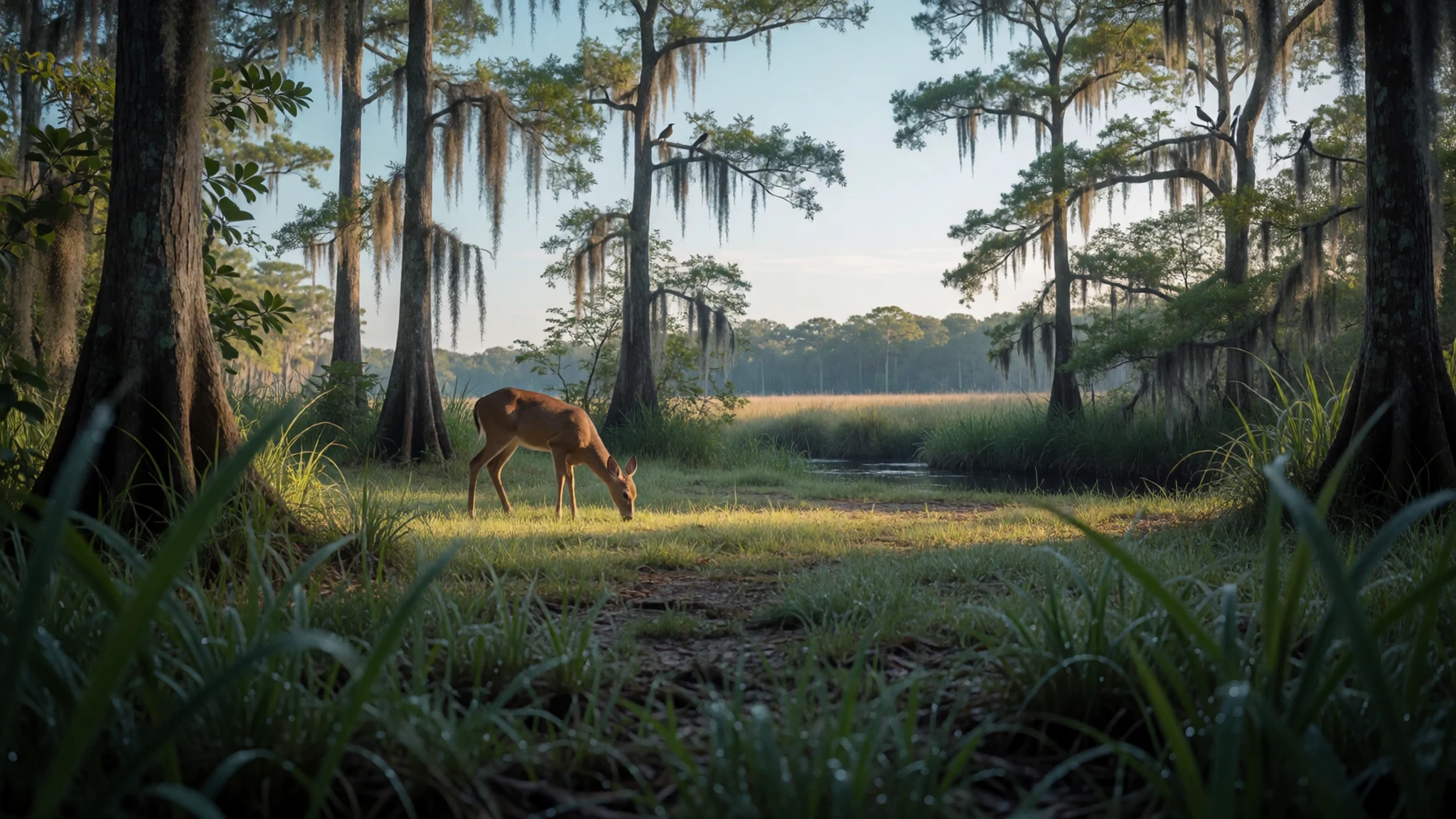
- Alligators from the water — Along the swamp's main water trails
Alligators are the sight most visitors come for, and a quiet paddle gets closer than a boardwalk does. They sun on banks and logs, and slip under at the sound of an approaching boat. Keep a respectful distance, never feed them, and treat a large animal beside a narrow channel as a reason to turn round.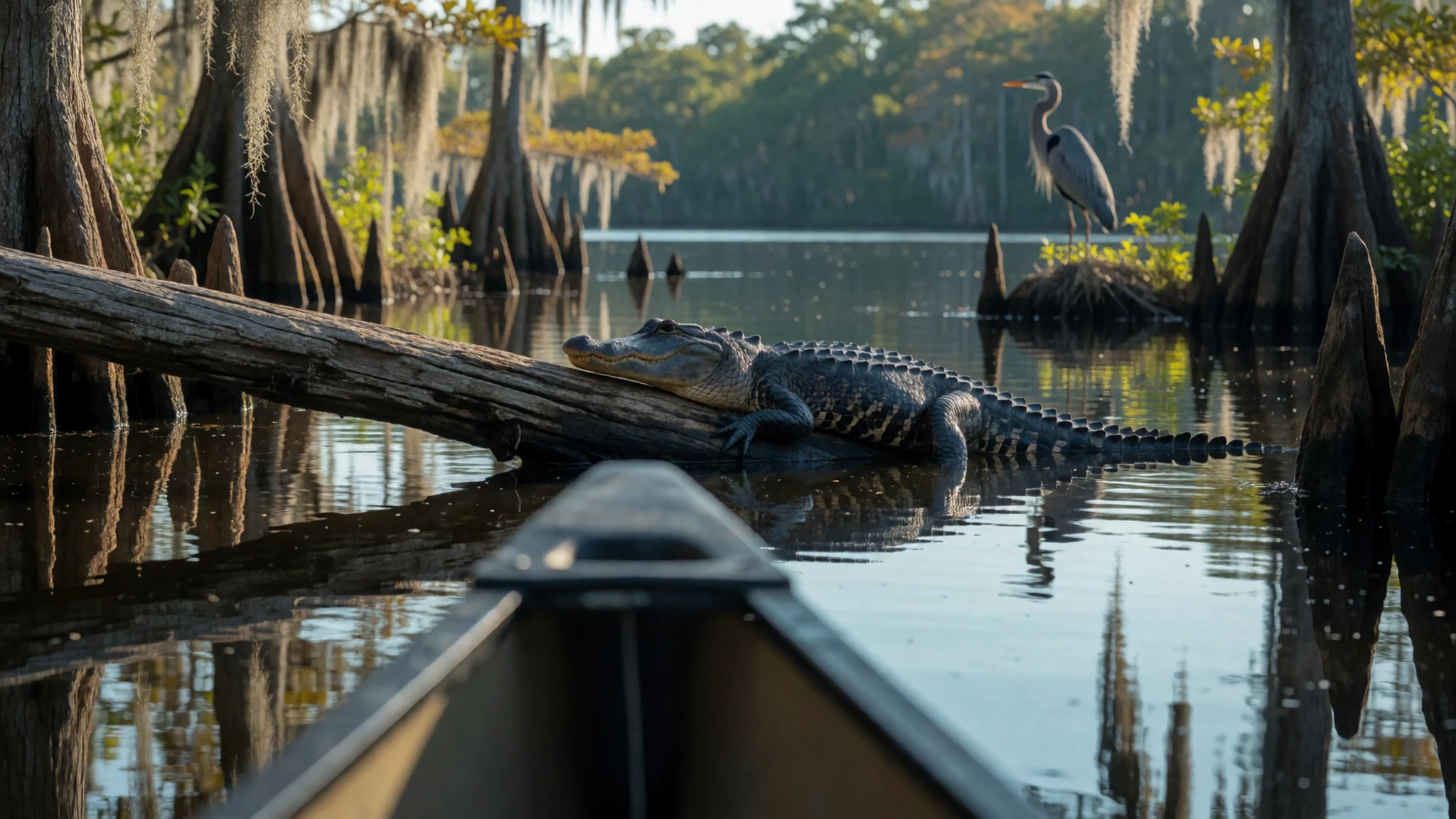
- The prairies and islands — Interior of the swamp
Seen from the air, Okefenokee Swamp shows its patchwork of open water, grassy prairie and wooded islands, with dark channels threading between them. On the ground, the prairies are the place for wide skies, cranes and herons, but sun and wind hit hardest there. Bring a hat and more water than seems necessary.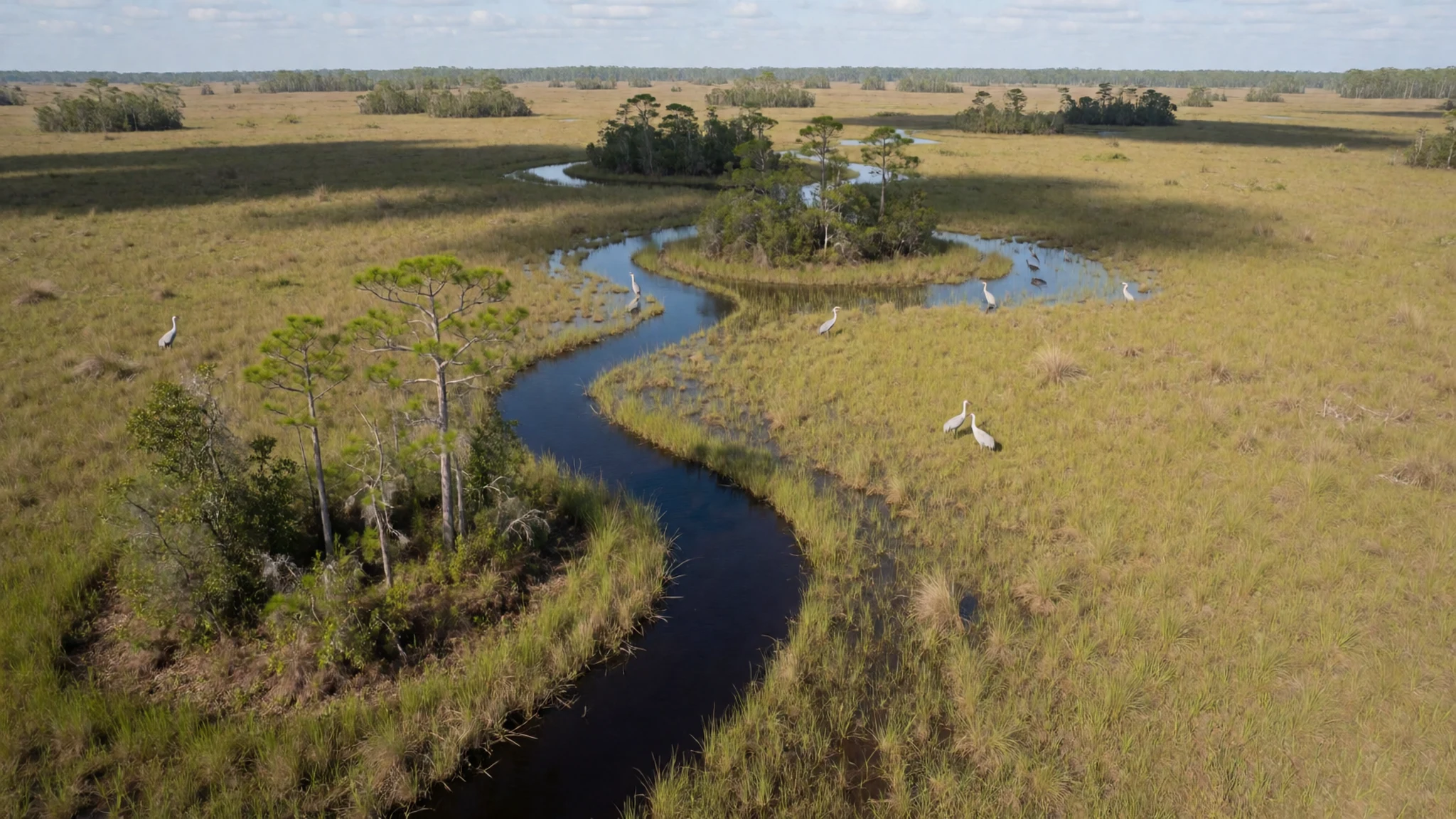
Culture
Okefenokee Swamp sits in the rural South, and its culture is shaped by small towns, fishing, forestry and a strong conservation habit. The communities around Folkston, Fargo and Waycross are friendly in a plain, unhurried way, and strangers are greeted and asked where they are from. Local pride in the swamp is real, and it is mixed with memory of the drainage and logging that once reshaped it. The old Swamper families, English in ancestry and long isolated, left behind stories, nicknames and a way of speaking that still colours local talk, though the swamp is now more a workplace for guides, rangers and boat operators than a home. Many visitors arrive for fishing, paddling or bird-watching, and the mood on the water is quiet: low voices, no hurry, and everything packed out that was packed in. Southern manners help on land; a nod, a thank-you and patience at a slow-moving counter go a long way. History in this part of the United States is layered and sometimes painful, so jokes about the Civil War or segregation tend to land badly with strangers. Keep your voice low on the water, stay well back from alligators and nesting birds, and carry every scrap of rubbish out of the swamp with you.
What to wear
Okefenokee Swamp has no regional costume worn today, and the nearest thing to traditional dress is the working clothing of the farming, fishing and timber families who lived around it: cotton shirts, sturdy denim, canvas, rubber boots and wide-brimmed straw hats. These were practical choices against sun, thorns and mud rather than ceremonial wear. Now, locals dress as people do across rural Georgia: T-shirts, jeans, baseball caps and work boots, with camouflage common in hunting season and waders or fishing shirts for anglers. Guides usually wear light long sleeves, a hat and quick-drying trousers. Visitors should dress for heat, insects and water. Light, loose long sleeves and trousers protect against sun and bites better than shorts, and a wide-brimmed hat and sunglasses are worth having on open prairie. Closed shoes with grip suit boardwalks and muddy landings, and a spare dry pair is welcome after a paddle. Bring a waterproof layer for sudden rain, and a warm layer for cold winter mornings on the water. Muted colours are less likely to disturb wildlife. There are no modesty rules to follow, and nobody expects smart clothes, but insect repellent matters more than any garment.
What to eat
- Fried catfish — Fish camps and small-town restaurants around Folkston, Fargo and Waycross
Fried catfish is a Southern staple, served crisp in a cornmeal coating with fries, coleslaw or hushpuppies, which are small fried balls of cornmeal batter. It tastes best after a morning on the water, and suits the swamp's fishing heritage well.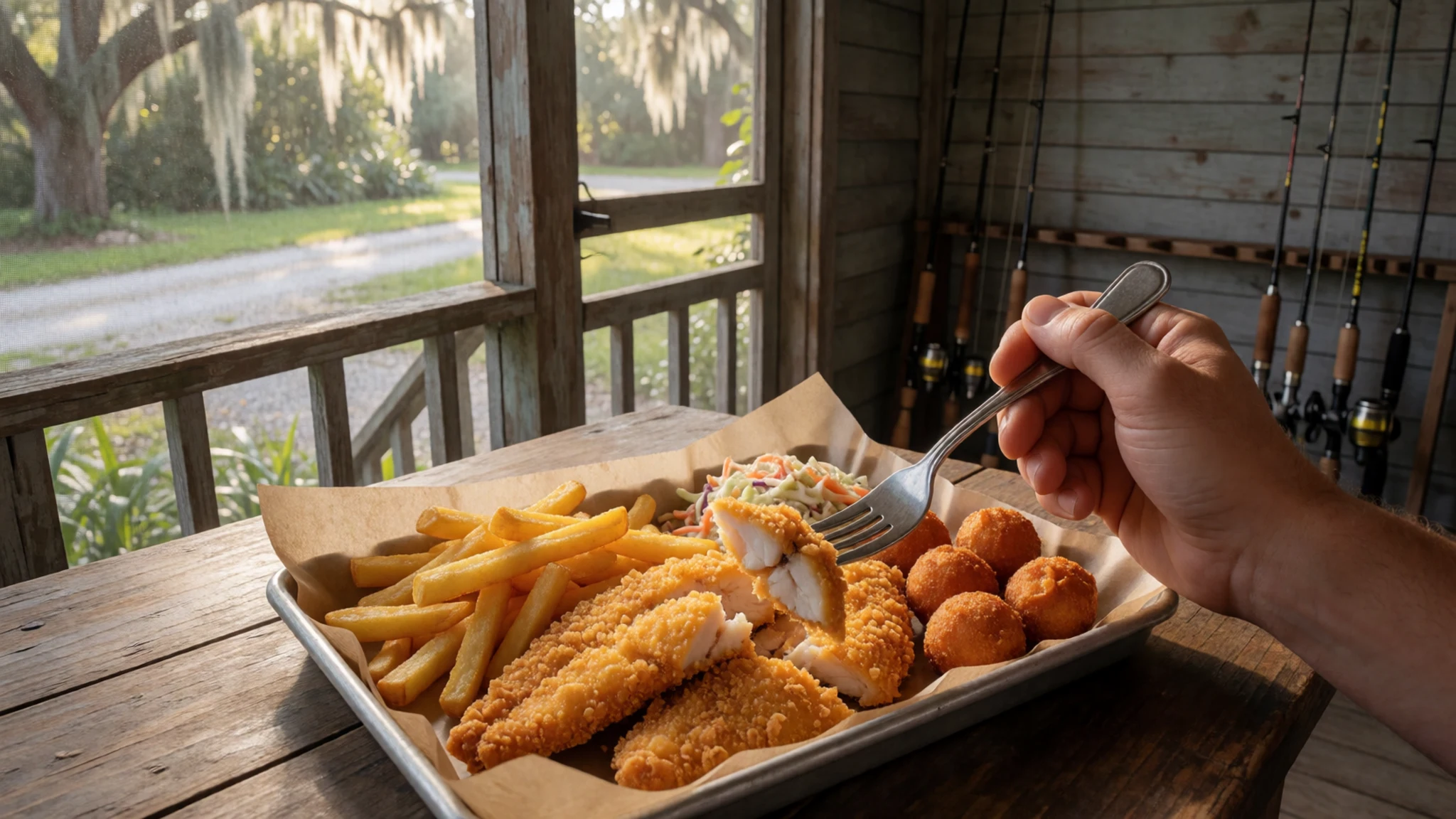
- Boiled peanuts — Roadside stalls and petrol stations on the drive to the swamp
Boiled peanuts are cooked in their shells in salty water until soft, and are eaten warm as a road-trip snack. The texture is closer to a bean than a roasted nut. Sold in paper cups or bags, they are a classic taste of rural Georgia.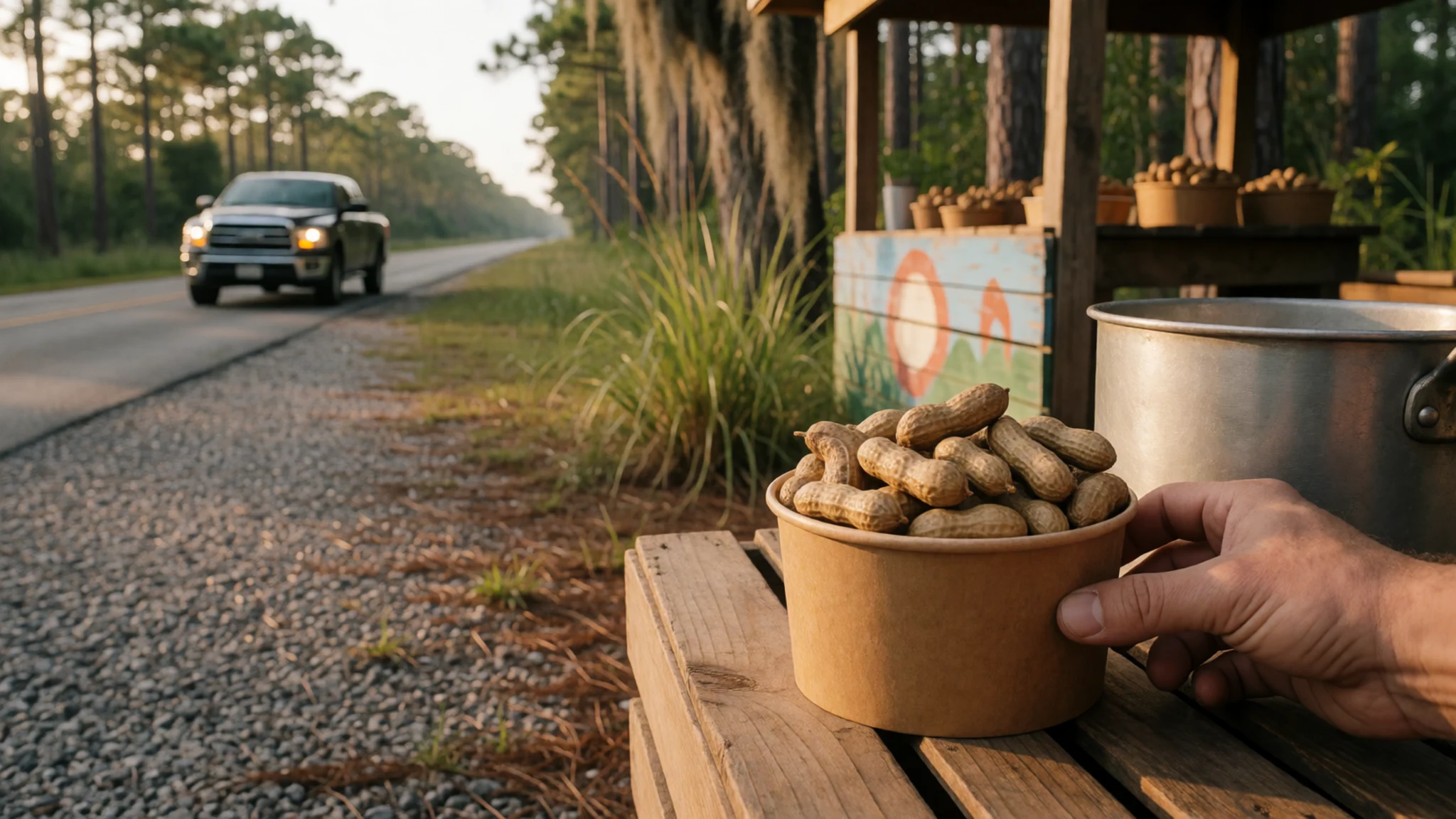
- Grits and eggs — Any breakfast diner in the small towns near the refuge
Grits are coarse ground corn simmered into a creamy porridge, served with butter, cheese or eggs and bacon. A plate of them is the usual breakfast before an early paddle, and plain, filling and warm on a cool morning. - Brunswick stew — Barbecue restaurants and community fundraising lunches in south Georgia
Brunswick stew is a thick tomato-based stew of shredded meat and vegetables, often served beside barbecue or on its own with bread. Recipes vary from family to family, so every pot tastes a little different. - Sweet tea — Almost every diner, restaurant and takeaway in the area
Sweet tea is black tea brewed strong, sweetened while hot and served over ice, and it comes with most meals in Georgia. Some places offer mint, raspberry or lemon versions. It is very sweet by British and Indian standards, so ask for unsweetened if you prefer. - Peach cobbler — Local diners and home-style restaurants, especially in summer
Peach cobbler is a baked dessert of spiced peaches under a soft pastry or biscuit crust, usually eaten warm. Peaches are a Georgia emblem, and cobbler and peach pie appear most often in summer, when the fruit is in season.
Plan it
Best time. March–April and October–November, when days are mild, mosquitoes are fewer and wildlife is easy to see. Summer is hot, humid and buzzing with insects, and winter mornings on the water can be cold.
How long. 1–2
Getting there. Jacksonville International Airport in Florida is the nearest large airport; Atlanta is a much longer drive. No train reaches the swamp, and a hire car is essential. Drive to Folkston for the east entrance, Fargo for the west or Waycross for the north, then continue by boat or on foot.
Budget. mid
Tips
- Book boat tours, camping and any overnight permits well ahead, and check the refuge's official site for current water levels, since low water can limit paddling.
- Start early: wildlife is most active at dawn, and the midday sun on open water is harsh.
- Carry more drinking water than you expect, along with insect repellent, sun protection and a charged phone, since signal is patchy inside the swamp.
- Bring some cash and fill the fuel tank before leaving the main roads, as services near the entrances are limited.
- Go with a guide on your first trip if you plan to leave the marked trails, because channels look alike and distances are deceptive.
Etiquette
- Keep well away from alligators and never feed them or any other wildlife.
- Pack out all rubbish and keep voices low on the water.
- Stay on marked trails and boardwalks to protect the floating peat and nesting birds.
Nearby
Sources
- Wikidata Q2162020 (CC0)
- Wikipedia: Okefenokee Swamp (rev 1386662017) (CC BY-SA 4.0)
- Wikivoyage: Georgia (state) (rev 5436176) (CC BY-SA 4.0)
- Photo: Canal Diggers Trail in Okefenokee Swamp, Wyatt Greene (CC BY 3.0)
- Photo: Aerial view of wetlands in Okefenokee, Ryan Hagerty (Public domain)
- Photo: Canal Run Trail, Stacy Shelton/USFWS (CC BY 2.5)
- Photo: Suwannee Canal, Okefenokee Swamp, gailhampshire (CC BY 2.5)
- Photo: Okefenokee Swamp, gailhampshire (CC BY 2.5)
- Photo: American alligator near Waycross, gailhampshire (CC BY 2.5)
- Photo: Okefenokee Wildlife, Fsendek1904 (CC BY-SA 4.0)
- Photo: Aerial roots, Okefenokee swamp area, gailhampshire (CC BY 2.5)


Wildlife
- American alligator (animal)
The American alligator is a big, armoured reptile of the south-eastern United States, the one children call a gator. In Okefenokee Swamp it is the animal every visitor asks about, and it is easiest to spot on sunny days, alongside turtles, herons and ibis. Watch from a respectful distance, keep your voice low, go with a guide if you can, and never feed it, however curious it seems.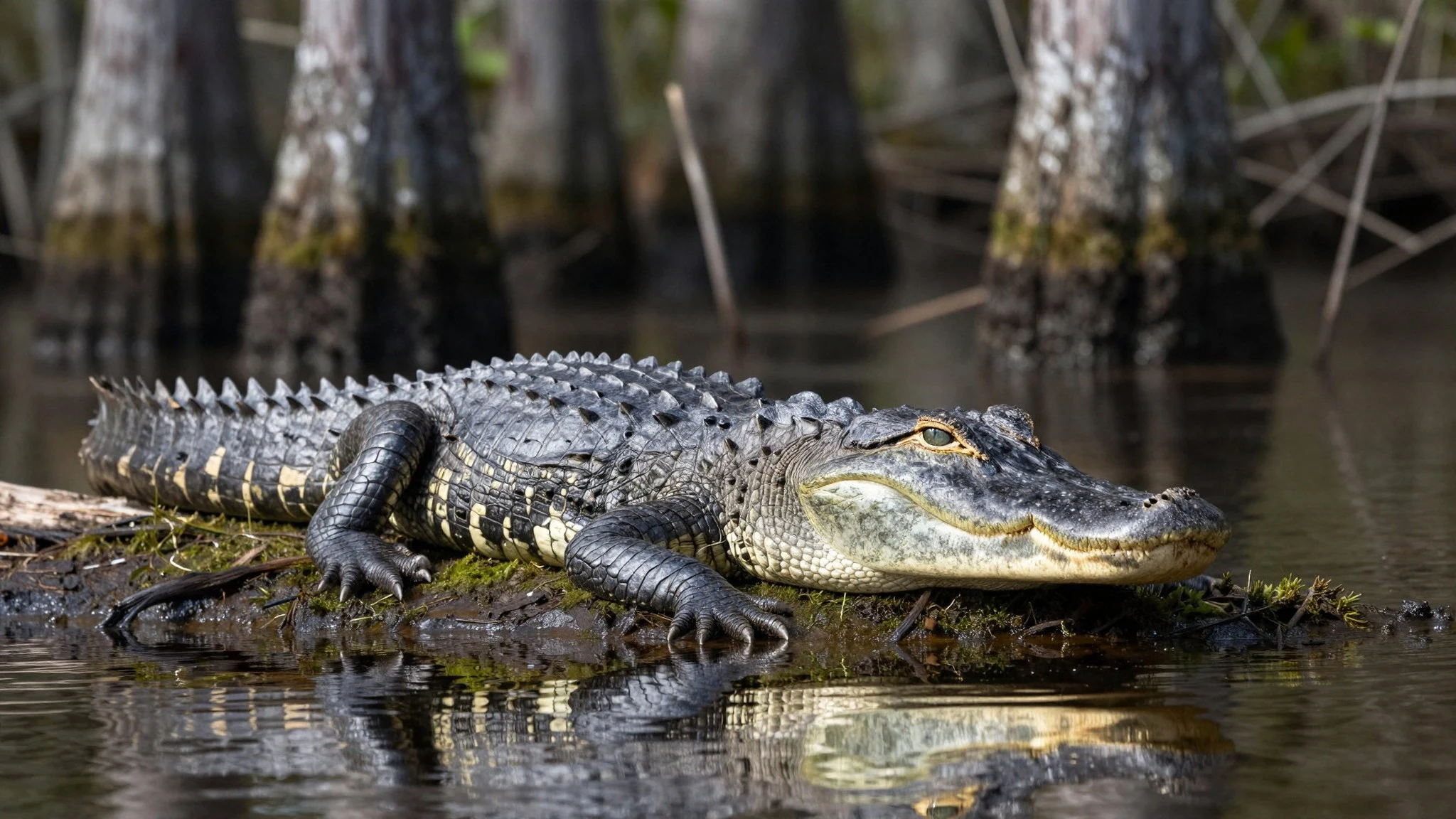
- Sandhill crane (animal)
Picture a big North American crane standing at the water's edge: that is the sandhill crane. Visitors to Okefenokee Swamp can look for it in the cooler months, when herons and ibis are also about. Give it plenty of space, move and speak softly, let a guide help you find a good viewing spot, and never feed it, however tame it may seem.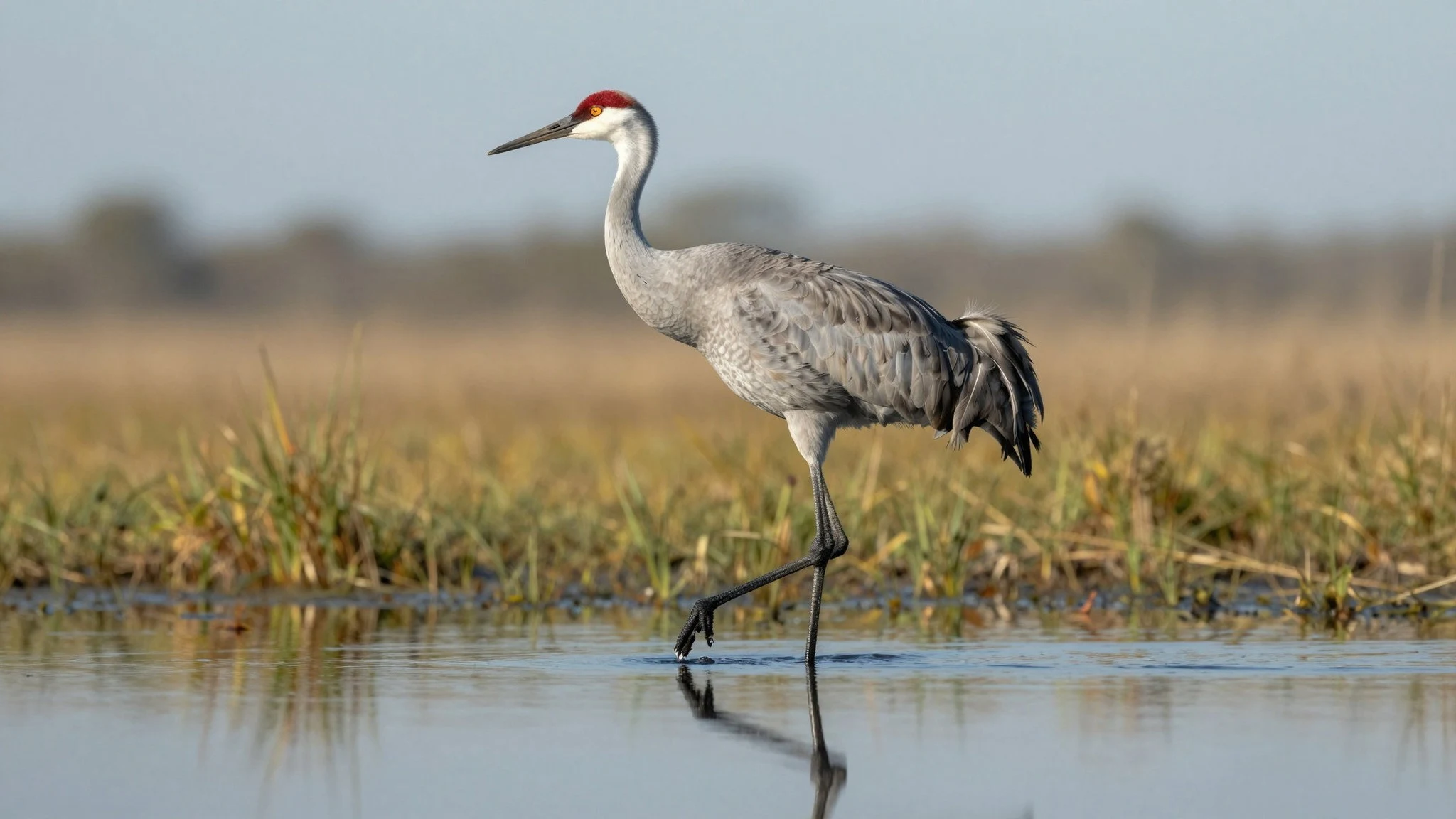
- Sandhill crane (bird)
Picture a big North American crane standing at the water's edge: that is the sandhill crane. Visitors to Okefenokee Swamp can look for it in the cooler months, when herons and ibis are also about. Give it plenty of space, move and speak softly, let a guide help you find a good viewing spot, and never feed it, however tame it may seem.