Oʻahu
Oʻahu, United States
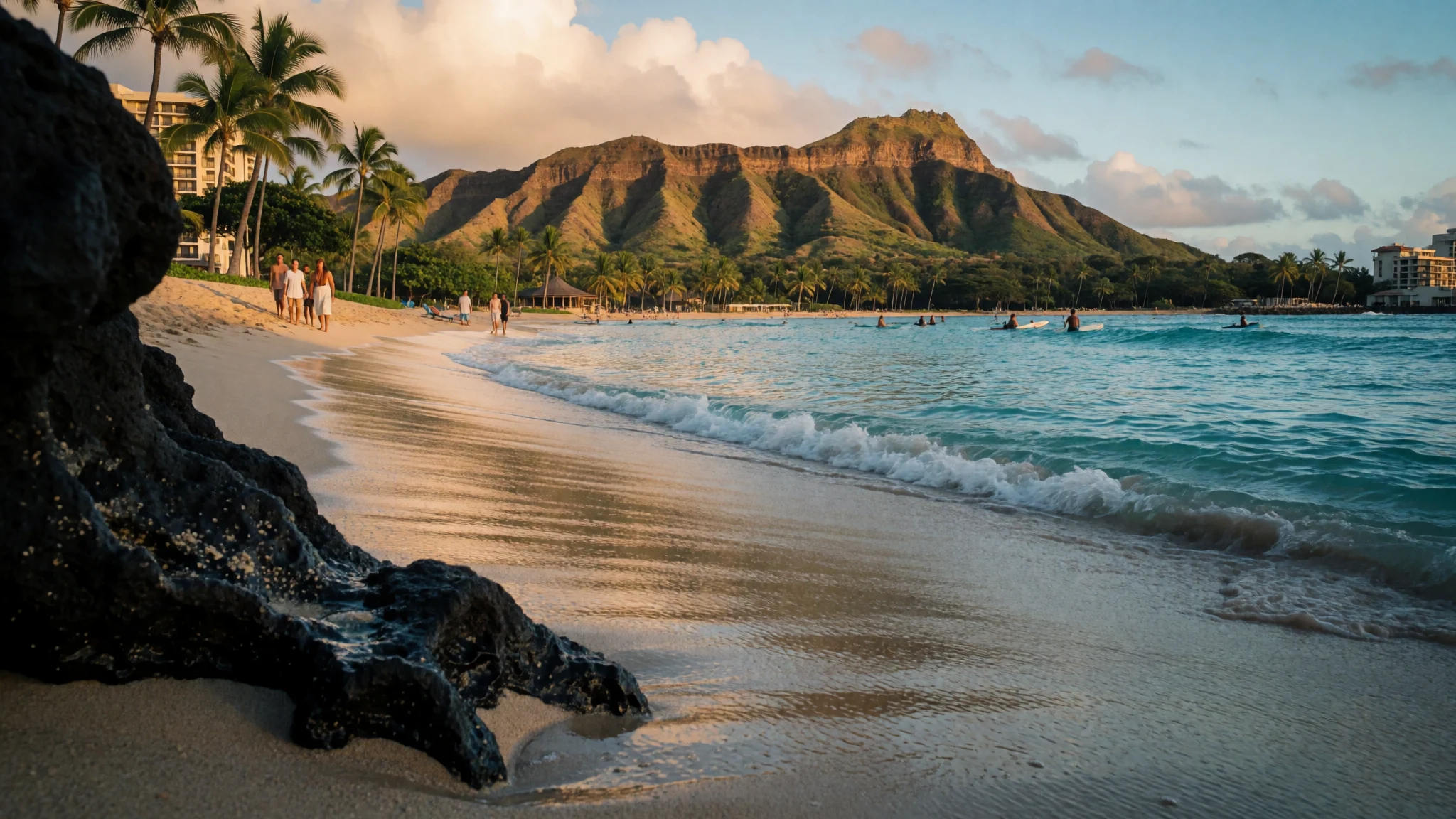
Oʻahu packs a city, surf beaches, volcanic ridges, bays full of fish and a major naval memorial into an island small enough to cross in a day.
The place
Oʻahu is the Hawaiian island most visitors mean when they say they are going to Hawaii, and also the one where most residents live: about 976,000 people, with the state capital Honolulu on the southern coast. It is not a sleepy Pacific idyll. Waikīkī is dense with towers and crowds, roads clog at rush hour, and the international airport sits just outside the city. Yet the island is small enough that an hour's drive changes the scene completely, from the surf-battered North Shore to sheltered bays in the east and farmland and valleys in between.
Geologically, Oʻahu is what remains of two extinct volcanoes: the Waiʻanae range in the west and the Koʻolau range in the east, with a broad, flat saddle between them. Rain and time have carved both into sharp green ridges. The windward side, which faces the trade winds, is wetter and lusher, while the leeward west is drier and sunnier.
Temperatures stay mild all year. June to October is the warmest stretch, and winter is only a little cooler. Honest caveats: Waikīkī is busy in almost every season, popular snorkelling spots limit numbers, and several beaches have strong currents or heavy shore-break that injure people every year. Tourism drives much of the local economy, which explains the high prices and why courtesy towards residents matters. The island rewards a hire car or a sensible mix of buses and tours, a few early starts, and at least a day or two spent away from the Waikīkī strip.
Its story
Oʻahu's human story begins with Polynesian voyagers, although exactly when they arrived is still debated. Older studies suggested settlers from the Marquesas very early in the first millennium, followed by a wave from Tahiti. Newer analysis points to a much later first landing, in the centuries around the turn of the second millennium.
In time the island developed its own ruling lines. Maʻilikūkahi, remembered as the lawmaker, began a long dynasty of chiefs. Later rulers, starting with Kualiʻi, were more warlike, and the throne eventually passed to Kahahana.
European contact came late and by accident. In 1778 Captain James Cook sighted Oʻahu on his third voyage but sailed on to Kauaʻi, intent on exploring the North American coast. The following year his deputy, Charles Clerke, landed at Waimea Bay, the first recorded visit by a non-Polynesian. Cook had just been killed on Hawaiʻi island, and Clerke's party left the same day, having struggled to find fresh water.
The islands were then split between rival chiefdoms. Kahekili II of Maui conquered Oʻahu and placed his son Kalanikūpule on its throne as a ruler answerable to him. That arrangement ended at the Battle of Nuʻuanu in 1795, when Kamehameha I defeated Kalanikūpule and went on to found the Hawaiian Kingdom. Later chapters, including the naval base at Pearl Harbour, shaped the island's modern identity, and many visitors come to understand them.
What to see
- Diamond Head — Honolulu, south shore
Diamond Head is a state park on the edge of Waikīkī, and its summit trail is the easiest way to see how Honolulu sits between sea and mountains. Go early, because the climb is exposed and the heat builds fast. Bring water and a hat, and check the official park site for entry and booking arrangements.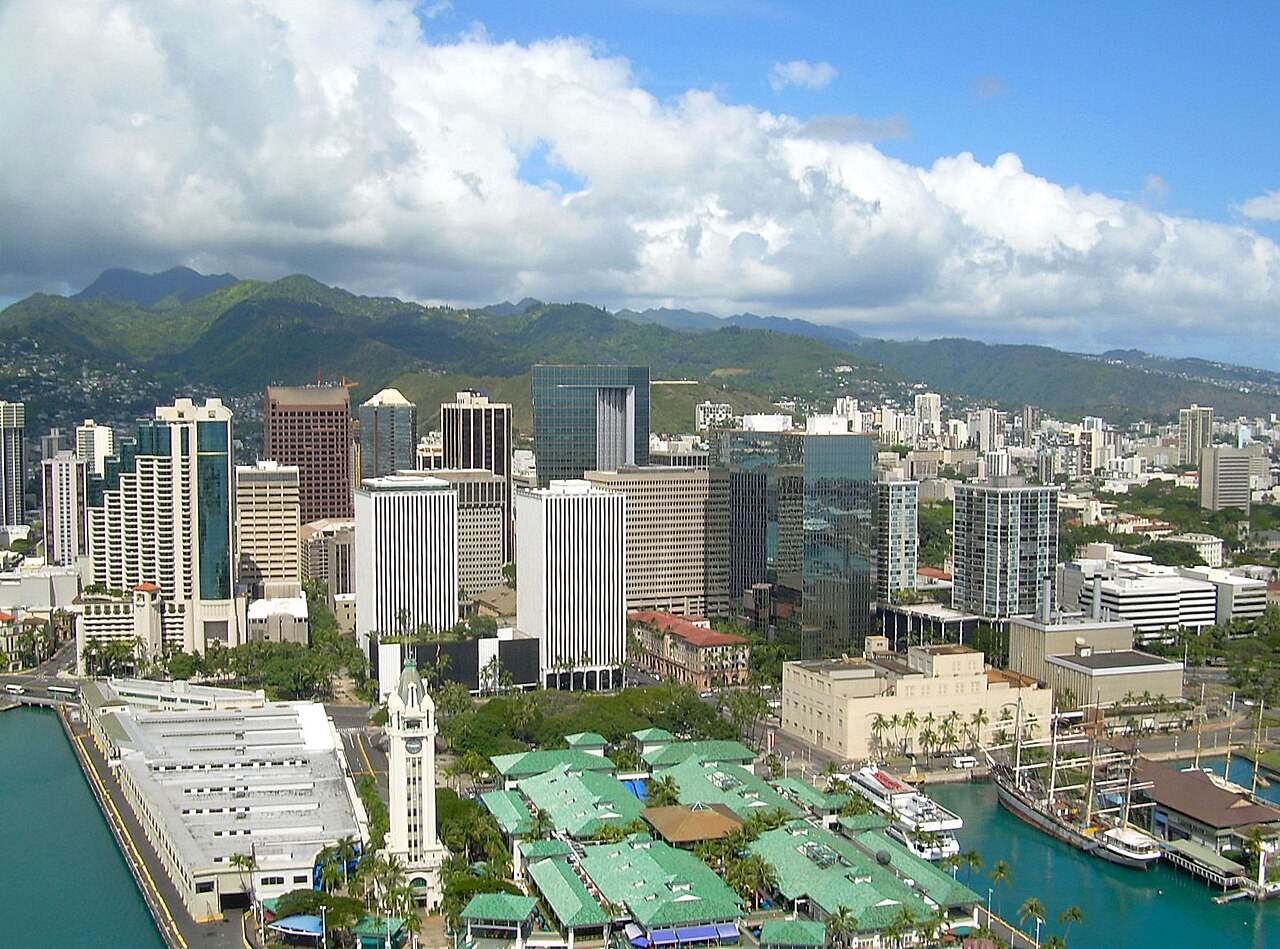
- Pearl Harbour and the Arizona Memorial — Pearl Harbour, west of Honolulu
Pearl Harbour is a working naval base and a place of remembrance. The Arizona Memorial, a white structure over the sunken battleship, is reached by boat from the visitor centre. Allow a good half-day, expect queues, and check the official site for current booking, security rules and opening times.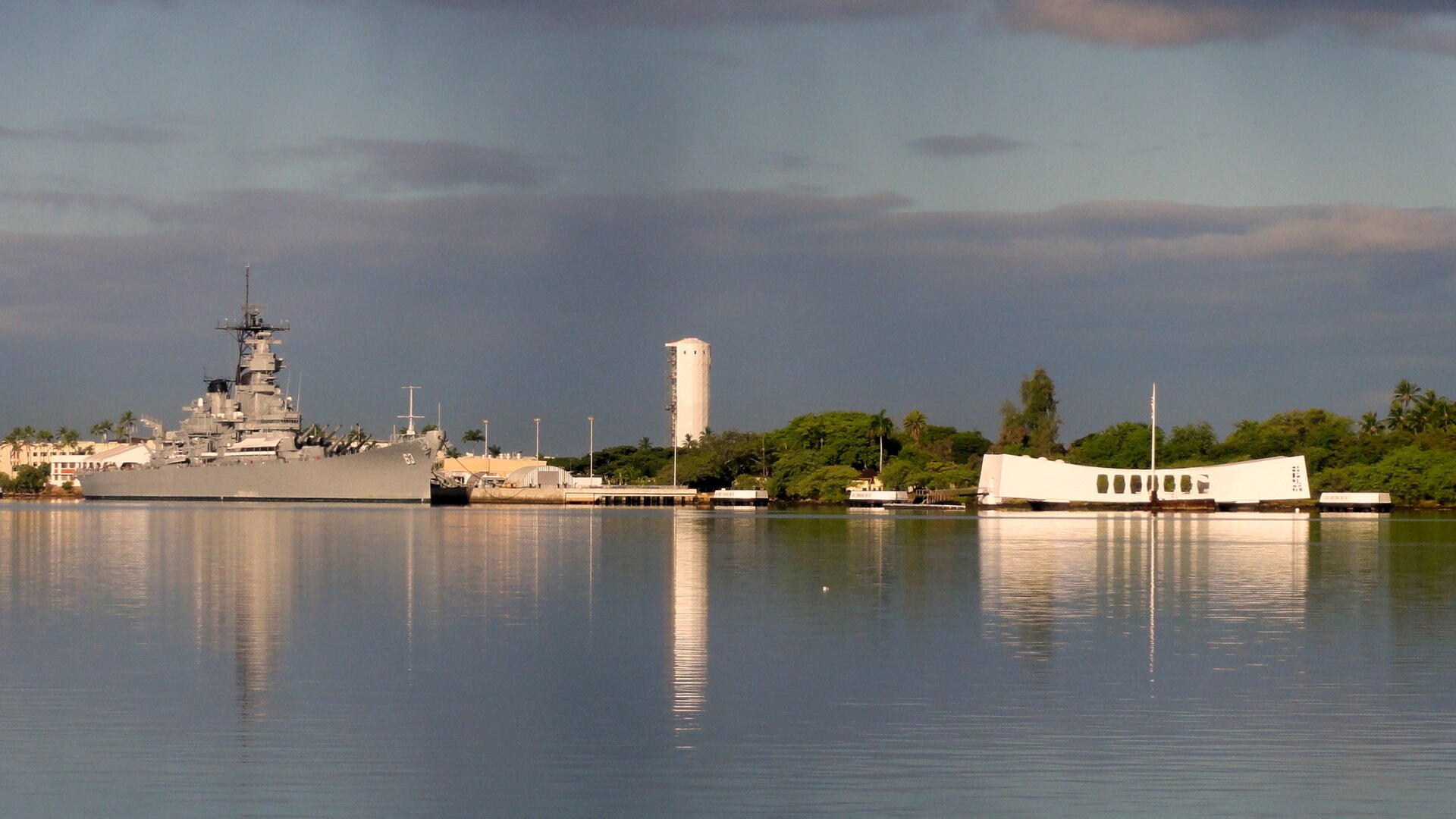
- Hanauma Bay — South-east coast
Hanauma Bay is a drowned volcanic crater open to the sea on the south-east coast, popular for snorkelling over reef fish. It is managed as a protected area, so access is controlled and visitors usually watch an education briefing first. Check the official site for current rules, and avoid touching coral or turtles.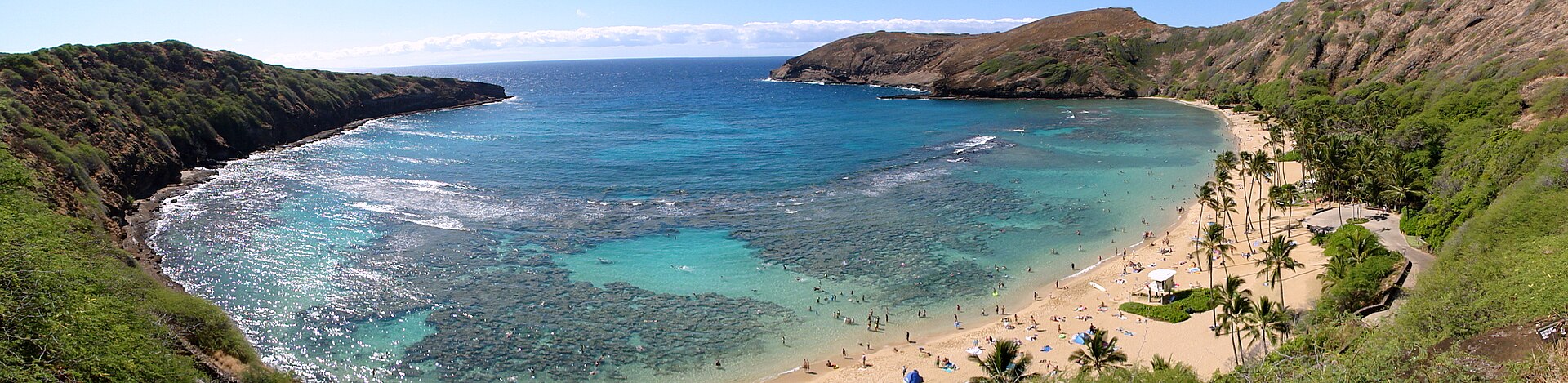
- Lanikai Pillbox and the Mokulua Islands — Lanikai and Kailua, windward coast
Above Lanikai, a short ridge walk leads to wartime concrete pillboxes and a wide view over Kailua, Waimānalo, the Koʻolau mountains and the two Mokulua islets offshore. The islets are a bird sanctuary, reachable by kayak, where the sanctuary area is protected by state law although the islet beach is not restricted.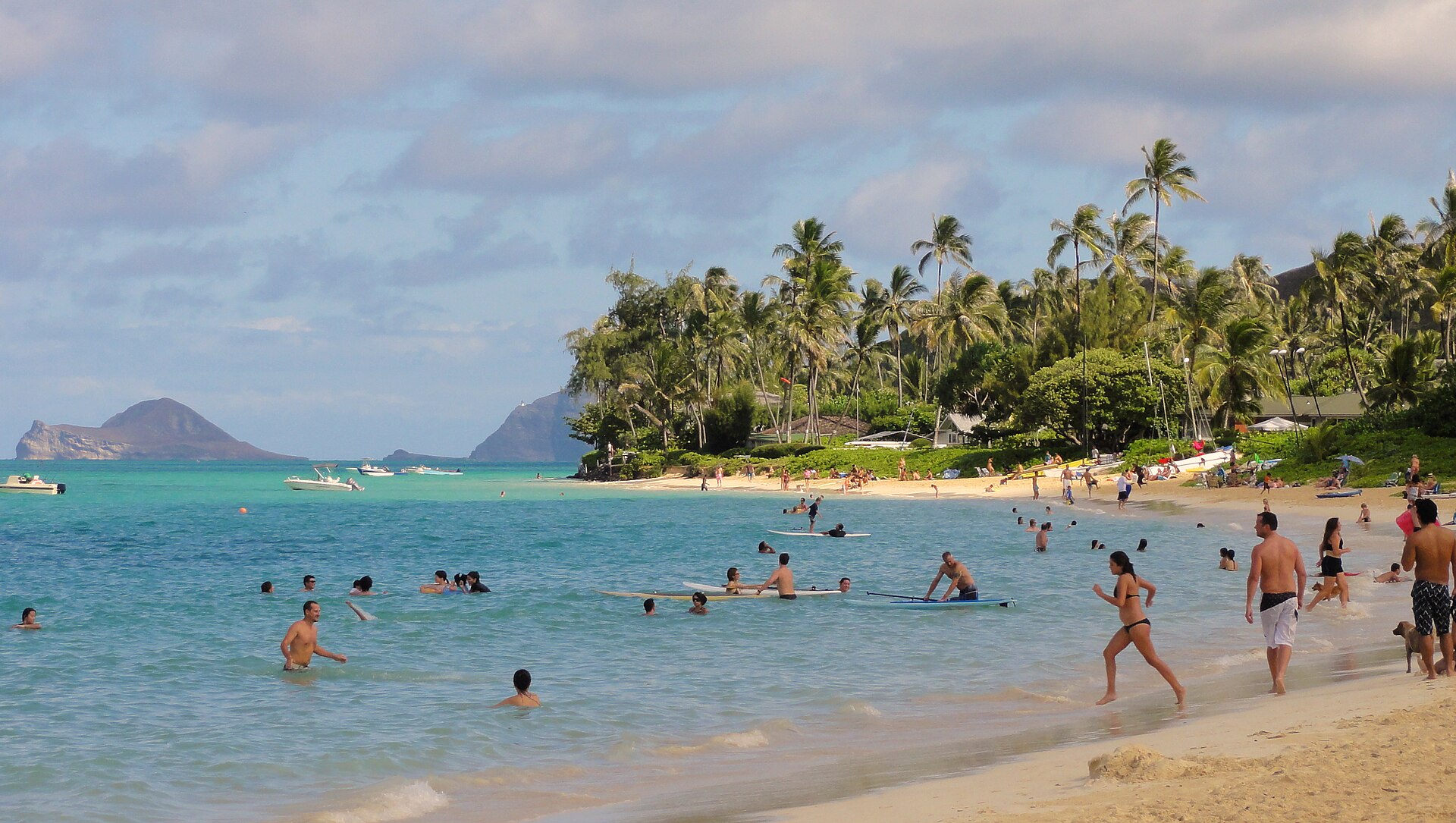
- North Shore — North coast, Haleʻiwa to Waimea
The North Shore is the island's surf country, strung along a coast of beaches, small towns and farmland, including Waimea Bay where Clerke's ships briefly anchored. Winter brings the big swells and the crowds of watchers, while summer is calmer. Swim only where lifeguards allow, and respect the flags.
Culture
Oʻahu sits at the meeting point of Native Hawaiian tradition and a multicultural island society. Hawaiian language is on road signs and place names, and the okina and kahakō marks in words such as Oʻahu and Waikīkī are part of the spelling, not decoration. Hula is far older than any resort show and carries history, genealogy and love of place in its chants and movements. The idea of aloha means more than a greeting: it covers respect, care and giving back, and the related ethic of mālama ʻāina, looking after the land, shapes how many residents talk about beaches, reefs and mountains.
The island also holds long-settled communities from Japan, China, the Philippines, Portugal and elsewhere, which is why everyday life mixes cuisines, festivals and words in Hawaiian Pidgin. Locals often distinguish between people who live here and people who visit, and visitors who show interest, patience and modesty are usually welcomed warmly.
Surfing began in Polynesian Hawaii, and lineups still have unwritten rules: give way to the person closest to the breaking wave, do not drop in, and watch before paddling out. Heiau, the old stone temple platforms found around the island, remain sacred and should not be climbed on or disturbed. Do not take sand, coral or stones from beaches or sacred sites, and remove your shoes when entering a local home.
What to wear
Oʻahu's traditional dress began with kapa, bark cloth beaten from the wauke plant and printed with patterns, worn as the malo loincloth by men and the pāʻū wrap skirt by women. Chiefs wore feather cloaks and capes made of thousands of tiny bird feathers, which were symbols of rank. Mats and hats were woven from lauhala, pandanus leaf. After contact with missionaries, women adopted the holokū, a long, high-necked dress, and later the looser muʻumuʻu in printed cotton. Lei of flowers, maile leaf or kukui nuts are still given at graduations, weddings, hula performances and arrivals.
What people wear now is relaxed. The aloha shirt, a cotton or rayon print with a collar and buttons, is worn to offices, weddings and celebrations, and is widely accepted as smart dress. Rubber sandals, locally called slippers, are standard everyday footwear, with board shorts and sundresses on the beach.
Visitors should pack light, breathable fabrics, a brimmed hat, sunglasses and mineral reef-safe sunscreen, since the sun is strong all year. Cover up when leaving the beach for shops and restaurants. Bring sturdy trainers or walking shoes for ridge trails and Diamond Head, plus sandals for the sand. A thin waterproof layer helps on the wetter windward side and on cooler winter evenings.
What to eat
- Poke — Supermarket seafood counters and fish markets
Poke is cubed raw fish, usually tuna, dressed with soy sauce, sesame oil, onion and seaweed. It is sold by weight and eaten with rice. Look for it at supermarket seafood counters and fish markets, where local varieties change daily. - Plate lunch — Lunch wagons and neighbourhood diners
The plate lunch is the island's everyday meal: two scoops of rice, macaroni salad and a main such as chicken katsu, teriyaki beef or kalua pork. It is filling, cheap by Hawaiian standards and shows the island's Asian and Hawaiian roots. - Loco moco — Local breakfast cafés and drive-ins
Loco moco is a bowl of rice topped with a hamburger patty, a fried egg and brown gravy. It was born as cheap comfort food and remains a staple of local breakfasts and late-night eating. Expect a heavy portion. - Kalua pork and laulau — Hawaiian food counters and community luʻau
Kalua pork is salt-seasoned pork traditionally cooked in an underground oven, while laulau is meat or fish wrapped in taro leaf and steamed. Both are central to Hawaiian feasts, and are served with poi, a paste from pounded taro root. - Shave ice — Roadside stands, especially around Haleʻiwa on the North Shore
Shave ice is a mound of finely shaved ice soaked in fruit syrups, often over ice cream or sweet beans. It is lighter and softer than a crushed-ice snow cone. A welcome relief on a hot beach afternoon.
Plan it
Best time. April–May and September–October, when the island is warm, the crowds are thinner than in summer and school holidays, and the sea is generally calmer. June to October is the warmest stretch. Winter is cooler but still warm, wetter on the windward side, and brings big swells to the North Shore.
How long. 4–5
Getting there. Fly into Daniel K. Inouye International Airport, just outside downtown Honolulu. From there, TheBus, taxis, ride-hailing and hire cars all reach Waikīkī; check the destination sign carefully on buses. Flights to other Hawaiian islands leave from Honolulu.
Budget. high
Tips
- Book popular things such as Pearl Harbour tickets, boat dives and Hanauma Bay entry through the official sites well ahead; do not rely on walk-up availability
- Start hikes and Diamond Head early, before the heat and the crowds
- Check beach conditions and lifeguard flags before swimming: yellow means caution, red dangerous and black extremely dangerous
- Avoid boarding the westbound bus that goes to the military base unless you hold military ID, since passengers are checked at the gate
- Some areas, including parts of Chinatown and several western and inland neighbourhoods, are best avoided after dark
Etiquette
- Do not walk on or remove stones from heiau or other sacred sites
- Do not touch or chase turtles, monk seals or coral, and keep out of marked sanctuary areas
- Greet people politely and treat local residents, not just resort areas, with respect
Nearby
Sources
- Wikidata Q131347 (CC0)
- Wikipedia: Oʻahu (rev 1374682675) (CC BY-SA 4.0)
- Wikivoyage: Oahu (rev 5412960) (CC BY-SA 4.0)
- Photo: Vista de Oahu desde satélite — NASA-Johnson Space Center (Public domain)
- Photo: Aerial view of Pearl Harbour and Ford Island — PH1 Javner, U.S. Navy (Public domain)
- Photo: Arizona Memorial at Pearl Harbour — Cristo Vlahos (CC BY 3.0)
- Photo: Map of Oʻahu — Kelisi (CC BY-SA 4.0)
- Photo: Panoramic view of Hanauma Bay — Cristo Vlahos (CC BY 3.0)
- Photo: Ko Olina — Makua'Ole (CC BY-SA 4.0)
- Photo: Beachgoers in Lanikai — Cristo Vlahos (CC BY 3.0)
- Photo: Aerial view of downtown Honolulu — ErgoSum88 (Public domain)


Wildlife
- Green sea turtle (animal)
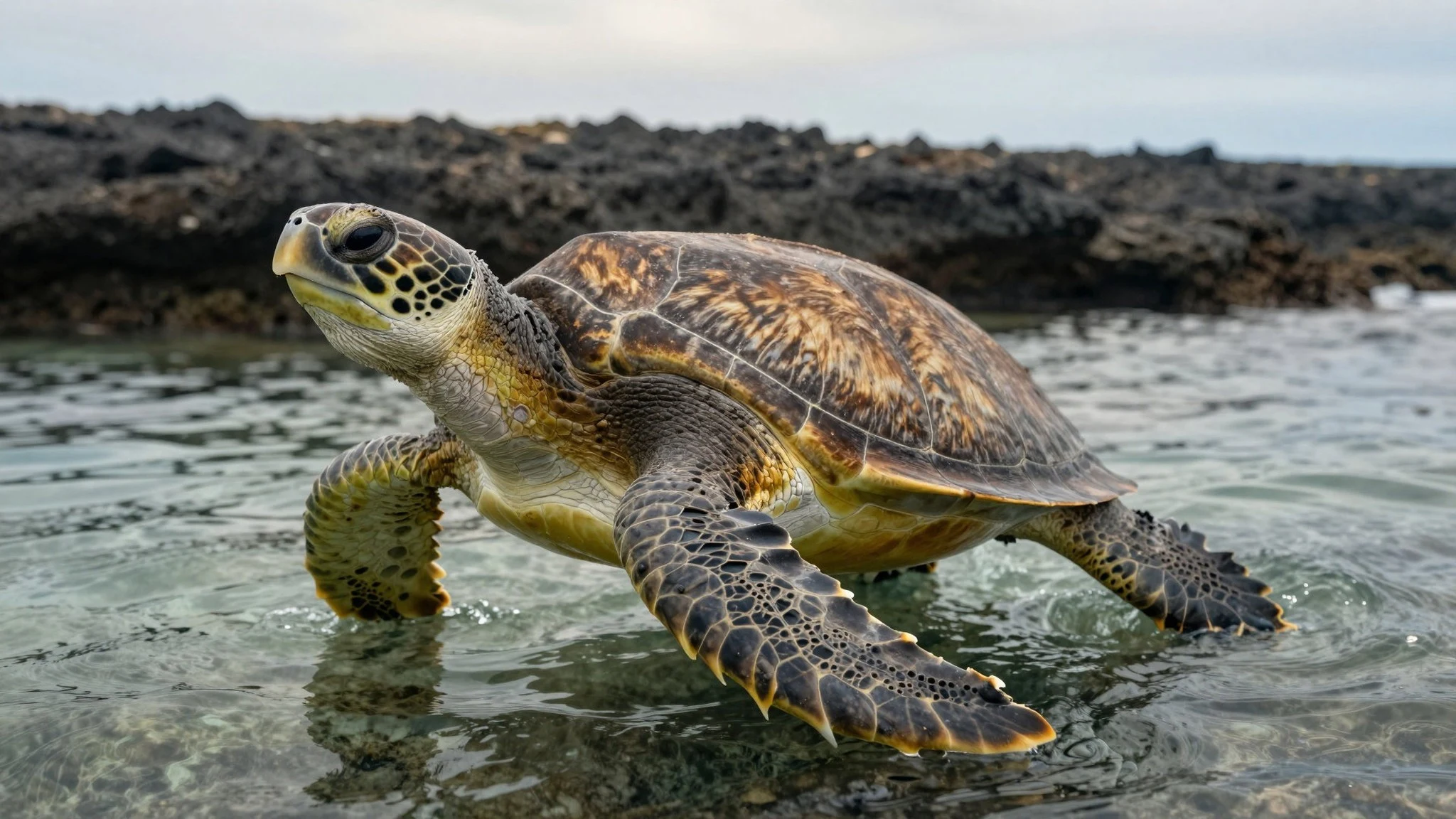
The green sea turtle is a big sea turtle that eats only seagrass, and it is named for the green fat beneath its shell, not the colour of the shell itself, which runs from olive to black. Turtles like this live in warm seas across the world. For a respectful visit, keep your hands to yourself: never touch the turtles or the coral around them, and read the latest official guidance before you go.