North Toraja
North Toraja, Indonesia
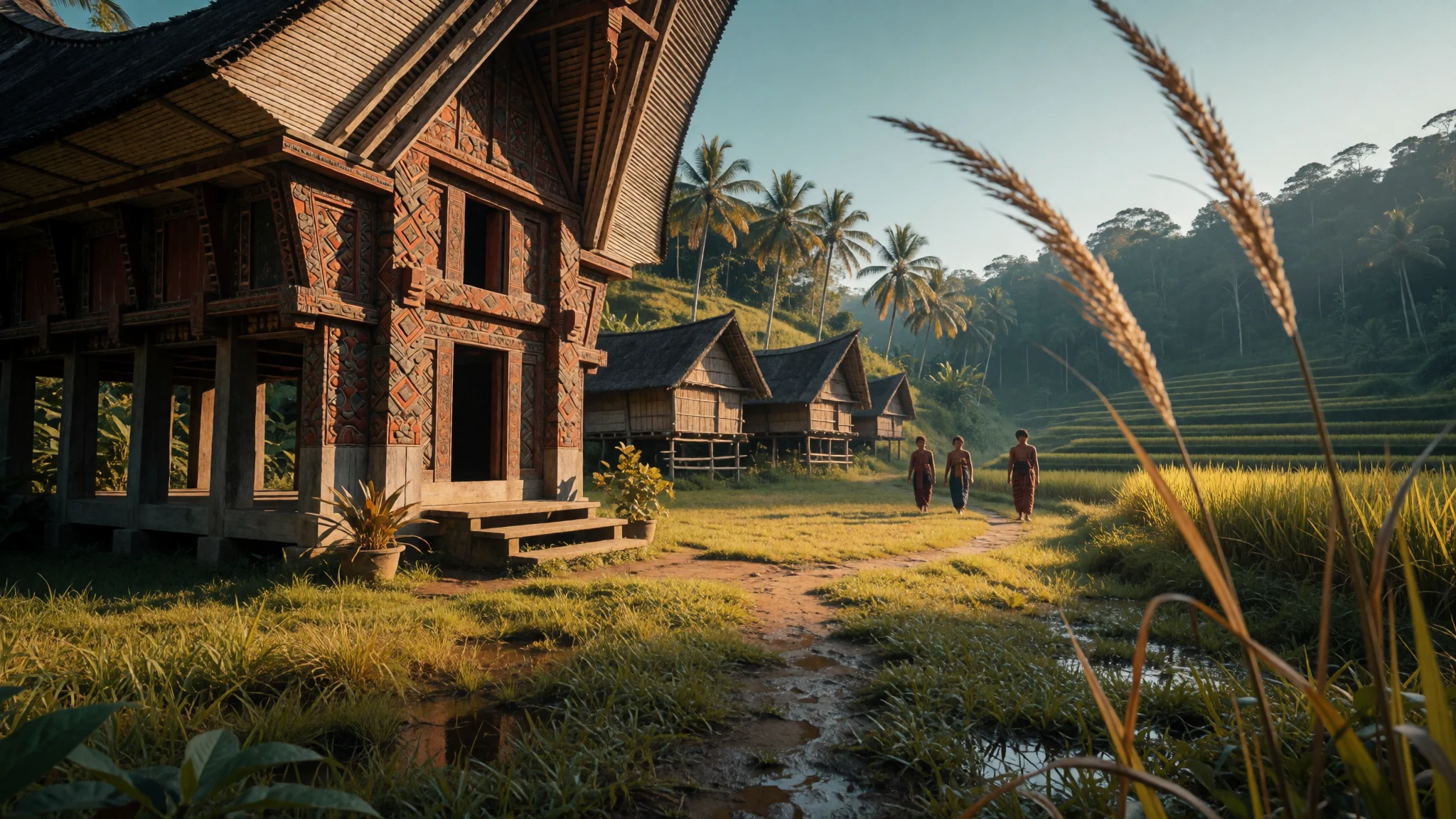
North Toraja is a cool highland corner of Sulawesi where ancestral houses, cliff graves and elaborate funerals still shape everyday life.
The place
North Toraja is a highland regency in South Sulawesi, Indonesia, and the part of Torajan country most people mean when they say they are heading to Toraja. Its administrative town, Rantepao, sits at about 1,150 m, which keeps days milder than on the steamy coast, though rain arrives often and nights can feel cool. About 234,000 people live here, mostly in villages strung along ridges and rice valleys rather than in the town itself. The landscape is steep. Terraced paddies step down the hillsides, bamboo fills the gullies, and mist sits in the valleys early in the morning. The buildings explain the place: tongkonan, the ancestral houses with sweeping, boat-like roofs, stand in rows facing rice barns across a shared yard. Each belongs to a family line rather than one owner, and the carved and painted walls tell which family it is. Rantepao is the practical base. It has eateries, guesthouses, guides and a busy market, and from it villages, cliff graves and viewpoints lie within short rides by motorbike or car. Roads are narrow and winding, so distances that look small on a map take longer than expected. The regency became its own administrative unit in 2008, carved out of the older Tana Toraja area, which is why older guidebooks and signs may still use that name. Funeral season, more than any tourist calendar, sets the rhythm of the year.
Its story
North Toraja's history is really the history of the Torajan people, who farmed these highlands, terraced the slopes and built a society around rice, buffalo and family lines long before outsiders took much notice. The mountains kept the area apart from the coastal kingdoms, and villages ran their affairs through noble families and shared ancestral rules. That began to change when Dutch colonial administrators arrived in the early twentieth century, drew boundaries around the highlands and brought missionaries with them. Many Torajans became Christian over the following decades, yet the great funeral rites, the tongkonan houses and the carved effigies of the dead did not disappear. They were reshaped and kept. Later, as Indonesia opened its roads and tourism grew, anthropologists and travellers began to arrive, drawn by those rites, and the highlands became a destination in their own right. Families working in other parts of Indonesia often return for ceremonies, which can last several days. In 2008 the northern part of the old Tana Toraja regency was split off as North Toraja, with Rantepao as its seat. The change was administrative, but it gave the area its own budget and planning, and it explains why two neighbouring regencies now share one culture. For a visitor, the useful point is that this is a living tradition rather than a museum: the schedule of funerals, not a tourist timetable, still decides what happens and when.
What to see
- Rantepao market — Rantepao town
Rantepao's main market is a good place to see the town at work. Stalls of vegetables, spices, coffee and cloth fill the lanes, and on the larger market days buffalo and pigs are traded in a separate area. Go early, when it is busiest and coolest, and ask a guide or your guesthouse which days are biggest.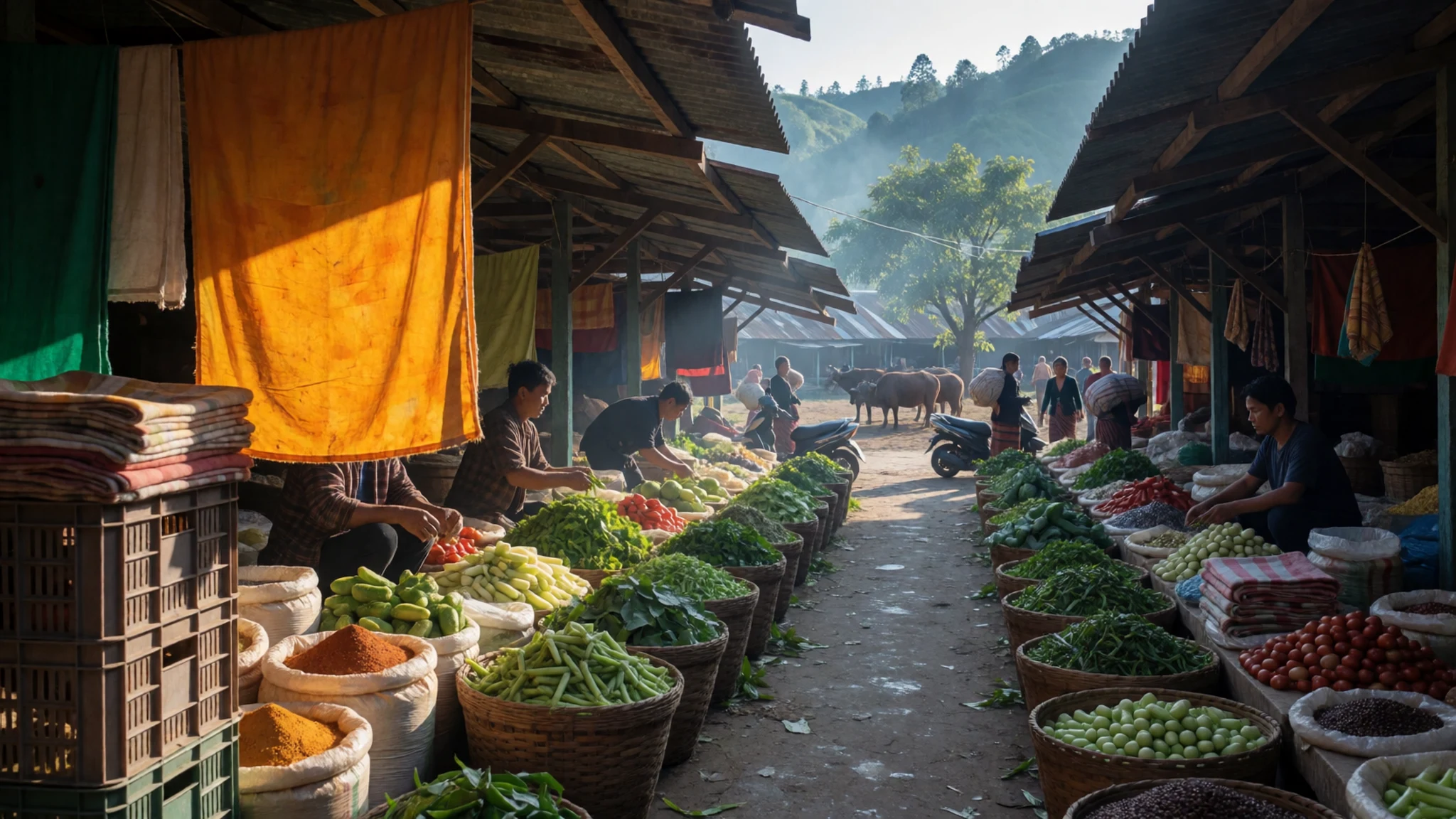
- Ke'te Kesu — South-east of Rantepao
Ke'te Kesu is a village near Rantepao where tongkonan houses face a row of rice barns across a grassy yard. The carved and painted fronts reward a slow look up close. A short walk behind the village leads to a cliff face used for graves, with old wooden coffins and small effigies set into the rock.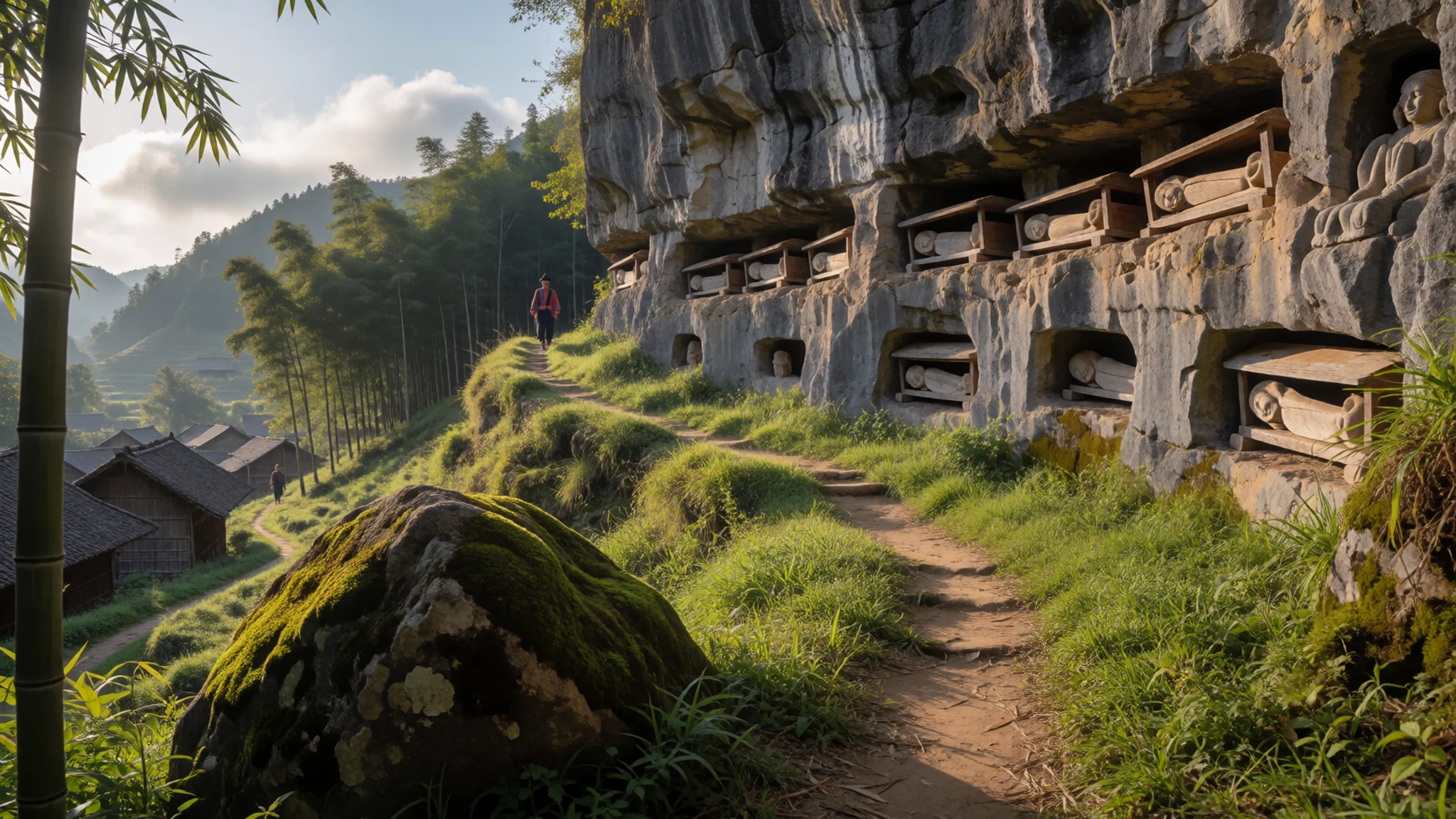
- Pallawa — North of Rantepao
Pallawa is a village of tongkonan houses with curved roofs, where horns fixed to the front post record ceremonies the family has hosted. It is quieter than the better-known villages and works well in soft early light. Walk the lane slowly and ask before stepping into anyone's yard.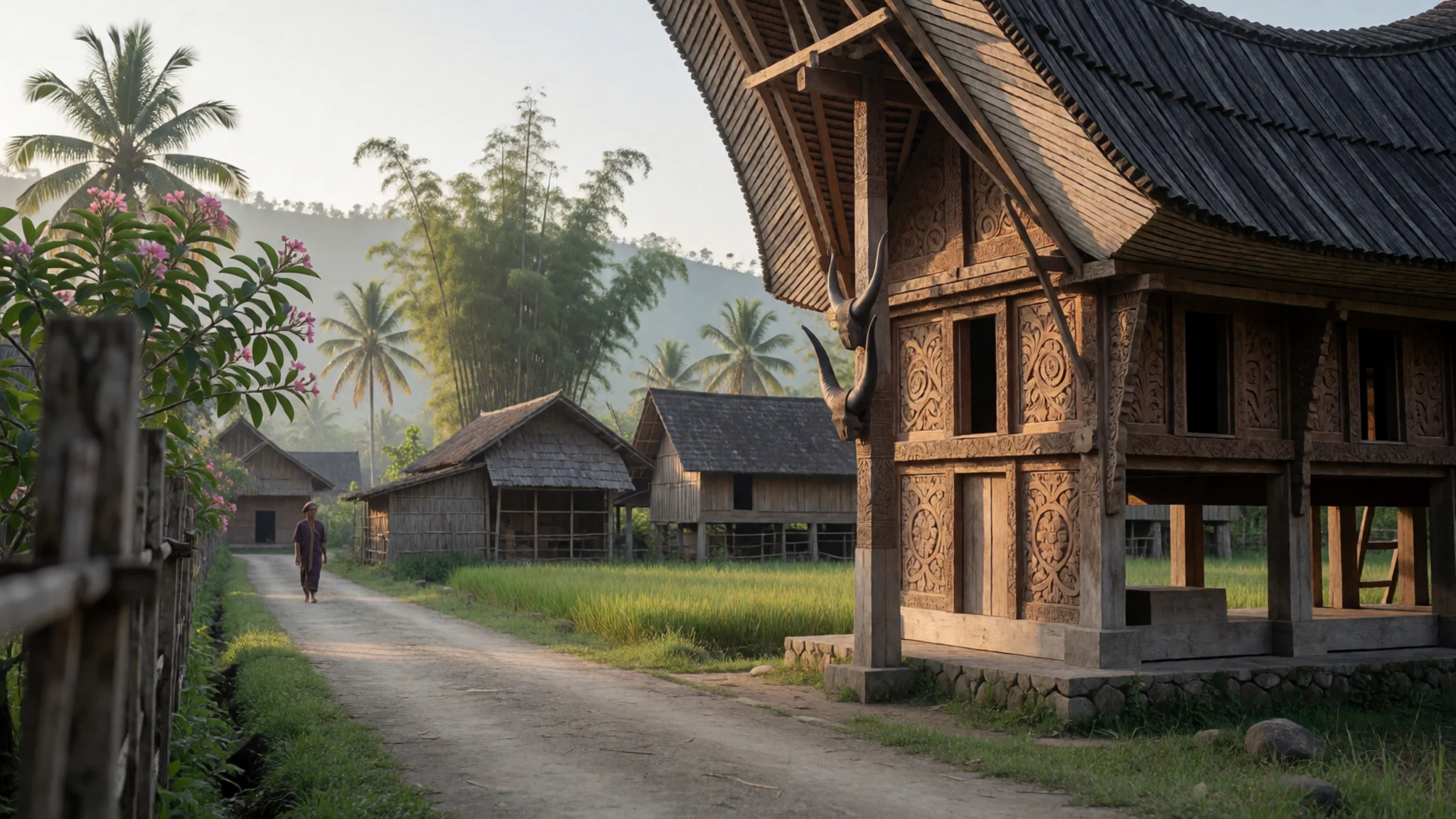
- Lemo — South of Rantepao
Lemo is known for its rock-face graves, where small balconies hold rows of wooden tau tau, effigies of the dead, looking out over the rice fields. The cliff is close to the road and quick to visit. A zoom lens helps, and visitors should keep to the paths out of respect for families who still use the site.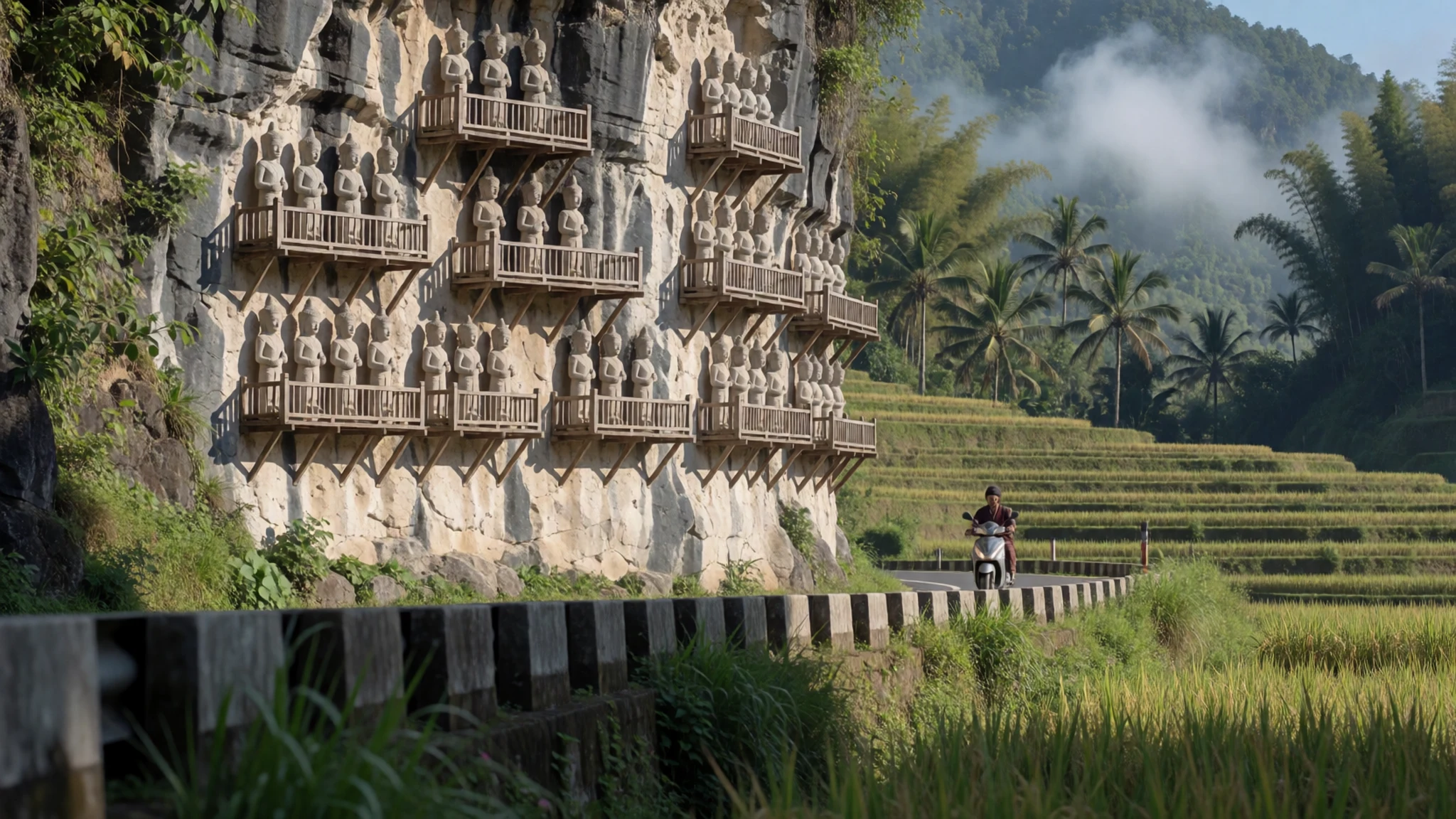
- Londa — South of Rantepao
Londa is a burial site in limestone rock where coffins rest in caves and on ledges, with bones laid out nearby. Local guides carry lamps and lead small groups through. It is damp and uneven underfoot, so wear shoes with grip. Treat it as a graveyard rather than a curiosity, and keep voices low.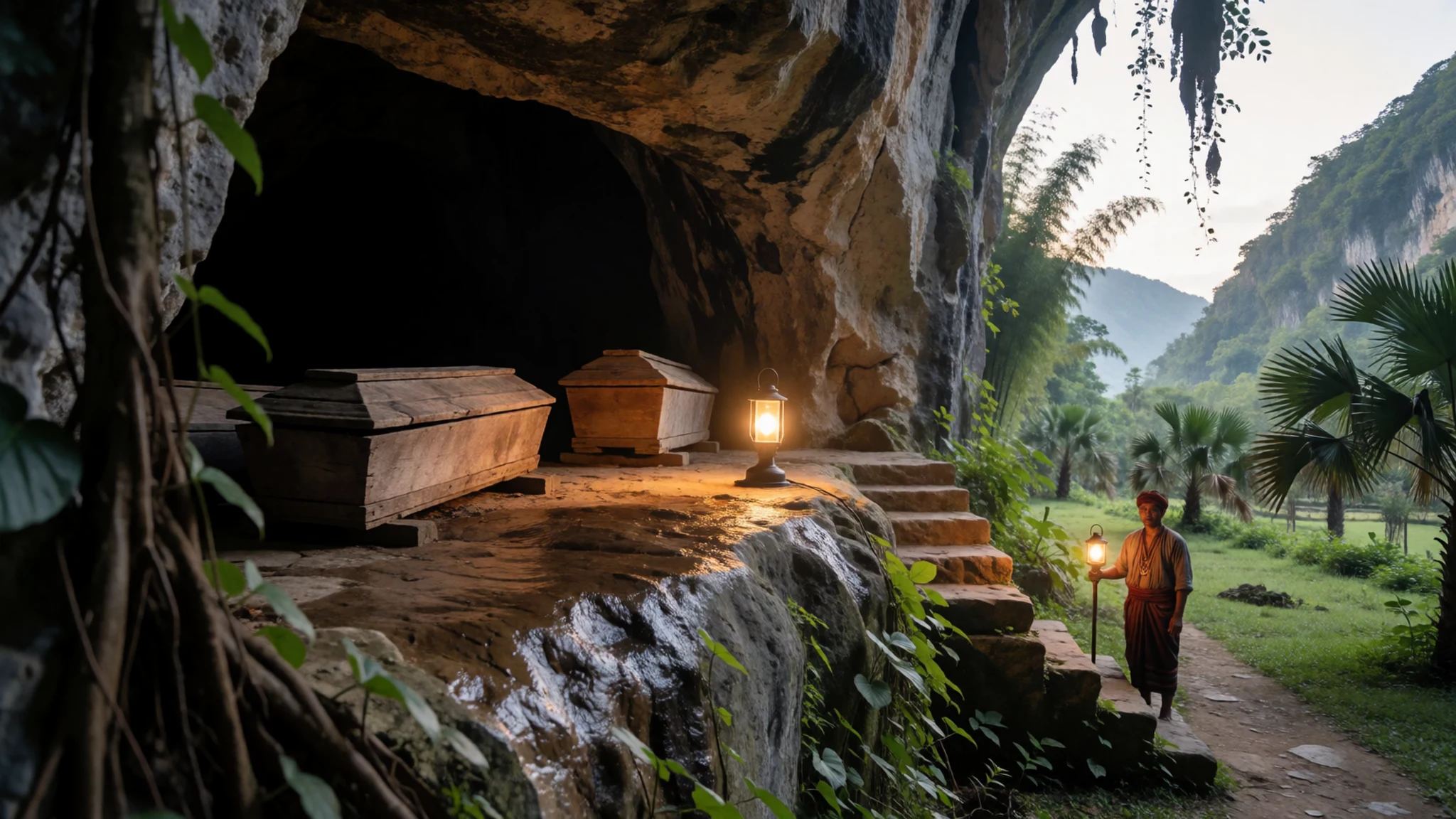
- Batutumonga — Mountain slopes north of Rantepao
Batutumonga is a mountain village with wide views over terraced valleys and mist at dawn. Many visitors come by motorbike or car for sunrise, then walk down through villages and paddies. Mornings are cool at this height, and cloud can hide the view, so allow more than one attempt if the schedule permits.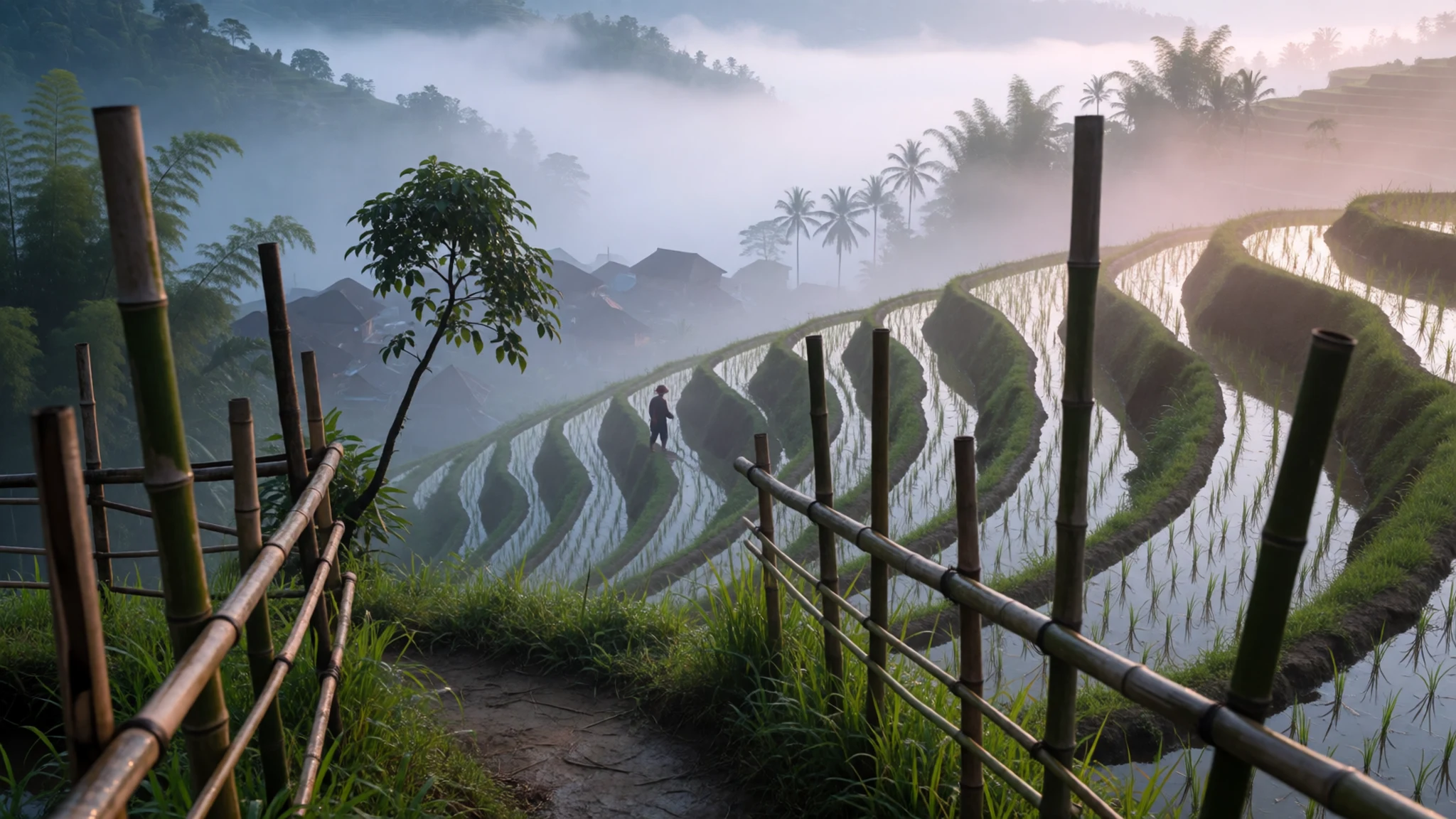
Culture
North Toraja is best known for how it treats death. Among Torajans the funeral is the great social event of a family's life, and it can be held months or even years after the person has died, once relatives have gathered from elsewhere and the family can afford to host. Ceremonies unfold over several days, with processions, dances, chanting and the sacrifice of buffalo and pigs, the animals shared out among guests according to careful rules of kinship and obligation. Until the rites are complete, the deceased is often spoken of as unwell rather than gone. Burial places reflect the same thinking: graves cut into cliffs, coffins set in caves, and tau tau effigies placed on ledges to watch over the living. Tongkonan houses are the other anchor of identity. They are built facing north, passed down through family lines, and used for rituals as well as daily life. Most Torajans today are Christian, and church and ancestral custom sit side by side without much sense of contradiction. Visitors are sometimes welcomed at funerals, which are open community events, but they are not performances. Guests are expected to behave as guests, with a greeting to the host family and a small gift, usually guided by a local companion. If you are invited to a funeral, go with a local guide, wear dark, modest clothes, greet the family first, and ask permission before you photograph anyone or any part of the ceremony.
What to wear
In North Toraja, traditional dress is most visible at funerals, weddings and church or community festivals. Woven cloth carries much of the meaning: sarita and other hand-woven textiles with geometric patterns are used as ceremonial wraps, banners and gifts, and patterns often echo the buffalo and the tongkonan roof. Women wear a short-sleeved top with a wrapped skirt, often finished with strings of beads and gold-coloured ornaments, while men wear a tunic or shirt with a sarong or trousers and sometimes a headcloth. Elders and families hosting a ceremony tend to dress most fully, and the finest textiles are kept for those occasions. Day to day, people wear what most of Indonesia wears: jeans or trousers, T-shirts, shirts and school uniforms, with smarter clothes for church on Sundays. For a visitor the main concerns are weather, terrain and respect. Bring light layers, because mornings at this altitude are cool and showers are common, and carry a thin rain jacket. Shoes with real grip matter more than style, since village paths, cave steps and rice-field banks get slippery. Cover shoulders and knees in villages and at any ceremony, and bring one dark, modest outfit in case a funeral invitation comes. Shorts and vests are fine for walking, but change before entering someone's compound.
What to eat
- Pa'piong — Local eateries in Rantepao and village roadside stalls
Pa'piong is meat, fish or vegetables, mixed with herbs and grated coconut, packed into a length of bamboo and cooked over a fire. The result is smoky and fragrant. It appears at ceremonies and in simple eateries, and is a good first taste of highland cooking.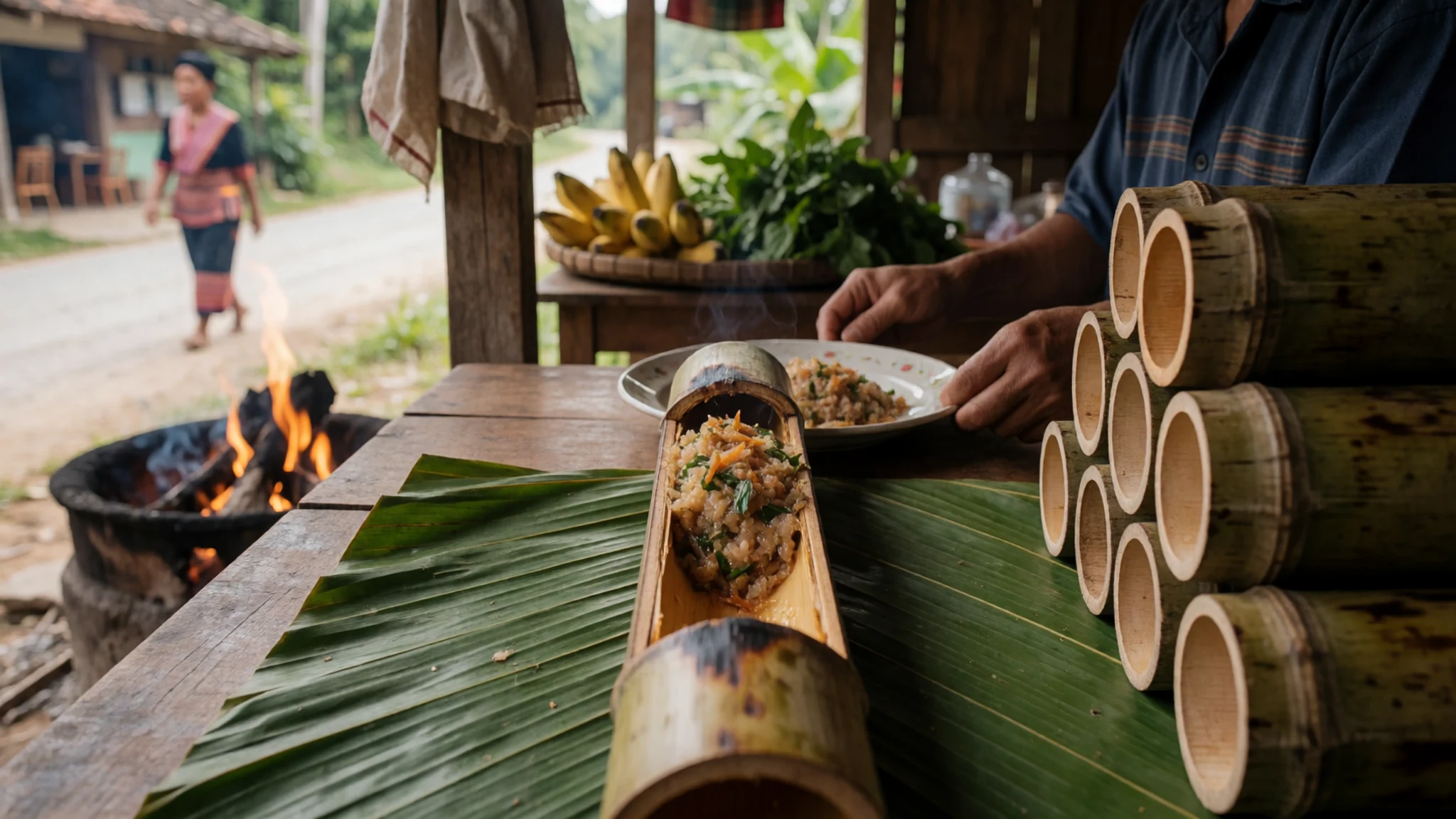
- Pamarrasan — Family-run eateries and ceremonial feasts
Pamarrasan is pork or buffalo cooked in a dark, rich sauce built on the keluak nut, giving a deep, earthy flavour. It is a festive dish, often served at gatherings, and can be tried at eateries that specialise in Torajan food. Ask what is available that day.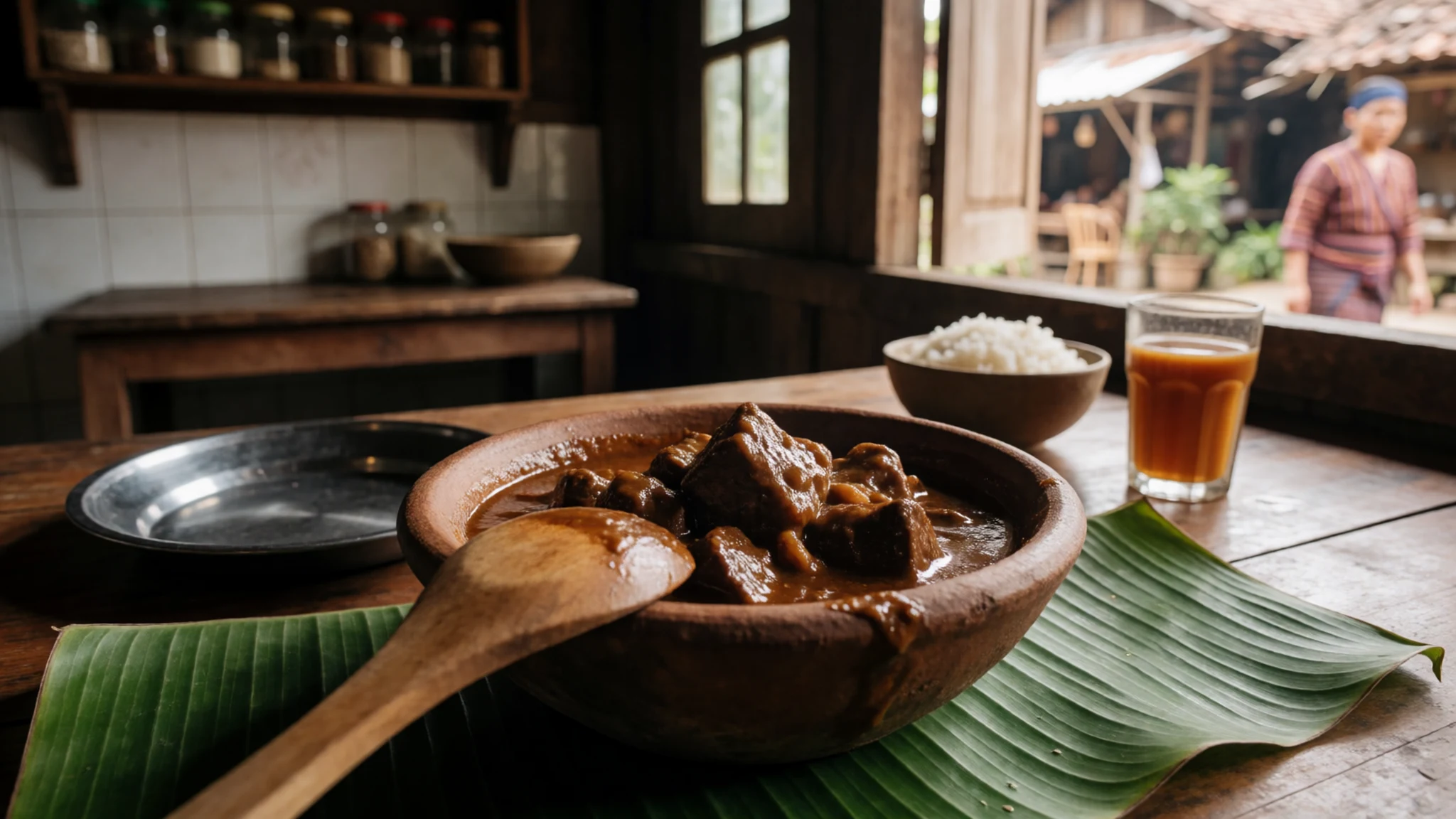
- Deppa tori' — Rantepao market and bakery stalls
Deppa tori' is a sweet, crisp biscuit-like cake made from rice flour and palm sugar. It keeps well, so it is easy to carry. Look for it in market stalls and small shops, and buy a bag for a walk or the road home. - Kopi Toraja — Cafés and coffee stalls around Rantepao
Kopi Toraja is coffee grown on the surrounding highland slopes, usually served strong and black in small cups. It has a deep, slightly earthy taste. Cafés in town sell it by the cup, and local shops sell beans and ground packs to take home. - Coto Makassar — Eateries in Makassar, before or after the highland journey
Coto is a beef soup from Makassar with a seasoned broth, often served with rice cakes or rice. It comes from the southern lowlands rather than the highlands, but most visitors pass through Makassar, and it makes a good meal at either end of the trip.
Plan it
Best time. June to September is generally the drier part of the year in the highlands, with cooler mornings and better views; rain can still arrive at any time, and wetter months turn paths muddy. Funerals are often held in the drier months, but dates are set by families, so ask locally.
How long. 3–4
Getting there. Fly to Makassar, the main airport for the region, then continue north into the mountains by road, usually by long-distance bus or a hired car with driver. A small airfield serves Toraja itself, so check current flights on the official site, https://www.torajautarakab.go.id/, or with the airlines. Allow a full day for the road journey.
Budget. low
Tips
- Hire a local guide for funerals and cave sites; they know the families and the etiquette
- Carry cash, since small eateries, markets and village entrances often do not take cards
- Bring a rain jacket and shoes with grip, even in the drier months
- Start early for viewpoints and markets, when the air is cool and the light is clear
- Roads are winding and slow, so plan fewer stops per day than the map suggests
Etiquette
- Ask before photographing people, graves or any part of a funeral
- Dress modestly and in dark colours if you attend a ceremony
- Do not touch coffins, bones or effigies at burial sites
Nearby
Sources
- Wikidata Q14609 (CC0)
- Wikipedia: North Toraja Regency (rev 1382647473) (CC BY-SA 4.0)
- Wikivoyage: Southern Sulawesi (rev 5326440) (CC BY-SA 4.0)
- Photo: Tongkonan Pallawa Toraja Utara, Rezki sugiharto nurdin (CC BY-SA 4.0)
- Photo: Kab. Toraja Utara map, Muhammad Alif Solihin (CC BY-SA 4.0)

