Nong Khiaw
Nong Khiaw, Laos
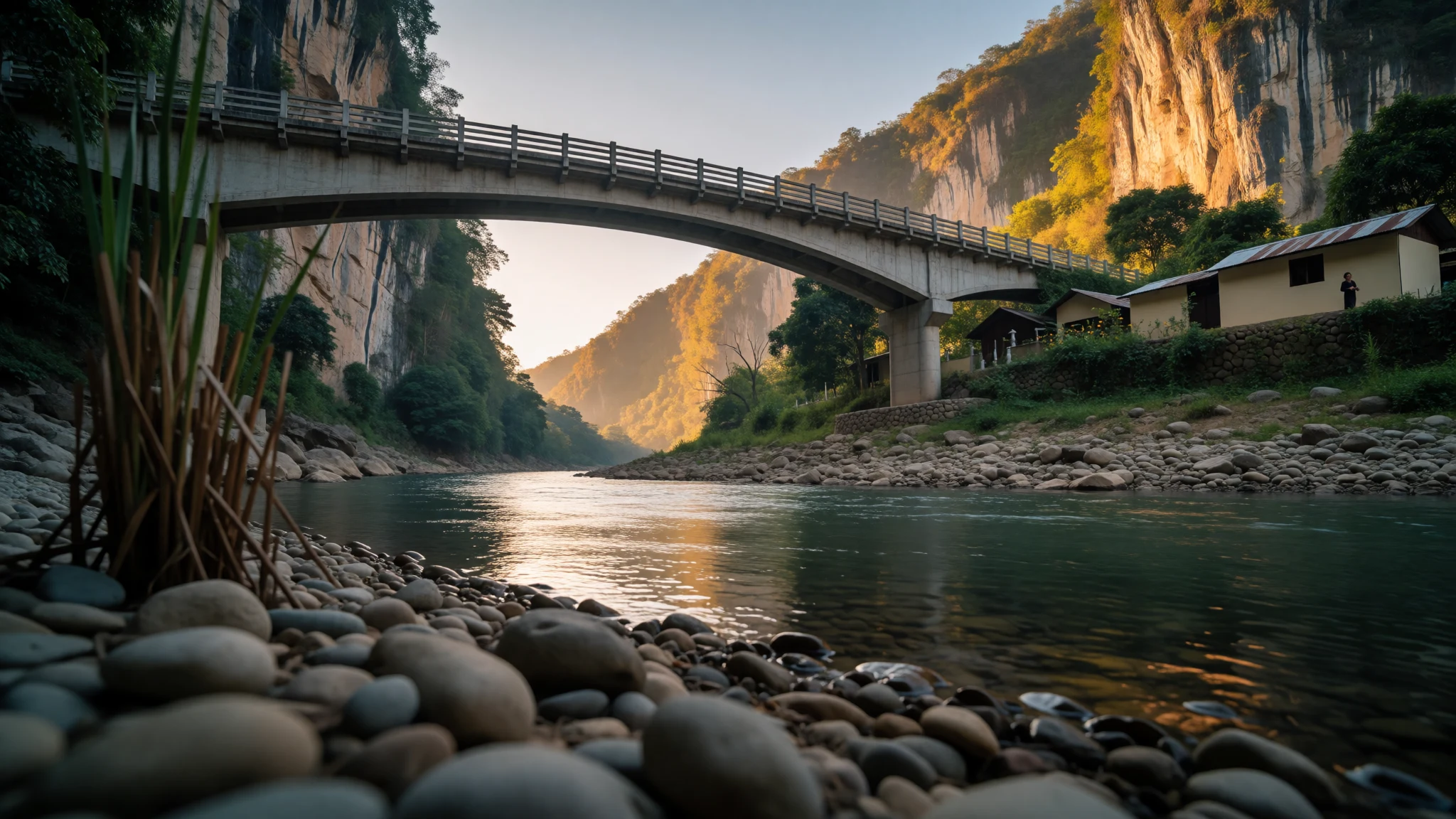
Nong Khiaw is a small riverside village under limestone cliffs, with ridge walks and boat days on the Nam Ou.
The place
Nong Khiaw sits on the Nam Ou in northern Laos, a short riverside strip pressed between steep limestone walls. The village occupies both banks, joined by a concrete bridge that is also the main lookout: upstream the river bends out of sight between cliffs, downstream it widens towards the valley. Guesthouses, small eateries and a few shops line the road on the bus-station side; the opposite bank is quieter, with gardens running down to the water and a path that follows the river. Mornings often begin under low cloud, the karst reduced to pale shapes, then the light lifts and the rock shows grey, cream and streaks of green where trees cling to ledges. Boats still tie up beneath the bridge, children swim at the edges, and the sound of a long-tail engine carries further than the motorbikes on the road. Behind the houses the land rises quickly into forest and rock. Rice and vegetable plots occupy the flatter pockets; the rest is cliff. There is little flat ground, so the settlement stays thin and linear, easy to walk from end to end and impossible to mistake for a city. In the dry months the river drops and sandbanks appear; in the rains it runs higher, browner and faster, and the forest on the walls turns a deeper green. Travellers concentrate on the bridge and the viewpoint paths, so the middle of the day can feel busy on a narrow pavement, while the early morning and the far end of the village stay local. Heat sits in the valley once the cloud burns off, and the shade under a riverside balcony is worth more than another loop of the main road.
Its story
Nong Khiaw grew up as a landing on the Nam Ou, where boats working the river between the northern hills and Luang Prabang could stop for the night. Before the road, the water was the way in and the way out: rice, forest goods and passengers moved by boat, and the village faced the river rather than a highway. During the war that swept across Laos, people from the valley used caves in the rock as shelter when aircraft passed overhead, and those caves are still part of how the place explains itself. The bridge, when it came, changed the settlement's direction. Traffic no longer had to wait on a boat to cross, buses from Luang Prabang could stop on the road, and Nong Khiaw became the gateway for travellers heading upstream by river. The bus-station bank holds the bus park, the shops and the denser row of guesthouses; the far bank keeps a slower, more residential face. The walking paths up the ridges were local routes and lookout points long before they were sold as half-day hikes, and families still farm and fish alongside the guest rooms. Visitors may call it a mountain town; people who live there know a river village under high rock, with Khmu and Hmong communities in the surrounding hills. The recent chapter is a short season. In the cooler dry months the guesthouses fill and the bridge is busy with cameras; in the rains the same rooms empty, and Nong Khiaw returns to a quieter rhythm of school, market and river work, the through-boats from Luang Prabang and Muang Khua gone since the dams on the Nam Ou, a boat north to Muang Ngoi still about an hour. The place has not grown into a resort strip, and the limestone walls leave it very little room to spread.
What to see
- The bridge over the Nam Ou — Village centre, over the Nam Ou
The bridge at Nong Khiaw is the town's main street in the air: a concrete span over the Nam Ou with room to stand and look both ways. Upstream the river disappears between limestone walls; downstream it opens a little and the far bank shows gardens and guesthouses. Sunset gathers people because the view needs no climb, and the light on the cliffs changes once it drops behind the ridge.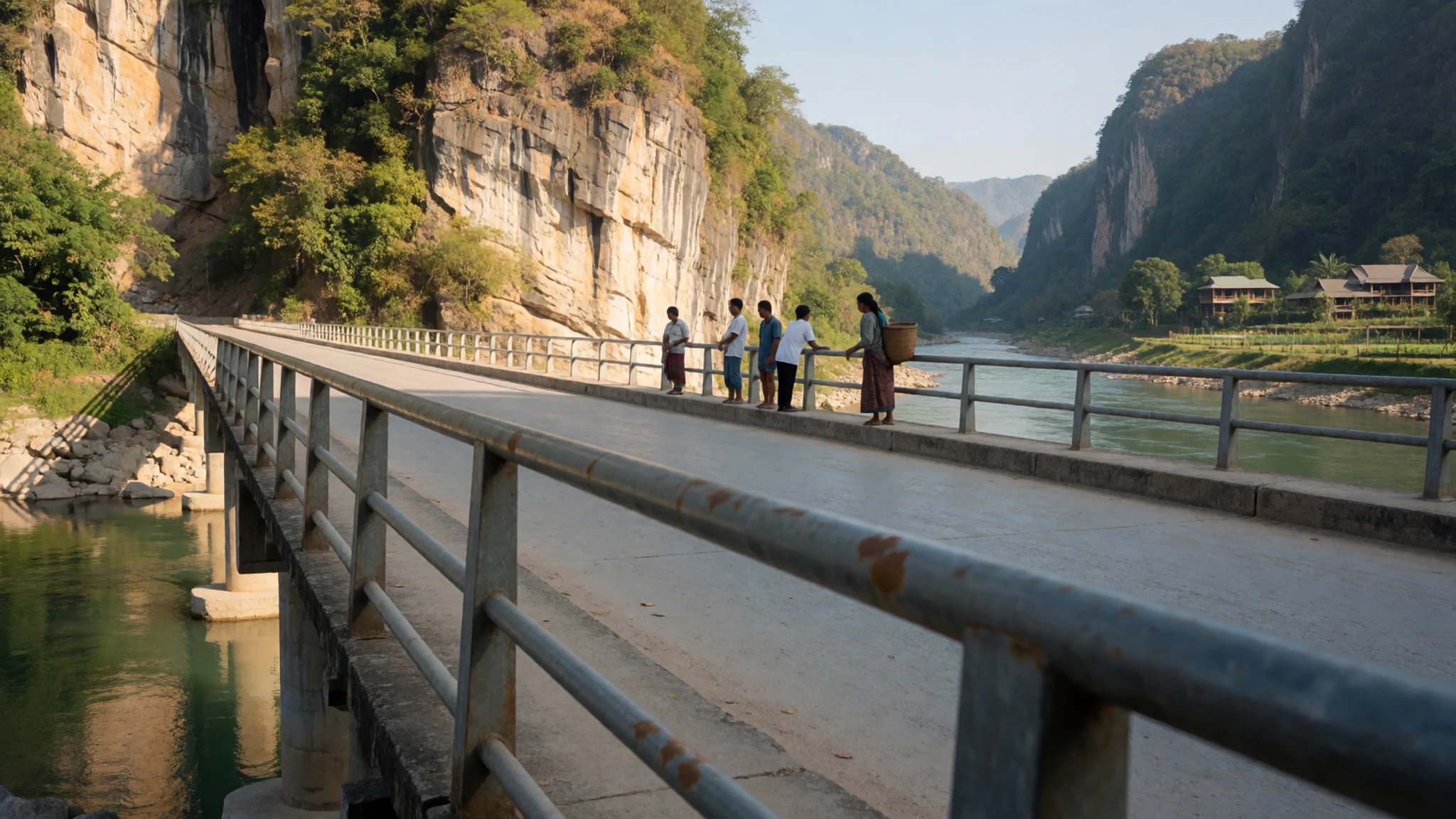
- The ridge viewpoint — Ridge above the village
The ridge above Nong Khiaw, often called the viewpoint, is a steep walk on a forest path from the edge of the village. The path is rooty and sometimes muddy, then exposed near the top, where the trees open onto a ledge facing the river and the karst opposite. From there the settlement is a thin line of roofs in a bend of water, closed in by rock.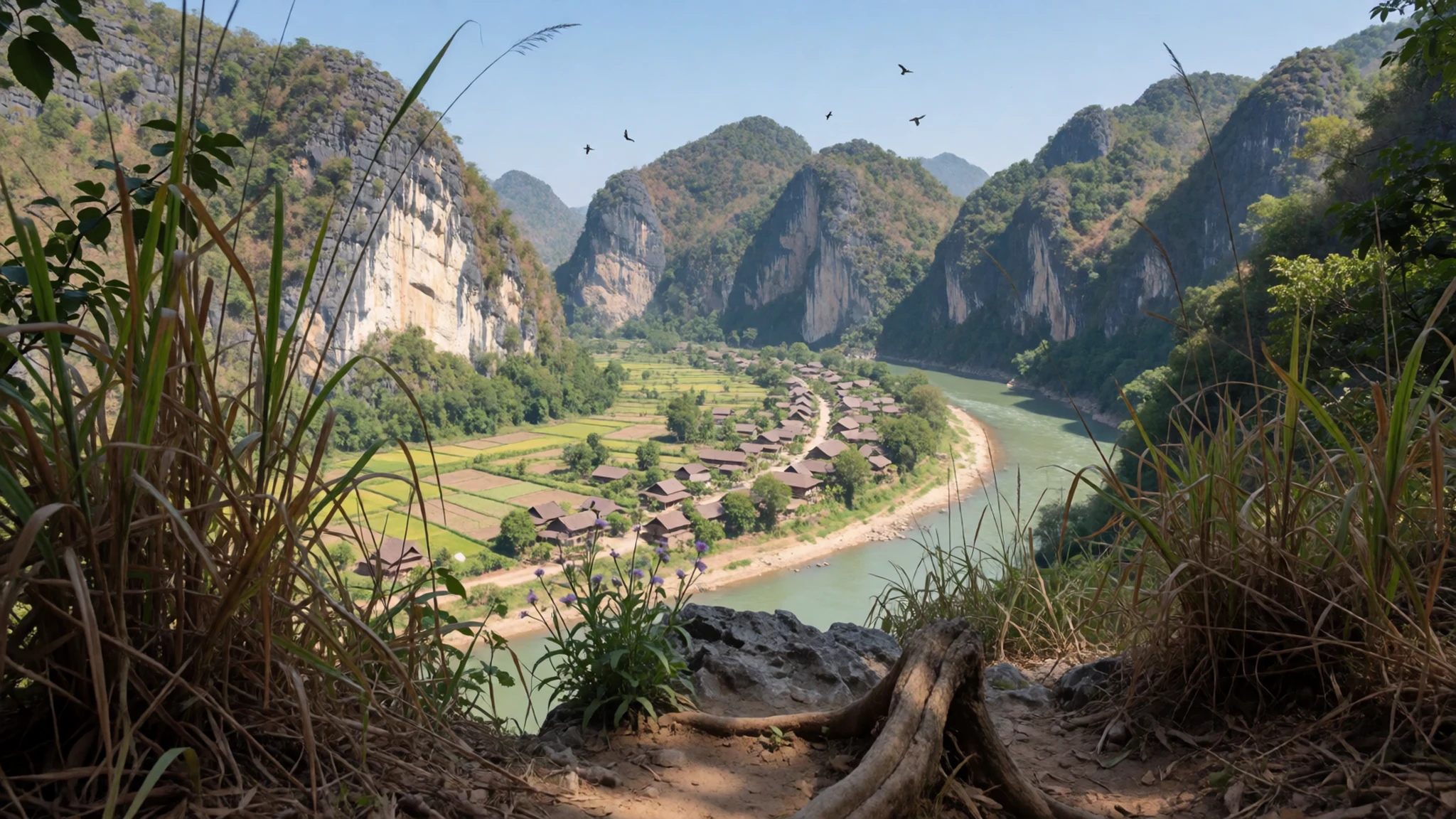
- Pha Tok — Edge of the village
Pha Tok, at the edge of Nong Khiaw, is a cave in the limestone that villagers used as shelter during the war, with a steep path continuing to a lookout above the valley. Inside, the cave is dim and cool, and the weight of the rock makes that history plain without a display. The climb beyond is roots and uneven footing, finishing in the open on a narrow perch.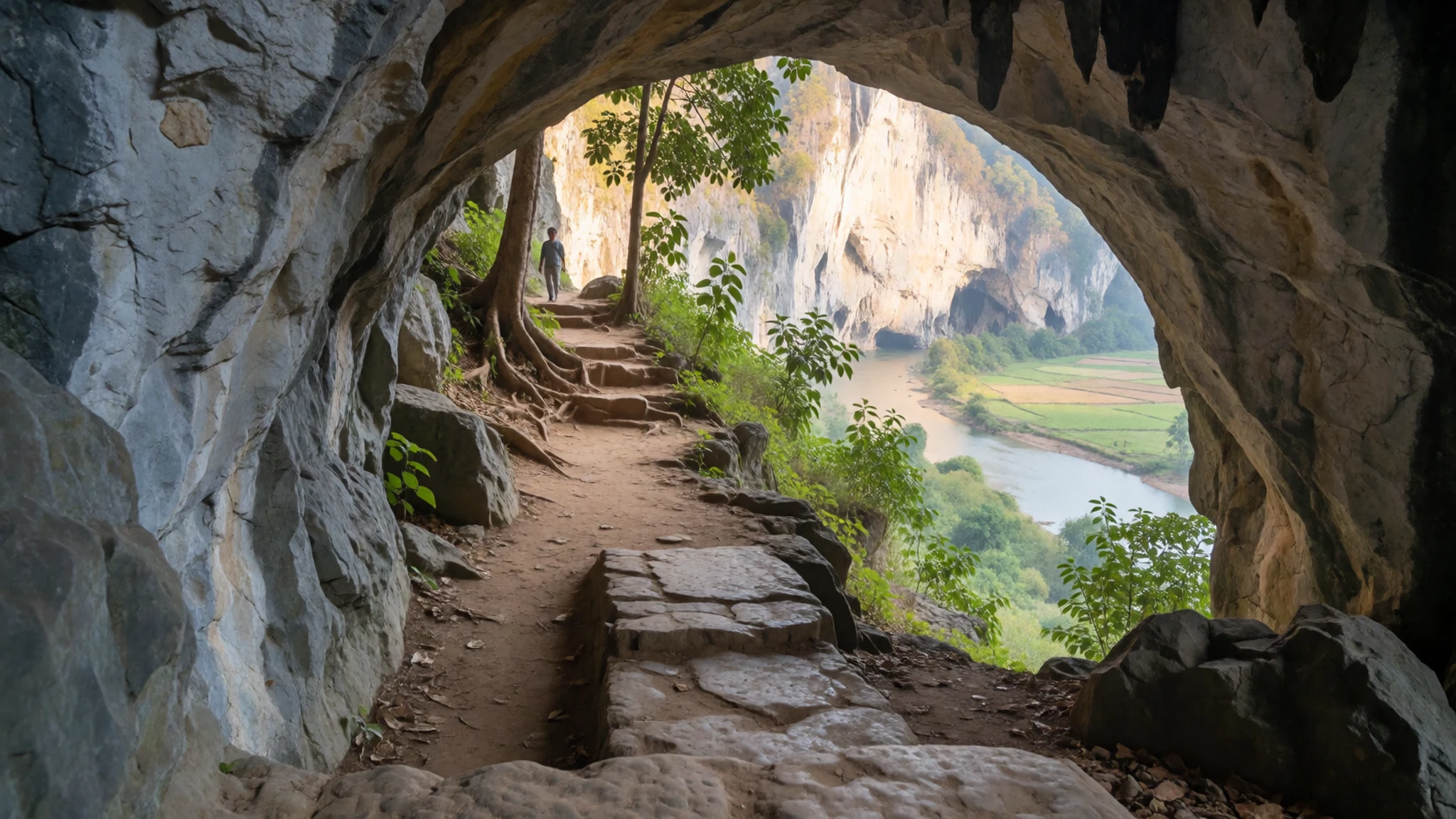
- A boat on the Nam Ou — Nam Ou riverbank
A boat on the Nam Ou is how Nong Khiaw still meets the villages upstream, and it is the right way to see the gorge rather than only the bridge. Long-tail boats leave from the riverbank when there are enough passengers, heading up between cliffs that drop straight into the river. Muang Ngoi, a smaller settlement upstream, is the usual turnaround for a walk, a swim and a slow lunch.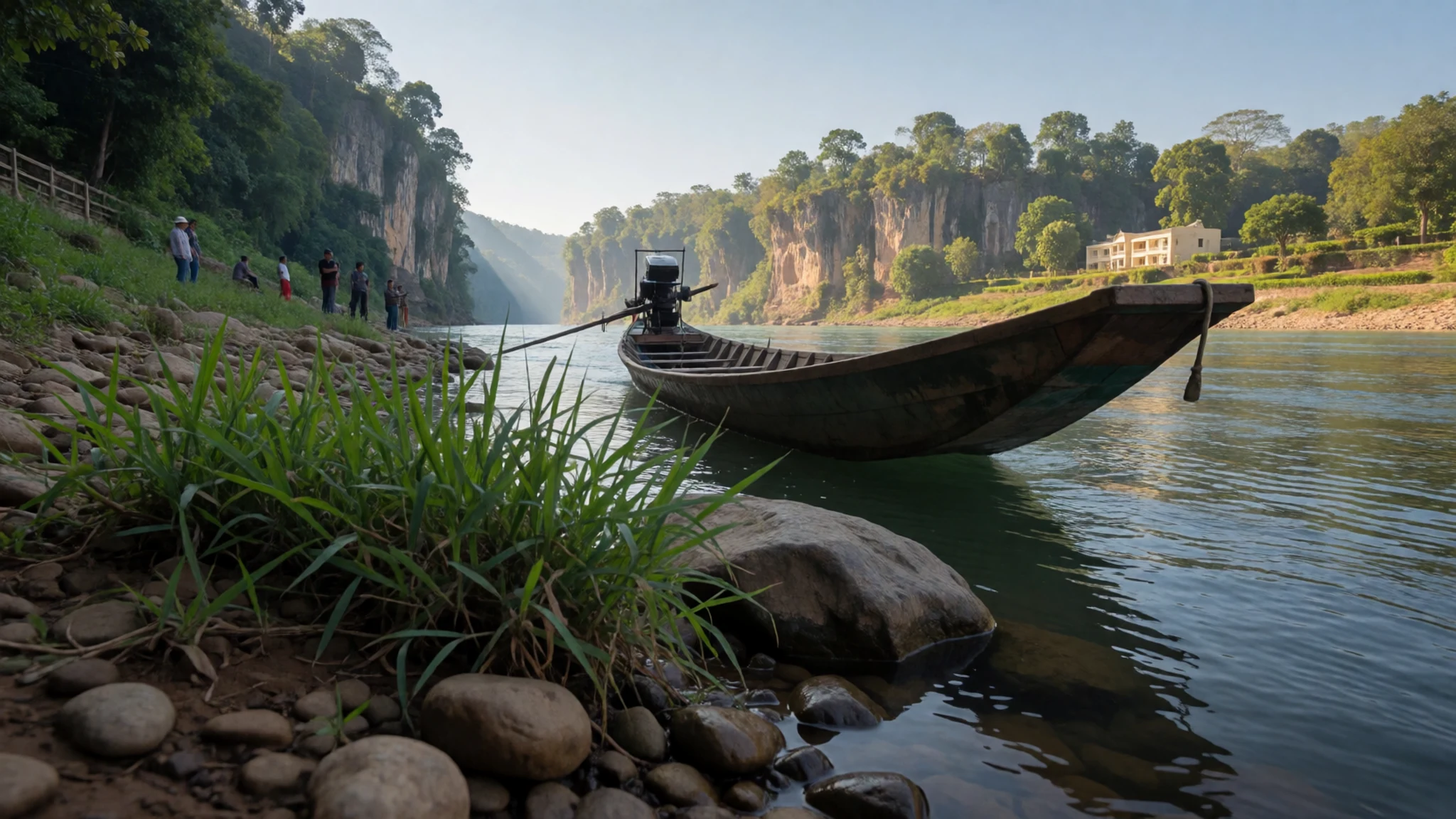
- The village lanes — Both banks of the village
The lanes of Nong Khiaw are short and worth more time than the map suggests. On the quieter bank a path follows the Nam Ou past gardens, moored boats and the odd guesthouse balcony, with the cliff rising immediately behind the houses. The bus-station side holds the small shops, the morning trade in fruit and snacks, and the place where minibuses turn around. Butterflies are common along the weedy edges.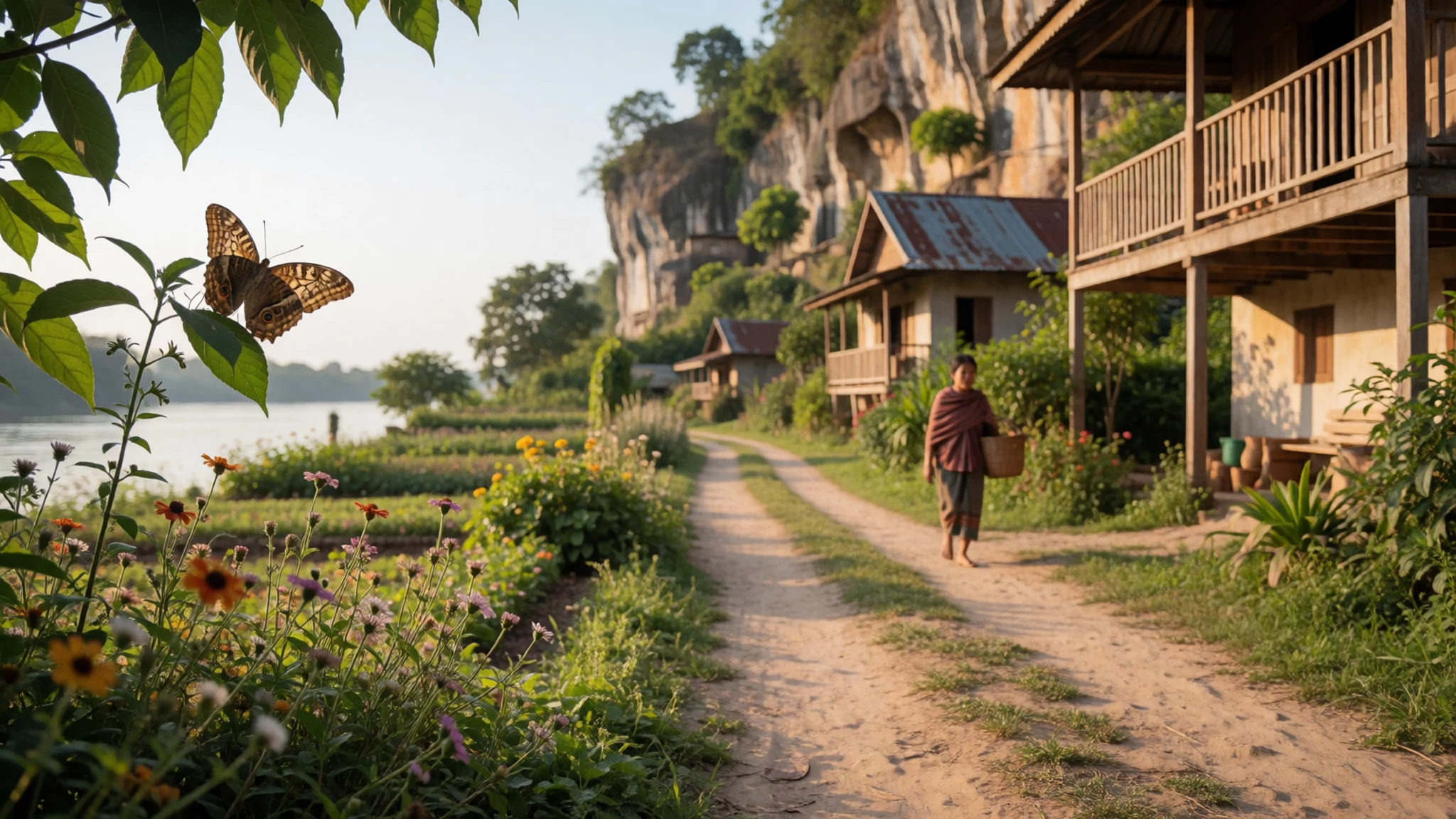
Culture
Nong Khiaw is a Lao riverside village with strong ties to the Khmu and Hmong communities in the hills around it, and that mix shows in language, markets and festival days more than in any monument. Daily life still follows the Nam Ou and the rice cycle: fishing, boats, plots on the flatter ground, and forest paths between hamlets. The local wat is a working Theravada temple, and mornings can include the alms round, when lay people offer food to monks. Festivals, ordinations and Lao New Year are when the sinh comes out and families travel in from nearby settlements. Hmong and Khmu houses, cloth and ritual calendars do not match the lowland Buddhist pattern, and a hamlet off the road is a home, best visited with a guide who knows the family. The war is still in memory and in the land: caves used as shelters, and a real caution about unexploded ordnance in forest off the trails. People are generally at ease with travellers who slow down and greet first. A nop, palms pressed together, is the ordinary hello, and Lao is the language of the valley while Khmu and Hmong carry the hills. At the wat in Nong Khiaw, cover shoulders and knees, take your shoes off before you step inside, and ask before you photograph a monk or anyone praying.
What to wear
In Nong Khiaw the traditional garment still seen on festival days and on some older women at the market is the sinh, a wrap skirt of cotton or silk, often with a woven border, worn with a fitted blouse and a simple shoulder cloth. Patterns are woven in indigo, red and muted gold, at home or by weavers towards Luang Prabang. Men's older dress is a plain jacket and trousers; the indigo cloth called mor hom is now uncommon on a weekday. Hmong women may wear embroidered jackets, pleated skirts and silver, and Khmu weaving has its own geometric bands; those clothes appear at ceremonies more than on market day. Motorbike riders wear t-shirts, jeans or football shirts and sandals; schoolchildren wear uniform; shopkeepers mix a sinh with a printed top. The valley is hot and humid for much of the year, cooler in the dry-season mornings and wet for a long stretch, so light cotton, a long-sleeved shirt and a thin rain layer are the useful base. Viewpoint paths are steep, rooty and often slippery, so closed shoes with grip belong on the trail and sandals belong on the bridge. At the wat, shoulders and knees should be covered and shoes come off at the door; swimwear stays at the river, not on the village street.
What to eat
- Laap — Guesthouse eateries and evening stalls on the main road
Laap in Nong Khiaw is minced meat or fish, cooked or raw-style depending on the stall, tossed with lime, fish sauce, herbs and toasted rice powder. It arrives with a basket of sticky rice and a plate of herbs and raw greens.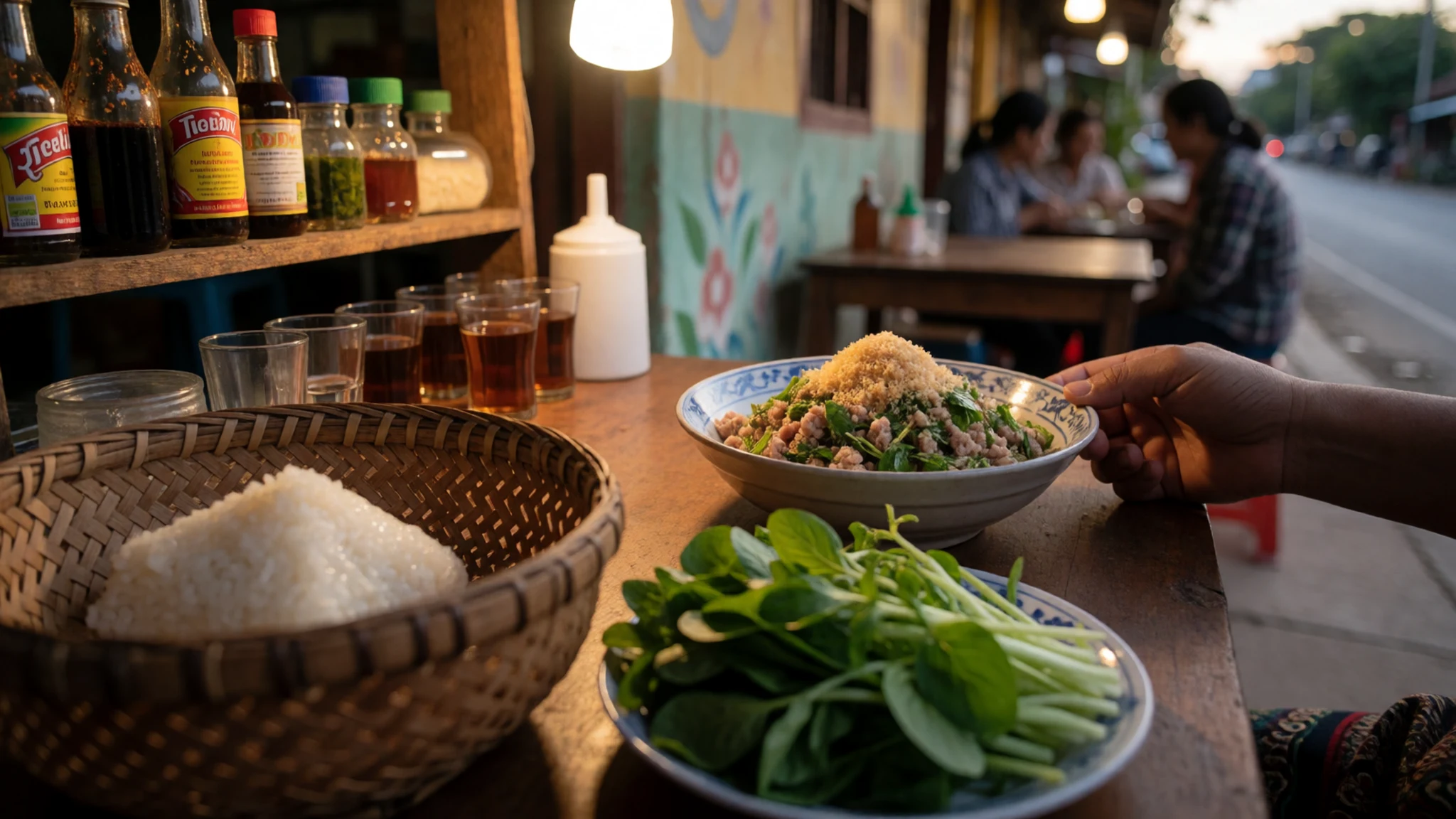
- Khao niao and jeow — Market stalls and guesthouse kitchens
Khao niao, sticky rice, is the staple beside almost every meal in Nong Khiaw, steamed in a basket and eaten with the hand, not with a spoon as the main event. Jeow, a pounded chilli dip of grilled tomato, garlic and herbs, is the usual partner.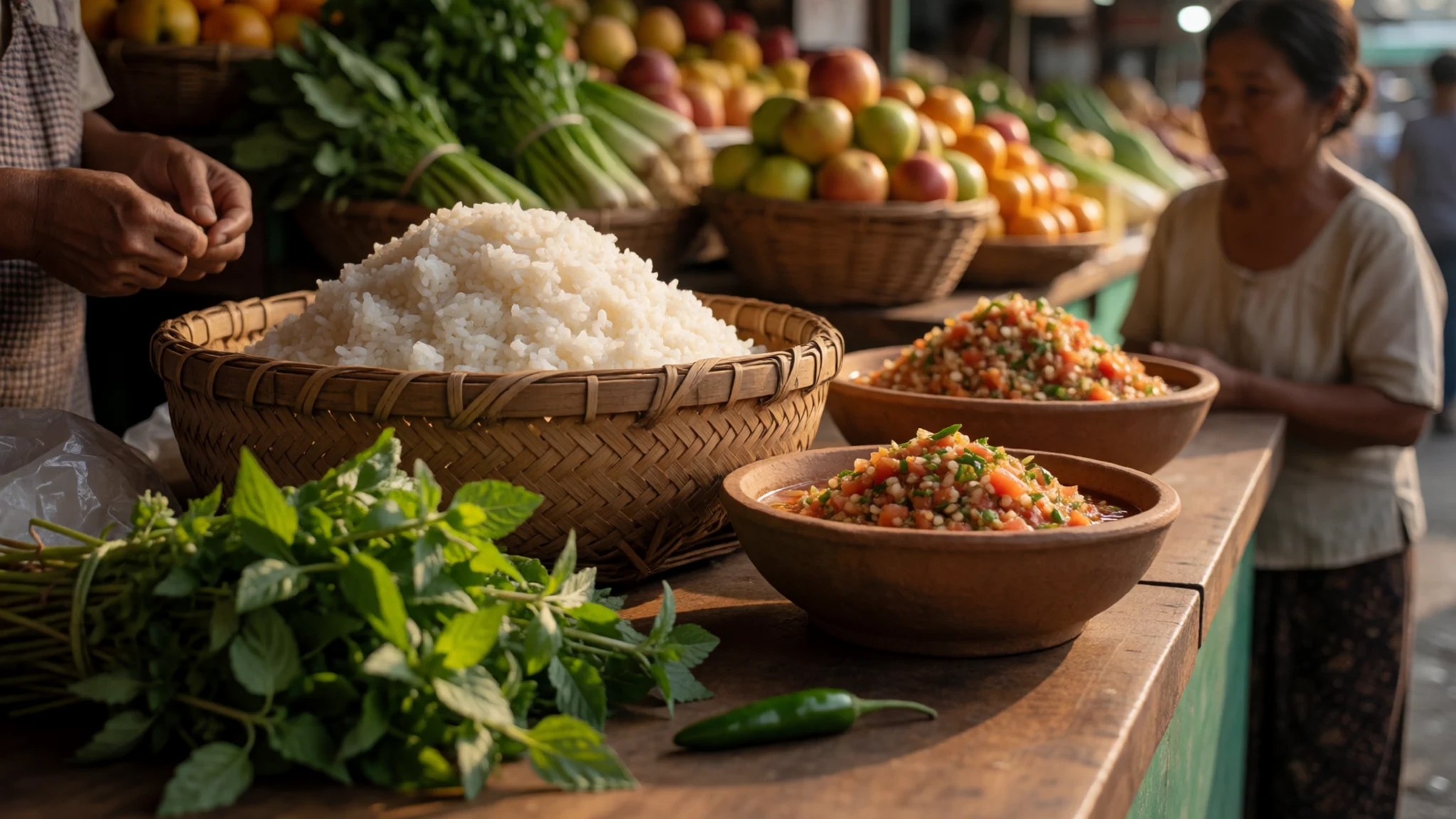
- Tam mak hung — Morning market and plastic-stool spots on the main road
Tam mak hung, the green-papaya salad, is shredded unripe papaya pounded in Nong Khiaw kitchens with garlic, chilli, lime and fish sauce, then eaten with sticky rice. Stalls mix it to taste, and a quieter version without extra chilli is a normal request. - Ping pa — Evening stalls near the bridge and riverside eateries
River fish from the Nam Ou, grilled over charcoal as ping pa, is a straightforward Nong Khiaw meal: a whole fish scored and brushed with herbs, garlic and a little fish sauce, served with sticky rice and a chilli dip. The flavour is smoke more than sauce. - Or lam — Guesthouse eateries on either bank
Or lam is the stew most kitchens around Nong Khiaw will recognise from Luang Prabang: eggplant, long beans or greens, wood-ear mushroom and dill in a light broth, often with a little meat, and a bitter note from the local herb sa khan when the cook has it.
Plan it
Best time. The comfortable months in Nong Khiaw are November to February, when the days are cooler and dry and the cliffs show clearly. March to May is hot, and field-burning can haze the valley. June to October is the rainy season, lush and quieter, with muddy paths and a stronger river.
How long. 2–3
Getting there. Luang Prabang is the usual airport for Nong Khiaw, and the last leg is a minibus or private van over the mountains into the village itself. Boats on the Nam Ou still link the village with smaller settlements upstream, including Muang Ngoi, when the river allows.
Budget. low
Tips
- In the dry season, book a riverside guesthouse ahead; the village has a short row of rooms and they fill.
- Start the viewpoint walks early, carry water, and wear shoes that grip on roots and dry mud.
- Carry cash, because card payments are uncommon beyond the larger guesthouses and small stalls expect kip.
- Stay on marked paths and do not leave them for caves or forest; unexploded ordnance is still found around Nong Khiaw.
Etiquette
- Remove shoes before entering a wat or a family home.
- Ask before photographing people, monks or a ceremony.
- Dress with covered shoulders and knees at the temple, and keep swimwear to the riverbank.
Nearby
Sources
- Wikidata (CC0)
- Wikipedia — Nong Khiaw (CC BY-SA 4.0)
- Wikivoyage — Nong Khiaw (CC BY-SA 4.0)