Nilaveli
Nilaveli, Sri Lanka
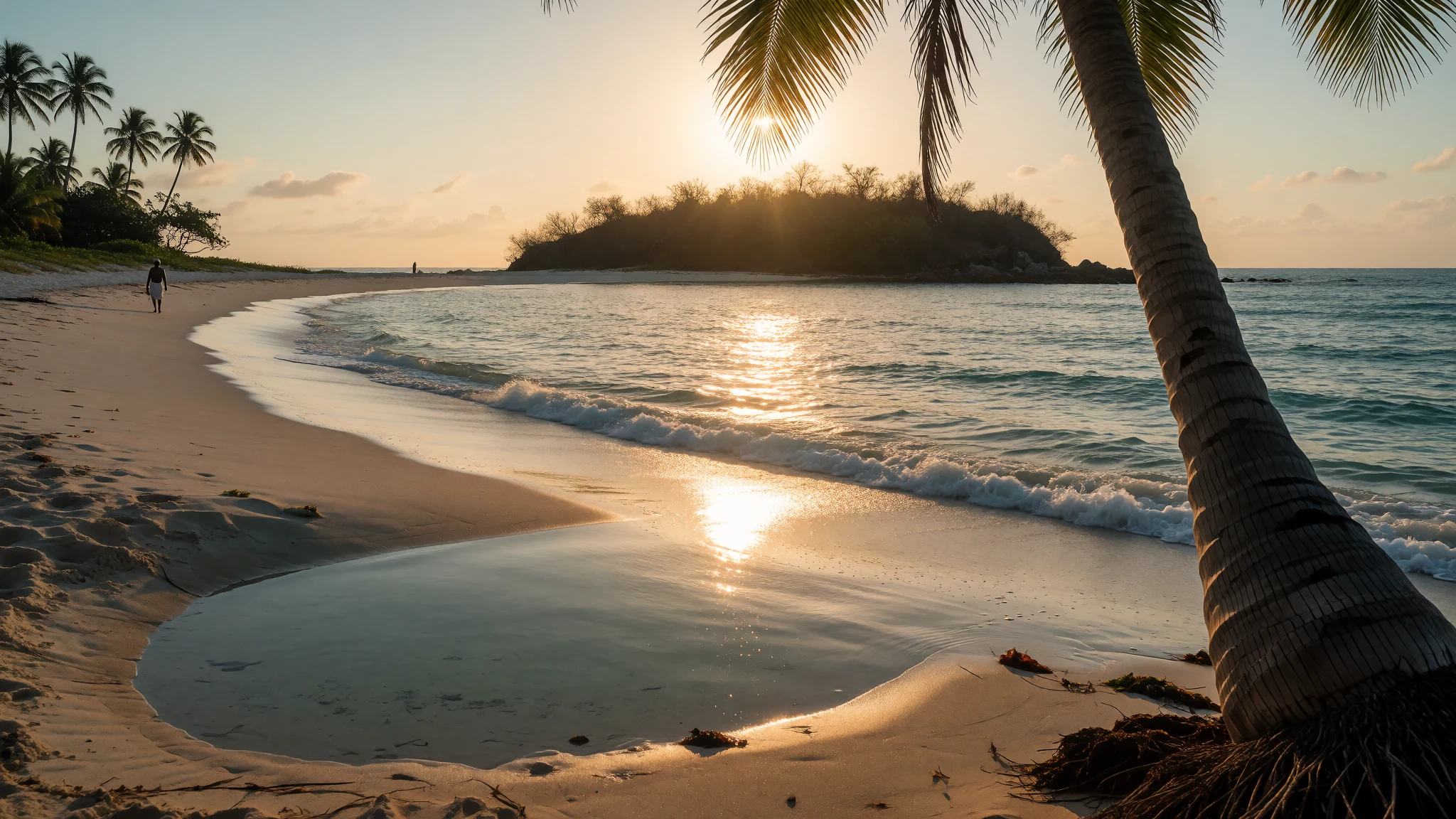
Nilaveli is a quiet Tamil beach village on Sri Lanka's east coast, with pale sand, calm water and a reef island offshore.
The place
Nilaveli is a small coastal village in Sri Lanka's Trincomalee District, on the north-east coast, about 16 km northwest of Trincomalee town. Its name is usually explained as 'moonlight over the land', from the Tamil nila and veli, and it suits the place: a long, flat shore of soft pale sand, backed by coconut palms and low scrub, with very little built up behind it.
The village is Tamil-majority and has been settled for a long time. Tourism took off again after 2010, but Nilaveli has kept a sleepy feel. Guest houses sit along a single main road, and most have a small kitchen of their own. There is no nightlife to speak of. Evenings mean a cold drink, a plate of rice and curry, and conversation with other travellers, of whom there are usually plenty in the dry season.
The main attraction is the sea. Pigeon Island National Park lies about 1 km offshore, and local boats run out to it for snorkelling over coral and reef fish. Back on land, the beach is wide enough that even in busy weeks it rarely feels packed. The neighbouring beach of Uppuveli, a short ride south, has more restaurants and a livelier traveller scene, so many people base themselves in one and visit the other.
The honest caveats are weather and expectations. The sea turns rough in the north-east monsoon, roughly December to March, and swimming is not recommended then. Shade on the beach is limited, midday sun is fierce, and facilities are simple. Nilaveli rewards people who want sea, sand and slow days rather than sights, shopping or a party.
Its story
Nilaveli's story is told mostly through its people and its coast rather than through monuments. The name, meaning moonlight over the land, hints at an old farming and fishing settlement where open ground and sea light were the defining features. Tamil families have lived here for a very long time, working paddy fields behind the shore and fishing in the shallows in front of it.
The written record includes a tenth-century Tamil inscription found at Nilaveli. It records a grant of dry and wet farmland to the Koneswaram temple in nearby Trincomalee, intended to cover the temple's daily running costs. It is useful evidence that the village was already farmed and organised then, and that its land helped support a major religious institution along the coast. It also shows how closely village life and the temple economy were tied together.
In modern times the coast has taken heavy blows. The 2004 Indian Ocean tsunami struck the east coast of Sri Lanka, and the long civil war then kept most visitors and investment away from the Trincomalee District. Tourism, which had been growing here, fell sharply. Families who had relied on guest houses, boat trips and small shops had to rebuild or look for other work.
Since 2010 visitors have come back steadily. Boat operators run snorkelling trips to Pigeon Island, now a national park, and guest houses have reopened or been built anew. Even so, Nilaveli remains a working village first. Paddy farming and fishing continue alongside tourism, and that mix is a large part of why the place feels grounded rather than staged.
What to see
- Pigeon Island National Park — Offshore, opposite Nilaveli beach
A small reef island about 1 km off the coast, reached by local boat from the beach. Snorkelling here brings turtles, colourful reef fish and sometimes black-tip reef sharks into view. Go early, when the water is clearest, and avoid touching the coral, which is easily damaged.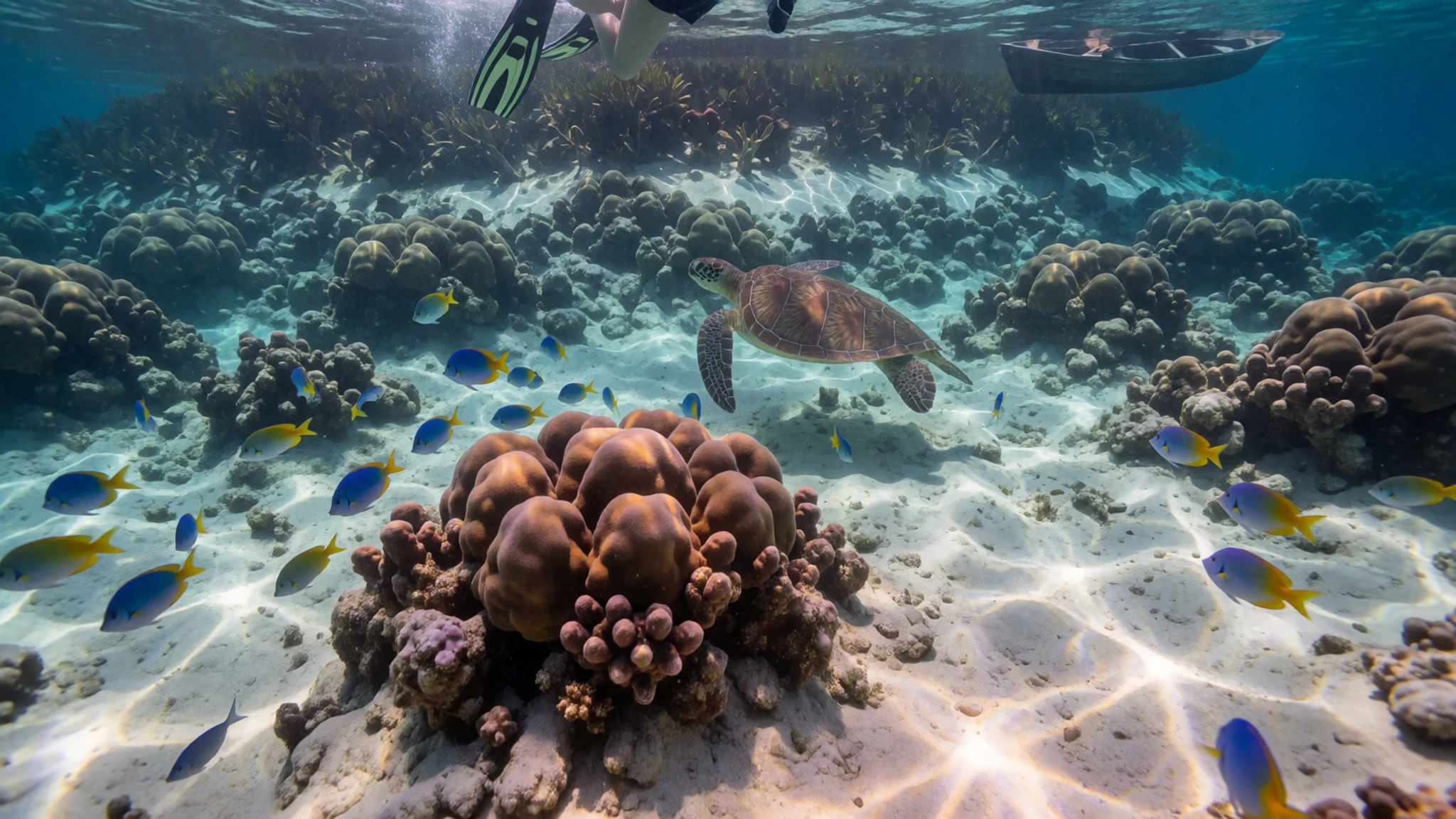
- Nilaveli Beach — Along the village shoreline
A broad stretch of soft pale sand with shallow water that is good for wading and swimming in the calmer months. Shade is thin, so bring a hat or take a spot under the palms. In the north-east monsoon the sea gets rough, and it is wiser to just walk the shore.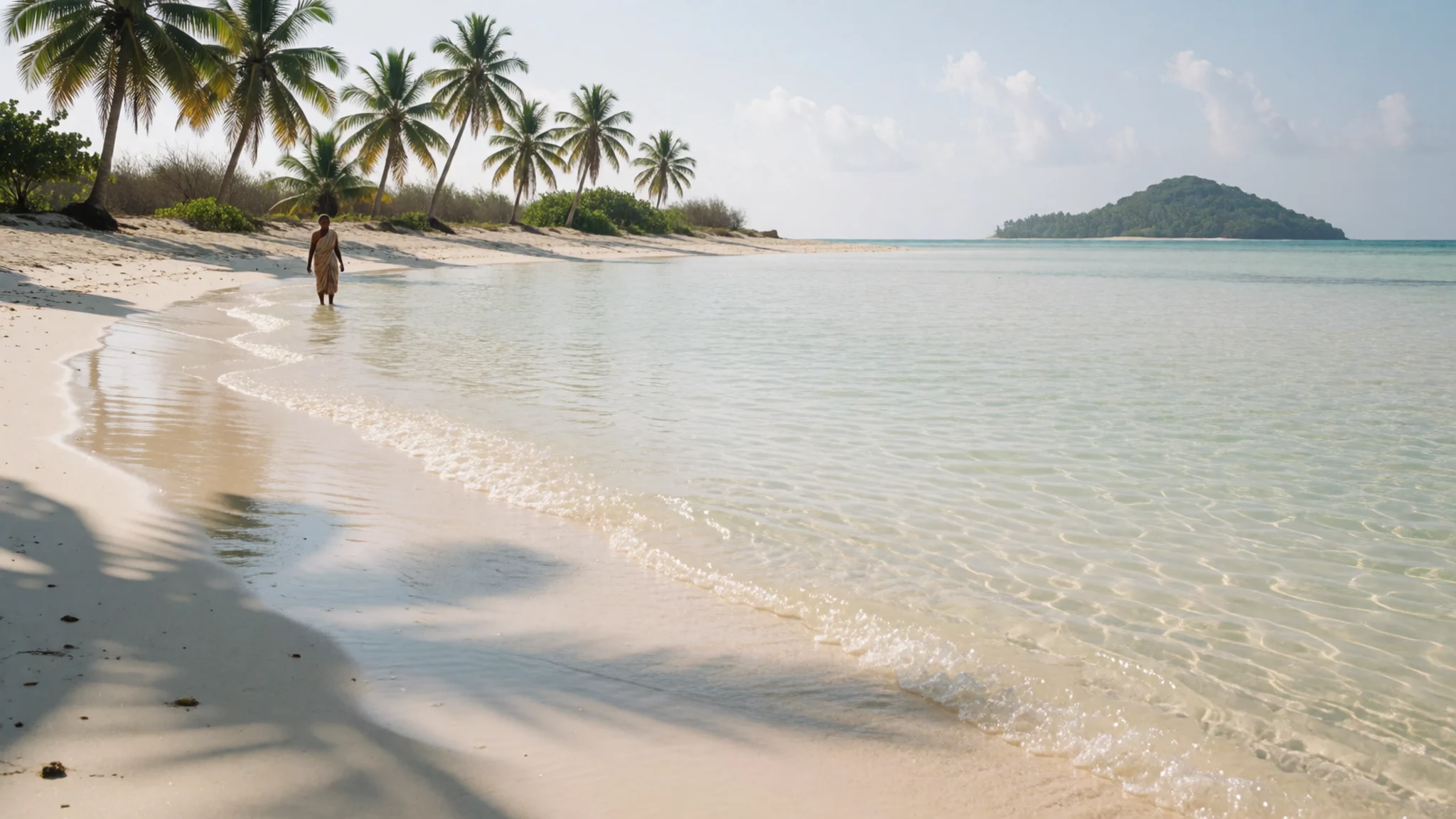
- Paddy fields behind the village — Inland, behind the main road
A short walk or cycle inland from the shore, rice fields show the farming side of Nilaveli's life. Farmers have worked this land for generations. Early morning and late afternoon are the best times to go, when light is soft and the heat is bearable. Ask before photographing people at work.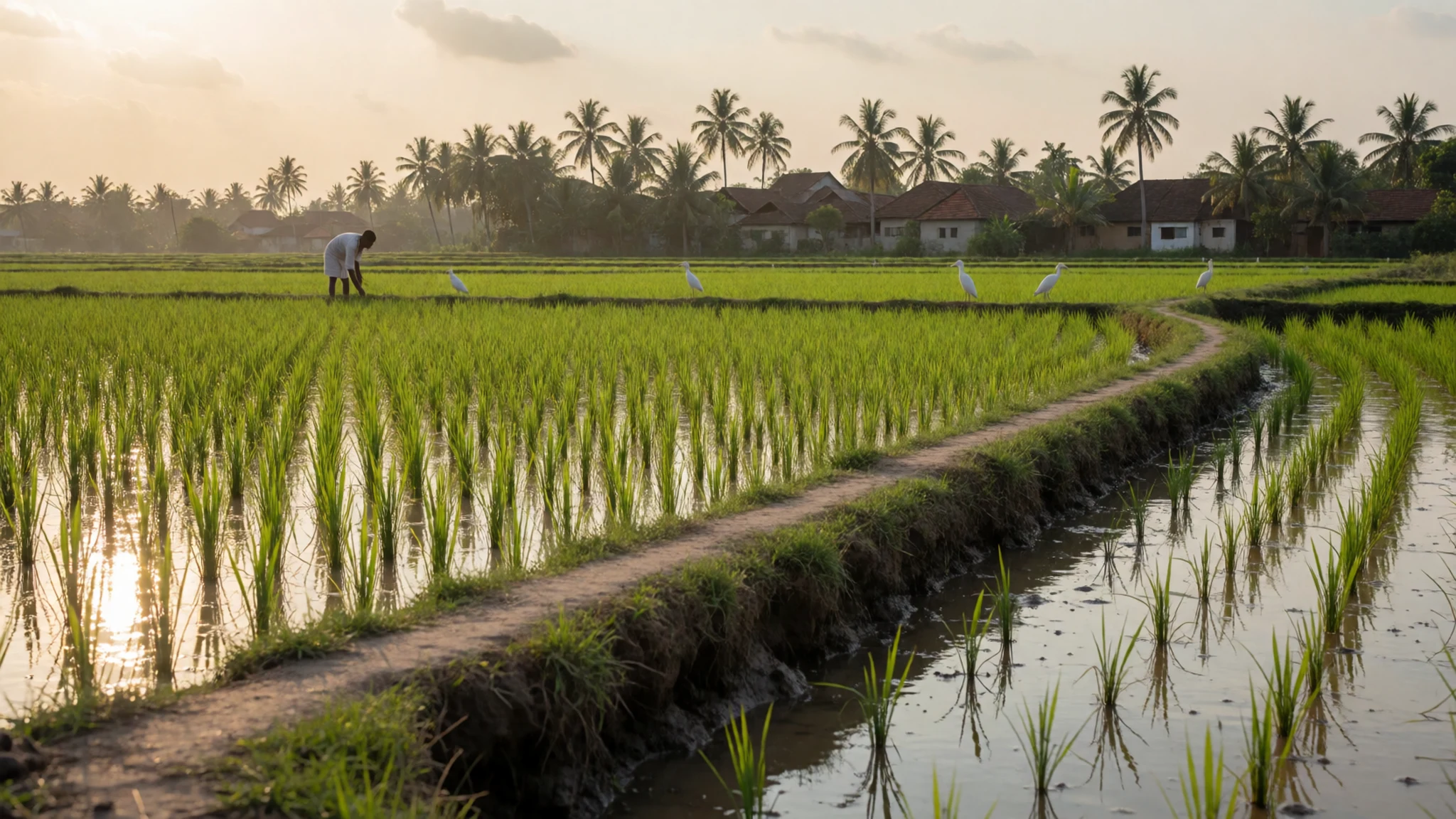
- The coast road north — North of Nilaveli along the coast highway
Rent a scooter and ride north along the highway, where empty beaches appear between palms and scrub. Roadside stalls sell simple lunches along the way. Ride carefully, carry water and fuel up before leaving, and keep an eye on the time so that you are back before dark.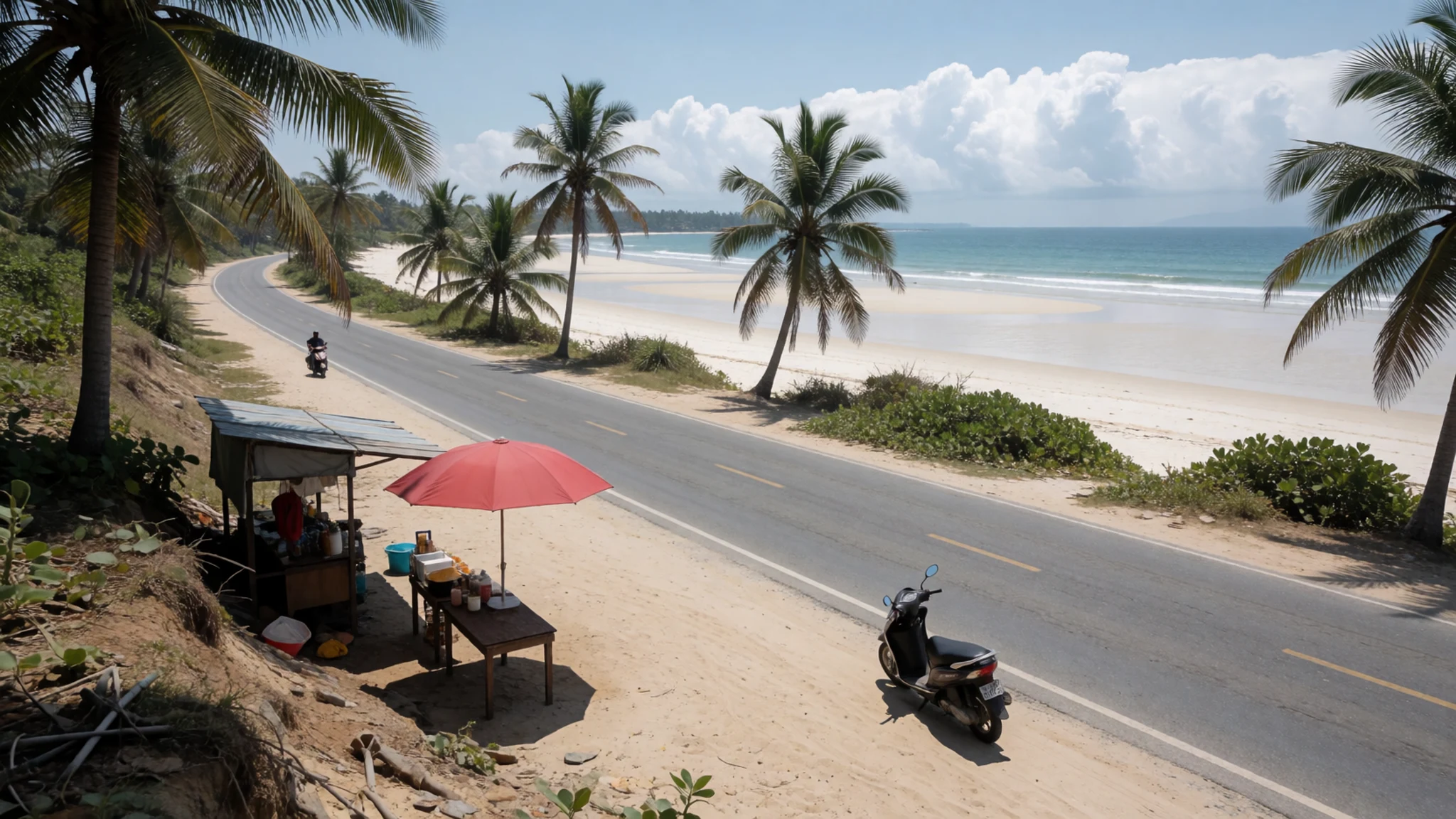
- The shore after dark — Quiet stretches of Nilaveli beach
Once the sun has set and the beach empties, hermit crabs come out and cross the sand in numbers. A slow walk with a small torch is enough to spot them. Keep the light low, step carefully, and leave the animals and their shells where you find them.
Culture
Nilaveli is a Tamil-majority village, and daily life here follows Tamil customs of hospitality, family and religion. Hindu temples and shrines, along with mosques and churches in the wider district, shape the rhythm of the week, and festival days can bring processions, music and road closures. The coast has also lived through war and the tsunami, and many families have personal stories of loss and rebuilding, so visitors do well to be curious without being intrusive.
Tamil is the main language of the village. Sinhala and English are also understood by many people who work with visitors, and a few words of Tamil, such as vanakkam for hello and nandri for thank you, are warmly received. Food is eaten largely with the right hand, and sharing a meal is a normal way of showing welcome.
The beach is a place of leisure for travellers, but it is also a working shore. Fishing boats are launched and hauled up here, and nets are mended on the sand, so it pays to keep clear of them and to treat equipment as someone's livelihood. Alcohol is available at some restaurants and shops, but public drunkenness is frowned upon, and the village is not a party destination.
If you want to photograph fishermen, farmers or families, ask first, smile, and accept a refusal graciously, and dress modestly once you leave the sand and walk into the village.
What to wear
Nilaveli's traditional dress follows Tamil custom. Women wear the sari, usually in cotton for everyday use and silk for weddings, temple visits and festivals, often with a blouse and sometimes a shawl. Men wear the veshti, a length of unstitched cotton wrapped at the waist, usually white or with a coloured border, along with a shirt or an angavastram, a shoulder cloth. These are most common at ceremonies and on festival days, when colour and fabric are at their best.
In daily life, most people dress for heat and work. Men wear cotton shirts with trousers or a sarong, while many women wear saris, salwar kameez or simple long dresses. Fishermen and farmers favour light, quick-drying clothes and a cloth wrapped around the head against the sun. Younger people tend towards jeans, T-shirts and sports gear, particularly in Trincomalee town.
Visitors should dress for a hot, humid coast. Light cotton or linen shirts, loose trousers or long skirts work well, and a hat and sunglasses are essential. Swimwear is fine on the beach, but cover shoulders and knees when walking through the village and put on a shirt or wrap before visiting a temple, mosque or shop. A long-sleeved rash vest protects against sun and is useful for snorkelling. Sandals or flip-flops suit the sand, while sturdier shoes help on the roads and tracks inland. Many temples require shoes to be removed, so slip-ons are practical.
What to eat
- Fish curry with rice — Guest house kitchens and small family eateries on the main road
The staple of this coast: fresh local fish simmered in a spicy, tangy coconut-based gravy and served with rice and a few vegetable side dishes. Guest house kitchens and small family eateries along the main road serve it daily, usually with the catch of the morning.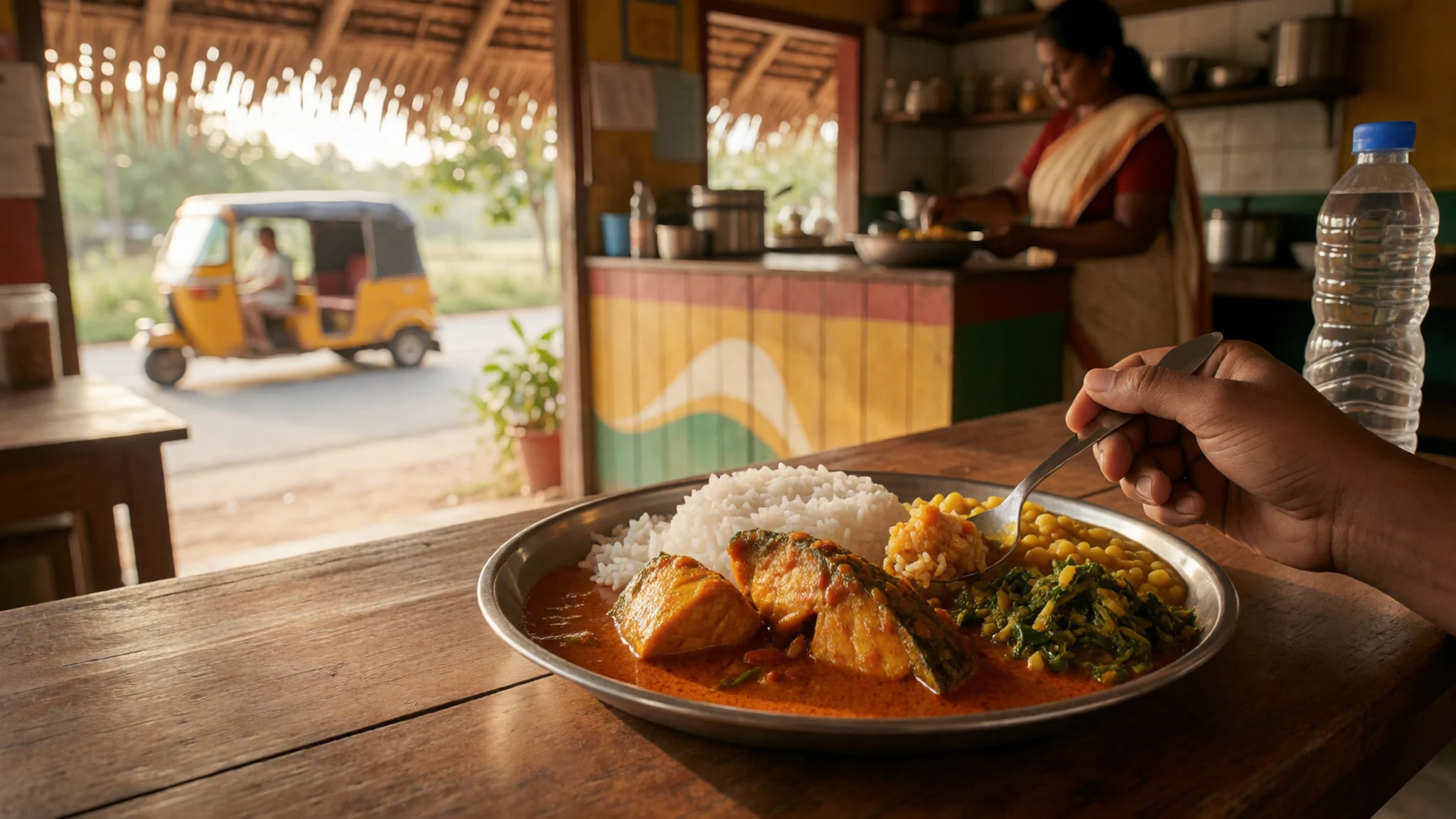
- Crab curry — Seafront restaurants and guest houses, usually by prior request
Sri Lanka's north-east is known for crab cooked in a thick, peppery gravy, eaten by hand with plenty of napkins. Ask at your guest house or at a seafront restaurant a day ahead, since good crab depends on what the fishermen have brought in.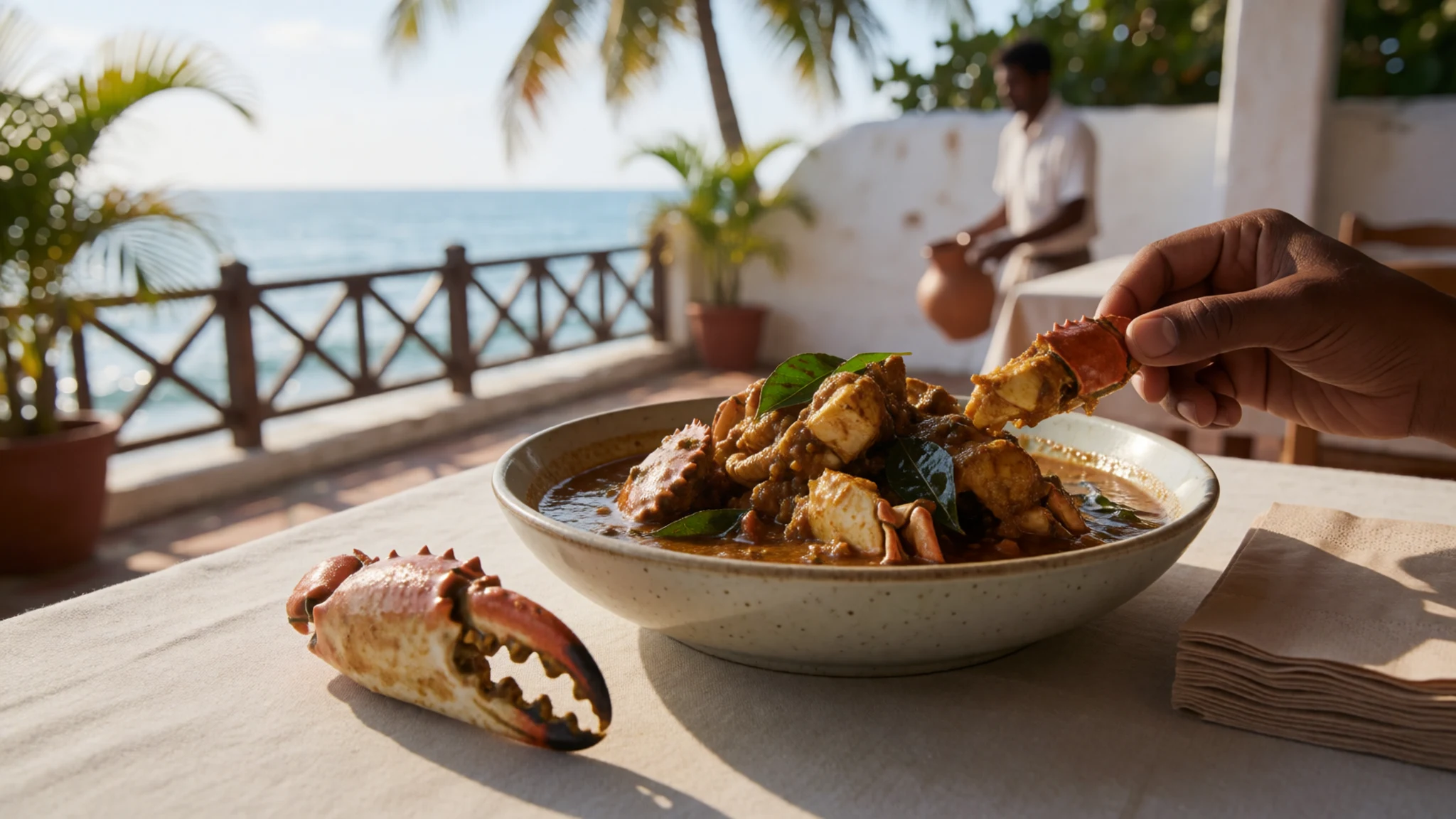
- Kottu roti — Roadside stalls and small eateries, especially in the evening
Chopped flatbread stir-fried on a hot griddle with vegetables, egg or chicken and spices, usually announced by the rhythmic clatter of metal blades. It is filling, cheap in comparison with seafood, and a reliable dinner after a day in the sun. - Hoppers and string hoppers — Breakfast at guest houses and small tea shops
Hoppers are thin, bowl-shaped pancakes made from fermented rice batter, often with an egg cooked in the middle. String hoppers are steamed nests of rice noodles. Both are breakfast staples, eaten with coconut sambol, dhal or a mild curry. - Fresh coconut water — Roadside stalls and beach-side vendors
After a morning on the beach or a hot ride north, a freshly cut king coconut is the simplest way to rehydrate. Vendors cut them open on the spot, then scoop out the soft flesh for you to eat once the water is gone.
Plan it
Best time. May to September, when the east coast is at its driest and the sea is calmest, which makes snorkelling at Pigeon Island and swimming most reliable. It is hot and humid then, so go early or late in the day. The north-east monsoon, roughly December to March, brings rough water and makes swimming unwise.
How long. 2–3
Getting there. The nearest major airport is Colombo's Bandaranaike International Airport, followed by a long road or rail journey to Trincomalee, which has the nearest train station, about 16 km away. For the last leg, take a tuk-tuk or taxi from Trincomalee to Nilaveli, about 25 minutes. Agree the fare before setting off or use a ride-hailing app.
Budget. mid
Tips
- Book guest houses ahead for the dry-season months, as the better ones fill up
- Go to Pigeon Island in the morning, when the water is calmest and the light is best
- Carry some cash, as small shops, stalls and boat operators may not take cards
- Bring reef-safe sunscreen, a hat and plenty of drinking water
- Check the national park's official page or ask your guest house about current entry arrangements and boat operators
Etiquette
- Do not touch or stand on coral while snorkelling
- Cover up away from the beach, especially near temples, mosques and villages
- Ask before photographing local people
Nearby
Sources
- Wikidata Q7036906 (CC0)
- Wikipedia: Nilaveli (rev 1374774042) (CC BY-SA 4.0)
- Wikivoyage: Nilaveli (rev 5385826) (CC BY-SA 4.0)
- Photo: Nillaveli Beach, Anton 17 (CC BY-SA 4.0)
- Photo: A hermit crab emerges from its shell, Satheesha J. (CC BY-SA 4.0)
- Photo: Agri village, Sahath ma (CC BY-SA 4.0)
- Photo: Bade Tag, aachim3 (CC BY 3.0)
- Photo: Nilaveli beach, Rudolph.A.furtado (CC0 1.0)
- Photo: Couple on Nilaveli Beach, Adam Jones (CC BY-SA 2.0)
- Photo: Farmer, Sahath ma (CC BY-SA 4.0)
- Photo: Gem underwater, Kuldeep Subasinghe (CC BY-SA 4.0)


Wildlife
- Green sea turtle (animal)
The green sea turtle is a big, gentle sea reptile that eats only seagrass, and it is named for the green tinge of its fat, not its shell, which is olive to nearly black. Snorkellers at Nilaveli may spot turtles in the water alongside colourful reef fish. Ask a local guide when and where they are likeliest. Keep a respectful distance, stay quiet and slow in the water, and never feed or touch it.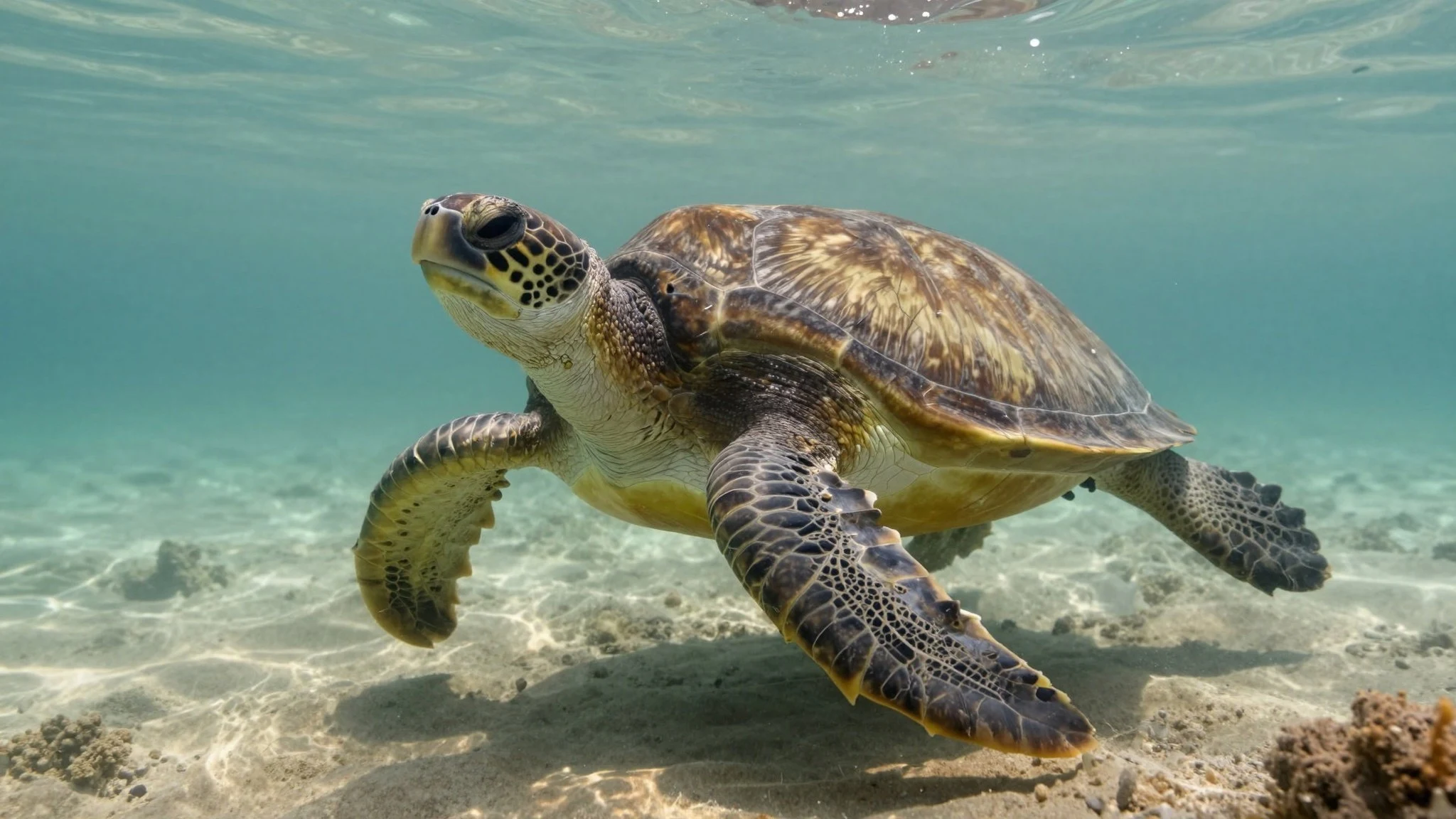
- Blacktip reef shark (animal)
Blacktip reef sharks are easy to remember: they look as if they dipped their fin tips in ink. They like shallow water close to shore, over sandy flats and along the edges of reefs, and at Nilaveli snorkellers sometimes glimpse one. Go with a local guide, who can say when to look. Keep a calm, respectful distance, move quietly, and never feed the shark.