Naryn
Naryn, Kyrgyzstan
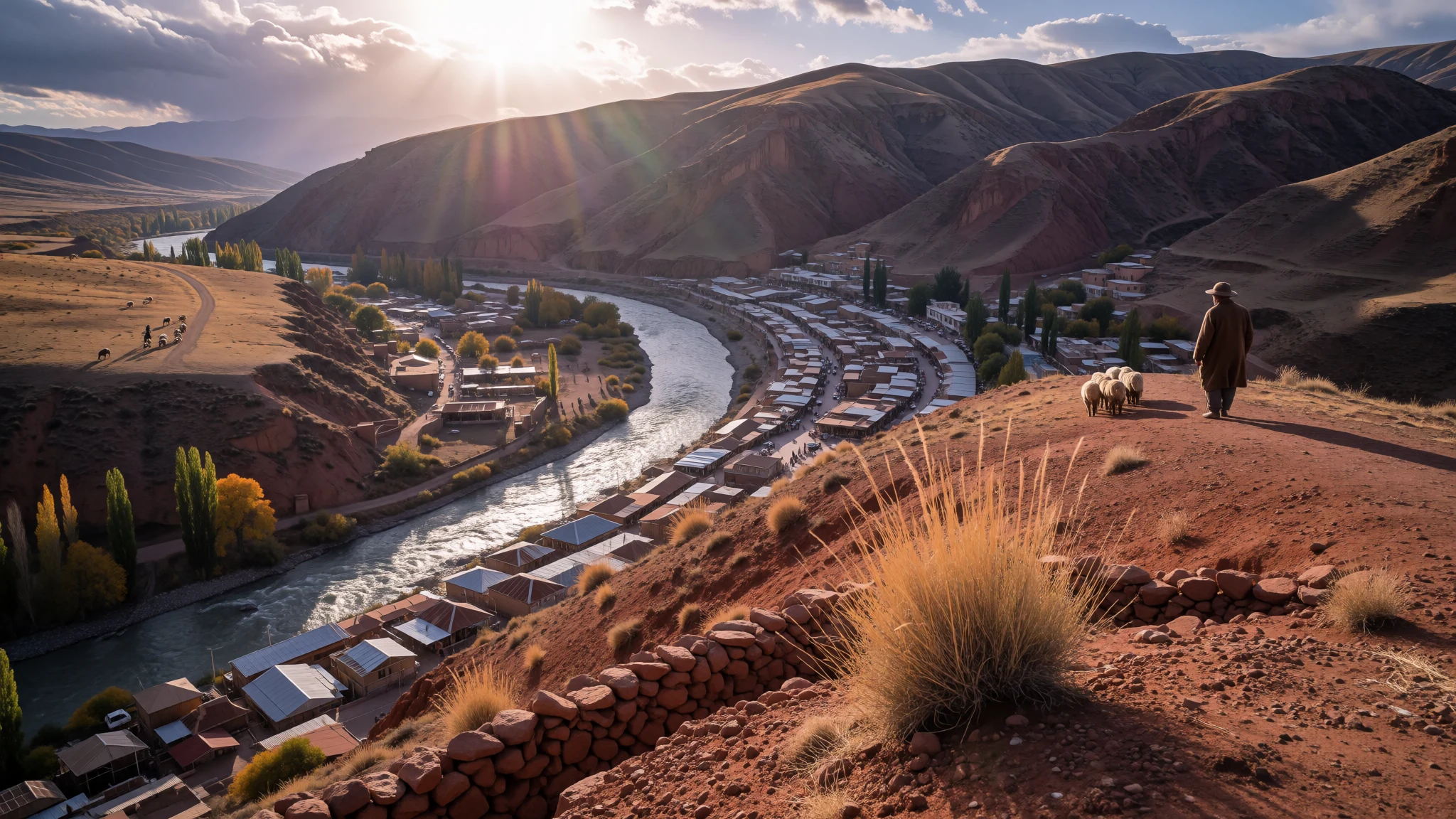
Naryn is a high, red-hilled Kyrgyz river town, a quiet base for Silk Road caravan stops and mountain days out.
The place
Naryn is the provincial capital of a mountain region in central Kyrgyzstan, home to 41,419 people at an elevation of 2,044 metres. It is a working administrative town rather than a showpiece, with Soviet-era apartment blocks, a bazaar, government offices, two regional museums and a modest scatter of guesthouses.
Its real asset is the setting. The Naryn river, one of the main headwaters of the Syr Darya, has cut a gorge straight through the settlement, so streets sit on both banks and the valley feels narrow and dramatic. Above the roofs the hills are bare and red, and a short climb up any of them gives a clear view of the whole town.
The climate is cold semi-arid with strong continental swings: bright, dry days, chilly nights even in summer, and long hard winters. The thin air is easy to notice on a brisk uphill walk.
Most travellers use Naryn as a pause and a base. It sits on the road from Bishkek into the high interior, and it is the usual gateway to Tash Rabat, an old caravan stop in the hills. A day is enough for the mosque, the statues and the views; a second or third day tends to go to the countryside. Evenings are quiet and the food is hearty. Naryn suits people who come for the road and the mountains, not for nightlife or shopping.
Its story
Naryn began in 1868 as a Russian fortress on a caravan road linking Kashgar with the Zhetysu lowlands, also known as Semirechye. The order came from the imperial governor of Turkestan, and the aim was practical: hold a crossing in a valley that traders, soldiers and messengers all had to use.
The road was old long before the fort. Koshoi Korgon, a ruined medieval fortress an hour or so up the route towards Tash Rabat, is traditionally tied to a companion of Manas, the hero of Kyrgyz epic. Tash Rabat itself, a stone lodging for caravans, shows what a night on the Silk Road once looked like.
The Soviet decades gave Naryn its present look: rectangular apartment blocks, wide roads and public statues, including a Lenin that is still visible from the main road. After the Soviet Union dissolved, the town remained the provincial capital and picked up new layers, among them a blue-tiled mosque and a tourism trade built around family guesthouses arranged through a community network.
The fortress is long gone as a fortress, but Naryn still does the job it was founded for. It holds a crossing in a narrow valley and gives people on the road somewhere to sleep, eat and wait out the weather.
What to see
- Naryn Central Mosque — Central Naryn
The central mosque is the town's most striking building, its façade and minaret covered in blue tile in a style that recalls the old Silk Road cities of Bukhara and Samarkand. Against plain Soviet housing the contrast is the point, and a short visit is worthwhile. Dress modestly and ask locally about visiting times.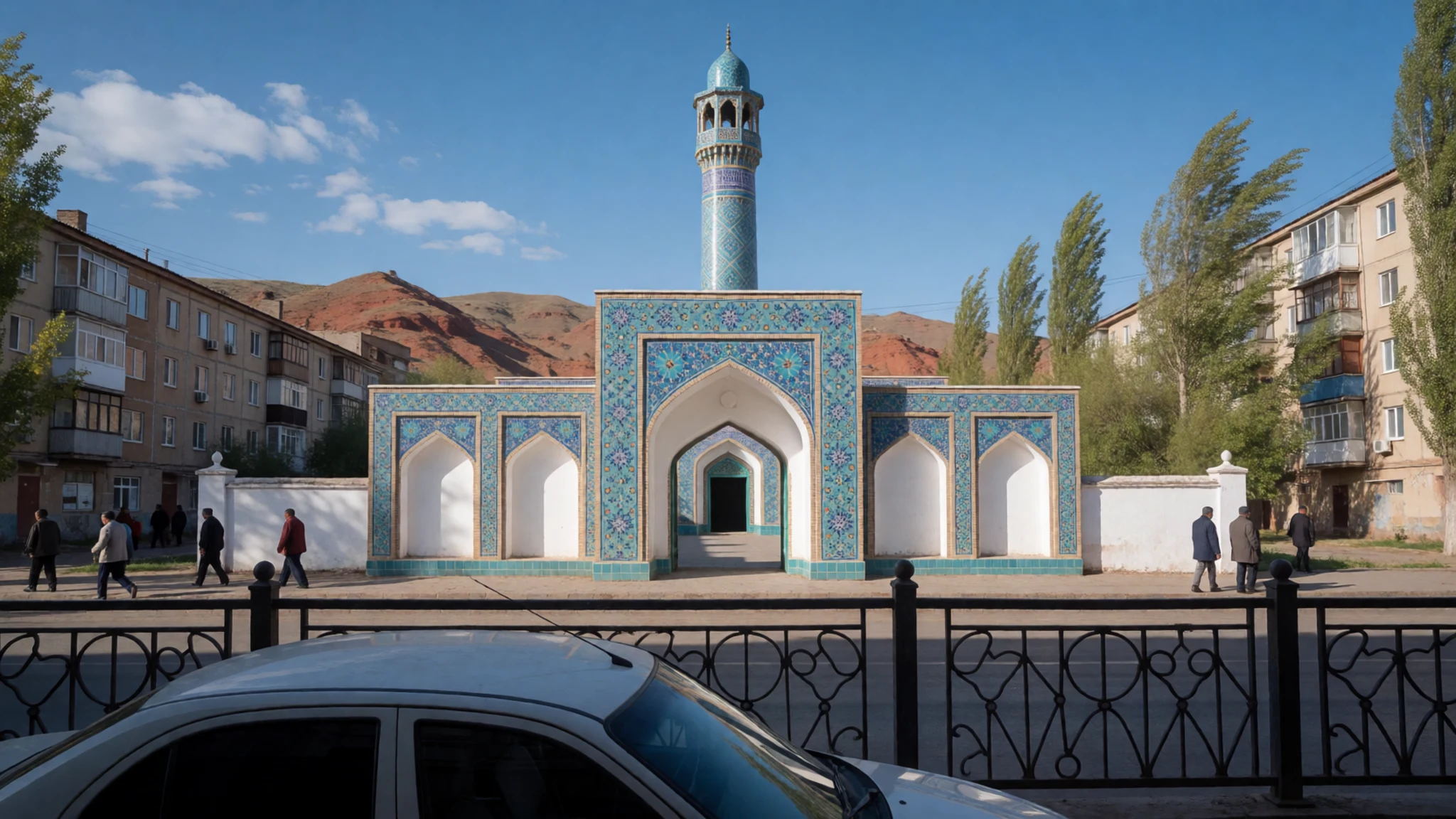
- The red hills above town — Hills around the town
The bare red hills that close in around Naryn make the best free viewpoint in the area. A short climb from almost any street lifts the walker above the roofs, with a clear look at the river gorge, the blocks of flats and the valley beyond. Morning or late afternoon light warms the rock nicely.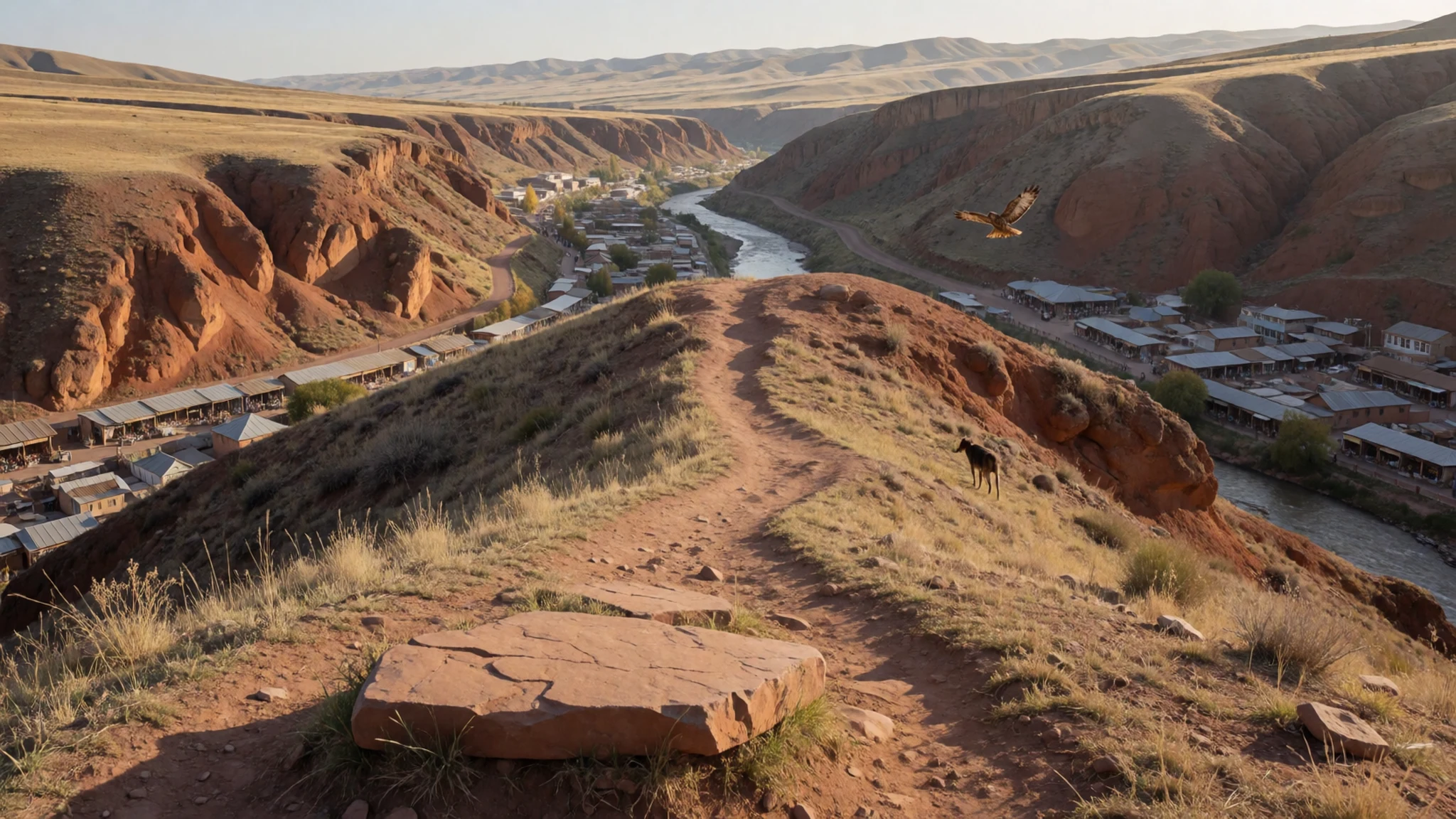
- Statues along the main road — Main road and central square
Several statues stand along Naryn's main road and in the central square, and together they read like a short course in local history. A Lenin figure survives from the Soviet era, while an equestrian monument dedicated to the younger generation reflects the national mood since independence. All are easy on foot.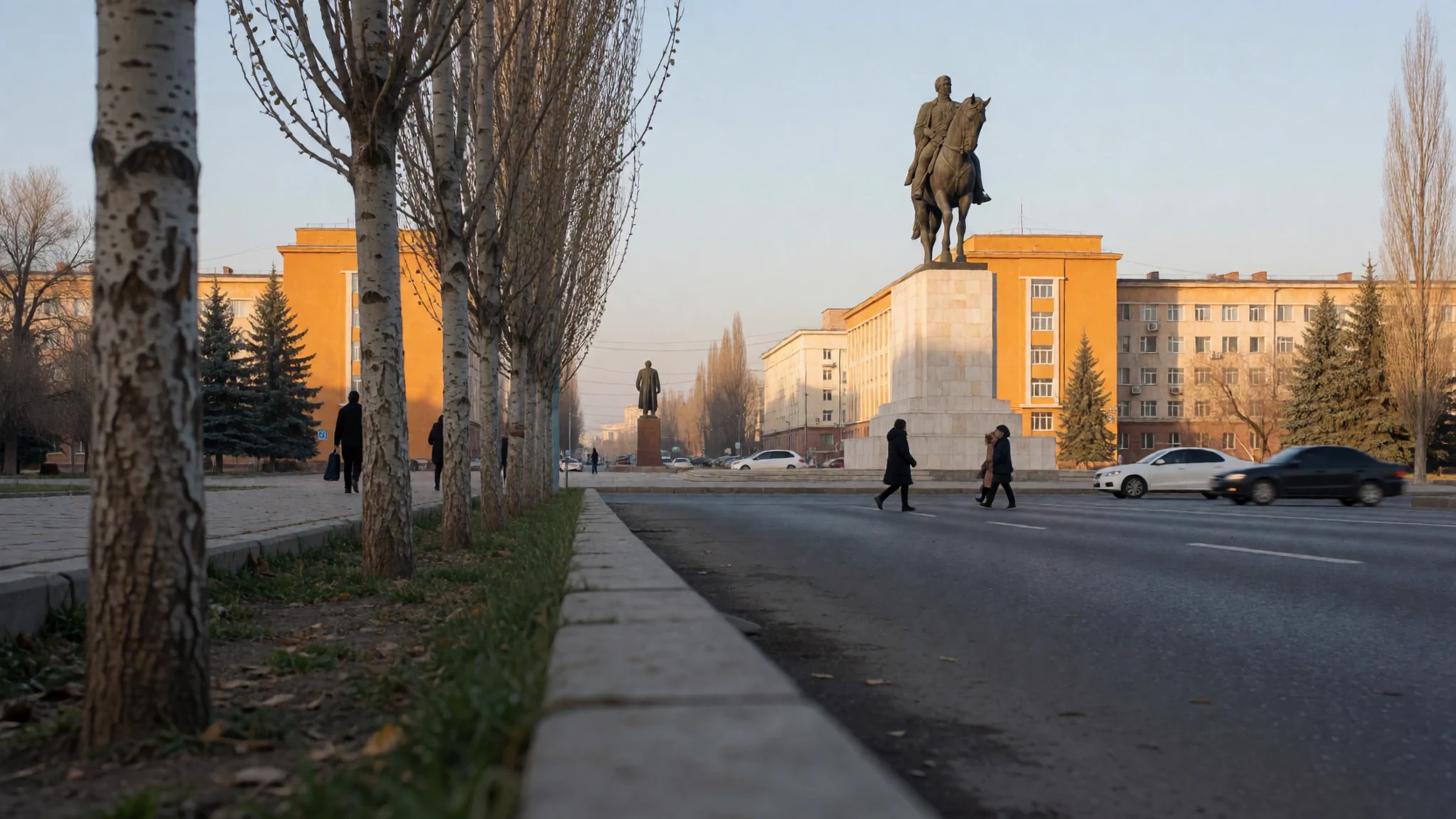
- Koshoi Korgon — On the road towards Tash Rabat
Koshoi Korgon is a ruined medieval fortress where only the walls survive, about an hour's drive from Naryn on the road to Tash Rabat. Tradition says a companion of the hero Manas is buried here. A small museum stands nearby. It is an easy stop on the way to or from Tash Rabat, so ask the driver to include it.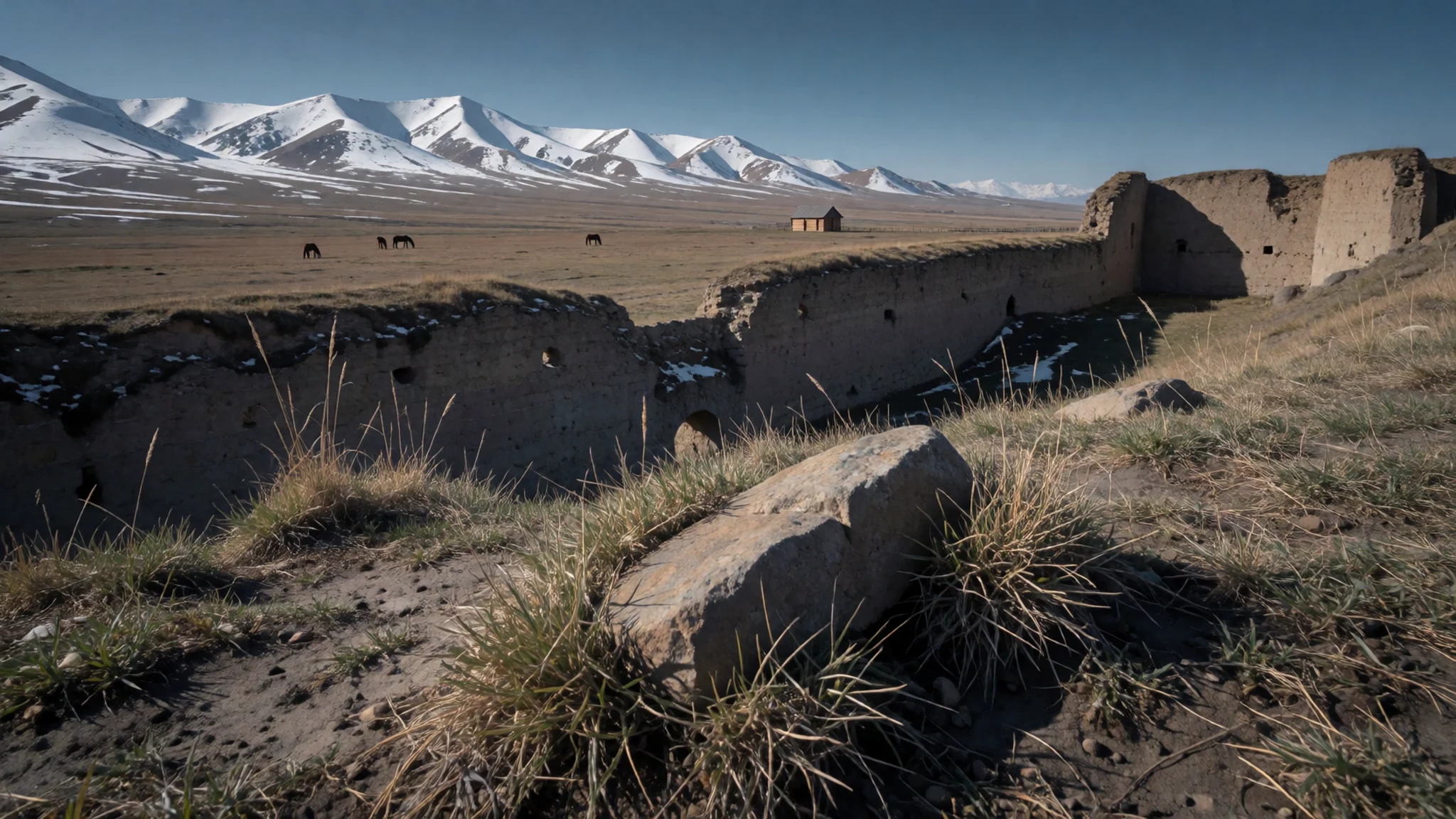
- Salkyn-Tor National Park — Edge of Naryn
Salkyn-Tor is the local picnic favourite, a protected area close enough to Naryn for a half-day outing. A gentle, moderate hike climbs to an alpine lake, with wide views along the way. A taxi can reach the park entrance on a decent road, so agree the fare before setting off.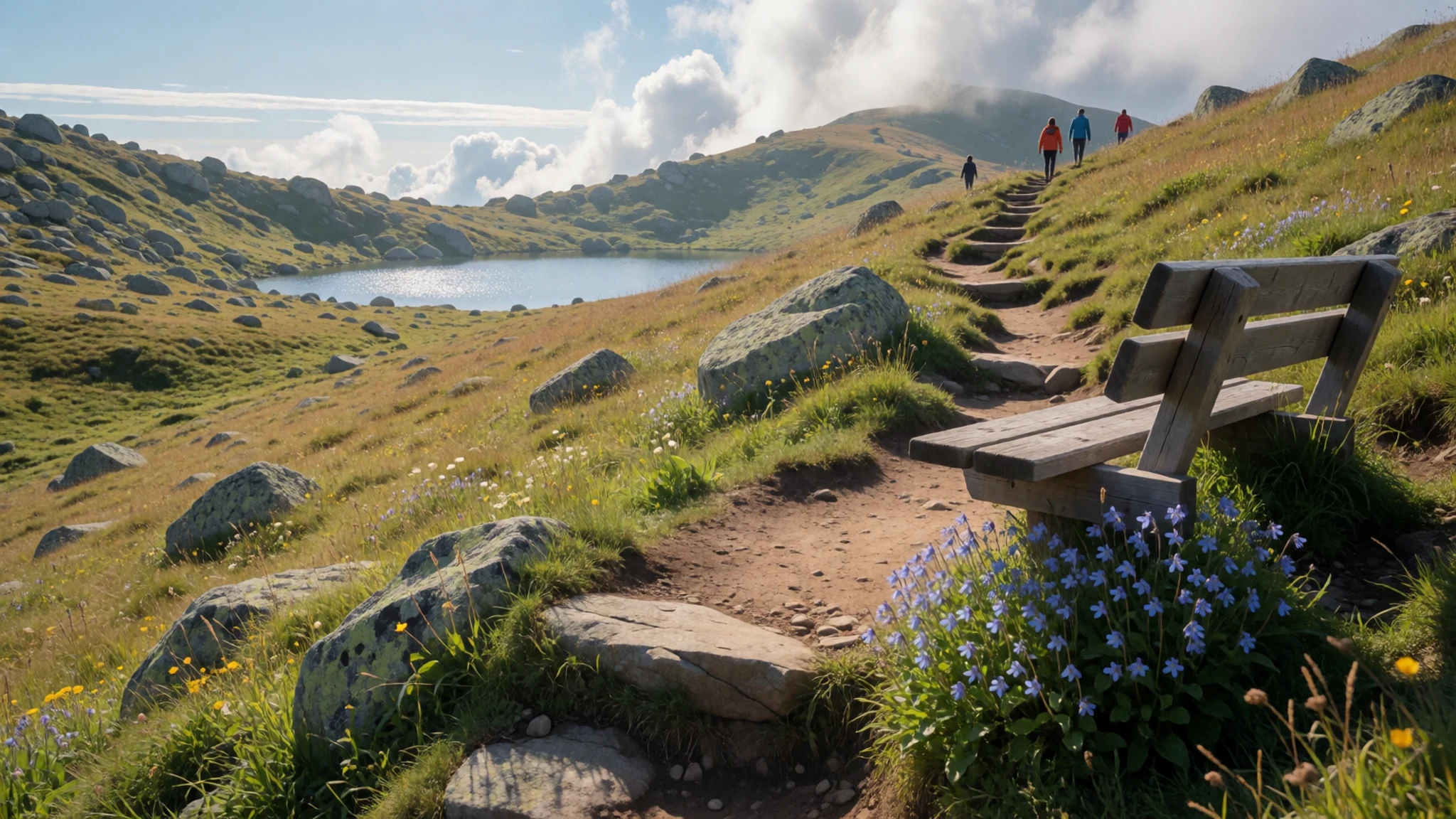
- Tash Rabat — In the hills beyond Naryn
Tash Rabat is an old stone caravan stop in the hills beyond Naryn and the main reason many travellers come this way. It makes a full day trip with a driver, usually combined with Koshoi Korgon on the same road. Check road and weather conditions locally, as mountain tracks can close in bad weather.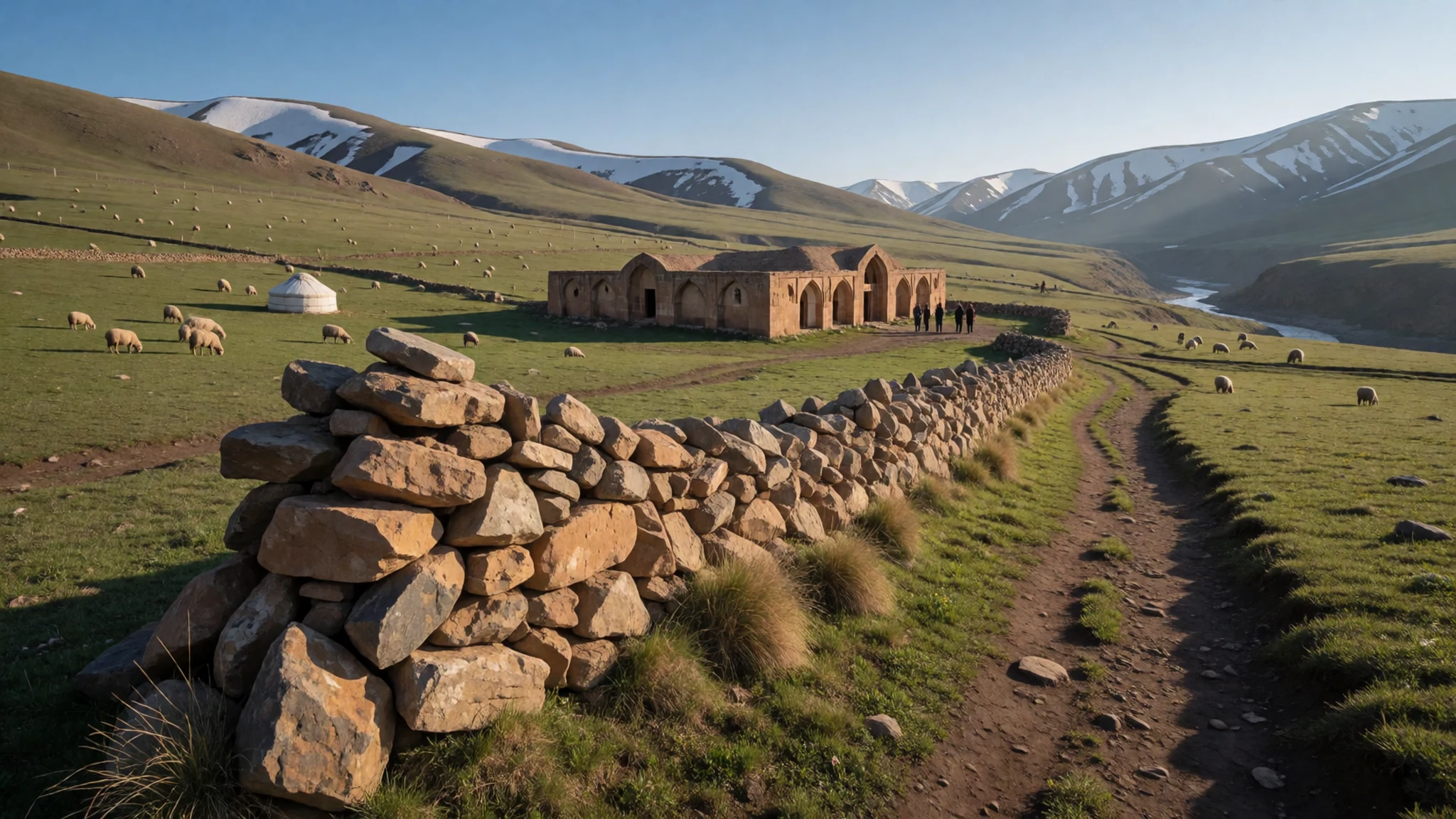
Culture
Naryn is Kyrgyz in character: a highland town where herding families from the surrounding valleys come to trade, and where the nomadic past is close to daily life. Horses matter, and so does the oral epic of Manas, the hero whose story is recited across the country and whose name is attached to places near the town.
Islam is practised in a relaxed, local form. The blue-tiled central mosque is the visible landmark, but religion sits beside older customs of hospitality, respect for elders and sharing food. Russian is widely understood alongside Kyrgyz, and the apartment blocks and statues are reminders of the Soviet era, now mixed with national heroes such as the horseman honouring the younger generation.
Families head to summer pastures and yurts, and visitors who reach the countryside are often offered tea, bread and fermented mare's milk as a matter of course. Tasting a little and thanking the host is understood; refusing outright can seem cold. Guesthouses arranged through the community tourism network are family homes, so evenings are domestic: shared meals, early nights and plenty of questions about where you are from.
Remove your shoes at the threshold of any home, guesthouse or yurt, and take a host's tea or bread with your right hand or both hands.
What to wear
The best-known traditional dress of Naryn's region is the ak kalpak, a tall white felt hat with black trim, made from pressed sheep's wool. Men wear it at weddings, national holidays and gatherings, and some older men wear it daily. Felt is the defining Kyrgyz textile: it also makes warm coats, boots and the patterned shyrdak carpets sold as souvenirs. Women's traditional costume includes embroidered velvet waistcoats and, historically, the elechek, a large white headwrap worn by married women; today it appears mostly at festivals and in museums.
Day to day, people in Naryn dress for the climate: jeans, wool jumpers, fleeces, padded jackets and sturdy boots, with leather jackets and dark coats common in town. Younger people follow Bishkek and international styles. Headscarves are common among women but not universal, and dress is generally modest rather than strict.
Visitors should pack layers, because mornings and evenings are cold even in summer, while the sun at this height is strong. A windproof jacket, warm hat, sun hat and sunscreen all earn their place. Wear broken-in boots or trail shoes for the hills, the rough ground at Koshoi Korgon and park paths. For the mosque or a visit to a home, cover shoulders and knees, and women should carry a scarf for the head.
What to eat
- Shashlik — Tent eateries on the restaurant street north of the guesthouse streets
Skewers of grilled meat, usually mutton or beef, served with onions, bread and tea. The usual way to eat it in Naryn is in the tented eateries on the restaurant street, where locals gather and the menu runs through most Kyrgyz dishes.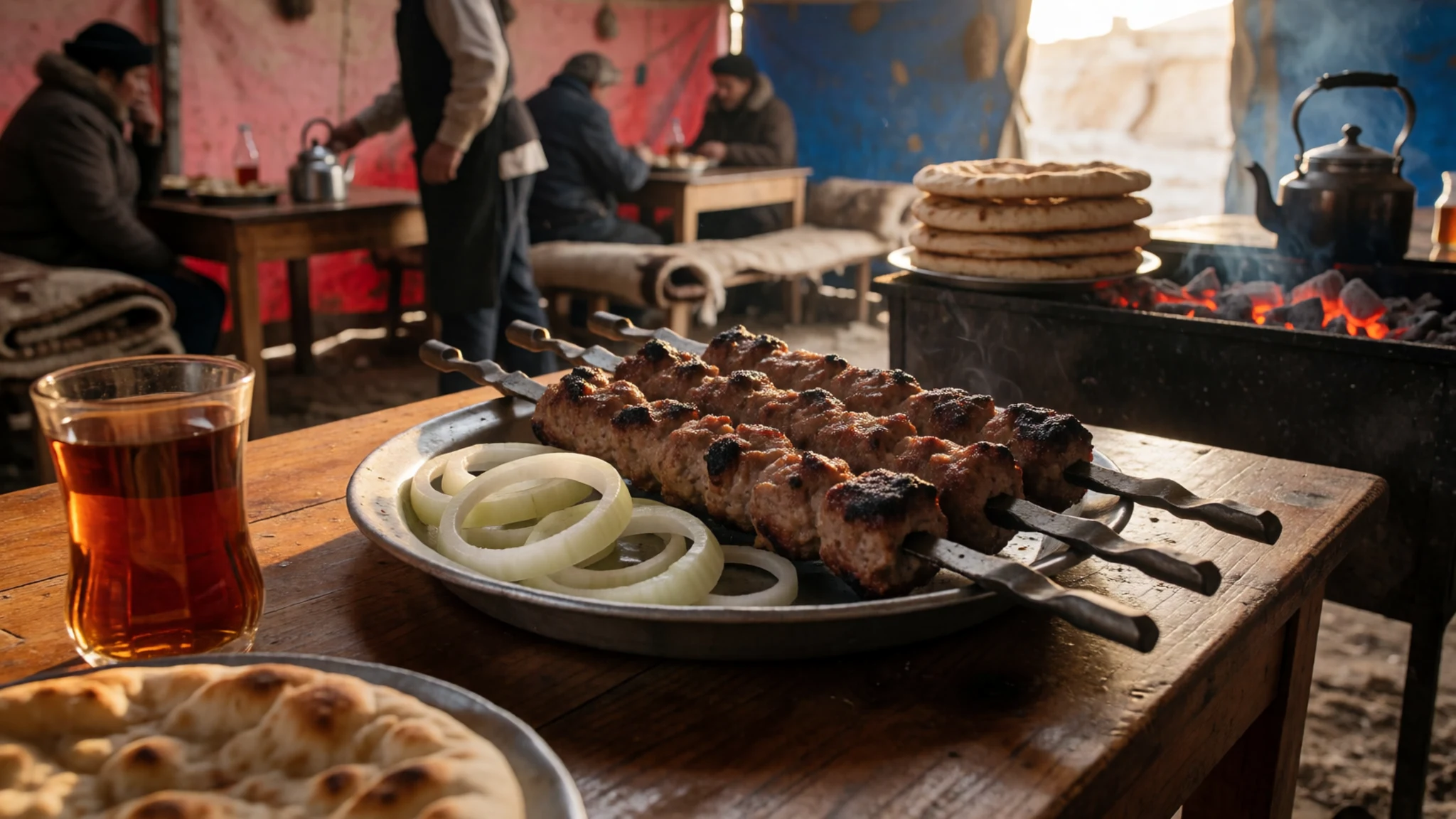
- Beshbarmak — Family guesthouses and traditional eateries
Boiled meat over flat noodles in an onion broth, the national festive dish. The name means five fingers, from the old habit of eating it by hand. Order it at a family guesthouse or a traditional eatery, often with some notice.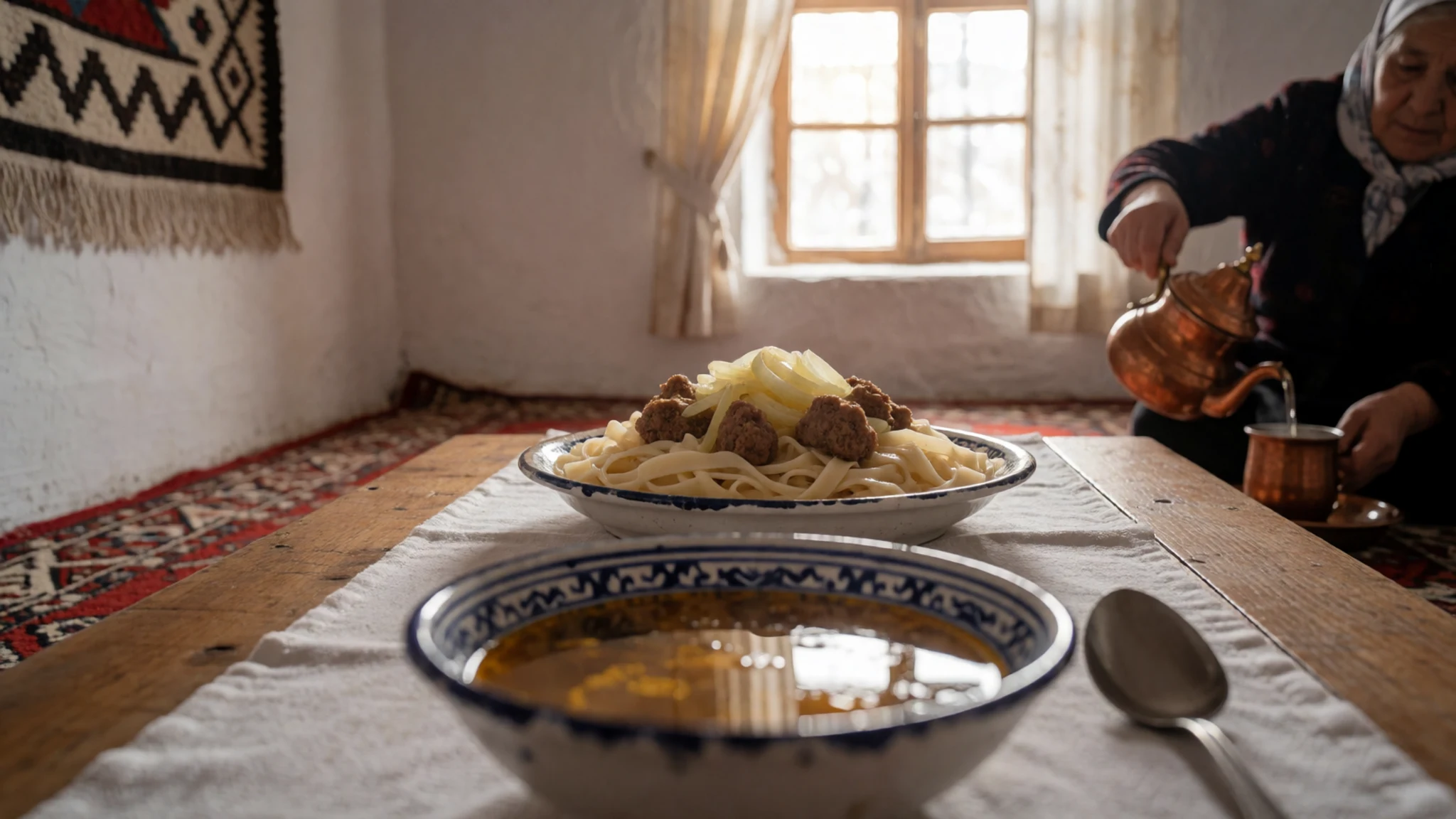
- Laghman — Local canteens and bazaar eateries
Hand-pulled noodles in a spiced meat and vegetable sauce or soup, a dish shared with the wider region. It is a reliable, filling lunch and easy to find in everyday eateries. - Manty — Bazaar stalls and cafés near the transport station
Large steamed dumplings filled with minced lamb or beef and onion, served with sour cream or vinegar. Look for them at bazaar stalls and simple cafés near the transport station, usually around midday. - Boorsok — Bazaar bakery stalls and guesthouse tables
Puffy squares of fried dough, eaten with tea, jam or honey and set out at almost every Kyrgyz table. Buy them hot from a bakery stall, or receive them as a welcome in a guesthouse. - Kymyz — Roadside stands and yurt camps in the countryside
Lightly fizzy fermented mare's milk, sour and slightly alcoholic, drunk in summer. It is mostly offered by herding families at roadside stands and yurt camps. Take a small taste first.
Plan it
Best time. June to September, when days are warmest and mountain roads and trails are most reliably open; nights stay cold even then. Winters are long and hard in this cold, semi-arid, strongly continental climate.
How long. 2–3
Getting there. Bishkek is the nearest major air gateway. From there, marshrutkas (shared minibuses) run to Naryn in the morning, and shared taxis also run from Balykchy; the road journey takes several hours. The community tourism office near the marshrutka and taxi station helps with guesthouses.
Budget. low
Tips
- Arrive in daylight and visit the community tourism office near the transport station first; guesthouses have no signs and the office is how most travellers are placed. Check its closing time.
- Carry cash in Kyrgyz som and do not count on cards outside the larger shops.
- Hire a driver for Koshoi Korgon and Tash Rabat and agree the plan and fare beforehand; a taxi to Salkyn-Tor can be bargained.
- Pack for cold nights and thin air, take the first day gently and drink plenty of water.
Etiquette
- Remove your shoes at the door of any home, guesthouse or yurt
- Dress modestly for the mosque, covering shoulders and knees
- Ask before photographing people, especially herders and women
Nearby
Sources
- Wikidata Q311946 (CC0)
- Wikipedia: Naryn (rev 1376920110) (CC BY-SA 4.0)
- Wikivoyage: Naryn (rev 5241447) (CC BY-SA 4.0)
- Naryn overlook, Pmelton87 (CC BY-SA 4.0)
- NK-43-9 Dyubeli USSR, Defense Mapping Agency (Public domain)
- Naryn buildings, Hux (Public domain)
- Naryn statue, hux (Public domain)
- Naryn province countryside, Lukas (CC BY 2.5)
- Routes of Explorers in the Western Tian-shan (Fig. 99) (Public domain)
- Routes of Explorers in the Western Tian-shan, postal highways (Fig. 99b) (Public domain)
- Statue équestre « à la jeune génération », Naryn, JohnNewton8 (CC BY-SA 4.0)


