Nanumanga
Nanumanga, Tuvalu
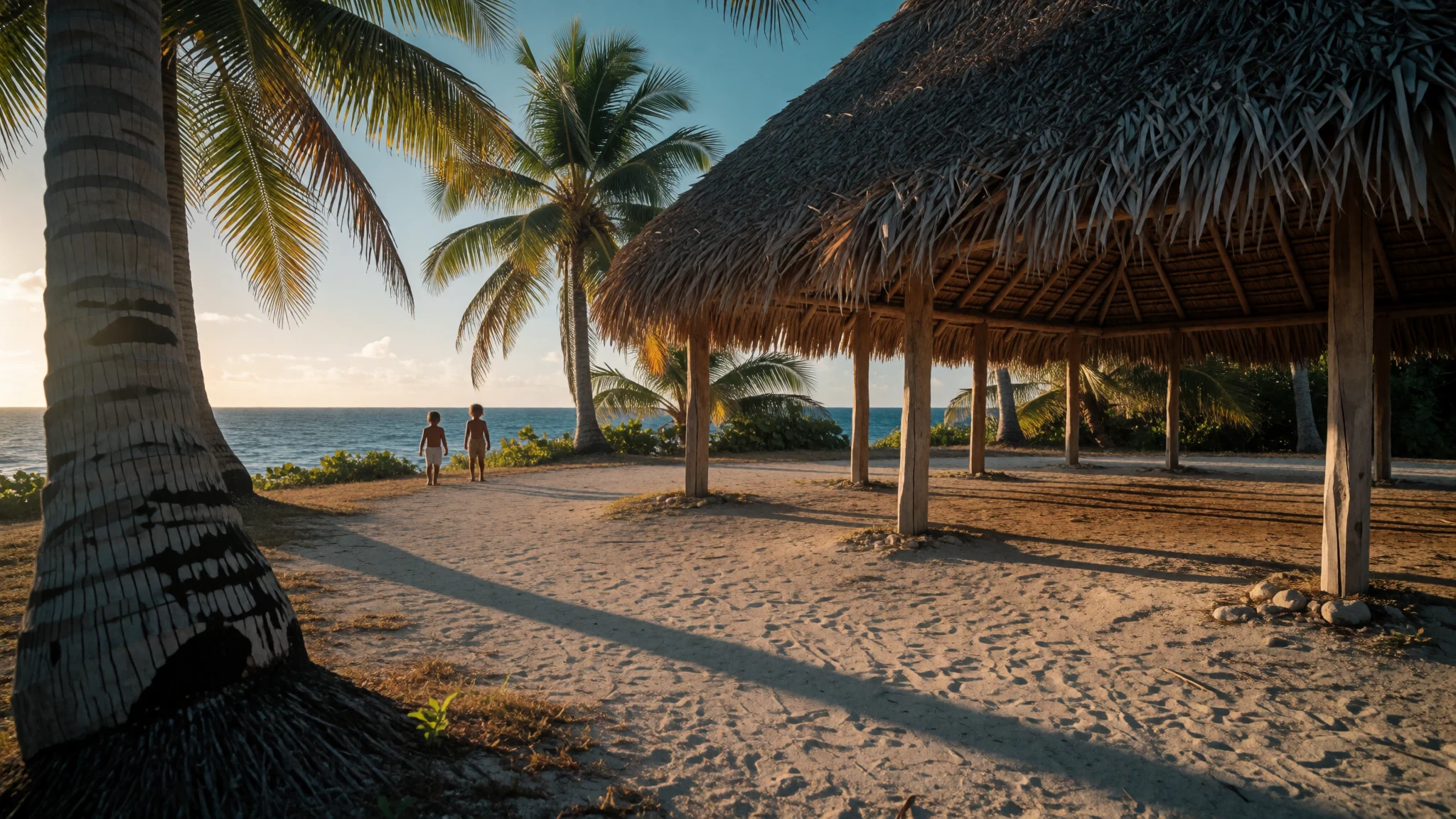
Nanumanga is a quiet Tuvaluan reef island where church, reef fishing and the maneapa still set the pace of the week.
The place
Nanumanga is a low reef island in Tuvalu, set in the central Pacific among the chain of islands that make up that small Polynesian country. The land sits only a little above the surrounding ocean, so the horizon is water in every direction and the reef, rather than any hill, is what holds the island in place. Coconut palms and low coastal scrub cover most of the ground that is not taken by houses, paths or the excavated pits where pulaka, the giant swamp taro, is grown. There is no town in the urban sense: life gathers in the villages of Tonga and Tokelau, around a church, a maneapa and the shore where canoes and small boats are kept. The sea is both the road and the garden. People fish the reef and the open water beyond it, and the rhythm of the day follows tide, church and the heat of a tropical afternoon. Rain comes in heavy, short bursts for much of the year, and freshwater is precious, caught from roofs and used carefully. Shade is a practical matter, not a luxury; the light off the shallows and the pale reef edge is strong. Nanumanga is a living community on a narrow piece of land, with gardens that cannot be expanded and a shoreline that the ocean rearranges. The settled ground can be walked in a morning, the same voices carry from dawn to dusk, and food, faith and the reef sit in plain sight of each other. The constraint on a visit is access, weather and the fact that a guest is sharing a village.
Its story
Nanumanga belongs to the Polynesian settlement of the central Pacific, a history kept in genealogy, canoe craft and the names of gardens rather than in stone ruins. People reached these islands by ocean voyaging, reading stars, swell and birds, and the Tuvaluan language still ties Nanumanga to that wider family. That history lives in who may dig a pulaka pit, which family keeps a fishing ground, and which songs the maneapa expects to hear when the drum starts. Storms are part of the record: a beach cut back, a well turned brackish, a house shifted inland. Congregational missionaries reshaped the week, and the church remains the centre of public life, yet the fatele, the island's seated, percussive dance, continues as the way Nanumanga answers itself in public. A dive along the reef opened a harder chapter: a cave now under water, with traces of fire, which shows people cooked and took shelter here when the sea stood lower. Its real weight is quieter: the shoreline of Nanumanga has moved before, and the community has had to read the water for a very long time. Under the British, the island was administered with the Gilbert and Ellice group; when the Ellice Islands chose a separate path, Nanumanga went with what became Tuvalu. After separation, Nanumanga's public life stayed with the school, the church and the ship that links the island to Funafuti. Salt in a taro pit or a graveyard washed at the edge is how Nanumanga experiences a warming ocean: not as a headline, but as ground that families intend to keep.
What to see
- Tonga village — Tonga village
Tonga is a village on Nanumanga, a line of houses, a church and the working shore rather than a separate town. Canoes and small boats sit above the tideline, and the path through the village is where news, church and the day's catch all meet. Visitors are expected to move slowly, greet people, and treat yards as private.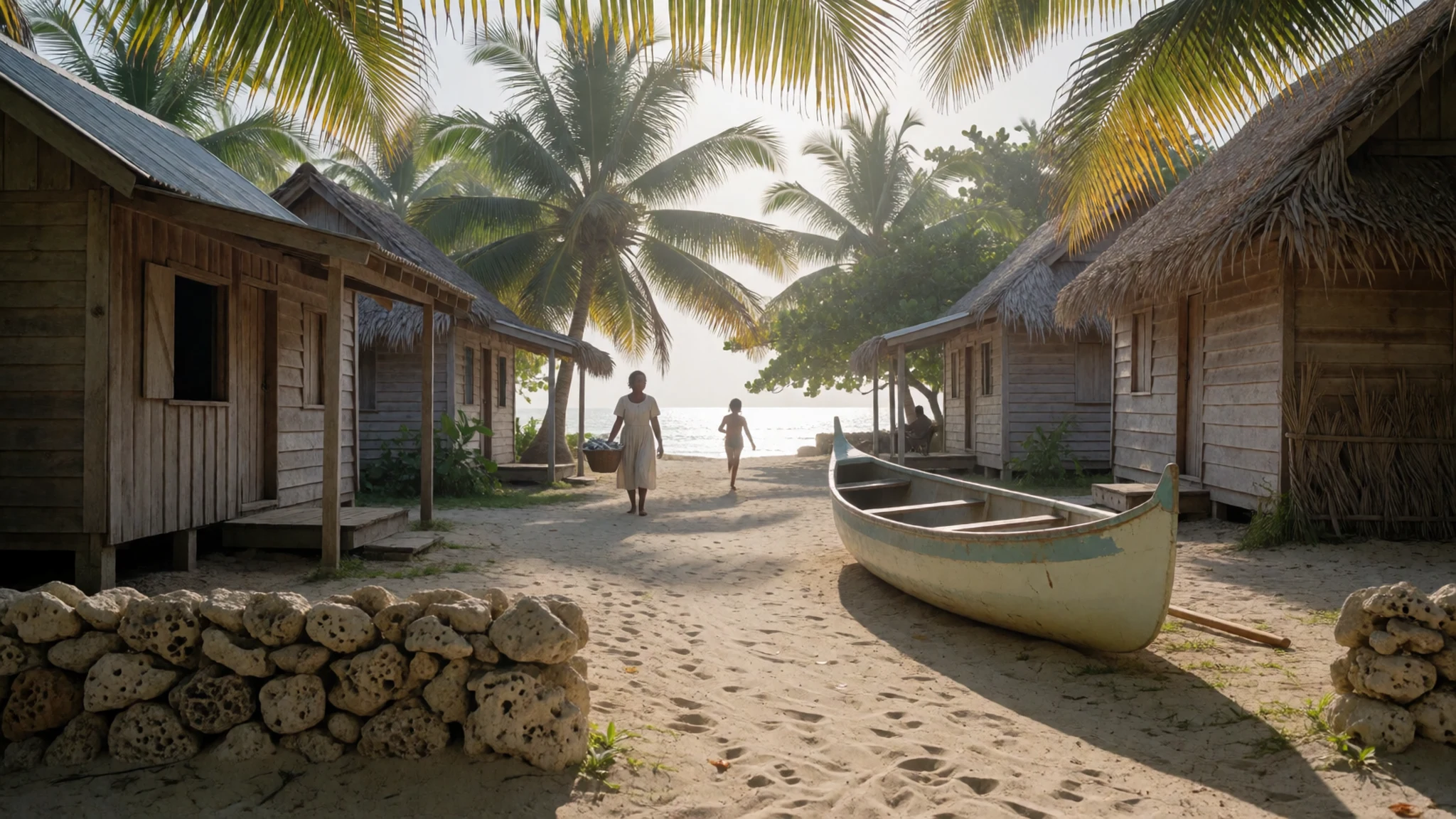
- Tokelau village — Tokelau village
Tokelau is the other village on Nanumanga, near enough that people treat the island as a shared community. Family houses, cooking sheds and a short reef path define the place. There is no commercial strip. What a visitor notices is ordinary life: children, laundry, copra drying, and the pause when a boat is sighted offshore.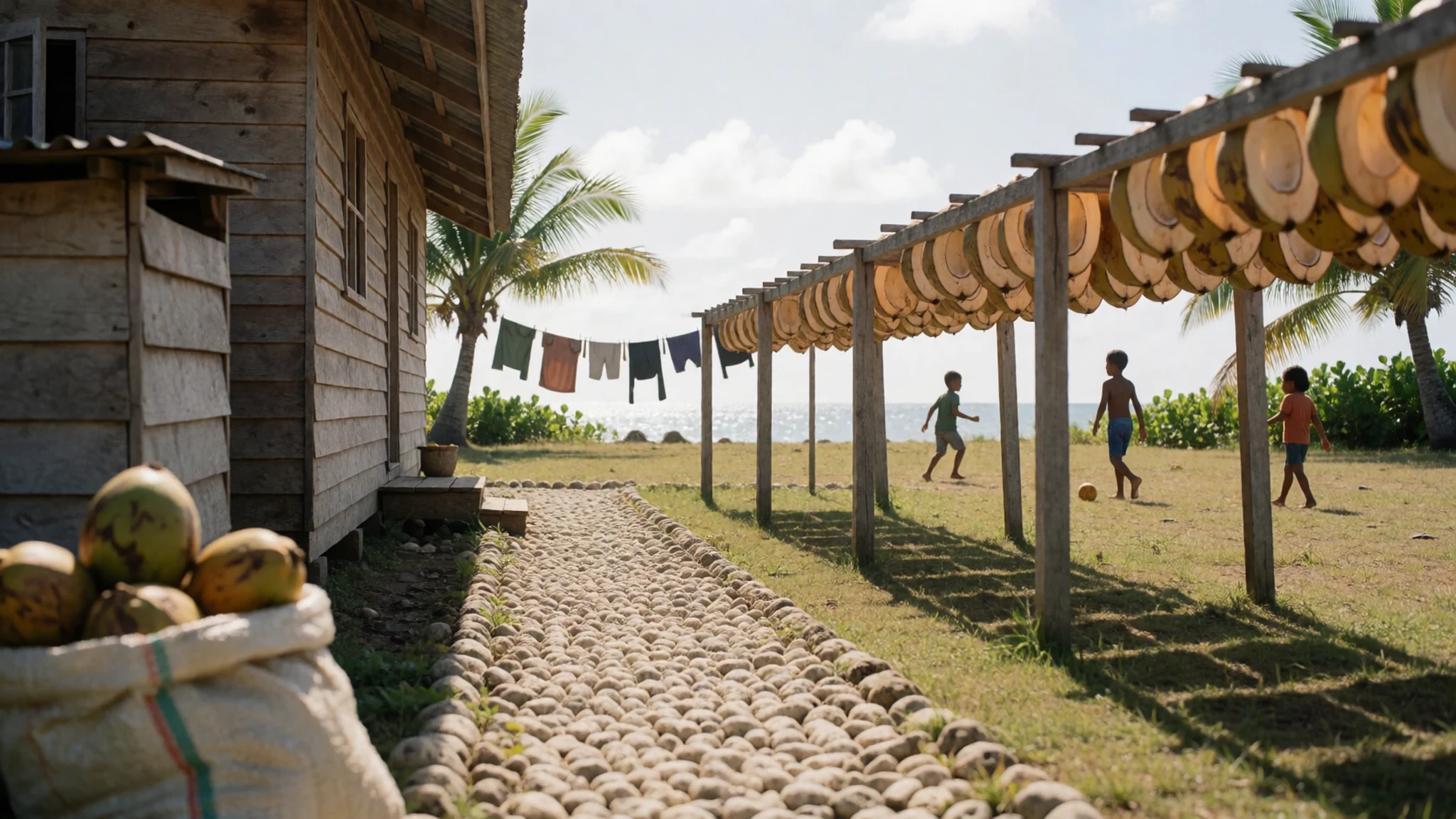
- Pulaka pits — inland gardens
The pulaka pits of Nanumanga are dug down to the freshwater lens, and they are the island's real farmland. Giant swamp taro grows in the mulch at the bottom, which is why the pits look like sunken gardens rather than fields. They are family property. A visitor looks from the edge and does not step in; a footprint can damage the crop and the soil that feeds it.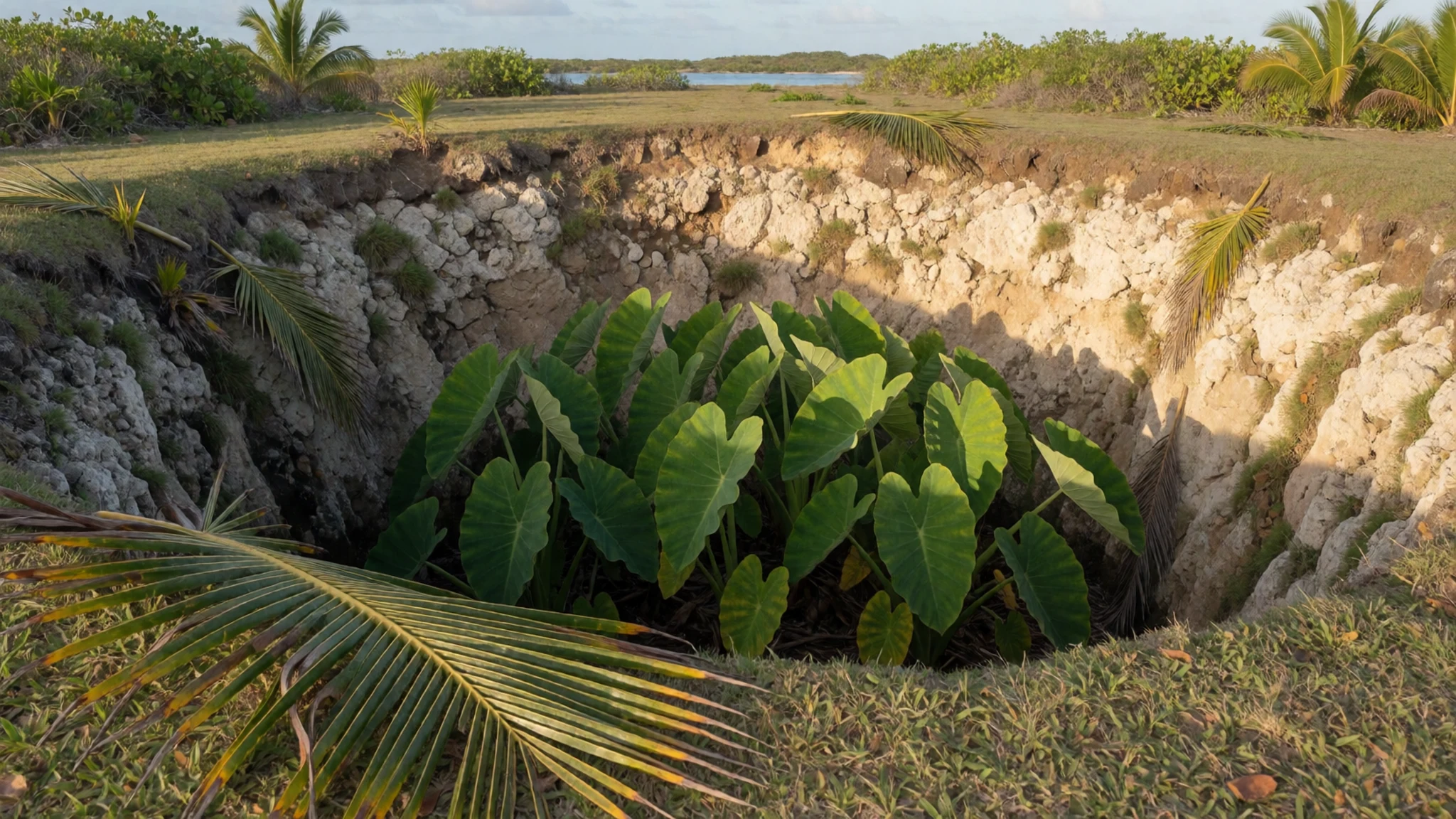
- The fringing reef — the fringing reef
The reef around Nanumanga is the island's edge and its main source of fish. Inside the breakers the water is shallower and brighter; outside, the ocean drops away and fishing becomes a boat matter. People read the tide before they enter. Coral, shells and the reef flat are not souvenirs. Snorkelling, if the sea is calm, belongs with a local person who knows the cuts and the current.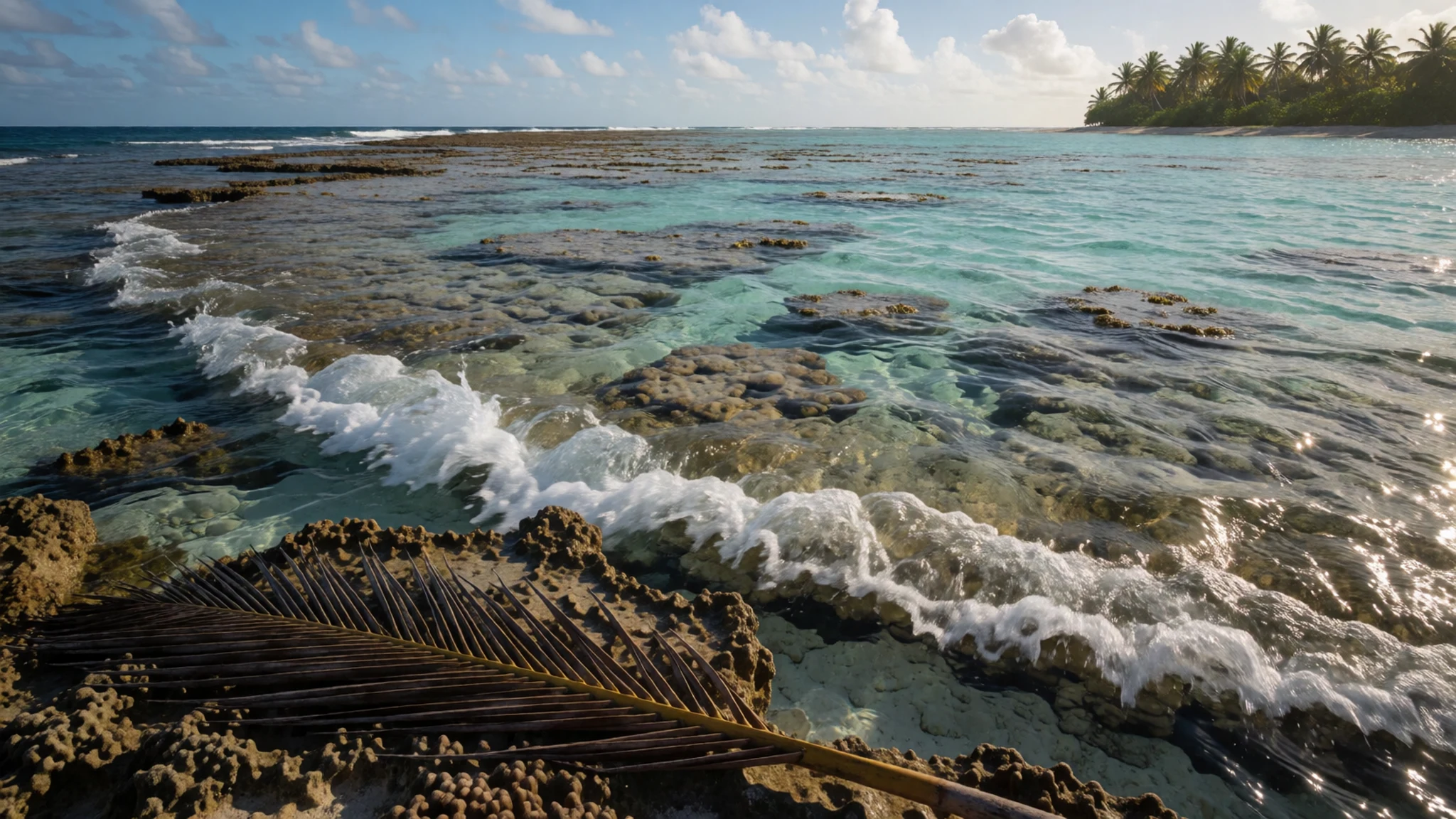
- Maneapa and church — village centre
The maneapa and the church are the public rooms of Nanumanga. The maneapa is the open meeting house where feasts, fatele and island decisions happen; the church is where Sunday gathers almost everyone. Neither is a viewpoint. A guest waits to be invited into a fatele or a meal, dresses modestly for a service, and sits where shown. The buildings are simple, and that plainness is the point.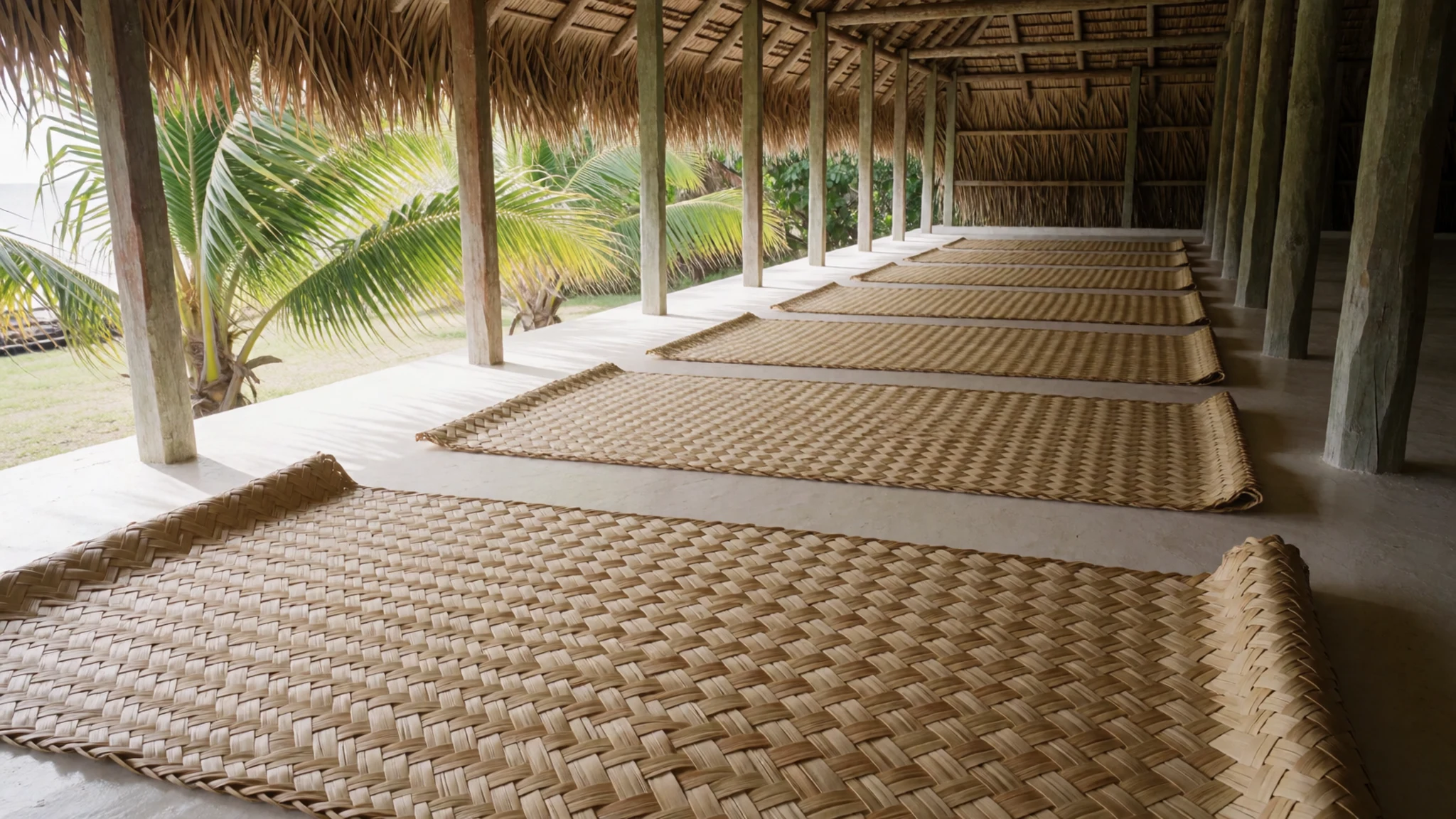
Culture
Nanumanga's culture is Tuvaluan and local at once. People speak Tuvaluan, a Polynesian language, and English is the other language of school and government; a greeting in Tuvaluan is noticed and appreciated. The maneapa is the civic heart. That is where the island meets, eats, and performs the fatele, a dance performed sitting, with chant, rhythm and sudden bursts of movement from the chorus. Church life, largely Congregational, structures the week. Sunday is quiet, services are long, and feasts often follow a community occasion rather than a commercial calendar. Sharing is practical, not decorative: fish and cooked food move between houses, and a guest who is fed is being brought inside the ordinary system of obligation. Land and pits are inherited and sensitive. Humour is fine; mockery of the church, of elders or of the island's size is not. Visitors are few, so a stranger is a social event as well as a person. The right scale of behaviour is small: the pace is the island's, guests do not reorganise the village, and hosts set the terms of a visit. Ask before you photograph anyone on Nanumanga, and do not enter a church service in shorts or with shoes on if the people beside you have dressed and gone barefoot.
What to wear
On Nanumanga, traditional dress survives mainly for fatele, church festivals and formal welcomes rather than for a weekday morning. Women wear a titi, a skirt of prepared pandanus or hibiscus fibre, often with a woven top or a garland, and fine mats still mark rank and ceremony when a family brings them out. Men dance in a titi or a plant-fibre belt over a lavalava, with oil and flowers as part of the costume, not as costume jewellery. Those textiles are work: pandanus is cut, soaked, dried and stripped before it is ever woven, and the mats are heirlooms as much as clothing. What people wear now, on an ordinary day, is lighter and mixed. Lavalava, shorts, T-shirts, cotton dresses and flip-flops are the street. School uniforms appear on school mornings. For church, the shift is clear: covered shoulders, a longer skirt or a formal lavalava, and a neat shirt. A visitor should pack for heat, rain and that Sunday standard. Loose cotton, a hat, a light wrap that can cover knees and shoulders, and footwear that can be removed at a door and that can also cope with coral rubble. Bare feet are normal on sand; reef shoes matter on the flat. Resort evening-wear has no role here. Nanumanga will read loud logos and very short beach clothes as a failure to notice the place, especially near the church.
What to eat
- Pulaka — home kitchens and the pulaka pits
Pulaka, giant swamp taro, is the staple that Nanumanga grows rather than imports. Cooked until soft, it is plain, filling and slightly earthy, and it turns up boiled, mashed or worked into pudding. It is the food of ordinary days and of feasts.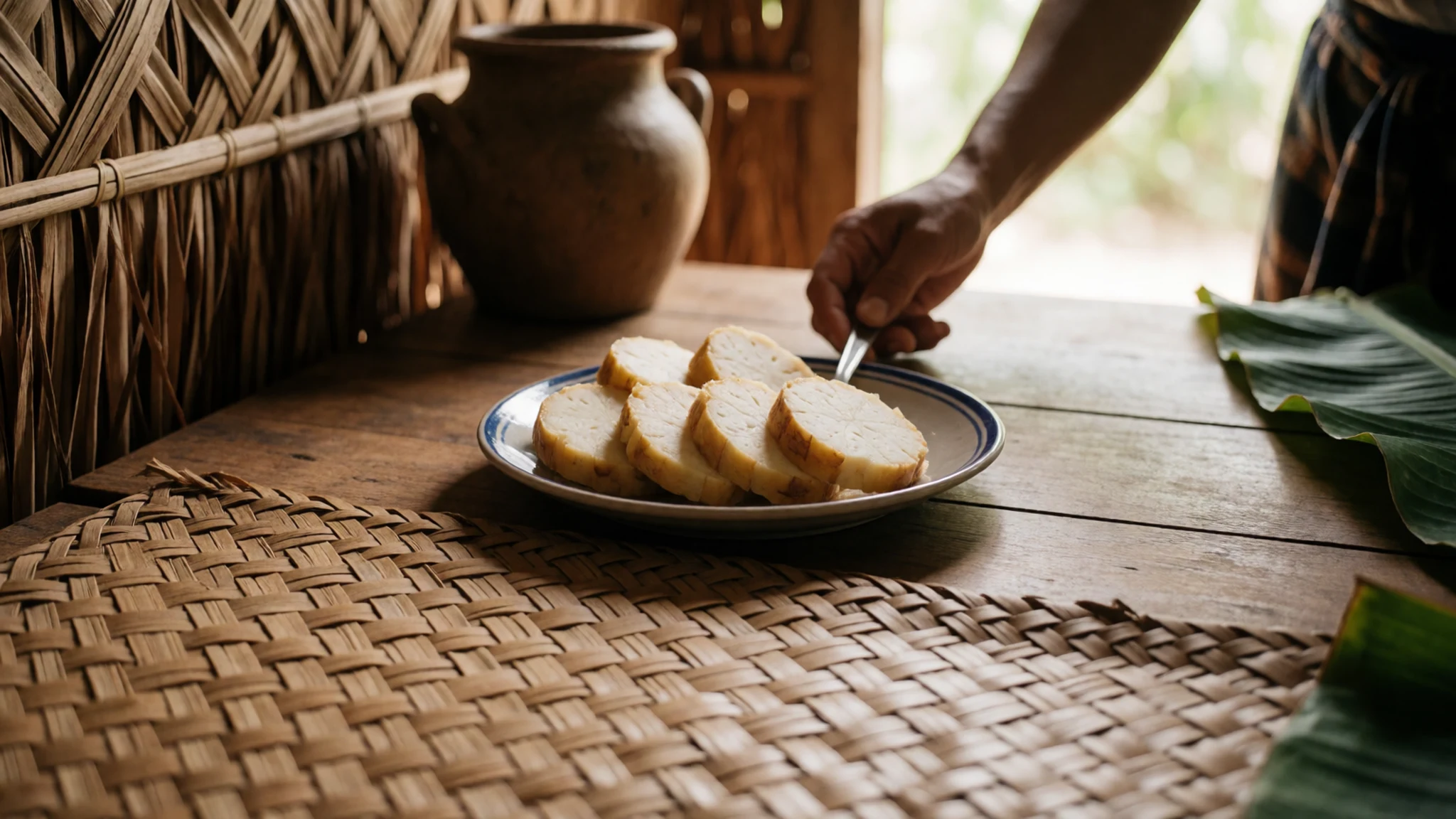
- Fekei — a maneapa feast
Fekei is a pudding of pulaka worked with coconut cream, sometimes sweetened with coconut toddy syrup, and it is festival food on Nanumanga as much as a recipe. Texture matters: dense, moist, not a cake. Visitors meet it at a maneapa meal rather than on a menu.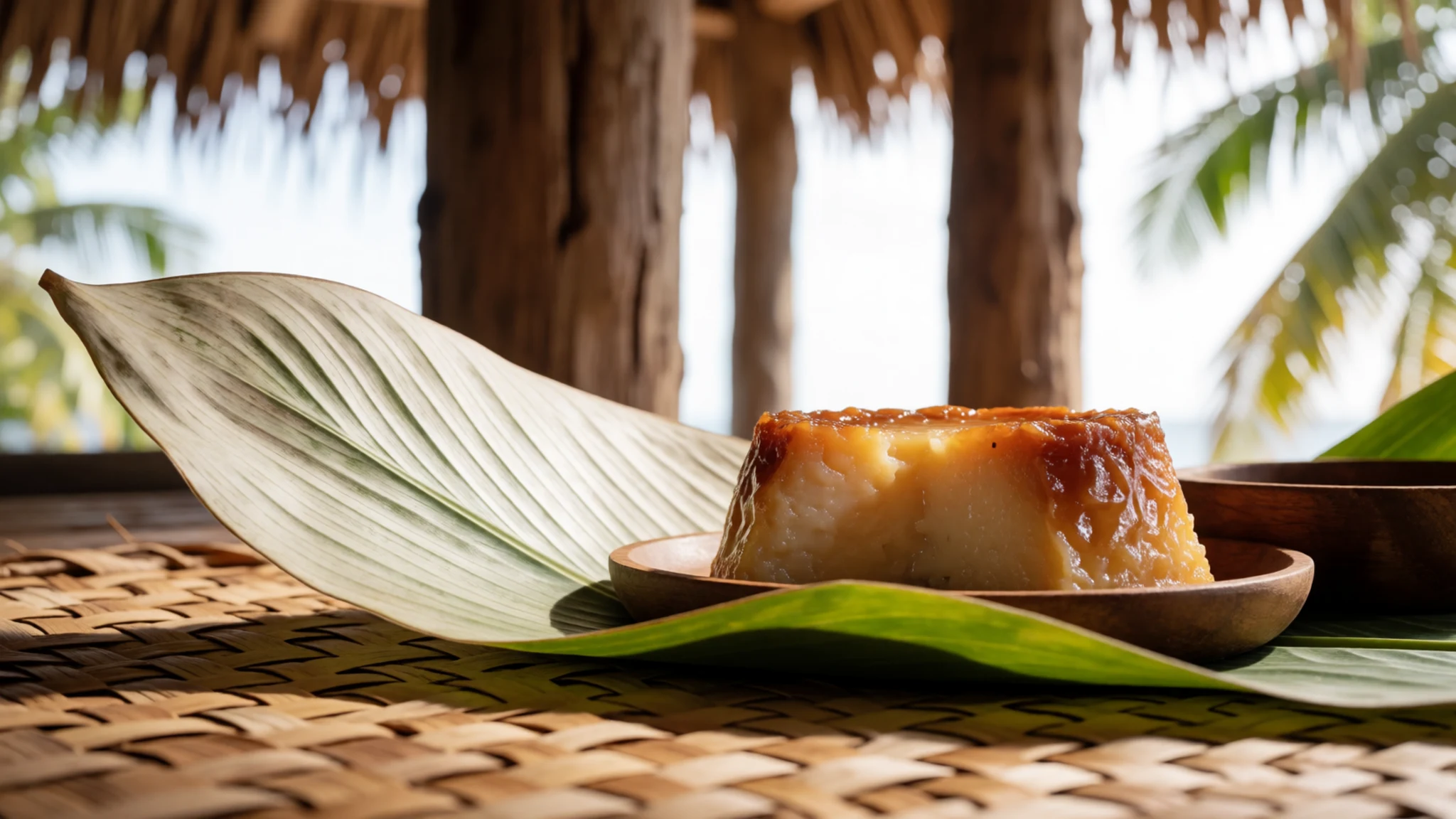
- Reef fish — a family kitchen after fishing
Reef and ocean fish are the daily protein on Nanumanga, grilled, raw with coconut, or cooked in coconut cream. Species change with the season and the tide. There is no fish market; the place to eat it is a household that has been out in a boat. - Coconut and toddy — village households
Coconut is ingredient, drink and material on Nanumanga. The nut is scraped into cream, the flesh is eaten young, and the sap, tapped from the flower spathe, becomes toddy, fresh and mildly sweet or fermented. Toddy is local and social. - Breadfruit — home cooking when breadfruit is in season
Breadfruit, when the tree is in season, gives Nanumanga a starch besides pulaka. It is roasted in the coals or boiled, mild and chestnut-like, and it stretches a meal when the ship has not brought rice. It comes to the mat with the rest of the family food.
Plan it
Best time. May to October is the calmer stretch on Nanumanga, with trade winds and a lower chance of heavy rain and tropical cyclones. November to April is wetter and is the time when storms are more likely. The sea stays warm year round, so the reason to choose is weather overhead, not a swimming season.
How long. 2–3
Getting there. Nanumanga is reached through Funafuti. Flights land at Funafuti, and the last leg is the inter-island ship; the island has no scheduled air service. Check the coming sailing in Funafuti before leaving, because the ship moves when cargo, fuel and weather allow, not to a clock a visitor can look up in advance.
Budget. mid
Tips
- Confirm the inter-island ship while you are still in Funafuti, and do not treat an old sailing date as a promise.
- Carry cash, because card payment is not a system to rely on after leaving Funafuti.
- Bring drinking water, sun protection and any medicine you need; resupply on Nanumanga depends on the ship.
- Keep Sunday for church and quiet, and arrange walks for other days.
- Ask a host before you swim or snorkel; the reef has currents, and fishing places are not public parks.
Etiquette
- Cover shoulders and knees for church on Nanumanga.
- Ask before you photograph a person.
- Stay out of pulaka pits, and do not take coral, shells or sand.
- Take shoes off when entering a home or a church where everyone else is barefoot.
Nearby
Sources
- Wikidata (CC0)
- Wikipedia (CC BY-SA 4.0)
- Wikivoyage (CC BY-SA 4.0)