Niulakita
Niulakita, Tuvalu
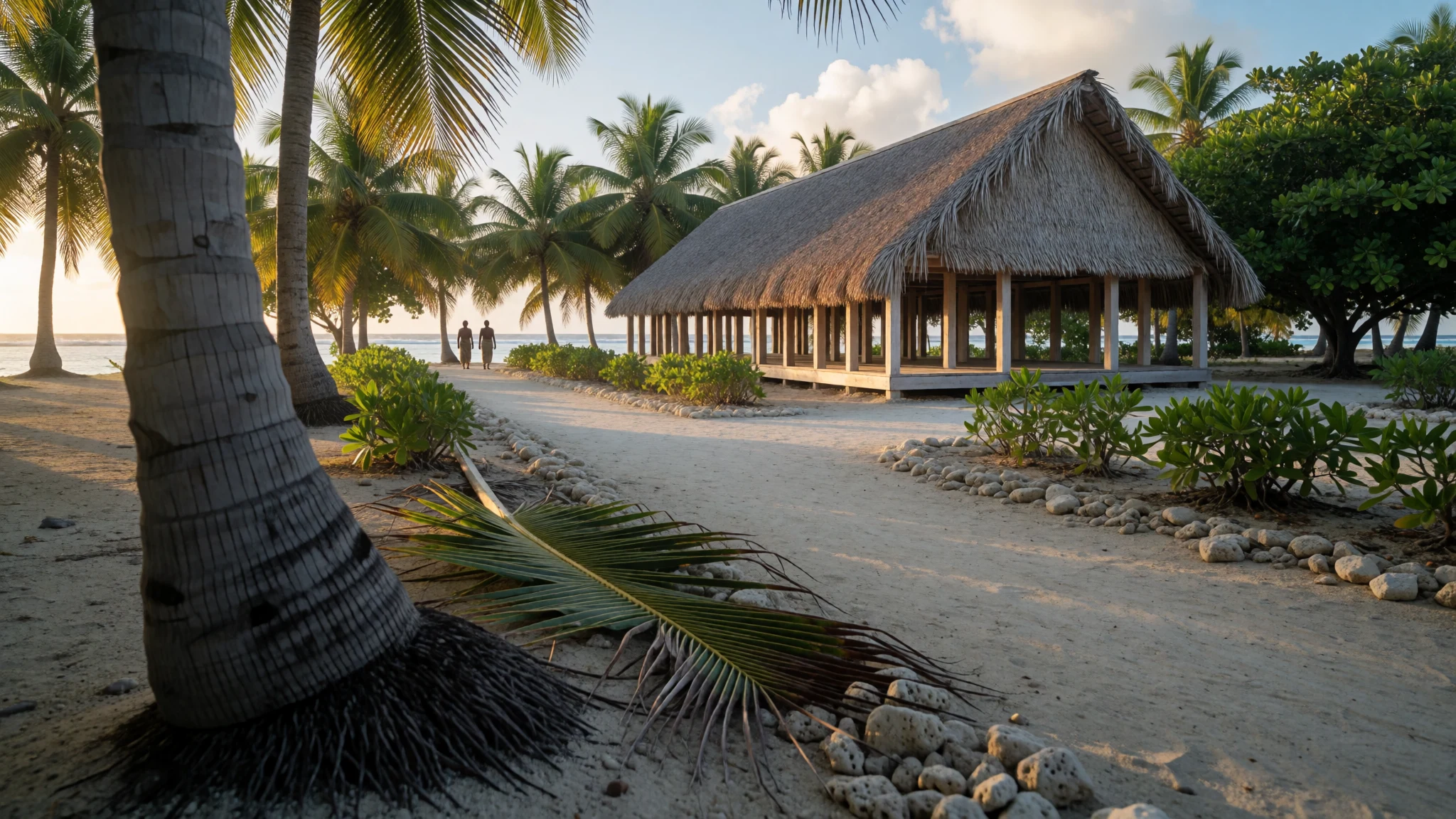
Niulakita is Tuvalu's far southern outpost, a tiny reef island where a handful of people live far beyond any tourist route.
The place
Niulakita is the southernmost island of Tuvalu, a reef island with a single village that shares its name. The facts record gives it roughly 27 residents and an elevation of about 5 m, which tells most of the story: this is a low scrap of coral and sand, oval in outline, running east to west for about a kilometre. A fringing reef circles the whole island, and that reef shapes daily life. Landing a boat is awkward, fishing from the shore is tricky, and every arrival and departure depends on weather and tide.
Inland, the island is green and still, with coconut palms, several small ponds and a village gathered around its maneapa, the community hall where meetings, celebrations and dances take place. Tuvalu's tourism is non-commercial, with simple guesthouses instead of resorts, and Niulakita sits at the far end of that scale. There is no sightseeing circuit here, only an island going about its business.
Most residents are settlers from Niutao, another Tuvaluan island, and Niulakita is represented in parliament through the Niutao constituency. That link explains much about its family ties and customs.
An honest picture matters before anyone plans a trip. Tuvalu receives very few visitors, and the outer islands receive fewer still. Reaching Niulakita means flying to Funafuti first, then arranging onward sea travel through local contacts, with no fixed schedule to count on. Heat is constant, shade is limited and the sea is the only road. Anyone wanting a beach resort should look elsewhere; for the curious, it is a chance to see how a small community lives at the edge of the map.
Its story
Niulakita carries its history in a handful of stories. One tradition says it was found by accident: a canoe from Nui, led by Kaunatu and bound for Vaitupu, drifted south off course and landed on an uninhabited island with little more than saltbush and pisonia trees. A passenger named Kaeula died there and was buried, and the last coconuts the party carried were planted at his grave. Kaunatu named the island after a place on Nui.
European records begin in 1595, when the Spanish navigator Álvaro de Mendaña sighted it and charted it as La Solitaria, the lonely one. A try at finding anchorage failed because the seabed was uneven and rocky. In 1821 an American whaling captain, George Barrett, called by and used his ship's name, Independence, for the island. During much of the nineteenth century it went by several names, Sophia among them.
Ownership then passed around in ways that say a lot about the Pacific of that era. Elders from Vaitupu sent a working party to plant coconuts, but a Hamburg trading house operating from Samoa claimed the island as well. The elders later handed their claim to another German firm in Apia to settle a debt. When that company collapsed, an American trader living in Samoa, Harry Jay Moors, bought the island in 1889. By the end of that century a visiting naval captain recorded a small mixed group of islanders living there and working for him.
What to see
- Niulakita village and its maneapa — Niulakita village
Niulakita's only settlement is the focus of island life. The maneapa, an open community hall, is where the council meets and where feasts, songs and dances are held. Visitors are guests of the island, so the walk through the village is best made with a host who can explain what is going on.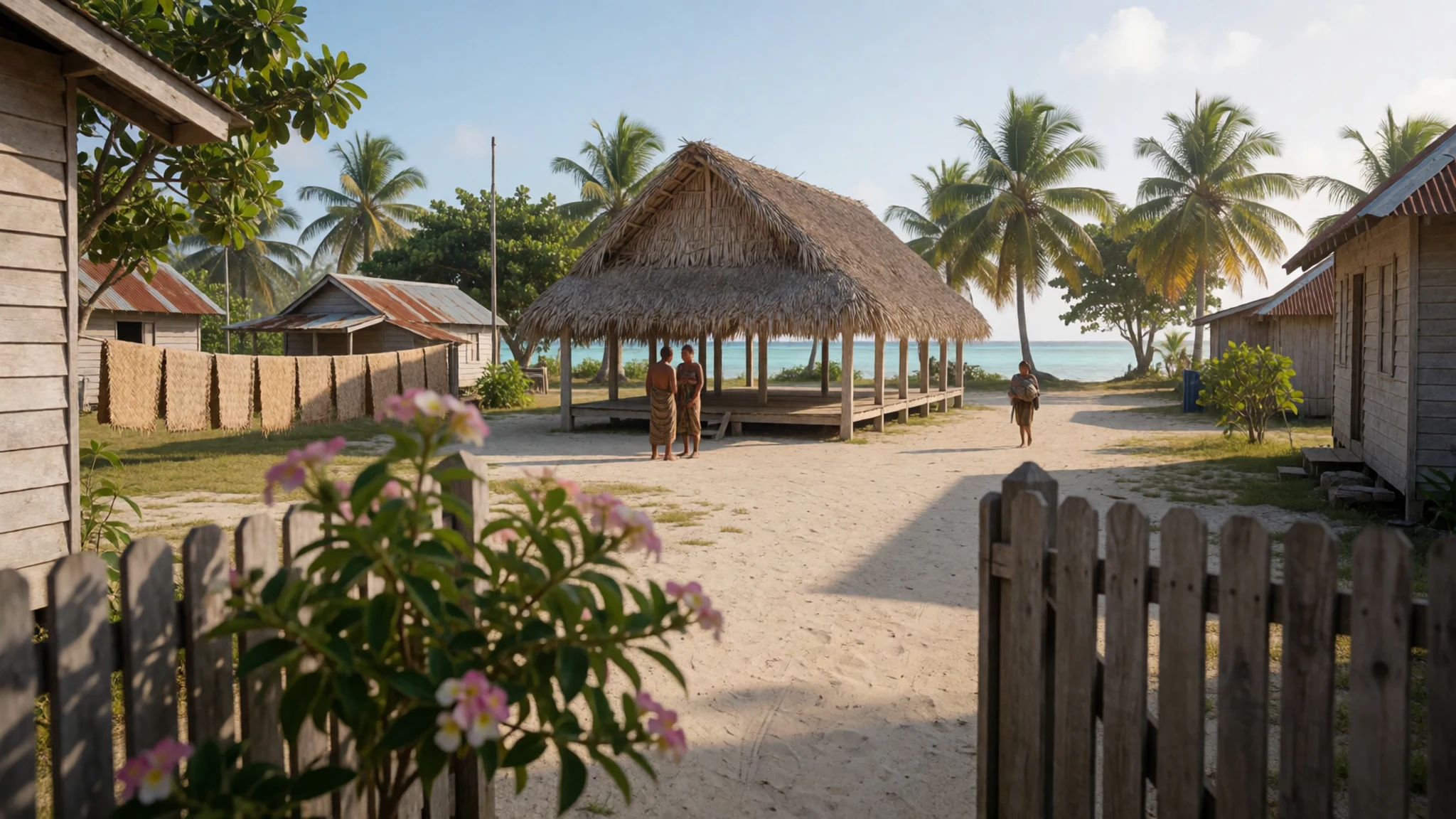
- The fringing reef — Shoreline all round the island
The reef that rings Niulakita is the island's defining feature and the reason landings are difficult. At low tide it shows its pale shelves and pools from the shore. Reef conditions and currents are local knowledge, so swimming and wading should only happen on a host's advice.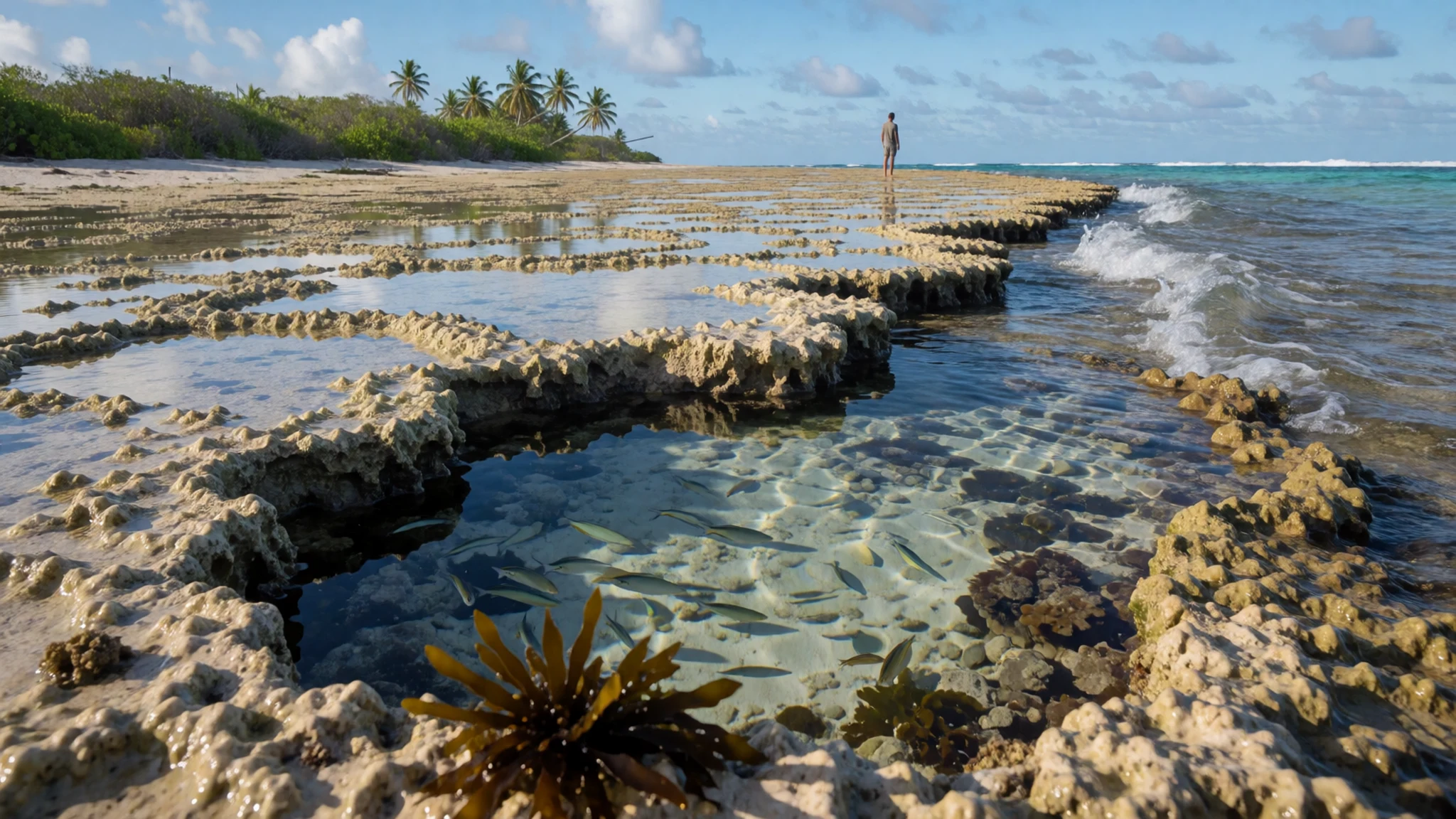
- Ponds and coconut groves — Island interior
The island's small ponds and the planted coconut groves make up its interior. A slow walk across the oval island takes little time, which is part of the point: the interest lies in how people use the land, from copra and coconut cream to crops grown in the shade of palms.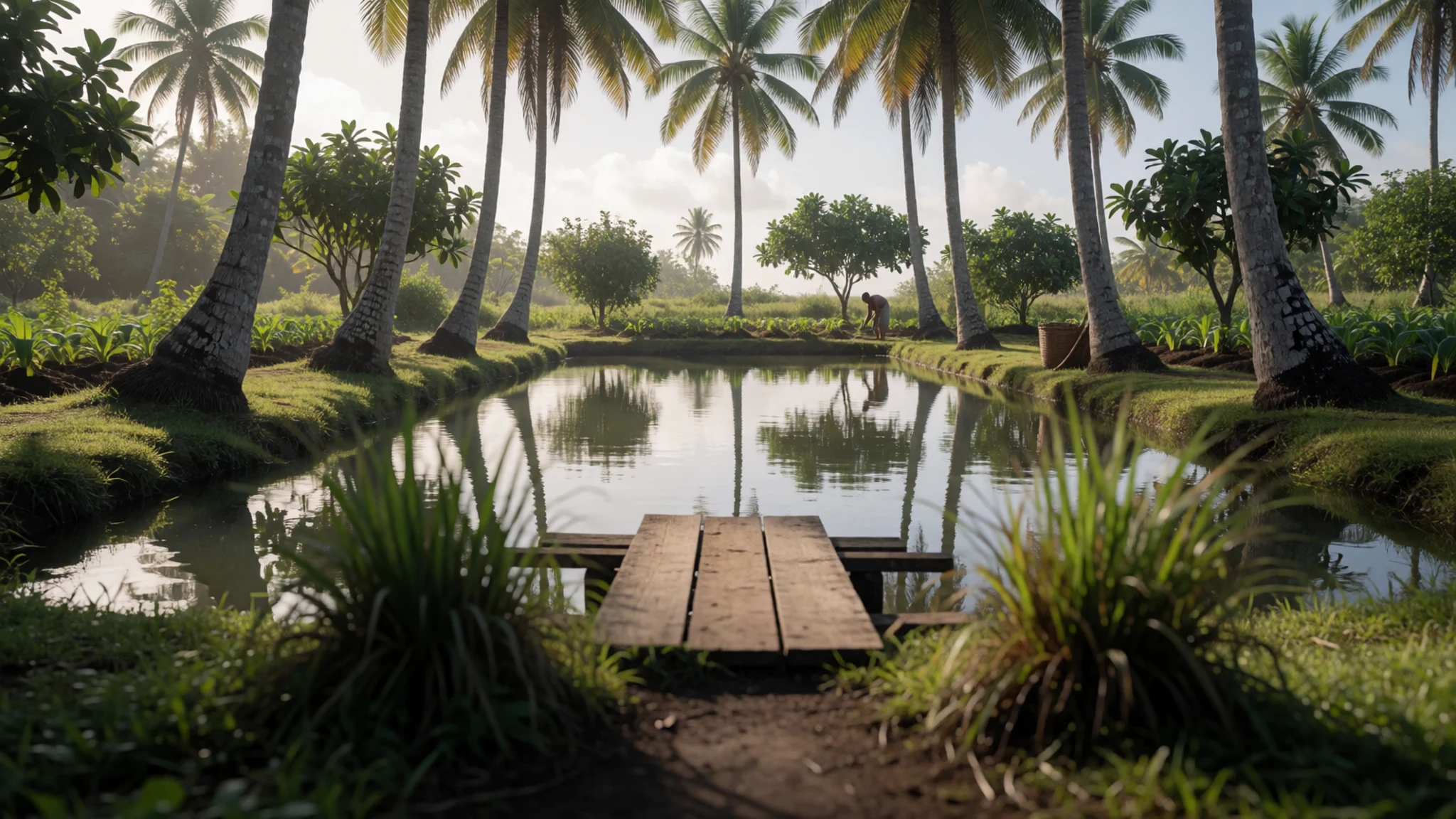
- Funafuti Conservation Area — Western side of Funafuti atoll
Most visitors to Tuvalu reach this protected stretch of the Funafuti atoll first, and it is the easiest place to see the country's reefs and lagoon. Snorkelling and diving here give context for what surrounds Niulakita. Boat trips are arranged locally, so ask a guesthouse.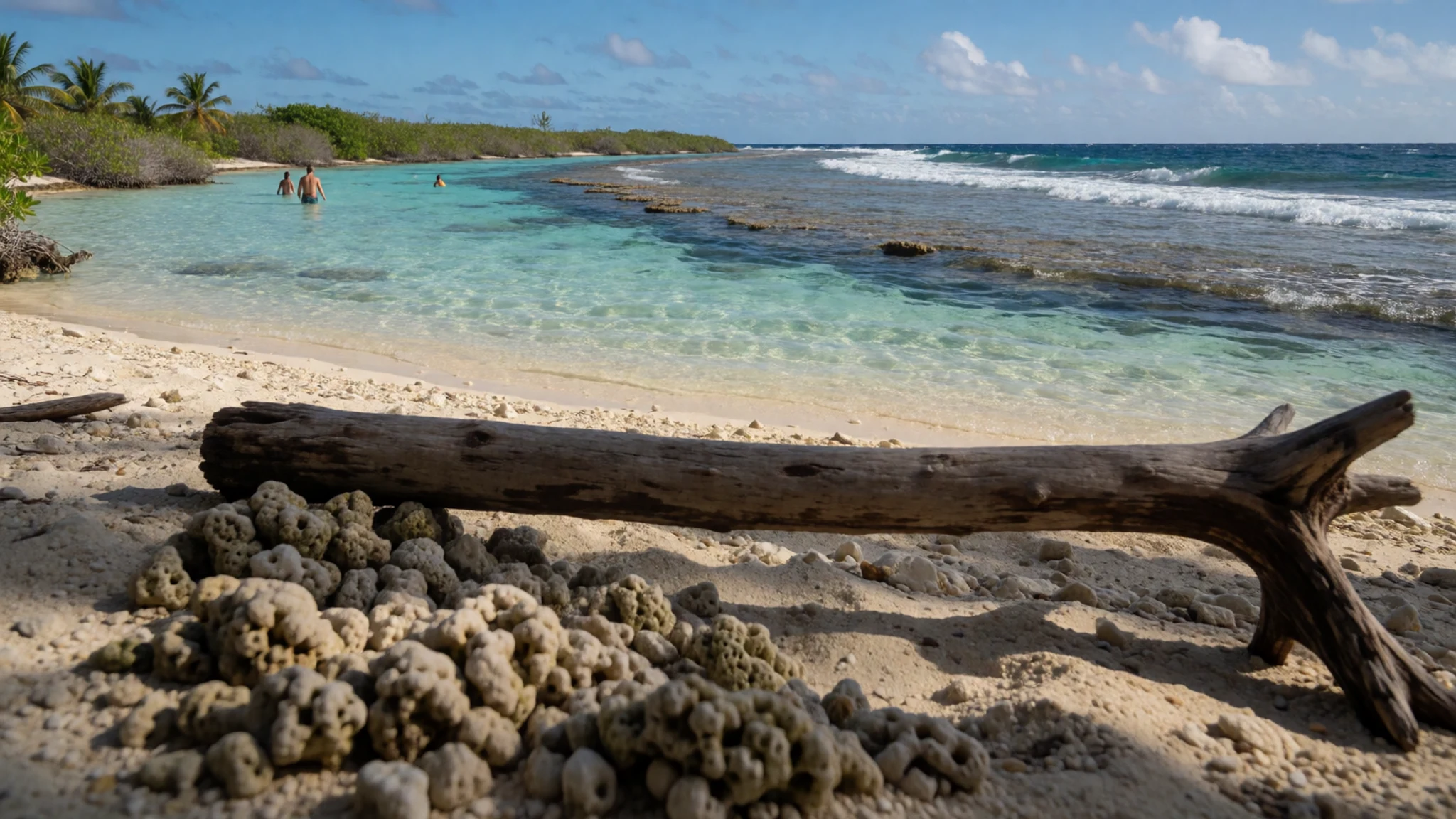
- Wartime remains on Fongafale — Fongafale, Funafuti
American forces were stationed on Funafuti during the Second World War and left airstrips, bunkers and aircraft wrecks. Fongafale, the main island of Funafuti, holds many of them. They are quiet, unmarked and unfenced, so keep to paths and treat them as the historic sites they are.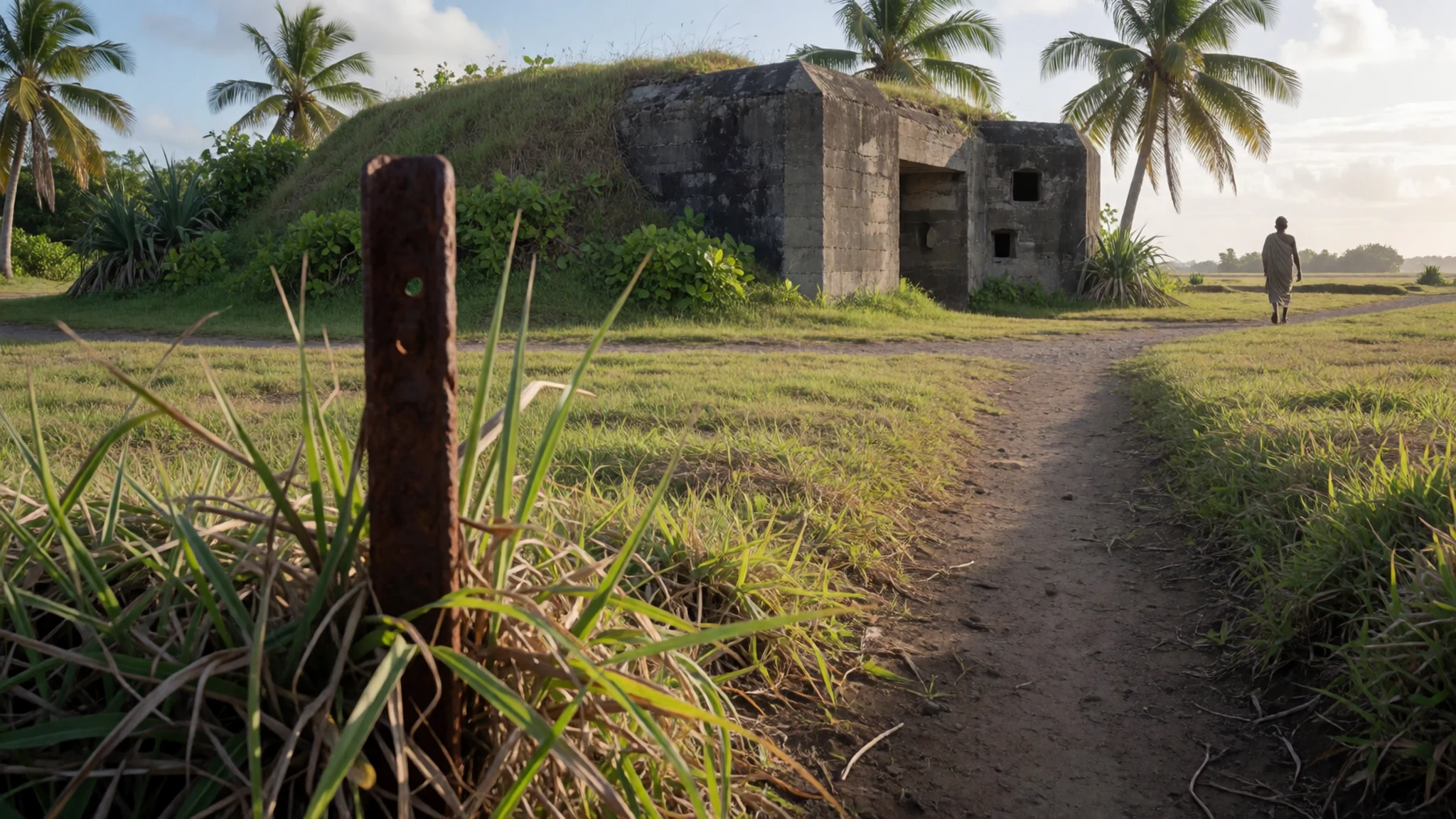
Culture
Niulakita's culture is essentially that of Niutao, carried south by the families who settled here. Community life revolves around the maneapa, the open-sided hall where the council meets, news is shared and celebrations are held. Decisions are made collectively, and elders carry real weight.
Christianity is central to island life, having taken firm root after missionaries reached Tuvalu in the nineteenth century. Church services shape the week, and Sunday is for worship and rest rather than activity. Singing is a strong tradition, and dance, usually performed in groups and led by drumming and chanting, tends to appear at feasts and visits rather than on any fixed schedule.
Everyday skills are practical ones: fishing from the reef and in the surrounding sea, weaving pandanus and coconut leaf, and tending coconut palms and root crops. The national game, te ano, is played at gatherings, with two teams facing each other and trying to keep a ball in the air. It looks something like volleyball without a net.
Hospitality works through family and the island council, and a stranger seldom arrives unannounced. A gift of food or supplies for the host family is a courteous gesture, because everything on a small island has to be brought in or grown. Ask your host before taking photographs of people, dances or church services, and keep Sundays quiet and modestly dressed.
What to wear
Niulakita follows the dress habits of Tuvalu generally. Traditional clothing includes the titi, a skirt of leaves or fibre, wraparound cloths such as the lavalava or tupenu, and fala, mats woven from pandanus leaf that serve as bedding, seating and ceremonial gifts. Garlands of flowers and shells are worn at celebrations, and dance costumes combine woven fibre with bright fabric.
Day to day, people wear what suits heat and work: T-shirts, shorts, lavalava and light cotton dresses, often in bold floral prints. For church and community events, clothes become smarter and more covered, with women usually in long dresses or skirts and men in shirts and wraps or trousers.
A visitor should pack for tropical sun and a conservative community. Loose cotton or linen that covers shoulders and knees is comfortable and respectful in the village. Swimwear belongs on the shore, with a shirt or wrap over it when walking back through the settlement. A wide-brimmed hat, sunglasses and reef-safe sun cream are worth having, as shade is scarce. Sandals are fine on sand, but reef shoes protect feet on sharp coral and rocky shelves. Bring a light rain jacket for squalls, and carry everything in a waterproof bag, because boat landings are often wet.
What to eat
- Fresh reef and ocean fish — Home cooking and village feasts; guesthouse restaurants on Funafuti
Fish is the staple protein on Niulakita and across Tuvalu. It is grilled over coals, boiled, or eaten raw with coconut cream and lime. Catches go straight to family kitchens, so a meal of fish is most likely at a host's home or at a village feast.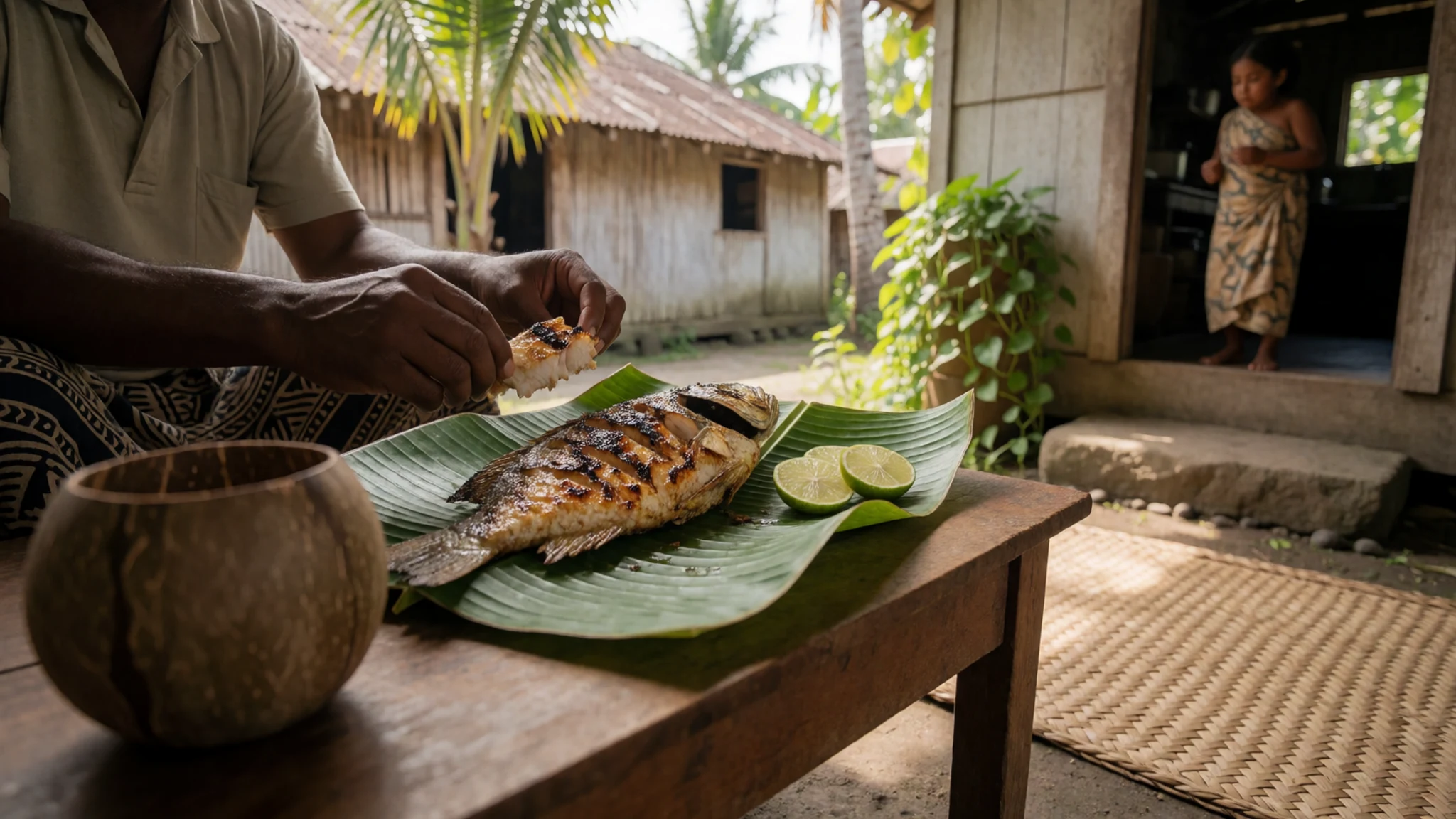
- Pulaka — Family meals and feasts on Tuvaluan islands
Pulaka, or giant swamp taro, is a starchy root grown in deep pits dug down to the freshwater lens beneath the coral. It is boiled or baked and served beside fish. It is a slow crop, so it is more likely to appear at a feast than at a casual meal.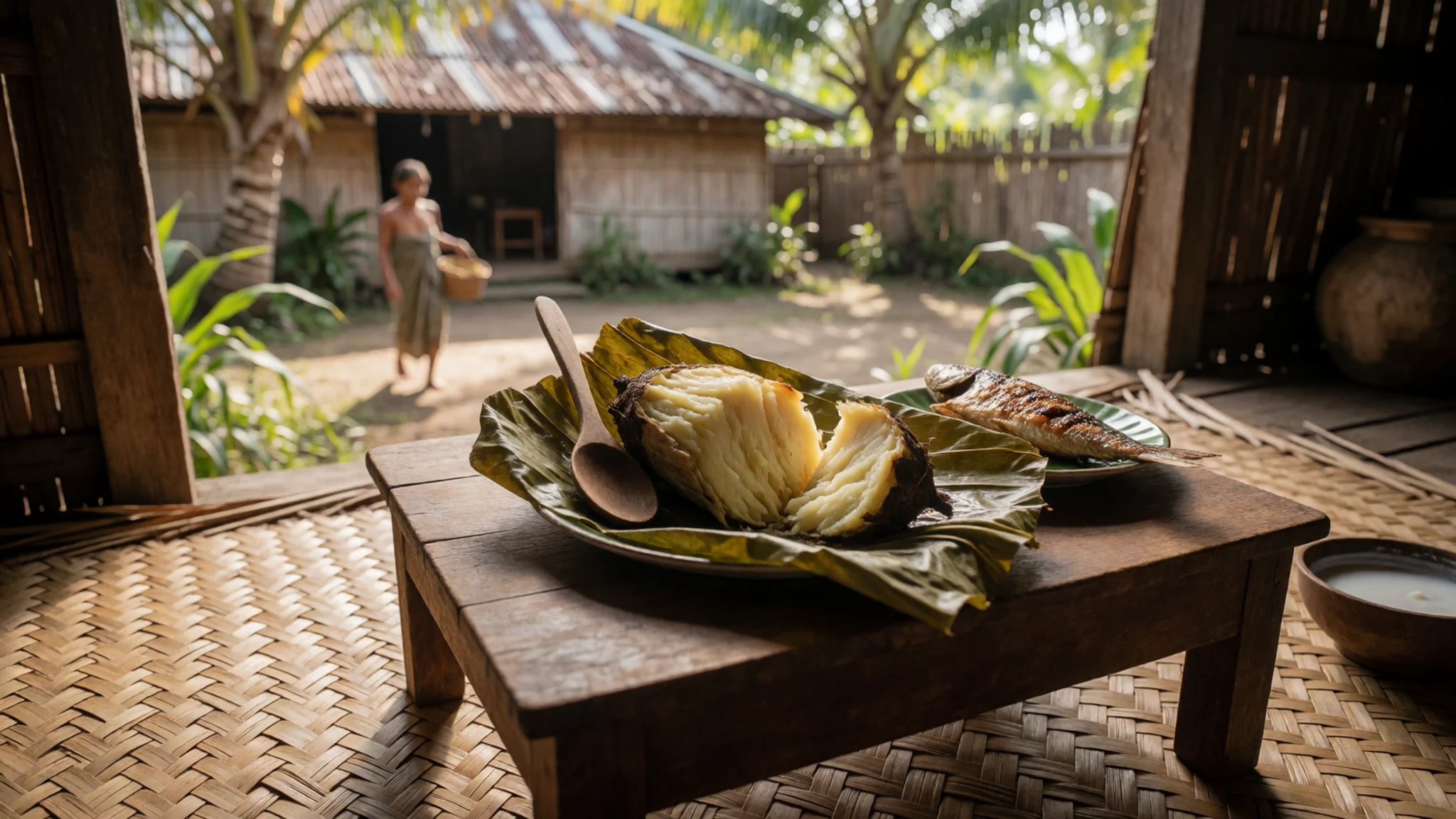
- Palusami — Village feasts and family tables
Palusami is a parcel of young taro leaves holding coconut cream, baked until soft and rich. It suits the island's ingredients exactly: a leaf, a coconut and an oven of hot stones or a modest fire. It often accompanies fish at celebrations. - Breadfruit — Home cooking, in season
Breadfruit is roasted, boiled or sliced and fried, with a mild, potato-like texture. It is seasonal, so availability depends on the time of year and on what trees on the island are bearing. It is a useful reminder that island menus follow the land. - Fresh coconut — Everywhere on the island; ask a host to open one
Drinking nuts are the safest and most refreshing way to cool down, and coconut cream flavours nearly everything cooked. Visitors will be offered one early on. Mature coconut is also grated for desserts and for cooking with fish and leaves.
Plan it
Best time. May to October is the usual choice, as the drier months bring steadier weather and calmer seas than the wetter, cyclone-prone months from November to April. Heat and humidity stay high all year, and sea conditions still decide whether a boat can land.
How long. 4–6
Getting there. Fly to Funafuti International Airport (FUN), the only international gateway, with Fiji Airways from Nadi. Niulakita is an outer island, so the last leg is by sea from Funafuti. Boat schedules are irregular, so arrange passage through local contacts and the island authorities well in advance.
Budget. high
Tips
- Check the current visa rules before booking, as they depend on nationality
- Book flights early and allow slack, because Tuvalu's connections are limited and schedules change
- Arrange the boat, a host and permission to visit before leaving Funafuti
- Bring cash, snacks, water and medicines, as the island has no shops for visitors
- Carry sun protection and a waterproof bag for wet landings
Etiquette
- Ask your host before photographing people, dances or church services
- Dress modestly in the village and keep Sundays quiet
- Bring a gift of food or supplies for the family who host you
Nearby
Sources
- Wikidata Q632489 (CC0)
- Wikipedia: Niulakita (rev 1379006993) (CC BY-SA 4.0)
- Wikivoyage: Tuvalu (rev 5324565) (CC BY-SA 4.0)
- Niulakita 2022 photo, Tschubby, via Wikimedia Commons (CC BY 3.0)
