Nukufetau
Nukufetau, Tuvalu
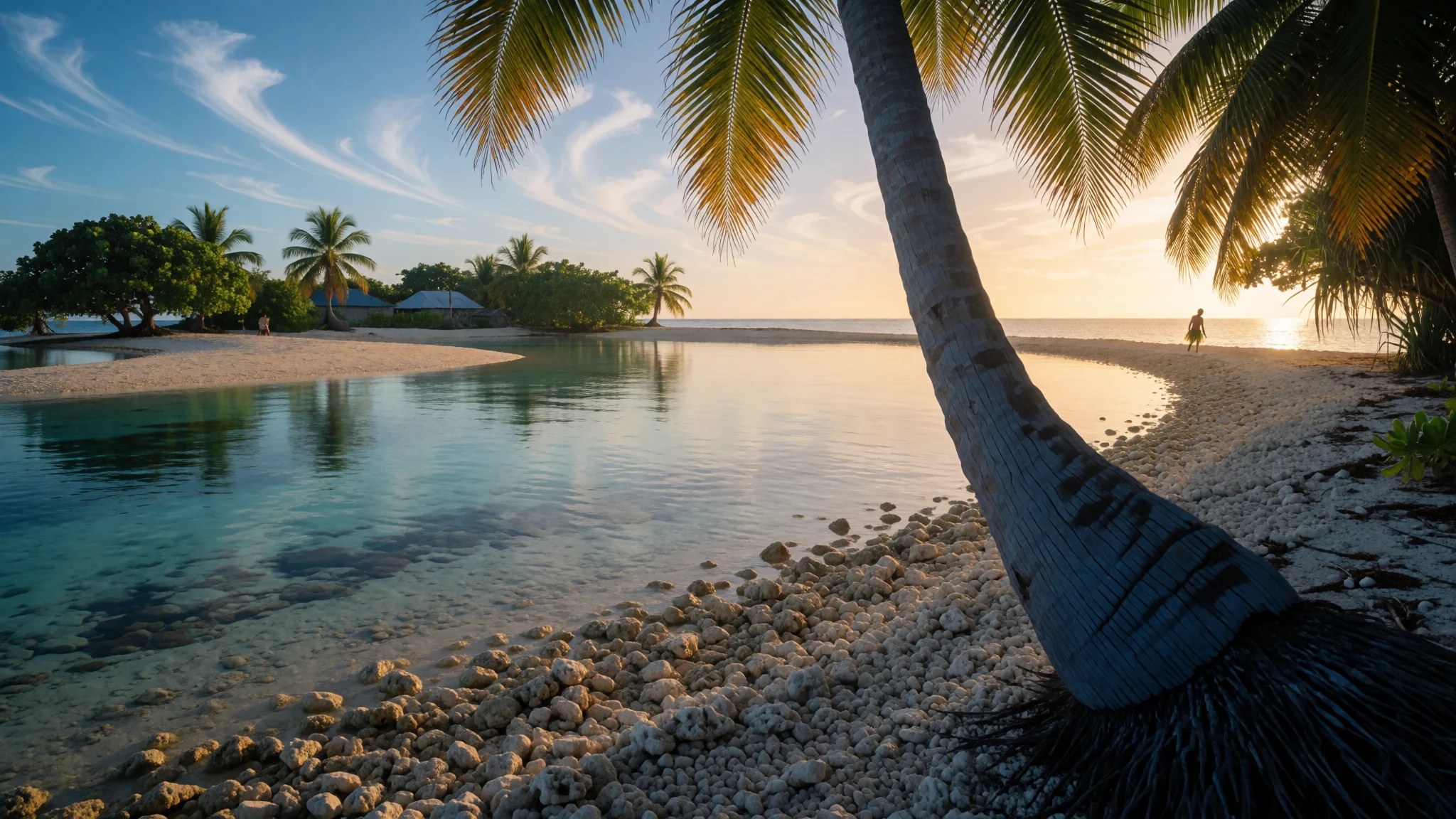
Nukufetau is a quiet Tuvaluan atoll of low islets round a wide lagoon, where wartime relics, fishing life and island hospitality set the pace.
The place
Nukufetau is an atoll in Tuvalu, a ring of narrow islets strung round a lagoon in the central Pacific. Most of the land is only a few steps wide and barely above the tide, planted with coconut palms, pandanus and breadfruit, with open ocean on one side and calm green-blue water on the other. The lagoon is the centre of daily life: fishing boats cross it, children swim in it, and the channels between islets work as roads when the tide allows. Savave, on the islet of the same name, is where the community lives today. The neighbouring islet of Fale was settled earlier, and an arm of the lagoon now separates the two. Other islets are used for gathering coconuts, keeping pigs and short stays rather than permanent homes. There is no resort scene, no shopping street and no nightlife. What a visitor finds is a village of simple houses, a meeting hall where decisions are still taken communally, a church that anchors the week, and a rhythm set by weather, tides and boat days. Heat and humidity are constant, the trade winds soften them, and the sun is fierce on open reef flats. Fresh water comes mainly from rain, so it is used with care, and fresh food depends on what the island grows and catches or what the ship brings. Electricity and connectivity are more limited than on Funafuti. Sea level is a live concern across Tuvalu, and residents talk about it plainly rather than dramatically. Nukufetau suits people who like slow days, snorkelling, walking the lagoon shore and long conversations, and who are happy to arrange everything well in advance.
Its story
The history of Nukufetau begins with Polynesian voyagers who settled the atolls of what is now Tuvalu, keeping links by canoe with Samoa, Tokelau and neighbouring islands. Genealogies and oral tradition, held by families and the island council, still shape land rights and who sits where in the meeting hall. European ships passed through in the era of whalers and traders, bringing metal tools, new diseases and missionaries. Christianity took root, and the church became central to village life. Slave-raiding vessels from Peru struck several Tuvaluan atolls in the nineteenth century, and the losses were severe for such small communities. Later the islands were British, known as the Ellice Islands and grouped in a joint colony with the Gilbert Islands, before Tuvalu became independent. In the Second World War, Nukufetau gained sudden importance. American forces arrived with heavy equipment and built an airfield on one of the islets as part of the campaign across the Pacific, and photographs from the time show landing craft unloading gear off the reef. The airstrip is long disused, though coral roads, foundations and scattered relics remain in the bush. After independence, the United States formally gave up its claims to Tuvaluan islands, Nukufetau among them, in a treaty of friendship. Today the story is as much about the future as the past: a young nation on very low ground, and families deciding how to keep a home on the atoll.
What to see
- Savave village — Savave islet
Savave is the living heart of Nukufetau, a small village of tin-roofed and thatched houses, a church and a meeting hall facing the lagoon. A slow walk along its paths shows how the community shares space, water and work. Introduce yourself to the island council before wandering far.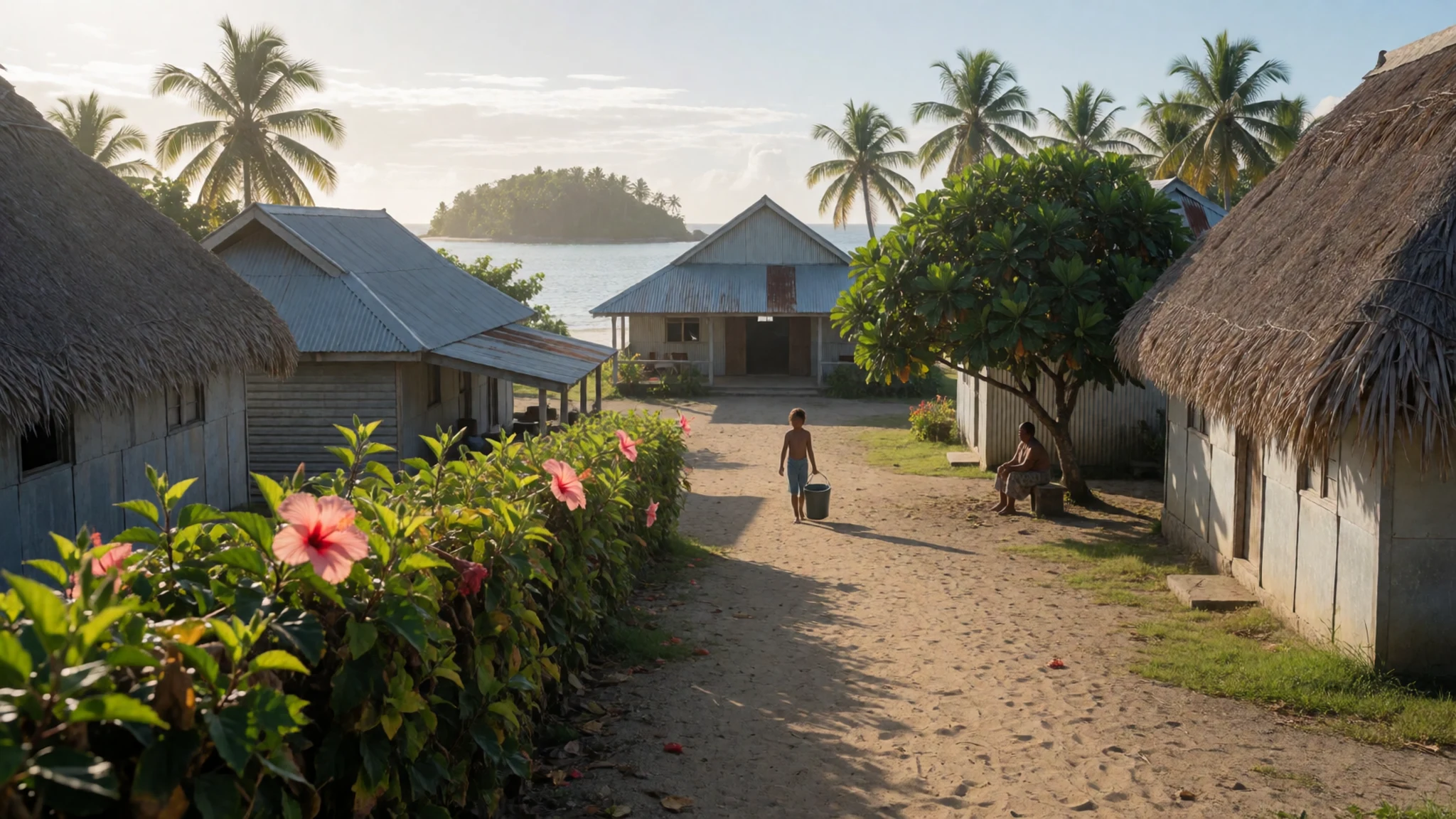
- Fale islet — Fale islet, beside Savave
Fale was the earlier settlement and lies just across a lagoon channel from Savave. It is a good short boat trip, or a wade at low tide with local advice, to see older village sites, coconut groves and the quiet that comes with having few people about.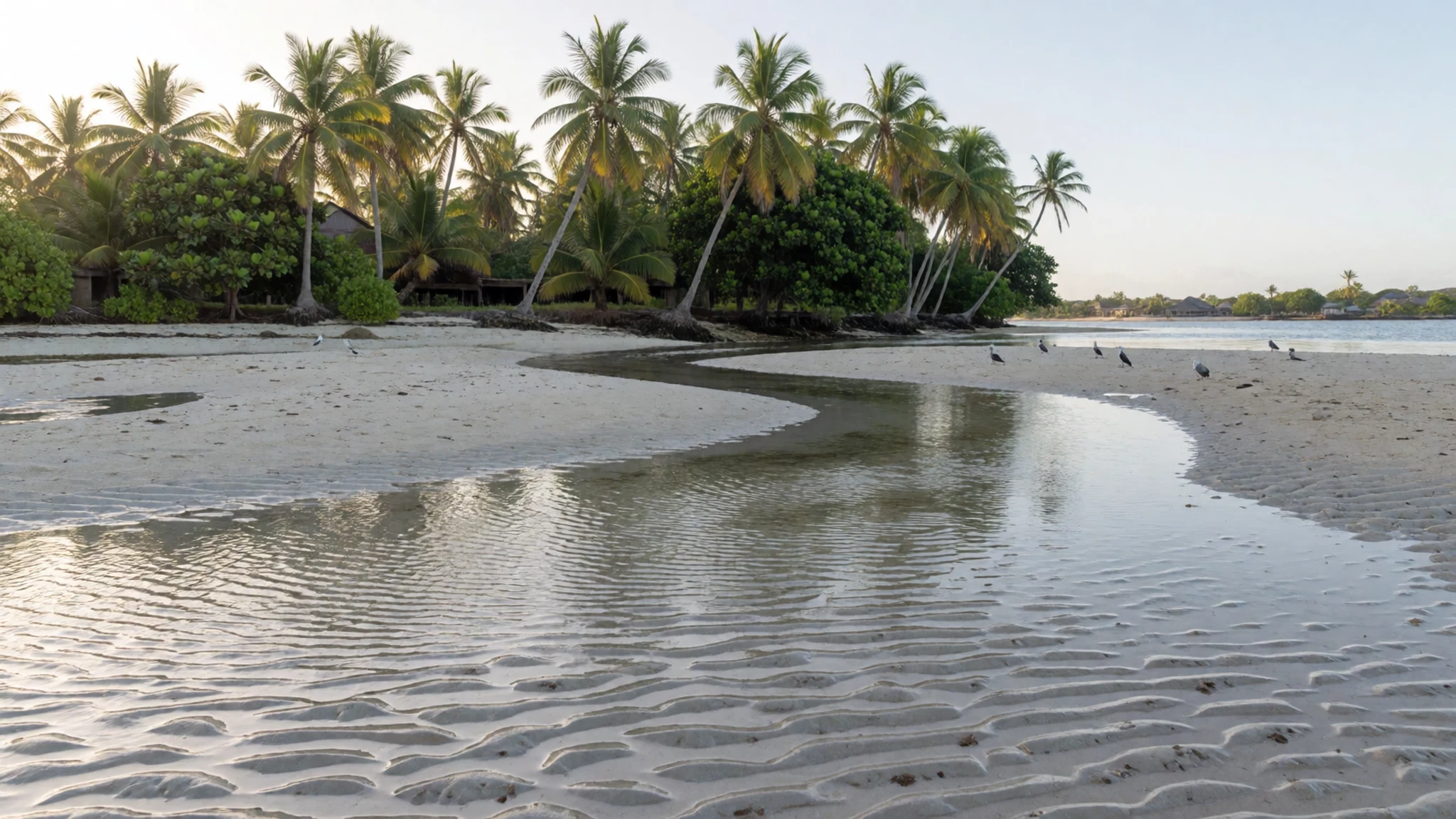
- The lagoon by boat — Central lagoon
A boat trip across the lagoon is the best way to grasp the atoll's shape: a broken ring of green islets, shallow sandbanks and darker channels. Snorkelling over coral heads can be rewarding in calm weather. Go with a local boatman who reads the tides and the wind.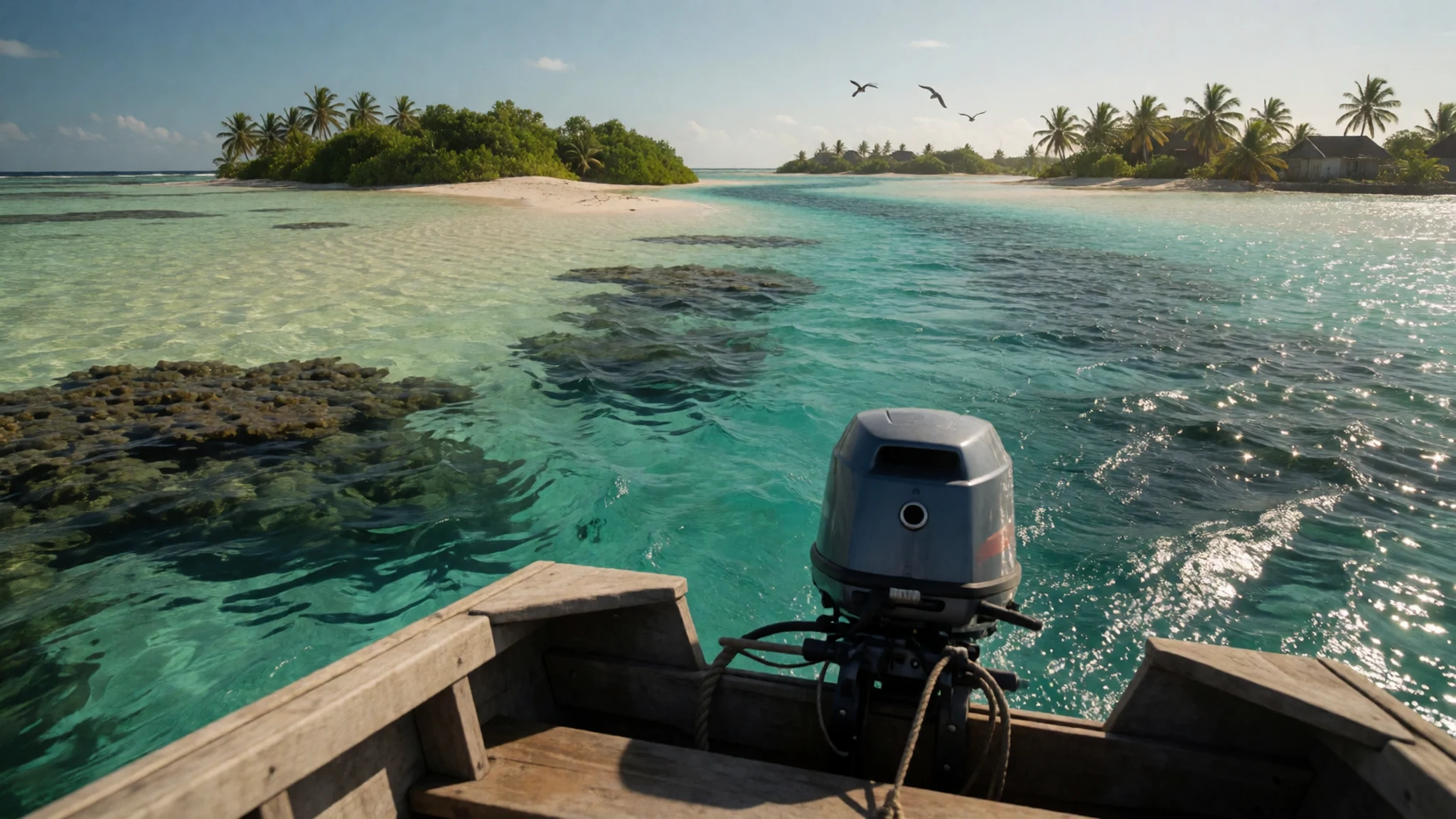
- Wartime airfield remains — Wartime airfield islet, across the lagoon
American forces built an airstrip on one of the islets in the Second World War, and traces of it remain among the trees: cleared lines, coral-surfaced tracks and rusting scraps. It is a modest site, not a museum, and rewards people who enjoy quiet history and a guide who knows the ground.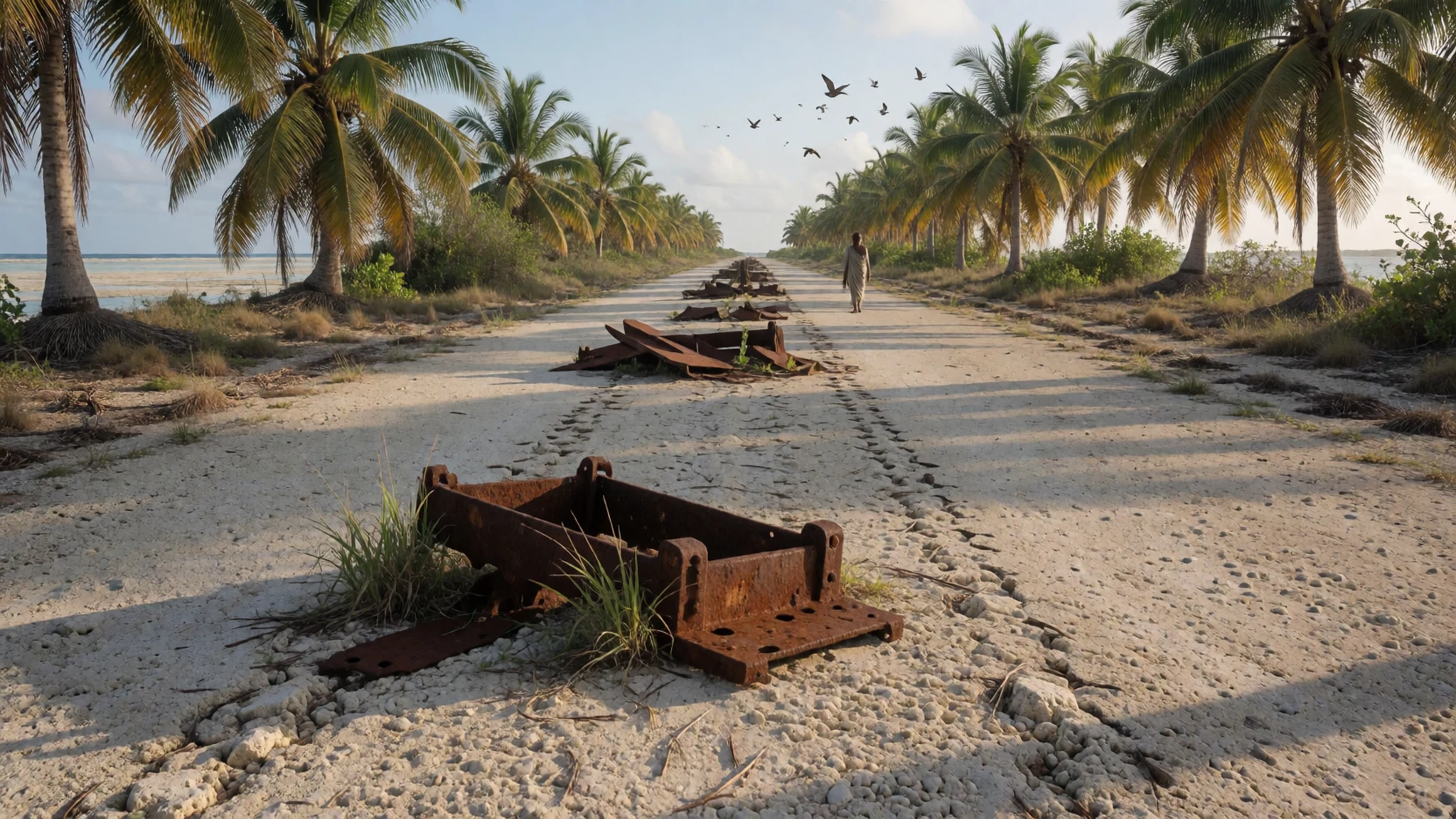
- Tamala islet — Atoll rim
Tamala is one of the smaller islets on the ring and appears in photographs from the Ellice Islands era. Reaching it means a boat ride and local goodwill. The reward is empty shoreline, birds, coconut palms and a clear sense of how thin the land is.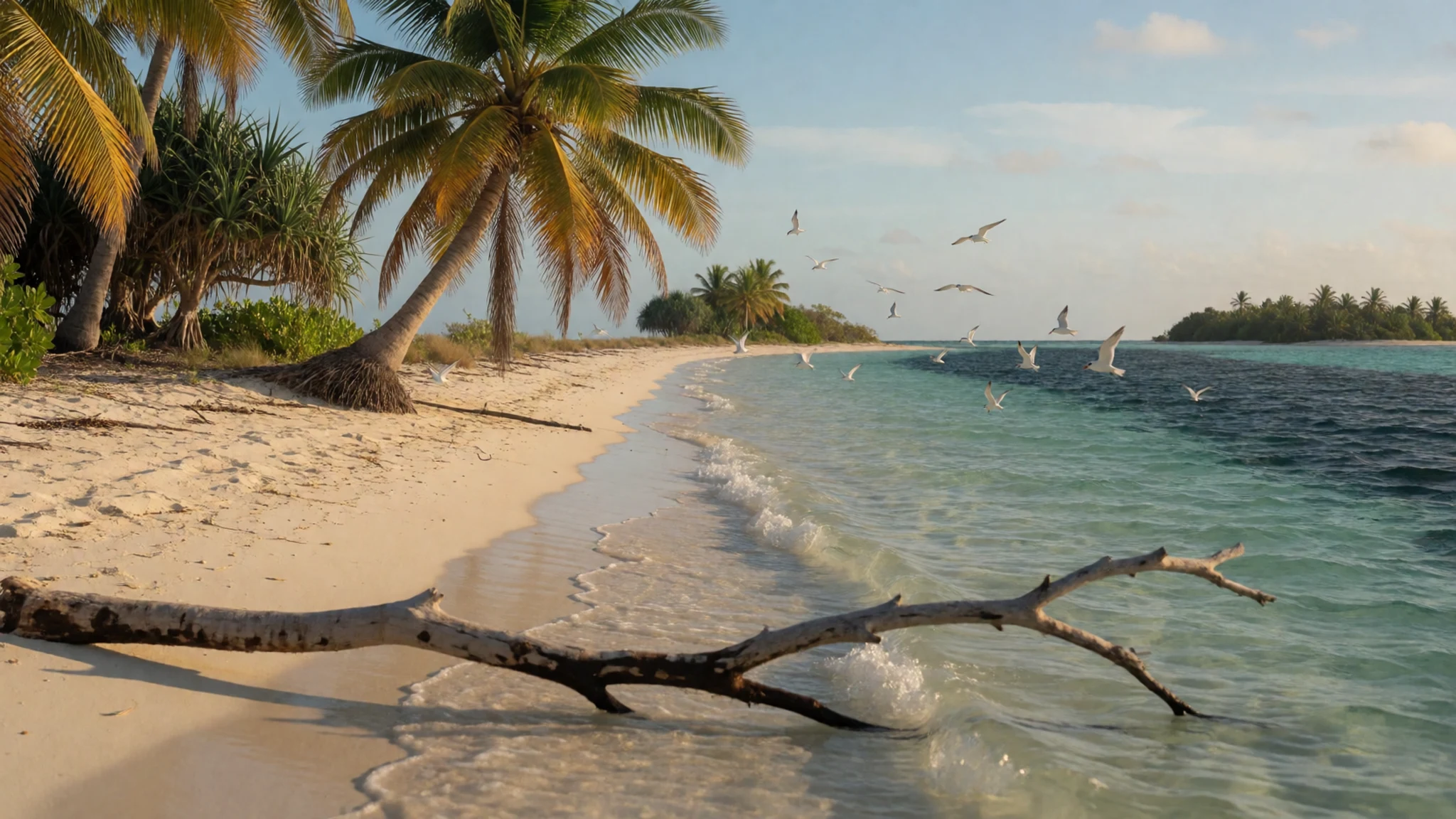
- Ocean-side reef walks — Outer shore of the islets
The outer shores face the Pacific swell, with coral rubble beaches and wind-bent trees, very different from the sheltered lagoon side. Walk at low tide with a local companion, wear sturdy shoes, and keep well back from the reef edge, where waves can surge without warning.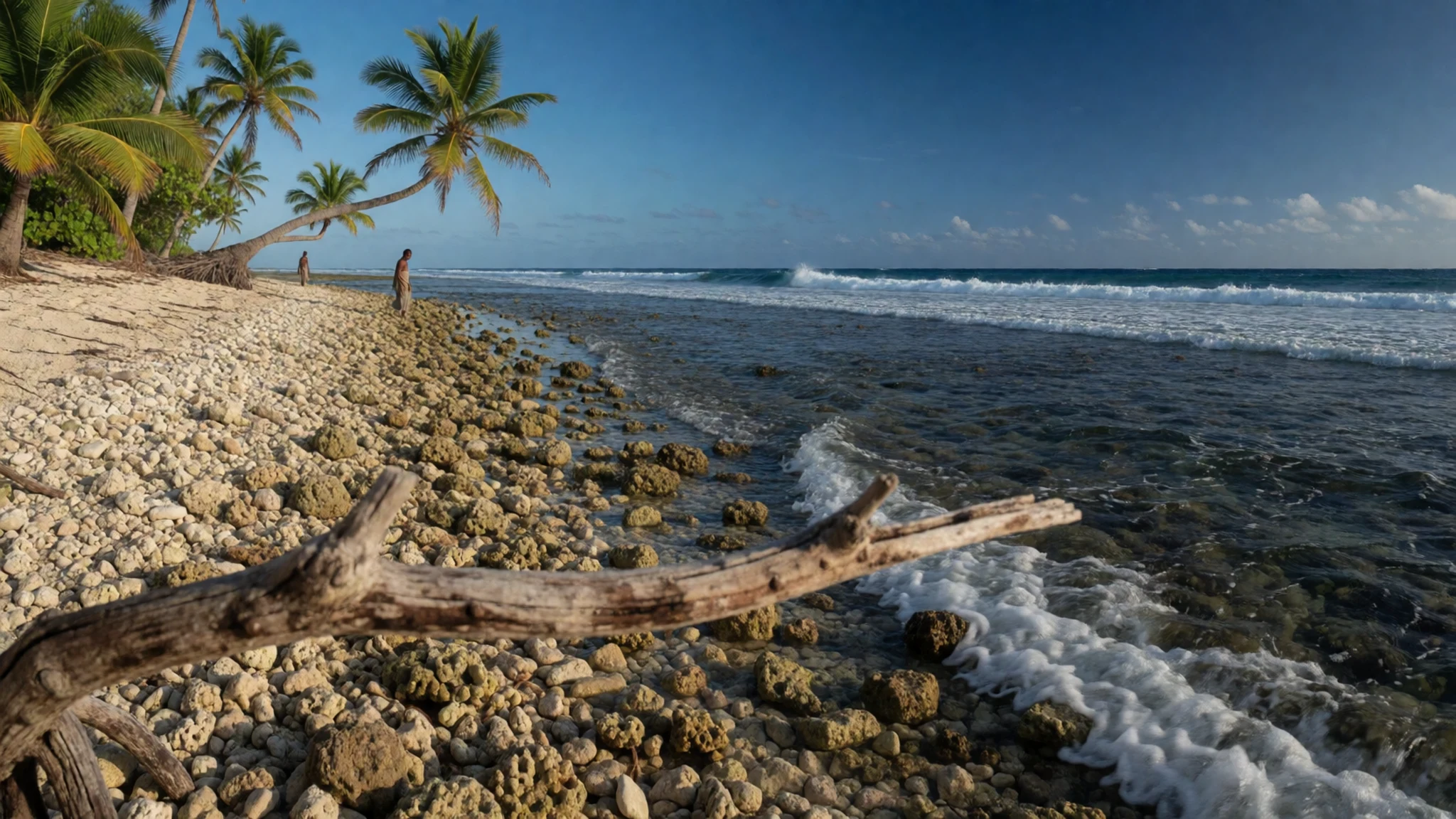
Culture
Nukufetau is a Tuvaluan community, and life there runs on shared decisions, family ties and the church. The island council, known as the falekaupule, brings elders and families together in the meeting hall to settle matters from land use to feasts, and visitors are expected to be known to it. Tuvaluan is spoken daily, with English used for official business and with outsiders, and a few greetings in the local language earn real goodwill. Sunday is observed seriously. Services, singing and family meals fill the day, and fishing, loud music and sport are usually set aside. Singing is a strength of the islands, and church choirs are often the first thing a visitor hears drifting across the village. Celebrations, from weddings to the arrival of a visiting official, are marked with feasting and fatele, a group performance of song and dance in which verses are composed for the occasion, and guests may be invited to join in or at least sit and be fed. Hospitality is real but not unlimited: food and fuel are scarce on an atoll, so visitors are wise to bring supplies and share them. Many families depend on fishing, small gardens and money sent from relatives working overseas, and conversation often turns to the sea, the weather and the future of the islands. Ask the island council or your host before swimming near the village, fishing, or photographing people, and keep Sundays quiet and respectful.
What to wear
Traditional dress in Nukufetau, as across Tuvalu, centres on the titi, a skirt of leaves or fibre worn for dances and ceremonial occasions, often with garlands of flowers, shells or pandanus leaf. Fala, the woven pandanus mats, are the characteristic textile: made by women, used for sleeping and sitting, and given as gifts at weddings and funerals. Dance costumes today may mix fibre skirts with printed cloth and fresh flowers. Everyday clothing is simple and suited to heat. Men wear shorts or a wrapped sulu with a T-shirt, women wear loose dresses or a wrapped cloth with a top, and most people go barefoot or in flip-flops. For church, people dress with care in clean, pressed clothes, often white or bright colours, and women usually cover their shoulders and knees. Visitors should pack light cotton or linen that dries quickly, with shirts that cover the shoulders and shorts or skirts that reach the knee when in the village. Bring one neat outfit for church or a community feast. Swimwear is for the beach and the boat, not for walking through the village; a sarong or T-shirt over it is polite. A wide-brimmed hat, long-sleeved sun shirt, reef shoes for coral and sharp shells, and strong sun protection matter more than any fashion choices on the atoll.
What to eat
- Pulaka — A family meal or village feast in Savave
Pulaka is giant swamp taro, grown in deep pits dug down towards the freshwater lens, and it is the staple starch of the atolls. It is boiled, baked or grated into puddings. A village meal or feast is the likeliest place to try it.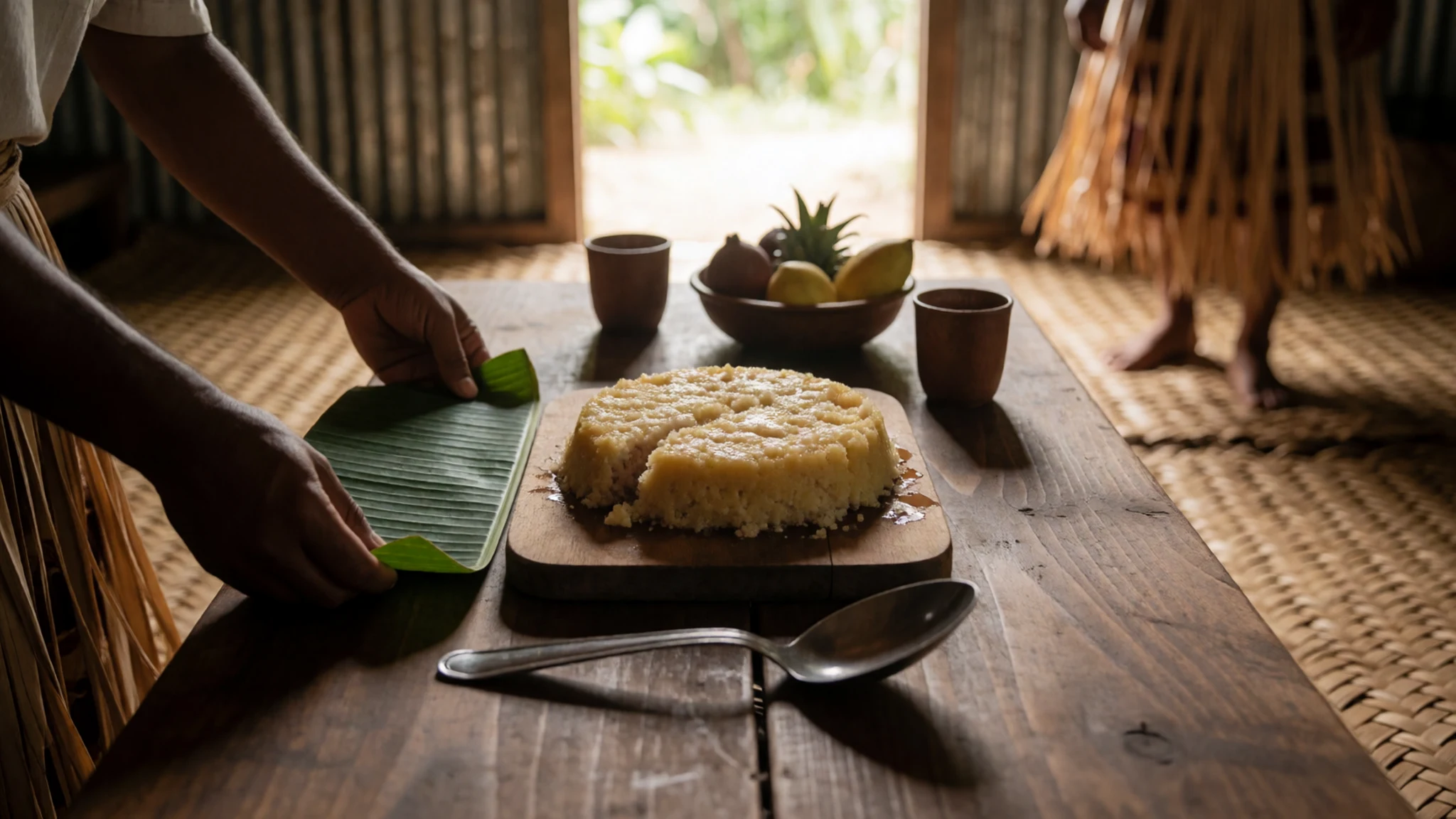
- Fresh reef and tuna fish — Home kitchens and the lagoon shore, wherever the catch comes in
Fish is the daily protein, caught from the lagoon, the reef edge or beyond it. It is grilled over coconut husk, boiled in broth or eaten raw with coconut cream and lime. Eat what hosts offer on the day.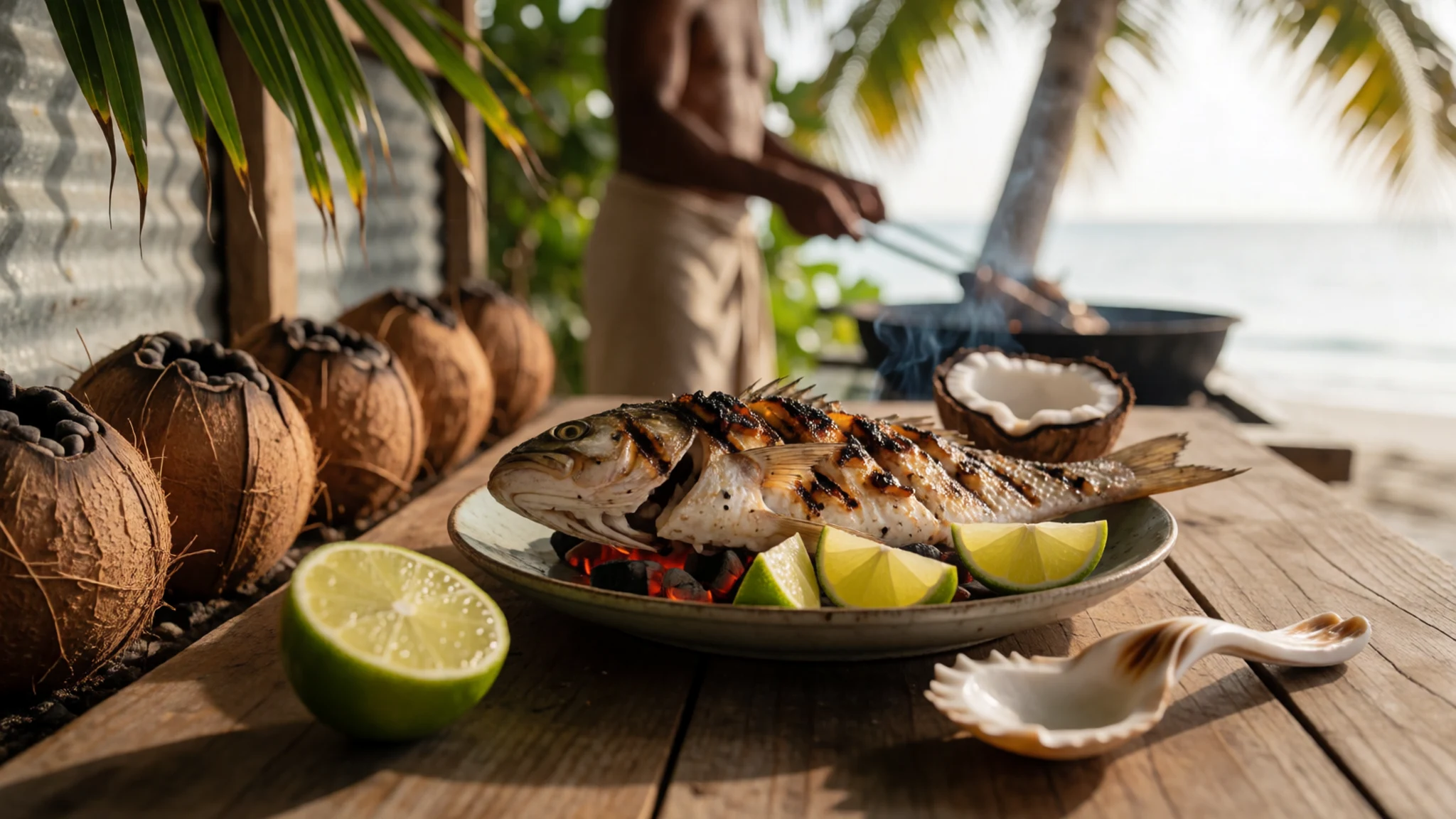
- Palusami — Community feasts and Sunday family tables
Palusami is taro leaves wrapped around coconut cream and baked until soft and rich. It appears at feasts and Sunday meals across the Pacific, and each cook has a slightly different method. It pairs well with grilled fish. - Breadfruit — Home meals in the village, in season
Breadfruit grows in the village shade and is baked, boiled or fried in slices when in season. It is filling, mildly nutty and a useful alternative to taro. Availability follows the fruiting months, so ask hosts what is ripe. - Drinking coconuts — Anywhere under the palms; ask the owner first
Young green coconuts are the standard refreshment, cut open with a bush knife by whoever is nearest. The water is mildly sweet and the soft flesh is edible. They are especially welcome after a lagoon walk in midday heat. - Kaleve (coconut toddy) — Early morning with a village sap collector, if invited
Kaleve is the sap tapped from coconut flower stalks, drunk fresh as a sweet drink or cooked down into syrup. Sap collectors climb palms morning and evening. Fermented toddy exists but is a matter of local custom, so follow your host's lead.
Plan it
Best time. May to October is generally the drier, more settled stretch, with trade winds that take the edge off the heat and calmer boat crossings. From about November to April it is wetter and more humid, and storms and rough seas can disrupt ship schedules, so build in slack.
How long. 3–5
Getting there. Fly into Funafuti International Airport, with international connections usually routed through Fiji, then continue to Nukufetau by inter-island ship or a boat arranged locally. Schedules are irregular and can change at short notice, so confirm with Tuvalu's government or shipping contacts and your host before committing.
Budget. mid
Tips
- Arrange lodging and a local host well in advance, as formal accommodation on Nukufetau is very limited
- Bring cash, any medicines and a good stock of food, snacks and drinking water, because shops and banking are minimal
- Build spare days into the itinerary, since boat and flight timings in Tuvalu shift with weather
- Protect against sun and reef cuts with a hat, long sleeves, reef shoes and reef-safe sunscreen
- Charge devices and cameras when power is available, and expect little or no mobile signal
Etiquette
- Introduce yourself to the island council or your host on arrival and ask before photographing people or the village
- Keep Sundays quiet and dress modestly in the village
- Ask before entering anyone's land, swimming near houses or taking fruit
Nearby
Sources
- Wikidata: Nukufetau (CC0)
- Wikipedia: Nukufetau (CC BY-SA 4.0)
- Wikivoyage: Tuvalu (CC BY-SA 4.0)
- Wikimedia Commons: staged photographs of Nukufetau (Public domain, CC BY 3.0, CC BY 4.0, CC BY-SA 1.0 (per file))