Vaitupu
Vaitupu, Tuvalu
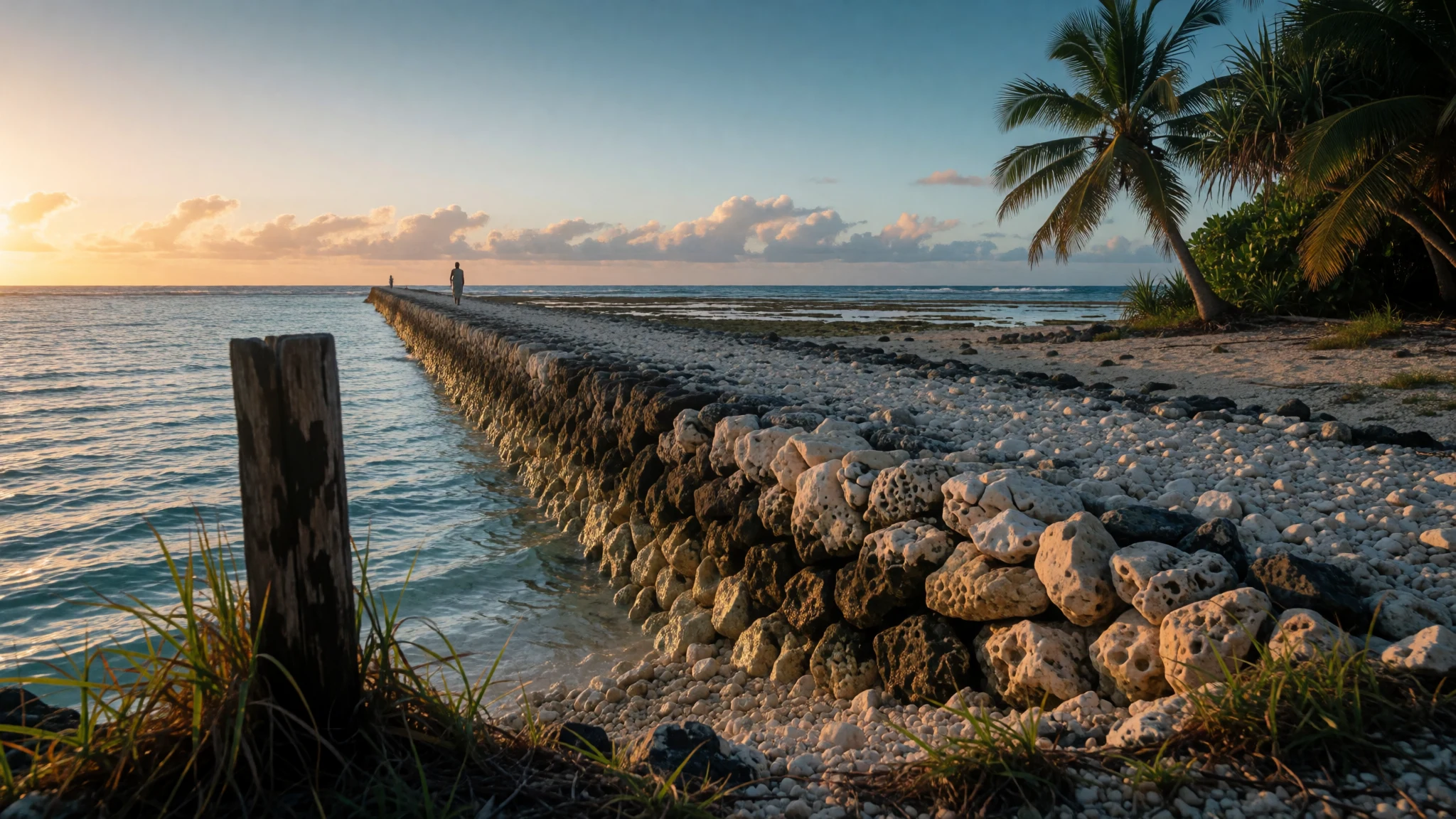
Vaitupu is a quiet Tuvaluan island where reef, lagoon and village life run slowly, and where the sea's nearness is felt everywhere.
The place
Vaitupu is an atoll island in the middle of Tuvalu's chain, a Polynesian nation spread thinly across the western Pacific. It is a low ribbon of coral land under coconut palms, breadfruit and pandanus, with open ocean on one side and a shallow lagoon and reef flat on the other. Nothing on it rises more than a few metres above the water, and that shapes everything, from where houses are built to how people talk about the future. Most residents live in one main settlement, and the day follows the tide, the church bell and the arrival of the interisland ship. Vaitupu is also known across Tuvalu as the home of Motufoua, the national secondary boarding school, so young people from many islands spend their teenage years here. Visitors should expect simplicity. There is no resort strip, no nightlife and very little formal tourism, and accommodation is limited, so stays are usually arranged through local contacts or the island council well ahead. The weather is warm and humid all year, with a wetter season that brings squalls and the risk of cyclones and storm surge. Midday heat is heavy and shade is scarce outside the village. What the island offers instead is quiet: reef walks, lagoon swimming, long evenings, and a close look at how a small Pacific community runs its own affairs. It rewards slow travel and low expectations of comfort.
Its story
Vaitupu was settled by Polynesian voyagers who crossed the Pacific in outrigger canoes, and its people still trace their families, land and meeting-house rights back through generations. Like the rest of what Europeans called the Ellice Islands, it was reached by whalers and traders, then by missionaries, and later came under British administration. The church became the centre of village life, and it still is. The island's school grew in importance through the colonial period and eventually became the national boarding school, which is why Vaitupu has an influence on Tuvalu out of proportion to its size. One episode stands out in the island's own memory. After the Second World War, Vaitupu people used community funds to buy Kioa, an island in Fiji, and a group of families sailed there to settle. A plaque on Kioa lists the names of those who landed, and their descendants still keep Tuvaluan language and customs alive on the other side of the water. Today the island's story is bound up with the climate. Rising seas, salt in the groundwater and stronger storms are daily concerns for a place this low, and many families have relatives in Fiji, New Zealand or Funafuti. Vaitupu's past is one of moving, adapting and holding on to a home.
What to see
- The main village — Main village
Vaitupu's main settlement is where the island's life is concentrated: tidy lanes, family compounds, a large village green and the meeting house where decisions are made. Walk slowly in the cooler hours, greet people as you pass, and ask before taking photographs. Evenings often bring volleyball and singing.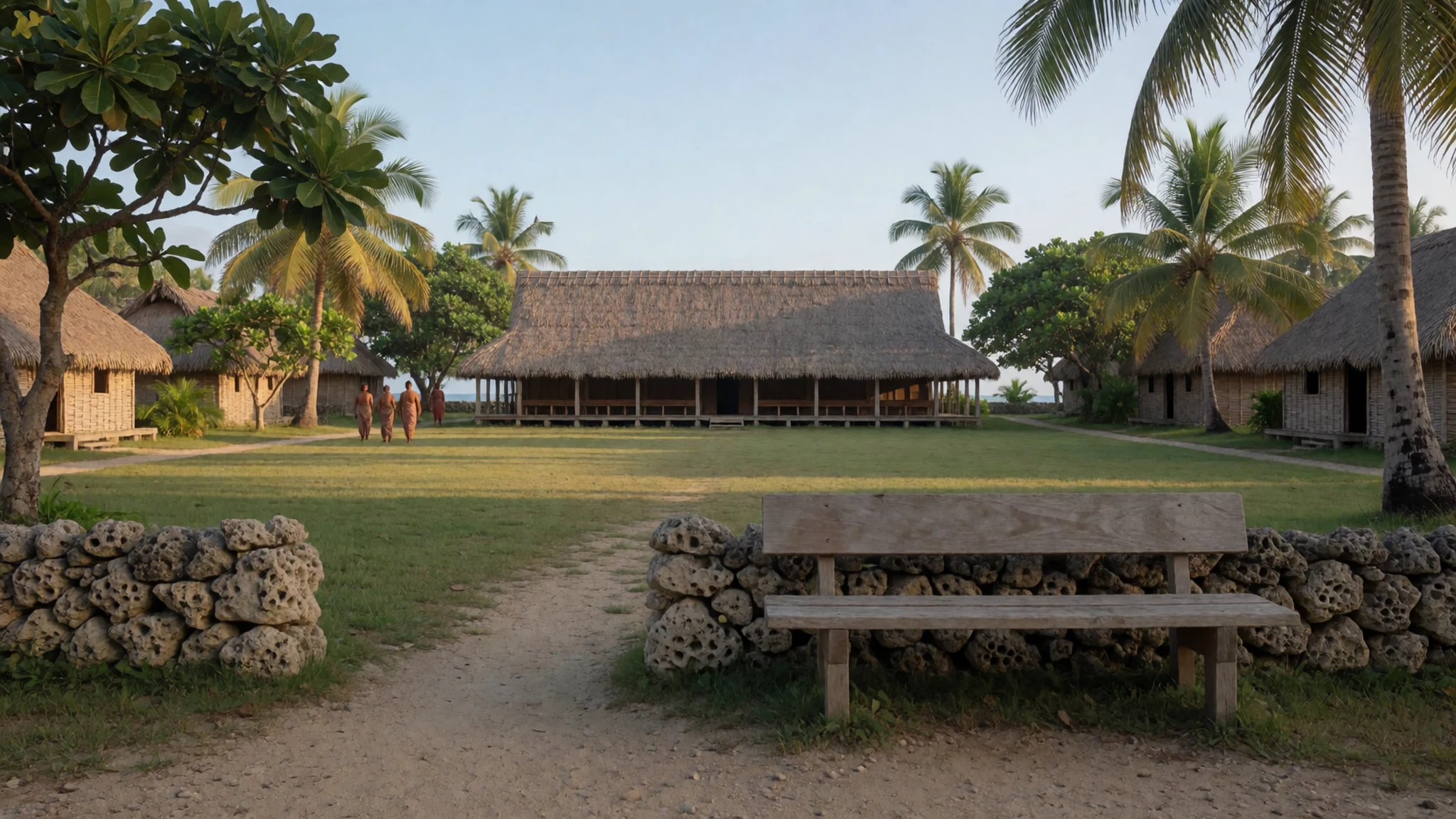
- Harbour breakwater — Harbour
The wharf is the island's front door. When the interisland ship arrives, passengers board smaller boats to reach the shore as the village gathers to meet them and unload cargo. Outside ship days it is a calm place to watch fishing boats, reef birds and the colour of the water change with the tide.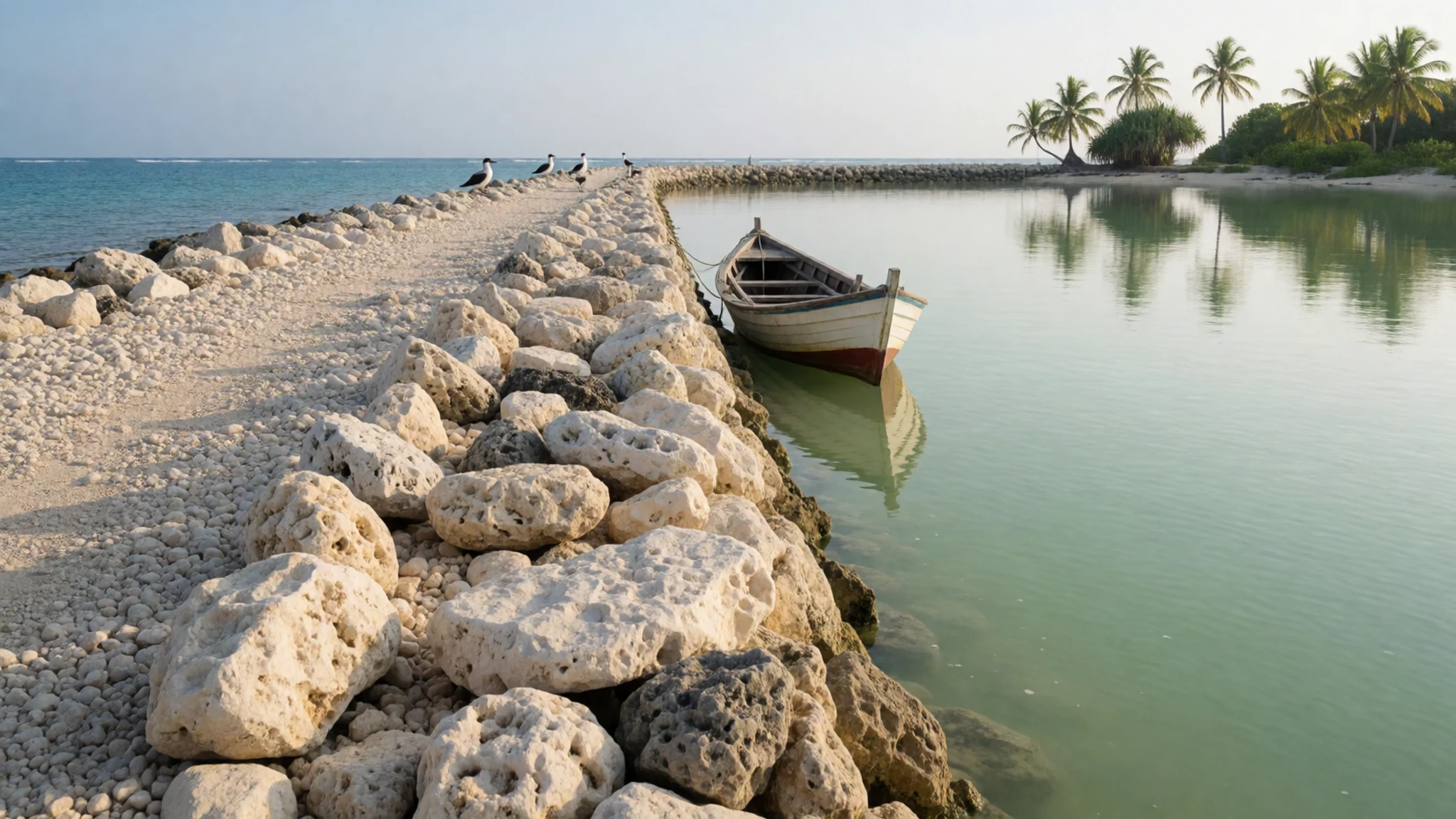
- Lagoon and reef flat — Lagoon shore
The lagoon side is shallow, sheltered and warm, with sandy patches, coral heads and small fish close to shore. At low tide the reef flat is exposed, and local guides can show where it is safe to walk. Wear reef shoes and take care with currents near channels.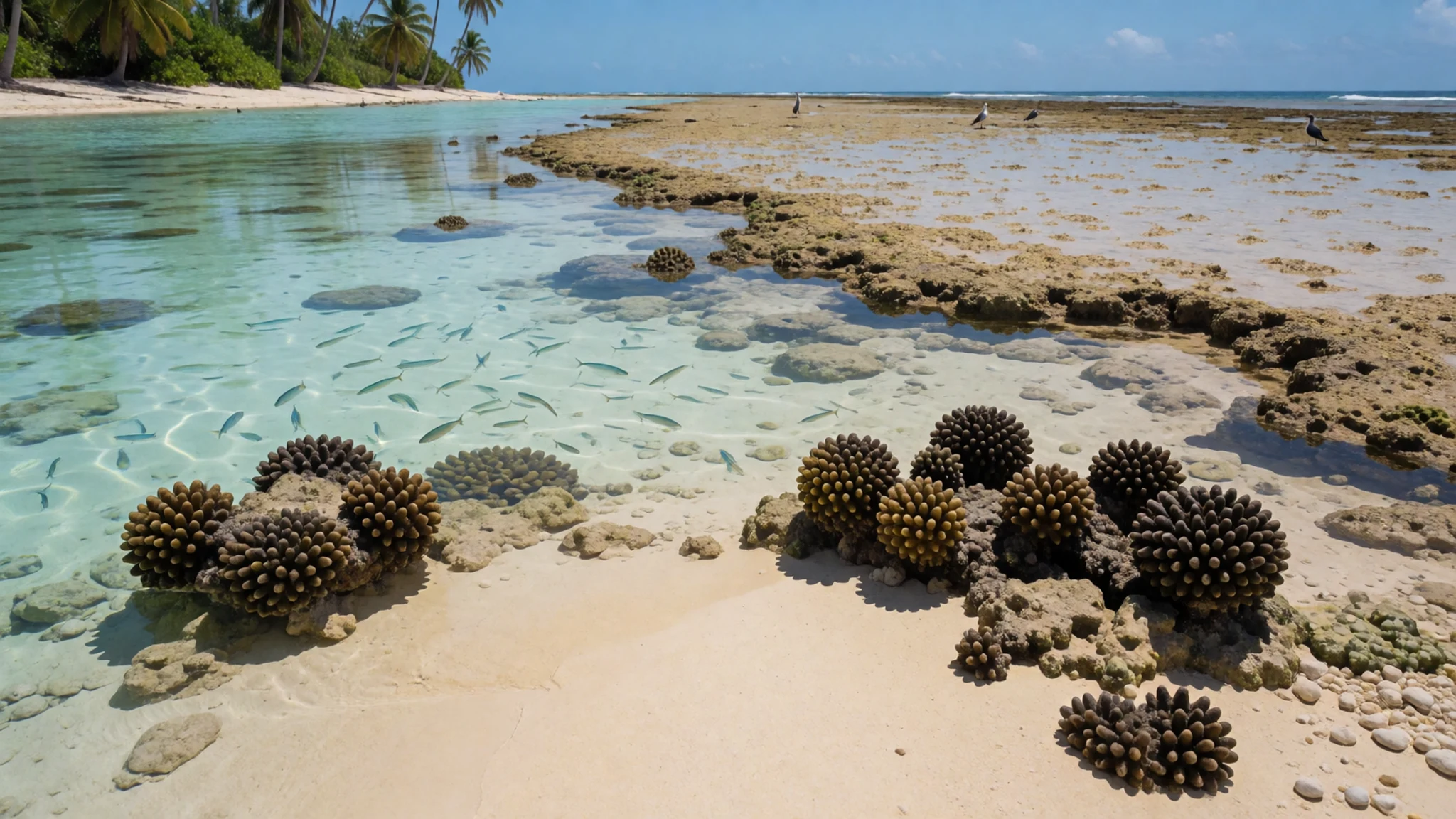
- Ocean-side shore — Seaward coast
The seaward coast is rougher, with coral rubble, pounding surf and views of an empty horizon. It is a good place to understand how exposed the island is, and how close the sea sits to the houses. Swimming here is not advised, as waves and currents are strong.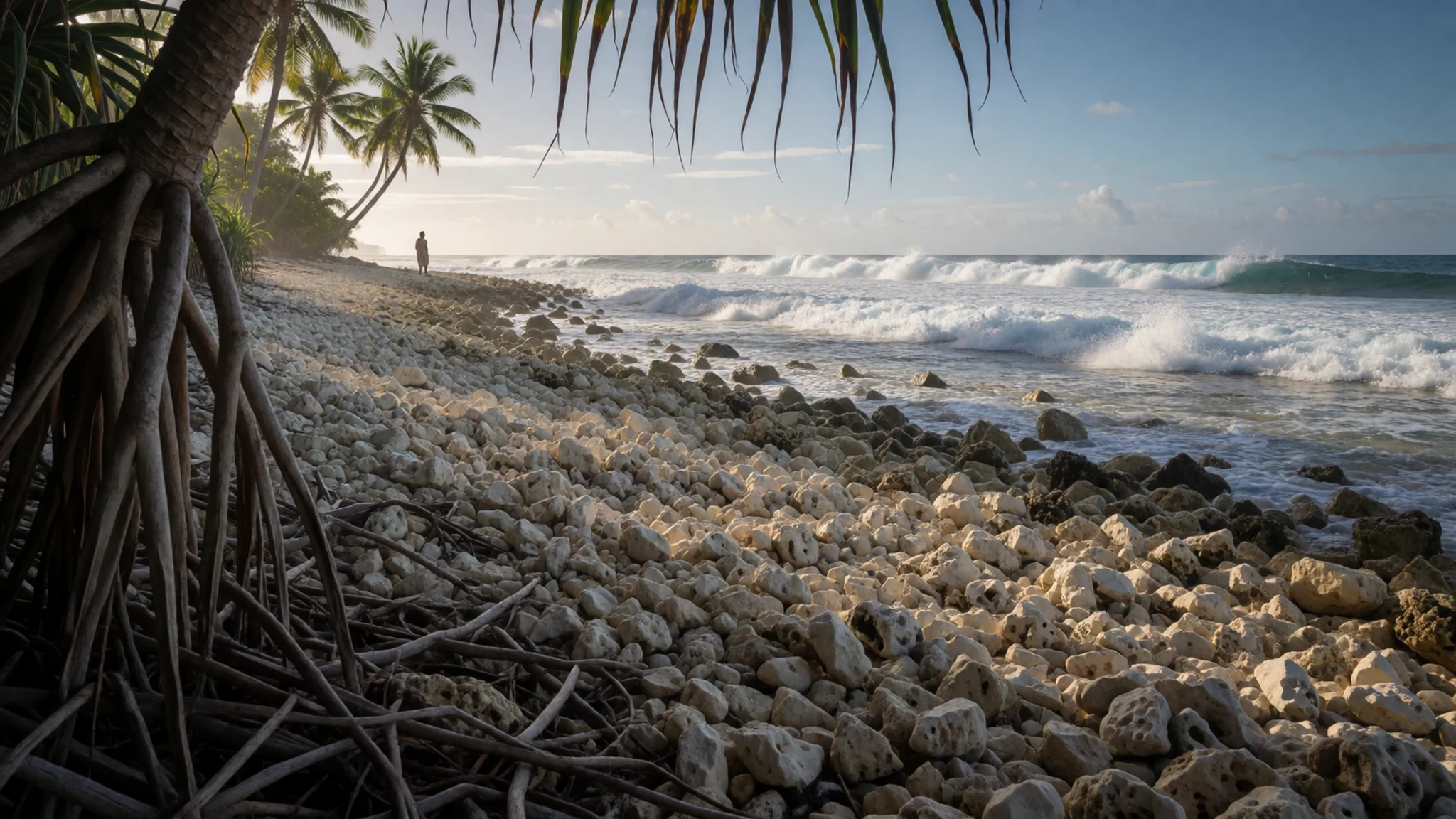
- The island church — Main village
The church is the social anchor of Vaitupu, and Sunday services fill it with strong, layered hymn singing. Visitors are usually welcome to attend if they dress modestly and arrive on time. Even outside services, the building and its surroundings show how central faith is to island life.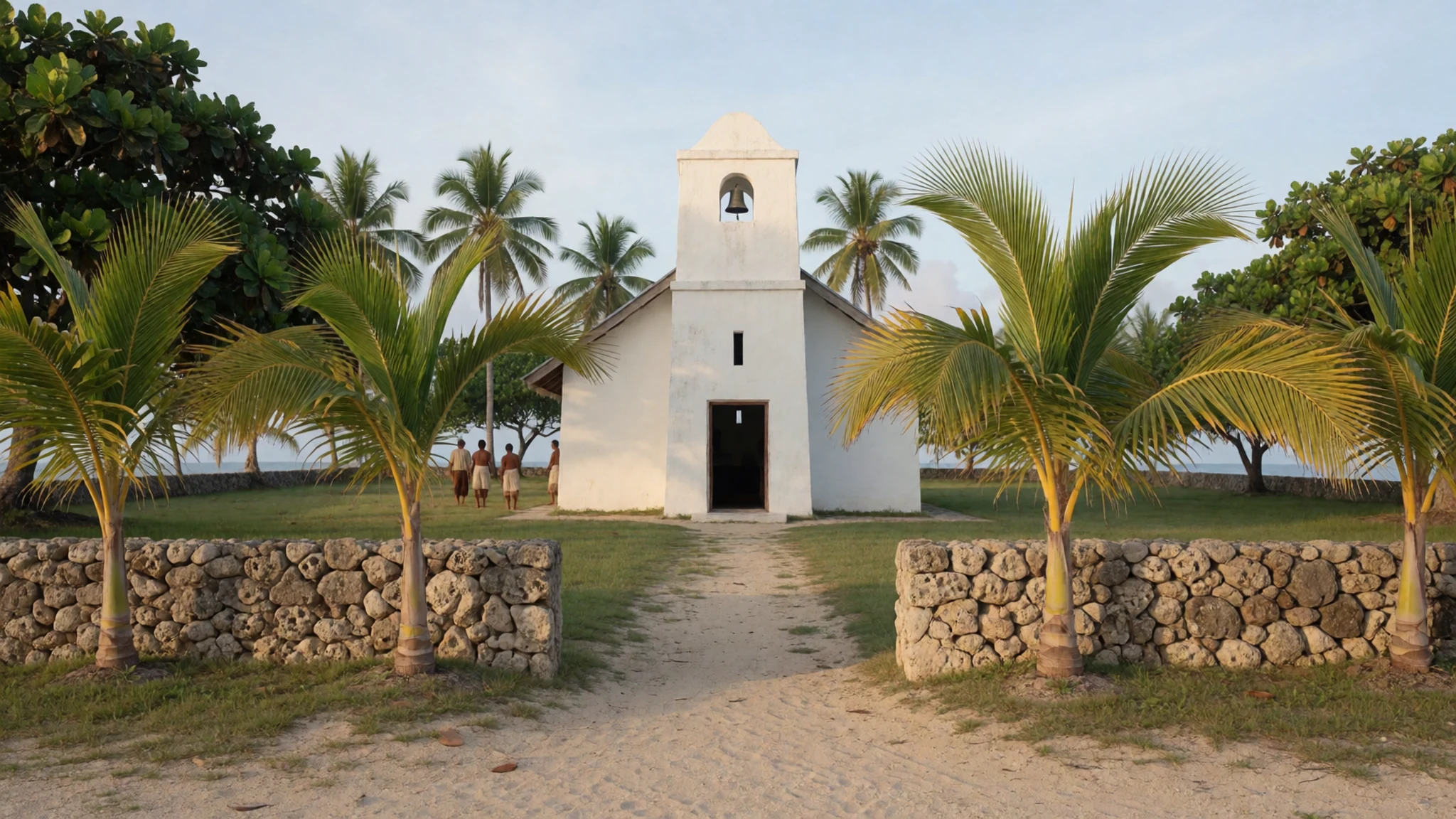
Culture
Vaitupu's culture is Tuvaluan: communal, church-centred and organised around family land and the island council. Decisions are made in the meeting house, called a maota, where elders speak in turn and the community listens. Singing and dance are central, and the fatele, a night of group song and dance with clapping and drums, brings the village together for celebrations and welcomes. Fishing, tending taro pits and coconut palms, and weaving pandanus leaf into mats and baskets remain everyday skills, handed down within families. Tuvaluan is spoken at home and in school, with English used in formal settings. Respect for elders, sharing of food and a strong sense of obligation to relatives, including those who have moved abroad, shape daily behaviour. Sundays are quiet days given over to church and rest, and shops and activities are limited. People are generally gentle and humorous with visitors, but privacy and modesty matter, and the village is not a stage. Staying with a local family or being introduced by the island council is the best way to be welcomed properly. Bring a small gift of food or goods for your hosts if you stay, and always ask the village or your host before swimming, fishing or photographing people, and keep Sundays quiet and modestly dressed.
What to wear
On Vaitupu, traditional dress centres on woven pandanus and coconut-fibre materials and on wrapped cloth. Women wear the valovalo or a similar wrapped skirt, and ceremonial occasions bring out fine mats, garlands of flowers and shells, and dance costumes with leaf or fibre skirts. Men wear a wrapped cloth, often called a titi or lavalava, with garlands for dances and festivals. These are worn mainly at fatele, church celebrations and island events. Everyday wear now is simple and practical: cotton T-shirts, shorts, printed island dresses, and flip-flops or bare feet. On Sundays people dress up for church, with women often in white or pastel dresses and hats, and men in shirts and wrapped cloth or trousers. Visitors should dress for heat, sun and modesty. Light cotton or linen that covers the shoulders and knees is the right choice in the village, and swimwear belongs on the beach or in the water only, not on village paths. For church, bring a long skirt or trousers and a collared or modest top. Reef shoes protect feet on coral and on the exposed reef flat at low tide. A wide-brimmed hat, sunglasses and a light shirt for sun protection are useful, and a waterproof layer helps in the wetter season.
What to eat
- Fresh reef and tuna fish — Family homes and the shoreline at landing time
Fish is the island's staple protein, caught from the reef, the lagoon and beyond the drop-off. It is grilled over coals, boiled in coconut milk, or eaten raw with lime. Ask a host family or look for the catch arriving at the shore.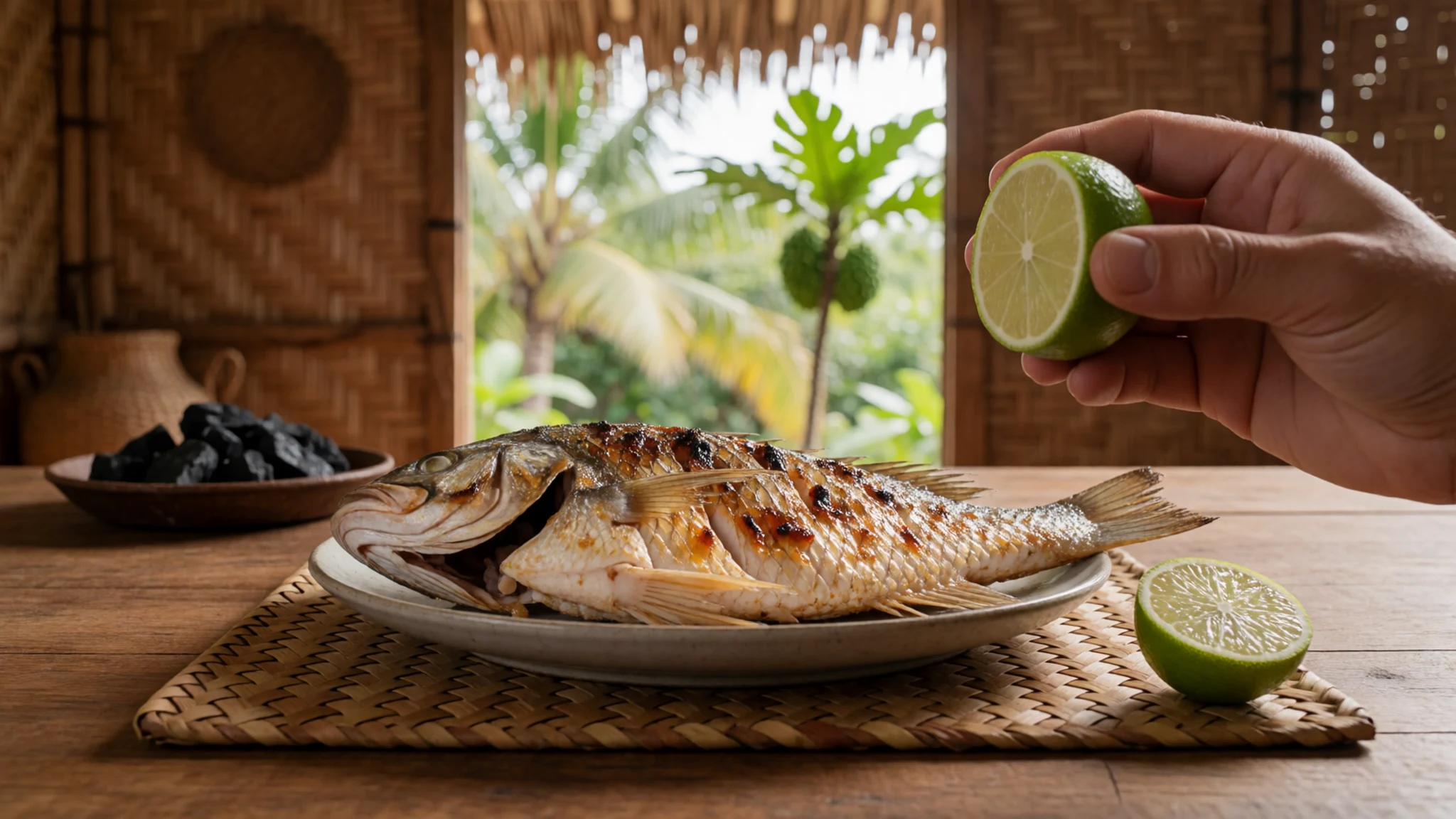
- Pulaka — Family meals and village feasts
Pulaka is giant swamp taro, grown in deep pits dug down to the freshwater lens. It is boiled, baked or mashed and serves as the main starch at a feast. Pits are often tended by women and passed down in families.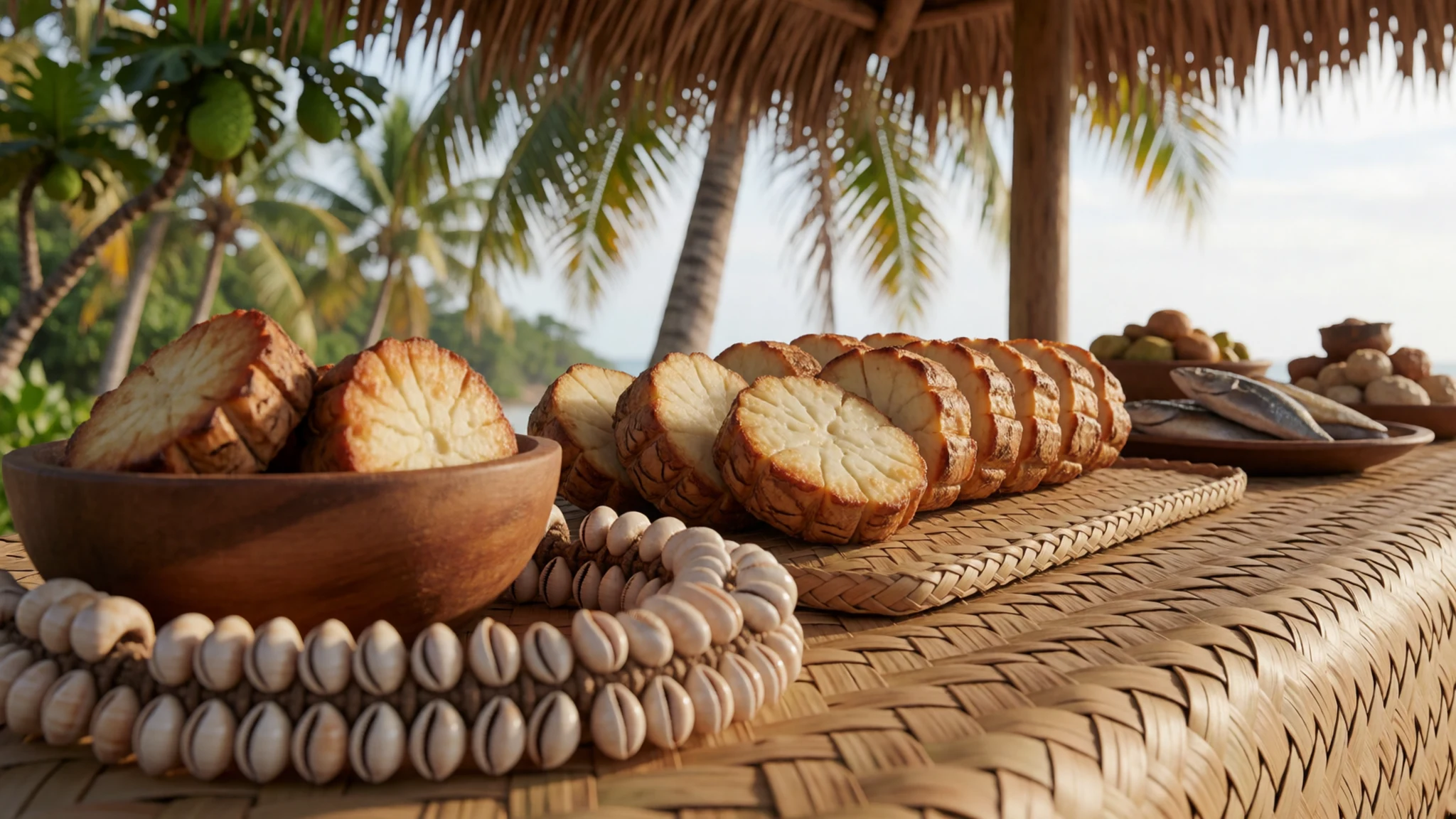
- Coconut crab and land crab dishes — Village feasts and family tables
Crabs are caught in the bush and cooked in coconut cream or roasted. They are a prized dish at special occasions. Availability varies, and sustainable catching matters, so eat them only when offered by local hosts. - Breadfruit — Village kitchens and communal meals
Breadfruit is baked in the embers, boiled or sliced and fried, with a soft texture somewhere between bread and potato. It is seasonal, so you may find it fresh in some months and preserved in others. - Coconut-based sweets and drinks — Roadside trees, family compounds and shared feasts
Fresh drinking coconut is the easiest refreshment on the island. Grated coconut and coconut cream also flavour sweet puddings and baked dishes. Because rainwater and groundwater need care, coconuts are a safe and welcome drink.
Plan it
Best time. May to October is the drier, calmer part of the year, with steadier trade winds and less risk of cyclones. November to April is the wetter season, with the heaviest rain and greater storm risk, and sea travel can be disrupted.
How long. 3–5
Getting there. Fly to Funafuti, Tuvalu's main airport, usually via Fiji. From Funafuti an interisland ship, such as the Manu Folau, serves the outer islands including Vaitupu. Schedules are irregular and can change, so confirm with the shipping office or your host before travelling.
Budget. mid
Tips
- Arrange accommodation and local contacts well before you travel, as places are very limited
- Carry enough cash in small notes, as cards and banks are not reliable on outer islands
- Bring drinking water supplies or purification, because rainwater tanks are shared and precious
- Allow spare days around the ship, as sailings can be delayed by weather
- Pack sun protection, insect repellent and basic medicines, as supplies are thin
Etiquette
- Ask the island council or your host before swimming, fishing or camping
- Dress modestly in the village and keep Sundays quiet
- Ask before photographing people, homes or church services
Nearby
Sources
- Wikidata item for Vaitupu (CC0)
- Wikipedia: Vaitupu (CC BY-SA 4.0)
- Wikivoyage: Tuvalu (CC BY-SA 4.0)
- Wikimedia Commons: Vaitupu photographs (Public domain; CC BY 3.0; CC BY-SA 4.0)