Nanumea
Nanumea, Tuvalu
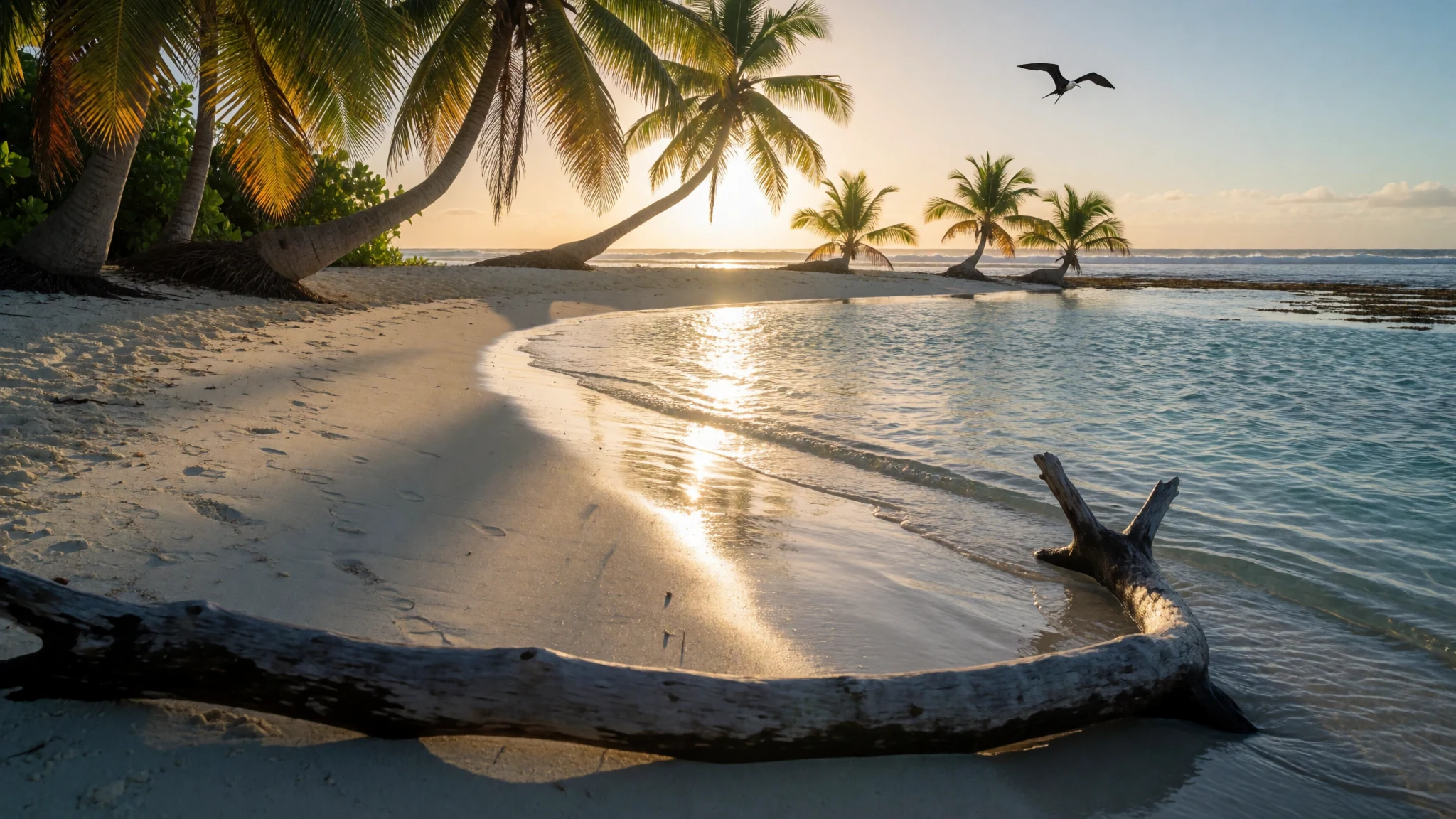
Nanumea is a remote Tuvaluan atoll of lagoon, reef and wartime relics, where a small community still lives by fishing and swamp taro.
The place
Nanumea sits at the north-western end of Tuvalu's chain of nine low coral islands, about six degrees south of the equator in the central Pacific. It is a textbook atoll: a ring of narrow islets resting on a reef platform, with a shallow lagoon in the middle. Everything is low and flat, so the horizon is all water, sky and coconut crowns.
Two islets, Nanumea and Lakena, make up nearly all the dry ground. Three smaller ones, Motu Foliki, Lafogaki and Te Afua-a-Taepoa, are scattered along the reef flat. The two largest villages are Lolua and Haumaefa, and the primary school is called Kaumaile. A few households sit across the lagoon at Matagi, on Motu Foliki and at the south-eastern tip of Lakena. Mangroves grow in two small stands, one south of the main village and one on Lakena.
Lakena has a practical job. The pits where pulaka, the swamp taro that anchors local meals, is grown are kept there so that the main islet stays free of mosquitoes. A conservation area protects part of the central lagoon, and net fishing and spearing inside the lagoon have been banned for years. Language and custom are Polynesian, although the Micronesian Gilbert Islands lie just to the north.
Climate change is a daily subject here. A coastal adaptation project is building buffers against storm erosion, and women from Nanumea have joined national talks about how disasters add to the care work they already carry. Visitors are rare, and the atoll runs to its own rhythm of tides, church and fishing.
Its story
Nanumea's founding story is told through Tefolaha, a warrior and voyager said to have arrived from the south. Accounts differ on whether he sailed from Tonga or Samoa, and it is not certain that those names mean today's countries. In the telling, the atoll was already home to two women, Pai and Vau, who had shaped it from baskets of sand. Tefolaha won it from them by a trick, and they left. Sand spilling from their baskets as they went became the smaller islets of Motu Foliki, Lafogaki and Te Afua-a-Taepoa.
Tefolaha's children became the ancestors of the island's seven chiefly lineages, and other families trace their descent to his crew or to later arrivals over the centuries.
A second tale concerns conflict with Tonga. A careless fisherman is said to have hooked a Tongan prince in the eye, and a raiding party led by a giant sailed north in revenge. Lapi, a descendant of Tefolaha, killed the giant on the south-western reef flat with the spear Kaumaile, calling on his ancestor's spirit with the cry "Tefolaha tou hoa!"
Kaumaile is remembered as a real heirloom, handed from heir to heir for generations. Radiocarbon dating of its wood points to roughly the eleventh century, which gives the oral tradition a physical anchor. A later chapter came in the Second World War, when American forces built on the atoll and left airstrips and other remains near the main village, still visible among the vegetation.
What to see
- The lagoon and conservation area — Central lagoon
The sheltered lagoon at the heart of Nanumea is the atoll's main attraction, and part of it is a conservation area where net fishing and spearing are off limits. The water is calmer and shallower than the outer reef, and fish and coral are the reason to look. A boat trip with local hosts is the usual way in.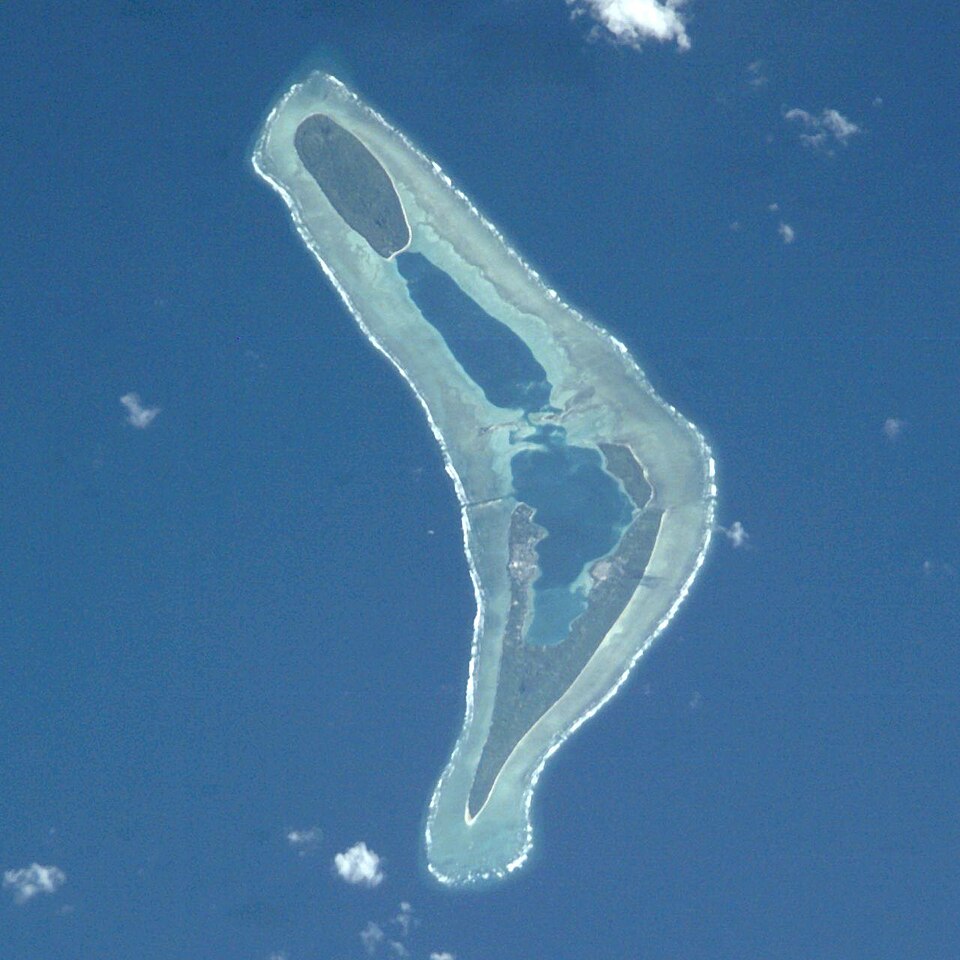
- Wartime remains near the main village — Nanumea village area
Nanumea was used by American forces in the Second World War, and traces survive near the main village: an airstrip, bunkers and the remains of aircraft. They are low-key rather than curated, with no ticket office or interpretation, so a local guide helps make sense of each overgrown shape.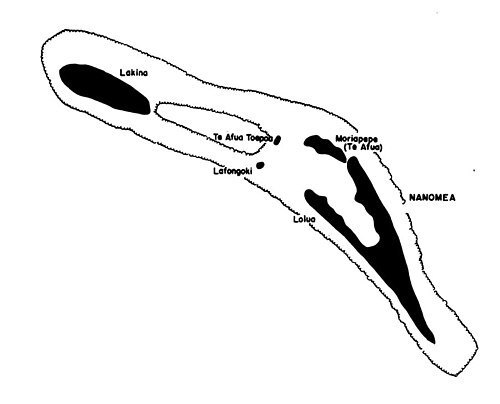
- The pulaka pits of Lakena — Lakena islet
Lakena, the second large islet, holds the pits where pulaka is grown, deliberately kept away from the main islet to limit mosquitoes. The sunken gardens show how an atoll with thin, salty soil feeds itself. Households live at the south-eastern end, and mangroves grow on the islet. - The maneapa and village games — Village centre
The maneapa is the community hall and the centre of village life, and the best chance of seeing traditional dancing, which happens on special occasions rather than on demand. Te ano, the national ball game, may be played nearby: two teams try to keep one ball in the air, a little like volleyball. - Motu Foliki and the small islets — Reef flat islets
Motu Foliki, Lafogaki and Te Afua-a-Taepoa lie along the reef flat, each tied to the legend of sand spilled from the baskets of Pai and Vau. Motu Foliki has a few households. Reaching any of them depends on tides, boats and local goodwill, so ask first.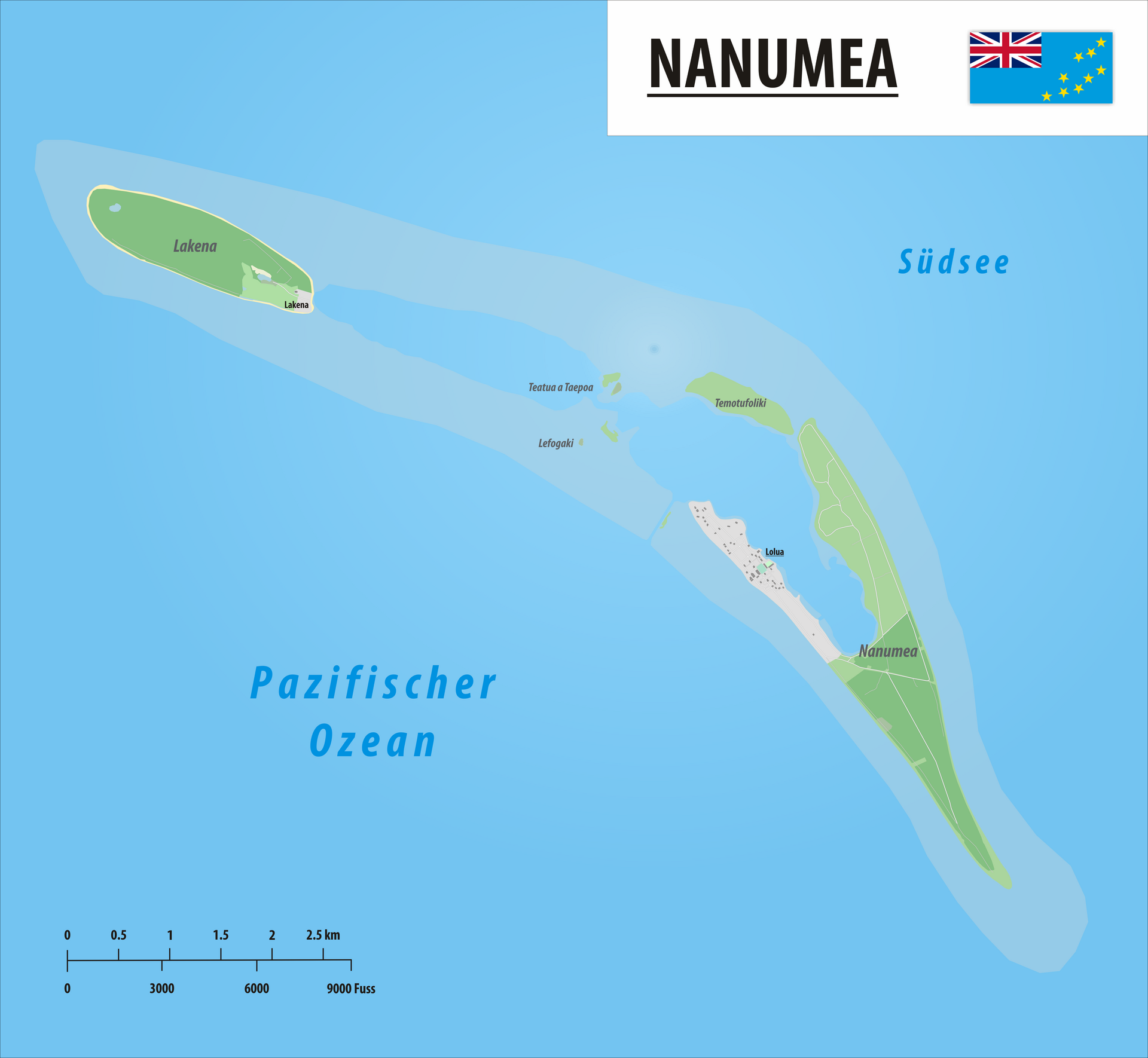
Culture
Nanumea is a close community in which family ties, church life and chiefly lineages shape daily affairs. The island's history is carried in oral tradition, and the stories of Tefolaha, Pai and Vau, and the spear Kaumaile are still told as the basis of who belongs where. Decisions that affect the whole village are made together, and the maneapa, the community hall, is where people meet, feast and dance.
Traditional dancing is performed on special occasions, with singing and rhythmic movement led by groups from the village. Te ano, the ball game, is the national pastime and is played with real enthusiasm. Tuvalu is largely Christian, and Sundays are quiet days of services and rest, so shops and activities may be limited.
Everyday manners are gentle and unhurried. Visitors are usually hosted by a family, and sharing food is part of hospitality. Land and lagoon are tied to families and customs, which is why a visit to an islet, a pit or a fishing spot works best when a local person arranges it. Conservation rules on the lagoon are taken seriously, as fishing is central to food and identity. Climate change is not an abstract matter here, and many islanders are glad to talk about it, but it is polite to listen before asking questions.
Dress modestly in the village, ask before photographing anyone or entering the maneapa, and stay quiet and still during church services and community gatherings.
What to wear
Nanumea's traditional dress draws on the materials of the atoll: woven pandanus leaf, coconut fibre, flowers and shells. Fine mats and wraps are made by hand, and wrap cloths (lavalava) and skirts of leaf or fibre are worn for dancing and ceremonies, often with garlands and decorated headbands. Costumes are put together for special occasions such as feasts, church celebrations and dance performances rather than for daily wear.
Everyday clothing is simple and suited to heat and humidity. Women often wear loose cotton dresses or wrap skirts, and men wear shorts or lavalava with T-shirts or short-sleeved shirts. Many people are barefoot or in flip-flops around the village. For church on Sunday, people dress more formally, in neat, clean, often bright clothes, and the effort is part of the occasion.
Visitors should pack for sun, salt and modest manners. Light cotton or quick-dry clothing that covers shoulders and knees suits village walking and any community event. Swimwear belongs at the beach or lagoon, and a shirt or wrap on top is polite when passing through the village. A wide-brimmed hat, sunglasses and high-factor sunscreen matter more than fashion. Reef shoes or sturdy sandals protect feet on coral rubble and sharp shells, and a light rain jacket helps in a downpour. Bring any special clothing in advance, as there are few places to buy things on the atoll.
What to eat
- Pulaka — Home meals and community feasts; grown on Lakena
Pulaka, or swamp taro, is the staple of Nanumea, grown in pits on Lakena and eaten boiled, baked or mashed. It is starchy, filling and quite plain on its own, so it is usually served alongside fish and coconut. - Fresh lagoon and reef fish — Family meals; fishing landings in the morning
Fish is the main protein and is cooked in simple ways: grilled over coals, boiled in soup or served raw with coconut cream and lime. Catches vary with tides, weather and the season, so what is on the plate is whatever came in that day. - Coconut in many forms — Any household under the palms
Coconut appears at almost every meal, as cream in sauces, grated flesh in puddings and fresh drinking nuts straight from the tree. The water is a safe, cool drink on a hot day, and the cream adds richness to fish and pulaka. - Breadfruit and other garden crops — Village gardens and family kitchens
Breadfruit and other crops are cooked when in season, roasted or boiled and eaten like a hearty potato. Fruit trees on the atoll are limited by poor soil, so availability varies, and a dish may be a seasonal treat. - Kaleve, coconut toddy — Households that tap their own palms
Kaleve is a sweet sap gathered from coconut palm flower stalks, drunk fresh or cooked down into syrup. Collecting it is a daily skill, practised at dawn and dusk. Ask before drinking, as freshness and preparation matter. - Feast food at the maneapa — The maneapa, on special occasions
When the community celebrates, families bring dishes together at the maneapa and share them in a large communal meal. Fish, pulaka, coconut dishes and local sweets are typical, and visitors invited to join are expected to taste a little of everything.
Plan it
Best time. Roughly June to October, when the weather is generally drier and the sea calmer; the wetter months from about November to April bring heavier rain, higher humidity and the risk of cyclones. Check forecasts before you book, as weather on the atoll can change quickly.
How long. 3–5
Getting there. Fly to Funafuti International Airport (FUN) on the capital atoll, most reliably from Nadi in Fiji with Fiji Airways. Nanumea lies at the far north-western end of the chain, so the last leg is a domestic flight or ship; both are infrequent and subject to change, so confirm with Tuvaluan operators and your host well in advance.
Budget. mid
Tips
- Book flights early; services into Tuvalu are limited and schedules change often, so leave slack on both ends of the trip
- Check visa rules for your passport before travel; many nationalities get a one-month visa on arrival, but terms differ
- Carry enough cash and essentials, as cards and shops are limited on outer atolls
- Bring sun protection, a refillable water bottle, any medication and a torch
- Arrange accommodation and boat trips through a local host before arriving
Etiquette
- Ask before photographing people, ceremonies or private property
- Dress modestly in the village and keep quiet around church services
- Respect the lagoon's fishing rules and do not take shells or coral
Nearby
Sources
- Wikidata Q174618 (CC0)
- Wikipedia: Nanumea (rev 1378950628) (CC BY-SA 4.0)
- Wikivoyage: Tuvalu (rev 5324565) (CC BY-SA 4.0)
- Photo: Nanumea atoll, Tuvalu, from space (NASA) (Public domain)
- Photo: Nanumea (Tschubby) (CC BY 3.0)
- Photo: Admiralty Chart No 987, Plans of Islands in the South Pacific (UK Hydrographic Office) (Public domain)
- Photo: Map of Nanomea Atoll in World War II (US Bureau of Yards and Docks) (Public domain)


