Vaiaku
Vaiaku, Tuvalu
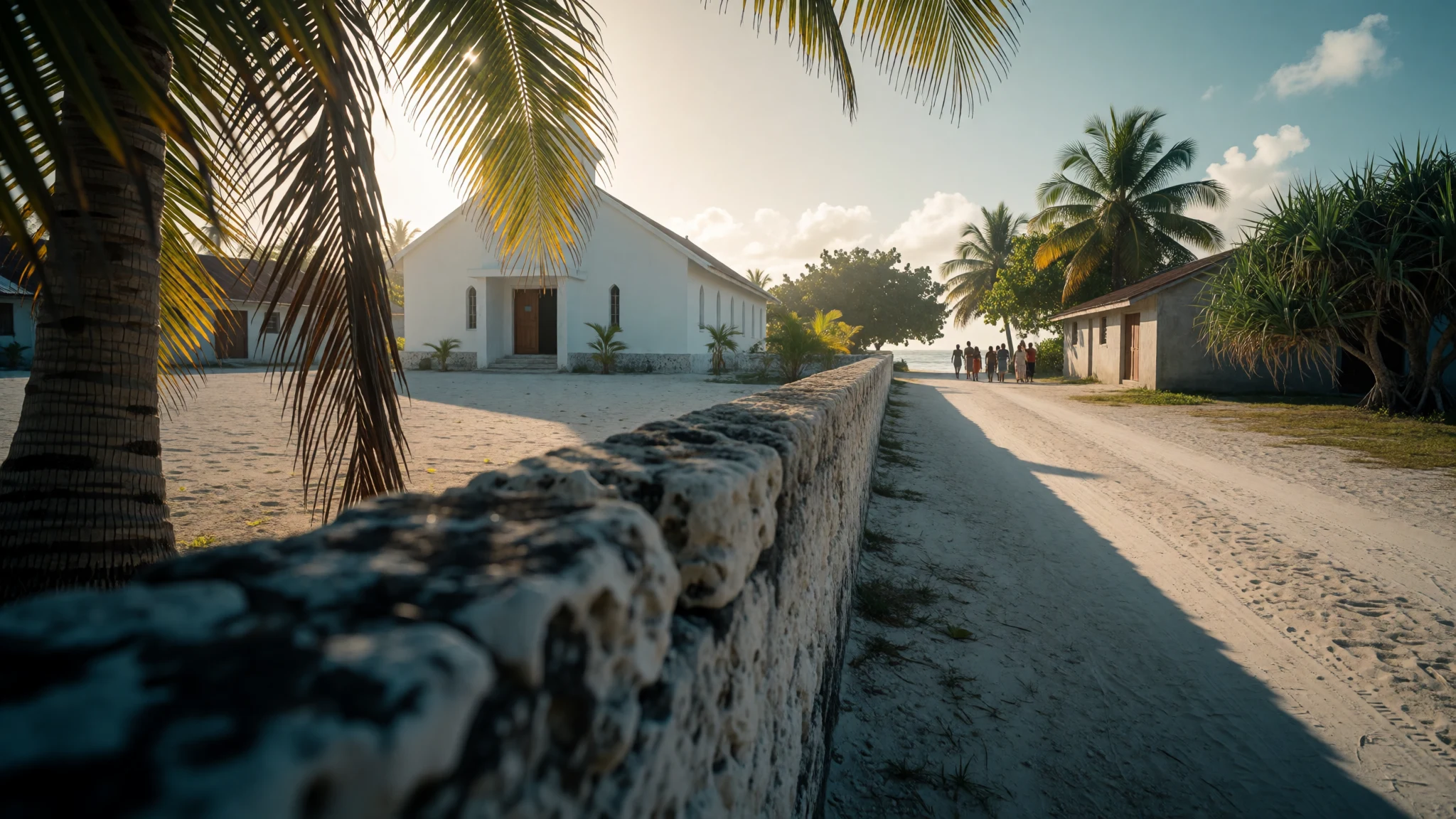
Vaiaku is a working Pacific capital at village scale, where a coral strip, a lagoon and a runway shared with the community make up daily life.
The place
Vaiaku is a village on the southern shore of Fongafale, the main islet of Funafuti atoll in Tuvalu, and it serves as the government centre of the country. Its population is about 516, so almost everything is within walking distance. Strictly, the capital is Funafuti as a whole rather than this one village, a distinction officials observe and visitors rarely notice. Parliament, the ministries, the national bank and the foreign missions sit along one main road, in low concrete buildings set between coconut palms and pale coral sand. The land is flat and narrow, with the open ocean on one side and the lagoon on the other, only a few minutes' walk apart. There are no hills, rivers or old streets, and nothing here resembles a city in the usual sense. What Vaiaku offers is everyday island life: people on bicycles and scooters, children playing on the airstrip when no plane is due, church singing on Sundays, and a pace set by the heat. Accommodation is limited to simple guesthouses and small hotels, and tourism is small-scale, with no resorts. The climate is tropical rainforest, with heavy rain in every month, so showers are routine rather than a sign of bad luck. Underneath it all sits the question of the sea, since the land lies barely above the water and talk of rising tides is never far from conversation.
Its story
Vaiaku's story begins with the wider history of Tuvalu, which was shaped by ocean voyaging. Polynesian navigators who read stars, currents and winds settled the narrow coral atolls long before any European ship appeared. Each island developed its own clans, chiefly families and communal customs, and these are still carried in oral history. Spanish sailors sighted some of the islands in the 16th and 17th centuries, but lasting contact did not come until the 19th. That century brought hardship: recruiters, through trickery or force, took many islanders to work on distant plantations, and communities were left depleted. Missionaries arrived soon afterwards, and Christianity spread quickly until it dominated social life, which is why churches are the grandest buildings in Vaiaku today. The Second World War left another mark. Large numbers of American troops were stationed on Funafuti, and the airstrips, bunkers and aircraft wrecks they left on Fongafale are still part of the landscape, with the runway now doubling as an open space for the community. Vaiaku grew up around this flat strip of land, becoming the place where the machinery of government gathered. Its past is less about monuments than about movement: people crossing the Pacific, ideas arriving by boat, and a small community adapting to each wave of change.
What to see
- Fētu'ao Lima (Morning Star Church) — Vaiaku village
The Church of Tuvalu's Fētu'ao Lima is the most prominent building in Vaiaku, and its white walls and large hall dominate the low skyline. Sunday services, with unaccompanied hymn singing, are the best way to see it in use. Outside service times, view it from the road respectfully.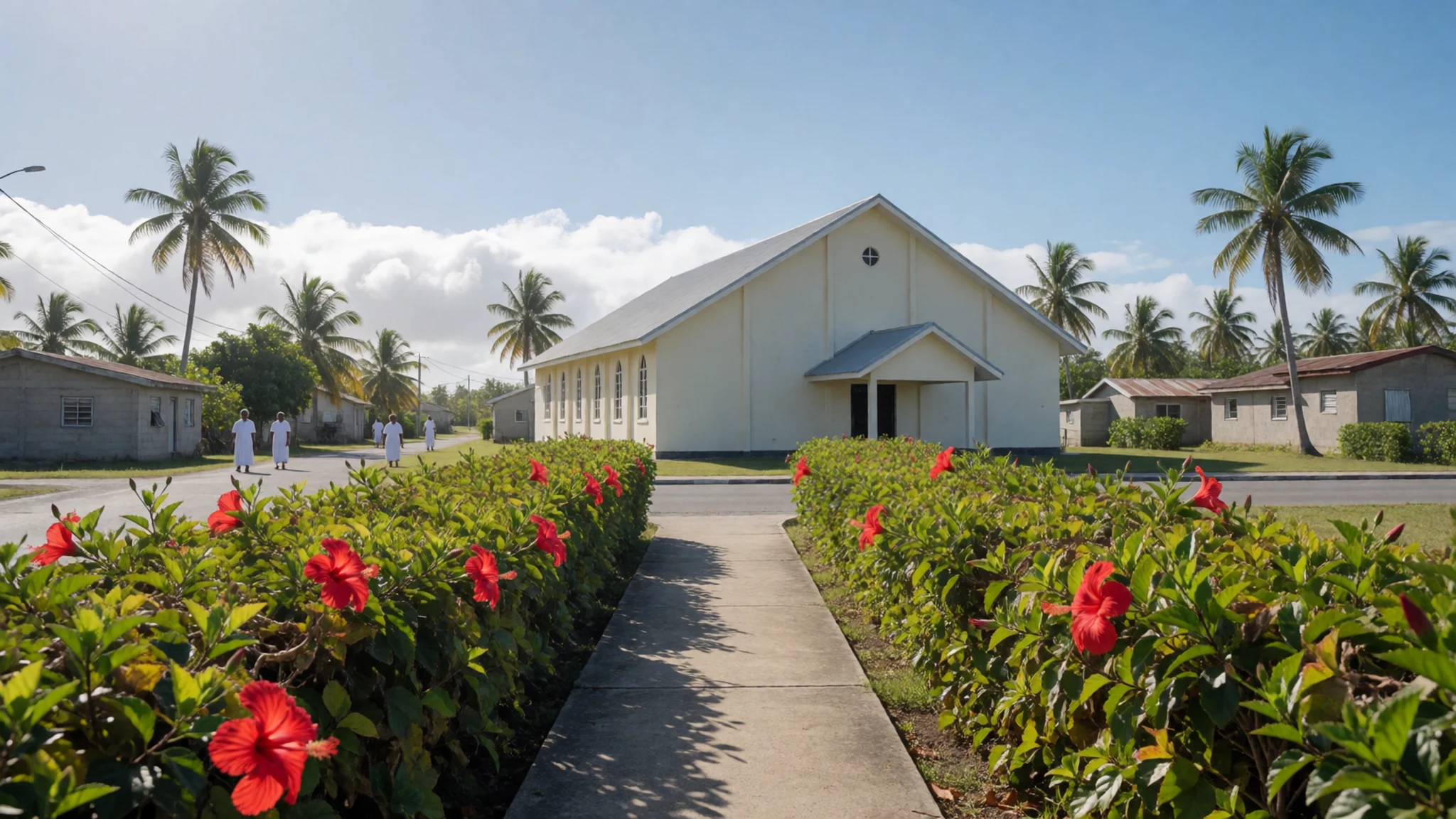
- Parliament and government buildings — Main road, Vaiaku
Tuvalu's parliament and the ministries stand along the main road, modest in scale and easy to walk between in a morning. There is no grand architecture to speak of, but the scene says a lot about how a very small state runs. Photograph exteriors only.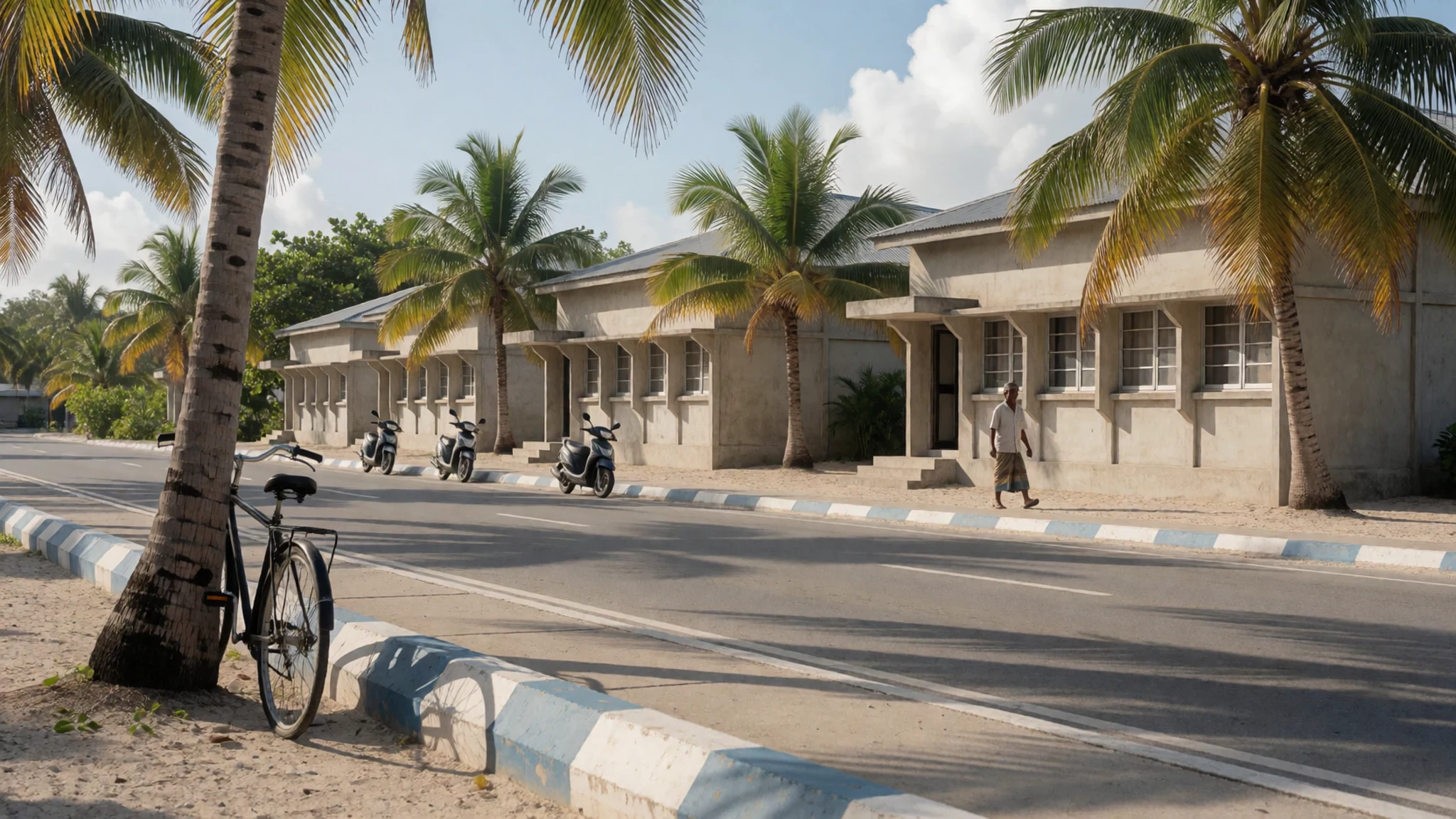
- Wartime remains on Fongafale — Along Fongafale
Concrete bunkers, airstrip fragments and aircraft wrecks recall the American presence on Funafuti during the Second World War. They are scattered along the main islet and are best found by asking locally or by hiring a guide. Expect overgrown, unsigned sites rather than museum displays.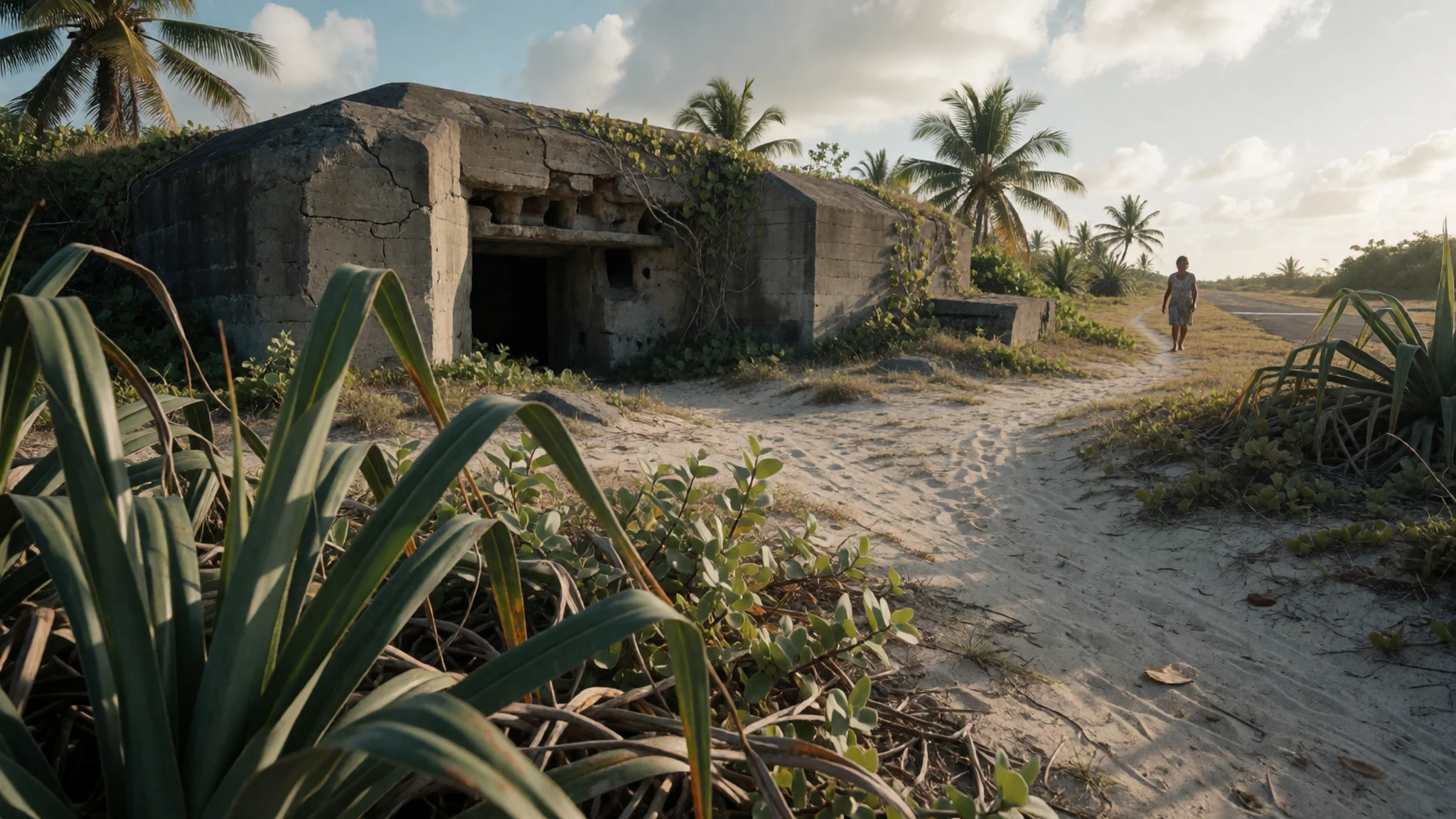
- Philatelic Bureau and handicrafts — Vaiaku and the airport area
Tuvalu's stamps are a well-known part of its identity, and the Philatelic Bureau in Funafuti is the place to see them. Near the airport, the women's handicraft centre sells woven mats, fans and ornaments made on the islands. Opening times vary, so ask locally before walking over.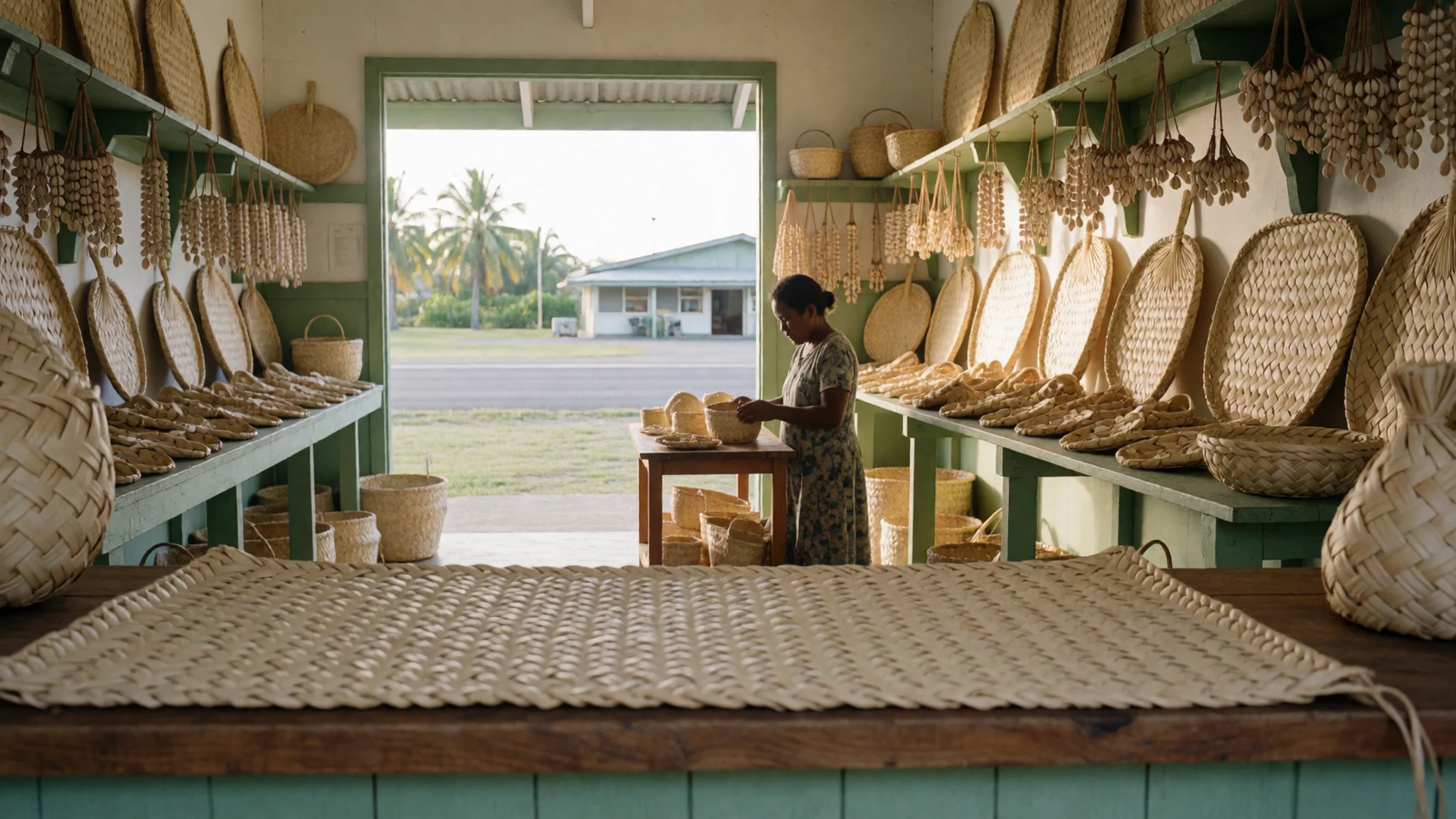
- Funafuti Conservation Area — Western Funafuti atoll
On the western side of the atoll, this protected stretch of reef, lagoon and small islets is the main natural attraction of the capital atoll. Snorkelling and diving are the draw, and boat trips are arranged through local operators. Weather and tides affect plans, so stay flexible.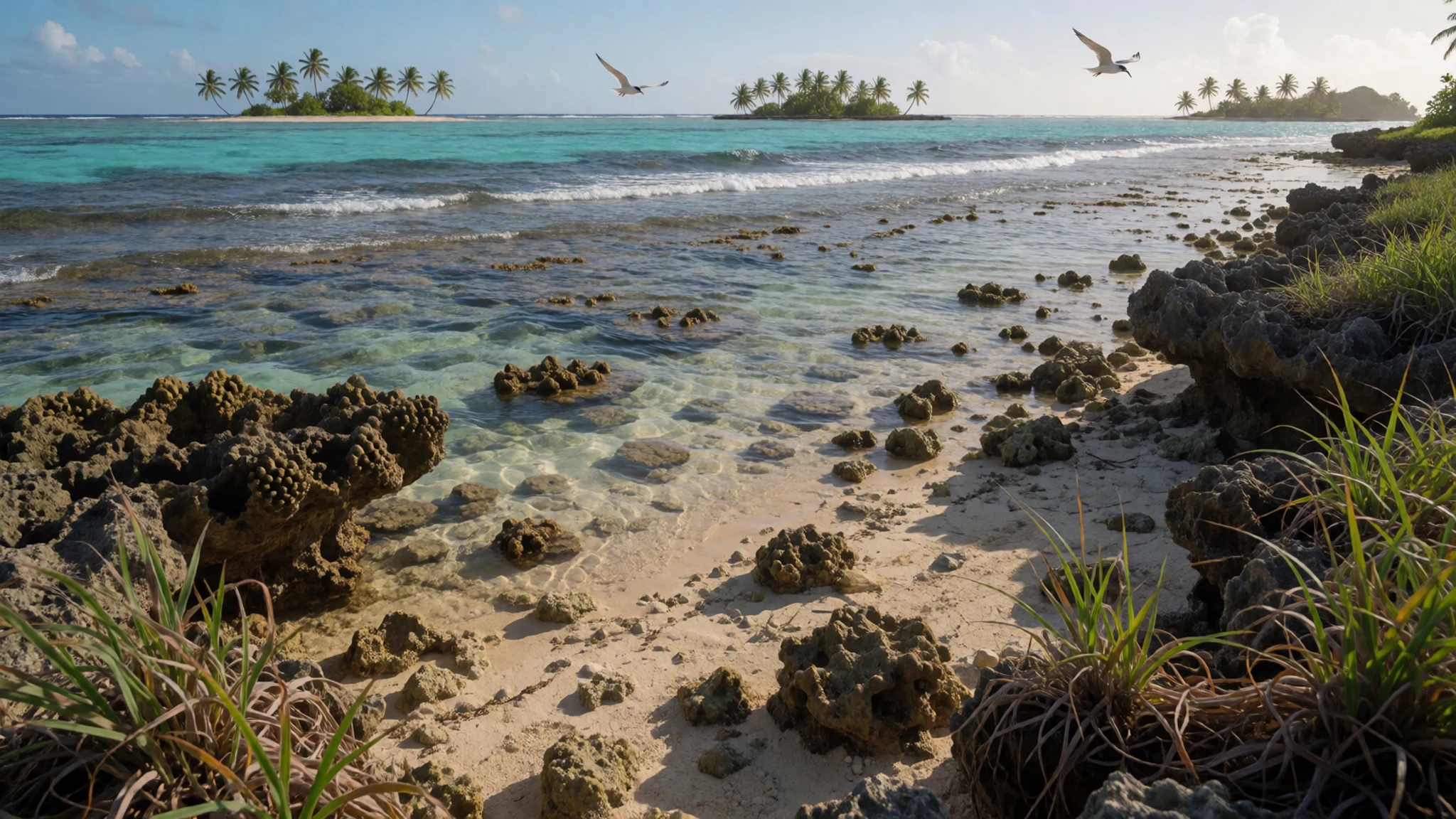
- A maneapa and te ano — Village maneapa, Funafuti
The maneapa is the open-sided community hall where dances, feasts and meetings take place, and it is the likeliest place to catch traditional dancing on special occasions. Te ano, played with a ball kept in the air between two lines of players, is the national game and similar in spirit to volleyball.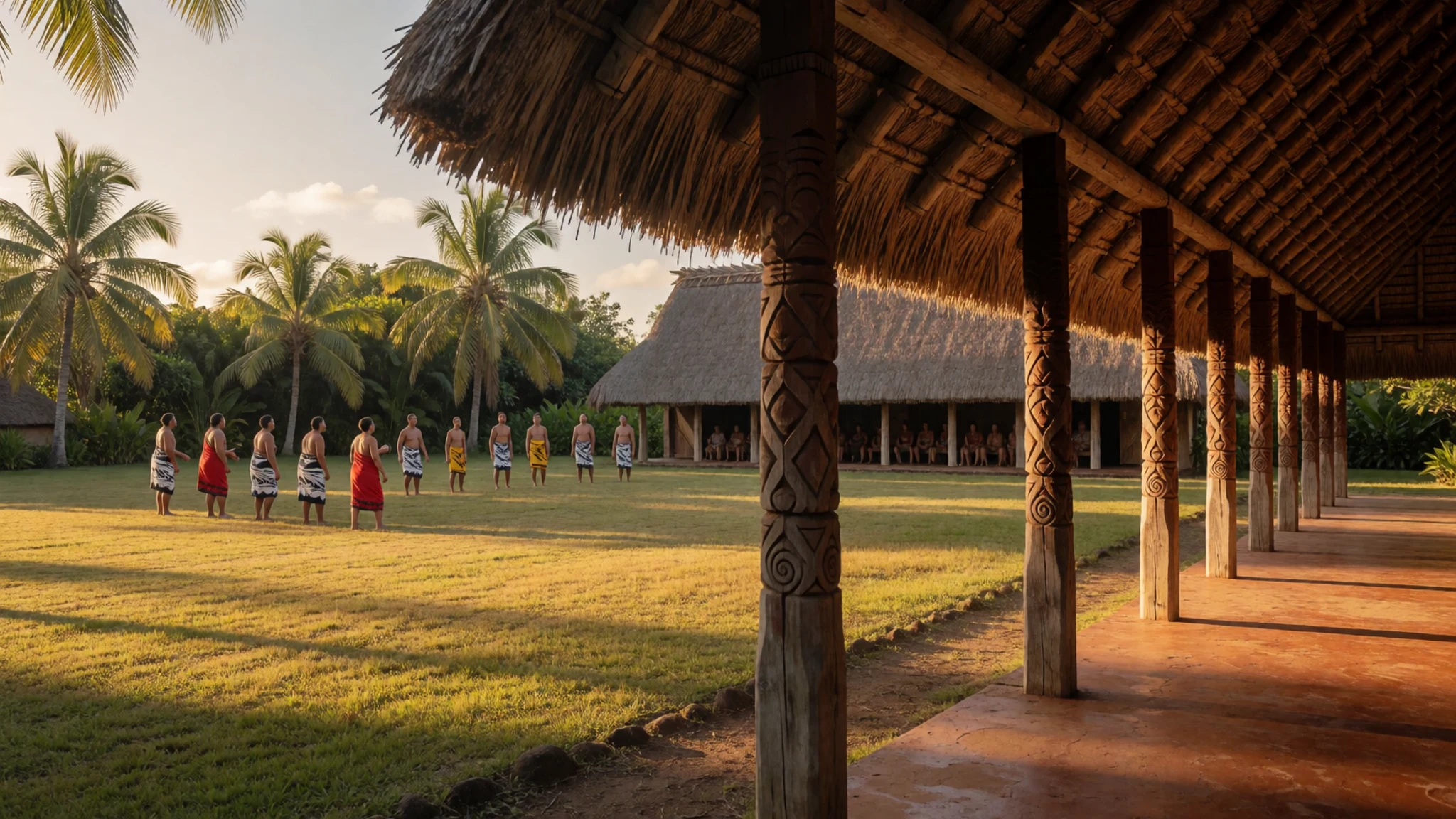
Culture
Vaiaku life revolves around church, family and the shared hall. Christianity arrived with missionaries in the 19th century and now shapes the weekly rhythm, so Sunday is a day for services, singing and rest, with little else open. The Church of Tuvalu is the main denomination, and a small Catholic mission also has a church in the village. Community decisions and celebrations take place in the maneapa, an open-sided hall where elders gather and dances are held on special occasions. Customs of respect for elders, sharing food and hosting visitors are strong, and an invitation to a feast is usually a real honour rather than a formality. Traditional skills survive in weaving, carving and the making of fans, mats and ornaments, which are often finest on the outer islands. Storytelling and song carry the memory of the voyagers who settled the atolls. Sport is social as well as competitive, and te ano draws whole neighbourhoods. The ocean is part of identity here, not scenery, and conversations about the climate and the rising sea are personal. Travellers who listen more than they lecture are welcomed warmly. Dress modestly in the village, keep noise low near churches on Sundays, and ask before photographing people or entering a maneapa gathering.
What to wear
In Vaiaku, traditional dress centres on wraparound cloth and woven plant fibre. Men and women wear the tupenu, a length of cloth tied at the waist, and dancers add grass or leaf skirts, garlands and ornaments made from pandanus and shells. Pandanus leaf is also plaited into fala, the floor mats used in homes and given at ceremonies. Traditional outfits appear mostly at dances, feasts, church celebrations and national events. Day to day, people dress for heat and church: cotton shirts, T-shirts, shorts for boys and men, knee-length skirts, loose dresses and printed island wraps for women, with flip-flops on nearly every foot. Sunday brings out neat, often white or brightly patterned clothes for services. Visitors should pack light, quick-drying cotton or linen that covers the shoulders and knees, because the village is conservative and the sun is strong. Swimwear belongs on the beach or boat, not on the main road. A wide-brimmed hat, sunglasses and a light rain jacket are all useful, as showers can arrive suddenly. Sandals work for the road, but reef shoes protect feet from coral when wading or snorkelling. Remove footwear on entering a home.
What to eat
- Fresh reef and tuna fish — Local eateries and lodge restaurants in Vaiaku
Fish is the centre of most meals in Vaiaku, grilled, fried or cooked in coconut cream, with reef species and tuna common. Look for it at home-style eateries, community feasts and the lodge restaurants in the village.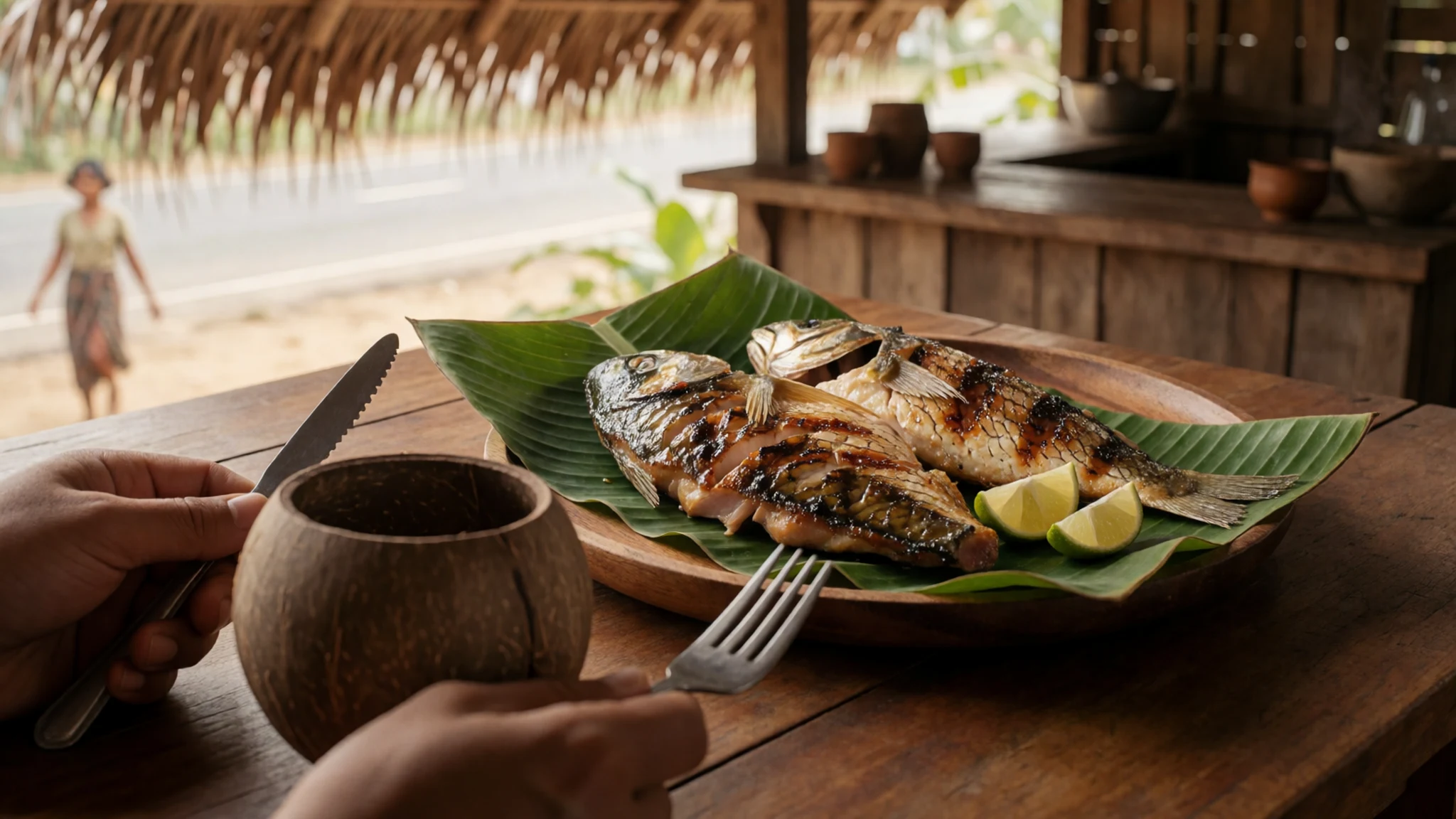
- Pulaka — Community feasts and family kitchens
Pulaka is swamp taro, grown in pits dug into the coral and a staple starch on the atolls. It is boiled, baked or mashed, often served with coconut cream alongside fish. It appears at feasts and family meals.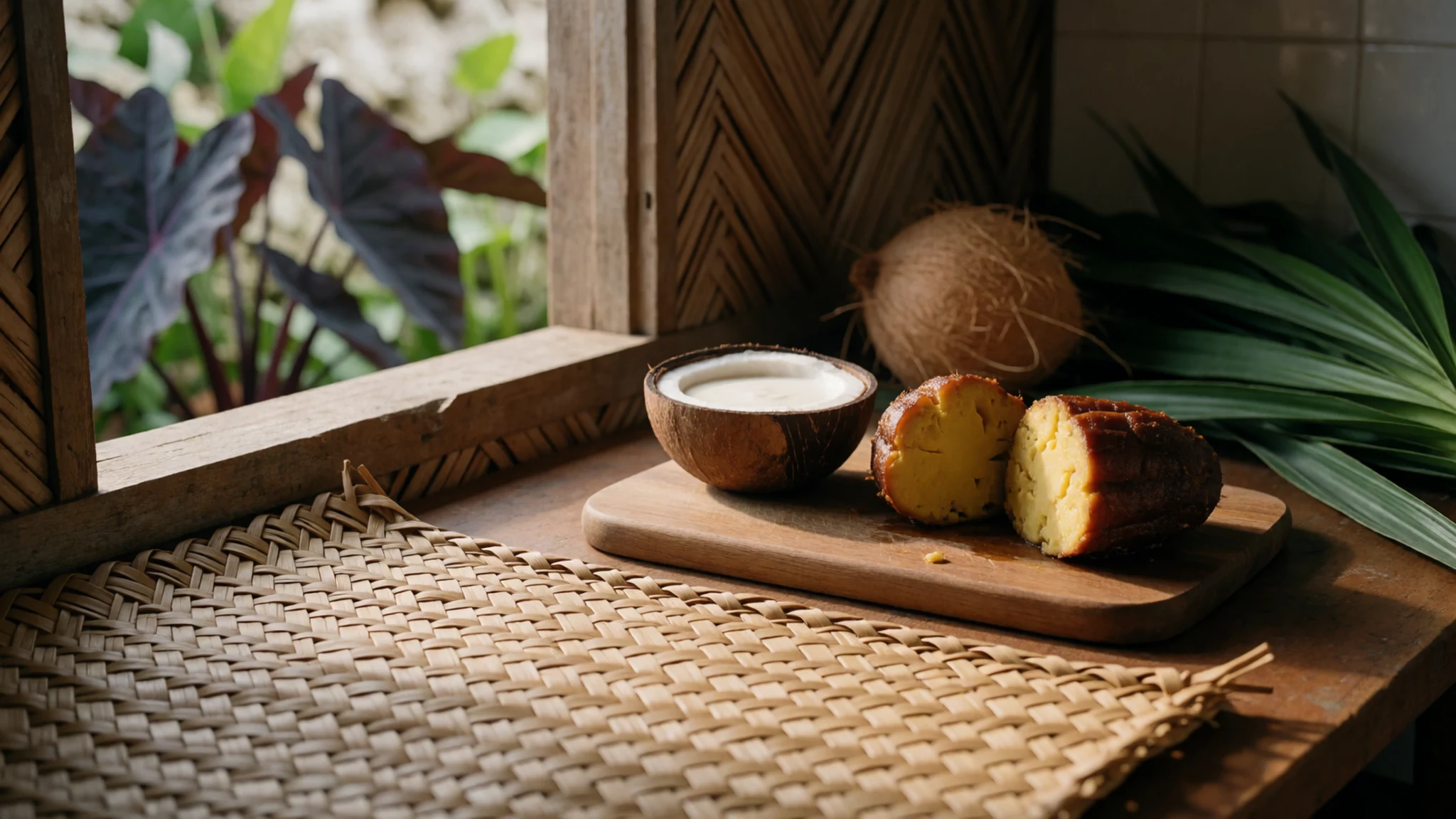
- Coconut dishes — Roadside stalls and village homes
Coconut features everywhere: grated into dishes, pressed for cream to enrich taro and fish, or drunk fresh from the nut. A young coconut is a sensible way to cope with the heat. - Palm-sap drink — Village gatherings and family hospitality
The sweet sap tapped from coconut palms is a traditional drink on the atolls and may be offered at gatherings. Ask politely before trying it, since it depends on household practice and the day's harvest. - Lodge curries and noodles — Restaurants attached to guesthouses and lodges
Several lodges serve Chinese, Italian and Indian dishes alongside island food, which is useful for travellers who want familiar flavours. Menus rely on shipped ingredients, so choices change with supplies.
Plan it
Best time. May to October is generally the more comfortable stretch and falls outside the main cyclone season of roughly November to April, though Vaiaku has a tropical rainforest climate with heavy rain in every month, so showers should be expected whenever you go.
How long. 3–5
Getting there. All international flights land at Funafuti International Airport (FUN), and the main route is Fiji Airways from Nadi, Fiji, with onward connections from Australia, New Zealand, North America and Asia. Flights are infrequent and schedules change, so confirm before booking onward travel. Vaiaku is a short road journey from the airport.
Budget. high
Tips
- Confirm flights shortly before travel, as schedules can change at short notice
- Check current visa rules with Tuvalu authorities before flying; most nationalities receive a one-month visa on arrival
- Carry cash and bring essentials, as shops and cash machines are limited
- Listen for the siren that clears the runway before a plane lands
- Pack sun protection, reef shoes and a refillable bottle, and ask your host about safe drinking water
Etiquette
- Dress modestly in the village and on Sundays
- Ask before photographing people, churches or ceremonies
- Accept hospitality graciously and offer thanks
Nearby
Sources
- Wikidata Q248201 (CC0)
- Wikipedia: Vaiaku (rev 1379297215) (CC BY-SA 4.0)
- Wikivoyage: Tuvalu (rev 5324565) (CC BY-SA 4.0)
- Government office building — lirneasia (CC BY 2.5)
- Funafuti township — Davidarfonjones (CC BY 3.0)
- Adjacent building in Fētu'ao Lima Church — Rosodo (CC BY-SA 4.0)
- Australian High Commission in Vaiaku — Rosodo (CC BY-SA 4.0)
- Hall in Esfam Hotel — Rosodo (CC BY-SA 4.0)
- Parliament, Government building in Funafuti — Rosodo (CC BY-SA 4.0)
- Part of the Fētu'ao Lima Church building — Rosodo (CC BY-SA 4.0)
- Esfam Hotel room — Rosodo (CC BY-SA 4.0)


