Funafuti
Funafuti, Tuvalu
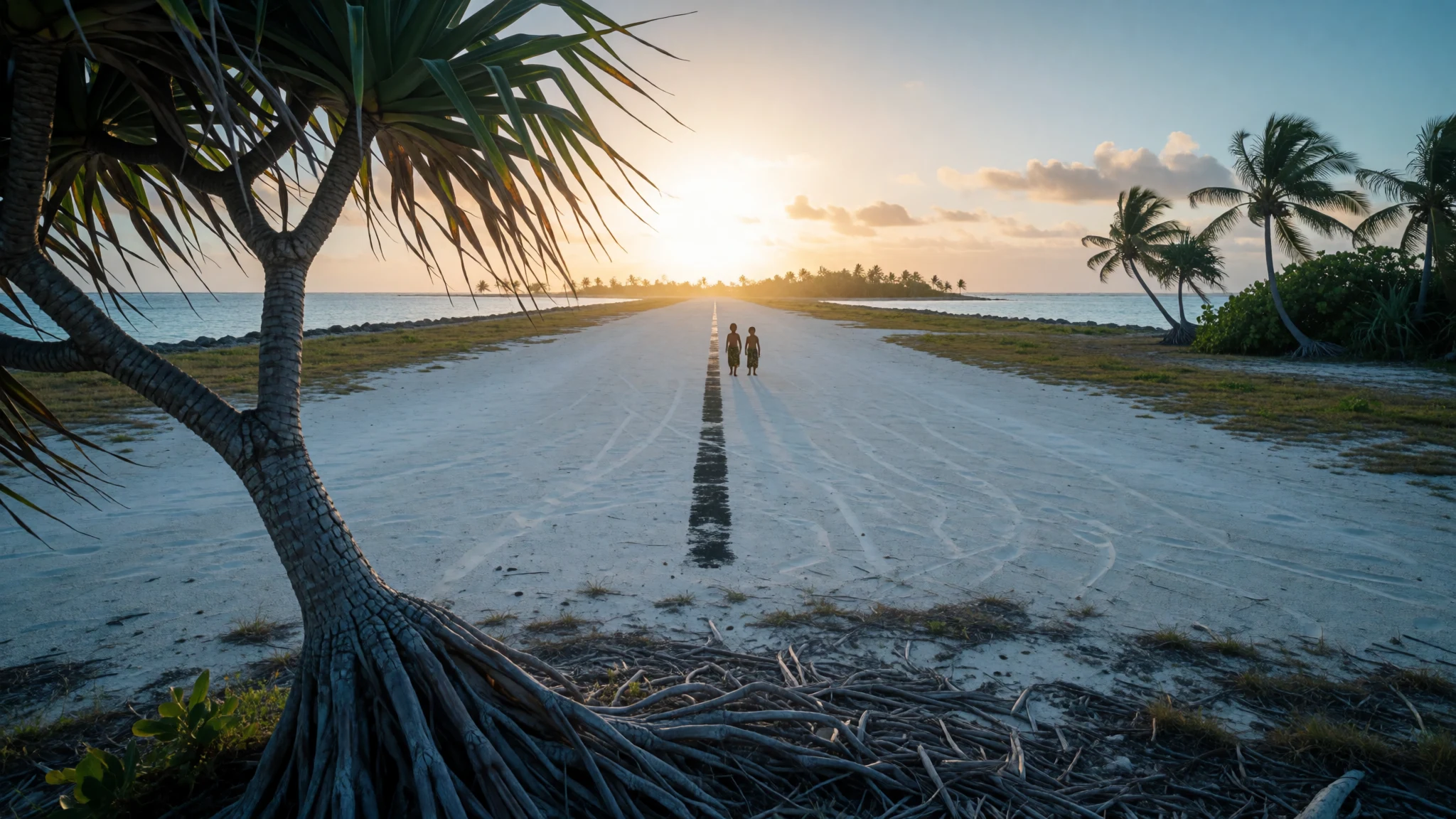
Funafuti is a slim ribbon of coral round a vast lagoon, a quiet Pacific capital for travellers happy with simple stays, snorkelling and island time.
The place
Funafuti is an atoll in the central Pacific and the capital of Tuvalu, home to about 6,000 people, which is more than the rest of the country's islands put together. The land is a thin ribbon of coral islets curving round a big lagoon called Te Namo, and in places it is so narrow that ocean and lagoon are both in sight from one spot.
The main islet, Fongafale, holds Vaiaku, the centre of government. Offices, the airport, a small hotel, shops and a church are strung along one road, so the whole capital can be seen on foot or by scooter in an afternoon. The pace is slow. Children cycle past, pigs and dogs wander, and the airport runway doubles as a social space when no plane is due.
Honesty matters here. Funafuti is not a beach destination in the usual sense, because the shore is mostly sharp broken coral rather than soft sand. The pleasures are on the water and in the details: the lagoon, the reef, the wartime remains, and how islanders go about the day. The climate is hot and wet. Rain falls in every month, about 3,500 mm in a typical year, and the temperature stays close to 28 °C all year round.
Visitors are few and facilities are basic. There is one government-run hotel and a handful of simple guesthouses, and restaurants are mostly attached to lodges. The land is low and the sea is always close, which gives the place its quiet sense of exposure. People come for a different kind of trip, built around the lagoon, conversation and the feeling of having reached the far edge of a map.
Its story
Funafuti's own oral history says the founding ancestor arrived from the Samoan islands. The name is linked to a Samoan word for a chief, and one of the atoll's islets, Funafala, is remembered as the pandanus of that chief. Long before any ship appeared on the horizon, the atoll already had its own leaders and its own story.
European contact began in the early nineteenth century, when an American captain sailing under British colours sighted the atoll and named it after an English politician, Edward Ellice. The name later spread to the whole island group, which became the Ellice Islands. Traders followed. One of them, Jack O'Brien, settled in the middle of the century and married the daughter of the paramount chief, and his family name continues on Funafuti today. Later in that century a US Fish Commission ship came to investigate how coral reefs form on Pacific atolls, and the lagoon became a small chapter in the history of science.
The group was declared a British protectorate and later joined the Gilbert Islands as a single colony. The Second World War changed the atoll more than anything before it. American forces arrived to use Funafuti as a staging ground, dredged the lagoon harbour and built the airstrip that is now Funafuti International Airport.
In the early 1970s Cyclone Bebe did extensive damage to the atoll. Even so, Funafuti was chosen as the capital when Tuvalu became a separate nation, and it has been the centre of government and trade ever since.
What to see
- Funafuti Conservation Area — Western side of the atoll
The Funafuti Conservation Area protects a stretch of reef, channel and lagoon islands on the western side of the atoll. Boat trips go out with local operators. Snorkelling and diving are the main draw, with colourful reef fish and clear water. Arrange it through your lodging and check conditions first.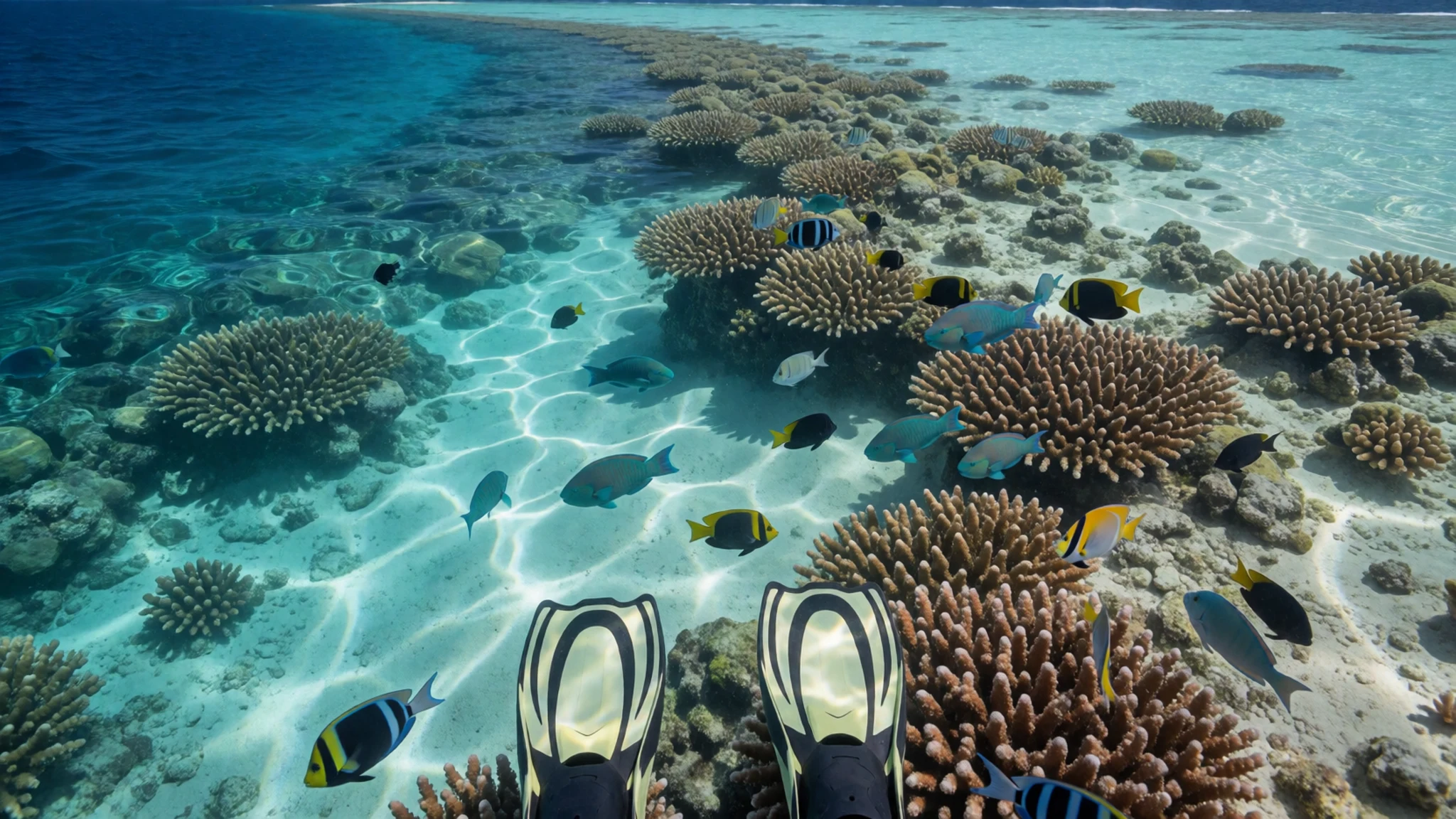
- The airport runway and wartime remains — Fongafale, near the airport
The runway the Americans built still shapes daily life. Between flights, people stroll, play and chat on it, so it feels more like a village green than an airfield. Bunkers and other wartime relics lie along Fongafale, and a slow walk or scooter ride finds them.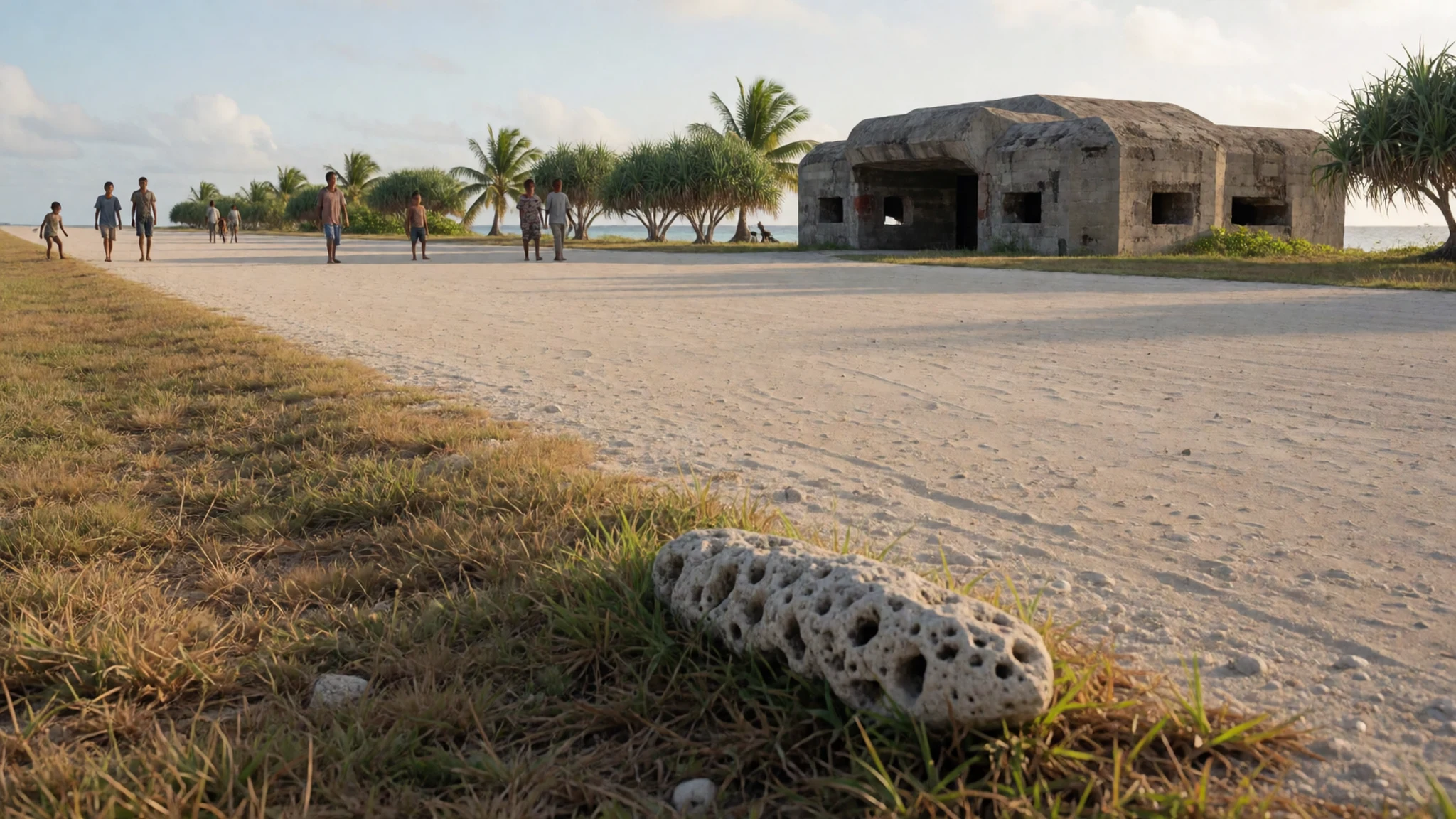
- Vaiaku and the maneapa — Vaiaku, Fongafale
Vaiaku is the working centre of the country, and the main road shows how small a capital can be. The maneapa, the community hall, is where meetings and celebrations happen, and dancing is staged there on special occasions. Ask locally whether anything is planned during your stay.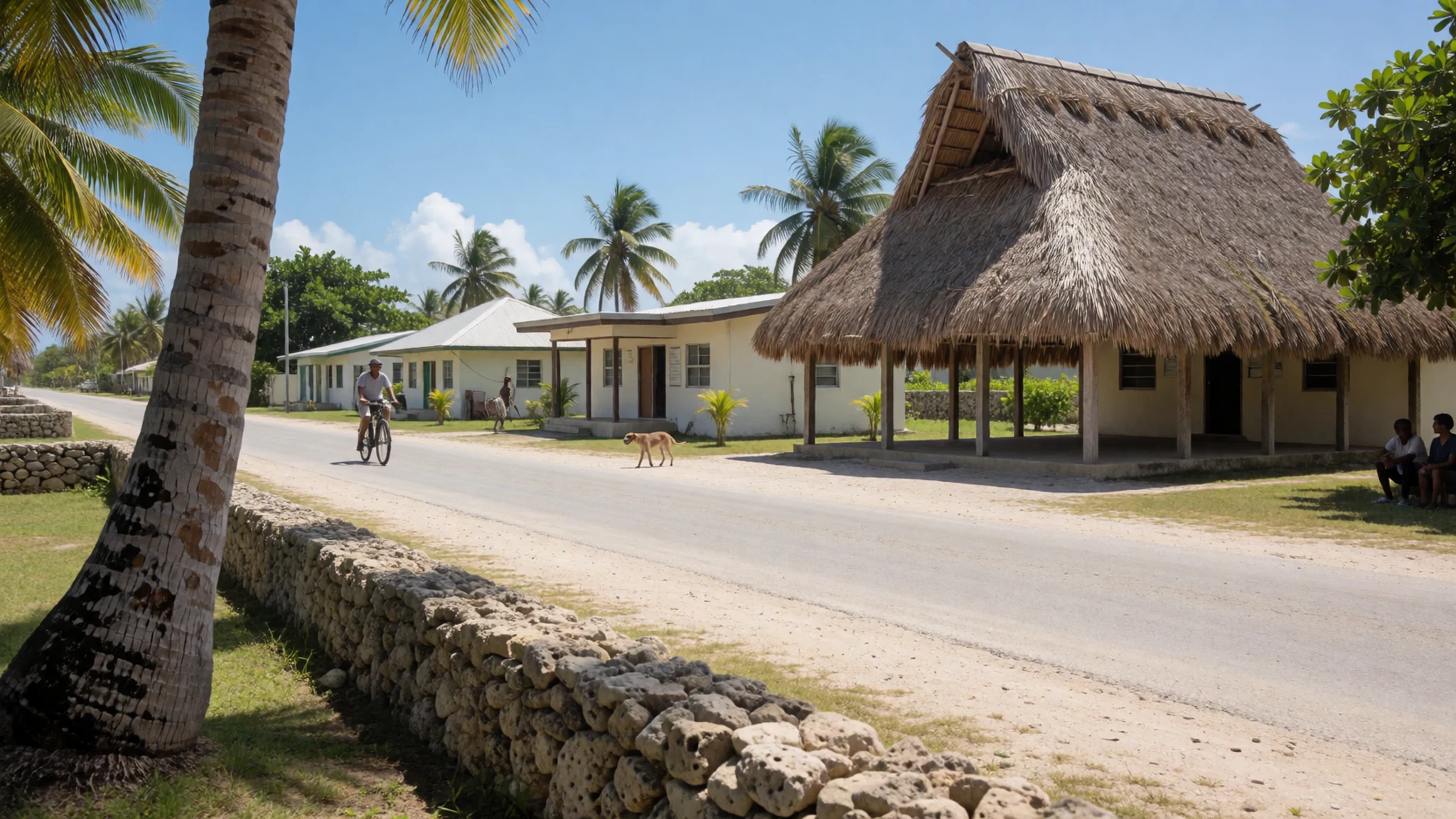
- Fetu Ao Lima church — Fongafale
The Congregational Christian Church of Tuvalu, known here as the Morning Star church, is a reminder of how central faith is to island life. Services are full of harmonised singing. Visitors may be welcome at worship if they dress neatly, sit quietly and follow local guidance.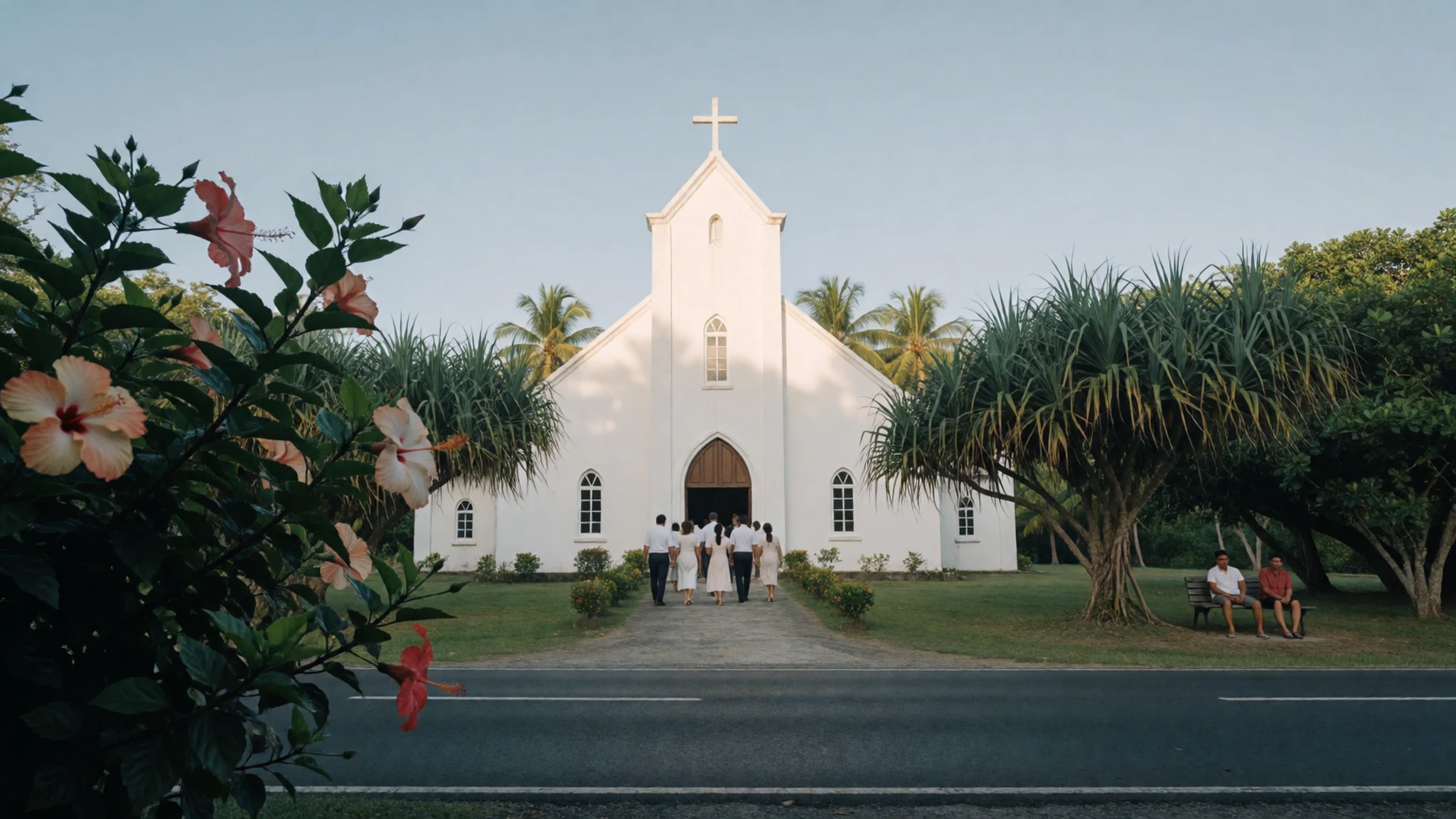
- Lagoon shore and sandy spots — Lagoon side of Fongafale
The lagoon shore is for wading, watching light change and meeting neighbours rather than sunbathing. Broken coral underfoot is sharp, so sturdy sandals or reef shoes are worth carrying. Calm lagoon water suits a gentle swim, but ask locally about currents and boat traffic.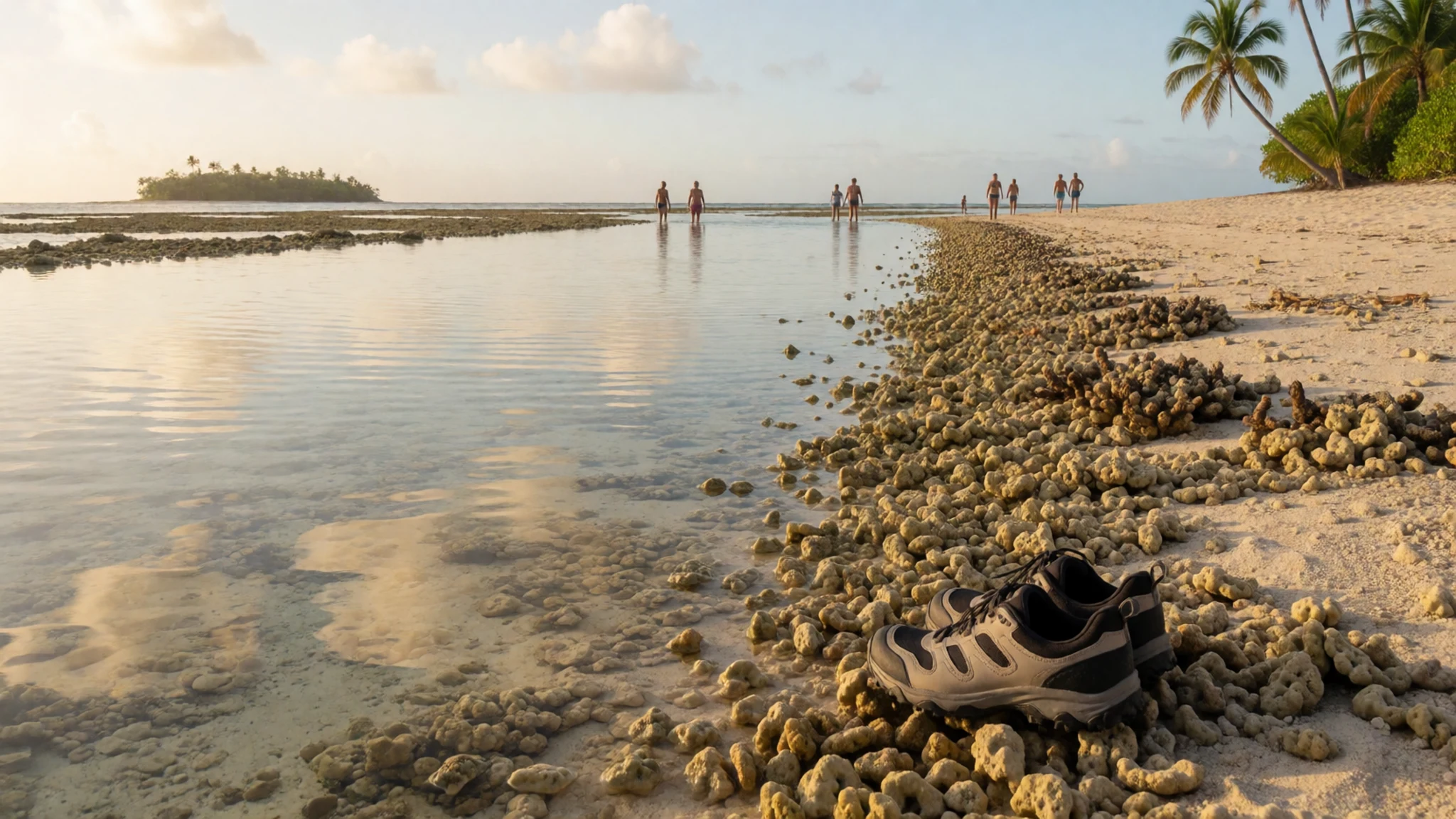
Culture
Funafuti is the most urban place in Tuvalu, but community life still runs on island lines. Family, church and the village meeting hall come first, and visitors soon notice how many people know one another. Faith is central. Sunday is a day of worship and rest, with services, hymn singing and a quiet main road.
The maneapa is the traditional meeting house, where chiefs, elders and families gather. Dancing and song are performed there at celebrations and on national occasions, and the dance known as fatele is the best-known form. Gatherings are shared affairs, with food, speeches and time set aside for everyone to take part. Visitors who are invited are expected to listen and join in rather than watch from the edge.
Sport is social too. The national game, te ano, is played with a ball kept in the air by two facing teams, a bit like volleyball, and matches draw spectators and plenty of good-natured noise. The runway, the lagoon shore and the church steps are all places where news and humour pass from person to person.
Crafts survive alongside modern life. Women's groups make woven mats, fans, baskets and ornaments, and buying directly supports the people who make them. Take time with greetings, accept offers of a drink or a seat, and treat conversation as part of the trip.
Ask permission before photographing people or entering a maneapa, and keep Sundays quiet and modestly dressed.
What to wear
Funafuti's traditional dress is built from local plant fibre. Pandanus leaf is dried and woven into fine mats and into skirts and ornaments for dance performances, and these are often worn with garlands of flowers or leaves. Wrap cloths, called lavalava or sulu in much of the Pacific, are a long-standing everyday garment for women and men.
Day to day, people wear light clothes suited to heat and humidity: T-shirts, shorts, printed island dresses, wraps and flip-flops. In the capital there are some office clothes such as shirts and dresses, though dress is relaxed. On Sundays and at church, people turn out in their best, with neat dresses, shirts and often white or bright colours, and traditional woven pieces appear at feasts and national occasions.
Visitors should pack for hot, wet weather: quick-drying cotton or linen, a light rain jacket, a hat and sunscreen. Modesty matters in a church-going community, so shoulders and knees should be covered in villages, at church and at gatherings. Swimwear belongs on the lagoon or boat, not on the main road. For footwear, bring sandals with a firm sole or reef shoes, since the coral shore is sharp and the paths can be wet.
What to eat
- Fresh fish — Lodge restaurants and family meals
Fish is the staple of Funafuti's table, caught from the lagoon and open sea. It is served grilled, fried or in coconut sauces, often with root vegetables. Lodge restaurants offer it daily, and what is on the plate depends on the morning's catch.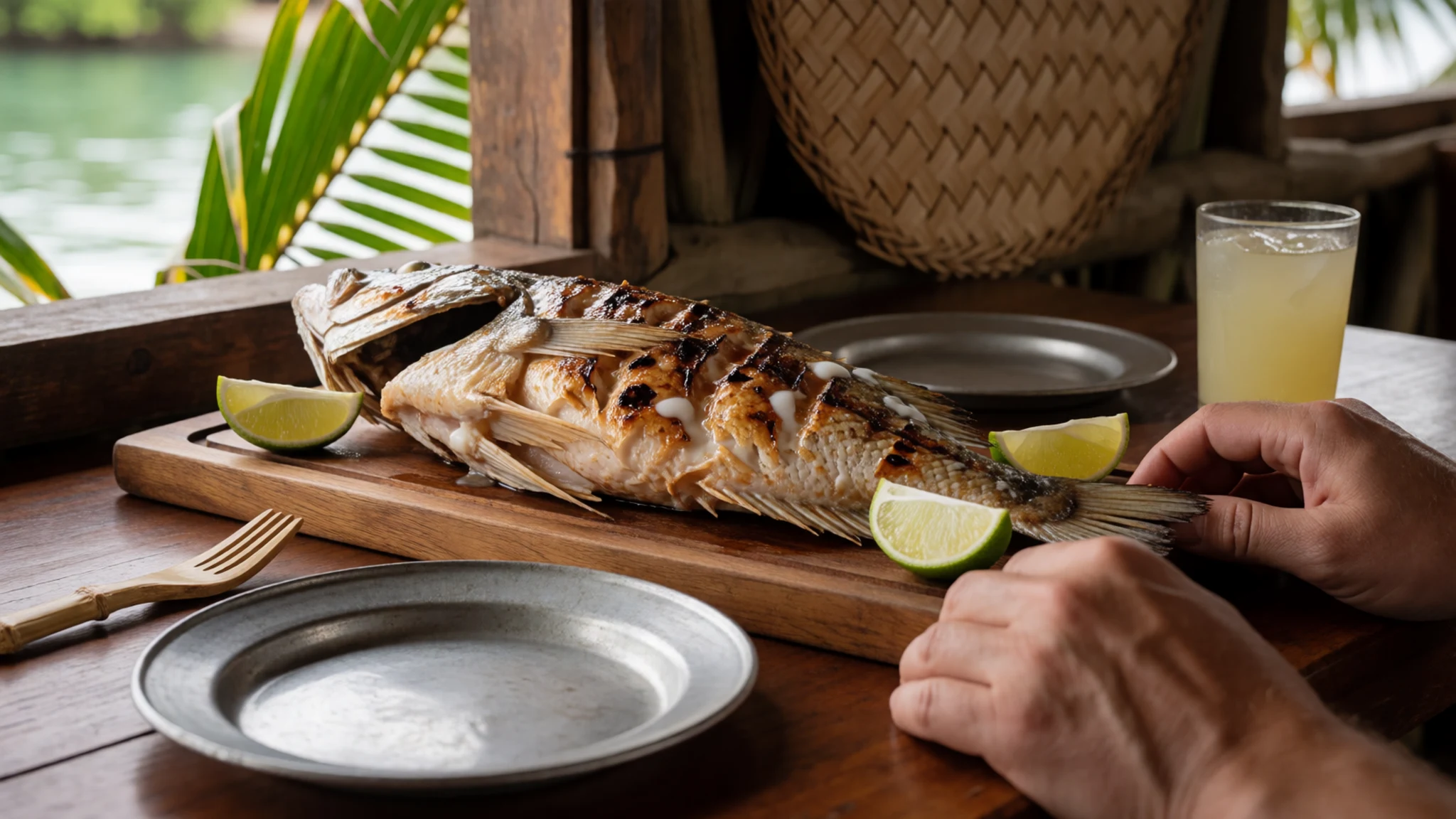
- Pulaka — Family meals and community feasts
Pulaka is swamp taro, a starchy root grown in deep pits dug into the atoll. It is boiled or baked and eaten as the main carbohydrate. It tastes mild and filling, and appears at celebrations as well as home meals.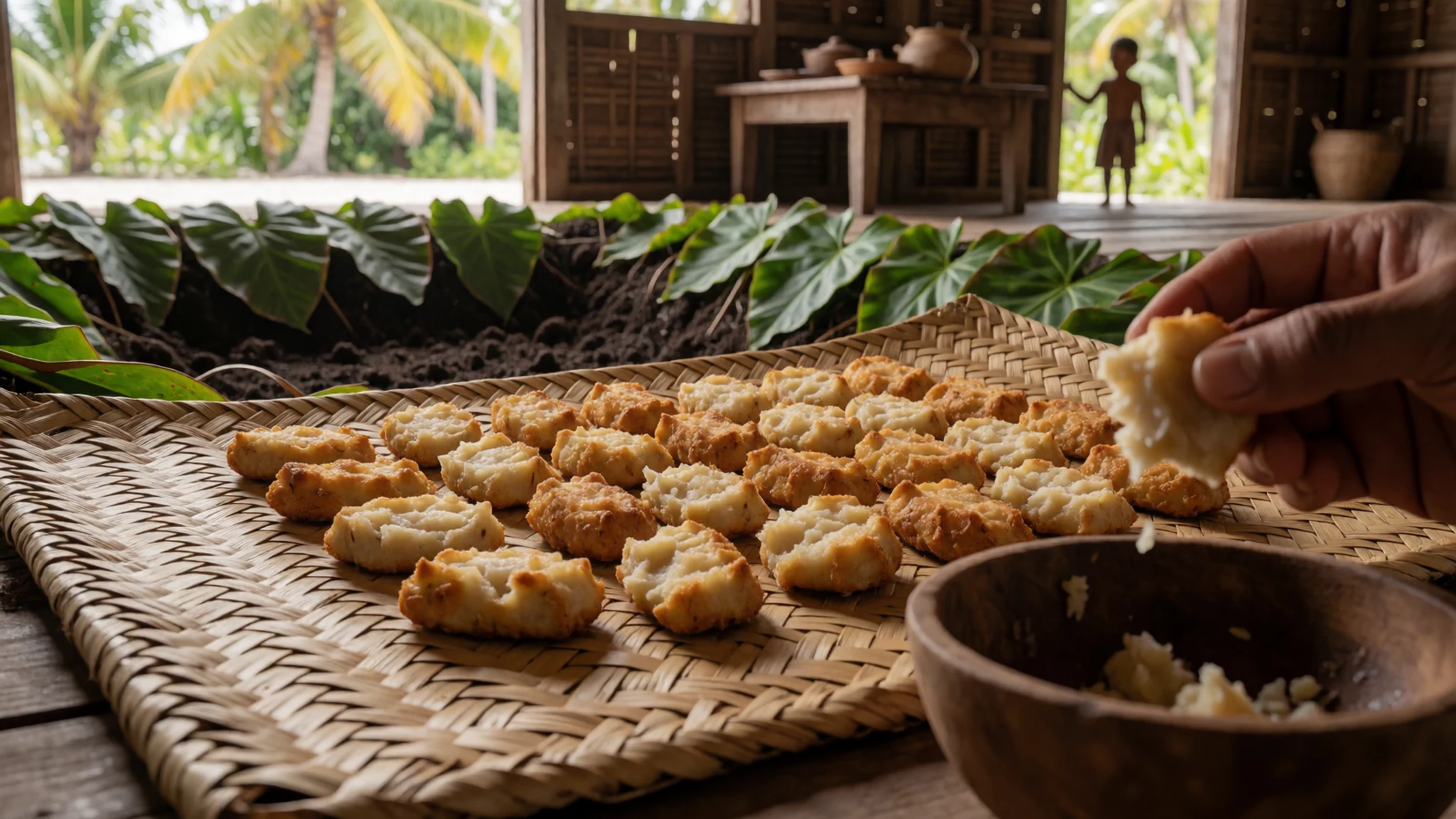
- Palusami — Community feasts and family kitchens
Palusami is a Pacific dish of taro leaves wrapped around coconut cream and baked until soft. The result is rich, savoury and a little sweet. It is usually served at gatherings, so ask locally when a feast is planned. - Fresh coconut — Roadside trees and home gardens
Drinking coconuts are the simplest local refreshment. The water is cool and lightly sweet, and the soft flesh can be scooped out afterwards. Coconut also goes into many local dishes, so ask a host before cutting any nut. - Lodge restaurant menus — Hotel and guesthouse dining rooms in Vaiaku
Restaurants attached to lodges serve a mix of cuisines, including Chinese, Italian and Indian dishes, alongside island fare. Menus can be short and ingredients depend on supply ships and flights, so be flexible and ask what is available.
Plan it
Best time. June to August is the driest stretch, though rain falls in every month and the temperature stays near 28 °C all year. December to February is the wettest. Cyclones are a risk in the wetter months, so check forecasts before booking.
How long. 2–3
Getting there. Fly to Funafuti International Airport, with connections via Fiji, and check the airline for current schedules, which are limited. The hotel is a short walk from the terminal. Other islands of Tuvalu are reached by ship.
Budget. mid
Tips
- A valid passport and an onward ticket are required for entry
- Book accommodation well ahead; there is one government-run hotel and a few basic guesthouses
- Expect cold showers at the hotel; ask about rooms and facilities before you arrive
- Bring reef shoes, sunscreen, insect repellent and a light rain jacket
- Carry some cash, and confirm card acceptance with your lodging before arriving
Etiquette
- Dress modestly in villages and at church, and keep Sundays quiet
- Ask before photographing people, ceremonies or the maneapa
- Accept hospitality graciously and offer thanks
Nearby
Sources
- Wikidata Q34126 (CC0)
- Wikipedia — Funafuti (CC BY-SA 4.0)
- Wikivoyage — Funafuti (CC BY-SA 4.0)
- Funafuti township — Davidarfonjones (CC BY 3.0)
- Funafuti airport, Fiji Airways — Michael Coghlan (CC BY-SA 2.0)
- Fetu Ao Lima (Morning Star Church) — Jobas (CC BY-SA 4.0)
- Funafuti Plage — Stefan Lins (CC BY-SA 2.0)
- Tuvalu Meteorology Service — Davidarfonjones (CC BY 3.0)
- Vaiaku Lagi Hotel — lirneasia (CC BY 2.5)
- Funafuti 2022 — Tschubby (CC BY 3.0)
- Tuvalu view — ssr ist4u (CC BY-SA 2.0)


