Nam Et-Phou Louey
Nam Et-Phou Louey, Laos
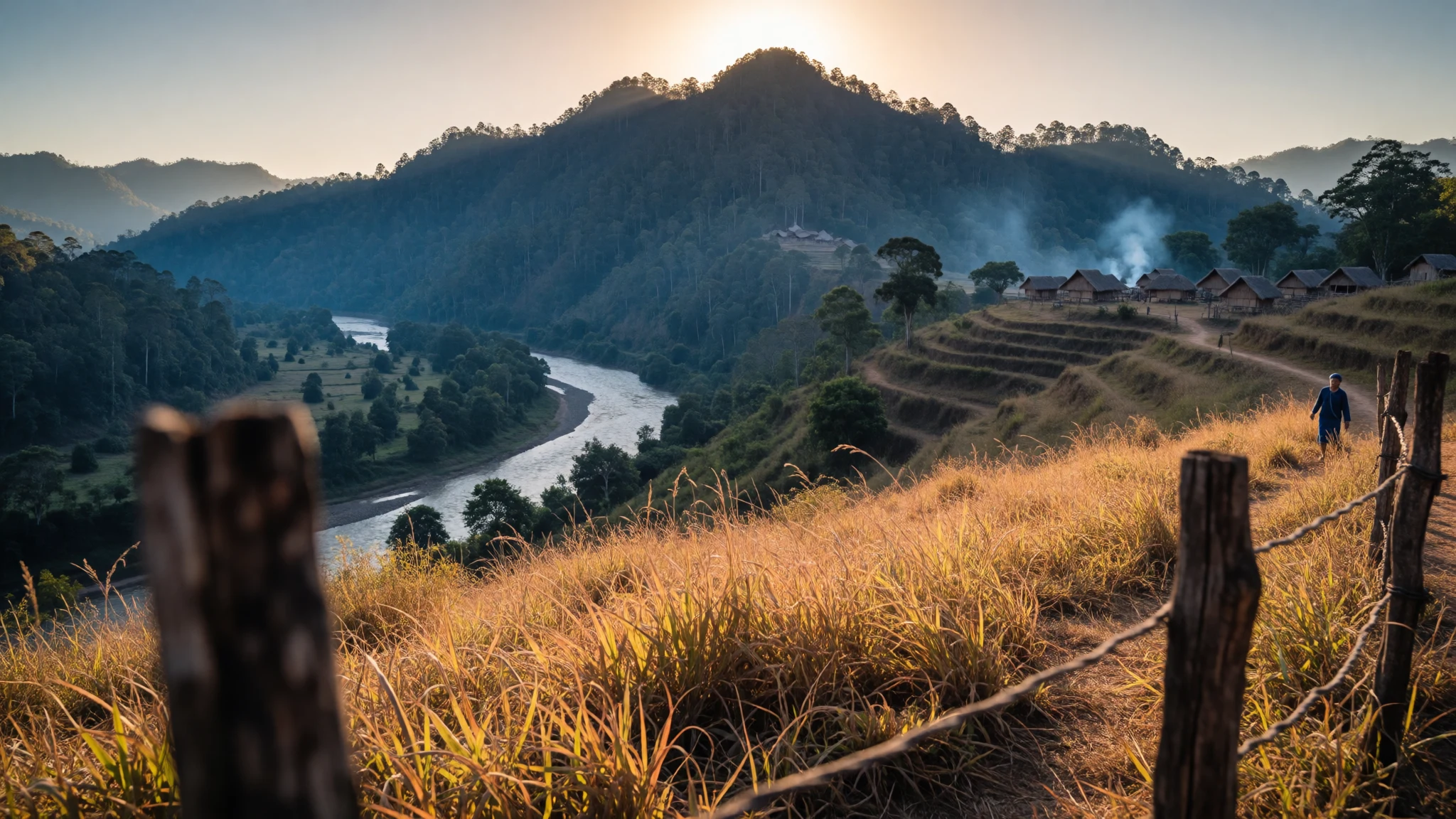
Nam Et-Phou Louey offers quiet river nights and remote forest in northern Laos, with local villages sharing in the protection of the wildlife.
The place
Nam Et-Phou Louey National Park sits in northern Laos, spread across Houaphan, Luang Prabang and Xieng Khouang provinces. It is a landscape of steep forested hills and river valleys, climbing from about 400 metres to a summit near 2,257 metres. The name joins the Nam Et river with Phou Louey, 'Forever Mountain', and the high ground between them feeds streams that run on towards the Mekong and the Mã. The weather follows the monsoon. Rain falls from May to October, turning trails to mud and swelling rivers, while the rest of the year is drier and cooler, with cold nights in the hills. Inside the park, a strictly protected core zone, where people may not enter and wildlife may not be taken, is ringed by a buffer zone where existing villages farm for their own needs. Those villages are home to Tai, Khmu, Hmong and Yao communities, so this is a lived-in landscape, not an empty one. Viengthong, a small town in Houaphan, holds the park headquarters and visitor centre, and is where tours are arranged. It has simple lodging and a few eateries, and little else. Access is hard and facilities are minimal, and that remoteness is a large part of why the forest has stayed intact. Walking and cycling trails and some hot springs make for gentler days; anything deeper needs a guide.
Its story
Nam Et-Phou Louey was set up in 1993 as one of Laos's national biodiversity conservation areas, meant to shelter some of the country's last unbroken forest. The region has always had few people. Khmu and Hmong families farmed and gathered from the forest long before it had protected status, and much of the park's story is about what happens when conservation has to share ground with them. The tiger is the sad chapter. Indochinese tigers once ranged here and are now believed locally extinct, so attention has shifted to the predators that remain, such as clouded leopards and dhole, and to restoring the balance around them. In the years after its founding the park became known for community-based conservation. Its best-known idea ties tourism to protection: when guests on a tour record wildlife sightings, nearby villages receive payment, which gives them a reason to hunt less and guard more. It is a practical bargain rather than a slogan, and visitors are part of the arithmetic. In 2019 the area was formally redesignated a national park, having previously held the status of national protected area. That sequence, a reserve first, a village-friendly model next, a park status later, explains how tours run today: small, guided, quiet, and built around local people.
What to see
- Nam Nern Night Safari — Nam Nern River
This is the park's signature outing. A longboat drifts down the Nam Nern at dusk, engine off for long stretches, while guides sweep spotlights along the banks. Sambar deer, civets, loris and owls are the usual candidates. Sightings are never promised, and the pleasure is in the silence and the guides' knowledge.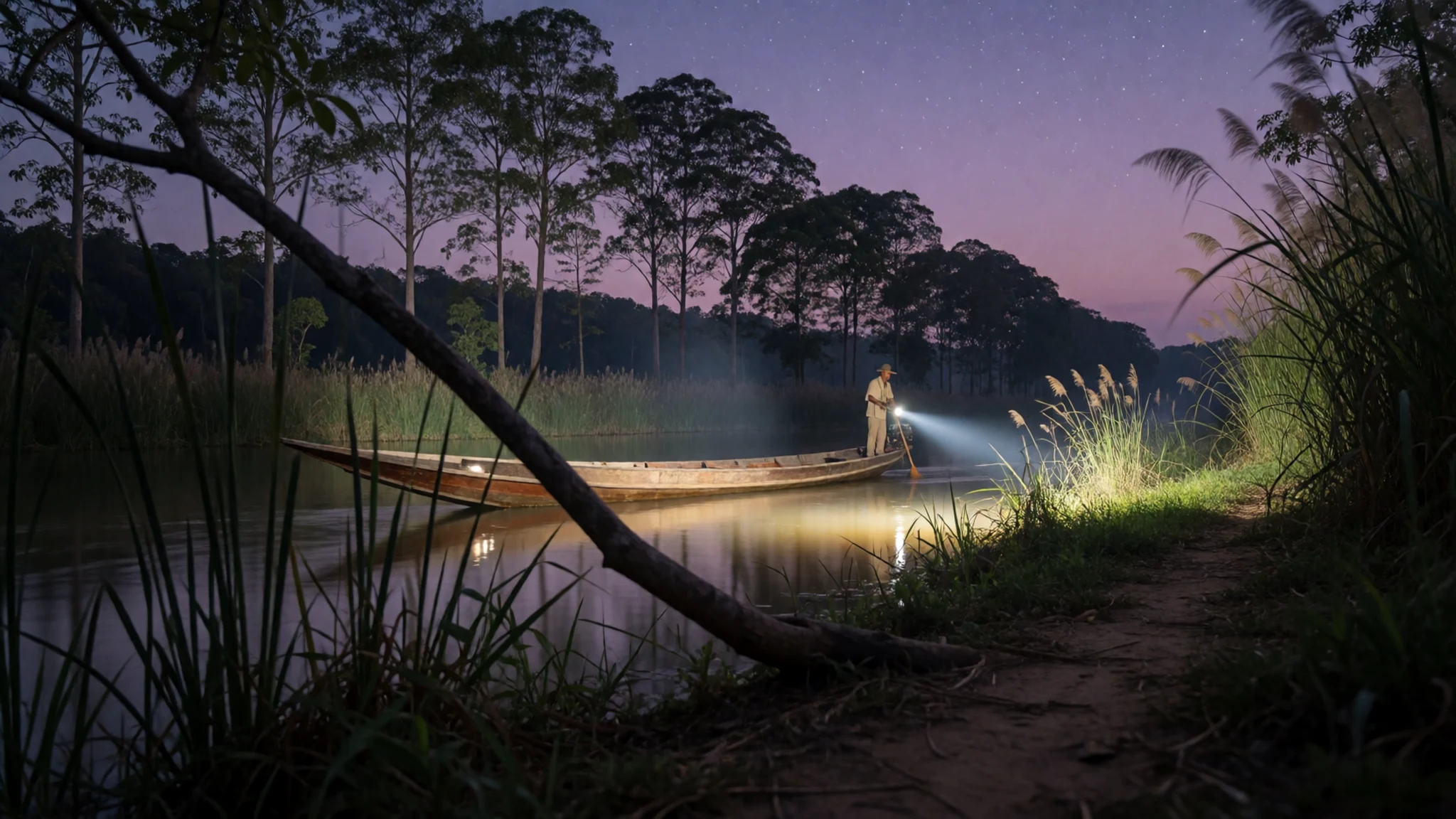
- Multi-day trekking — Forest and ridges inside the park
Guided treks head into remote forest, with nights in villages or ranger camps. Expect bamboo stands, river crossings and steep, muddy sections in the wet months. The dry season is easier underfoot but cold at altitude. These are demanding trips, arranged through the park office or an operator.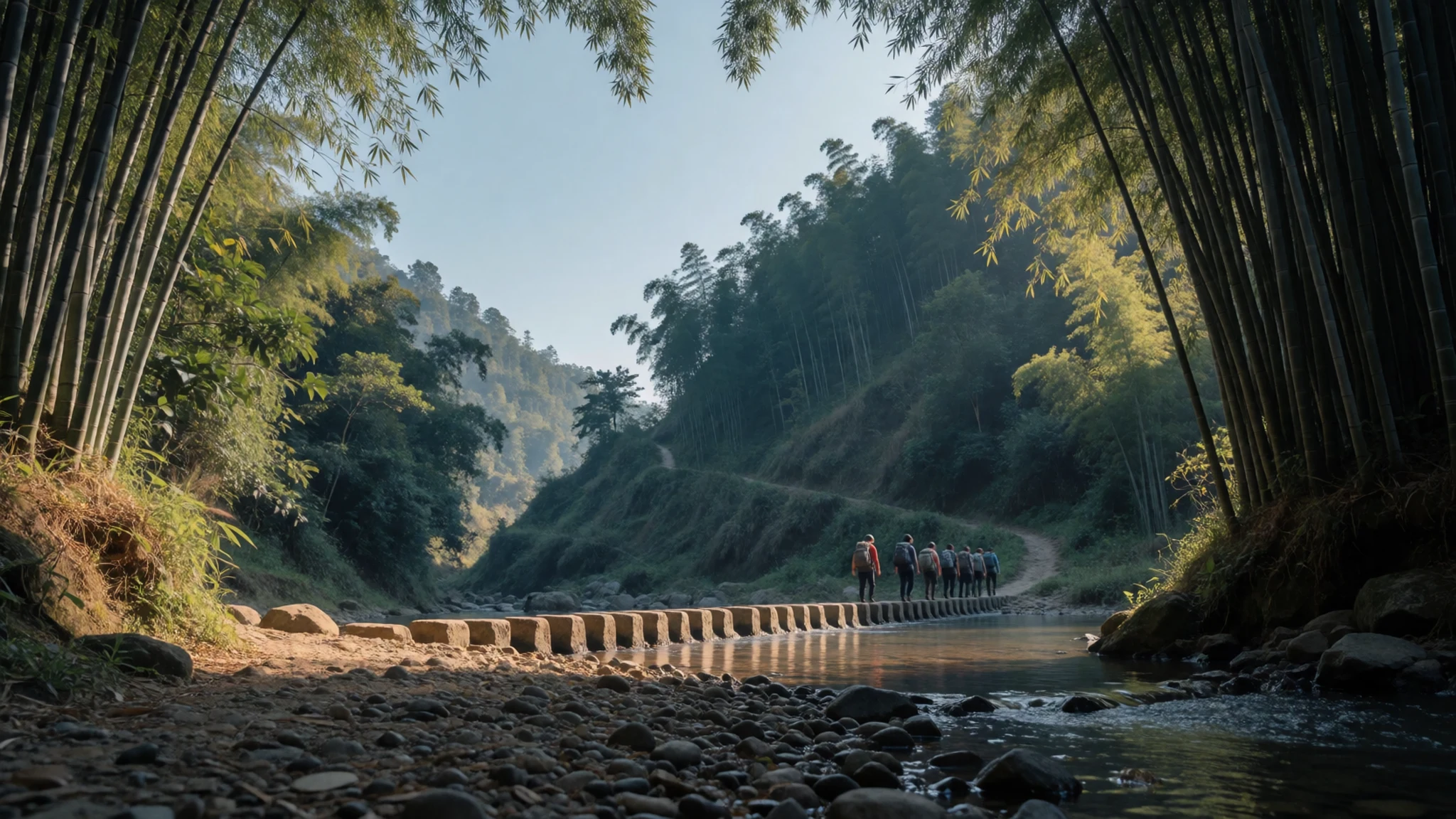
- Wildlife tracking tours — Park headquarters and surrounding forest
These tours explain how rangers and villagers monitor the forest: camera traps, signs left by animals, and the records that show whether species are holding on. It is a good way to understand the conservation model before, or instead of, a night on the river.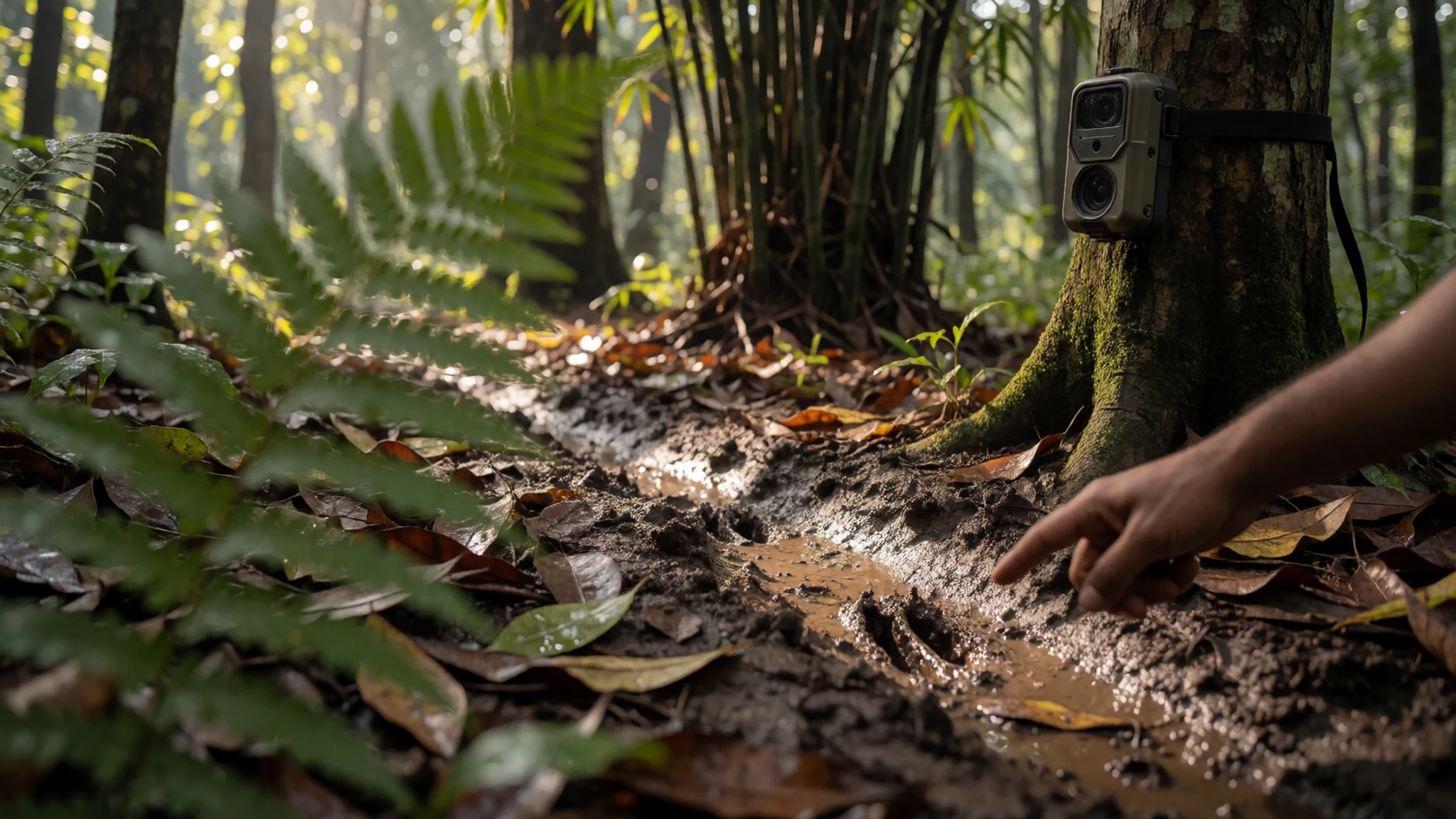
- Village visits — Buffer-zone villages
Khmu and Hmong communities live in the buffer zone, and guided visits offer a look at farming, building and daily routines. Go with a guide who has an arrangement with the village, keep to what is offered, and treat it as a visit to people's homes rather than a display.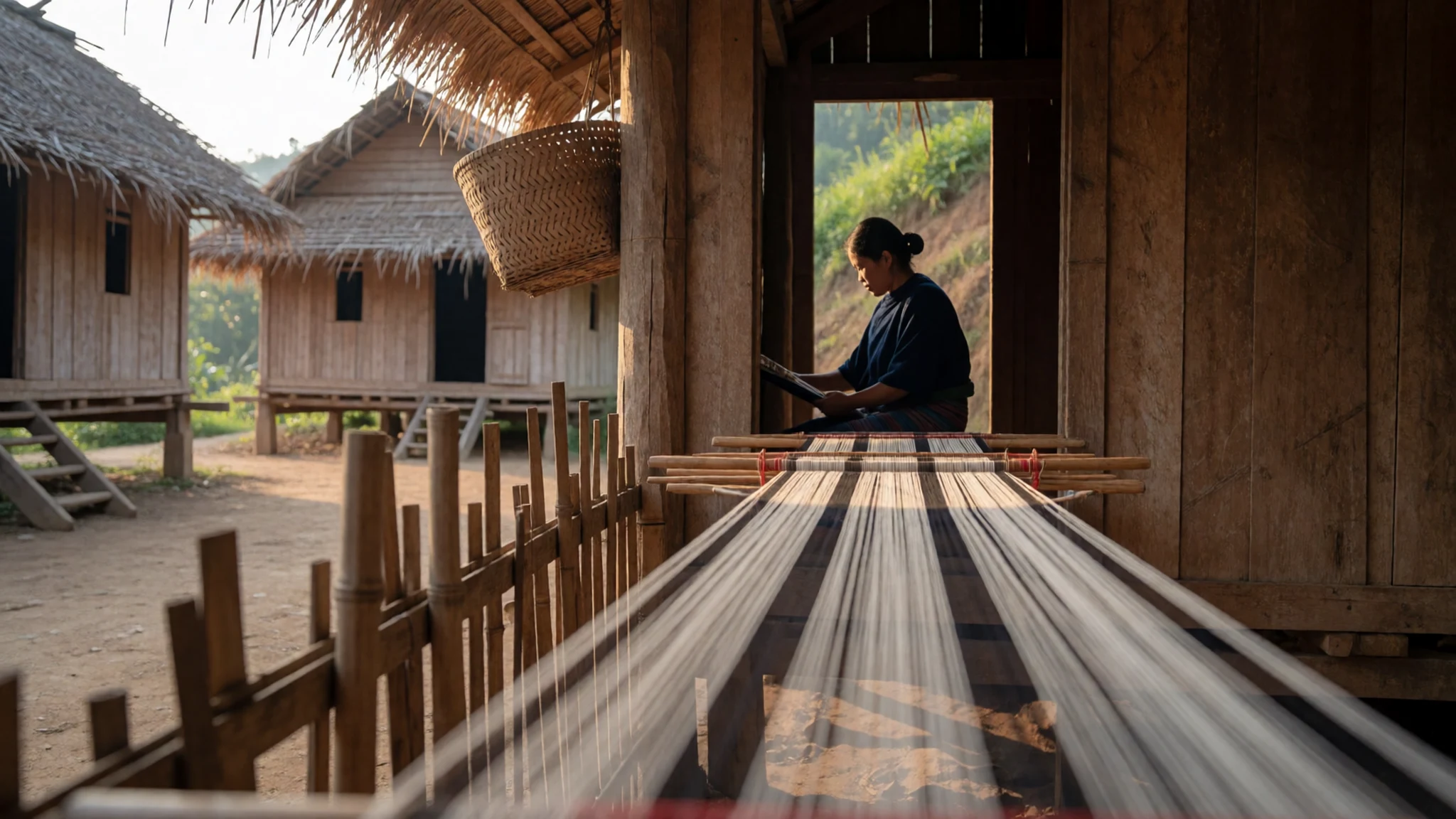
- Viengthong visitor centre and hot springs — Viengthong, Houaphan
The visitor centre in Viengthong is the practical starting point, where tours are organised and routes explained. The town also has walking and cycling trails and hot springs nearby. Ask staff about current conditions, particularly after rain, when tracks and river levels change quickly.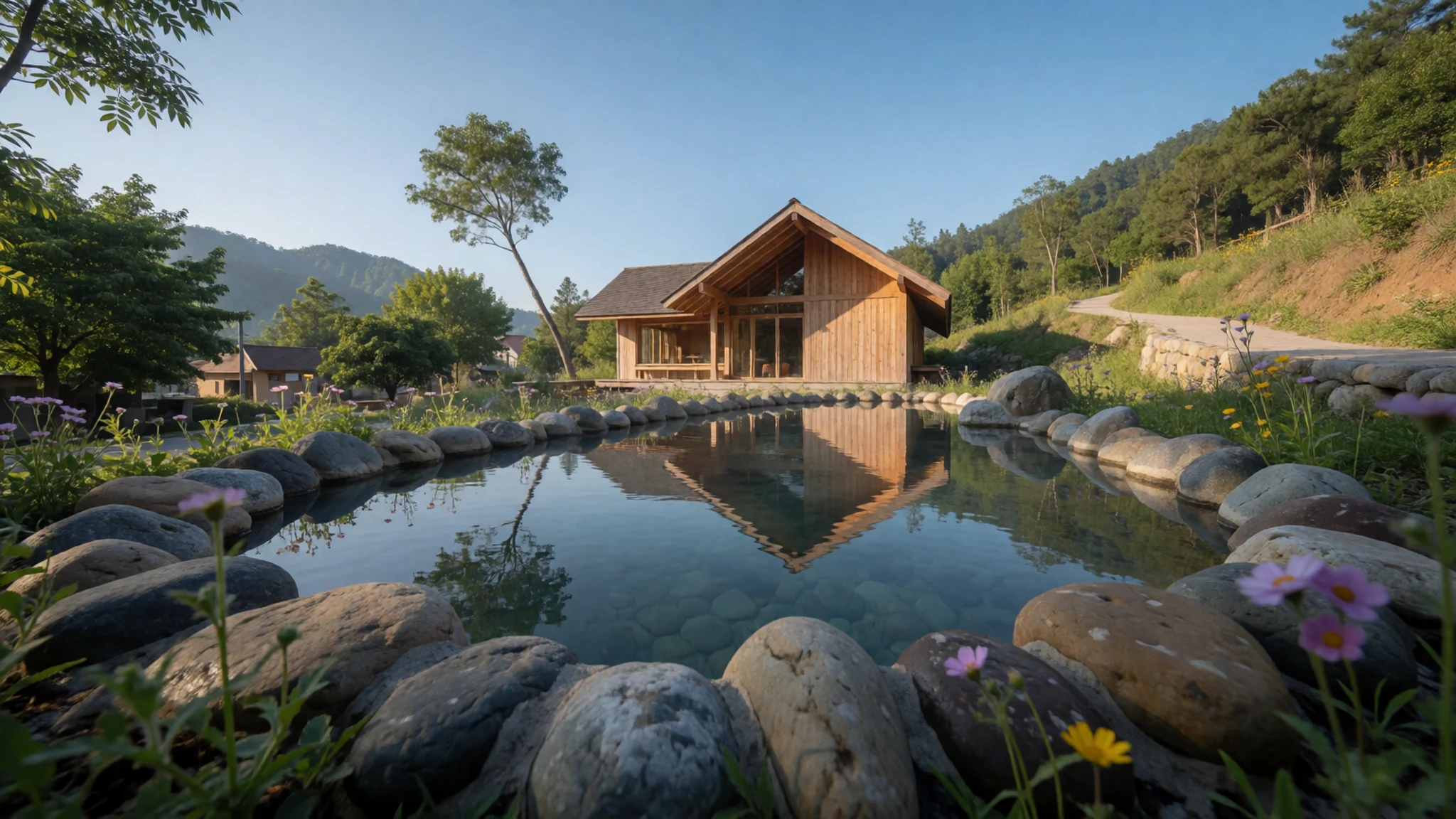
Culture
Nam Et-Phou Louey is shaped by the communities who live in and around it. Villagers include Tai Dam, Tai Daeng, Tai Kao, Tai Puan, Tai Lue, Tai Yuan, Khmu, Hmong and Yao groups, each with its own language, house style and festivals. Most households farm for their own needs, growing rice and gathering from the forest, and the park's rules shape how land is used. Tourism arrives into that world carefully. Guides are often from nearby villages, and a share of tour income goes to the community, so a visit has real consequences for how people weigh farming, hunting and protection. Much of the region is Buddhist or follows older spirit beliefs, and many households keep a spirit shelf or a shrine where offerings are left. Pace is slow, plans change with weather, and patience counts for more than a tight schedule. Laos generally prizes calm, so raised voices and open irritation land badly. Evenings can bring shared meals and rice spirit, offered as hospitality, and it is polite to accept a little even if only to sip. Language will be a barrier in the smaller villages, so a good guide matters, and a few words of Lao, such as sabaidee for hello, are warmly received. Ask before photographing anyone, especially children and women at work, and never enter a house or touch a spirit shelf without an invitation.
What to wear
Nam Et-Phou Louey's villages keep a mix of textile traditions. Tai groups are known for hand-woven cotton and silk, including patterned skirts called sin worn by women, and Tai Dam clothing in dark indigo-dyed cotton. Hmong communities are known for indigo cloth with embroidery, appliqué and batik patterns, often worn with silver jewellery at festivals and weddings. Khmu and Yao households have their own cloth and embroidery styles. Full traditional dress usually comes out for New Year, weddings and ceremonies, and the finest pieces are made slowly, so they are valued accordingly. Day to day, people mostly wear practical modern clothes: T-shirts, trousers, rubber boots or sandals for the fields, and a sin or a sarong for women at home, with a hat or scarf against the sun. A visitor should dress for mountains and monsoon. In the dry season pack layers, as nights in the hills turn cold, and in the wet season bring a light waterproof and quick-drying fabrics. Sturdy shoes with good grip suit muddy trails, and long trousers and long sleeves help with leeches, insects and undergrowth. On the boat at night, dark, quiet clothing is better than bright colours. In villages and at any temple, cover shoulders and knees, and avoid swimwear except at the springs.
What to eat
- Sticky rice (khao niao) — Any village meal or Viengthong eatery
Steamed glutinous rice is the base of nearly every meal here, served in a woven basket and eaten by hand. Pinch a small ball, press it flat, and use it to scoop up dips, grilled meat or vegetables from shared dishes.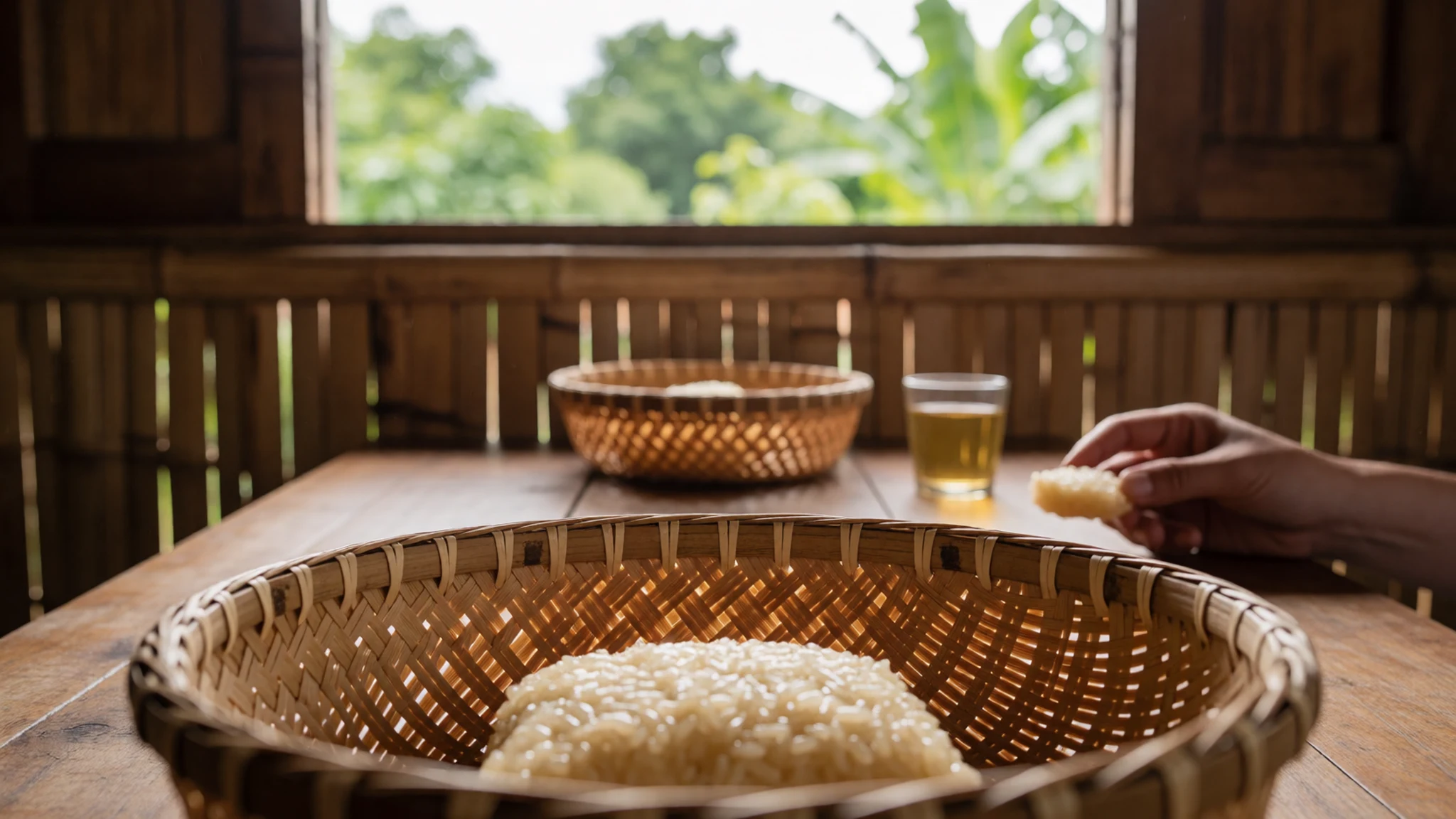
- Laap — Local eateries in Viengthong
A chopped meat salad, often pork, chicken or fish, mixed with lime, fresh herbs, chilli and toasted ground rice. It is zesty, herbal and usually eaten with sticky rice. Ask for the heat to be adjusted, as home versions can be fierce.
- Jeow dips — Village homes and homestays
Jeow is the Lao family of chilli dips, made by pounding chillies, garlic, herbs and sometimes roasted aubergine or tomato. Each household has its own version. They come with sticky rice and boiled or raw vegetables, and are often the highlight of a simple meal. - Grilled river fish — Riverside villages and camp meals
Fish from local rivers is often grilled whole over charcoal, salted and stuffed with lemongrass and herbs. It arrives smoky, with a dip alongside. Around the park it is more likely to appear at village or camp meals than in any formal restaurant. - Or lam — Eateries in Viengthong and the Luang Prabang road
A thick, earthy stew from northern Laos, usually built on meat or dried buffalo skin, aubergine, lemongrass, and a pepper-like wood that gives a mild tingle. It suits cool evenings and is best shared with sticky rice.
Plan it
Best time. November to March, in the dry season, when trails are firmer, rivers are lower and wildlife viewing is at its best. Nights in the hills can be very cold. May to October is the monsoon, with heavy rain, mud, swollen rivers and harder travel.
How long. 3–4
Getting there. Luang Prabang is the usual starting point, with the nearest regular flights; from there, the road to Viengthong, the park's gateway town, takes most of a day. From Sam Neua, the provincial capital of Houaphan, the drive is shorter, roughly half a day. Roads can be rough, especially after rain. Buses and minivans run, but many travellers book transport with a tour operator.
Budget. mid
Tips
- Arrange tours and the night safari through the park office in Viengthong or a reputable operator, and book ahead in the dry season
- Allow generous time for road travel, and avoid tight onward connections, as wet-season delays are common
- Carry cash, as cards and cash machines are scarce in and around Viengthong
- Pack layers, a headtorch, insect repellent and sturdy shoes, and keep a warm layer for cold nights
- Bring enough drinking water or purification, and confirm facilities before heading to remote camps
Etiquette
- Keep quiet on night boat trips, avoid flash photography, and follow the guide's instructions
- Ask before photographing villagers or entering homes
- Do not buy wildlife products or encourage anyone to hunt
Nearby
Sources
- Wikidata Q6961074 (CC0)
- Wikipedia: Nam Et-Phou Louey National Park (rev 1362862202) (CC BY-SA 4.0)
- Wikivoyage: Nam Et - Phou Louey National Park (rev 5297963) (CC BY-SA 4.0)
Wildlife
- Clouded leopard (animal)
The clouded leopard is a wild cat wearing a coat patterned like drifting storm clouds, and it uses its long tail as a balancing pole when climbing trees. In Nam Et-Phou Louey it matters greatly, because the tiger is believed to have vanished from the area, and this cat is one of the predators still helping hold the wild places together. Ask a local guide what is realistic, keep a good distance, stay quiet, and never offer food.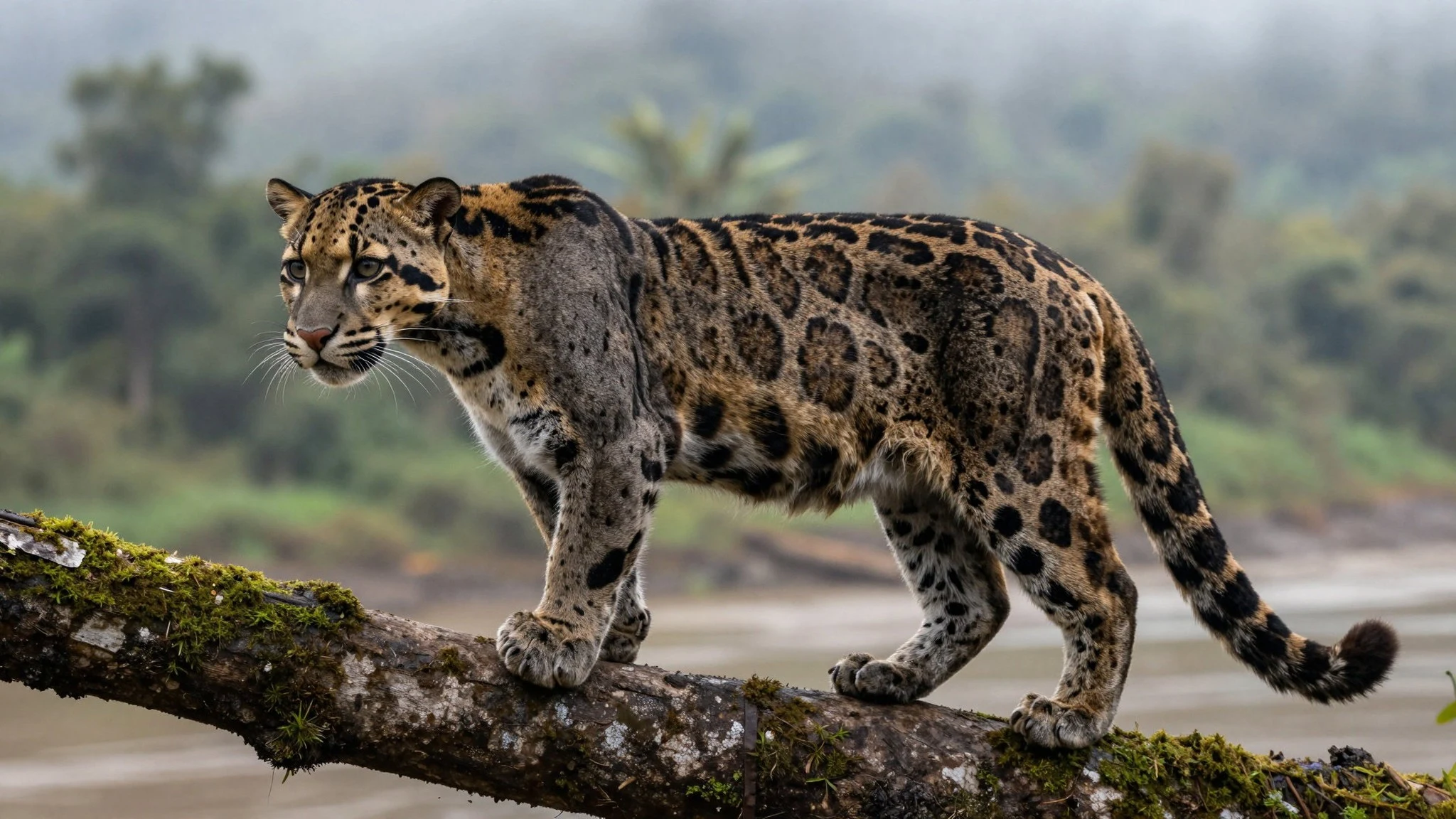
- Dhole (animal)
The dhole is a wild member of the dog family, an Asian hunter that is neither quite a wolf nor quite a dog. In Nam Et-Phou Louey it is one of the predators that remain now that tigers are believed gone from the area, so any encounter is precious. Where and when it appears is not something we can promise, so go with a guide, keep a respectful distance, stay quiet, and never feed it.