Mount Namuli
Mount Namuli, Mozambique
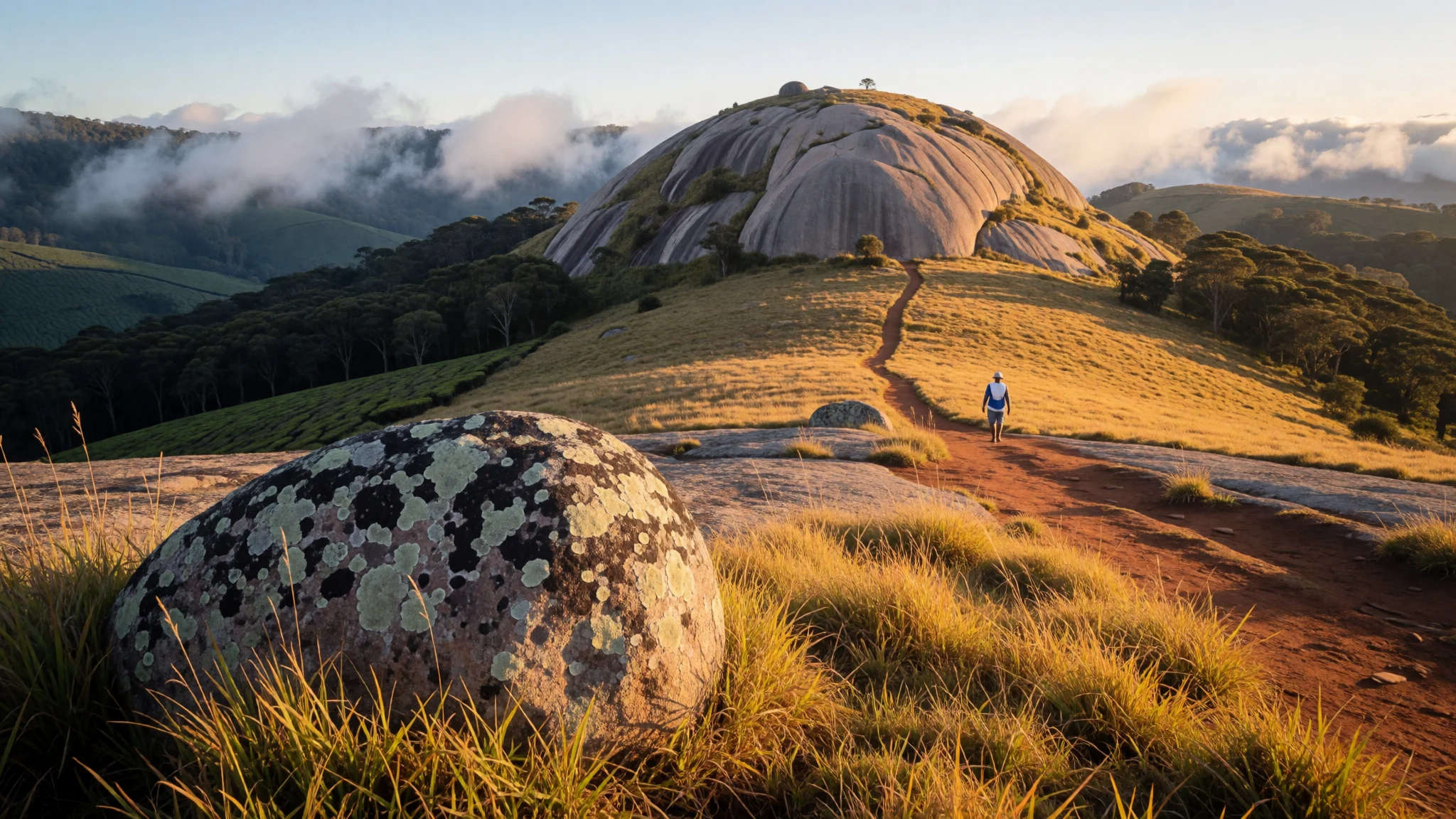
Mount Namuli is a remote granite dome above tea country in northern Mozambique, where rare forest birds and a few outsiders' footprints share the slopes.
The place
Mount Namuli rises to 2419 m in Zambezia Province, northern Mozambique, a granite dome set on a broad plateau and counted as the country's second-highest peak. The town of Gurué lies about 12 km to the south-west and is the usual base for anyone heading up. The massif behaves like an island: plateau and dome lift out of lowland farmland, and the plants, animals and air change with each stage of the climb. Tea plantations cover the lower slopes, tied to the estates around Gurué. Higher up, small farms take over, with crop plots cut between stands of trees. Native forest survives mostly on the upper ground and in strips beside streams, and that remnant is what draws scientists. Several animals live here and nowhere else, among them the Namuli apalis, a small forest bird, and Vincent's bush squirrel. Others, such as the Thyolo alethe, turn up on a few neighbouring mountains too. Namuli belongs to a scatter of isolated peaks across northern Mozambique, and the same pattern of forest on high granite repeats on Mount Mabu and Mount M'pàluwé. Malawi's Mulanje Massif lies about 160 km away. Visits here are expeditions rather than day trips: tracks are rough, facilities are basic, and local guides matter. Anyone planning a trip should expect to organise most things in Gurué and check current conditions before setting out.
Its story
Mount Namuli entered the written record in 1886, when Henry Edward O'Neill, a British consul in Mozambique, surveyed and described the massif. For a long time afterwards it stayed a name on outsiders' maps, though the people living around it had always known it well. Ornithologists brought it back into view when Hubert Lynes and Jack Vincent mounted an expedition across 1931 and 1932; the names of both men survive in the Namuli apalis (Apalis lynesi) and Vincent's bush squirrel. A long silence followed. Mozambique's civil war and the poor state of the roads kept researchers away, and it was 1998 before a South African team of ornithologists could work in the forests again. Since then, surveys of reptiles and amphibians have turned up further discoveries on Namuli and its neighbouring mountains, and the results have appeared in scientific journals with photographs of the sky-island landscape. In 2024 scientists proposed grouping Namuli with other isolated granite mountains of the region into a new ecoregion, the South East Africa Montane Archipelago, shortened to SEAMA. The idea reflects how these peaks behave: separate forests, each holding its own set of species, linked by shared geology and history. Namuli's story is therefore partly a story of access, with knowledge following the roads, and the SEAMA idea remains a proposal rather than a settled designation.
What to see
- Gurué and the tea estates — Gurué, Zambezia
Gurué is the nearest town and the practical starting point, with tea estates running up the lower slopes towards the mountain. A drive or walk through the plantations shows the working landscape before the forest begins. The rows of tea on steep ground look best in the clear light of early morning, with the massif standing above.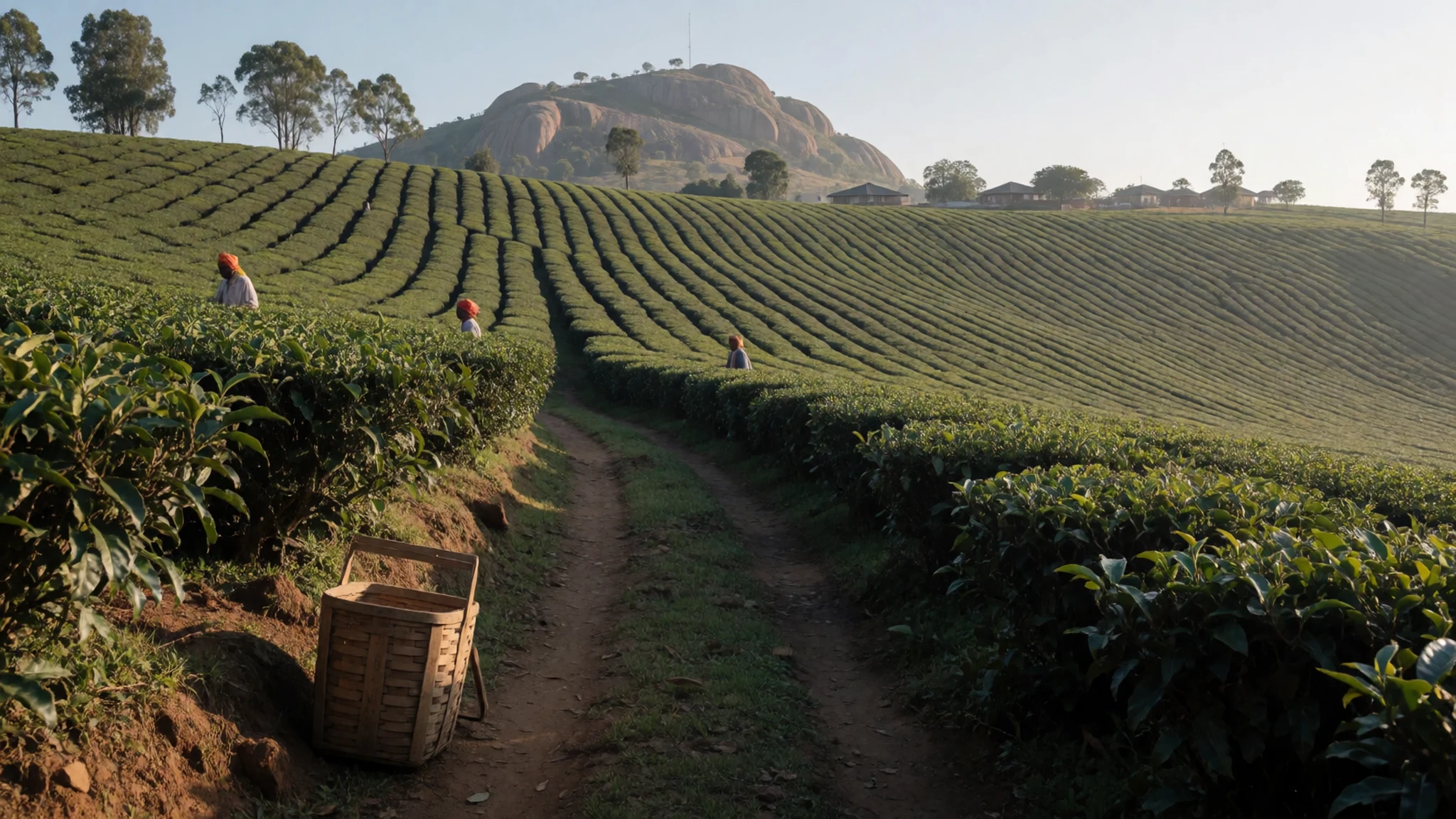
- The granite dome — Summit of Mount Namuli
The summit dome of Mount Namuli, at 2419 m, is bare granite rising above the plateau and the goal of any serious trip. Reaching it usually takes more than a day and needs local guides, as weather can close in fast. On clear mornings the dome stands sharp against the sky and the lowlands spread below.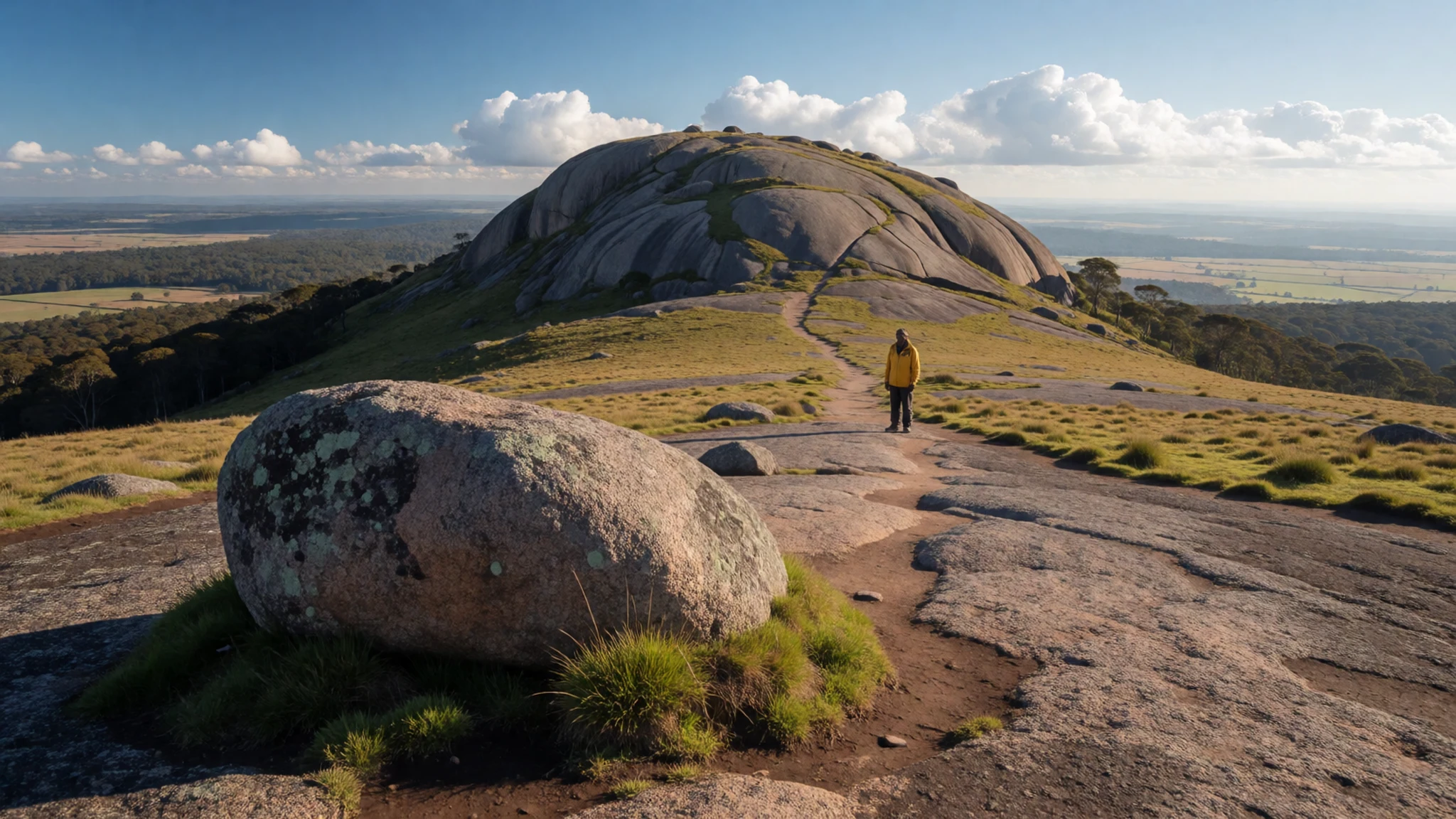
- Upper-slope forest — Upper slopes and plateau
Native forest survives mainly on the higher ground, and it holds the mountain's rarest wildlife. Birdwatchers come hoping for the Namuli apalis, which lives nowhere else, and the Thyolo alethe. Moving quietly with a guide at dawn gives the best chance, and much of the interest lies in small things such as frogs, chameleons and mosses.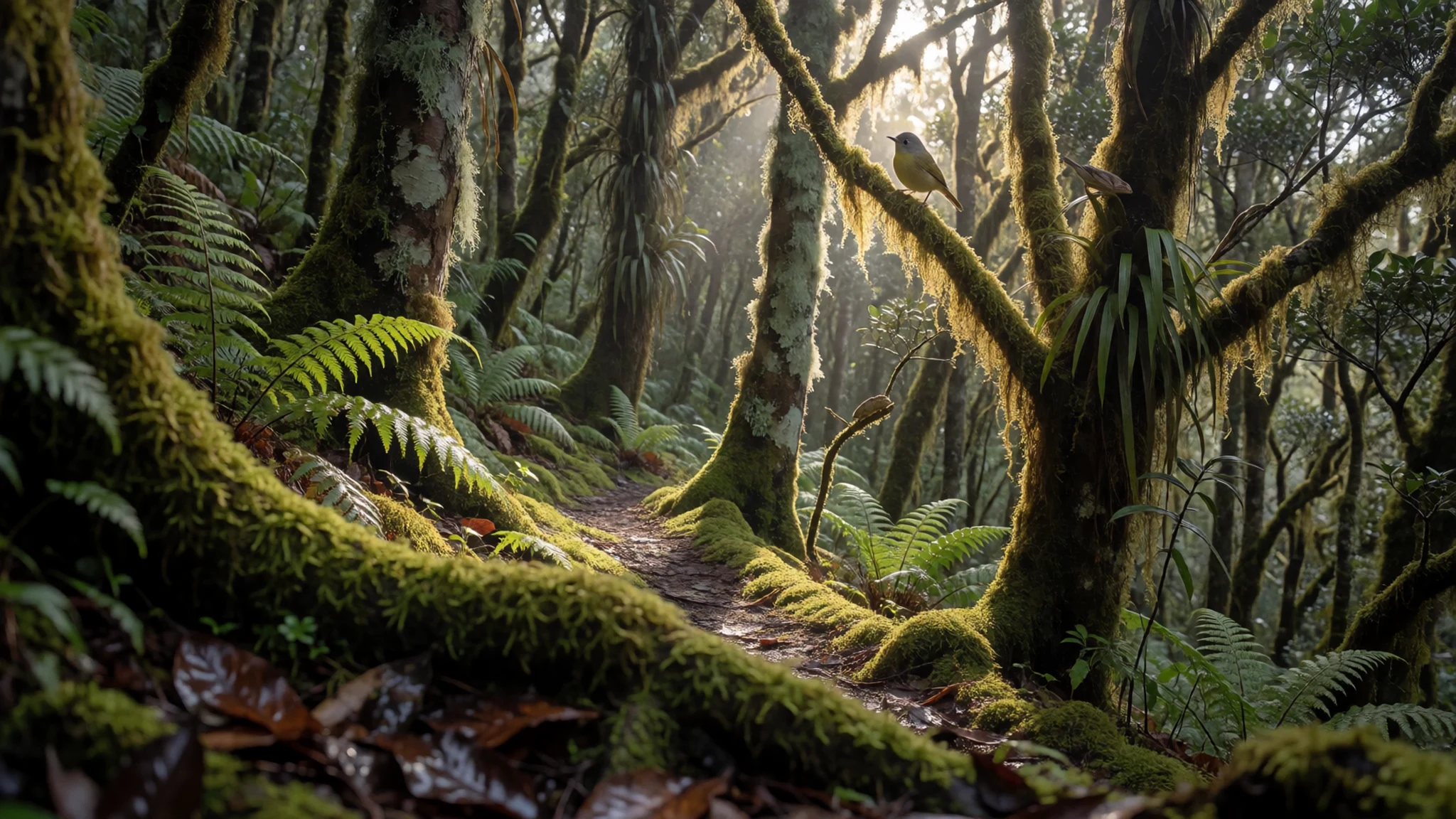
- Stream-side forest corridors — Middle slopes
Strips of native forest follow the streams on the middle slopes, running through farmland like green ribbons. They are easier to reach than the upper forest and show how water and trees hold together on a farmed mountain. Expect shade-loving birds, damp ground and noticeably cooler air under the canopy.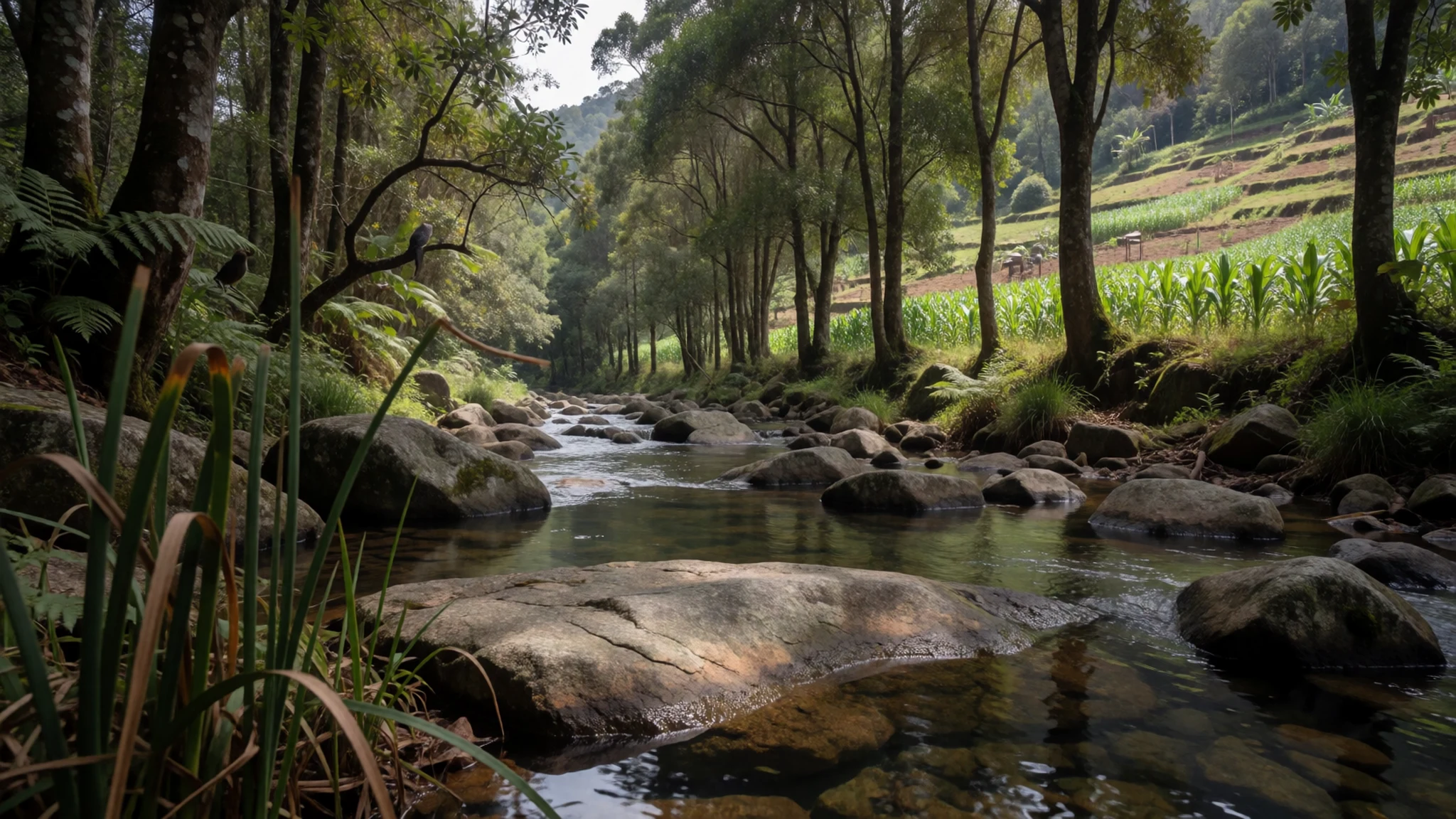
- Farms of the middle slopes — Middle slopes near Gurué
The middle slopes are given over to small-scale farming, with crop fields stepped between trees and footpaths linking homesteads. A walk here, ideally with a guide who can introduce visitors and translate, is the best way to meet the people who live on Namuli. Buy food and supplies locally and pay fairly for guiding.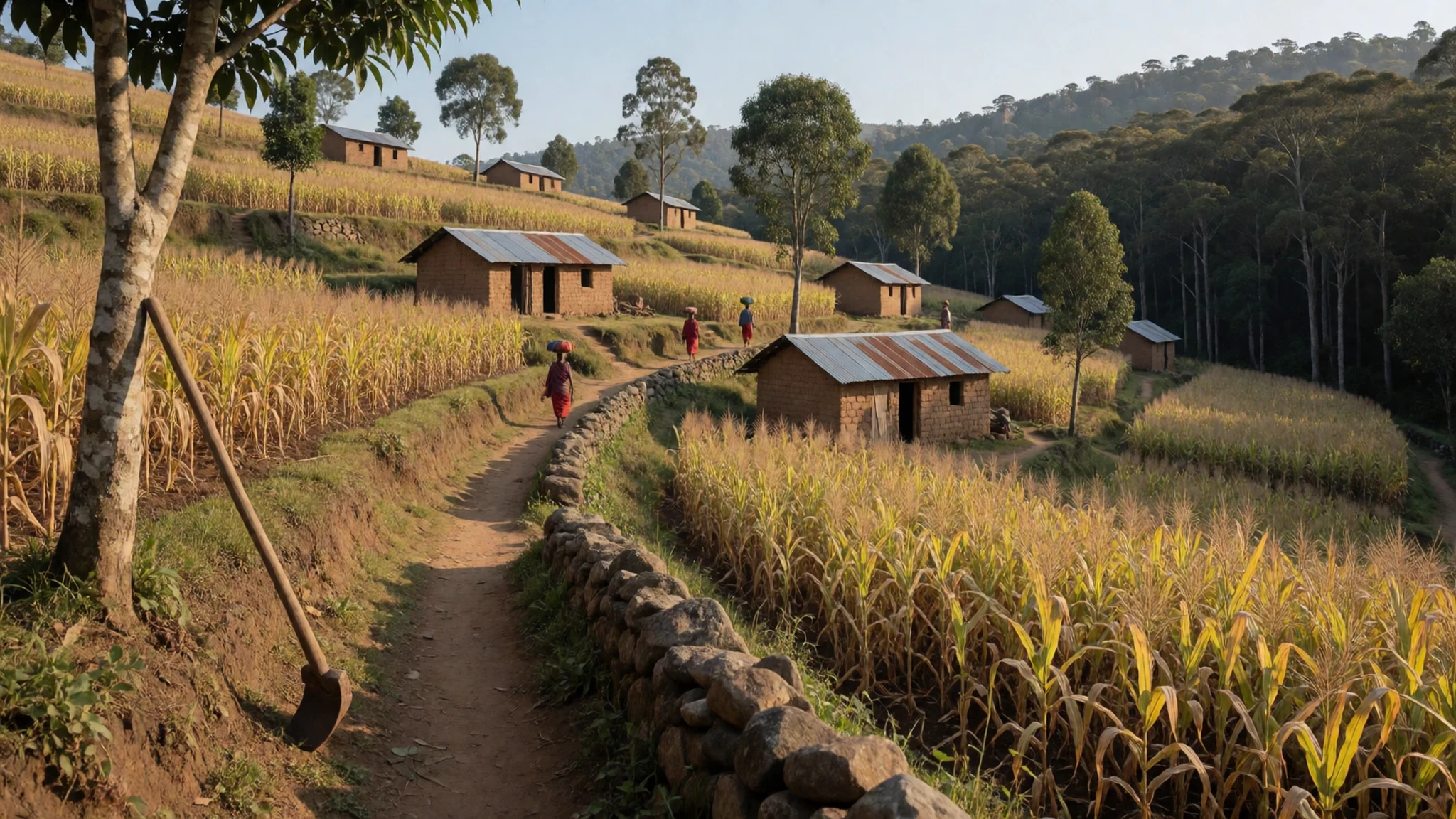
Culture
Mount Namuli stands in the homeland of Lomwe and Makhuwa-speaking communities of Zambezia and neighbouring provinces, and the mountain carries meaning beyond its scenery. Many Lomwe people trace their origins to the massif in oral tradition, and some places on the upper slopes are treated as sacred by local communities. People also farm and gather on the mountain, so any visit passes through lived-in land rather than empty wilderness. Portuguese is the official language of Mozambique, while many residents speak Lomwe or Makhuwa at home, and a few Portuguese greetings go a long way. Community life runs through village leaders, who are the proper first contact for any visit. The tea estates around Gurué are working businesses with their own rules about access, so ask before wandering through them. Days start early and end early, evenings are quiet, and sound carries on the mountain. Visitors can expect hospitality, along with a clear sense that the mountain belongs to the people who live on it. Before climbing or photographing a village, ask the village leader or your guide for permission, and never photograph people or sacred places unless invited to.
What to wear
Mount Namuli sits in a part of Mozambique where the capulana is the defining textile: a rectangle of printed cotton, worn by women as a wrap skirt, tied over the head, or used to carry a baby on the back. Bold prints are chosen for church, weddings and festivals, and the cloth also doubles as a towel or blanket. Many Makhuwa and Lomwe women apply musiro, a pale paste made from a root, to the face as skin care and adornment. Everyday dress now is mostly practical and western: shirts, trousers, dresses and football shirts, often second-hand, with the capulana kept for home and for occasions. On the farms of the slopes, people wear whatever suits fieldwork and the weather, and many walk barefoot or in sandals. Visitors should dress for a mountain first. Bring layers, because the upper slopes are cooler and wetter than Gurué, plus a waterproof jacket, a hat and sturdy, broken-in boots with good grip on wet ground. Long trousers protect against scratchy vegetation and insects. In villages, cover shoulders and knees as a courtesy, and avoid camouflage clothing, which can attract unwelcome attention. A capulana makes a good, inexpensive souvenir and is useful as a sun cover.
What to eat
- Xima — Local eateries and home-style kitchens in Gurué
A stiff porridge of maize or cassava flour, the staple of the northern provinces. It is rolled into balls by hand and used to scoop up relishes and stews. Expect it at almost any local eatery or family table.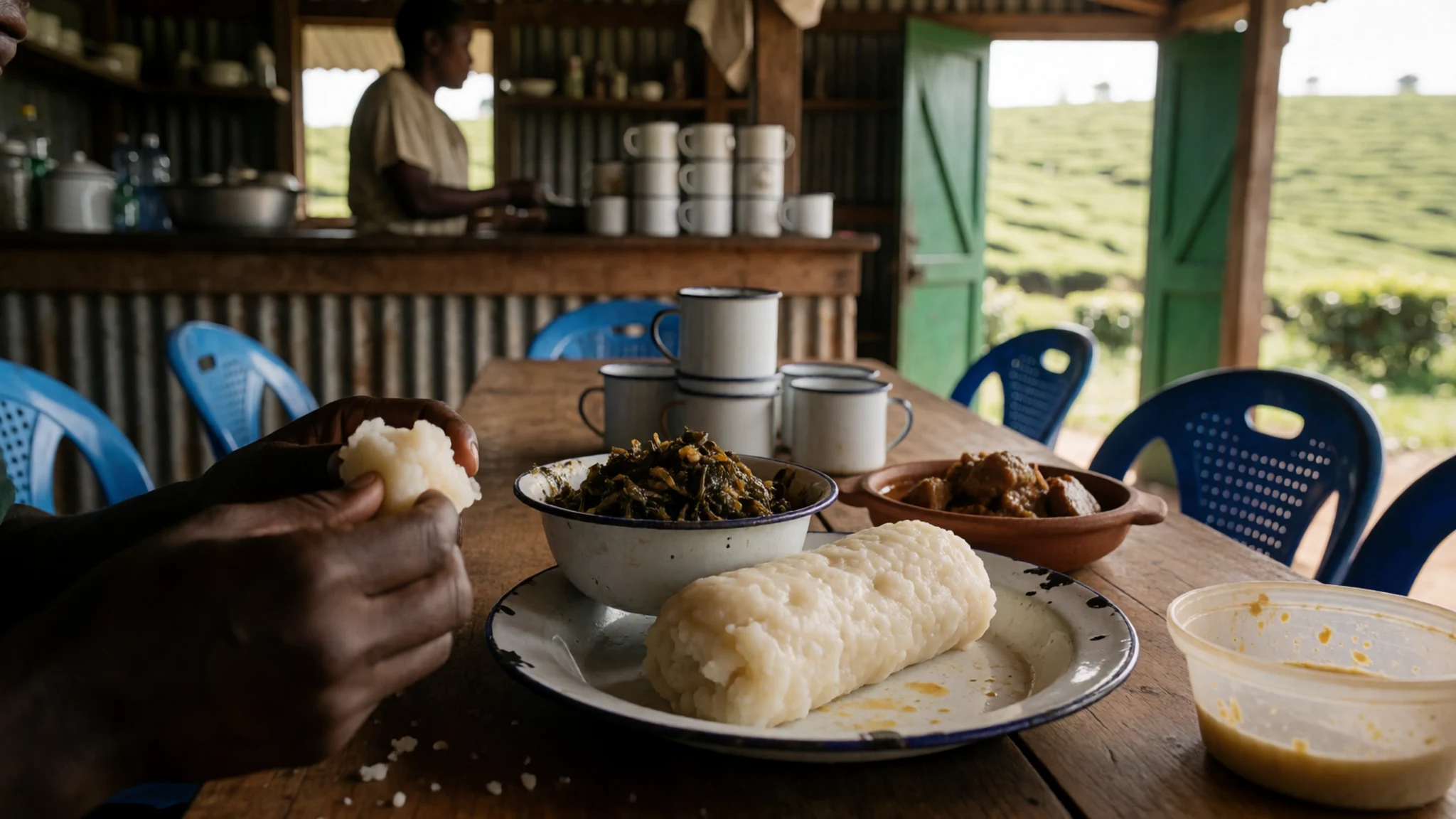
- Matapa — Home-style eateries and market food stalls
Pounded cassava leaves slowly cooked with peanuts or coconut milk, sometimes with dried fish or prawns. Rich, earthy and filling, it is eaten with xima or rice. Ask for it at home-style eateries, where it is cooked in large pots.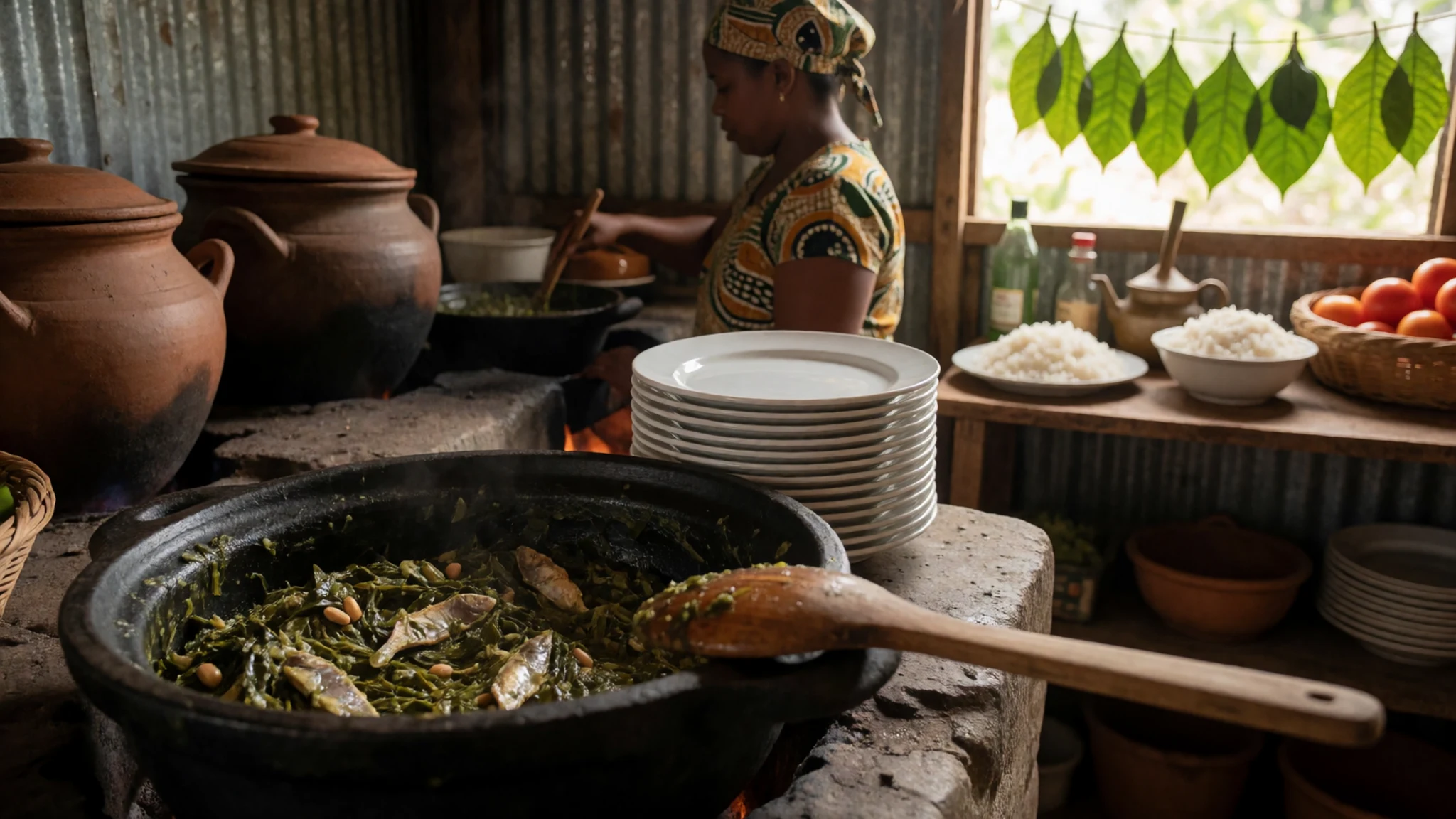
- Grilled chicken — Roadside grills and evening stalls in Gurué
Chicken marinated in lemon, garlic and chilli, then grilled over charcoal. It is a common choice for a simple meal after a day outdoors, usually served with rice, chips or xima and a sharp chilli sauce on the side. - Cassava and sweet potato — The main market and roadside vendors in Gurué
Cassava and sweet potato are grown across the slopes and sold boiled or roasted as snacks. They are filling, cheap and handy to carry on the trail. Look for vendors near the main market and along the road. - Tea and bread rolls — Small cafés and bakery stalls in Gurué
Gurué is tea country, so a cup of locally grown tea with fresh bread rolls is a fitting breakfast. Rolls come warm from small bakers in the early morning. Ask local staff which estates sell their tea directly.
Plan it
Best time. May to September is the drier season, when trails and tracks are firmer and views over the lowlands are clearer. The rainy months, roughly November to April, bring mud, cloud and slippery paths, and some tracks can become hard to pass. Nights on the upper slopes are cool in any season, so pack warm layers.
How long. 3–4
Getting there. Fly to a regional city in northern Mozambique such as Nampula or Quelimane, then continue by road to Gurué, a long day in a shared or private vehicle. The last leg is a rough track from Gurué towards the mountain, best done with a local guide and a high-clearance vehicle. Check current flights, road conditions and access with local contacts before travelling.
Budget. mid
Tips
- Arrange a local guide and transport in Gurué before heading up; the tracks are rough and signage is minimal
- Carry cash in small notes, as cards and cash machines are scarce outside the larger towns
- Bring enough drinking water or a purifier, plus food and a basic first-aid kit
- Pack for rain and cold even in the drier months, and start walks early before cloud builds
- Check security and road conditions locally before leaving, and tell someone your route
Etiquette
- Ask the village leader or your guide before entering sacred sites or photographing people
- Greet people you pass in Portuguese or the local language, and accept hospitality politely
- Take all litter away and stay on established paths through farms and forest
Nearby
Sources
- Wikidata Q1516857 (CC0)
- Wikipedia: Mount Namuli (rev 1355832560) (CC BY-SA 4.0)
- Wikivoyage: Mozambique (CC BY-SA 4.0)
- Photo: Mount Namuli, Figure 2 (cropped), Conradie et al. 2016, Zoosystematics and Evolution 92(2) (CC BY 4.0)
- Photo: Northern Mozambique sky islands, Figure 2, Conradie et al. 2016, Zoosystematics and Evolution 92(2) (CC BY 4.0)


Wildlife
- Namuli apalis (animal)
Think of the Namuli apalis as the mountain's own little forest bird, found here and nowhere else. It was once counted as a relative of another apalis, but is now known as a species of its own. Birdwatchers travel to Namuli hoping to glimpse it. Because we cannot promise a season or time of day, let a local guide steer you to the right woodland. Stay back, keep still and quiet, and never tempt it with food. - Vincent's bush squirrel (animal)
Vincent's bush squirrel is a small gnawing rodent that lives only in Mozambique, and it is one of the animals found on Namuli and nowhere else. It makes its home in damp mountain forest, which is shrinking, so it needs our care. We cannot say which season or hour is best, so ask a guide. Watch from a good distance, keep voices low, move slowly, and never feed it. - Namuli apalis (bird)
Think of the Namuli apalis as the mountain's own little forest bird, found here and nowhere else. It was once counted as a relative of another apalis, but is now known as a species of its own. Birdwatchers travel to Namuli hoping to glimpse it. Because we cannot promise a season or time of day, let a local guide steer you to the right woodland. Stay back, keep still and quiet, and never tempt it with food. - Thyolo alethe (bird)
The Thyolo alethe is a medium-sized forest chat, rather like a cinnamon-brown bird wearing a white bib. It is endangered, found only on a few isolated mountains, and birdwatchers come to Namuli hoping to see it. It hunts small creatures such as beetles, spiders and driver ants in forest it needs to survive. We cannot say when it is best seen, so ask a guide. Watch quietly from a distance and never feed it.