Mount Hood
Mount Hood, United States
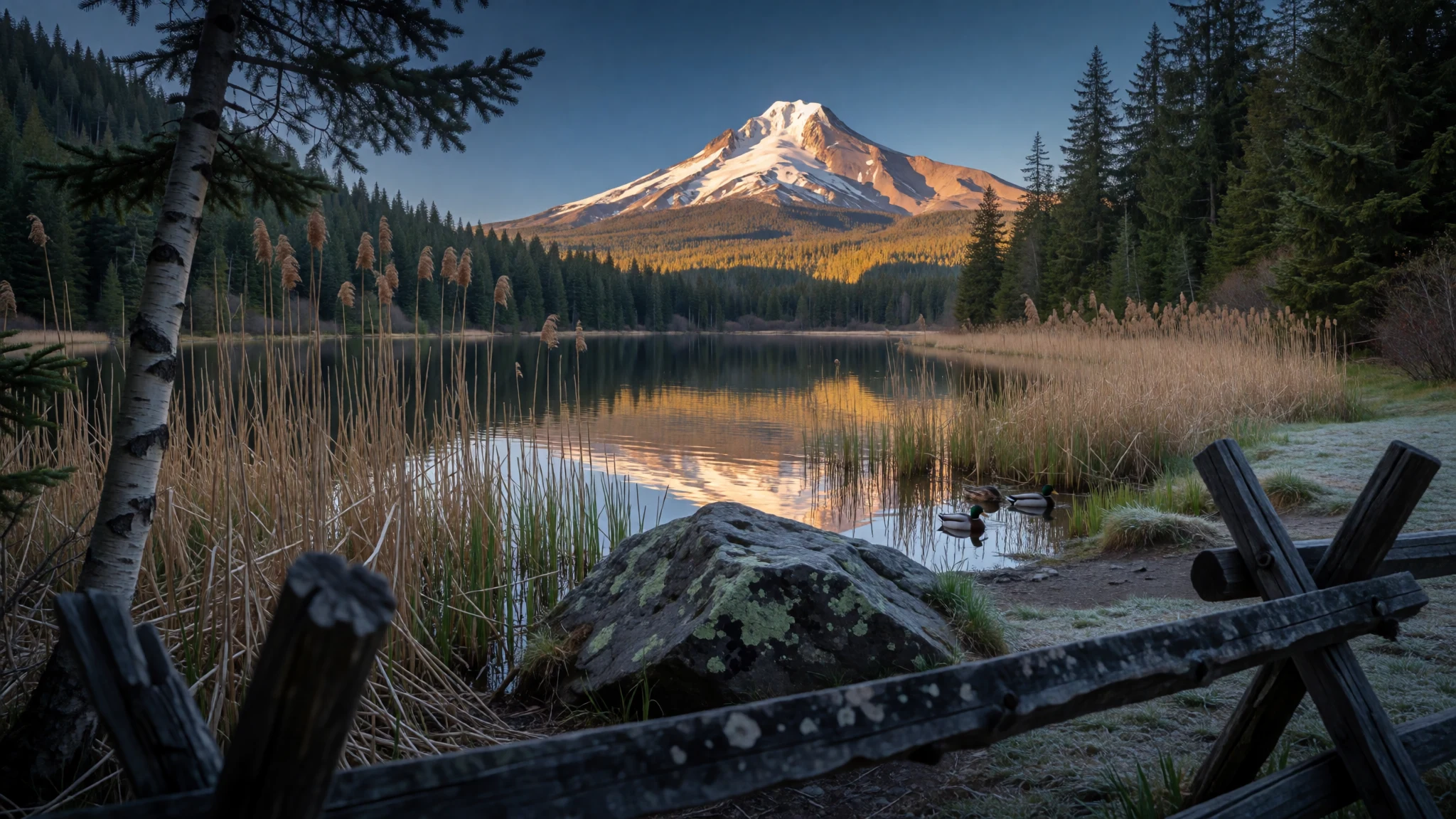
Mount Hood gives Oregon a snowy volcano within reach of Portland, with skiing, lake walks and summit climbs, sometimes all in a single season.
The place
Mount Hood is a stratovolcano in northern Oregon, rising to 3,425 m in the Cascade Range east of Portland. It sits on the boundary between Clackamas and Hood River counties and lies mostly inside Mount Hood National Forest, with the high ground beyond the ski areas protected as wilderness. The mountain exists because the Pacific plate slides beneath the continent here, melting rock that feeds the whole chain of Cascade volcanoes. Snow and ice dominate the upper slopes: glaciers hang on several sides, and meltwater runs down through fir forest into the rivers below. Conditions near the summit are properly alpine, with frost most nights even in midsummer and weather that can turn quickly. Lower down, the climate is kinder, which is why Portland treats the mountain as its back garden. Winter means skiing and snowboarding at several resorts, while summer brings hiking, lake walks and wildflower meadows. Timberline Lodge, on the south side, keeps lifts running through much of the year, so snow-sliding is possible even when the valleys are warm. To the north, the Hood River valley adds orchards and river sports. Climbers set out for the summit in large numbers, mostly overnight so as to be down before the snow softens. Good-weather weekends bring full car parks and slow traffic on the approach highway. Weekday mornings are much quieter, and the light on the cone is usually clearest early in the day.
Its story
Mount Hood carries the name of a British admiral who never saw it. A naval officer sailing with George Vancouver's expedition named the peak after Samuel Hood, a senior Royal Navy figure of the day, and the label stuck, even though the peoples of the region had their own names for the mountain long before. The mountain's own story is volcanic. It grew through repeated eruptions along the Cascade arc, and its glaciers have since carved and silted the valleys below. Grey volcanic deposits spread along the White River can be seen from orbit, as an astronaut photograph shows. Scientists class Mount Hood as potentially active, though people often call it dormant. The chance of an eruption within the coming decades is put at only a few per cent, yet it is the Oregon volcano judged most likely to erupt, and it is watched accordingly. The USGS Cascades Volcano Observatory maintains GPS masts and monitoring stations on the slopes, and some equipment has been flown by helicopter to remote flanks and installed by hand. Human history on the mountain also includes Timberline Lodge, raised by Works Progress Administration crews on a public jobs programme. Its heavy timber and stonework earned National Historic Landmark status, and film audiences know its exterior as the Overlook Hotel in The Shining. Skiing grew around it, and the mountain became the recreation ground of a whole region.
What to see
- Timberline Lodge — South side of the mountain, above Government Camp
Timberline Lodge stands on the south flank of Mount Hood, built from heavy timber and local stone by Works Progress Administration crews. It is a National Historic Landmark, and its exterior stood in for the Overlook Hotel in The Shining. Even without staying, visitors can wander the public rooms, watch skiers on the slopes above and check the official site for lift and tour information.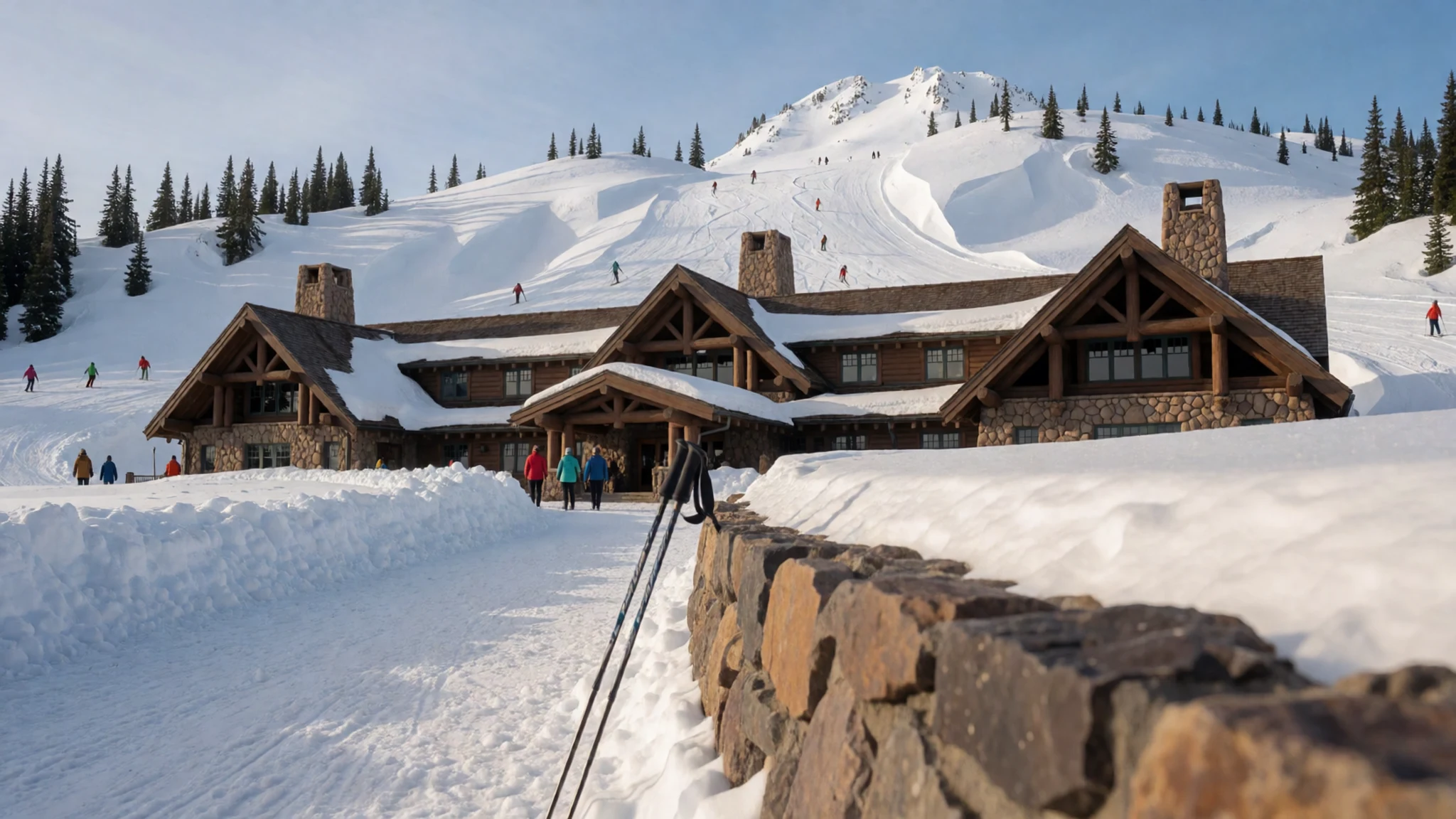
- Mirror Lake — Near Government Camp, south-west of the summit
Mirror Lake is a forest walk near Government Camp that ends at a small lake where, on still mornings, the cone of Mount Hood is doubled in the water. The path climbs steadily through trees and is busy on dry weekends, so an early start gives calmer water and better reflections. Boots help on muddy stretches in spring.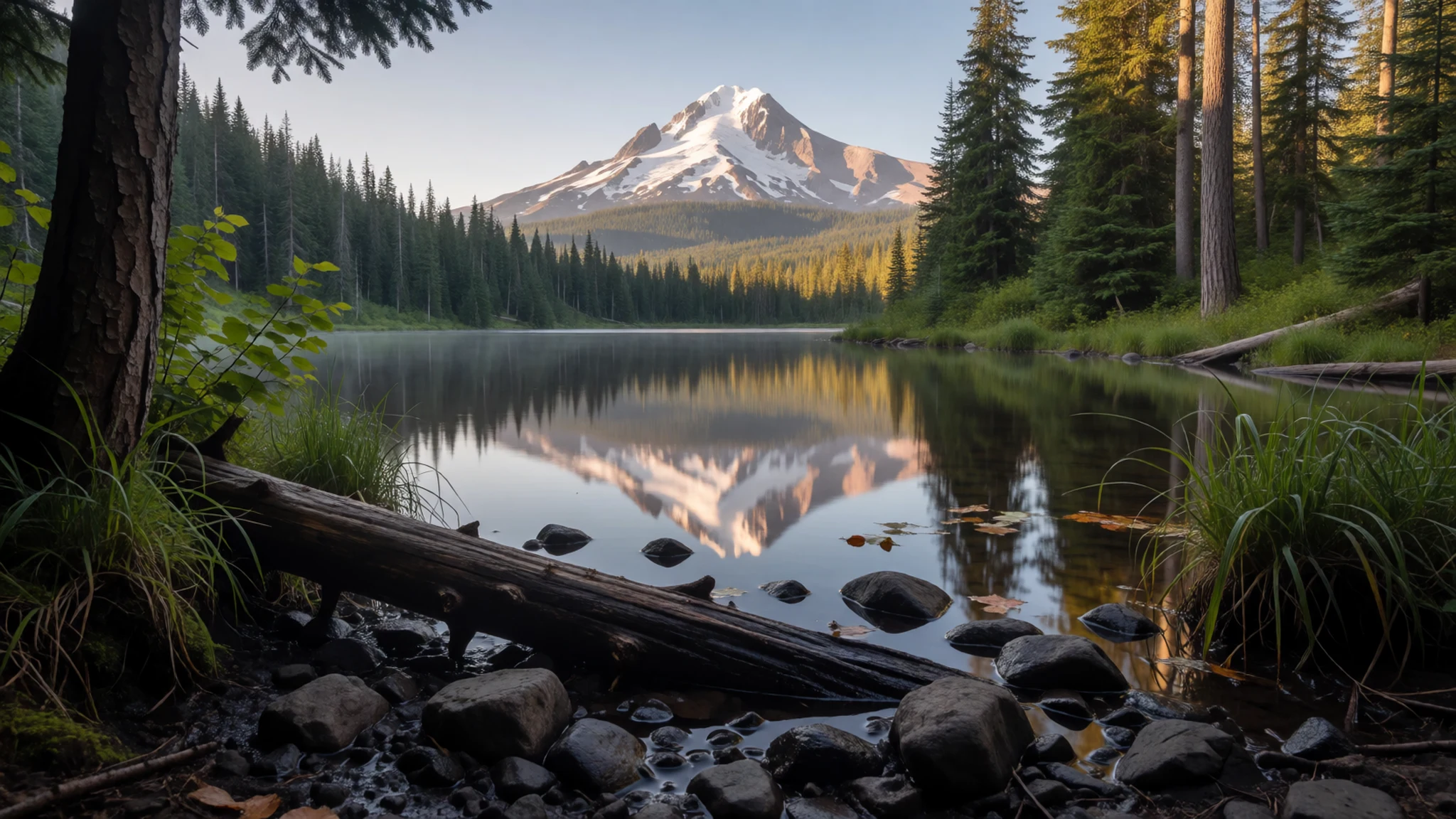
- Trillium Lake — Forest south of Government Camp
Trillium Lake lies in the forest on the south side of Mount Hood, with a gentle shoreline path and a much-photographed view of the peak across the water. Ducks and other birds share the shallows. Summer weekends are busy, access roads can close under snow in winter, and paddlers should check conditions before setting out.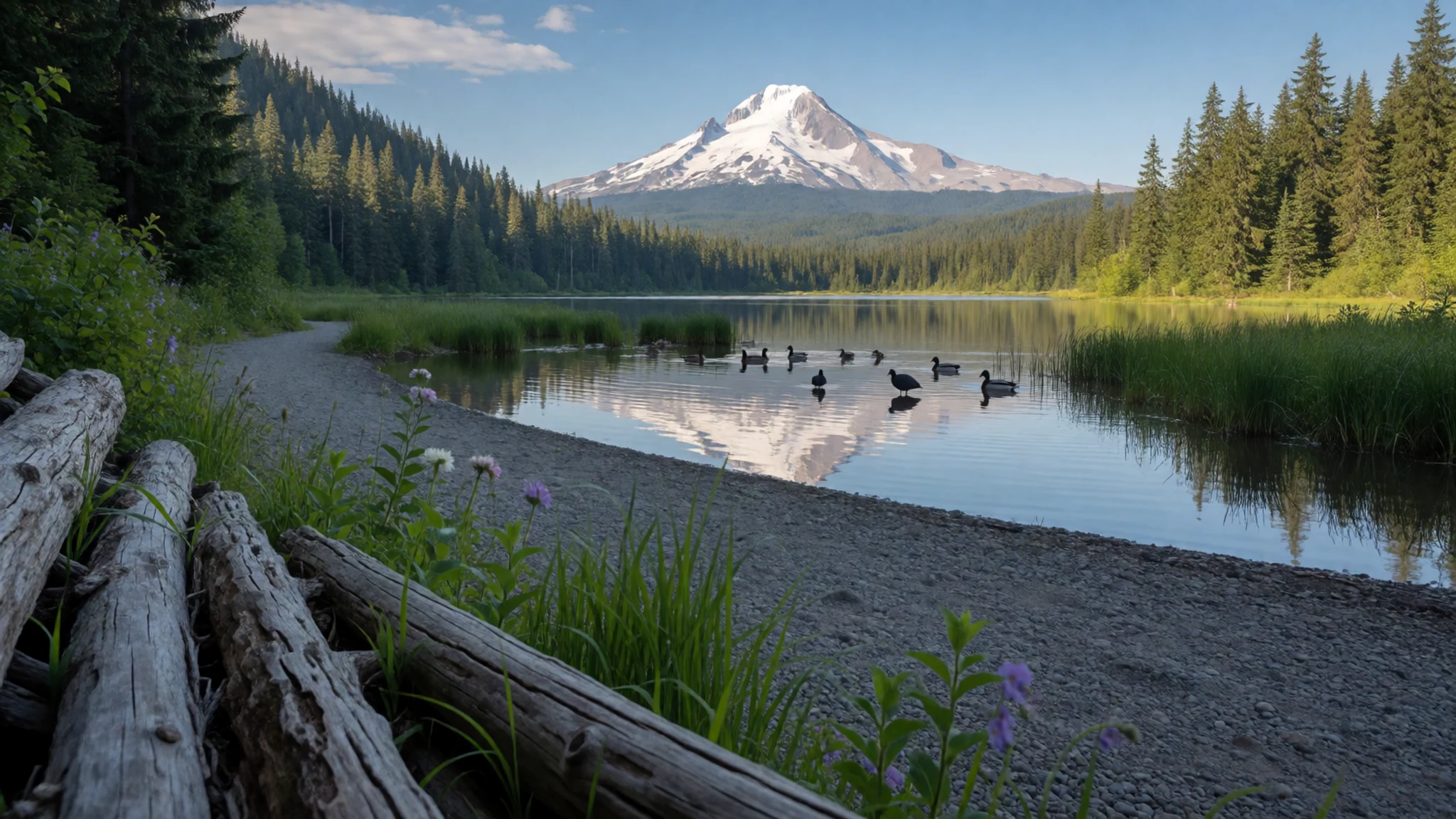
- Mount Hood Meadows — Eastern flank of the mountain
Mount Hood Meadows is a large ski area on the eastern side of the mountain, usually open from late autumn into spring depending on snowfall. High-speed chairlifts carry skiers well up the slopes, and some evenings have lights on. Families can try a tubing hill on certain days. Check the resort's official site for operating days before travelling.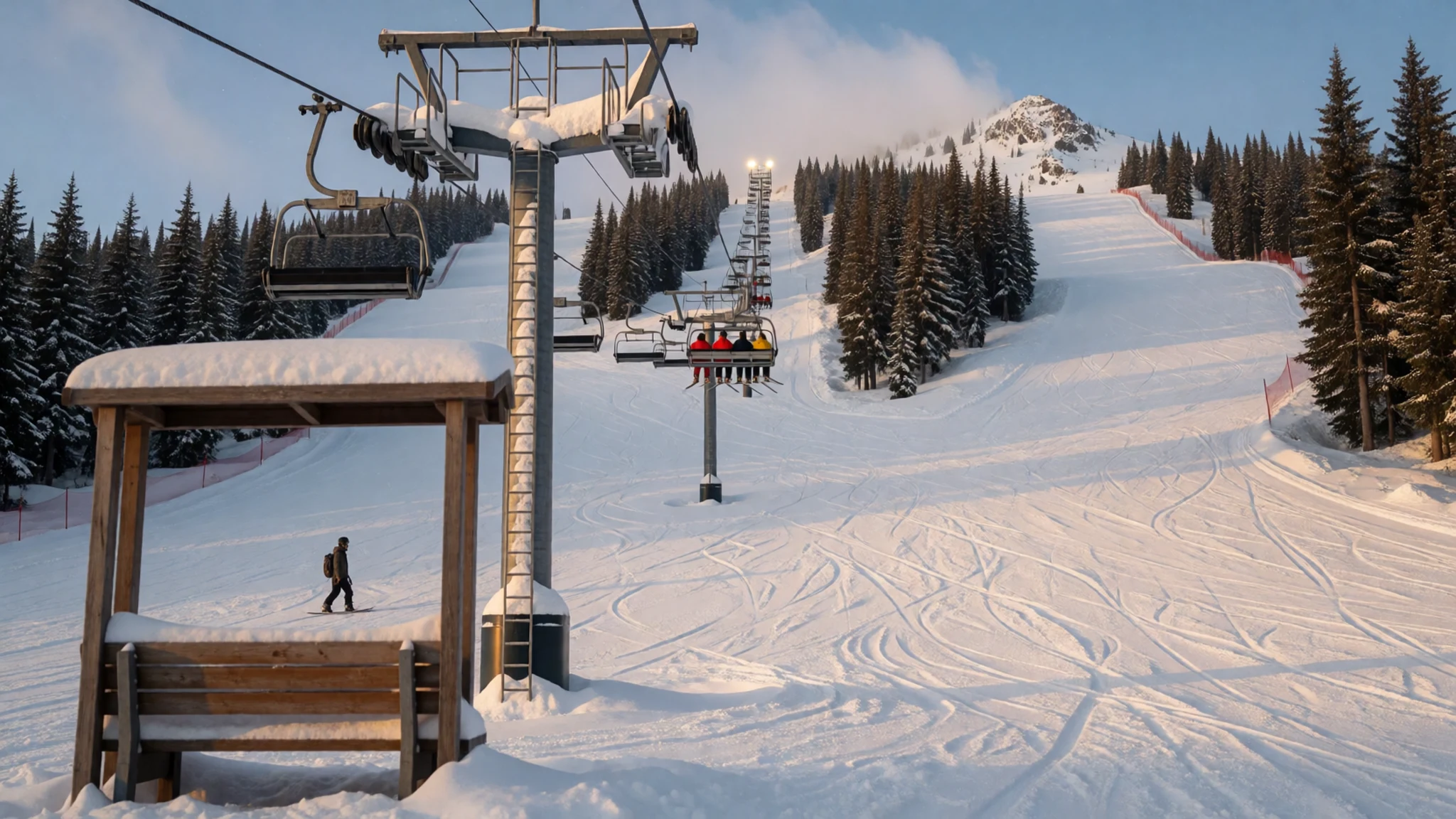
- Mount Hood Skibowl and the smaller ski areas — Government Camp and the northern slopes
Mount Hood Skibowl sits beside Government Camp and is known for skiing under lights after dark. In warmer months the area changes character, so check what is open before going. Cooper Spur and Summit are smaller, quieter ski areas for anyone wanting a lower-key day on the mountain, away from the larger resorts.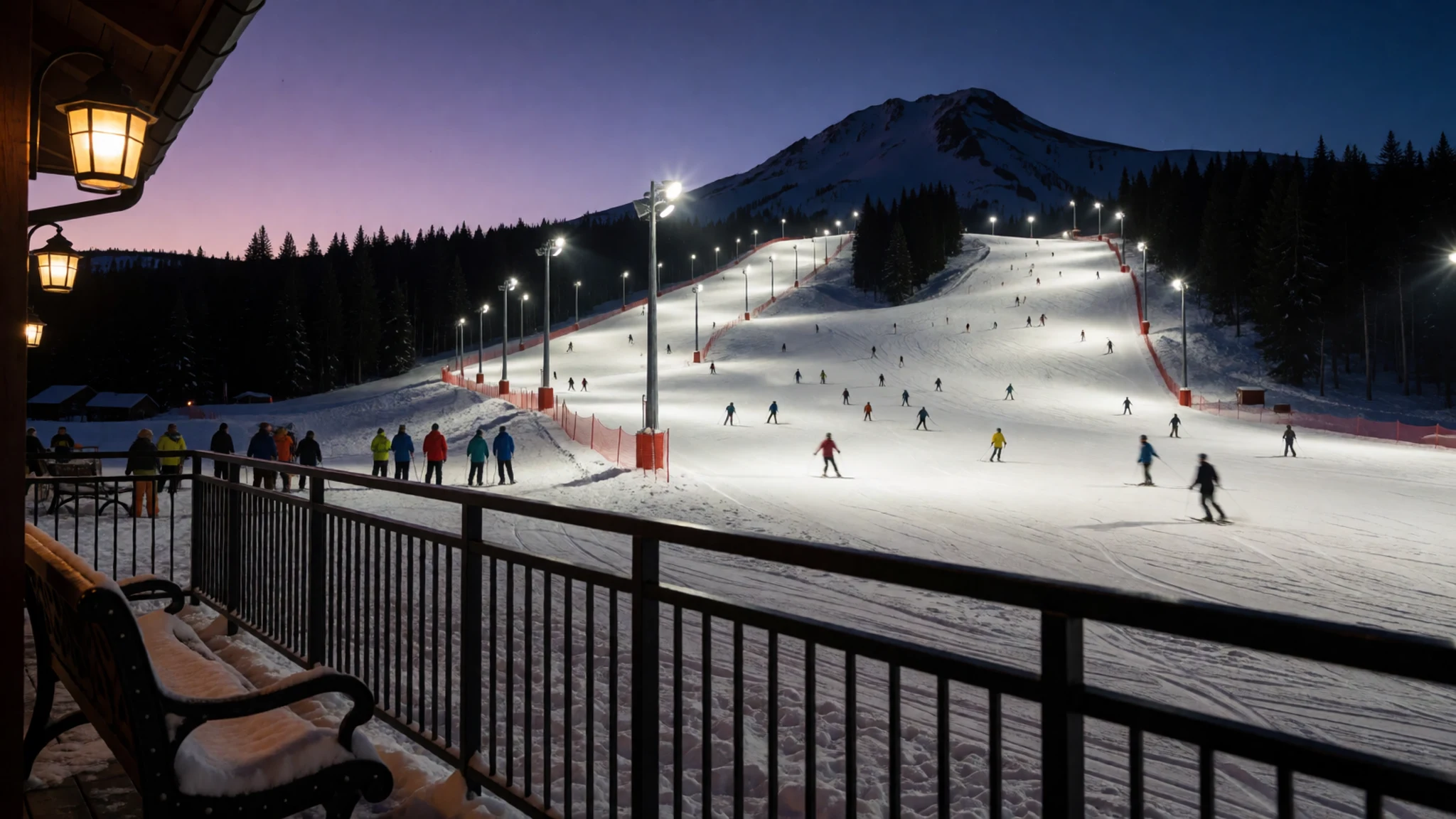
Culture
Mount Hood is first of all a working recreation mountain, and its culture is shaped by Portland weekenders, ski families, climbers and the small towns strung along the highway. Skiing is a serious local tradition: lift queues on a powder Saturday, thermoses and gear swaps in car parks, and tired faces at the end of the day are all part of the scene. Climbers treat the summit as a rite of passage, setting off in the dark and watching the sunrise from high on the snow. Timberline Lodge, with its hand-carved timber and ironwork, shows another side of local life: a public works project from the Depression years that gave jobs to craftspeople and still reflects regional pride. Older than any of this is the Indigenous relationship with the mountain. Peoples of the Columbia River region lived, hunted, gathered berries and travelled around Mount Hood long before it carried a British admiral's name, and their descendants remain closely connected to it. Respect for that history is part of visiting well. Safety culture is strong too: rangers, ski patrol and volunteers expect people to check forecasts, carry layers and turn back when weather closes in, and nobody thinks the worse of someone who does. Visitors should stay on marked trails, take every scrap of litter home and give way to uphill climbers and skiers on narrow paths.
What to wear
Mount Hood has no single costume, but the region has deep textile traditions. Indigenous peoples of the Columbia River country have long made clothing and regalia from hides, beadwork and woven plant fibre, including bags and hats. Today these are worn mostly at ceremonies, powwows and cultural gatherings rather than every day, and tribal cultural centres and museums are the respectful places to see them. Everyday dress around the mountain is practical and outdoorsy: fleece, waterproof shells, padded jackets, wool beanies and hiking boots, with bright ski gear in winter and trail shoes and sun hats in summer. In Portland and the valley towns, many locals add a flannel shirt or a cap from a local brewery. For a visitor, layers matter more than style. The upper mountain stays cold and frosty for most of the year and the weather changes fast, so carry a warm mid-layer, a windproof waterproof jacket, gloves and a hat even on a sunny summer day. Sturdy boots with good grip suit muddy and snowy trails, and in winter waterproof trousers and goggles are worth having. Sun cream and sunglasses are essential on snow, where glare is strong. There are no religious dress codes on the mountain, only the ordinary sense to stay dry and warm.
What to eat
- Burgers, salmon and barbecue plates — Grills and bars in Government Camp and the highway towns
Burgers, grilled salmon and barbecue plates are the standard mountain-town meal, served in roadside grills and bars in Government Camp and the towns along the highway. Portions are generous and suit hungry skiers, and some places keep a lively après-ski crowd going until late.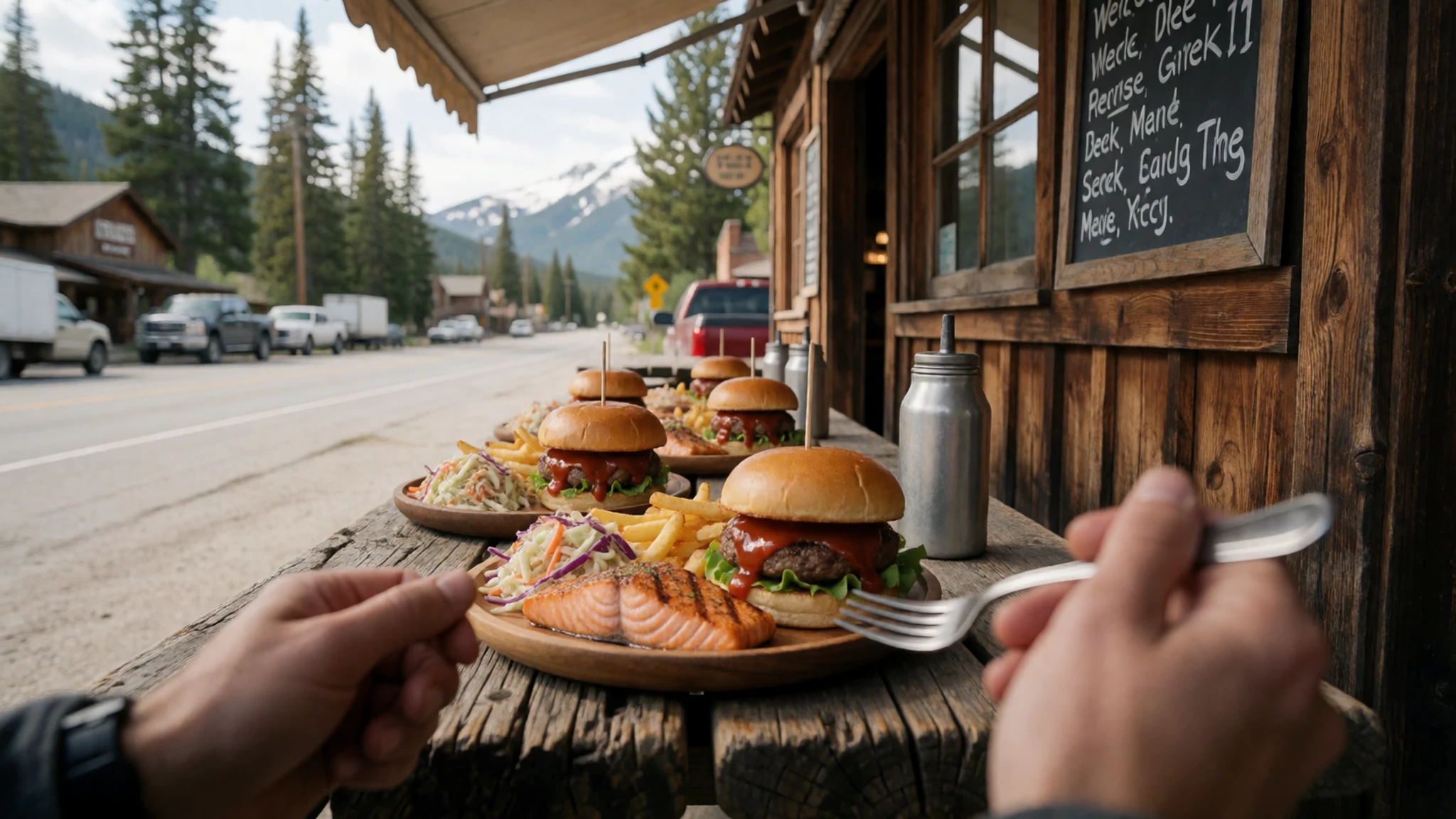
- Macaroni cheese — Casual pubs and grills near the ski areas
Macaroni cheese turns up on almost every menu as comfort food after a cold day outdoors, often baked with a crisp top or finished with bacon or pulled pork. Look for it in the casual grills and pubs around the ski areas.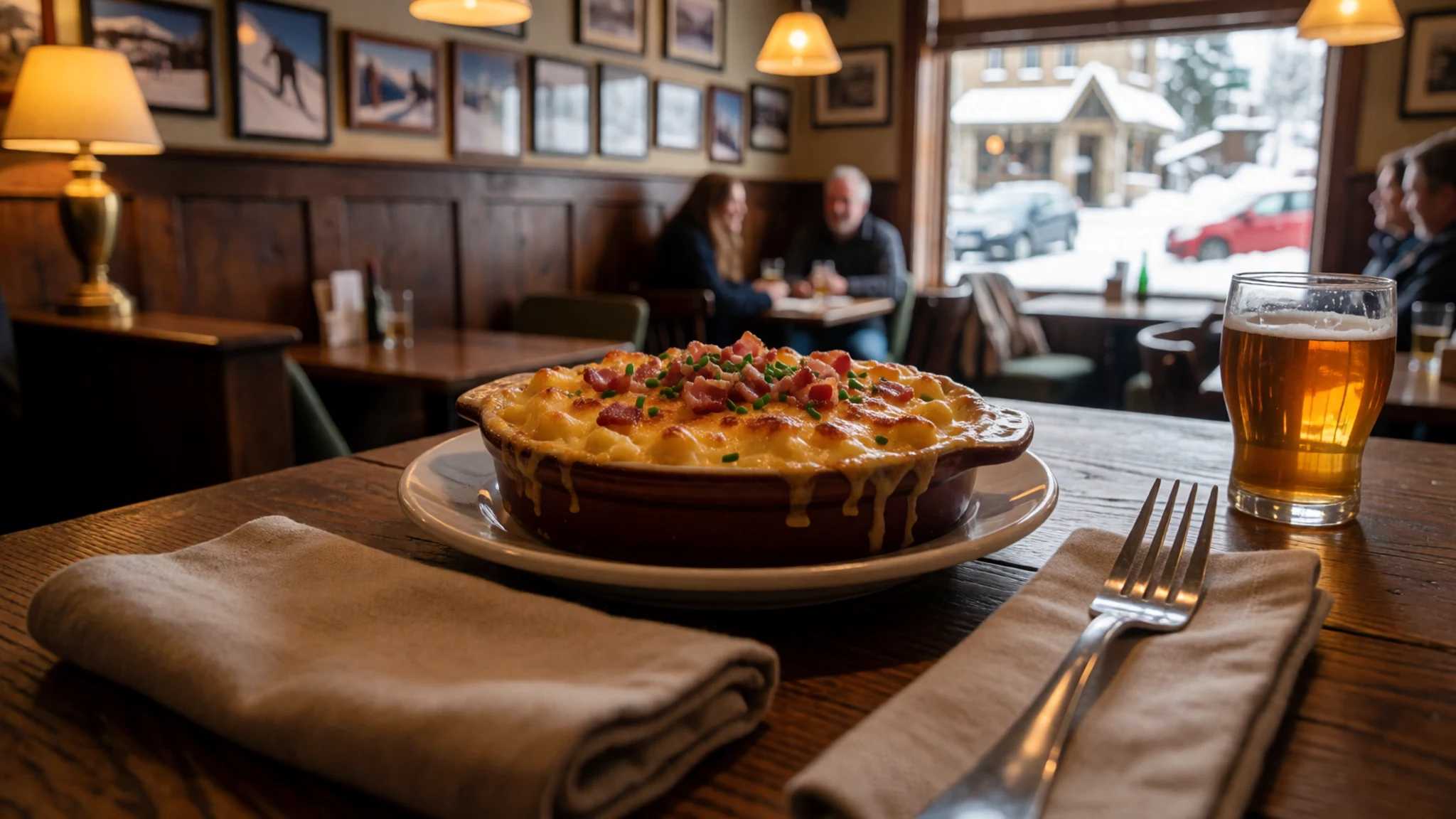
- Mexican plates — Family-run Mexican eateries in the small towns along the approach road
Tacos, burritos and enchiladas from family-run Mexican eateries are a dependable choice in the towns near the mountain, and the best are properly authentic. Vegetarian options such as bean and cheese dishes are usually easy to find. - Hood River orchard fruit — Farm stands and fruit shops in the Hood River valley
The Hood River valley is orchard country, and fresh pears, apples and cherries in season are sold at roadside stands and farm shops. Buy a bag for the trail. What is on offer depends on the month, with the fullest stalls in late summer and autumn. - Local craft beer — Brewpubs in Hood River and the valley towns
Oregon is well known for craft brewing, and the valley towns have brewpubs pouring local pale ales and lagers alongside pub food. Anyone driving back up or down the mountain should pace themselves, since roads can be icy after dark.
Plan it
Best time. July to September for hiking and lake walks, when the lower trails are mostly clear of snow; February and March for skiing, with deep cover and longer days. The summit stays cold and frosty even in summer, so pack warm layers in every month.
How long. 2–3
Getting there. Fly to Portland International Airport, then drive east on the main highway through Sandy to Government Camp; for Timberline Lodge, turn off at Government Camp onto Timberline Road. A car is the simplest option, and chains or snow tyres may be advised or required in winter.
Budget. mid
Tips
- Check the mountain weather and road conditions before leaving, and carry chains or snow tyres in winter
- Start early on weekends to beat the traffic and find parking at trailheads and ski areas
- Carry layers, water and a map even on short walks, as phone signal can be patchy
- Take a personal locator beacon for remote hikes or backcountry skiing, since it lets rescuers find you quickly
- Check each resort's official site for lift days, hours and tickets, which change with the season
Etiquette
- Stay on marked trails and take all rubbish home
- Give climbers and uphill skiers room on narrow tracks
- Follow wilderness rules and closure signs, which protect both visitors and fragile ground
Nearby
Sources
- Wikidata Q275662 (CC0)
- Wikipedia: Mount Hood (rev 1383111072) (CC BY-SA 4.0)
- Wikivoyage: Mount Hood (rev 5353972) (CC BY-SA 4.0)
- Photo: Mount Hood reflected in Mirror Lake, Oregon (Oregon's Mt. Hood Territory) (Public domain)
- Photo: Mt Hood from Trillium Lake (Kevin Crosby) (CC BY-SA 2.0)
- Photo: Mount Hood with Sandy Glacier (Walter Siegmund) (CC BY-SA 1.0)
- Photo: Portrait of Samuel Hood (James Northcote) (Public domain)
- Photo: Mount Hood, Oregon (NASA Expedition 20 crew) (Public domain)
- Photo: Mount Hood monitoring station (USGS) (Public domain)
- Photo: Installation of GPS mast, station BRSP, Mount Hood (USGS) (Public domain)
- Photo: Mount Hood air delivery (USGS) (Public domain)


