Mount Bintumani
Mount Bintumani, Sierra Leone
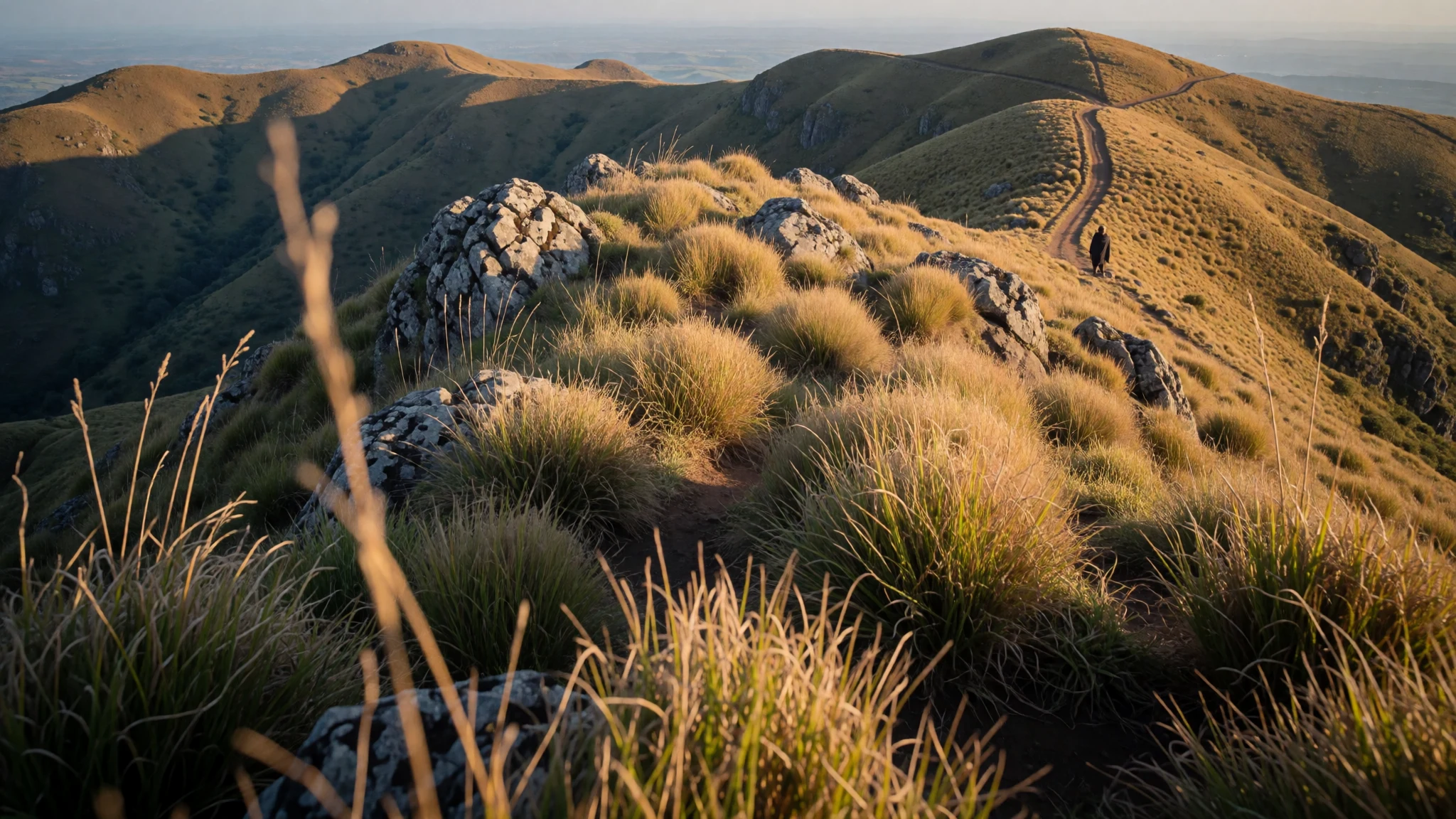
Mount Bintumani is a long walk through forest villages to an open, quiet summit in northern Sierra Leone.
The place
Mount Bintumani stands in the Loma Mountains of northern Sierra Leone, inland from the coast and well beyond the capital. Travellers also meet the spellings Bintimani and Bintunami on maps and old captions; they are the same mountain. The range is a long run of ridges rather than a single spike. Lower slopes carry thick woodland, the walking path climbs through damper, cooler air, and the top opens into grass and rock with a broad view over the hills around it. The land at the foot of the mountain is farming country. Villages sit among rice fields and tree crops, and the paths between compounds are the ordinary roads of daily life. Kabala, the market town of this northern district, is where a trek usually gathers itself: supplies, a guide, a last night under a roof. After Kabala the route becomes a track and then a footpath. There is no town on the mountain and no mechanical way up. Season decides the character of the walk. Through the dry months the paths are firmer, the high grass pales, and a night on the upper slopes can feel sharp after the heat below. When the rains begin, the same ridges go deep green and cloud sits on them, and streams rise fast enough to change a route in an afternoon. Either way, Mount Bintumani is a multi-day trek with nights in villages or simple camps, not a stop on a paved road. The pleasure of Mount Bintumani is that succession: farmland, then high forest, then open ground, reached only on foot.
Its story
Mount Bintumani's story belongs to the villages under it. In speech around the Loma Mountains the summit is often called Loma Mansa, a title that addresses the mountain as someone of rank rather than as a pile of rock. The courtesy is not decorative. Hunters, farmers and elders talk about the high ground carefully, and a stranger who treats the climb as a conquest misunderstands the place before the first step. Written history has mostly looked the other way. Freetown and the peninsula collected the trade, the newspapers and the archives, while the north kept its memory aloud: family lineages, the founding of a village, which stream failed in a hard year. People measured their lives against Mount Bintumani, who had been up, who guided, who stayed away out of respect, long before any visitor arrived with a camera. A set of photographs from a climb in 1992 or 1993 shows what that older journey looked like. A small party stands on open grass high on the mountain, with cloud around the ridges and no building, no sign and no path furniture. Years when travel through the interior was unsafe left the trails quiet; since people have been able to move again, guiding has become work. A visitor's hike is arranged in a village: someone to lead, someone to carry, a room or a courtyard to sleep in, a cook pot in the evening. Mount Bintumani does not offer a separate legend that needs acting out on the summit. Its story, told plainly, is that the mountain is still reached by agreement with the people who live at its foot.
What to see
- The summit — Summit
Mount Bintumani's summit is open ground: grass, rock and a wide circle of ridges, with cloud often filling the valleys below. Nothing is built there: no shelter and no platform, so wind and sun are the whole climate. Walkers usually look and start down, because the top offers the view and little else to stay for.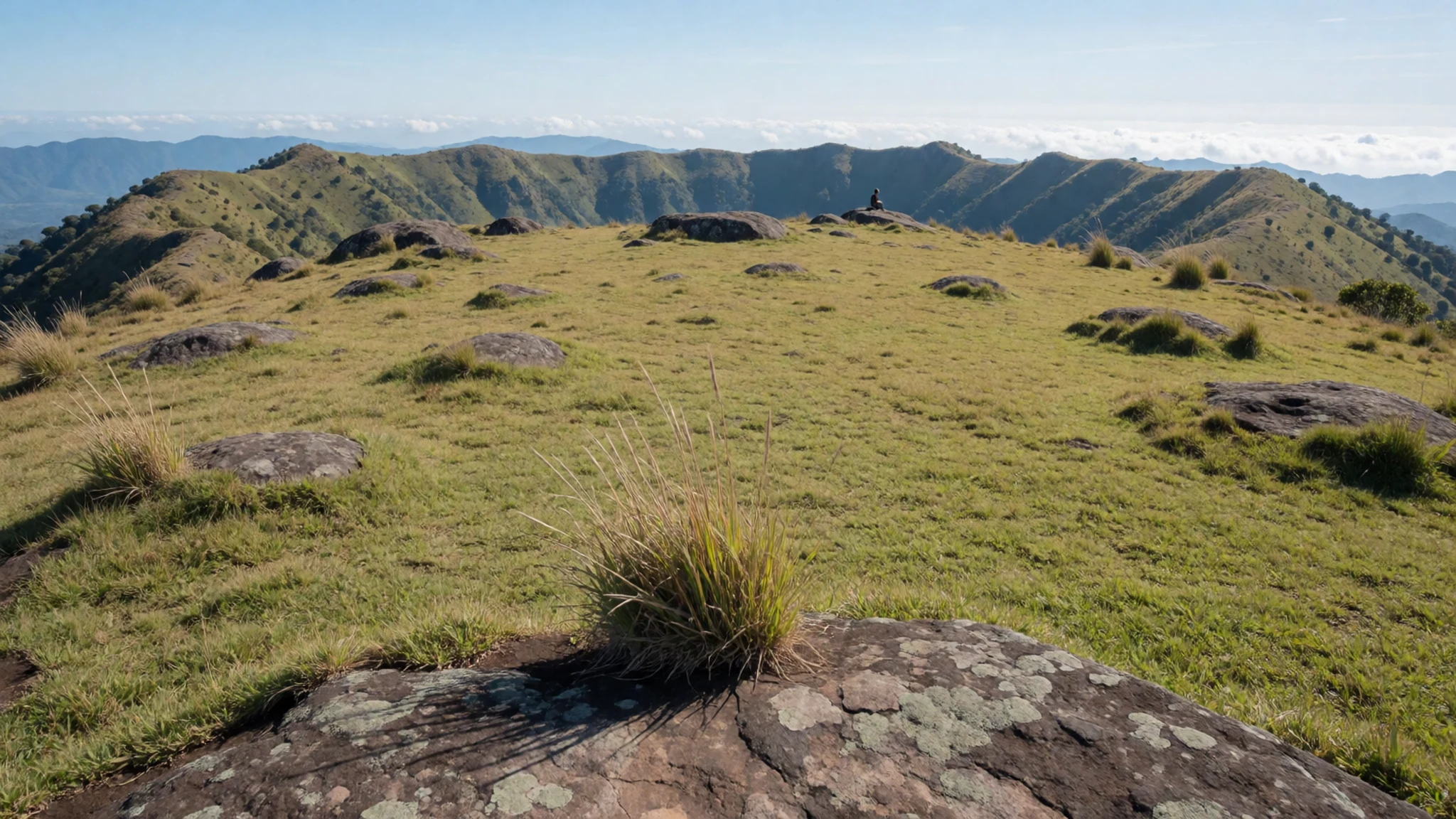
- The forest path — Lower and middle slopes
The walking route up Mount Bintumani spends its longest stretch in forest. The path is narrow, often rooty, and in the rains frankly muddy. A photograph of climbers from 1992 or 1993 shows that close green going, and it still defines the middle of the trek. Bird noise and insect noise hardly stop. Stream crossings shift after rain, so this is where a local guide matters most.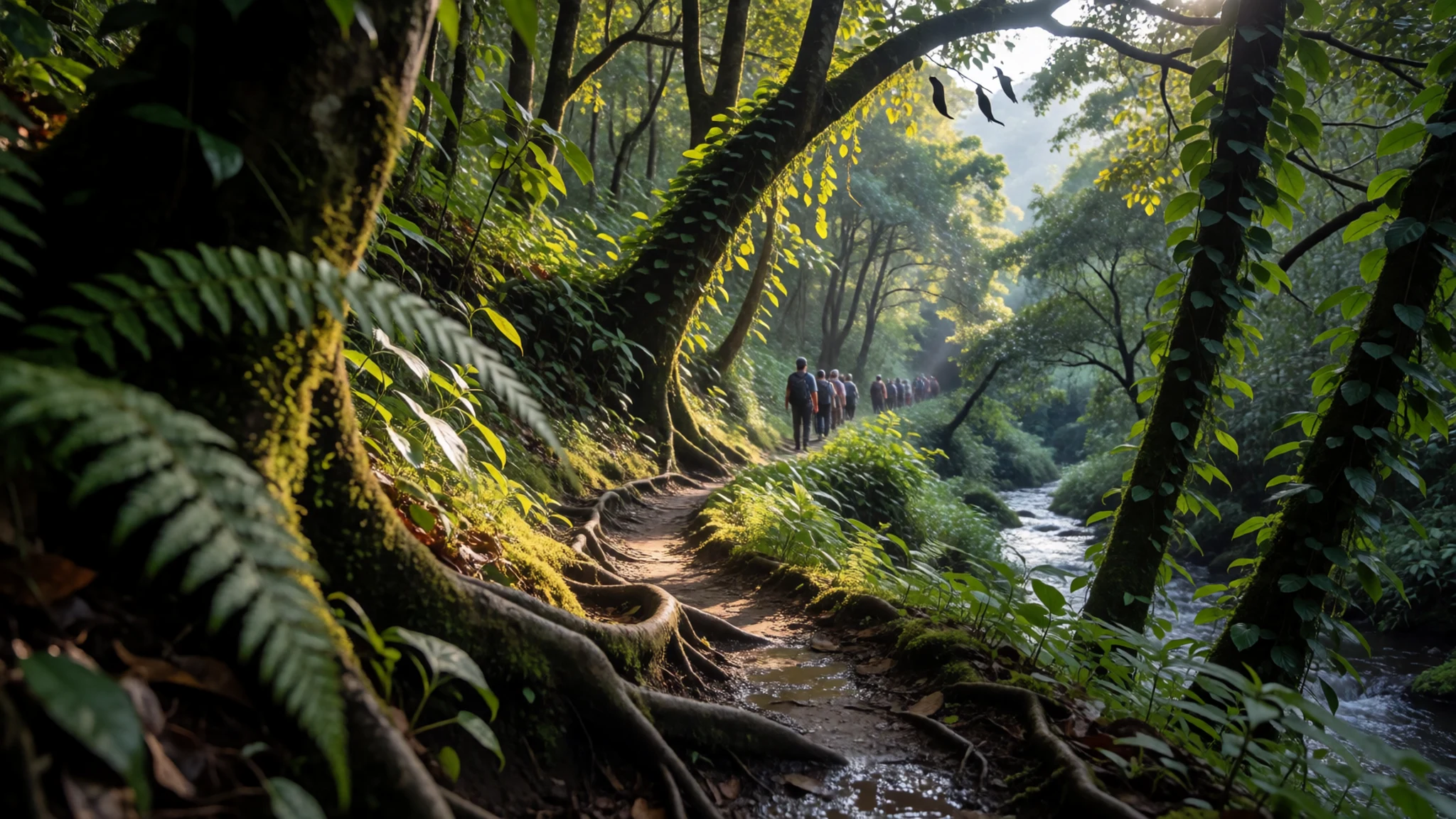
- The ridges in the rains — Upper ridges
At the start of the rains Mount Bintumani turns a deep, clouded green, with water on the grass and the rock. Views open and close within minutes. Climbing then suits a walker who can be wet from the first hour and who will turn back if a stream is too high. The dry months treat a party more gently, which is why most treks wait for them.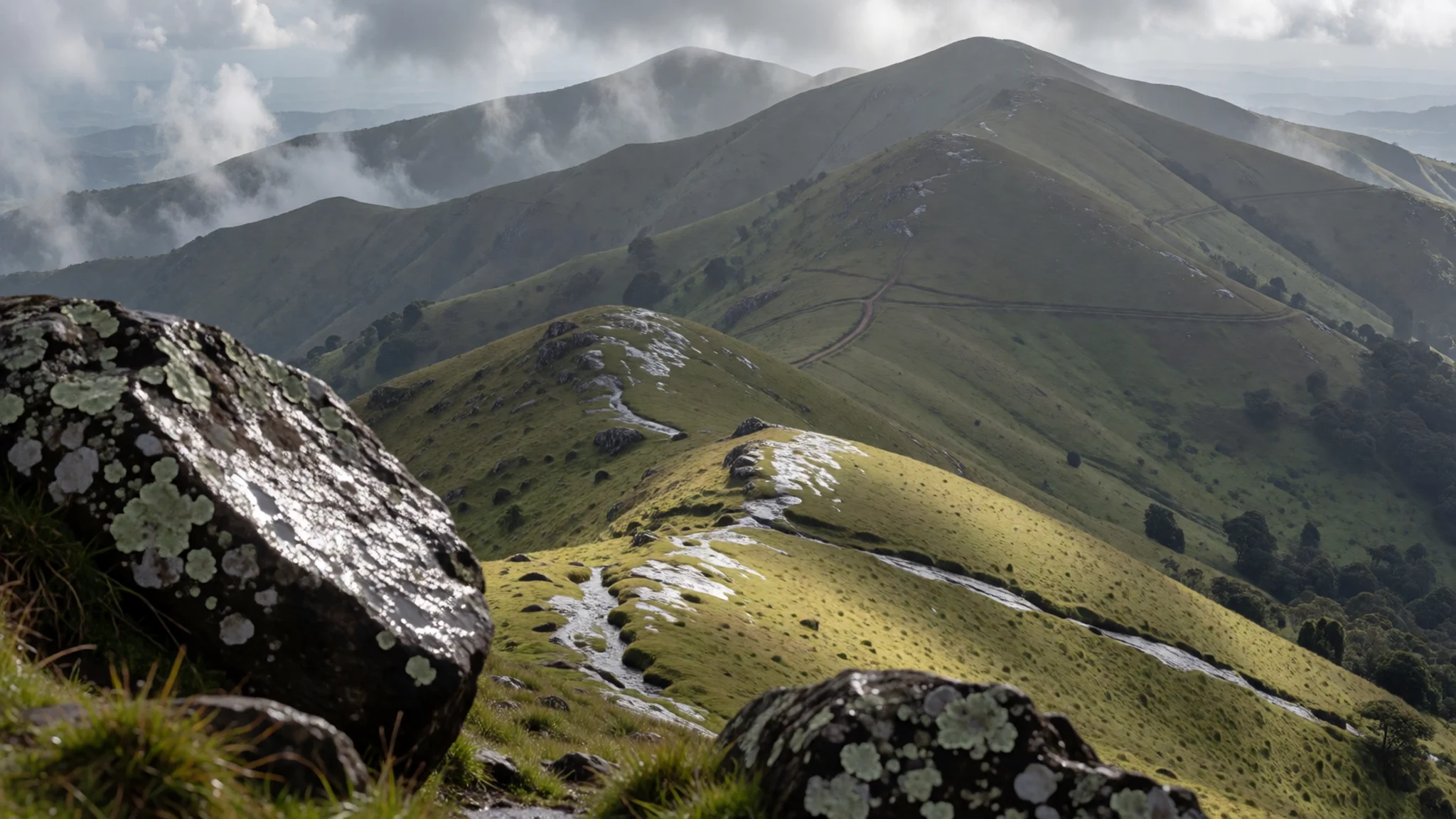
- Kabala — Kabala
Kabala is the town at the practical edge of a Mount Bintumani trek. Its market is where a party finds rice, tinned fish and torch batteries, and where guides from the trail villages come to meet walkers. It is a Muslim northern town, with mosques, a busy lorry park and streets that empty in the afternoon heat.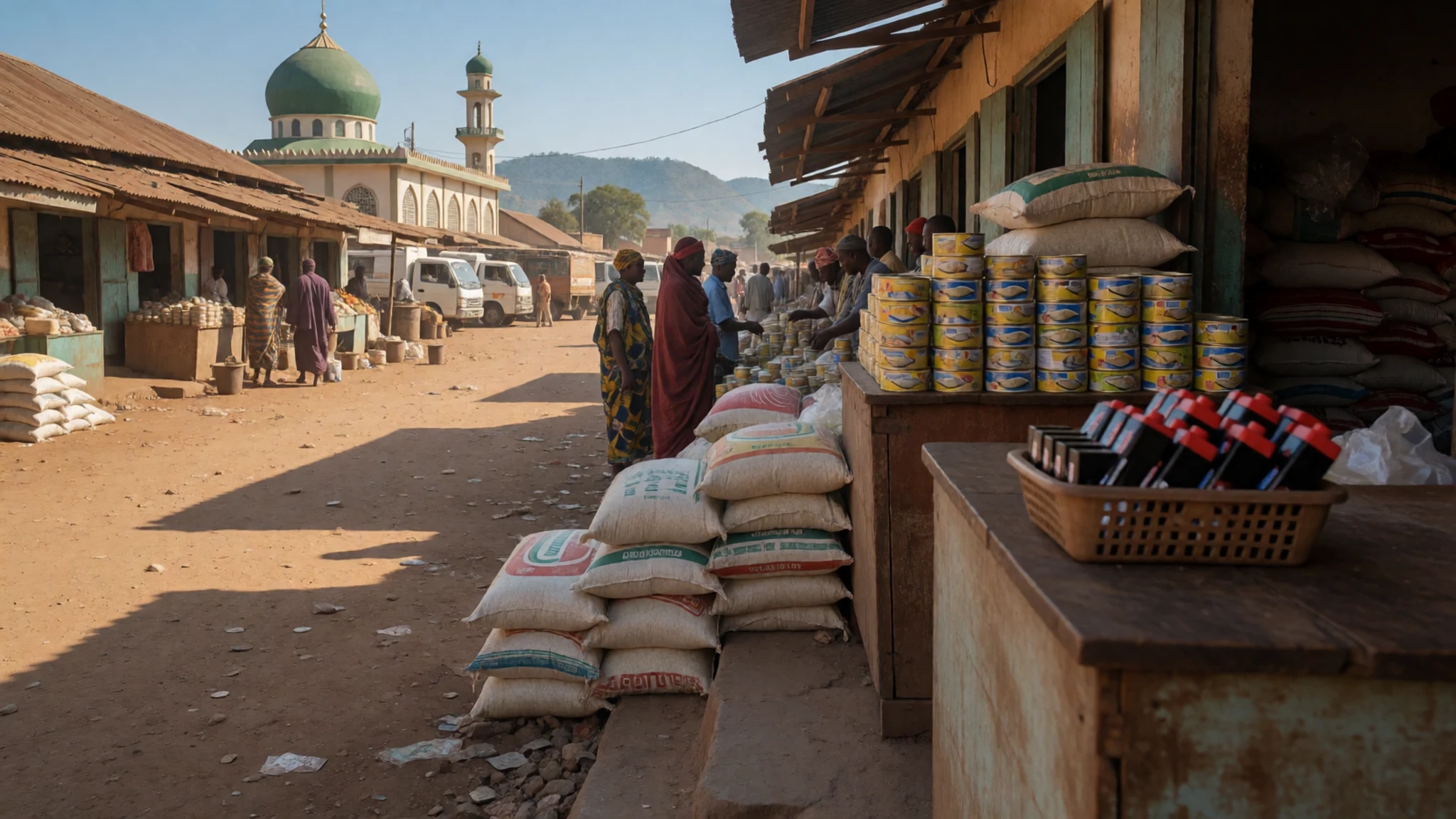
- Trail villages — Villages on the approach
The villages on the paths toward Mount Bintumani are part of the route, not a prelude to it. Compounds of earth brick under metal or thatch sit among rice and garden plots, and a trek sleeps in one of them by arrangement with a family. Evenings are dark and social, food cooked over wood. The household is the host, and the yard is a home, not a public campsite.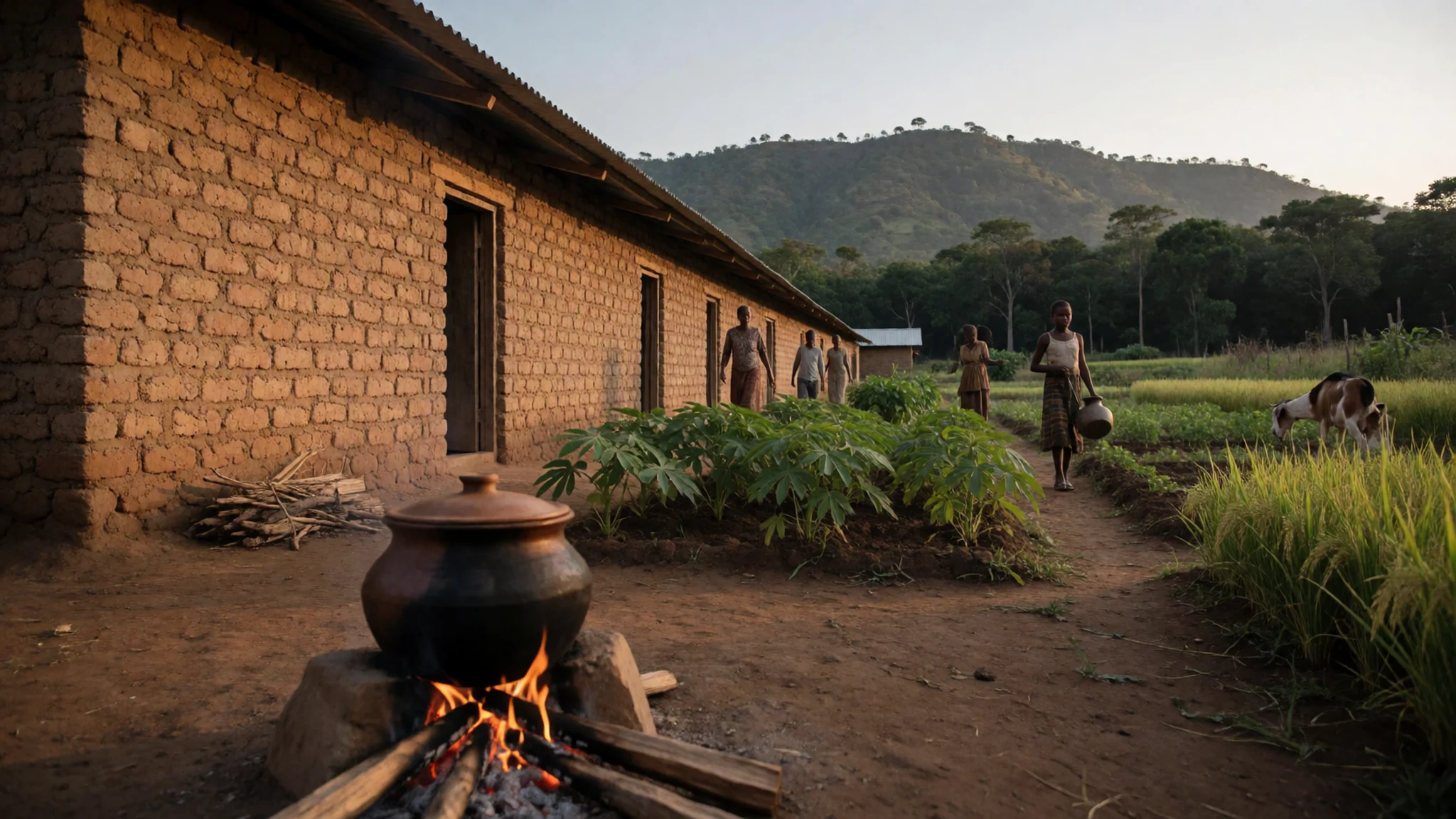
Culture
In the villages below Mount Bintumani, Islam and older customary practice share the same compounds. Public life around Kabala and the trail settlements is largely Muslim: the call to prayer, Friday at the mosque, and greetings that open with peace. Alongside that, Kuranko and neighbouring communities keep their own authorities: elders, lineage heads, and societies that still organise parts of adult life away from outsiders. That business is not a sight. It will not be explained, and it should not be requested. Mount Bintumani sits inside this geography of respect. Some residents will never climb it. A guided party is accepted because the guide is known in the village; a stranger who simply starts walking is not. Hospitality, once given, is formal as well as warm. A chair appears, then water, then food. Refusing the water can read as distrust. Payment for the guidance is expected, a meal is a small donation, and a schoolroom or the chief's brick bed is free if you ask, and the money belongs with the person who made the arrangement. Women and men do not move through a compound in the same way. Ask where to wash, keep muddy boots out of the cooking area and out of any space set aside for prayer, and wait at the edge of a wedding, a naming ceremony or the end of Ramadan until someone invites you closer. On Mount Bintumani, greet the household before you step into the yard, and ask before you photograph anyone.
What to wear
Dress around Mount Bintumani divides into what is worn for ceremony, what is worn on an ordinary day, and what will actually survive the mountain. For occasions, people still bring out cloth that is made rather than merely bought. Gara, the local tie-dye, patterns cotton in indigo, kola and other plant dyes, and it appears as gowns, wrappers and head-ties at weddings, namings and religious holidays. Hand-woven country cloth, sewn from narrow strips, is heavier and more formal still; a robe of it signals rank and effort, and it is not everyday wear. Women wear printed cotton wrappers with a simple blouse, or a sewn dress of the same wax-print cloth. Men wear trousers and shirts, often with plastic sandals, and a knitted cap or a baseball cap against the sun. School uniforms and second-hand European clothes are common in Kabala. Ceremony cloth comes out when there is a reason; the rest of the week is practical. A walker should dress for heat, wet forest and a conservative household. Light long sleeves and long trousers protect against sun and insects and read as modest in the villages, where very short shorts draw comment. Broken-in boots with grip matter more than style; the path is rooty and, in the rains, slick. Carry a rain layer and one warmer shirt for the summit, which is cooler than Kabala at noon.
What to eat
- Cassava-leaf sauce — Kabala cookshops and trail-village kitchens
Rice, bread and spices are what a proper meal means around Mount Bintumani. Rice, bread and spices are what you carry, and a household will cook if you donate generously. Kabala is where you buy rice, bread and spices, and a trail household cooks if you donate generously.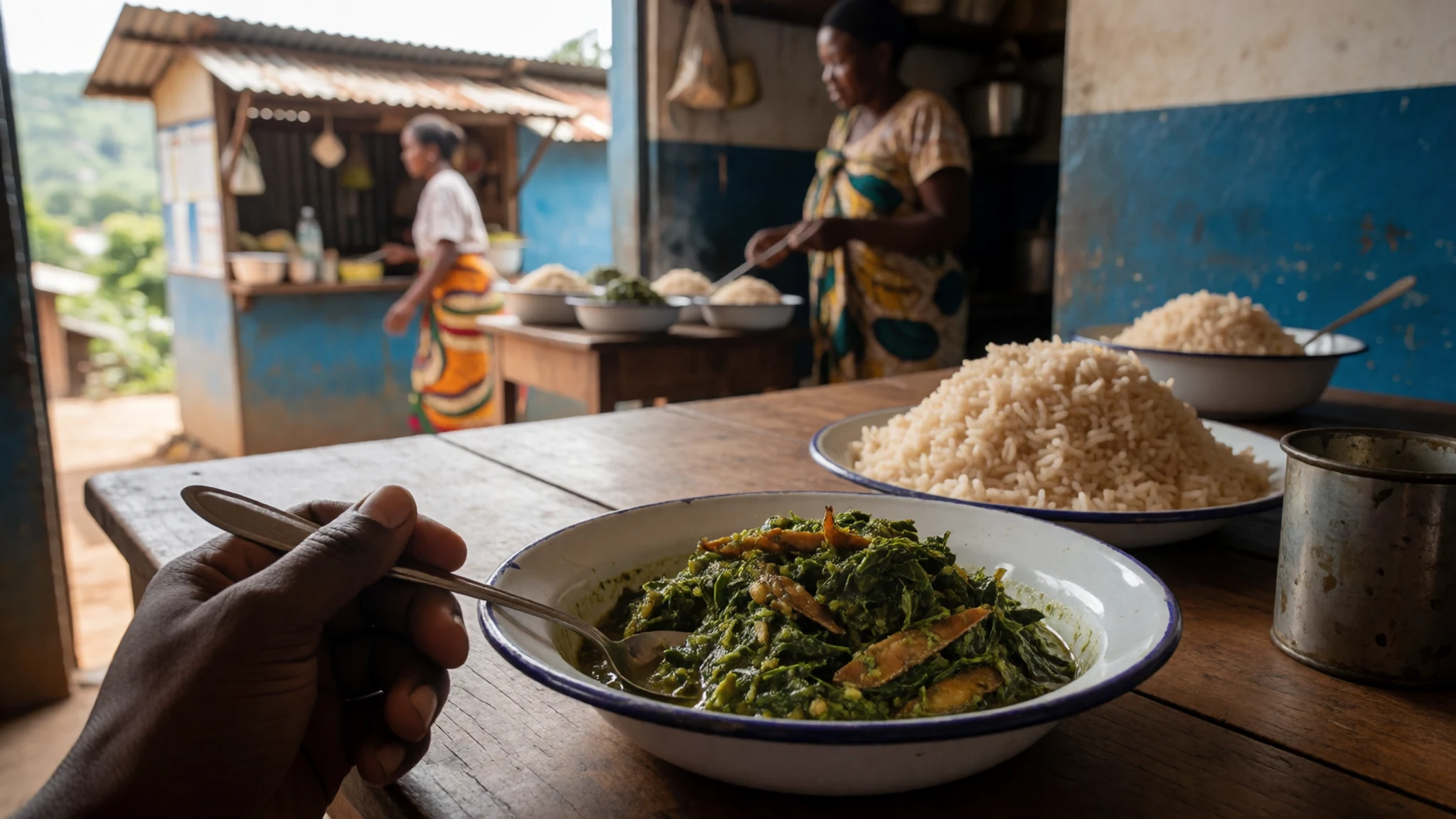
- Potato-leaf sauce — Kabala cookshops and village kitchens
Rice and bread, with a few spices, are what the table holds near Mount Bintumani. A host can boil rice with a little spice, and the bowl arrives when you donate generously. Kabala sells rice, bread and spices for the walk, and a trail host cooks only if you donate generously.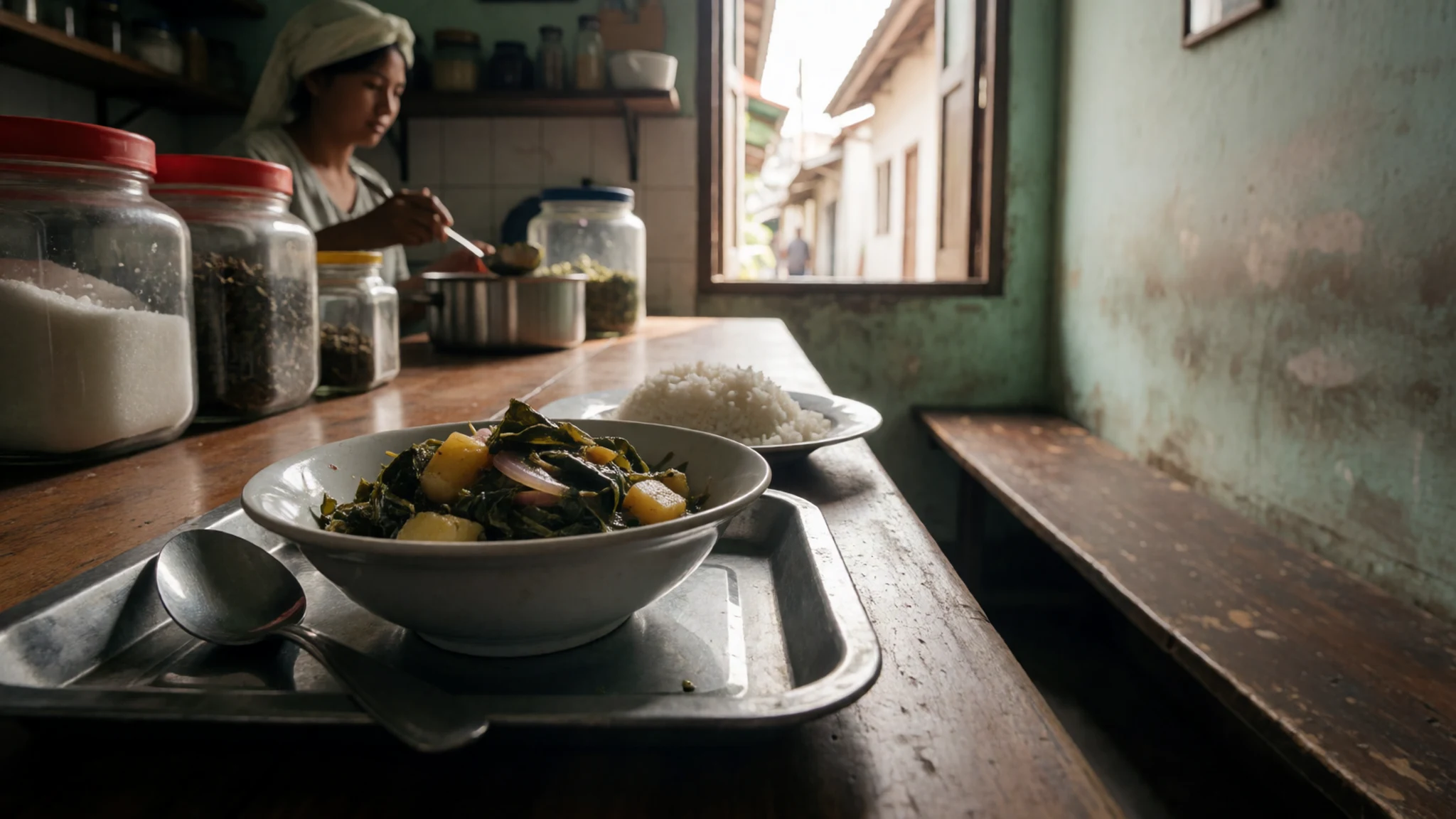
- Groundnut stew — Kabala cookshops and village kitchens
Rice, bread and spices around Mount Bintumani are the meal to count on for the days on foot. Plain rice, bread and a pinch of spice are the food, unless a host cooks for a generous donation. It is rice, bread and spices from Kabala, and a village evening pot only if you donate generously. - Fry fry — Kabala lorry park and street stalls
Bread is the food you carry on the road to Mount Bintumani. Bread and rice, bought before the villages, are what you eat between one compound and the next. In Kabala, rice and bread are breakfast and the snack between lorries, and they are what you carry onto the footpath. - Jollof rice — Kabala cookshops and village guest meals
Plain rice is the ordinary pot and also the market food you carry near Mount Bintumani. Rice is boiled with a little spice, and a household cooks a fuller meal only if you donate generously. Kabala's market sells the rice, bread and spices you carry.
Plan it
Best time. Mount Bintumani is a drier walk from December to March, when paths are firmer and streams are lower. February and March are the hottest, August the wettest, and December and January the most comfortable; April is still mostly dry, with warmer nights. From about May the rains make the forest muddy and the crossings risky; a trek then needs more time and a willingness to turn back.
How long. 4–6
Getting there. Fly into Freetown, then travel by road through Makeni to Kabala. From Kabala a local vehicle reaches a trail village, and the rest of the way up Mount Bintumani is on foot with a guide. There is no rail line and no road to the summit.
Budget. mid
Tips
- Book a guide in Kabala or through a village contact before you travel; do not start the trail alone.
- Carry cash, because card payment is not reliable in Kabala and is absent in the villages.
- Start walking days early, before afternoon cloud and heat on the open ground.
- Treat a high stream as a reason to wait or turn back once the rains have begun.
- Bring water treatment, a torch and a small medical kit; the mountain has only what the last village can spare.
Etiquette
- Greet elders and your host before you ask for anything, and use the right hand to give and receive.
- Ask before photographing people, and do not photograph a gathering you were not invited to join.
- Take boots off when entering a home or a mosque.
- Do not ask to witness society business or to enter a sacred grove.
Nearby
Sources
- Wikidata (CC0)
- Wikipedia (CC BY-SA 4.0)
- Wikivoyage (CC BY-SA 4.0)