Outamba-Kilimi
Outamba-Kilimi, Sierra Leone
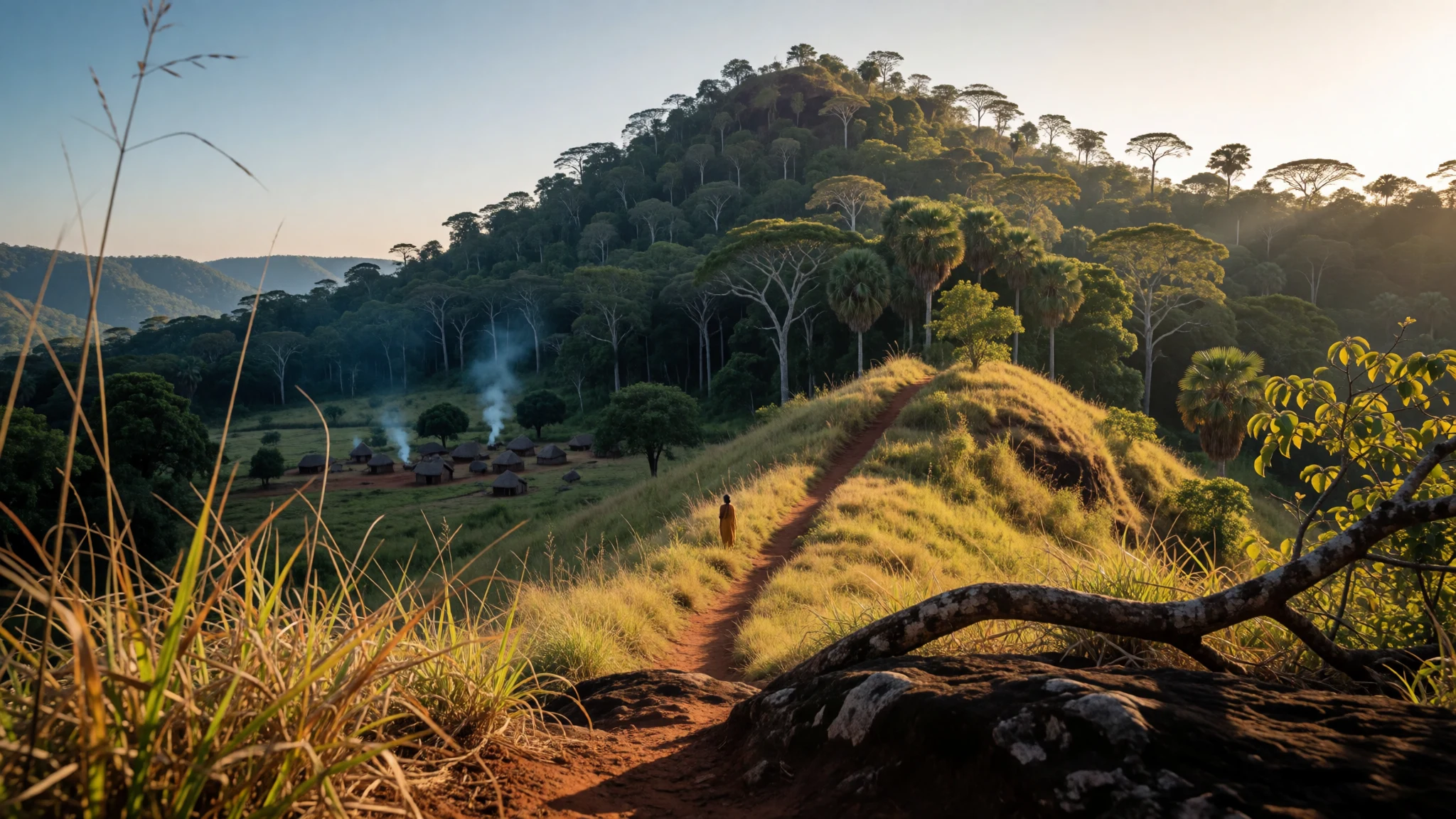
Outamba-Kilimi is a rough-edged national park in north-west Sierra Leone, where forest walks, river hippos and chimpanzee country reward patient, self-reliant travellers.
The place
Outamba-Kilimi National Park lies in Karene District, in north-western Sierra Leone, close to the border with Guinea. It is two parks under one name. Outamba covers 741 sq km and Kilimi 368 sq km, and each takes its name from a feature of the land: Mount Outamba, the highest peak in its section, and the River Kilimi in the other. The pairing gives the park two moods. Outamba is tall-grass savanna and woodland, best met on foot with a guide. Kilimi is open savanna woodland, where water shapes the routes and where pygmy hippos have been photographed swimming past. Getting here is part of the trip. The road runs north from the capital, Freetown, through towns such as Kamakwie and past villages like Masaktaba, and the final stretch is rough. Facilities inside are simple: a group hut, guest rooms, and a place to eat where green monkeys take a lively interest in the breakfast table. This is not a park of open plains and easy game drives. Animals are shy, the vegetation is dense, and the rewards go to people who walk quietly, start early and accept heat, insects and plans that shift. Chimpanzees are the park's best-known residents, though a sighting is a bonus rather than something to count on. Expect a trip closer to a small expedition than a resort stay, with local guides, patience and a sense of humour doing most of the work.
Its story
Outamba-Kilimi National Park has a paper trail that is easy to muddle, because different records mark different moments in its life. The area was first protected as a game reserve in 1974. Wikidata gives 1986 as its founding year, and the formal national park gazette followed in October 1995. Read together, these dates describe a slow ladder of protection rather than a single founding day. The driving reason was chimpanzees. The forest here held enough of them to make the land worth guarding, and apes have remained the park's calling card ever since. Protecting chimpanzees is different from protecting scenery. They need unbroken forest, quiet and distance from hunting and clearing, and that sits awkwardly beside the needs of villages around the edges, where people farm and gather wood. The two-part shape of the park, tall-grass savanna in Outamba and open savanna woodland in Kilimi, also means it protects a mix of habitats rather than one. For a visitor, this history has practical consequences. A park of this kind runs on modest budgets and local knowledge, so rangers and guides carry much of the expertise. Trails such as Karangia, a Susu name meaning 'hill of learning', are a reminder that the land was known and named long before any gazette. Anyone arriving should treat the park as a working conservation area, not a theme park, and check current access with the park authorities before setting out.
What to see
- Kilimi river and its pygmy hippos — Kilimi section, Karene District
The Kilimi side of the park is river country, and it is where pygmy hippos have been photographed swimming past. They are shy, mostly active away from human eyes, and not guaranteed. Go with a guide, stay quiet on the bank, and treat any sighting as a gift rather than an entitlement.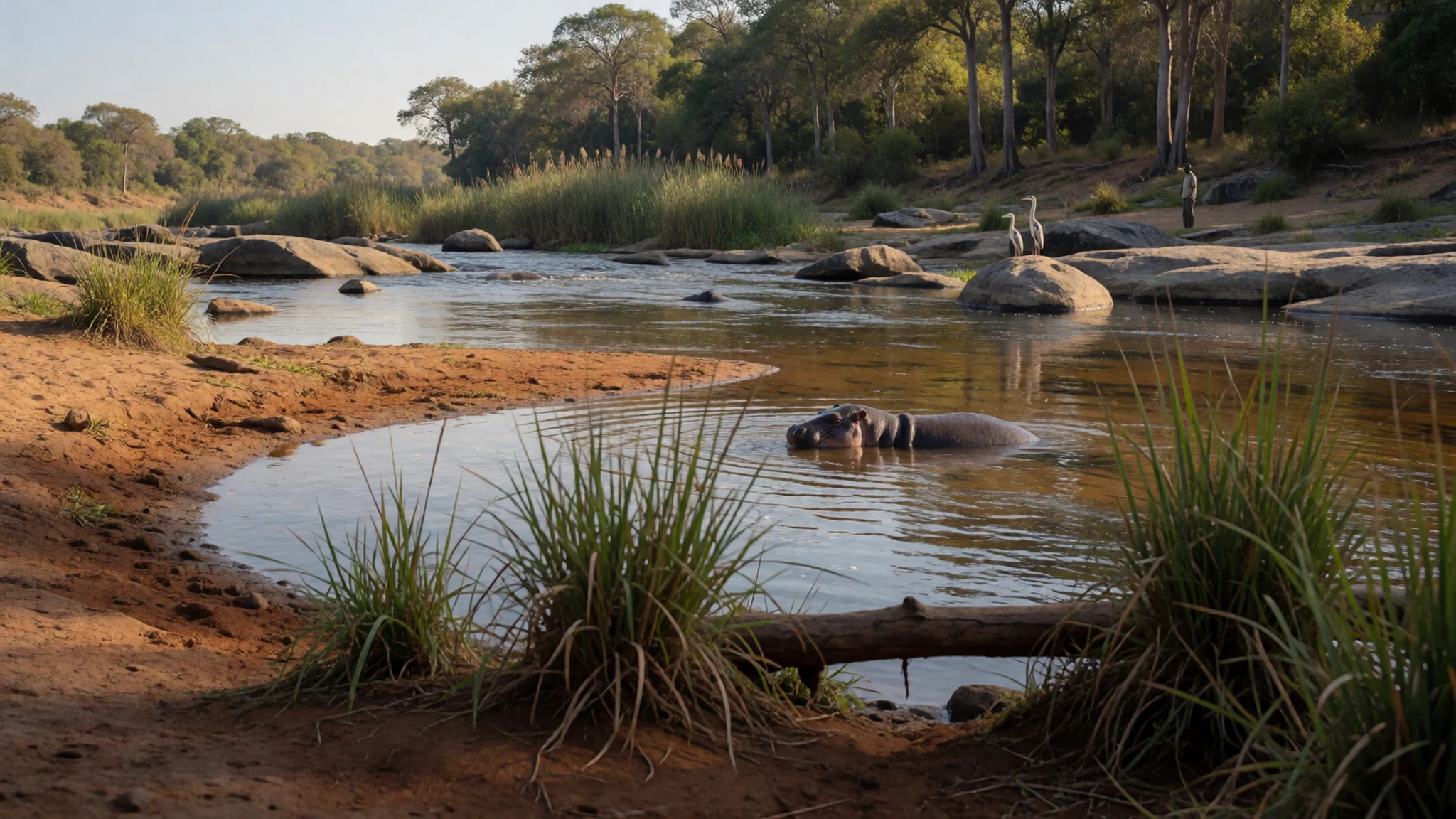
- Karangia Trail — Outamba section, Karene District
Karangia means 'hill of learning' in Susu, and the trail is walked behind a local guide, with planted gmelina trees marking the way in places. It is a good introduction to the forest edge: bird calls, insects, plant uses and the signs animals leave behind, explained by someone who knows them.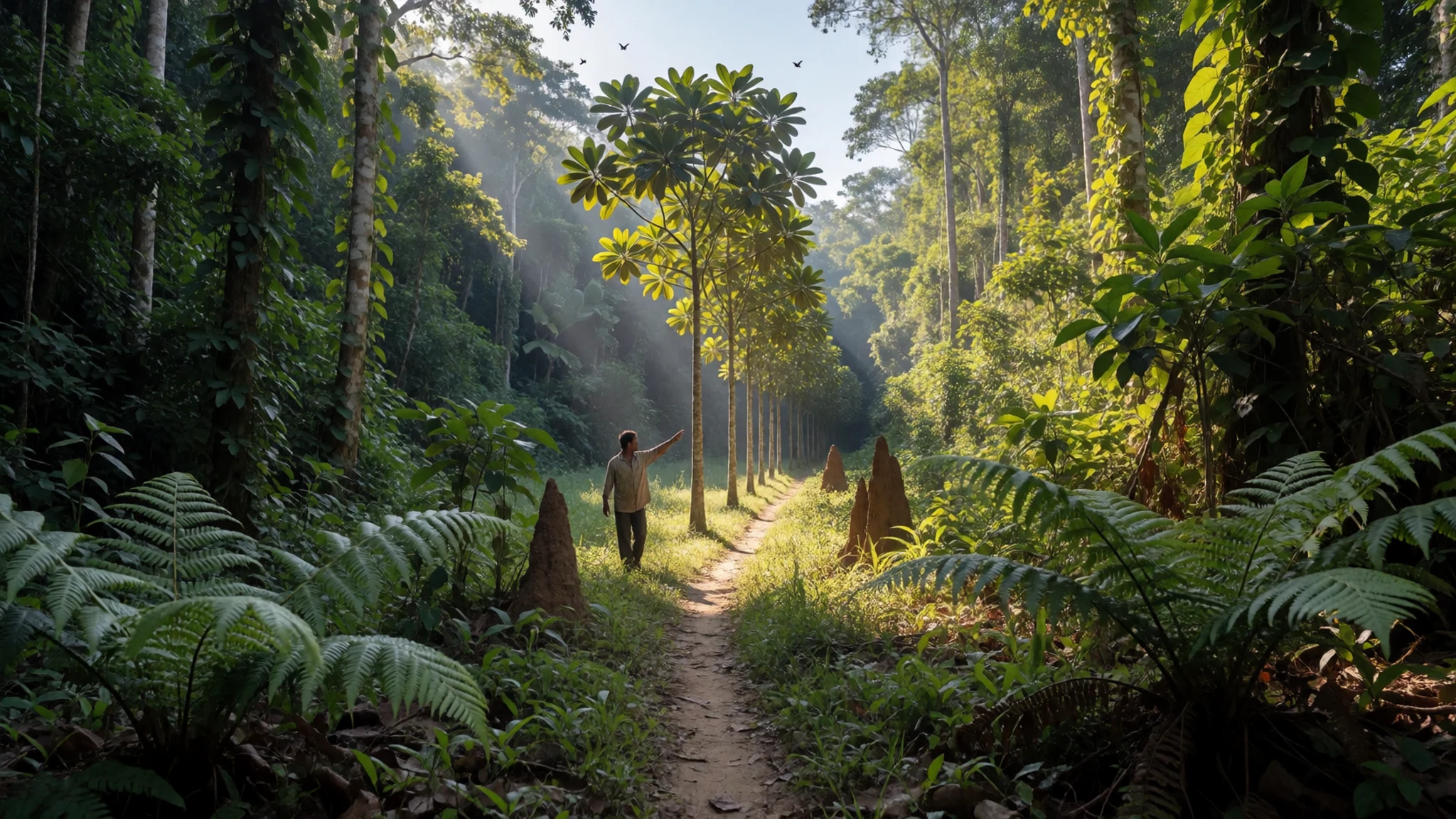
- Mount Outamba and the forest — Outamba section, Karene District
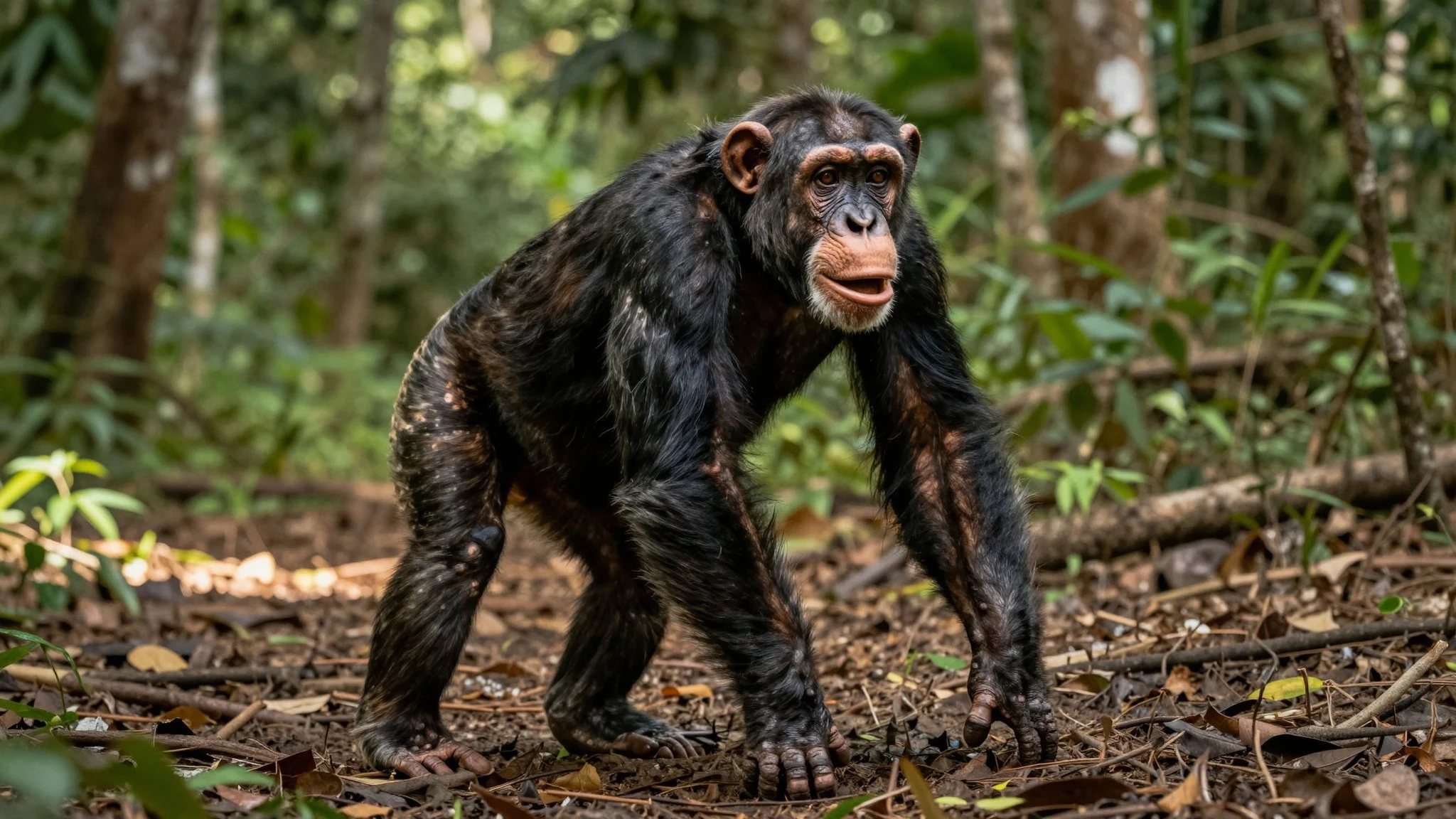
Mount Outamba is the high point that gave the western section its name, and the surrounding forest is where chimpanzee territory lies. Walks here are about listening as much as looking. Sightings are never promised, but the climbs, shade and sounds make the effort worthwhile on their own.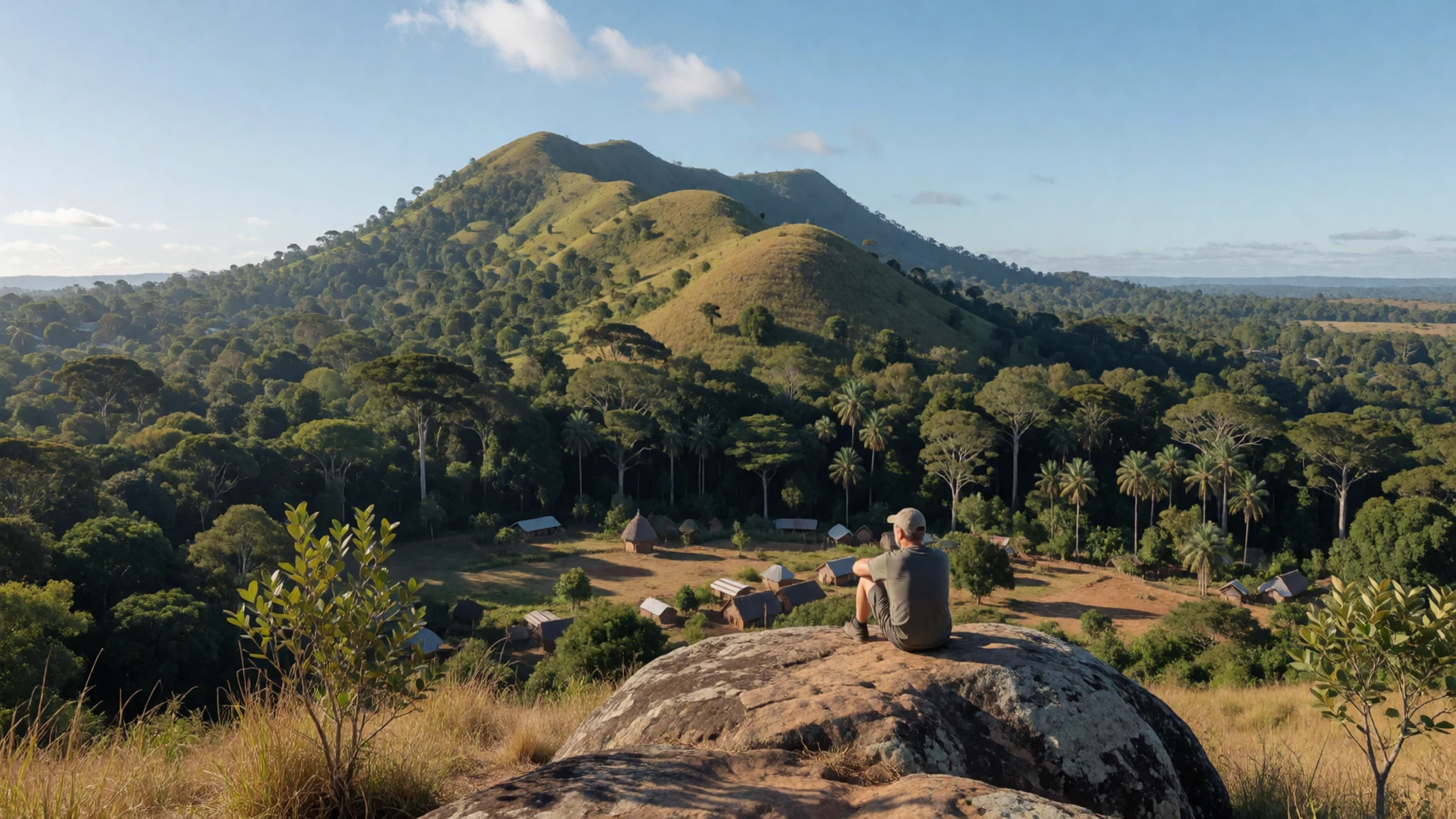
- Green monkeys at the guest camp — Park guest accommodation
Green monkeys are the most reliable wildlife at the park's guest accommodation, where they cross the roofs in the morning and investigate breakfast tables. They are entertaining, but they are also quick and opportunistic. Keep food covered, windows shut and bags zipped, and never feed them.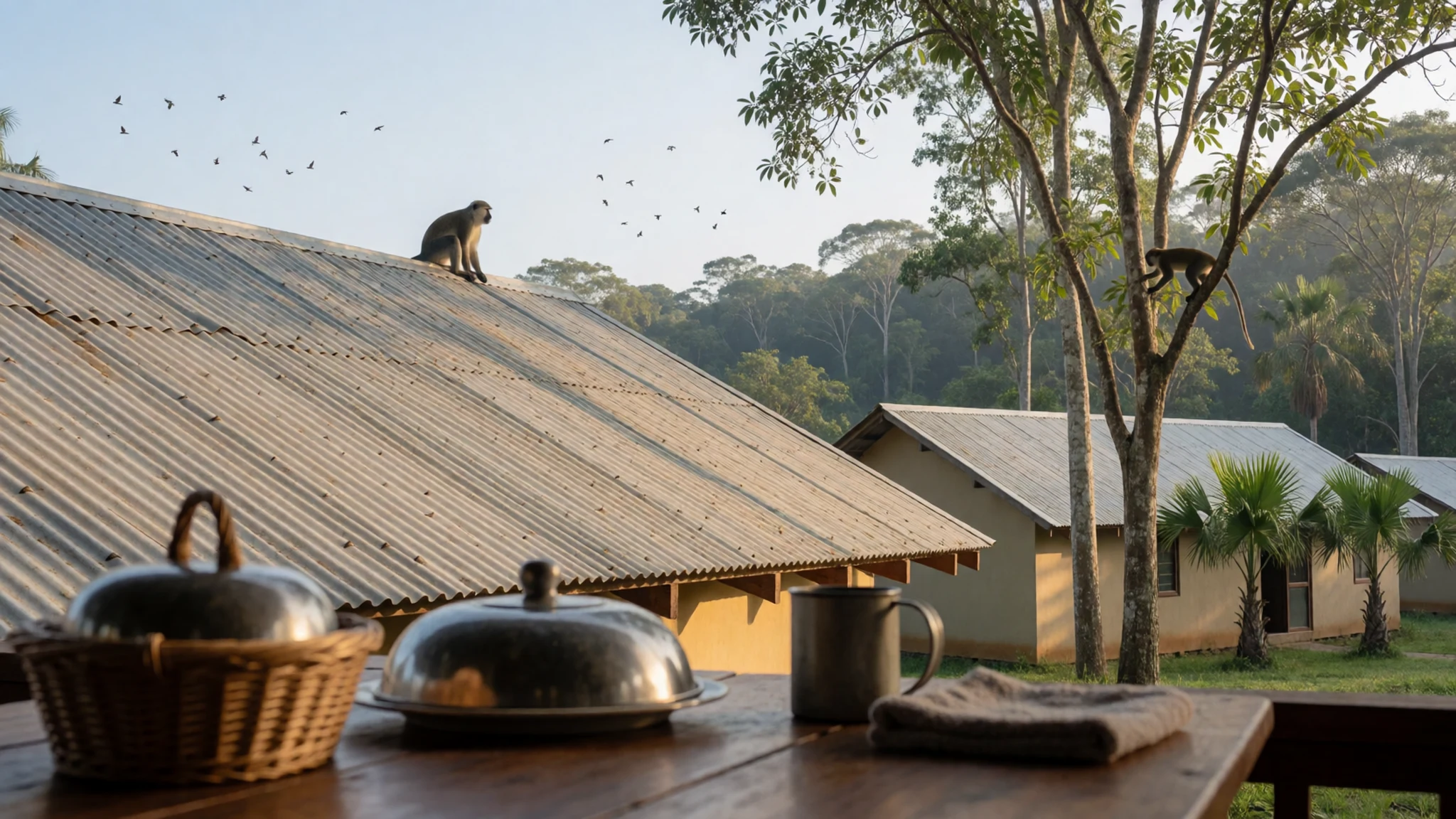
- The road in through Kamakwie and Masaktaba — Approach road, Karene District
The journey north is a sight in itself: laterite road, small towns such as Kamakwie, and farming villages like Masaktaba set in rolling country. Allow generous time, break the drive with stops, and ask locally about the state of the final stretch, which can change with the weather.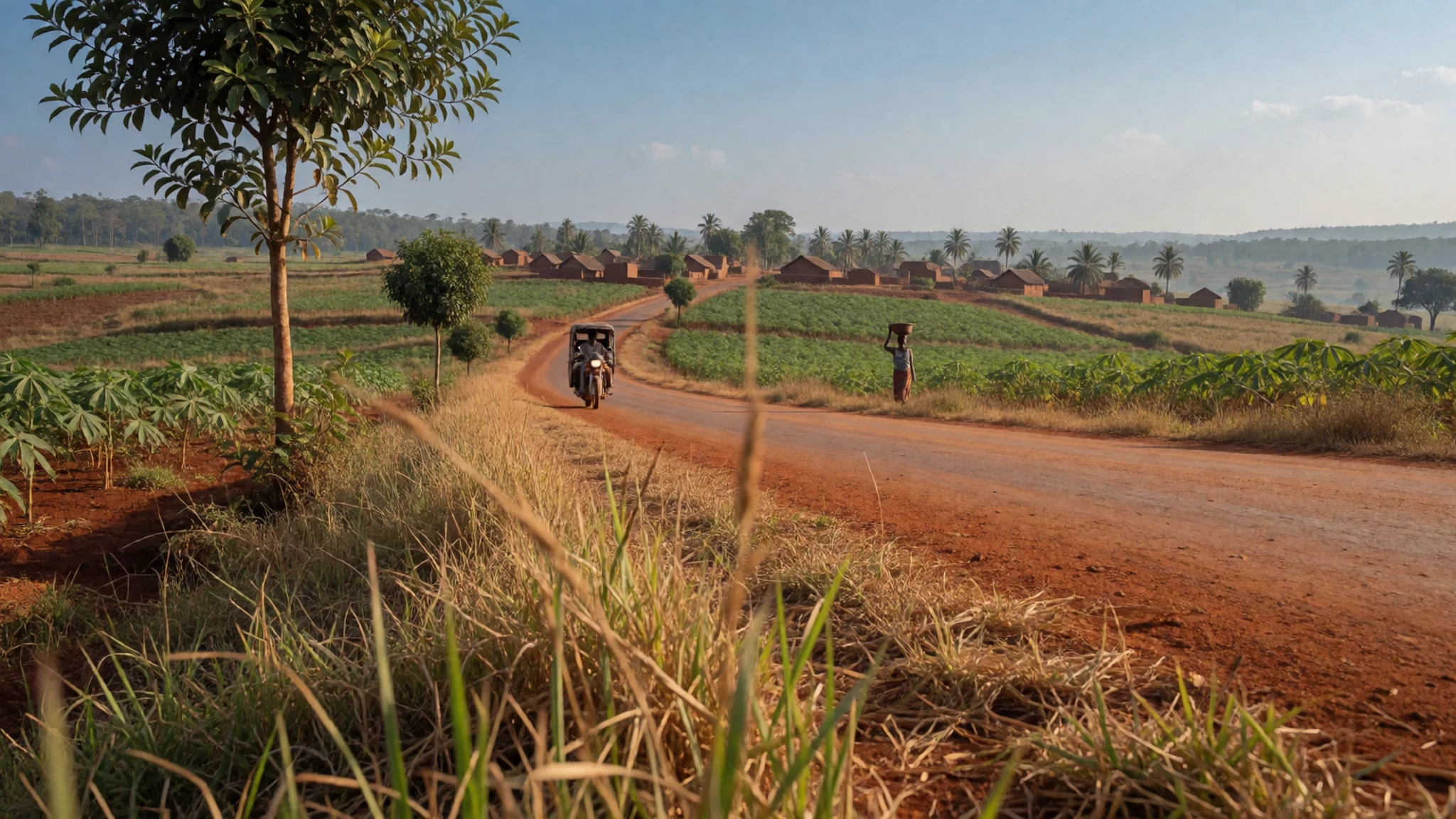
Culture
Outamba-Kilimi National Park sits in a part of northern Sierra Leone shaped by farming villages, river crossings and the Susu language, which is the language of the guide in one of the park's trail photographs. Other languages are spoken across the region too, and Krio works as a common tongue through much of the country. A visit here usually means spending time with the people who live around the park, and their relationship to the forest is practical rather than romantic. It supplies food, building material and firewood, and it also holds animals that can raid crops. Park staff and guides therefore have a double job: protecting wildlife while keeping their neighbours on side. Hospitality is a strong value in rural Sierra Leone. Greetings matter, and a few minutes of polite conversation before getting down to business is normal. Religion is part of ordinary life, with both Muslim and Christian communities in the country, so the rhythm of Fridays and Sundays can affect who is available and when. Place names such as Karangia, 'hill of learning', show how the landscape carries local knowledge, and listening to what guides say about the forest is part of the visit rather than a preamble to it. Hiring local guides and buying food in villages does more good than a donation made in passing. Greet people properly before you raise a camera, and always ask permission before photographing anyone.
What to wear
Around Outamba-Kilimi National Park, traditional dress draws on wider Sierra Leonean textiles. Country cloth is strip-woven cotton, stitched into gowns and tunics for ceremonies. Tie-dyed fabric, often called gara, is made in many homes and workshops, and the wrapped cloth known as lappa is worn as skirts and head ties. Such pieces appear at weddings, religious festivals and funerals, rather than on a working day. Everyday clothing in the villages and towns on the way to the park is more practical: shirts, trousers, football shirts, and for many women a wrapper with a blouse or a modest dress. Many communities are Muslim or Christian, so covered shoulders and knees are the normal standard. A visitor should dress for heat, humidity, insects and thorny undergrowth, while staying modest in villages. Pack light long-sleeved shirts and long trousers in quick-drying cotton or synthetic fabric, in muted greens, browns or greys. Avoid camouflage or military-style patterns, which can cause misunderstandings at checkpoints. Wear sturdy closed shoes or boots with good grip, as trails can be muddy and uneven, and carry sandals for the camp. A wide-brimmed hat, a light rain jacket and socks you do not mind getting dirty will be used daily. Bring a cotton scarf or wrap, useful for sun, dust and covering up in villages.
What to eat
- Cassava leaves with rice — Village cooks and simple roadside eateries in Kamakwie and on the road north
A slow-cooked stew of pounded cassava leaves, usually with palm oil, fish or meat, and served over rice. It is a staple of Sierra Leonean home cooking and is the dish most worth asking for in a village kitchen.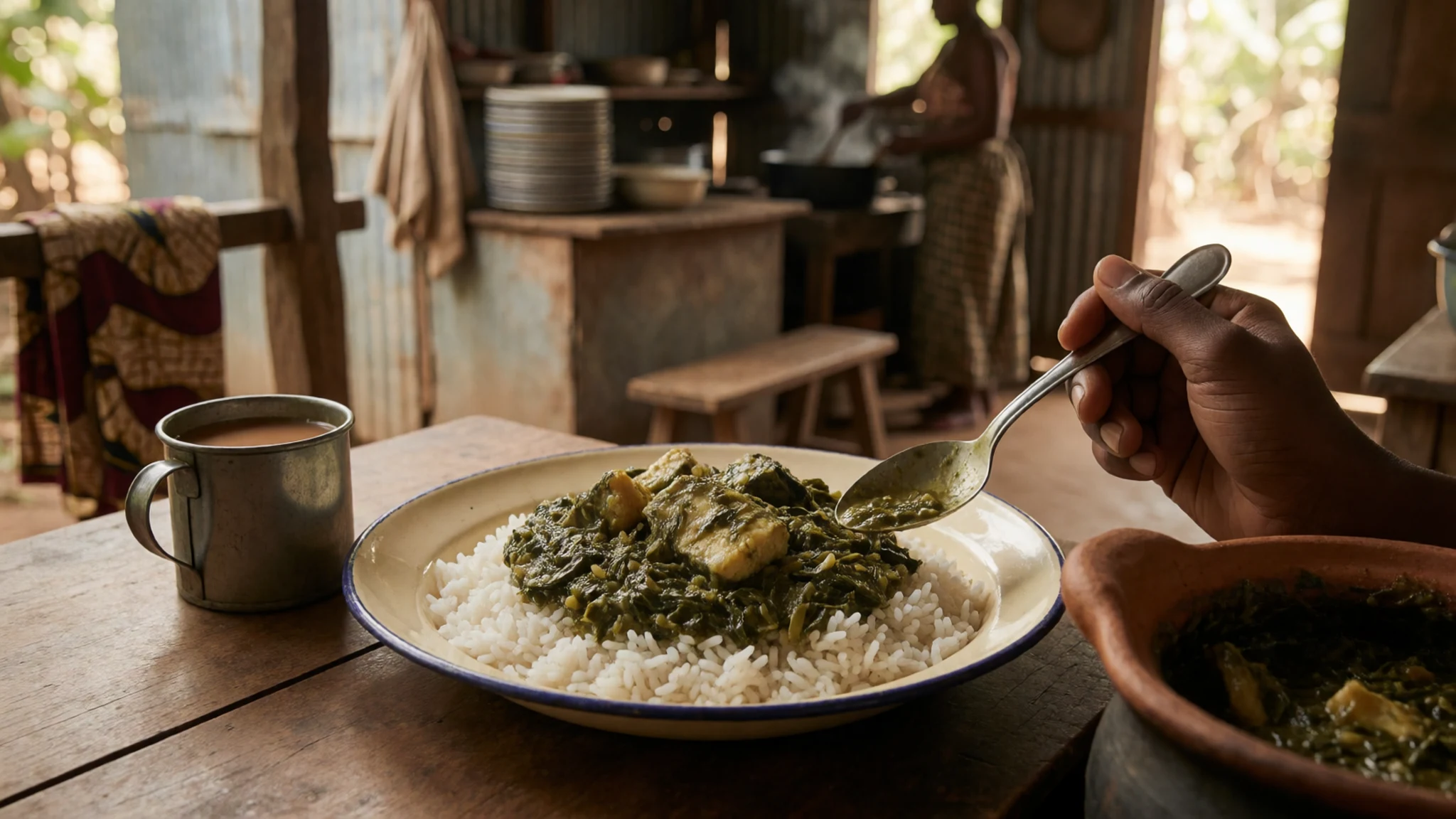
- Groundnut stew — Local eateries in northern market towns
A rich, peanut-based sauce served with rice, often with chicken or fish. It is filling after a day of walking, and the heat level varies by cook, so ask for the pepper to be served on the side.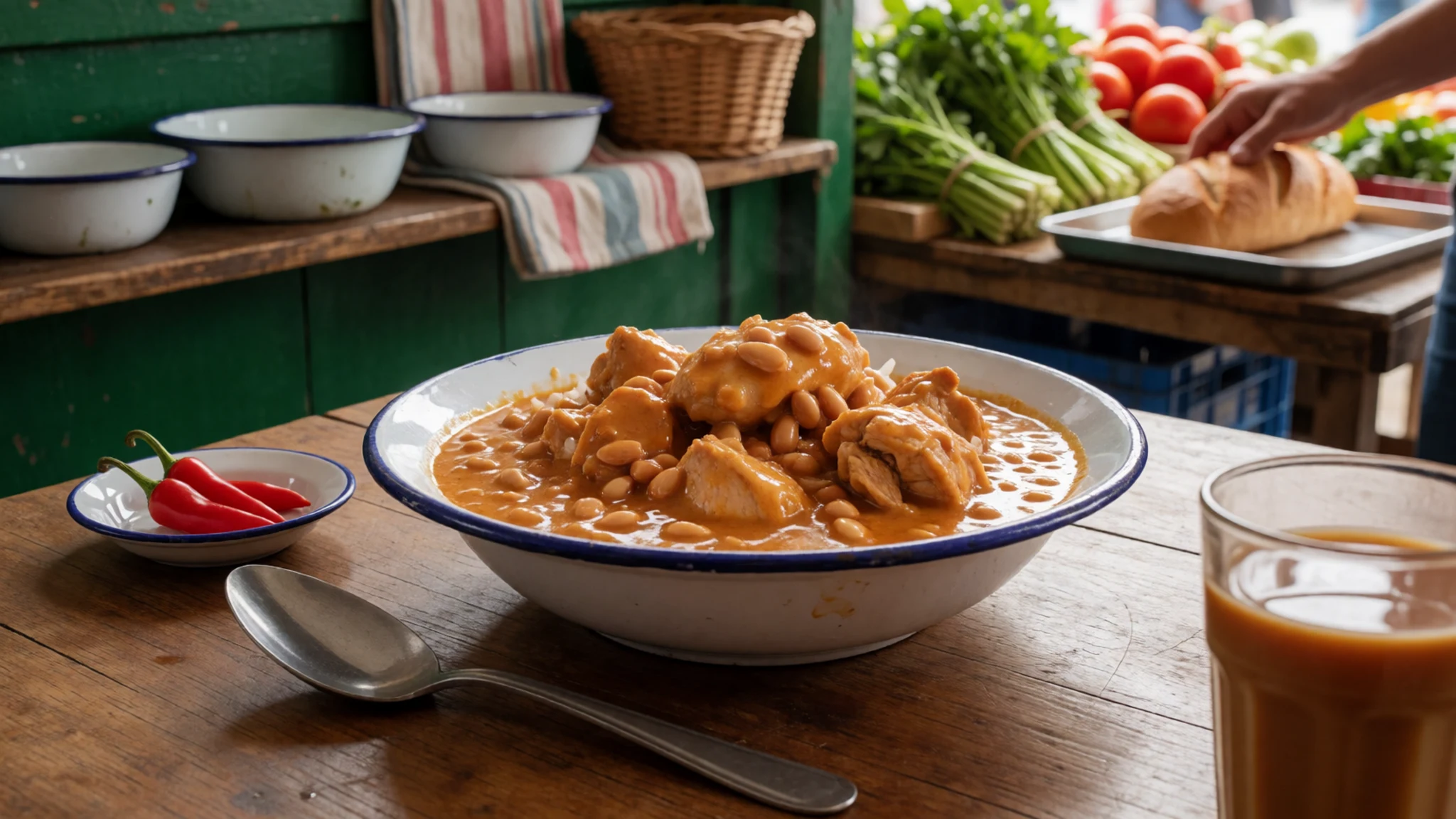
- Jollof rice — Market stalls and eateries in towns such as Kamakwie
Rice cooked in a tomato and pepper base, common across West Africa and a regular at celebrations. Sierra Leonean versions vary from household to household, which makes comparing plates a pleasant way to start conversations. - Fried plantain — Roadside sellers and market stalls along the approach road
Ripe plantain sliced and fried until its edges caramelise. It works as a snack on the road or a side to stew, and is easy to find whenever a cook has hot oil going. - Grilled or stewed river fish — Riverside villages and arranged meals at the park camp
Fresh fish cooked over charcoal or simmered in a peppery sauce, usually served with rice or cassava. Quality depends on how recently it was caught, so buy where the catch is visibly fresh and cooked in front of you.
Plan it
Best time. November to March, in the drier months, when trails are firmer, roads are easier and the heat is more tolerable than in the humid rains. Rainfall can make the approach road and forest paths slow and muddy, so check current conditions with the park authorities before booking.
How long. 3–4
Getting there. Fly to Freetown's international airport, then travel by road north through towns such as Kamakwie to the park. The final stretch is a rough track, so arrange a high-clearance vehicle and driver in advance and allow a full day for the journey.
Budget. mid
Tips
- Contact the park authorities before travelling to confirm access, guides and accommodation, as services are basic and bookings may need to be arranged ahead
- Carry enough cash in small notes, as cards and cash machines are scarce away from Freetown
- Bring more drinking water or purification than you think you need, plus insect repellent and any medical supplies
- Start walks early, when it is cooler and animals are more active, and always go with a local guide
- Take advice on malaria prevention and vaccinations well before departure
Etiquette
- Greet people politely before asking questions or taking photographs
- Follow your guide's instructions near wildlife, keep voices low and never feed the monkeys
- Dress modestly in villages and ask before entering homes or compounds
Nearby
Sources
- Wikidata Q724189 (CC0)
- Wikipedia: Outamba-Kilimi National Park (rev 1362890458) (CC BY-SA 4.0)
- Photo: Entrance to Outamba-Kilimi park (Leasmhar) (CC BY 3.0)
- Photo: Outamba-Kilimi 3 Hippos Sierra Leone (Leasmhar) (CC BY 3.0)
- Photo: Karangia Trail, Outamba-Kilimi Park (Leasmhar) (CC BY 3.0)
- Photo: Green monkey on breakfast table (Leasmhar) (CC BY 3.0)
- Photo: Group hut, Outamba-Kilimi Park (Leasmhar) (CC BY 3.0)
- Photo: Road just south of Kamakwie (Leasmhar) (CC BY 3.0)
- Photo: Near Masaktaba en route (Leasmhar) (CC BY 3.0)
- Photo: A green monkey in Outamba-Kilimi (Leasmhar) (CC BY 3.0)
- Wikivoyage (CC BY-SA 4.0)


Wildlife
- Pygmy hippo (animal)
The pygmy hippo is a hippo in miniature, a small animal of the forests and swamps of West Africa. In Outamba-Kilimi, look to Kilimi, an open woodland of savanna where water decides the paths, and where pygmy hippos have been photographed swimming by. Nothing here names a season or an hour to expect one, so ask your guide what is likely. Keep a respectful distance, stay quiet near the water, follow your guide's lead, and never feed it.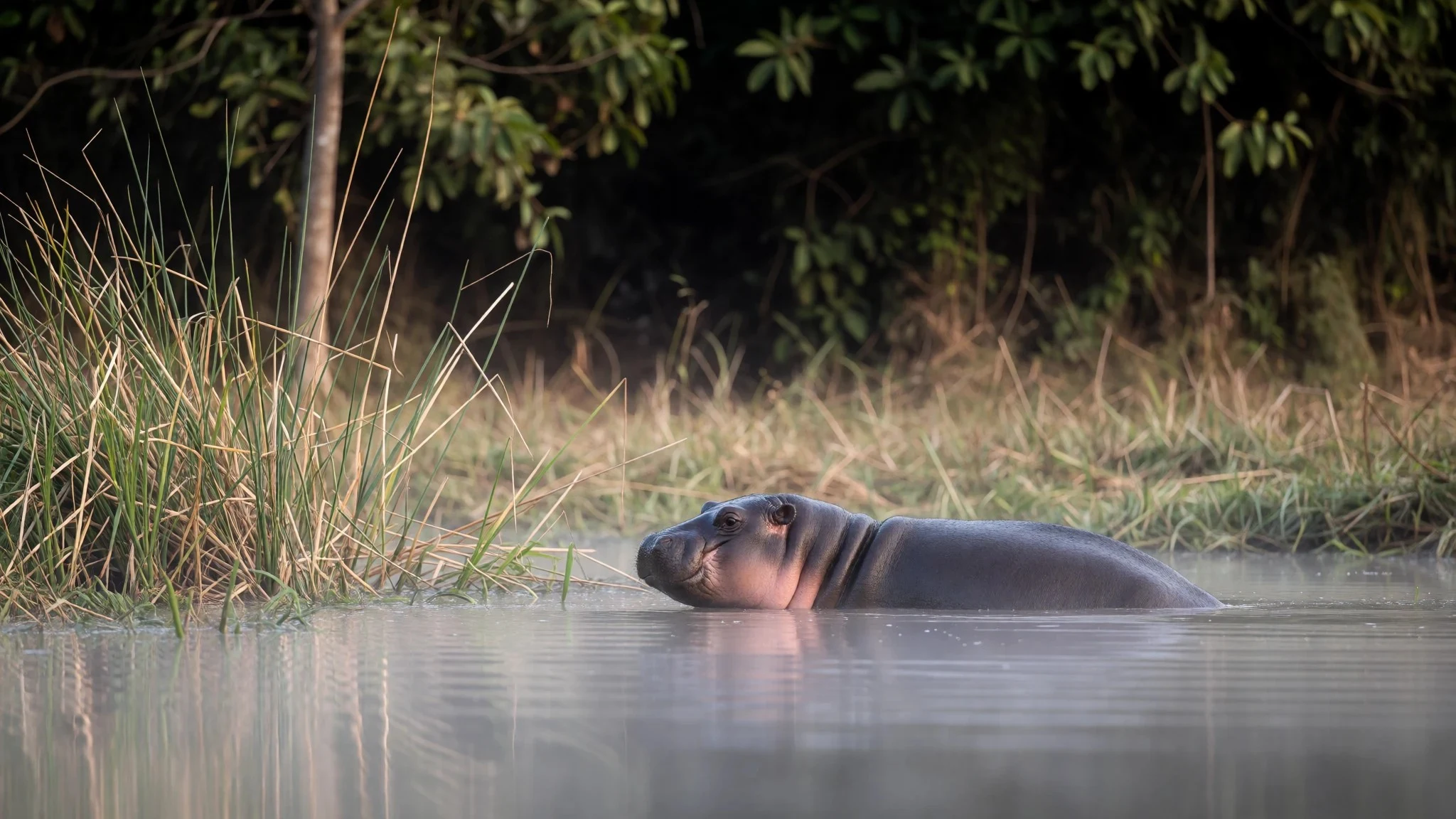
- Chimpanzee (animal)
The chimpanzee is a great ape with coarse black hair and a bare face, and, together with the bonobo, it is the nearest relative we have alive today. Chimpanzees are the most famous residents of the park, yet meeting one is a treat, not a promise, so go without expecting it. Where and when they show themselves is best asked of your guide. Keep your distance, stay quiet, walk with a guide, and never feed them.