Banana Islands
Banana Islands, Sierra Leone
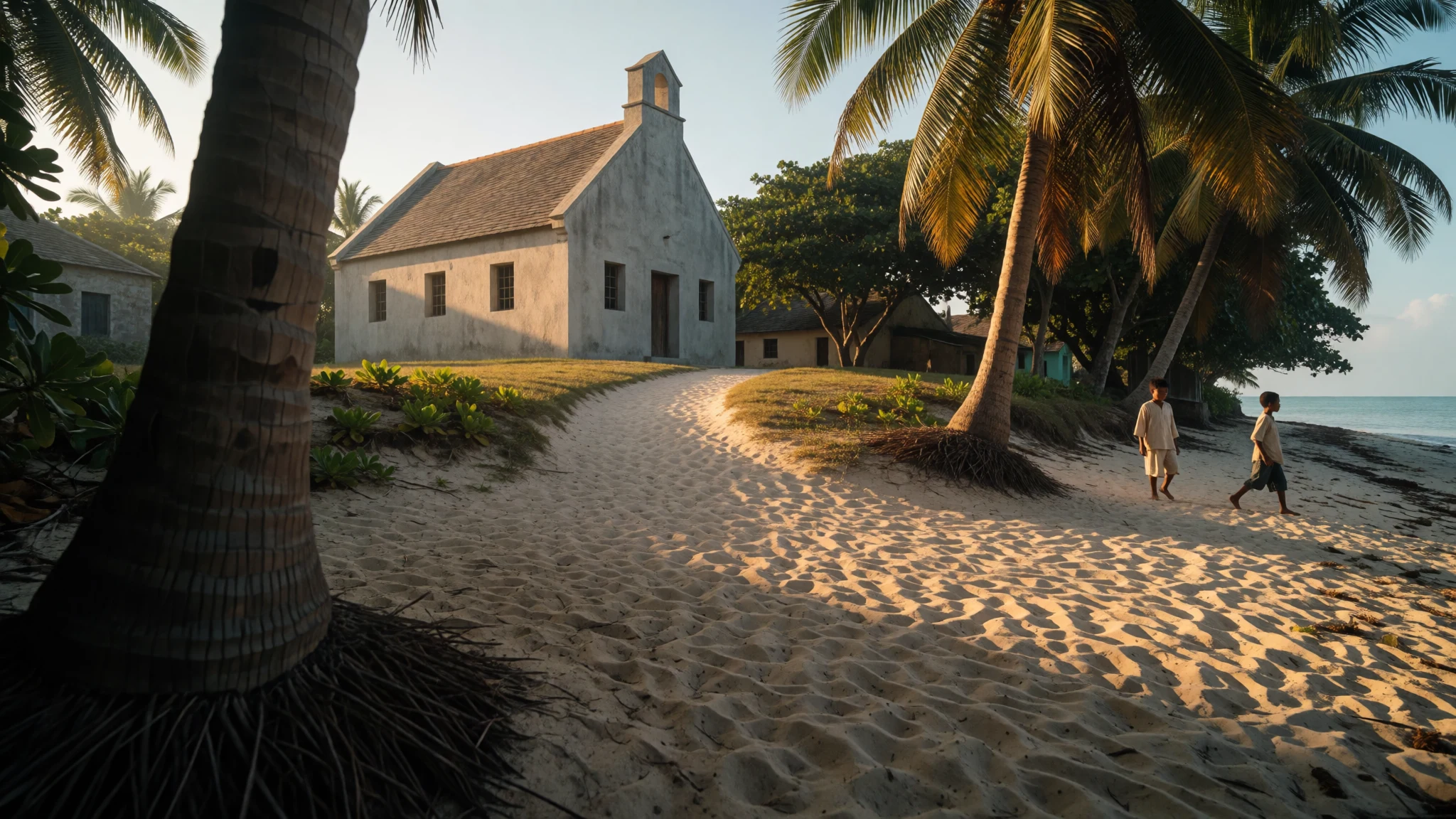
Banana Islands is a quiet Atlantic cluster off Sierra Leone, with fishing villages, an old church and beaches reached by boat from the peninsula.
The place
Banana Islands lie in the Atlantic just off the southern tip of Sierra Leone's Freetown peninsula, a small cluster of wooded islands and sandy shores rather than a resort coast. Dublin and Ricketts sit close enough that a sandbar joins them when the tide is low; Mes-Meheux stands a little apart, quieter and less lived-in. The villages are fishing settlements: canoes on the beach, smoke from cookfires, a stone church, a school and footpaths under thick coastal trees. There is no town centre and no traffic beyond boats and people on foot. The light is hard and the air is humid for much of the year. In the drier months the sea is clearer and the crossing from Kent is gentler; in the rains the same channel can be grey, choppy and slow. Shade comes from the bush, not from a promenade, and fresh water is limited to what households and boats bring over. The day follows the tide and the fishing boats more than a sightseeing schedule. The islands offer a swim off a pale beach, a walk between Dublin and Ricketts while the bar is exposed, reef fish in shallow water, and a settlement that still feels like a working coast. Evenings go dark and insect-loud once any generator stops. A visitor who packed for a village and a boat will find the heat and the sand make sense.
Its story
Banana Islands take their name from banana plants that early Portuguese sailors found on these Atlantic shores, and the name remained as the islands' role on the coast changed. Dublin and Ricketts carry surnames tied to the Atlantic slave trade. For a time the islands held captive people before ships took them off this stretch of the upper Guinea coast. That history lives in the place names and in the memory of the peninsula; nobody has turned it into a monument with a ticket office. Under British rule based at Freetown, the islands became outlying villages of the colony rather than a trading fort. A stone church, graves and a school mark that quieter parish life. Families who fish, keep small plots and speak Krio have stayed. The church and the Krio of the peninsula tie these families to Freetown across the water, rather than to a story written for visitors. Bush grew back over the paths, and the structures of the trade never became a museum. The story a visitor meets now is a working one. Boats leave early, children walk to school, and a few guesthouses take travellers who want a night out of the city. Tourism has not replaced fishing. The crossing from Kent still brings rice, fuel and relatives. Mes-Meheux, less settled than its neighbours, is spoken of as a place for birds and nesting turtles, better watched from a boat than treated as a picnic island.
What to see
- Dublin village — Dublin Island
Banana Islands' main settlement is the village on Dublin, houses under trees behind the beach where boats from Kent come in. People mend nets, land fish and use a sandy path past the school and the church. There is no market hall; trade happens from the boat, the porch and the beach. A compound is a home, and a greeting comes before a shortcut across a yard.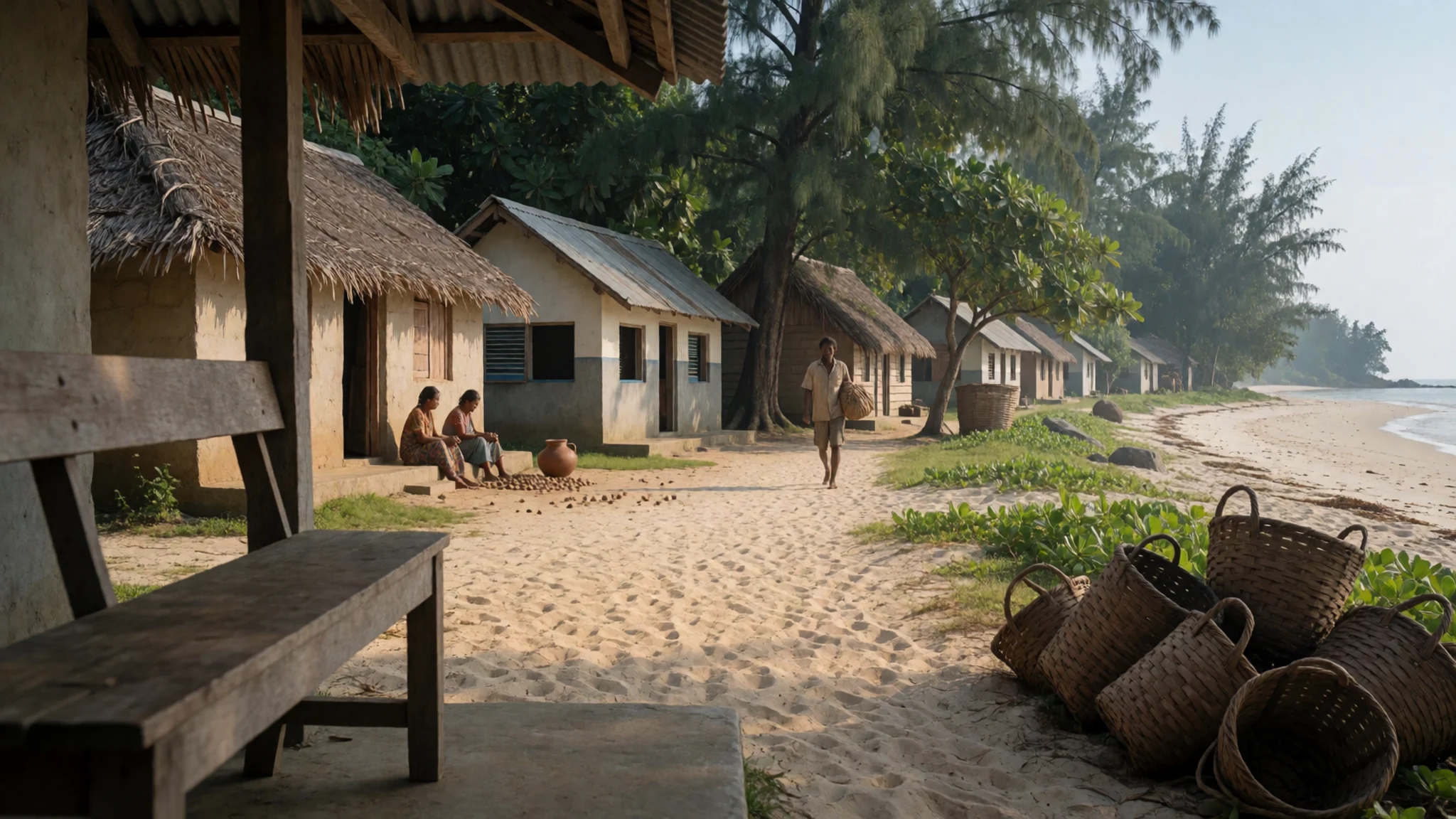
- The old stone church — Dublin Island
The old stone church on Dublin is the landmark of the Banana Islands village, the ruins of an 1881 church on the northern tip rather than a building still used for worship. Churchyard graves hold a parish past that was never arranged as a museum. The ruins are not kept for worship, and a quiet manner fits the churchyard on the northern tip.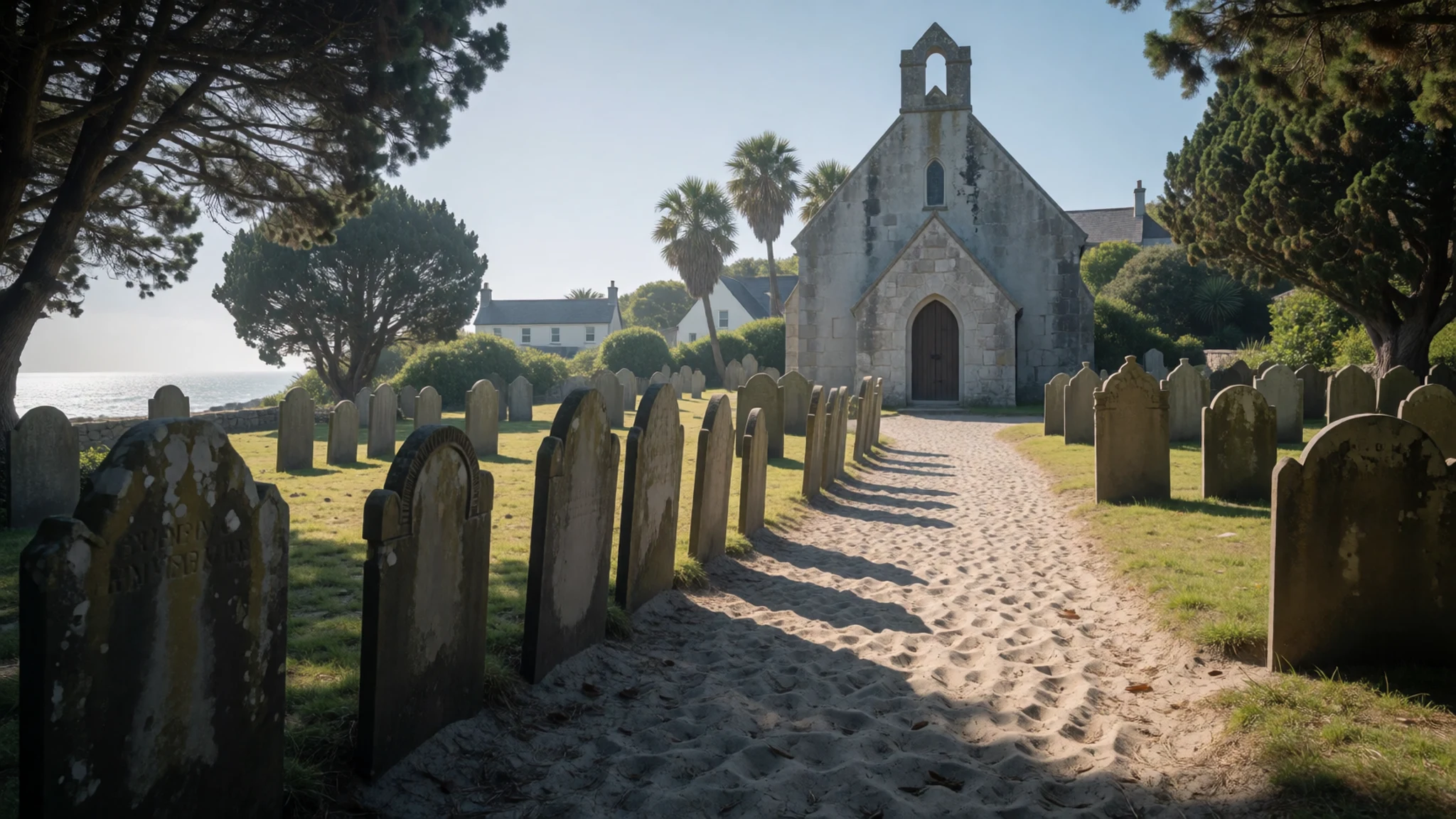
- The tidal sandbar — Between Dublin and Ricketts
At low tide a sandbar between Dublin and Ricketts lets people walk from one Banana Islands shore to the other, a wet path with sea on both sides. It is not a bridge. As the tide rises the bar narrows and then goes under, and the stone causeway and stone bridge still carry the path. Someone who knows that day's water is the right company.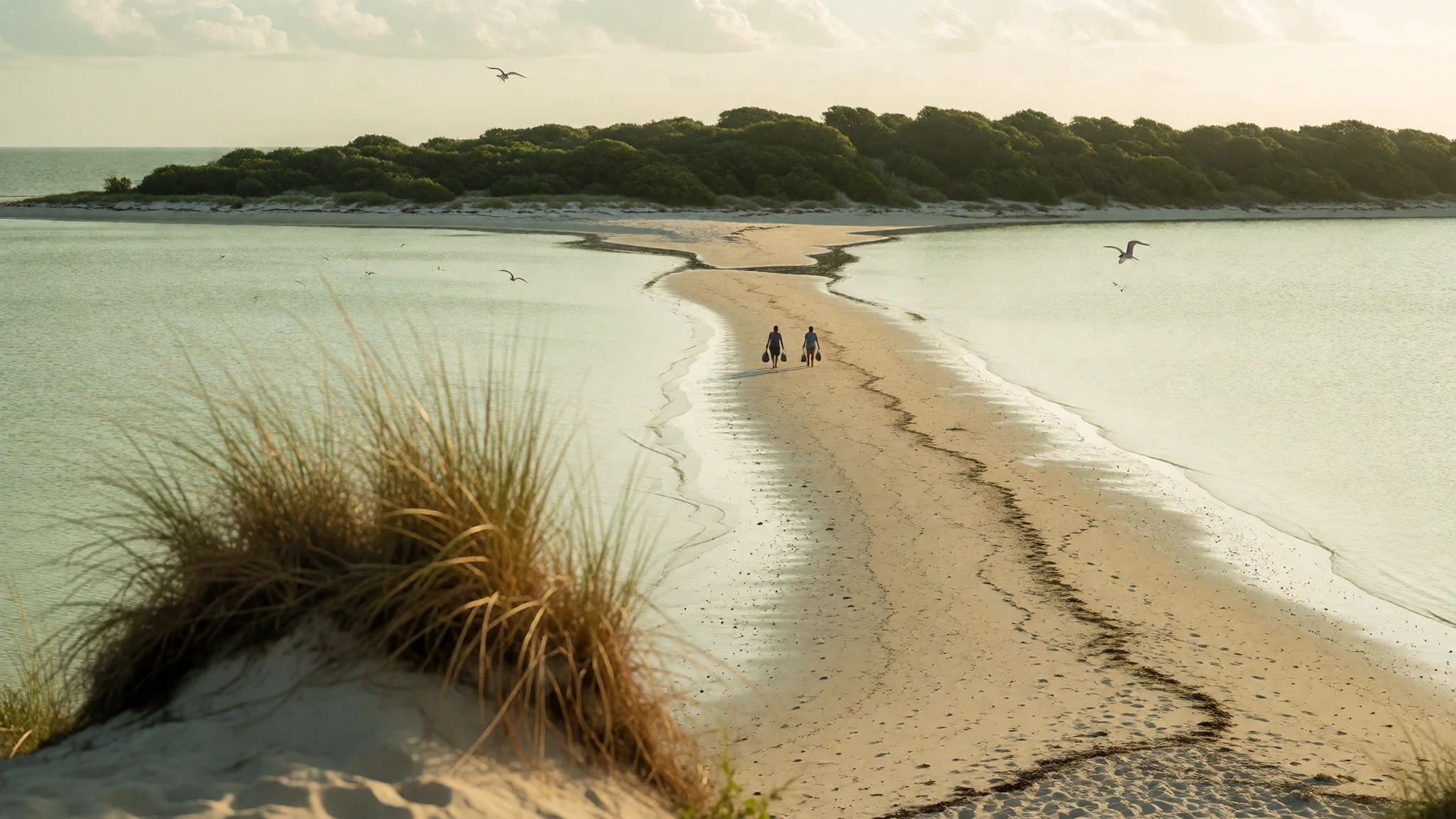
- The beaches — Dublin and Ricketts shores
The beaches of the Banana Islands are working shores as well as swimming shores: pale sand, palms and scrub, and canoes pulled above the high-water line. In the drier months a calm day makes swimming straightforward, with no lifeguard and little shade away from the trees. The Atlantic side takes a stronger swell than the channel facing the peninsula.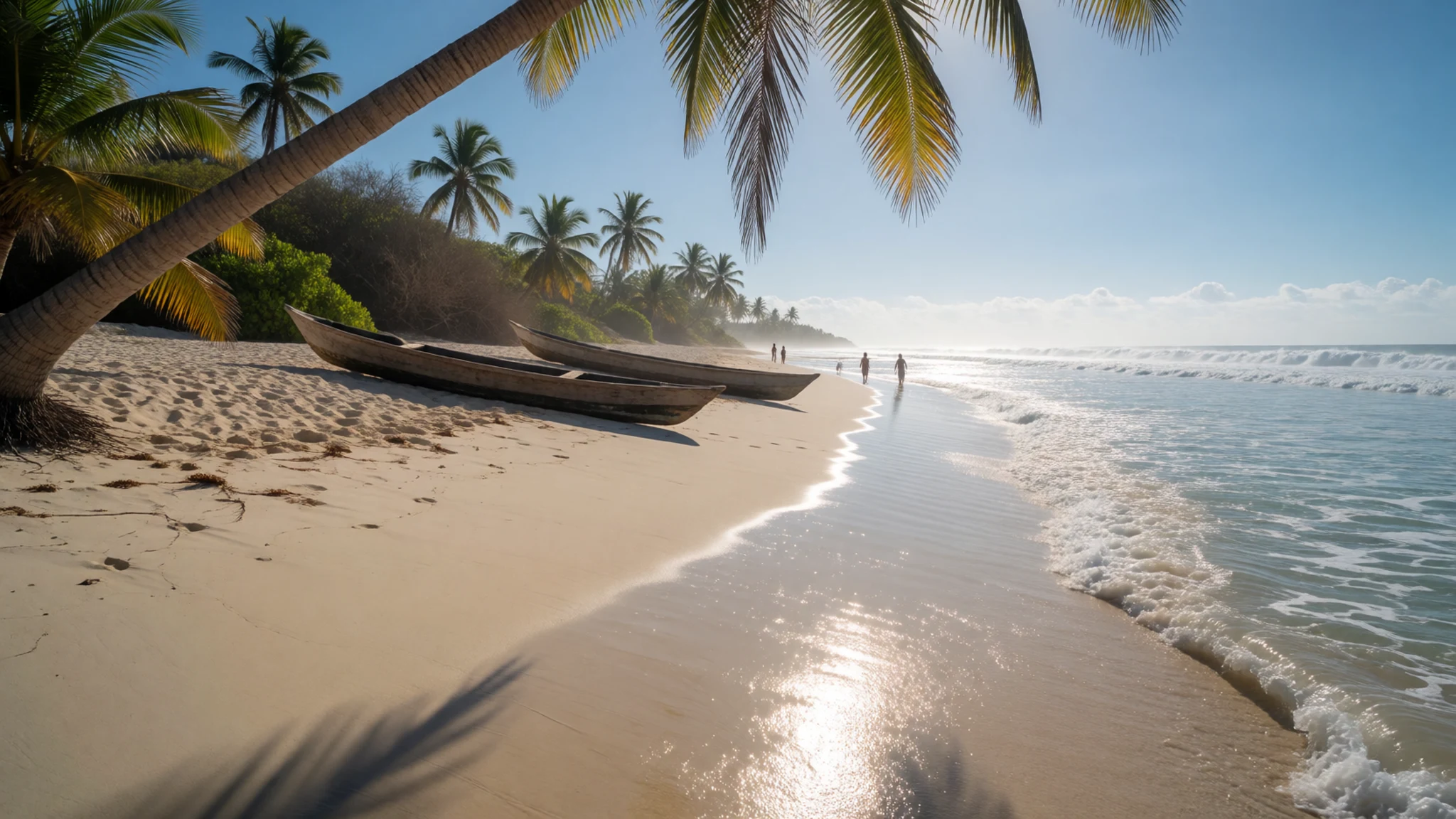
- Ricketts Island — Ricketts Island
Ricketts is the other settled island of the Banana Islands, joined to Dublin by a stone causeway, a stone bridge and the tidal bar. Houses are fewer, paths run into thicker bush, and the shore feels less watched. Traces of the trading years are easy to misread: a wall is not labelled, and a resident's account beats a guess.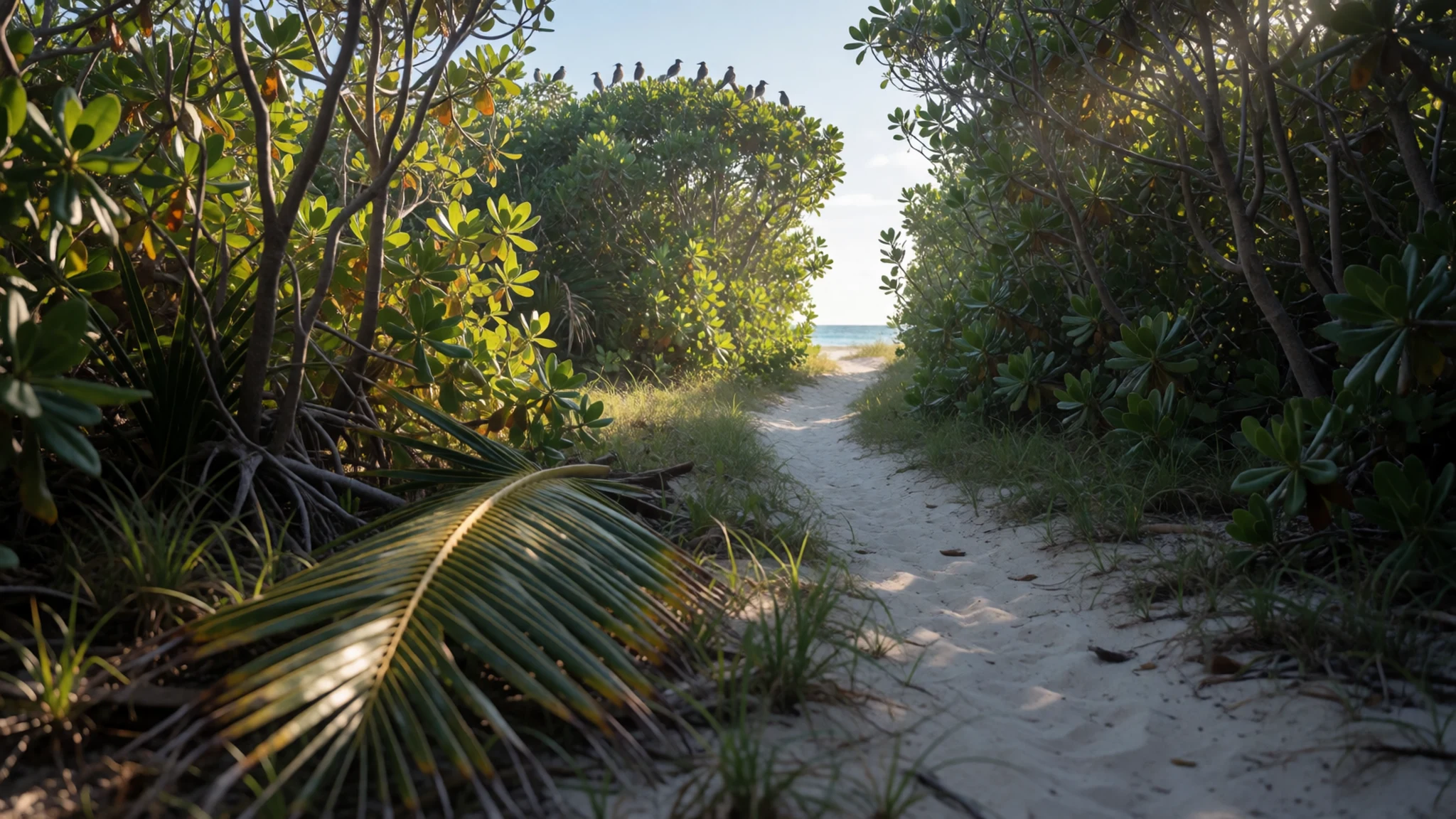
- Mes-Meheux from the water — Mes-Meheux, seen from the channel
Mes-Meheux is the outlier of the Banana Islands, less lived-on than Dublin or Ricketts and usually seen from a boat. People speak of seabirds and of turtles that nest ashore, so a casual landing is a bad idea unless a resident says it is allowed. From the channel the island is forest down to rock, without a village beach or a guesthouse.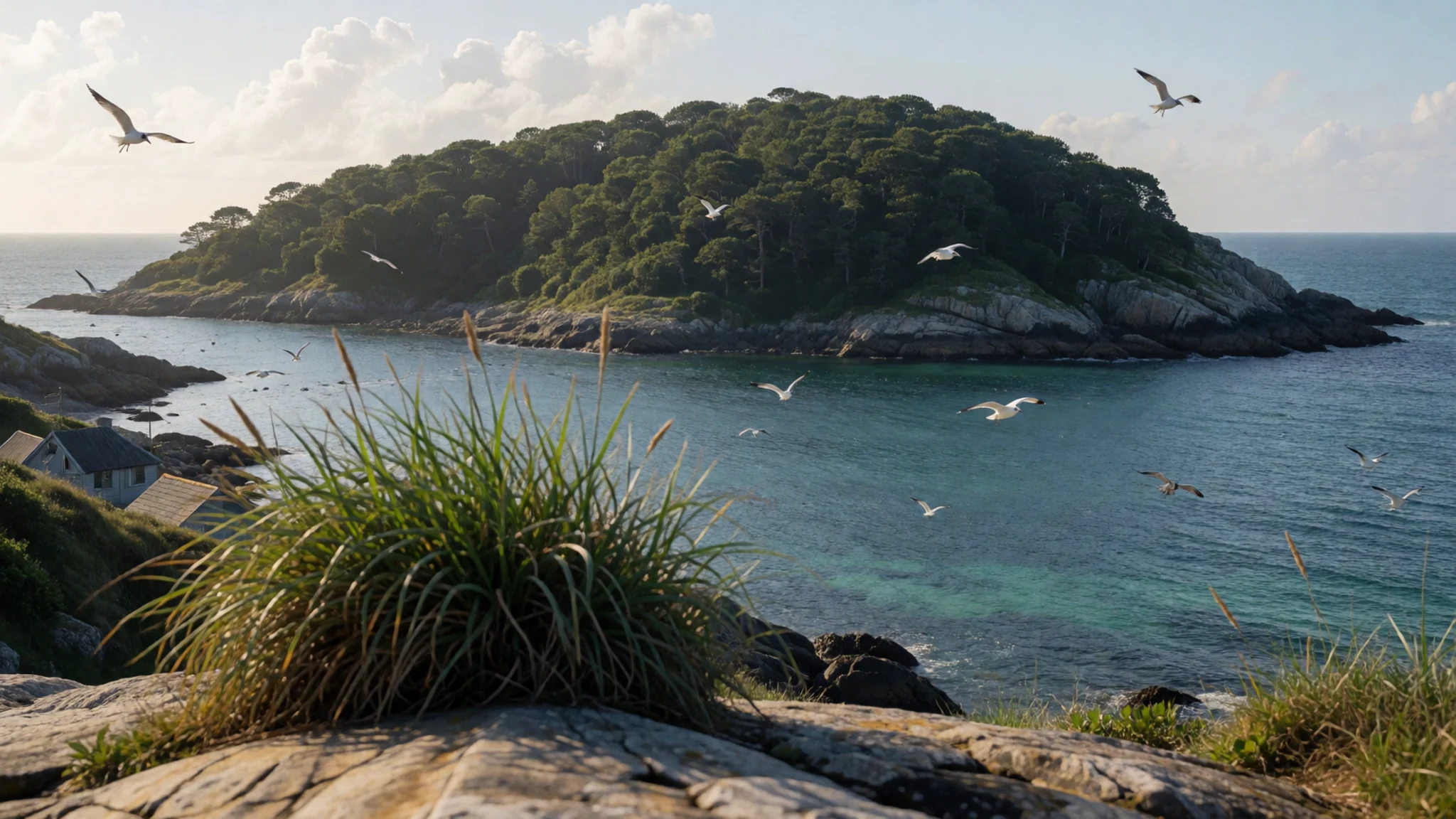
- The old sea chart — Channel south of the Freetown peninsula
The sea approach to the Banana Islands is the channel south of the Freetown peninsula, the stretch an old Admiralty chart draws from Cape Sierra Leone toward the Turtle Islands. The sheet is a historical picture, not a current chart, and it is useless for navigation. What it makes obvious is how small the islands sit against the Atlantic, and why the boat from Kent is a local one.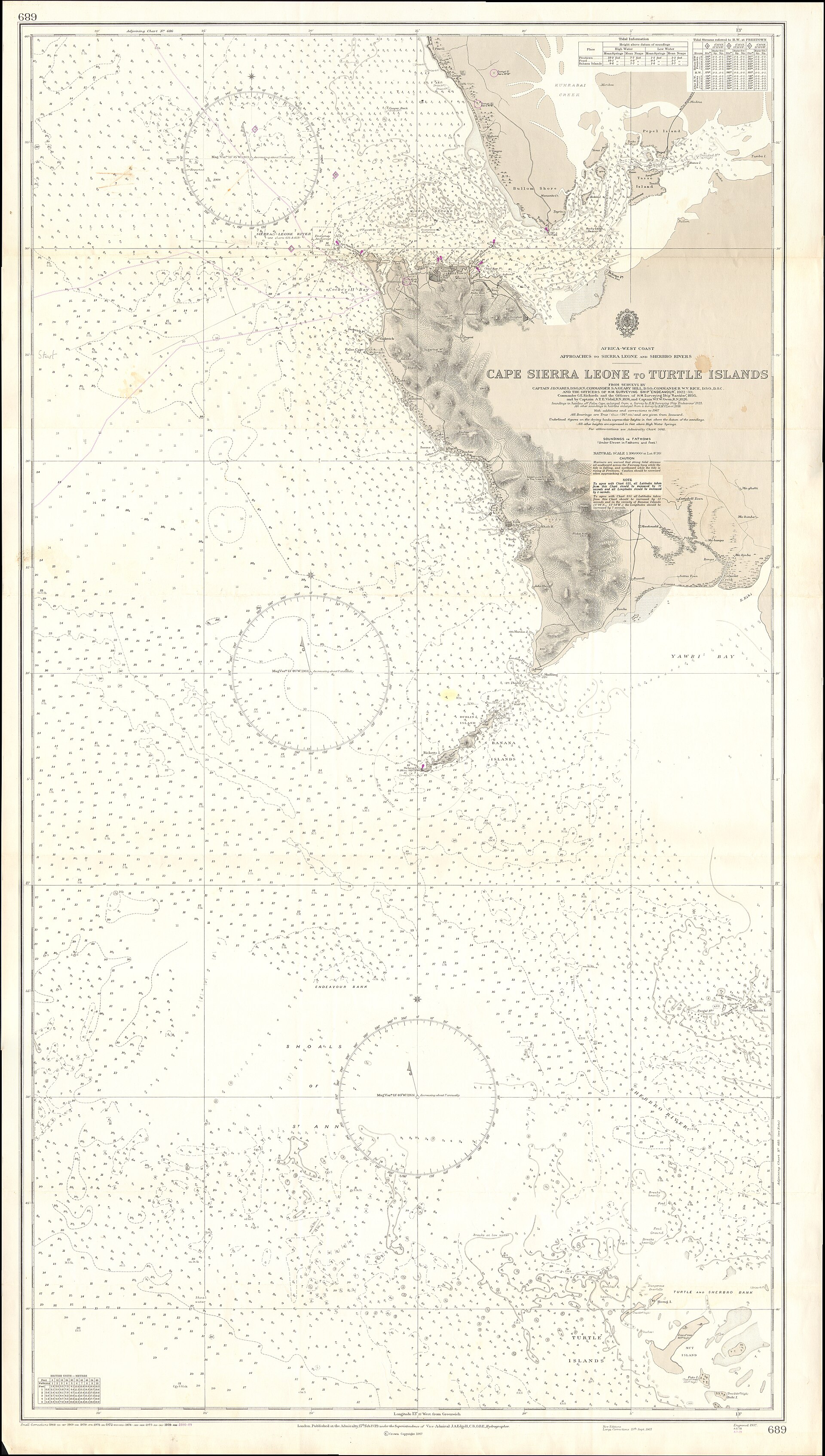
Culture
Banana Islands life is village life on a Sierra Leonean coast: Krio in the yard, ruins of the old stone church, and a week organised around boats, school and the tide. Kin from Freetown come for weekends, so a traveller reads as a guest if the guest behaves like one. A hello at a porch is ordinary courtesy. A camera pointed at a child, or at a woman cleaning fish, is not. The old stone church is a ruin, and the week turns on boats, school and the tide rather than on hymns. Older coastal habits sit underneath: respect for the sea, for graves, and for leaving Mes-Meheux alone. There is no nightlife strip. Evenings belong to families. A household may cook for a visitor and a boatman may delay for wind, and both expect a fair agreement made beforehand. Rubbish left on the sand stays in the village. On Banana Islands, ask before you photograph a person, keep your voice down near the church and any funeral, and carry your rubbish back to Kent.
What to wear
Banana Islands dress is Sierra Leone coastal dress, scaled to heat, church and work with fish. For a wedding, a funeral or a church festival, women bring out gara, the region's dyed cotton, in indigo, rust and green, worn as a lappa with a fitted top and a head-tie. Men may wear an embroidered gown or a shirt of the same cloth. Country cloth, the narrow-strip weave, is rarer, a prestige wrap rather than work clothes. The cloth is cotton, meant for humidity, and it appears when there is a reason to dress. On an ordinary day the village wears T-shirts, football shirts, shorts, wrappers and plastic sandals. Schoolchildren wear uniform. Wet hems are normal, because people move between house and boat. For a visitor, light cotton that can take salt is the base. Swimwear stays on the beach; a shirt and a longer wrap cover the village and the church. Shoes need to survive a wet sandbar. A hat helps at noon, and a light rain layer helps when the season turns, since the islands do not sell a change of dry clothes.
What to eat
- Grilled morning fish — beach cookfires and porches on Dublin
On the Banana Islands the day's food starts with fish landed that morning, split and grilled over wood or charcoal with pepper and onion. Reef fish appear more often than meat. The plate is rice or bread, eaten on a porch or beside the boats.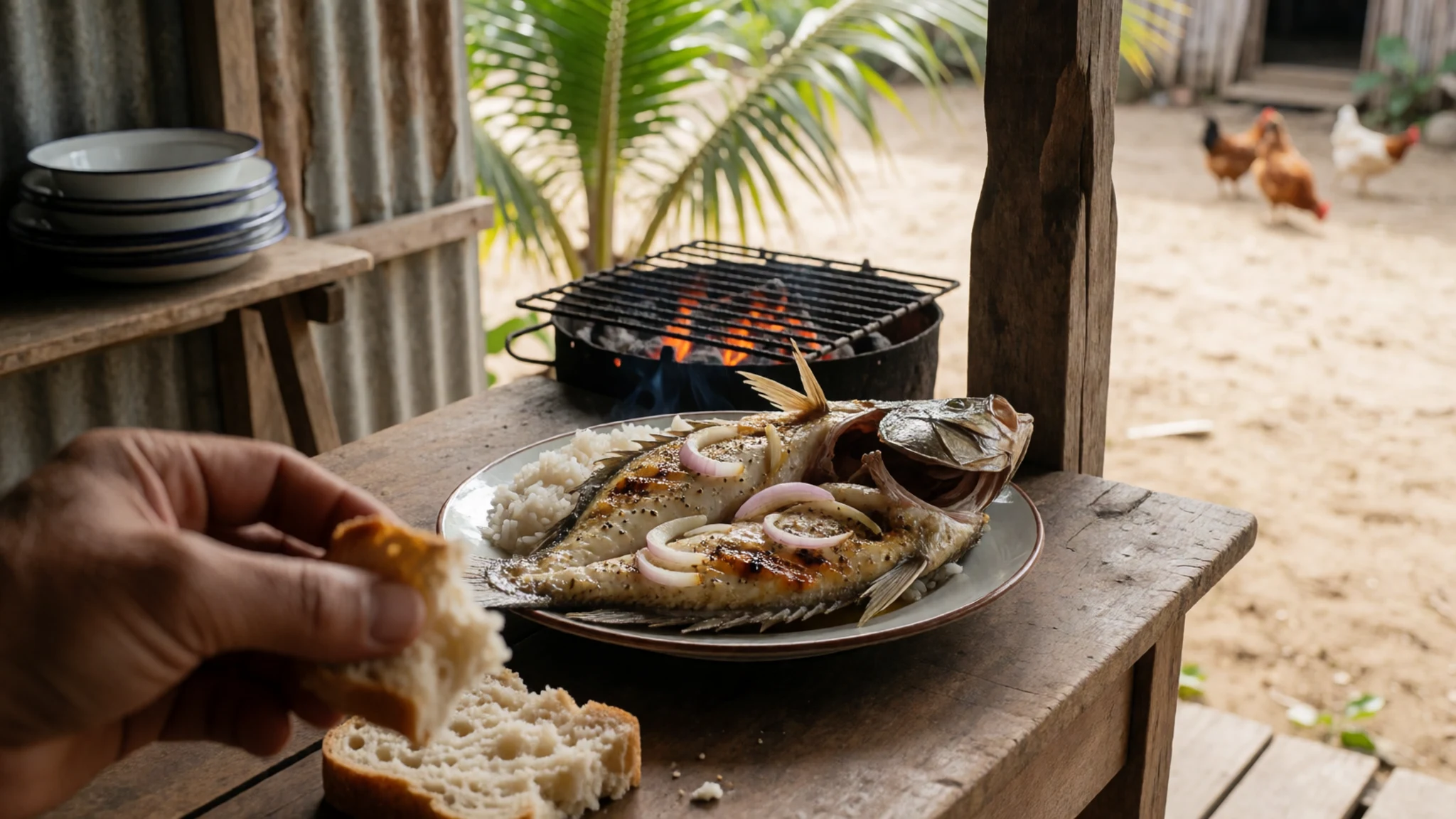
- Cassava-leaf plasas — guest kitchens in the Dublin village
Cassava-leaf plasas is the sit-down stew of the Banana Islands: leaves simmered in palm oil with dried fish and pepper, sometimes with smoked fish from the mainland. It comes with rice. Village kitchens that cook for guests serve it; it is not a snack from the beach.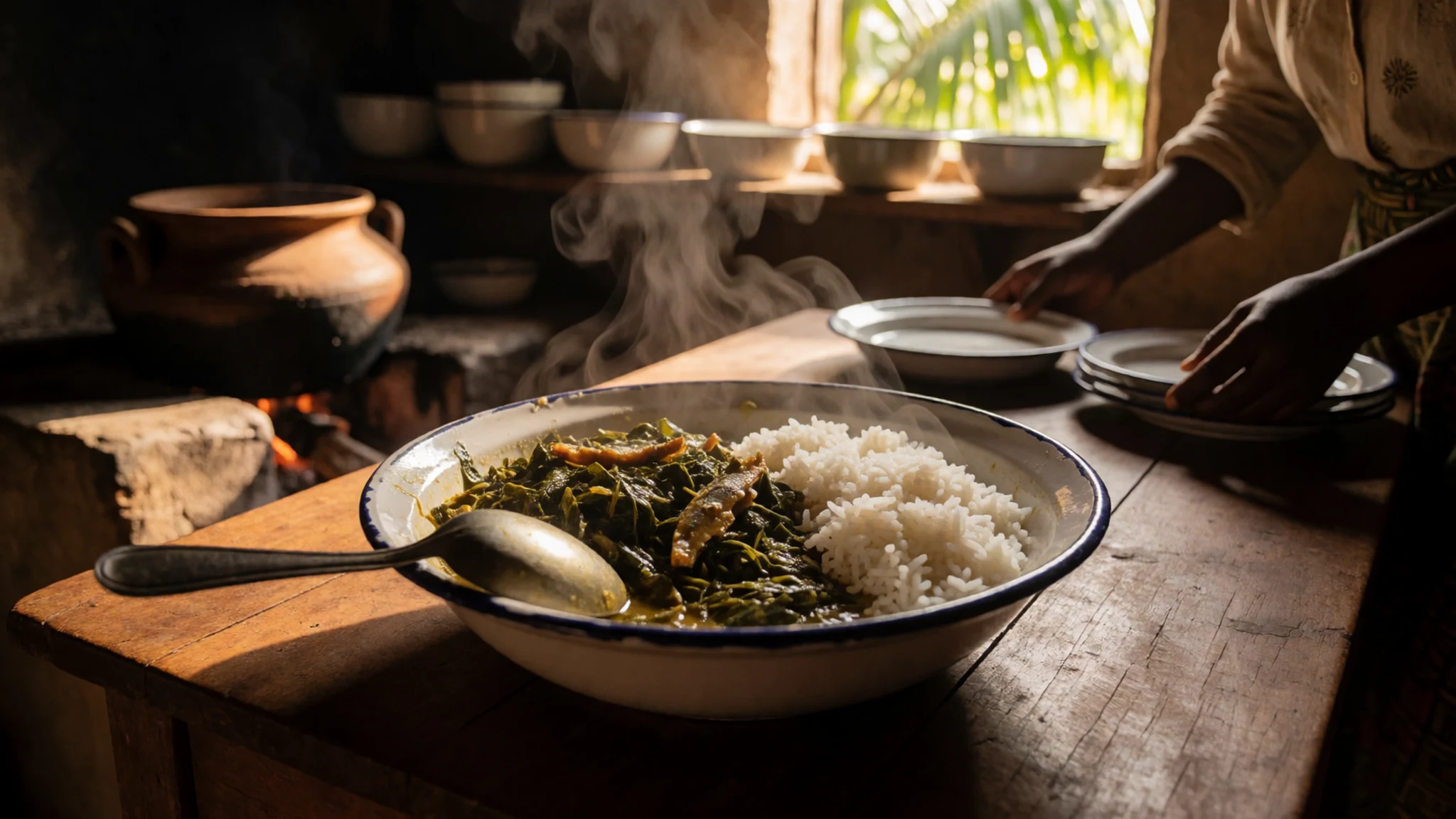
- Groundnut soup — guesthouse lunches and family pots on Dublin
Groundnut soup on the Banana Islands is a peppery peanut stew eaten with rice when there is paste and some fish or chicken from Kent. The ingredients keep, so boats bring them over. It turns up as a guesthouse lunch or a family pot. - Fried plantain — porches and cookfires on Dublin
Fried plantain is the sweet everyday side on the Banana Islands, ripe slices fried until the edges catch. It comes with grilled fish, with rice, or on its own between boats. Any kitchen already frying fish will usually fry plantain too. - Pepper soup — guesthouses and family kitchens on Dublin
Pepper soup on the Banana Islands is a thin, hot broth of fish or chicken with ginger, chilli and scent leaf. People take it when rain has chilled them or when the rice needs fire. It is a home pot from guesthouses and family kitchens, not a row of labelled stalls.
Plan it
Best time. November to April is the kinder window for the Banana Islands: drier days and a calmer boat from Kent. From May into October, rain and a rougher channel make the crossing harder, though the villages are quieter.
How long. 2–3
Getting there. Banana Islands are reached via Freetown: fly into Lungi, cross to the peninsula and take the road to Kent. The last leg is a local boat from Kent beach to Dublin; there is no bridge, so the boat is agreed on the day.
Budget. mid
Tips
- Agree the Kent boat, and the return, in daylight before leaving the beach.
- Carry cash; there is no bank on the islands.
- Cross in the morning, when the sea is more often kind.
- Bring drinking water and sun cover; the islands are a poor place to run out of either.
- Ask about the tide before walking the bar to Ricketts.
Etiquette
- Greet people before photographing them or crossing a compound.
- Cover swimwear in the village and dress modestly at the church.
- Leave Mes-Meheux unvisited unless a resident has said a landing is appropriate.
Nearby
Sources
- Wikidata: Banana Islands (CC0)
- Wikipedia: Banana Islands (CC BY-SA 4.0)
- Wikivoyage: Banana Islands (CC BY-SA 4.0)