Lake Sonfon
Lake Sonfon, Sierra Leone
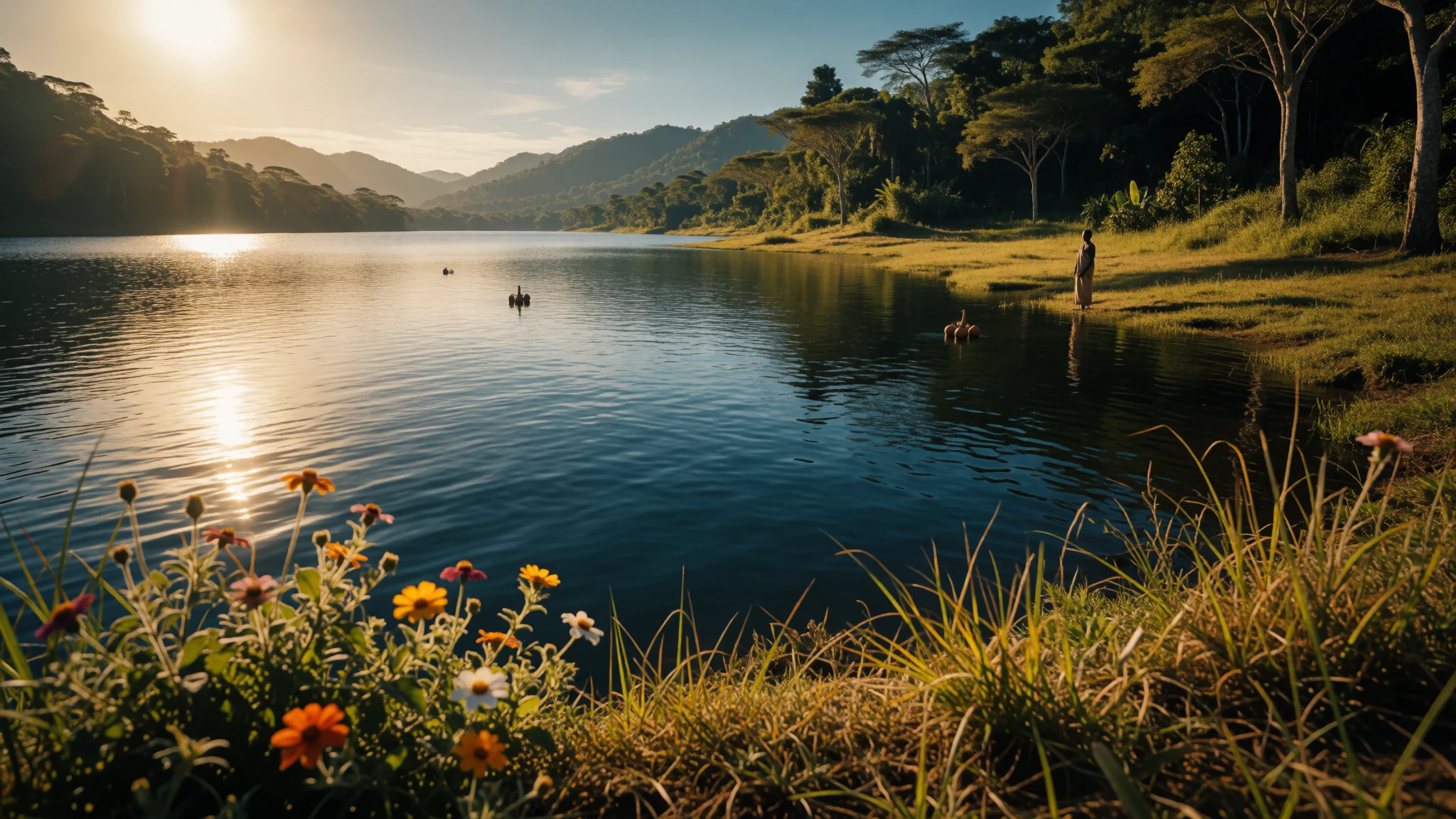
Lake Sonfon is a remote, sacred highland lake in Sierra Leone, reached only with local help, where birds, rumoured pygmy hippos and living ritual share one shoreline.
The place
Lake Sonfon sits in the Sula Mountains of northern Sierra Leone, in the Diang area, at 549 m above sea level. It is also spelt Lake Confon. The nearest towns are Kabala, about 60 km to the north, and Benugu, about 40 km to the south, so the lake feels far from everything, and the approach is by rough tracks rather than a surfaced road.
Wikipedia describes it as Sierra Leone's largest inland lake, at about 8.2 sq km, yet it is shallow, reaching only around 8 m at its deepest. Seven small streams feed it, and the water drains from its southern end, which is where the Pampana River begins. The level swings a good deal through the year. In the dry season the surface can disappear under a carpet of vegetation, so the lake looks more like a marsh meadow than open water.
The hills around hold patches of forest, wooded savanna, grassland and farmbush, the regrowth on abandoned fields. Birdlife is the main draw for naturalists: the lake and its surroundings, an area of about 8,000 ha, are recognised by BirdLife International as an Important Bird Area, and 105 species have been recorded even though the area is poorly surveyed. Pygmy hippopotamus, a shy and endangered animal, is reported here, along with duikers, the small forest antelopes.
As of 2011 the lake had conservation interest but no formal protection. There are no lodges or visitor facilities to speak of. This is a place for a patient, well-organised trip with a local guide, not a casual stop.
Its story
Lake Sonfon matters first as a sacred site. In local traditional belief the water is the home of a powerful spirit, a djinn, and ceremonies take place along the shore. People float offerings of rice and other food out onto the lake in calabashes, the hollowed gourds used across West Africa as bowls and containers. The belief also holds that the lake is intermittent in a symbolic sense, which echoes the way the real water rises and thins with the seasons.
That sacred standing sits beside a more modern pressure. Gold occurs in the rocks around Sonfon and in the river gravels and soils nearby. Only the alluvial deposits, the loose material washed down by streams, are being worked, and the Wikipedia account counts about 15,000 miners around the lake. The digging is blamed for lowering the water level, which is a worry for the birds, the animals and the ceremonies alike.
The result is a place where several uses overlap: ritual, small-scale livelihood, and a conservation case that has been argued for but not settled. Anyone writing about Sonfon honestly has to hold all three. The lake is not a pristine wilderness and not a tourist attraction in the usual sense. It is a working landscape that local communities treat with reverence, and it is changing.
The seasonal vegetation mat, the seven feeder streams and the single outflow into the Pampana make the lake a small but important piece of the local water system, which is one reason conservation groups keep returning to it.
What to see
- The lake shore — Diang, Sula Mountains
The shore is the heart of any visit, with open water in the wetter months and a green mat of plants in the dry season. Ceremonies happen here, so the guide decides where it is proper to stand, and photography needs asking about first. Go early, when birds are active and the air is cooler.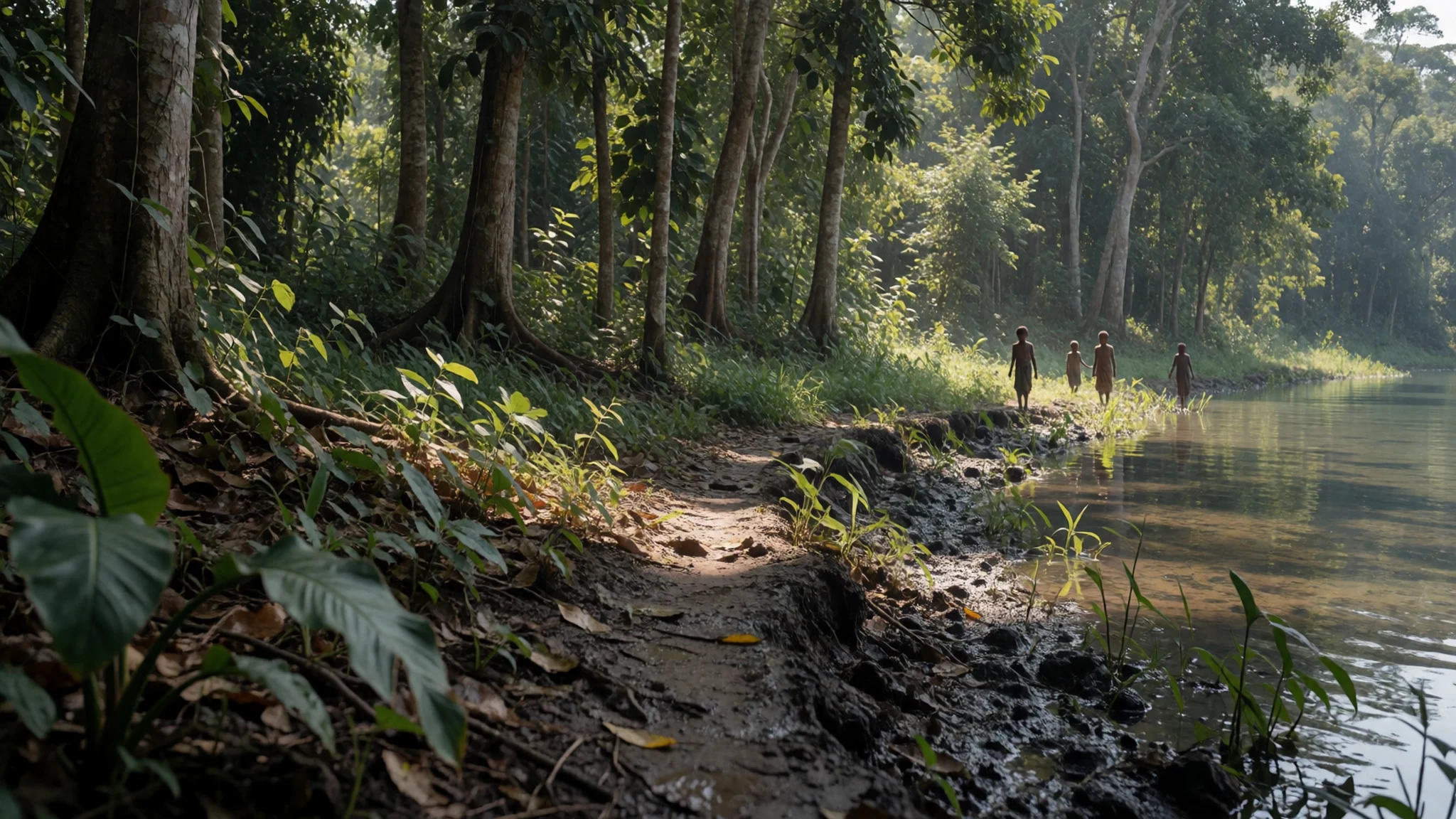
- The Pampana River source — Southern end of the lake
At the southern end the lake spills out and the Pampana River begins, a quiet, unmarked start to a river that runs on through the country. It is a good spot to understand how the lake works: seven streams in, one channel out. Water levels shift a lot, so the scene changes by season.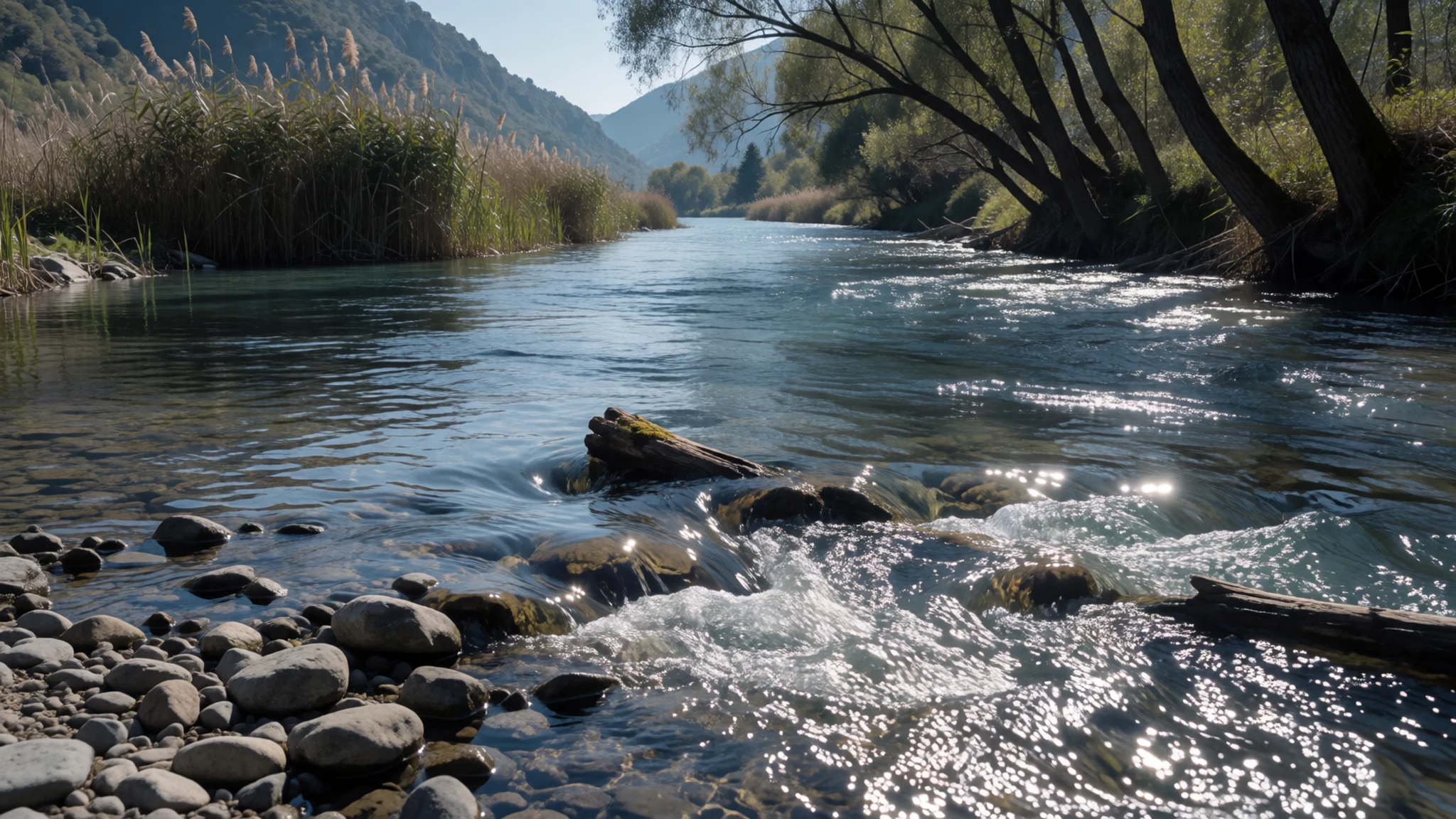
- Birdwatching in the surrounding hills — Hills around the lake
Forest edges, grassland and wooded savanna around the lake make varied habitat, and the area is an Important Bird Area. Starlings, sunbirds and small seed-eating finches are the sort of species to look for. A local guide who knows the tracks helps greatly, and binoculars matter more than a long lens.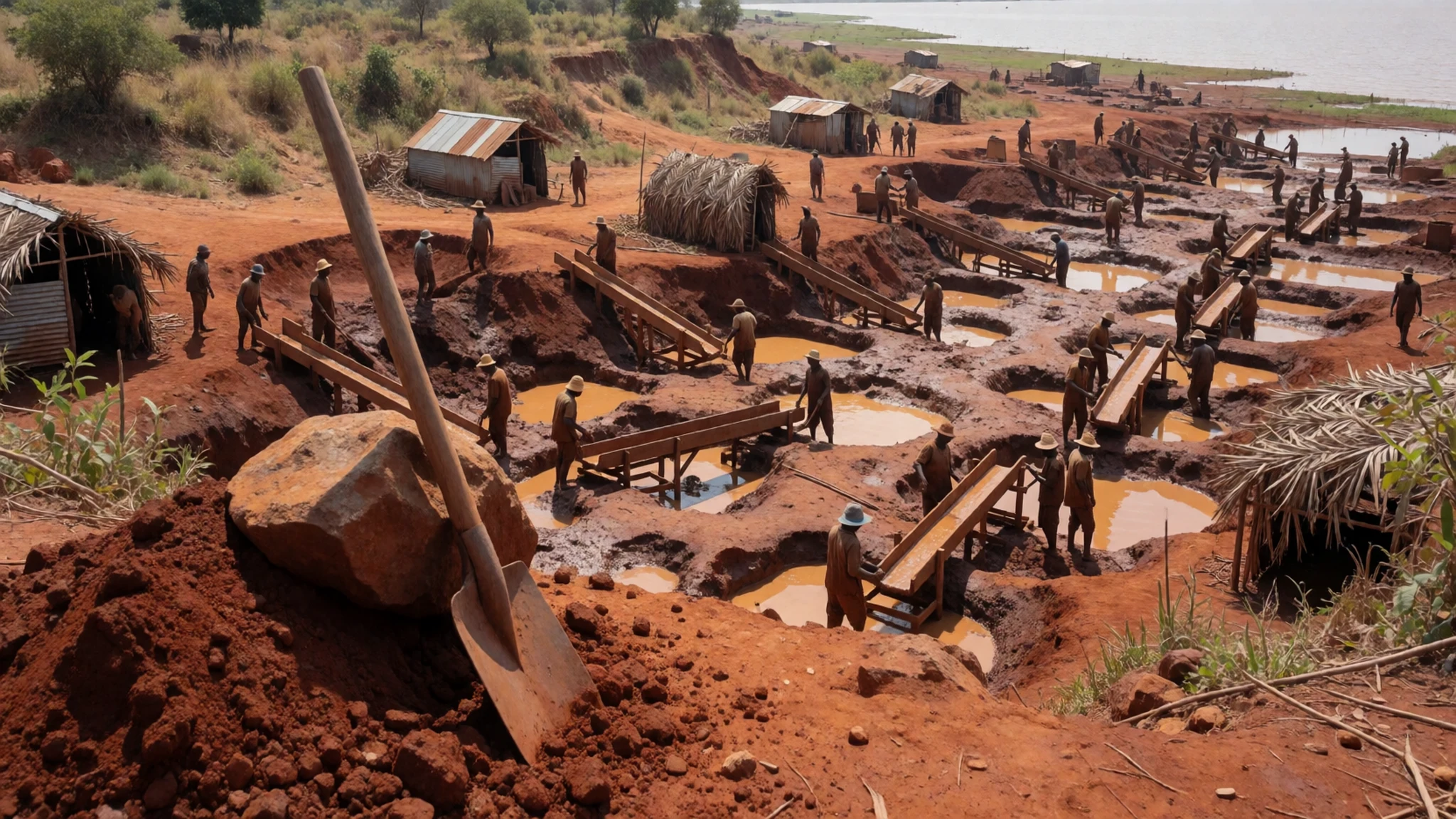
- Kabala and the Wara Wara foothills — Kabala, to the north
Kabala, about 60 km north, is the realistic base for a trip. It is a hill town with cooler air and a market, and the place to arrange a guide, transport and supplies. Ask there about road conditions and about whom to approach for permission to visit the lake.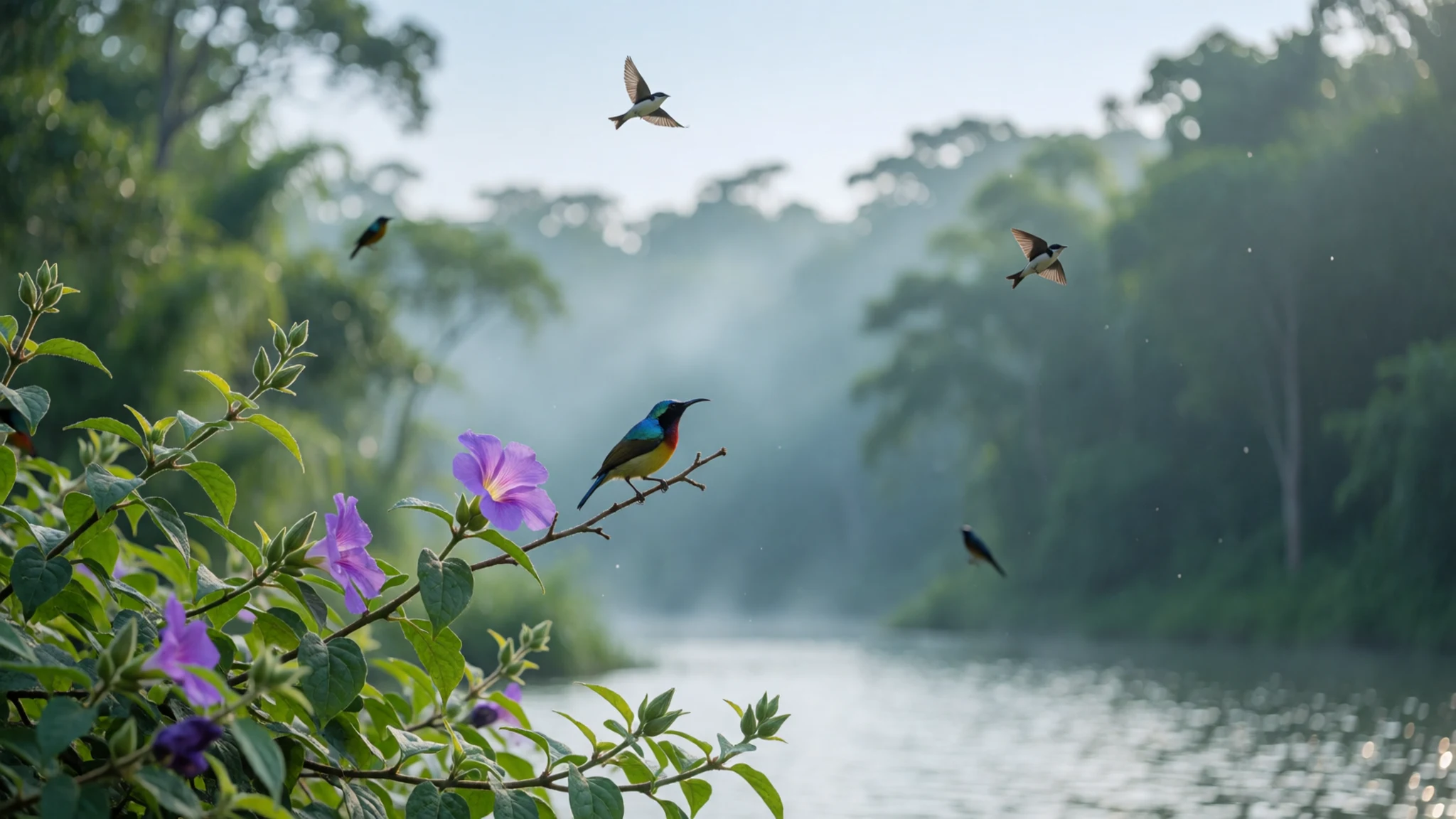
- Alluvial gold workings — Around the lake
Miners work the stream gravels around the lake, and the diggings are part of the real picture of Sonfon. They are working sites rather than attractions, so only look from a distance, ask before photographing people, and do not walk into pits. The effect on water levels is visible and worth understanding.
Culture
Lake Sonfon is sacred in local belief, and that shapes how the place should be approached. The lake is said to hold a powerful djinn, and communities carry out ceremonies along its shore, floating rice and other food onto the water in calabashes. These are not performances. They are acts of respect and request, and they follow their own timing and rules.
The area is rural and the communities are close-knit, with leaders and elders whose permission matters. Visiting normally begins with a greeting and an explanation of why you have come, usually through a guide from Kabala or from a nearby village. Small courtesies count: a handshake, a polite pause, accepting what is offered, and listening to what is off limits.
Sierra Leone is religiously mixed, with Muslim and Christian communities living alongside older traditional practices, and these often coexist without friction. Greetings are warm and unhurried, and rushing straight to business can read as rude. Patience is rewarded.
The lake is also a livelihood. Many families depend on farming and on small-scale gold digging, so conversations about the mining are best approached with curiosity rather than judgement. Ask before taking photographs of people, ceremonies or workings, and be ready to be told no.
Before you go near the water, ask your guide where the community allows visitors to stand, and never touch, move or photograph offerings or ceremonies without clear permission.
What to wear
Traditional dress in northern Sierra Leone draws on cotton cloth woven in narrow strips and sewn together, often called country cloth, which is worn for ceremonies, weddings and by chiefs and elders. Tie-dyed and batik cotton, known as gara, is widely made and worn, and women wear lappas, wrapped cloths, with matching tops and headties for festivals and church or mosque. Many Muslim men wear a long tunic with trousers and a cap on Fridays and special days.
Day to day, people mostly wear practical modern clothes: T-shirts, trousers, skirts and dresses, with wrappers over the top for women and plenty of football shirts. Farmers and miners wear whatever suits mud and heat, often rubber boots or sandals. On special occasions in Kabala, people dress up in bright printed cloth.
For a visitor, the lake region is warm in the day and cooler in the hills at night, with humid and rainy weather in the wet months. Wear light, quick-drying long trousers and a long-sleeved shirt, which also help against insects and thorny undergrowth. Sturdy closed shoes or light boots are better than sandals on muddy, uneven paths. Pack a hat, sun cream and a light rain jacket. Dress modestly, covering shoulders and knees, particularly in villages and around the sacred shore. Bright, loud outfits attract attention; plain colours are more comfortable.
What to eat
- Cassava leaf stew — Home kitchens and small eateries in Kabala
Pounded cassava leaves cooked slowly with palm oil, onion and fish or meat, then served over rice. It is a staple across Sierra Leone and tastes rich, earthy and savoury.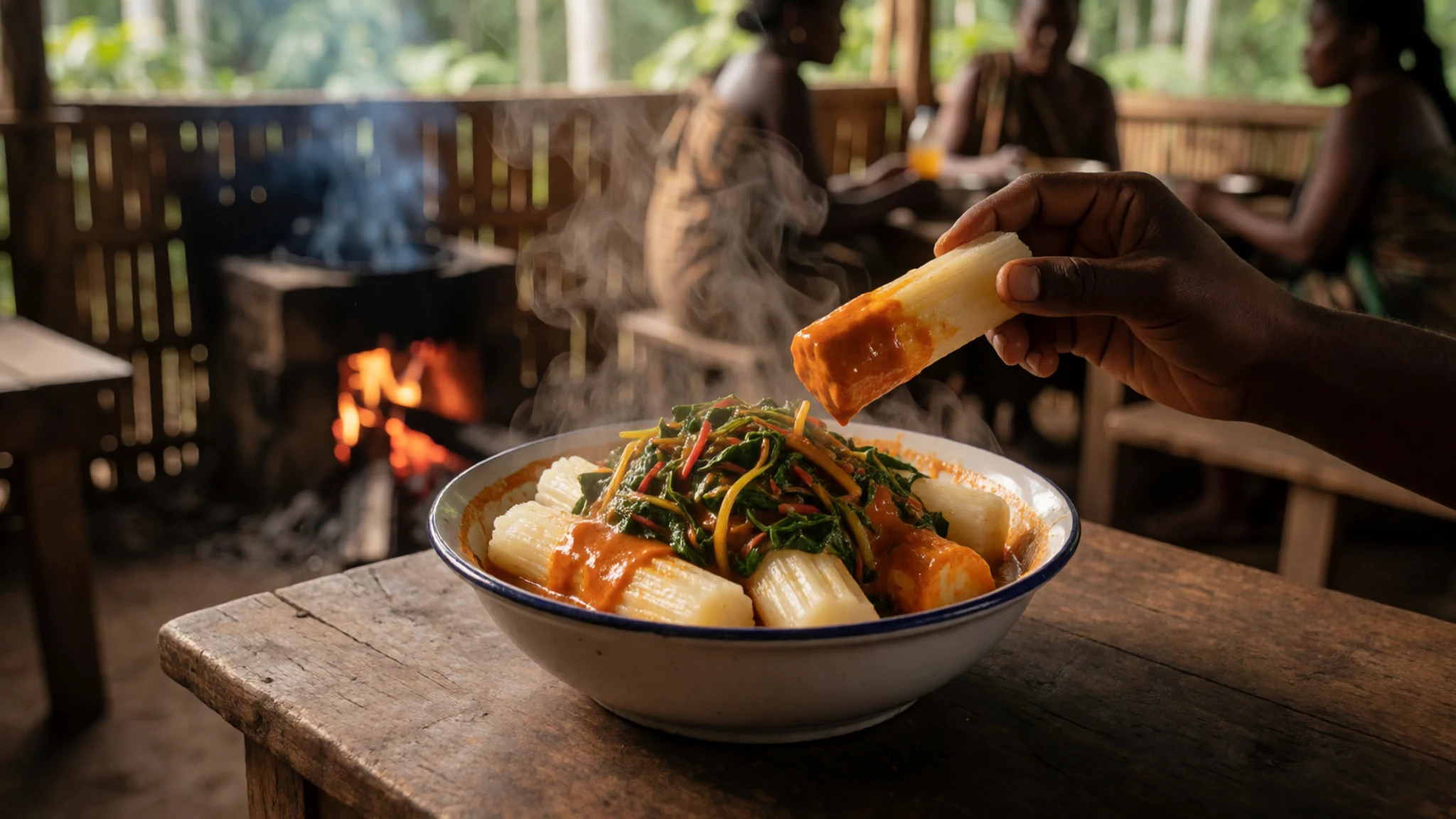
- Groundnut soup — Roadside eateries and market stalls in Kabala
A thick peanut-based sauce with chicken or fish, spiced with chilli and eaten with rice. It is filling and warming, a good meal after a long day on rough roads.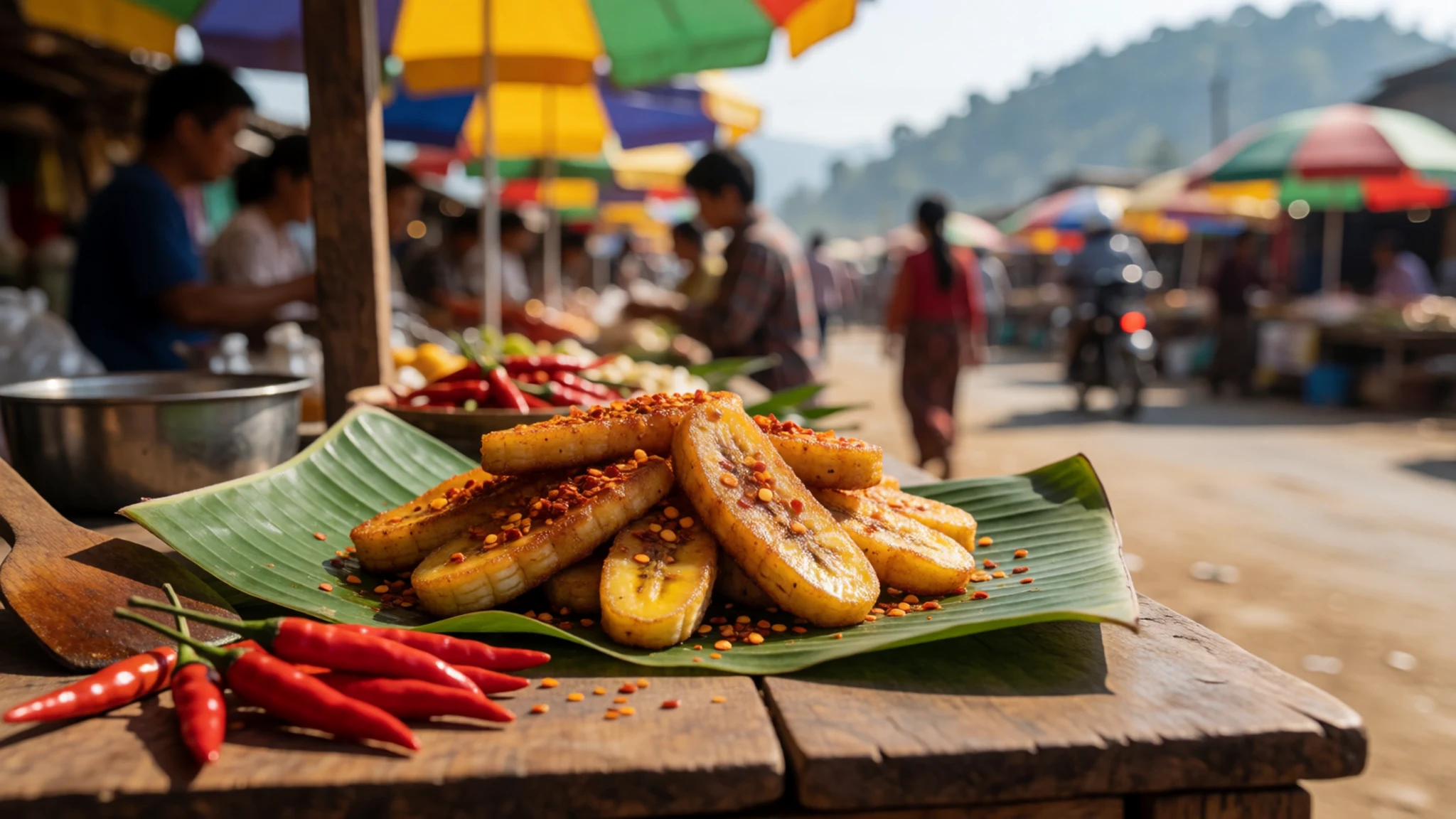
- Rice with plasas — Family-run canteens and market food stalls
Plasas is a general name for leafy sauces cooked in palm oil, made with potato leaf, sweet potato leaf or similar greens. Rice is the base of nearly every meal, and the sauce is the heart of it. - Fried plantain and cassava — Street sellers near the market and bus stops
Ripe plantain slices and cassava chunks fried until crisp at the edges. They are sold hot, wrapped in paper, and make a cheap, easy snack for a day out. - Akara — Morning street vendors in Kabala
Small fried bean fritters, crisp outside and soft within, often sold at breakfast with bread and pepper sauce. They are a practical start before an early trip towards the lake.
Plan it
Best time. November to February is the usual dry season, when tracks are easier to drive and walk, though the lake may be covered with vegetation. The rainy months bring fuller water but muddy, sometimes impassable roads, heavy humidity and more insects.
How long. 2–3
Getting there. Fly to Freetown's international airport, then travel inland by road to Kabala, the usual base; ask locally about the state of the road. From Kabala the lake is reached by rough track with a local guide and a sturdy vehicle, and the final stretch may need a walk.
Budget. mid
Tips
- Arrange a local guide and permission in Kabala before heading to the lake
- Take a sturdy vehicle and ask about road conditions, especially after rain
- Carry cash in small notes, as cards and machines are scarce away from Freetown
- Bring drinking water, snacks, insect repellent, a hat and sun protection
- Pack binoculars if you want to watch birds, and start early in the morning
Etiquette
- Ask before entering the shore or photographing people, ceremonies or offerings
- Greet people properly and accept guidance on where you may go
- Dress modestly and leave no rubbish behind
Nearby
Sources
- Wikidata Q3577165 (CC0)
- Wikipedia: Lake Sonfon (rev 1366271132) (CC BY-SA 4.0)
- Wikivoyage: Sierra Leone (CC BY-SA 4.0)
Wildlife
- Pygmy hippopotamus (animal)
The pygmy hippopotamus is the common hippo's small cousin, a shy creature of forests and swamps, rather like a hippo shrunk to fit among the trees. It is endangered, and the Lake Sonfon area is one of its homes, shared with several kinds of duiker. Our notes give no season or hour for seeing it, so ask your guide what is realistic. Keep well back, stay quiet, go with a guide, and never feed it.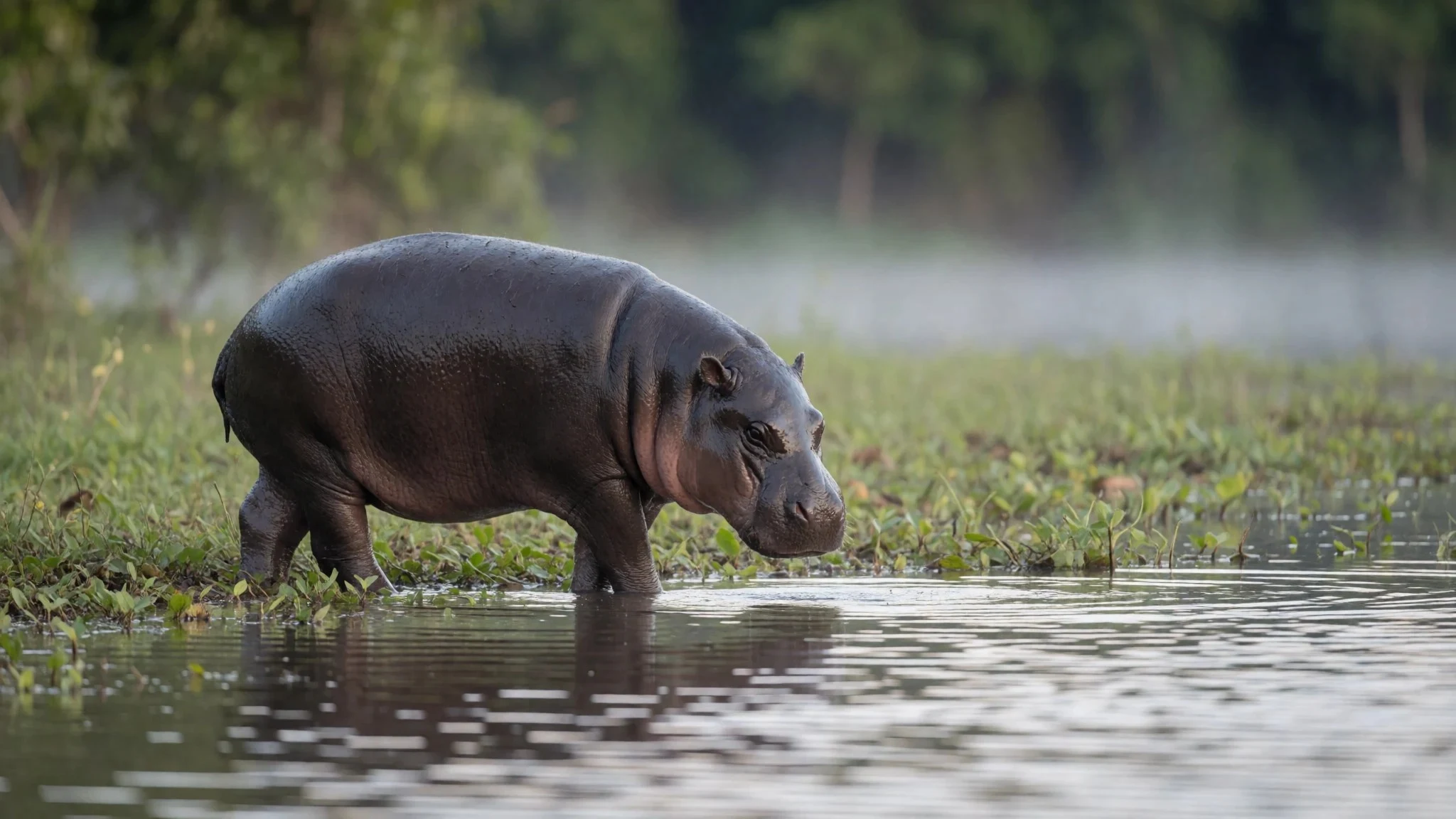
- Iris glossy-starling (animal)
The iris glossy-starling is a glossy-feathered starling, a bird to remember for its shine. Lake Sonfon is recognised as an Important Bird Area, partly because of species like this one. Our notes do not say which season or time of day suits it best, so your guide's local knowledge is the thing to trust. Watch with binoculars from a respectful distance, keep your voice low, move slowly, and never feed wild birds. - Iris glossy-starling (bird)
The iris glossy-starling is a glossy-feathered starling, a bird to remember for its shine. Lake Sonfon is recognised as an Important Bird Area, partly because of species like this one. Our notes do not say which season or time of day suits it best, so your guide's local knowledge is the thing to trust. Watch with binoculars from a respectful distance, keep your voice low, move slowly, and never feed wild birds. - Red-faced pytilia (bird)
The red-faced pytilia, also called the yellow-winged pytilia, is a small African finch, easy to remember by the red face in its name. Lake Sonfon's status as an Important Bird Area highlights its value for birds like this one. The notes do not give a season or time of day, so ask your guide. Watch quietly from a distance with binoculars, avoid crowding it, and never offer food.