Gola Rainforest
Gola Rainforest, Sierra Leone
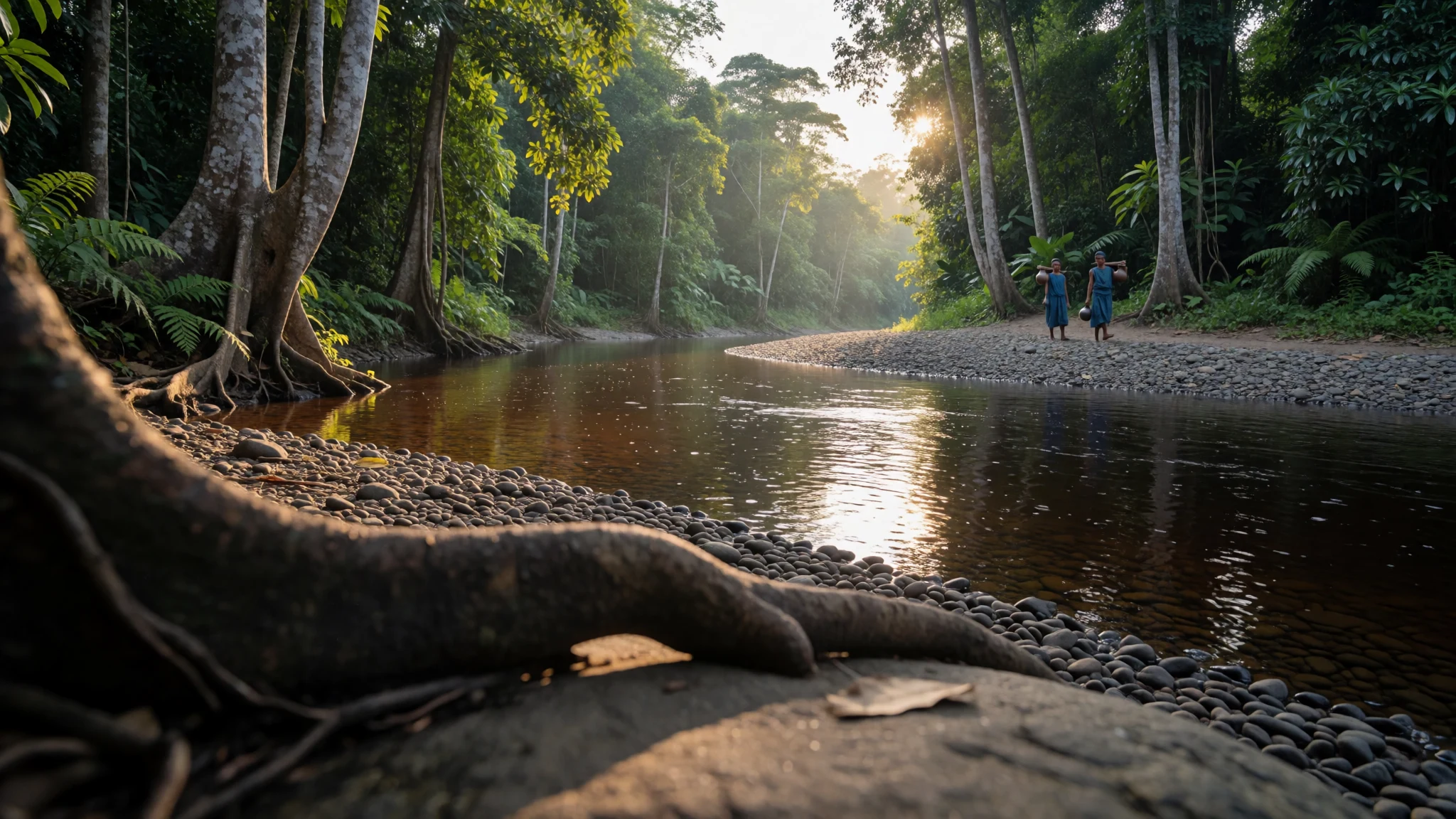
Gola Rainforest is where Sierra Leone keeps its biggest stretch of rainforest, with forest elephants, chimpanzees, monkeys and butterflies, reached on foot and through village guides.
The place
Gola Rainforest National Park lies in eastern Sierra Leone, near the Liberian border, and holds the country's largest remaining block of rainforest. It covers 71,070 hectares and is part of the Upper Guinea Forest, a belt of humid woodland that once ran along the West African coast from Guinea to Togo, and which scientists treat as a biodiversity hotspot. The park is divided into North, Central and South Gola, and each sector has its own access point, village partners and style of visit. Over the border, Liberia has a Gola National Park of its own, and the forest simply carries on across the line.
The species lists are long. More than 330 bird species have been recorded here, along with about 650 kinds of butterfly and 49 mammals, among them western chimpanzees, pygmy hippopotamuses and forest elephants. Seeing them is another matter. The canopy is thick, the animals are wary, and most days on the trails are spent listening, reading footprints and following guides who know the ground. Diana monkeys and other primates are the likeliest sightings, and butterflies and frogs are easy to find if you look down at the leaf litter.
This is not a place of viewpoints and tarmac. Paths are muddy, the air is heavy, rain can arrive at any hour in the wetter months, and the nearest services are in market towns some distance away. In 2025 the park was inscribed as a World Heritage Site together with Tiwai Island, but it still feels quiet, with accommodation that is simple and visitor numbers that are small.
Its story
Gola Rainforest National Park is the product of a long argument over what the forest is for. Before it was protected, large stretches were logged commercially over several decades of the later twentieth century. Pressure from diamond and iron-ore interests has not gone away, and the forest has been the subject of critical reporting by the campaign group Global Witness.
The turn towards conservation began in the 1990s. A partnership grew between the Government of Sierra Leone, the Conservation Society of Sierra Leone and the Royal Society for the Protection of Birds. Its central idea was that the forest would last only if the villages along its edge had a stake in it, so livelihoods and local decision-making were built into the project from the start. A similar community-based approach was taken on the Liberian side, where people share cultures with their Sierra Leonean neighbours, and where the same animals and plants cross the border unbothered. A further protected area, Lofa-Mano, has been proposed in north-eastern Liberia, next to the park.
The legal step came at the end of 2010, when Parliament enacted the park into law, a move led by President Ernest Bai Koroma. The new park merged the Gola North, Gola East and Gola West forest reserves, and it was formally opened in December 2011, making it the country's second national park. The latest chapter came in 2025, when UNESCO recognised Gola and Tiwai Island together as a single natural World Heritage complex.
What to see
- Gola Conservation Centre, Lalehun — Lalehun, Gola Central
The centre at Lalehun is the easiest way into Gola Central and the base for most first visits. Trails run from here into the forest, with guided walks and camping trips of different lengths. An old Gola burial site can be visited on foot, a quiet reminder that people lived in this forest long before the park existed.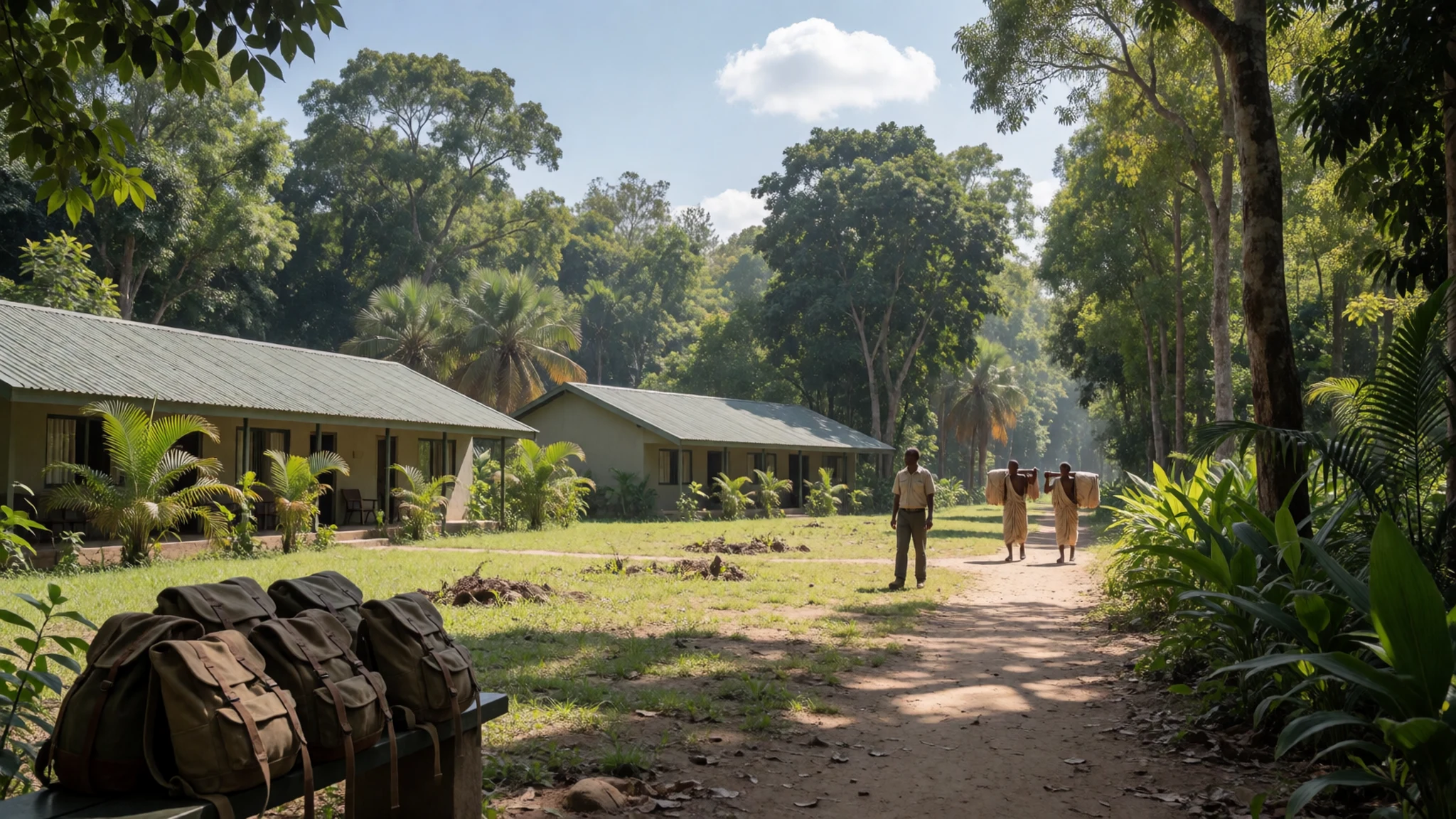
- Diana Monkey Lodge trails — Sileti, Gola South
In Gola South, the lodge at the Sileti substation offers short nature walks aimed at the resident groups of Diana monkeys. With patience, red colobus and black-and-white colobus may also show themselves in the branches. Walks are comfortable for most fit visitors, though the ground is damp, so expect mud and leave early.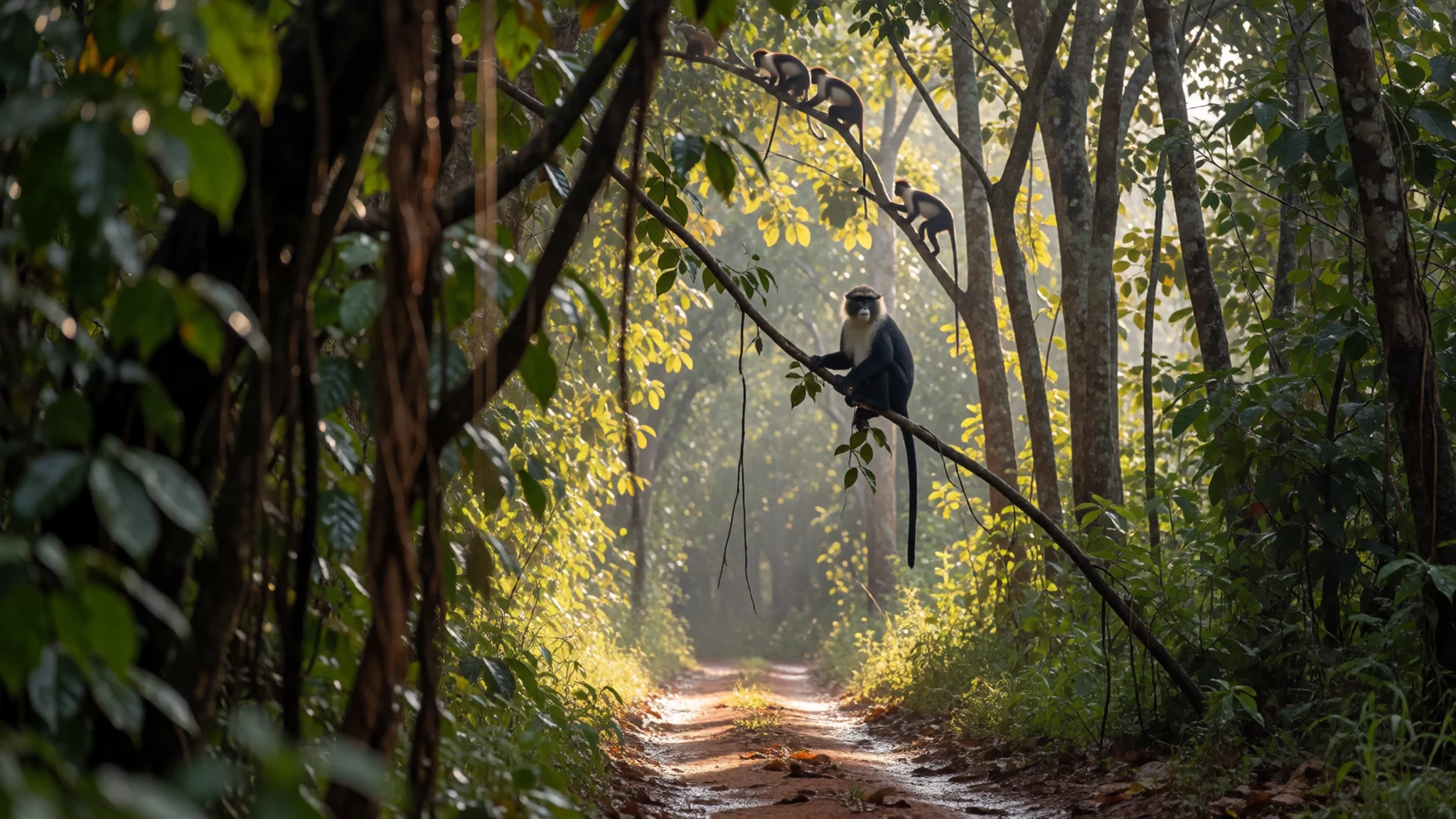
- Mahoi River camping trip — Gola South
An overnight camping trip follows the Mahoi River on easy to moderate walking, with tents and food arranged through the lodges. It is a good way to hear the forest at dusk and dawn, when frogs, birds and primates are most vocal, without committing to a long trek.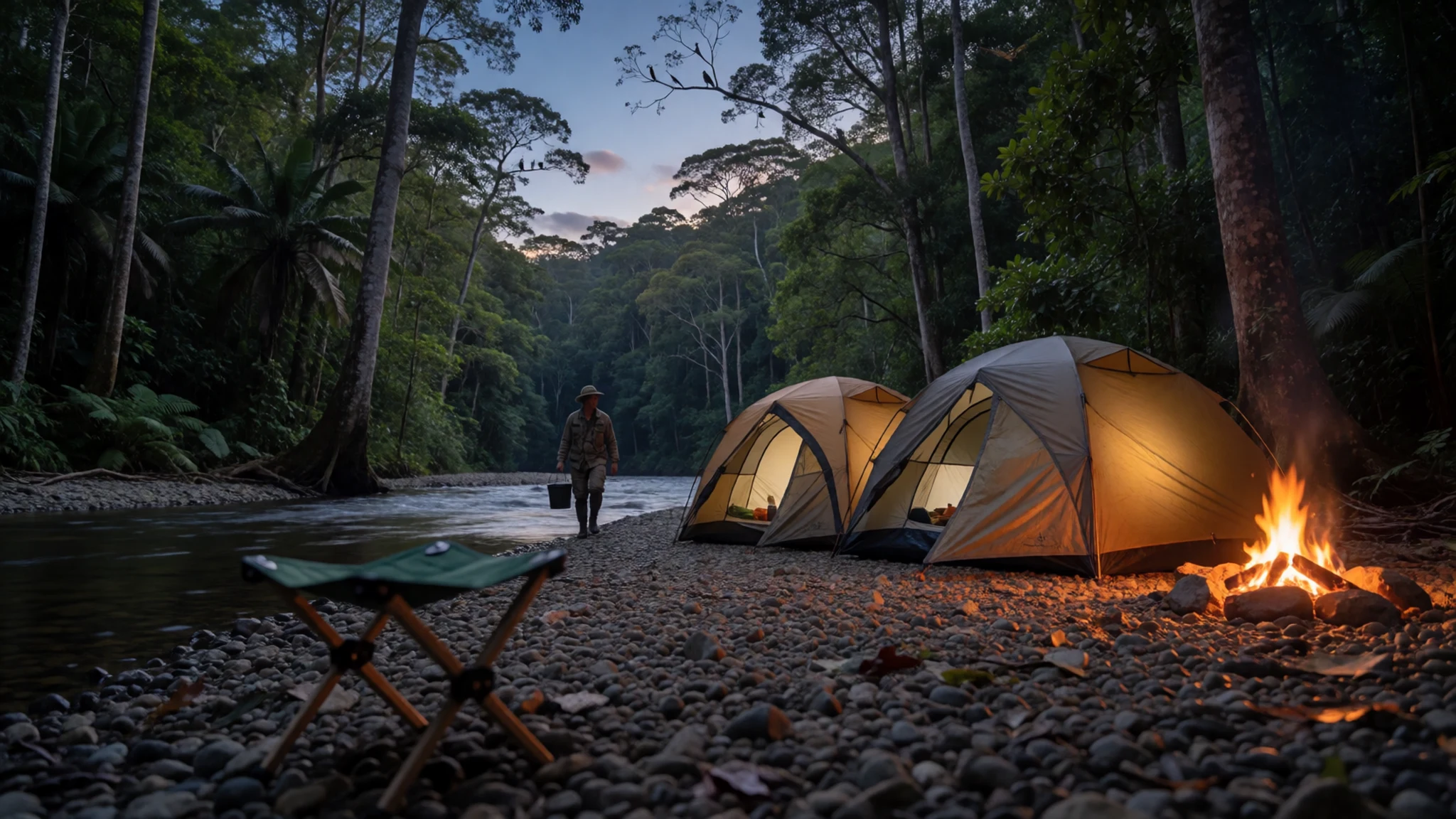
- Gola South to Tiwai Island trek — Gola South to Tiwai Island
The hardest option is a multi-day trek from Gola South through to the Tiwai Island Wildlife Sanctuary. It is more rugged than the other routes and needs good fitness, proper boots and a guide. It links the two halves of the World Heritage complex and gives the clearest sense of the forest's scale.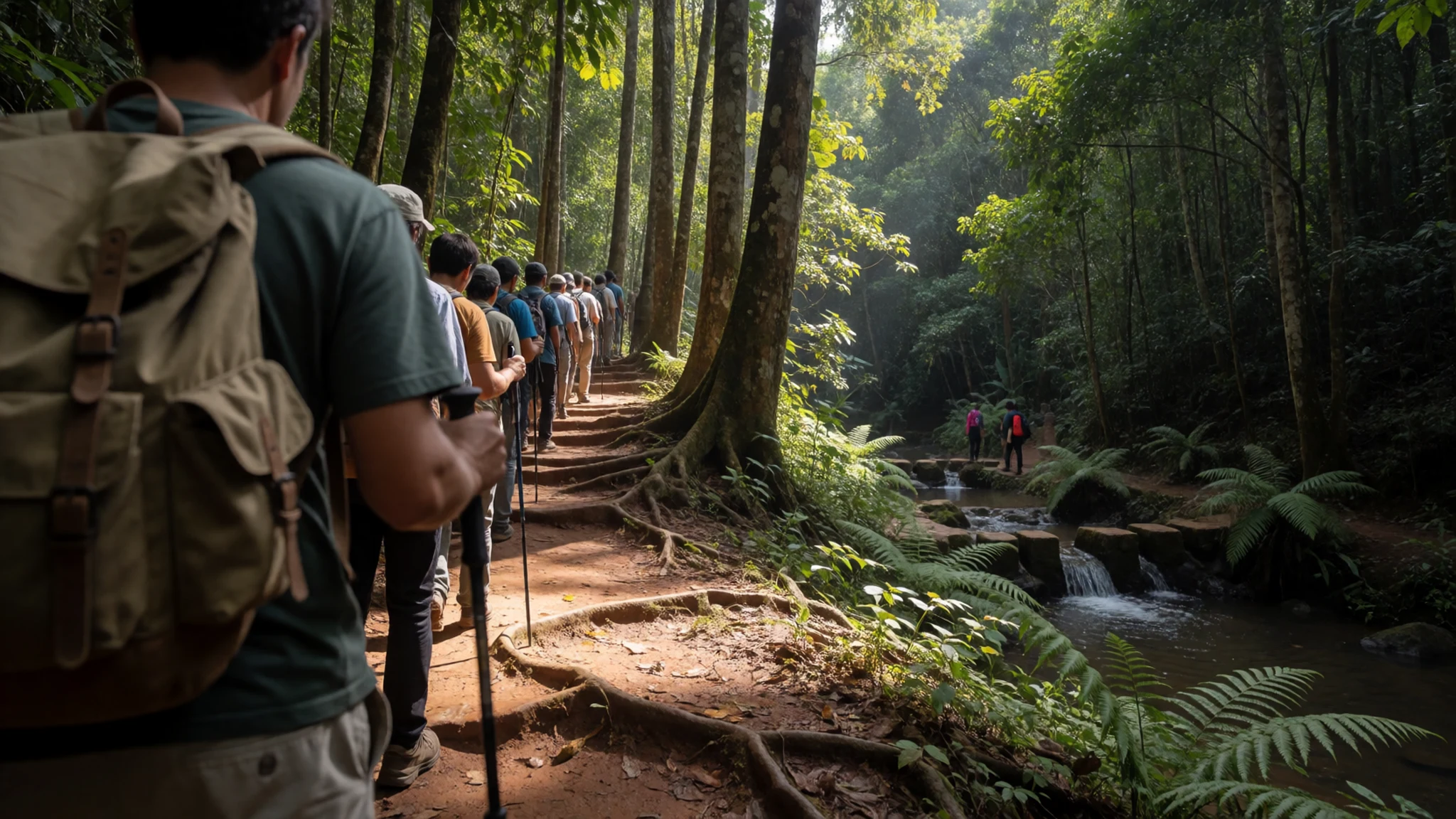
- Belebu community and its guides — Belebu, near Lalehun, Gola Central
Belebu lies south of Lalehun, about an hour and a half to two hours from Kenema by road. Local guides lead climbs to open viewpoints over the forest, and they can take visitors to a nesting site of the rockfowl known as picathartes, as well as areas where several monkey species are regularly seen.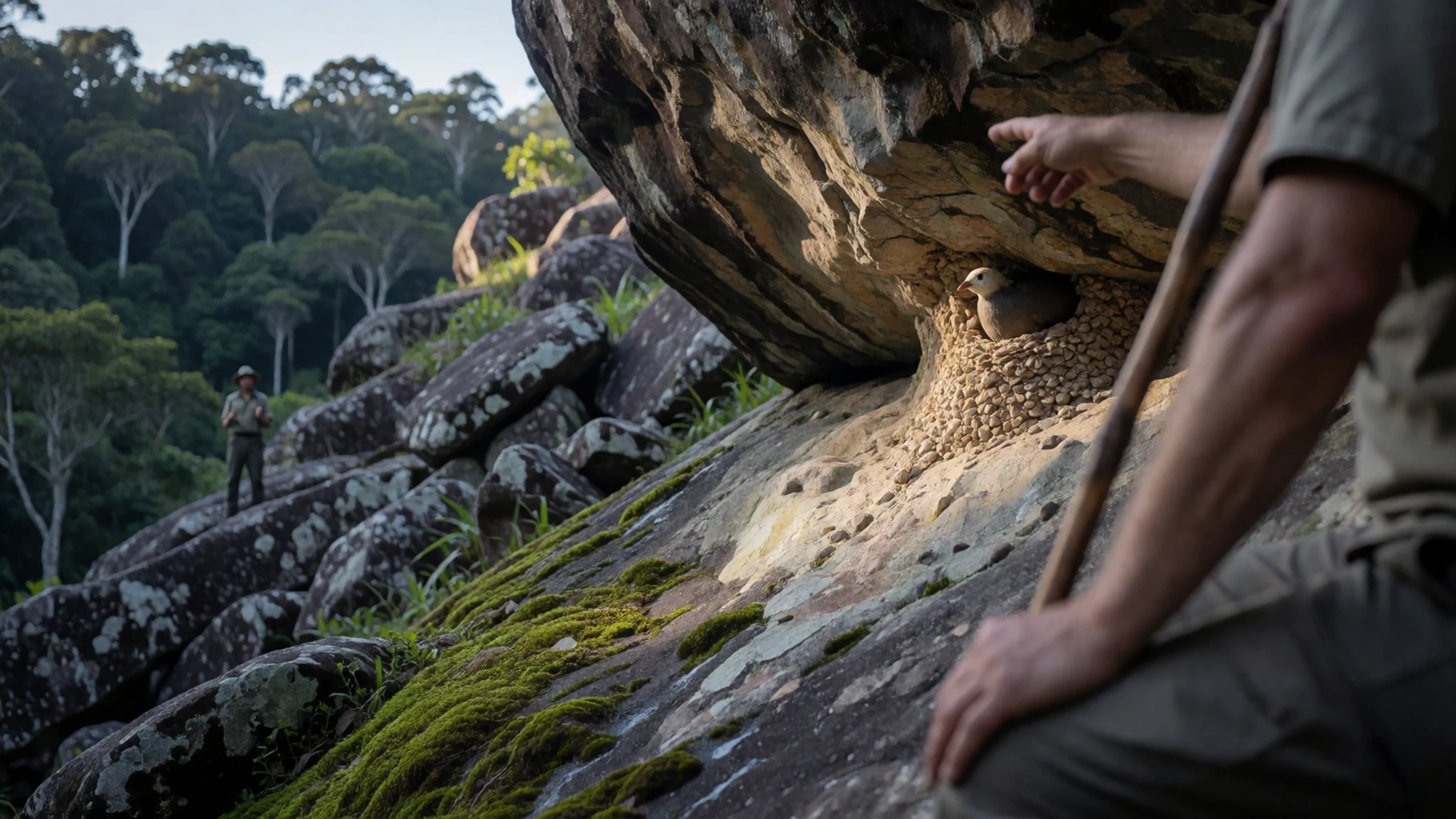
Culture
Gola Rainforest National Park sits in Mende country, and village life around the forest edge is as much a part of a visit as the trees. Mende communities farm rice and other crops, keep strong local institutions led by chiefs and elders, and have long used the forest for food, medicine and building material. The Gola people, from whom the forest takes its name, also have a history here, and an old burial site on the Gola Central trails is a reminder of it.
The park's model depends on these communities. Guides, cooks, porters and lodge staff are drawn from the villages around it, and money from visitors is meant to reach them directly. Staying in a community lodge or visiting a village such as Nemahungoima is therefore a cultural exchange as well as a convenience, and it works best when visitors are curious, unhurried and willing to sit and talk.
Greetings matter. People will ask after your health, your journey and your family before any business, and the same courtesy is expected in return. Meals are usually shared, Sunday and Friday observances shape the rhythm of village days, and many communities are Muslim, Christian or both, so plans can shift around prayers and funerals. Forest customs also exist: some places are treated as sacred or restricted, and guides will say where to step carefully.
Before taking a photograph of anyone in a village, ask first and accept a refusal, and follow your guide's advice on sacred sites and on what to give or not to give.
What to wear
Traditional dress around Gola Rainforest National Park draws on Mende and wider Sierra Leonean textiles. Country cloth, a strip-woven cotton cloth sewn into robes and wraps, is worn for ceremonies and by elders. Gara, cotton that is tie-dyed or batik-printed in indigo and other colours, is made into shirts, dresses and head ties. Women commonly wear a wrapped lappa skirt with a matching top and head tie, and men may wear a loose long shirt with trousers, especially for festivals, church, mosque and family occasions.
Day to day, village clothing is practical and modest. Many people wear second-hand shirts, T-shirts and trousers, wrapped cloth for work around the house, and rubber boots or sandals on muddy farm paths. In Kenema and larger towns, bright printed dresses, tailored shirts and neat trousers are common, and people take pride in being well turned out for church, mosque or market days.
Visitors should dress for heat, damp and insects first, and for modesty second. Light long-sleeved shirts and long trousers in quick-drying fabric protect against scratches, ticks and mosquitoes. Waterproof walking boots with good grip are better than trainers on slippery ground, and thick socks help against leeches in wet weather. Bring a light rain jacket and a hat. In villages, cover shoulders and knees, and women may feel more comfortable with a light scarf. Swimwear is for rivers away from communities, and then with a sarong over it.
What to eat
- Rice with cassava leaf stew — Community lodges and village kitchens near the park
Rice is the centre of a Sierra Leonean meal, and cassava leaves, pounded and slow-cooked with palm oil, fish or meat and pepper, are among the most common stews. Expect it as the staple dish at lodges and in village homes.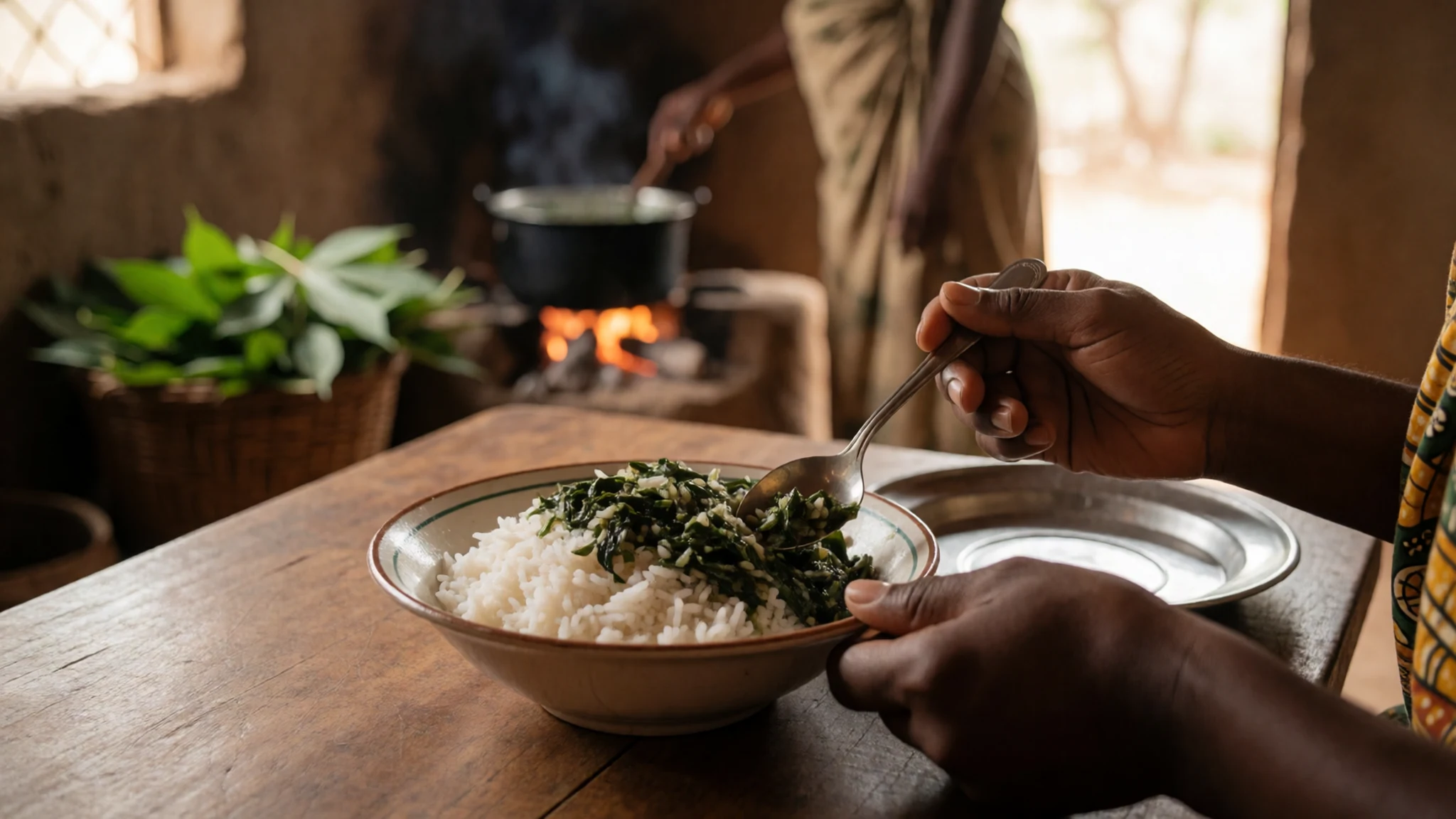
- Groundnut stew — Lodge meals and eateries in Kenema
A thick, savoury stew built on ground peanuts, usually with chicken or fish and chilli, served over rice. It is filling after a long walk and a reliable choice for visitors who are cautious about heat.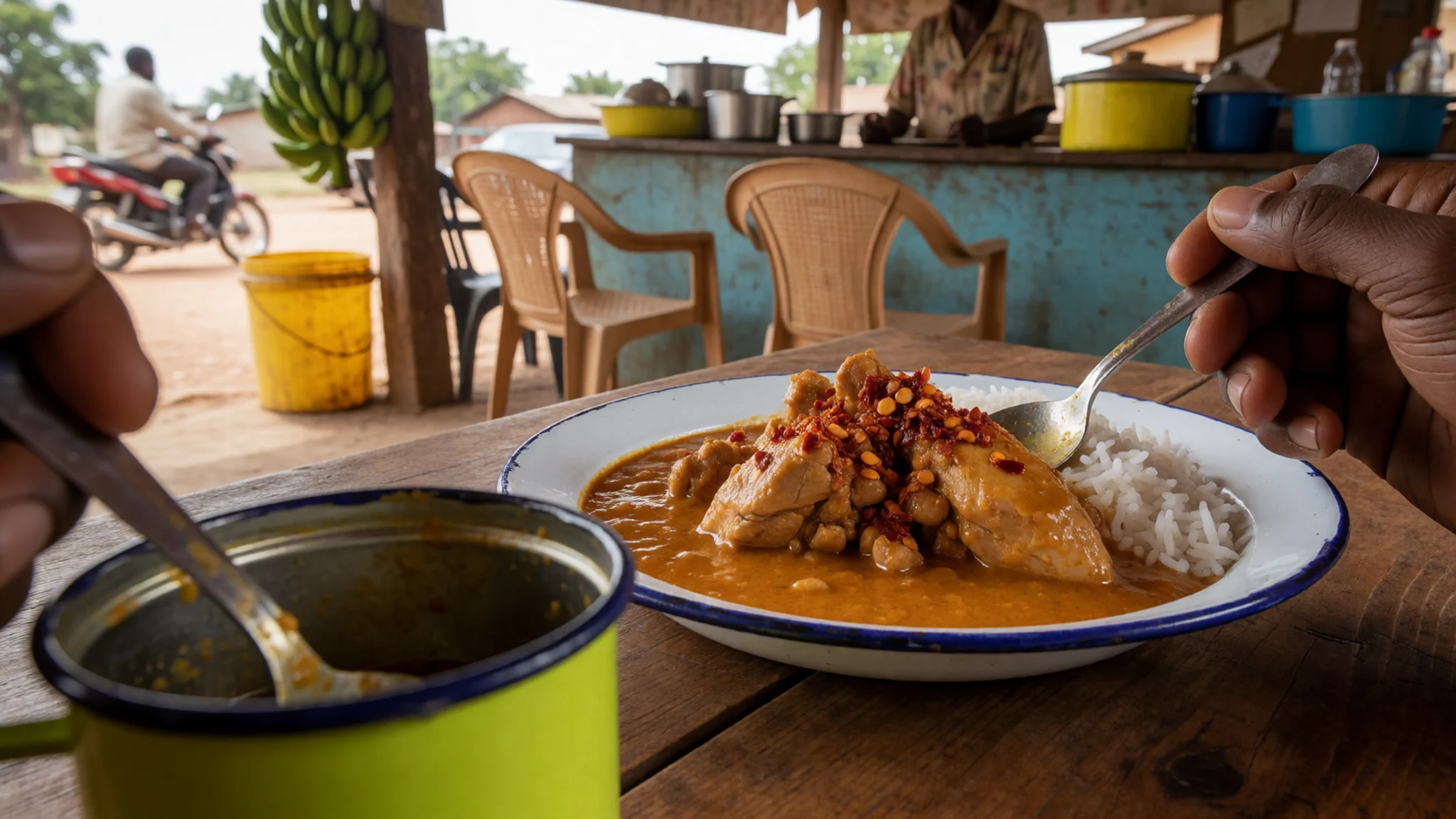
- Jollof rice — Roadside eateries and markets in Kenema and Bo
Rice cooked in tomato, onion and spices until it turns orange-red, often with chicken. Its flavour and spice level vary from cook to cook, and it is a regular at celebrations as well as everyday meals. - Fried plantain and akara — Street stalls and the main market in Kenema
Slices of ripe plantain fried until caramelised, and akara, fried bean cakes that are crisp outside and soft within. Both make good snacks for the trail, and they are cheap and usually cooked fresh while you wait. - Pepper soup — Village homes and small eateries near the park
A thin, peppery broth with fish or meat, sharp with chilli and warming on a wet evening. It is often the dish to try when a guide says the cook is proud of her recipe, and it is usually served hot enough to need patience.
Plan it
Best time. The dry season, roughly December to March, is the easiest time for walking, with firmer ground and fewer leeches. The rains bring heavier downpours, muddier trails and more insects, though the forest is at its greenest. Check conditions with the park team before travelling.
How long. 3–4
Getting there. Fly to Freetown, then travel by road to Kenema or Bo. The Gola Conservation Centre at Lalehun, the quickest way in, is about 40 km from Kenema on the last leg, usually around an hour and a half. For Gola South and Diana Monkey Lodge, count on roughly 75 km south of Kenema, about three hours. Check the official site, golarainforest.org, for current routes.
Budget. mid
Tips
- Book lodges, guides and any camping through the park team in advance, since facilities are small and simple
- Set off on forest walks early, when animals are most active and the air is cooler
- Carry cash in small notes, because cards and cash machines are scarce outside larger towns
- Bring a refillable bottle with a water filter or purification tablets
- Allow extra time on the road, as journeys depend on weather and the state of the track
Etiquette
- Greet people before asking for anything, and ask before photographing anyone
- Follow your guide on forest paths and do not feed or chase wildlife
- Take all litter with you and keep voices low near animals
Nearby
Sources
- Wikidata Q1512159 (CC0)
- Wikipedia: Gola Rainforest National Park (rev 1365733638) (CC BY-SA 4.0)
- Wikivoyage: Gola Rainforest National Park (rev 5383757) (CC BY-SA 4.0)
- Photo: Loxodonta cyclotis, Thomas Breuer (CC BY 2.5)
- Photo: Leptopelis macrotis, Roedel et al. 2014 (CC BY 4.0)
- Photo: Acraea camaena, NSG group (CC0 1.0)
- Photo: Acraea abdera, NSG group (CC0 1.0)
- Photo: Acraea zetes, NSG group (CC0 1.0)
- Photo: Euphaedra sarcoptera, NSG group (CC0 1.0)


Wildlife
- Forest elephant (animal)
The African forest elephant is the smallest of the three living elephant species, a gentle giant with straight tusks that point downwards and a home among the trees. In Gola Rainforest, Sierra Leone's largest stretch of rainforest, it shares the forest with chimpanzees and monkeys. You look for it on foot, with a village guide leading the way. Keep a respectful distance, speak softly, follow your guide's advice, and never offer food, so that the elephants stay truly wild. - Western chimpanzee (animal)
The western chimpanzee is a clever forest ape, a kind of common chimpanzee, and sadly a critically endangered one. Gola Rainforest is one of the places in Sierra Leone where it has been recorded, alongside pygmy hippopotamuses and forest elephants. Seeing one takes patience, so walk with a local guide who knows the forest. Stay well back, keep your voice low, and never feed or try to touch it. Wild chimpanzees are best admired from afar. - White-necked rockfowl (bird)
The white-necked rockfowl is the bird with a bright yellow bare head, two round black patches behind its eyes and a very long tail that helps it balance. In Gola Rainforest, local guides can take visitors to a nesting site of this bird, also called picathartes. It usually lives near rocks and streams, and it is mostly silent, so move quietly. Follow your guide, keep well back from the nest, and never feed it.