Tiwai Island
Tiwai Island, Sierra Leone
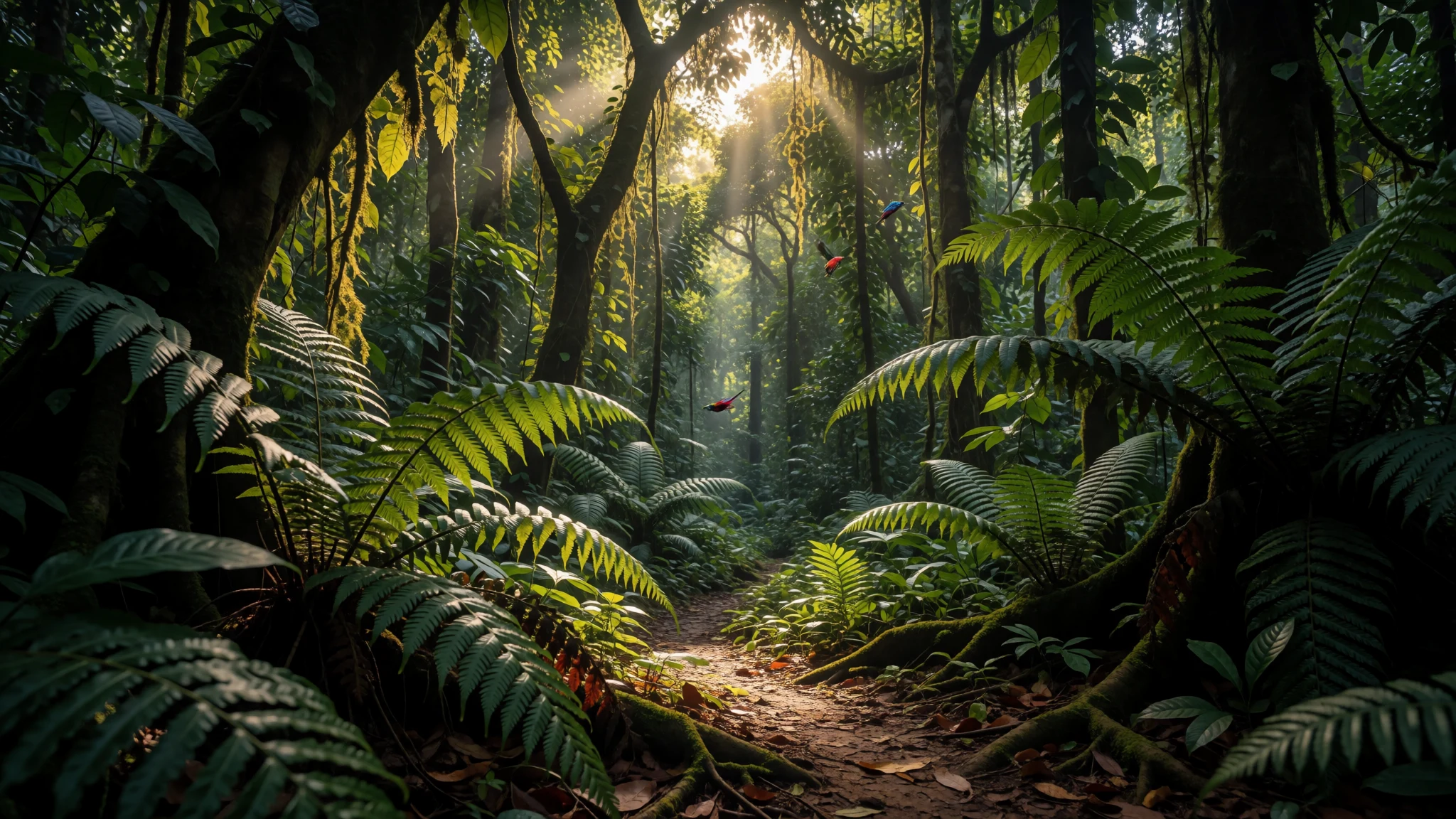
Tiwai Island is a rainforest sanctuary in the Moa River, where chimpanzees, pygmy hippos and shared village stewardship make for a quiet wild stay.
The place
Tiwai Island sits in the Moa River in Sierra Leone's Southern Province, in Pujehun District. Its name means 'Big Island' in Mende. It is a wildlife sanctuary run by a Sierra Leonean non-governmental group, the Environmental Foundation for Africa, rather than a state park with a ticket office and tarmac. The river around it moves slowly, wide and brown, and the only way across is by boat from a landing on the mainland. The island is low but not flat: the ground rises and falls under tall rainforest that belongs to the Upper Guinea forest belt, a region conservationists treat as a biodiversity priority. In that forest live chimpanzees, several monkey species, forest antelope and a population of pygmy hippos, which are shy, nocturnal and far more often glimpsed as tracks than as animals. Birdlife is rich, and the plant list runs to hundreds of species. The climate is tropical and warm all year. Rain falls heavily from May to October, the roads soften and paths turn to mud; the drier months from December to March are kinder on both the body and the vehicle. Facilities are simple: camping and basic lodging, guides, and not much else. Tiwai suits people who like early starts, wet boots and patience with wildlife that keeps its own schedule. It is a place to be quiet in, not a place for a long checklist.
Its story
Tiwai Island has been shared ground for a long time. Until the late nineteenth century it belonged to the Barri people. Then their ruler, Queen Nyarroh, handed half of it to the chief of the Koya, whose lands lay across the Moa on the opposite bank. Since then the two communities have held the island jointly, and that arrangement still shapes how it is looked after.
Naturalists began turning up in the decades before the war, drawn by the primates and the forest. Some of them joined the Barri and Koya in asking for formal protection, and in 1987 Tiwai was designated a game reserve. Work there grew to include ecological research, wildlife management, community conservation programmes and training in tourism and forestry.
That came to a halt when civil war began in 1991. Funding dried up, and neither researchers nor visitors could get to the island. Peace brought the chance to start again. The Environmental Foundation for Africa, a Sierra Leonean organisation, rebuilt the visitor and research facilities, and the sanctuary reopened to people who wanted to see forest rather than headlines.
The story is useful to know on arrival. Local guides are not simply staff; many come from communities with a long claim to the place. Tiwai's protection came partly from scientists, but also from the people who had lived beside it for generations, and conservation here is as much a local project as an outside one.
What to see
- Guided forest walks — Forest trails, Tiwai Island
Tiwai Island's forest is explored on foot with a local guide, on short or long routes that suit different fitness levels and patience. Early morning is best for primates and birds, when the canopy is noisy and the heat has not built. Expect roots, mud and stretches of stillness where the guide stops to listen. Wildlife is likely but never guaranteed. - Night walks — Forest trails, Tiwai Island
After dark Tiwai Island changes character. Guides lead night walks with torches, looking for eyeshine, frogs, insects and the nocturnal animals that daytime visitors miss. Pygmy hippos are among the hoped-for sightings, though they are shy and seeing one is luck. Wear long sleeves, keep voices low and stay close to the guide, since paths are uneven and unlit. - River tour on the Moa — Moa River around Tiwai Island
A boat trip on the Moa River shows Tiwai Island from the water, with forest walls on both banks and the slow brown current moving past. Birds work the margins, and the boat is a quiet way to watch the shoreline for monkeys and signs of hippos. Go at the start or end of the day, when the light is softer. - The northern beach — Northern end of Tiwai Island
At the northern end of Tiwai Island a sandy river beach gives a break from the forest. It is a place to sit, cool the feet and watch the water, and otters are sometimes reported here. Ask the guides about currents and wildlife before getting in, as the Moa is a working river, not a swimming pool. - Village cultural tour — Villages beside the Moa River, off the island
Tiwai Island is ringed by communities, and a cultural tour visits one of the villages on the mainland beside it. It is a chance to meet people who share ownership of the island, hear about farming, fishing and local history, and see how visitor income reaches households. Go with a guide and ask how to arrange the visit respectfully. - Tiwai Heritage Trail — Villages around Tiwai Island
The Tiwai Heritage Trail is a multi-day walking expedition linking all the villages around the island, for travellers who want more than a day in the forest. It is a commitment: basic conditions, long days and weather that changes fast. Contact the Environmental Foundation for Africa well ahead and ask what the route covers in the season you plan to travel.
Culture
Tiwai Island is part of a landscape of Mende-speaking farming and fishing villages along the Moa River, and its culture is best understood through the people who share it. The island's name means 'Big Island' in Mende, and two communities, the Barri and the Koya, hold it jointly, a legacy of a gift made by a Barri ruler long ago. Daily life in the nearby villages revolves around rice and cassava farming, river fishing, markets and the rhythm of the rains. Sierra Leone is home to both Muslim and Christian communities who generally live side by side, and visitors will hear Mende, Krio and English in the same conversation. Forests across the region often carry spiritual meaning, and some places may be set aside for ceremonies or societies; guides will explain what is open and what is not. Hospitality matters: greetings are unhurried, and asking after someone's family and health before getting to business is normal. A guided visit is also a form of income for local households, so the way visitors behave reaches the people who protect the forest. Patience, a few greetings in Mende or Krio and genuine curiosity go a long way. In villages and on forest paths, greet people properly, ask permission before photographing anyone, and follow your guide's instructions about places that are off limits.
What to wear
Around Tiwai Island, traditional dress draws on the wider Sierra Leonean wardrobe. Country cloth is woven by hand in narrow cotton strips and sewn into robes and smocks for ceremonies and important occasions. Gara is cotton cloth tie-dyed or resist-dyed, often in indigo, and batik prints are common too. Women wear a lappa, a length of wrapped cloth, with a fitted top or a loose buba blouse and often a matching head tie; men wear tailored shirts or long gowns. These outfits come out for weddings, funerals, Fridays at the mosque and Sundays at church.
Everyday clothes in the villages are practical: T-shirts, football shirts, wrappers, skirts, shorts and trousers, with rubber boots or sandals for farm work and the river. Modesty matters, particularly for women.
For visitors, think of forest and river first. Light, quick-dry long sleeves and trousers protect against insects, scratches and sun. Boots with a good grip are worth more than anything else you bring, because trails are muddy in the rains. Pack a rain jacket, a hat and a spare dry set for evenings. In villages, cover shoulders and knees, and save swimwear for the beach.
What to eat
- Cassava leaf stew with rice — Village kitchens and roadside eateries near Potoru and Bo
A staple across Sierra Leone: pounded cassava leaves cooked slowly with palm oil, onion and fish or meat, then ladled over rice. It is rich, savoury and filling. Look for it in village kitchens and roadside eateries on the way in, or ask the camp whether a cook can prepare it. - Groundnut stew — Local eateries in Bo and larger villages
A thick, mildly spicy stew made from ground peanuts, tomato and onion, usually with chicken or fish and served over rice. It is hearty after a long forest walk. Quality varies with the cook, so ask locals which eatery is trusted for it. - Jollof rice — Town eateries and festive gatherings in Bo
Rice cooked in a tomato and pepper base, often with chicken, vegetables or fish, and a common dish for celebrations. Versions differ from cook to cook and from country to country, which is half the fun of comparing. It is easy to find in towns and at gatherings. - Fried plantain — Roadside vendors and market stalls in Bo and on the road south
Ripe plantain sliced and fried until caramelised at the edges, sold hot as a snack or side. It travels well in a daypack and is an easy sweet-savoury break between long walks. Buy it from vendors in the morning, when it is freshest. - Grilled river fish — Riverside villages along the Moa
Fish from the Moa and nearby streams is typically grilled over charcoal or cooked in a pepper sauce, and eaten with rice or cassava. It is a good way to taste local fishing life. Ask your guide to point you to a trusted source, and eat only freshly cooked fish.
Plan it
Best time. December to March, the dry season, is the easiest time for trails, roads and river crossings; May to October is the heavy rainy season, with muddy tracks, high water and more insects. The climate is tropical and warm all year.
How long. 2–3
Getting there. Fly to Freetown's Lungi airport, then hire a four-wheel-drive vehicle with a driver in Freetown or Bo; there is no public transport to the island. The route runs south from Bo through Potoru to a river landing, where a boat makes the final crossing.
Budget. mid
Tips
- Contact the Environmental Foundation for Africa before travelling to confirm lodging, guides and boat arrangements
- Bring your own food, drinking water and a way to purify it, as supplies on the island cannot be relied on
- Start walks at first light for the best chance of seeing primates and birds
- Carry cash in small notes, as cards are unlikely to work away from Freetown
- Pack insect repellent, a head torch and waterproof bags for electronics, especially in the rains
Etiquette
- Follow your guide's instructions near wildlife and keep your distance from the animals
- Ask before photographing people in villages and greet elders first
- Carry out all your rubbish and avoid disturbing plants or nests
Nearby
Sources
- Wikidata Q1504757 (CC0)
- Wikipedia: Tiwai Island (rev 1365740955) (CC BY-SA 4.0)
- Wikivoyage: Tiwai Island (rev 5092730) (CC BY-SA 4.0)