Moroni
Moroni, Comoros
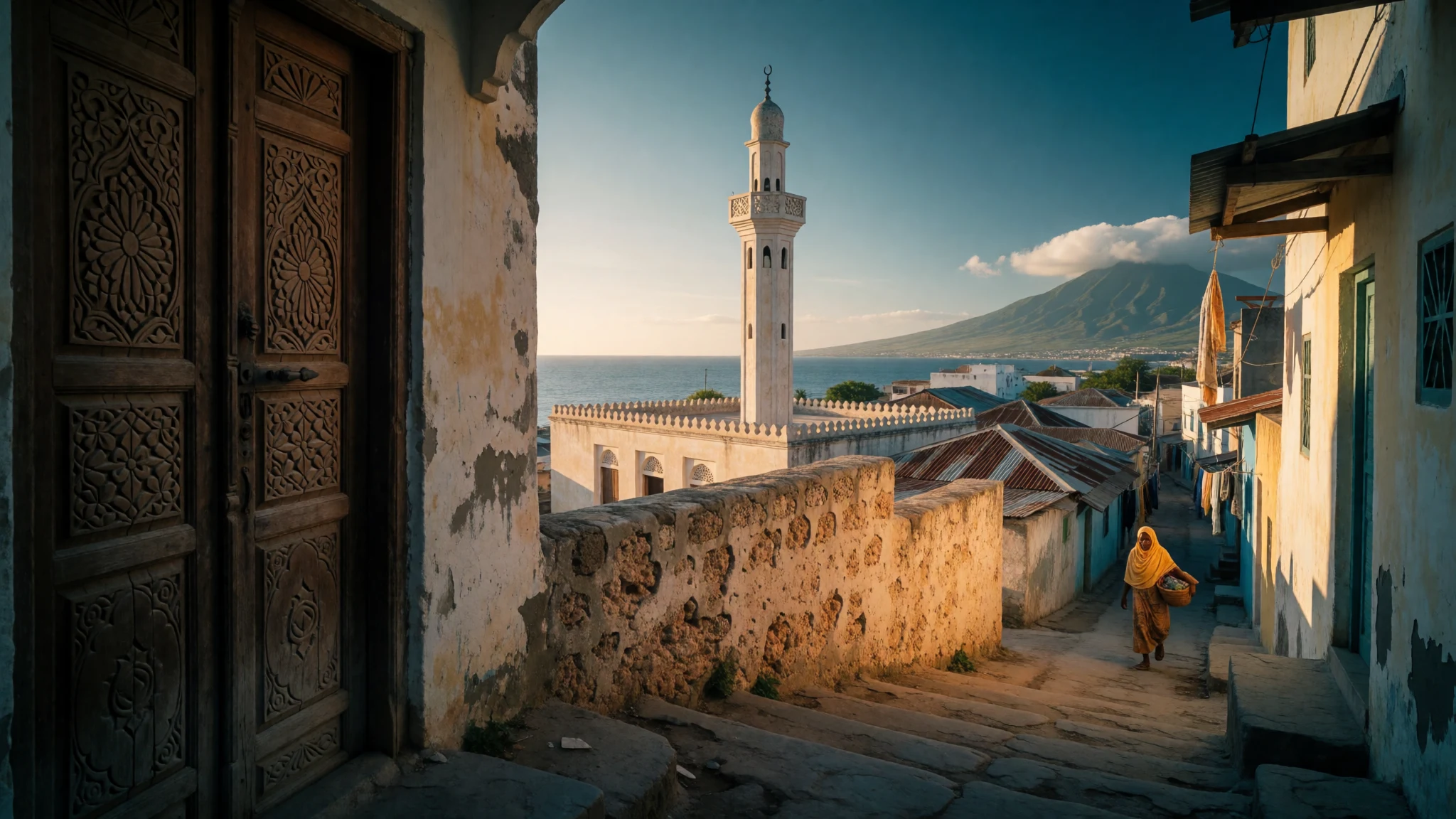
Moroni is a small Indian Ocean capital where a coral-stone medina, a working harbour and a volcanic island meet.
The place
Moroni stands on the west coast of Grande Comore, an island in the Comoros, and is the capital of that small nation in the Mozambique Channel between Madagascar and the African mainland. The city is a harbour town first: quays, fishing boats and cargo traffic sit at the foot of a short rise of houses. Inland, an old quarter of narrow lanes holds coral-stone walls, heavy wooden doors and a historic Friday mosque whose pale form is a landmark of the waterfront. Around this core, ordinary capital-city life continues in markets, government offices, schools and the roads that lead out to villages and to the airport.
The landform behind the roofs is Mount Karthala, the volcano that occupies the heart of Grande Comore. On a clear morning its slopes show above the city; more often cloud sits on the summit and the lower forest comes down towards the plantations. Moroni itself stays low. It does not climb far up the mountain. North of the centre, Itsandra opens as a town beach, a stretch of dark sand and reef where people swim and where the urban edge gives way to a quieter shore. South and inland, houses thin into smallholdings of banana, coconut, vanilla and ylang-ylang, the crops that scent the island's economy.
The day is paced by heat, rain and prayer. Moroni is tropical and humid: a shower can fill a lane, then leave the coral stone steaming under a sea breeze off the channel. French, Shikomori and Arabic share the streets — administration, conversation and worship. The call to prayer carries over a city whose public culture is Muslim, while a Catholic church near the centre marks a long-standing Christian minority.
Its story
Moroni grew as a harbour on a coast already bound to the Swahili world of dhow trade, Islam and the exchange of goods between the African mainland, Madagascar and the Arabian Sea. Merchants and clerics settled the western shore of Grande Comore, and the stone town took its character from that meeting: a Friday mosque by the water, houses built for shade and privacy, and a port that moved what the island grew and what it had to bring in.
Power on Grande Comore was long split among sultanates, and Moroni was one seat among several. Rivalries between towns, marriages among ruling families, and the pull of Zanzibar and the wider Swahili coast decided who collected duties in the harbour and who taught in the mosque. The old quarter still reads as that kind of place — narrow lanes, doors closed on family courtyards, a public face turned to the sea.
French colonial administration made Moroni the practical centre of Grande Comore. Ylang-ylang and vanilla tied planters to the perfume trade in France, while the port stayed the way people and news arrived. Schools, a Catholic church and government offices joined the medina without erasing it. After independence, Moroni remained the capital through coups and arguments over how the islands should share a state. What lasted was not a parade of monuments but the same harbour, the same Friday congregation, and families who measure standing through the grand mariage, a cycle of gifts, music and feasting.
That history shows in layers. Moroni keeps a lived-in medina, a mosque by the port, a church from the colonial years, and a volcano that has more than once shown how exposed a capital can be. The city is a small Islamic port that became a national capital without ceasing to be a neighbourhood.
What to see
- Moroni harbour — Harbour
Moroni harbour is the working edge of the capital, where fishing boats and small cargo vessels share a modest waterfront. The view back toward pale walls and the Friday mosque frames the waterfront, yet the reason to linger is the labour: nets, fuel, crates and crews. Morning is a quieter hour. The port, watched from the quay, shows how the island eats and trades.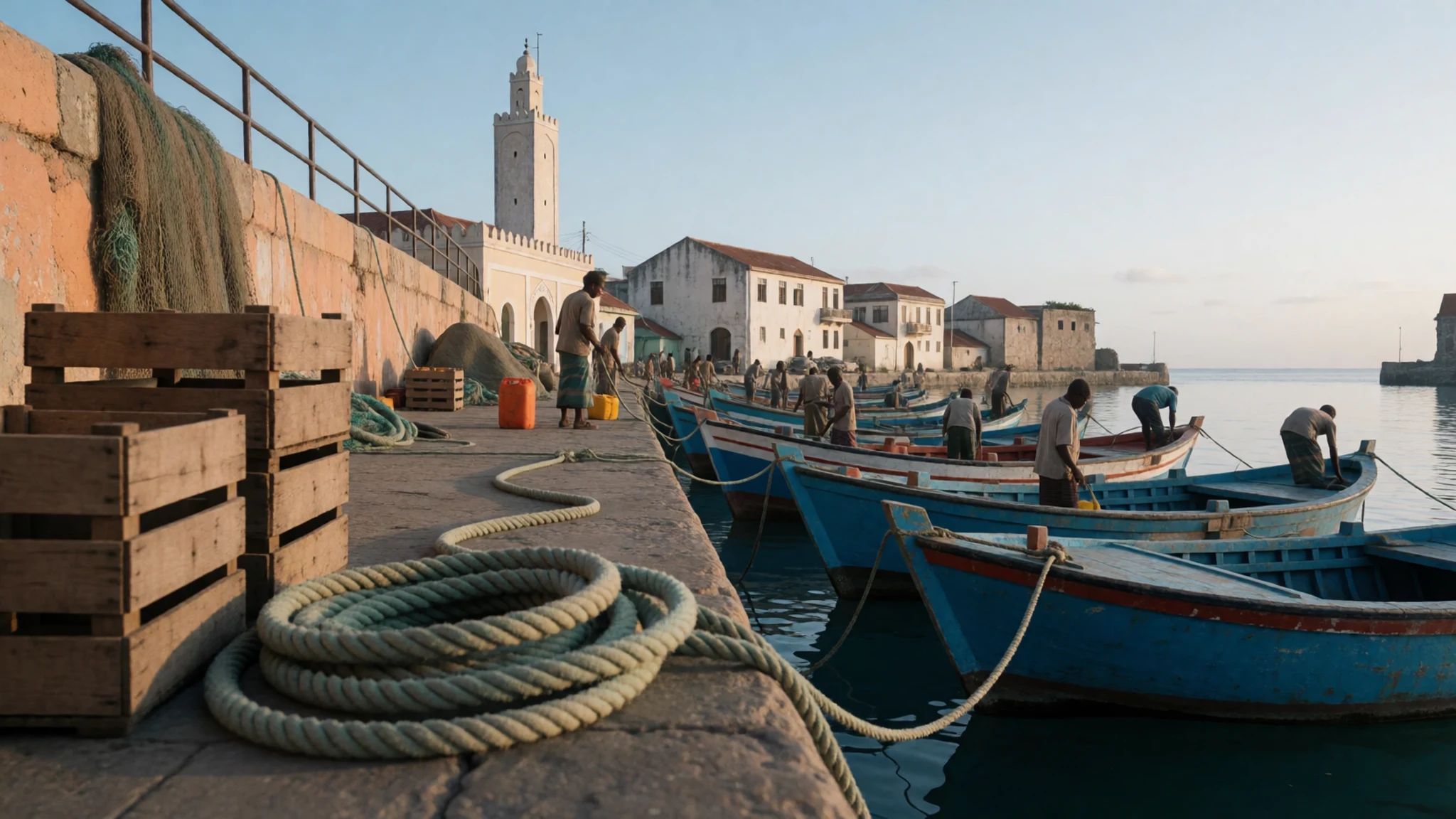
- Friday Mosque — Old port
The Friday Mosque stands beside the old port in Moroni and anchors the medina. Pale walls and a minaret close the water view. The interior is for worship. Non-Muslims will find it closed at Friday prayers. From the square the scene is shoes at the step, kofia and kanzu, and lanes going quiet. The doors and coral stone are the sight; the congregation is not a spectacle.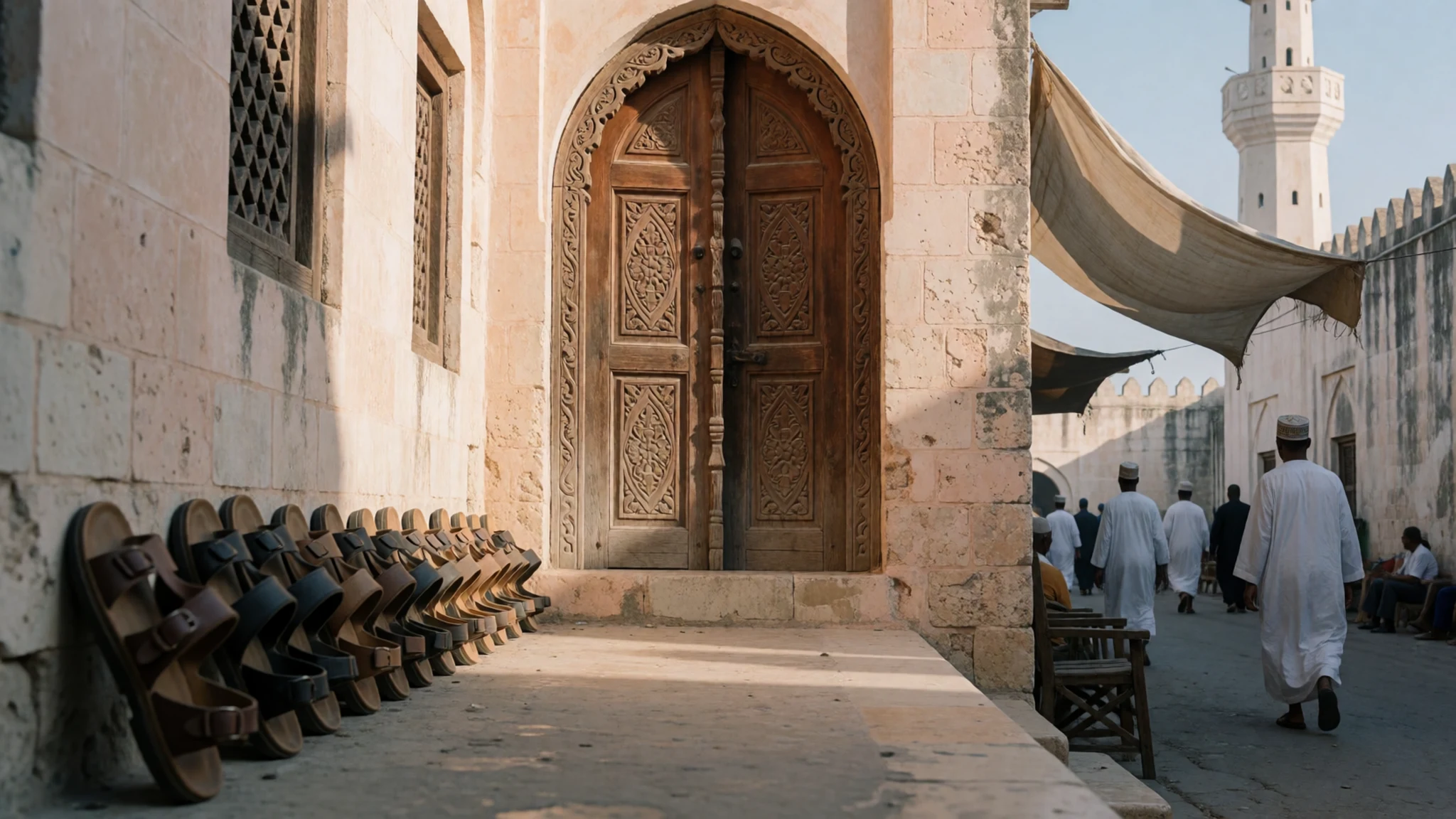
- The medina — Medina
Moroni's medina is a small knot of lanes behind the harbour, coral stone and plaster, heavy wooden doors, shade only where a wall overhangs. People live in it: washing, fruit, the walk to the mosque. The interest is a carved lintel, a courtyard glimpse, charcoal and fish. Lanes are narrow. A slow pace and a greeting matter more than a raised camera.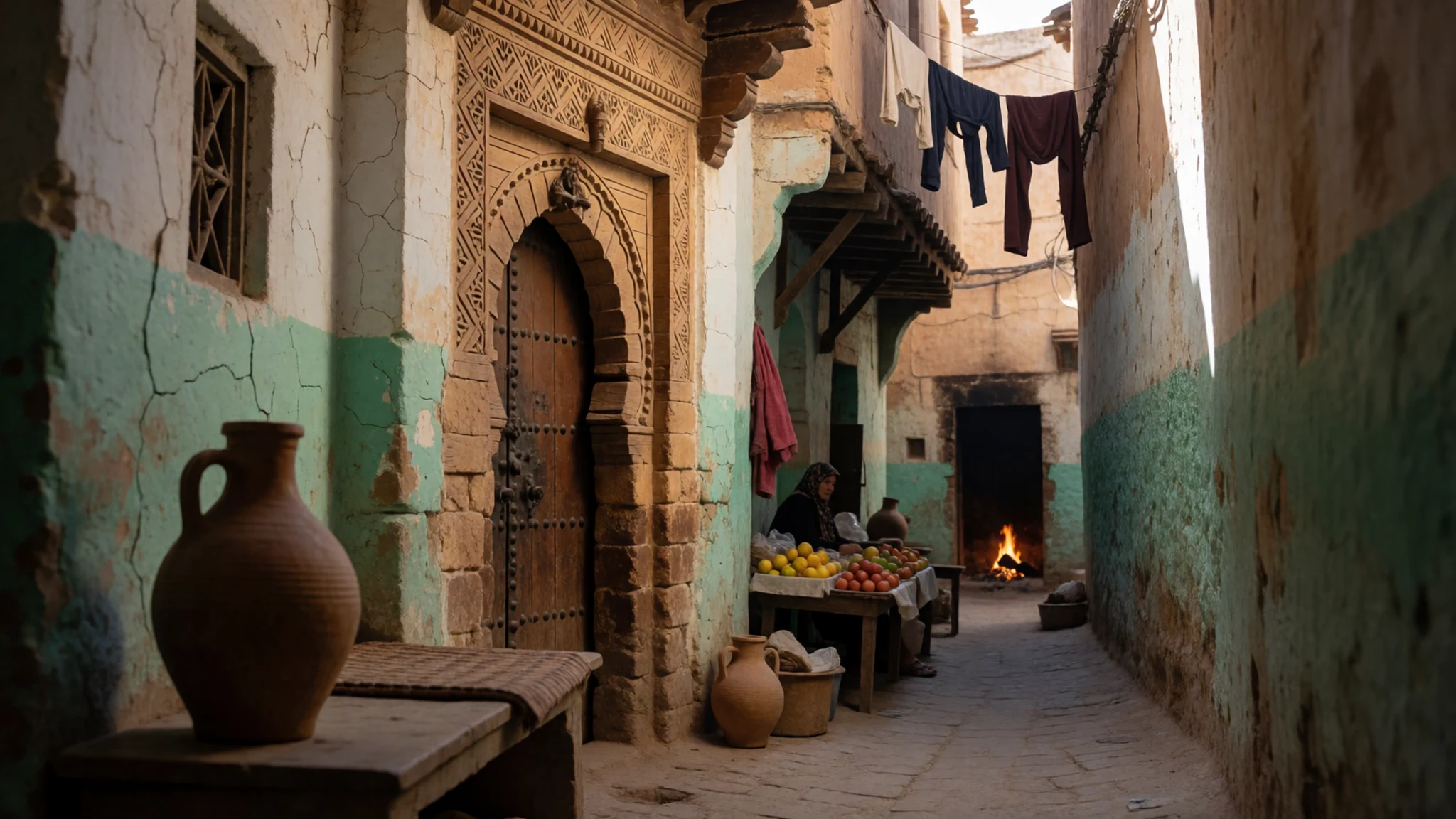
- Itsandra beach — Itsandra
Itsandra beach lies just north of central Moroni, a dark-sand shore where the reef meets the edge of town. Residents swim, walk and sit out the heat; a Friday afternoon turns the shore into a shared garden. The sand is volcanic, the sun is strong, and shade is scarce, so the beach stays local rather than landscaped. Swimmers need water, a cover-up and a little distance from family groups.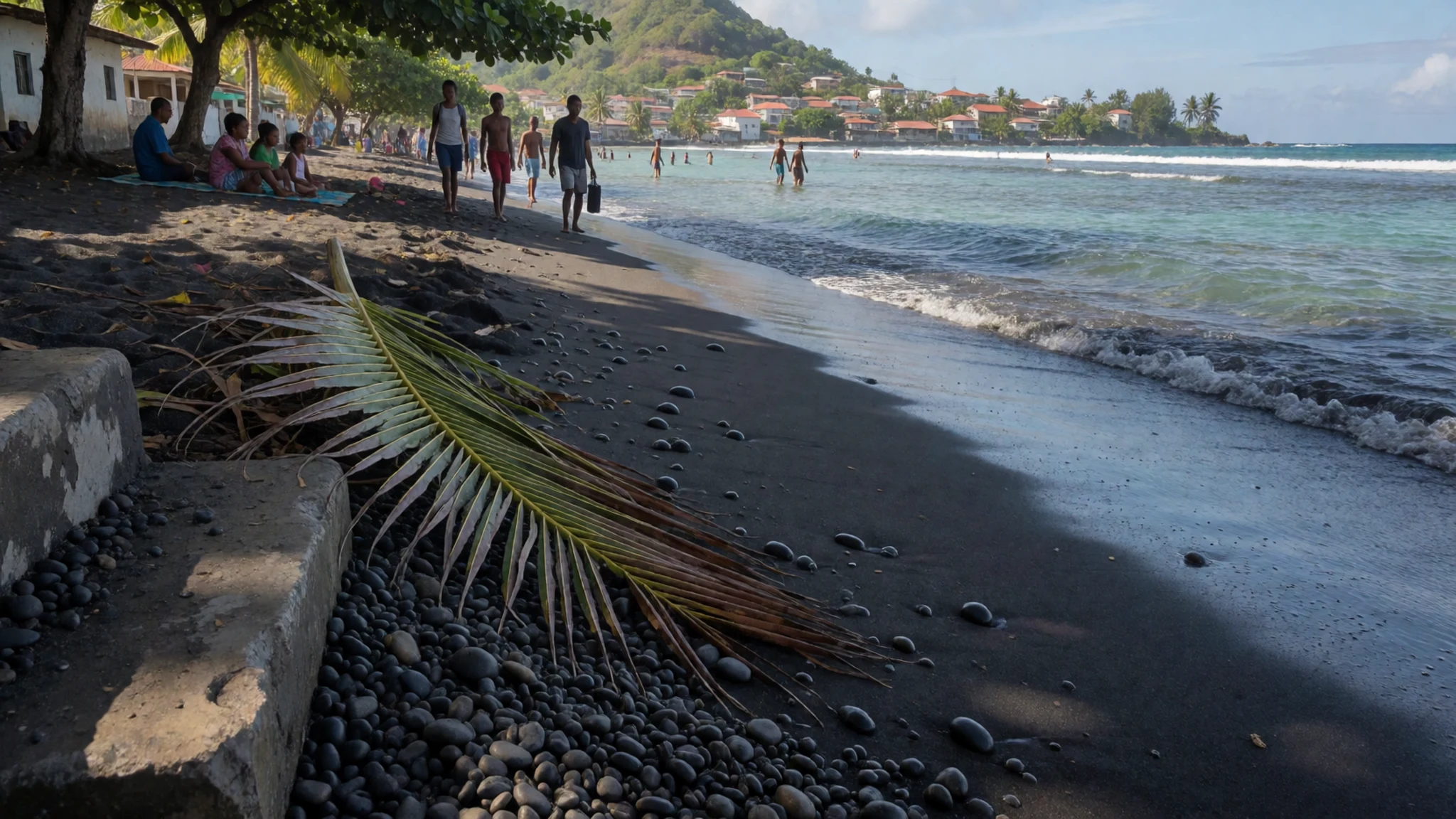
- Mount Karthala — Interior of Grande Comore
Mount Karthala is the volcanic mass behind Moroni, filling the interior of Grande Comore. Lower slopes carry forest and cloud; the summit is often hidden. From the harbour it is a dark shape above the minarets and a hazard the city lives beside. A climb is a serious guided undertaking and needs current advice from the authorities. Many visitors are content with the waterfront at first light.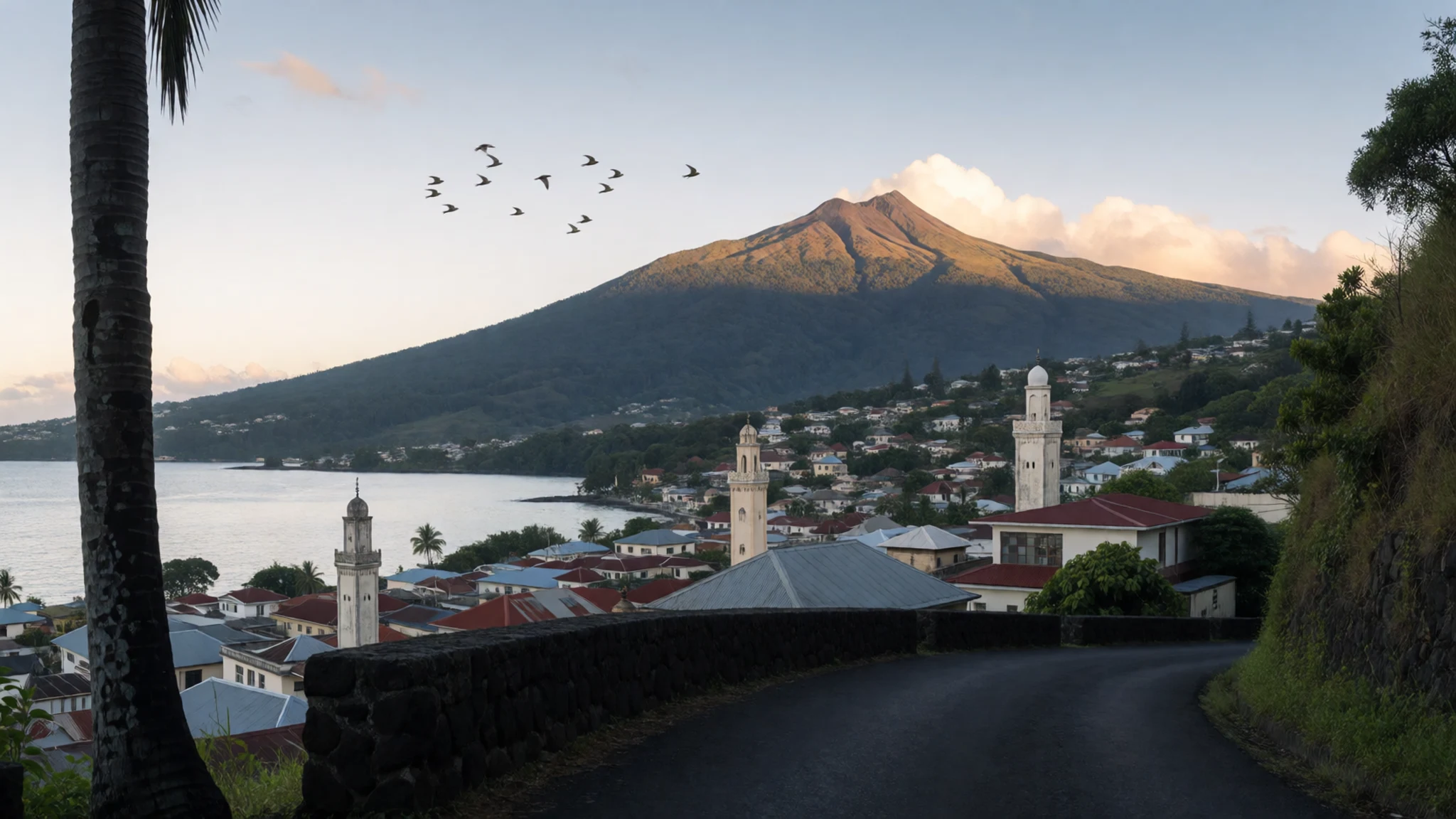
- St Theresa of the Child Jesus — Central Moroni
St Theresa of the Child Jesus is the Catholic church in central Moroni, a sign of the Christian minority within a Muslim society. The building is modest beside the Friday Mosque. Outside a service it asks for a quiet voice and covered shoulders. Together with the medina mosque it completes the capital's religious map.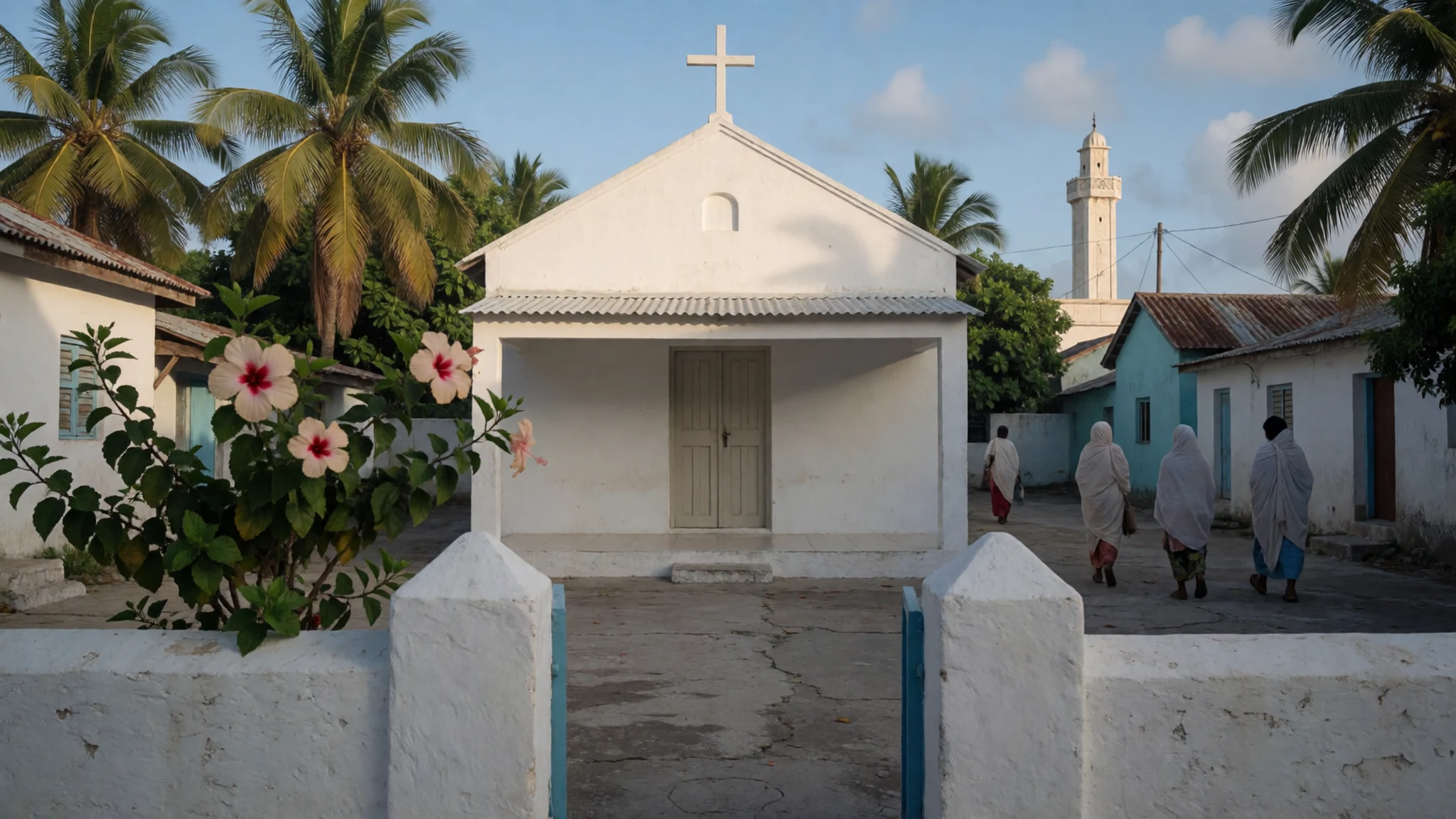
Culture
Moroni is a Muslim city in a Muslim nation, and public life follows that fact more closely than a visitor fresh from a secular capital might expect. The week bends towards Friday. Men gather at the mosque in kanzu and embroidered kofia; women move through the market in colourful wraps, often with a traditional beauty mask of sandalwood paste, the msindanu, still seen on brides and at festivals. Greetings are not optional small talk. A conversation, a purchase or a request begins with a hello and a how-are-you, usually in Shikomori or French, and only then turns to business.
The grand mariage sits at the centre of social ambition: families save for years, and Moroni feels those weeks in traffic, music, dress and gifts. In Ramadan the days go quiet and the nights gather around mosques and food. Hospitality often means a shared plate. The right hand is for eating and for passing anything on.
Island pride is specific: people speak of Ngazidja, and of Moroni as distinct from the other islands' capitals. Dress so that shoulders and knees are covered in town, remove your shoes before entering a mosque, and ask before you photograph a person.
What to wear
Moroni dresses for faith, heat and ceremony at once. Traditional menswear is the kanzu, a long white or cream robe, with a kofia, the embroidered cap. Women wear bright cotton wraps, the leso or shiromani, often with a head covering; weddings bring heavier cloth, gold thread and jewellery. The msindanu, a sandalwood paste worn as a yellow-gold beauty mask, appears on brides and at the grand mariage. These clothes are for the mosque, for Friday and for family celebrations, not for show. Cloth is mostly imported cotton print, cut and tied locally, while kofia embroidery is still done by hand.
Everyday dress is a mix. Younger men wear shirts and football tops as readily as a kanzu; women pair a wrap with a T-shirt or a fuller covering, depending on family. Ministry staff dress in light formal clothes. The constant is modesty, and cloth that survives humid washing.
A visitor should copy that modesty. Lightweight cotton covering shoulders and knees suits the medina; a scarf is wise for women near the mosque. Shoes must come off easily at mosque steps and in homes. Swimwear stays on the sand at Itsandra. In the wet months a light shell is enough, and closed shoes help on rough harbour stone.
What to eat
- Mataba — Market stalls and eateries in the medina
Mataba is cassava leaves simmered with coconut until they make a thick green mash, sometimes with salt fish. In Moroni it is everyday food beside rice or a boiled root, and it tastes of gardens rather than of the port. Market stalls and eateries around the medina serve it.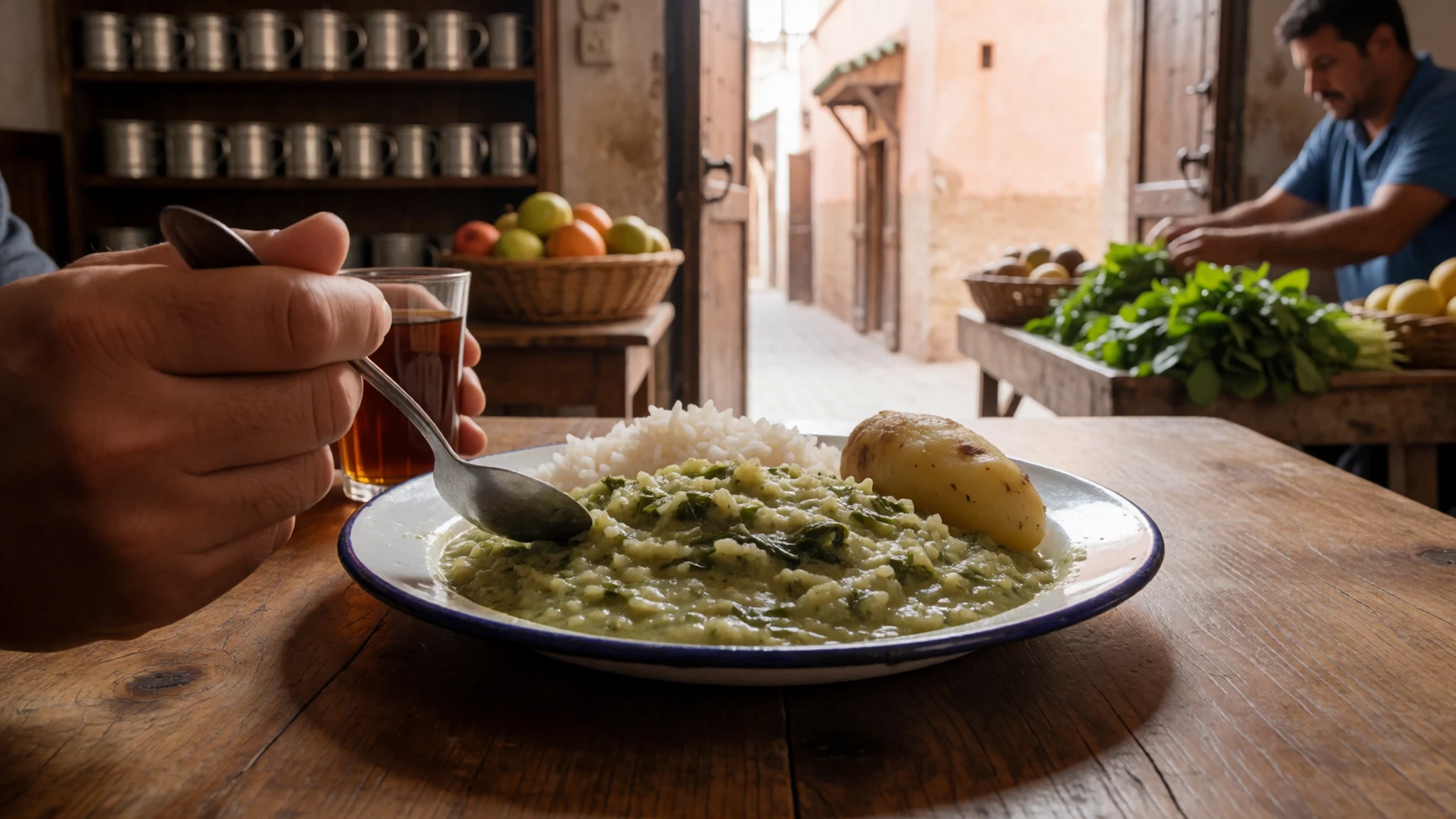
- Grilled fish — Harbour stalls and the road towards Itsandra
Grilled fish is the harbour meal in Moroni. Boats land snapper, tuna and smaller reef fish, cooked over charcoal with salt, chilli and lime. Stalls by the port and grills towards Itsandra serve whatever came in that morning. Rice or a chilli sauce usually sits beside it.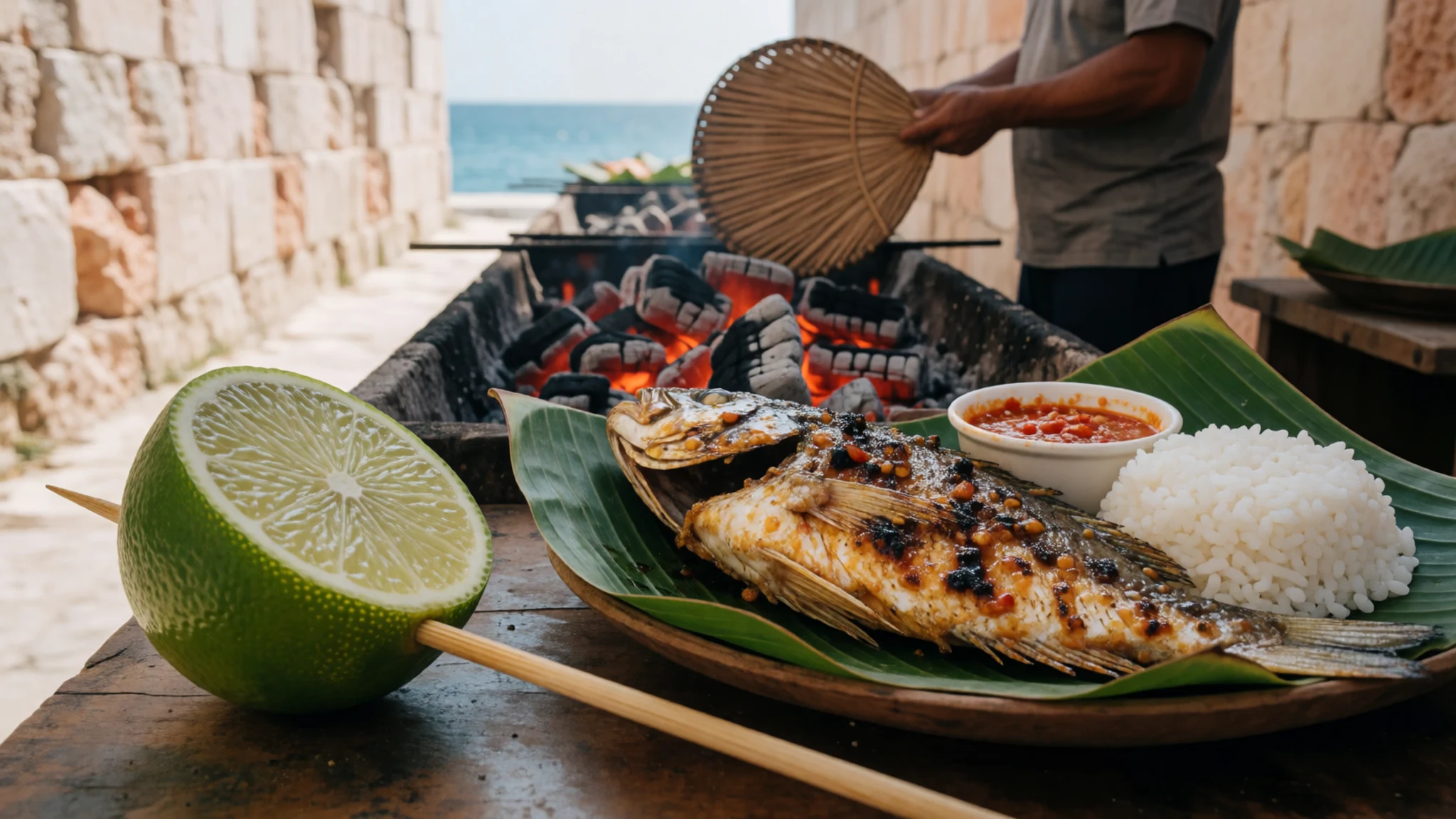
- Langouste — Harbour eateries
Langouste, spiny lobster from the reef, is the dish Moroni saves for a celebration or a lucky boat. Grilled plain, or cooked with coconut, it carries the island well. Harbour eateries and tables towards Itsandra are the places to ask. It is occasional food, not the market lunch. - Mkatra sini — Morning markets and bakeries near the centre
Mkatra sini is Comorian coconut bread, a round of wheat flour and coconut milk baked until the top browns. In Moroni it is breakfast, sold in the morning markets and at small bakeries near the centre, and it travels well on a walk to the port. - Pilao — Home-style eateries and wedding tables in the medina
Pilao is the spiced rice of the Swahili coast as Moroni cooks it, with meat or chicken, cardamom and clove, sometimes coconut. It appears on shared platters at a grand mariage and, more quietly, in home-style eateries in the medina. A mild pot is usual, with chilli on the side.
Plan it
Best time. May to October is drier, with a steadier breeze in Moroni; November to April is hotter and wetter. June to August suits walking and the beach.
How long. 2–3
Getting there. Prince Said Ibrahim International Airport at Hahaya, then the coast road south into Moroni. Inter-island boats and small planes depend on the weather; confirm locally. There is no railway.
Budget. mid
Tips
- Carry cash in Comorian francs; cards often fail outside larger lodgings.
- Reconfirm boats and flights; weather moves the timetable.
- Walk the medina in the morning, ahead of the heat.
- Drink treated or bottled water, and check volcanic advice before any Karthala trip.
Etiquette
- Remove shoes at mosques and when a home asks.
- Cover shoulders and knees in town.
- Ask before photographing people.
Nearby
Sources
- Wikidata (CC0)
- Wikipedia: Moroni, Comoros (CC BY-SA 4.0)
- Wikivoyage: Moroni (CC BY-SA 4.0)