Mohéli National Park
Mohéli National Park, Comoros
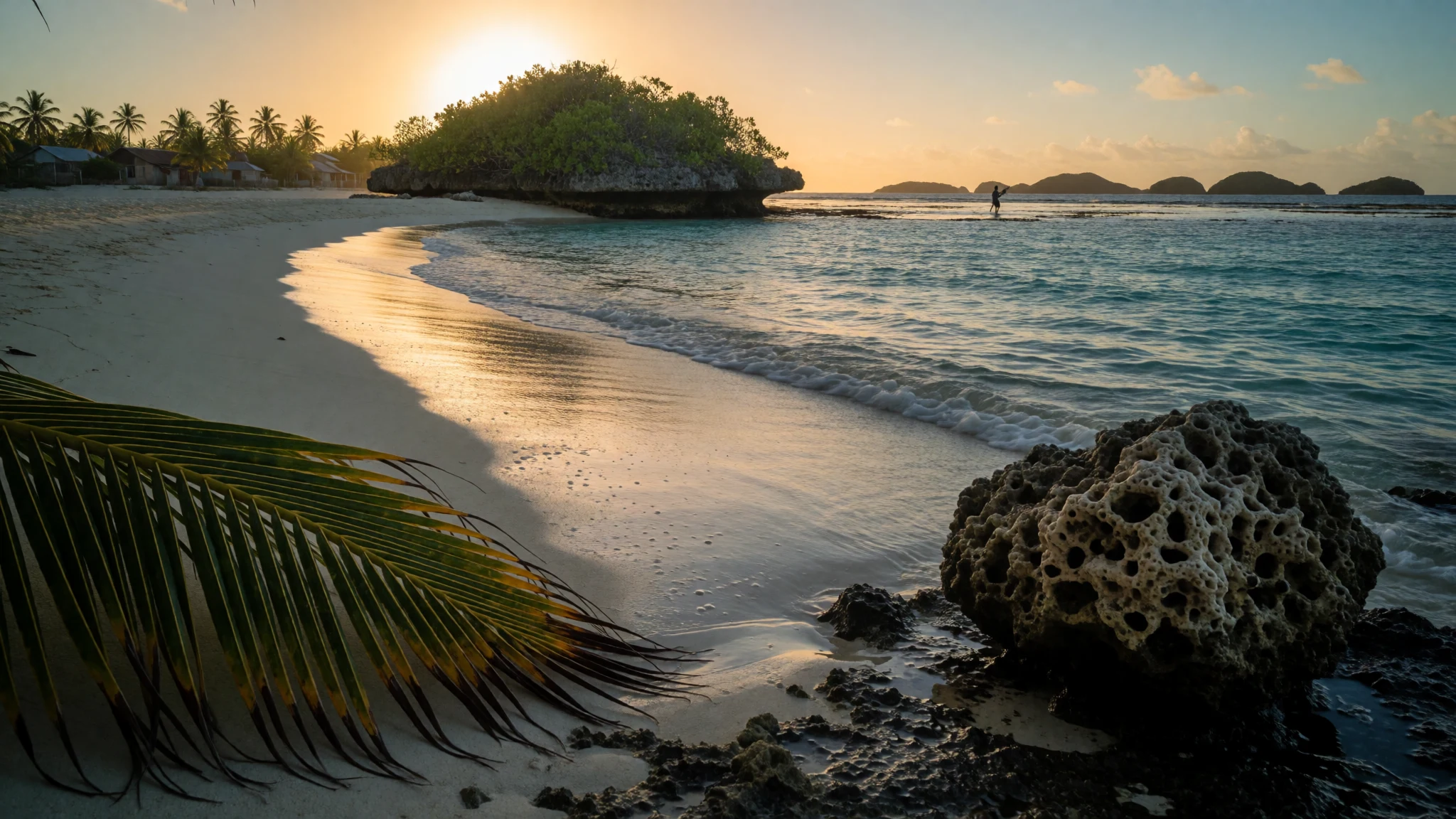
Mohéli National Park is a marine and forest park where green turtles nest, coral gardens line a reef offshore, and villages still set the pace.
The place
Mohéli National Park takes in the sea around Mwali and a share of the island's wooded interior, in the Comoros, between Madagascar and the African mainland. The island is Mohéli in French and Mwali in Shikomori, and the park is why travellers add this hop beyond Grande Comore. It is a nesting beach, a mangrove creek, a reef reached by small boat, and a ridge of trees above the villages. The south coast carries most of a visit. Nioumachoua faces a scatter of islets, Mchaco among them, where coral shows through clear water. Ouallah keeps a similar reef, with more open sand and fewer houses. Itsamia is a short line of homes behind a beach where green turtles haul out to nest. Fishers, rangers and village associations share the night watch. Dugongs appear now and then in the quieter seagrass. From June through April humpback whales move through the channel, though a sighting is luck rather than a plan. Inland the park rises into forest that stays damp and bird-filled when the coast is harsh with glare. Paths are rough, shade is the comfort, and the walk is the outing. Fomboni, the main town, gathers trucks, boats and the airport road. It is a working harbour town, not a strip of resorts. Heat does not let up. In the rains, boats are wet and red tracks turn slick. In the drier months the wind is kinder and crossings calmer, yet the sun stays direct. Other travellers are few. Company is local: boatmen, village children, and turtle monitors who keep lights off the nesting animals.
Its story
Mohéli National Park is a recent chapter in a long argument over who the island's shores are for. Mwali kept its own sultanate while Grande Comore and Anjouan followed theirs, linked by dhows, cloves and Quran schools, but proud of a separate court. Islanders still tell of a woman ruler, Djoumbé Fatima, who treated with foreigners as a sovereign rather than a footnote. French colonial rule later folded Mohéli into a plantation economy and a single administration. Independence did not erase the feeling, strong on Mwali, of being a junior partner in the new state. The sea story is more recent and more local. Nesting green turtles were food: meat, oil and eggs taken on the beaches. Reefs were fished hard. In villages such as Itsamia, people who had hunted turtles began to guard them, turning the night beach into a watch rather than a hunt. That choice was not sentimental. Fishers wanted reefs that could still feed families, and a few travellers' fees were a way to make protection pay. Associations, rangers and elders built a habit: no taking of nesters, no lights in the eyes, no souvenirs of shell. From that beach-level pact the protected area spread. A marine park of reefs, seagrass and nesting sand later took in the ridge forest, so catchment and coast were managed together. Mohéli National Park still depends on that bargain. The park is young beside the sultanate, and still thin: few patrol boats, and a hungry season can make an egg look like dinner.
What to see
- Itsamia nesting beach — Itsamia, south-east Mohéli
Mohéli National Park meets the night at Itsamia, a village beach where green turtles haul ashore to nest. Community monitors walk the sand, and anyone with them is there as a guest of that watch: no flashes, no touching, no blocking the path back to the sea. By day the beach looks plain, which is part of its worth.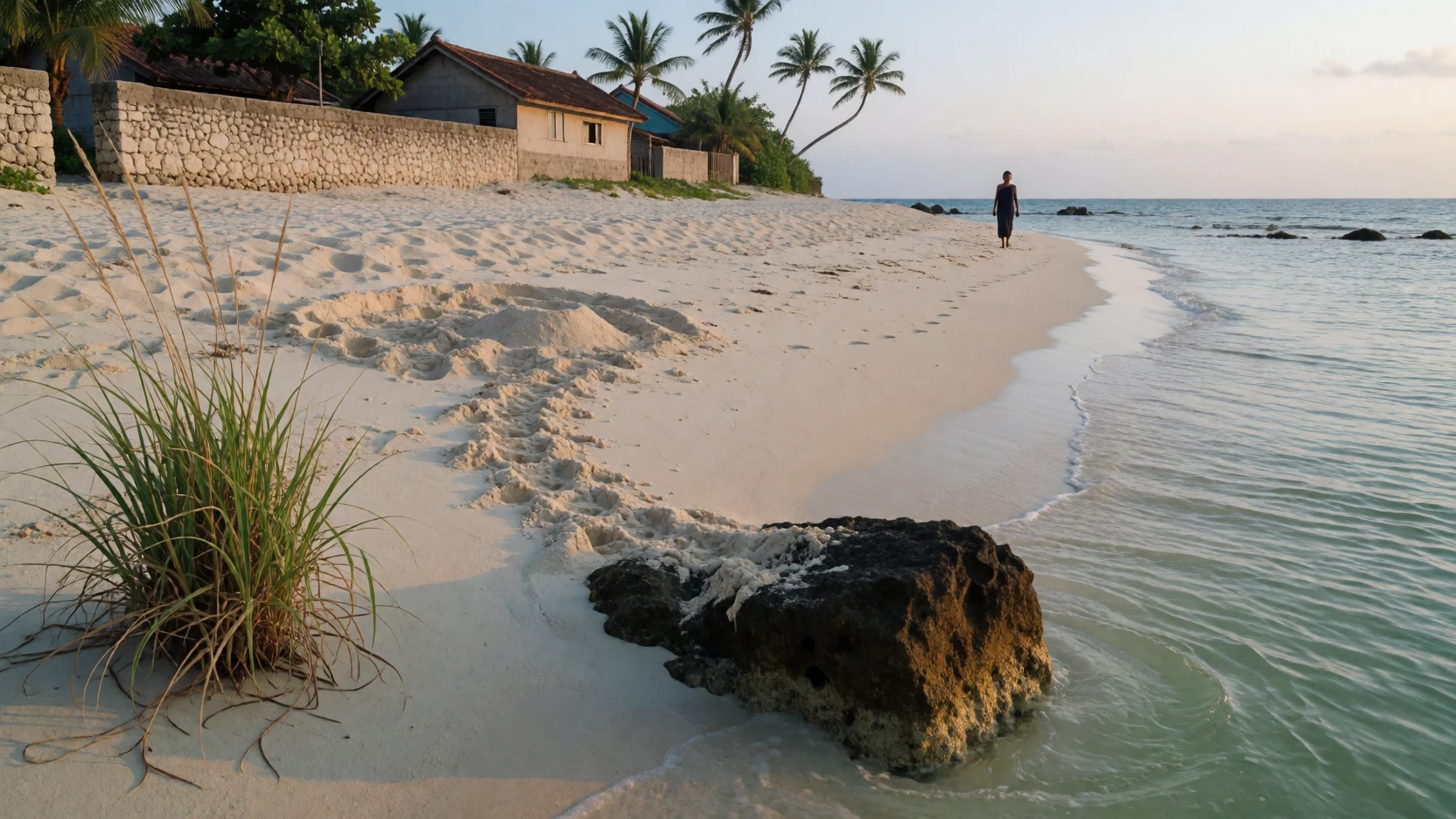
- Ilôt de Mchaco — Nioumachoua lagoon
Mohéli National Park holds the islet of Mchaco off Nioumachoua, with coral rising close under the surface. The outing is a slow circuit and a swim only where the boatman says the bottom is sand rather than living rock. The islet is small, bright and exposed, with little shade and no café. Water, a hat and the habit of not standing on coral matter more than any kit.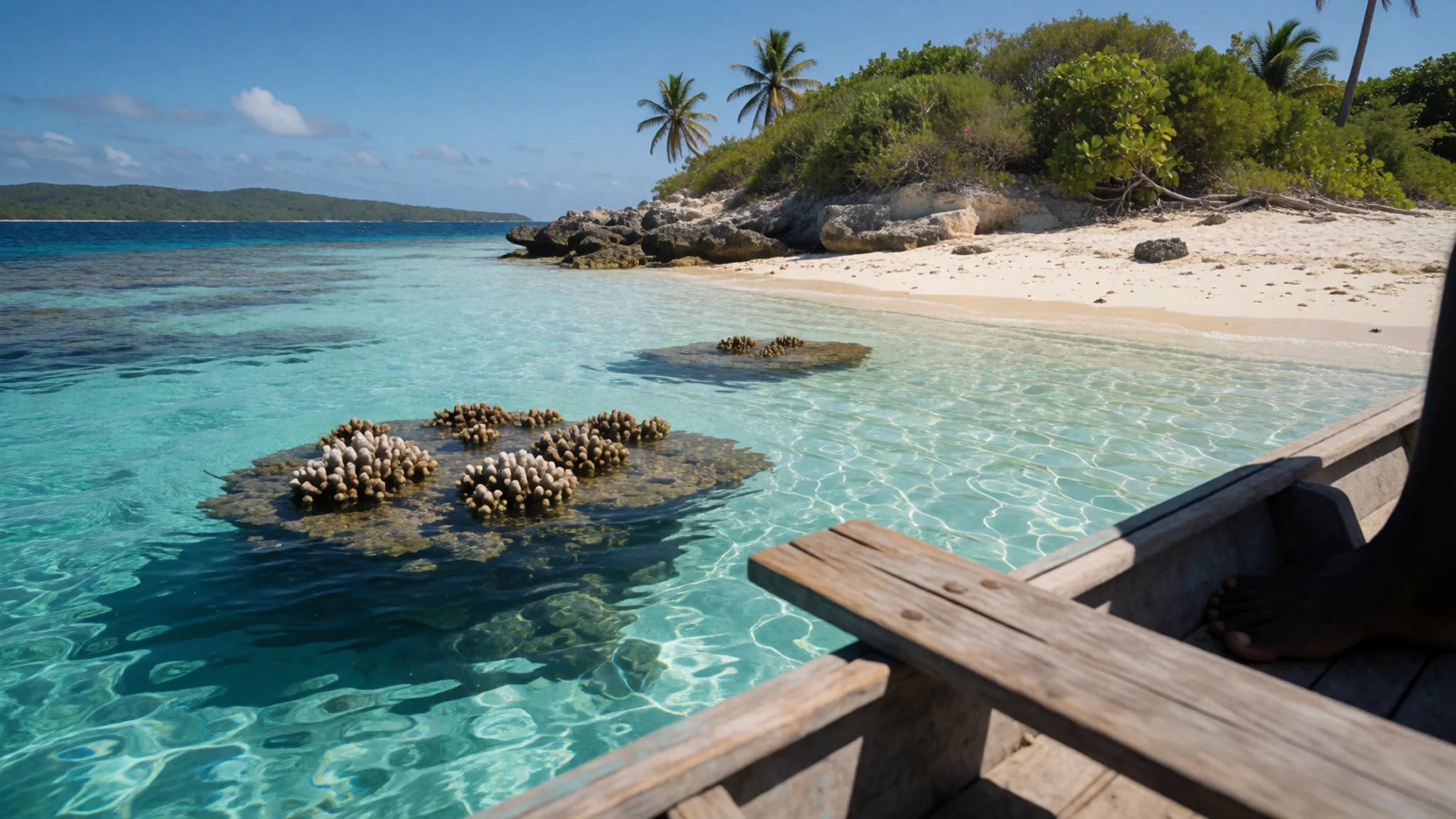
- Ouallah reef — Ouallah
Mohéli National Park includes the reef at Ouallah, where coral lies offshore across a deep lagoon and the sand is still more village than resort. A swim here is a boat trip out to the reef when the lagoon is calm, not a wade from the beach. Coconut trees and homes back the shore. Local advice matters before anyone enters the water, because currents and Friday prayers both change the day.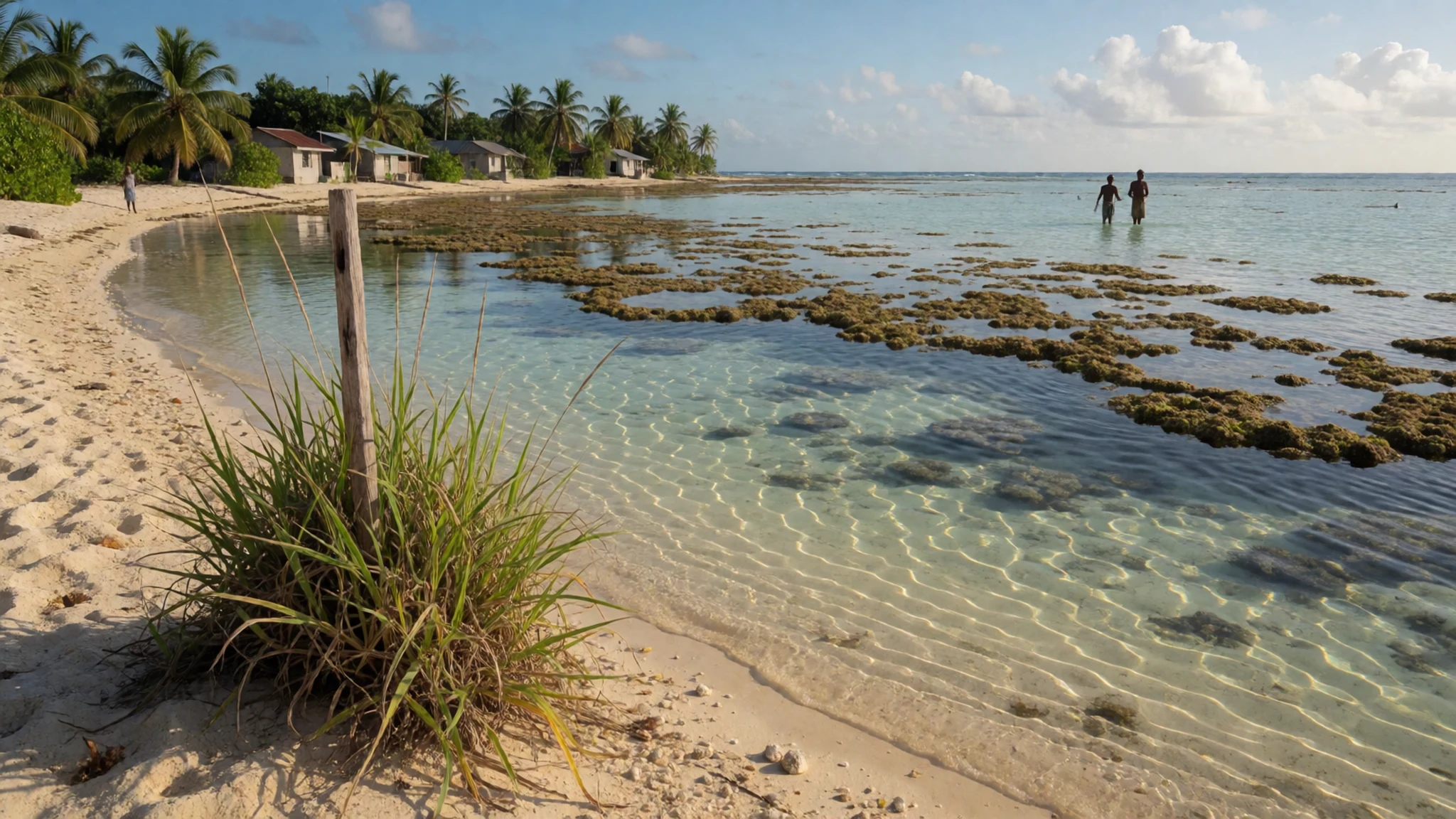
- Nioumachoua — Nioumachoua
Mohéli National Park is entered from the water at Nioumachoua, the southern village that faces the chain of islets. This is where boatmen gather, where fuel is negotiated, and where a day on the lagoon starts. The village rewards a slow walk: coral-stone houses, a beach landing, children, and a small market rhythm rather than a harbour promenade. Departures depend on wind, tide and whether a boat is free.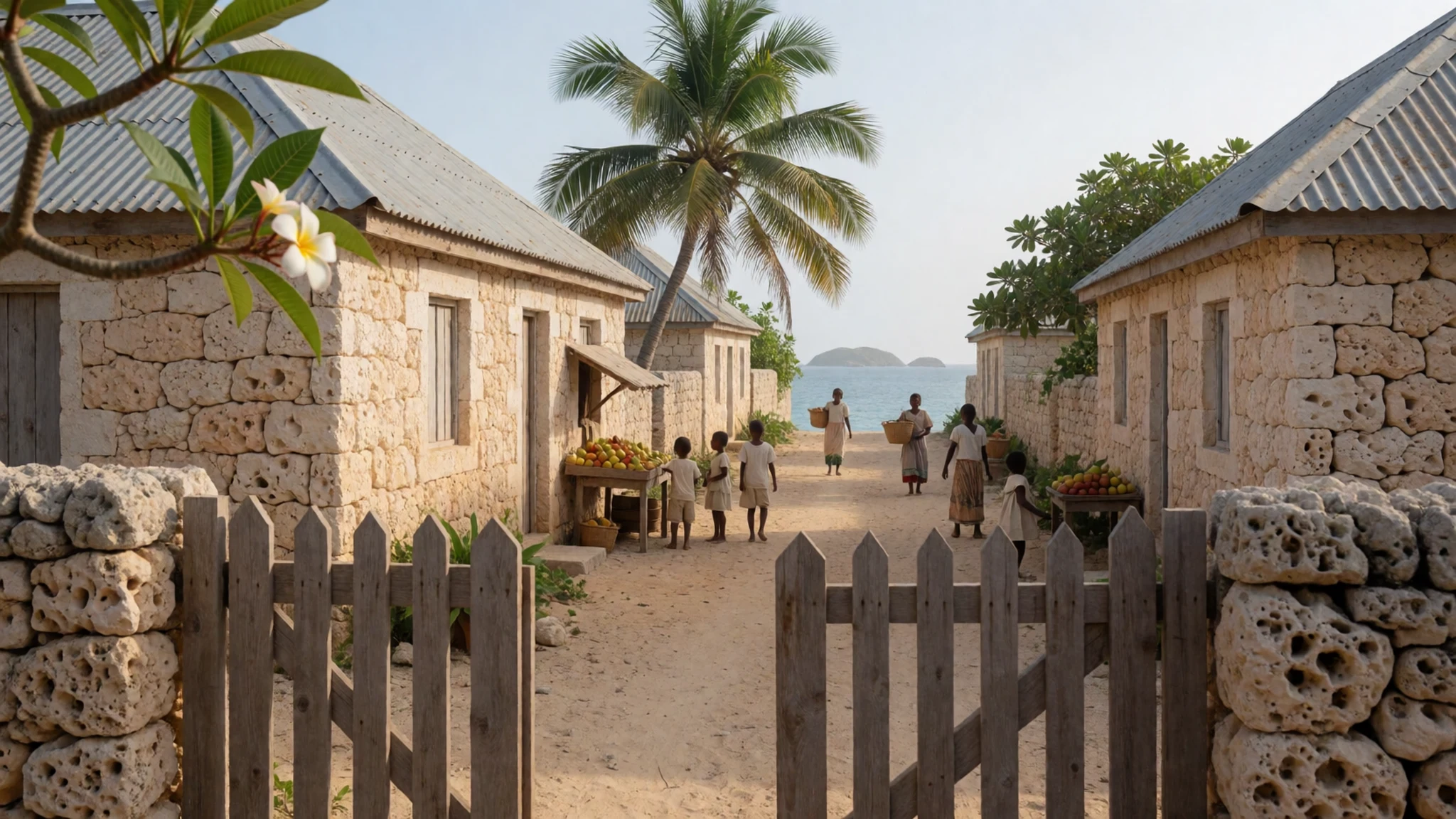
- Mangrove creeks — Southern creeks, Mohéli
Mohéli National Park also holds mangrove creeks behind the southern beaches, quieter than the blue water beyond the reef. A pirogue or small motorboat eases between roots when the tide is high, and herons, crabs and young fish use the shade. The air stays still and the mud smells sharp. Passage is with a local boat.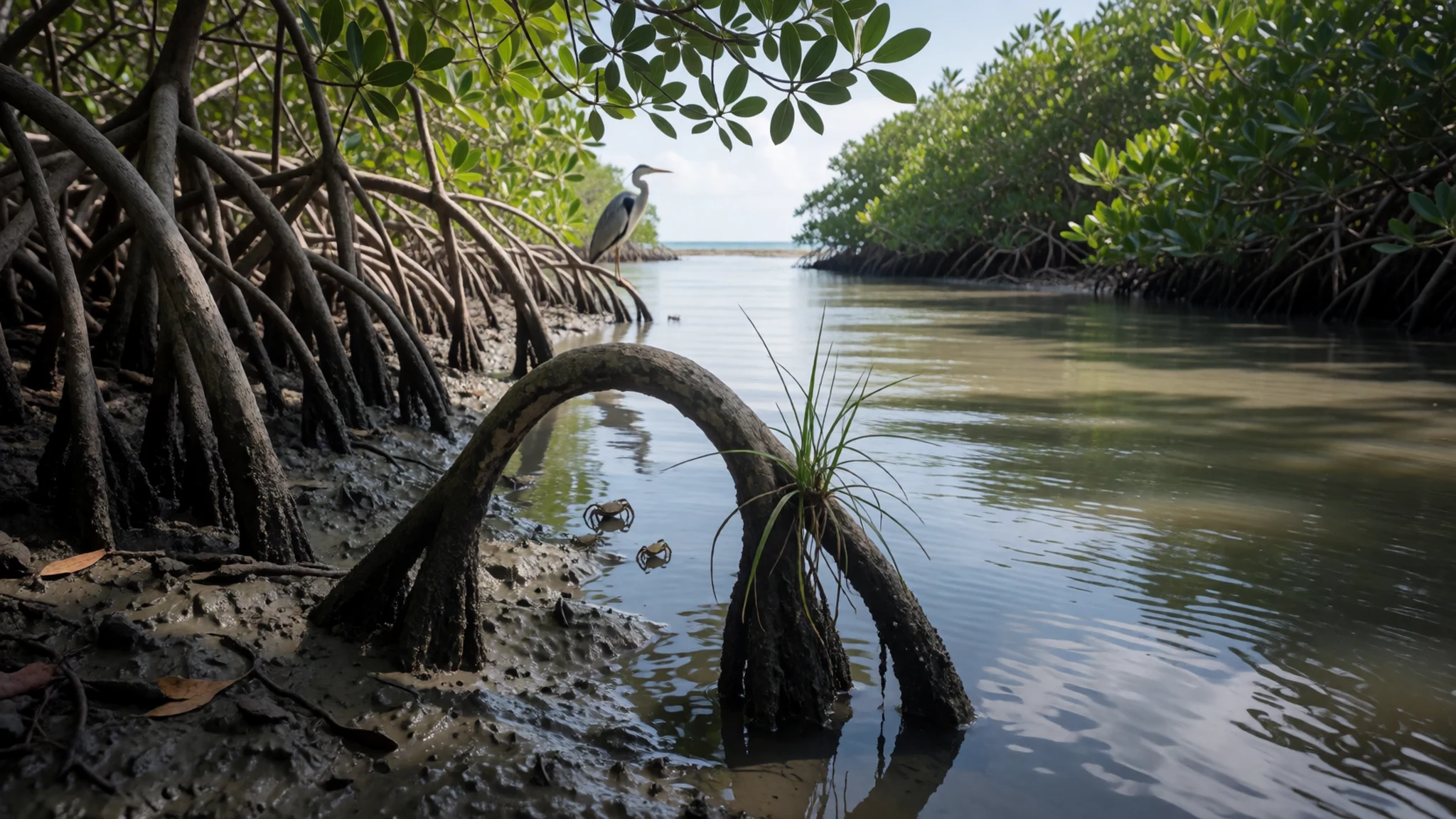
- The forested ridge — Interior ridge, Mohéli
Mohéli National Park climbs from the coast into a forested ridge, the island's green spine above the villages. The path is steep and often muddy, with long views back to the lagoon when the cloud lifts. Birds and Livingstone's fruit bats use the canopy; the coast's glare gives way to damp shade. This is the same water that feeds the streams and, eventually, the mangroves.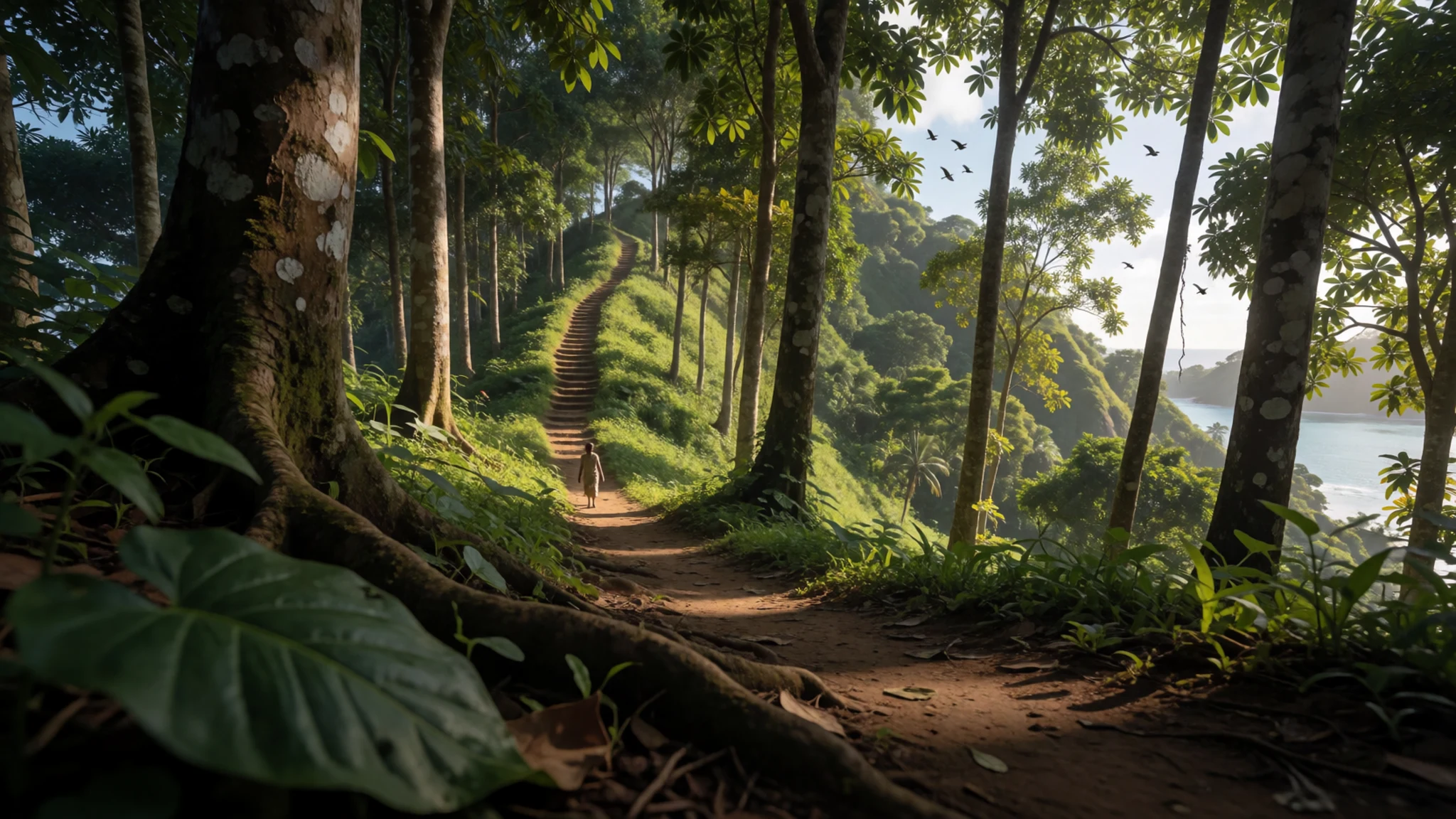
Culture
Mohéli National Park sits inside a Comorian culture that is Muslim, island-born and careful about respect. Daily life in the villages follows prayer times more closely than any visitor programme. Mosques are small and central, and the call to prayer carries across beaches that looked empty a short while earlier. Shimwali, the island's form of Shikomori, is the language of home; French appears in offices and schools; Arabic is for scripture. A guest greets before asking for anything, accepts a refusal without pressing, and does not treat a courtyard as a public path. The costly wedding festival known on Grande Comore as the grand mariage is less the organising fact of life on Mwali than faith, family and the village association. What the islands share is formal dress at weddings, gold given in public, and elders whose word still settles disputes. Celebration music leans on twarab and on drumming that can run late. It is a private joy, not a show put on for boats. The park's own culture is the association: young monitors, elder fishers, a shared decision about turtles and nets. On a nesting beach in Mohéli National Park, ask before photographing any person, keep voices and torches low around turtles, and step aside for prayer rather than through it.
What to wear
Mohéli National Park is not a place of costume for the quay, but cloth is still how the island signals respect. Women wear a salouva, a cotton wrap or tailored skirt length, with a shiromani, a printed cotton shawl drawn over the hair and shoulders when leaving the house, visiting, or attending a wedding. Men keep a kanzu, a long white robe, and a kofia, an embroidered cap, for the mosque and for ceremonies; gold jewellery comes out at weddings, when dress is public and deliberate. Everyday cotton is the textile that matters: breathable, washable, bought as a length and sewn locally. On an ordinary day the same streets show T-shirts, football shirts, wrap skirts, headscarves and plastic sandals. Young people mix those with the older layers rather than dropping them. In Fomboni, light shirts and trousers are common, then changed for prayer. For a visitor, the reef calls for a swim costume, a shirt against the sun, and shoes that can meet coral. In any village, including the walk to a boat, shoulders and knees stay covered, and a cotton scarf helps at a mosque door where shoes come off. The ridge wants trainers with grip; everywhere else, sandals that survive mud and can be slipped off are enough.
What to eat
- Grilled spiny lobster — Beach cook-ups at Nioumachoua and other southern landings
Mohéli National Park's coast puts spiny lobster, langouste, on beach fires when the boats come in. The meat is split and grilled simply. It is a feast dish more than a daily one, sold by the landing rather than from a printed menu.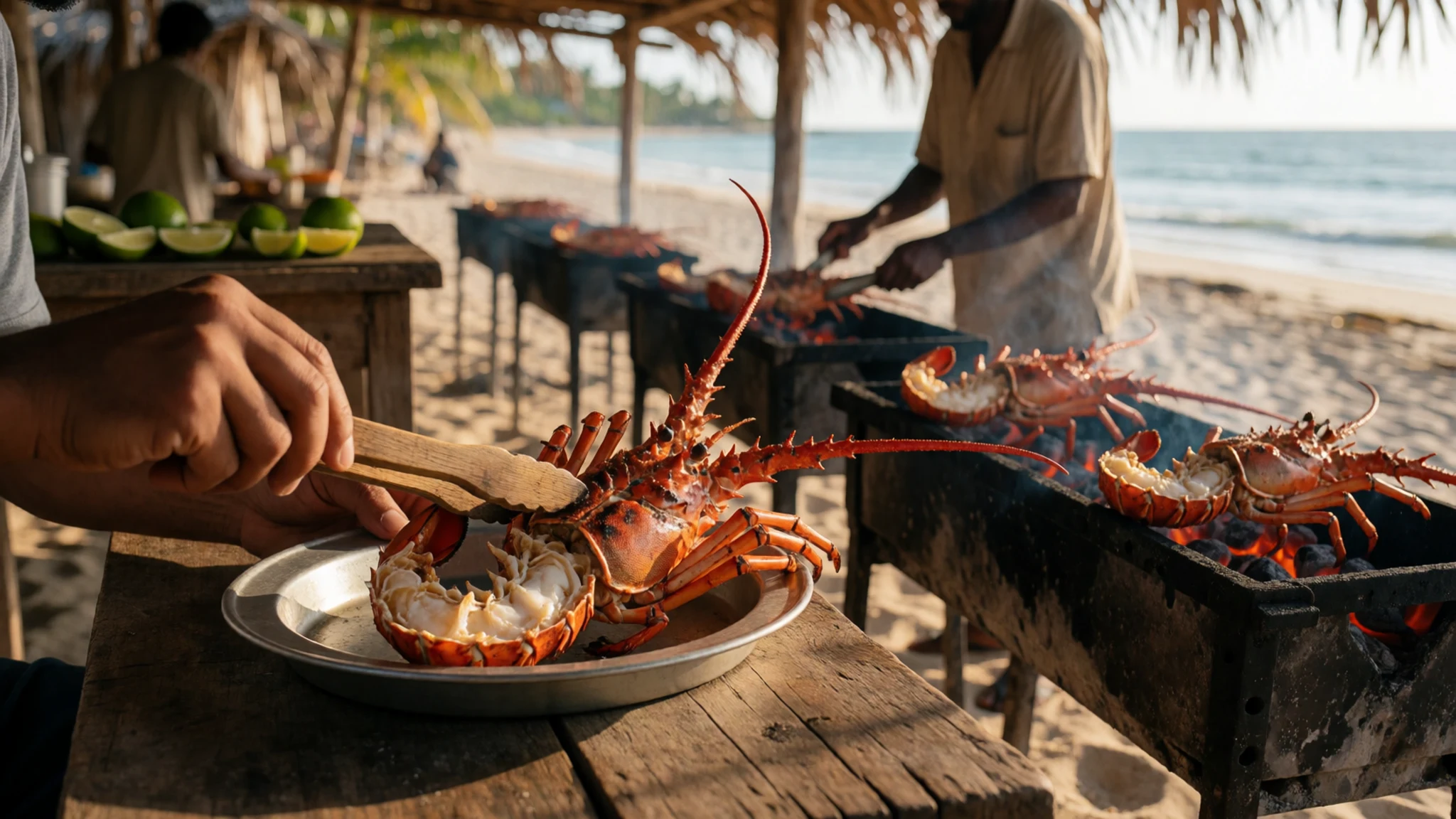
- Mataba — Village eateries and family kitchens in Fomboni and the southern hamlets
Mohéli National Park's home cooking leans on mataba, cassava leaves simmered with coconut milk and fish or smoked fish. The leaf goes soft and rich, more stew than salad, and it is eaten with rice from a shared plate. Coconut does the work that dairy would do elsewhere.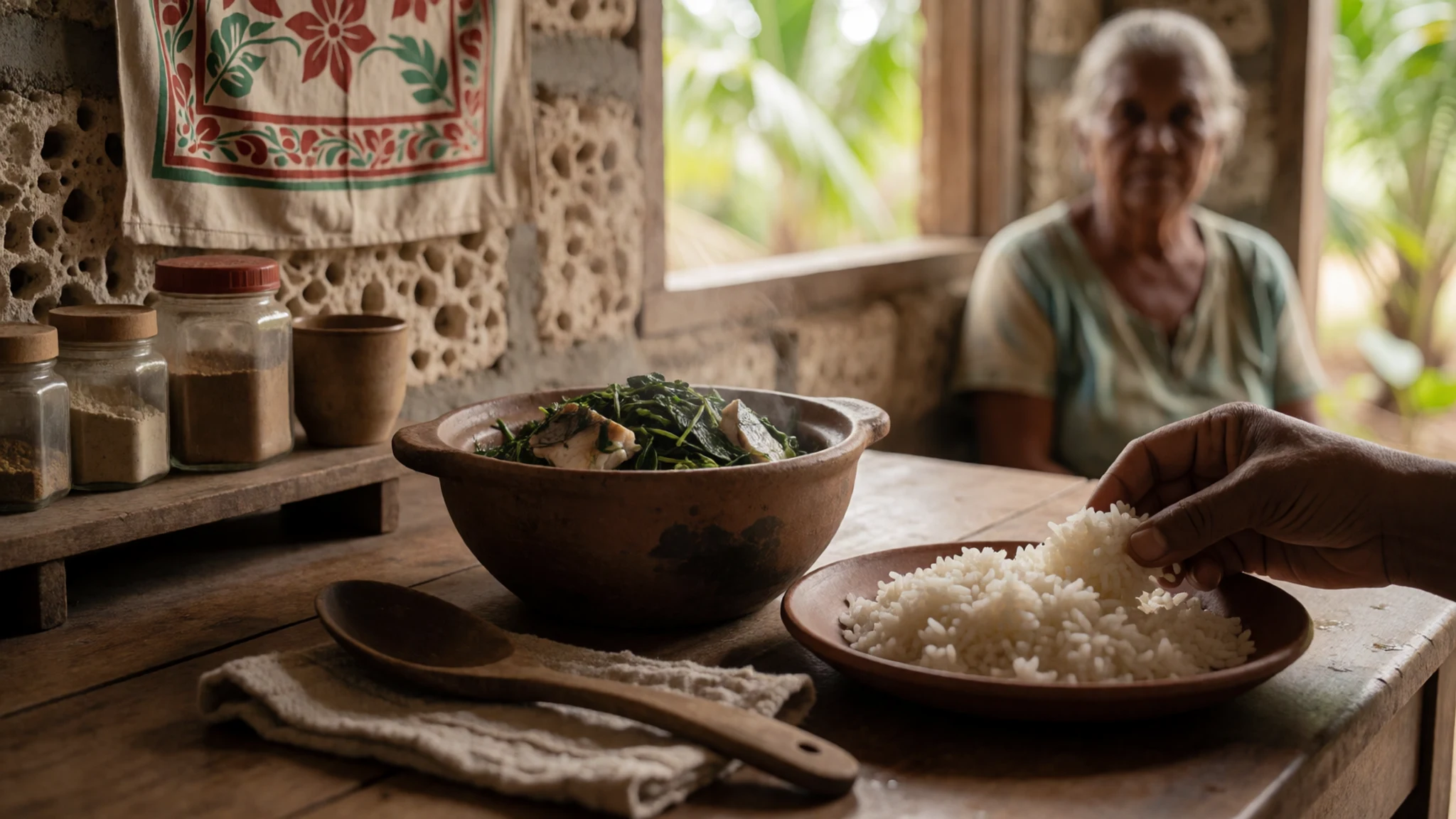
- Pilao — Village eateries and wedding courtyards
Mohéli National Park's gatherings often centre on pilao, a spiced rice cooked with meat or fish, cloves and cardamom. It appears at weddings and at ordinary midday meals when there is something to celebrate or simply a good catch. The rice is tinted and fragrant rather than plain. - Mkatra siniya — Home kitchens and shaded tables near the market in Fomboni
Mohéli National Park's tea hour often comes with mkatra siniya, a coconut and rice-flour bread cooked on a griddle. It is eaten warm, sometimes with honey. Bakeries are scarce; the bread belongs to home kitchens and to women selling from a shaded table near a market. - Grilled reef fish with achard — Beach landings and simple eateries from Fomboni to Nioumachoua
Mohéli National Park eats from the reef most days: a whole fish grilled over coconut-husk coals, served with rice and a sharp achard of green mango or vegetables. The fish is whatever came in, not a species on a board. Lime, chilli and a little oil are the usual dressing.
Plan it
Best time. Mohéli National Park suits the drier months, May to October, when seas are lighter for the islet boats and ridge paths are kinder. From June through April humpback whales move through the channel. November to April is hotter and wetter, with heavy showers and rougher crossings, though nesting continues and the forest stays vivid.
How long. 4-5
Getting there. Most journeys reach Mohéli National Park via Prince Said Ibrahim International Airport on Grande Comore, then a domestic flight or the inter-island ferry to Mohéli, landing by Fomboni. A truck or hired car continues to Nioumachoua for the islets and to Itsamia for the nesting beach. Confirm inter-island days before travel; they change.
Budget. mid
Tips
- Arrange the Itsamia turtle walk through the village association on the day, and accept that the turtles may not appear.
- Start islet boats early, before wind and glare build on the lagoon.
- Carry cash; cards are little used outside Fomboni, and small boatmen do not take them.
Etiquette
- Dress so shoulders and knees are covered in villages, and remove shoes before entering a mosque.
- Do not touch turtles, block their path, or shine a bright light into their eyes.
- Ask before photographing people, and avoid prayer times and private courtyards.
Nearby
Sources
- Wikidata (CC0)
- Wikipedia (CC BY-SA 4.0)
- Wikivoyage (CC BY-SA 4.0)
Wildlife
- Green turtle (animal)
The green sea turtle is a big sea reptile that eats only seagrass, and it is named for the greenish fat beneath its shell, not for its olive-to-black shell. In Mohéli, head east along the shore to Itsamia, the beach where green turtles haul themselves out of the water to nest. Villagers read the season from the tracks left across the sand. Keep well back, stay quiet, go with a local guide, and never touch or feed the turtles.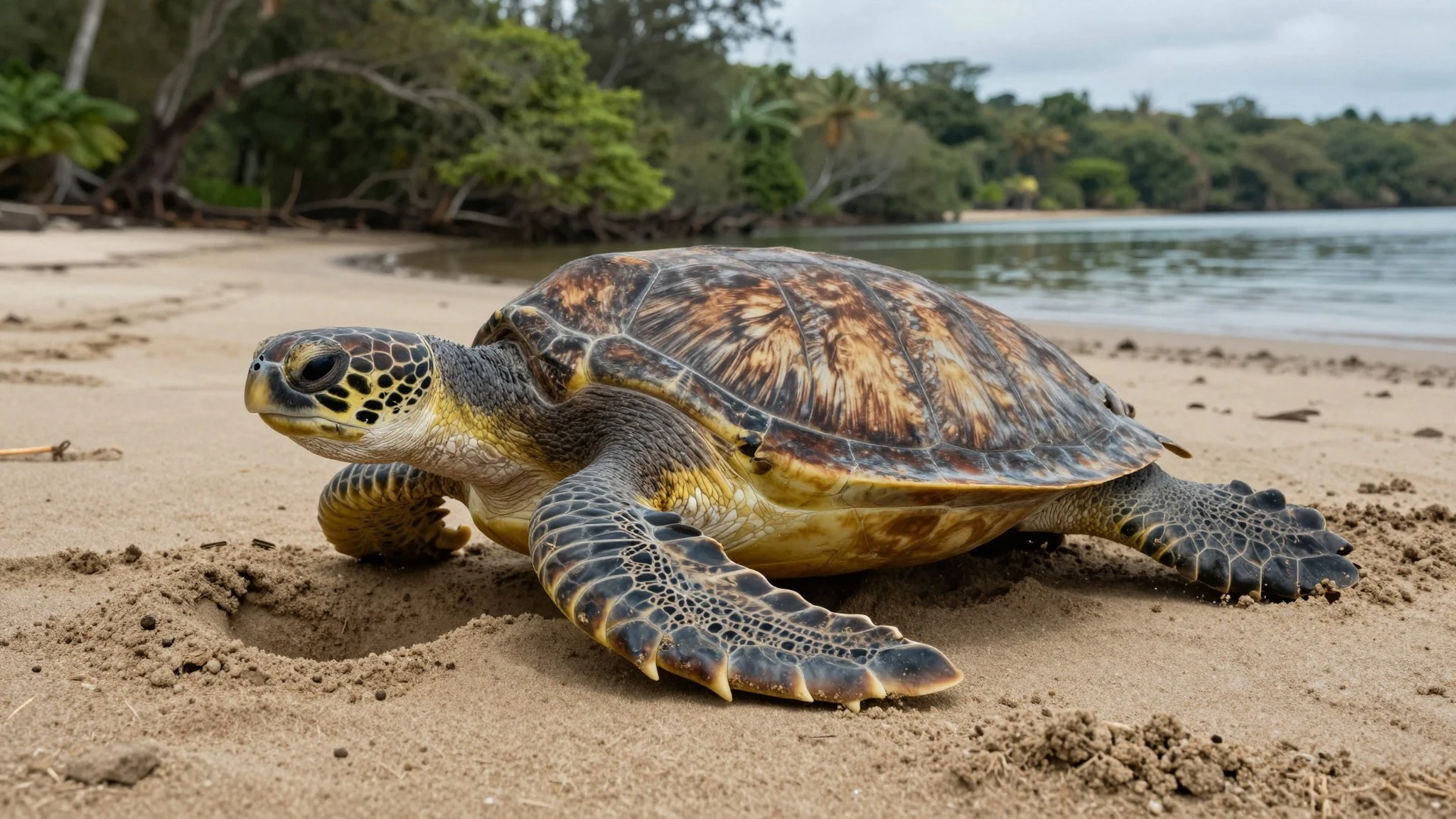
- Fruit bat (animal)
Livingstone's fruit bat is a big fruit-eating bat, known as the Comoro flying fox, and it lives nowhere else on Earth except two Comorian islands, Mohéli being one. Picture a fox with wings. In the park, look up into the treetops of the thicker woodland on the higher ground, where the bats share the branches with birds. Keep well back and speak softly, so as not to disturb them. Go with a guide, use binoculars, and never offer food. - Striated heron (bird)
The striated heron, also called the mangrove heron, is a small, mostly stay-at-home bird that likes to hunt in the shade. In Mohéli National Park, herons gather among the roots with crabs and young fish, and you can reach them by pirogue or small motorboat when the tide is high. Ask your boatman to drift quietly, keep your distance, go with a guide, and never feed the birds.