Domoni
Domoni, Comoros
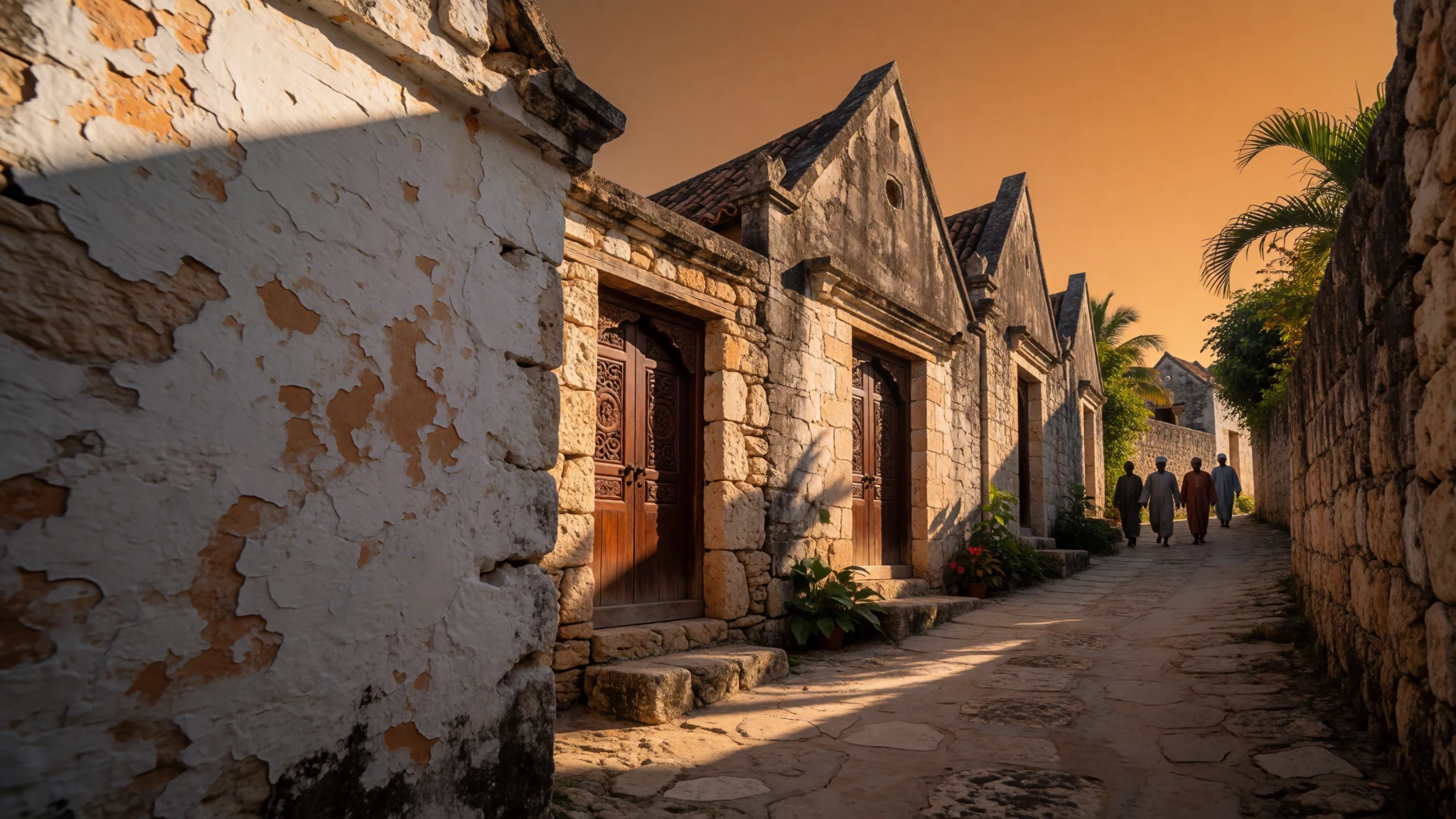
Domoni is Anjouan's old sultanate capital, a quiet east-coast town of carvers, old quarters and wedding music shaped by centuries of Indian Ocean trade.
The place
Domoni sits on the east coast of Anjouan, the island Comorians also call Nzwani, in the western Indian Ocean. With a population of 17,665 it is one of the island's three major towns, alongside Mutsamudu, the present capital, and Bambao. A road crosses the island to link Domoni with Mutsamudu on the other side, and that road is how almost every visitor arrives. The old town splits into three areas—Hari ya muji, Maweni, and Momoni—and strolling between them is the primary way to explore. This is not a resort. It is a working town where fishing boats, school uniforms, carvers' workshops and the call to prayer set the rhythm of the day. Signs in English are few and tourist facilities are limited, so a local guide, or a contact made through a guesthouse in Mutsamudu, helps a great deal. South of the town the Ajajo River reaches the sea, and the coast there suits a slow walk. The climate is tropical and warm all year. August is the coolest month and December the warmest, though the gap is modest. December is also the wettest month and July the driest. Rain tends to come in heavy bursts, which can turn lanes muddy and make boat crossings less reliable. Mornings are best for walking, before heat and humidity build. Cash machines and card payments are patchy on Anjouan, so it is wise to bring cash and plan around that.
Its story
Domoni's story begins, on the evidence of archaeological finds, in the 12th century, and the town grew rich as a harbour. By the 15th century ships were carrying goods and people between Africa, Persia, Arabia and India, and excavated objects hint at contact reaching as far as Japan. A celebrated navigator of the age, Ibn Majid, recorded the port as an important trading stop. Many local families trace their roots to Shiraz in Persia, from where settlers arrived over several centuries, and their descendants, known as Shirazi, remain a visible part of local society. In the 16th century power was split among local chiefs called Feni, each controlling part of the island. Domoni then served as the seat of the Anjouan sultans until the end of the 18th century, when Sultan Abdallah I, who had been Mwenye Fani, moved the capital to Mutsamudu. Quarrels between the chiefs eventually led them to ask Europeans to broker peace, and the islands became a French protectorate in 1886, then a French possession in 1909. In 1975 the three islands formed a republic. Its first president, Ahmed Abdallah, came from Domoni, and his mausoleum stands in the town. Other national leaders have had links with Domoni too, which helps explain why national politics here often feel like local news.
What to see
- The old quarters — Old town
Domoni's old town is split into Hari ya muji, Maweni and Momoni, and the best way to see it is on foot, without a fixed route. Look for carved doors, tight lanes and stairways where neighbours sit and talk. Go early, ask before photographing anyone, and take a local guide if possible.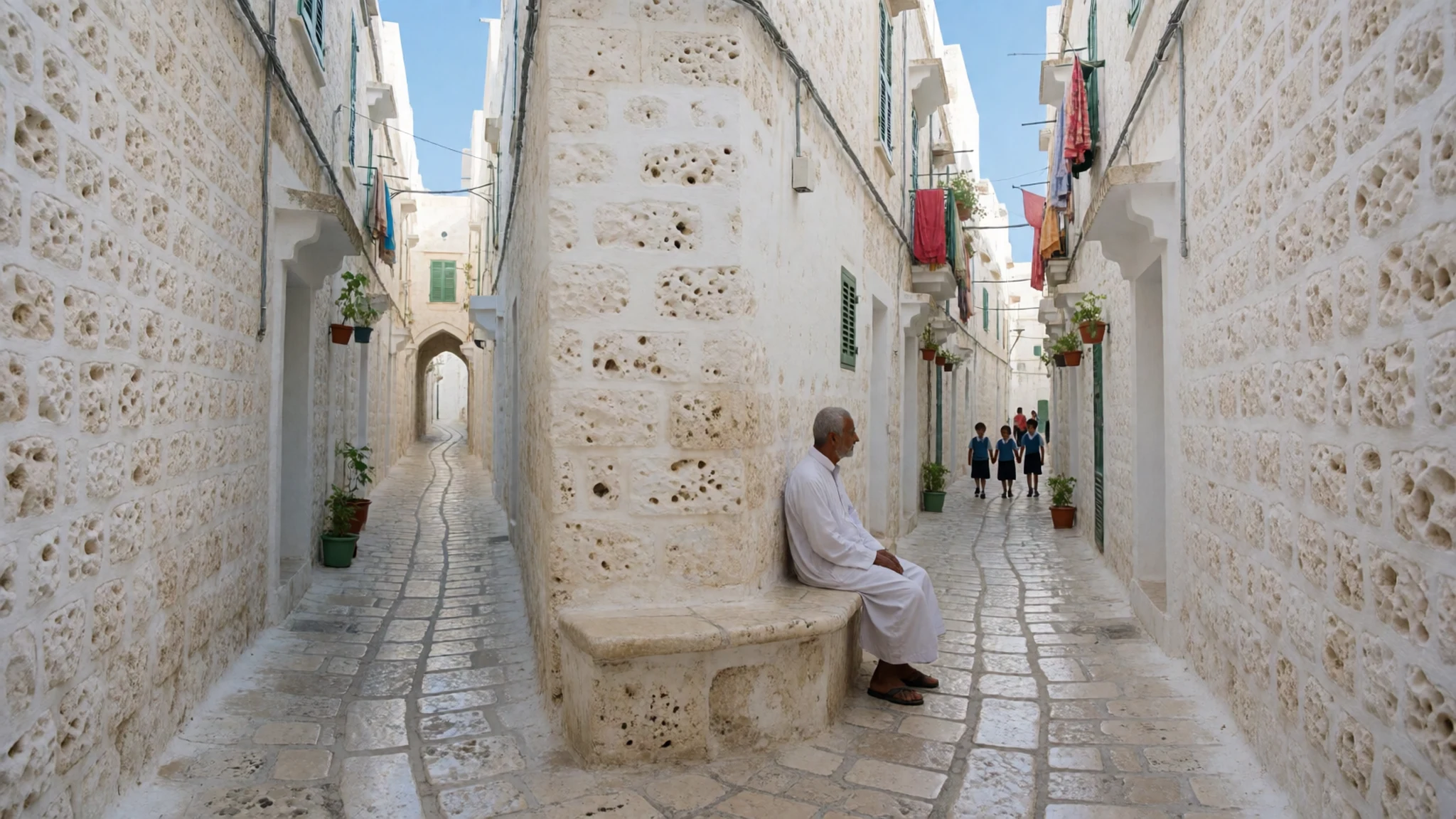
- The harbour and shoreline — Seafront
The harbour is where Domoni's trading past is easiest to picture. Fishing boats come and go, nets are mended and catches are sold on the spot. Mornings are busiest and coolest. Keep a respectful distance from working crews, and ask before pointing a camera at people or their boats.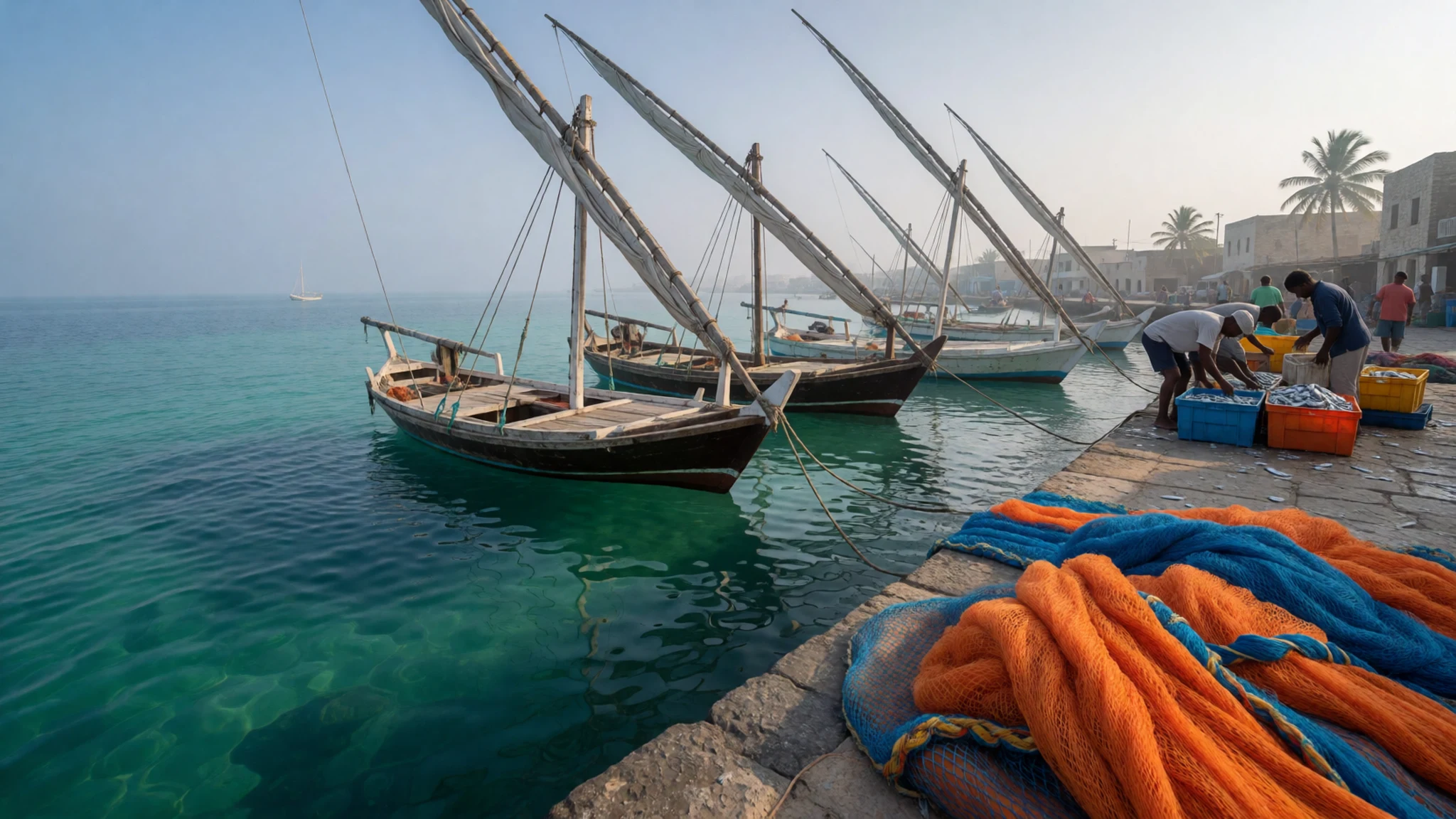
- Mausoleum of Ahmed Abdallah — Domoni town
The mausoleum of Ahmed Abdallah, the first president of the Comorian republic, is a reminder that this small town has shaped national history. Opening arrangements are informal, so ask locally about access. Dress modestly, speak quietly, and follow any guidance from the people looking after the site.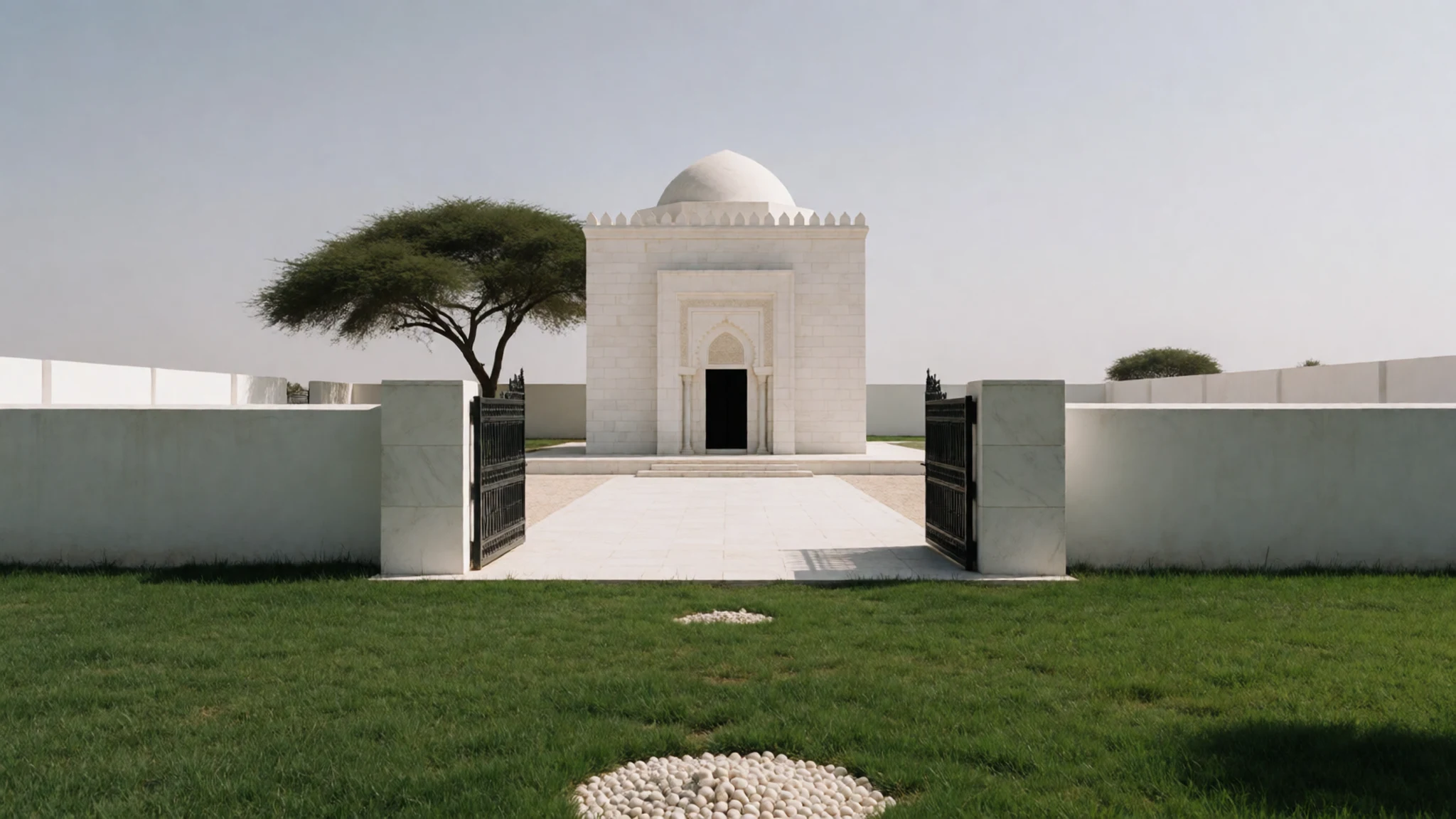
- Woodcarving workshops — Workshops around the old town
Domoni is known for finely worked wooden carving, and some craftsmen are happy to show visitors what they are making. Doors, chests and smaller keepsakes are all possible, depending on who is working. Ask about the wood and the time a piece takes, and agree any price clearly before you commit.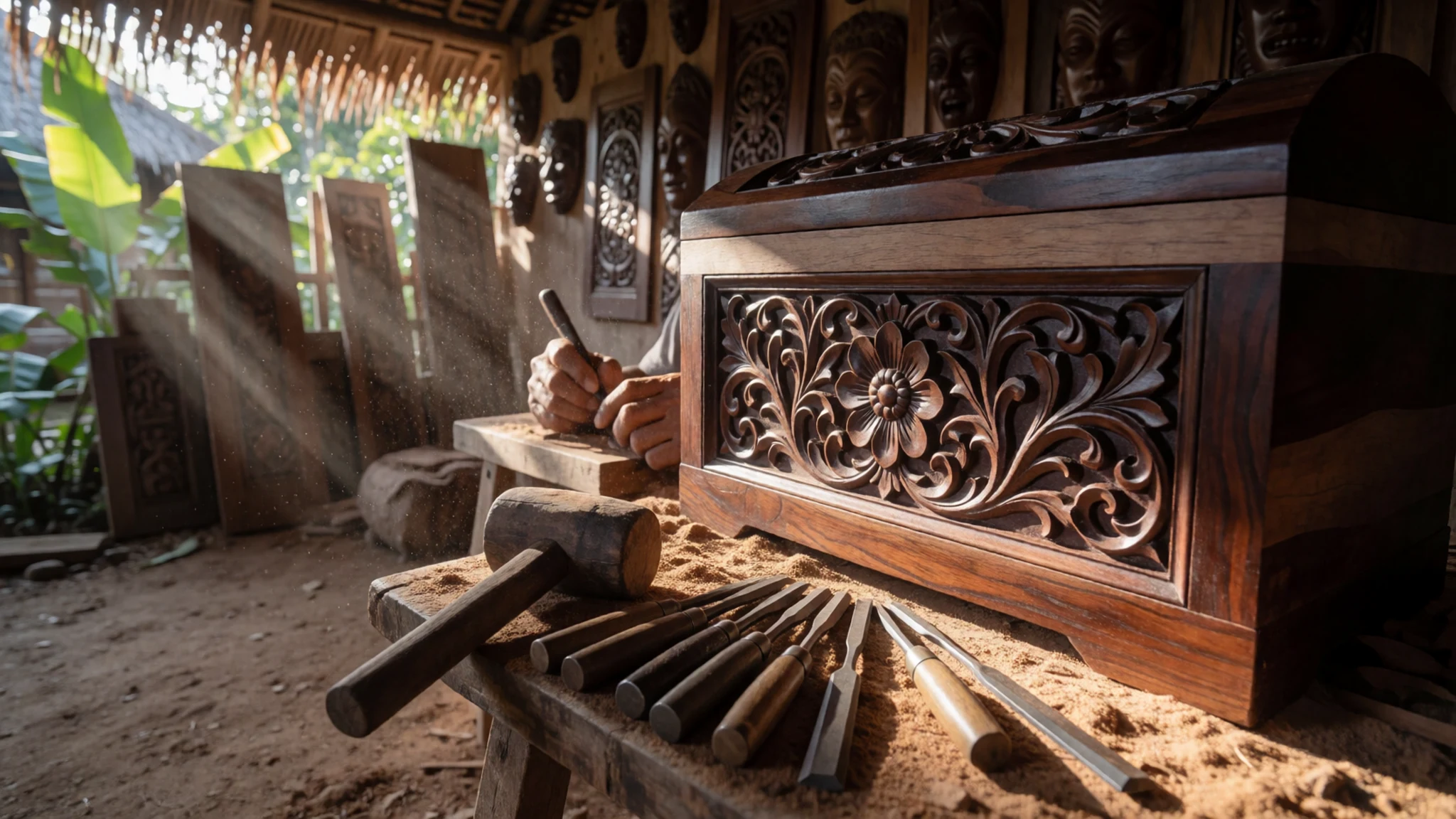
- The Ajajo River mouth — South of the town
South of the town, the Ajajo River runs into the Indian Ocean, and the walk out along the coast gives a quieter view of daily life: gardens, washing, children, canoes. It is best in the cooler morning hours. Local advice on tides and paths is worth asking for before you set out.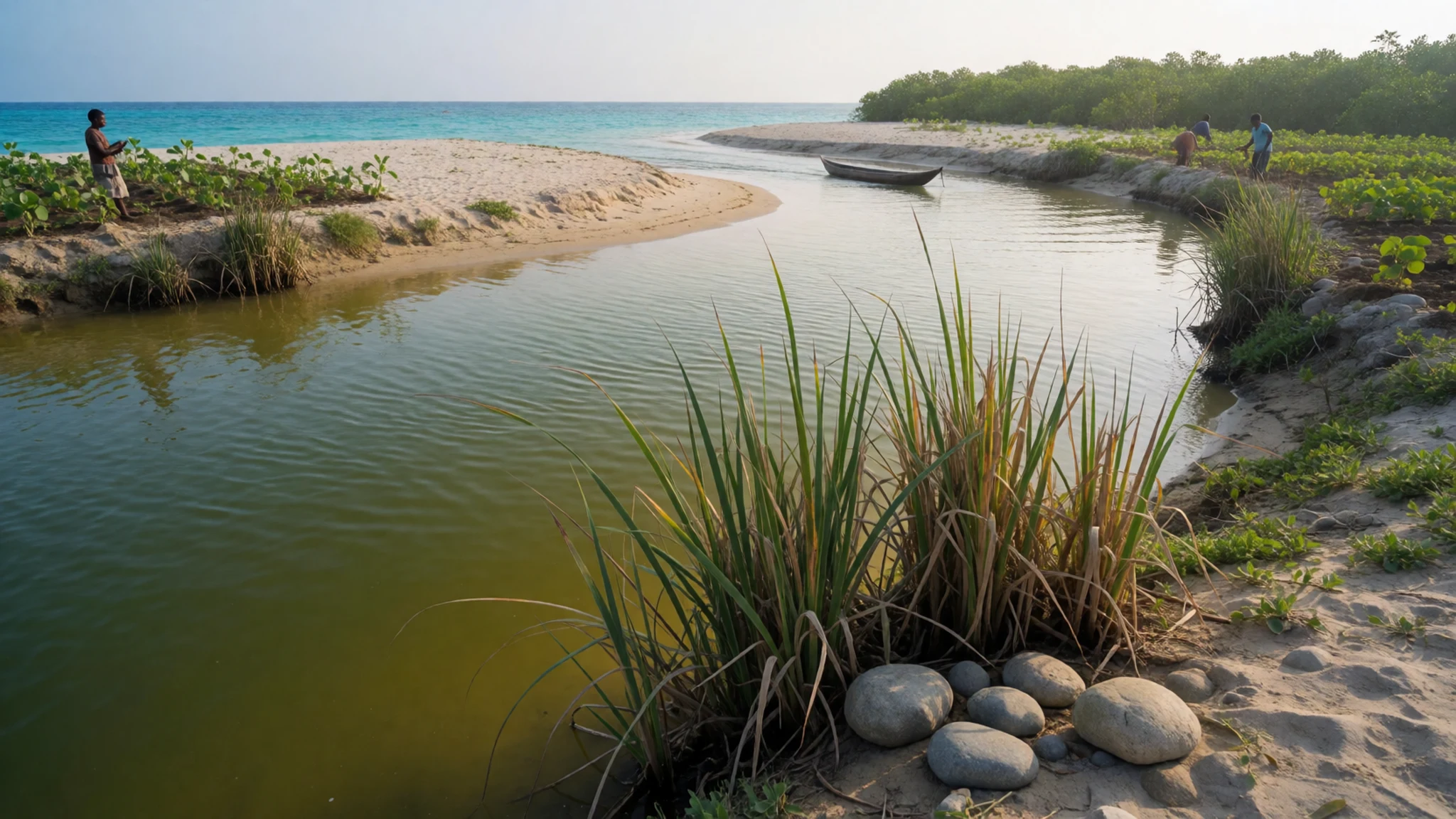
Culture
Domoni is a Muslim town with a long record of writing, music and craft, and ordinary social life is built around family, neighbours and the mosque. Weddings are a major occasion, and academic studies by the Ottenheimers on marriage and music in Domoni describe how rich the traditions are. Women make music with coconut shells, gongs and sticks, and play the tari, a frame drum. Men play drums such as the fumba, dori and msindio, along with the gabus lute, the mzumara double reed, the nkayamba rattle and the ndzedze box zither. Some wedding celebrations include a mock bullfight, which is read as a trace of the Portuguese presence here long ago. The town is also known for woodcarving and delicate embroidery, both still done by local hands. Women sometimes sit on house steps applying sandalwood paste to each other's faces, a sight many visitors remember. Religion is taken seriously and views on faith can be conservative, so visitors do best to be courteous and low-key about beliefs, whether their own or others'. Ramadan changes the pace of the day, with eating and drinking in public often avoided until sunset. Visitor etiquette: dress modestly with shoulders and knees covered, and always ask permission before photographing people, especially women, at weddings or at a mosque.
What to wear
In Domoni, traditional dress follows Comorian coastal custom. Women commonly wrap themselves in printed cotton cloths, often brightly coloured, worn as a body wrap and a head covering; the names and styles vary between families and occasions, so ask locally. Men wear a long white robe, often with an embroidered cap, especially for Friday prayers and religious days. Weddings are the main time for finery, with richly patterned cloth, embroidery, jewellery and sandalwood paste applied to the face. Day to day, many people wear a mix: wraps and headscarves for women, shirts, trousers or a loose robe for men, and T-shirts and sandals for children and young people. Fabric is chosen for the heat. For visitors, the sensible choice is light, loose clothing in cotton or linen that covers shoulders and knees; this suits both the humidity and local modesty norms. Women may like to carry a light scarf for visiting mosques or shrines, and everyone should wear swimwear only on a beach, not in town. Footwear matters: lanes can be steep, uneven and slippery after rain, so closed sandals or trainers with grip are better than flip-flops. A hat, sunscreen and a light rain jacket round out the kit.
What to eat
- Mataba — Small local eateries and family kitchens
Cassava leaves pounded and simmered in coconut milk, sometimes with fish or meat. It is a staple dish across the Comoros, with a deep green, earthy flavour. Look for it in family-run eateries and at home-cooked meals arranged through a local host.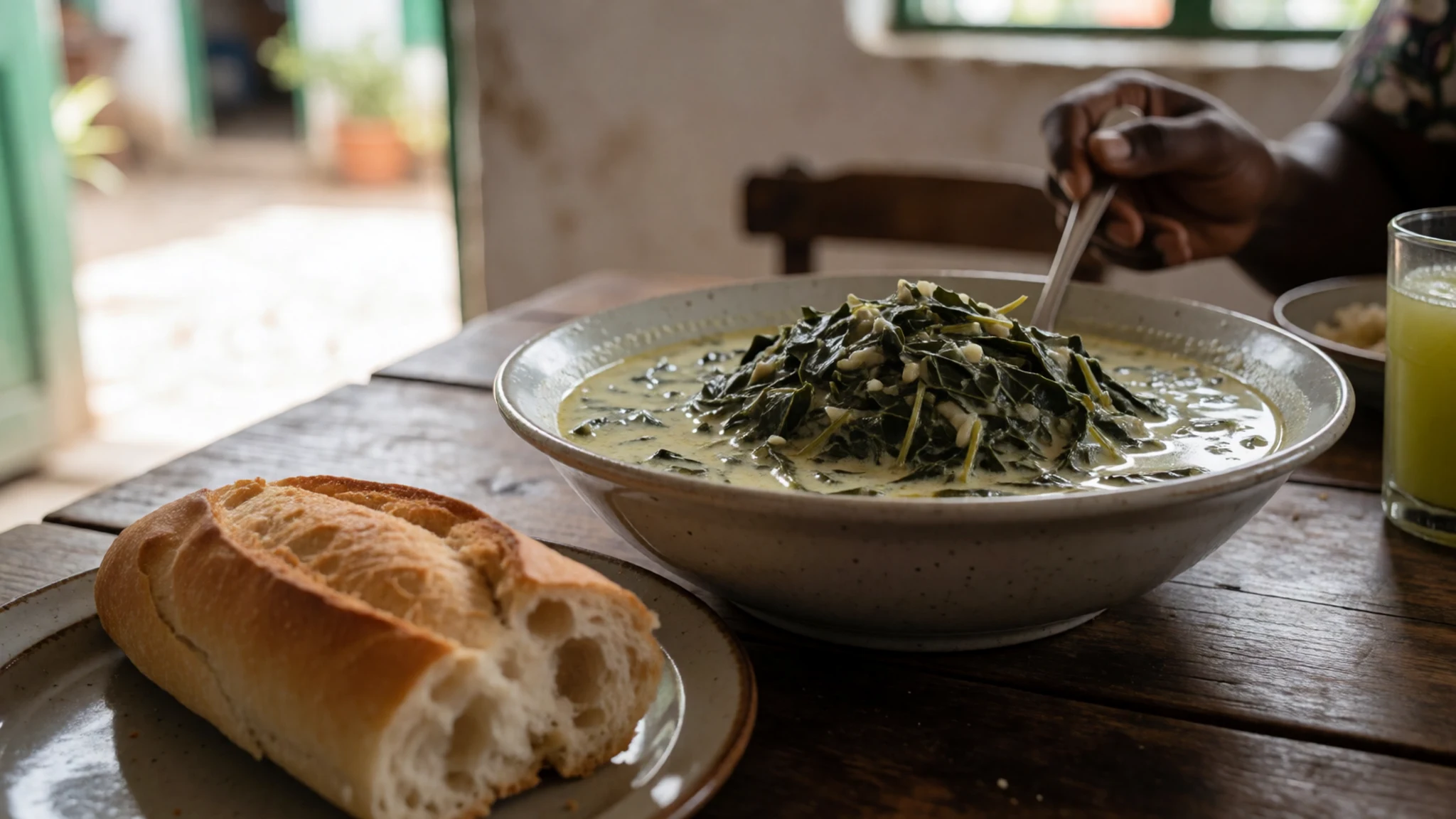
- Pilao — Family celebrations and local eateries
Spiced rice cooked with meat, usually served for celebrations and weddings. Cardamom, cloves and cinnamon reflect the island's trading links across the Indian Ocean. It is often shared from a large platter, so it is best enjoyed with a local family or at a festive event.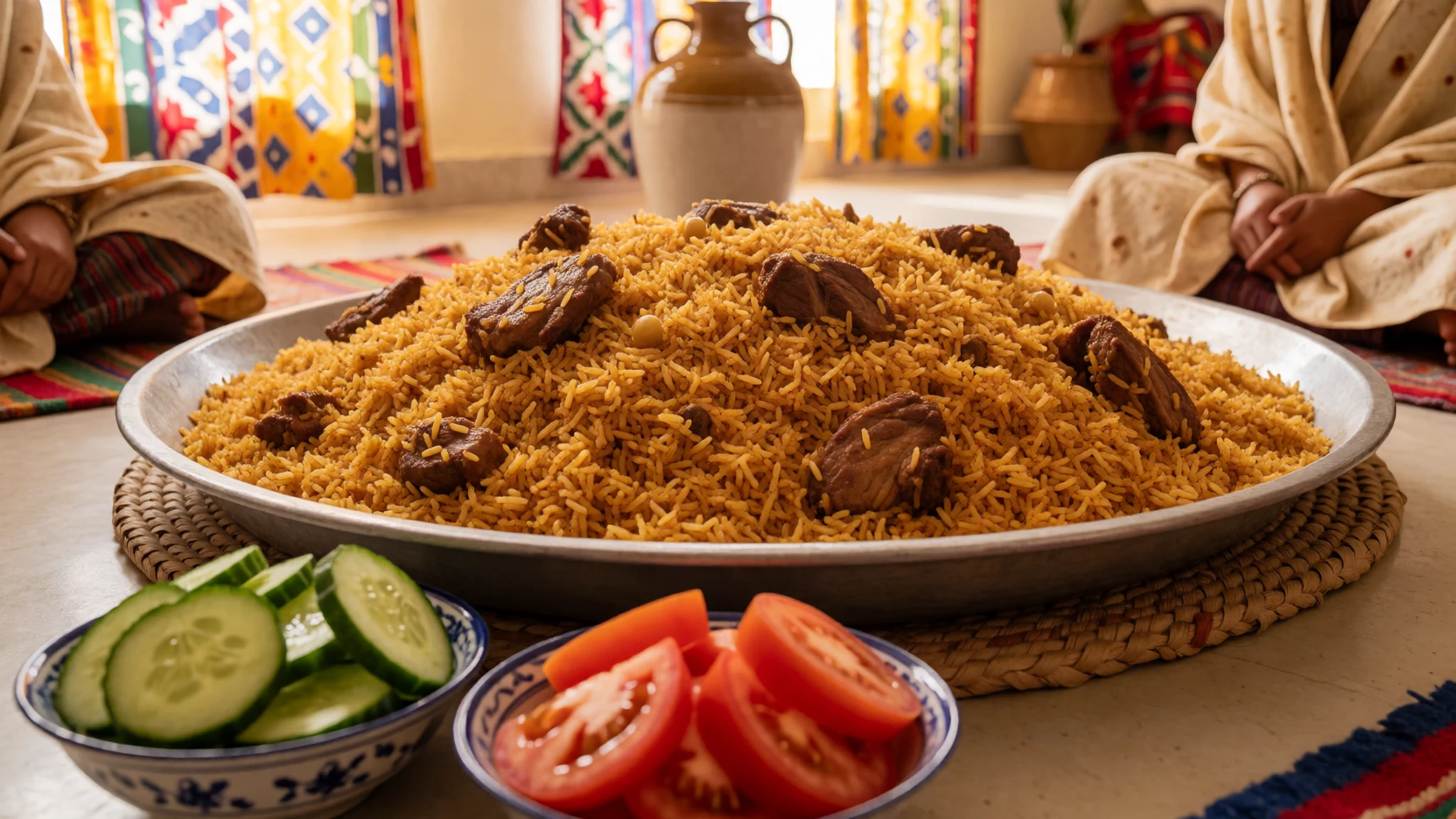
- Fish in coconut sauce — Near the harbour and landing beach
Fresh fish simmered with coconut milk, garlic and spices, served with rice. The catch depends on the day, and the best chance of it being very fresh is near the landing beach, where fishing crews come in. Ask what has just been brought ashore. - Cassava and banana with coconut — Local eateries and the town market
Starchy staples such as cassava, green banana or breadfruit, boiled or roasted and eaten with a coconut-based sauce or grilled fish. They are filling, inexpensive and common at everyday meals. Ask at a local eatery what is served that day. - Coconut bread and sweet snacks — Morning stalls and street corners in the old town
Small breads and fried sweet snacks, often flavoured with coconut, are sold in the morning and during Ramadan evenings after the fast breaks. They are simple and filling. Ask locally what is being made that day, as this varies from household to household.
Plan it
Best time. June to October is the better window: July is the driest month and August the coolest, so walking is more comfortable and boats and roads are more reliable. December is the wettest and warmest month, with heavy rain and humidity.
How long. 2–3
Getting there. Fly to Anjouan's airport near Mutsamudu, usually via the Comorian capital Moroni; check current schedules with airlines. From Mutsamudu, take a taxi or shared minibus along the road across the island to Domoni, and ask your guesthouse about the best time to travel.
Budget. low
Tips
- Bring enough cash, as cash machines and cards are unreliable on Anjouan
- Arrange a local guide through a guesthouse in Mutsamudu before you travel
- Walk in the morning, before the heat and humidity build
- Carry bottled water and a light rain jacket, especially from November to April
- Confirm onward transport the day before, as services can be informal
Etiquette
- Dress modestly, with shoulders and knees covered
- Ask permission before photographing people, especially women
- Avoid eating or drinking in public during daylight in Ramadan
Nearby
Sources
- Wikidata Q2721251 (CC0)
- Wikipedia: Domoni (rev 1377774118) (CC BY-SA 4.0)
- Wikivoyage: Domoni (CC BY-SA 4.0)
- Photo: Happy wedding! (Melle L'hermitte Aurélie), via Wikimedia Commons (CC BY-SA 4.0)
- Photo: Domani-Anjouan 1930 (Vienne, Emile), via Wikimedia Commons (Public domain)
- Photo: Happy colours (Melle L'hermitte Aurélie), via Wikimedia Commons (CC BY-SA 4.0)


