Nioumachoua
Nioumachoua, Comoros
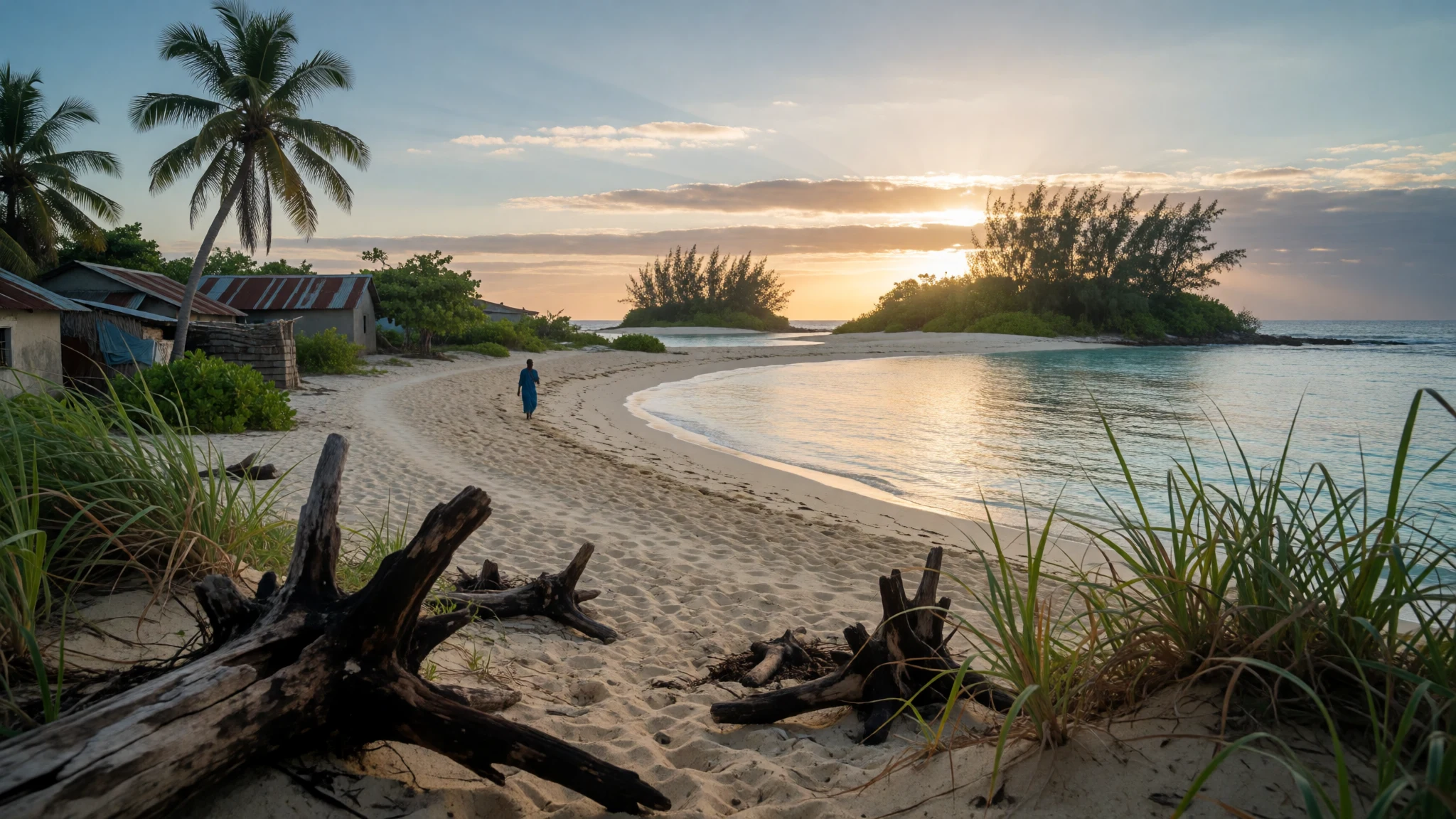
Nioumachoua is a quiet fishing village on Mohéli, facing a scatter of white-sand islets, coral reefs and, in season, humpback whales.
The place
Nioumachoua sits on the southern coast of Mohéli, the smallest and least visited of the Comoros islands. It is the second town of the island after Fomboni, the capital, but the word town flatters it: this is a low-key coastal village of small houses, fishing boats pulled up on the sand, and a mosque at the centre of daily life. The Comorian name is often written Nyumashiwa, and both spellings turn up on signs and maps.
What gives the village its reputation is the water in front of it. A string of small islets lies just offshore, eight in all, and several have pale sand beaches that locals and the few visitors treat as the best on the island. Beyond them are coral reefs, and further out the sea is deep enough for whales to pass. Behind the village, the land rises into forest that belongs to the Mohéli natural park, which covers both the land and the sea around it.
The feel is rural and slow. Electricity and phone signal can be patchy, there is one eatery of the ordinary local kind, and the main lodge doubles as the information point for the park. Evenings are quiet. Most days are organised around the tide, the weather and whichever boat is going out.
Visitors should expect heat, sun and humidity, simple accommodation and a pace that cannot be hurried. The reward is a stretch of tropical coast that has not been shaped around tourism, where the activities are mostly in the sea or in the forest and the village goes about its own business beside them.
Its story
Nioumachoua has no grand founding date or famous monument in the sources, and that is part of its story: it is a fishing community whose recent history is about how a small village learned to host visitors on its own terms. Life here has long rested on the reef and the lagoon. Men fish from small boats and sometimes on the reef itself, women look after households and gardens, and the islets just offshore have always been part of the village's working sea rather than a postcard backdrop.
The more recent chapter is the natural park. Mohéli's marine and forest reserve has encouraged communities along this coast to take a share in looking after the reefs, turtles and whales. In Nioumachoua that shows up in community-run bungalows, boat trips organised through a local association, and guides drawn from the village. Money from a day on the water stays largely in the village, which is a good reason to book through those channels rather than around them.
The wider island has had its upheavals too. Along the coast, the twin villages of Oualla owe their split to a flood in living memory, when part of the community resettled on higher ground nearby and the two halves have been separate ever since. It is a reminder that the weather and the sea are not only scenery here.
At the far eastern end of the island, Itsamia is where green turtles come ashore to lay their eggs, and the protection of that beach is one of the park's best-known efforts. Nioumachoua is a base for seeing a coast that is still, largely, doing what it has always done.
What to see
- The Nioumachoua islets — Offshore, south coast of Mohéli
The islets just off Nioumachoua are the village's best-known sight. Local association boats run half-day trips to one islet, which suits anyone who finds a tour of the whole park too tiring. Expect pale sand, shallow water and reef close to shore. Bring your own snorkel gear, water and sun cover, because there are no shops.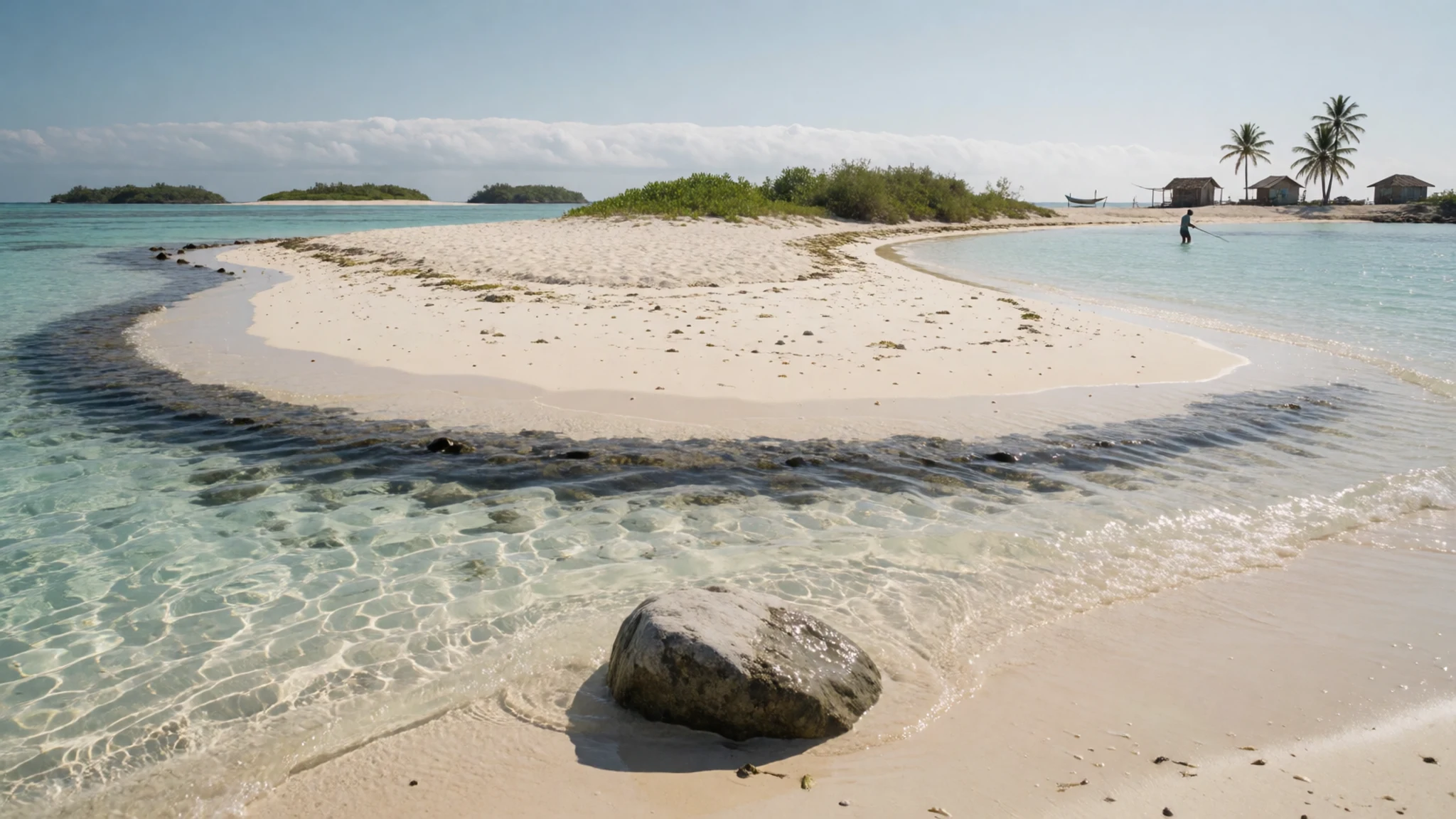
- Snorkelling the reefs — Reefs around the islets
Snorkelling is possible almost anywhere along this coast, and the reefs are healthiest where fewer people go. A boat trip to a more isolated spot usually pays off. The lodge in the village rents equipment if you have none. Go with a local guide, as currents around the islets can be stronger than they look.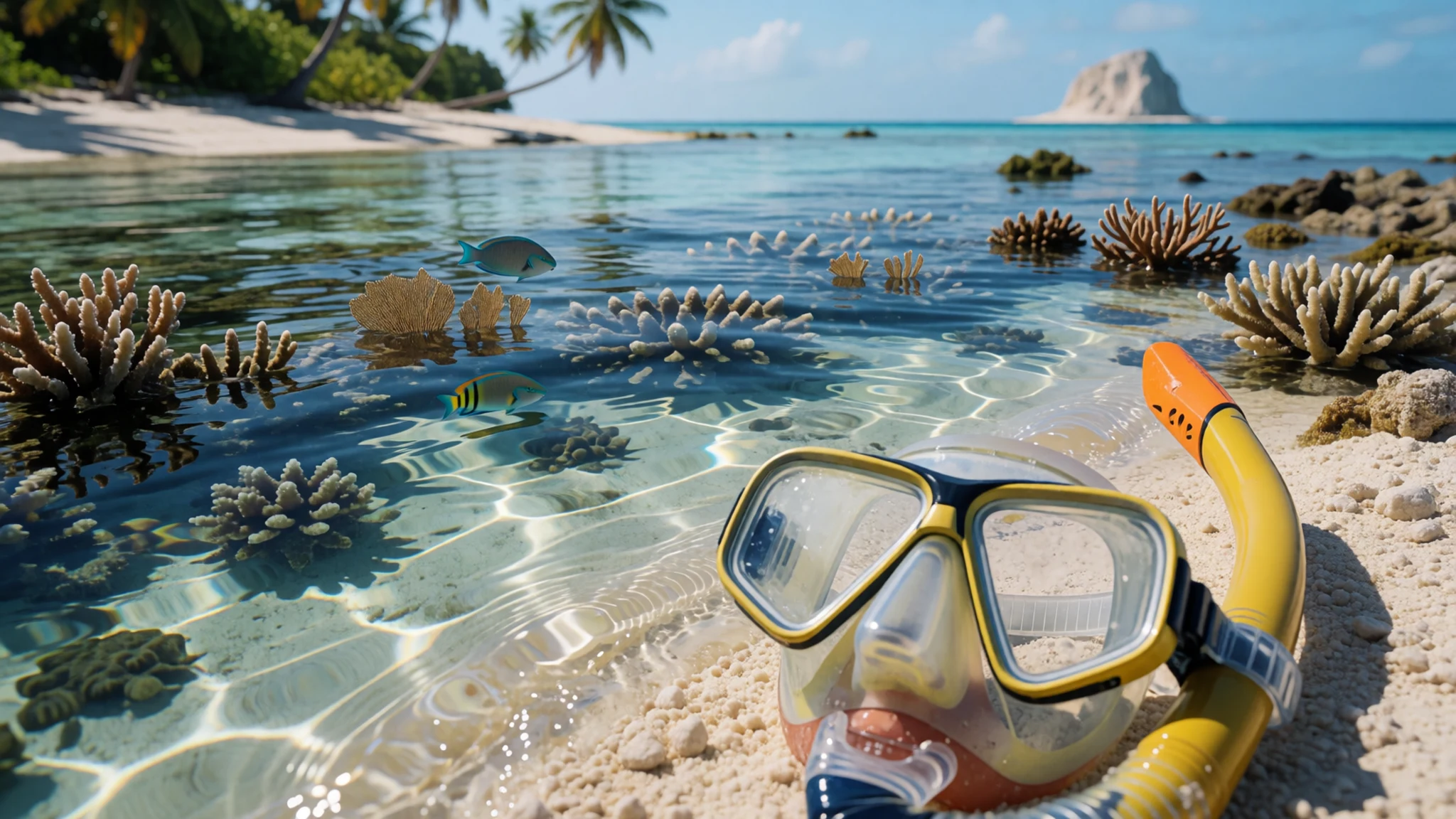
- Humpback whale watching — Open water off the south coast
Humpback whales pass this coast in the second half of the year, with local operators running trips from about August until the middle of November. Sightings are never guaranteed, and the sea can be rough, so allow more than one day. Choose a boat that keeps its distance and does not chase the animals.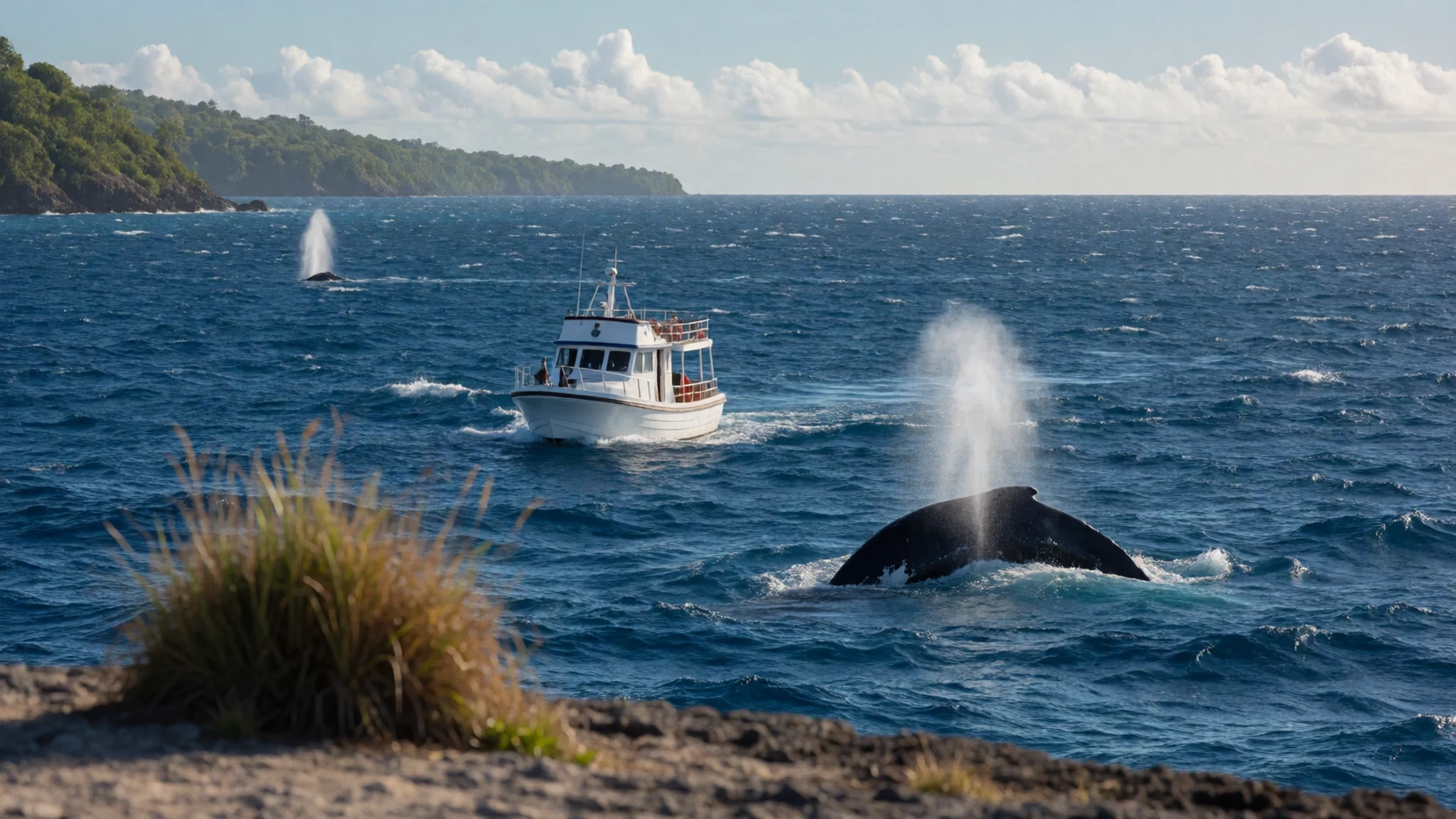
- Livingstone's fruit bats — Forest behind the village
Mohéli is home to Livingstone's fruit bats, big fruit-eating bats found only in the Comoros. The excursion involves a hike through farmland and forest, which doubles as an easy introduction to local agriculture. Go with a guide from the village, wear sturdy shoes and carry water, since the walk is humid and the paths can be muddy.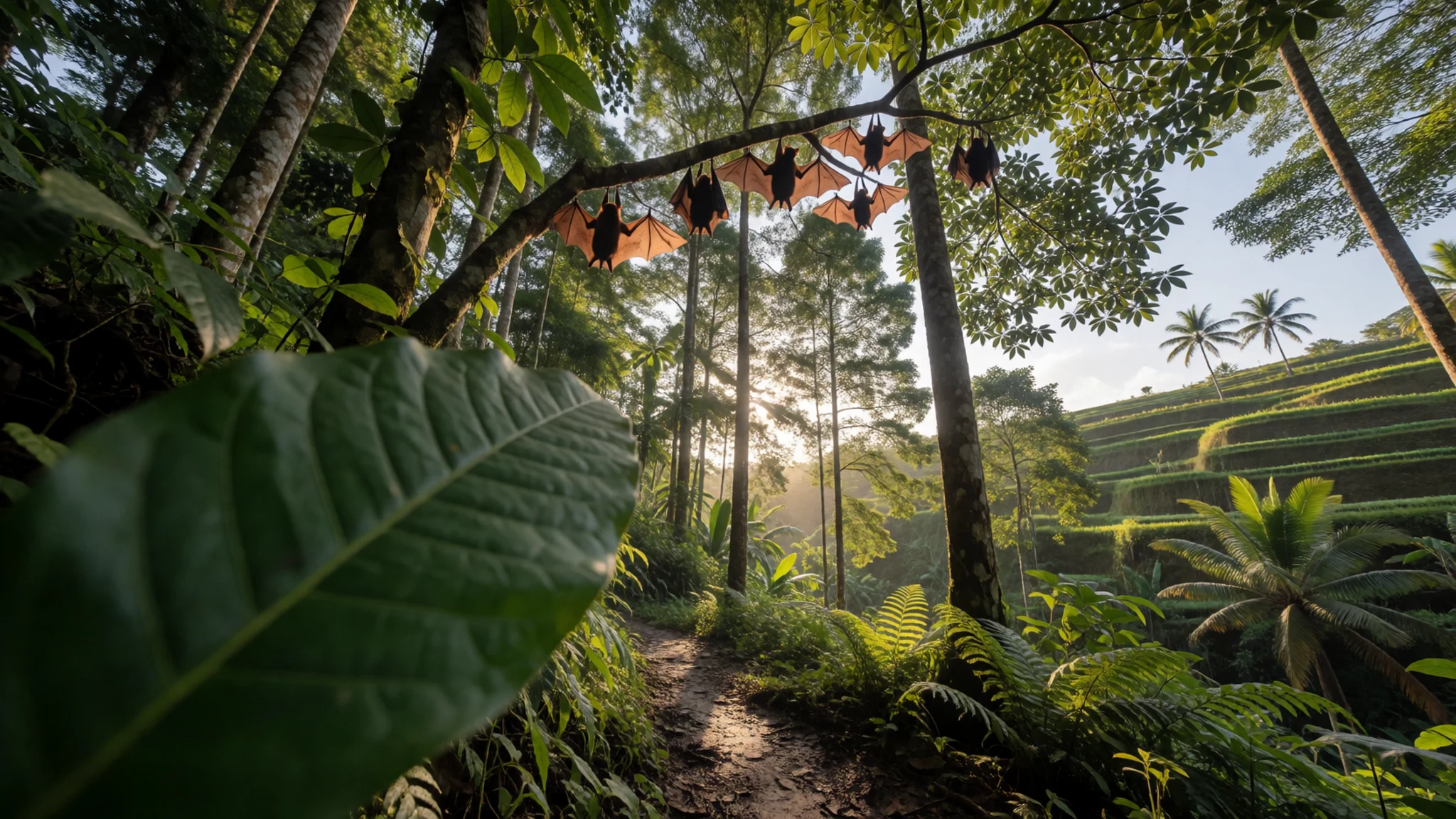
- Kayaking and camping in the park — Mohéli natural park coast
Kayaks let you reach quiet beaches inside the natural park at your own pace, and those with a tent can camp on the island, with the lodge as the place to hire missing gear. Both need permission and a park fee, so check with the park office or lodge before setting out.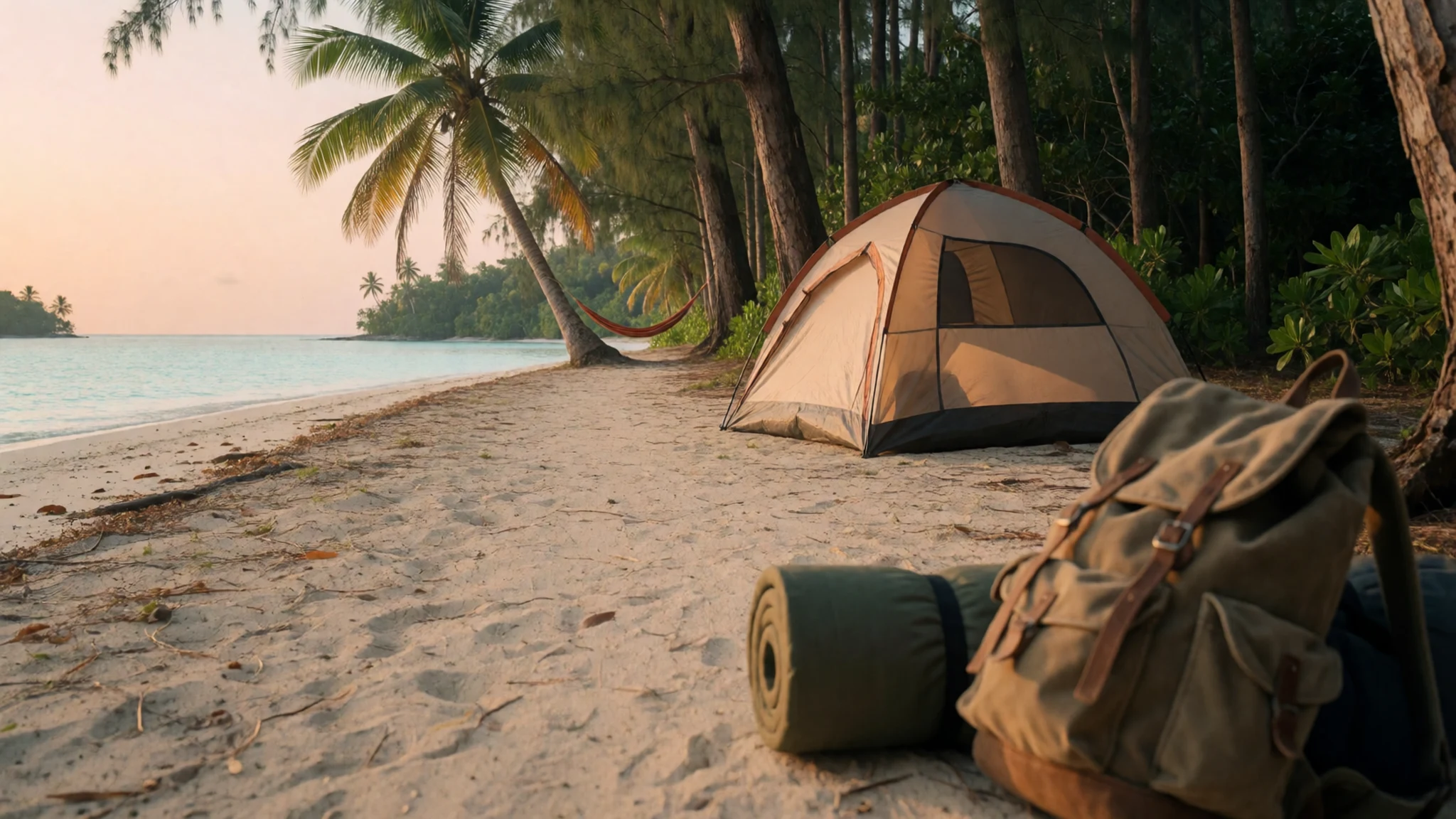
Culture
Nioumachoua is a Muslim village, and daily life follows the rhythm of prayer, the market and the tide. Mohéli's people speak a Comorian language, Shimwali, with French and Arabic used in schools and religion. Village life is communal: decisions about the park, the boats and the beaches involve elders and local associations, and visitors are generally treated as guests of the whole community rather than of a single business.
Family and neighbourhood ties are strong, and greetings matter. A handshake, a few words of French or a try at the local greeting goes further than any amount of gear. Fridays are quieter, and the mosque sets the tone around prayer times. Fishing is the backbone of work here, and the day starts early, with catches landed in the morning and sold or shared in the village.
Traditional crafts survive in small ways. The island is known for woven sisal carpets, pottery and embroidery, and buying these directly from the people who make them is one of the better ways to leave money in the village. Do not expect souvenir stalls, and be ready to ask around.
Beyond Nioumachoua, the traditional villages dotted along the coast each have their own character, and visits are best arranged through a local guide so that your arrival is expected. Dress modestly in the village, ask before photographing anyone, and keep swimwear for the beach and boat only.
What to wear
Nioumachoua is a conservative coastal village, and its clothes reflect both Comorian tradition and Islamic modesty. Traditional dress across the islands includes the shiromani, a bold wrap in red and white or other strong colours that women wear around the body and head for weddings, festivals and religious occasions. Women also use lesos, printed cotton cloths, as wraps and head coverings. Men wear the kanzu, a long cotton robe, with a embroidered kofia cap, mainly for Friday prayers and celebrations. Some women apply a pale paste made from ground wood to their faces as skin care and decoration.
Everyday clothing is simpler. In Nioumachoua, most women wear loose, long dresses or skirts with a headscarf or leso, and men wear shirts and long trousers or a wrap skirt called a kikoi-style cloth, often with flip-flops. Fishermen and farmers dress for work in worn shorts and shirts, and wet clothing dries quickly in the heat.
For visitors, light, quick-drying cotton or linen is best, with shoulders and knees covered in the village. Bring a swimsuit and a rash vest for the sea, plus a wide-brimmed hat and reef shoes for coral and rocky shores. Strong sandals suit boat landings, but proper walking shoes are needed for forest hikes to see the bats. A thin rain jacket is useful in wet months, and a sarong or leso doubles as beach cover, sun shade and a scarf.
What to eat
- Grilled or fried reef fish — The village's local eatery or a home meal arranged through the lodge
Fish landed by the village boats is the staple here, usually grilled over charcoal or fried with garlic and lime. Portions are plain and fresh, served with rice or cassava. It tastes best when you ask what came in that morning.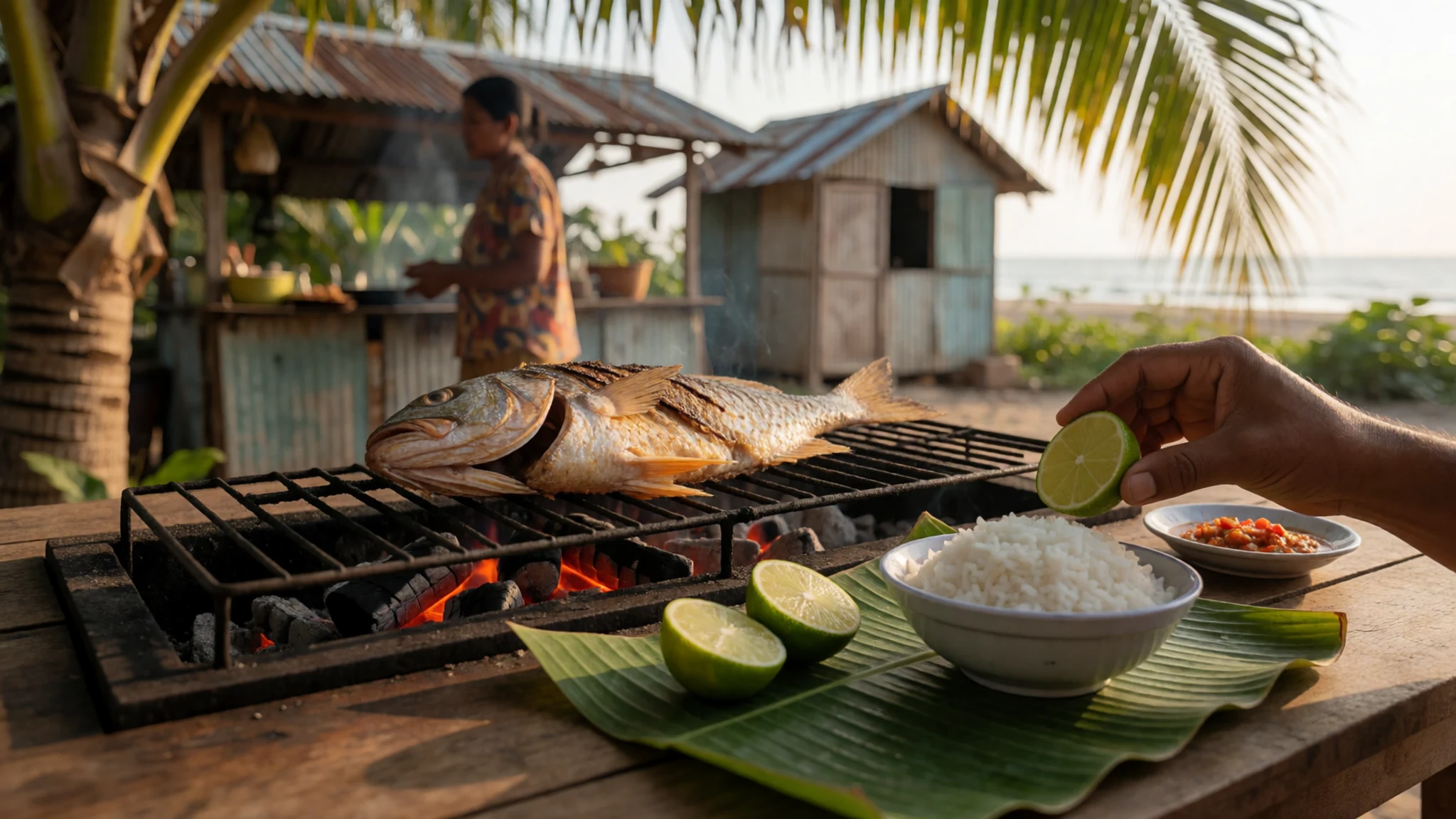
- Mataba — Home cooking arranged through community bungalows
Mataba is cassava leaves pounded and cooked slowly in coconut milk, often with fish or meat. It is rich and green, and a fixture at family meals and celebrations across the Comoros. Ask for it on days when a household is cooking for visitors.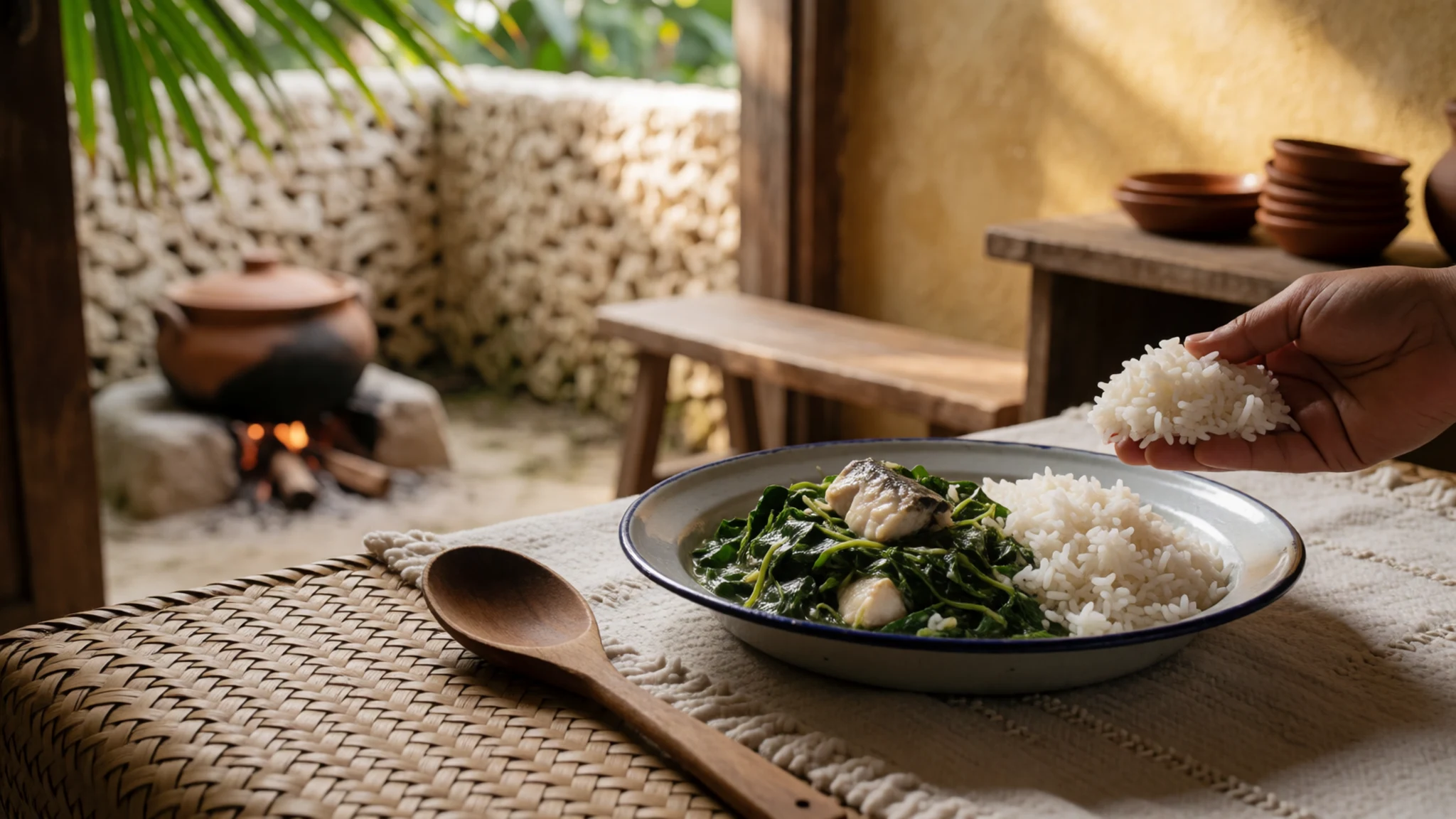
- Rice with coconut and spices — Village eateries and family tables
Rice cooked in coconut milk, often scented with cloves or cinnamon, is the base of most main meals. The islands grew cloves and vanilla for trade, and the spices still show up in everyday cooking. It comes with fish, chicken or a simple vegetable sauce. - Octopus in coconut sauce — Coastal villages when fishermen have a good catch
Octopus, tenderised and simmered in coconut milk with onion and tomato, is a coastal favourite across the Indian Ocean islands. It is chewy, mild and filling. Availability depends on the catch, so treat it as a pleasant surprise rather than something to plan around. - Cassava and breadfruit — Village kitchens and small roadside stalls
Boiled or fried cassava and breadfruit are the starchy sides that fill out nearly every meal, often served with a spicy chilli paste. They are simple, cheap and usually fresh from gardens behind the village. - Mkatra foutra — Small bakeries and market stalls in Fomboni and the villages
Mkatra foutra is a sweet, slightly spongy coconut bread, often eaten at breakfast or with tea. It is a good thing to carry on a boat day, since it keeps well and needs no cutlery.
Plan it
Best time. August to mid-November, when humpback whales are in local waters and the sea is usually calmer for boat trips. Whale season is often described as running from July to October, so confirm dates locally. The Comoros are tropical and hot all year, and the wetter months bring heavy rain and rougher seas.
How long. 3–4
Getting there. Fly to Mohéli's small airport near Fomboni, usually via Moroni on Grande Comore (check current flights with the airline). From Fomboni, a regular bus runs to Nioumachoua from the market, and shared taxis run through the day. Buses back to Fomboni leave very early, so reserve your seat with the driver the day before. The west road is longer but in much better condition than the east road.
Budget. low
Tips
- Book lodge, bungalows and boat trips ahead through the lodge or local association, as capacity is small.
- Carry cash in Comorian francs, since cards and cash machines are rarely available in the village.
- Bring your own snorkel gear, sun cream, water and a headlamp, as supplies and power can be patchy.
- Ask the park office or lodge about the current park fee, which is paid once per person and covers repeat activities for a limited time.
- Allow slack in your plans, as bus times, boat departures and weather can all shift.
Etiquette
- Dress modestly in the village and keep swimwear for the beach and boat.
- Ask before photographing people, houses or the mosque.
- Do not touch coral, chase whales or disturb nesting turtles, and follow your guide's instructions.
Nearby
Sources
- Wikidata Q3342090 (CC0)
- Wikipedia: Nioumachoua (rev 1378594348) (CC BY-SA 4.0)
- Wikivoyage: Nioumachoua (rev 5412642) (CC BY-SA 4.0)
Wildlife
- Humpback whale (animal)
A humpback is an enormous whale with long flippers and a bumpy head, famous for leaping out of the water and for the songs the males sing. Off Nioumachoua, the quiet fishing village looking over pale islets and coral reefs, they pass by in season. Go with a local guide, keep well back, stay calm and quiet in the boat, and never try to feed them. Watch the surface for sudden splashy leaps.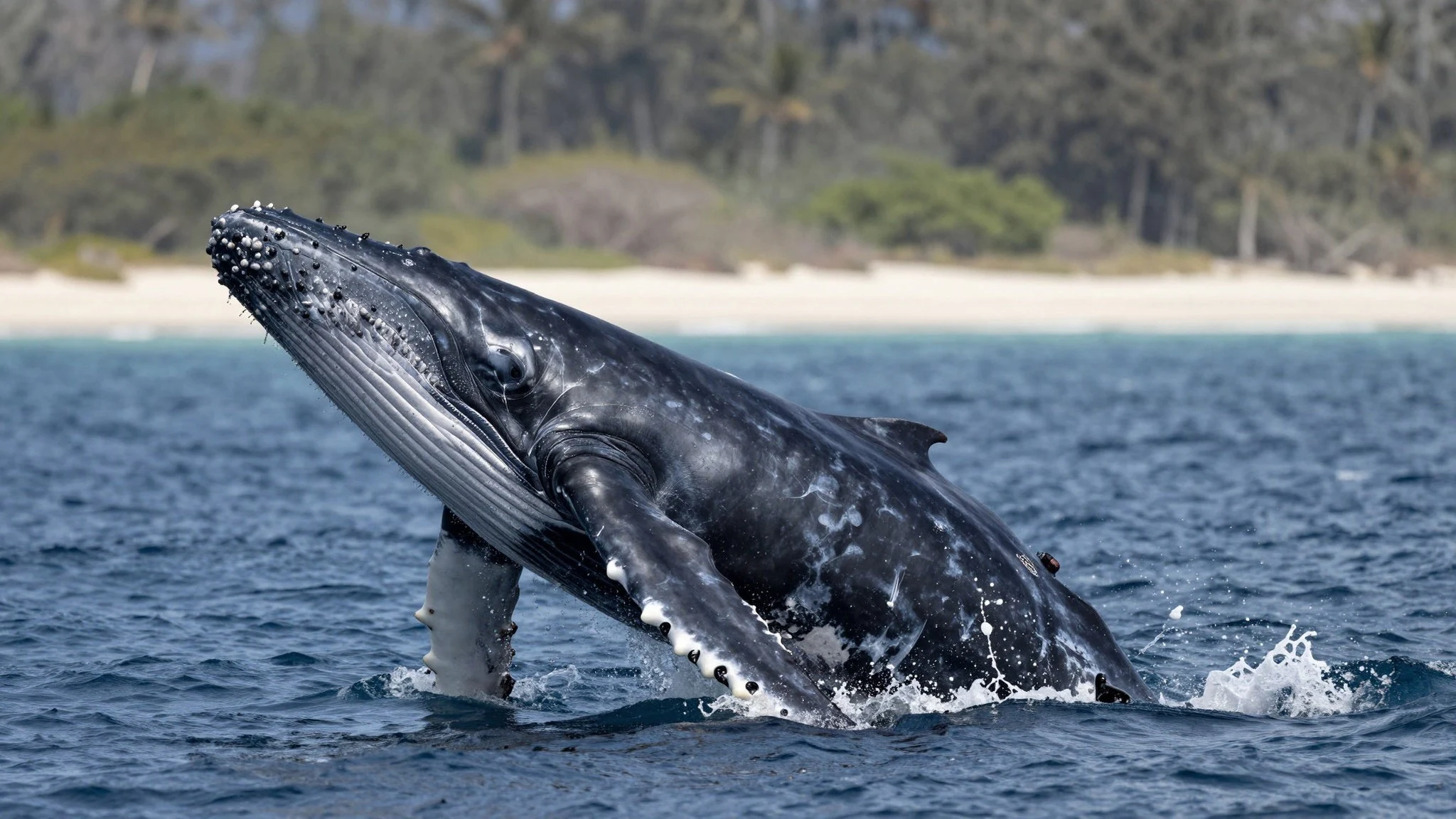
- Livingstone's fruit bat (animal)
Livingstone's fruit bat is a big bat that eats fruit rather than insects, and it is also called the Comoro flying fox. Only two Comorian islands are its home, and Mohéli, the island where Nioumachoua lies, is one of them. Look up quietly, ideally with a local guide, and keep your distance so the bats are not disturbed. Never offer them food; let them find their own.