Fomboni
Fomboni, Comoros
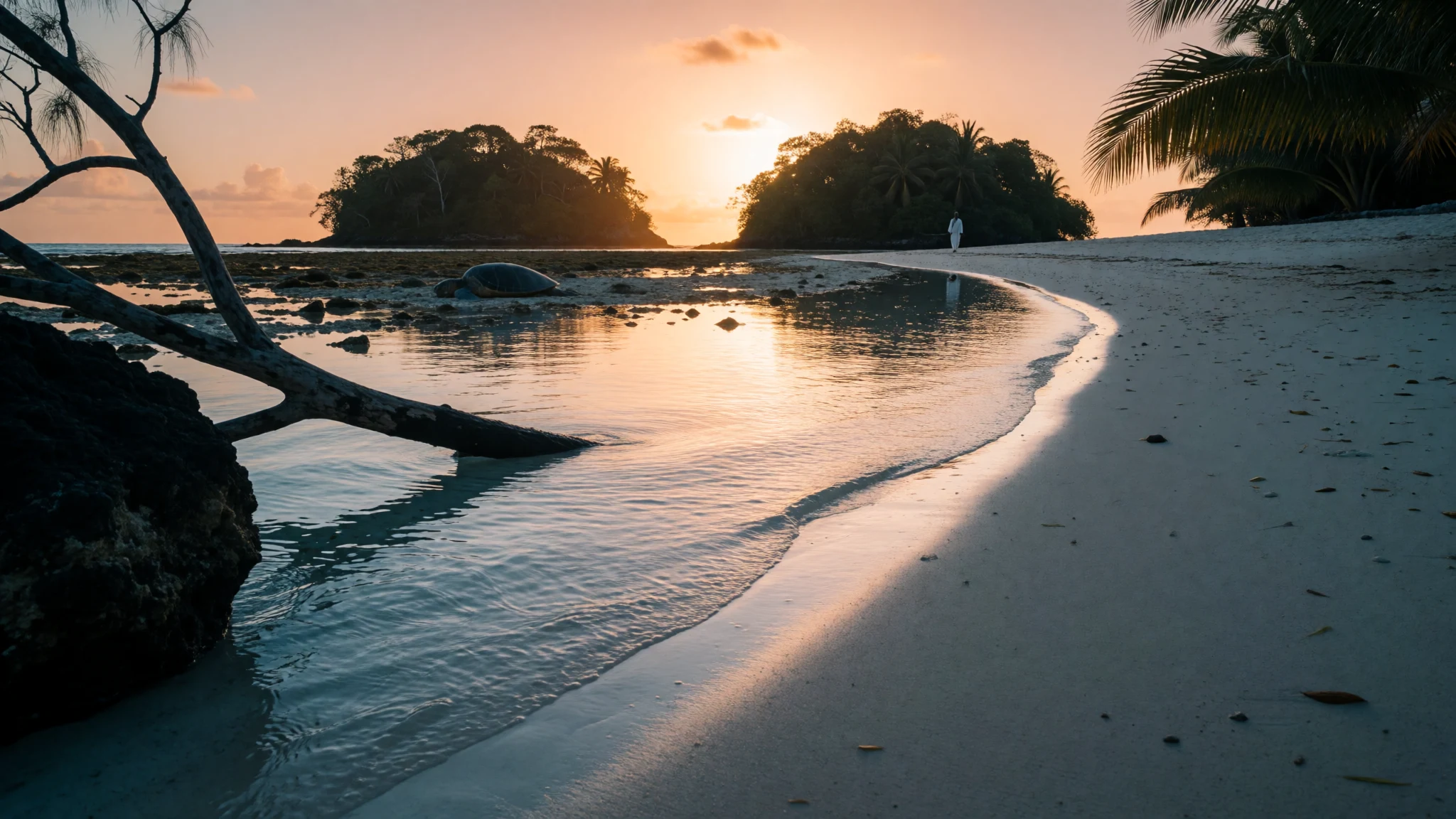
Fomboni is a quiet island capital on Mohéli, a base for turtles, whales, fruit bats and village stays that few travellers reach.
The place
Fomboni is the capital of Mohéli, an island in the Comoros archipelago, and the largest town on it, home to more than a third of the island's people. It is a quiet place organised around an old market and a jetty rather than around monuments. Mohéli itself measures about 50 km from west to east and 20 km from north to south, so almost everything on the island is a short journey from the capital. Its reputation rests on wildlife rather than urban sights. Green and hawksbill turtles nest on its beaches, an endemic fruit bat, Livingston's bat, lives in the hills, and humpback whales cross the Mozambique Channel between June and November. Fomboni is where flights land and boats arrive, so most trips begin here before moving on to the coastal villages. The climate is tropical marine. The hot, wet season runs from November to April, but temperatures barely change through the year, with a typical low of 19 °C and a high of 32 °C. Rainfall is around 2000 mm a year, and cyclones passing through the channel are a recurring risk. Services are thin. Shops stock a narrow range because of transport difficulties, restaurants are few, and visitors are rare enough that Wikivoyage puts the yearly total below 400. That makes Fomboni an unhurried base rather than a destination with a checklist, best suited to people happy with simple food, slow logistics and a lot of sea.
Its story
Fomboni's name is known across the Comoros mainly because of a document. The 2001 constitution of the country is called the Fomboni Accords, after the town where the agreement was reached, and it gave Mohéli's capital a place in national politics far larger than its size. The island is now one of the autonomous islands of the Union, with Fomboni as its administrative centre. Away from politics, the more distinctive story is how Mohéli's villages have organised themselves. With no effective tax system in the country, several communities decided to build their own guest bungalows and put the income into local needs. Itsamia built the first, the European Union later funded others, and the idea spread to villages such as Nioumachoua, Miringoni and Oualla. The bungalows are staffed by volunteers who are elected by the village every two years, and the money pays for scholarships and improvements to health centres. Then came the 2019 cyclone, which damaged much of this network. Repairs have been slow, and by July 2019 Itsamia was the only community bungalow still operating. Alongside tourism, the island's long-standing livelihoods continue: fishing, small farming and the distilling of ylang-ylang, whose scent hangs over parts of the island. Fomboni, as the capital and port, sits at the centre of all of it, quietly rather than loudly.
What to see
- Fomboni jetty and old market — Fomboni waterfront
Fomboni's waterfront is the natural first stop. Boats and ferries come and go at the jetty, and the old market nearby sells produce that mostly arrives straight from island fields. It takes an hour or so to wander, and it shows the working rhythm of the capital better than any museum.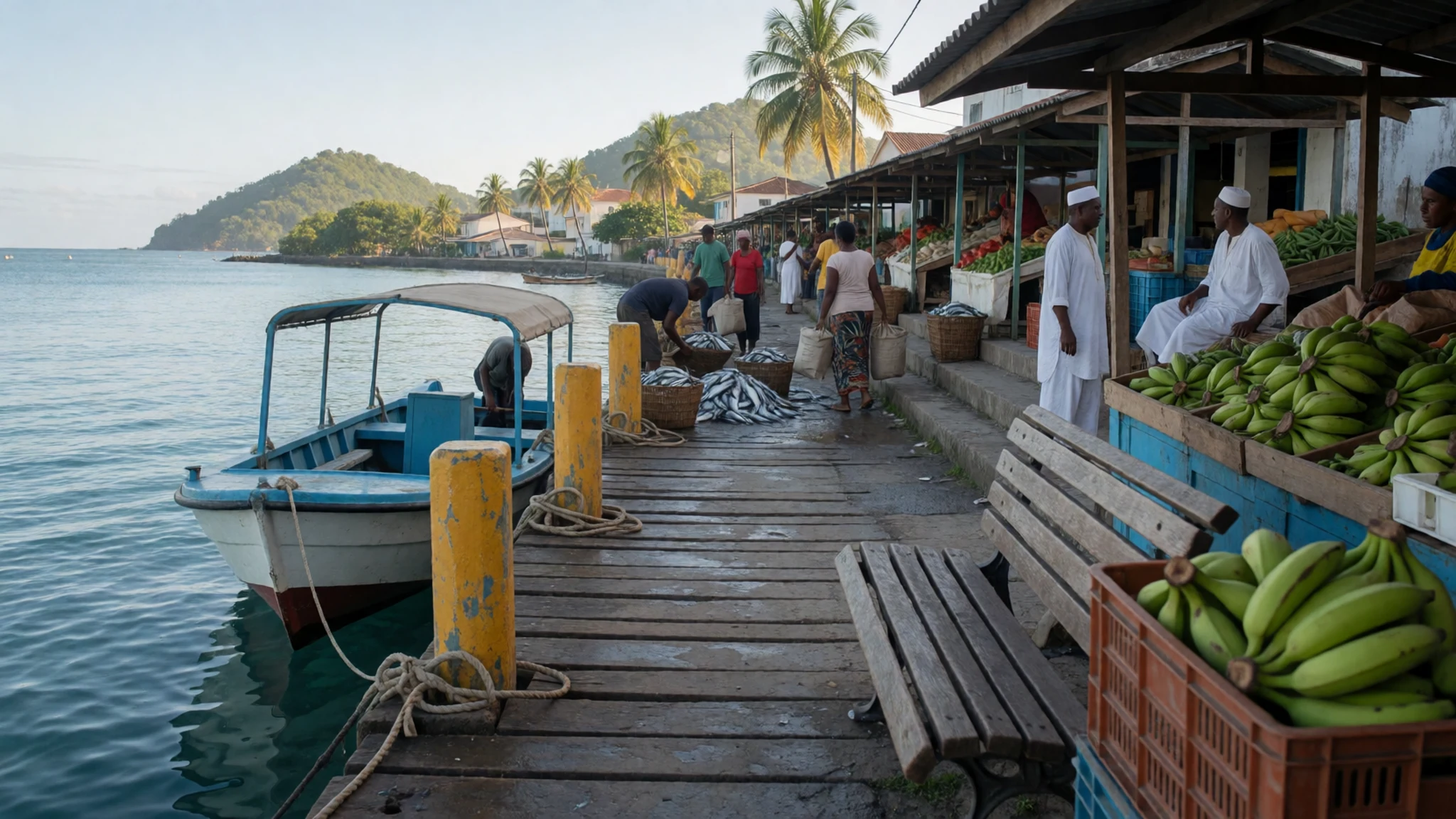
- Parc Marin de Mohéli — Nioumachoua, south-west coast
The marine park protects sea turtles and covers mangroves, islets and beaches around Nioumachoua. Visitors can snorkel, kayak or arrange a fisherman's boat to an islet for a night of camping. Coral has suffered from bleaching and erosion, so expect patchy reefs, with better coral reported between the Baobab area and the islet of Maya.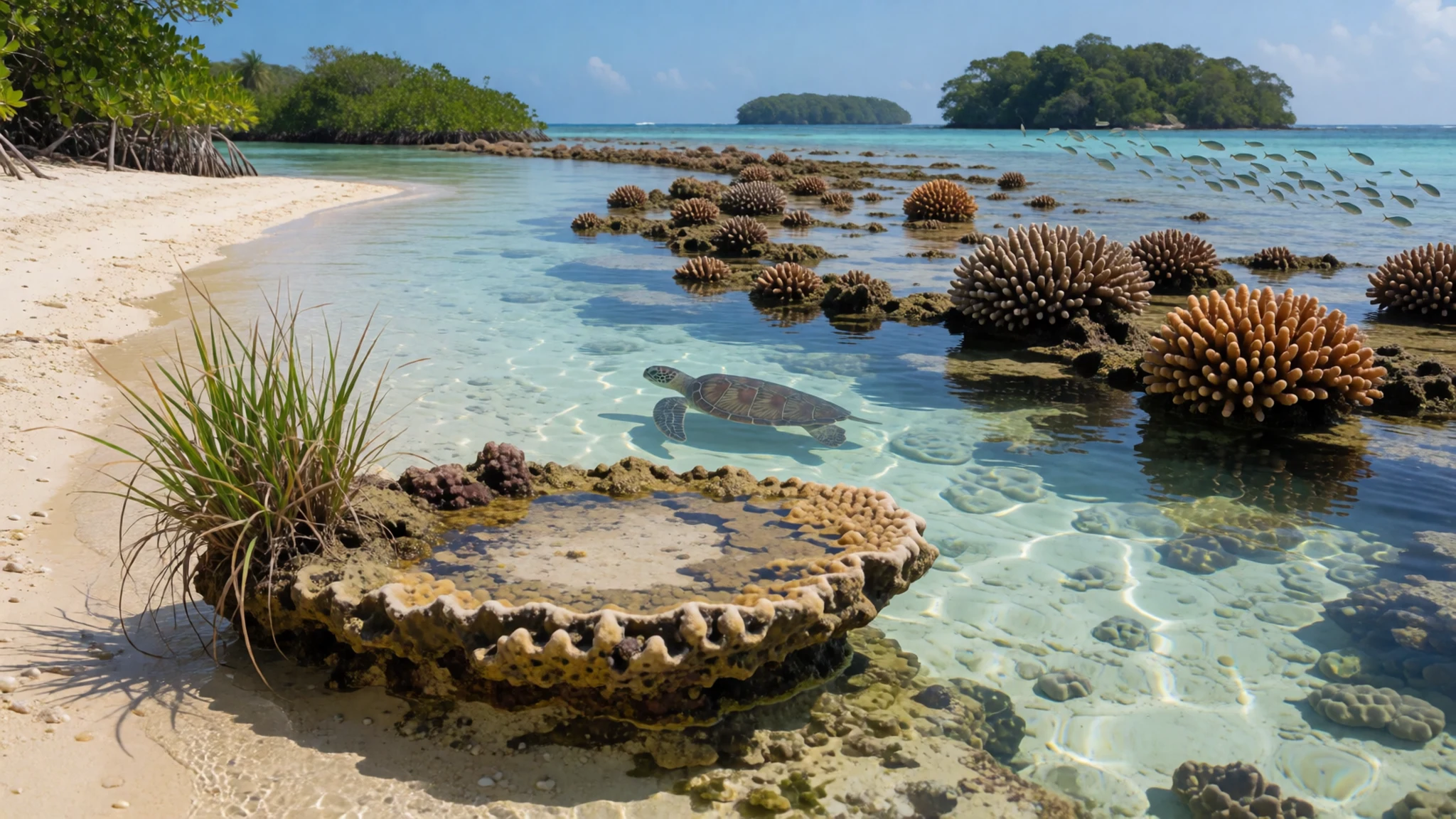
- Night turtle tours at Itsamia — Itsamia, south coast
Turtles come ashore to lay eggs on Mohéli throughout the year. In Itsamia, the local association can arrange a night walk with a guide. Following the guide's instructions matters here: light, noise and crowding can put a nesting turtle off and send her back to sea.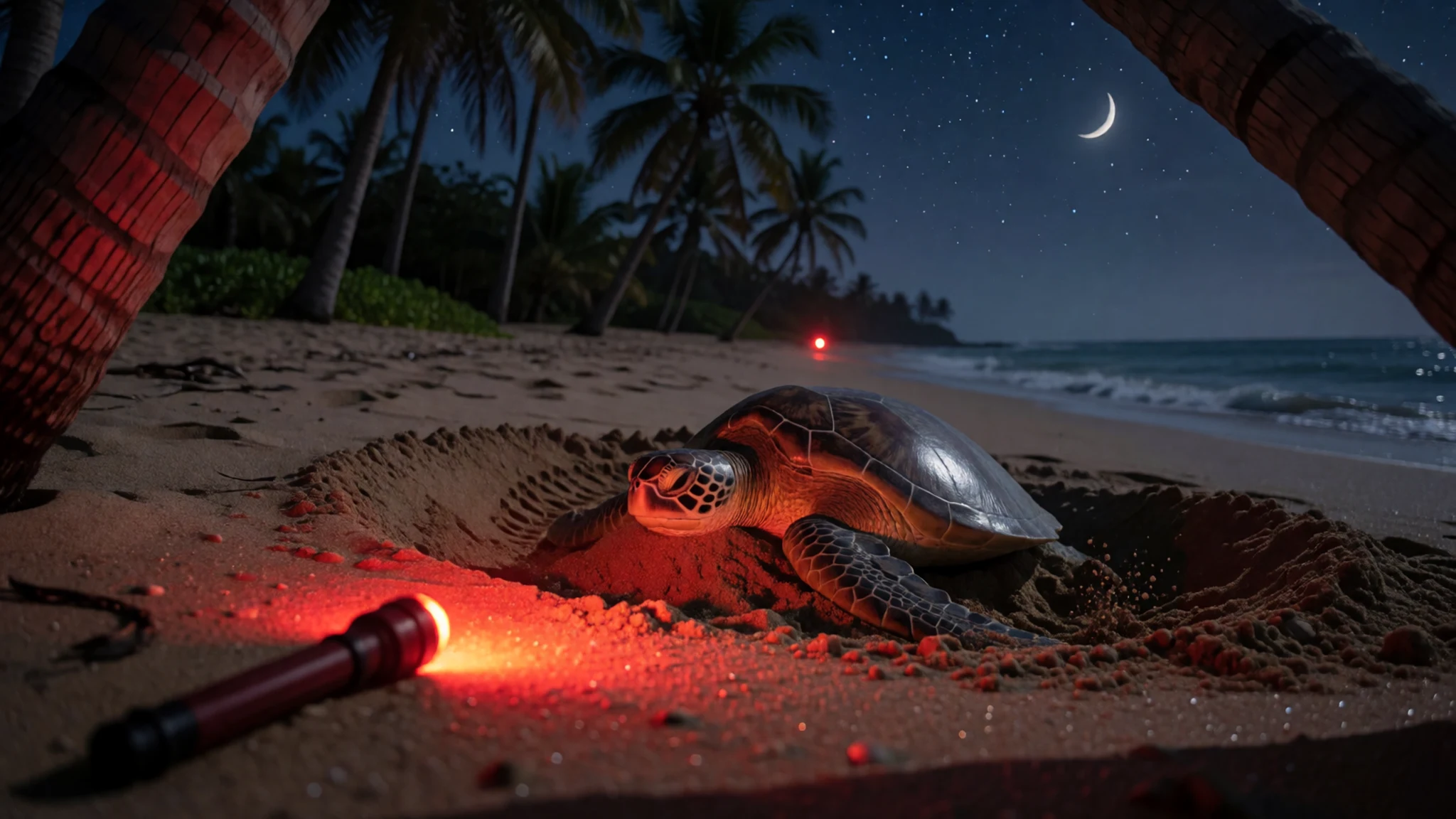
- Livingston's bat walk — Oualla 1, mountain slopes
This large endemic fruit bat can be seen near Oualla 1, about an hour's walk uphill from the village. A guide from the local association is necessary, since the bats are hard to find alone. Sturdy shoes, water and an early start make the climb far more comfortable.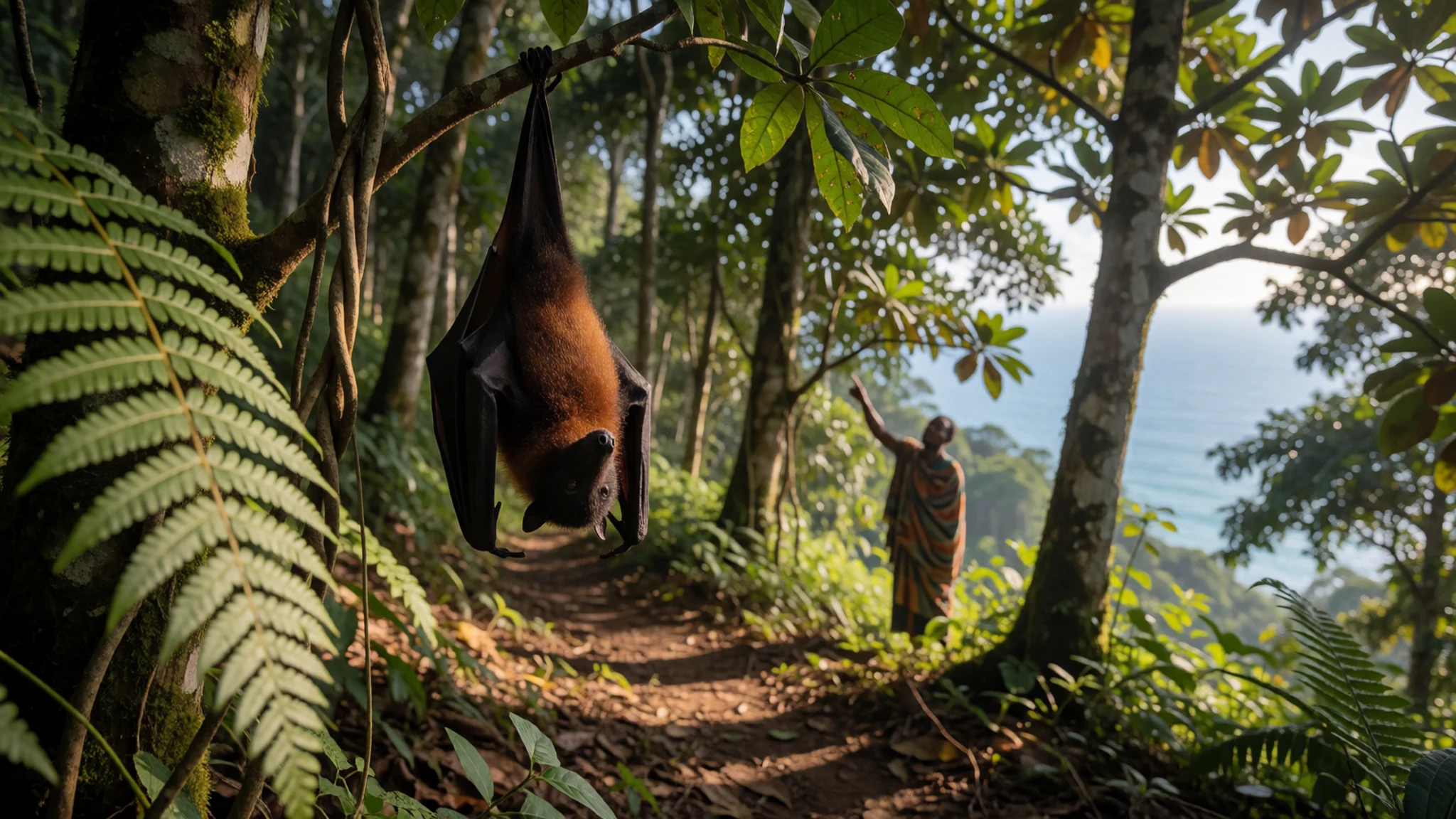
- Humpback whales — Waters off Mohéli
From June to November, humpbacks pass through the Mozambique Channel on their way south to cooler water. Mohéli's waters are one of the places to see them, usually from a local boat. Sightings are never guaranteed, so treat any trip as a good day out on the water rather than a promise.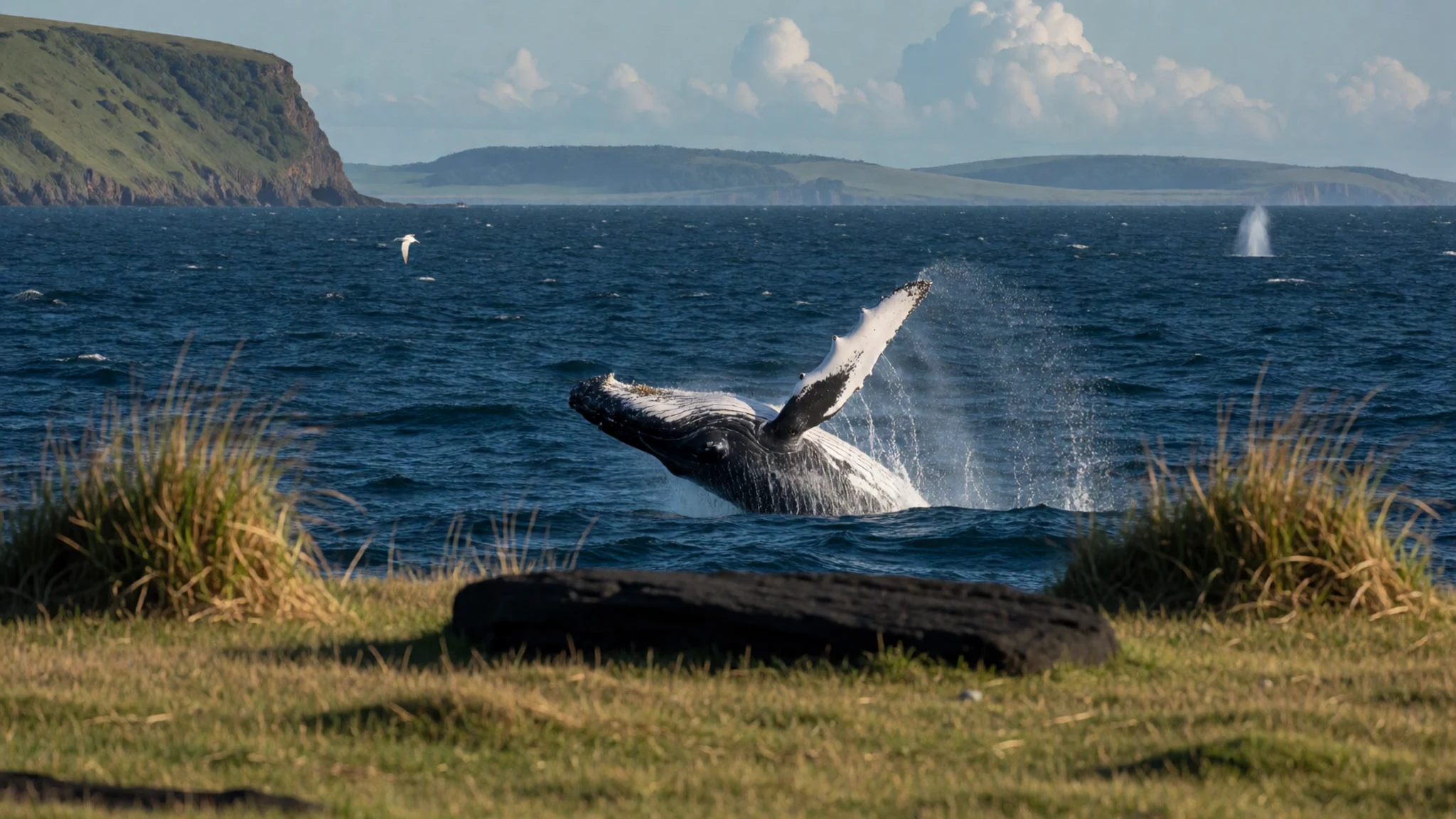
- Ylang-ylang fields and distilleries — Villages across the island
The sweet smell of ylang-ylang drifts across much of Mohéli, and the flowers are distilled locally for perfume oil. Visits to the fields and distilleries explain a good part of the island's economy. Ask in Fomboni or at a village association, because arrangements are informal and vary by season.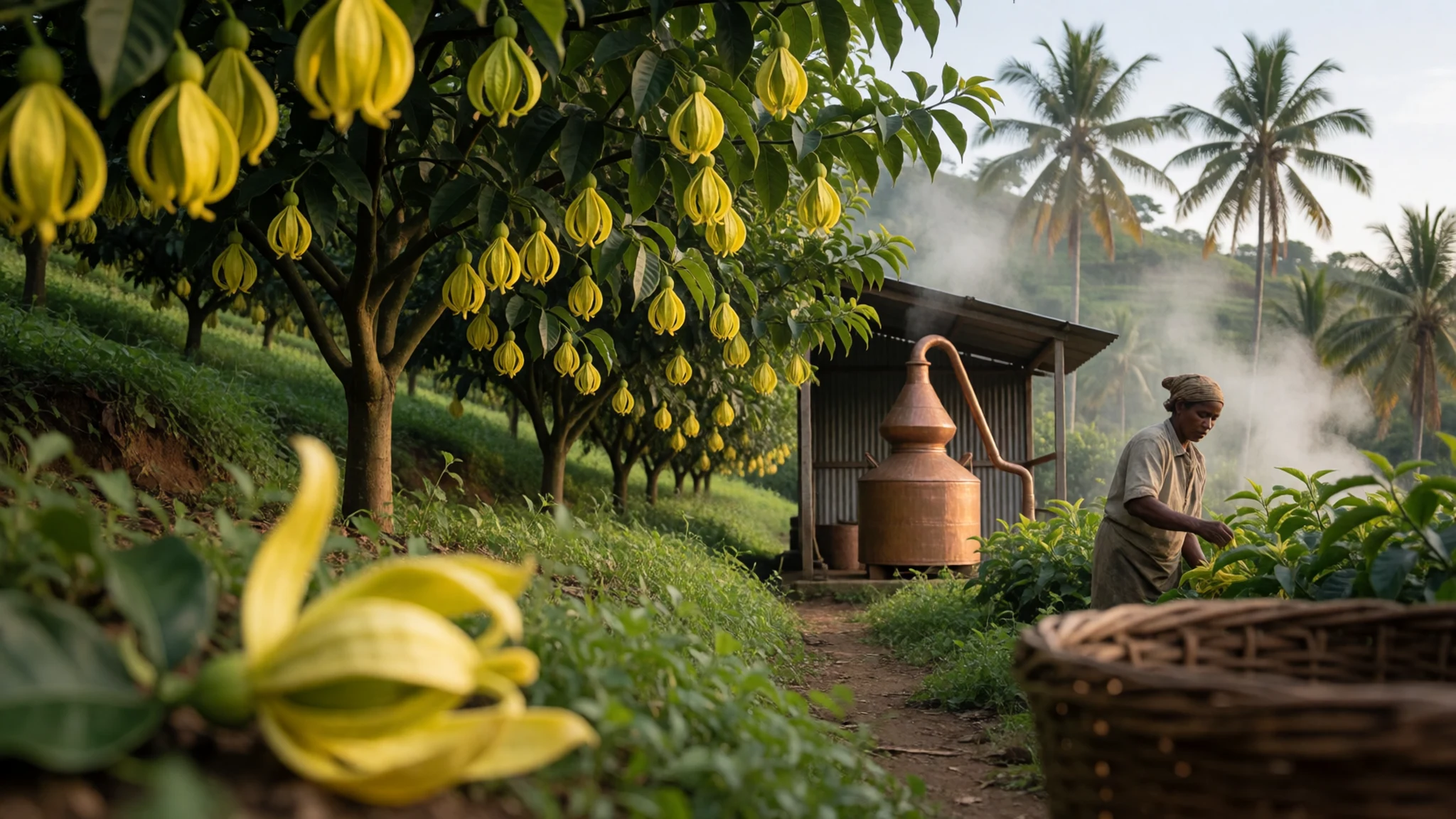
Culture
Fomboni is a small Comorian town, and daily life here is shaped by Islam, family ties and the rhythm of fishing and farming. The Comoros is a largely Muslim country, so the call to prayer, Friday gatherings and modest dress are part of the background. Public life is low-key. The town has its own football club, Fomboni FC, and an Alliance française, a reminder of the long French connection with the archipelago. Visitors are few on Mohéli, so foreigners are a curiosity in the villages. Children may follow a stranger down the street, and if the attention becomes a nuisance, a polite word with an elder usually settles it. The island is considered very calm, and Wikivoyage describes it as a good destination for solo female travellers, though pickpocketing has been reported and ordinary care still applies. The community bungalow system shows the local approach to tourism: villages run the lodging themselves, with elected volunteers handling the accounts and the money going back into schooling and health. Staying in one is a way of putting spending directly into village life. Alcohol is very hard to find, with one lodge reported as the only place serving it on the island, so it is best not to expect it. In villages, cover shoulders and knees and ask an adult before photographing anyone, especially women and children.
What to wear
Fomboni's traditional dress belongs to the wider Comorian wardrobe, shaped by Swahili-coast and Muslim customs. Women have long worn wrapped cotton cloths, among them the shiromani, a printed wrap in bold colours, often red and white, draped over the body and head. Men wear the kanzu, a long robe, usually white, with an embroidered kofia cap, especially for Friday prayers and festivals. Some women also apply a pale paste made from ground wood to the face as skin care. These garments appear most at weddings, religious days and village gatherings. Day to day, many people in Fomboni wear a mix: wrapped cloths and headscarves for women, trousers and shirts or a football shirt for men, and light cotton to cope with the heat. Dress is generally modest rather than strict. For visitors, loose cotton or linen that covers shoulders and knees is the sensible choice, both for the climate and for village etiquette. Swimwear belongs on empty beaches or boats, not in town. Pack sandals or water shoes for rocky shores and boat landings, since crossings can be splashy, and sturdy closed shoes for the uphill walk to the bats. A hat, sun protection and a light rain jacket for the wetter months from November to April are useful. Bags should be waterproofed if travelling by speedboat.
What to eat
- Grilled fish — Near Fomboni jetty and coastal villages
Fish landed by local fishermen is the most dependable meal on Mohéli, usually grilled or fried and served with rice. Look for it near the jetty and in villages along the coast, where simple eateries cook whatever came in that day.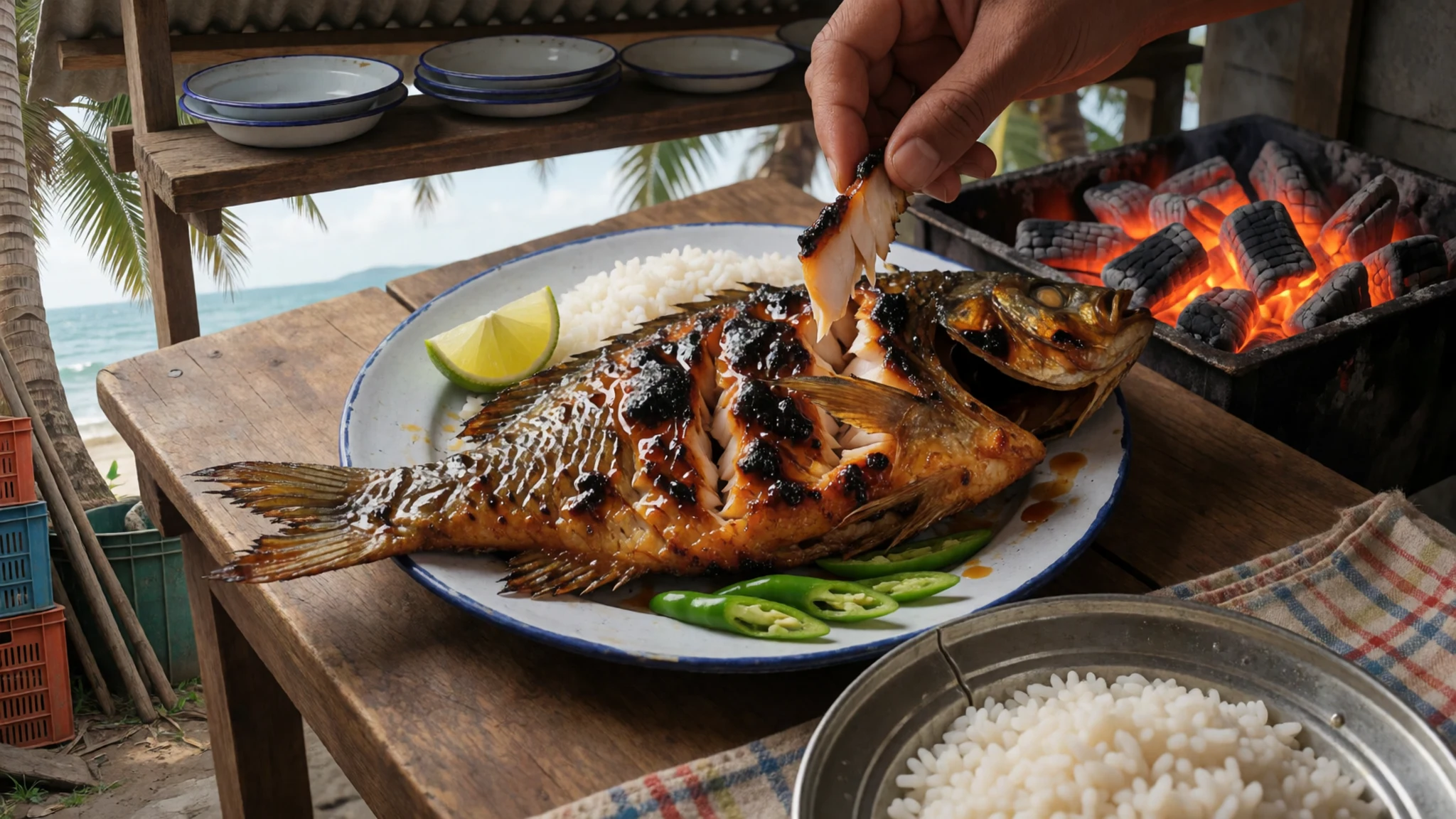
- Mataba — Home-style eateries and village bungalows
A Comorian staple of pounded cassava leaves simmered with coconut milk, often with fish or meat. It is rich, green and filling. Ask for it at small home-style eateries, or when staying in a community bungalow that cooks for guests.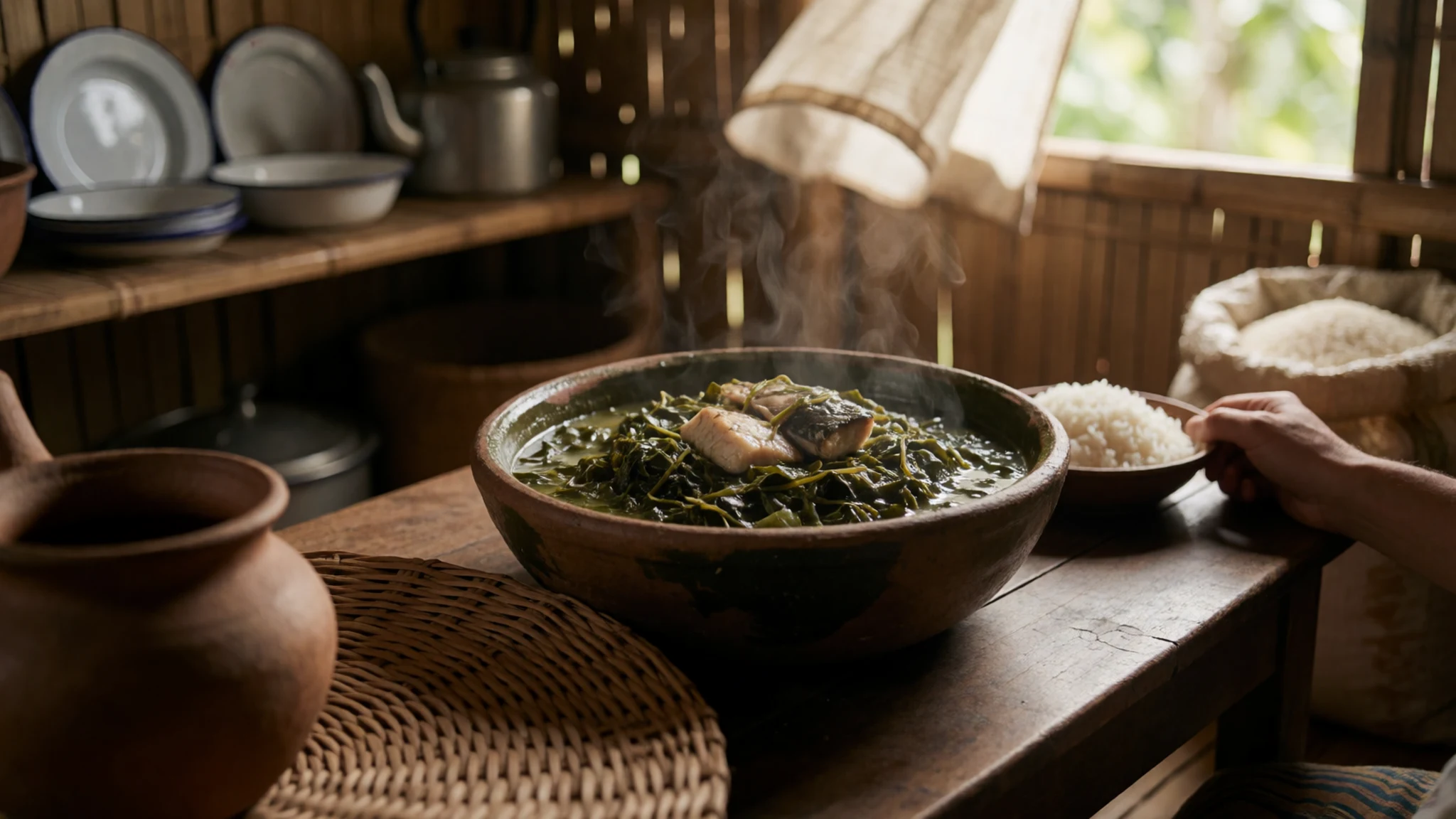
- Coconut rice — Small eateries across the island
Rice cooked with coconut milk is the usual base for a meal and works as a side for fish or chicken. The coconuts come from local palms, and the flavour is gentle rather than spicy, which suits the heat. - Boiled cassava and green banana — Fomboni old market and village kitchens
Starchy root and fruit staples appear at most meals on Mohéli. They are boiled or fried and eaten with fish or sauce. They come from local fields, which fits the island's short supply chain and its focus on what is in season. - Seasonal island fruit — Fomboni old market
Because produce arrives straight from local fields, fruit depends on the season and out-of-season fruit is hard to find. Bananas, citrus and tropical fruit in the old market are fresh and unpackaged, and well worth buying for a beach day.
Plan it
Best time. June to October is the sensible window: it falls outside the hot, wet season of November to April, and humpback whales pass between June and November. Temperatures hardly change through the year (about 19 °C to 32 °C), but cyclones in the Mozambique Channel are a risk in the wet months.
How long. 3–4
Getting there. Fly to Mohéli Bandar Es Eslam Airport in Fomboni, which has daily flights from the other islands of the Comoros; tickets are sold through tourist agencies. Alternatively, take a speedboat or cargo boat from Chindini on Grande Comore or from Mutsamudu on Anjouan. Speedboats land on a beach between Hoani and Fomboni, so arrange onward transport in advance.
Budget. mid
Tips
- Arrange transport before landing from a boat, because taxis are unreliable at the beach
- Wear a life vest on speedboats and expect spray; keep passports and electronics in waterproof bags
- Bring cash and basic supplies, as shops carry a narrow range and restaurants are few
- Book guides through the local associations for bat watching and night turtle tours
- Check at Fomboni which community bungalows are open, since many were damaged by the 2019 cyclone
Etiquette
- Dress modestly in villages, covering shoulders and knees
- Follow your guide's instructions on turtle tours and bat walks
- Ask before photographing people, especially women and children
Nearby
Sources
- Wikidata Q1002823 (CC0)
- Wikipedia: Fomboni (rev 1375878863) (CC BY-SA 4.0)
- Wikivoyage: Moheli (rev 5397781) (CC BY-SA 4.0)
- Ship Île de Mohéli (Fomboni, Comoros), alKomor.com, via Wikimedia Commons (CC BY-SA 2.0)

Wildlife
- Humpback whale (animal)
The humpback is a huge whale with long flippers and a bumpy head, famous for leaping out of the sea and for the long songs the males sing. From June to November, humpbacks travel south through the Mozambique Channel towards cooler water, so that is the time to look. Watch with a local guide, stay well back, keep voices low, and never feed or chase them.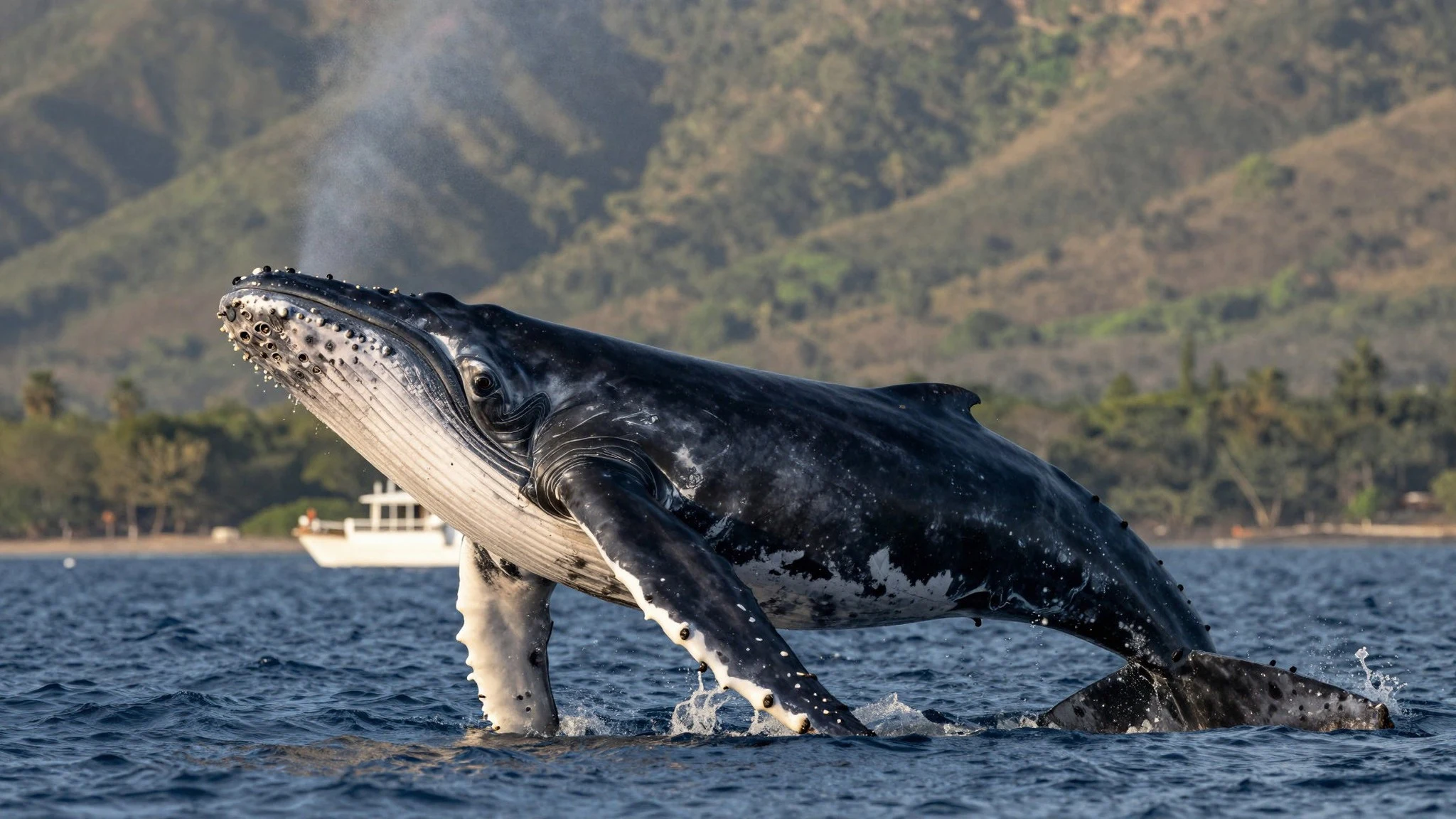
- Livingston's bat (animal)
Imagine a flying fox: a big fruit-eating bat, found nowhere in the world except the Comorian islands of Anjouan and Mohéli. Near Fomboni, look for it around Oualla 1, a climb of about an hour on foot above the village. No season or time of day is recorded for sightings, so ask your guide what is likely. Watch from a respectful distance, keep your voice low, go with a local guide, and never offer the bats any food.