Grande Comore
Grande Comore, Comoros
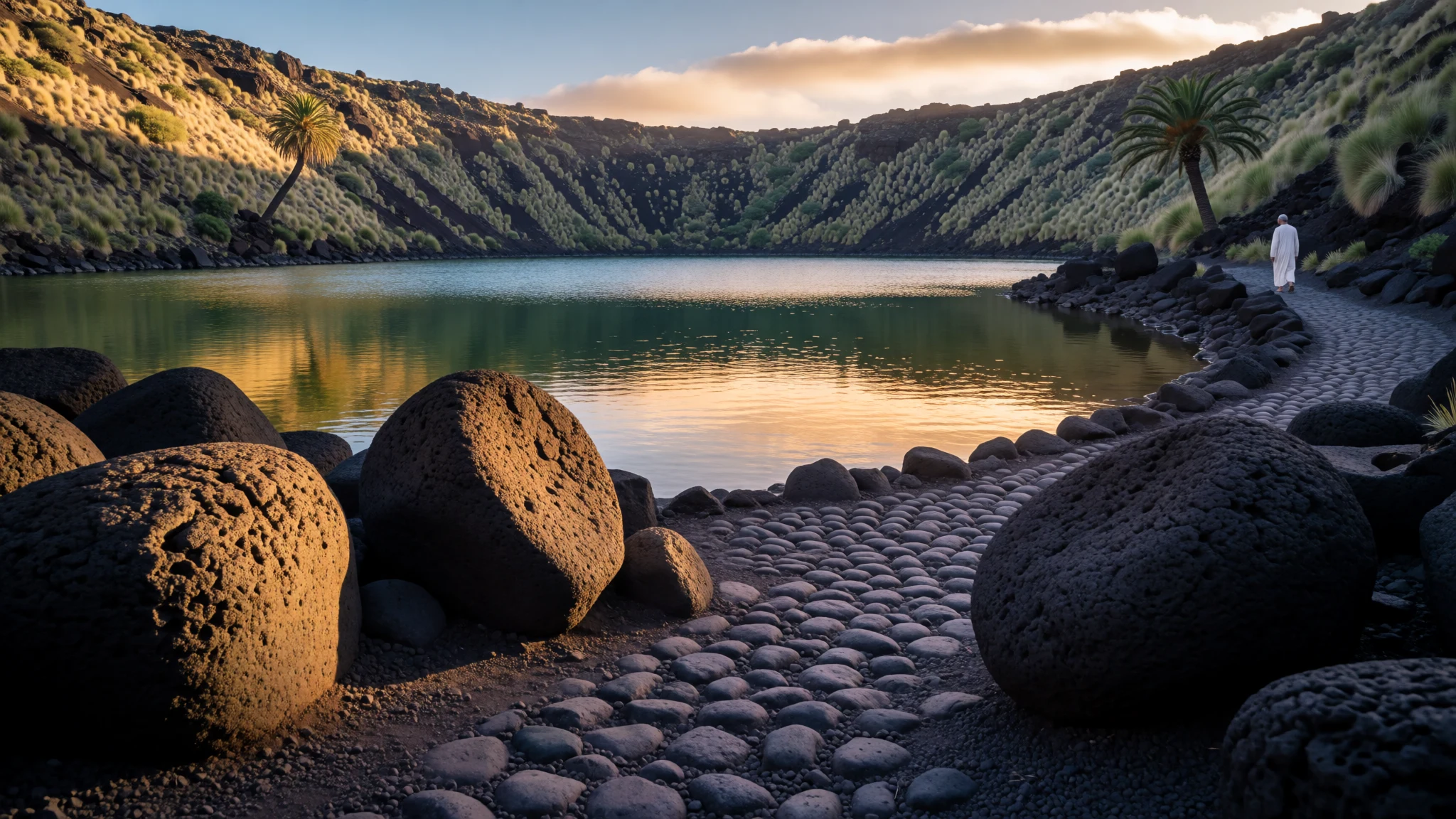
Grande Comore is a volcanic island of old coastal medinas, quiet beaches and a crater lake, for travellers who can accept rough edges.
The place
Grande Comore, known locally as Ngazidja, is the largest island of the Comoros, set in the Indian Ocean between the African mainland and Madagascar. About 380,000 people live here, most of them Comorian, and Moroni is both the island's capital and the national one. Two shield volcanoes make up the island, and Mount Karthala, at 2,361 m, is the highest point in the entire country. Black lava runs through everything: garden walls, older buildings, road edges and much of the shoreline.
First impressions are often rough. Grande Comore is the most populated island of the nation, so the roads around Moroni are crowded, rubbish collects in corners, and food, transport and rooms cost more than the standard of service would suggest. Tourist infrastructure is thin: basic guesthouses, a few mid-range hotels and a single resort, some of them dated. Arriving with patience and a flexible plan helps a great deal.
The reward is an island that has not been rearranged for visitors. Moroni's medina and market streets are lively from morning, roadside grills fill up after dark, and the mosques set the rhythm of the day. Beyond the capital there are old coastal villages, a saltwater crater lake and beaches where local families usually outnumber travellers. Visitors who stay a few days, rather than making a quick stop, tend to leave with a more generous view than the one they arrived with.
Its story
Grande Comore's older history is one of competing sultanates, among them Bambao, Itsandra, Mitsamihuli and Mbadjini, whose rulers were called mfaume. That patchwork lasted for centuries, and several of those names survive today as towns on the coast, such as Itsandra and Mitsamiouli. In 1886 Sultan Said Ali bin Said Omar, who came from the neighbouring island of Anjouan, declared a single state of Ngazidja, overriding the other courts and accepting French protection.
The bargain did not hold for him. He was sent into exile on Réunion in 1893 and abdicated in 1910, and in 1912 France annexed the island outright and abolished the sultanate. Grande Comore, Anjouan and Mohéli then declared independence together as the nation of Comoros in 1975.
The 1990s were turbulent. In November 1996 a hijacked Ethiopian Airlines Boeing 767 ran out of fuel and ditched in the sea off the north coast of the island; 125 of the 175 people aboard died. The following year Anjouan and Mohéli broke away, leaving Grande Comore as the only island under federal control. A new constitution in 2002 brought the islands back together, and each island now elects its own governor, with a much reduced federal government in the capital.
This layered past helps explain why neighbouring towns can feel so distinct from one another, and why French is heard in daily life alongside Comorian and Arabic.
What to see
- Lac Salé (Lake Niamawi) — Northern coast
Lac Salé, also called Lake Niamawi, is a saltwater crater lake on the island's northern coast. It is a reminder that Grande Comore is volcanic through and through, and it fits neatly into a day on the north shore alongside the beaches. Ask a local driver about the track and conditions before setting out.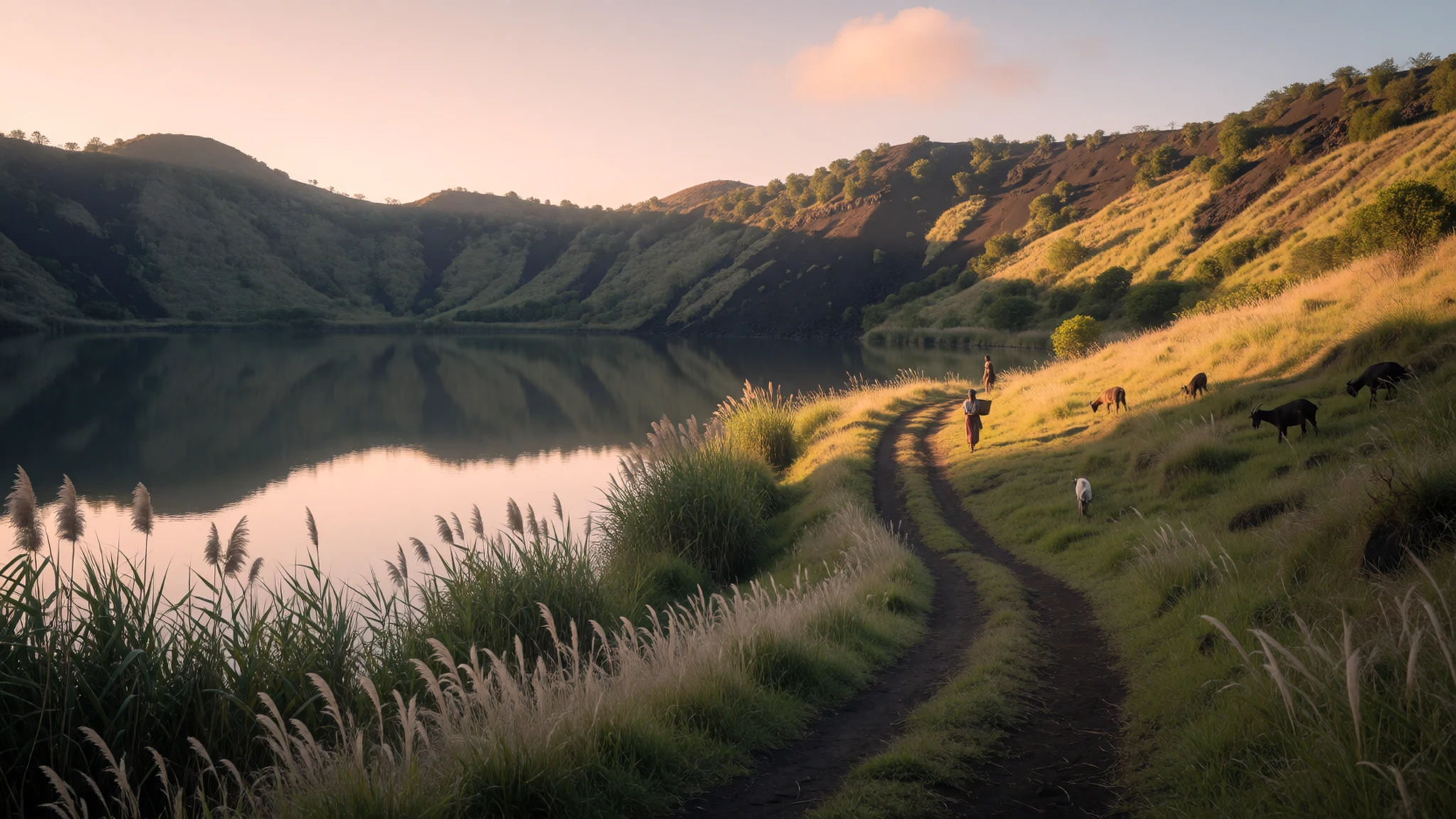
- Medina and Badjanani Mosque, Moroni — Moroni, near the port
The medina of Moroni sits close to the port and the Friday Mosque, a tangle of winding alleys between old buildings. The narrow lanes throw welcome shade in the heat and give an unstaged look at daily life. Badjanani Mosque stands by the harbour, next to a shipyard; visit outside prayer times and dress modestly.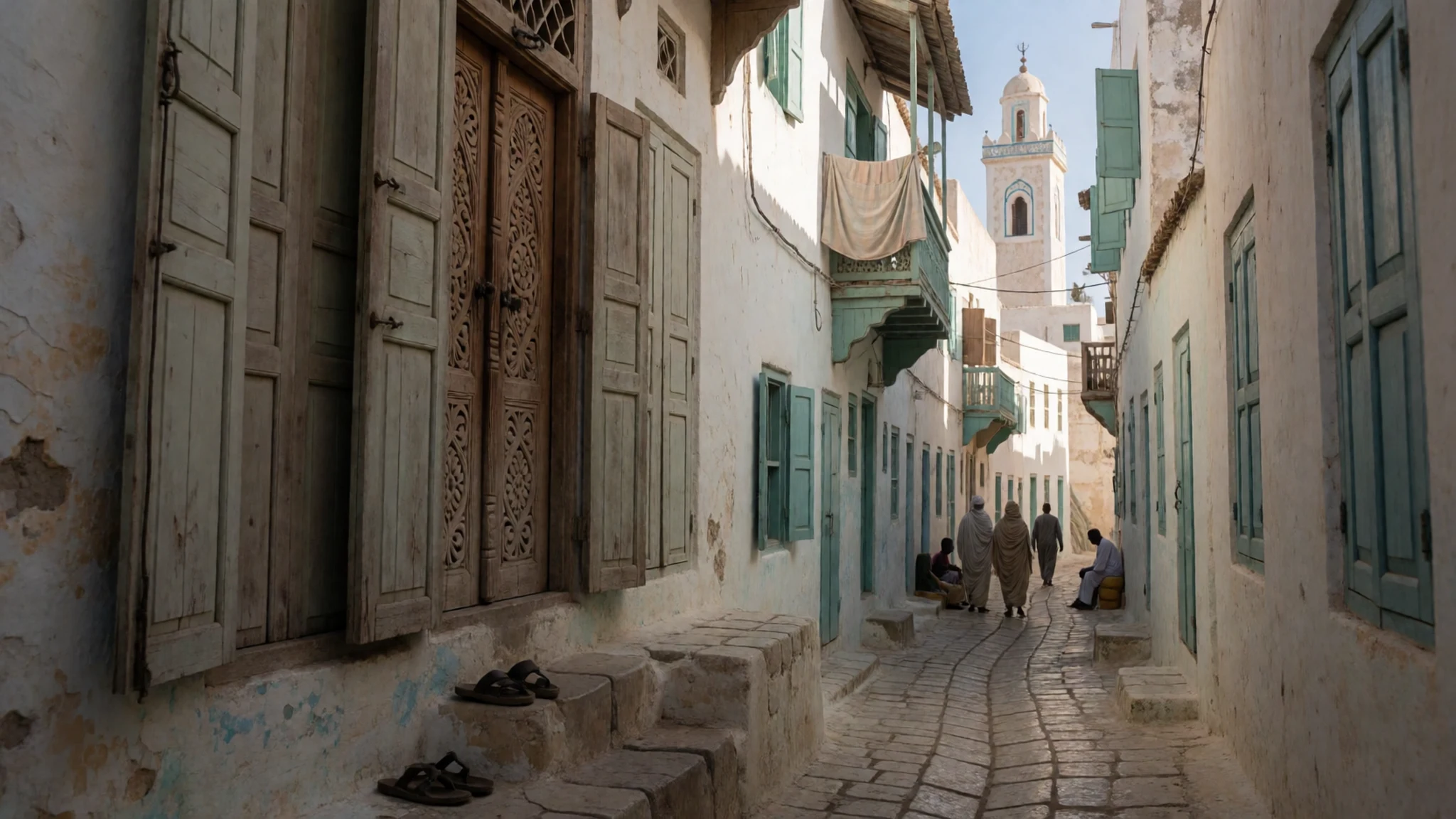
- Volo Volo market — Central Moroni
Volo Volo is Moroni's central market, where people shop for produce, clothes, electronics and household goods, with small eateries, pharmacies and the hospital close by. It is busy, hot and loud, so go in the morning, carry small notes, and ask before photographing any stallholder.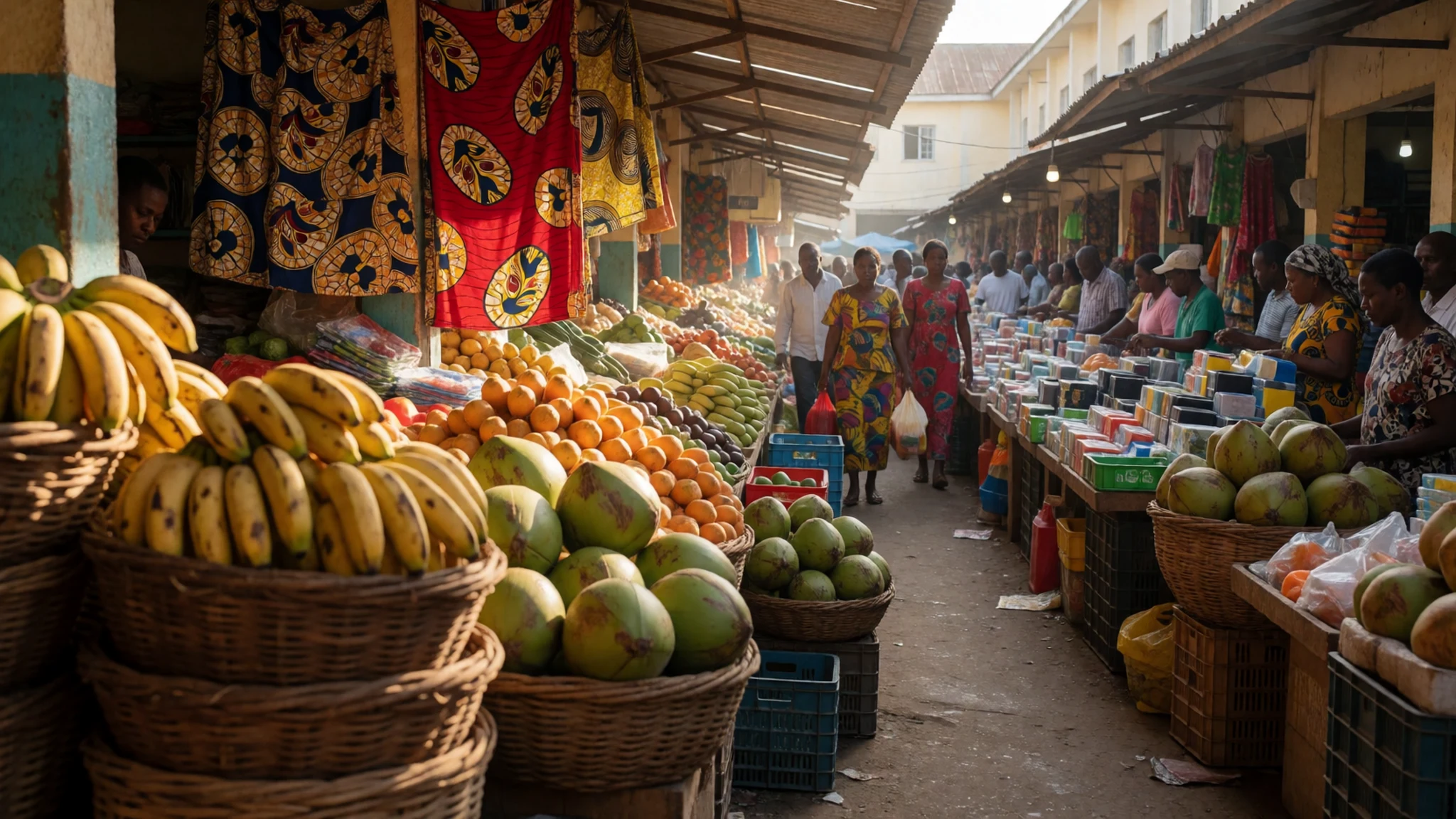
- Itsandra and its medina — North of Moroni
Itsandra is a short taxi ride north of Moroni and combines a white-sand beach with an old medina neighbourhood. A restaurant on the beach makes it an easy half day. The medinas at Ntsudjini and Ikoni, also on the island's world heritage list, suit anyone building a day around old-town walks.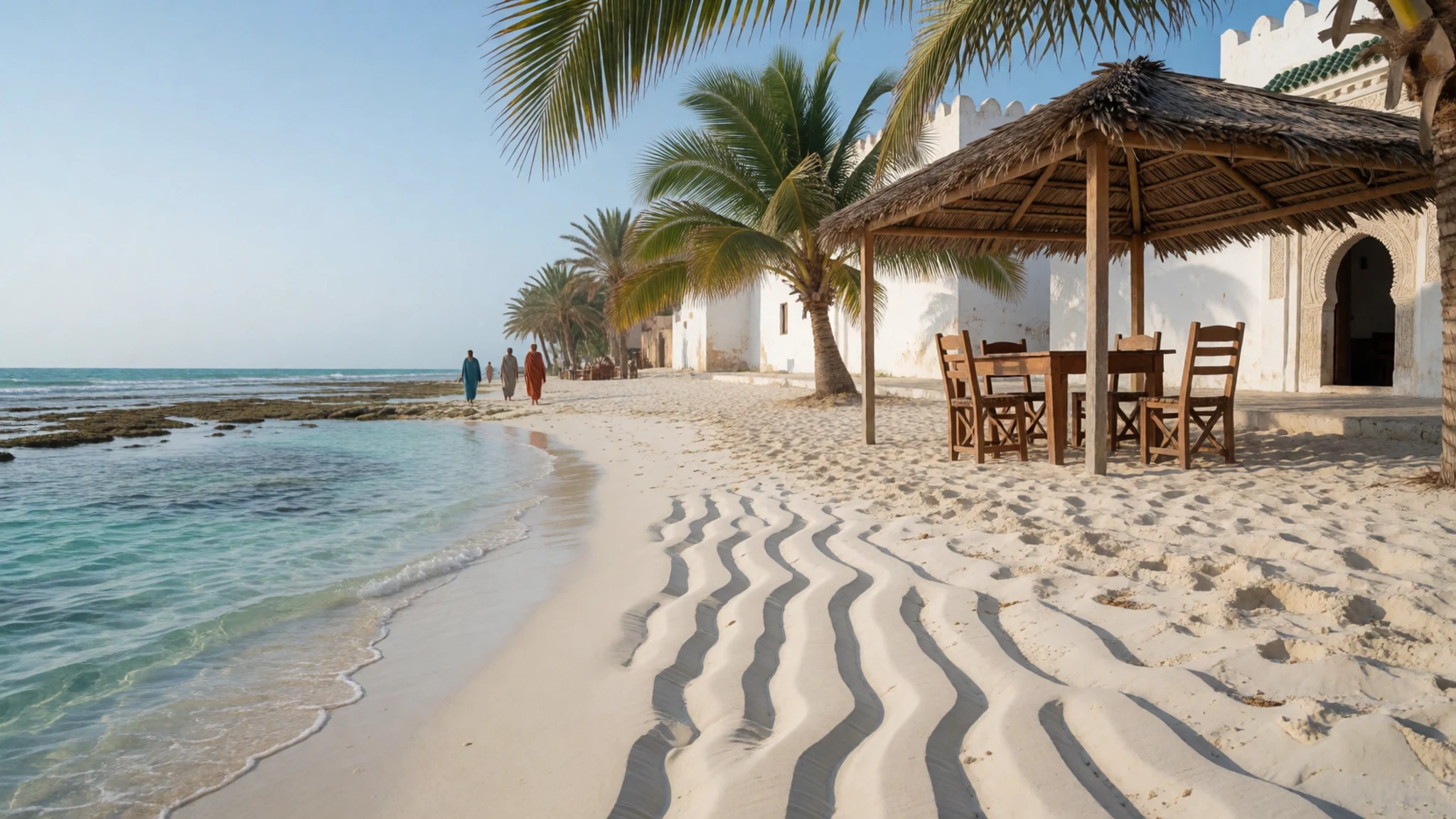
- Buuni Beach — North-east coast
Buuni Beach lies on the north-east side of the island and shows what Grande Comore does well: few beaches, but good ones, with far fewer visitors than better-known Indian Ocean islands. Ivoini Beach is another name worth asking about. Swim modestly and respect local norms.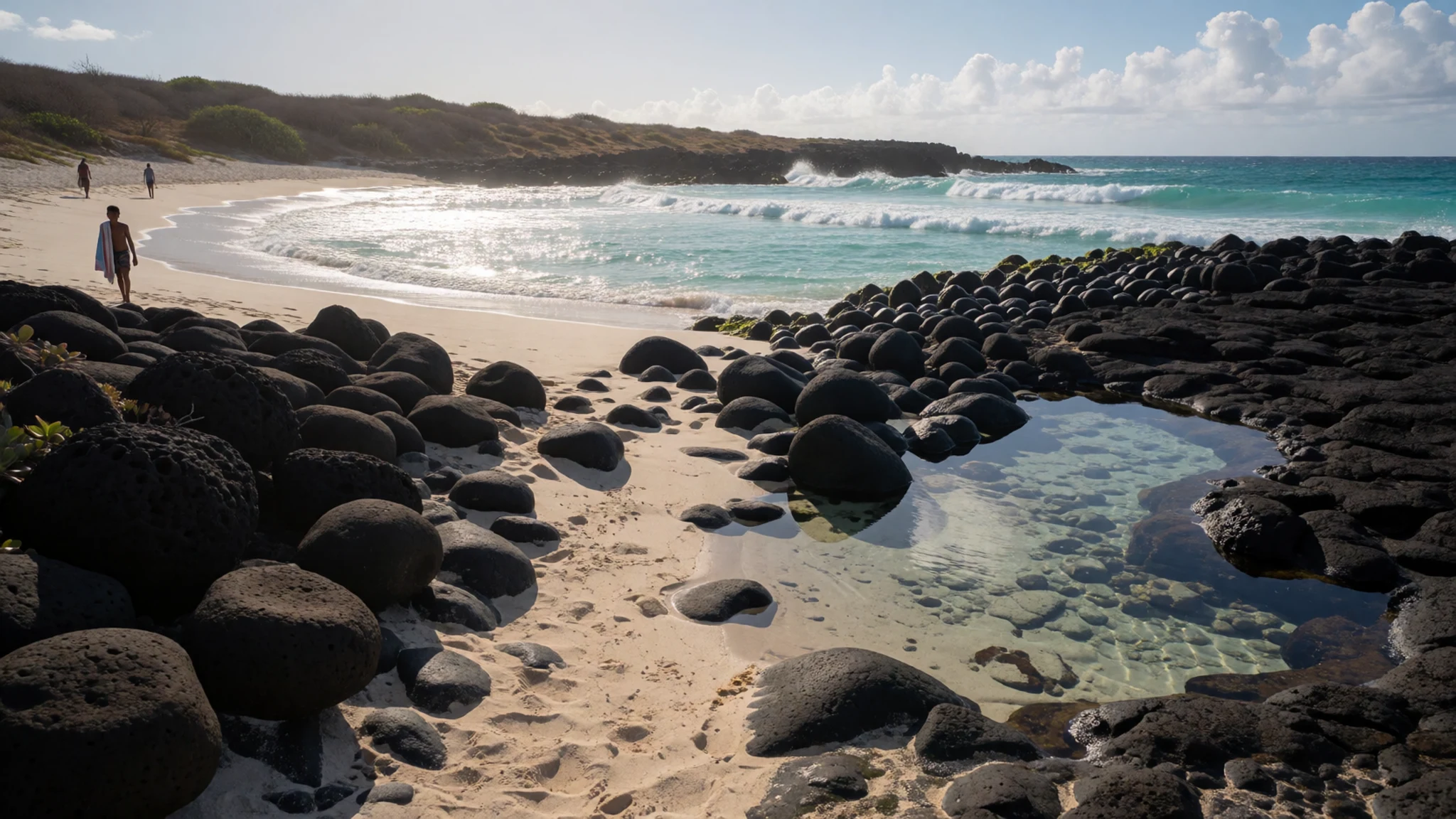
Culture
Grande Comore is a devoutly Muslim island, and religion shapes the rhythm of the week. Friday midday prayer draws men to the mosques in every town, shops pause, and Moroni's harbour-side mosque is valued by locals for its age and size. Daily life is organised around family, village and neighbourhood, and hospitality towards guests is taken seriously.
The island's best-known social event is the grand mariage, an elaborate marriage celebration that a family may spend years preparing for. It involves feasting, processions, questions of status and gifts for the bride, including gold jewellery of the kind recorded in photographs of these ceremonies. Visitors are unlikely to be invited without a local connection, but the preparations and the dressing-up are visible in towns across the island.
People speak Comorian (Shikomori), with French and Arabic widely used in schools, administration and religion. Greetings matter, and a short hello before any question is the polite opening. Alcohol is hard to find and rarely drunk in public, and the pace of the day follows prayer times and the heat, with the evening the most social part of it.
Dress modestly away from the beach, take off your shoes before entering any mosque, and ask permission before photographing people.
What to wear
Traditional dress on Grande Comore comes from the island's Islamic and Indian Ocean heritage. Women wear the shiromani, a cotton wrap with bold red and white patterning, or printed lesso wraps, usually with a head covering; for weddings and religious occasions the fabrics are richer and gold jewellery is added. Many women also apply a pale paste made from ground wood, called mshindzano, to the face. Men wear a long white robe (kanzu) and an embroidered cap (kofia) for Friday prayers and ceremonies.
Day to day, people in Moroni mix tradition with the global: jeans, shirts and football shirts, long skirts and loose dresses with wraps over them, headscarves for many women and caps for many men. Dress becomes more formal and more conservative in villages and on Fridays.
Visitors should pack light, loose cotton that covers shoulders and knees, which suits both the heat and local expectations. Women will want a scarf for mosque areas, and everyone should keep beachwear for the beach itself. Sturdy sandals or trainers help on black lava rock, reef shoes protect against coral and sea urchins in the water, and a hat and sunscreen are worth carrying.
What to eat
- Mshakiki — Small roadside shelters along the coast, in the evening
Mshakiki are skewered meat kebabs grilled over charcoal in small shelters along the coast, mostly after dark. The local habit is to order a good number at once, with grilled banana, cassava or breadfruit alongside. It makes a filling supper that suits sharing, and a good way to meet people.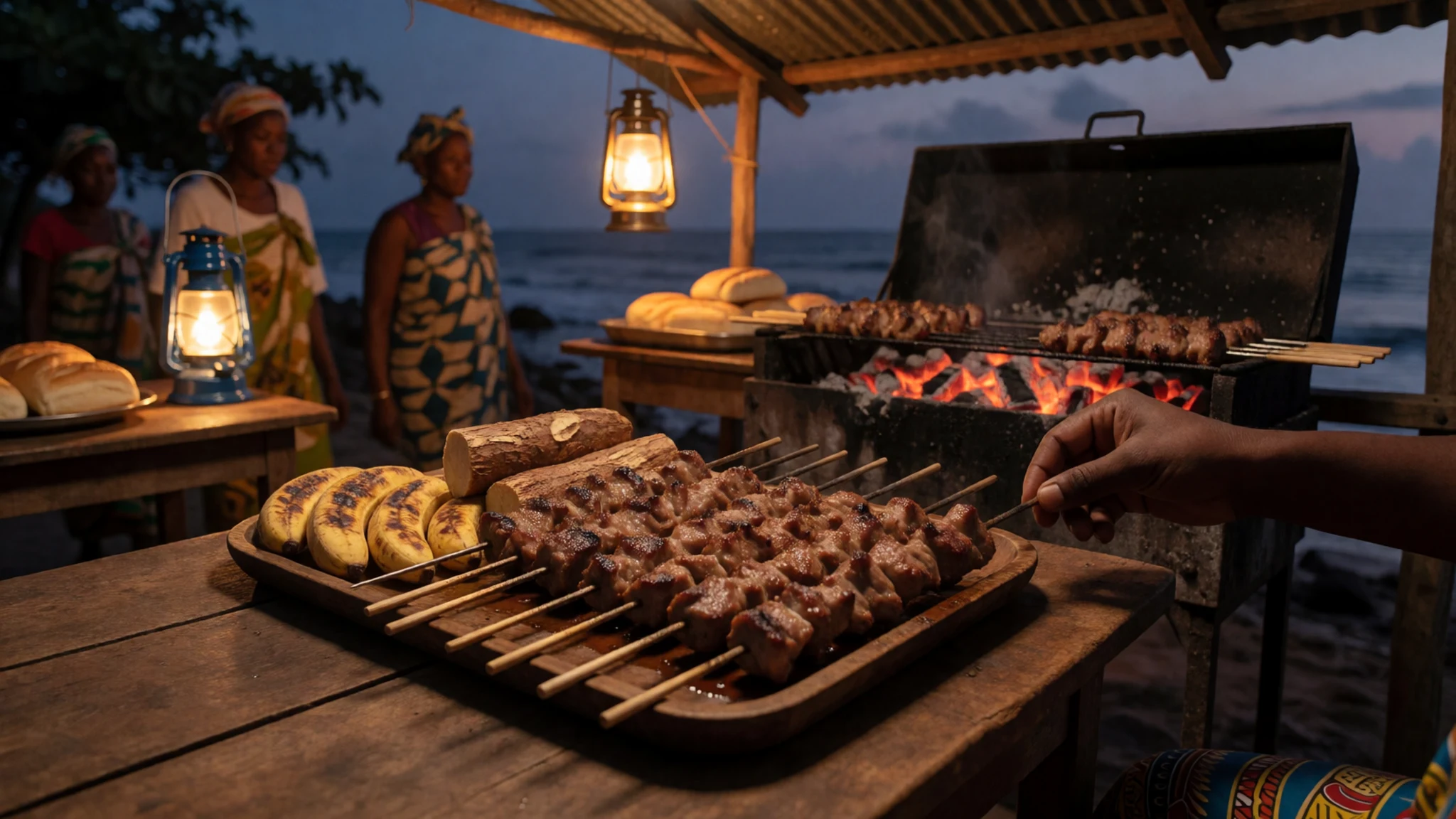
- Grilled fish and seafood — Beachside eateries on the north coast near Mitsamiouli
Fish and other seafood are the coastal staple, usually grilled or fried and served with rice or cassava. The north coast around Mitsamiouli has small beachside eateries that cook the day's catch, often after a swim. Ask what has come in rather than expecting a fixed menu.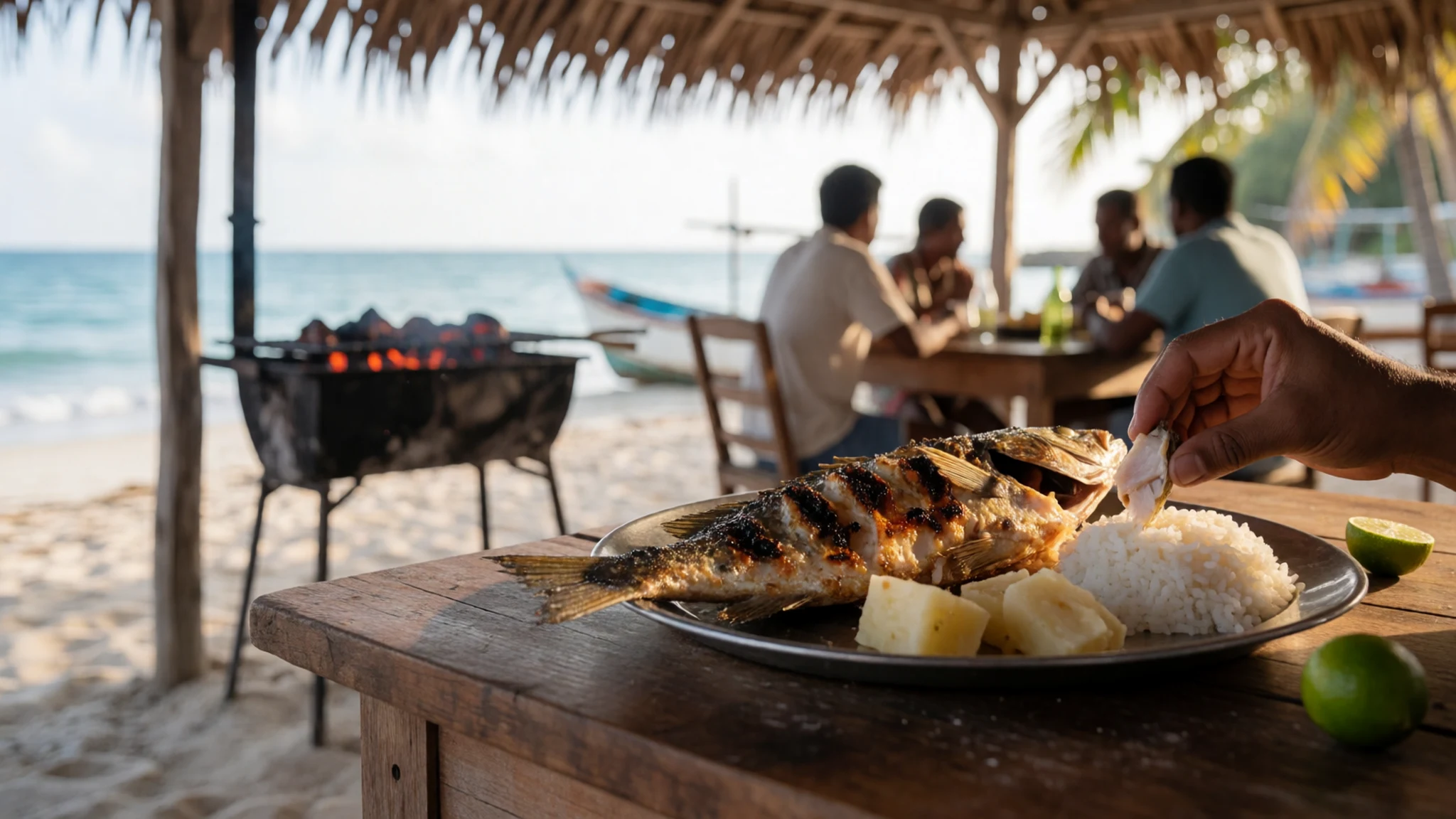
- Chicken and local vegetable plates — Small eateries around Volo Volo market and near the Friday mosque in Gobadjou, Moroni
Home-style plates of chicken and local vegetables, often with rice or starchy roots, are the everyday midday meal. Small eateries around Volo Volo market and near the Friday mosque in the Gobadjou district of Moroni serve them in the daytime. - Indian-style curries and ice cream — Oasis district, just north of Volo Volo market, Moroni
Moroni has Indian-influenced kitchens turning out curries, breads and ice cream, a reminder of Indian Ocean trade links. Look in the Oasis district just north of Volo Volo market for restaurants that do them well, and for somewhere cool to sit in the afternoon. - Indian Ocean set meals — Ambassadeur district, south of the hospital, Moroni
Several restaurants in Moroni's Ambassadeur district, south of the hospital, cook broad Indian Ocean menus mixing seafood, rice and spice. Asking what is available that day works better than reading the printed menu, as supplies on the island are uneven.
Plan it
Best time. Roughly May to October, the drier and cooler part of the year, is the easier time for beaches and walking; November to April is hotter and wetter, so check the forecast before booking.
How long. 3–4
Getting there. Fly to Prince Said Ibrahim International Airport (HAH) near Moroni, which has connections from a handful of African cities and from the French islands of Réunion and Mayotte. Cargo boats that take passengers also reach Moroni from Zanzibar, Dar es Salaam and Mahajanga. From the airport, taxis cover the last leg into Moroni and along the coast.
Budget. mid
Tips
- Take malaria precautions seriously: speak to a doctor or travel clinic before you go, and use repellent and nets
- Book accommodation ahead, as tourist rooms are few and standards vary widely
- Eat out in the evening, when Moroni's grills and eateries are at their best
- Carry cash in small notes, as cards are not widely accepted
- Wear reef shoes in the sea, since coral and sea urchins are close to many beaches
Etiquette
- Dress modestly in towns and villages, and keep swimwear for the beach
- Remove shoes before entering a mosque, and avoid visiting during prayer
- Ask before photographing people, especially women and at markets
Nearby
Sources
- Wikidata Q244978 (CC0)
- Wikipedia: Grande Comore (rev 1378381186) (CC BY-SA 4.0)
- Wikivoyage: Grand Comore (rev 5359782) (CC BY-SA 4.0)
- Photo: Ngazidja S2 2022 (Nrg800) (CC BY-SA 4.0)
- Photo: Franz Sikora 038 (Public domain)
- Photo: Émile Vienne, Notice sur Mayotte et les Comores, 1900, p. 147 (Public domain)
- Photo: Bijoux grand mariage à Ngazidja (Sinane.hadidja) (CC BY-SA 4.0)
- Photo: Burning Car (David Stanley) (CC BY 2.5)
- Photo: Comoros: bald topped coral (Derek Keats) (CC BY 2.5)
- Photo: Comoros: burning coral to make lime (Derek Keats) (CC BY 2.5)
- Photo: Comoros: corals and urchins (Derek Keats) (CC BY 2.5)


