Anjouan
Anjouan, Comoros
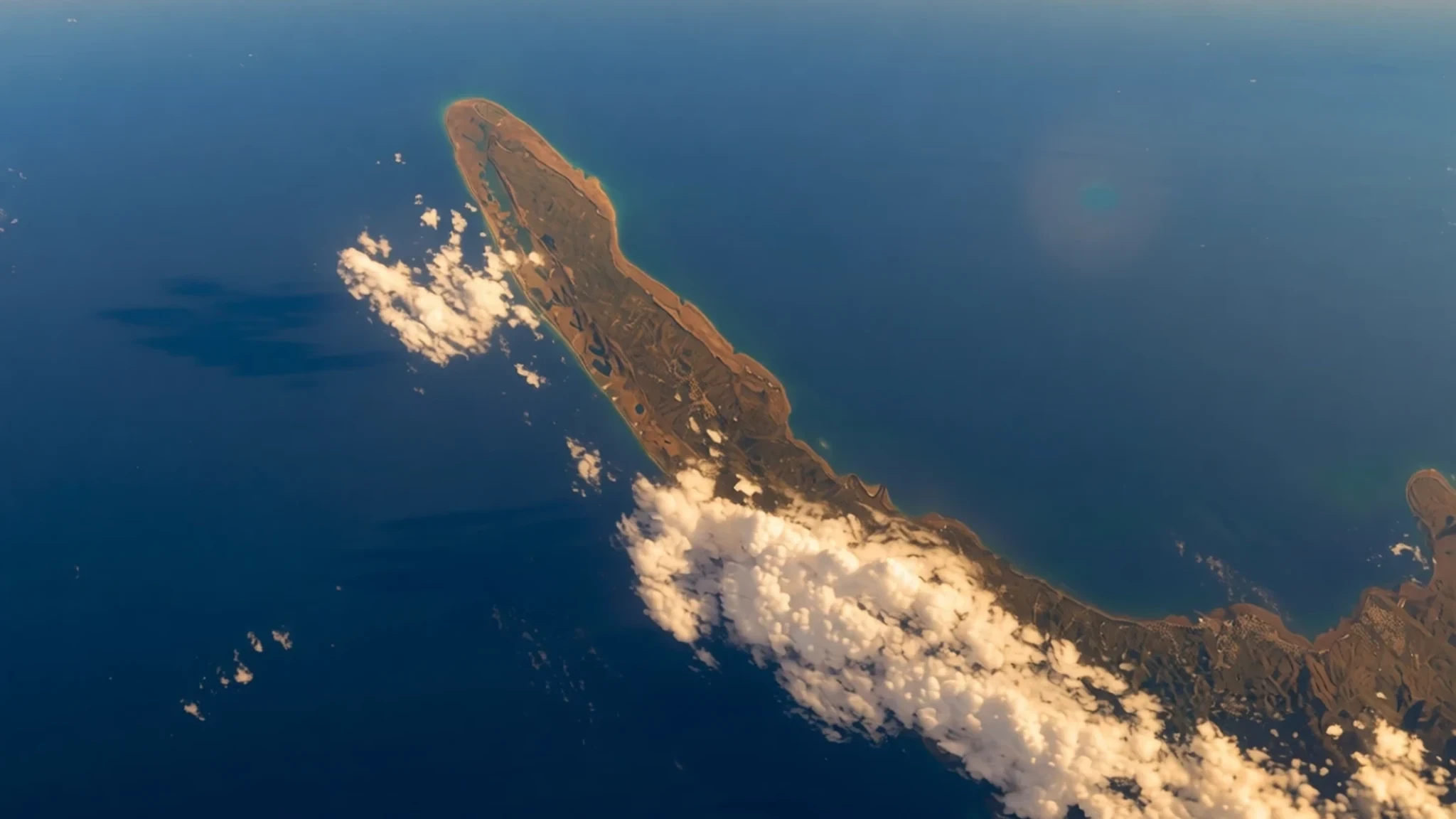
Anjouan is a steep volcanic island of clove groves, Swahili stone towns and a working harbour, still well off the usual island circuit.
The place
Anjouan, called Ndzuwani in Shindzuani, sits in the Mozambique Channel as one of the principal islands of the Union of the Comoros. The land rises sharply from a narrow coast into ridges and deep valleys, so towns cling to small harbours and the rare patches of flatter ground. Mutsamudu, on the north-west shore, is the island's main town and port: a medina of coral-stone houses, a citadel above the lanes, and a waterfront where cargo, fishing boats and ferries come and go. Mutsamudu's harbour is the practical heart of the island: goods land here, and the market spills toward the water. Eastward, Domoni keeps an older Swahili pattern of carved doors and tight streets. South and west, smaller settlements such as Sima and Moya sit between plantation and shore. Inland, the slopes are planted with ylang-ylang, vanilla, cloves and bananas, and cloud often sits on the higher forest. The coast is not a long ribbon of sand; coves and dark volcanic rock alternate with short beaches, and paths between villages are steep. Rain feeds many streams, and waterfalls and crater pools belong to ordinary geography rather than to a fenced resort. French and Arabic sit alongside Shindzuani in signs and speech, and the call to prayer marks the day in every town. Visitors who expect a flat lagoon island find instead a compact, cultivated mountain in the sea, with a port town, another historic settlement, and countryside that still smells of the perfume crops.
Its story
Anjouan grew up inside the Swahili world of the Mozambique Channel, where African, Arab and later Malagasy influences met on a volcanic shore. Traders and religious scholars linked the island to the East African coast, and a sultanate took shape around the stone towns, above all Domoni and Mutsamudu. Carved doors, coral masonry and the layout of the medinas still show that older Indian Ocean urban life. In the colonial period France held the Comoros as a protectorate, and the French residency in Anjouan belongs to that administration, which drew on the islands' perfume crops as its commercial base. Ylang-ylang, vanilla and cloves were planted up the slopes and remain the island's signature agriculture. After the Comoros became independent, Anjouan had a troubled political life: island leaders more than once tried to pull Ndzuwani away from the Union, and the arguments turned on identity, neglect and control of the port and the plantations. The Union's present arrangement recognises Anjouan as an autonomous island with its own governor and assembly, inside a country that also includes Ngazidja and Mwali. What a visitor meets is the setting of that history rather than a display of it: a citadel over a working harbour, Friday prayers filling the lanes, and villages that mark major family events with public feasts prepared over many years. The story of Anjouan is a port, a sultan's town and a plantation mountain learning how to remain inside one republic.
What to see
- Mutsamudu — North-west coast
Anjouan's main town climbs from a deep harbour to a citadel. The medina is a working quarter of coral-stone houses, small mosques and market lanes. The waterfront is busiest when boats unload, and the path up to the fort opens a wide view of the port. Morning is the kindest time, before heat settles in the lanes.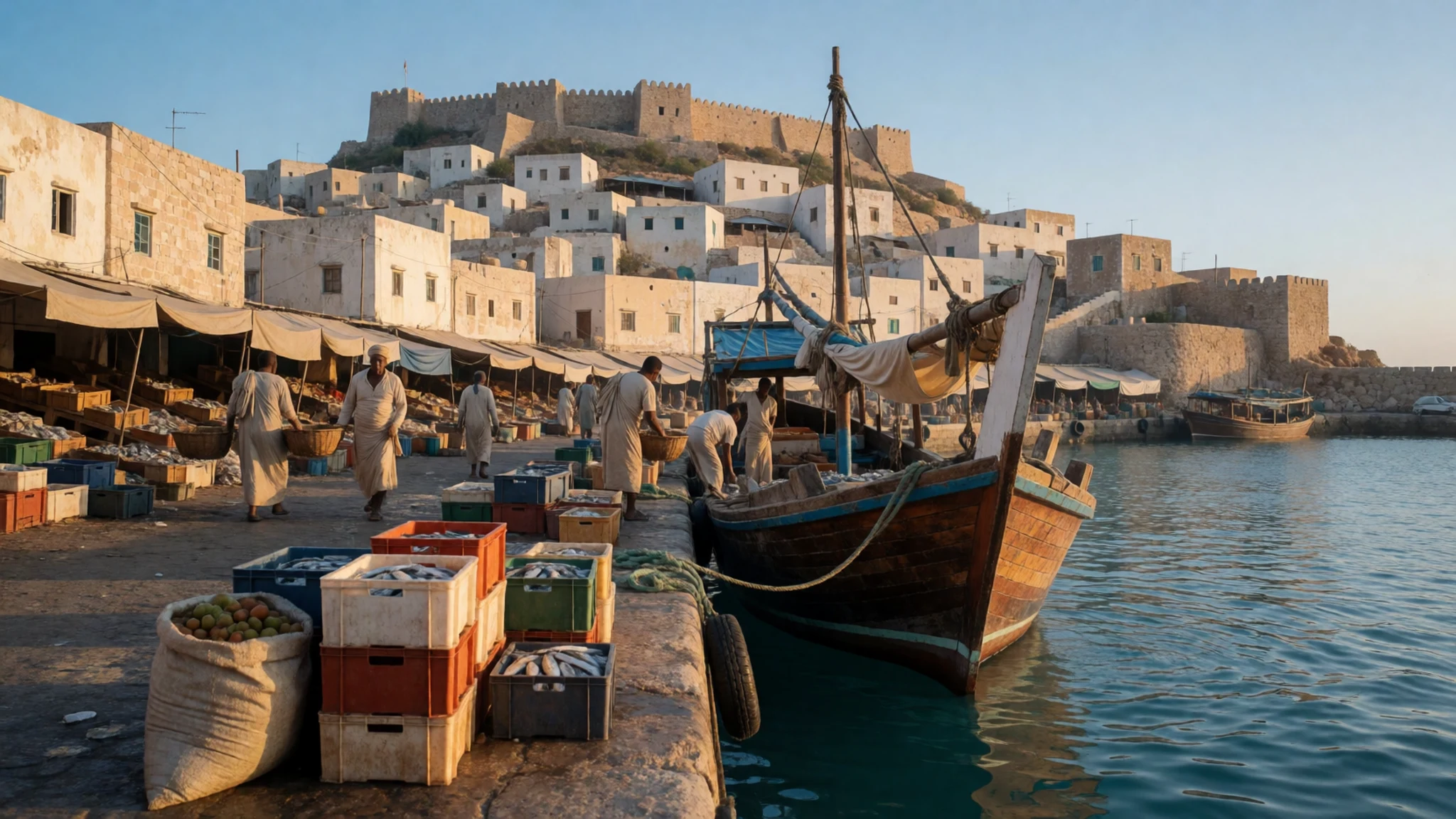
- Domoni — East coast
Domoni is Anjouan's other historic stone town, on the east coast, and it feels older and quieter than the port. Carved wooden doors, coral walls and a dense cluster of mosques recall the Shirazi sultanate that once ruled from this shore. The lanes are residential rather than staged for visitors. A slow circuit from the waterfront into the upper town shows how a Swahili settlement sat between sea and plantation.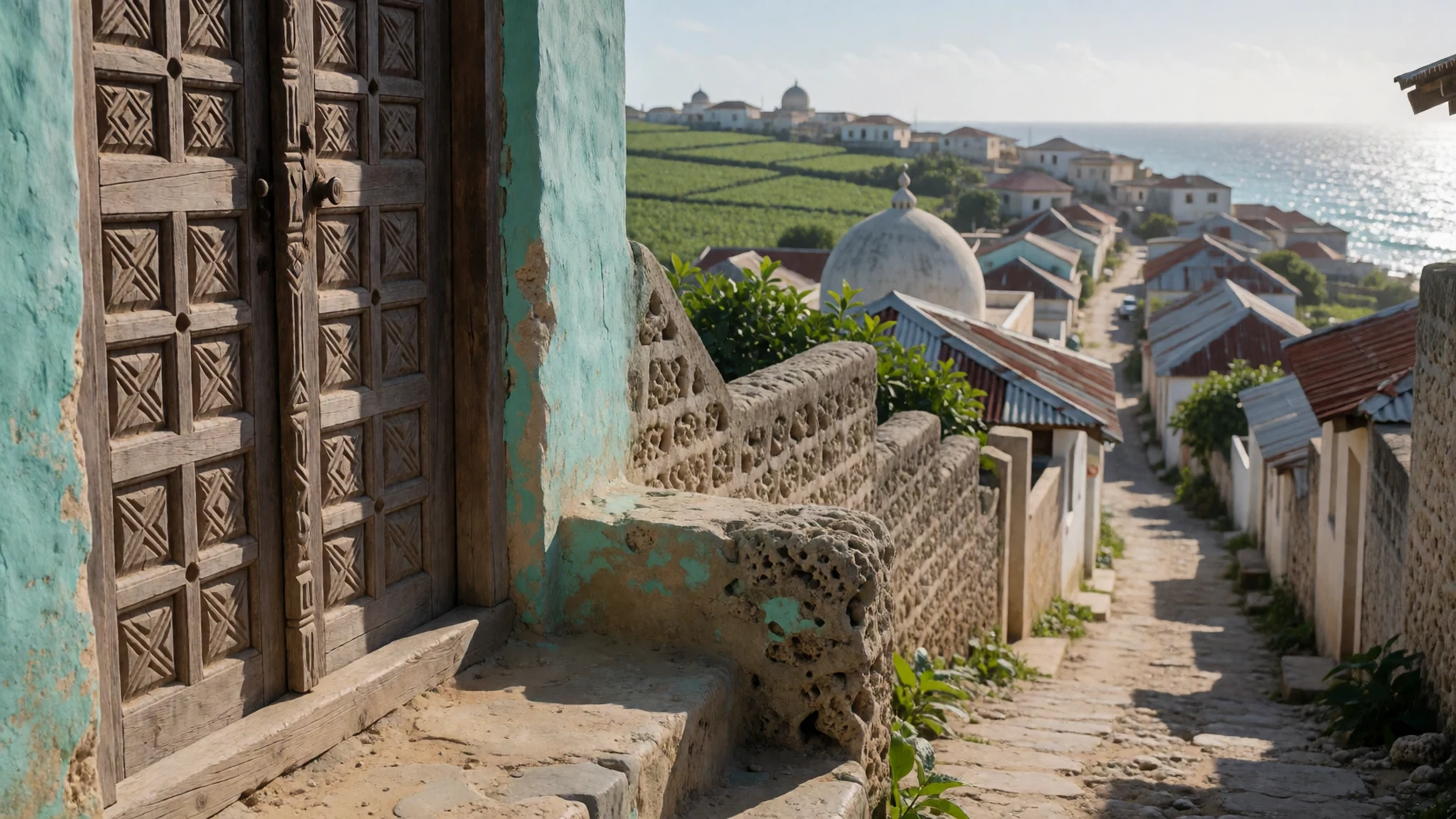
- Lake Dzialandzé — Inland highlands
Lake Dzialandzé occupies a volcanic crater in Anjouan's high country, a dark pool ringed by forest and cloud. The approach is a steep path through farms and then trees, often wet underfoot. The reward is quiet and a view back across ridges toward the sea. Mist can close in by midday, so morning light is the reliable window.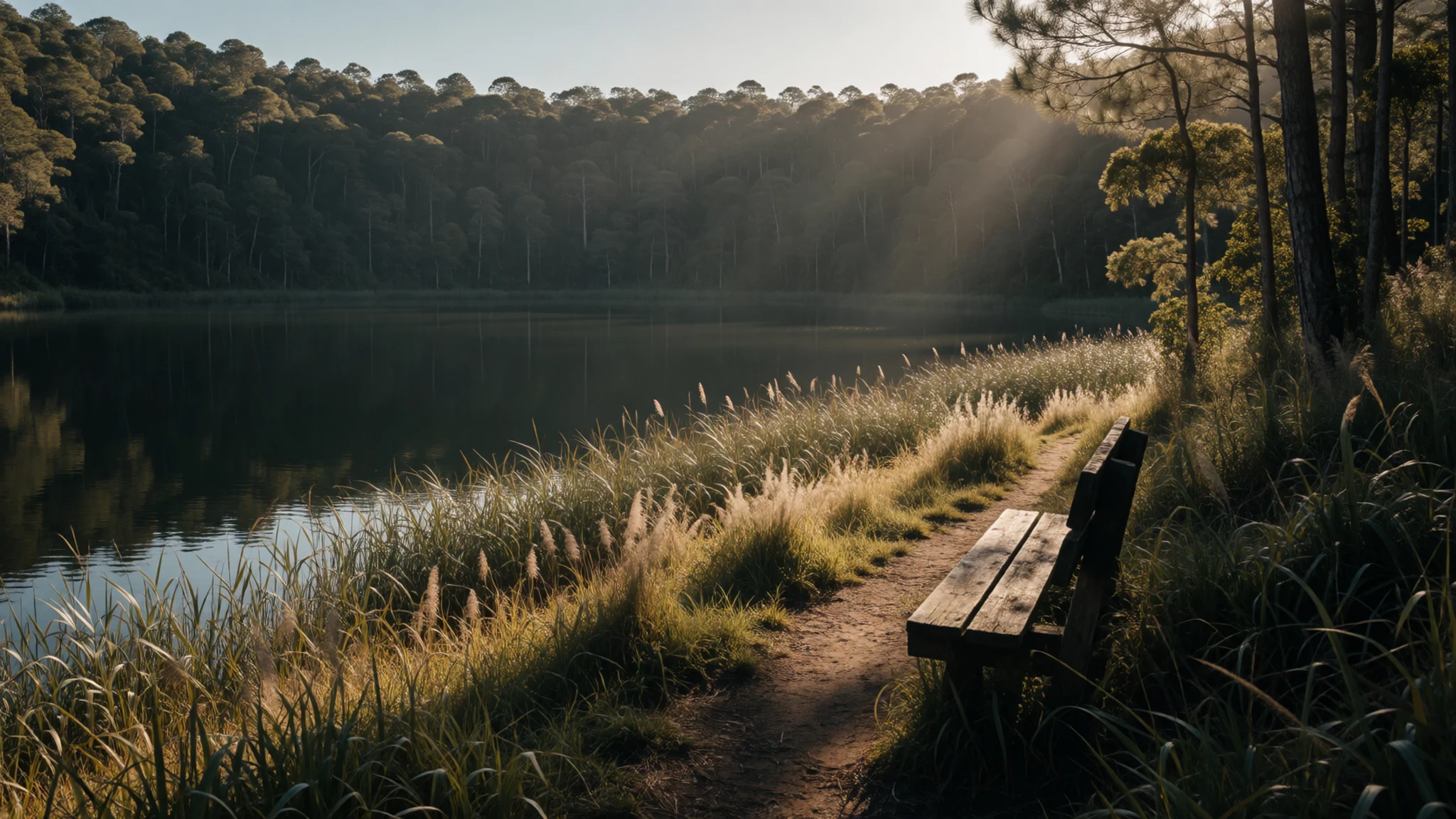
- Moya — South coast
Moya is a south-coast beach where Anjouan's steep profile finally gives way to a curve of sand. Fishermen work from the shore, and the water roughens when the trade wind rises. Built frontage is scarce, and so is shade at noon. The road down from the ridge, through plantation, is part of the outing.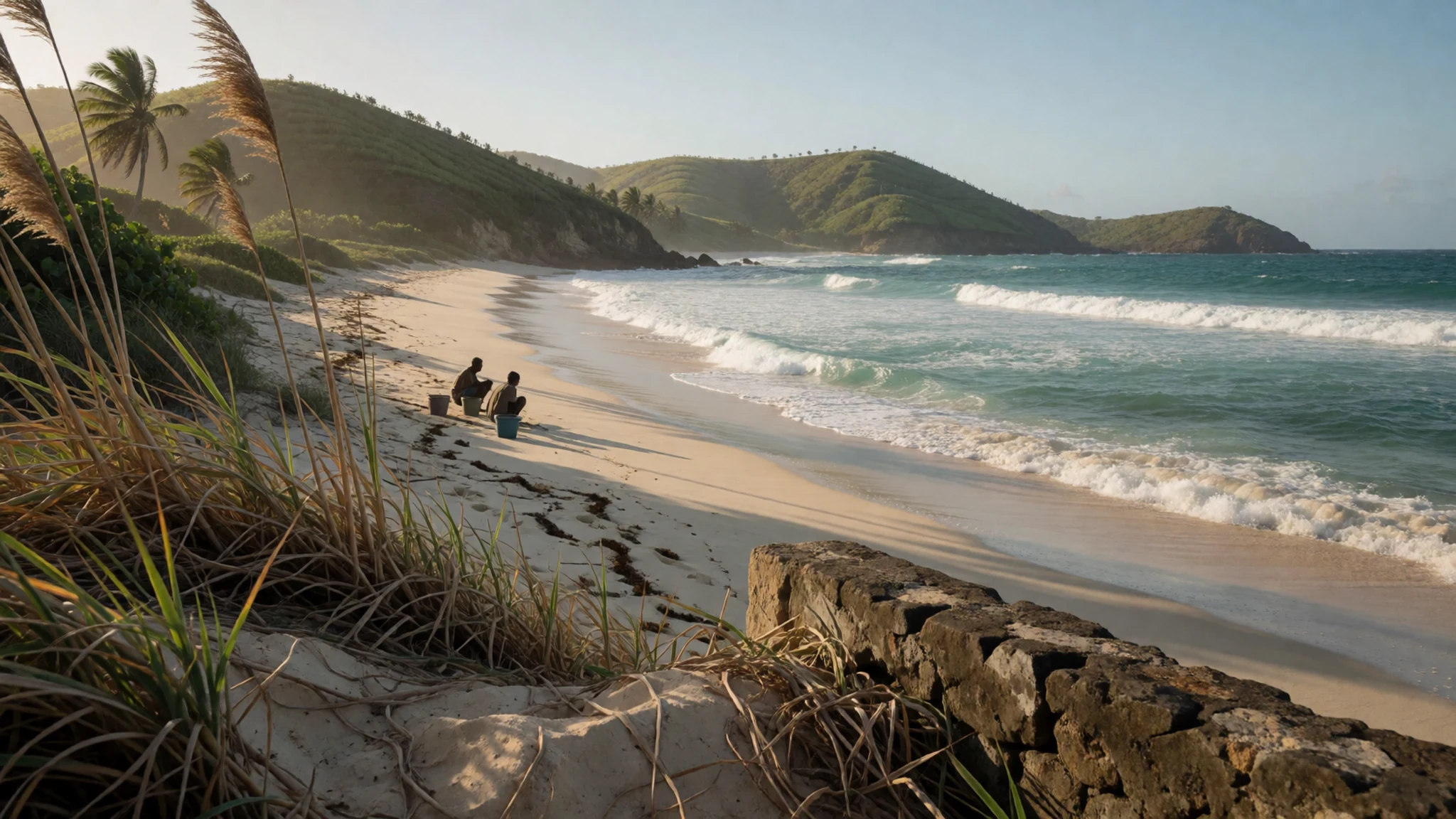
- Mount Ntringui — Central highlands
The high ridges of Anjouan, culminating at Mount Ntringui, carry the island's remaining forest above the clove and ylang-ylang groves. Paths are narrow, muddy after rain, and used by farmers as much as by walkers. Cloud often caps the crest by late morning. From open bends the whole island reads as one cultivated volcano, coast to coast.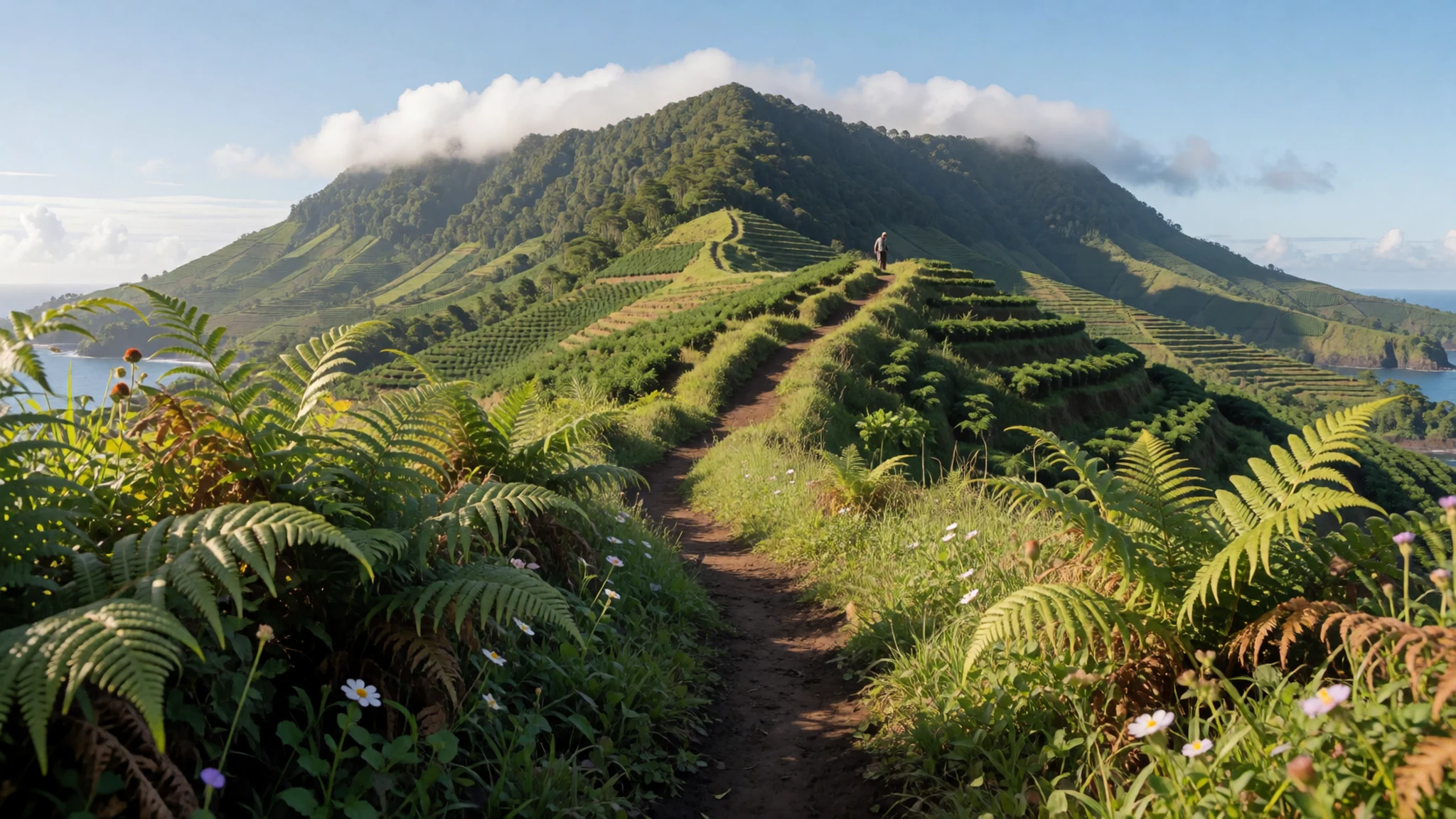
Culture
Anjouan is a Sunni Muslim island with a Swahili social code, and public life follows the mosque as much as the market. Shindzuani, a Comorian language close to Swahili, is the speech of home and the street; French handles offices and schooling; Arabic belongs to worship and much religious learning. Weddings are public events that draw in a whole neighbourhood, with processions, drumming and shared feasts rather than a private dinner. Women keep the msinzano, a sandalwood paste worn on the face for beauty and for ceremony, and they dress for those days in gold and patterned wraps. Men gather at the mosque, the harbour and the tea stalls. Friday midday empties the shops. Celebration music uses drumming and Indian Ocean song, and ordinary evenings turn to football and talk. Elders are greeted first, and an invitation to a family table is a real welcome, not a formality. During Ramadan the daylight hours go quiet and the evening meal is when streets revive. Ask before photographing people, and keep shoulders and knees covered in town and inside any mosque.
What to wear
On Anjouan, traditional dress is still the clothing of ceremony and of many women's ordinary days. Women wear the salouva, a length of coloured cotton worn as a wrap, with a shiromani or similar shawl over the head and shoulders, often in Comorian or East African prints. For weddings the same forms appear in richer cloth, with gold necklaces and the pale msinzano paste on the face. Men keep the kanzu, a long white or cream robe, and an embroidered kofia for the mosque and for festivals; a kikoi is sometimes tied at the waist. In Mutsamudu and Domoni today, daily dress is mixed. Younger men commonly wear shirts, T-shirts and trousers, with sandals or trainers, and change into a kanzu on Friday or for a family rite. Younger women in town often combine a hijab with a long skirt or a modest top and trousers, while many older women stay in salouva and shawl from morning until evening. Office workers and school pupils add neat shirts and, for girls, uniforms or modest dresses. A visitor fits in with light, loose cotton that covers shoulders and knees, a scarf for mosques, and shoes that can manage steep wet paths. Swimwear belongs on the beach, not in the medina. Rain comes in short heavy bursts, so a light waterproof is more use than a formal jacket.
What to eat
- Grilled spiny lobster — Mutsamudu harbour stalls and beach grills
Grilled spiny lobster is Anjouan's feast dish, split and cooked over charcoal with lime. It turns up at Mutsamudu harbour stalls and at beach grills when the boats have done well. Rice or cassava sits beside it. Supply follows the catch, so the morning's landing decides the menu.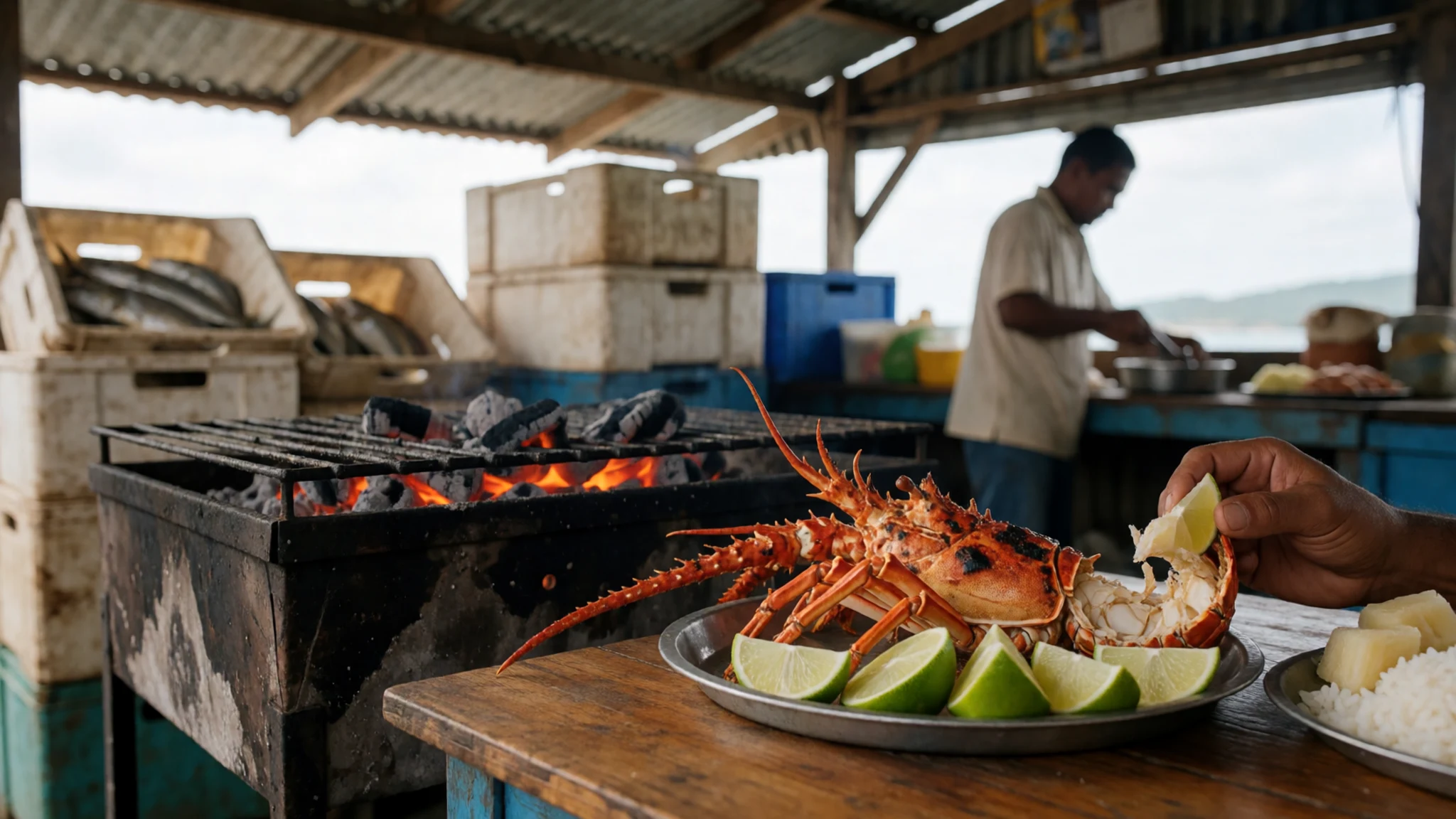
- Mataba — Home-style eateries around the Mutsamudu market
Mataba is a thick stew of pounded cassava leaves, cooked on Anjouan with fish or a little meat and coconut. It is everyday food, served with rice, not a celebration plate. Home-style eateries around the Mutsamudu market ladle it out at midday. The flavour is green, salty and filling.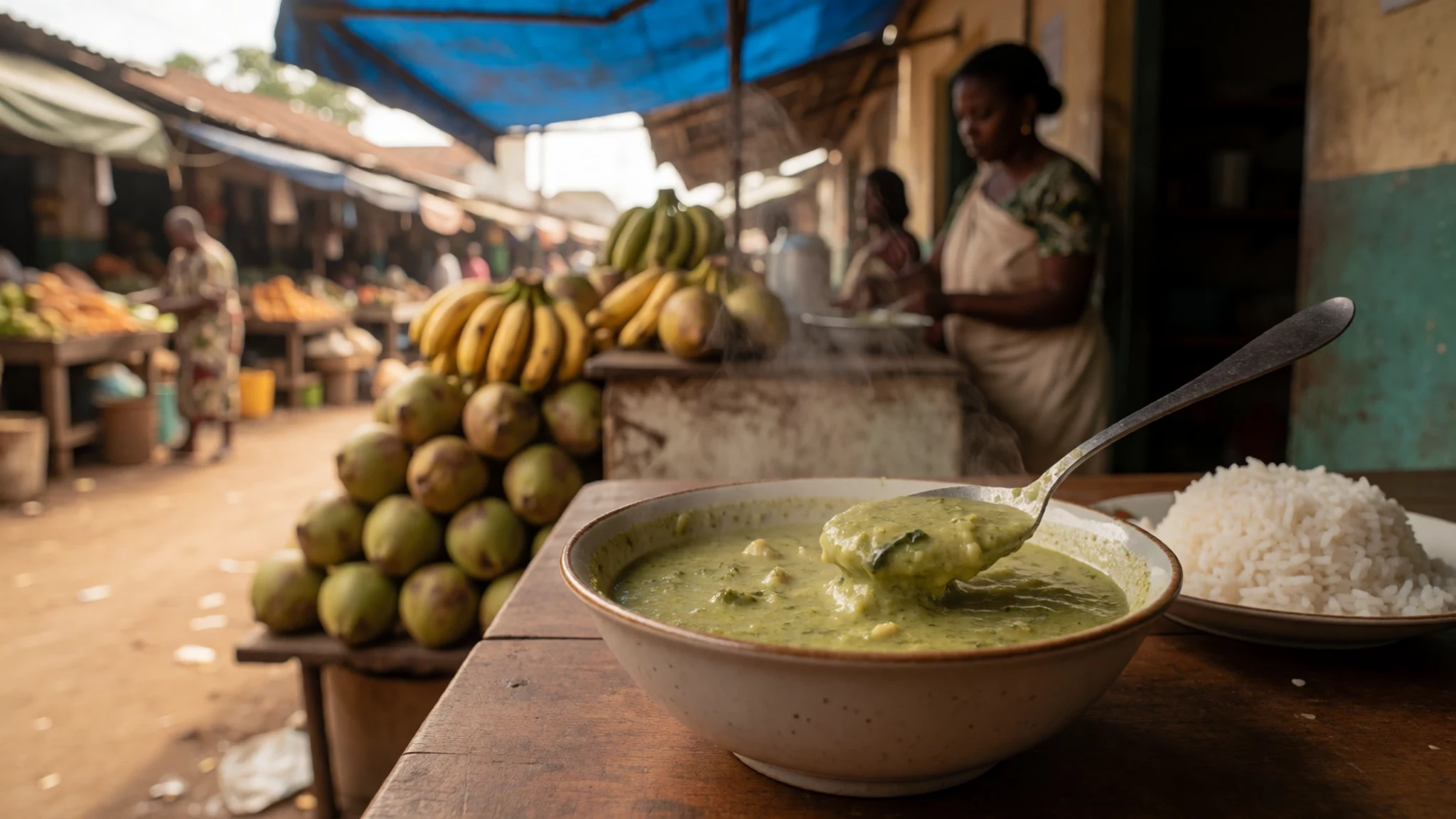
- Mkatra foutra — Morning bakeries and market stalls in Mutsamudu
Mkatra foutra is Anjouan's coconut flatbread, close to a soft cake, eaten warm in the morning with tea. Bakeries and market stalls in Mutsamudu sell it by the piece. It is the practical breakfast on a walking day, lightly sweet and rich enough to carry up to the ridges. - Grilled fish with pilau — Port-side eateries in Mutsamudu
On Anjouan, whole grilled fish, often tuna or snapper, comes with coconut rice or a simple pilau scented with cloves and cardamom. Port-side eateries in Mutsamudu cook it at lunch. The spicing is Indian Ocean and often heavily hot: cinnamon, pepper, the island's own cloves, and putu, a sauce of ground hot peppers. - Sambusa — Mutsamudu market and medina tea shops
Sambusa are Anjouan's small fried pastries filled with fish, meat or pulses, sold from trays at the Mutsamudu market and at tea shops in the medina. They bridge a harbour walk and the next climb. The pastry is thin and peppery, and the best trays empty before the hot afternoon.
Plan it
Best time. May to October brings the drier, slightly cooler kusi wind. December to April is the kashkazi season, with hotter days and heavier rain, January the wettest, a real chance of tropical storms in the channel, and August and September the most comfortable. Short downpours still occur in the drier months, but the sea is generally calmer then for boat trips.
How long. 3–4
Getting there. Fly into Ouani Airport on Anjouan, usually via Moroni on Grande Comore or via Mayotte. The airport sits just outside Ouani, a short road transfer from Mutsamudu. Ferries link the islands when the sea allows, but sailings are irregular, so confirm locally rather than trusting a fixed timetable.
Budget. mid
Tips
- Carry cash. Card machines are scarce outside Mutsamudu.
- Start inland walks early, before cloud and heat build on the ridges.
- Roads are steep and slow. A car with a driver covers more than one town in a day.
- Tap water is not reliably safe to drink. Carry sealed bottles or treat what you collect.
- Book a room ahead in the drier months. Anjouan has few places to stay.
Etiquette
- Remove shoes before entering a mosque, and ask whether visitors are welcome that day.
- Keep shoulders and knees covered in town, and take a scarf to prayer.
- Ask before photographing people, boats at work, or the inside of a home.
- Greet elders first, and pass food or money with the right hand.
- Do not drink alcohol in public. Open drinking causes offence on this Muslim island.
Nearby
Sources
- Wikidata (CC0)
- Wikipedia: Anjouan (CC BY-SA 4.0)
- Wikivoyage: Anjouan (CC BY-SA 4.0)