Mono Lake
Mono Lake, United States
Mono Lake is a strange, salty desert lake where ghostly limestone towers, millions of birds and a hard-won conservation story share one high basin.
The place
Mono Lake lies at 1944 m on the dry eastern flank of the Sierra Nevada, in Mono County, California, and it looks more like a film set than a lake. It is a saline soda lake, and it has existed for at least 760,000 years. Water drains into the basin but never out to the sea, so the salts carried in by streams stay behind while the sun lifts the fresh water away. What remains is alkaline, slippery to the touch and faintly mineral-smelling on a warm day. Lee Vining Creek, Rush Creek and Mill Creek are the main streams that feed it.
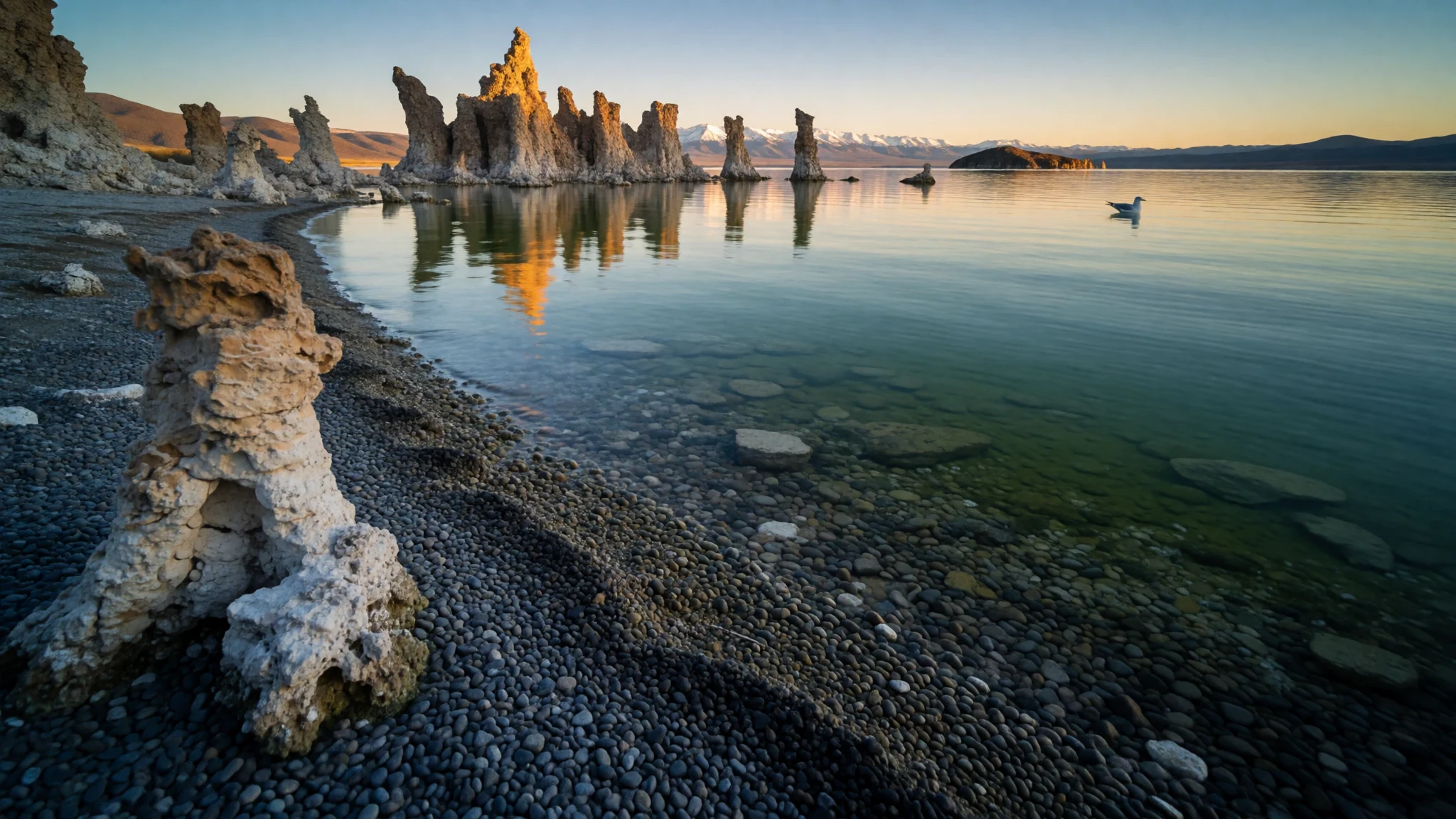
The shoreline is the draw. Knobbly pale towers of tufa rise from the shallows and stand stranded on dry ground where the water has pulled back. Beyond them are volcanic hills and a long mountain wall that keeps its snow well into summer. The lake looks empty, but it is not. Brine shrimp and alkali flies thrive in water that most animals cannot tolerate, and about two million migratory birds a year stop to feed on them. Gulls, grebes and shorebirds crowd the margins in season.
The small town of Lee Vining, on the western side, is the practical base, with groceries, a few eateries, lodgings and information. Expect big skies, little shade, thin air and wind that tends to pick up through the afternoon. Mornings are the calmest and the best for photographs, when the water is glassy and the towers are doubled in reflection.
Its story
Mono Lake has been home to the Kutzadika'a, a band of the Northern Paiute, for a very long time. Their traditional food from the lake was kutsavi, the pupae of the alkali fly, gathered from the shallows around the edge. The name Mono itself comes from Monachi, a Yokuts word for the peoples living on both sides of the Sierra Nevada. Eastern Mono families also travelled west each year to places such as Yosemite Valley and the Merced River to gather acorns and plants and to trade.
The modern chapter is about water. Los Angeles drew water from the Owens River into its aqueduct in 1913, and in 1941 the system was pushed north into the Mono Basin through a tunnel linking a reservoir on Rush Creek with the upper Owens. So much of the streamflow was taken that evaporation began to outpace what came in, and the lake shrank quickly. By 1982 its surface covered only 69% of the area it had in 1941. The retreating water exposed more tufa and raised alarm about the nesting birds, which lost the protection that islands give against predators.
A citizens' group, the Mono Lake Committee, formed in response and fought the diversions in court. The result was a ruling that forced Los Angeles to let part of the lake refill. The recovery is partial rather than complete, and the lake remains a case study in how far a city's thirst can reach.
What to see
- Mono Lake Tufa State Natural Reserve — Southern shore
This is the main place to walk among the tufa towers, and the section below the county park has a boardwalk with interpretive panels. Mono Lake looks best here in the early morning or near sunset, when the low light warms the pale stone. Stay on the paths; the towers are fragile.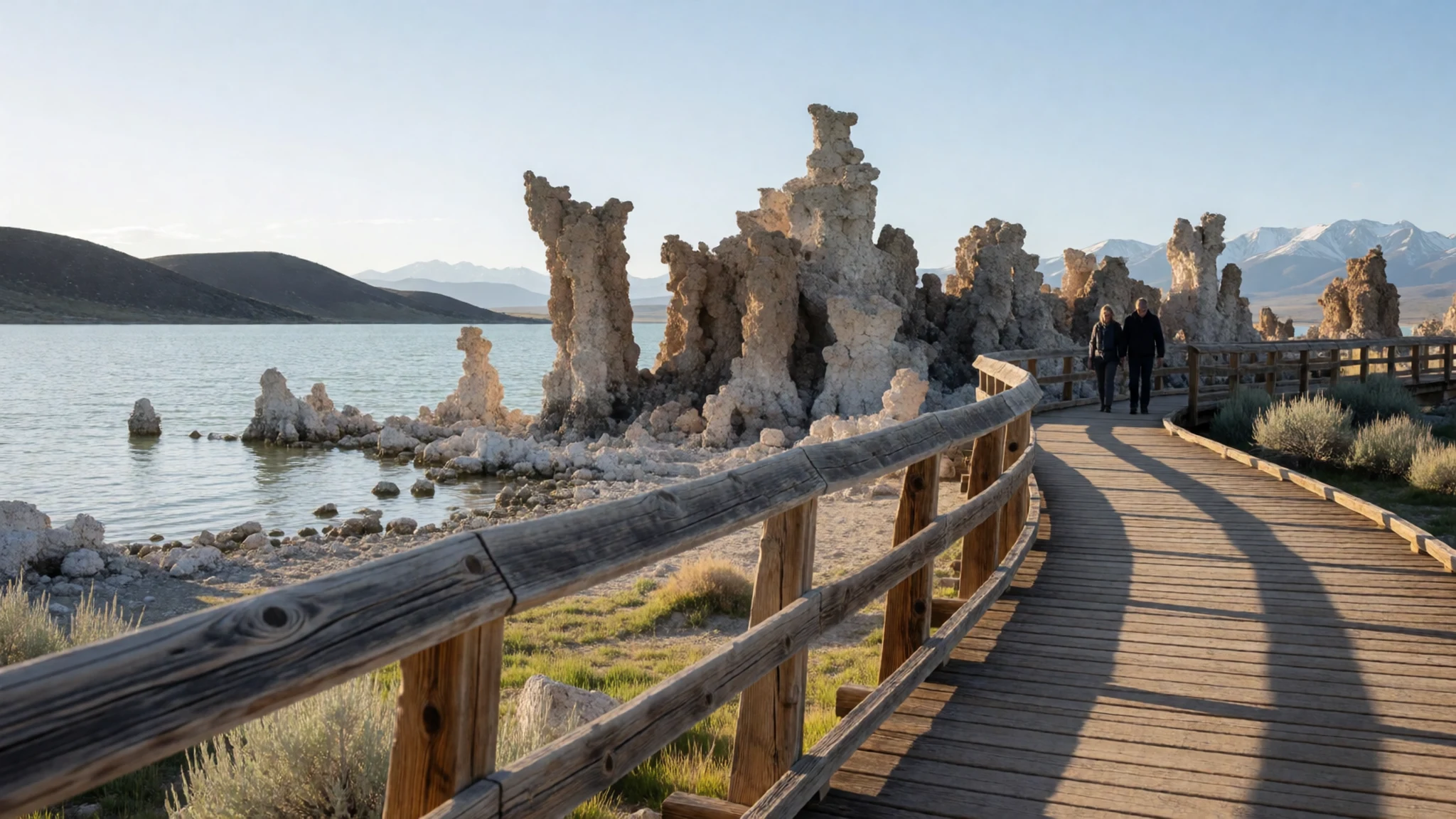
- A paddle on the lake — Navy Beach, south shore
Mono Lake is easiest to experience from the water in a kayak or canoe, and guided morning tours run in summer from Navy Beach. Wind and submerged rocks make the lake tricky, so most boaters are off by early afternoon. Book ahead through the operator.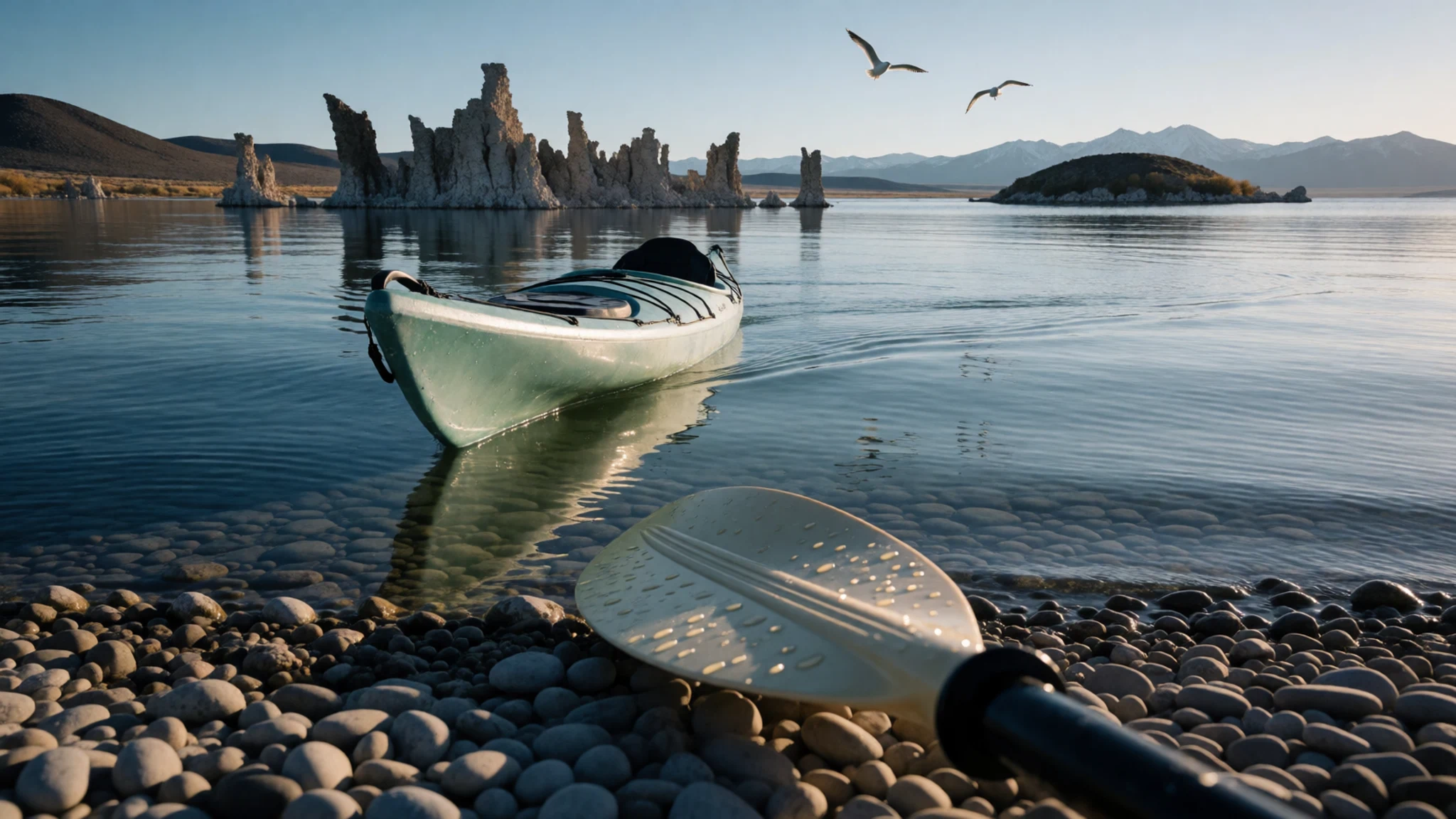
- Naturalist-led walks — Around the lake shore and visitor centres
During summer, guided walks around Mono Lake are organised by the Mono Lake Committee, the state reserve staff and the forest service. They explain how tufa forms, why the lake level matters and what the birds are doing. The Committee also offers longer seminars on geology, human history and wildlife.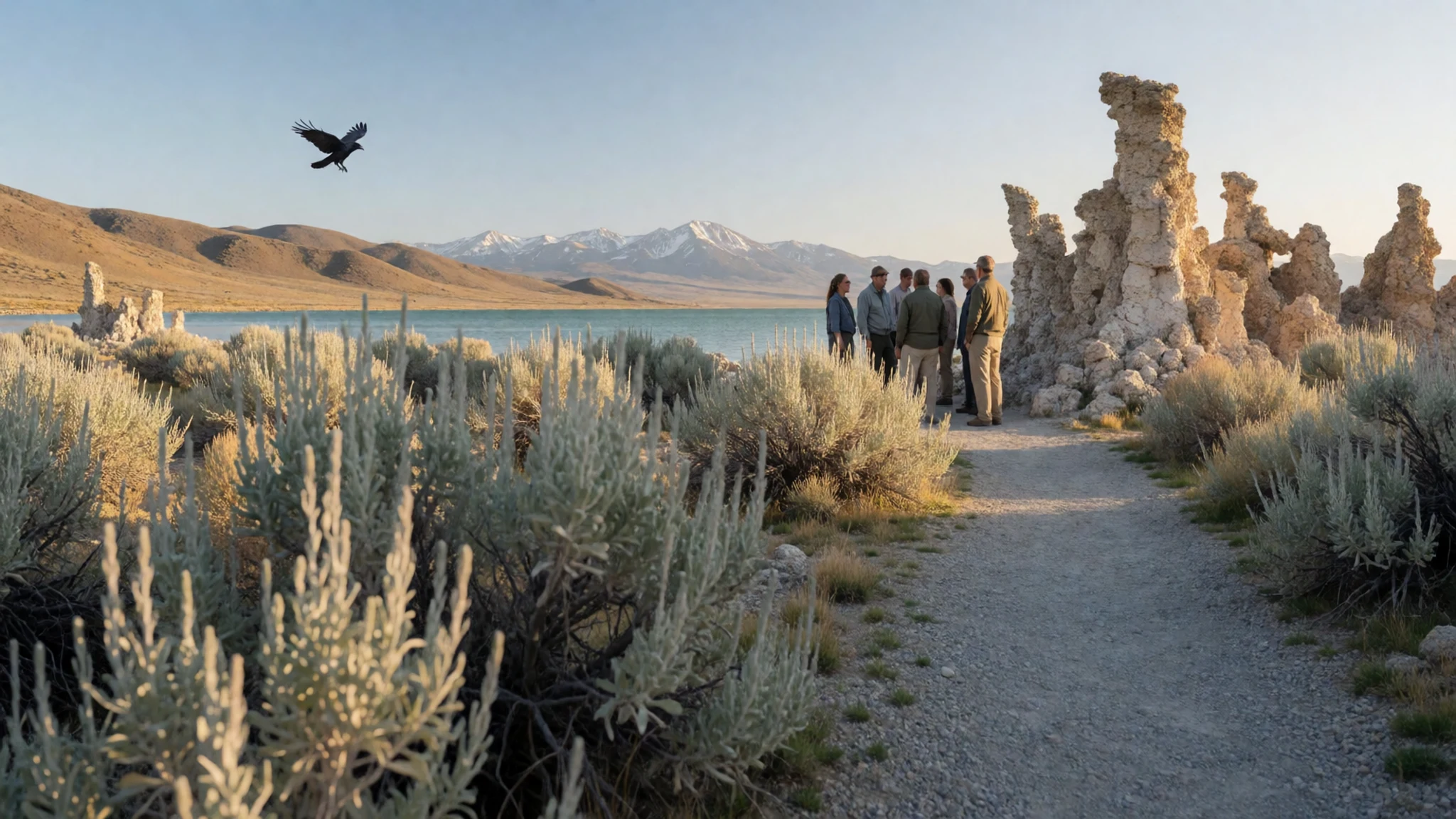
- Brine shrimp and alkali flies — Shallow margins of the lake
Mono Lake's food chain starts with two small animals. Brine shrimp swim in the open water, and alkali flies cluster in dense, moving carpets along the edge. Walk slowly at the shoreline in warm months and watch them scatter in front of your feet. They are harmless.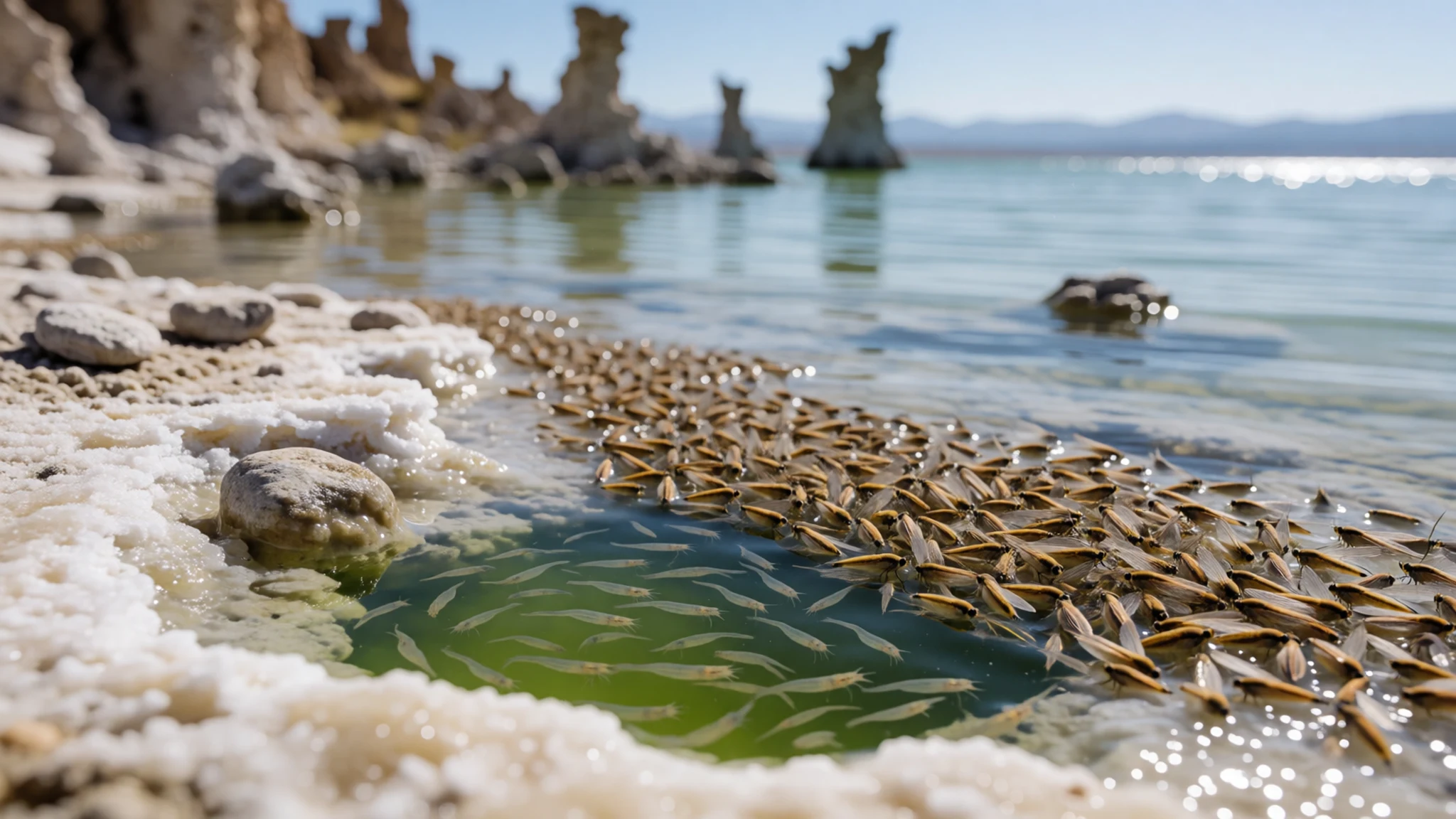
- Birdwatching at the tufa — South Tufa and shoreline
Mono Lake is a stopover for migrating birds, and the tufa towers make natural perches; a warbler on a pale spire is a typical sight. Bring binoculars and a quiet step. The lake's islands are closed to visitors from April to August to protect nesting birds.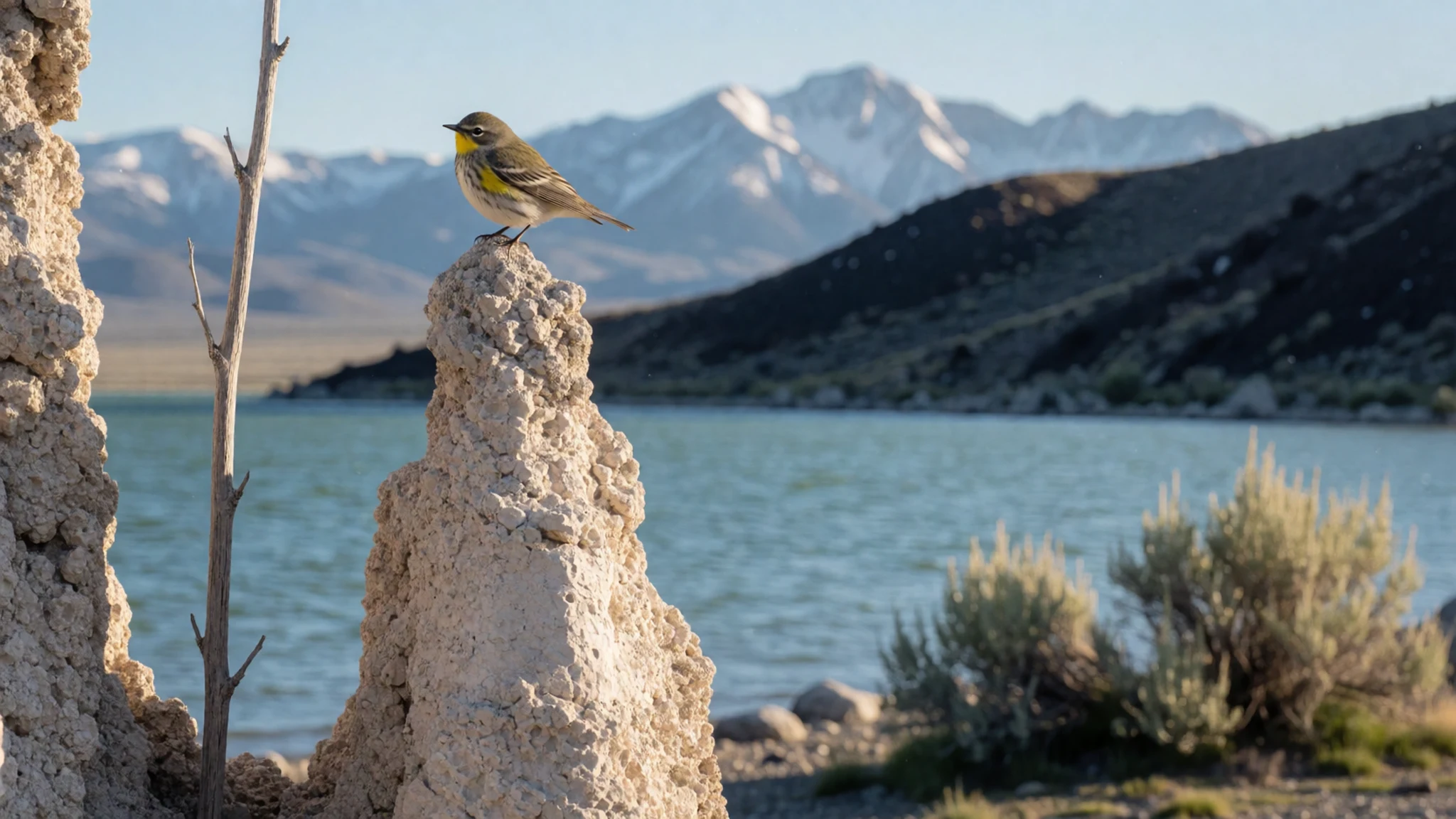
- The view from above — Western shore and approach roads
Satellite and aerial images show Mono Lake as a pale oval beneath the snowy Sierra Nevada, ringed by volcanic ground. They help make sense of the basin before a visit, and they show why no river leaves it. Viewpoints on the western side give a smaller version of the same picture.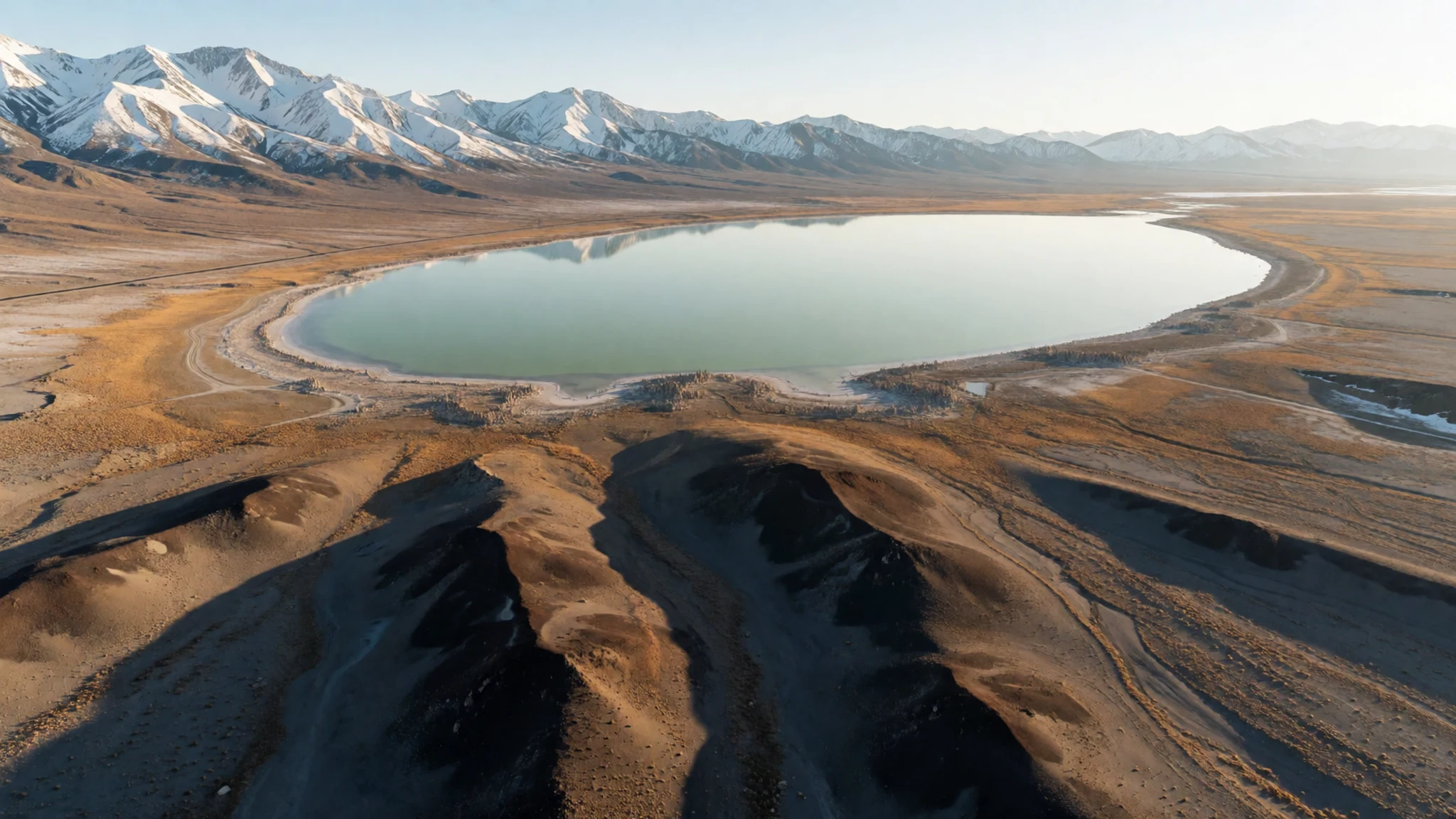
Culture
Mono Lake's cultural story begins with the Kutzadika'a, the Northern Paiute band of the lake, who speak Northern Paiute and have long gathered kutsavi, the alkali fly pupae, from the shoreline. Reservations connected with the Mono peoples are today found elsewhere in the region, including around Big Pine, Bishop and in Madera and Fresno counties. The lake itself is therefore a homeland rather than just scenery, and it is worth reading the interpretive panels on the boardwalk with that in mind.
The second living culture is one of stewardship. The Mono Lake Committee was set up by people who objected to the lake being drained for a city hundreds of kilometres away, and it still runs walks, talks and seminars. Local pride in the lake is real, and conversations in Lee Vining often come back to water levels, snowpack and birds. Visitors tend to find a small, outdoorsy community that is used to early starts, changeable weather and the seasonal closing of the high road over Tioga Pass.
Life here is also seasonal. Many businesses open only in the warmer months, and the town grows quiet once the first snow falls. That rhythm shapes what is available and when, so it pays to check ahead rather than assume.
On the shore, stay on the marked paths and boardwalks, never climb on or break off the tufa towers, and keep well away from nesting birds.
What to wear
Mono Lake is in the Great Basin region, where Northern Paiute people traditionally wore clothing and used blankets made from locally available materials such as skins, plant fibres and twined strips of rabbit fur, with woven baskets and hats made from grasses and willow. Beadwork and regalia are most often seen today at community gatherings and cultural events rather than in daily life. Visitors should treat them as the property of the people who make them and ask before photographing anyone in ceremonial dress.
What people wear day to day is practical outdoor clothing: fleeces and light jackets, jeans or hiking trousers, caps and sturdy boots. Lee Vining is a small mountain town, and nobody dresses up. Nobody minds mud or dust either.
For a visit, think in layers. The lake sits at 1944 m, so mornings and evenings are cool even in summer, while midday sun is strong and the shore has almost no shade. Bring a sun hat, sunglasses, sunscreen and a windproof layer for the afternoon gusts. Shoes matter more than clothes: closed shoes with grip suit the loose, salty ground, and old trainers are best if you plan to step near the water, since the lake leaves a white crust. For kayaking, wear quick-drying clothes and carry a dry layer. Nothing about the place demands special modesty, though a shirt and shoes are expected in the town's eateries.
What to eat
- Eastern Sierra trout — Seasonal eateries in Lee Vining
Trout is a natural fit for a mountain town with cold streams nearby. Look for it grilled or pan-fried on a Lee Vining menu, usually with potatoes and a simple salad. Ask whether it is local or farmed, since supplies vary by season.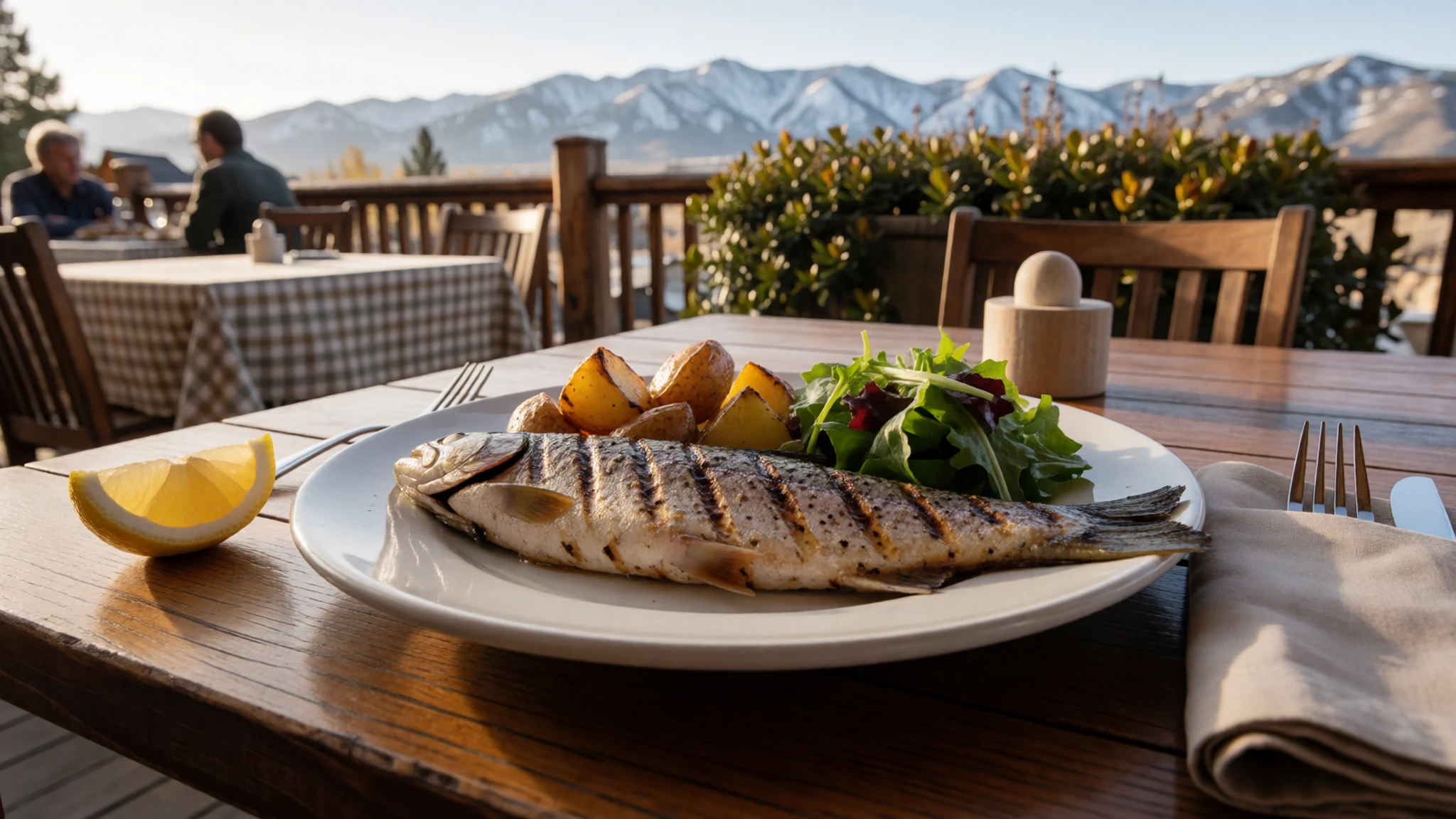
- Diner burger and fries — Roadside diners and cafés along the main street of Lee Vining
After a morning on the shore, a plain burger and a pile of fries from a roadside diner is the standard reward. Portions tend to be large and the setting casual, often with outdoor tables and a view towards the lake.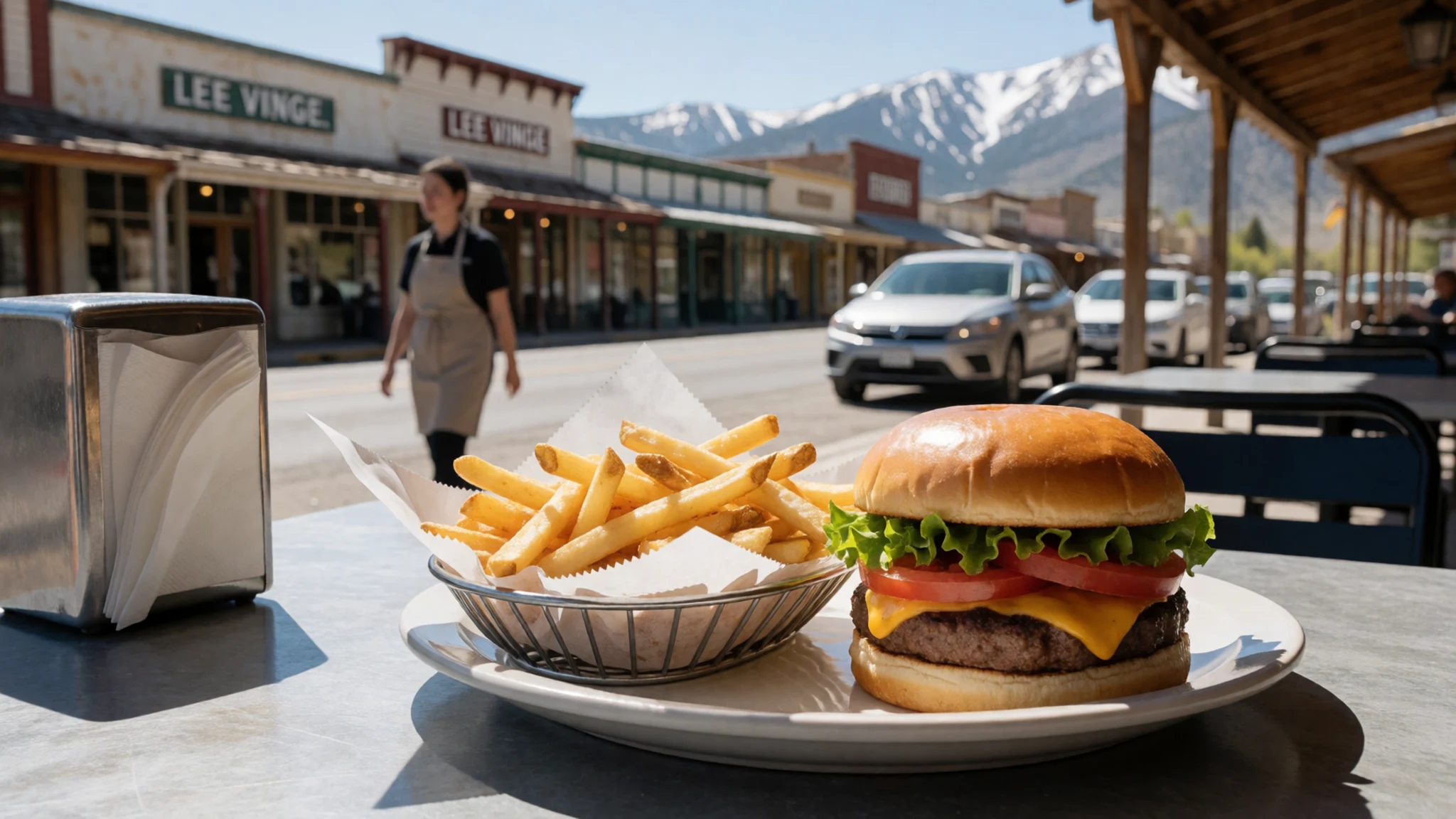
- Breakfast burrito or pancakes — Cafés and small restaurants in Lee Vining
Early starts are the rule at Mono Lake, so breakfast counts. A filled breakfast burrito or a stack of pancakes with coffee will keep walkers going until lunch. Many places open early in summer and close later in the day. - Fish tacos — Seasonal food stands and counter-service eateries in town
Fish tacos turn up at seasonal stands and counters in town in the warmer months, usually with cabbage, lime and a mild sauce. They make an easy, light lunch if the afternoon wind has driven you off the water. - A trail picnic from the grocery — The grocery shops in Lee Vining
Shops in Lee Vining stock bread, cheese, fruit and snacks, and a picnic at the tufa is often better than a sit-down meal. Fill water bottles at the visitor centres, since drinking water is provided there.
Plan it
Best time. June to September for the easiest access: the Tioga Pass road from Yosemite closes with the first snow and usually reopens in May or June, and summer is when kayak tours and naturalist walks run. Mornings are calm and cool; afternoons are windy and the sun is strong at this altitude. The lake's islands are closed from April to August for nesting birds. Winter is cold and snowy, and many services close.
How long. 1–2
Getting there. Fly to Reno, Nevada, the usual gateway, then drive south along the main road of the Eastern Sierra to Lee Vining on the lake's western shore. During summer, you can also drive to Mono Lake from Yosemite National Park via Tioga Pass Road; as this route is closed in winter, be sure to check road conditions before setting off. There is no public rail service; a car is the practical way to get around.
Budget. mid
Tips
- Start at the tufa in the early morning, when the water is calmest and the light is best.
- Bring water, sun protection and a windproof layer; there is little shade and the air is thin at this altitude.
- Check opening dates for campgrounds, tours and eateries ahead of time, as many are seasonal and vary with the weather.
- Book guided kayak tours in advance and plan to be off the water by early afternoon.
- Camping is not allowed within the reserve itself, so book lodging in Lee Vining or use dispersed camping above the lakebed.
Etiquette
- Stay on marked paths and never climb on or break off tufa towers.
- Respect closures around the islands and nesting birds.
- Ask before photographing local people, especially in ceremonial dress.
Nearby
Sources
- Wikidata Q335585 (CC0)
- Wikipedia: Mono Lake (rev 1380152362) (CC BY-SA 4.0)
- Wikivoyage: Mono Lake (rev 5411350) (CC BY-SA 4.0)
- Photo: Mono Lake from space (NASA, rotated and cropped by Hike395) (CC0 1.0)
- Photo: Mono Lake aerial (Dicklyon) (CC BY 4.0)
- Map: California Pleistocene lakes (George I Smith, USGS) (Public domain)
- Sketches: Thinolite (Edward Salisbury Dana) (Public domain)
- Photo: Mono Lake tufa (Vezoy) (CC BY 3.0)
- Photo: Ephydra hians brine fly (Steve Ryan) (CC BY-SA 2.0)
- Photo: Artemia monica (djpmapleferryman) (CC BY 2.5)
- Photo: Audubon's Warbler on tufa (Nandaro) (CC BY 3.0)


Wildlife
- Brine shrimp (animal)
The Mono Lake brine shrimp is a tiny swimmer found nowhere else on Earth, the only kind able to cope with the lake's unusual water. You will find it in the open water, quietly grazing on floating algae and bacteria, and it makes a vital meal for many birds. The notes give no season or time of day, so simply enjoy looking whenever you visit. Watch from the shore, keep your voice low, and never put food into the water.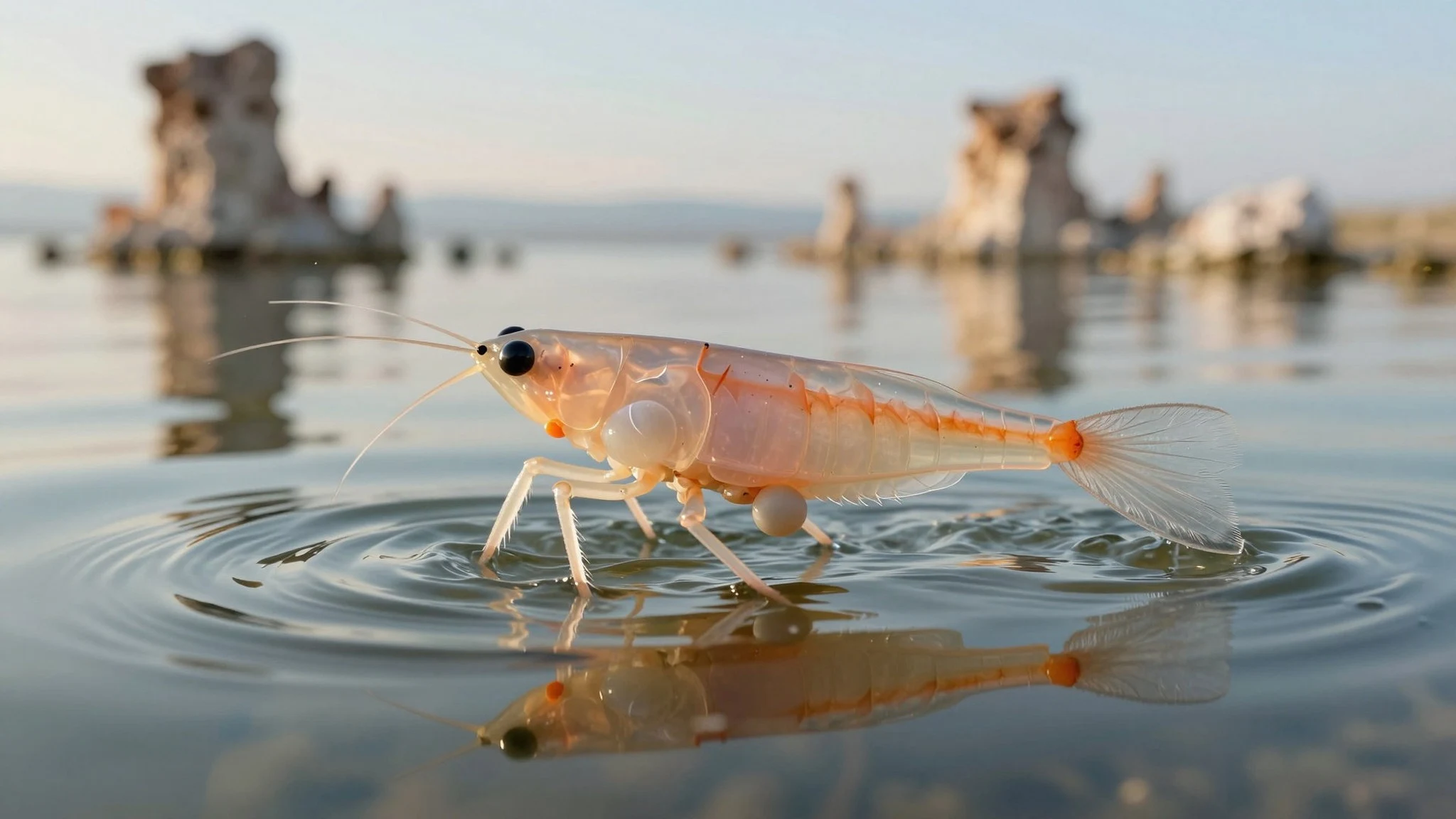
- California gull (bird)
The California gull is a middling sort of seabird: bigger than a ring-billed gull, smaller than a herring gull, like the middle child of the family. At Mono Lake, gulls gather along the lake's edges in season, alongside grebes and shorebirds. The notes name no time of day, so any hour may reward you. Keep a respectful distance, stay quiet so you do not startle them, and never feed them.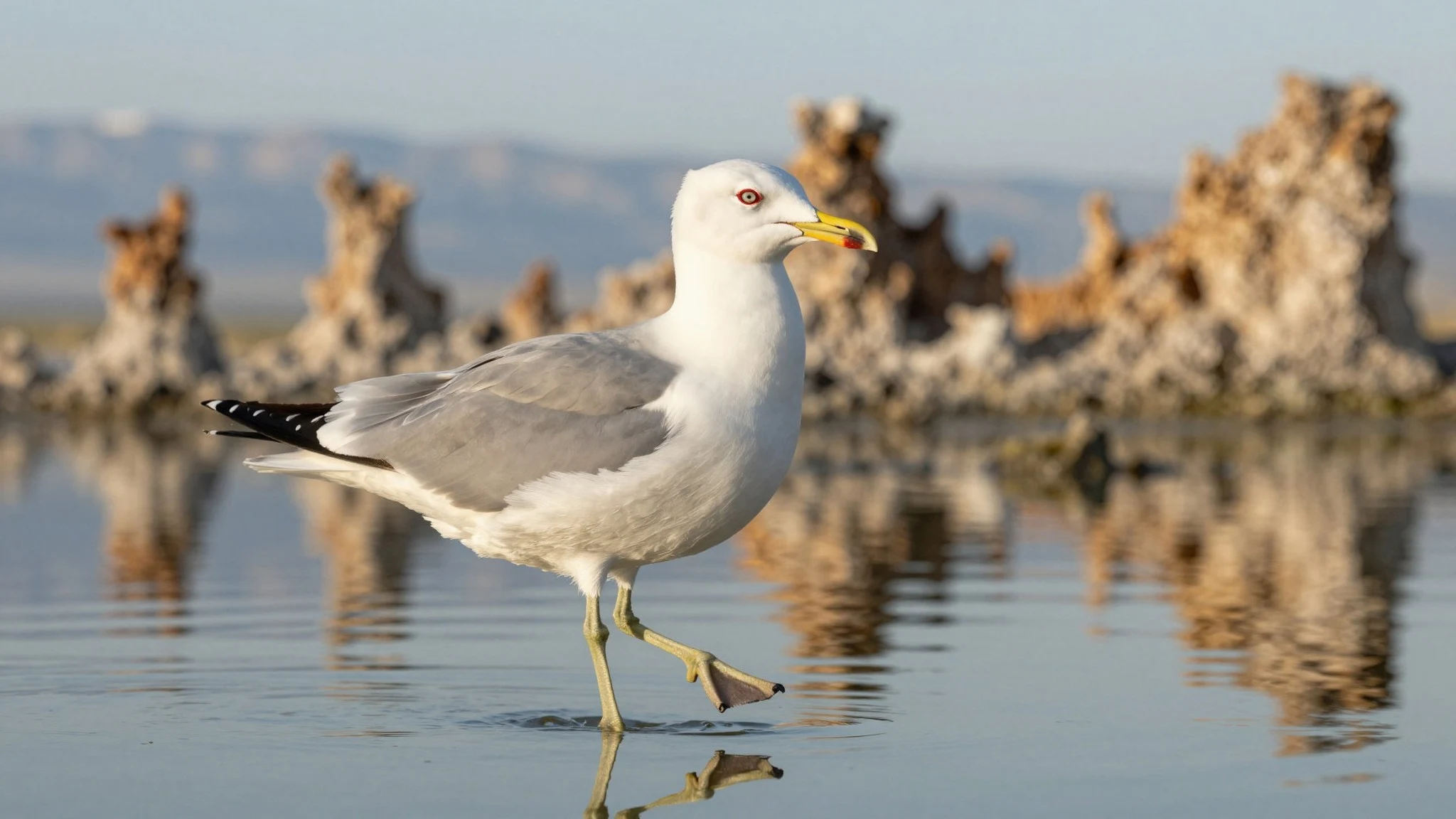
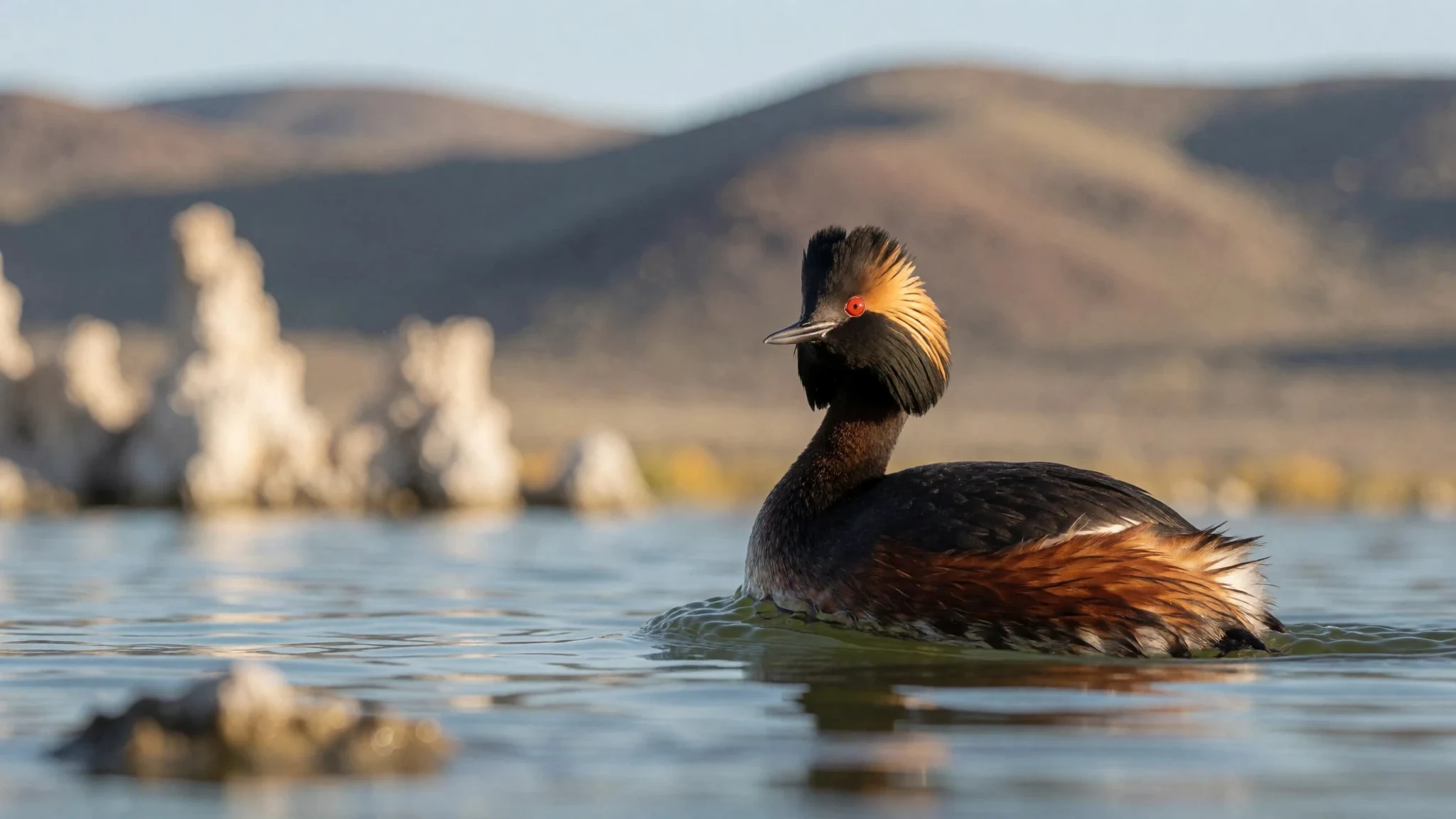
- Eared grebe (bird)
The eared grebe is a small water bird that wears golden-ochre tufts behind its eyes when breeding, with a dark head and chestnut sides. Out of breeding dress it turns greyish-black above and whitish below. At Mono Lake, grebes gather along the lake's edges in season, among gulls and shorebirds. The notes give no time of day. Watch from a comfortable distance, stay calm and quiet, and never offer food.