Mona Island
Mona Island, United States
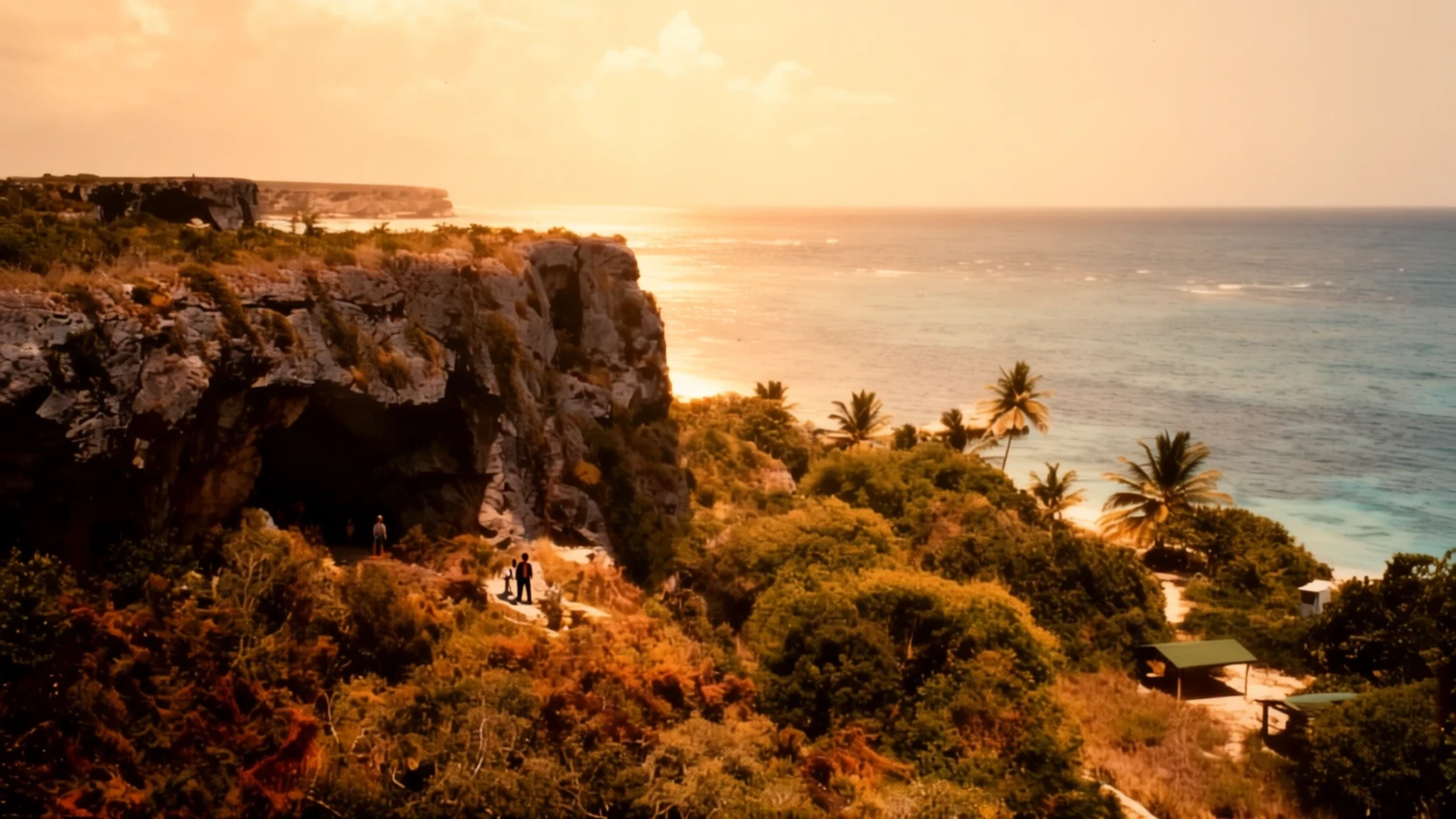
Mona Island is an uninhabited limestone reserve in the Mona Passage, with sea cliffs, Taíno cave art, and endemic island wildlife.
The place
Mona Island (Isla de Mona) stands in the Mona Passage, the stretch of open sea between Puerto Rico's main island and Hispaniola. The island is a limestone plateau with cliffs along much of its rim, a dry surface of cactus, scrub and low forest, and a few coves where a boat can meet the shore. No town sits on it. The island is managed as a nature reserve, and the people who come — rangers, scientists and permitted visitors — bring their own shelter, food and water.
From the cliff edge the sea is a deep, sudden blue, the colour of water that falls away quickly from the rock. The plateau above is bright and often windy, with little tall shade. Under that surface the island is hollowed into caves. Some are broad rooms near the light. Others run back into the dark. On the walls, Taíno paintings and engravings remain, figures and marks left long before the reserve, the lighthouse or the modern permit.
Wildlife is not a side note. The Mona ground iguana lives on the rocks and in the scrub, and the Mona boa, a small constrictor, belongs to this island. Sea turtles nest on the beaches. Seabirds use the cliffs. Offshore, reef and deep water meet in the passage, where the current is a condition of the crossing, not a bay to potter across. Mona Island asks for self-reliance. Heat, sharp stone, empty shelves and a night with almost no artificial light are the ordinary conditions.
Its story
Mona Island has a long human story for a place with no residents today. Taíno people used the caves and left paintings and engravings on the walls, a record cut and painted into the limestone rather than stored in a town. The caves served as shelter and as a place of meaning. Those marks are still there, and they are easy to damage.
Ships came to know the Mona Passage as a gate between the wider Caribbean and the routes that run towards the Atlantic. An island in the middle of that gate offered a lookout, a pause, and, when it could be found, water. Later, a lighthouse was raised on the plateau so the strait could be read after dark. Tales of pirates and hidden cargo still cling to the passage; the history a visitor can actually stand beside is the cave art and the light tower.
In recent generations the story of Mona Island became a story about protection. The reserve holds the ground iguanas, the boa, the nesting beaches, the caves and the reefs by refusing a town. Older uses, including the digging of guano, have given way to permits, rangers and research, though hunting is still permitted in season. Campers walk the plateau and sleep near the landing, then leave. Mona Island's continuing story is the decision to keep an uninhabited island uninhabited, so the paintings stay on the stone and the animals keep the scrub.
What to see
- Playa Sardinera — west coast
Mona Island's landing is a sandy cove where boats put visitors ashore and camping sits a short walk from the water. The beach is also a turtle nesting shore, so the sand at night is not a place to wander. Swimming depends on swell and on the current in the passage. No pier village stands behind the beach: only scrub, a ranger presence and the gear people brought.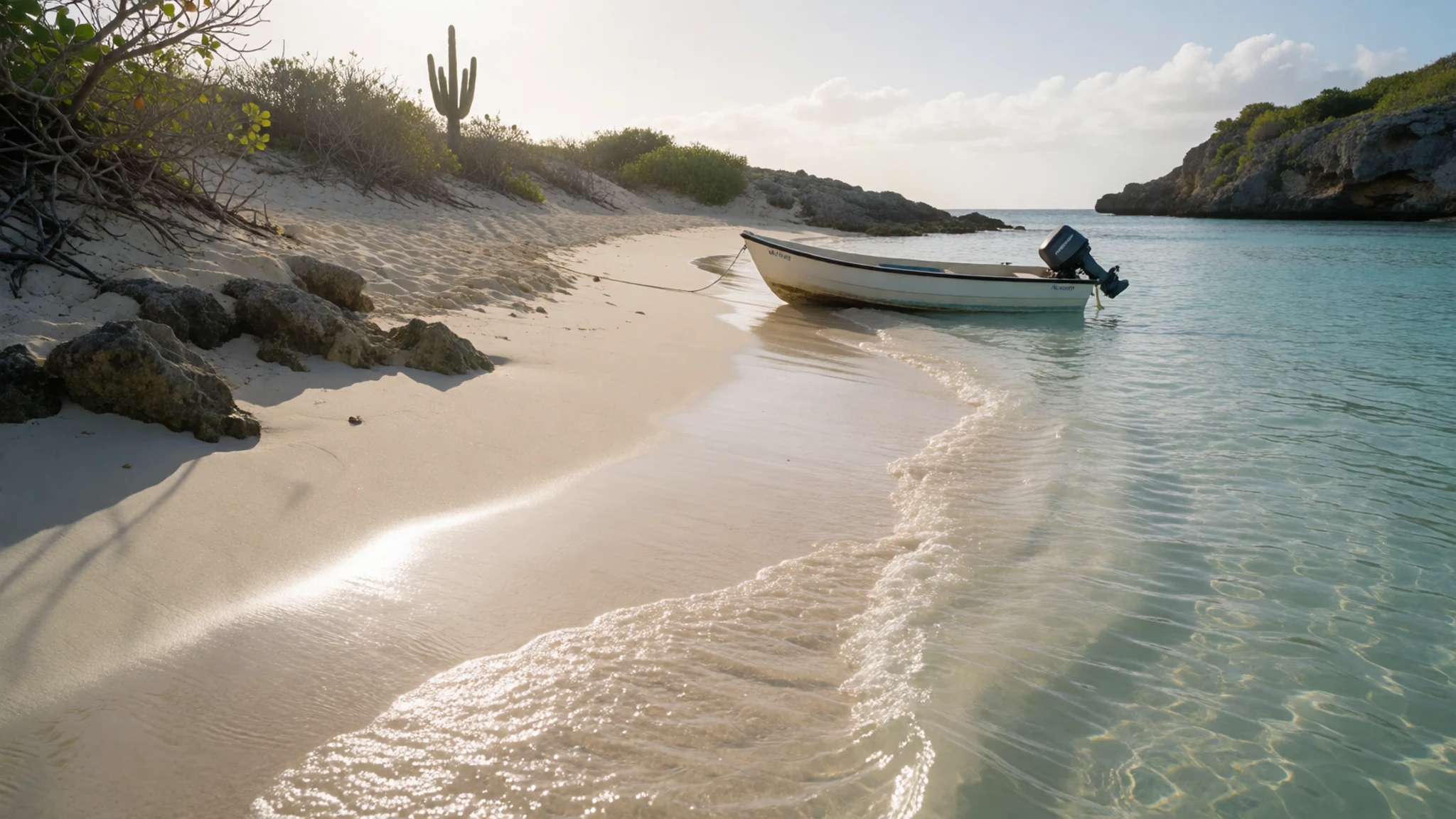
- Cliff rim — plateau edge
The rim of Mona Island is limestone cliff above water that shifts from pale near the rock to a deep blue as the bottom falls away. Walkers follow the edge in sun and wind, cactus and scrub inland, the Mona Passage filling the view. The drop is real, the stone is uneven, and shade along the lip is scarce. It is a flat dry top ending in open sea.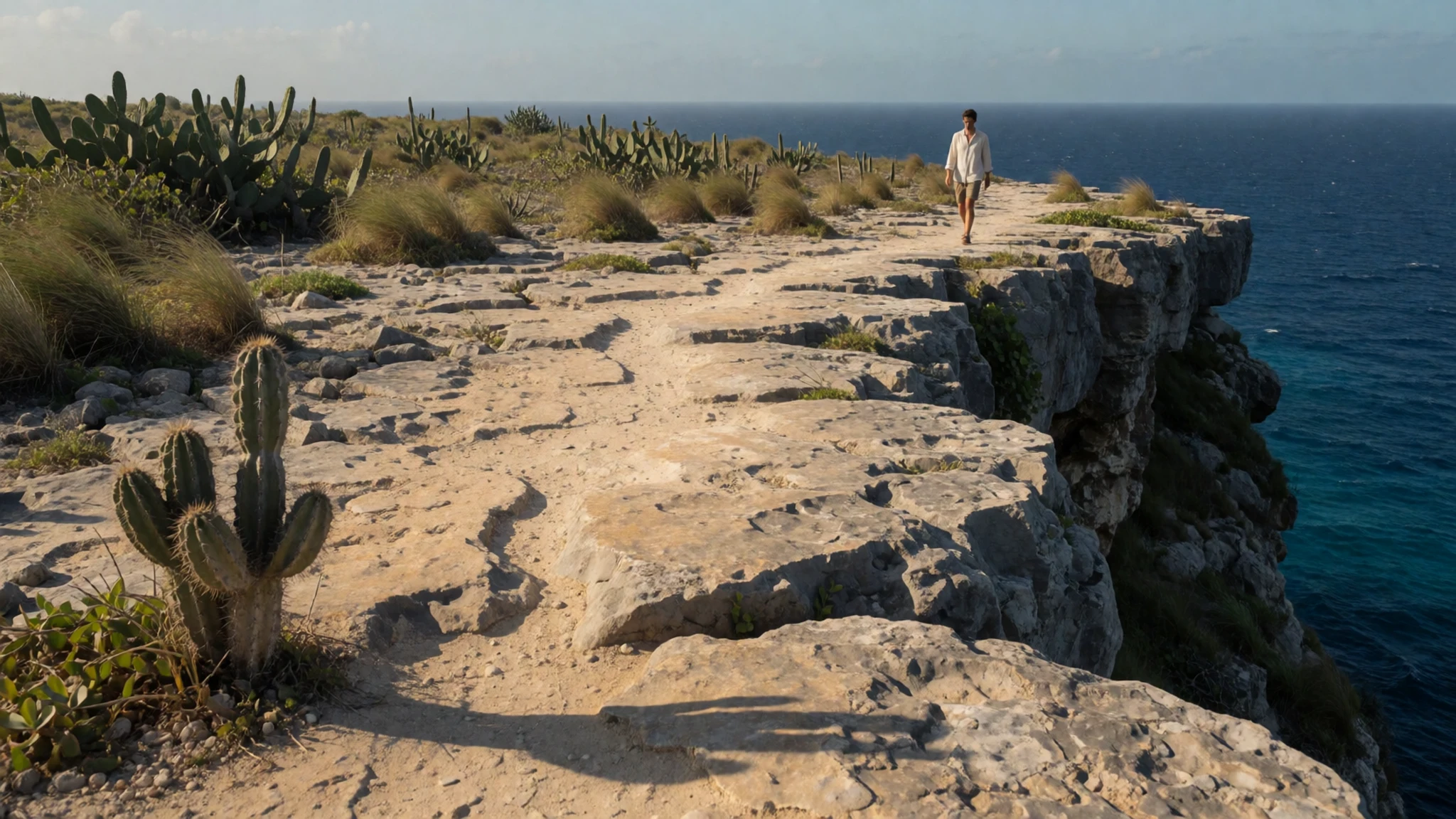
- Taíno caves — limestone interior
Caves open through the limestone of Mona Island, from broad entrances near the light to darker rooms farther in. Taíno paintings and engravings cover stretches of wall: faces, figures and geometric marks. The air inside is cooler than the plateau, the floors can be slick, and some passages are tight. The caves are an archaeological surface, and the art is the reason to move slowly and touch nothing.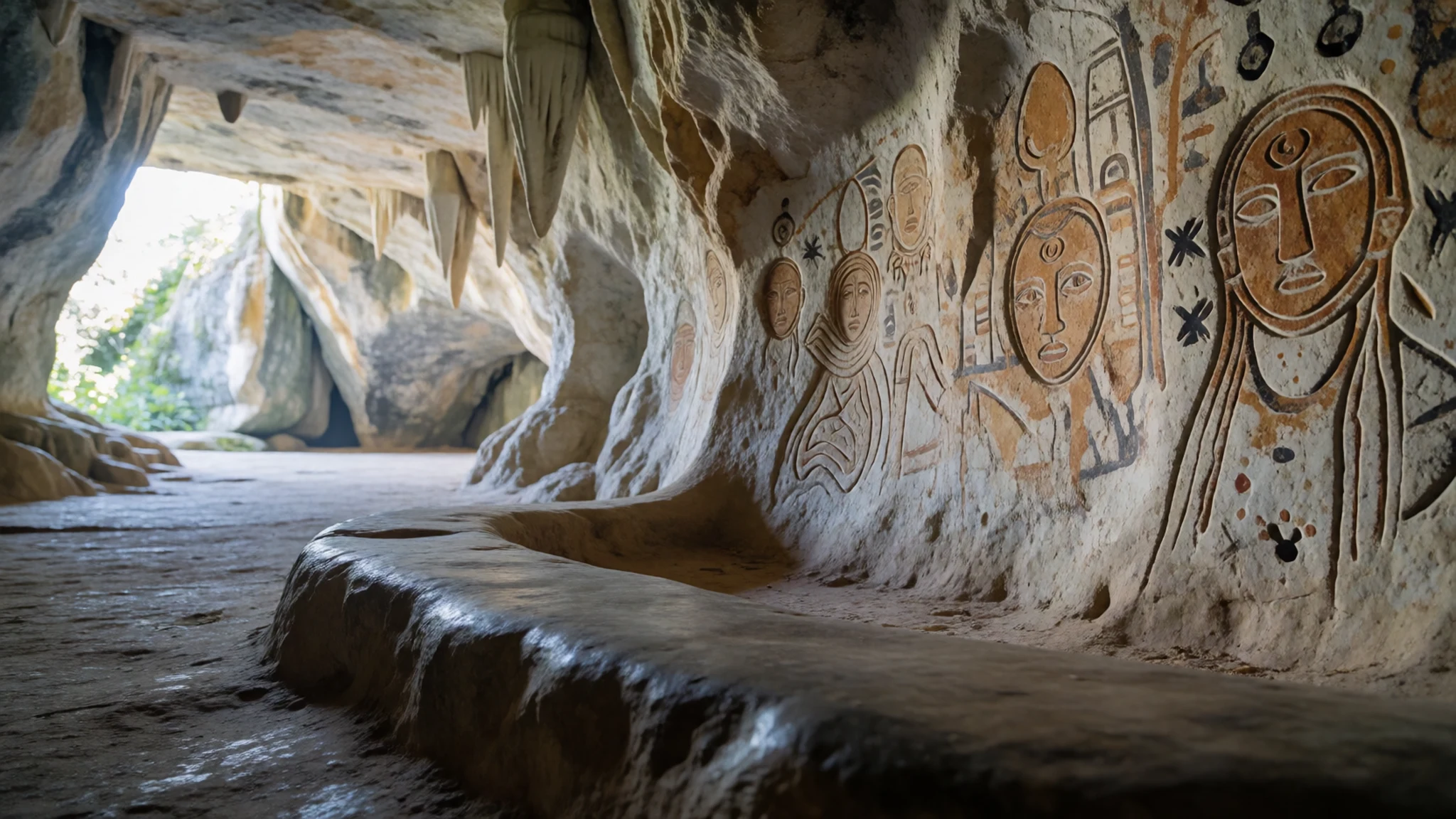
- Mona ground iguana — plateau scrub
The Mona ground iguana is the large lizard of Mona Island's plateau, often seen basking on pale rock or moving through cactus and scrub. Adults are heavy-bodied and unhurried, and they are wild animals of a reserve, not a photo prop. Their presence is a reason landing is controlled. The respectful distance is to keep food packed away and leave the animal's path clear.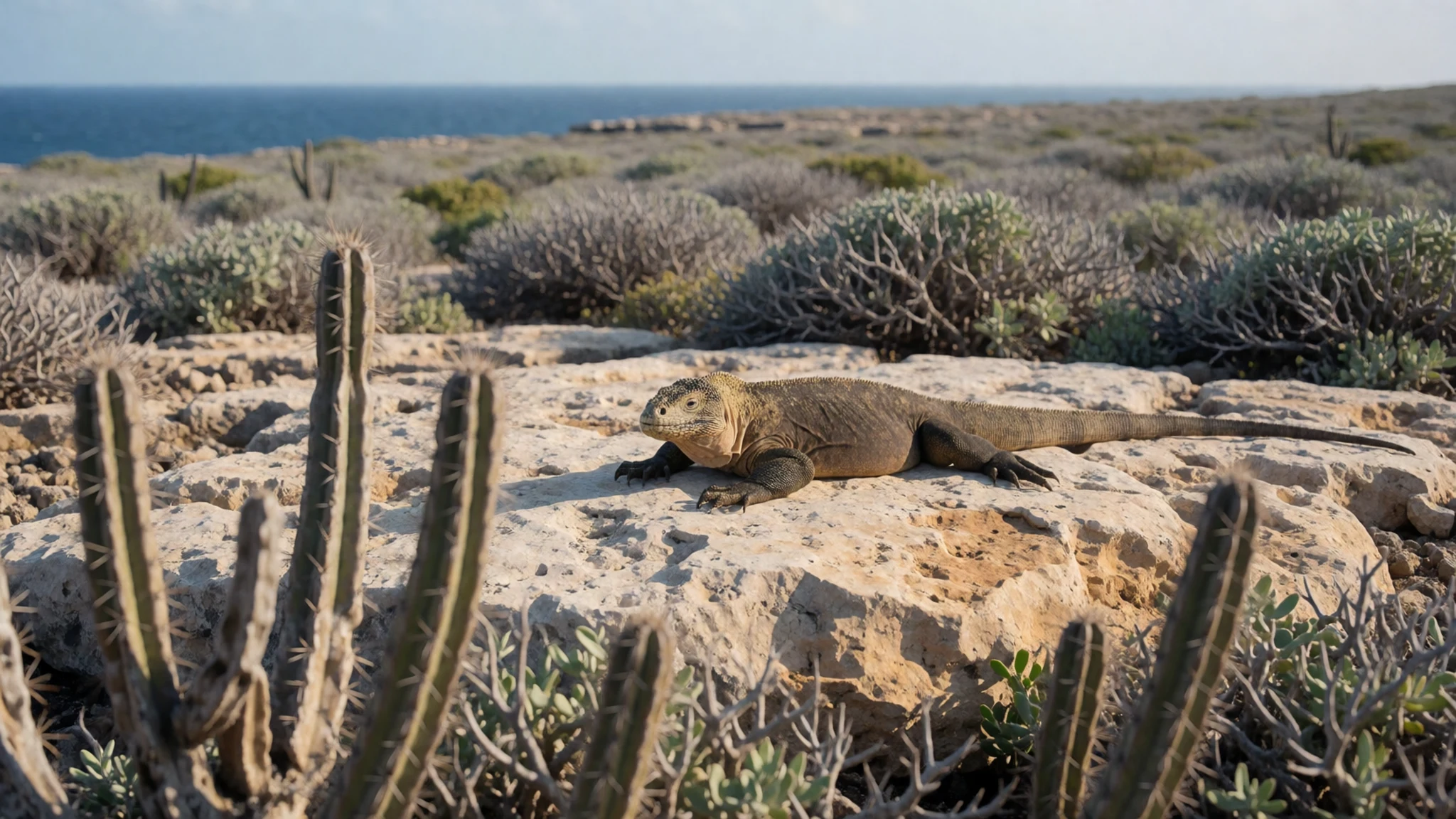
- Mona boa — plateau and crevices
The Mona boa is a small constrictor found on Mona Island and not on the main island of Puerto Rico. It shelters in limestone crevices and among the roots and cactus of the plateau, and it is far easier to miss than the iguana. The snake needs room and must not be handled; it is part of why the island is closed to casual landing.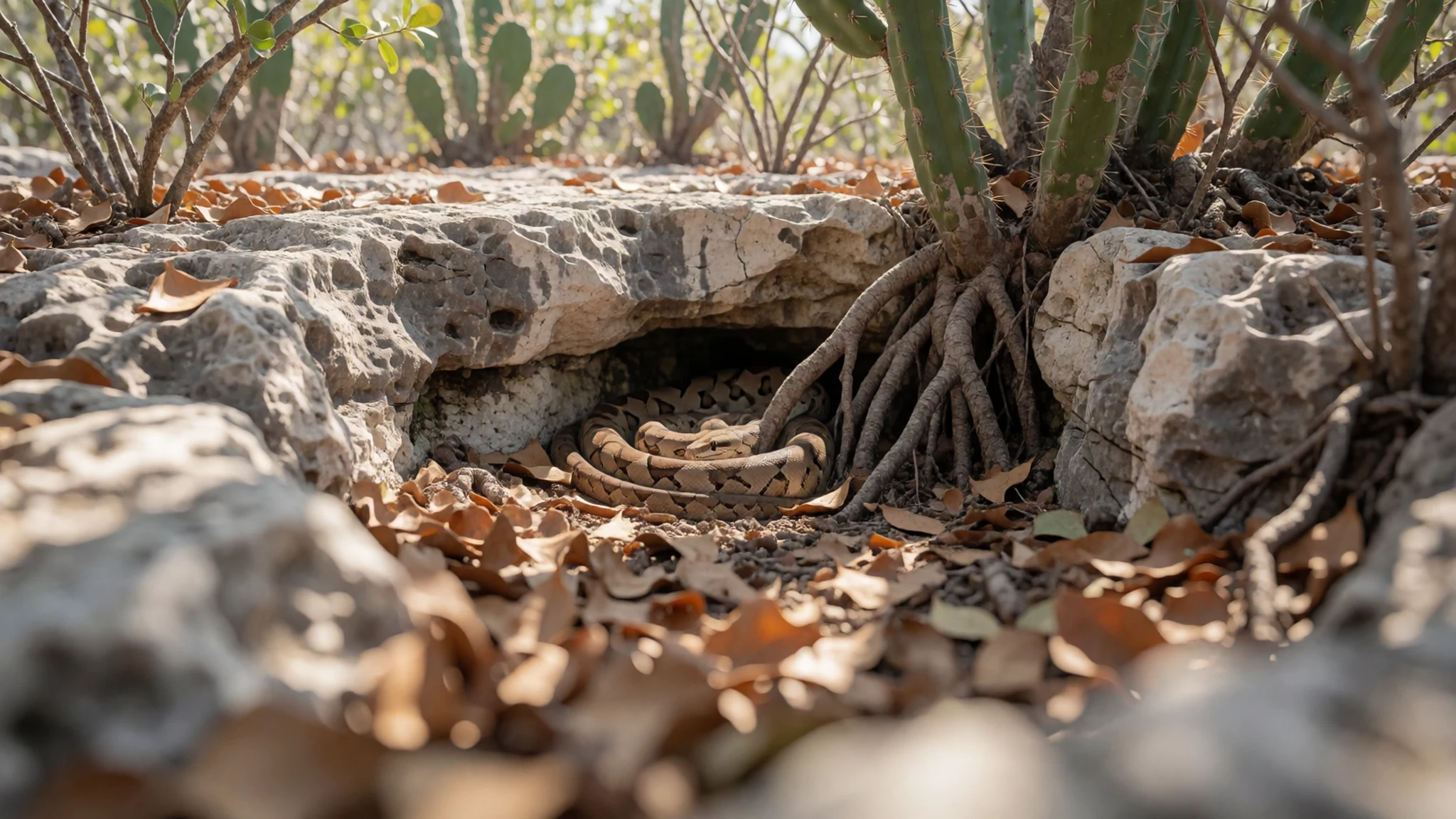
Culture
Culture on Mona Island is a culture of absence and of care. There is no plaza, no festival calendar and no resident family to host a visitor. What remains in place is Taíno heritage on the cave walls, a memory of ships in the Mona Passage, and the working culture of rangers and scientists who keep the reserve. The paintings and engravings were made by people who knew this limestone long before the lighthouse. They are ancestry in the rock, and they ask for stillness.
The living culture around that older layer is the culture of the permit. Puerto Rican campers, researchers and boat crews share a landing governed by rules: where to sleep, what to carry out, which animals have the right of way. Evenings are cook-stoves and low voices. Spanish is the language of the rangers and of most people who cross from the main island, and the names of coves and caves follow that Spanish map. Kindness here looks like self-reliance. No shop will rescue a plan that fails.
On Mona Island, do not touch cave art or wildlife, and carry every scrap of food and waste away with you when you leave.
What to wear
Dress on Mona Island begins with a history that has no living wardrobe. Taíno people in the wider Caribbean wore cotton cloth, including the nagua, a wrap worn by women, along with body paint, shell and stone ornaments; men often went with little cloth. None of that is costume for a modern landing, and there is no community here that dresses for a feast day or a procession.
What people wear on Mona Island now is field clothing. Rangers and researchers work in light trousers, long-sleeved shirts, hats and boots that can take cactus spines and limestone. Campers look much the same, with swimwear underneath for the beach and a layer for the evening breeze on the plateau. Colours fade quickly in this sun. Cotton and other light fabrics make more sense than heavy street clothes, and a closed shoe survives the rock better than a thin sandal away from the sand.
A visitor should pack for heat, glare and sharp ground. A visitor needs a hat, a long-sleeved shirt, swimwear for the cove, and sturdy footwear for the plateau and cave mouths. There is no shrine dress code; the sun on bare shoulders is the practical risk. Reef-safe habits belong with the clothes: whatever washes off skin ends on the coral.
What to eat
- Mofongo — kiosks and eateries in Mayagüez and Cabo Rojo
On the way to Mona Island, eat mofongo: fried green plantain mashed with garlic, oil and pork crackling, often beside broth or prawns. Kiosks and casual eateries in Mayagüez and Cabo Rojo serve it. The island itself has no kitchen, and the mash travels poorly.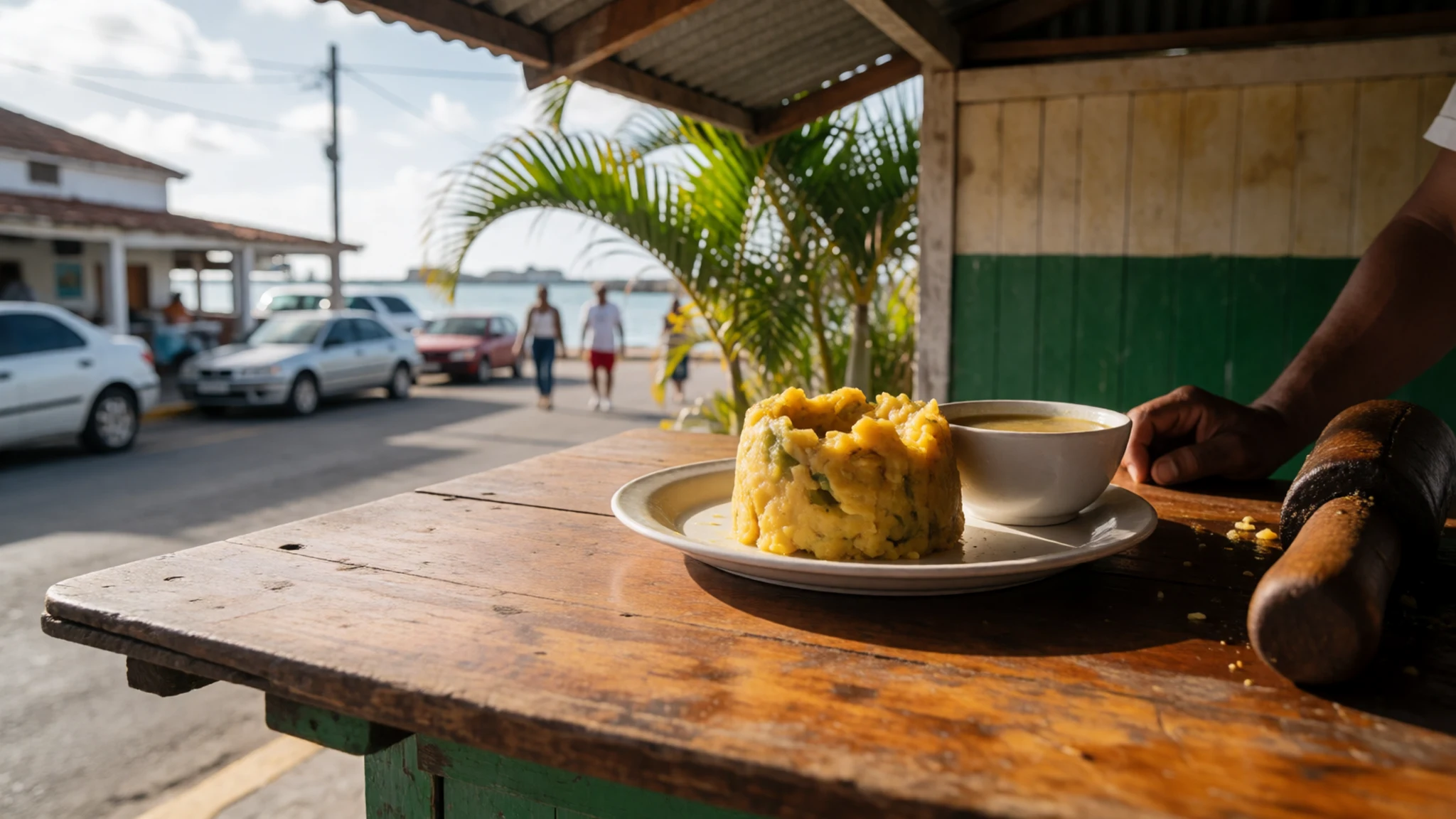
- Bacalaítos — coastal kiosks in Mayagüez and Cabo Rojo
Bacalaítos are crisp fritters of salted cod in a flour batter, fried at coastal kiosks around Mayagüez and Cabo Rojo. Mona Island has no batter stall; the camp version is salt fish you packed and pan-fried on the stove.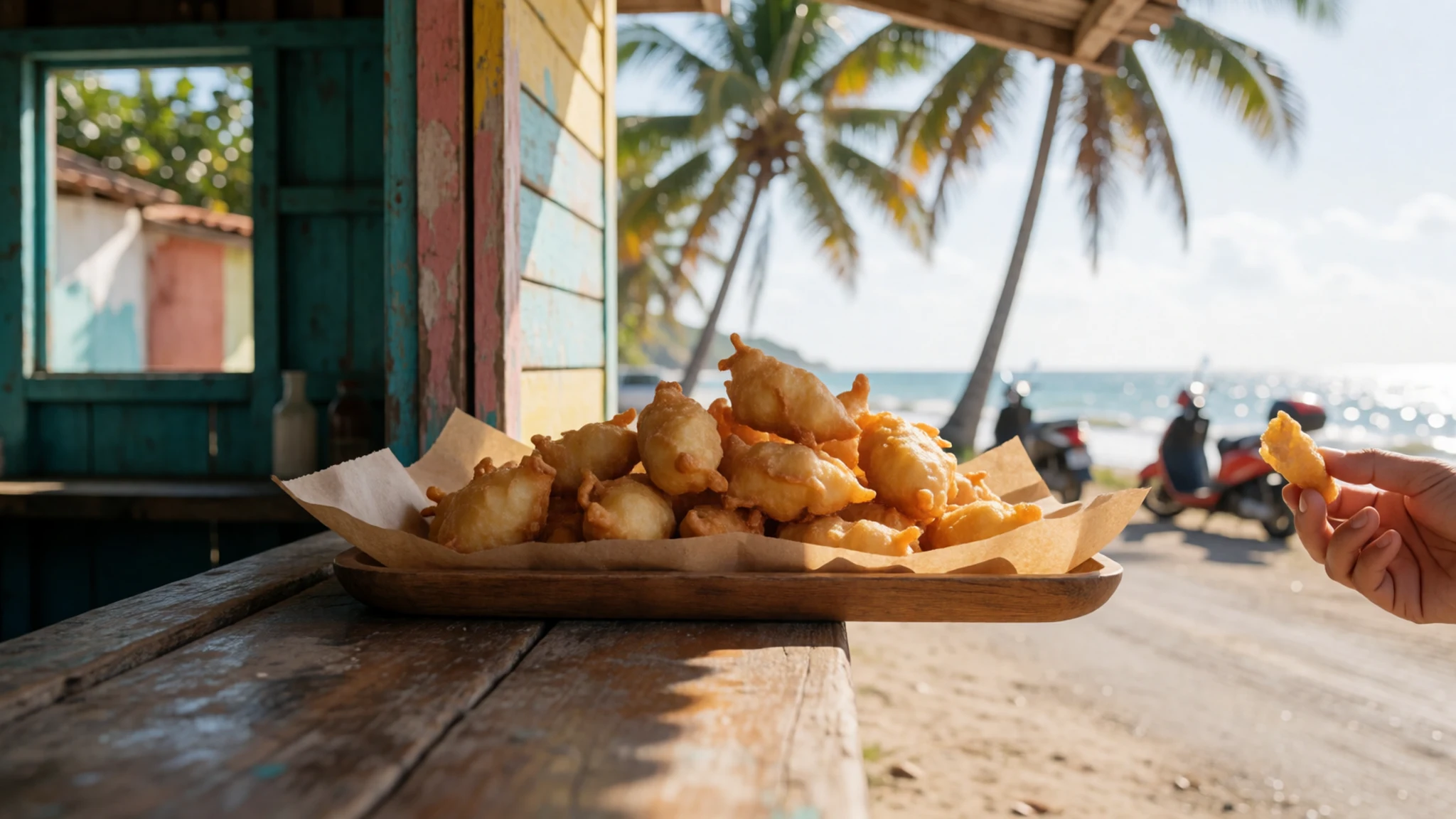
- Lechón — roadside stands in western Puerto Rico
Lechón is slow-roasted pork with crackling skin, carved at roadside stands in western towns such as Mayagüez. Eat it before embarking. A whole roast will not cross to Mona Island; pork there is only a cooked portion in the cool box. - Tostones — kiosks in Mayagüez and Cabo Rojo, or a camp stove
Tostones are green plantains flattened and fried until the edges crisp, served with garlic sauce at kiosks in Mayagüez and Cabo Rojo. On Mona Island, pack green plantains, oil and a pan and fry them at camp, because the beach has no stall. - Arroz con gandules — eateries in Mayagüez, or a camp stove on the island
Arroz con gandules is rice cooked with pigeon peas, sofrito and olives, a home plate of Puerto Rican cooking. Buy it at an eatery in Mayagüez before departure, or simmer a pot on Mona Island's camp stove if the rice and peas came across.
Plan it
Best time. Mona Island takes campers from May through November, not December to April, which is hunting season; February and March are the most comfortable, September the hottest and November the wettest. Late summer and autumn bring the hurricane season, when the passage can close to small boats. The rock is hot and exposed in every month; rain, swell and whether a boat will run are what change.
How long. 3–4
Getting there. Mona Island has a small airstrip that needs a special permit, and no scheduled ferry to lean on. Most visitors fly into Puerto Rico, continue to the west coast around Mayagüez or Cabo Rojo, and cross the Mona Passage by chartered boat to the landing beach. Dates depend on the operator and on the sea. Confirm the boat and the reserve permit with the official channels before you fix a plan.
Budget. high
Tips
- Secure the reserve permit and the boat together; one without the other does not get you ashore.
- Bring all drinking water and all food. There is no shop and no tap to rely on.
- Start walks early in the day. The plateau has little shade and the sun is direct.
- Carry cash on the main island for kiosks and boat payments; do not expect a card machine on Mona Island.
- Pack out everything, including food scraps. Animals on the reserve should not learn a camp.
Etiquette
- Do not touch cave paintings or engravings, or mark the walls in any way.
- Do not feed, chase or handle iguanas, snakes or turtles.
- Keep voices and lights low at night so nesting beaches stay dark and quiet.
- Take all rubbish, food waste and leftover supplies back to the main island.
Nearby
Sources
- Wikidata (CC0)
- Wikipedia: Mona Island (CC BY-SA 4.0)
- Wikivoyage: Mona Island (CC BY-SA 4.0)
Wildlife
- Mona ground iguana (animal)
The Mona ground iguana is a big, chunky lizard that looks rather like a small dinosaur, and it lives nowhere else on Earth. On Mona Island you may find it up on the plateau, warming itself on pale rock or picking a path through cactus and scrub. It is critically endangered, so every sighting is a privilege. Keep a respectful distance, stay quiet and still, go with a guide, and never offer it food. - Mona boa (animal)
The Mona boa is a small snake that wraps itself around its meals and squeezes, and it is a true islander: it lives on Mona Island but is absent from the larger main island of Puerto Rico. Snakes are shy, so walk softly, keep well back, and let a guide lead the way. Never touch it or feed it. Simply enjoy the rare sight and leave it undisturbed.