Moab
Moab, United States
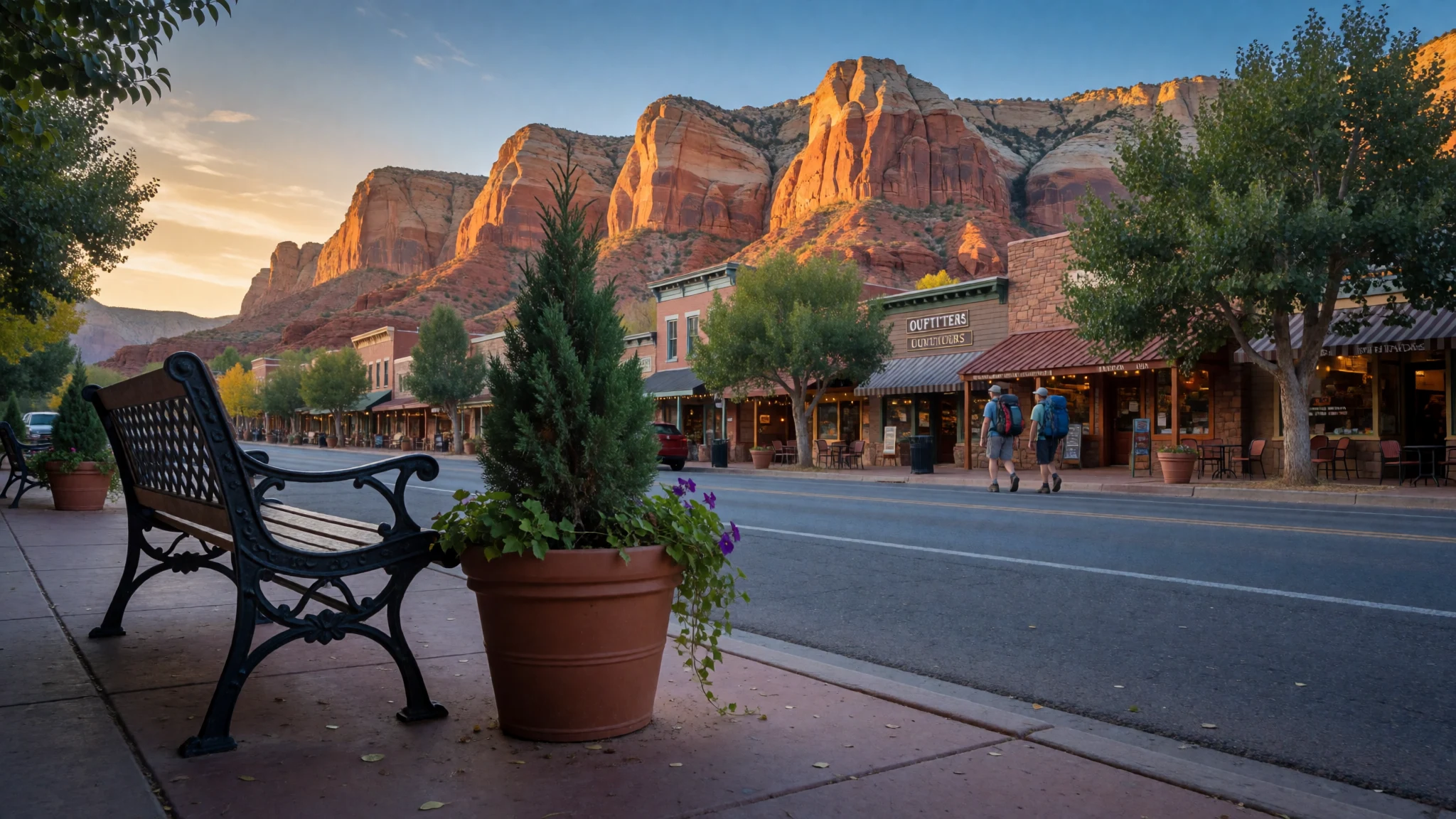
Moab is a small Utah town on the Colorado Plateau, set below red cliffs and a short drive from two national parks.
The place
Moab is a small town on the Colorado Plateau in eastern Utah, sitting just south of the Colorado River at an elevation of 1,227 m. The 2020 census counted 5,366 residents, which makes it the largest city in Grand County and its county seat. Main Street runs through the middle of town beneath red rock cliffs, and most of the shops, outfitters, cafés and motels are strung along it. The surrounding country is dry, open and heavily sculpted by wind and water, and that scenery is the reason Moab works as a destination. Arches and Canyonlands National Parks are the main draw, with the gate to Arches only a short drive north of the town centre. Mountain bikers come for the network of trails, the Slickrock Trail among them, while off-roaders arrive for the annual Jeep Safari. Rafting trips on the river leave from the same cluster of outfitters. Moab also hosts a regional campus of Utah State University, which gives it a few more year-round residents than a pure tourist stop would have. In practice the town is a base: people sleep, eat, repair bikes and stock up on water here, then spend the day out in the canyons. It is busy in spring and autumn, hot in high summer and noticeably quieter in the depths of winter. Roads lead north to the interstate, south towards Monticello, and east along the river towards the Colorado line.
Its story
Moab's recorded history begins well before the town does. The Colorado River crossing here served the Old Spanish Trail for a couple of decades before the middle of the nineteenth century, when traders and travellers needed somewhere to get across. Latter-day Saint settlers then tried to run a trading post at the crossing, called the Elk Mountain Mission, to do business with those travellers; the venture did not last. The town itself was founded in 1878, and residents soon settled on the name Moab. Nobody is certain why. One explanation is that the first postmaster, William Andrew Peirce, saw the biblical land of Moab, east of the Jordan, as a match for a remote far country, which is how he thought of this corner of Utah. Another traces the name to a Paiute word, moapa, usually glossed as mosquito. The name was never universally loved, since the Bible speaks harshly of the Moabites, and some residents campaigned to replace it. One petition asked for Vina and another proposed Uvadalia. Both failed, and Moab stuck. Later came uranium. A yellow Uranium Building still stands on Main Street, and old photographs show a uranium reduction mill and a county sign pitching the area to manufacturers. Tourism now defines the town's image, but traces of that mining past are easy to spot for anyone who looks along Main Street and in the local museum.
What to see
- Main Street and the Uranium Building — Downtown Moab
Moab's Main Street is the easiest place to get a feel for the town, with red cliffs rising behind the shopfronts. The yellow, two-storey Uranium Building is a reminder of the mining years, and a rock shop nearby adds eccentric local colour. Walk it early, before the traffic builds.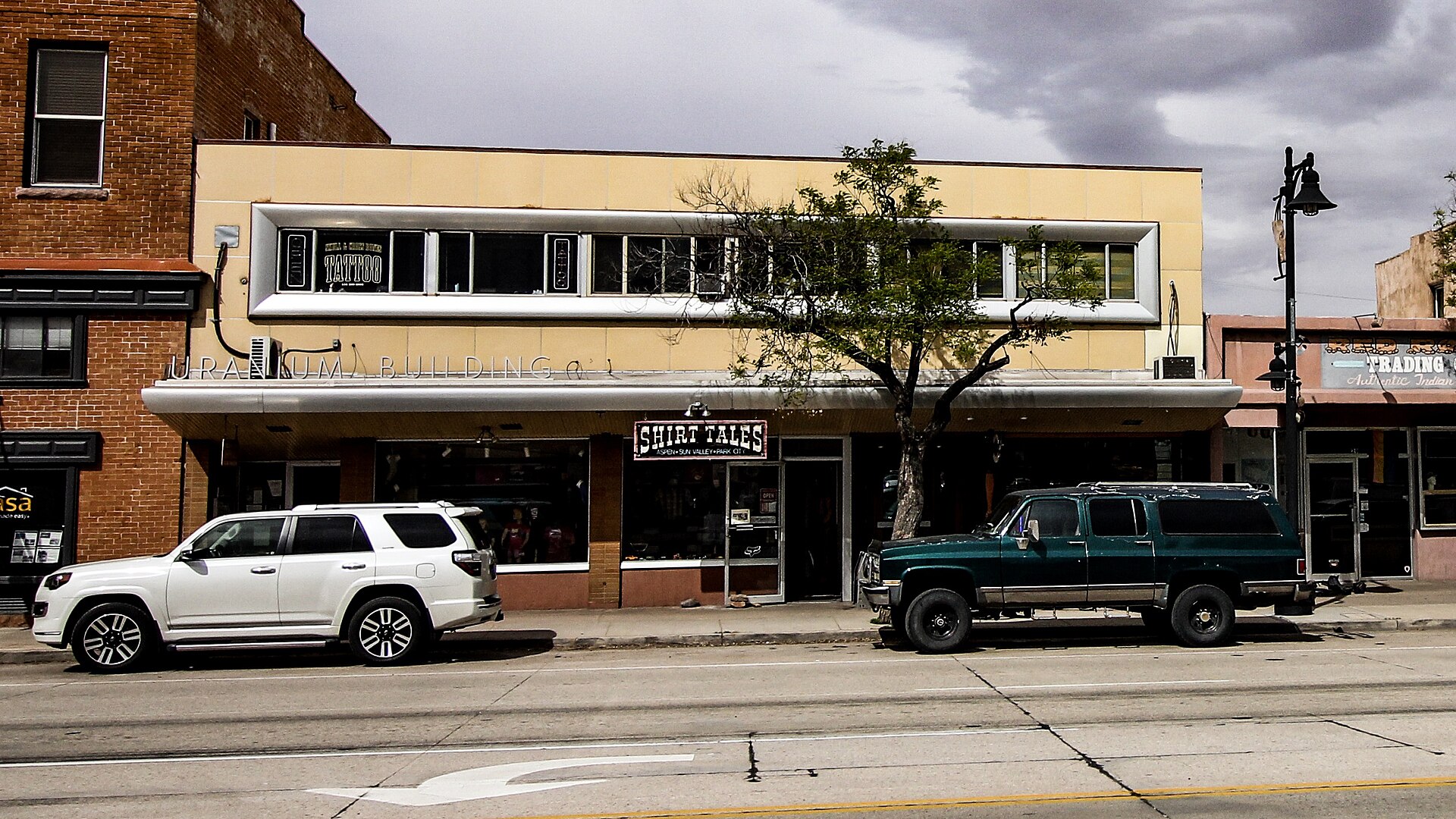
- Dan O'Laurie Museum of Moab — Downtown Moab
This local museum covers the history of Moab through exhibits on geology, palaeontology, mining, settlement and anthropology. It is a sensible first stop on a hot afternoon, and it explains the rocks, fossils and uranium workings that visitors will otherwise only glimpse from the road. Check opening times before going. - Mill Canyon Dinosaur Tracks — North-west of Moab
A short, moderate nature trail north-west of town leads to dinosaur fossils and petrified wood lying in the Morrison Formation, in their natural setting rather than behind glass. Bring water and a hat, since there is little shade, and keep to the path so the fossils stay where they are. - Slickrock and Sand Flats Road trails — Sand Flats area, east of town
The Slickrock Trail is one of the best-known mountain bike routes in the world among riders, and it starts from Sand Flats Road just outside town. The sandstone surface grips well but the climbs are punishing in heat. Walkers and off-road drivers use the same area, so expect company. - Colorado River rafting — Along the Colorado River
Outfitters in Moab run rafting trips and back-country excursions on the Colorado River, from gentle floats to livelier whitewater depending on the season. A day on the water is a cooler way to see the canyon walls, and one of the more relaxed ways to spend a summer afternoon.
Culture
Moab is a small outdoors town, and its culture runs on festivals, trails and a steady stream of newcomers who stayed. The Moab Music Festival takes place each September and was started by a group of musicians from New York, who brought chamber music into the red rock setting. The Moab Folk Festival fills venues with folk musicians every November. The town also hosts a Pride festival, which began with a visibility march and has grown since, and the Skinny Tire Festival, a road cycling event held each March that raises money for cancer research and survivors. The Moab Art Walk spreads local artists' work across several venues through the year. Alongside these sits an older ranching and mining heritage, still visible in the museum, the old shopfronts and the talk in local cafés. Cyclists, climbers, river guides and off-road drivers share the same few streets, and the mood is relaxed, practical and sun-bleached rather than polished. Mornings start early to beat the heat, and evenings are for a beer and a map. Moab and its parks lie in country that was home to Indigenous peoples long before the town, and local museums are a good place to learn about that. Etiquette line: stay on marked trails and established rock surfaces in the desert around Moab, because the fragile soil crust and old rock art are easily and permanently damaged by careless footsteps.
What to wear
Moab has no single traditional costume of its own, and it would be wrong to invent one. The wider region carries older textile traditions, including the weaving and silverwork of Native American peoples, and the ranching past shows up as denim, work boots and felt or straw hats on some older residents, though that is a habit more than a uniform. What people wear now is practical outdoor clothing: T-shirts from the local gift shops, shorts, trail shoes, sun hats, sunglasses and cycling kit, with fleeces or light jackets for cool desert mornings and evenings. Nobody dresses up for dinner, and a clean pair of walking trousers is as formal as it gets. A visitor should dress for sun and dry heat first. Summer in Moab can get very hot, so bring light, loose, long-sleeved layers that protect the skin, a wide-brimmed hat, sunscreen and a refillable water bottle. Closed shoes with a firm grip matter more than anything else, since sandstone, sand and loose gravel are all underfoot, and hiking boots help on longer trails. In spring and autumn pack a warm layer for early starts. There are no religious dress codes on the trails or in town, though a shirt is expected in cafés and shops.
What to eat
- Pizza — Family restaurants along Main Street
Pizza is an easy family dinner after a day on the trails, and the portions suit hungry riders and hikers. Several Main Street restaurants serve it, some with a pizza bar and a sports screen in the corner for a casual evening. - Tortellone with Alfredo or pesto — Italian restaurants in downtown Moab
Filled pasta in a rich cream sauce, or tossed with chicken and pesto, is a well-liked order at the town's Italian restaurants. It is filling, carb-heavy fuel that suits a long day outdoors, and sits comfortably next to a glass of local wine. - Brewery pub food and local beer — The brewpub on the main road through town
Moab's brewpub has served food and house beer for decades, with separate dining and bar areas. Burgers, sandwiches and a cold glass of beer are the standard order after a hot day, and the bar side has billiards and a television. - Utah wine from Spanish Valley — The liquor store and restaurant wine lists
Spanish Valley Vineyards makes Cabernet Sauvignon, Syrah, Riesling and Gewürztraminer nearby. The bottles are sold at the Moab liquor store, and some restaurants list them on their menus, so ask for a local glass with dinner. - Café breakfast — Cafés on and around Main Street
Eggs, pancakes, burritos and strong coffee set riders and hikers up for an early start. Cafés on and near Main Street fill quickly at the weekend, so go early or be ready to queue for a table.
Plan it
Best time. April–May and September–October, when days are warm rather than punishing and the trails are at their best. Summer in Moab can get very hot, so drink extra fluids and start outdoor activities at first light. Winter is quiet and cold, with fewer visitors and shorter days.
How long. 3–4
Getting there. No scheduled passenger rail reaches the town itself: Amtrak's California Zephyr stops at Green River, Utah, from where a taxi or bus service covers the last leg, so book it ahead. Many visitors fly into Grand Junction, Colorado, or Denver and drive. By road, the river road from the Cisco side is scenic but winding and narrow, so take the main highway from the north after dark.
Budget. mid
Tips
- Book accommodation and popular tours well ahead for spring and autumn weekends, and for the Jeep Safari and festival dates
- Start hikes and park visits at first light to avoid the midday heat and the biggest crowds
- Carry more water than seems necessary, plus sunscreen and a hat, even on short walks
- If you take the scenic river road, drive it in the light of morning or late afternoon and watch for cyclists near town
- Check the official city site, https://moabcity.org/, and the national park pages for current opening times and any entry fees
Etiquette
- Stay on marked trails and established rock surfaces to protect the desert soil
- Give cyclists plenty of room on roads into and out of town
- Carry out all rubbish and take care with fires and camping rules in the backcountry
Nearby
Sources
- Wikidata Q130134 (CC0)
- Wikipedia: Moab, Utah (rev 1380581428) (CC BY-SA 4.0)
- Wikivoyage: Moab (rev 5411306) (CC BY-SA 4.0)
- Photo: Uranium Building exterior, Moab, UT — G. Edward Johnson (CC BY 4.0)
- Photo: Moab, Utah downtown — Quintin Soloviev (CC BY 4.0)
- Photo: Steen's Uranium Reduction Co., Moab — Zurhama (CC BY 3.0)
- Photo: County-sponsored sign promoting manufacturing in Moab — Boyd Norton (Public domain)
- Photo: Uranium Building, Moab — Mramoeba (CC BY-SA 4.0)
- Photo: Lin Ottinger's eccentric rock shop, Moab — Mramoeba (CC BY-SA 4.0)
- Photo: Main Street of Moab — Environmental Protection Agency (Public domain)
- Photo: 100 North and Main St, Moab — G. Edward Johnson (CC BY 4.0)


