Mendenhall Glacier
Mendenhall Glacier, United States
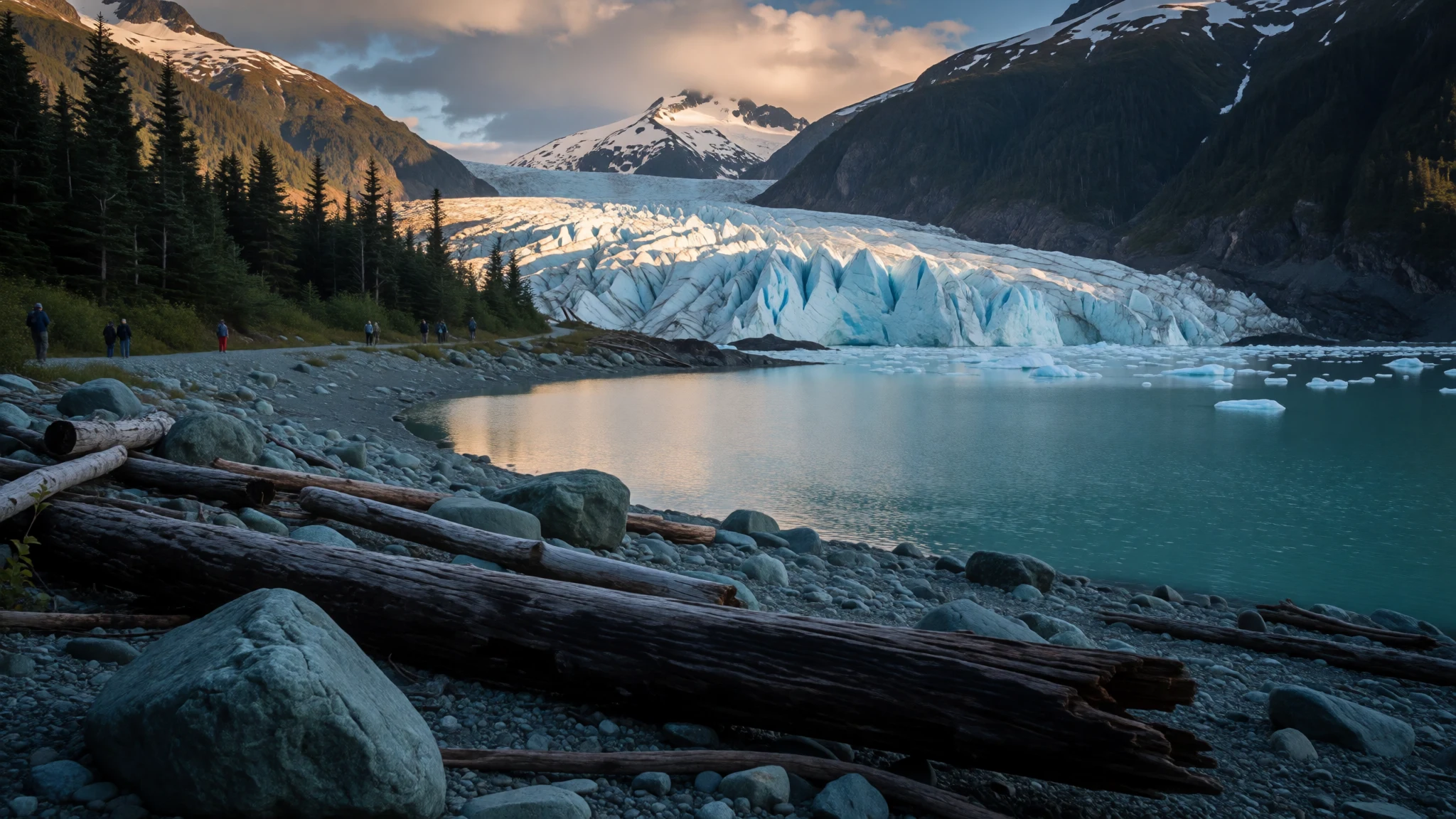
Mendenhall Glacier is a huge river of ice you can see from a lakeshore path just outside Alaska's capital, retreating year by year.
The place
Mendenhall Glacier lies in Mendenhall Valley, about 20 km from downtown Juneau, the capital of Alaska, in the state's southeast panhandle. Its Tlingit name is Áakʼw Tʼáak Sítʼ. The ice runs for roughly 22 km, descending from the Juneau Icefield and ending in Mendenhall Lake, where lumps break from the face and drift on the water. The glacier and the land around it form a recreation area within Tongass National Forest, managed by the US Forest Service, so what most visitors meet is a lakeshore with viewing platforms, forest paths and a visitor centre rather than raw wilderness. Juneau itself is squeezed between steep coastal mountains and the sea, and no road or rail connects it to the rest of the continent. Arrival is by plane, ferry or cruise ship, and the ships shape the summer: several thousand passengers can come ashore on most days between May and September, and the glacier is a standard stop on the itinerary. The weather belongs to a temperate rainforest, meaning cloud, drizzle and a cool breeze off the ice are normal even in midsummer, and a bright day is a bonus rather than a promise. The ice changes with the light, looking dull grey under cloud and blue in cracks and caves where it is densely packed. From the lake edge the face looks wide but quiet, and the occasional crack or splash is the only sign that it is moving.
Its story
Mendenhall Glacier has been shrinking for centuries, and its story is mostly one of retreat. Its front has pulled back by well over 3 km since around 1500, and the lake now filling the space at its foot only appeared in 1929, once the ice had withdrawn far enough to leave a basin for meltwater. Researchers working on the Juneau Icefield have tracked the glaciers that drain it since 1942, which gives Mendenhall a long record of measurement. Their verdict on the snout is blunt: it loses more ice than it gains and is expected to keep receding. There is a twist higher up. A warmer atmosphere carries more moisture inland, and where the icefield is cold enough that moisture falls as snow, feeding the ice from above. For a while that extra snow could slow the retreat or even briefly steady the front. The effect depends on the summit staying cold, though, so continued warming would eventually switch it off. The Tlingit name for the glacier is Áakʼw Tʼáak Sítʼ, and the ice now sits inside a recreation area run by the US Forest Service. Juneau, capital of Alaska since 1906, treats it as its showpiece. Rock scraped bare by the ice, and young plants colonising the ground behind its retreating edge, show how recently the land was covered and how quickly it is still changing.
What to see
- Mendenhall Glacier Visitor Centre — Mendenhall Valley
The visitor centre, run by the US Forest Service, gives a clear view of the glacier and its lake without any hiking. Exhibits explain how the ice formed and why it is retreating. Reaching the ice itself needs a long walk, so this is the easy option for a short stop.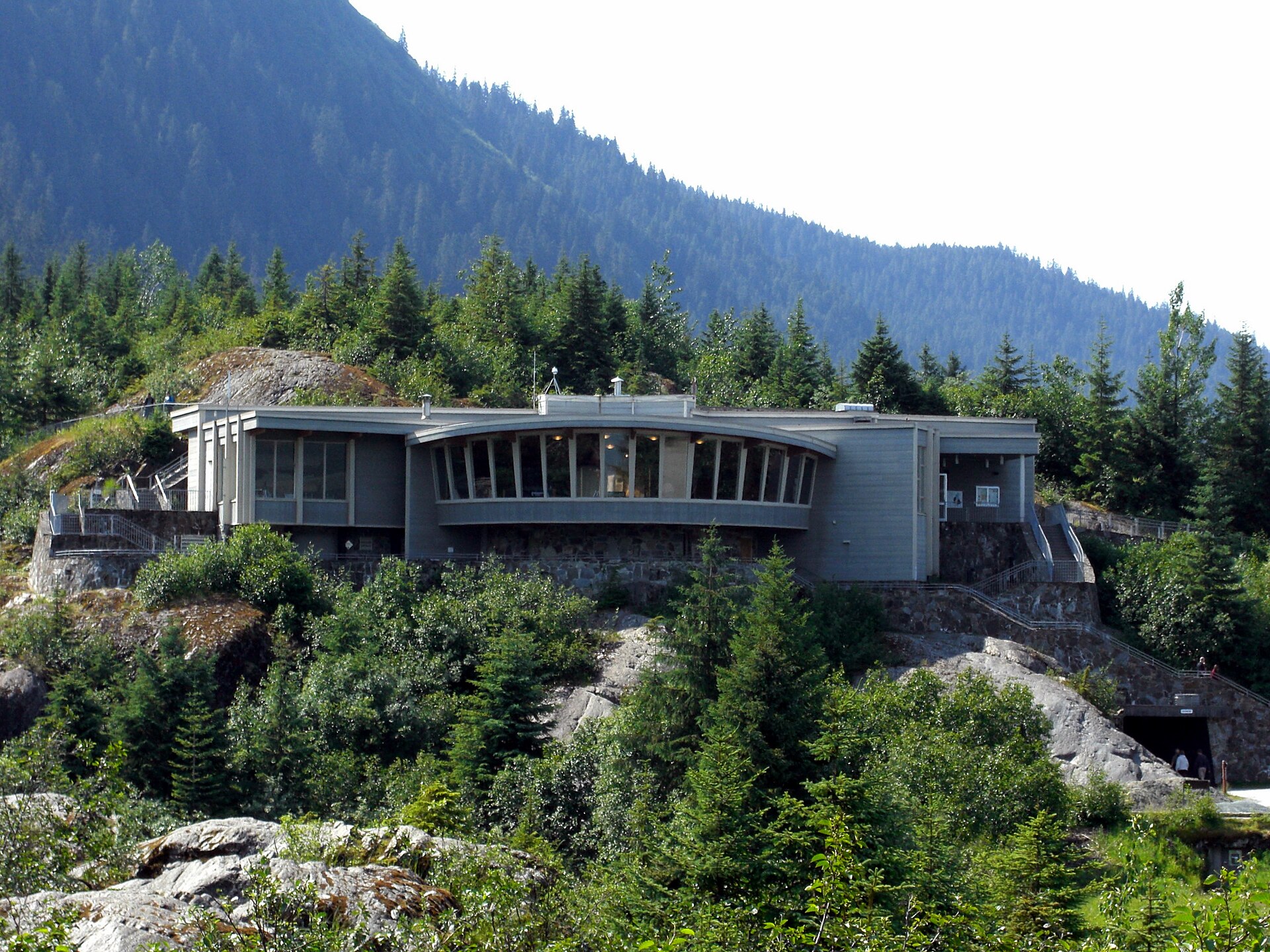
- West Glacier Trail — West side of Mendenhall Lake
The West Glacier Trail suits people comfortable on rough ground. It leads to a lookout and on towards the ice itself, where walking on the glacier is possible but crevasses are a real danger and must be avoided. Sturdy boots matter, weather can turn quickly, and anyone unsure should consider a guided outing.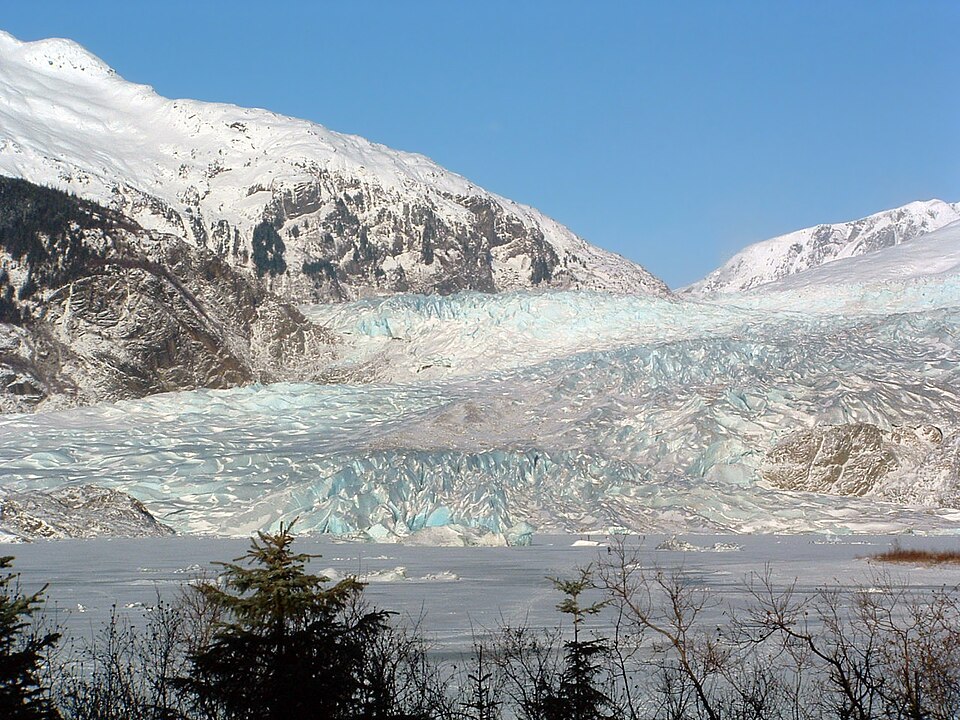
- Upside-Down Forest — Mendenhall Valley
The Upside-Down Forest is a strange sight south of the glacier, where ancient tree stumps were uncovered by the retreating ice in their original growth position. It makes a short, quirky stop between the glacier and downtown, and works well when cloud hides the ice and the viewpoints disappoint. - Alaska State Museum — Downtown Juneau
In downtown Juneau, the Alaska State Museum covers the state's history, Native cultures, wildlife, industry and art under one roof. It is about a ten-minute walk from the cruise ship terminal, so it suits a wet afternoon or time before a sailing, and gives the glacier a human setting. - Saint Nicholas Russian Orthodox Church — Downtown Juneau
Saint Nicholas Russian Orthodox Church is a small octagonal building in downtown Juneau, built by Tlingit worshippers in 1893. It reflects the link between the Russian Orthodox mission and Tlingit communities, including Father Ivan Veniaminov's translation of the Bible into Tlingit. Check posted visiting arrangements before going.
Culture
Around Mendenhall Glacier the culture is that of Juneau, a small capital city set in temperate rainforest, where rain is simply the weather and not a subject for grumbling. Visitors who complain about it will probably collect a few eye-rolls. The Tlingit presence here is far older than the town: the glacier's own name is Áakʼw Tʼáak Sítʼ, and Tlingit heritage runs through the state museum's displays and the small Orthodox church in town, a legacy of the Russian period in Alaska. Local life is outdoors-minded, practical and informal. People fish, hike, kayak and camp, and a Forest Service campground sits on the shore of Mendenhall Lake. In summer the town swells with cruise passengers, and residents live with the crowds as part of the season, though they appreciate visitors who treat the place as more than a backdrop. Southeast Alaska has no road links to the wider continent, and that makes Juneau feel self-reliant and slightly apart, with ferries, floatplanes and shipping holding everything together. Evenings in downtown bars can mean live music and open mic nights, and conversation with locals comes easily. Asking about everyday life, the weather and the changing ice is usually welcomed. Stay on the marked paths, keep well back from the glacier face and the lake edge, and carry all your litter out, because this is a protected recreation area that locals care about.
What to wear
Around Mendenhall Glacier, the traditional dress that matters is Tlingit regalia, worn at ceremonies and gatherings rather than in daily life. Its textiles include Chilkat and Ravens Tail weaving, made from mountain goat wool and cedar bark in bold black, yellow and blue-green designs, along with button blankets of dark wool decorated with clan crests and shell buttons. Woven spruce-root and cedar-bark hats also belong to the tradition. Museum cases in Juneau are the easiest place for a visitor to see them. Day to day, people in Juneau dress for wet weather: waterproof jackets, fleece, wool hats and tall rubber boots, with clothes chosen for comfort and dryness before style. Nobody looks twice at mud on trousers. A visitor should do the same. Bring a proper rain jacket, warm layers that dry quickly and a hat and light gloves, because the air off the ice is cool even in summer. Waterproof shoes or boots with good grip matter on wet gravel, tree roots and the rougher trails, and the West Glacier Trail needs sturdier footwear still. Cotton soaks up rain and stays cold, so synthetics or wool work better. There is no strict dress code, though covered shoulders and knees are polite inside the Orthodox church in town.
What to eat
- Wild Alaskan salmon — Seafood eateries and fish counters in downtown Juneau
Salmon is the dish most visitors come for, served grilled, baked or smoked. Look for it at fish counters in supermarkets and at seafood eateries around downtown Juneau, and for vacuum-packed smoked fillets in shops, which travel well and make easy gifts. - Halibut and chips — Casual seafood eateries by the downtown waterfront
Halibut is a firm white fish, usually fried in batter and served with chips, lemon and tartare sauce. It is an easy, filling meal after a wet walk, and plenty of simple eateries near the waterfront cook it to order. - Dungeness crab — Seafood restaurants and fish counters in downtown Juneau
Local crab is sold cooked, as whole crab or picked meat, and appears in chowders, cakes and sandwiches. It is usually a splurge rather than an everyday meal, but a bowl of crab chowder on a cold day is a good middle ground. - Filipino deli dishes — Supermarket delis in downtown Juneau and Mendenhall Valley
Juneau has a sizeable Filipino community, and some supermarket delis make Filipino food on the premises, such as noodles, rice dishes and fried snacks. It is cheap, quick and filling, and handy for a packed lunch before a glacier walk. - Bakery pastries and coffee — Neighbourhood bakeries in Mendenhall Valley
Small neighbourhood bakeries in the valley sell pastries, bread and hot coffee, which is useful before an early start. Pick something warm and sweet to carry to the lakeshore, then eat it under cover if the drizzle sets in. - Locally brewed beer — Downtown bars on South Franklin Street
Alaskan beer is a fixture of evenings in Juneau, and the bars along downtown's South Franklin Street are where locals gather. Some nights bring live music or open mic sessions. Summer evenings can be crowded and loud, so go early for a quieter pint.
Plan it
Best time. May to September, when ferries and cruise ships run, days are long and the trails are most accessible; expect cloud and rain at any point, since Juneau is a temperate rainforest, and the busiest crowds from ships fall in the middle of this period.
How long. 1–2
Getting there. Fly into Juneau International Airport, or arrive by Alaska Marine Highway ferry or cruise ship, as no road or rail reaches the city. The last leg is a bus or taxi of about 20 km from downtown or the ship dock to the Mendenhall Glacier Recreation Area.
Budget. high
Tips
- Check the official US Forest Service site for opening hours, fees and trail conditions before you go
- Aim for early morning or late afternoon, as midday is busiest when several ships are in port
- Pack waterproofs, warm layers and sturdy shoes, since the weather can change within an hour
- Book flights, ferries and any glacier tours well ahead, as Juneau can only be reached by air or sea
- Carry water and snacks for the trails, and keep a small amount of cash for local shops
Etiquette
- Stay on marked trails and well back from the glacier face and lake edge
- Take all litter away and do not disturb wildlife
- Keep voices low at viewpoints and let others enjoy the view
Nearby
Sources
- Wikidata Q1920336 (CC0)
- Wikipedia: Mendenhall Glacier (rev 1362422572) (CC BY-SA 4.0)
- Wikivoyage: Juneau (rev 5406032) (CC BY-SA 4.0)
- Photo: Mendenhall Glacier (Winter) (CC BY 3.0)
- Photo: Map of Juneau, Alaska (OpenStreetMap contributors) (CC BY-SA 2.0)
- Photo: Mendenhall Glacier (Winter; close) (CC BY 3.0)
- Photo: A glacier cave under Mendenhall Glacier (Commander John Bortniak, NOAA Corps) (Public domain)
- Photo: Mendenhall Glacier in March, 1953 (Jackewing) (CC BY-SA 4.0)
- Photo: Seamen from the USS Rombach exploring the glacier, 1953 (Jackewing) (CC BY-SA 4.0)
- Photo: Mendenhall Glacier Visitor Centre (Reywas92) (CC BY 3.0)
- Photo: Aerial of Mendenhall Towers (Joseph) (CC BY-SA 2.0)


