Mecca
Mecca, Saudi Arabia
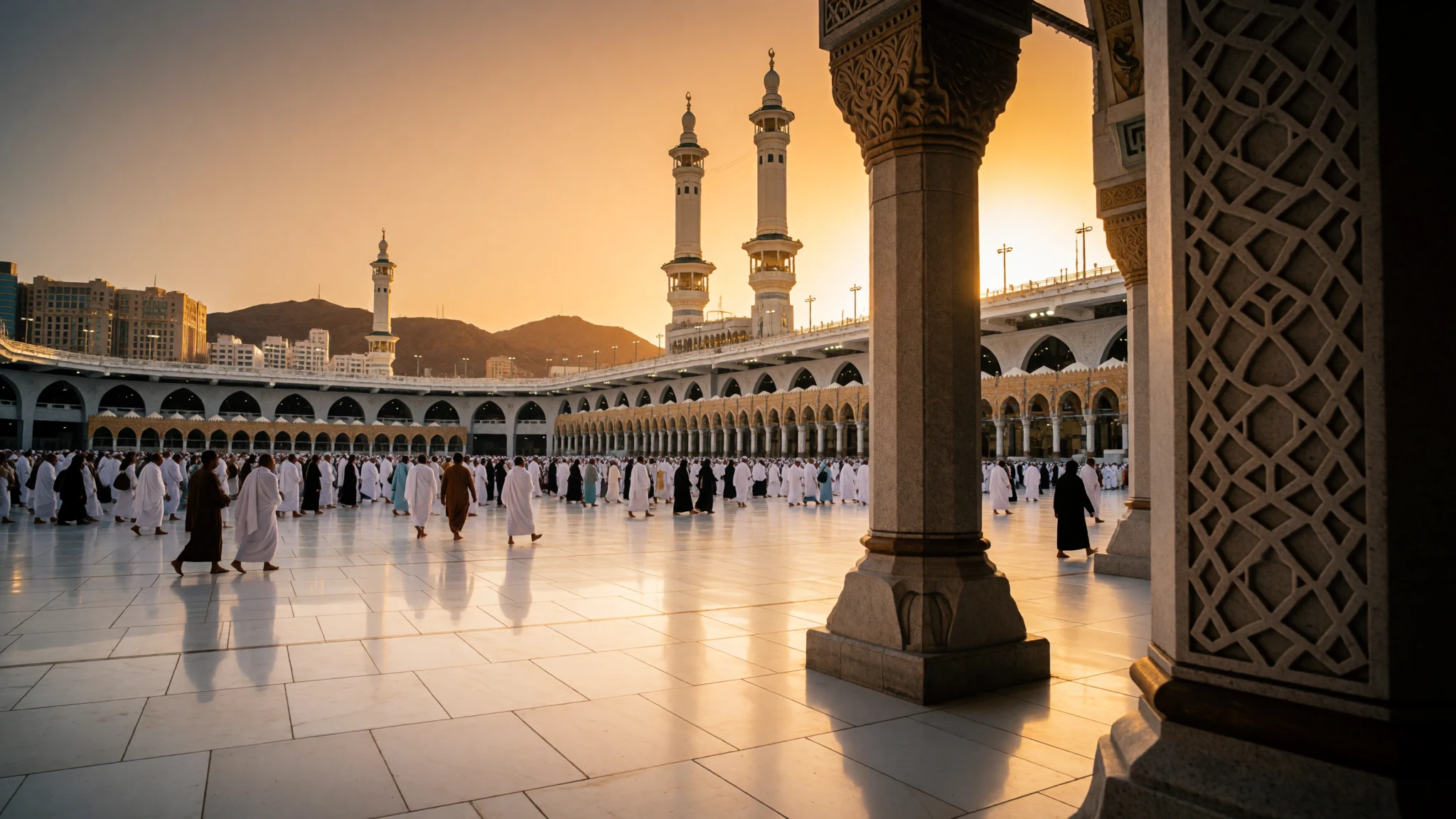
Mecca is the city Muslims face in prayer every day, and visiting it as a pilgrim means joining a crowd that has gathered for centuries.
The place
Mecca sits in the Hejaz region of western Saudi Arabia, in a narrow valley about 277 metres above sea level, with bare brown ridges close on every side. It is the capital of Makkah province and home to roughly 2.4 million people, a number that swells sharply each year when pilgrims arrive for the Hajj. Muslims regard it as the birthplace of the Prophet Muhammad and as the holiest city of their faith, and wherever a Muslim prays in the world, the direction faced is towards the Kaaba in Mecca. That direction is called the qibla. At the centre stands the Masjid al-Haram, the Grand Mosque, built around the Kaaba, and the rest of the city has grown outward from it. High-rise lodgings crowd close to the mosque, older neighbourhoods climb the slopes, and roads fan out towards Mina, Arafat and the highway to Jeddah. The resident community is mixed. A large share are Saudi citizens, and the rest are Muslims from many other countries, some of whom came on pilgrimage and stayed to work. Mecca is a working city as well as a sacred one, with schools, markets and football clubs. It has no airport of its own, and non-Muslims are not permitted to enter the city, a rule that decides who can go. Muslims planning a pilgrimage should begin with the official channels, starting at hmm.gov.sa.
Its story
Mecca's deep past is oddly quiet in the written record. Fossil hunters working near the Red Sea coast in 2010 found Saadanius, a primate related to the shared ancestor of apes and Old World monkeys, and the rock around it points to a damp forest where desert now lies, tens of millions of years ago. Researchers hope more will surface. Human history is harder to pin down. The middle of western Arabia left few inscriptions, shrines or outside accounts, unlike Yemen in the south and the Syria–Palestine edge in the north, so historians work with thin evidence for the city before Islam. What is clearer is how its meaning changed. Muslim tradition holds that Abraham and his son Ishmael raised the Kaaba, that Muhammad was born here, and that the first Quranic revelation came to him in a cave on Jabal al-Nour, just outside town. After that Mecca became the centre of Muslim devotion, even when political power sat elsewhere. The Rashidun, Umayyad and Abbasid caliphs, the Mamluks of Egypt and the Ottomans each governed or protected it, since custody of the holy places carried great prestige. In recent times it passed through the Kingdom of Hejaz and the Kingdom of Nejd and Hejaz before becoming part of Saudi Arabia.
What to see
- Masjid al-Haram — Central Mecca
The Grand Mosque encloses the Kaaba within wide courtyards and stone galleries, with minarets visible across the valley. Pilgrims circle, pray and rest here at all hours, and crowds peak during the Hajj and Ramadan. Entry is for Muslims only. The hours around dawn tend to be calmer than evenings.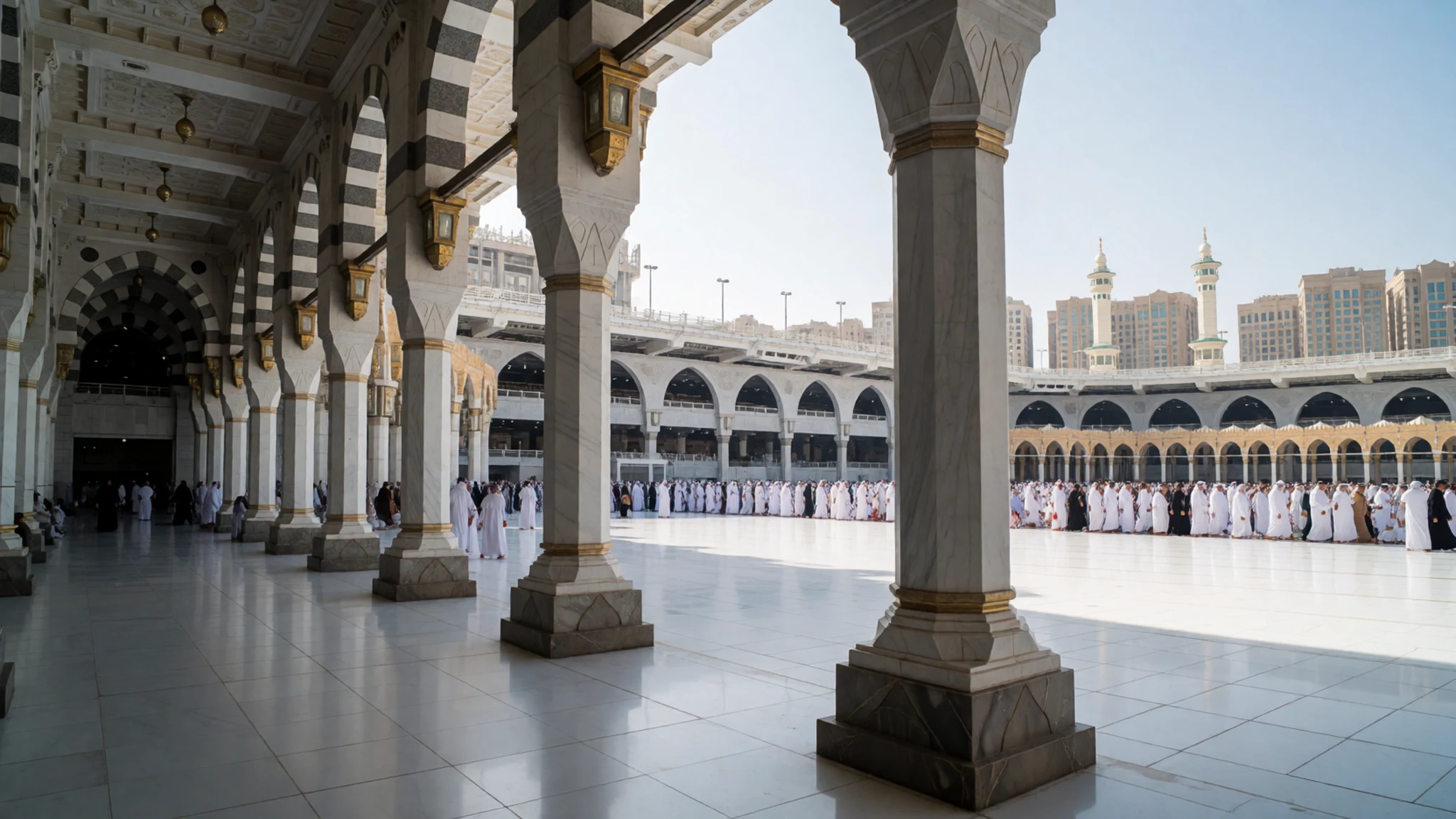
- The Kaaba — Centre of the Grand Mosque
The Kaaba is a cube-shaped building draped in black cloth embroidered with gold script, standing at the middle of the mosque floor. Muslim tradition credits Abraham and Ishmael with building it. Worshippers walk around it anticlockwise in tawaf, and it fixes the prayer direction for Muslims everywhere.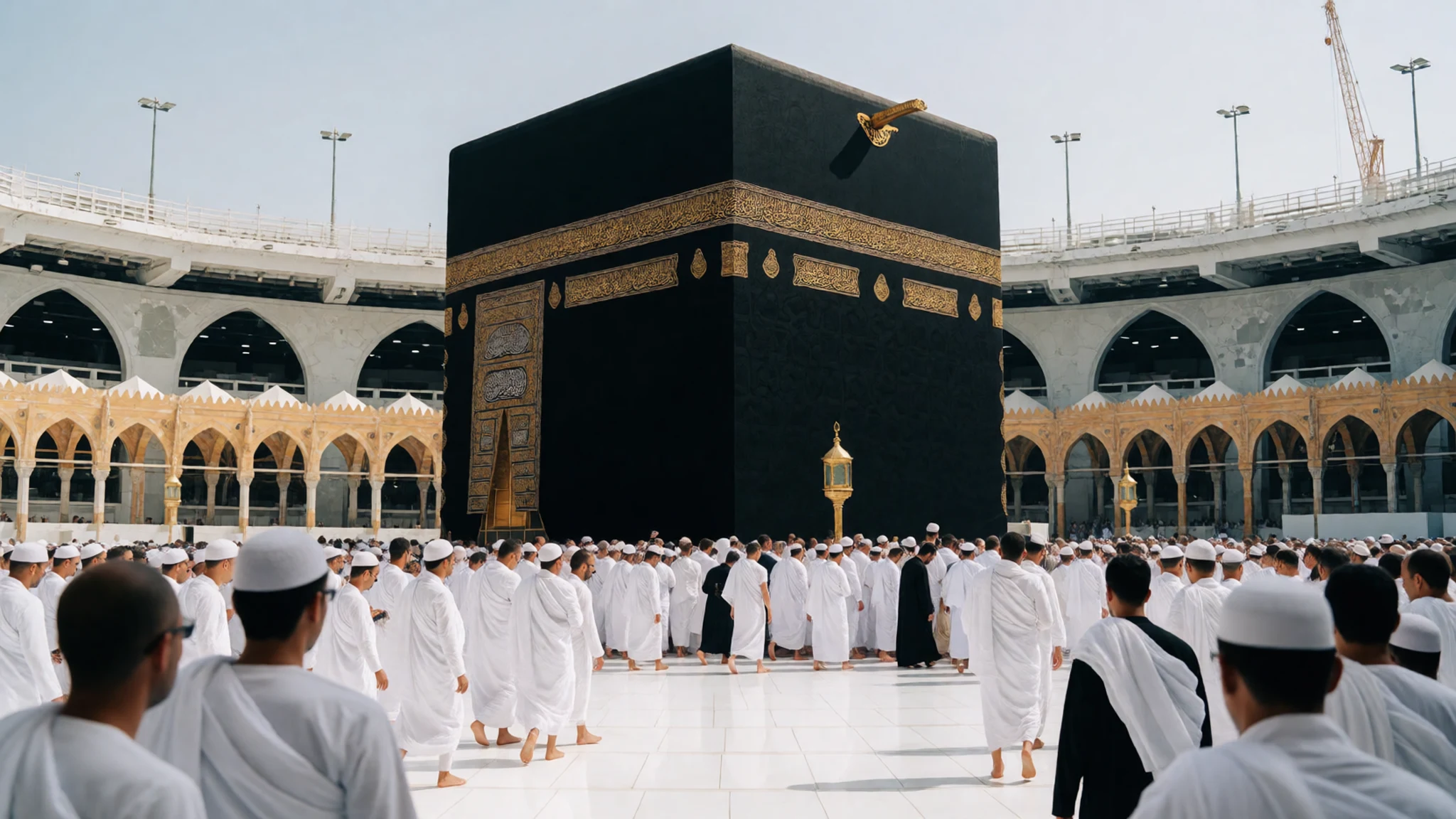
- Maqam Ibrahim — Beside the Kaaba
Close to the Kaaba, a small crystal-fronted enclosure shelters the Maqam Ibrahim, a stone believed to carry the imprint of Abraham's feet. Many pilgrims offer a short prayer near it after tawaf, though in busy periods people pray wherever space allows. It is easy to miss in the crush, so look for the gilded frame.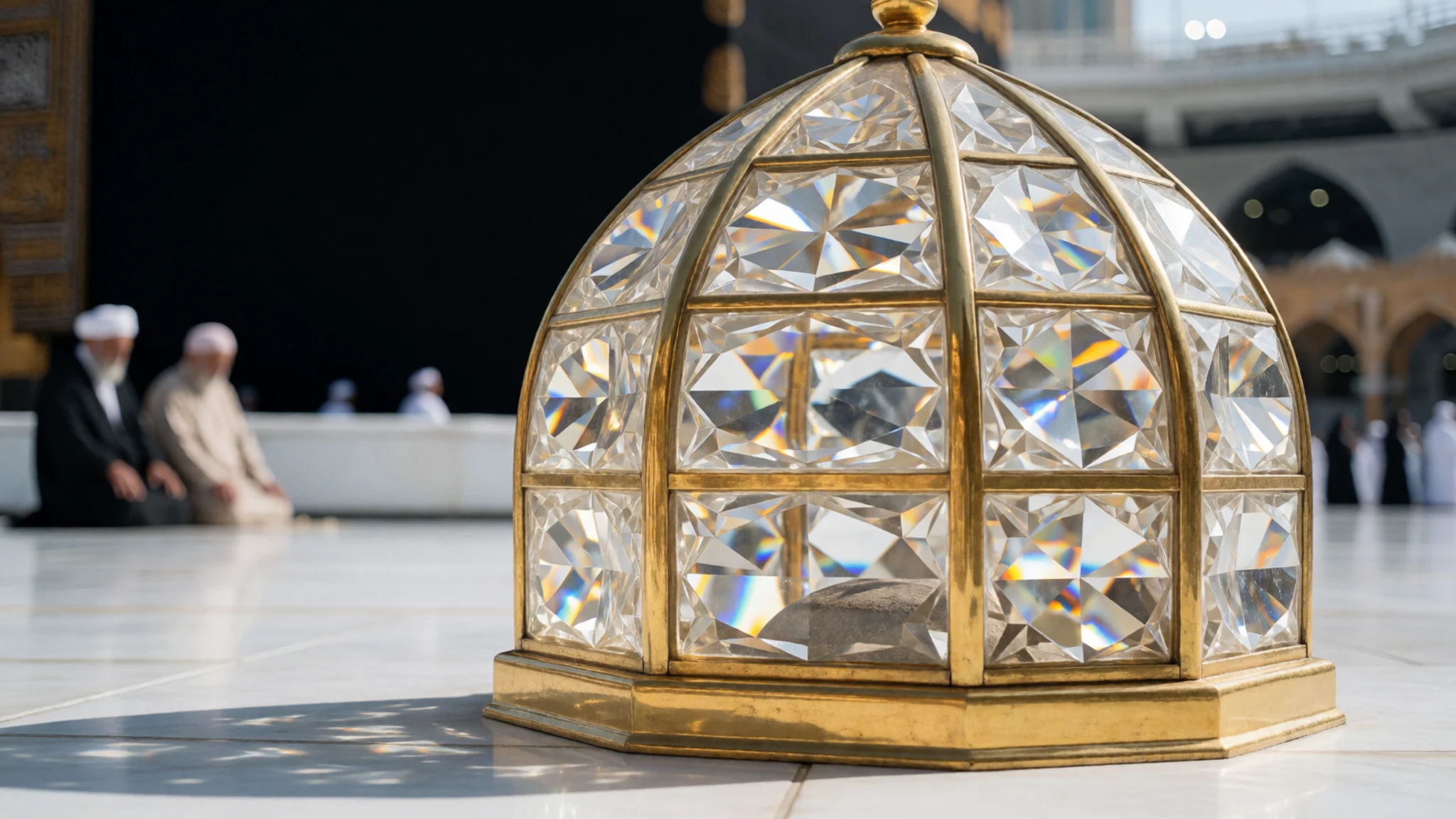
- Safa and Marwah — Eastern side of the Grand Mosque
Safa and Marwah were once rocky hillocks and are now the two ends of a long, enclosed gallery with marble floors and air cooling, joined to the mosque. Pilgrims walk between them in sa'i, recalling Hajar's search for water in Muslim tradition. Separate lanes and wheelchair routes help, though it is still crowded.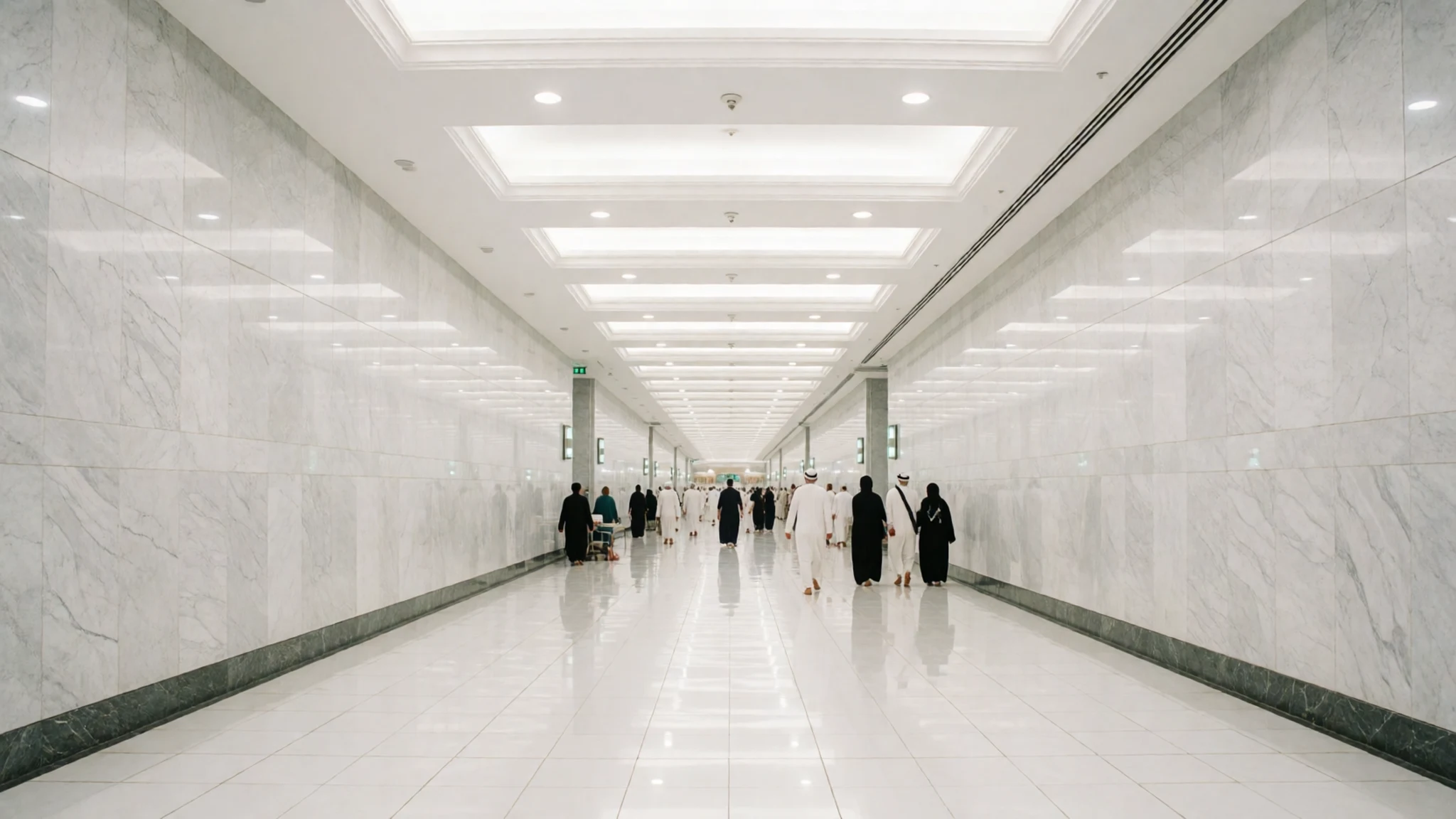
- Cave of Hira and Jabal al-Nour — Just outside the city, north-east
Jabal al-Nour, the Mountain of Light, rises just outside the city, with the Cave of Hira near its top. Muslims believe the first Quranic revelation came to Muhammad here. The climb is steep, rocky and exposed, so start at first light with water and sturdy shoes, because midday heat can be punishing.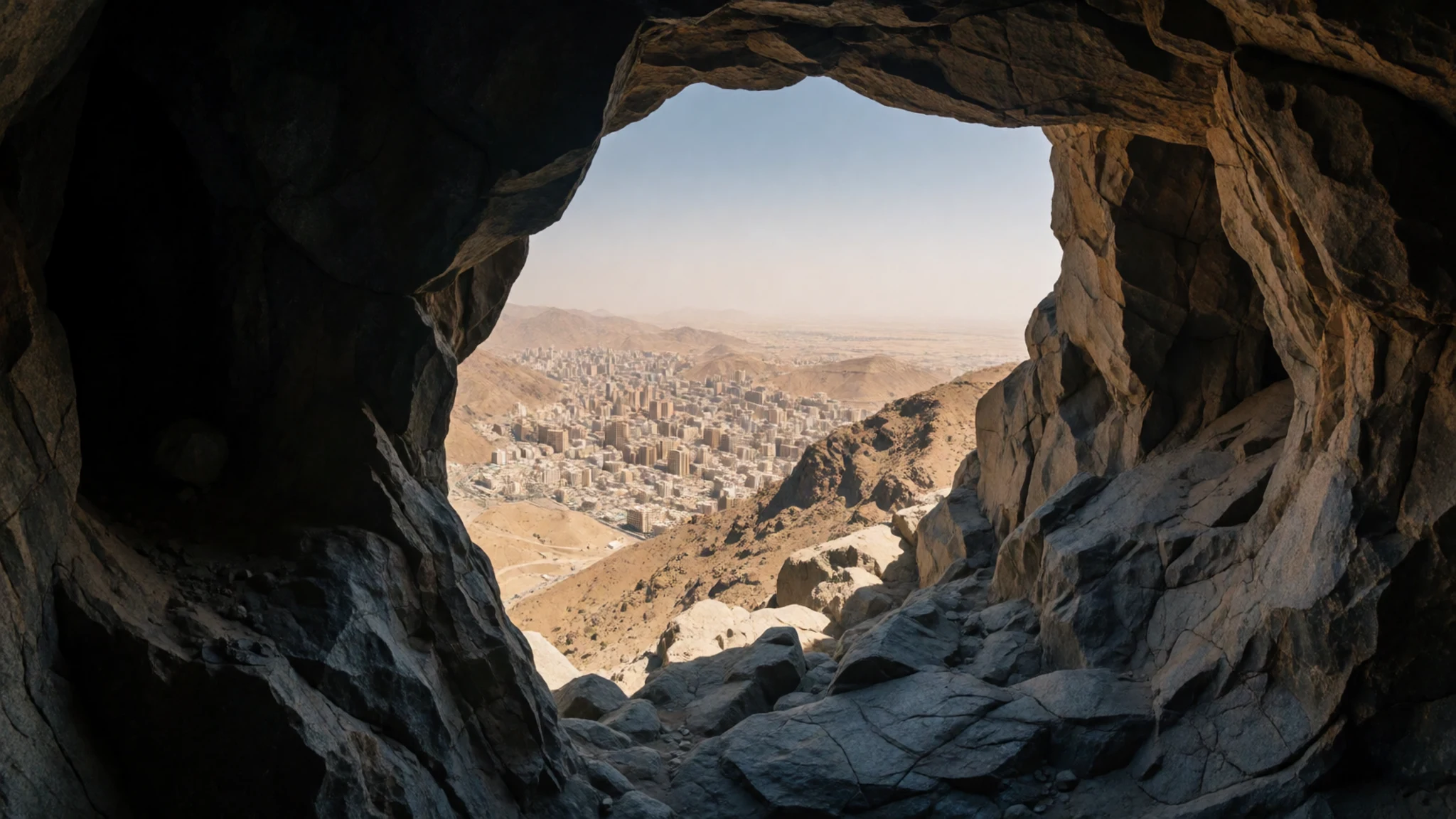
Culture
Mecca's culture is shaped by arrivals. For centuries pilgrims from West Africa, South Asia, Southeast Asia, Central Asia and Europe have come for the Hajj, and many stayed, so the city carries accents, recipes and family names from across the Muslim world. Hejazi Arabic, the local dialect, shares the streets near the mosque with Urdu, Bengali, Indonesian, Turkish and many other languages. Daily life follows the five prayer times. Shops and eateries pause while the call to prayer sounds, and crowds drift towards the Haram. Ramadan reshapes the city further, with late nights, shared evening meals to break the fast, and heavy foot traffic around the mosque. Football gives residents a common interest away from worship, and Al-Wehda is the long-standing local club. Hospitality matters too: during busy seasons, volunteers and neighbours routinely hand out dates, water and coffee to pilgrims. Most of this is open only to Muslims, and anyone who is not Muslim and is travelling in Saudi Arabia should plan to see other cities instead. Dress modestly, keep your voice low in and around the Grand Mosque, ask before photographing other worshippers, and stop for the call to prayer rather than pushing through the crowd.
What to wear
Mecca's traditional Hejazi dress for men is the white cotton thobe, a long shirt-robe, with a ghutra or shemagh headcloth held by a black cord called an igal. For formal occasions a lightweight wool bisht cloak goes over the top. Women wear the abaya, a loose black overgarment in crepe, cotton or similar fabric, often with embroidered edges, with a scarf. Pilgrims wear something different. Men in ihram wear two unstitched white cotton sheets, one around the waist and one over the shoulder, while women wear plain modest clothing with face and hands uncovered. Day to day, many Saudi men wear thobes, and women choose abayas in many colours, while pilgrims often arrive in their own national dress, such as saris, salwar kameez, baju kurung or West African boubou. Visitors should wear loose, light cotton that covers shoulders, arms and knees, for men as well as women, and women should carry a headscarf. The heat is strong, so a hat or umbrella helps outdoors. Marble floors inside the mosque are cool, but slip-on shoes and a small bag for carrying them are far more practical than laces.
What to eat
- Kabsa — Arab family eateries in the streets around the Haram
Mecca serves kabsa, a spiced rice dish cooked with chicken or lamb, flavoured with dried lime, cardamom and cloves. It is the everyday meal for many families and arrives on a large shared platter, usually with a tomato-chilli sauce on the side.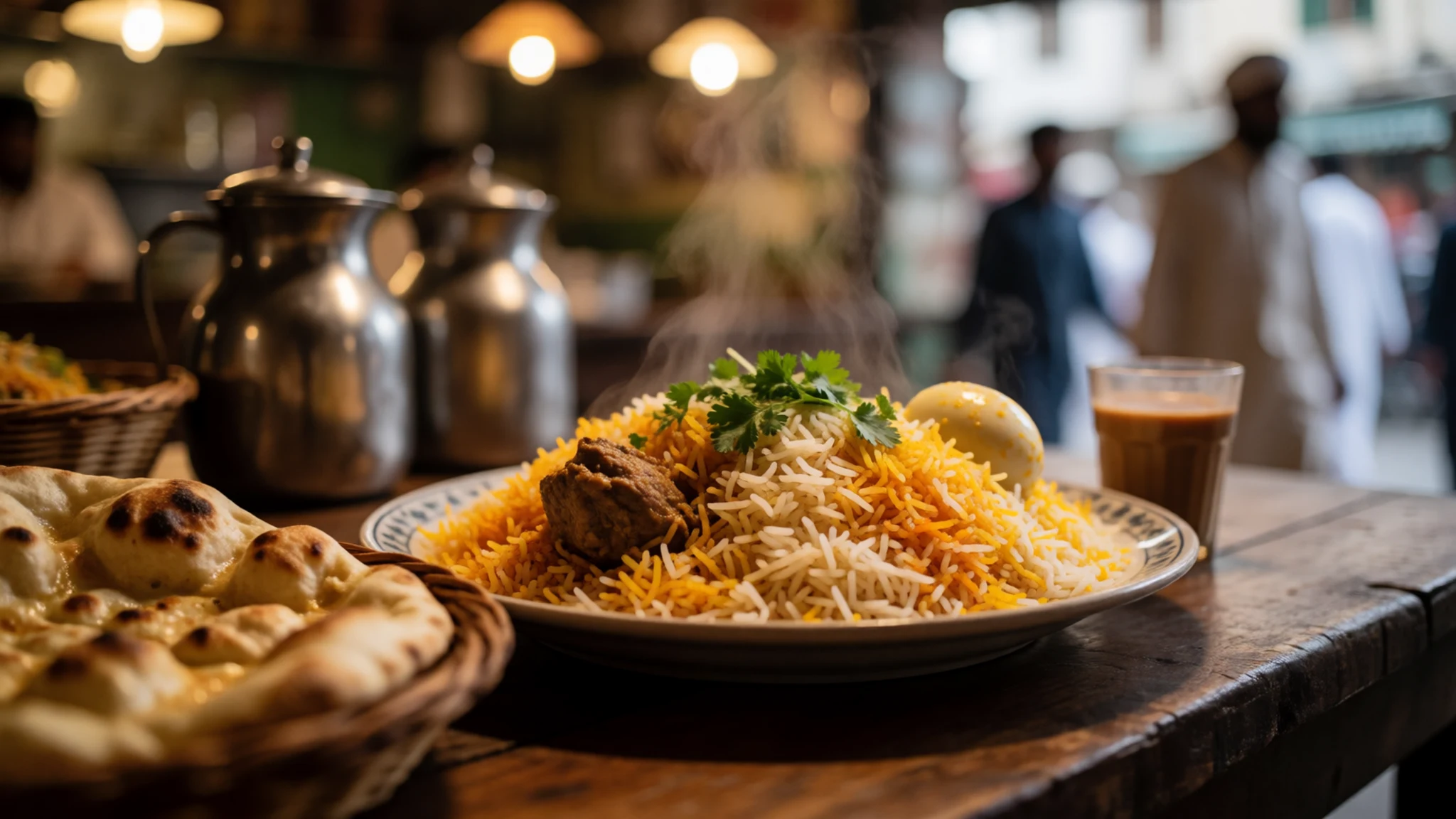
- Saleeg — Hejazi home-style restaurants
Saleeg is a Hejazi comfort dish of rice simmered in milk and stock until creamy, then topped with chicken. It is mild, soft and filling, and suits a cool evening or the days after a long pilgrimage walk.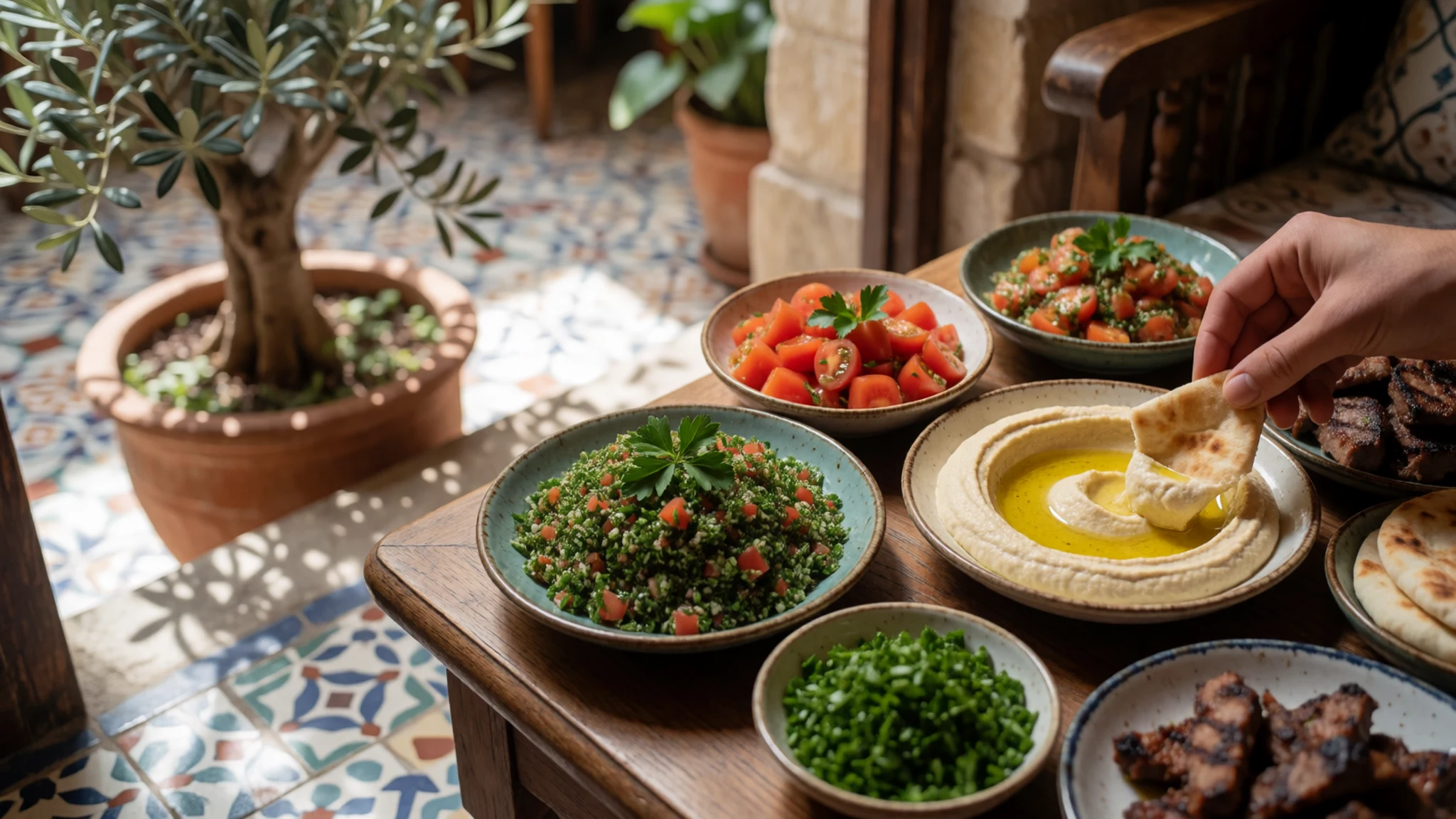
- Mutabbaq — Street stalls and bakeries in busy neighbourhoods
Mutabbaq is a folded, pan-fried pastry stuffed with minced meat, egg and onion, or sometimes sweetened. It is cut into squares and eaten hot, often as a quick evening snack between prayers. - Foul with fresh bread — Breakfast counters near the mosque
Foul is slow-cooked fava beans mashed with oil, lemon and cumin, scooped up with warm flatbread. It is a cheap, early breakfast for workers and pilgrims, and it is easy to find just before dawn prayer. - Dates with Arabic coffee — Date sellers and coffee corners in the old quarters
Dates and cardamom-scented Arabic coffee are offered in almost every setting, from shops to volunteer tents. Varieties of dates differ in softness and sweetness, so try a few. Coffee is poured in small cups, and a gentle shake of the cup means enough.
Plan it
Best time. November to February, when daytime heat is easier to bear. Summer is very hot, and the Hajj and Ramadan bring the biggest crowds, with dates that shift each year, so check the calendar before booking.
How long. 2–3
Getting there. Fly into Jeddah, the main gateway, or Taif, then travel by road to Mecca. Mecca itself has no airport and is a no-fly zone for commercial aircraft. Roads fill up badly during the Hajj and Umrah seasons, so allow extra time.
Budget. mid
Tips
- Apply for the correct visa and permit through official channels only, starting at hmm.gov.sa, and do this well ahead for the Hajj
- Visit the Grand Mosque around dawn or late at night when it is quieter
- Drink water constantly and rest in shade, since heat is a real risk even in cooler months
- Wear slip-on footwear and carry a small bag for your shoes
- Keep your group's meeting point and lodging address saved on your phone, as the crowds make it easy to be separated
Etiquette
- Dress modestly and keep your voice low in the Grand Mosque
- Do not photograph other worshippers without asking
- Follow instructions from mosque staff and volunteers, especially around the Kaaba
Nearby
Sources
- Wikidata Q5806 (CC0)
- Wikipedia: Mecca (rev 1384873443) (CC BY-SA 4.0)
- Wikivoyage: Mecca (rev 5410884) (CC BY-SA 4.0)
- Photo: Makkah Montage (MrJoker07) (CC BY-SA 4.0)
- Photo: Great Mosque of Mecca (Saudipics.com) (CC BY-SA 4.0)
- Photo: The Kabah in the Grand Mosque of Makkah (Richard Mortel) (CC BY 2.5)
- Photo: Pilgrims cover Arafat's roads, plains and mountain (Omar Chatriwala, Al Jazeera English) (CC BY-SA 2.0)
- Photo: Jabal an-Nour (Wal N.) (CC BY 2.5)
- Photo: Hajj pilgrimage Mina tent city (Seeley International) (CC BY-SA 4.0)
- Photo: Saudi Arabia relief location map (Carport) (CC BY 3.0)
- Photo: West Asia non political with water system (DEMIS Mapserver) (CC BY 3.0)


