Medina
Medina, Saudi Arabia
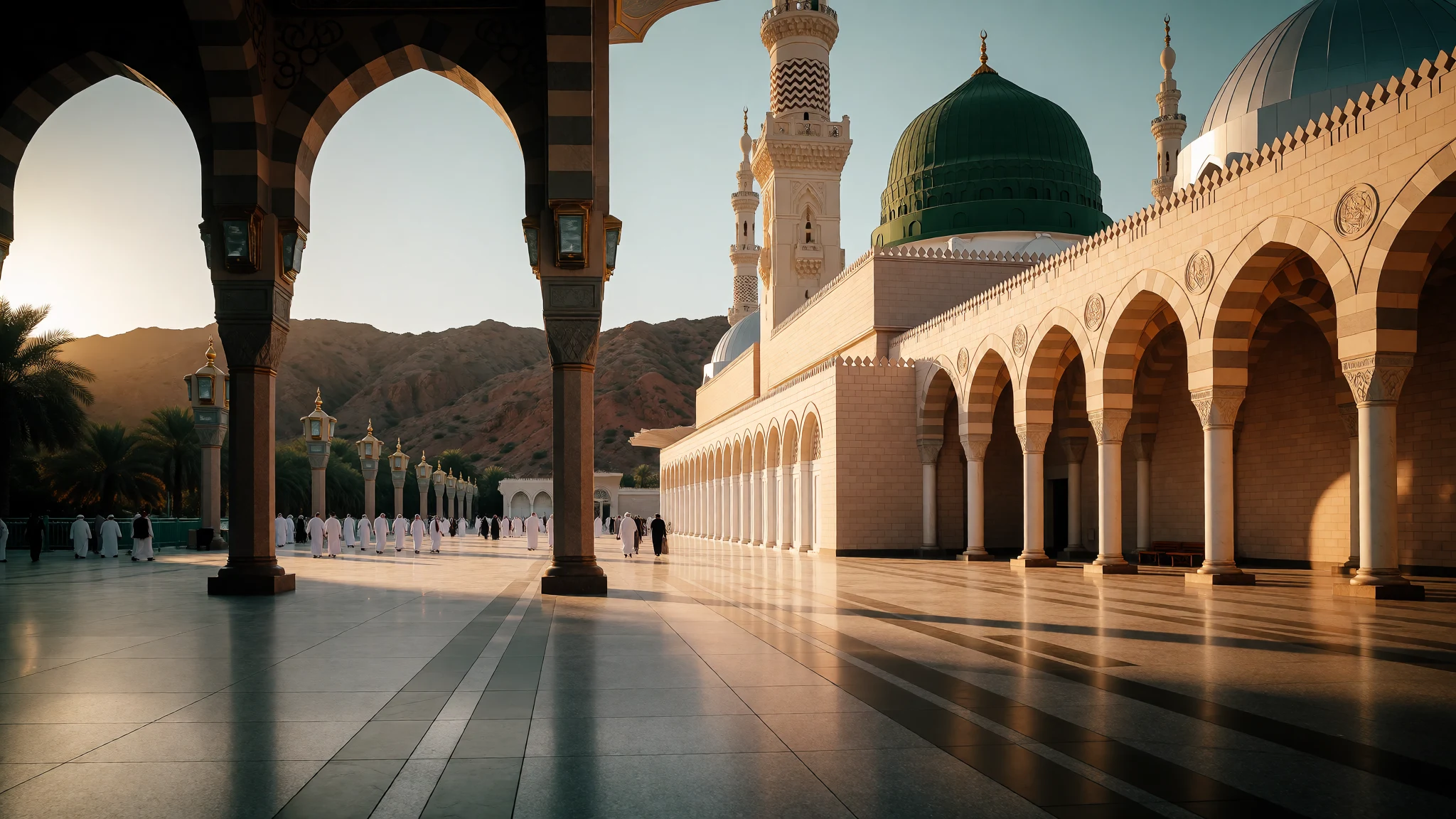
Medina holds the Prophet's Mosque, his grave, and the Hejaz setting of the early Muslim community, and it receives visitors outside the Hajj season.
The place
Medina (al-Madinah al-Munawwarah) stands in the Hejaz, on the western side of Saudi Arabia, and serves as the seat of Medina Province. Roughly 1.4 million people live in the city, which stands at 608 metres, and settlement here is recorded from about 900 BCE. Two further names remain in use, al-Madinah an-Nabawiyyah and Taybah, each pointing back to the Prophet rather than to a modern administrative title.
The city spreads across a Hejaz basin: barren ridges, dry wadis, pockets of date cultivation and the remains of long-quiet volcanoes frame the built area. At the centre is Al-Masjid al-Nabawi, the Prophet's Mosque, raised by Muhammad and the place of his grave. In Islamic tradition Medina sits with Mecca and Jerusalem; Muslims place it after Mecca.
Day to day, Medina is a provincial capital with a large resident population, not only a ritual enclosure. People from across the Muslim world live and work beside Saudi neighbours, and the streets around the mosque mix pilgrimage traffic with ordinary errands. Unlike Mecca, the city can be entered by non-Muslims. Access to the mosque precinct itself was tightened for generations and has since been relaxed in stages. The Hajj season is the exception: a Hajj visa is required for Muslims, and non-Muslims are turned away for that period.
From the courtyard the green dome and the minarets dominate; Al-Baqi cemetery lies just southeast of the mosque, and Mount Uhud closes the view to the north. Quba, on the southern side, and the Mosque of the Two Qiblas, to the west, extend the sacred map beyond the centre. Prayer times, heat and crowd density organise the day. The municipality publishes current arrangements at its official site.
Its story
Medina's recorded story begins long before Islam. The facts put a founding around 900 BCE, so the oasis was already old when the Hijra brought Muhammad from Mecca. In the centuries before that migration, Jewish clans were established in the oasis — among them the Banu Nadir, the Banu Qurayza and the Banu Qaynuqa — while Arab groups were also moving up from the Yemen. A later geographer, Ibn Khordadbeh, described the Banu Qurayza collecting tax for a Persian ruler during a period when Persian power reached into the Hejaz.
The balance shifted when the Aws and the Khazraj arrived and the oasis's politics changed around them. Out of that unsettled city came the Hijra: Muhammad's move from Mecca, the community that formed around him, and the mosque that is still Medina's heart, with his grave inside it.
Medina's later centuries passed under the Rashidun, Umayyad and Ottoman states, among others listed for the city, before the modern Saudi province. What visitors meet now is that layered past in physical form. Al-Baqi, southeast of the mosque, is the cemetery associated with members of the Prophet's family and many of his companions. Mount Uhud, north of the centre, is the field of the Battle of Uhud. Masjid al-Qiblatayn marks the tradition that the prayer direction turned from Jerusalem toward the Kaaba in Mecca during the Prophet's time. Quba is tied to the same early years, and a Friday mosque in the south is linked to the first Friday prayer.
The oasis was a farming settlement first. Its sacred map grew out of that ordinary ground.
What to see
- Al-Masjid al-Nabawi — Central Medina
Al-Masjid al-Nabawi is the reason most people come to Medina. Muhammad built the mosque, and his grave lies within the complex, under the green dome that marks the skyline. The expanded courtyard holds a huge congregation at prayer. Non-Muslim access to this precinct has changed in recent years; confirm the current rule before planning a visit. The surrounding streets fill and empty with the prayer timetable.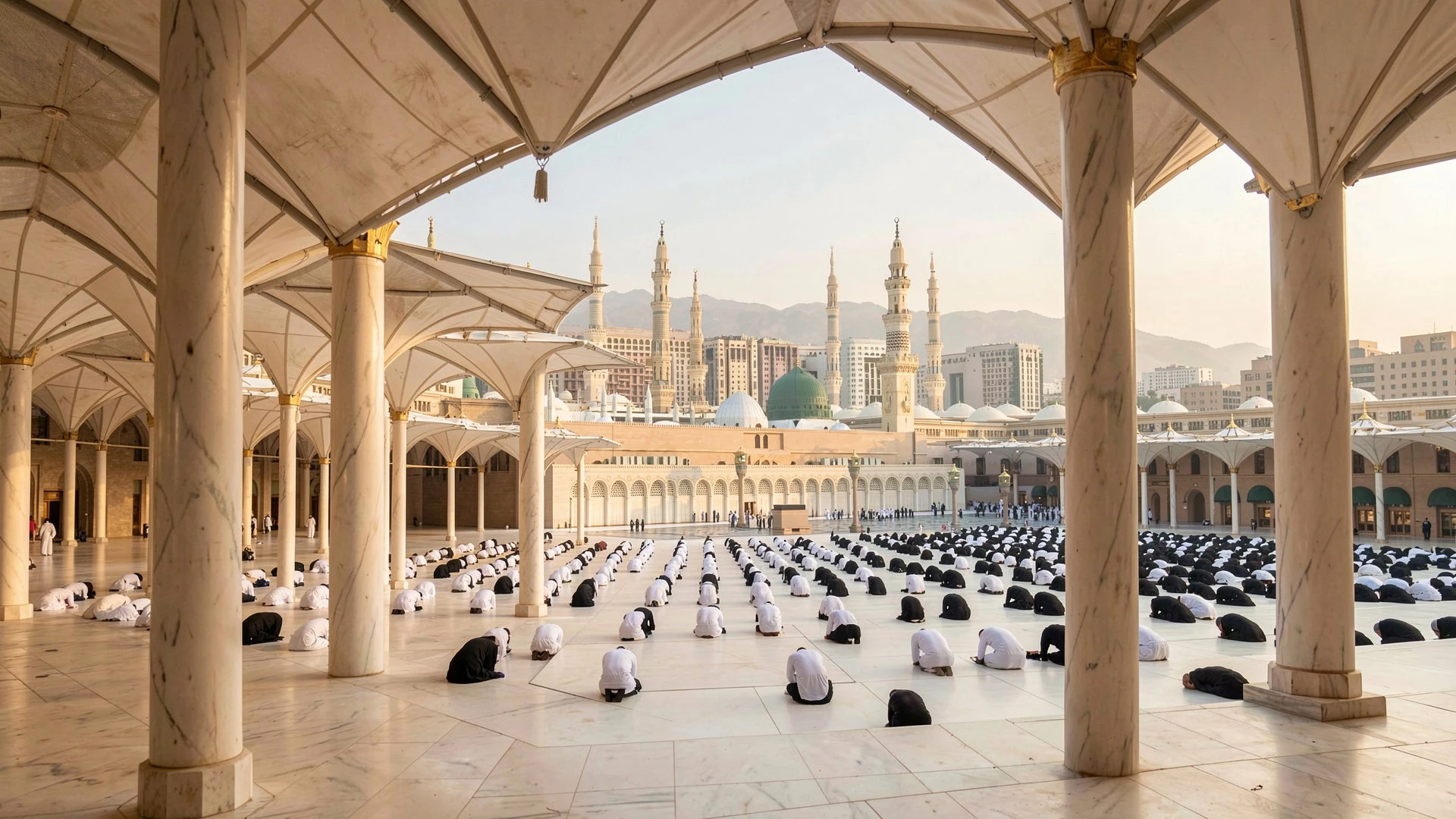
- Al-Baqi — Southeast of the Prophet's Mosque
Al-Baqi is Medina's historic cemetery, a short walk southeast of the Prophet's Mosque. Tradition locates graves of the Prophet's family and of many companions here, so the ground carries as much weight for visitors as the nearby halls. The enclosure is plain, with modest markers rather than monumental tombs. It is open for only part of the day; confirm the window on arrival instead of planning a long stay.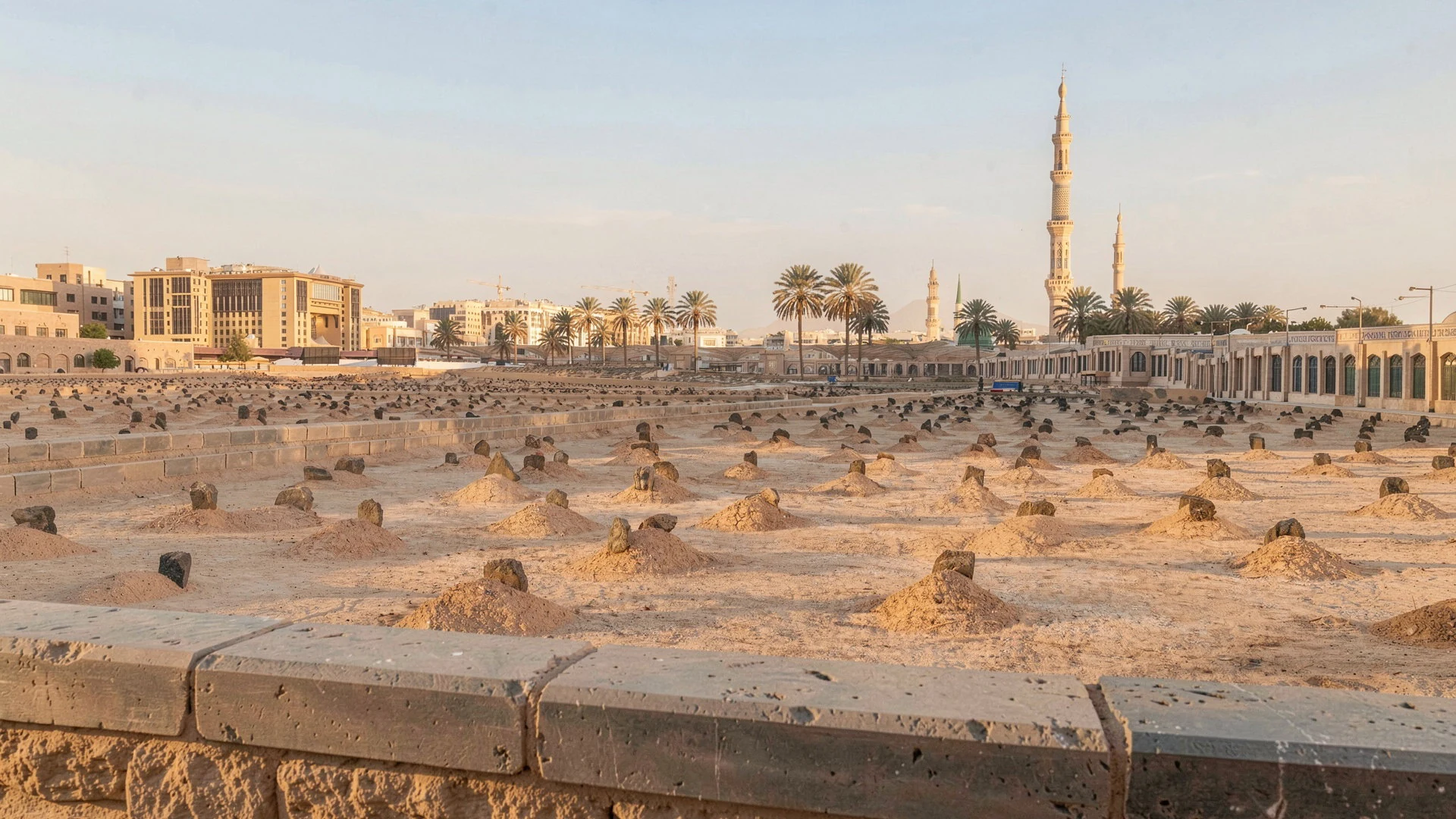
- Mount Uhud — North of the city centre
Mount Uhud stands north of central Medina, a rugged ridge above the plain of the Battle of Uhud, fought in the Prophet's lifetime. The interest is the landscape itself: rock, the graves of those killed in the fighting, and a view back toward the city. The excursion is short, but the slope is exposed, so go earlier in the day, carry water, and wear shoes fit for loose stone.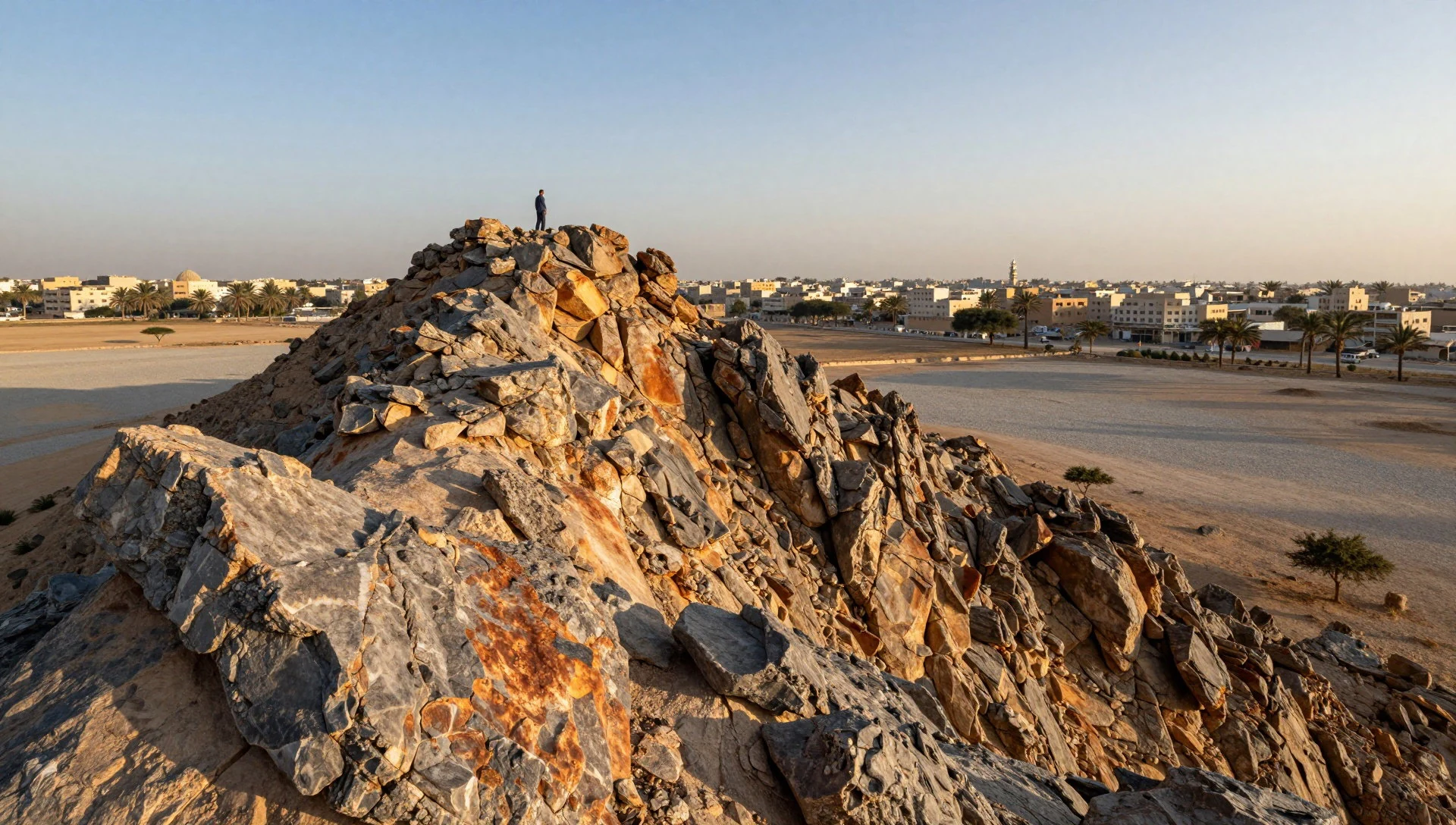
- Masjid al-Qiblatayn — West of the centre
Masjid al-Qiblatayn, the Mosque of the Two Qiblas, stands west of central Medina. The name records a tradition that, while leading prayer, Muhammad was told to turn from Jerusalem toward the Kaaba in Mecca. Rebuilding has left a modern mosque, so the point of the visit is the story, not an ancient shell. It is a quieter stop than the Prophet's Mosque.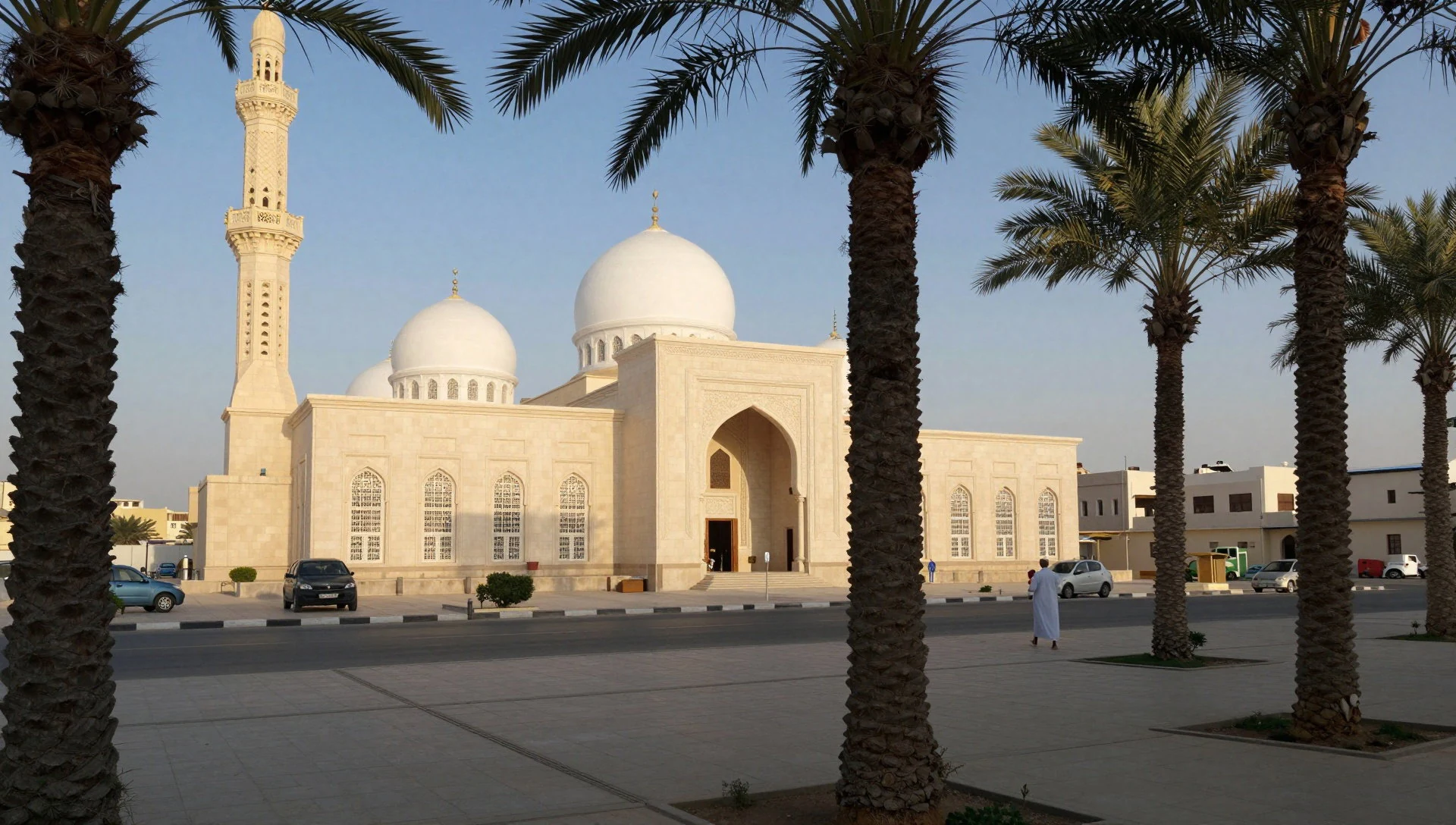
- Quba Mosque — Southern Medina
Quba Mosque stands in the south of Medina, on the side of the city associated with Muhammad's arrival at the oasis. Muslims treat a prayer here as especially worthwhile, and the visit is often paired with the Prophet's Mosque on the same day. The present building is a large modern complex, bright and spacious, rather than a preserved earthen original.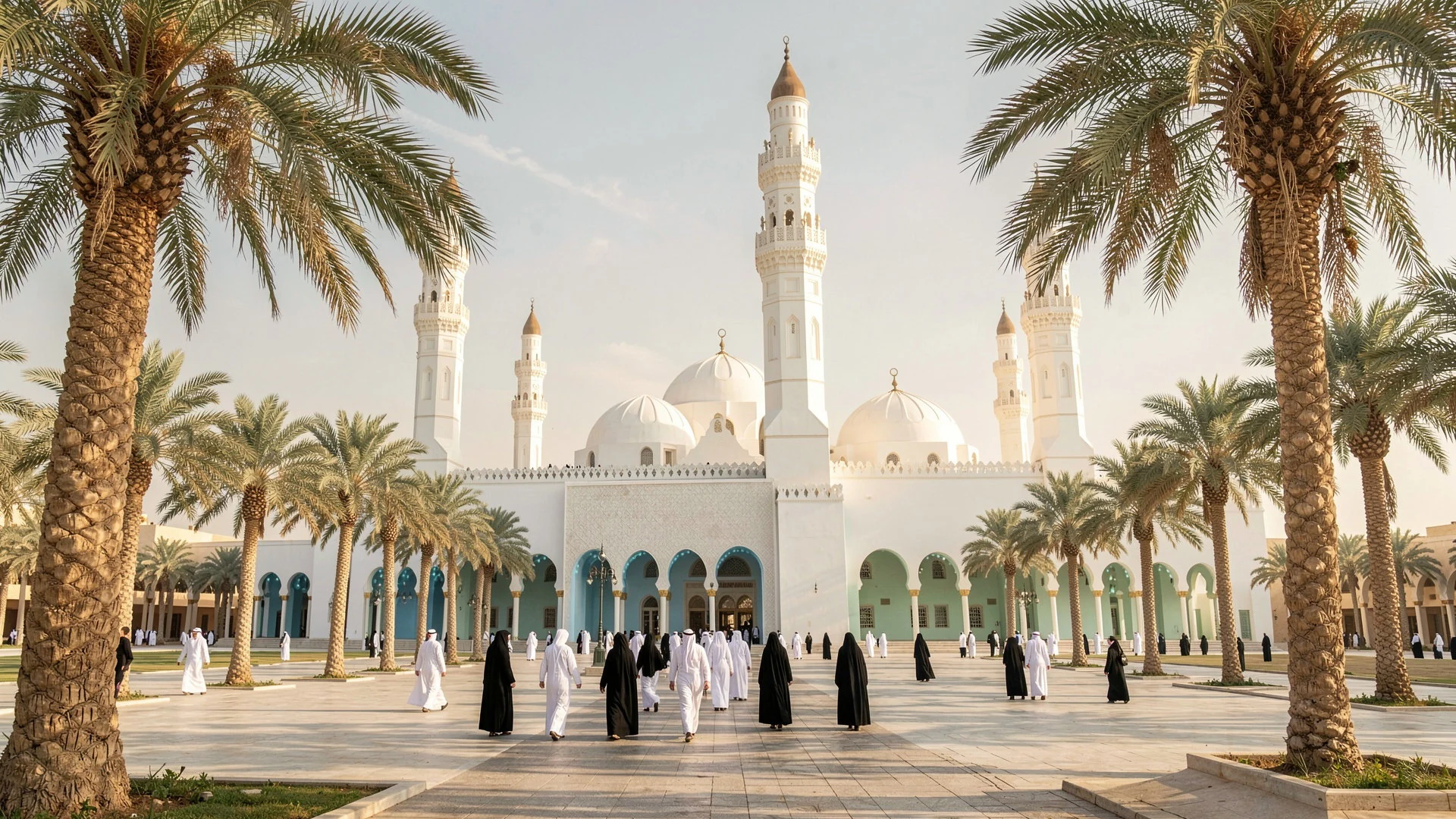
Culture
Medina is a holy city that also functions as an ordinary provincial capital, and the mix shows in who is on the street. Pilgrims from across the Muslim world share pavements with Saudi residents and with workers from South Asia, Southeast Asia and elsewhere. That daily contact is the culture a visitor actually meets: many languages in the courtyard, and neighbourhood life carrying on between prayers.
The King Fahd complex prints Qurans for distribution well beyond Saudi Arabia, and a tour ends with a copy given to the visitor. Al Madinah Museum presents the city's heritage through archaeology, photographs of the older town, and a section on the Hejaz railway. Neither institution replaces the mosque as the centre of local identity, but both show a city that explains itself in exhibits as well as in ritual.
Public life follows prayer times. Shops pause, streets near the mosque thicken, and the evening is often more sociable than the hot afternoon. Dress is modest by default, and the expectation is stronger at religious sites than in a shopping street.
Visitors should remove their shoes wherever a mosque entrance has shelves or a step up to a carpeted hall, and keep phones lowered around people who are praying.
What to wear
In Medina, traditional men's dress is the white or light thobe, an ankle-length robe, with a ghutra or shemagh on the head held by a black agal. The cloth is cotton or a cotton blend, chosen for heat and for the clarity white gives in strong sun. Women's public dress is typically a black abaya over everyday clothes, with a hijab; finer abayas may use lighter weaves or discreet embroidery for gatherings, while plain cloth is the norm on the street and at the mosque.
What people wear now is that same baseline, adapted to work and weather. Staff in shops and lodging often keep the thobe or a conservative uniform. Younger residents add trainers, watches and, away from prayer, Western casual layers under or instead of formal dress. Pilgrims add another layer: men who are in ihram wear two plain white cloths, then change to ordinary modest clothes once that state ends.
A visitor should plan for covered clothing and easy shoes. Men are expected to wear long trousers and sleeves at the Prophet's Mosque, and a thobe is appropriate if they have one. Women should bring an abaya and a headscarf; both are part of normal dress in the holy city, not a costume. Choose breathable fabric, slip-on shoes for the many thresholds where footwear comes off, and a layer for air-conditioned halls after the heat outside.
What to eat
- Shawarma — Street stalls north of the King Fahd Gate, and casual eateries around the mosque
Shawarma is the everyday wrap of Medina: sliced meat, usually chicken or lamb, rolled with salad and sauce in flatbread. Stalls on the street north of the King Fahd Gate turn them out quickly between prayers, and small eateries across the centre do the same.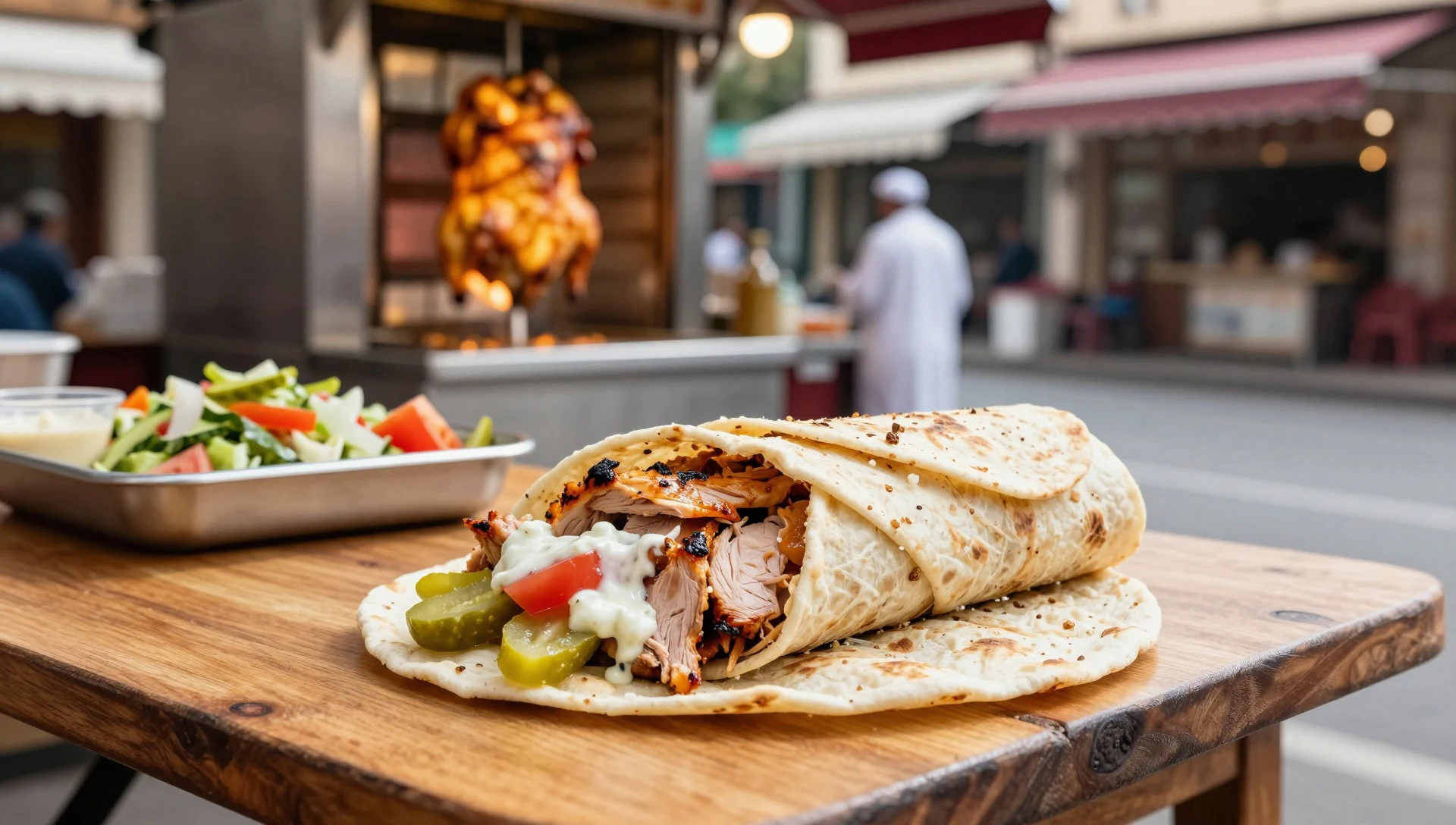
- Foul with tameez — Local eateries and breakfast stalls in the centre
Foul, slow-cooked broad beans, is a Medina breakfast staple, served with tameez, a local flatbread that scoops the beans. Chilli, cumin and olive oil are the usual finish, and the plate is filling enough to carry a morning of walking. Ordinary local eateries serve it early in the day.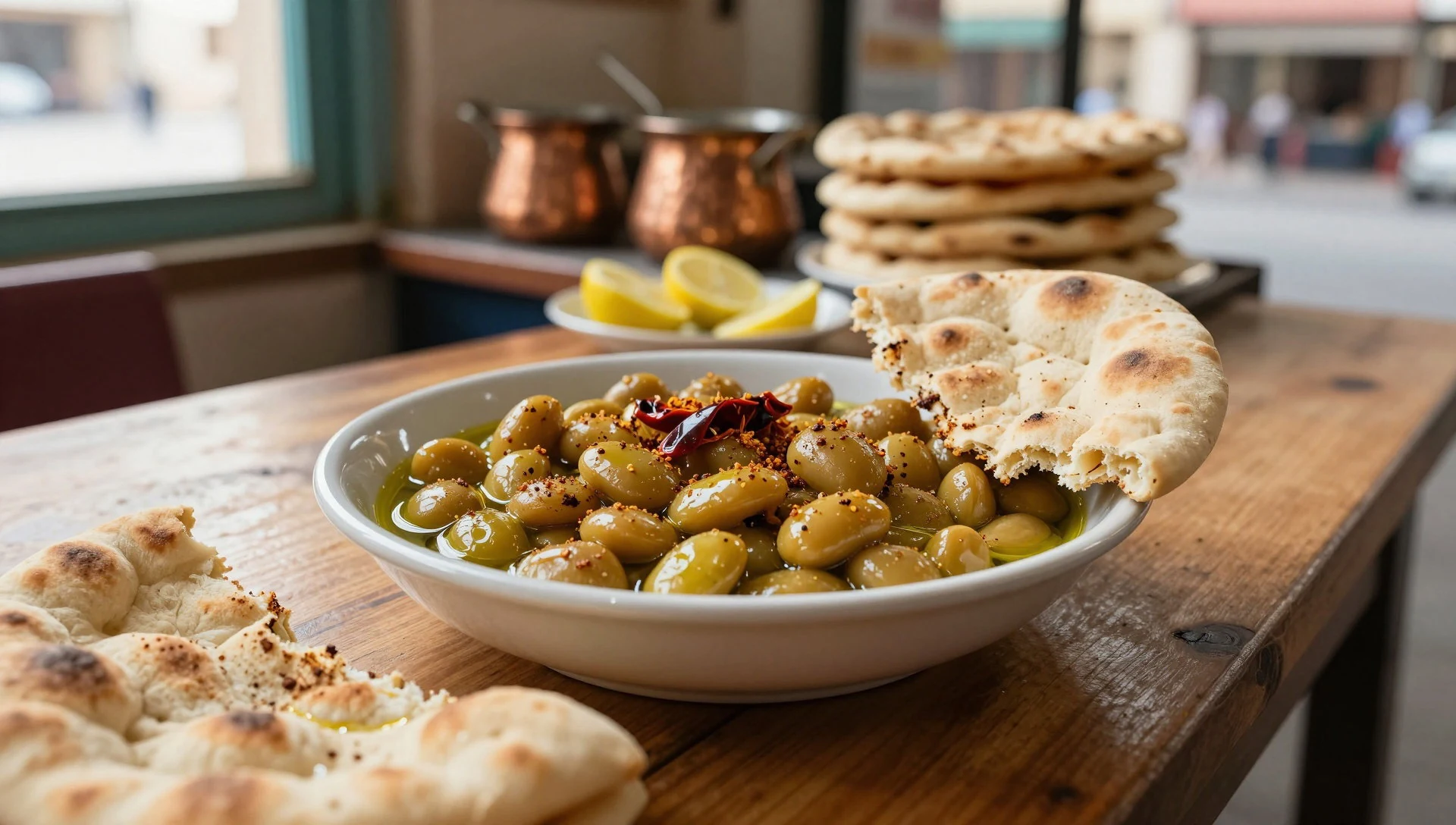
- Taamiyya — Casual eateries and the stall street north of the King Fahd Gate
Taamiyya is Medina's version of a vegetable fritter sandwich, close to falafel, fried and tucked into bread with salad and tahini. It shows up wherever shawarma does, including the stall street north of the King Fahd Gate, and it suits a meat-free lunch. - Dates — Shops around the Prophet's Mosque and neighbourhood markets
Dates are the constant of Medina's food, grown in the Hejaz and piled in shops around the Prophet's Mosque. Visitors eat them plain, stuffed, or with Arabic coffee, and boxes are the usual gift to carry home. Quality runs from everyday fruit to sorted grades in the busier shops. - Broasted chicken — Saudi-style chicken shops across the city
Broasted chicken is pressure-fried chicken, seasoned and served in a style familiar across Saudi cities, and Medina is full of shops devoted to it. A portion with bread or rice feeds a family and is easy to find near the mosque and further out.
Plan it
Best time. December to February is the kinder stretch for walking between Medina's mosques; high summer is exhausting in the open. During Hajj, Muslims need a Hajj visa and non-Muslims are not admitted.
How long. 2–3
Getting there. Fly into Jeddah, then take the high-speed train to Medina — just under two hours from Jeddah, about two and a half from Mecca — or a pilgrim bus if that is the arranged route. SAPTCO coaches link other Saudi cities, but the SAPTCO terminal in Medina is closed to non-Muslims. Check the municipality site for current transport notes: https://www.amana-md.gov.sa/
Budget. mid
Tips
- If you want a quieter hour at the Prophet's Mosque, arrive before the main morning crowd.
- Confirm Al-Baqi's limited daily opening on the day, and do not treat a closed gate as a surprise.
- Keep some cash for street food and small shops; larger places often take cards.
- Ignore unsolicited guides; holiness is not a warranty against sharp practice.
- Non-Muslims should use the railway or a permitted road transfer, not the SAPTCO terminal.
Etiquette
- Take shoes off at mosque thresholds where racks or a raised step lead onto carpet.
- Wear modest, loose clothing; women should have an abaya and headscarf for the holy sites.
- Do not photograph people at prayer without a clear yes, and silence your phone inside.
- At Al-Baqi, follow the posted rules and keep the visit short and quiet.
Nearby
Sources
- Wikidata Q35484 (CC0)
- Wikipedia (rev 1381411186) (CC BY-SA 4.0)
- Wikivoyage (rev 5410912) (CC BY-SA 4.0)
- Photo: Al-Masjid al-Nabawi (Public domain)
- Photo: Prophet's Mosque, bird's eye view (CC0 1.0)
- Photo: Quba Mosque (CC BY 3.0)
- Photo: Al-Baqi Cemetery (CC BY 4.0)
- Photo: Jabal Uhud (CC BY-SA 4.0)
- Photo: Masjid al-Qiblatain (CC BY 3.0)
- Photo: Inscription mentioning the Prophet's grave (CC BY-SA 4.0)
- Photo: Madinah Sharif token (CC BY-SA 4.0)


