Abha
Abha, Saudi Arabia
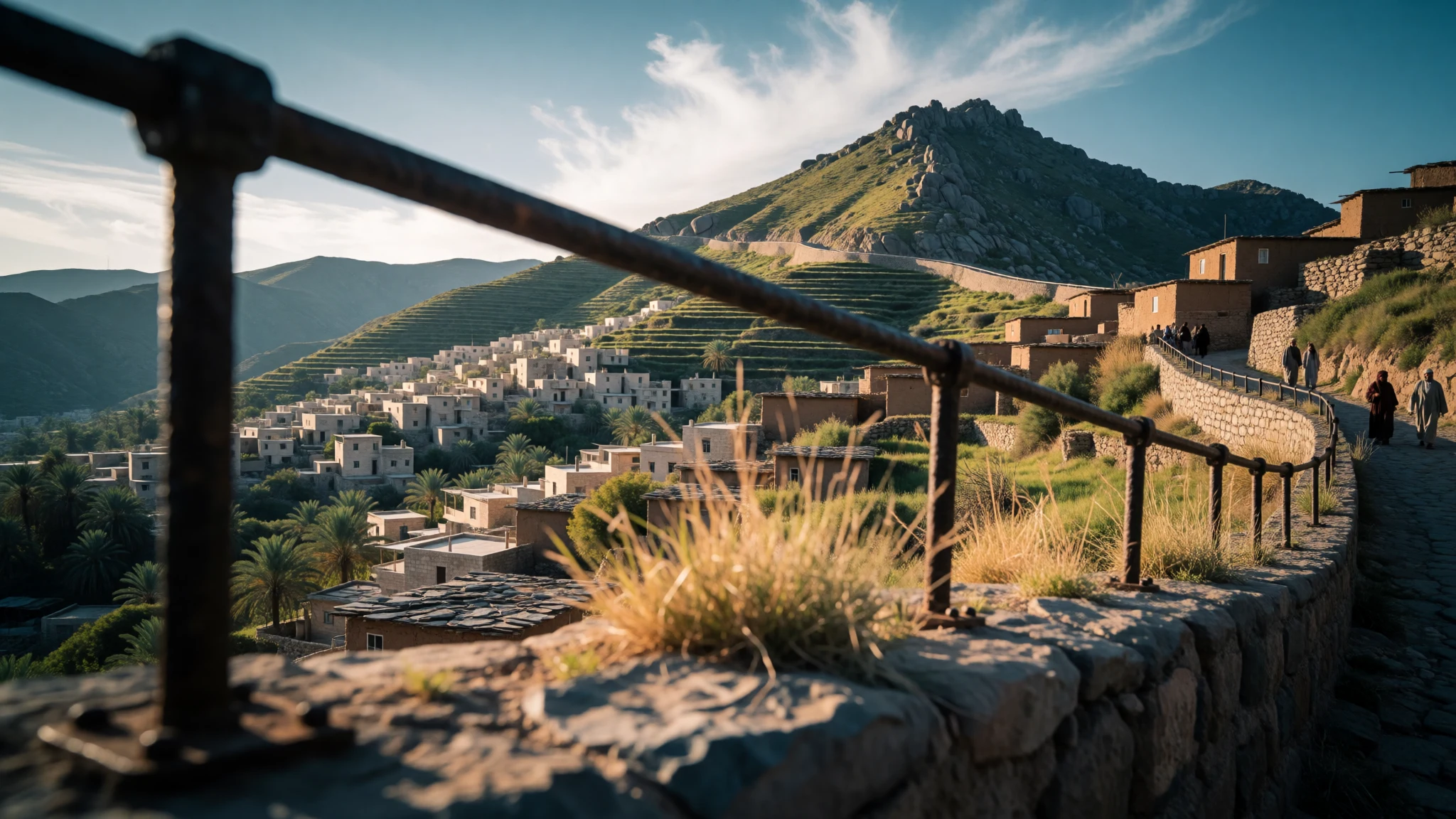
Abha sits cool and green in the Asir mountains, a Saudi hill retreat of terraced villages, cable cars, mist and mountain drives.
The place
Abha is the seat of government for Asir Province, in the south-west of Saudi Arabia. About 334,000 people live here, some 2,400 metres up in the Asir mountains, and that height changes everything. While much of the kingdom bakes, Abha stays mild, which is why Saudi families have long treated it as a summer retreat and why the city is nicknamed the Bride of the Mountain. It sits on the western flank of the Hijaz range, beside Jabal Sawda, the mountain that dominates the skyline, and close to Asir National Park.
On paper the climate is desert, but nothing about the experience feels like it. Days are warm rather than scorching, evenings turn cool, and the air can be crisp in the cooler months. Most rain falls between February and April, when the slopes turn green and cloud rolls through the valleys. A smaller wet spell comes in July and August. Mist is common enough that a view can vanish within minutes, so a clear morning is worth using.
The city itself is a mix: busy modern roads and shopping streets, a dam and lake on its edge, restored heritage buildings, and, a short drive away, villages of stone and mud brick perched on ledges. Abha is less a place for ticking off monuments than for slow drives, viewpoints and tea. Visitors from India or the UK should expect a destination aimed mainly at domestic travellers, with limited English signage away from the main roads.
Its story
Abha's history is bound up with the tribes of the Asir highlands. Many clans, among them the Bani Shehr, Bani Amr, Bal-Qarn and Shahran, trace their origins to Azdi families said to have moved north from Yemen after the Marib dam gave way. Genealogy still matters here, and people often introduce themselves by clan.
For a long period the town was the base of a line of local rulers, the princes of the Ibn Ayed family, who governed the district under loose Ottoman overlordship. That arrangement lasted until the First World War. As the Ottoman world collapsed, the family briefly held power on its own terms, with its leader returning to Abha as an independent ruler. The independence was short. Armed tribesmen from Najd, loyal to Ibn Saud, advanced into Asir soon afterwards, and the region became part of the new kingdom as it took shape.
The legacy shows in the landscape. Forts and watchtowers of stone and mud brick still stand on ridges around the city, built to watch routes up from the coast and along the valleys towards Yemen. Villages kept their own rhythms, with farming on terraces and markets on set days of the week. In recent decades the story has turned towards tourism: the state has invested in roads, festivals and viewpoints, and a city that once guarded mountain passes now welcomes families escaping the lowland summer.
What to see
- Jabal Sawda lookout — Jabal Sawda, just outside the city
Jabal Sawda rises just outside Abha and holds the region's main lookout. Go early, because cloud often fills the valleys by late morning, and it can be noticeably colder than in town. A cable car operates here; check the operator's official site for current hours and fares before setting out.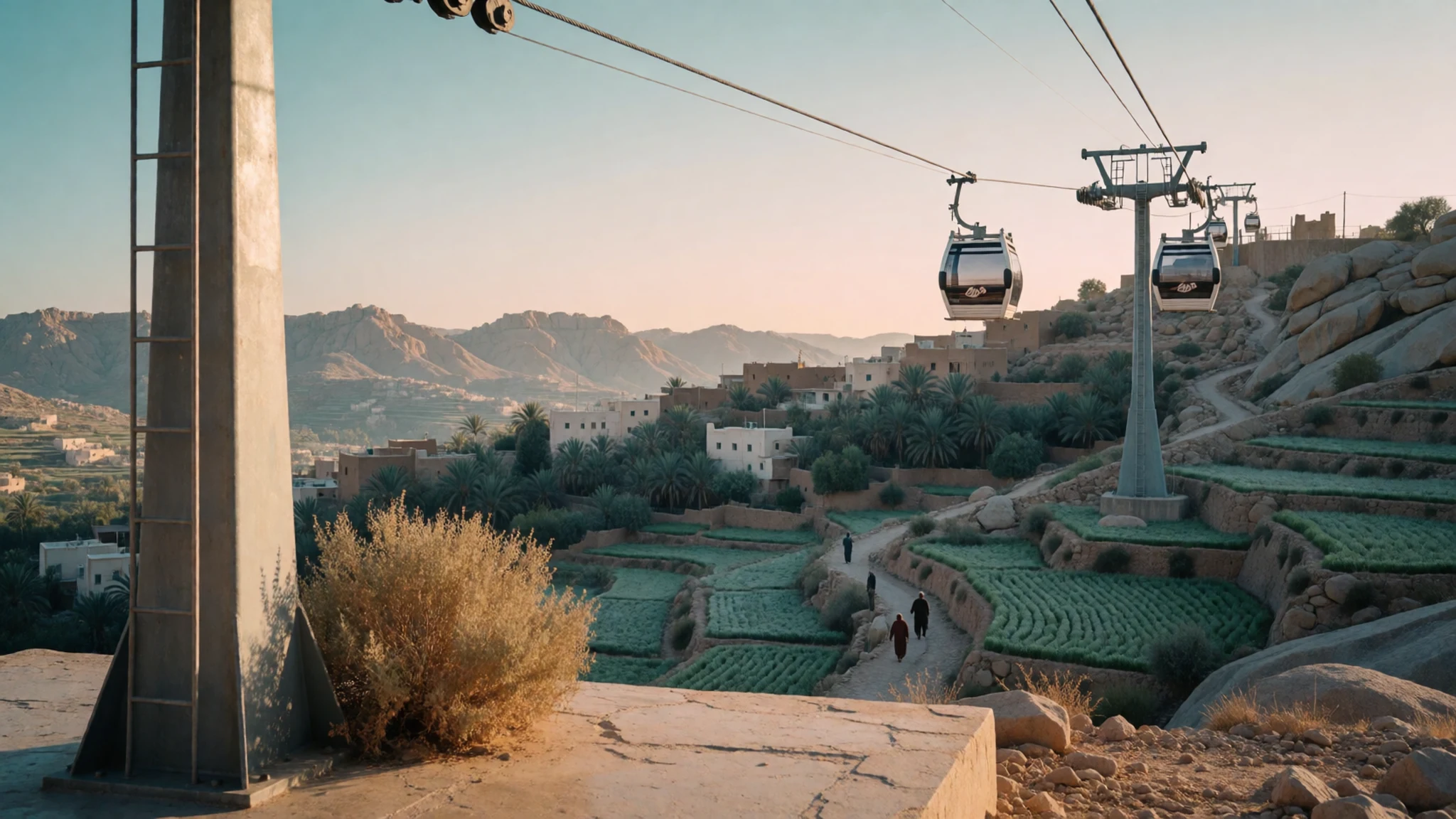
- Habala hanging village — Mountains south-west of Abha
Habala is a former cliff-edge settlement, a trip of a couple of hours from the city. Its houses were once reached from the rim above by rope ladders, and visitors now arrive by cable car. Treat it as a half-day outing, and check ahead for operating times.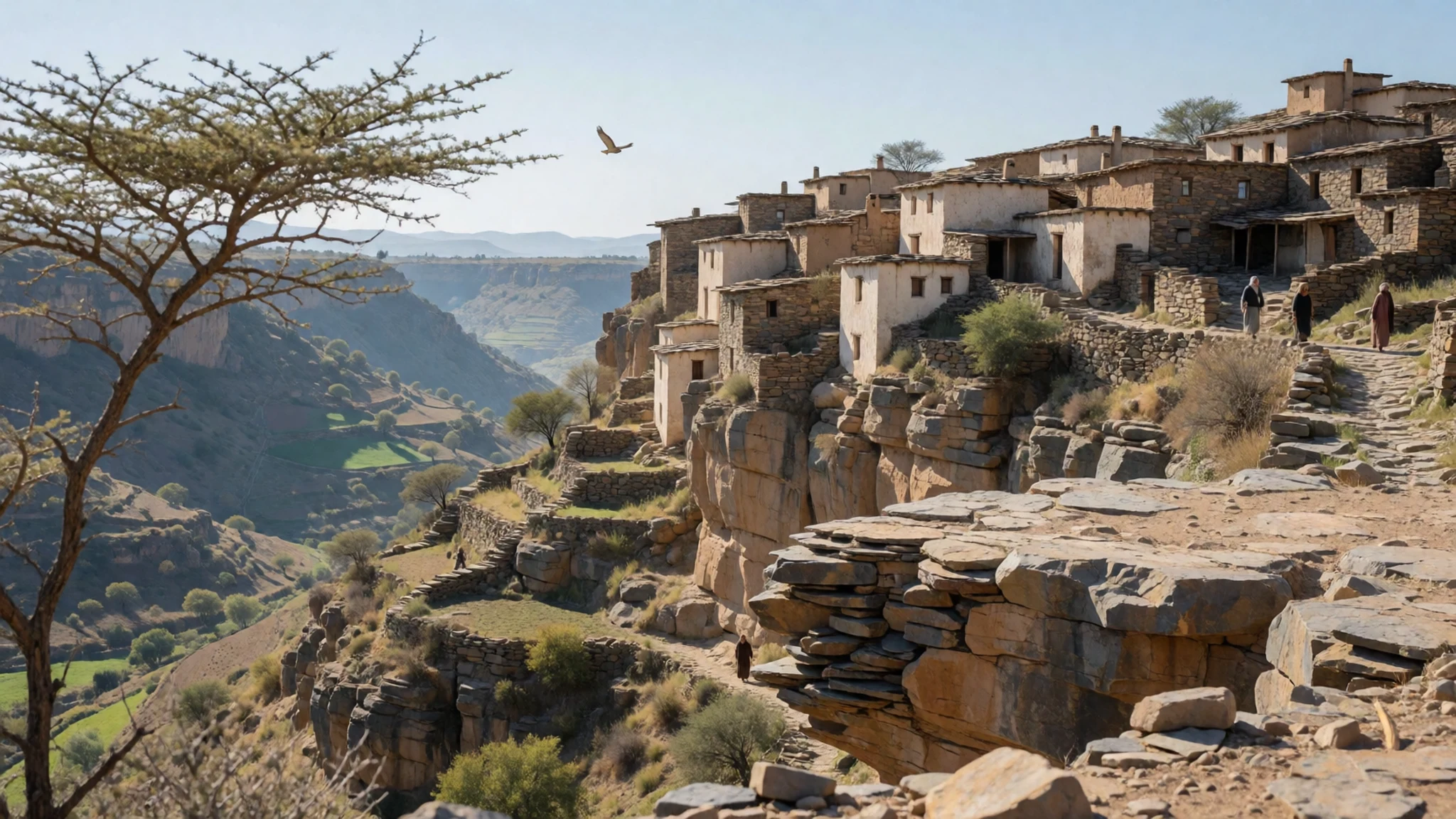
- The Ottoman-era fort — Hill above the old city
One of the old forts above Abha, often called the Turkish Fort, makes an easy outing of about two hours. The reward is the outlook: the land falls away along a long valley towards the Yemeni border country. Visit in clear weather, since haze and mist can hide the whole panorama.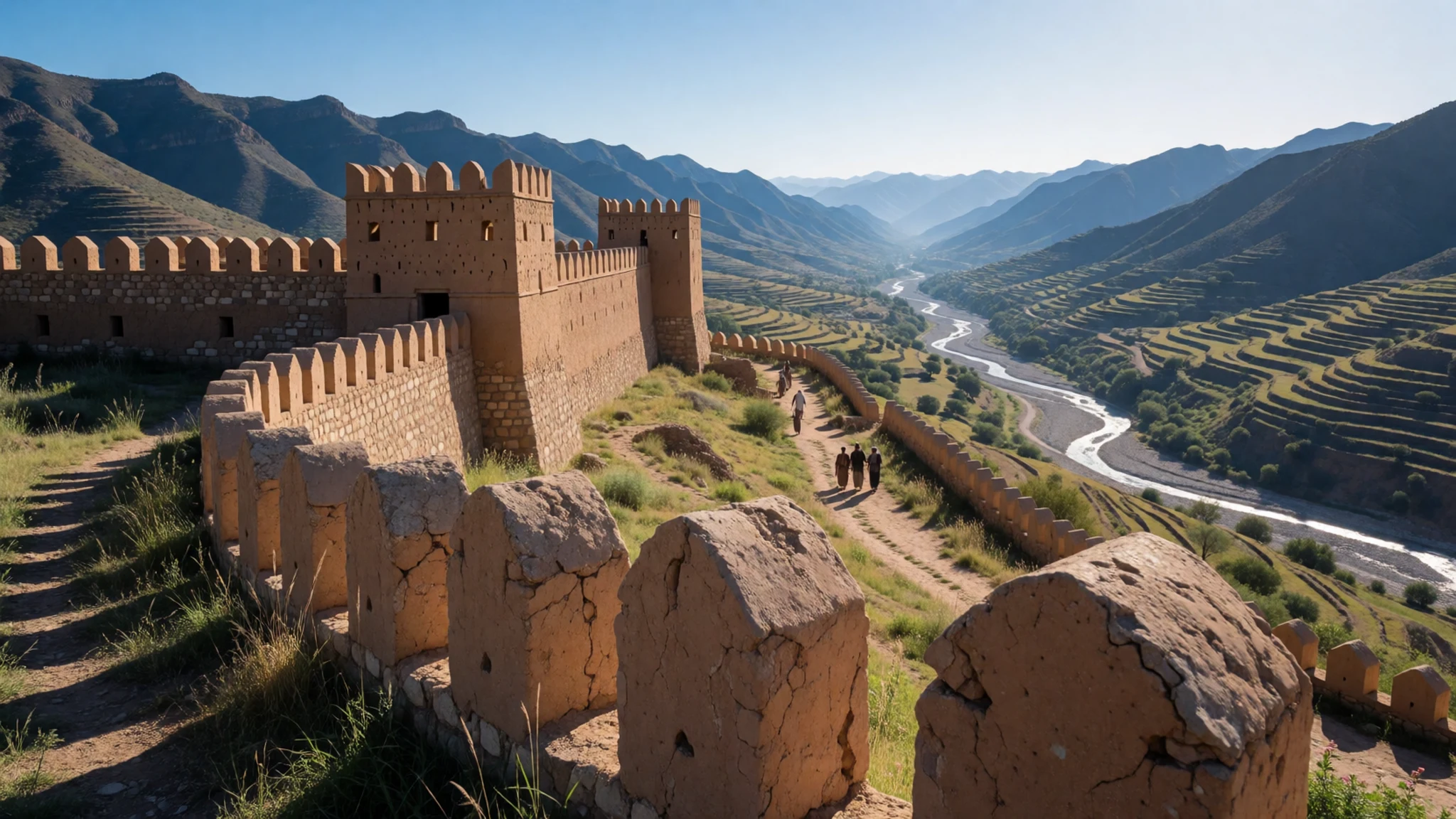
- Abha Dam and lake — Edge of the city
Abha Dam holds back a lake on the edge of the city and is a favourite place for evening walks and family picnics. It is a gentle contrast to the mountain viewpoints, and a good stop when cloud has closed in on the heights.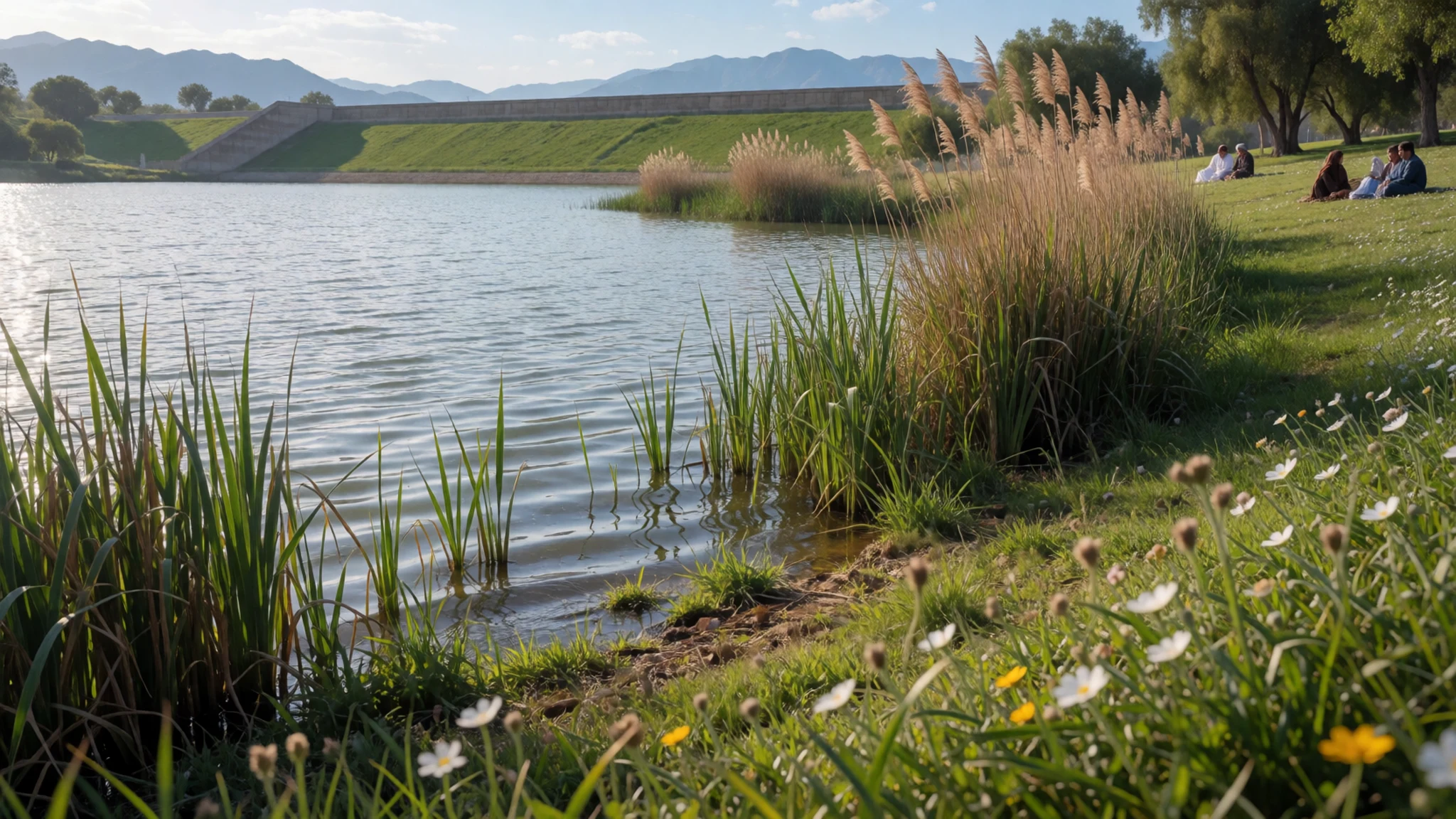
- Mud-brick villages and mountain drives — Roads around Abha
Older village houses here are built of mud brick, with slate slabs jutting from the walls to shed rain. Winding routes such as the so-called Monkey Road towards Mohayil, or the mountain road to Taif, give long views. Drive carefully: fog and sharp bends are routine, and weaver-bird nests hang in roadside bushes.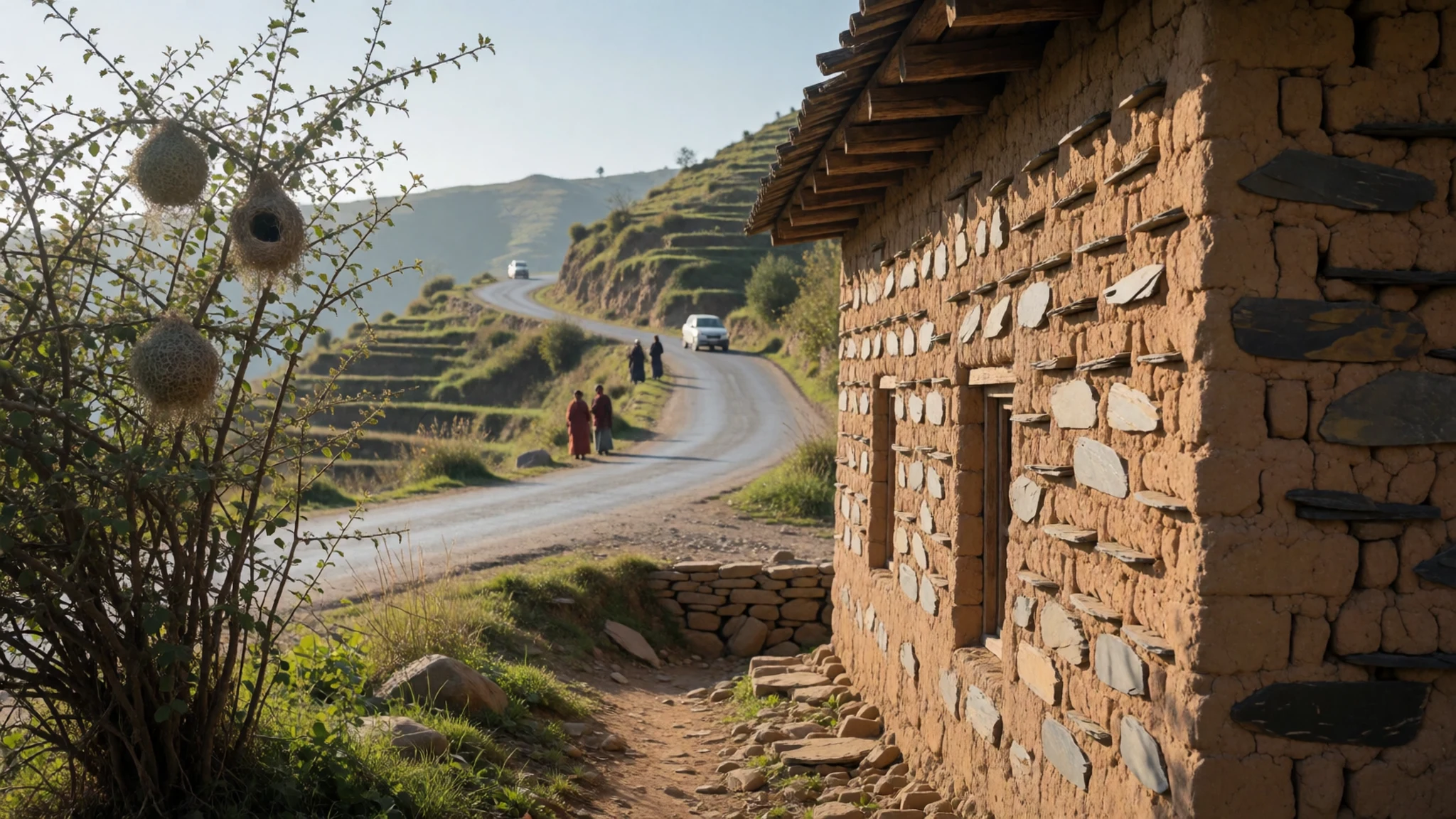
Culture
Abha has a character of its own within Saudi Arabia, shaped by the highland clans of Asir and by a way of building and decorating that differs from the desert interior. Traditional houses use stone, mud and slate, and in the villages women have long painted bold geometric patterns on interior walls, a craft linked to the region and often called Al-Qatt Al-Asiri. Hospitality is central, and visitors are likely to be offered coffee, dates and sweets as a matter of course.
Modern cultural life leans on tourism. The state has promoted Abha as a summer destination, and the season brings the Abha Festival, along with sporting fixtures, exhibitions, concerts and poetry evenings. Poetry still matters across Arabia, and sung verse is a popular form. The city also holds a sad place in Arab music history: the singer Talal Maddah spent his last moments on an Abha stage.
Religion shapes the daily rhythm. Shops and cafés may pause around the five daily prayers, and Friday mornings are quiet. Families make up much of the crowd at viewpoints and parks, particularly in summer and on school holidays, so evenings can be lively and busy. Visitors from India or the UK will find the pace relaxed, the mood courteous, and conversation easy to start over tea.
Dress modestly, ask before photographing anyone, especially women, and keep voices low near mosques at prayer time.
What to wear
Abha's traditional dress comes from the Asir highlands rather than the desert. Men's village wear has long included a wrapped waist cloth, a decorated belt and a headscarf, sometimes finished with a garland of fragrant leaves and flowers. Women's dress is bright, with embroidered panels and beadwork on cotton and other woven cloth. These outfits mostly appear at festivals, weddings and heritage events, and in folk performances staged for visitors.
Day to day, most men in Abha wear the white thobe with a ghutra or shemagh headcloth, while women generally wear a black abaya with a scarf, often with colourful clothing underneath. Younger people mix in jeans, trainers and jackets, especially in the cool evenings, which can surprise visitors expecting desert heat.
For a visit, think layers. Pack a fleece or light jacket for mornings and for viewpoints such as Jabal Sawda, and a waterproof for the rainy months. Wear shoes with real grip, because paths to fortified hilltops and village lanes are steep, rocky and slippery after rain. Dress modestly in public: loose clothing covering shoulders and knees is sensible for everyone, and women should check current official guidance on dress for visitors before travelling. Sun protection still matters at this altitude.
What to eat
- Kabsa — Family-run eateries across the city, especially at lunch
Kabsa is the dish most associated with Saudi home cooking: fragrant spiced rice, usually served under lamb or chicken. Order it at a local eatery and expect a large shared platter, best eaten with company and a plate of salad on the side.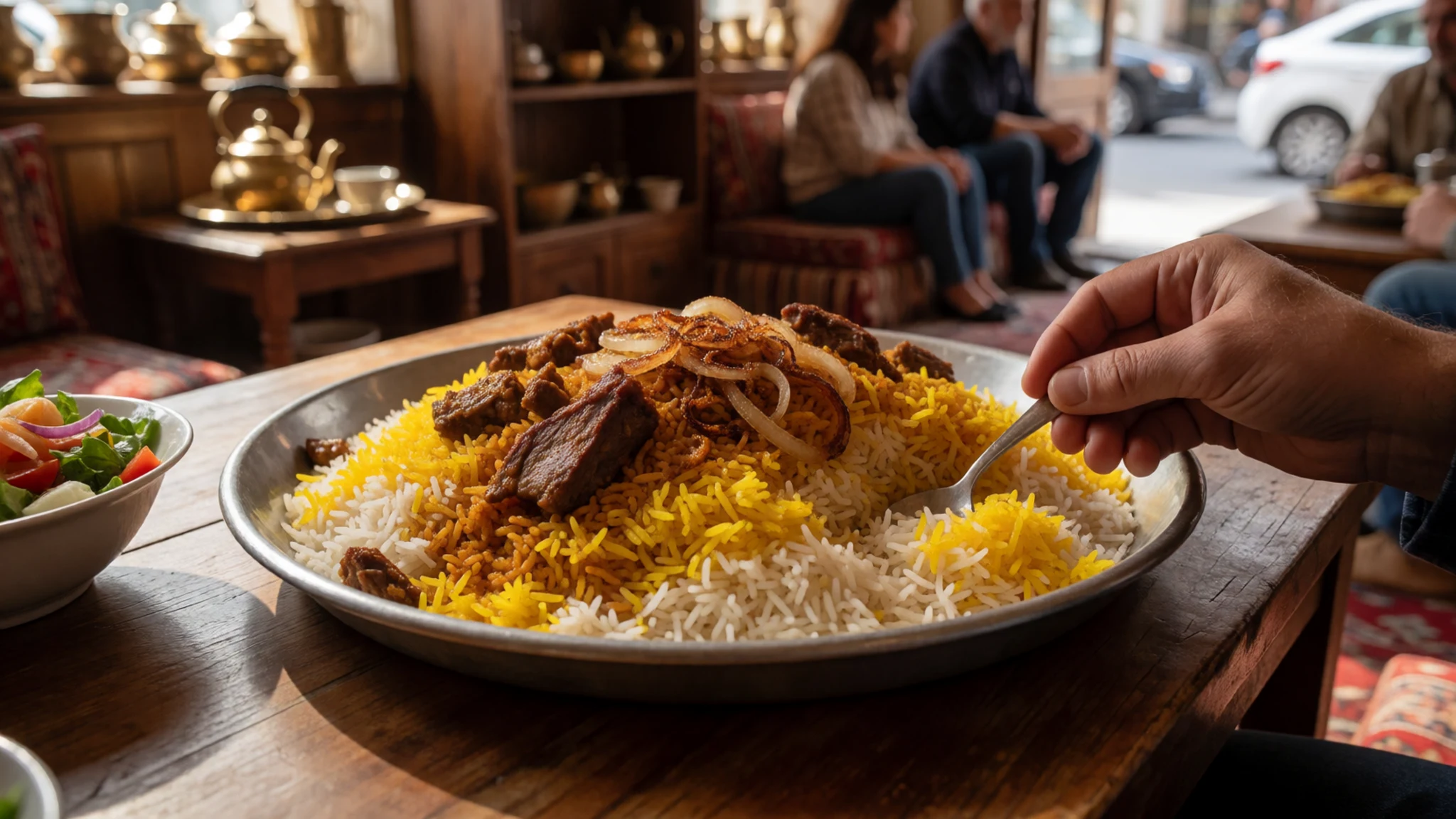
- Tannour bread — Neighbourhood bakeries and morning bread stalls
Tannour bread is baked against the wall of a hot clay oven, giving a soft, lightly charred flatbread. Buy it warm from a bakery and eat it with breakfast dishes, stews or simply tea, ideally within minutes of leaving the oven.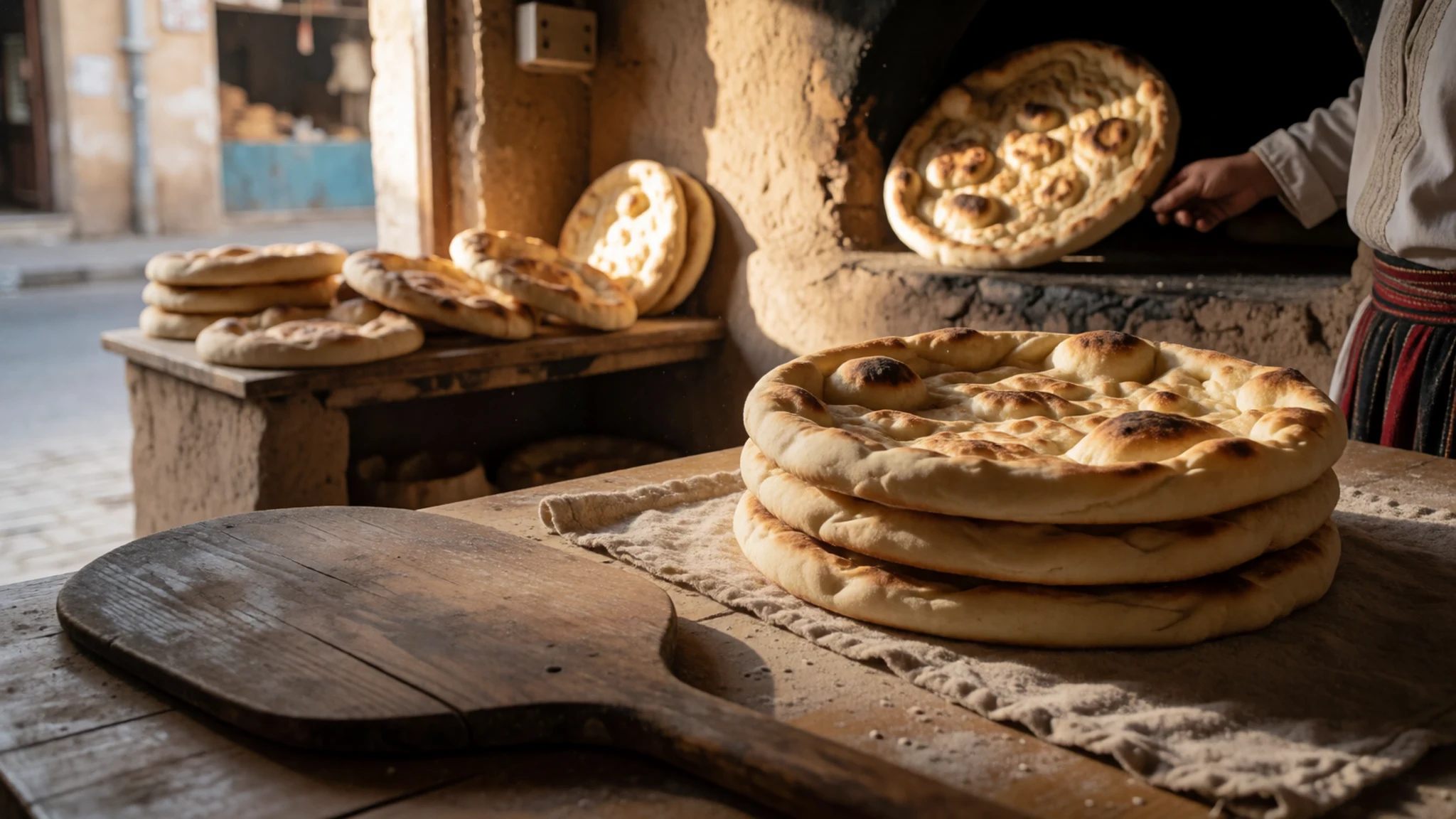
- Hatab tea — Cafés and viewpoint tea stalls
Hatab tea is a local hot drink, and the cooler highland air suits it well. Ask what is in the pot, as spicing and preparation vary from place to place. It is a good excuse to sit at a viewpoint and watch the cloud move. - Iced hibiscus tea — Cafés, juice counters and roadside stalls
Iced hibiscus tea is deep red, tart and refreshing, and a popular choice in the warmer months. It is usually served cold and lightly sweetened. Try it after a morning of walking, or alongside a heavier meal of rice and meat. - Local cafés — Cafés on viewpoints and in the city centre
Cafés are a large part of how Abha spends its evenings, and many sit on terraces with valley views. Order Arabic coffee with dates, or tea, and stay a while. Families fill them after sunset, particularly in summer.
Plan it
Best time. March–April, when spring rain greens the slopes, and September–October for clear, mild days. July and August are a popular escape from lowland heat but bring a second spell of showers and mist; winters are cooler, especially at night.
How long. 2–3
Getting there. Fly to Abha from Riyadh or Jeddah, then take a taxi or pre-booked car into the city. SAPTCO buses run from major Saudi cities to the Abha bus station, just north of the centre. By road the approach from Khamis Mushayt is straightforward, but routes from the coast or from Taif are winding.
Budget. mid
Tips
- Visit viewpoints such as Jabal Sawda early, before cloud fills the valleys
- Check official sites for cable car and attraction hours and fares before heading out
- Book accommodation early for the summer festival season and school holidays
- Drive carefully on mountain roads, where fog, bends and livestock are common
- Carry water and a light jacket, as altitude makes mornings and evenings cool
Etiquette
- Dress modestly and ask permission before photographing people, especially women and families
- Expect shops and cafés to pause around prayer times and plan around them
- Accept offered coffee and dates politely; refusing the first cup can seem abrupt
Nearby
Sources
- Wikidata Q190948 (CC0)
- Wikipedia: Abha (CC BY-SA 4.0)
- Wikivoyage: Abha (CC BY-SA 4.0)
- Photo: Abha city (Awad Zarib / Asir Municipality) (CC BY-SA 4.0)
- Photo: Abha, Saudi Arabia (Java4) (Public domain)
- Photo: Abha city (Aiman titi) (CC BY 3.0)
- Photo: Abha city (Aiman titi) (CC BY 3.0)
- Photo: Abha, Saudi Arabia (Basheer Olakara) (CC BY 2.5)
- Photo: Abha Dam (saudipics) (CC BY-SA 4.0)
- Photo: Col. Walker and Capt. Nassief at Abha (Harry F. Cameron) (Public domain)
- Photo: Abha (Chad Nagle) (CC0 1.0)


Wildlife
- Speke's weaver (animal)
Speke's weaver is a songbird that children can remember as a little East African singer from a family famed for weaving. In Abha, the nests of weaver-birds hang in roadside bushes, so that is the place to look. Drive carefully, since fog and tight bends are everyday hazards, and stop only somewhere safe. Watch from a respectful distance, keep quiet, go with a guide if you can, and never feed the birds. - Weaver-bird (bird)
Ploceidae is a large family of small birds, the weavers, remembered for stitching plants into beautifully woven nests. Most live in Africa, with a few in tropical Asia. In Abha, look for their nests hanging in roadside bushes. Take care on the road, since fog and tight bends are everyday hazards, and stop only somewhere safe. Watch from a good distance, stay quiet, go with a guide if you can, and never feed them.