Farasan Islands
Farasan Islands, Saudi Arabia
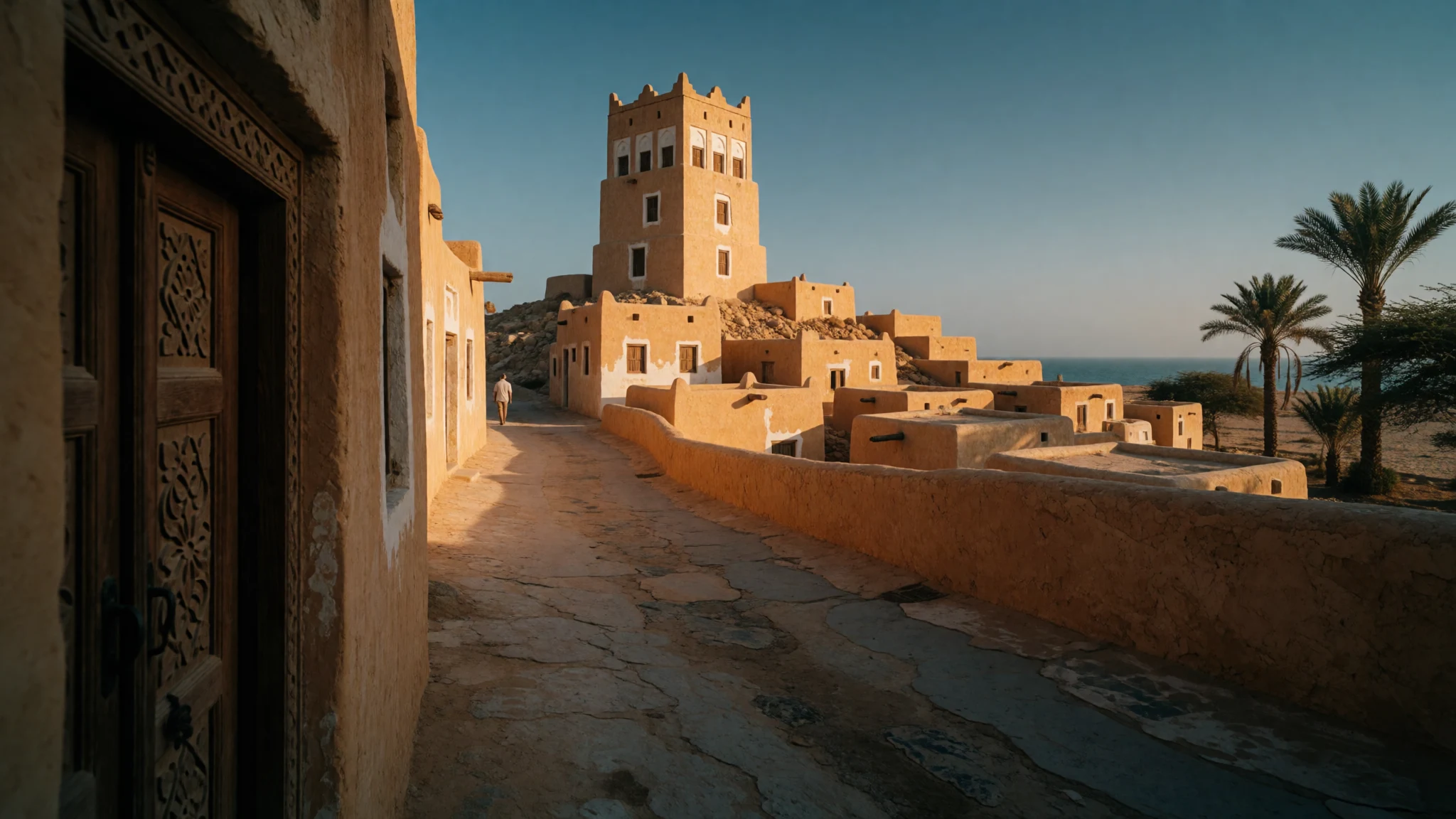
Farasan Islands offer Red Sea coral, quiet coral-stone towns and a Roman inscription, all reached by a short ferry from Jizan.
The place
The Farasan Islands are a coral archipelago in the southern Red Sea, lying off the coast of Jizan in the far south-west of Saudi Arabia, with a southern fringe that belongs to Yemen. Close to two hundred islands and islets make up the group, but only three have people living on them: Great Farasan, Sajid and Qummah. Great Farasan holds the town of Farasan, which is the capital of the governorate, itself part of Jazan Province. The land is low and flat, a mix of fossil-coral plateaux, pale coral-sand dunes and open plains, and the highest ground is only a modest rise on Great Farasan. Great Farasan and Sajid are joined by a bridge, and a ferry links the group with the mainland. The surrounding water is the real draw. Reefs lie close to many beaches, and the protected area was recognised as a UNESCO Biosphere Reserve in 2021. It is also included on the tentative list of Saudi Arabia for World Heritage status. Facilities are simple. Farasan town has a small choice of hotels and resorts, and many visitors camp on the beaches with their own equipment. There have been no dive centres on Great Farasan, so snorkellers should carry their own gear and check the current position before travelling. Heat and humidity shape much of the year, from the hours people keep to the way the old houses were built. The pace is slow, the roads are quiet, and the sea is never far from any point on the island.
Its story
The Farasan Islands have been a waystation for sailors for a very long time. Roman sources knew them as Portus Ferresanus, and a Latin inscription found on Great Farasan, dated to the second century, points to a Roman naval and military presence. Scholars think the islands passed from the province of Arabia Felix to Egypt's administration before that inscription was cut, which would make them a remote southern outpost, thousands of kilometres from Rome. Latin loanwords in the local language are another trace of that contact. The Roman chapter ended with the Arab Muslim conquest and the Islamisation that followed. In the late medieval period the navigator Ahmad ibn Majid noted the islands for their water, food and anchorages. Egyptian Mamluks held them in the early sixteenth century, and the Ottomans took control at the start of the twentieth, allowing a German coaling station on Qummah. The Idrisids captured the islands from the Ottomans during the First World War, and Saudi control followed, confirmed a few years later by the Treaty of Taif. Pearling, already recorded in medieval times, collapsed in the early decades of Saudi rule and hurt the local economy. Oil-era spending later revived it, and tourism is the newest chapter. Before that, a French engineer's survey of oil seeps led to a long concession, though the islands lived mainly from fishing.
What to see
- Al Qassar village — Great Farasan
Al Qassar is a sandstone village on Great Farasan, said locally to go back to Roman times. Nobody lives there now, and it has been rebuilt to receive visitors, so treat it as a restored showpiece rather than a working neighbourhood. Go early or late, when the stone glows and the heat is bearable, and allow time to wander the lanes.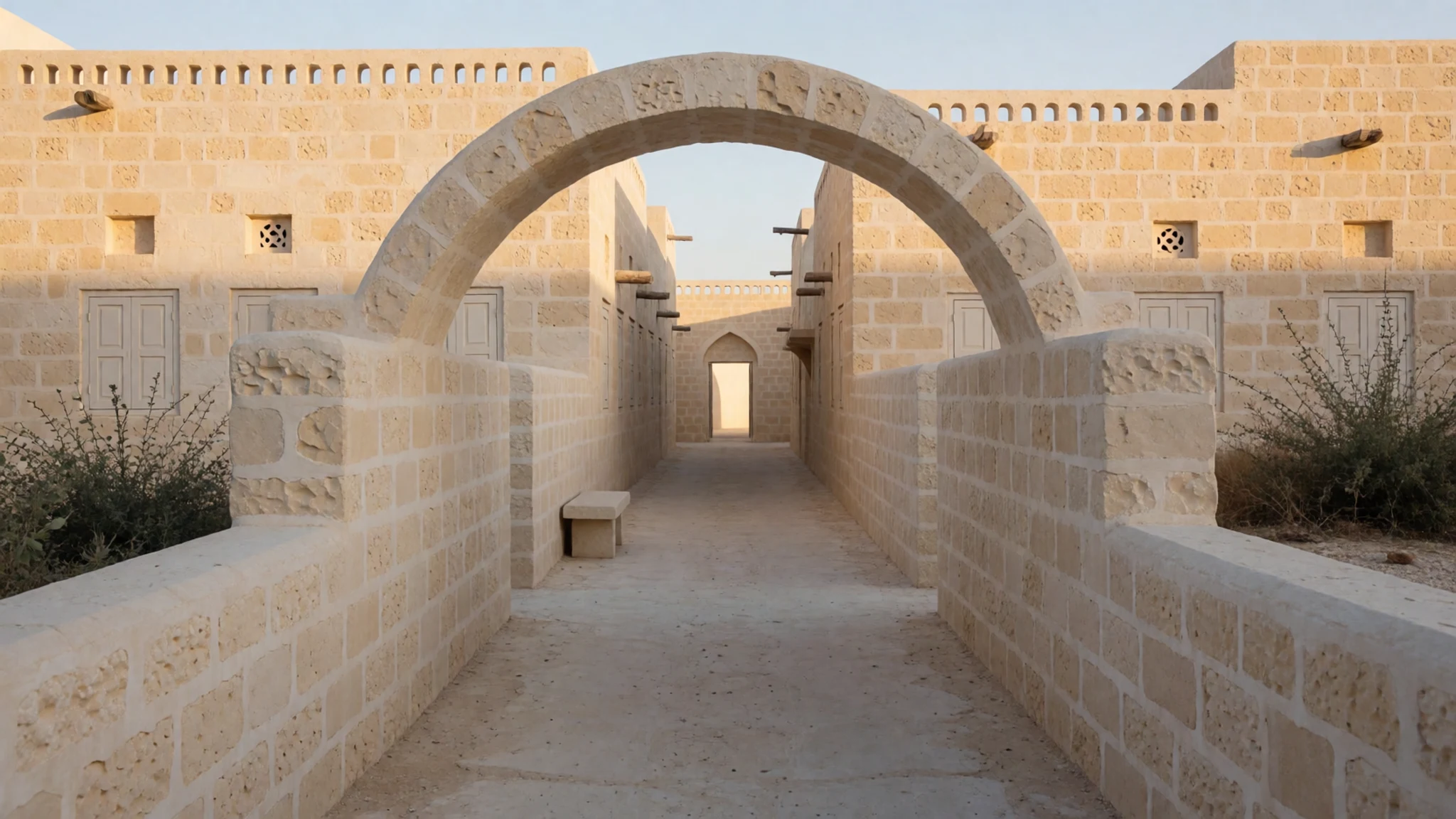
- Beit Al Refai — Farasan town
Beit Al Refai was the home of Munawar Al Refai, a prosperous pearl merchant, about a century ago. It shows Farasani building at its most characteristic: walls of coral stone and intricately carved gypsum panels. Look closely at the plasterwork. Opening arrangements change, so ask in Farasan town before walking over.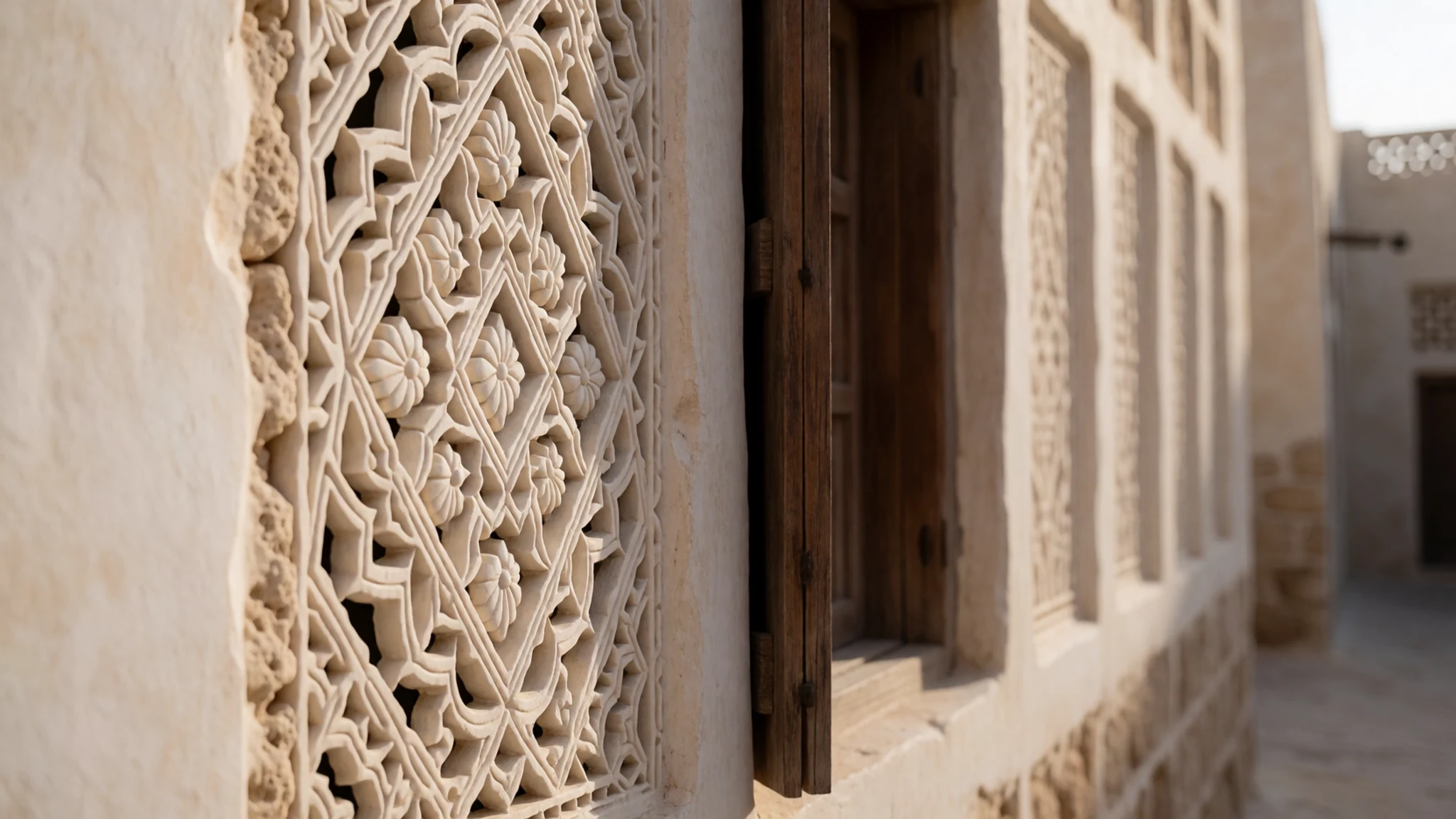
- Al-Najdi Mosque — Farasan town
Al-Najdi Mosque is a historic mosque in Farasan town, worth seeing for its distinctive local design, which shares its materials and proportions with the coral-stone houses nearby. Visit outside prayer times, dress modestly, and ask locally before going in, since access for visitors can vary. Even from the outside it shows how the island built for heat.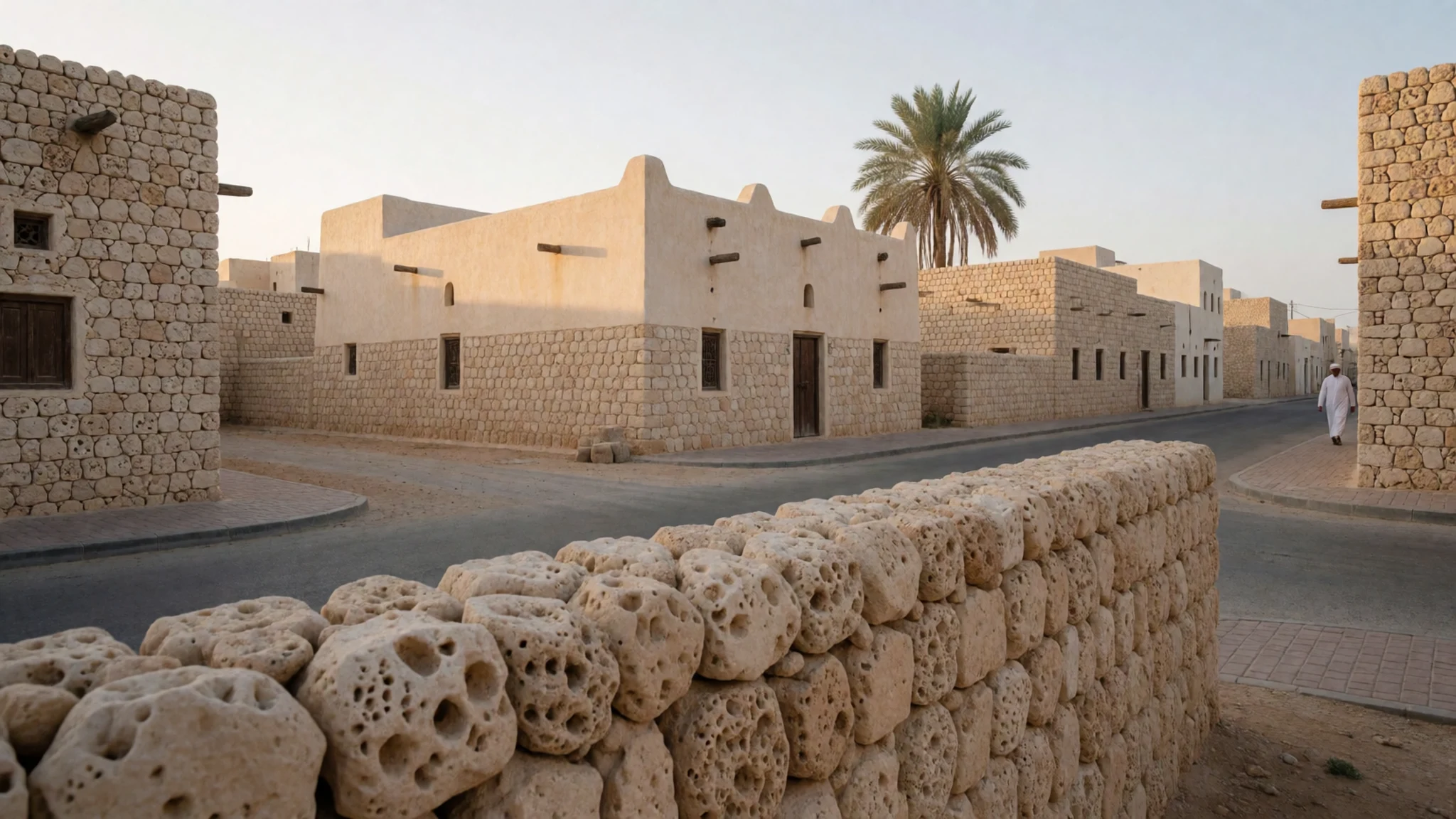
- Forts and the Portuguese Castle — Great Farasan
Farasan carries older military buildings, including the structure listed locally as the Portuguese Castle and an Ottoman-era fort that appears in photographs of the island. Names and origins are debated, so ask a local guide what the labels mean. They fit an archipelago that mattered to every passing navy, from Rome to the Mamluks and Ottomans.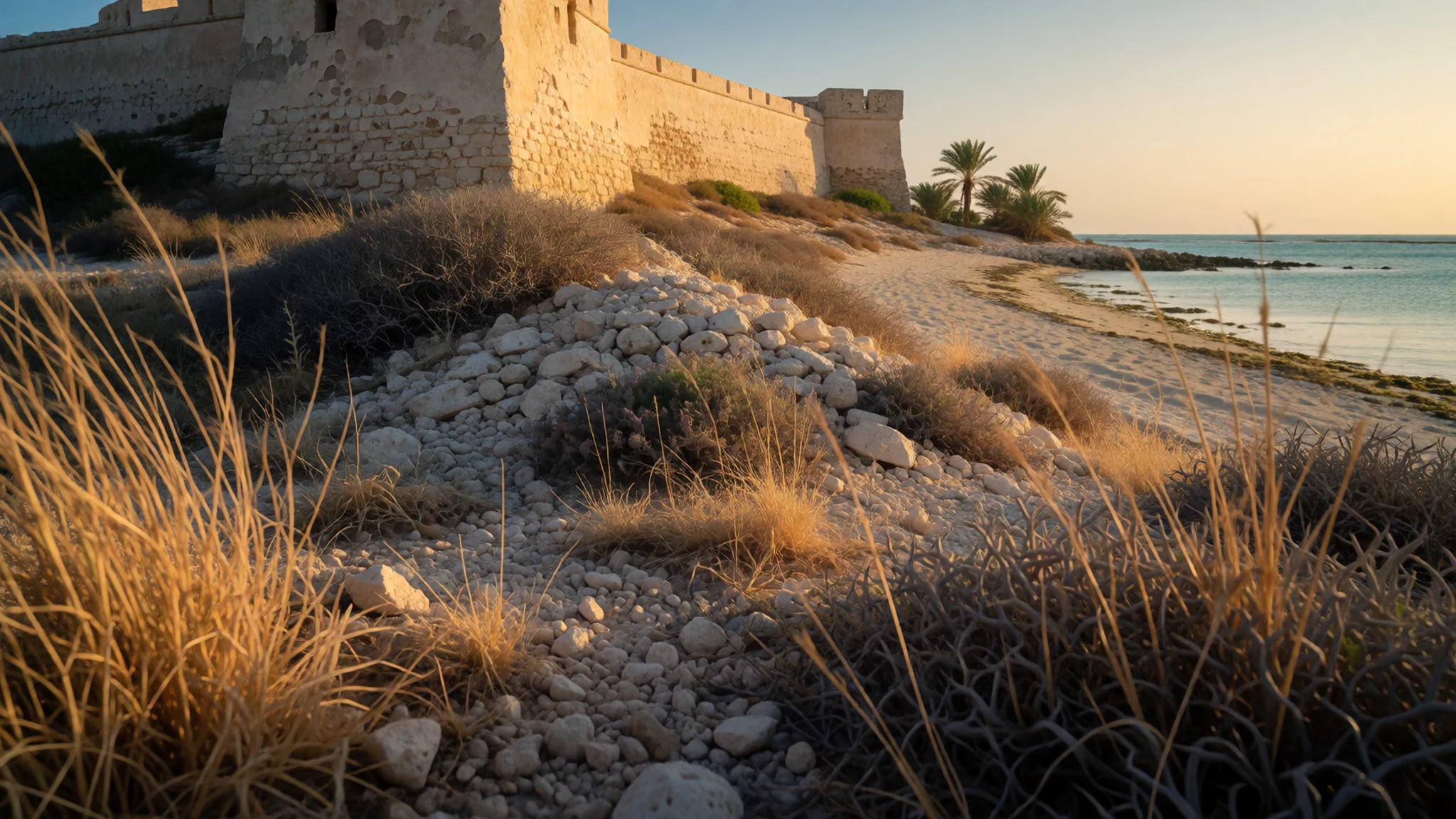
- Beit Al-Jaramal — Qummah Island
Beit Al-Jaramal is a local rendering of 'the house of the Germans'. German merchants built it as a coal warehouse, and it recalls the coaling station the Ottomans allowed on Qummah, when steamships needed fuel in the Red Sea. The ruin stands on the Qummah coast, so ask about transport before setting out.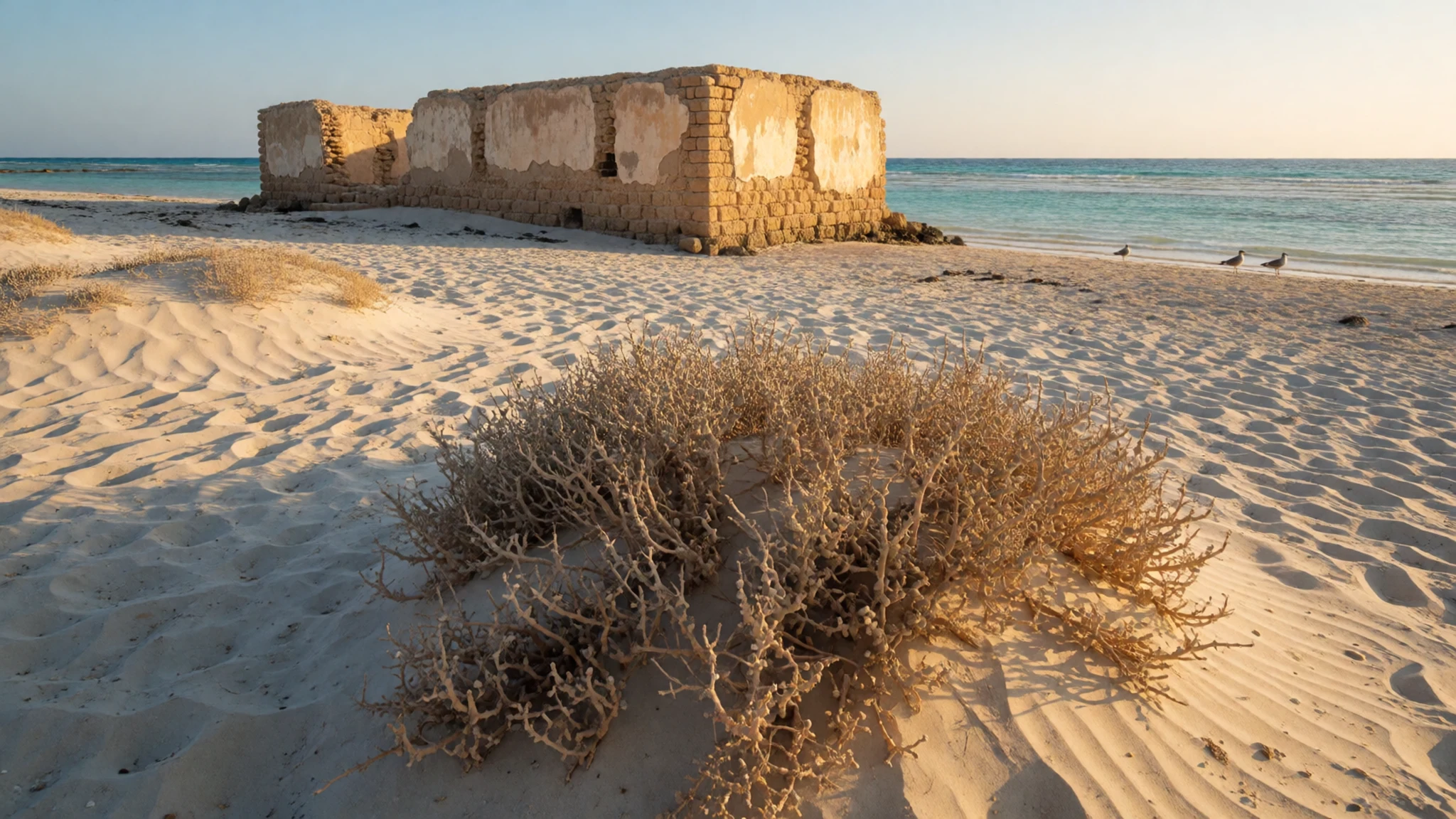
Culture
The Farasan Islands carry a culture shaped by the sea more than by the desert behind the mainland coast. For centuries people here fished, traded and dived for pearls, and the pearl merchants of the early twentieth century left coral-stone houses with carved plaster that still define the look of the town. The local language has picked up Latin loanwords, a reminder of how old the island's links with the wider Mediterranean world are, and the long list of rulers, from Romans to Mamluks, Ottomans and Idrisids, sits in the memory of the place. Life today is Saudi and Muslim in its rhythm: shops and offices pause around prayer times, family comes first, and hospitality is taken seriously. Offered Arabic coffee, the usual gesture is to accept a small cup, and tea, which locals call shay, often follows. Tourism is recent, so visitors are still something of a curiosity rather than part of the scenery, and people tend to be curious and welcoming. Heritage sites are sometimes restored but lightly signed, so a few questions in town often get further than a map. Dress modestly in town, ask before photographing anyone, especially women and families, and when you have had enough Arabic coffee, give the small cup a gentle shake before handing it back.
What to wear
Dress in the Farasan Islands follows the wider Saudi pattern, and the sources behind this reading record no separate Farasani costume, so treat the details here as regional rather than island-only. Men traditionally wear the thobe, an ankle-length cotton robe, with a ghutra or shemagh headcloth, often held in place by a black cord called an agal. Women wear the abaya, a loose dark cloak, usually with a headscarf, and some add a face veil; embroidered dresses appear at weddings and family gatherings. Everyday clothes on the islands lean practical: white or light thobes for the heat, loose shirts and trousers for work on boats, and cotton wherever possible because the air is humid. Younger people mix in jeans, trainers and football shirts. A visitor should dress for both climate and modesty. Wear loose, light tops that cover the shoulders and at least reach the elbows, with trousers or long skirts that cover the knees, and carry a light scarf for mosques and heritage buildings. Swimwear suits remote beaches or your own camp, and it is wise to cover up with a long shirt and shorts or leggings when others are around. Bring a wide-brimmed hat and sunglasses. Footwear matters too: sturdy sandals or reef shoes for coral rock and shallows, and closed shoes for ruins.
What to eat
- Fresh fish — Local seafood restaurants in Farasan town
Fresh fish is the obvious order on an island in the Red Sea. Look for local seafood restaurants in Farasan town, where the catch is usually cooked simply and served with rice and bread. Ask what came in that day rather than relying on the menu.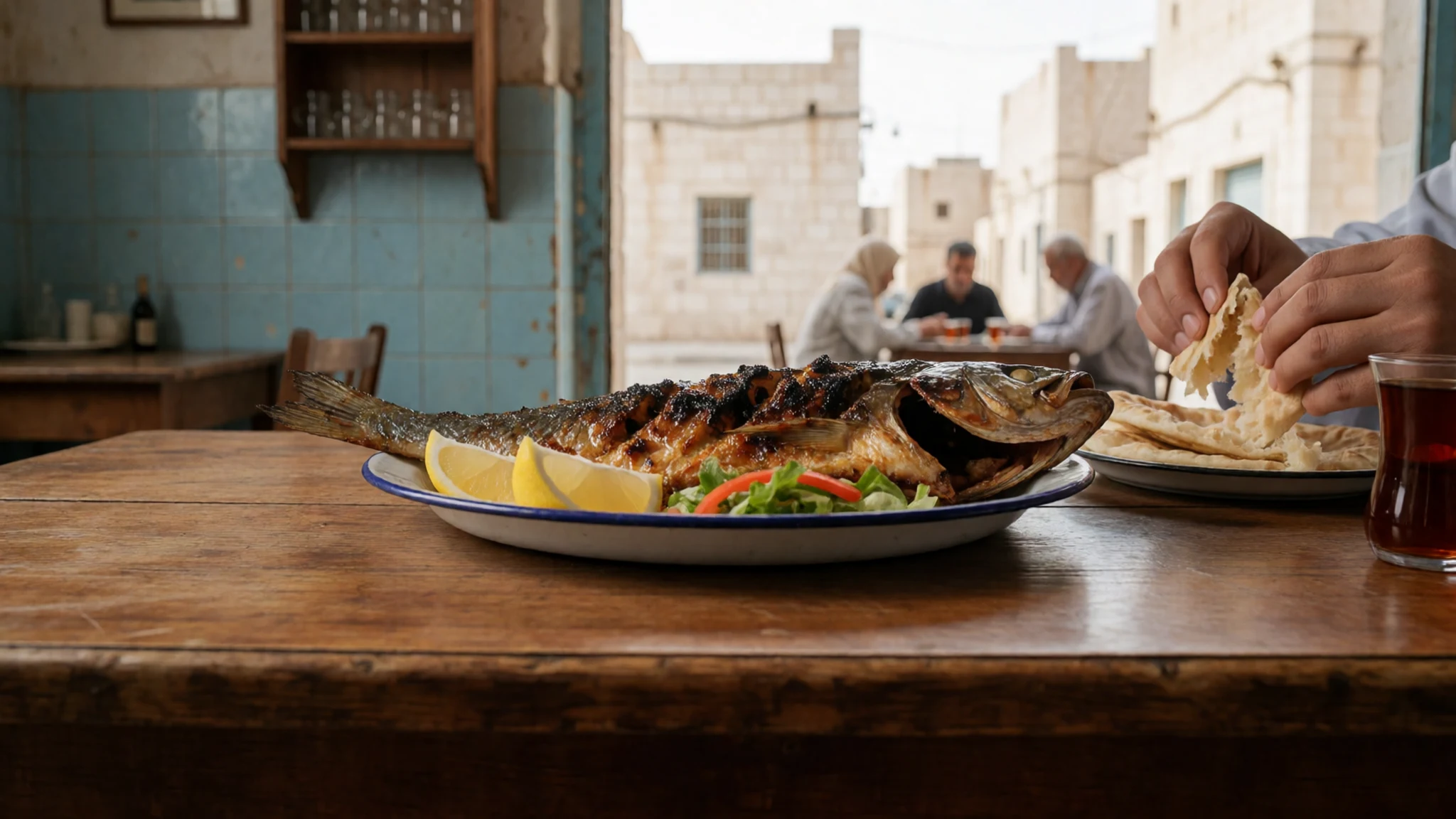
- Rice with fish or prawns — Seafood eateries in Farasan town
A plate of seasoned rice topped with fish or prawns is a familiar coastal meal. Ask for it at the family-run seafood eateries in the main town, where portions are often meant for sharing, and let the staff suggest what is best that day.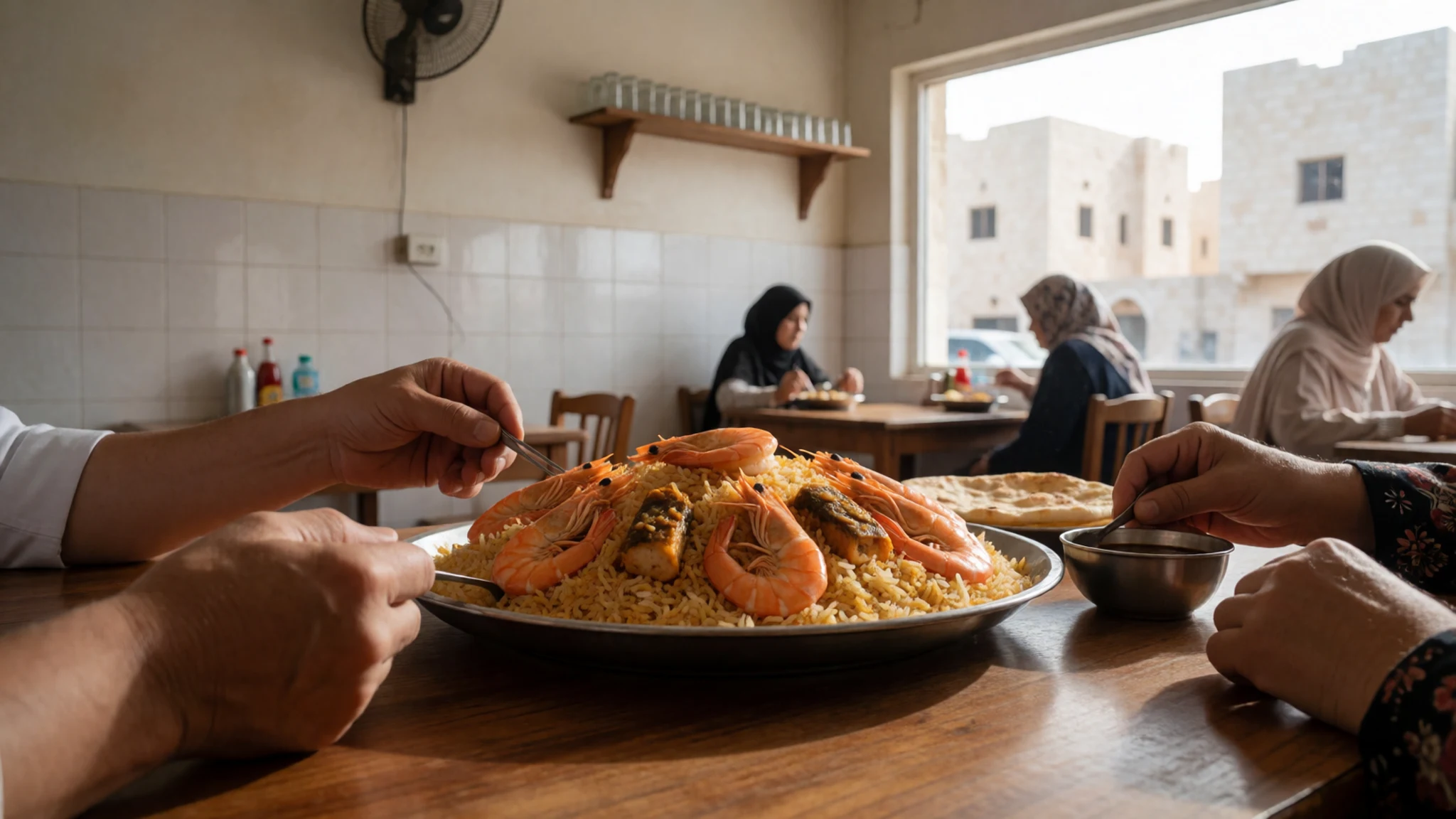
- Arabic coffee with dates — Homes, guesthouses and heritage sites
Arabic coffee, or qahwa, comes in tiny cups, lightly spiced and usually with dates alongside. Expect it when visiting a home, a locally run heritage site or a guesthouse, and accept at least one cup as a courtesy. - Shay (tea) — Cafés and tea counters in town
Tea, which locals call shay, is drunk sweet and through the day. Find it at small cafés and tea counters in town, or from your host after a meal, and it often arrives without being asked for. - Pizza and burgers — Fast-food counters in Farasan town
Local pizza and burger counters sell cheap, filling meals, a practical choice after a long day of snorkelling or on camping days. They are the easiest food to find in Farasan town when the seafood places are closed.
Plan it
Best time. November to March, the short mild season, when the heat eases; April to October is long and hot, and humidity stays high in winter and summer alike. Rain is unpredictable, with April the wettest month.
How long. 2–3
Getting there. Fly to Jizan on the mainland, then travel by road to the ferry port. The ferry to Farasan takes about one hour, carries vehicles as well as passengers, and has been free; check current sailing times locally before you plan around it.
Budget. mid
Tips
- Check ferry times with the operator or locally, as schedules change
- Bring your own snorkelling gear and camping equipment, as rental options on the island are limited
- Carry water, sun protection and some cash, and plan outdoor time for early morning or late afternoon
- Ask locally which heritage buildings are open before walking across the island
Etiquette
- Dress modestly in town and at mosques
- Ask permission before photographing people
- Do not touch coral or leave rubbish on beaches in the protected area
Nearby
Sources
- Wikidata Q2336295 (CC0)
- Wikipedia: Farasan Islands (rev 1377337793) (CC BY-SA 4.0)
- Wikivoyage: Farasan Islands (rev 5311862) (CC BY-SA 4.0)
- Photo: Farasan Islands sunset, Wajahat Mahmood (CC BY-SA 2.0)
- Photo: Red Sea in the Middle East, NASA/Terry Virts (Public domain)
- Photo: Saudi Arabia relief location map, Carport (CC BY 3.0)
- Photo: Farasan Island 3, Bandar Yuosef (CC BY 2.5)
- Photo: Al-Rifai House, Richard Mortel (CC BY 2.5)
- Photo: historic mosque in Farasan, Heritage Commission (CC BY-SA 4.0)
- Photo: Ottoman fort on Farasan Islands, Richard Mortel (CC BY 2.5)
- Photo: Beit Al-Jaramal, Heritage Commission (CC BY-SA 4.0)


