Hegra
Hegra, Saudi Arabia
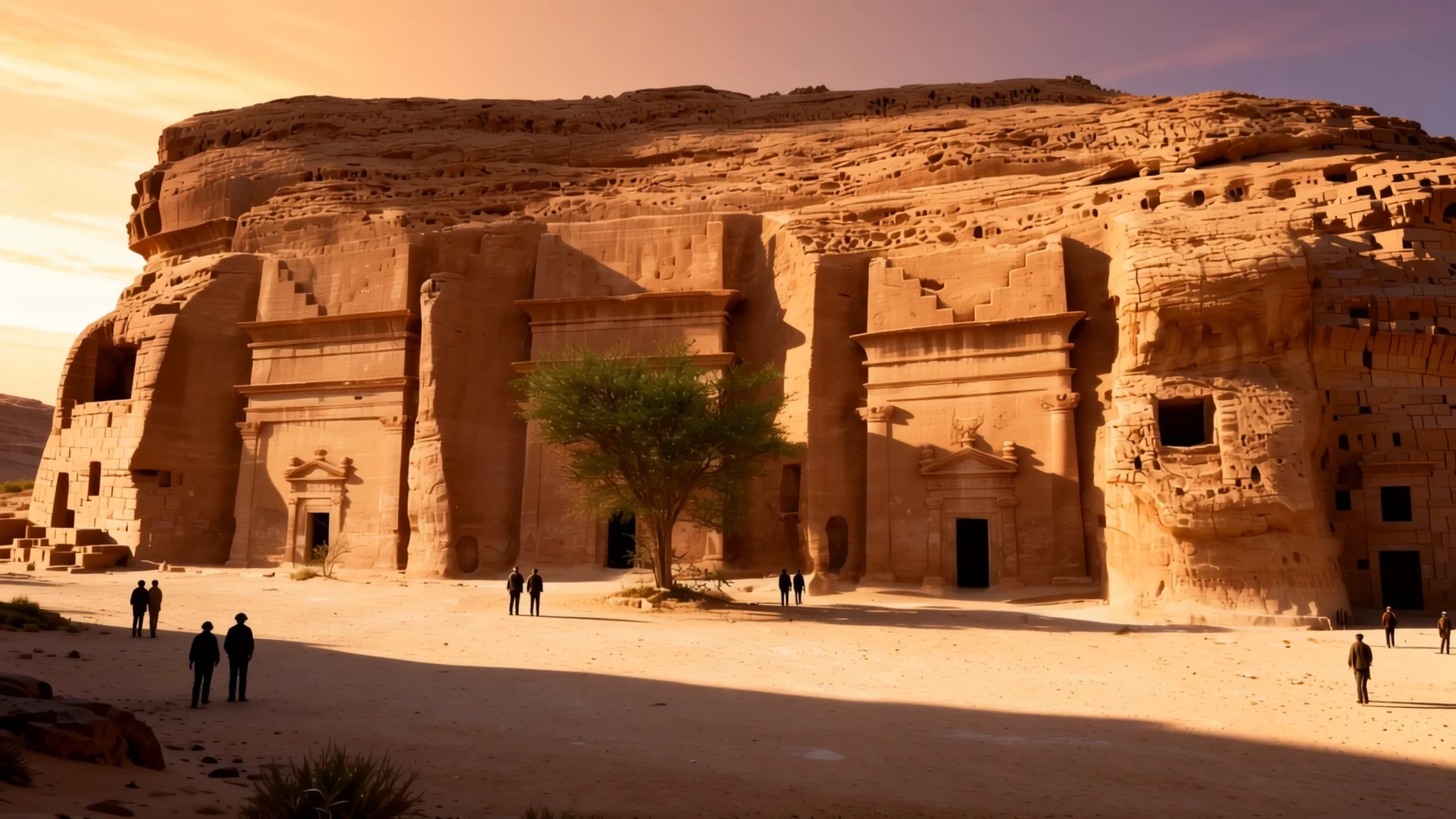
Go to Hegra for its rock-cut Nabataean tombs, a desert archaeological park where ancient carvings survive in unusually good condition.
The place
Hegra, also called Mada'in Salih, is an archaeological site in the Al-'Ula area of Medina Province, in the Hejaz region of western Saudi Arabia. Most of what remains dates from the Nabataean kingdom, which founded the city. It was the kingdom's southernmost city and its second largest after Petra in present-day Jordan. The site holds more than 110 tombs carved into sandstone outcrops, and their façades mix styles and scripts that reflect the many cultures passing along the trade routes.
The setting is arid, and the dry climate has done much of the work of preservation. The town was never resettled after it was abandoned, so the tombs, wells and oasis farming remain easy to read, giving a detailed picture of how Nabataean households lived in a harsh environment.
Today the monuments are spread across several necropolis areas, each a separate walk across sand and rock. Qasr al-Farid stands alone as the largest monumental tomb, and Jabal al-Khuraymat is the largest necropolis. Access to the necropolises is only by guided tour on a set itinerary, and walking between them takes time, so plan the route with your guide before setting out.
Hegra is a protected archaeological park, and overnight stays on site are not allowed. Most visitors base themselves in the Old Town of Al-'Ula, about 22 km away, and visit in the cooler part of the day. Busy periods can bring queues, and shade is limited across the open ground, so bring water.
Its story
Hegra's story begins long before the Nabataeans arrived. Across central Arabia, carvings and inscriptions cut into sandstone have been labelled Thamudic, a name coined by nineteenth-century scholars for a large body of writing they had not yet studied properly. Around Mount Athleb, the older Lihyanite script points to early settlement in a valley with fresh water and fertile soil. The Lihyans turned the area into a trading centre, where goods from east, north and south converged.
The great expansion came during the first century of the common era, when the Nabataean king Aretas Philopatris ruled from Petra and made Hegra the kingdom's second capital. The settlement grew into a true city, with farming watered by wells and the tombs cut into the rock on the valley's edges. The city's monumental façades show a mix of influences, and the trade that passed through the valley left its traces in them.
Later, the Romans held the region after Nabataean rule, and a monumental inscription honouring the emperor Marcus Aurelius survives on the site. The city was eventually abandoned and not resettled. The dry climate, the absence of later building and local beliefs about the place all helped preserve the monuments.
Today Hegra is recognised as a World Heritage site, and recent archaeological work continues to uncover rock writing and pictures on the mountains nearby.
What to see
- Qasr al-Farid — Isolated monument, Hegra archaeological park
The best-known monument at Hegra, this tomb stands about 23 metres high on its own rock, apart from the main groups of tombs. Its carved façade rises above the sand, and it is often the first stop on a visit. Early morning or late afternoon light turns the stone a deep orange, which suits photographs well.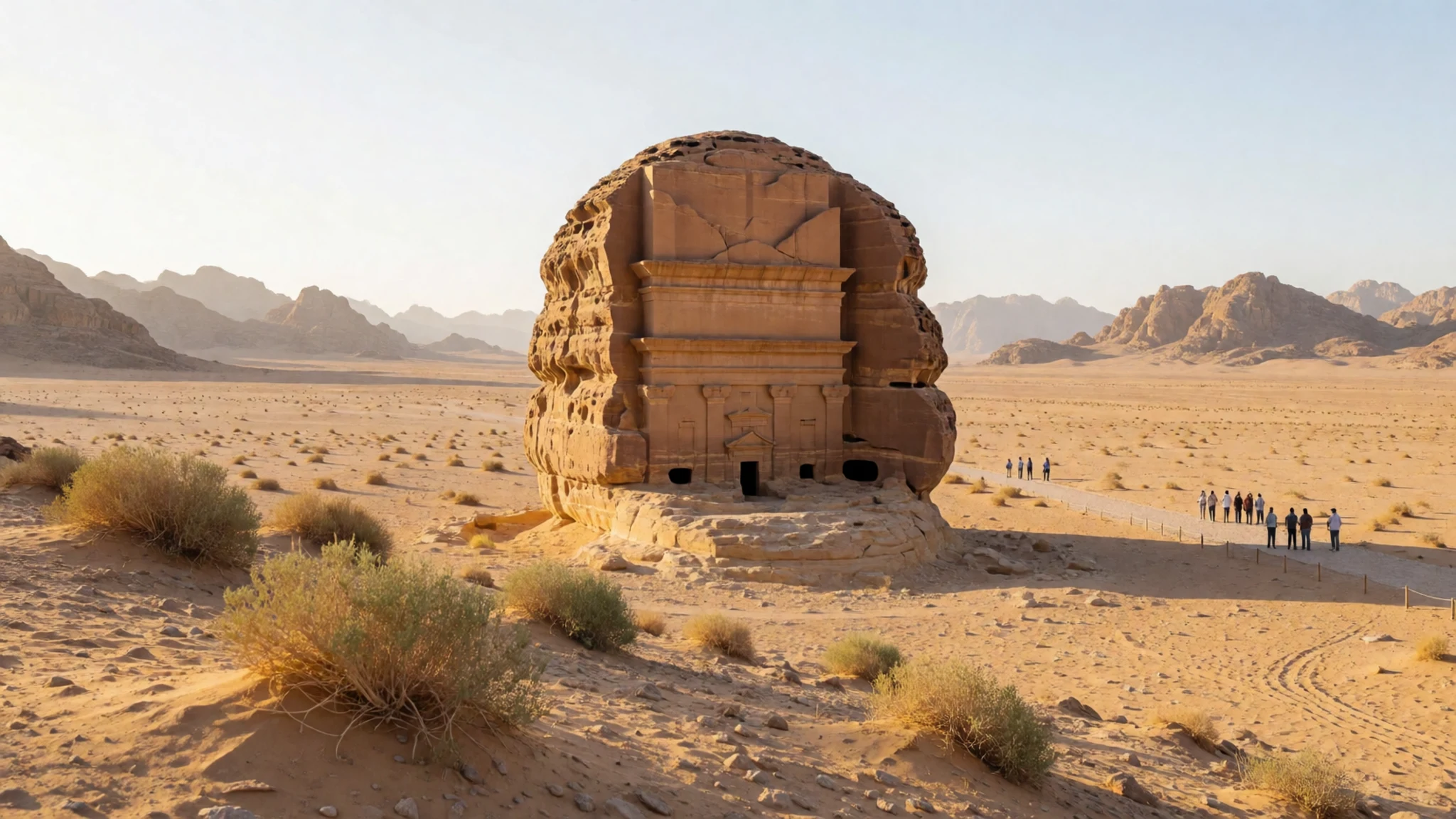
- Jabal al-Mahjar — Jabal al-Mahjar necropolis
Tombs are cut into the eastern and western sides of four parallel rock outcrops here. Because the faces point in different directions, a short walk along the ridges shows a range of orientations. The façade decoration is small and delicate compared with the larger tombs elsewhere, so it rewards a slow look.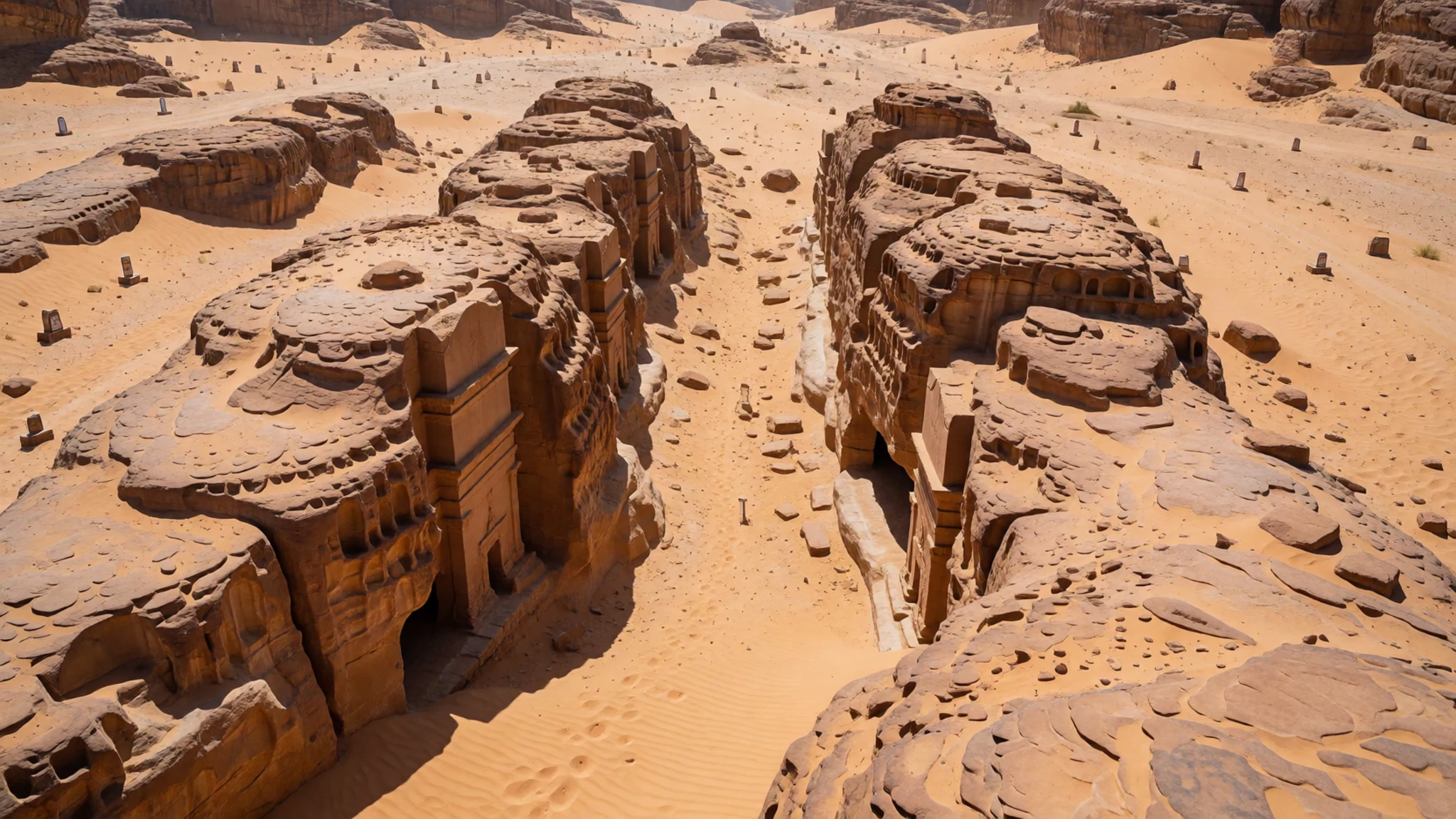
- Jabal al-Khuraymat — Jabal al-Khuraymat necropolis
The largest necropolis at Hegra, spread across numerous outcrops separated by sandy hollows. Only eight of the outcrops carry cut tombs, about 48 in total, so the walk between them takes longer than it looks. Wind-blown sand has weathered some faces, and there is little shade, so keep the visit short in summer.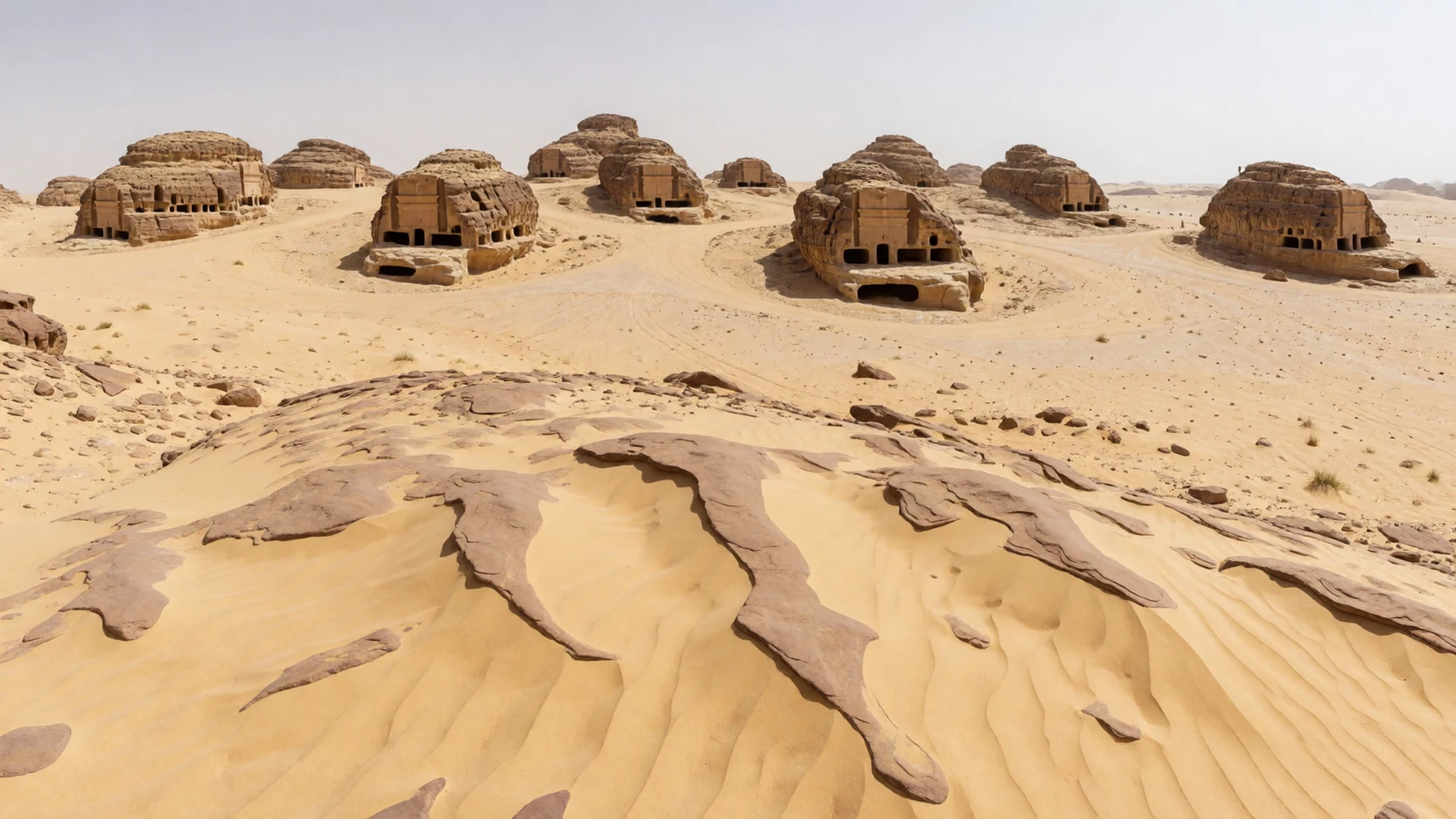
- Jabal al-Banat and Qasr al-Bint — Jabal al-Banat necropolis
This outcrop holds the Qasr al-Bint, a carved front rising up to 16 metres. Its scale is clear from the ground, and the work shows how the builders cut the sandstone. Walk around the base to see how the carving changes with the light.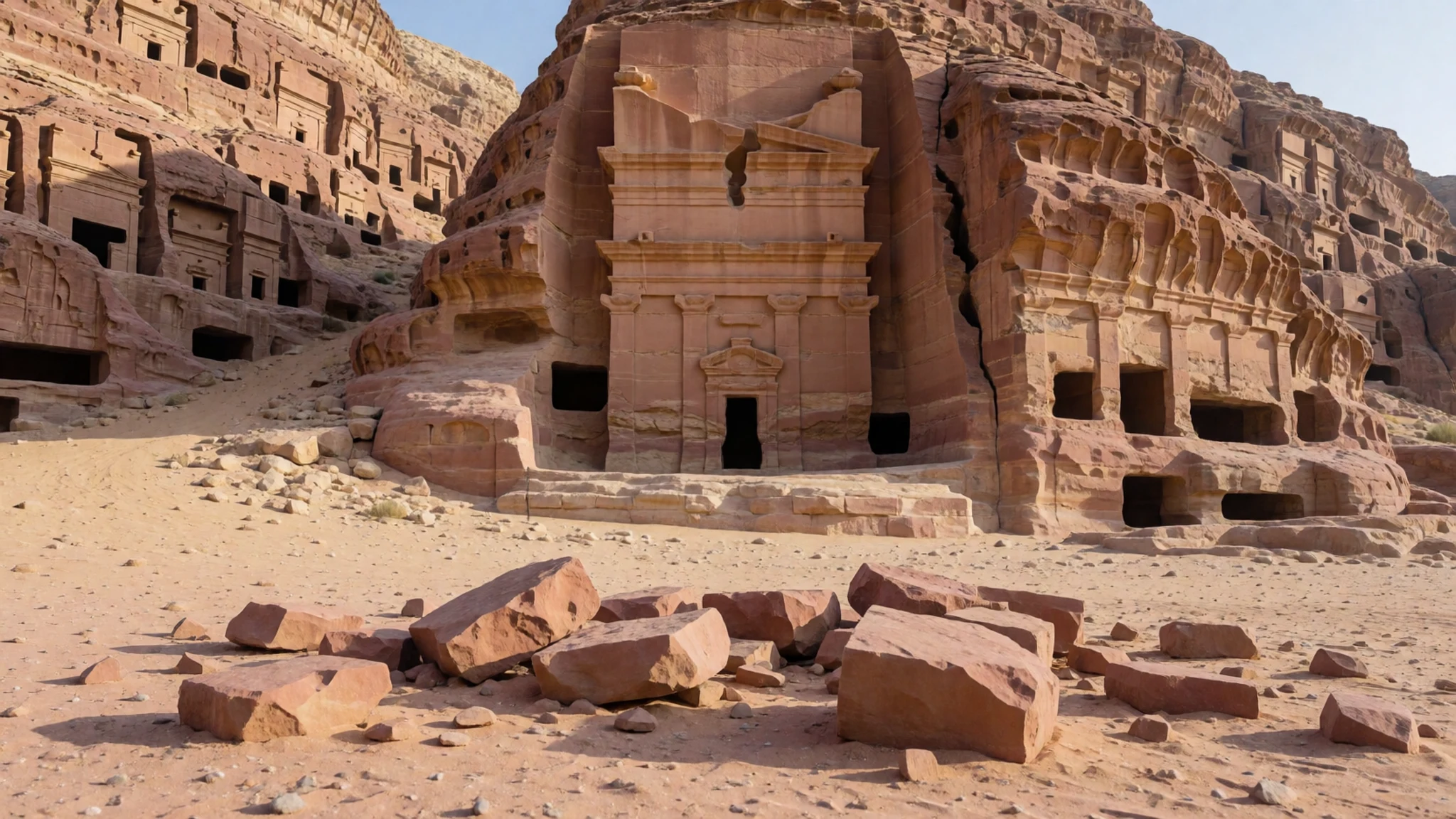
- Elephant Rock — Off the main Hegra route, near Al-'Ula
A picturesque rock formation, popular for photographs taken from the surrounding rocks. The base of the rock can only be reached through a café that surrounds it, and that means paying an entrance fee, so check the arrangement before setting out. Sunset draws a crowd, so arriving early gives a quieter view.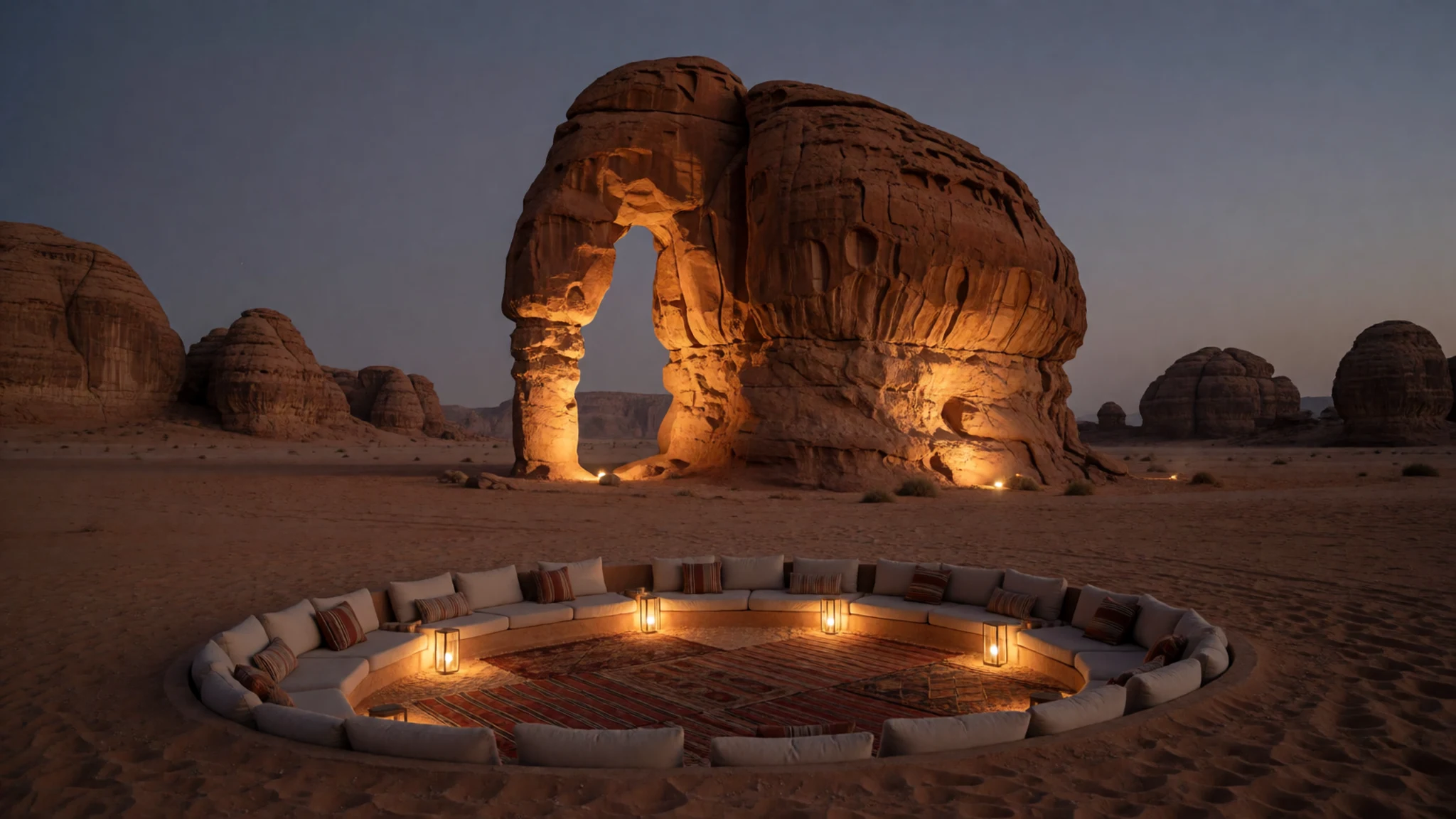
- Rainbow Arch — Rocky valley, north of Al-'Ula
A little off the beaten path, this giant natural rock arch measures about 100 metres in length and sits inside a rocky valley. It is a longer drive from Al-'Ula, and tracks can be rough, so a guided tour or a four-wheel-drive is sensible. Few other visitors usually make the journey, which leaves a quiet, wind-carved setting.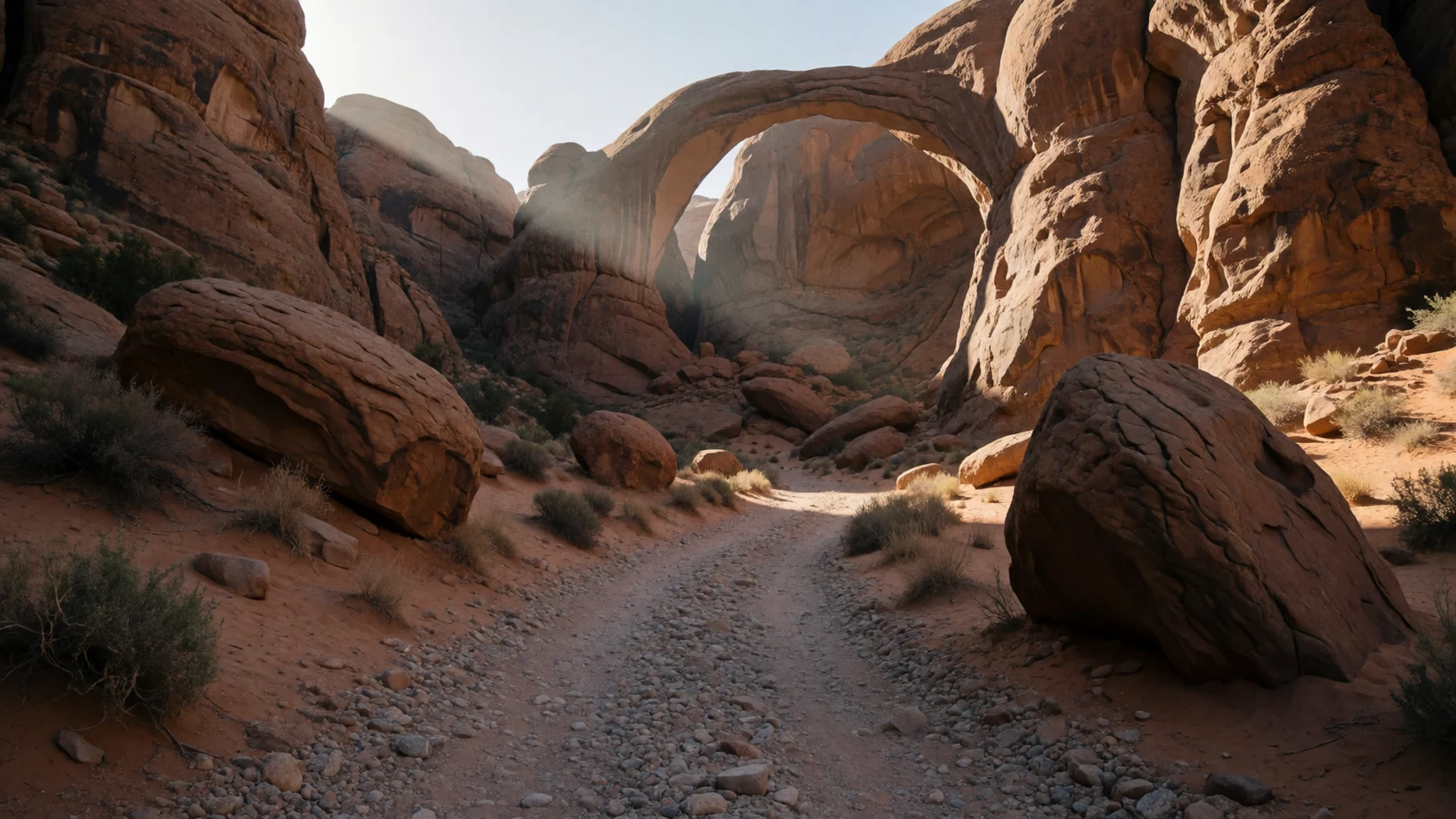
Culture
Mada'in Salih is both an archaeological park and a place that local people hold in quiet regard, and that shapes how visitors should behave. In Islamic tradition the name recalls the prophet Salih, so the valley is treated with reserve rather than as a playground. The sandstone is soft and easily scratched, and the tomb entrances and ledges are fragile, so keep to the marked routes. Hospitality is central across the Hejaz: accept tea or coffee when it is offered, greet people with a simple salaam, and take time to talk before asking questions. Dress modestly, since the surrounding towns are conservative, and cover shoulders and knees at the tombs as well as in the old town. Photographing families, guides or staff needs their agreement first. Never carve, write on or climb the rock faces, and ask before photographing anyone you meet.
What to wear
Traditional dress in Al-'Ula follows the wider Arabian pattern. Men wear the thobe, a long, loose robe usually in white or cream cotton, often topped with a ghutra, a headcloth held in place by a cord called an igal. Women have traditionally worn the abaya, a long dark cloak, over everyday clothes, with a headscarf. Cotton and wool dominate, because cotton breathes in the heat and wool keeps warmth in at night.
Today people in Al-'Ula wear everything from the thobe and abaya to Western jeans and shirts, and the mix is more visible in the newer parts of town. Younger women often choose lighter, more colourful abayas. Men still wear the thobe for prayer, weddings and formal occasions, and the ghutra is common in the desert and in older neighbourhoods.
For a visit, dress for sun and modesty. Loose cotton or linen trousers and long sleeves protect the skin from sun and sand, and a light scarf helps with shade and wind. Cover shoulders and knees, and avoid tight or revealing clothes. Wear closed, sturdy shoes with good grip, because the tracks are sandy and the rock is uneven, so sandals are a poor choice for the tombs.
What to eat
- Dates from the Old Town shops — Shops and stalls in the Old Town of Al-'Ula
Dates are the everyday sweet of the valley, sold by weight in shops and stalls around Al-'Ula's Old Town. Soft, dark varieties give a good taste of the oasis. Ask for a small sample before buying a larger amount to take away.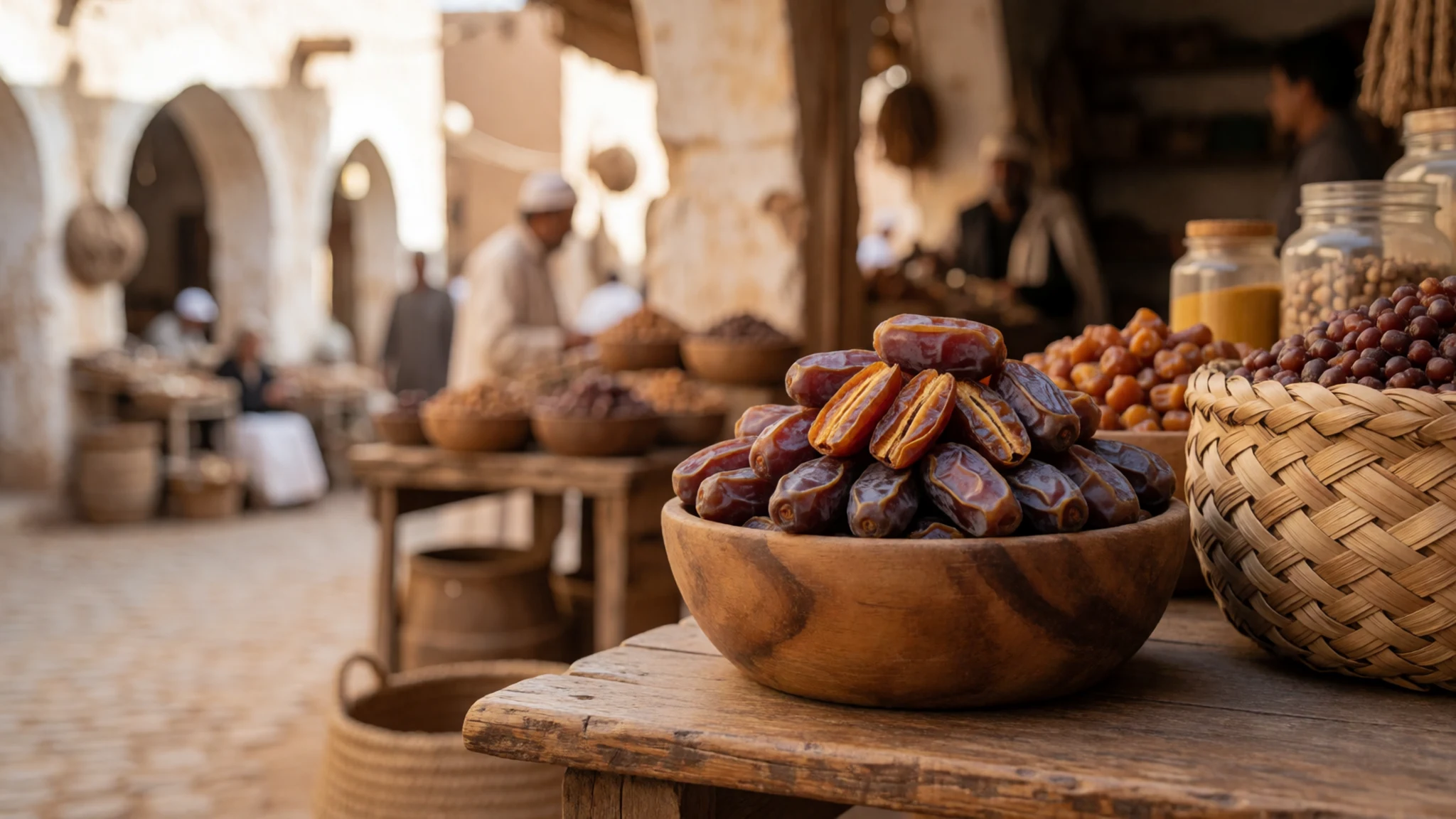
- Arabic coffee — Cafés and sitting areas in Al-'Ula's Old Town and newer streets
Lightly roasted coffee flavoured with cardamom is poured into small cups at cafés and in sitting areas across Al-'Ula. It is usually served with dates. Tilt the cup to signal that you have had enough.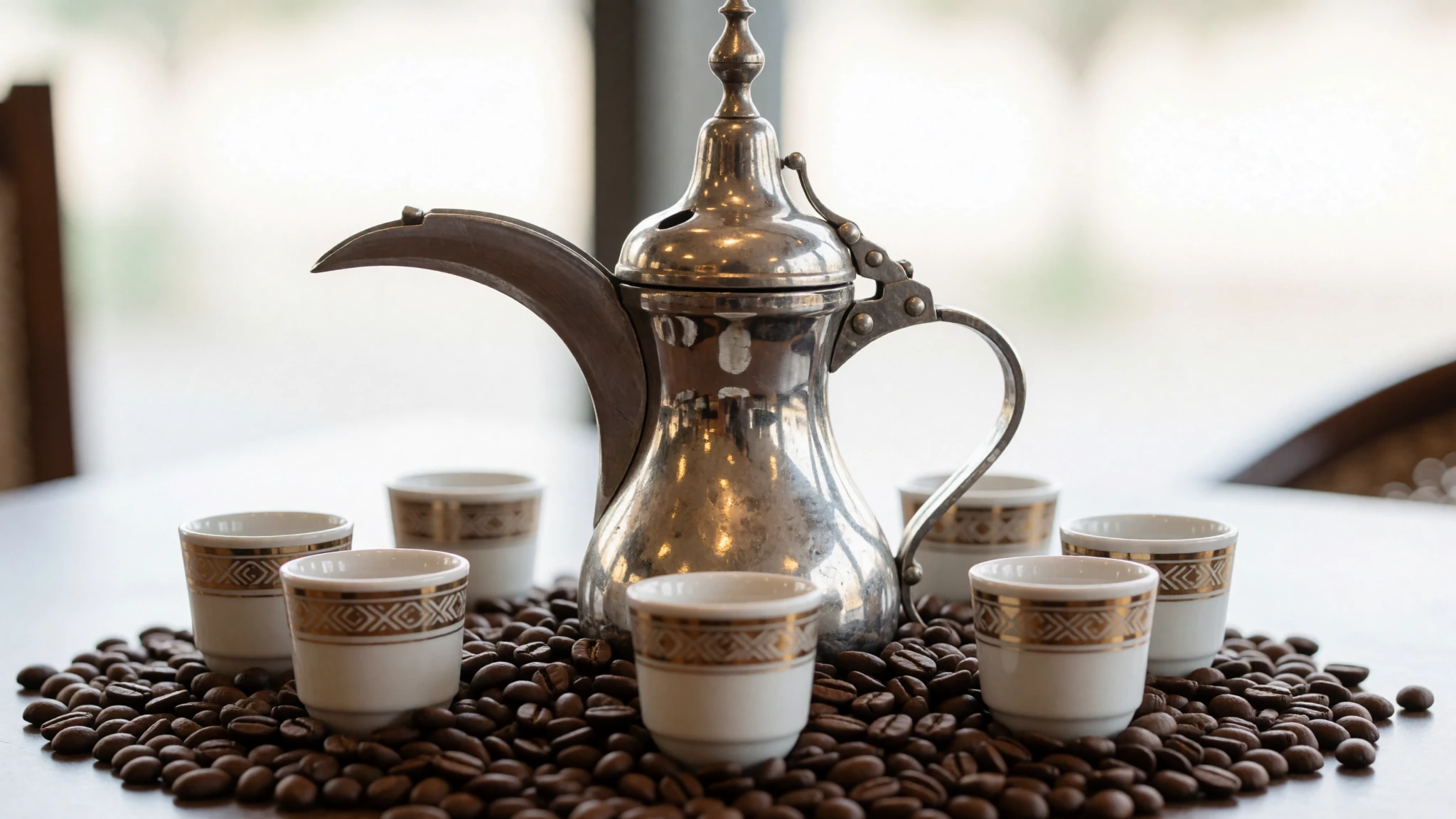
- Grilled meat and rice plates — Family restaurants in Al-'Ula's Old Town and new town
Grilled chicken or lamb on a bed of spiced rice is the standard lunch in Al-'Ula's restaurants. Portions are generous, so sharing a plate works well. Busy family eateries usually turn food over quickly.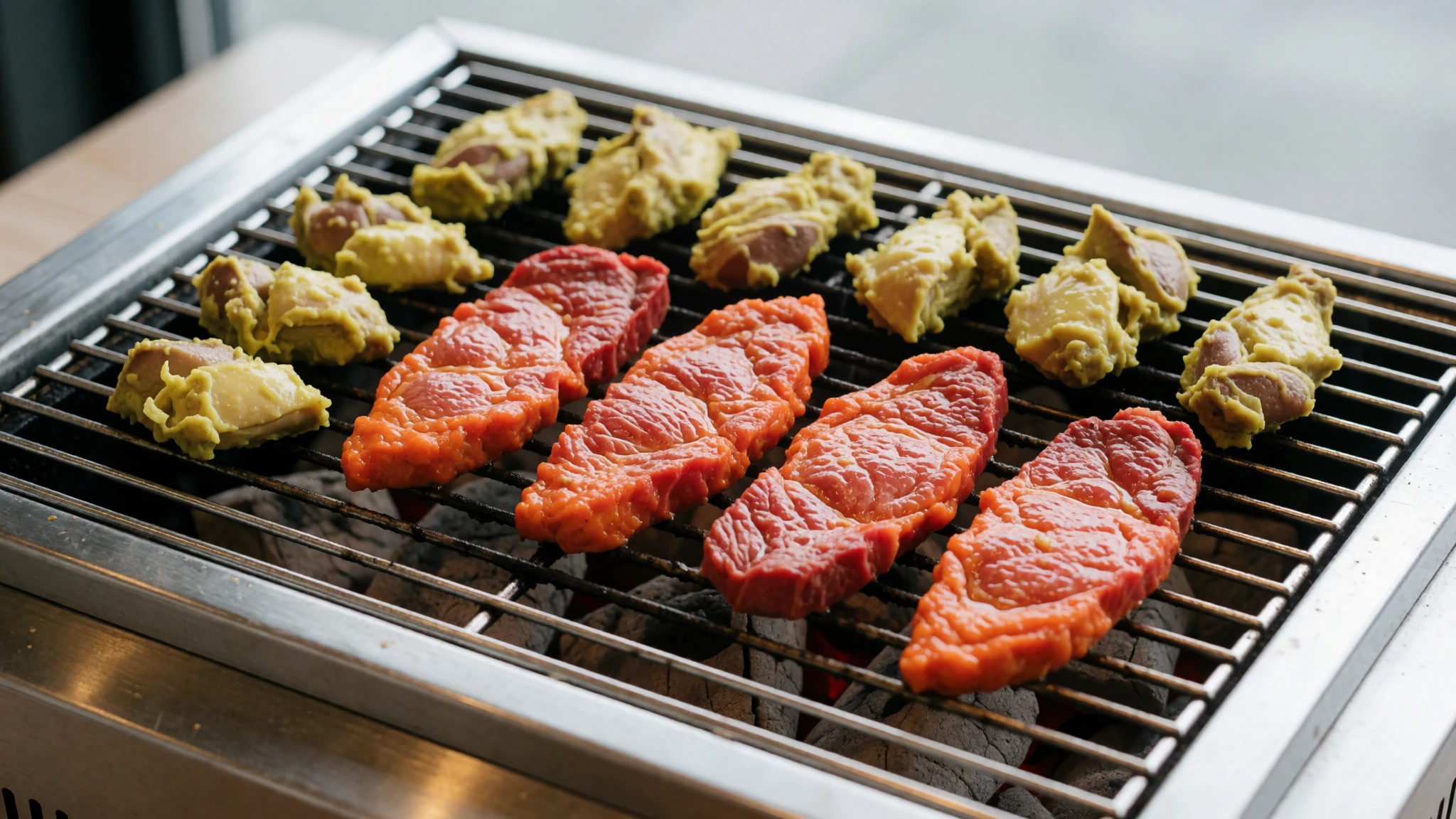
- Gelato from the visitor centre cart — Cart at the Hegra visitor centre
The gelato cart at the visitor centre is the only food on the Hegra site itself, as of 2025. Expect a simple choice of flavours. Options inside the park are limited, so buy something before heading out to the tombs.
Plan it
Best time. November to February brings mild days and cool evenings, while March, April and October are already hot, with highs around 35 to 38°C. June to August is very hot, and the open sites give little shade, so avoid midday walking then.
How long. 2–3
Getting there. Al-'Ula has a small international airport with flights to major regional destinations. Saptco runs direct buses from Jeddah (about 8 hr) and Riyadh (about 13½ hr). From Al-'Ula, take a taxi or an organised tour for the roughly 22 km to Hegra.
Budget. high
Tips
- Book a guided tour or a driver for the day, because the tombs are spread out and tracks are sandy
- Check the official site for current entry arrangements before you travel
- Start early, before 9 am, for cooler walking and softer light
- Carry plenty of water and sun cover, as shade is limited on the open ground
- Carry some cash as well as a card for Al-'Ula's small shops and cafés
Etiquette
- Keep to marked paths and stay off the carved ledges
- Ask before photographing people
- Dress modestly at the tombs and in town
Nearby
Sources
- Wikidata Q27356 (CC0)
- Wikipedia: Hegra (rev 1383052300) (CC BY-SA 4.0)
- Wikivoyage: Hegra (rev 5330897) (CC BY-SA 4.0)
- Photo 01 Madain Saleh (Sammy Six) (CC BY 2.5)
- Photo 02 Myrrh (Public domain)
- Photo 03 Hegra inscription, Marcus Aurelius (CC0 1.0)
- Photo 04 Qasr al Farid (Richard.hargas) (CC BY-SA 4.0)
- Photo 05 The Monastery, Petra (Diego Delso) (CC BY 3.0)
- Photo 06 Mada'in Saleh 2017 (Ahmad AlHasanat) (CC BY-SA 4.0)
- Photo 07 Madain Saleh (Sammy Six) (CC BY 2.5)
- Photo 08 Qasr al-Bint necropolis (Following Hadrian) (CC BY-SA 2.0)


