Matka Canyon
Matka Canyon, North Macedonia
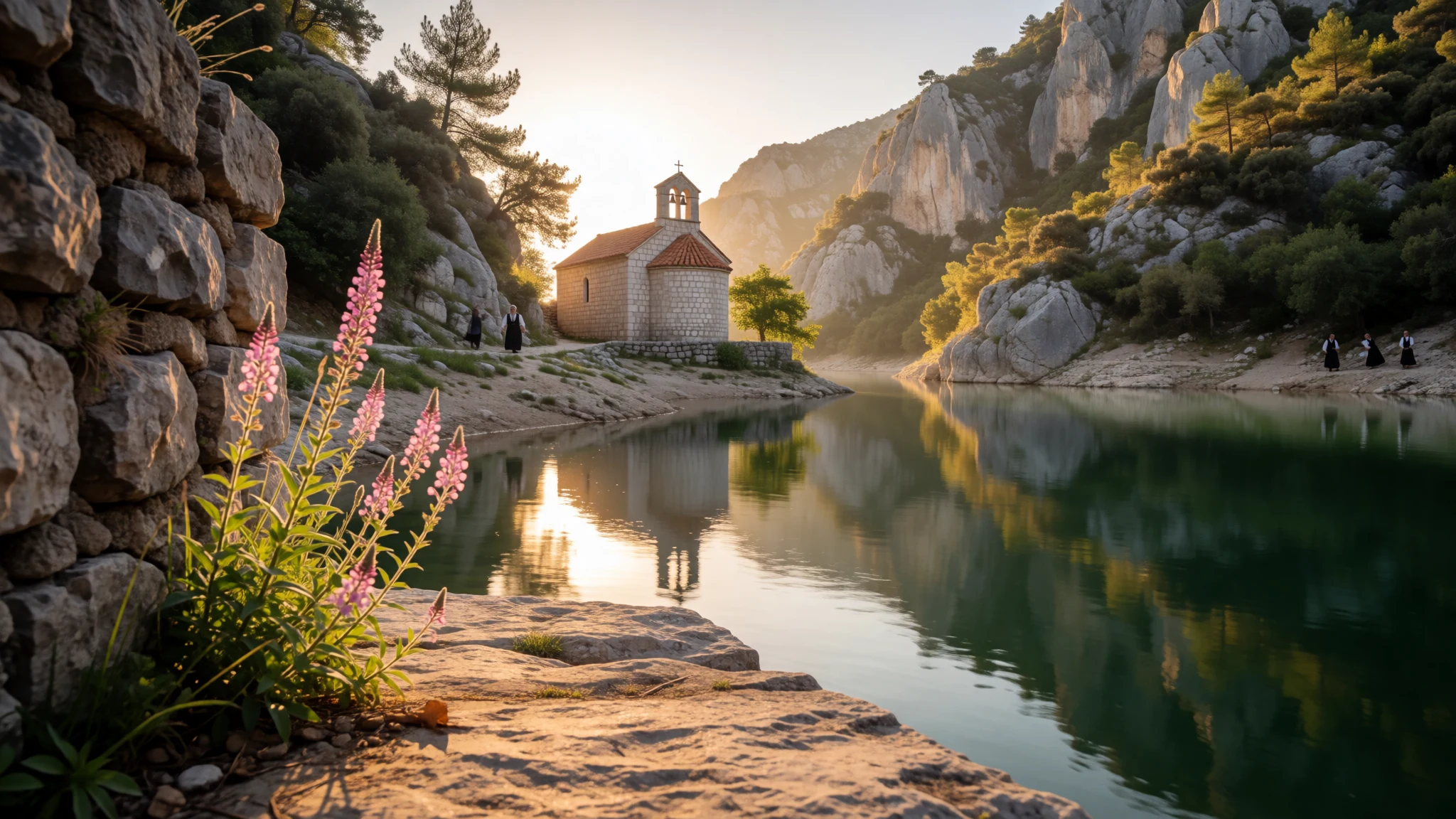
Matka Canyon puts a green gorge, a quiet lake, medieval monasteries and a deep cave within an easy trip of Skopje.
The place
Matka Canyon lies west of central Skopje, cut by the Treska River on its way to the Vardar. A dam has turned the lower stretch into a long, still lake, also called Matka, so the canyon feels like two landscapes in one: calm green water between steep rock walls below, and a rougher river gorge upstream. The protected area covers roughly 5,000 hectares, far more than the short stretch most people see, and it includes ten caves and two vertical pits. Most visitors come for a half day. They walk the path beside the water, look into the monasteries and churches on the western bank, perhaps take a small boat on the lake, and have lunch at a lakeside eatery before heading back to the city. Kayakers and climbers use the same rock and water, and the canyon has hosted wildwater canoeing championships. Administratively it sits in Saraj, the one entirely rural municipality of Skopje, which explains why city buses reach a place that feels so remote. The gorge is shaded and cooler than the city in summer, but it fills up at weekends, when families from Skopje come out in numbers. Weekday mornings and the shoulder seasons are much calmer. It is not wilderness: a road, a dam and restaurants are all part of the scene. What it offers is a quick, convenient break from the capital, with real rock, real water and old stone churches.
Its story
The human story of Matka Canyon is largely about small religious communities choosing quiet places. Several monasteries and churches stand on the western side of the Treska gorge, and the surviving ones mostly date from the 14th century. Šiševo Monastery, with its Church of Saint Nicholas, is thought to belong to that period, and tradition links it to King Marko, though the attribution is uncertain. In the nearby village of Šiševo, the Church of Saint Athanasius keeps frescoes painted in 1565. The Church of the Holy Saviour was neglected for years and is now looked after, while Saint Nedela is a roofless ruin where walls, arches, icons and candles remain, so pilgrims and hikers still stop there. The canyon's name may come from Matka Monastery, which is dedicated to the Holy Mother of God. The modern chapter began when the river was dammed, creating the lake that Wikipedia describes as the country's oldest artificial one. Underground, Vrelo Cave is a system with one section under water and one above it, explored so far to a depth of 230 m, and it was named among 77 natural sites in the New7Wonders of Nature project. In the early 2000s the rural municipality of Saraj was added to Skopje, bringing the canyon inside the city limits on paper, although the gorge itself feels far from any city.
What to see
- Matka Canyon and the lake — Treska River, west of Skopje
The main draw is the gorge itself, with the Treska held back into a still lake between steep walls. A path follows the water, and small boats take visitors deeper in. The view from the road towards the dam is worth a pause for photographs.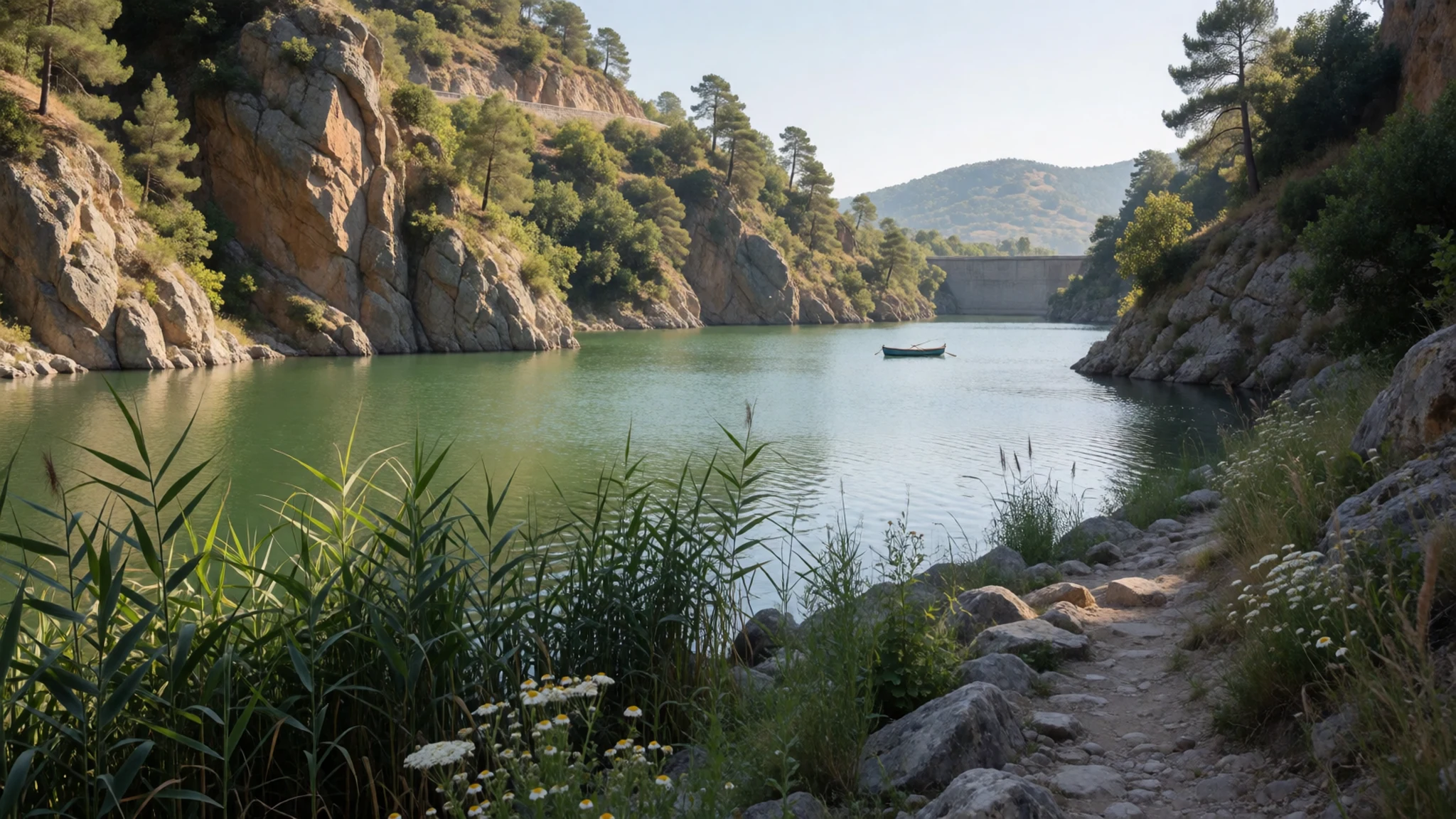
- Saint Andrew's Monastery — West bank of the Treska gorge
Saint Andrew's sits at the foot of the rocks on the west bank, right beside the lake. It is the easiest religious site to reach and the most visited, so expect company at weekends. The setting, church against cliff and water, is why most photographs of Matka look the way they do.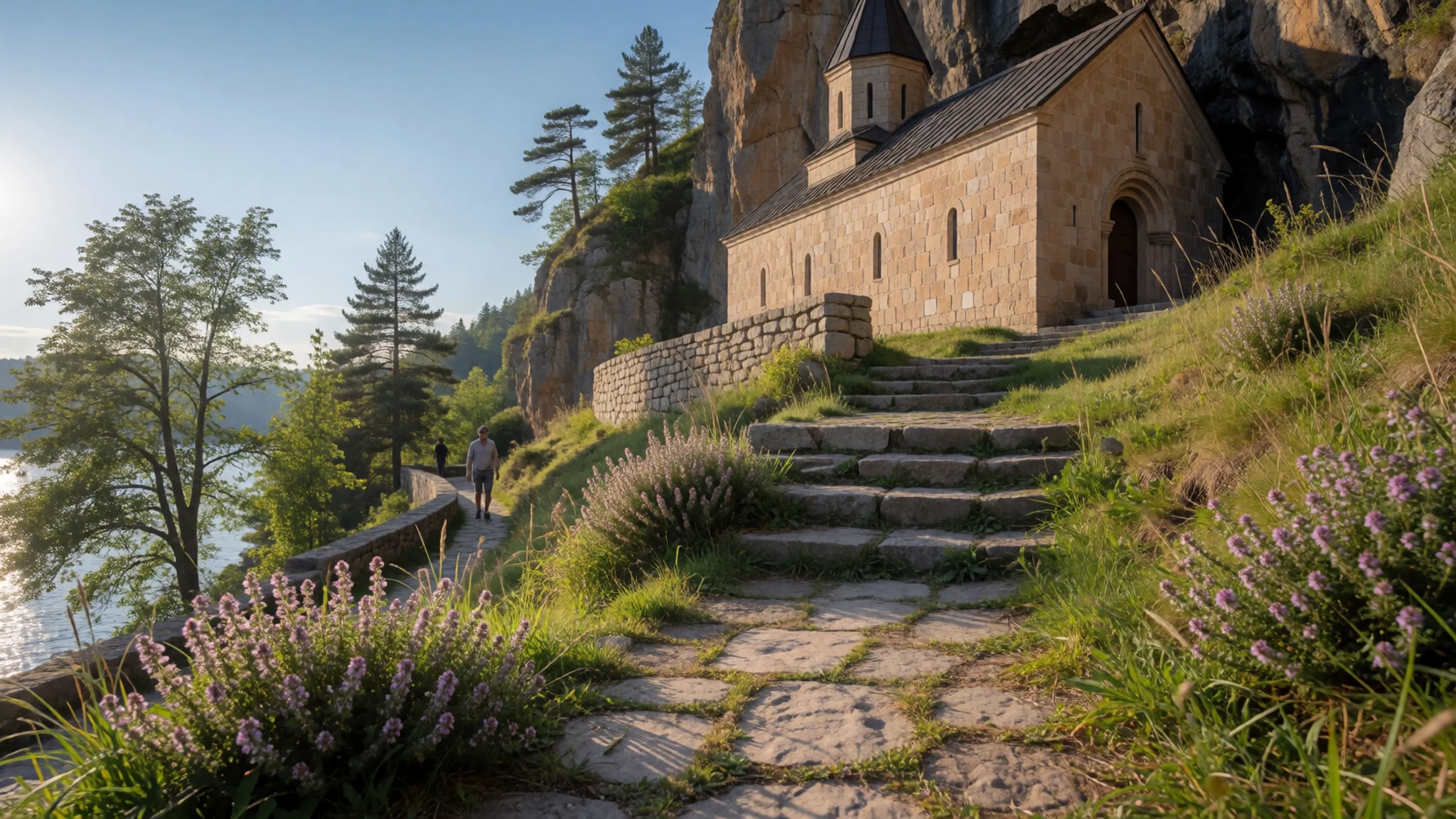
- Vrelo Cave — Right bank of the Treska
Vrelo Cave has many stalactites, including a large central one nicknamed the Pine Cone for its shape, and two lakes at the far end. Part of the system is underwater, which makes it a diving site as well. Ask locally about current access and boat arrangements before planning around it.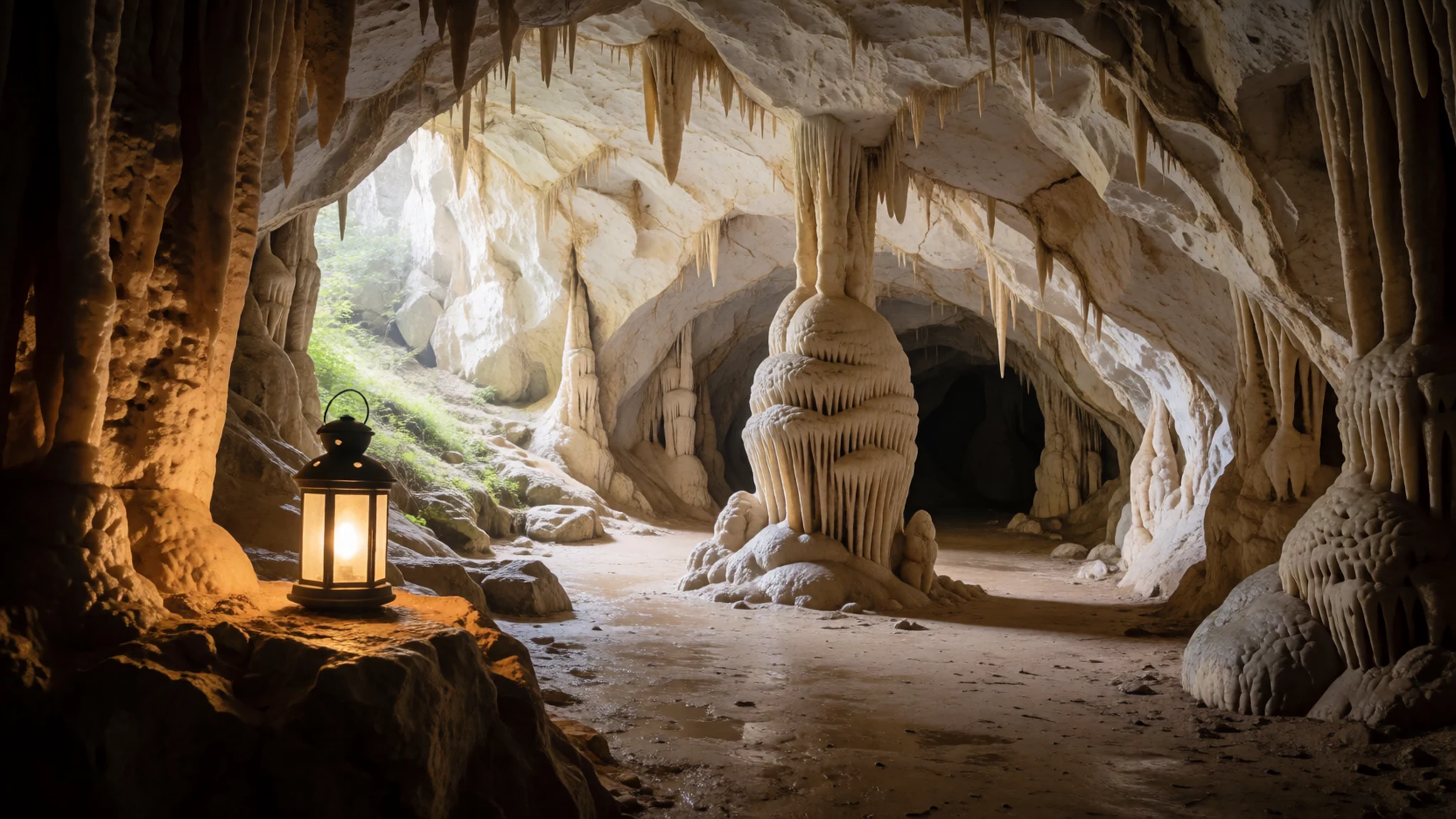
- Šiševo Monastery — Eastern side of the canyon, near Šiševo
Šiševo Monastery contains the Church of Saint Nicholas and is thought to have been founded in the 14th century, possibly by King Marko. It is smaller and quieter than the lakeside sites. It suits walkers who want to move beyond the busiest stretch of the canyon.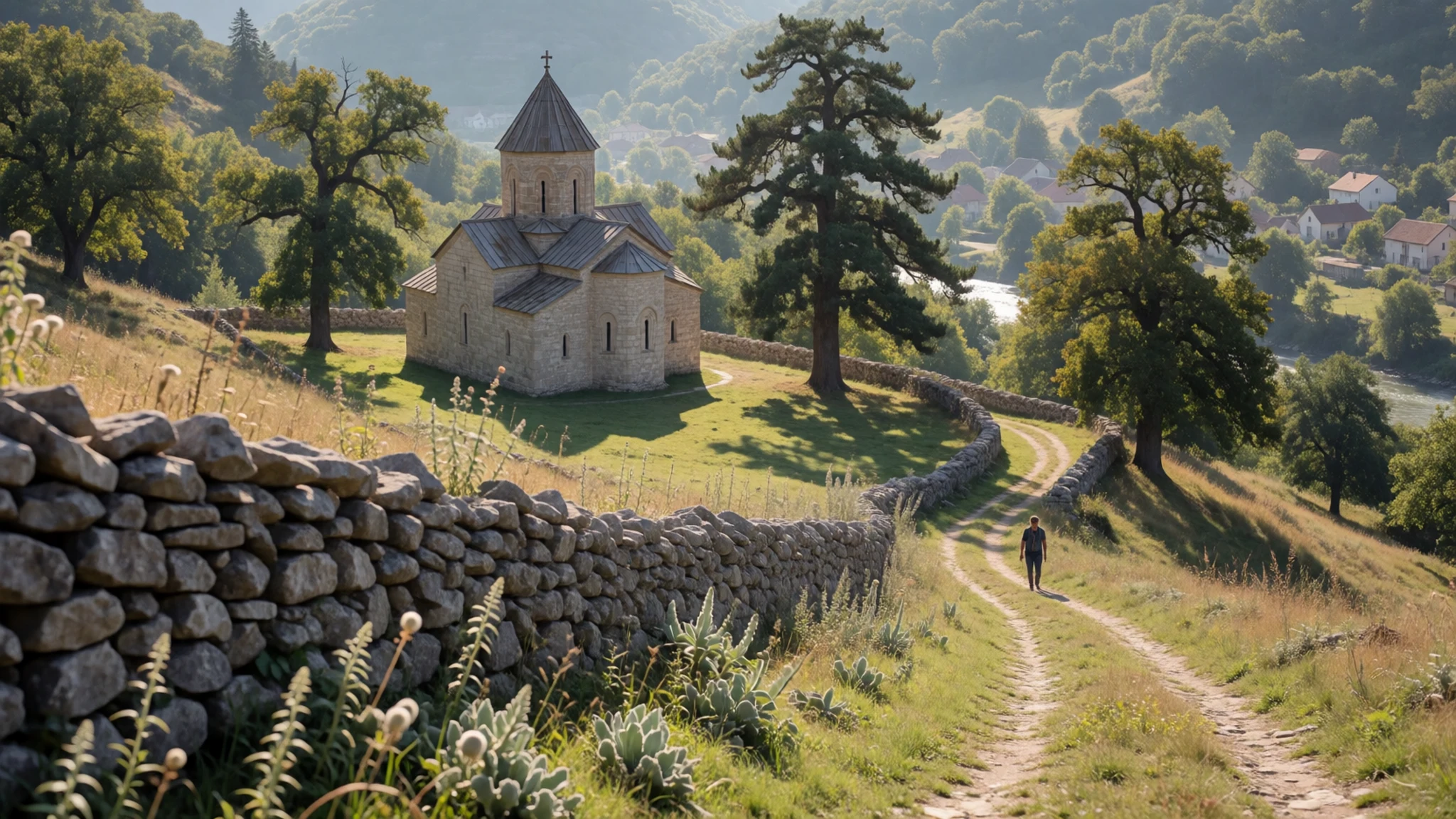
- Church of the Holy Saviour — West side of the canyon
This small 14th-century church was in poor shape for many years but is now well kept. Remains of other churches lie close by, so the spot rewards a slow look around. It sits higher up the western side, so reaching it takes a proper walk rather than a stroll.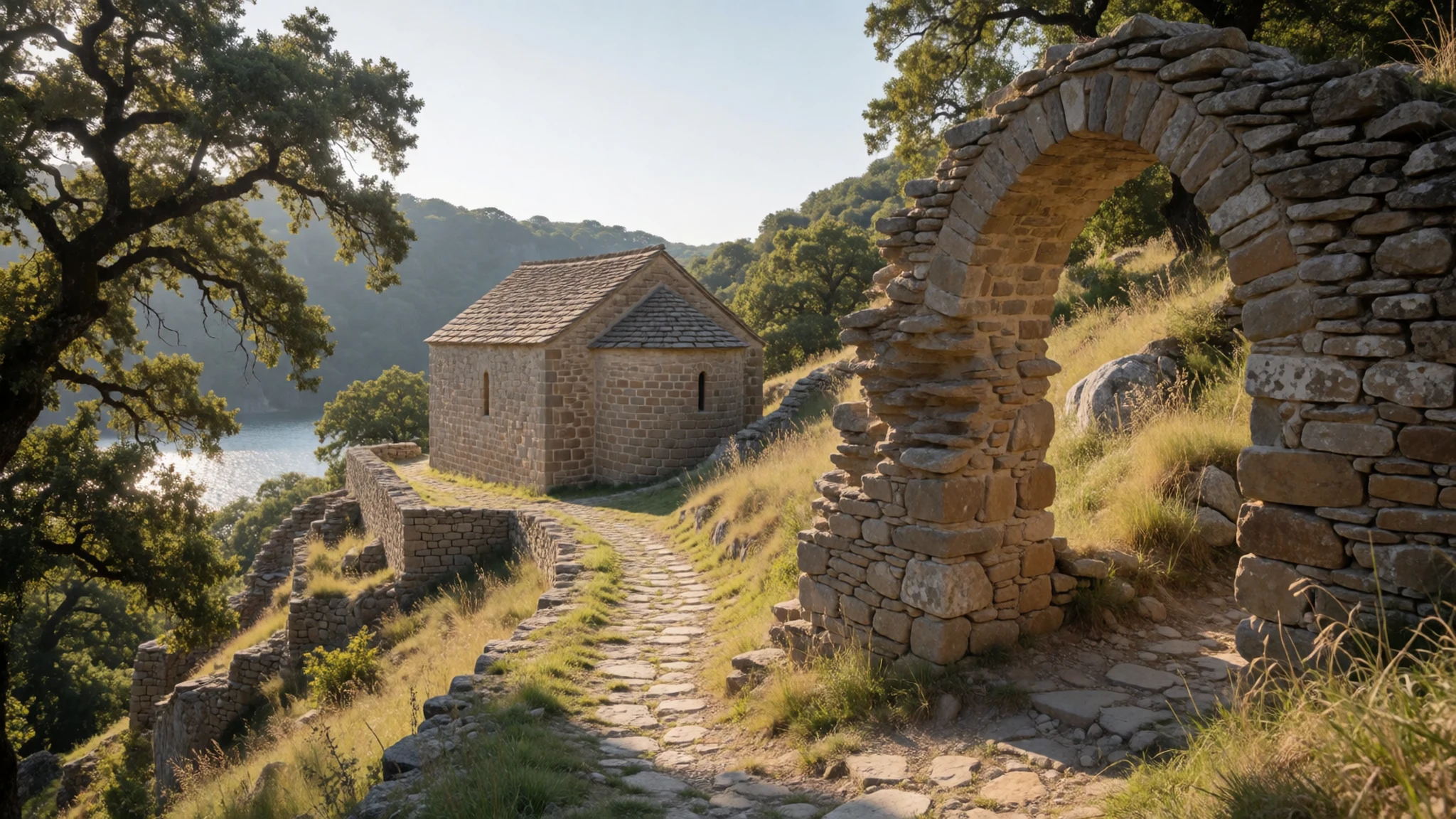
- Matka Monastery — West bank, upstream
Matka Monastery is dedicated to the Holy Mother of God and sits just above the river on the west side. The canyon may take its name from it. It lies further along than the lakeside churches, so it is a good target for those who want a longer walk.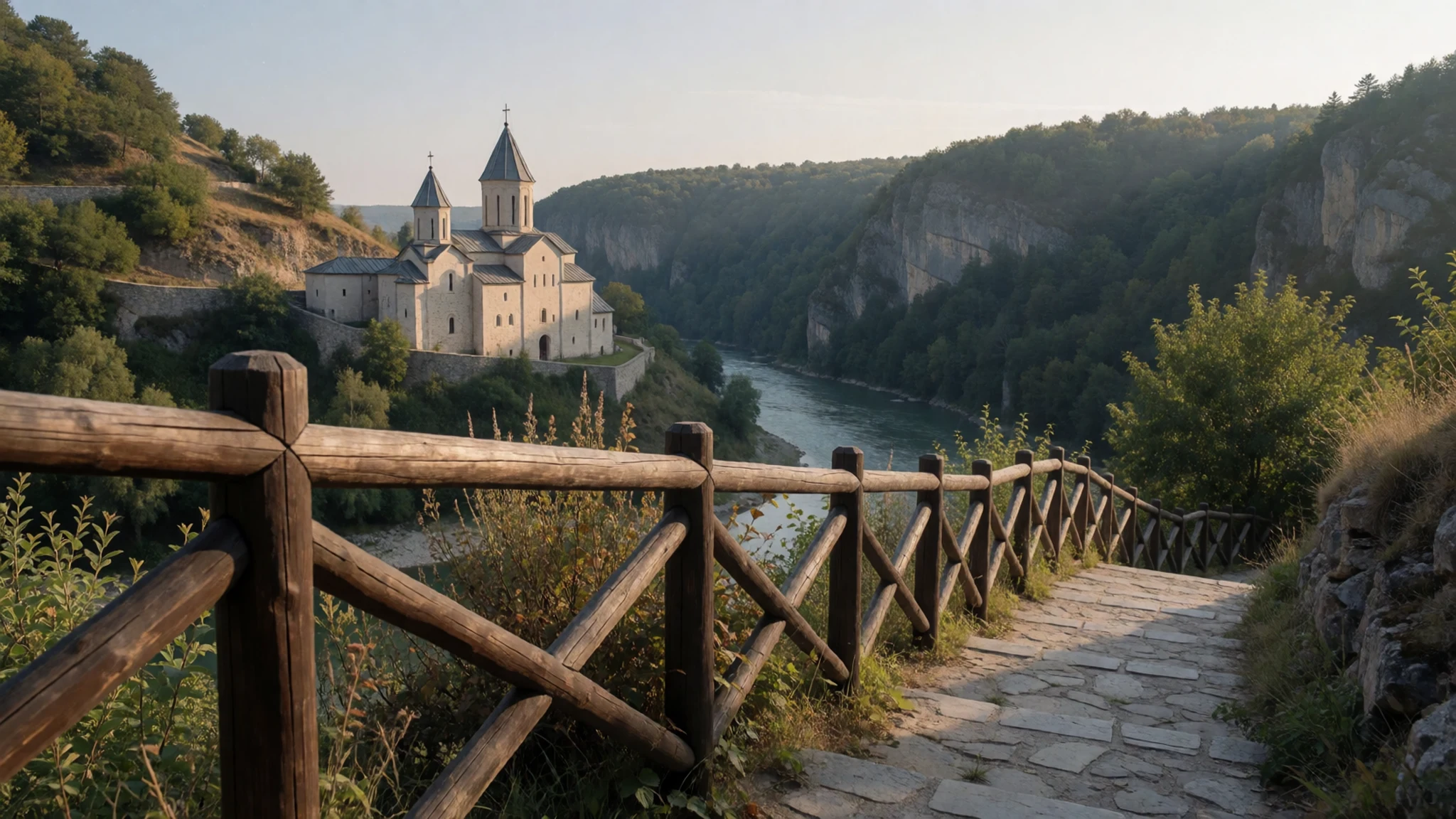
Culture
Matka Canyon sits at the meeting point of several layers of Macedonian life. The monasteries and churches along the gorge belong to the Orthodox Christian tradition, and they are working places of worship as well as sights: candles are lit, icons are kissed, and families stop in on the way to lunch. Skopje itself is home to both Macedonian and Albanian communities, and Saraj, the municipality that holds the canyon, is mostly Albanian-inhabited, so the area carries both cultures and both languages. On sunny weekends the lakeside fills with picnicking families, anglers, kayakers and walkers, and the mood is relaxed and sociable rather than reverent. Coffee is taken slowly, grilled meat is shared, and a long lunch is normal. Outdoor sport has its own small culture here, with climbers on the walls and paddlers on the river, and the canyon has hosted international wildwater canoeing. For many people from Skopje, Matka is simply the place to go when the city gets too hot or too loud, so it is as much a local habit as a tourist stop. Visitors who treat it that way, with no rush and some curiosity about the churches, tend to get the most from it. At any monastery or church, cover your shoulders and knees, speak quietly, and ask before photographing inside or pointing a camera at people at prayer.
What to wear
Matka Canyon is a day-out destination, so the question of dress splits three ways. Traditional dress in the Skopje area includes Macedonian folk costume, with embroidered white linen shirts and blouses, woollen vests and aprons, and bright woven or knitted socks. Albanian communities have their own dress, with white felt caps and embroidered waistcoats among the best-known pieces. These costumes are worn today mainly for weddings, folklore festivals and church or village celebrations rather than daily life. What people actually wear now is ordinary European casual clothing: jeans, shorts and t-shirts in summer, fleeces and light jackets in the cooler months. Walkers and families at the lake dress for the outdoors, and nobody will look twice at hiking gear. A visitor should plan around terrain, sun and the churches. Wear shoes with real grip, because paths along the water can be rocky and slippery, and sandals will not help on the steeper tracks. Bring a hat and sun protection for the open stretches, and a light layer for the shaded gorge, which is cooler than the city. Since the monasteries are active, carry something to cover shoulders and knees, such as a light scarf or long trousers in your bag. Closed shoes are also sensible if you plan to enter a cave, where floors can be wet and uneven.
What to eat
- Tavče gravče — Lakeside eateries and traditional restaurants
Baked beans with onion and red pepper, cooked in a clay dish and often called the national dish. It is filling, mildly smoky and usually vegetarian, which makes it a good match for a morning walk.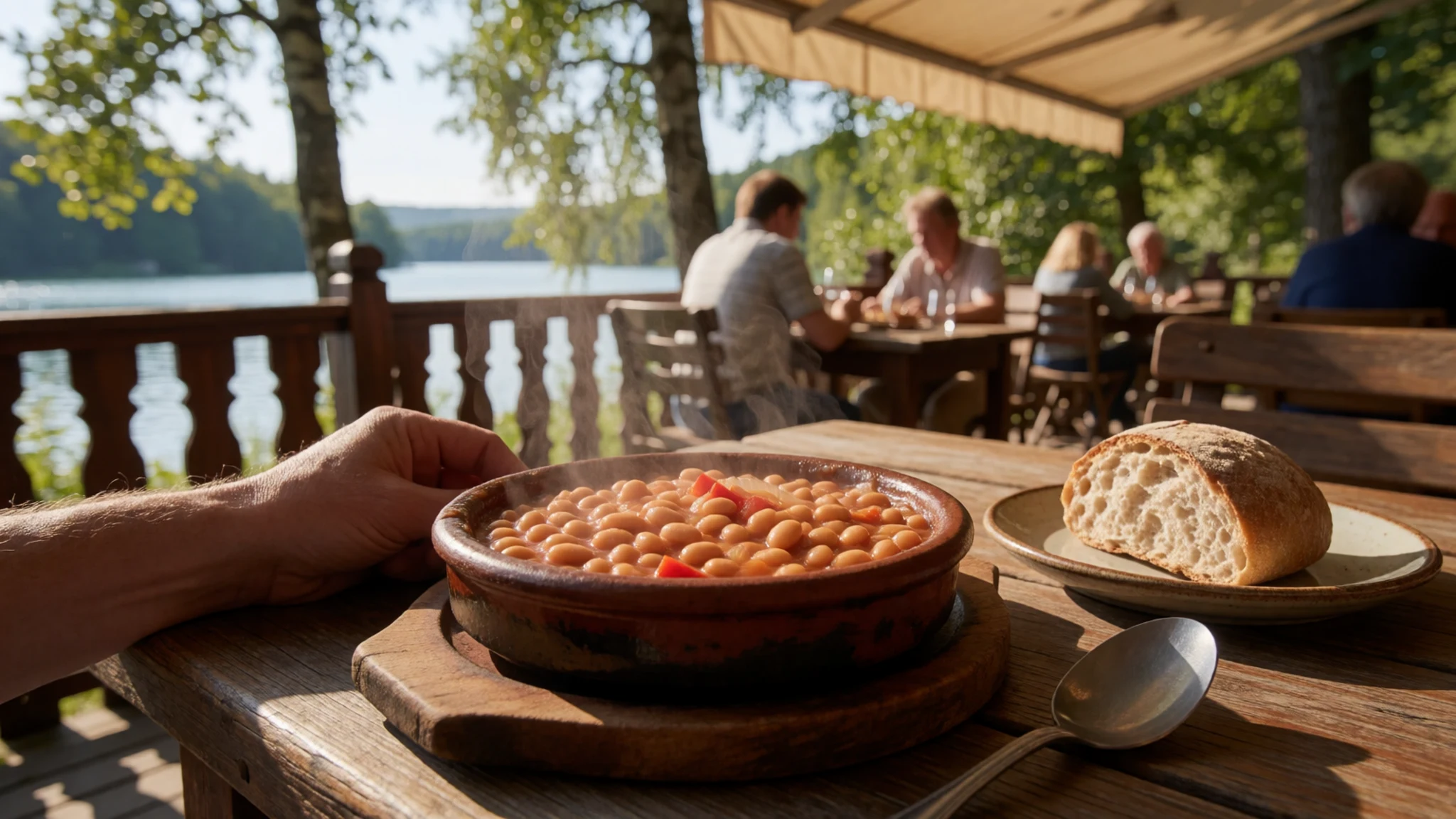
- Šopska salad — Almost any restaurant in or around Skopje
Chopped tomato, cucumber and onion topped with grated white cheese. It is the standard side dish for grilled meat and tastes best in summer, when the vegetables are at their ripest.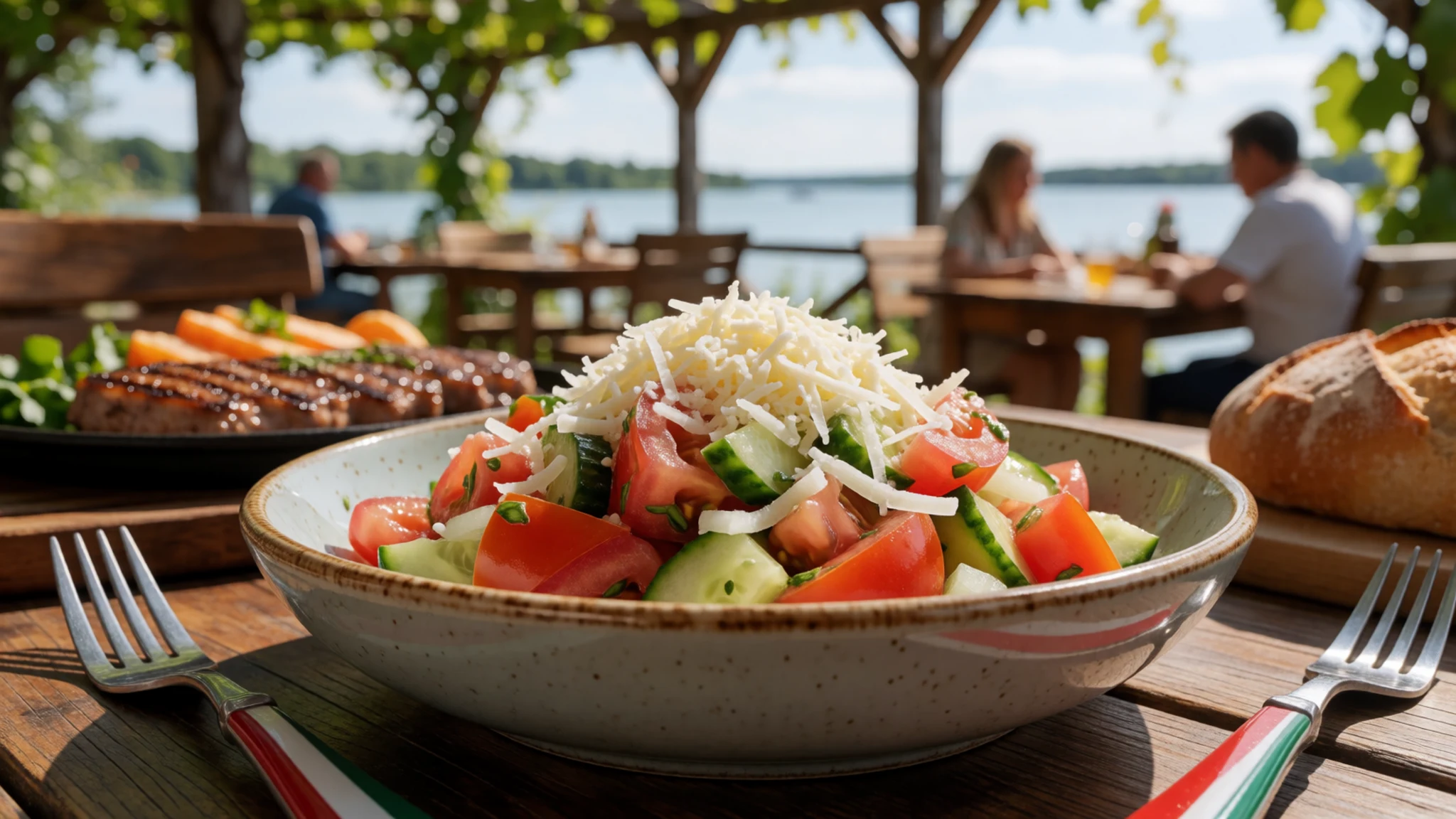
- Kebapi — Lakeside grills and Skopje's Old Bazaar
Small grilled minced-meat sausages served in flatbread with raw onion, and often with ajvar, a roasted red pepper relish. They are a simple, cheap lunch after a canyon walk. - Burek — Bakeries and burek shops in Skopje
Layered filo pastry filled with cheese, spinach or minced meat, eaten for breakfast with plain yoghurt. Pick some up in the city before heading out, because it travels well. - Zelnik — Home-style eateries and bakeries
A savoury pie of filo pastry layered with leeks or greens and sometimes cheese. It is hearty and homely, and easy to find in a bakery if you want something to carry to the lake.
Plan it
Best time. May–June and September–October, when the gorge is pleasant to walk and the city is not at its hottest; summer afternoons in Skopje can be very hot, and winters are cold, so check conditions before a winter visit.
How long. 1
Getting there. Fly into Skopje airport, then reach the canyon from the city by taxi or by city bus towards Saraj; confirm the current route and the final stretch locally, since services change.
Budget. low
Tips
- Go on a weekday morning to avoid the weekend crowds from Skopje
- Carry some cash for boats and small lakeside eateries, and confirm prices before you go
- Bring water and a hat, as parts of the path have little shade
- Ask locally about Vrelo Cave and boat access before planning a day around them
Etiquette
- Cover shoulders and knees at monasteries and churches
- Keep your voice low inside churches and do not photograph worshippers
- Take your litter with you from the lakeside paths
Nearby
Sources
- Wikidata Q2278990 (CC0)
- Wikipedia: Matka Canyon (rev 1353414998) (CC BY-SA 4.0)
- Wikivoyage: Skopje/Matka Canyon (rev 5259524) (CC BY-SA 4.0)
- Photo: Matka2.jpg (kallerna) (CC BY-SA 4.0)
- Photo: Matka Canyon Skopje 3.jpg (kallerna) (CC BY-SA 4.0)
- Photo: Matka2 view 1.jpg (kallerna) (CC BY-SA 4.0)
- Photo: Matka Canyon Vrelo Cave.jpg (kallerna) (CC BY-SA 4.0)
- Photo: Matka Canyon Vrelo Cave 2.jpg (Kallerna) (CC BY-SA 4.0)
- Photo: Lake Matka St Andrew Church.jpg (anjči) (CC BY 2.5)
- Photo: Canyon Matka.jpg (Daniel Panev) (CC BY-SA 2.0)
- Photo: 2023 ECA Wildwater Canoeing European Championships Matka Canyon 1.jpg (kallerna) (CC BY-SA 4.0)


