Skopje Fortress
Skopje Fortress, North Macedonia
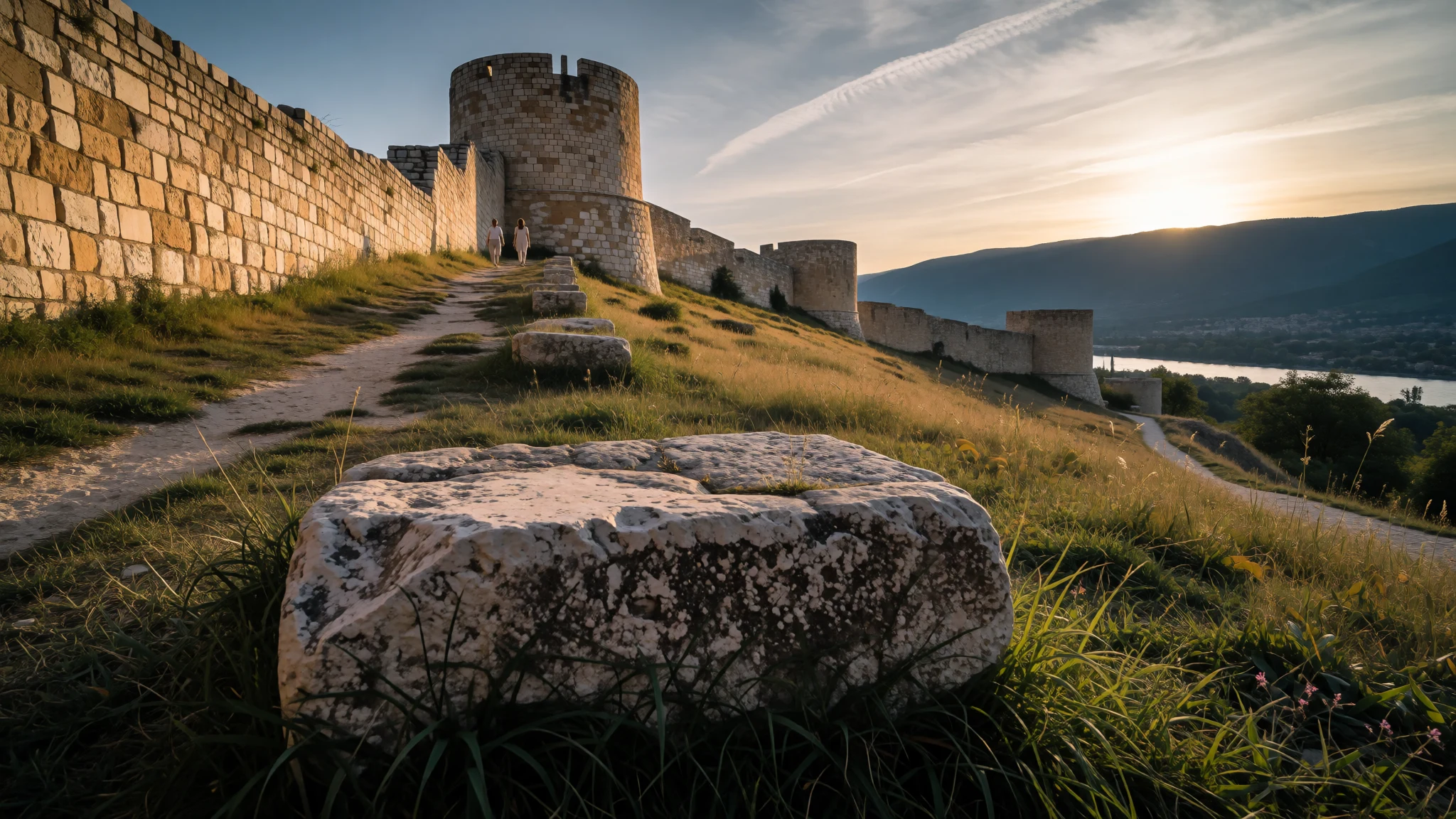
Skopje Fortress, the old stone Kale above the Vardar, gives a plain-spoken view of a city rebuilt after an earthquake.
The place
Skopje Fortress, known locally as Kale, crowns the highest point in the city and looks down on the Vardar River from the edge of the old town, in Centar municipality. The Macedonian name is Скопско кале (Skopsko kale), the Albanian is Kalaja e Shkupit and the Turkish is Üsküp Kalesi; kale is simply the Turkish word for fortress. Its outline appears on Skopje's coat of arms and therefore on the city flag, which says plenty about how closely the town identifies with the hill.
The walls are pale and weathered, built of yellow limestone and travertine, and the ground inside feels more like a hilltop park than a parade ground. Few buildings survive within, so the interest lies in the perimeter: following the ramparts, climbing a tower and looking down on both halves of the city.
Those halves have a history. For centuries the river separated Skopje by faith, with Christian districts on the south bank and Muslim ones on the north, where the Old Bazaar, the Stara Čaršija, still stands. As Ottoman influence faded, political and commercial life shifted south, and neoclassical buildings went up to house it. The 1963 earthquake wiped out most of them, and the modern centre was laid out afresh. From the fortress the contrast is easy to read: low bazaar roofs on one side, planned squares and monuments on the other, and Mount Vodno rising behind the centre to the south-west.
Current access arrangements are best checked on the official site, skopskokale.com.mk.
Its story
Skopje Fortress stands on ground that was settled long before any wall went up, with traces from the Neolithic and Bronze Ages. The first fortress dates to the 6th century AD and is usually linked to the Byzantine emperor Justinian I. Its builders used yellow limestone and travertine, and took stone from the Roman town of Skupi, which an earthquake destroyed in 518. Fragments of Latin inscriptions turn up in the masonry.
The fortress was extended in later medieval centuries over the older Byzantine remains, which wars may have damaged. The city then became the seat of the First Bulgarian Empire, and Peter Delyan's rebellion against Byzantium centred on it. Surviving documents say little about how the fortress looked in those years.
In 1346 the hill took on new weight. Stefan Dušan was crowned emperor at Skopje Fortress and moved the capital of his Serbian Empire to the city. Alphonse Mucha later painted the coronation as part of his Slav Epic series.
A clearer picture of the Ottoman-era fortress comes from Evliya Çelebi, the chronicler who travelled through in 1660. He noted double walls and stonework that caught the light. The 1963 earthquake reshaped the city below, but the fortress remains a fixed point in a place that has been rebuilt more than once.
What to see
- Fortress ramparts and towers — Kale hill, Centar
The ramparts of Skopje Fortress are the main attraction, built from pale limestone and travertine that show different phases of repair. Towers give views across the Vardar to the Old Bazaar and the rebuilt centre. Inside, the ground is mostly grass and low remains rather than finished rooms, so the visit is about wandering slowly. Check the official site for current access.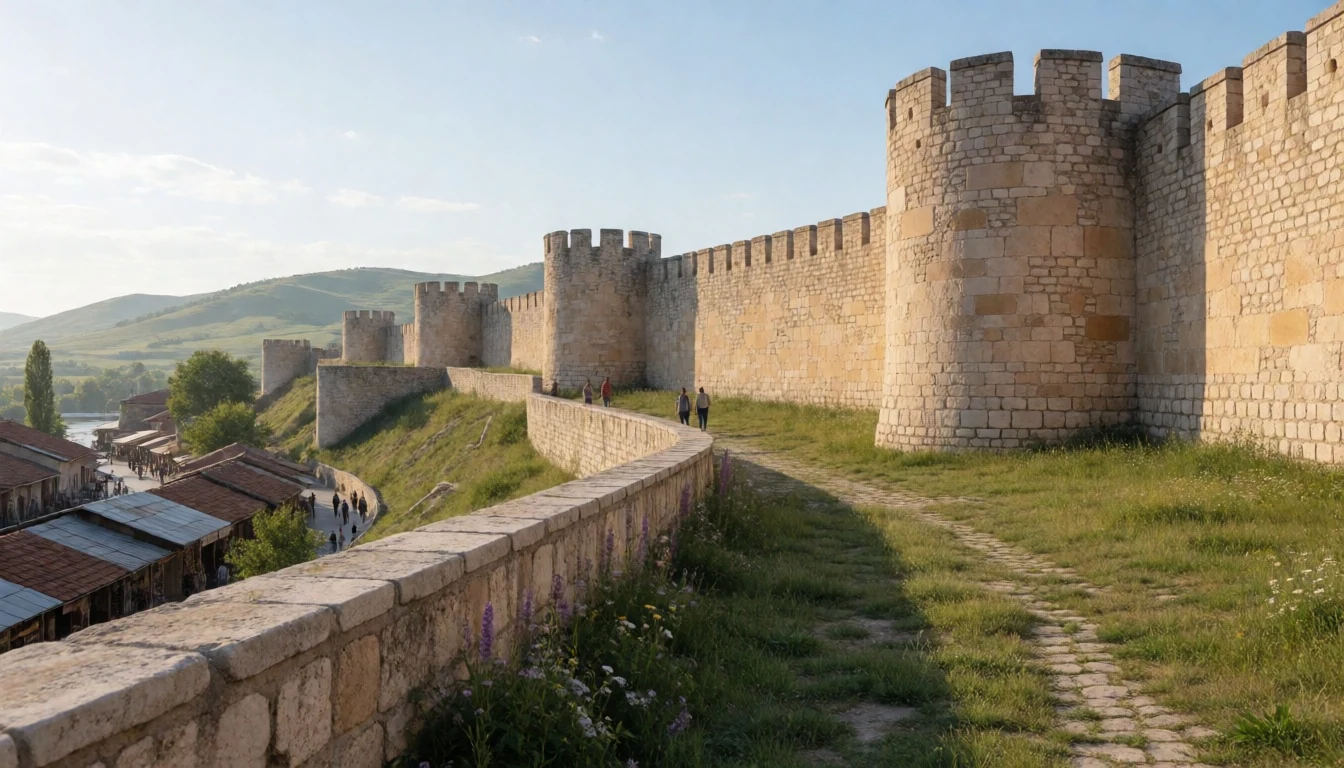
- Vardar and Vodno viewpoint — Kale hill, Centar
From the fortress hill, Skopje spreads out on both banks of the Vardar, with Mount Vodno standing behind the south-west of the centre. The view makes the city's layout clear: Ottoman lanes on the north bank, planned squares on the south. Late afternoon light is kind to the stone, and the air is usually cooler than at midday.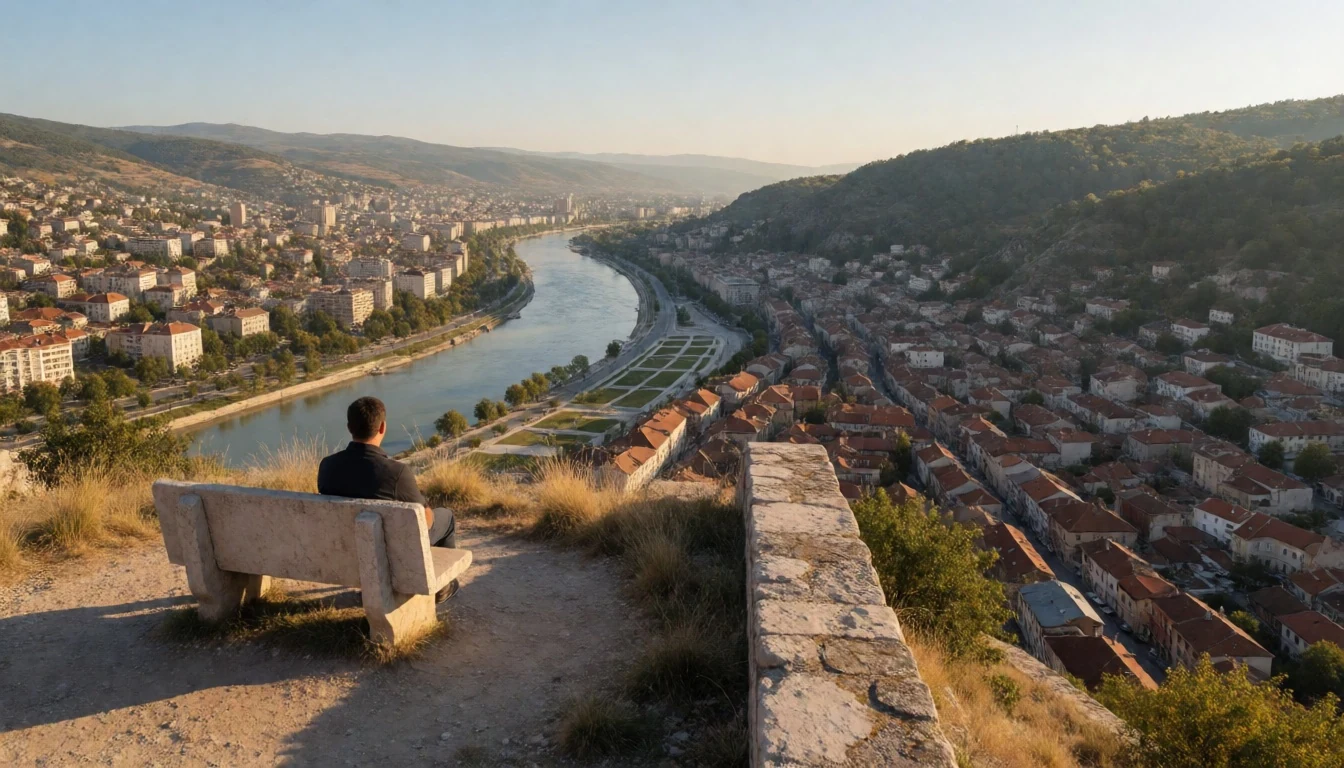
- Stone Bridge — Vardar River, between Centar and the Old Bazaar
Stone Bridge, within walking distance of the fortress, links the rebuilt south-bank centre with the Old Bazaar across the Vardar. Solid stone blocks form its 12 arches, and bridges have crossed the river here for a very long time. Walking over it is the simplest way to feel the old divide between the two banks.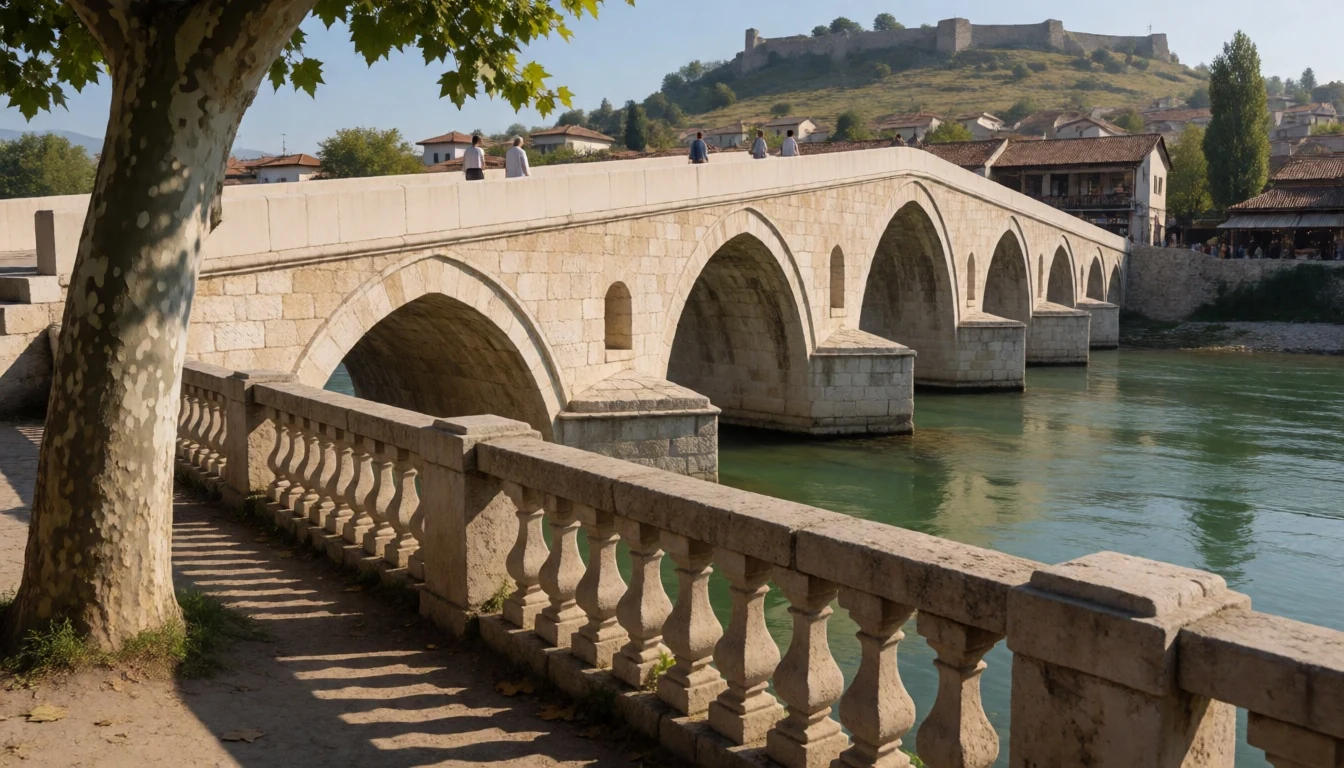
- Old Bazaar (Stara Čaršija) — North bank of the Vardar
The Old Bazaar, the Stara Čaršija, spreads across the north bank beneath the fortress hill. Its low Ottoman-era lanes hold craft workshops, coffee houses and small eateries, and the pace is slower than in the rebuilt centre. It shows the older north-bank Skopje, where Muslim life centred, and makes a useful contrast to the planned squares across the river.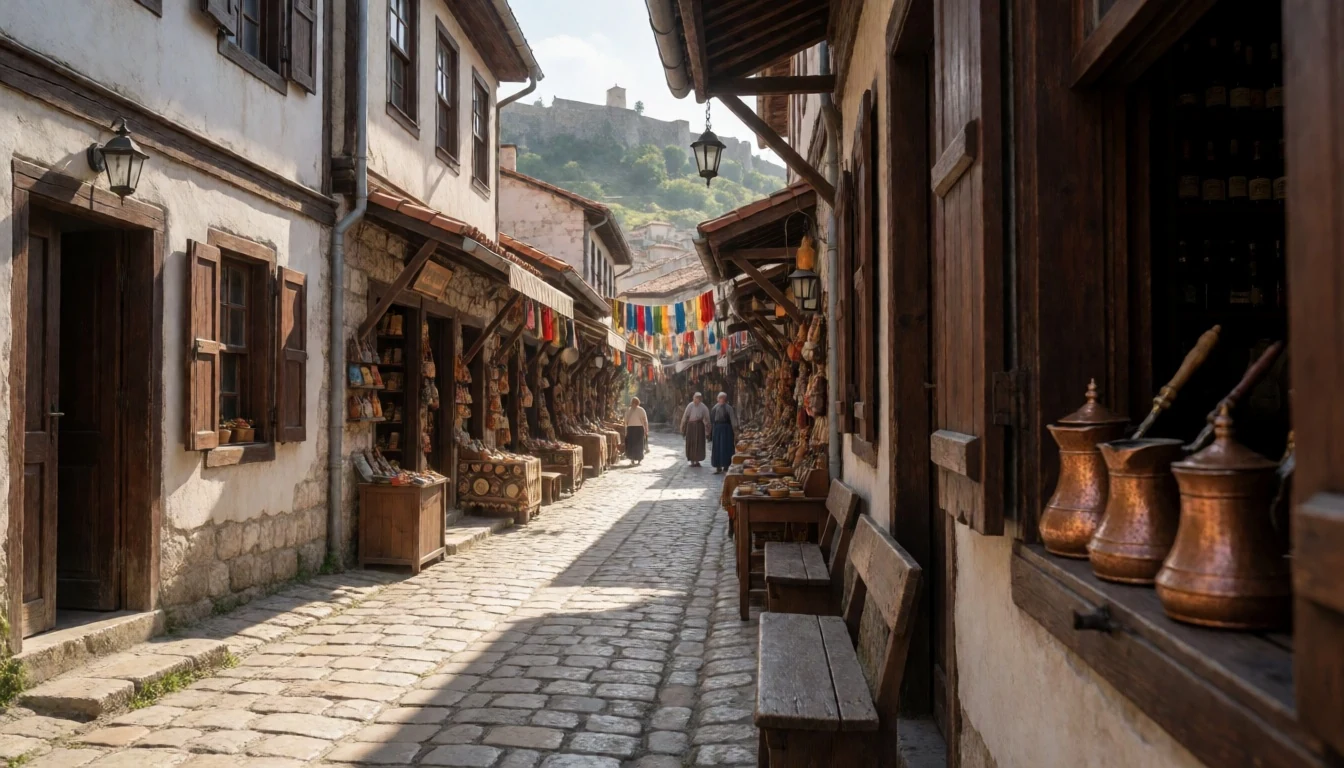
- Macedonia Square — Centar
Macedonia Square is the heart of the rebuilt south bank. After the 1963 earthquake most of its neoclassical buildings were lost, and the square later gained new facades and monuments under the Skopje 2014 project, including the Alexander the Great fountain and the Tsar Samuel monument. Reactions to the makeover vary, so it rewards a critical eye.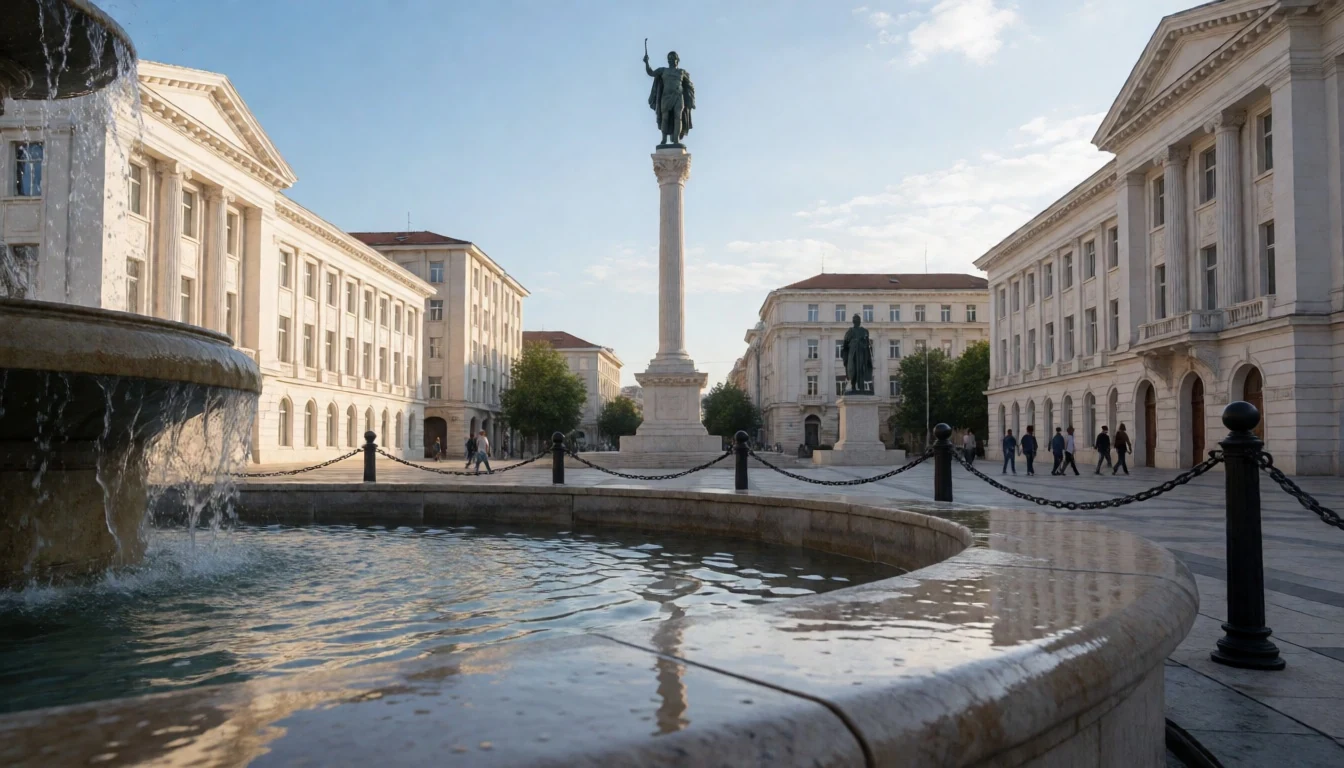
Culture
Skopje Fortress belongs to a city where several traditions overlap. Macedonian, Albanian and Turkish names for the fortress sit side by side, and the old division of the Vardar into a Christian south and a Muslim north is still visible in the layout of churches, mosques and shops. The fortress itself is a civic emblem, drawn on the coat of arms and carried on the flag, and locals treat the hill as a place for a stroll rather than a monument to be hushed in.
Everyday culture is sociable and outdoors. Coffee, usually strong and served Turkish-style or as an espresso, is the excuse for long sits in the Old Bazaar and on the squares of the centre, and evenings bring a promenading crowd. The rebuilding after the 1963 earthquake and the later Skopje 2014 project, with its many statues and new facades, is still a subject of lively opinion, so asking residents what they think often starts a good conversation.
Religious life is visible but relaxed. Orthodox and Muslim holidays are both marked in the city, and some shops may close or keep different hours around them.
In the Old Bazaar, ask before photographing shopkeepers or anyone at prayer, and cover your shoulders and knees and take your shoes off before entering any mosque.
What to wear
Traditional dress around Skopje Fortress varies with community. Among Macedonians, village costume centred on white shirts of linen or cotton, richly embroidered at sleeve and hem, worn with woollen waistcoats, woven aprons and sashes, and silver or coin jewellery for women. Albanian dress in the region includes the white felt cap called the qeleshe for men, and embroidered waistcoats and layered skirts for women. Ottoman-era town dress added fez-style caps, baggy trousers and silk, now seen mostly in museum displays. These outfits appear today at weddings, folk festivals and with dance ensembles rather than day to day.
What people wear now is ordinary European clothing: jeans, shirts and trainers by day, a smarter version for cafés and evenings. Residents dress up a little for the evening promenade, and summer clothes are light and casual. Headscarves are worn by some women, especially around the Old Bazaar.
A visitor should dress for the weather and the terrain. Summers are hot, so light cotton, a hat and sun protection help on the exposed fortress hill, while winters are cold enough to need a proper coat. Sturdy shoes with grip suit the uneven stone paths and slopes. Carry a scarf or light shawl, and wear sleeves and long trousers or skirts for mosques and other religious sites.
What to eat
- Tavče gravče — Traditional restaurants in and around the Old Bazaar
Beans slow-baked in a clay dish with onion and paprika until soft and smoky. It is a staple of Macedonian home cooking and a filling lunch before climbing the hill, usually eaten with bread and a salad alongside.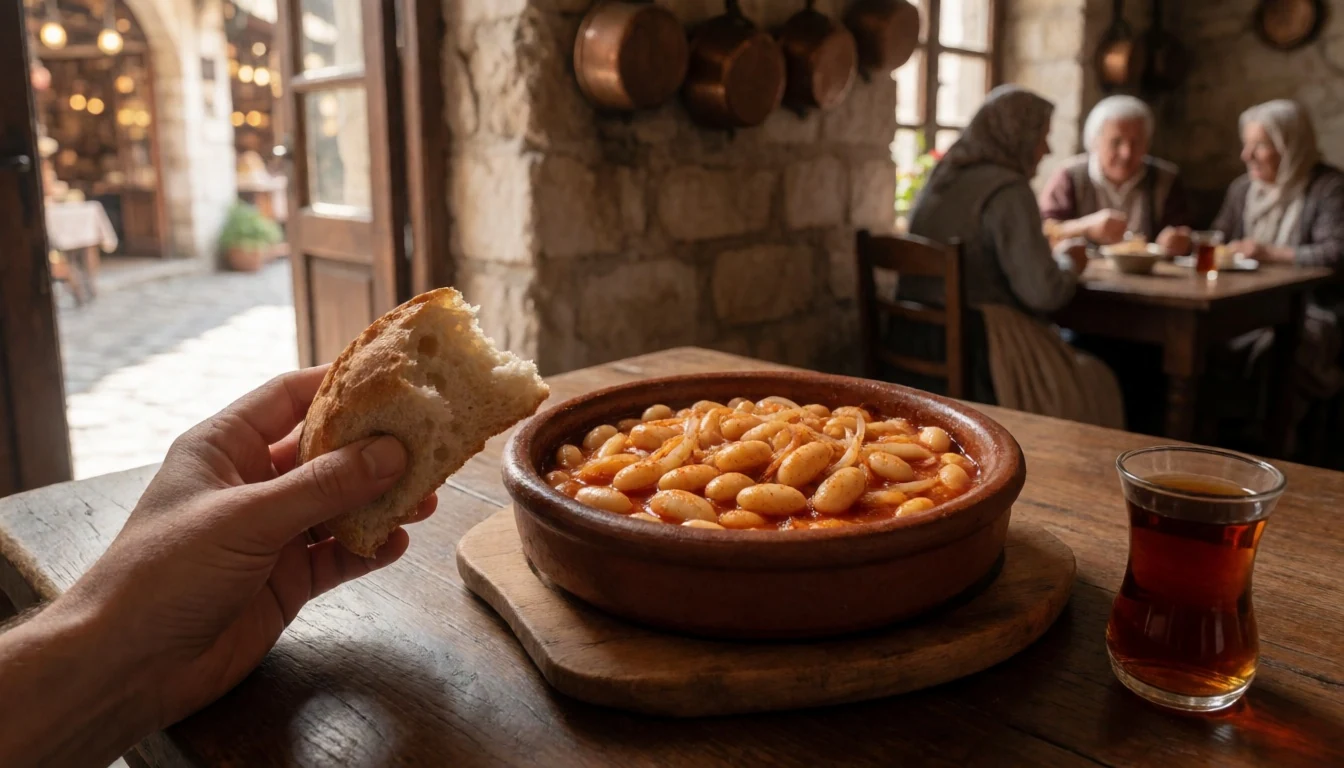
- Šopska salad — Any restaurant or terrace in central Skopje
Chopped tomato, cucumber and onion under a drift of grated white cheese. It turns up beside most grilled meals in the Balkans and is a cooling counterpoint to meat on a hot day.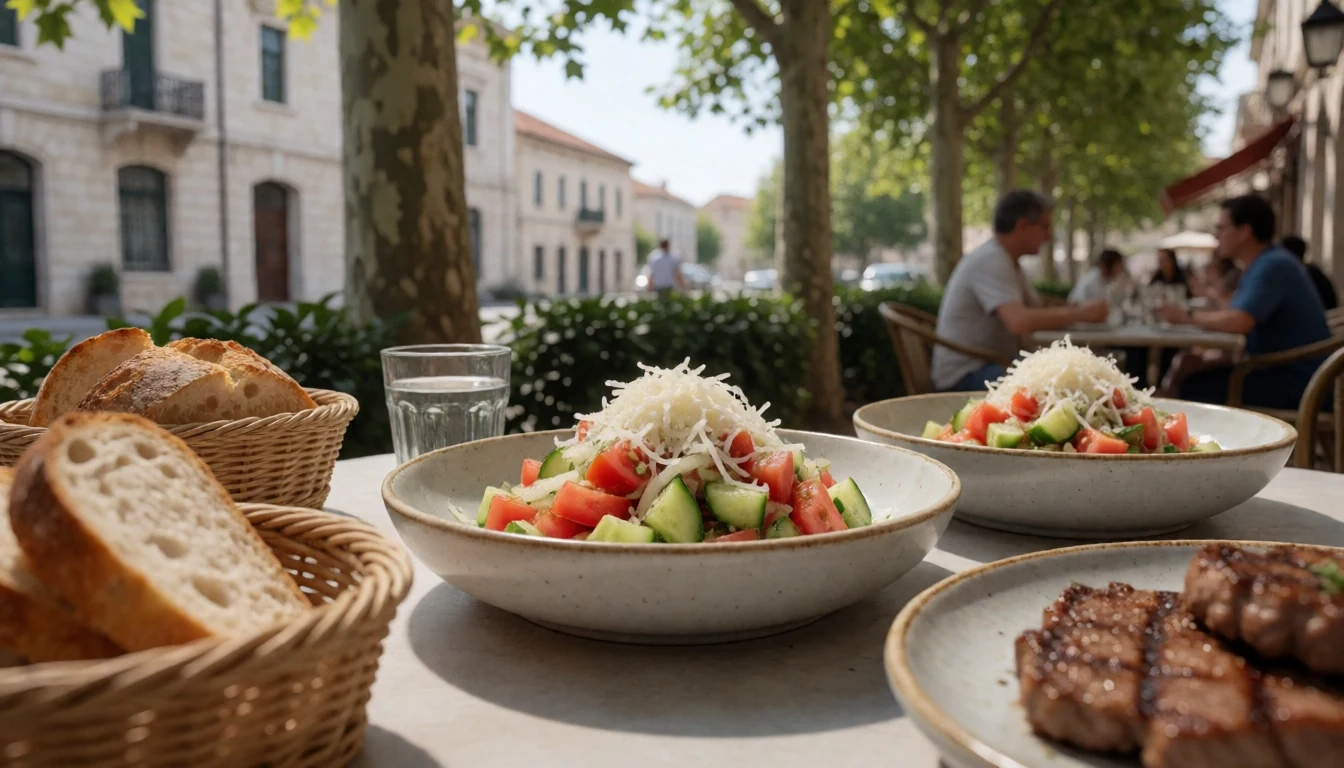
- Burek — Neighbourhood bakeries around Centar and the Old Bazaar, mostly in the morning
Flaky filo pastry filled with cheese or minced meat, baked in a round tray and sold by the slice. It is a common breakfast or quick snack, best eaten warm with plain yoghurt or ayran on the side. - Kebapi — Grill houses in the Old Bazaar
Small grilled sausages of minced meat served in flatbread with chopped raw onion and often a spoon of ajvar. The smoke from the charcoal grills around the Old Bazaar makes them easy to find. - Ajvar — Market stalls and grocery shops in the centre
A relish of roasted red peppers, sometimes with aubergine, cooked down until thick. It is spread on bread or served with grilled meat, and jars make a practical souvenir, especially in autumn when peppers are in season.
Plan it
Best time. April–May and September–October are usually comfortable for walking the fortress hill. July and August can be hot with little shade, and winter is cold.
How long. 1–2
Getting there. Fly to Skopje's international airport, then take a taxi or bus into the centre. The fortress is a walk up from the Old Bazaar, or across the Stone Bridge from Macedonia Square. City bus lines all pass through Centar, so the area is easy to reach from most districts.
Budget. mid
Tips
- Check the official site, skopskokale.com.mk, for current access and any events before you go
- Go in the morning or late afternoon for cooler air and softer light on the stone
- Carry water, as the hilltop has little shade in summer
- Wear shoes with grip for the uneven stone paths and slopes
- Pair the fortress with the Old Bazaar and Macedonia Square in one walking loop
Etiquette
- Cover shoulders and knees and remove shoes before entering a mosque
- Ask before photographing shopkeepers or people at prayer
Nearby
Sources
- Wikidata Q1262367 (CC0)
- Wikipedia: Skopje Fortress (rev 1365037411) (CC BY-SA 4.0)
- Wikivoyage: Skopje/Centar (rev 5418328) (CC BY-SA 4.0)
- Kale Fortress in Skopje's old town, Yemc (Public domain)
- San Vitale (Ravenna) - Mosaic of Iustinianus I, Petar Milošević (CC BY-SA 4.0)
- The Slav Epic – The coronation of the Serbian Tsar Stefan Dušan, Alphonse Mucha (Public domain)
- Skopje Fortress, Diego Delso (2014-04-17, DD 88) (CC BY 3.0)
- Skopje Fortress, Diego Delso (2014-04-16, DD 55) (CC BY 3.0)
- A tower from the Kale Fortress in Skopje, Dvacet (Public domain)
- View of Skopje, Diego Delso (2014-04-16, DD 82) (CC BY 3.0)
- Kale Fortress in Skopje, Yemc (Skopje2) (Public domain)


