Galicica National Park
Galicica National Park, North Macedonia
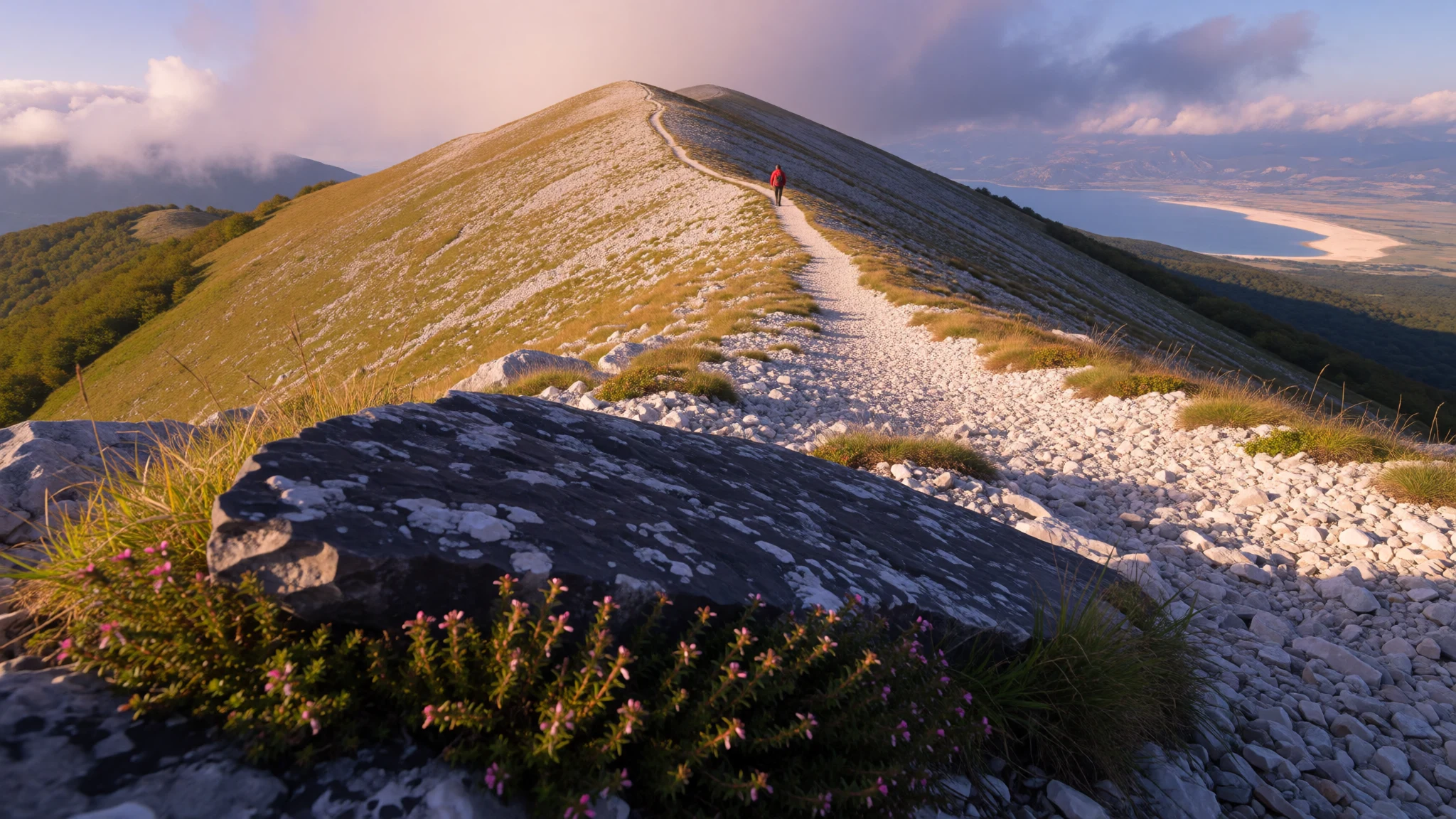
Galičica National Park is a limestone ridge between two lakes, with ridge walks, island birdlife and lakeside monasteries within an hour or two of each other.
The place
Galičica National Park (Национален парк Галичица) occupies a long limestone ridge in the south-west corner of North Macedonia, between Lake Ohrid and Lake Prespa. The mountain works as a wall between the two lakes, and the shores on either side feel quite different. The Ohrid side has beaches, boats and old churches; the Prespa side is quieter, reedy and thinly settled. The park also takes in strips of both shorelines and Golem Grad, an island in Prespa. To the south it meets the Albanian frontier, where Prespa National Park continues the protected land across the border. Magaro, the high point of the range, reaches 2255 m. About two-thirds of the park lies inside the Natural and Cultural Heritage of the Ohrid Region, which UNESCO inscribed in 1979, and the park itself was created in 1958. Its slopes run from woodland at the bottom to open grass and bare rock near the crest. More than 1000 species of plants and animals are recorded here, of which 40 are endemic, meaning they are found nowhere else. Several villages lie inside the boundary, Elšani on the western slopes among them, so this is lived-in country with orchards, livestock and old footpaths rather than empty wilderness. Walking and mountain biking are the usual ways to explore, along a network of marked trails. A printed park map is sold in Ohrid bookshops, though information boards at some entrances may be faded. Paragliding and hang-gliding clubs launch from the ridge. Lake shores get hot and busy in high summer, the crest stays cooler and windier, and snow can close the highest ground in winter.
Its story
The human story of Galičica National Park starts at the water's edge. Remains of stilt houses on the Lake Ohrid shore show that people were living over the lake long before any monastery was built. Later the Ohrid region became an important centre of Slavic Christianity. Saint Naum, who belonged to the circle of pupils around Cyril and Methodius, founded a monastery at the southern end of the lake in 910, beside the springs that feed it. The church standing today was built in the 16th century, and only the side chapel holding Naum's grave survives from the first building. Its frescoes were painted in 1806, and its carved wooden icon screen dates from 1711. Pilgrims still come to the grave and, by local custom, kneel to listen for the saint's heartbeat. Further along the shore, the small church of Sv. Bogorodica Zahumska was built in 1361 on a rocky strip of coast, and boats remain the way in. Out in Lake Prespa, Golem Grad has long been a refuge for birds and plants, and more recently a place for careful visitors. The mountain itself was made a national park in 1958, and the 1979 UNESCO listing of the Ohrid region later covered most of it. The monastery stands almost on today's Albanian border, a reminder that the lakes were shared long before the frontier was drawn.
What to see
- Magaro and the main ridge — Galičica ridge
Magaro, at 2255 m the high point of the Galičica range, anchors the ridge walk above both lakes. Marked footpaths and bike routes cross the open upper slopes, and on clear days Ohrid and Prespa can often be seen together. The crest is cooler and windier than the shore, so carry layers and water.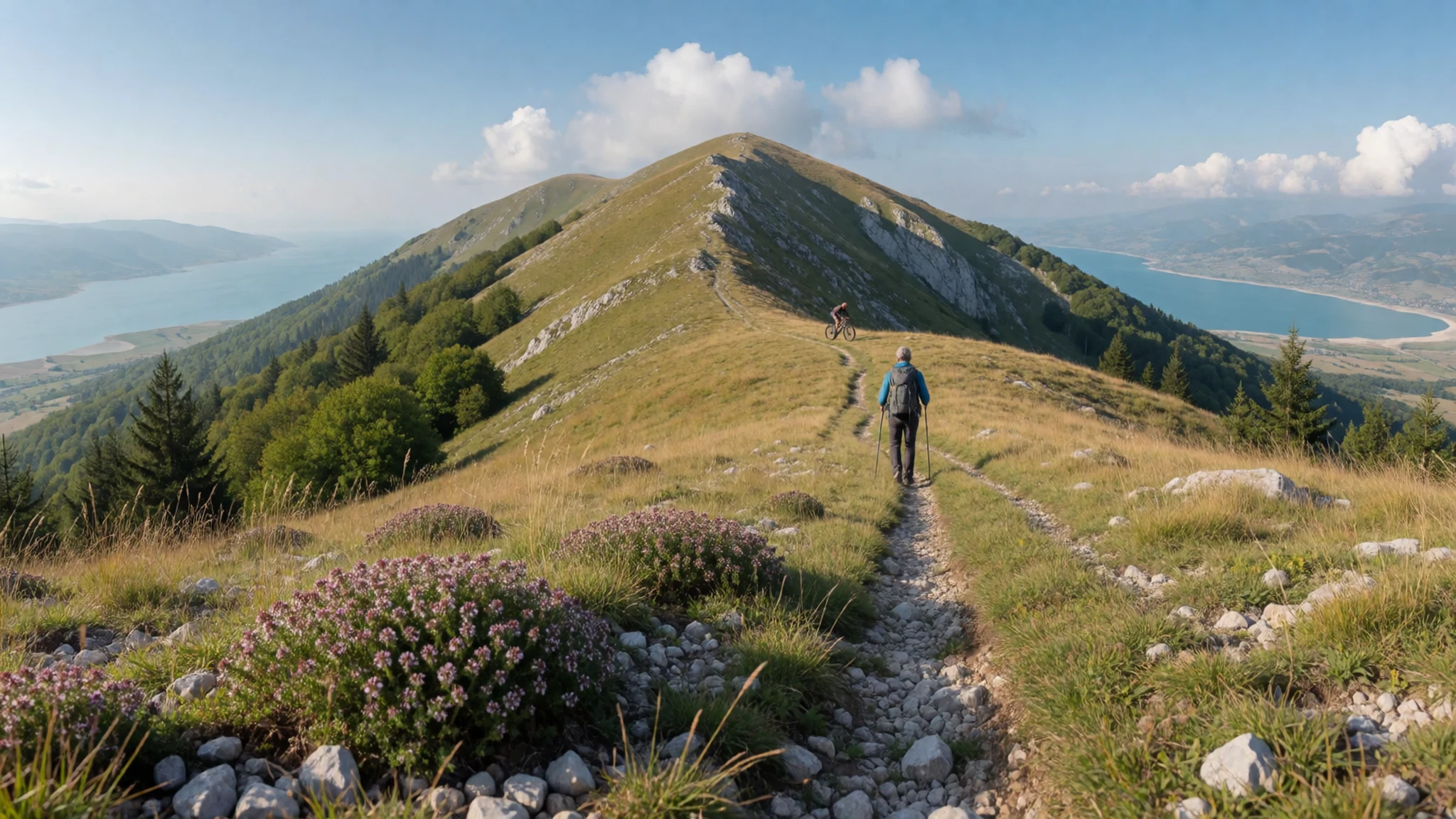
- Monastery of Saint Naum — Southern shore of Lake Ohrid
The monastery stands on a plateau above the southern end of Lake Ohrid, almost on the Albanian border, so stay on the signed paths and out of the military zone. Inside, look for the carved icon screen and the fresco of Cyril, Methodius and their pupils. Peacocks wander the grounds.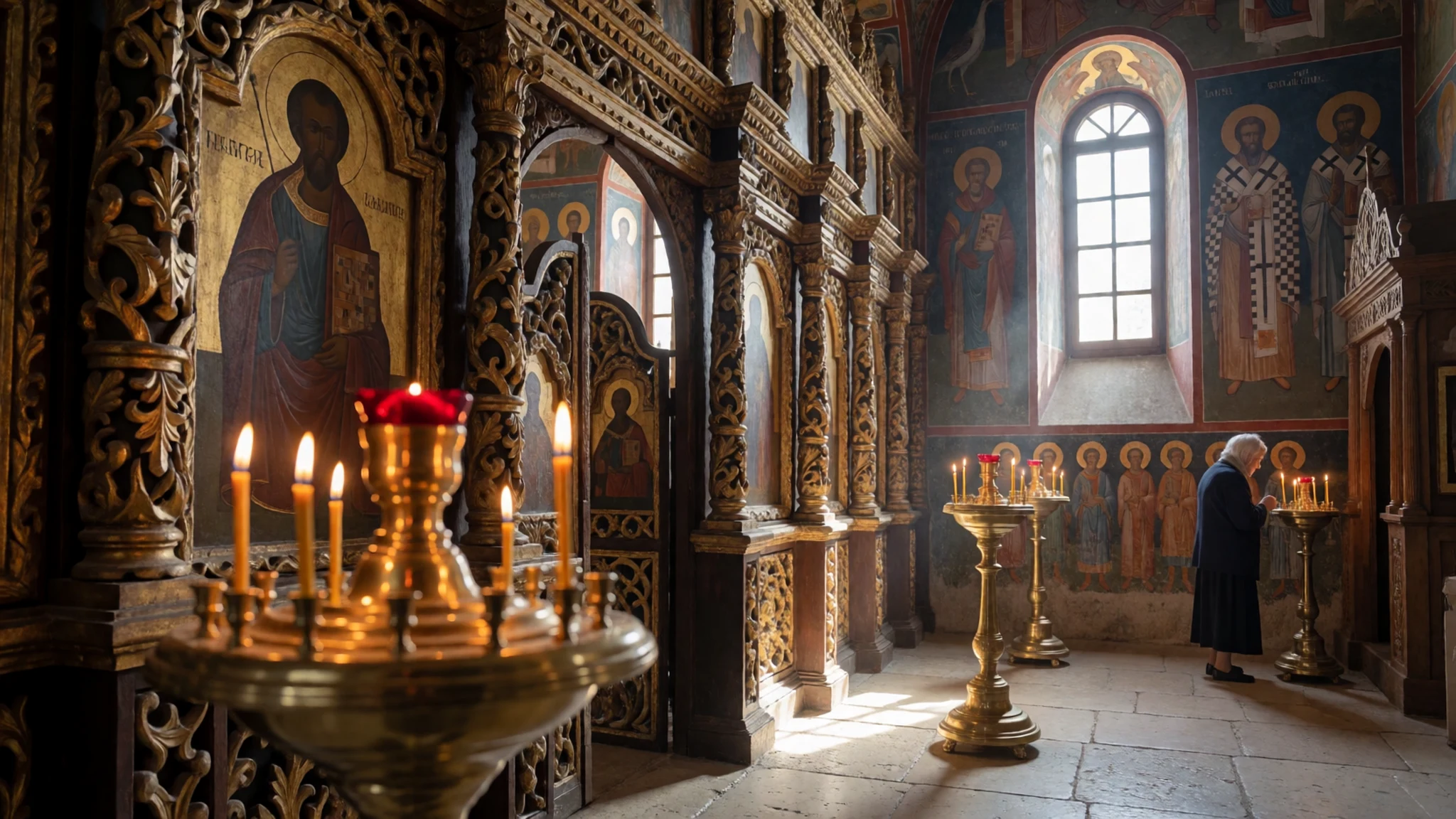
- Springs of the Drim — Next to Saint Naum
Close to the monastery, the springs of the Drim river rise and flow into the lake. A small café sits on an island among the springs, and boat trips run in summer only. Ask locally about current arrangements. The river passes through the lake and leaves again at Struga.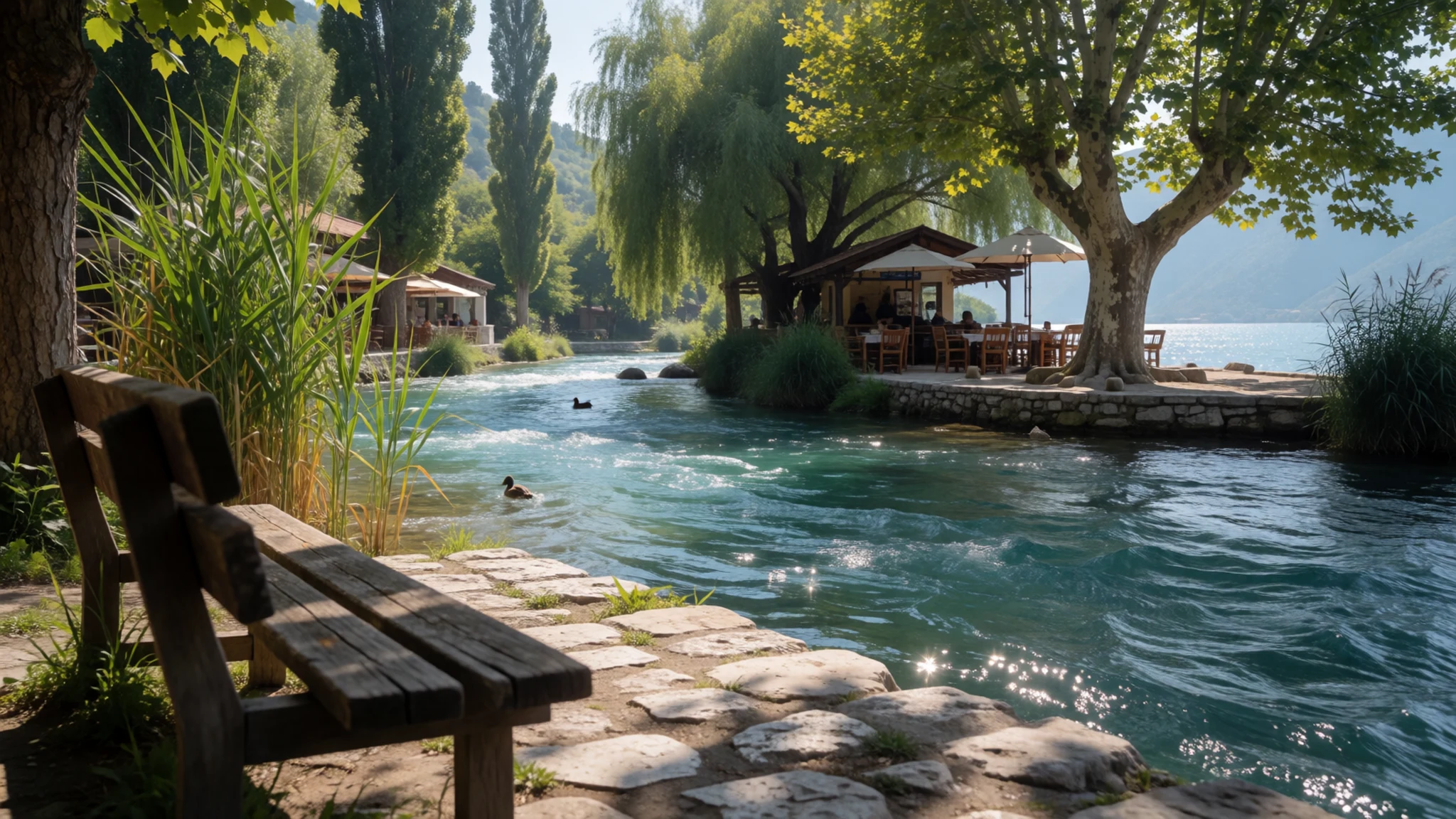
- Sv. Bogorodica Zahumska — Trpejca and Ljubanishta
This small church, dated to 1361, is tucked against the rocks at the water's edge near Trpejca. Visitors reach it only by boat, usually arranged by asking on the beach or at a restaurant in Trpejca or Ljubanishta. Inside, look for the fresco of St Anne nursing the young Mary.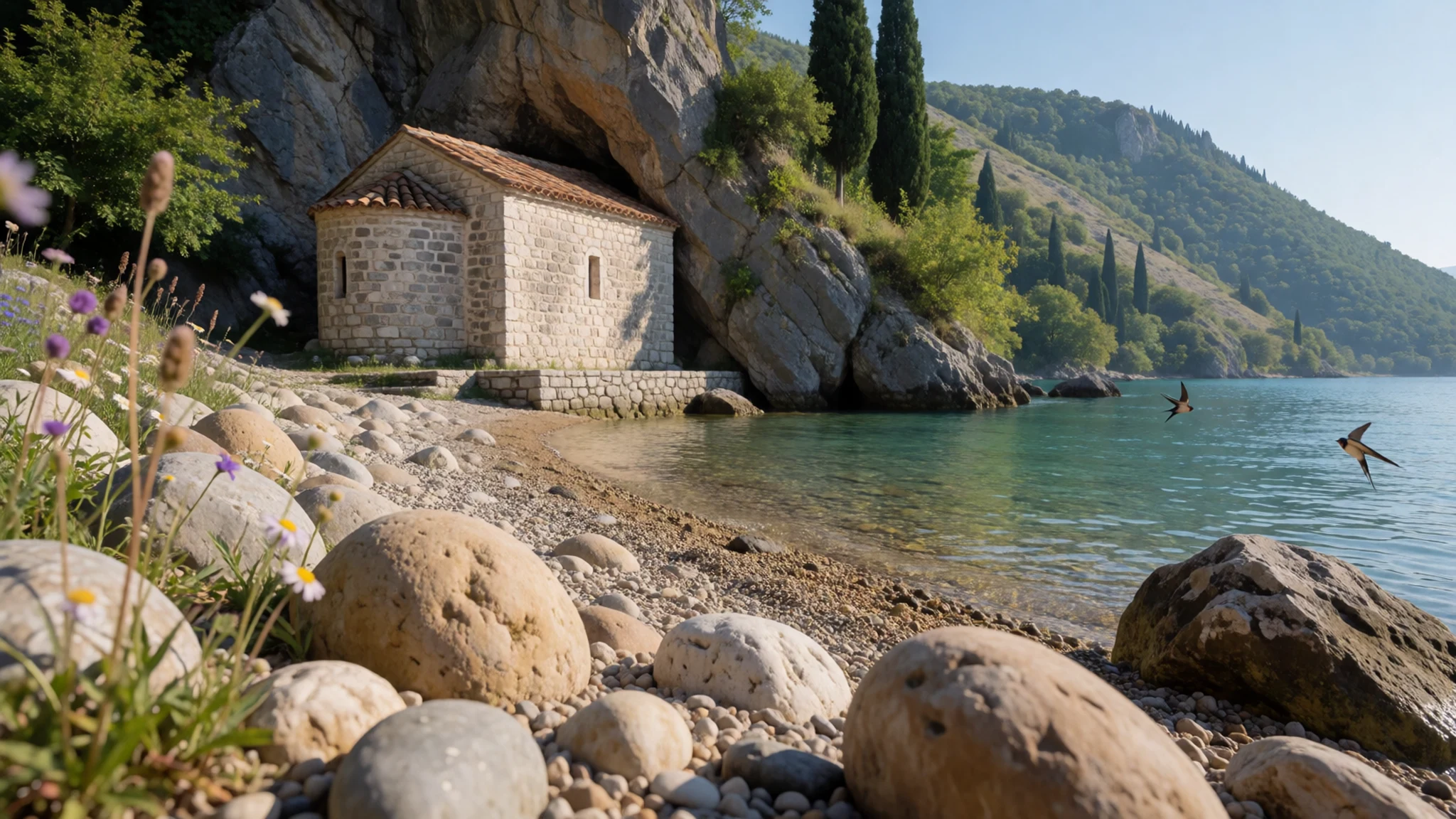
- Golem Grad — Lake Prespa
Golem Grad is an island in Lake Prespa, within the park, known for its birds and unusual plants. Visits are generally possible between May and October, by boat from the shore. Check the park's official site, http://www.galicica.org.mk/, or ask locally before planning the trip.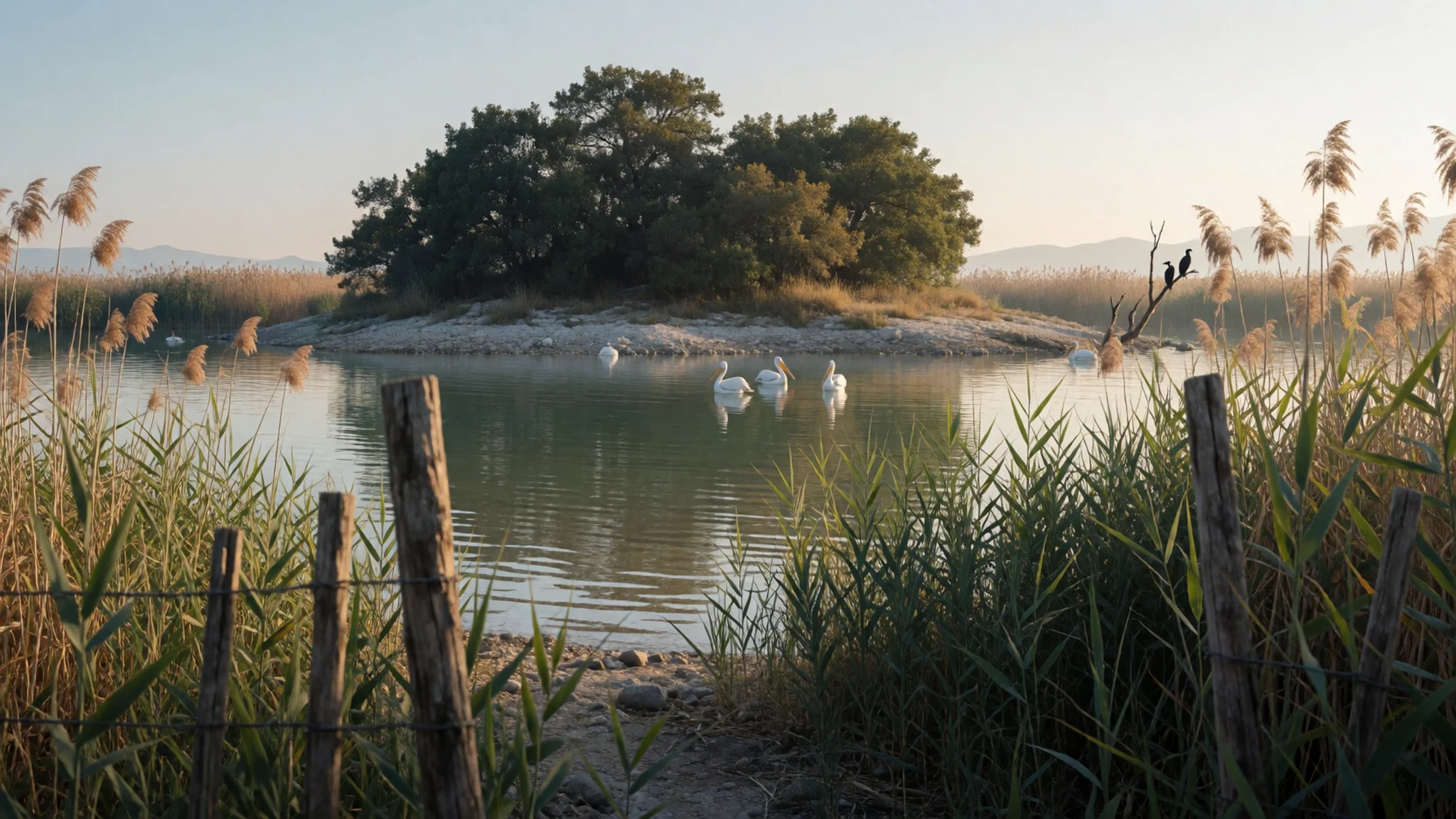
Culture
Galičica National Park sits in country where Macedonian Orthodox Christianity has shaped daily life around the lakes for centuries. Saint Naum's monastery is still a pilgrimage place, with people lighting candles, kissing icons and kneeling at the saint's grave, and the church feels like a place of worship first and a sight second. Smaller chapels along the shore, such as the one near Trpejca, follow the same pattern: quiet, dim and often locked outside services, with someone nearby who knows where the key is. Villages inside and around the park are small and farming or fishing based, and Macedonian is written in Cyrillic, so road signs and menus may come in two scripts. Hospitality is real rather than staged. Staying with a family is a common and inexpensive alternative to a guesthouse, and a coffee or a plate of grilled meat in a mountain village is usually offered with little fuss. Across the ridge and the nearby border, Albanian-speaking and Macedonian-speaking communities have lived close together for generations, so a few words of greeting in either language are welcomed. Paragliding and hiking clubs form a newer layer of local life, and members are usually happy to talk about conditions on the ridge. Cover your shoulders and knees before entering any monastery or chapel, speak quietly inside, and ask before photographing icons, frescoes or anyone at prayer.
What to wear
Traditional dress around Galičica National Park belongs to the wider Macedonian folk costume. Women's outfits were built from white linen or cotton blouses, wool or woven aprons, sashes and embroidered or braided vests, with patterns varying from village to village. Men wore wool trousers, waistcoats and a sash. Today this dress mostly appears at weddings, church feast days, folk festivals and dance performances, where the embroidery and woven belts are the point of interest. Everyday clothing is the same as elsewhere in Europe: jeans, shirts and trainers in town, and practical outdoor clothing in the villages, where older people may still wear dark wool cardigans and headscarves. For a visit, dress for the terrain first. The ridge can be hot and exposed at midday and cold and windy by late afternoon, so wear layers, a hat, sun protection and sturdy shoes with a good grip, as the limestone is loose and rocky. Lakeside, light cotton and sandals are fine, and swimwear belongs on the beach. Monasteries and chapels expect covered shoulders and knees, and a light scarf or long shirt in a day bag solves that without extra planning. In autumn and early spring, add a waterproof layer, because mountain weather can change quickly.
What to eat
- Grilled meat and white cheese — Village eateries on the mountain slopes above Lake Ohrid
Simple grills of local meat served with white brined cheese make a standard lunch in the mountain villages above the lake. Drivers and hosts often point visitors to a village eatery rather than a lakeside one.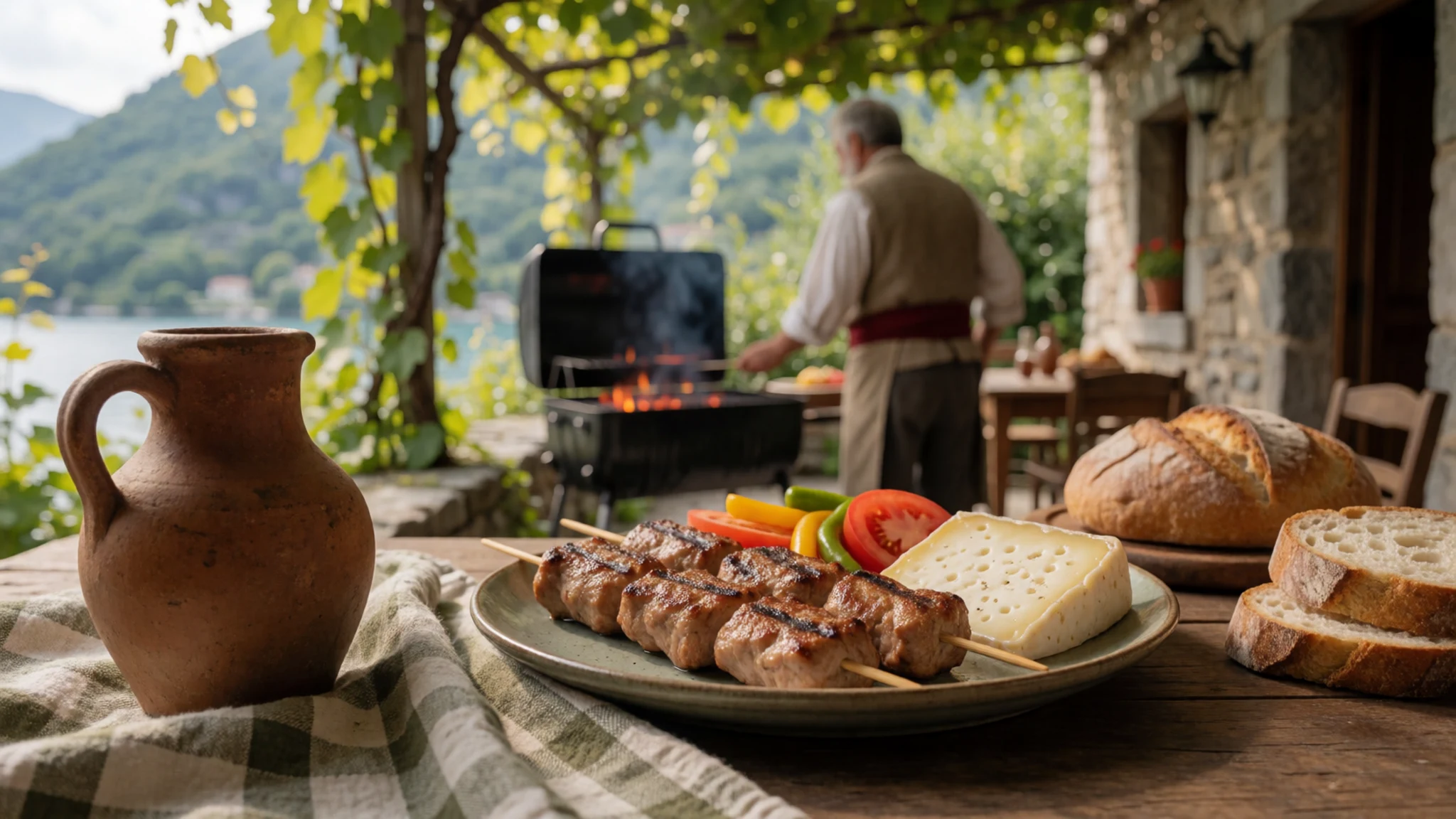
- Ohrid trout — Lakeside restaurants at Trpejca, Ljubanishta and in Ohrid
Trout from the Ohrid area is a lakeside menu staple, usually grilled or baked whole with lemon and herbs. Local protections affect fishing, so ask the restaurant where its fish comes from.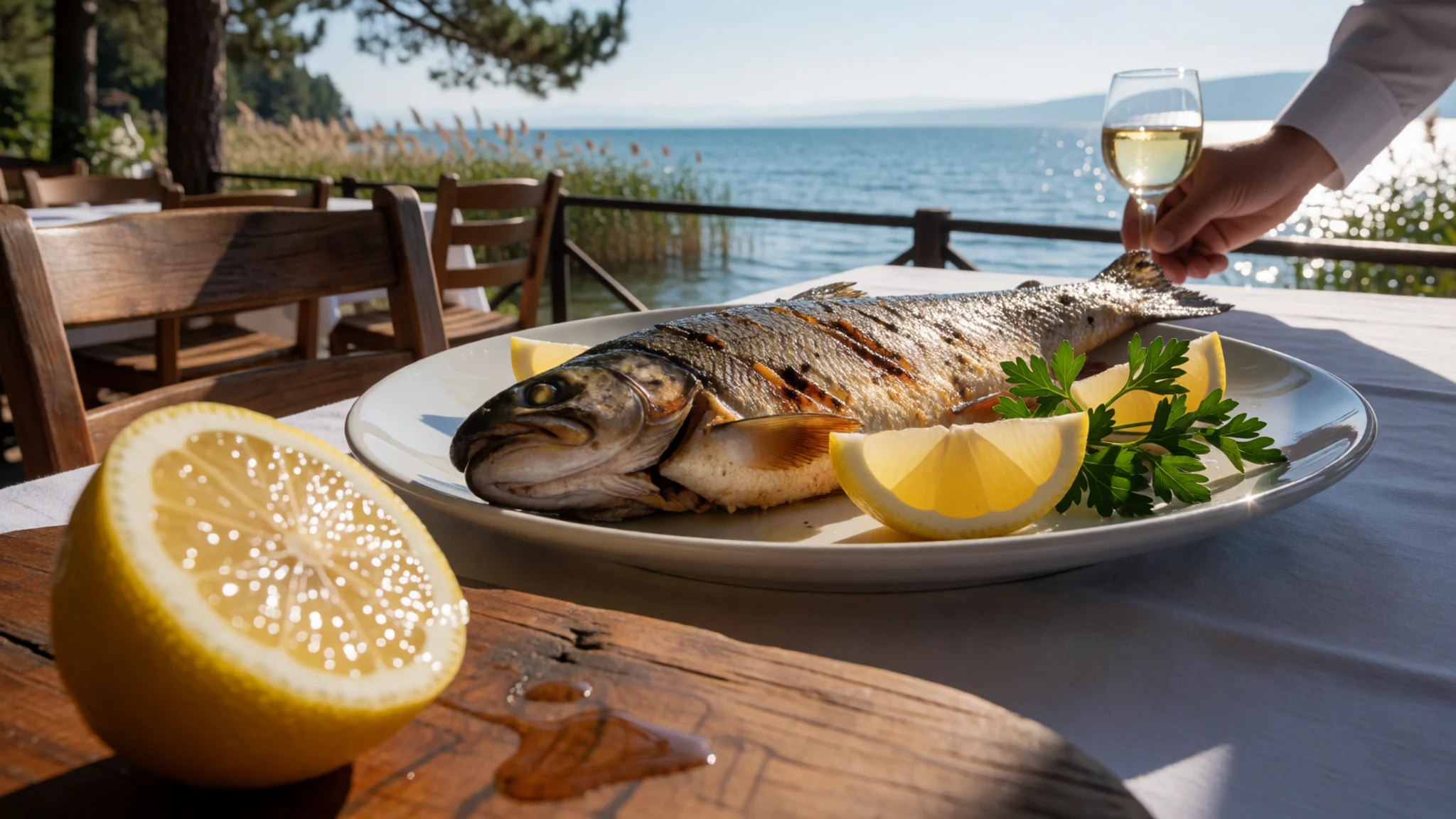
- Tavče gravče — Family-run restaurants and village eateries
Baked beans in a clay dish with onion, paprika and oil, widely regarded as a national dish of North Macedonia. It is hearty, mildly smoky and often served with bread and salad. - Shopska salad — Almost any restaurant, especially lakeside terraces
A salad of chopped tomato, cucumber and onion topped with a snowy heap of grated white cheese. It is cooling after a hot walk and normally arrives alongside grilled dishes. - Ajvar — Village shops and the markets in Ohrid and Resen
A relish of roasted red peppers, often with aubergine, spread on bread or eaten with grilled meat. Households make it in autumn, and village shops and roadside stalls sell jars.
Plan it
Best time. May–June and September–early October. The lakes are warm enough for swimming from early summer, the ridge is clear of snow, and the shoreline is less crowded than in July and August, when the lake shore is hot and busy. Golem Grad is generally open for visits between May and October. Winter snow can close the highest ground.
How long. 2–3
Getting there. Fly to Ohrid airport or to Skopje, then continue by road. Ohrid town is the easiest base for the western side, with buses, taxis and boats along the shore to Saint Naum. For the Prespa side, go by road via Resen. A car makes the villages and trailheads much easier to reach.
Budget. low
Tips
- Start ridge walks early, because the exposed upper slopes get hot by midday and afternoon wind can be strong.
- Carry water and a map; the Trimaks park map is sold in Ohrid, but trail boards at some entrances may be illegible.
- Ask on the beach or in a restaurant at Trpejca or Ljubanishta to arrange a boat to Sv. Bogorodica Zahumska.
- Bring cash for village eateries and boat trips, and check the official site, http://www.galicica.org.mk/, for current park information.
Etiquette
- Dress modestly and speak quietly inside monasteries and chapels.
- Stay on signed paths near Saint Naum, because the border area includes a military zone.
- Ask before photographing people, icons or frescoes.
Nearby
Sources
- Wikidata Q3515283 (CC0)
- Wikipedia: Galičica National Park (rev 1362734190) (CC BY-SA 4.0)
- Wikivoyage: Galičica National Park (rev 5402569) (CC BY-SA 4.0)
- Photo: Magaro, highest peak on Galicica Mountain (Pero Veliki) (CC BY 3.0)
- Photo: Galichitsa Mountain with Ohrid Lake (Apcbg) (Public domain)
- Photo: North Macedonia relief location map (Eric Gaba and NordNordWest) (CC BY 3.0)
- Photo: Ljubanishta od Galicica (MartinDimitrievski) (CC BY 3.0)
- Photo: Stenje od Galicica (MartinDimitrievski) (CC BY 3.0)
- Photo: Ohridsko krajbrezje pod Galicica (MartinDimitrievski) (CC BY 3.0)
- Photo: Trpejca, Galicica (MartinDimitrievski) (CC BY 3.0)
- Photo: Kormoran so golem grad vo pozadina (MartinDimitrievski) (CC BY 3.0)


