Kokino
Kokino, North Macedonia
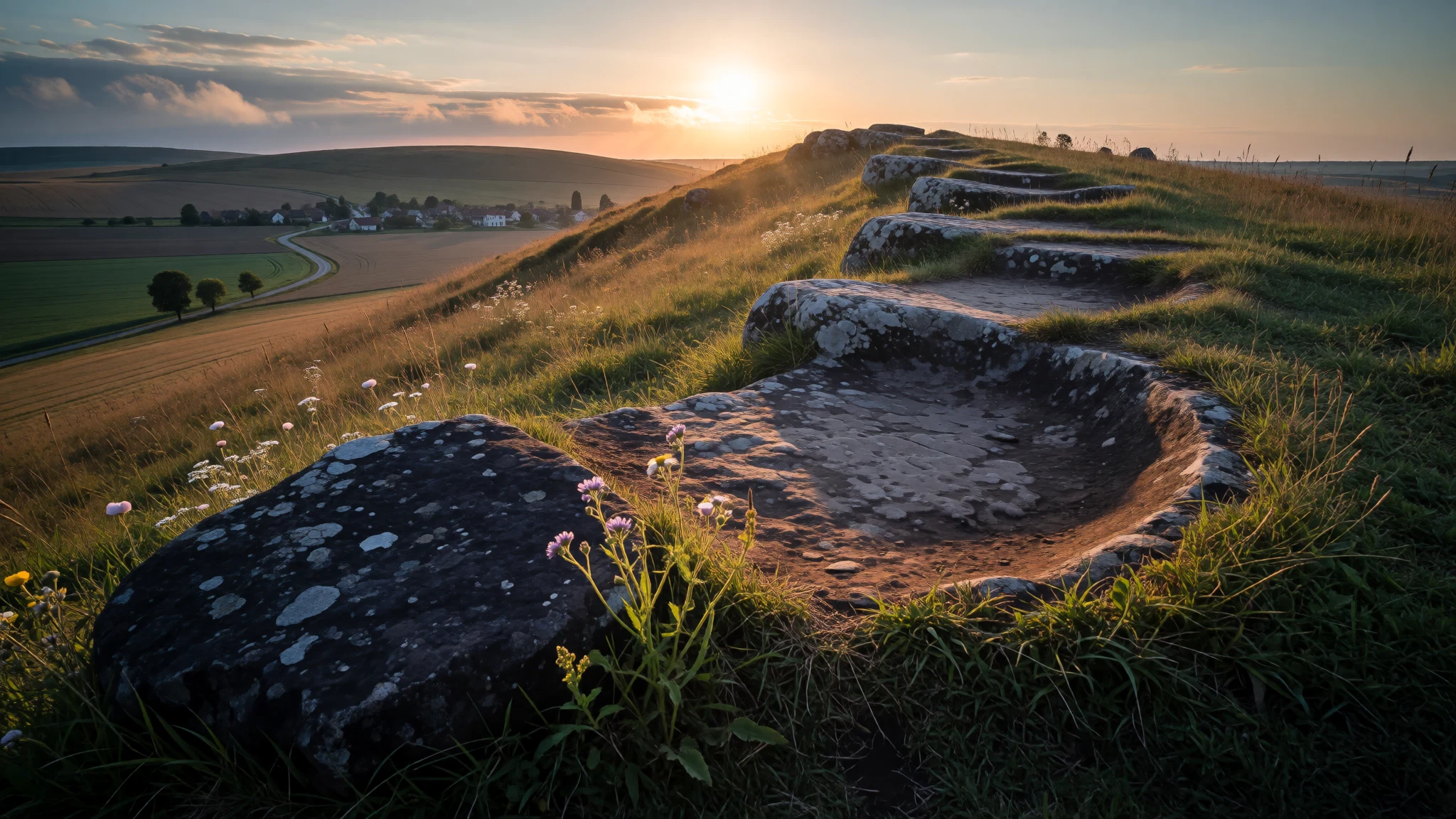
Kokino is a Bronze Age hilltop in North Macedonia where weathered rock terraces are read as a sky-watching site, with quiet villages and old churches around it.
The place
Kokino lies in the north-east of North Macedonia, in the hills of Staro Nagoričane Municipality, a short drive from the town of Kumanovo and close to the Serbian border. It is a Bronze Age site on the summit of a ridge called Tatićev Kamen (Татиќев камен), looking down on the small hamlet that gives it its name. What a visitor finds is not a built monument in the usual sense. There are no columns or walls to walk through. Dark rock outcrops rise from the grass in rough terraces, and along the crest are shallow cut seats, notches and platforms. The interest lies in how those marks line up with the horizon. The summit is exposed, so wind, sun and wide skies are part of the experience, and there is very little shade. Below, the landscape is farmland and low hills, quiet and thinly settled, with wild flowers in the grass through the warmer months. The approach is by a country road, and the final stretch is on foot over uneven stone. Kokino suits people who enjoy reading a landscape rather than being handed a spectacle, and any information boards on site do a good share of the explaining. It also combines easily with the churches and monasteries scattered through nearby villages, which turns a day out from Kumanovo into something fuller than the summit alone. Anyone expecting a large, staffed attraction will be surprised by how modest and open it feels. Most of the pleasure comes from the setting itself.
Its story
Kokino entered the wider world quite recently, even though its stones are Bronze Age. The archaeologist Jovica Stankovski, then director of the national museum in Kumanovo, identified the site in 2001. A year later, in 2002, he and Gorje Cenev, who ran a planetarium at a youth cultural centre in Skopje, published the claim that the hilltop was a megalithic observatory and sacred site. Their argument rests on the way notches, platforms and stone seats seem to frame points on the horizon where the sun and moon rise. That is an interpretation, and it deserves to be treated as one. The marks are real and can be seen, but how deliberate each alignment was, and how much meaning the people who used the hill gave them, is a matter of reading and debate rather than settled record. What can be said plainly is that people of the Bronze Age chose this high, open ridge and worked its rock, and that its position, with a long view in most directions, would suit watching the sky and the seasons. The finding also shows how much remains to be noticed in the Balkan countryside. A hilltop that local people had known for generations became a named archaeological site only in the early years of this century, and visits by astronomers and amateur sky-watchers have followed since. For a traveller, the story is best held lightly: stand on the terraces, look at the horizon, and weigh the claim against what the stone itself shows.
What to see
- The Kokino summit — Tatićev Kamen, above Kokino hamlet
The ridge top itself is the main event: rock terraces, cut seats and notched platforms spread along the crest, with the hamlet and farmland below. Give it unhurried time, walk the full length, and look along the horizon from different spots. Wear sturdy shoes, as the stone is uneven and the summit is open to wind.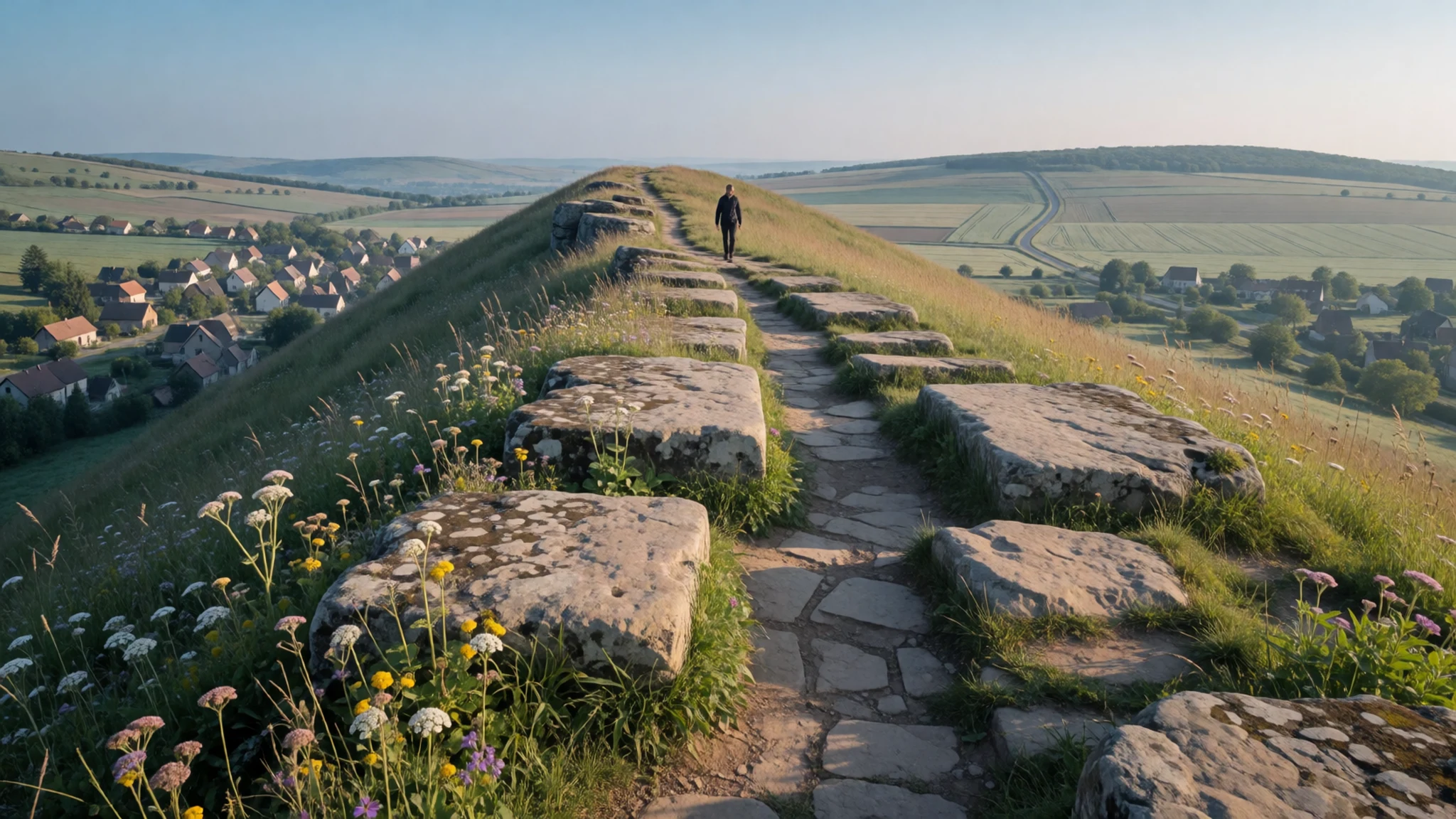
- Kostoperska Rock — Hills south-west of Kokino
A mass of dark basalt of volcanic origin rising above the surrounding slopes, with traces of settlement from the Chalcolithic period. It makes a good second stop for anyone who likes geology as much as archaeology, and the rock face is striking in low evening light.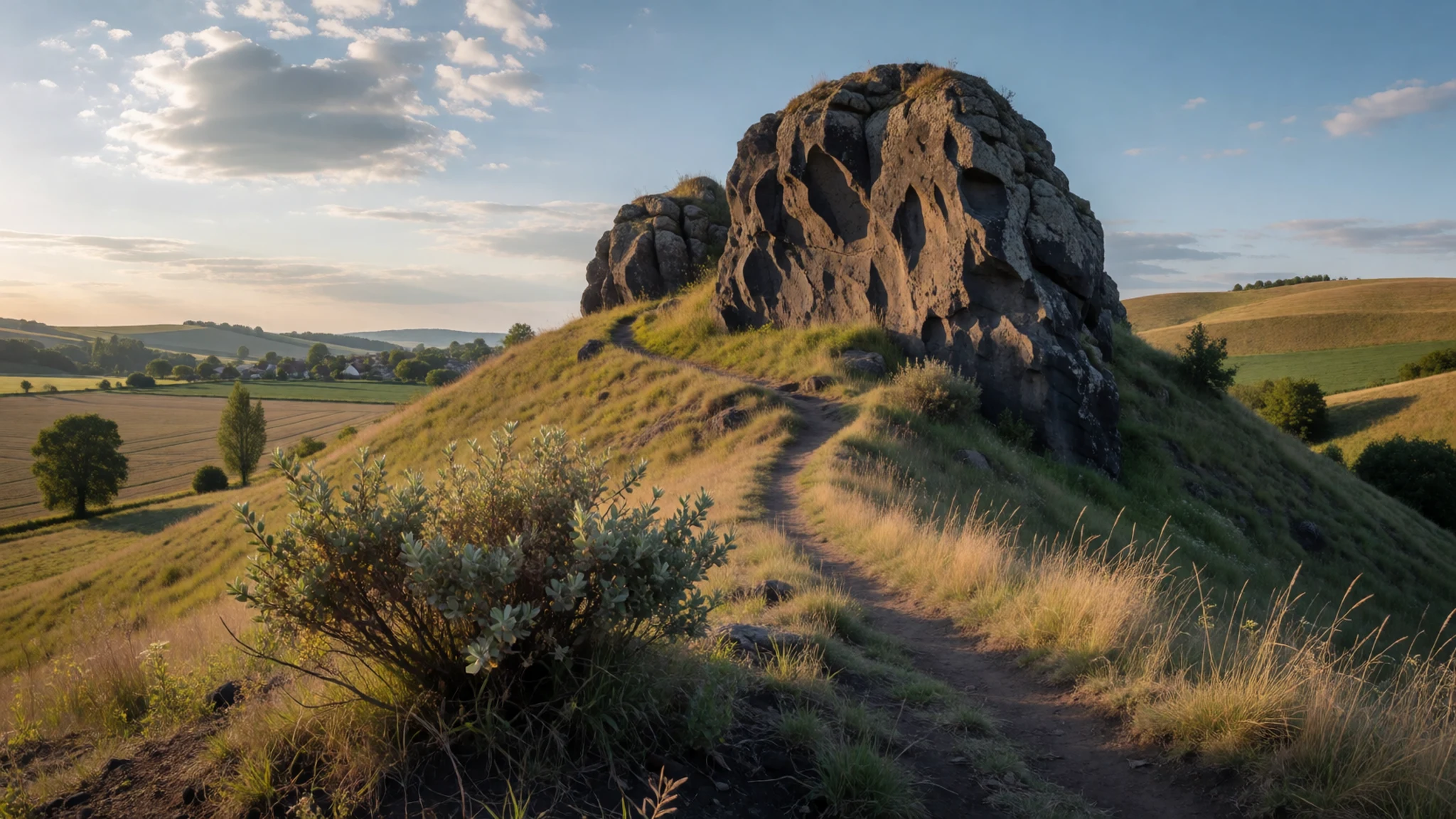
- Šupliva Rock — Countryside south of Kokino
A huge, oddly shaped boulder, roughly the size of a small building, that looks almost like a figure. Local legend says King Marko carried it here and balanced it on a fingertip. It is a pleasant detour for the story as much as for the stone, and a reminder of how folklore attaches itself to odd landscapes.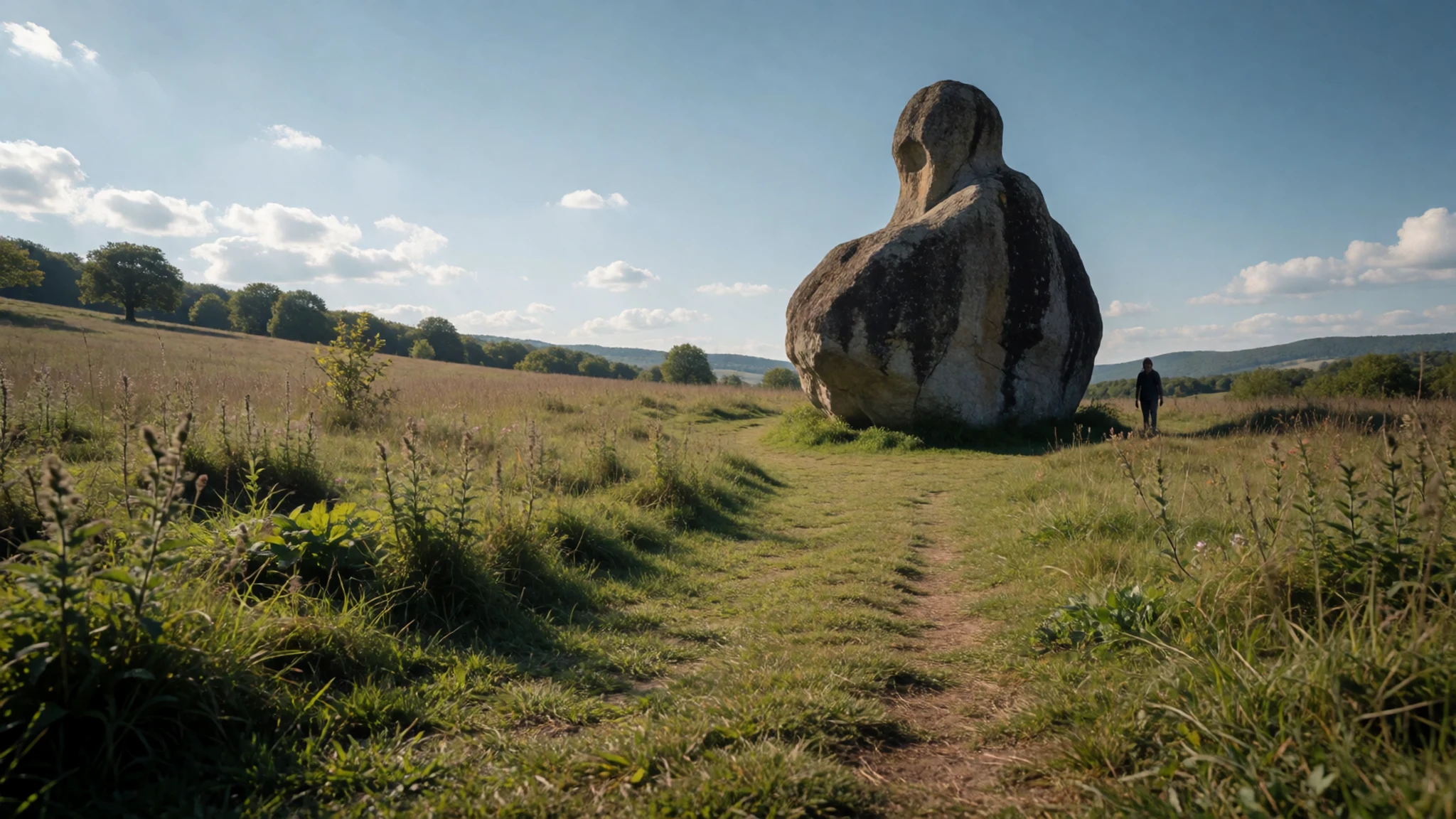
- Karpino Monastery — Karpino, south of Kokino
A medieval monastery dedicated to the Presentation of the Virgin Mary, with the look it has today coming from later rebuilding. The setting is peaceful and rural. Check locally before travelling, as small monasteries keep their own opening habits and a respectful, quiet visit matters more than a long one.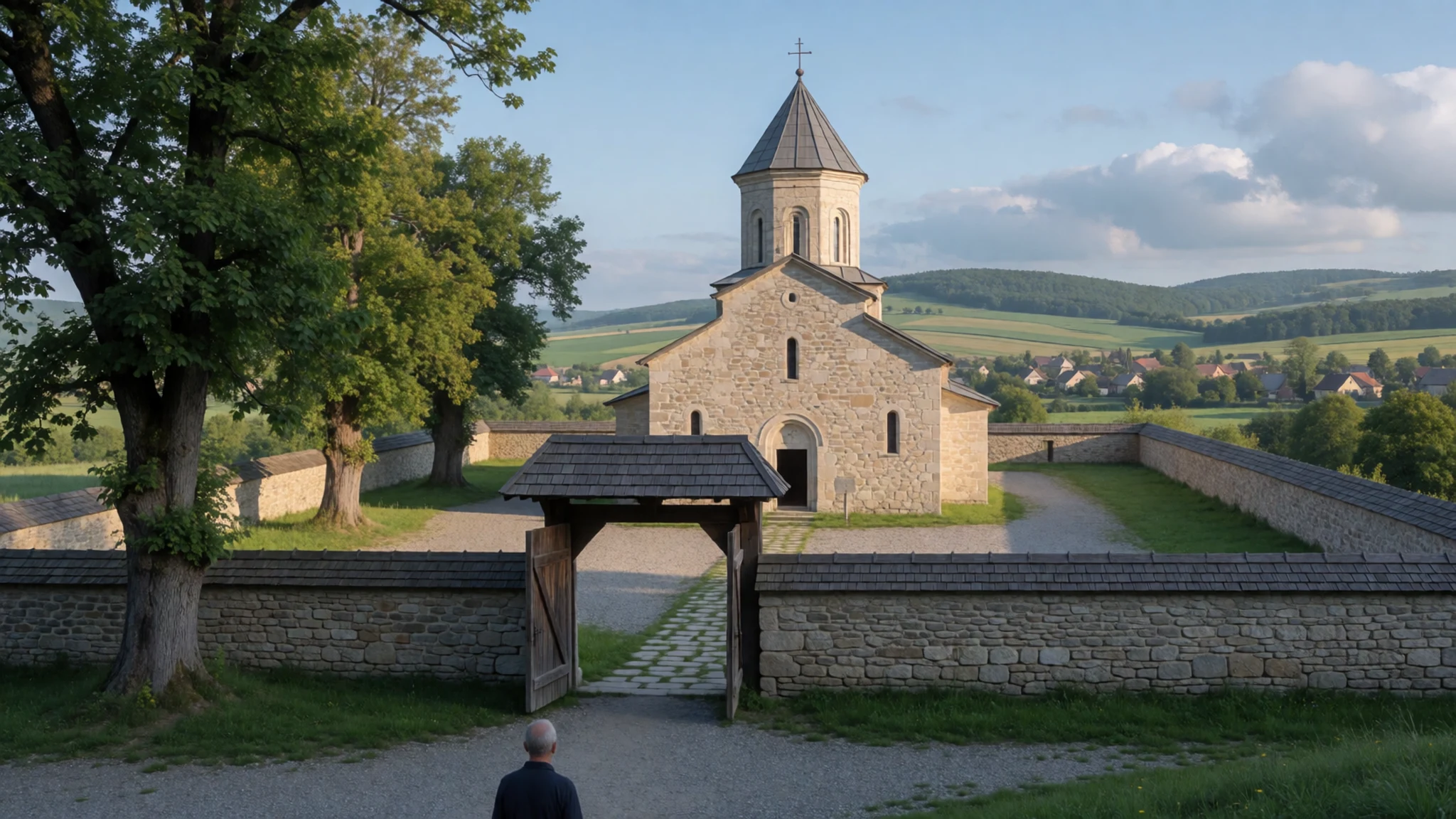
- Church of Saints George and Nicholas — Village south of Kokino
An unusual double church, post-Byzantine in style, with two saints, two separate entrances and two apses under one roof. It is small and easy to miss, but the plan is worth seeing in person. Village churches like this are often locked, so ask nearby for the keyholder.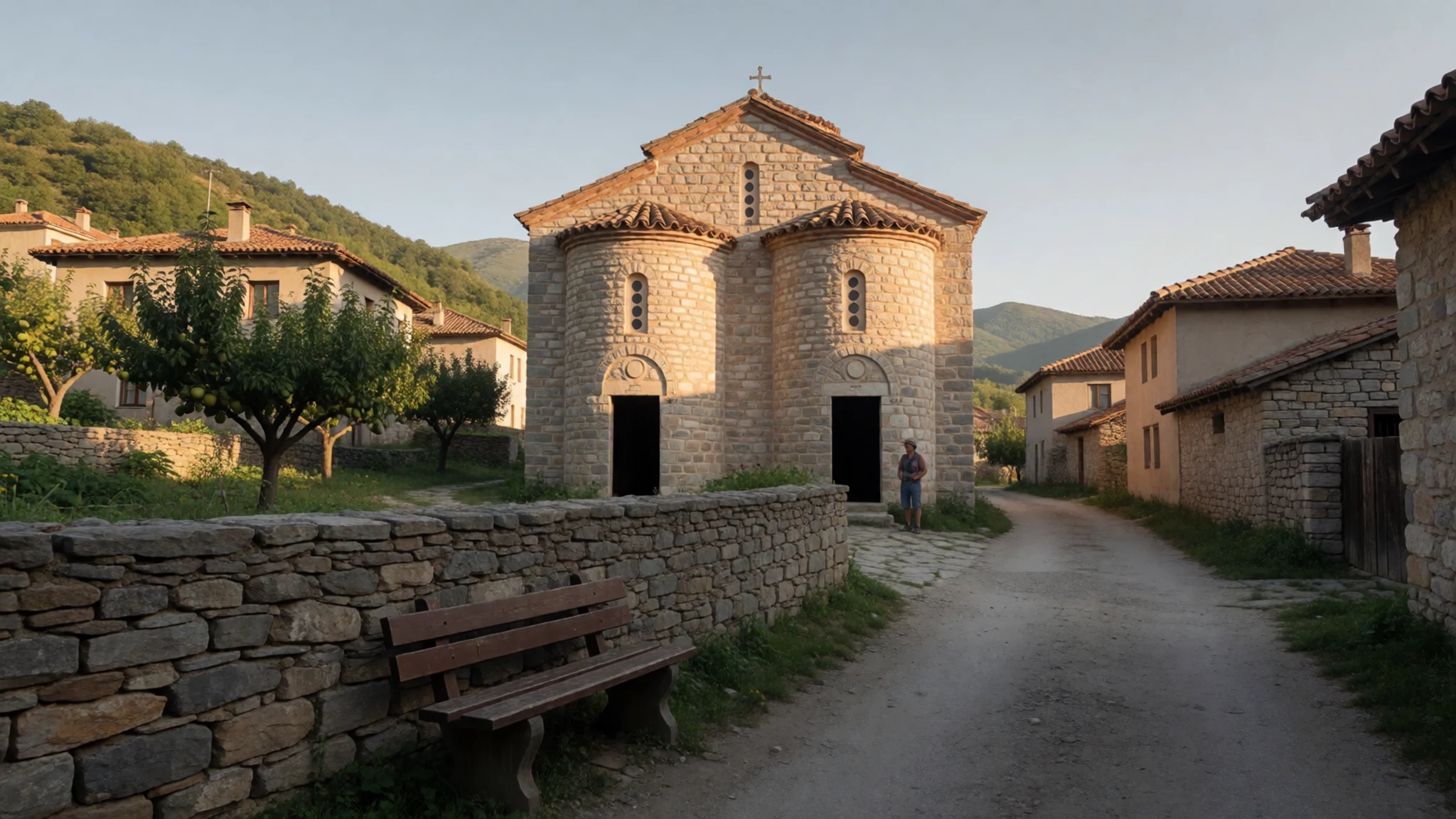
Culture
Kokino sits in a part of North Macedonia that is quiet, rural and largely Orthodox Christian, and the culture a visitor meets here is that of villages and small market towns rather than big-city life. Macedonian is the local language, written in Cyrillic, and signs in the countryside may appear in Cyrillic only, so a downloaded offline map and a few words of greeting help a good deal. Hospitality matters. Being offered coffee, a sweet or a small glass of rakija in a village is common, and accepting graciously, even just a sip, is usually taken as friendliness. Churches and monasteries are active places of worship and not only heritage sites, so services, candles and icons are part of daily life rather than decoration. The Bronze Age hilltop sits comfortably within this world. Local people know it as part of the landscape and are often proud of the attention it now receives, but it is not treated as a sacred place in the way a church is. Conversation about history and the sky is welcomed, and many people enjoy hearing where visitors have come from. Mornings start early in the countryside and the pace is unhurried, so shops may close for a midday break and buses are infrequent. Travelling with patience and a flexible plan suits the place far better than a tight schedule. At any church or monastery, cover your shoulders and knees, lower your voice, and ask before photographing people or the interior.
What to wear
Kokino and the villages around it belong to a region with a long tradition of embroidered folk dress, and Macedonian costume varies from district to district. Typical pieces include linen or cotton blouses with embroidered sleeves and hems, woollen waistcoats, aprons woven in bands of colour, and for men dark woollen trousers with sashes. Wool, linen and cotton were the usual materials, spun and woven at home. These outfits are now mostly worn at weddings, folk festivals, dance performances and church feast days, and are often handed down within families. Day to day, people in the Kumanovo area dress as most of Europe does: jeans, practical jackets, shirts and trainers, with older villagers often in darker, plainer clothes and headscarves for women at church. Farm work keeps boots and layers common. A visitor should dress for the terrain first. The summit is open and exposed, with uneven stone underfoot, so sturdy walking shoes or light boots with good grip are better than sandals. Bring a hat and sun protection for the warmer months, since there is almost no shade, and a windproof layer even in summer, as a high ridge can feel cool when the breeze picks up. In cooler seasons add a warm jacket and gloves. For visits to churches and monasteries, carry a light scarf or shawl and wear clothes that cover shoulders and knees. Neat, modest dress is appreciated everywhere in the villages.
What to eat
- Tavče gravče — Family-run eateries in Kumanovo and nearby villages
Beans baked slowly in a clay dish with onion, paprika and oil, usually served bubbling hot. It is often treated as a national dish and suits cold days after a windy hill walk. Look for it on menus at family-run eateries around Kumanovo.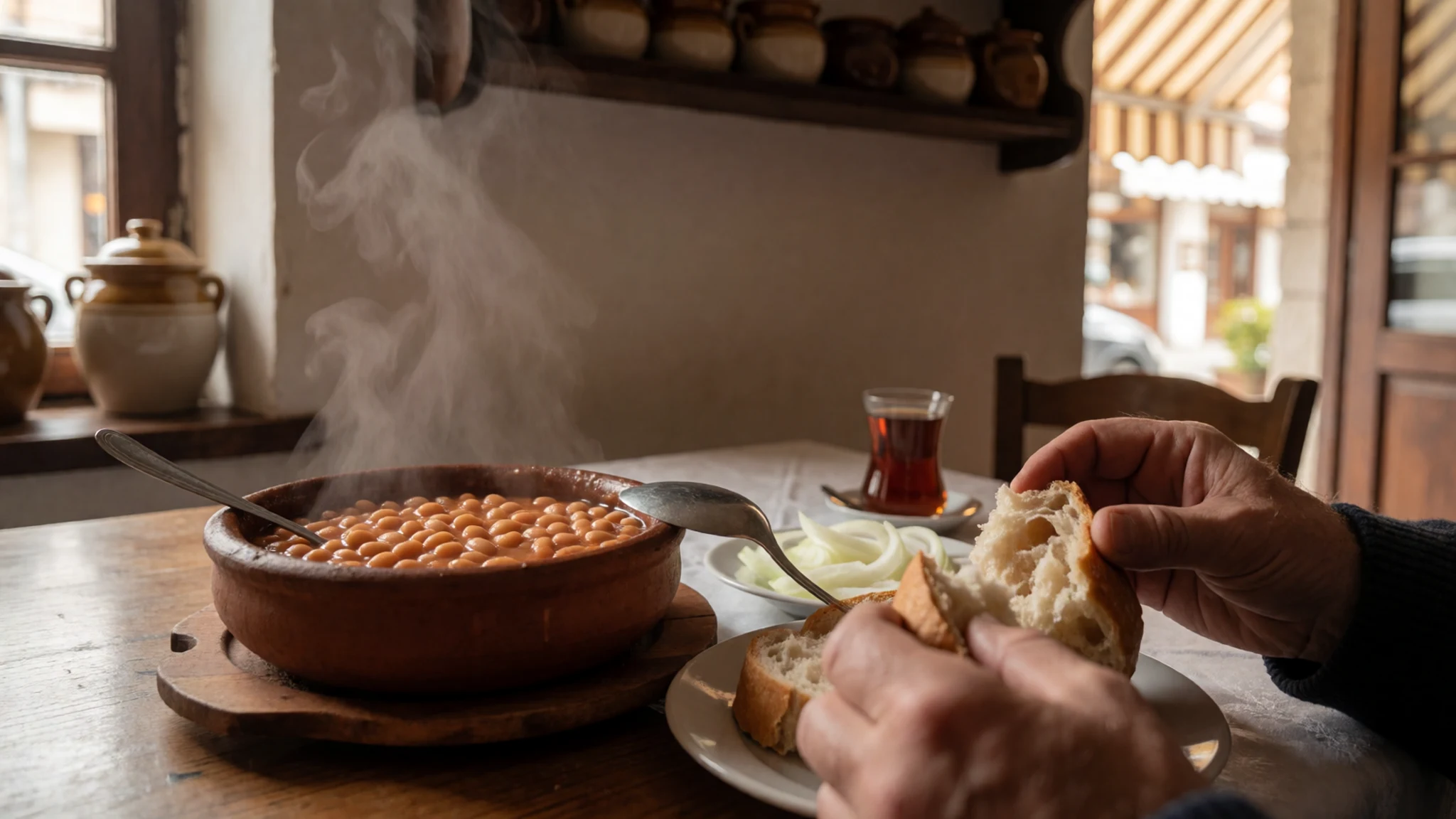
- Šopska salad — Almost any restaurant or village eatery
A plain, fresh salad of tomato, cucumber and onion topped with grated white cheese. It is the usual starter across the Balkans and a good counter to heavier grilled dishes. It tastes best in summer, when the tomatoes come from local gardens and fields.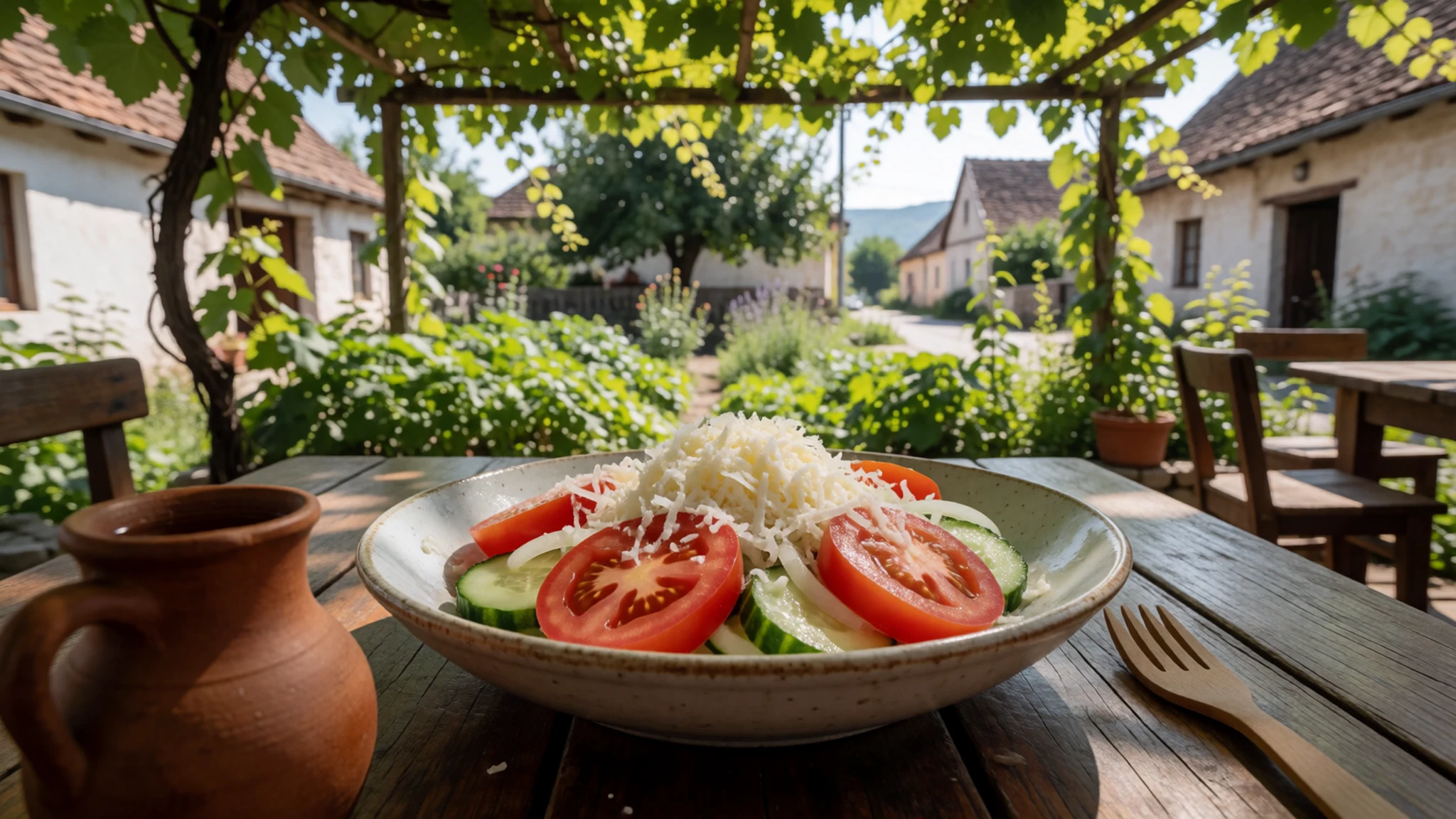
- Burek — Bakeries and morning pastry shops in Kumanovo
Layered pastry filled with cheese, spinach or minced meat, baked until crisp and sold in slices. It is a standard breakfast or quick lunch, often eaten with plain yoghurt. A good, cheap option before a day on the hilltop. - Ajvar — Town markets in autumn and village roadside stalls
A relish made from roasted red peppers, sometimes with aubergine, cooked down to a smoky paste. Families make it in autumn and store it in jars. It is spread on bread or served beside grilled meat. Buying a jar makes an easy, light souvenir. - Kebapi — Grill houses and roadside eateries along the main road
Small grilled minced-meat sausages served with flatbread, chopped raw onion and sometimes ajvar. They are simple, filling and widely available. Expect plenty of charcoal smoke and large portions, and note that vegetarians will find the menu limited at grill houses.
Plan it
Best time. May–June and September–October are the most comfortable, with milder weather for walking an exposed summit. Midsummer can be hot with almost no shade on the ridge, and winter can be cold and windy, with weather that may close or complicate the final approach.
How long. 1
Getting there. The nearest major airport is Skopje; from there go by road to Kumanovo, which lies on the A2/E871 highway, then continue on local roads towards Staro Nagoričane and Kokino hamlet. A hired car or pre-arranged taxi is the practical choice for the last leg, as public transport to the summit is limited; check current options locally.
Budget. low
Tips
- Hire a car or arrange a driver, as the last stretch is on country roads and the summit is reached on foot
- Bring water, snacks, a hat and sun protection, as there is little shade or shop cover on the ridge
- Check the weather before setting out, since wind, rain or snow can make the uneven stone slippery
- Carry some cash, as small villages and rural eateries may not take cards
- Combine the hilltop with nearby churches and monasteries, and ask locally about access to locked churches
Etiquette
- Cover shoulders and knees and keep voices low in churches and monasteries
- Stay on the existing paths and do not climb on or mark the rock terraces
- Ask before photographing villagers or the inside of a church
Nearby
Sources
- Wikidata Q1326977 (CC0)
- Wikipedia: Kokino (rev 1378066599) (CC BY-SA 4.0)
- Wikivoyage: Kokino (rev 5380194) (CC BY-SA 4.0)
- Megalithic Observatory Kokino near Kumanovo in Macedonia (Public domain)
- Approach road to megalithic observatory Kokino (Algorit007) (CC BY 3.0)
- Arenaria serpyllifolia in Kokino (AlijeZimberi) (CC BY-SA 4.0)
- Astroexpedition in Kokino 04 (Petrovskyz) (CC BY-SA 4.0)
- Astroexpedition in Kokino 05 (Petrovskyz) (CC BY-SA 4.0)
- Kokino, Macedonia (Kostadinov96) (CC BY 3.0)
- Kokino, North Macedonia (george k. 1981) (CC BY-SA 2.0)
- Karpa na plaza Orevce vo Ohrid (Lidiadesign) (CC BY 3.0)


