Painted Mosque
Painted Mosque, North Macedonia
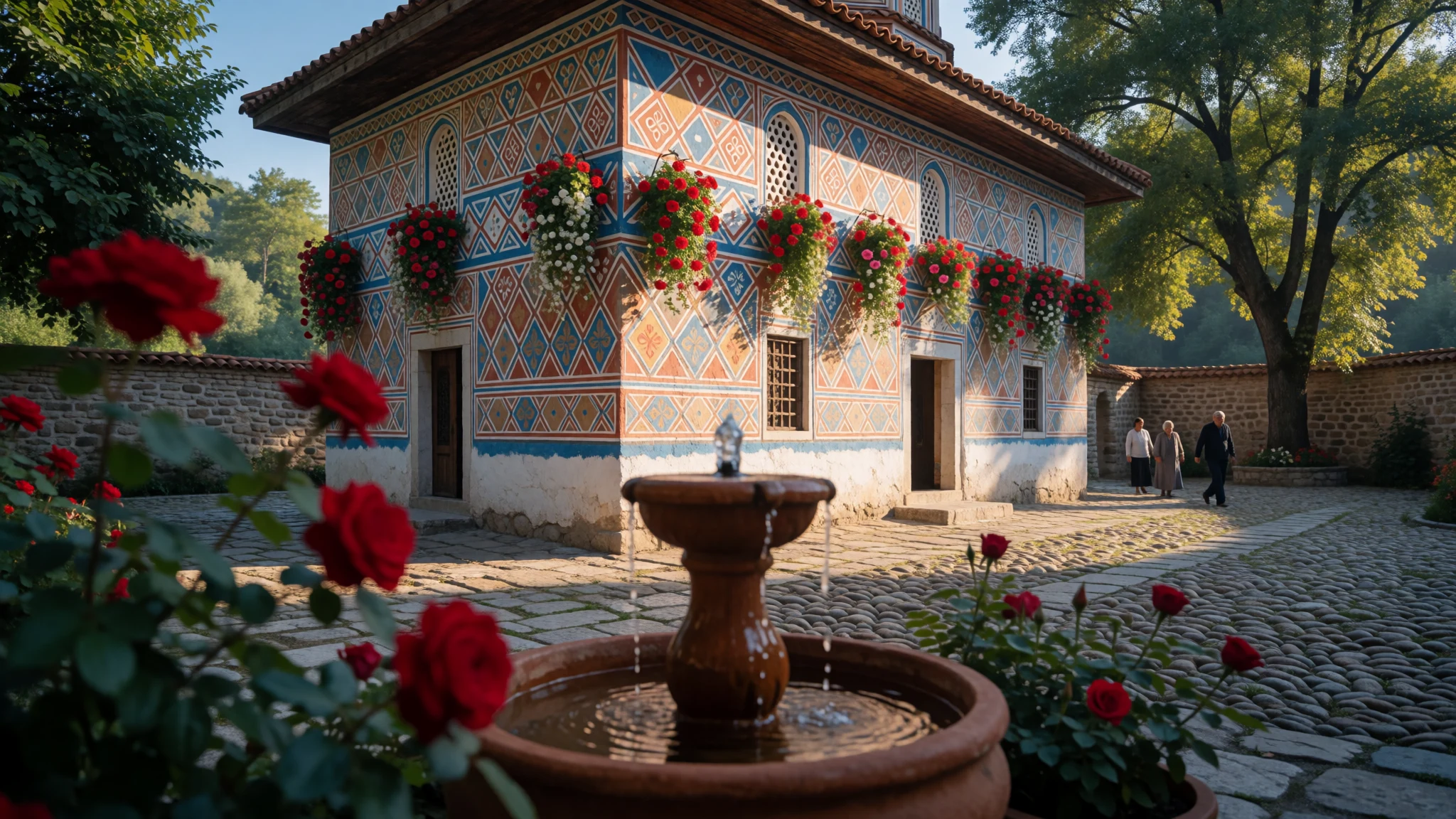
Visit the Painted Mosque in Tetovo to admire rare, vibrant exterior floral murals that break conventional Ottoman architectural rules.
The place
Nestled near the gentle currents of the Pena River in Tetovo, North Macedonia, the Šarena Džamija stands as an extraordinary departure from conventional Islamic architecture. While most imperial mosques of the Ottoman era lean heavily on restrained stone facades and standardized Byzantine-influenced domes following the conquest of Constantinople, this sanctuary reflects an older Anatolian vernacular. Its most striking feature is the riot of colour blanketing its exterior walls. Instead of austere masonry, visitors encounter intricate geometric patterns, cascading floral bouquets, and painted panels that evoke a traditional folk art aesthetic rather than stern religious officialdom. The surrounding neighbourhood hums with daily life, reflecting the town's mixed heritage where ethnic Albanian and Macedonian communities live side by side. The Latin alphabet dominates street signs across the municipality, though Cyrillic scripts appear on key thoroughfares where local Macedonian residents gather. The atmosphere along the river is warm and welcoming, offering travellers an unhurried glimpse into a vibrant cultural crossroads. Beyond the immediate banks of the Pena, the jagged contours of the Šar Mountains loom large, framing the town in dramatic topography that shifts from lush green in the warmer months to heavy snowpacks in winter. Exploring the neighbourhood reveals quiet courtyards, traditional coffee houses, and the steady murmur of local conversation over small cups of dark, strong coffee. It is a place where history is worn quite literally on the sleeve of its most famous building, inviting visitors to pause, look closely, and appreciate a lesser-known masterpiece of Balkan craftsmanship.
Its story
The origins of the Šarena Džamija reach back to the founding year of 1438, envisioned by the architect Isak Bey during an era when local landmarks were typically financed by powerful sultans or viziers. In a break from custom, the construction of this sanctuary was funded by two local sisters from Tetovo, whose final resting place remains preserved within the walled courtyard. Their legacy endures inside the peaceful octagonal türbe, shaded by trees and accompanied by a trickling fountain. Originally, the complex formed part of a larger commercial and social hub that included a traditional hammam across the river on the opposite bank. Centuries later, in 1833, the sanctuary underwent a major reconstruction led by Abdurrahman Pasha, an enthusiastic local ruler and patron of the arts who gave the building its distinctive outward appearance and vibrant decorative scheme. Further transformations took place over time, including the addition of boundary walls built by the local Islamic community in a classical Ottoman style. In the modern era, international preservation efforts stepped in to protect the fading pigments. A significant restoration completed in 2010 revived the exterior paintings, followed by specialized facade conservation backed by external grants. These modern interventions ensure that the delicate pigments and detailed motifs continue to survive against the harsh Balkan winters and summer sun, preserving a unique artistic dialogue between medieval Anatolian design and nineteenth-century regional patronage.
What to see
- Šarena Džamija — Central Tetovo, near the Pena River
The defining landmark of the city, renowned for its brilliant exterior frescoes and floral motifs. Originally established in the early fifteenth century and later reshaped by Abdurrahman Pasha, it stands in a quiet walled courtyard alongside a historic fountain and twin sisters' tomb. - Čifte Hamam — Ilindenska Boulevard
Also known as the Bey's Hamam, this historic Turkish bath was constructed across the river from the mosque during the same period. Though no longer functioning as a bathhouse, its heavy stone walls stand as a reminder of the town's Ottoman commercial past. - Arabati Baba Tekje — Western edge of Tetovo
A sprawling, atmospheric spiritual sanctuary belonging to the Bektashi Sufi order. Established centuries ago, this peaceful monastic complex features wooded paths, dervish quarters, and traditional timber structures serving as Europe's best-preserved tekje. - Tetovo Fortress — Baltepe Hill
Perched high on the Baltepe hill above the eastern bank of the river, these defensive ruins offer sweeping views across the valley. While the site dates back to Late Antiquity, most visible stonework reflects expansions carried out under Abdurrahman Pasha.
Culture
Tetovo functions as a vibrant cultural mosaic where ethnic Albanian traditions intersect with Macedonian heritage and diverse linguistic backgrounds. Hospitality is deeply ingrained in daily interactions, and visitors are frequently met with genuine warmth in local cafes and shops. Traditional crafts, family-centred gatherings, and community celebrations remain central to social life in the Polog valley. The town's religious sites reflect centuries of shared history, where Islamic shrines and Orthodox churches stand within the same municipal boundaries. When visiting the Painted Mosque or any active place of worship, dress modestly with shoulders and knees covered, and remove your footwear before stepping onto interior carpets.
What to wear
Traditional attire in the Polog region historically featured heavy woolen waistcoats, embroidered aprons, and intricately patterned headscarves reflecting specific village identities, though these garments are now largely preserved for folk festivals and historical exhibitions. Today, everyday wear in Tetovo mirrors contemporary urban European styles: jeans, jackets, and sensible footwear are common sights on the streets among all generations. Visitors should pack practical, versatile clothing suited to the season, including breathable layers for warm summer afternoons and a sturdy waterproof jacket for sudden downpours or mountain air. When planning excursions to religious sanctuaries such as the Painted Mosque or local churches, ensure you bring garments that cover your shoulders and knees out of respect for local modesty norms.
What to eat
- Tetovo Burek — Local bakeries throughout the town centre
A legendary regional pastry made from paper-thin phyllo dough folded with generous layers of savory cheese or minced meat. Baked until golden and wonderfully rich, it is widely considered the finest version of the Balkan classic. - Shopska Salad — Traditional restaurants and cafes along the river
A refreshing, simple combination of diced ripe tomatoes, crisp cucumbers, and onions, dressed lightly with oil and salt, then crowned with a thick layer of grated domestic white cheese that is milder than standard Western feta.
Plan it
Best time. Late spring (May to June) and early autumn (September to October) offer pleasant daytime temperatures for exploring the town and surrounding mountain trails, avoiding the intense summer heat.
How long. 1–2
Getting there. Arrive by bus or car via the main highway connecting Skopje and Gostivar, passing through regional toll booths along a smooth, well-maintained route.
Budget. low
Tips
- Carry local currency in cash for small purchases at markets and bakeries
- Wear comfortable walking shoes for navigating uneven cobblestones and hillside paths
- Check opening hours in advance if you wish to see the mosque interior between prayer times
Etiquette
- Remove your shoes before entering carpeted prayer areas inside the mosque
- Dress modestly with covered shoulders and knees when visiting religious sites
Nearby
Sources
- Wikidata Q1009896 (CC0)
- Wikipedia (CC BY-SA 4.0)
- Wikivoyage (CC BY-SA 4.0)