Bitola
Bitola, North Macedonia
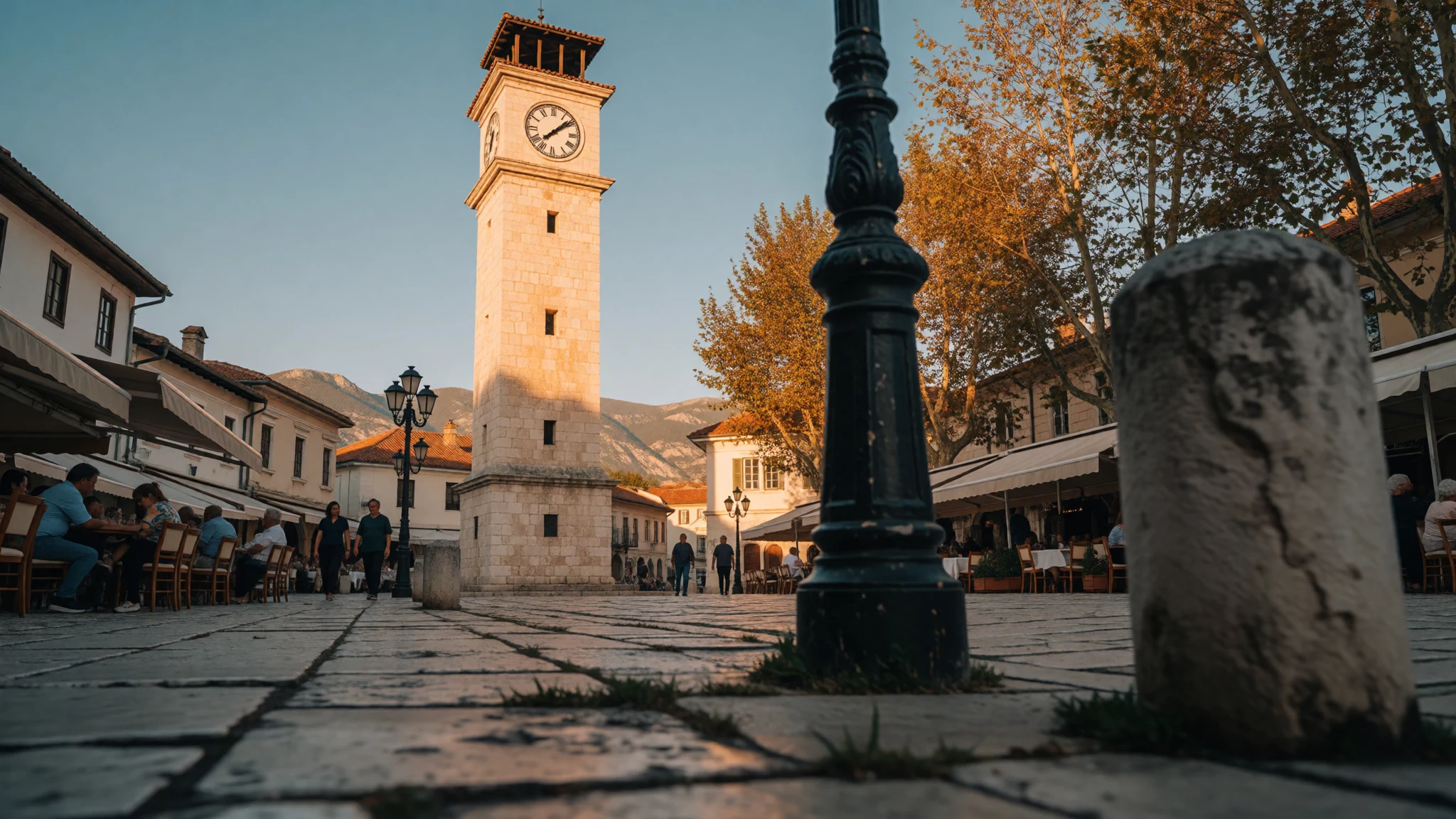
Bitola is a relaxed Balkan town of neo-classical façades, café-lined promenades and consular history, set in a mountain-ringed valley near the Greek border.
The place
Bitola sits in the southern part of the Pelagonia valley in the southwest of North Macedonia, a flat farming basin ringed by the Baba, Nidže and Kajmakčalan mountain ranges. The town stands at about 576 metres above sea level, and the Dragor River runs through it. Greece is close: the Medžitlija–Níki border crossing lies a short drive to the south, which is why the town has long been a junction between the Adriatic side, the Aegean and Central Europe. About 69,000 people live here, and Bitola works as the administrative, commercial, industrial and educational centre for the surrounding region, with a student population that keeps the cafés busy well into the evening. Its Ottoman-era nickname, the "City of Consuls", comes from the many European countries that kept consulates here, and the architecture still reflects that outward-looking past: neo-classical façades, a long pedestrian street, a mosque and several churches all within a few minutes' walk of each other. Summers are very warm and dry, while winters are cold and snowy, so the town feels quite different from one season to the next. Bitola suits slow walking, long coffees and day trips around the valley better than a checklist of monuments. Under the Ottomans it was called Manastır, a name that still turns up in older books and maps.
Its story
Bitola's story starts well before any city. Farming communities settled on mounds in the valley near the village of Porodin, and the tells of Veluška Tumba and Bara Tumba were first inhabited around 6000 BC, the earliest evidence of organised settlement in the area. In antiquity the region was known as Lynkestis, an upland district of Upper Macedonia whose tribes, the Lynkestai, were ruled by local chieftains until the Argead kings of Macedon drew them in. A necropolis at Crkvište, near the village of Beranci, has produced fine metalwork, including a golden earring from the 4th century BC that is now pictured on a Macedonian banknote. Around the middle of that century, Philip II of Macedon founded Heraclea Lyncestis, a name that translates roughly as the City of Hercules upon the Land of the Lynx. It remained an important settlement from Hellenistic times into the early Middle Ages. The town later known as Bitola had two periods at the centre of politics: briefly from 1015 to 1018 as the last capital of the First Bulgarian Empire, and from 1836 to 1867 as the last capital of Ottoman Rumelia, when it was called Manastır. That second chapter, with its consuls and merchants, shaped much of the architecture and the cosmopolitan habits that visitors notice on the main street today.
What to see
- Clock Tower — Old centre
Bitola's clock tower is the landmark locals point to first. It dates from 1664, though the shape seen now took form in the 19th century. It stands close to the pedestrian centre, so it makes a useful meeting point, and the cafés and grill places around it fill up at lunch and in the evening.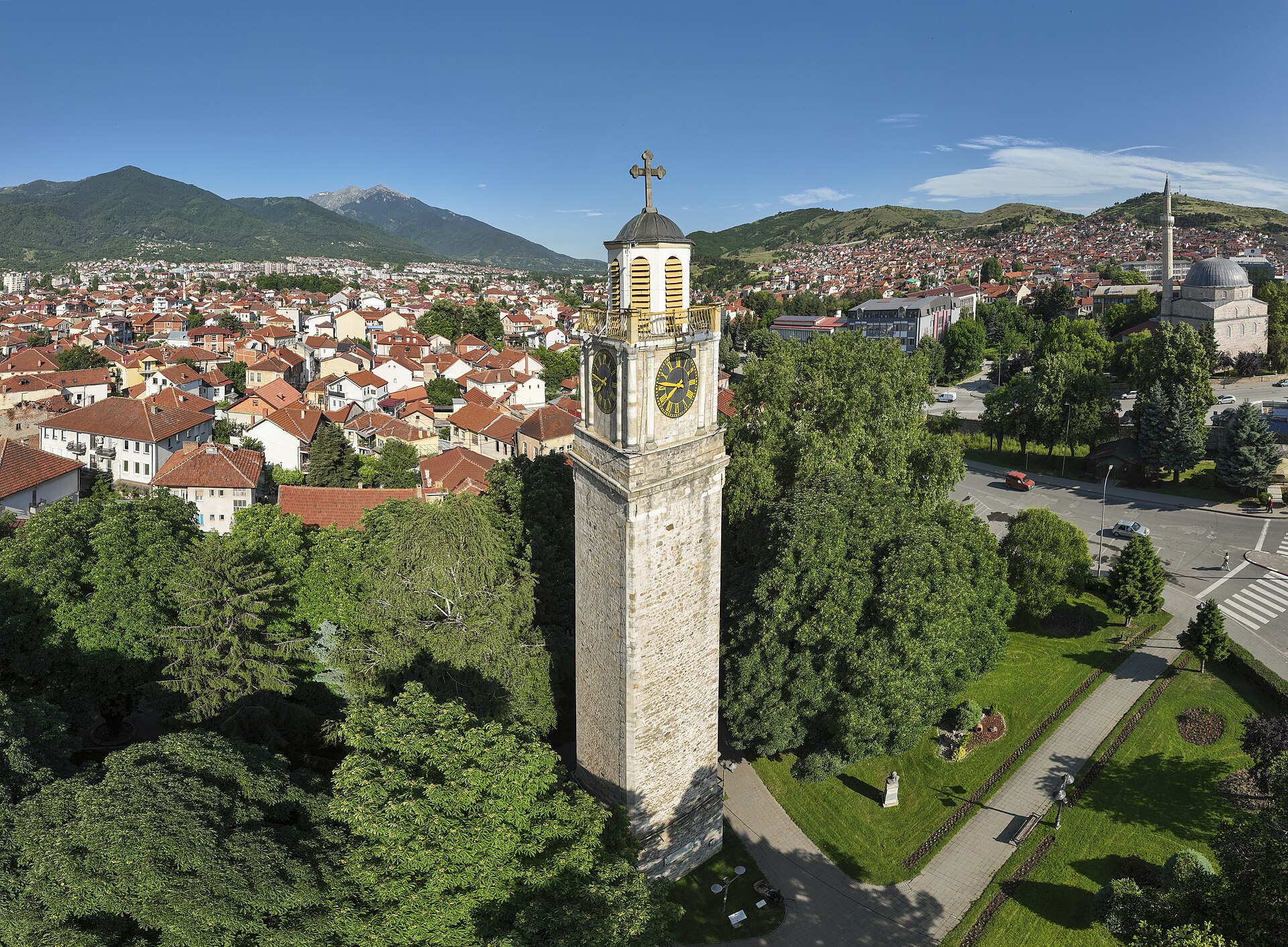
- Širok Sokak — Town centre
Širok Sokak, the "Wide Alley", is the pedestrian spine of Bitola, lined with colourful romantic and neo-classical buildings. Residents use it for the evening stroll, so late afternoon is when it feels liveliest. Cafés and shops sit at street level, and Magnolia Square lies on its northern portion.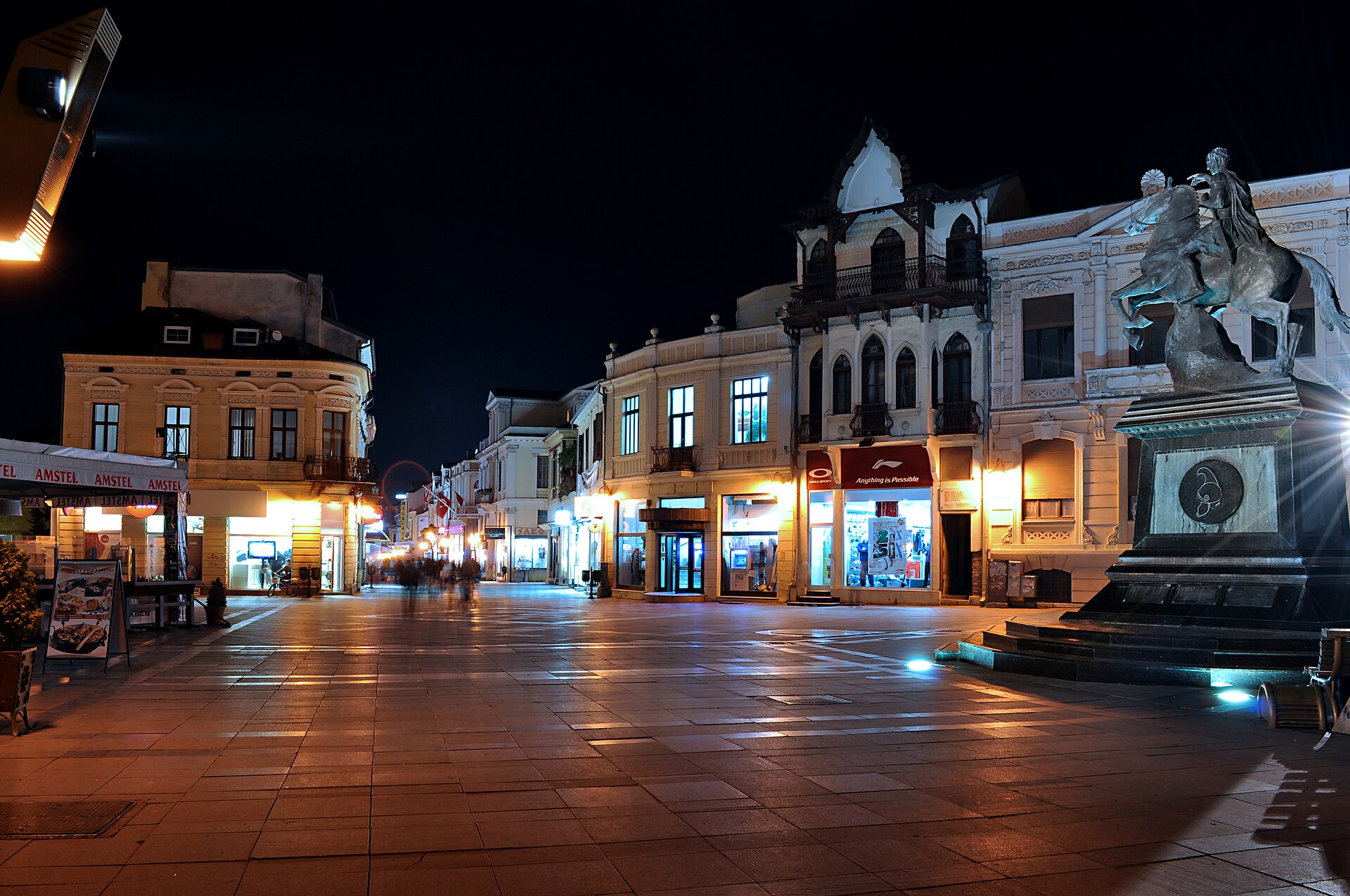
- Yeni Mosque — Town centre
Yeni Mosque, built in 1558, is among the prominent features of Bitola's skyline. It has a square base, a dome and a single minaret, a simple profile that contrasts with the neo-classical streets nearby. Check locally for visiting arrangements, since it is a place of worship and access can vary. - Magnolia Square — Northern end of Širok Sokak
Magnolia Square is Bitola's prominent central square, on the northern portion of Širok Sokak. A statue of Philip II of Macedon, the city's ancient founder, stands at its centre, next to a fountain. Cafés around the edges make it an easy place to rest between walks and watch the town's daily rhythm. - Church of Saint Demetrius — Town centre
The Church of Saint Demetrius is the cathedral of Bitola and a fine example of the so-called revival-period churches of the country. It is a working cathedral, so visits fit around services; dress modestly and keep voices low. It stands a short walk from the clock tower. - Church of the Holy Mother of God — East of the centre
The Church of the Holy Mother of God is a basilica built in 1872, a little east of the busiest part of the centre. It is a quieter stop than the cathedral and a good excuse to walk beyond the main street, with calmer residential lanes around it.
Culture
Bitola's cultural life carries the marks of its mixed past. Orthodox churches, an Ottoman mosque and neo-classical townhouses share the same few streets, and the town's years as a consular city left it with a habit of looking outward. UNESCO counts Bitola as a member of its Creative Cities Network, which recognises the town's cultural activity. Every May the town hosts Si-Do, an international children's song festival that fills halls and squares with young performers and their families. Daily life has its own rituals. In the evening many residents walk the long pedestrian street, stopping to talk to friends or sit over a coffee, and that custom gives the centre its relaxed pace. The student population adds bars, concerts and a lively night scene, although clubs do not admit anyone under 18. The language is Macedonian, written in Cyrillic, and street signs, menus and bus boards often show only that script, so a few learned words and a little patience go a long way. Religion is visible but easygoing: church services and mosque visits are part of ordinary life, and the town's different communities have long shared the same centre. Cover shoulders and knees when stepping into a church or mosque, and keep your voice low during services.
What to wear
Bitola's traditional dress belongs to the wider Macedonian folk costume, built from home-woven wool, linen and cotton. Women's outfits typically combine an embroidered shirt, a woollen or felt waistcoat, a layered apron and a sash, with headscarves and jewellery; men wore white shirts, wool trousers and waistcoats with a belt. Colours, patterns and cuts vary between villages. Today these costumes appear at folk festivals, weddings, dance ensembles and church feast days rather than in daily life. On the street, people dress as in much of southern Europe: jeans, shirts, tidy dresses and trainers, with a smarter turn for the evening walk along Širok Sokak. Students favour casual international brands, and in winter dark coats, scarves and boots dominate. Visitors can dress the same way. In summer, which is very warm and dry, pack light cotton or linen, a sun hat and sunglasses; in winter, which is cold and snowy, bring a warm coat, hat and boots with good grip. Comfortable shoes matter on paved and cobbled streets. For churches and the mosque, carry a scarf or light layer to cover shoulders and knees. Evenings in cafés are smart-casual, and nobody expects formal wear.
What to eat
- Grilled meats (skara) — Grill restaurants around the clock tower
Grilled meats (skara) are the backbone of eating out in Bitola: sausages, kebabs and chops cooked over charcoal and served with bread and salad. Grill restaurants around the clock tower are an easy place to start, and portions are often big enough to share. - Tavče gravče — Traditional eateries in the old centre
Tavče gravče is beans baked in a clay dish with onion, paprika and oil, a staple of Macedonian home cooking. It appears on the menus of traditional eateries around the old centre and makes a filling vegetarian choice. - Shopska salad — Cafés and restaurants along Širok Sokak
Shopska salad piles chopped tomato, cucumber and onion under a snowfall of grated white cheese. It arrives alongside most grilled dishes and is the usual starter in cafés and restaurants on and around the pedestrian street, and especially good in summer. - Pita giro — Fast-food counters near the centre
Pita giro is the quick street meal: sliced roast meat, chips, salad and sauce wrapped in flatbread to take away. Small fast-food counters near the centre serve it, and locals have firm opinions about which counter does it best. - Vranec wine — Restaurants and wine shops in the centre
Vranec is the deep red wine of North Macedonia, and a glass with dinner is a good introduction to the local vineyards. Restaurants and wine shops around the centre stock it, along with white Traminec and Temjanika. - Rakija — Bars and shops across the town
Rakija is fruit brandy, drunk in small glasses before or after a meal. Local brands are served in bars and sold in shops across Bitola, and a bottle makes a sensible souvenir. Sip slowly, because it is strong.
Plan it
Best time. May–June and September–October. Summers are very warm and dry, which suits evenings on the promenade but can make midday sightseeing tiring, and winters are cold and snowy.
How long. 2
Getting there. Most visitors fly into Skopje, then take a bus (about 3 hours) or a train (about 5 hours), both stopping in Prilep and Veles. Buses from Ohrid take about 1½ hours via Resen. There is no cross-border train; from Greece, a taxi from Florina can run to the border, where you can walk across and take a local taxi.
Budget. low
Tips
- Check train times on the Macedonian Railways website and bus times locally before you travel, as services are limited
- Walk Širok Sokak in the late afternoon or evening, when the promenade is at its liveliest
- Carry water and a hat in summer, as the days are very warm and dry
- Keep some cash for small cafés and taxis, and check the official site (http://www.bitola.gov.mk) for events such as the Si-Do festival in May
Etiquette
- Cover shoulders and knees in churches and the mosque, and keep quiet during services
- Ask before photographing people, especially at religious sites
- Clubs do not admit anyone under 18, so carry ID
Nearby
Sources
- Wikidata Q157246 (CC0)
- Wikipedia: Bitola (rev 1385014705) (CC BY-SA 4.0)
- Wikivoyage: Bitola (rev 5426963) (CC BY-SA 4.0)
- Photo: Bitola's promenade, Petar Milošević (CC BY 3.0)
- Photo: ulica Marsal Tito-Bitola, Tommyy882 (CC BY 3.0)
- Photo: Bitola, Macedonia, Rašo (CC BY 3.0)
- Photo: Bitola diocese seat, Stotosenik (CC BY 3.0)
- Photo: Bitola Magaza, Stotosenik (CC BY 3.0)
- Photo: Sahat kula, Bitola, Petar Milošević (CC BY-SA 4.0)
- Photo: Bitola, Macedonia, Rašo (055) (CC BY 3.0)
- Photo: Širok Sokak, Bekimche (CC BY 3.0)


