Ohrid
Ohrid, North Macedonia
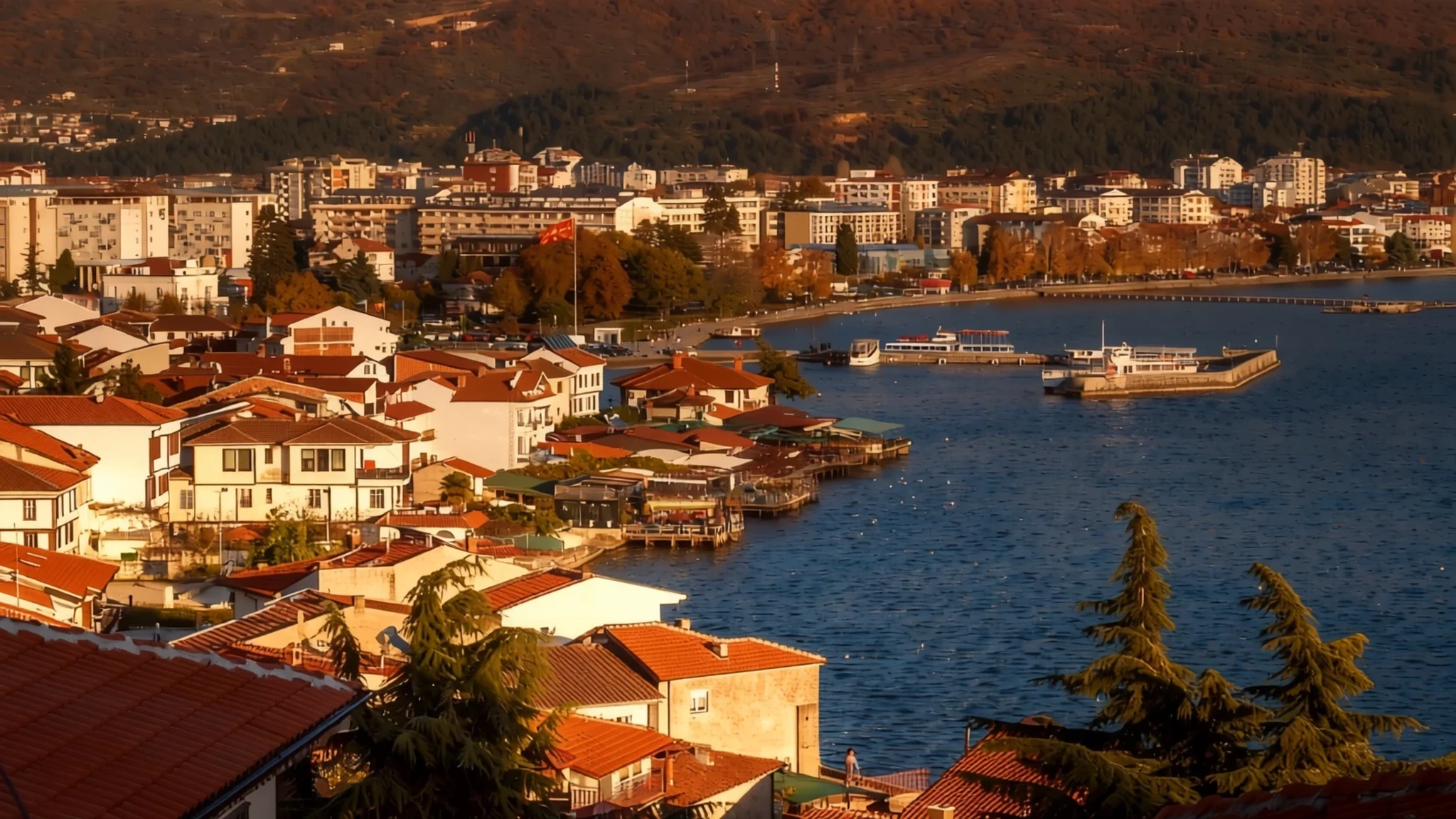
Ohrid is a lakeside town where Byzantine churches, a Bulgarian-era fortress and the clear water of Lake Ohrid sit close together.
The place
Ohrid is a town of about 39,000 people on the south-western shore of Lake Ohrid, in North Macedonia. It is the largest city on the lake and the seat of Ohrid Municipality, and the old town climbs gently from the water, its streets lined with stone houses, timber balconies and walled gardens. The town has long been known for its churches. It is often said to have once had 365 of them, one for every day of the year. Many have been lost over the centuries, but enough survive to make a wander through the old quarter feel like a slow museum visit.
The lake is the other half of the picture. Its water is clear and deep, and the waterfront promenade is the easiest place to spend an evening watching the light move over the far hills. The town sits at roughly 700 metres, so summer days are hot but the nights are usually cooler than the plains you may have come from. Tourism is now the main business in the old town, which means restaurants and guesthouses cluster near the water, and the lanes can be crowded on summer weekends.
Ohrid lies a long bus ride south-west of Skopje, and it is closer to Bitola and Resen by road. Plan on unhurried days. The sights are close together, but the hills behind the town reward a slower pace, and the air tends to be softer in the early evening.
Its story
Ohrid's recorded history begins with the Illyrian tribes of the wider lake region, the Enchele and Dassaretii, who lived here long before the Romans arrived. A local tradition, repeated in many guidebooks, links the founding of the town to Cadmus, a Phoenician king of Thebes who was said to have fled to Enchele after being banished. Whatever the legend's truth, the settlement passed through the hands of Macedonian kings, Roman administrators and Byzantine governors over many centuries.
Its most celebrated moment came under Tsar Samuel, who made the town his capital in the tenth century, when it served as the seat of the First Bulgarian Empire. The fortress above the old quarter dates from that period. The town then returned to Byzantine rule and changed hands among Bulgarian, Serbian and local lords before falling under Ottoman control in the fourteenth century. It stayed under Ottoman rule until 1912.
Many churches survived those centuries and kept their painted interiors, which is why so many frescoes can still be seen today. After the Balkan Wars the town passed to the Kingdom of Serbia, then moved between the Balkan states during the world wars. From 1944 it was part of Socialist Yugoslavia. UNESCO recognised the town in 1979 and the lake a year later. Independence came in 1991, when the republic that is now North Macedonia was formed.
What to see
- Tsar Samuel's Fortress — Hill above the old town
The fortress stands on the hill above the old town and is the first thing many visitors walk toward. Its walls date largely to the tenth century, when Tsar Samuel ruled from Ohrid, although they probably rest on older foundations. Go in the morning or late afternoon for shade and softer light, and allow time for the climb, which is steep in places.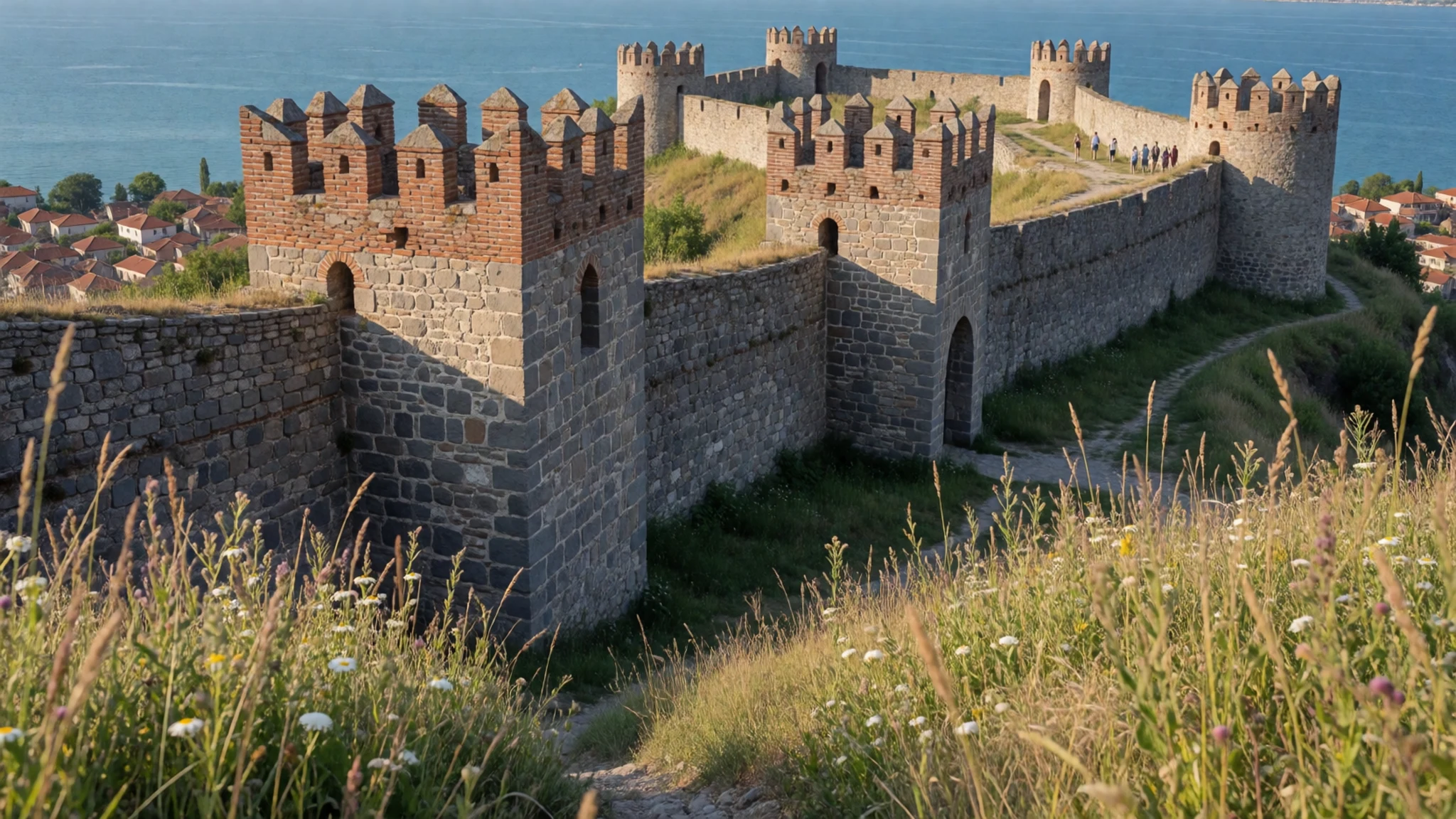
- Church of Saint Sophia — Old town, near the lakeside
Saint Sophia is a cathedral church of the Ohrid Archbishopric and one of the town's most important religious buildings. The present church was built in the eleventh century, though the site has an older church history going back to the ninth century. Inside, the frescoes reward slow looking, so give your eyes a few minutes to adjust to the dim light.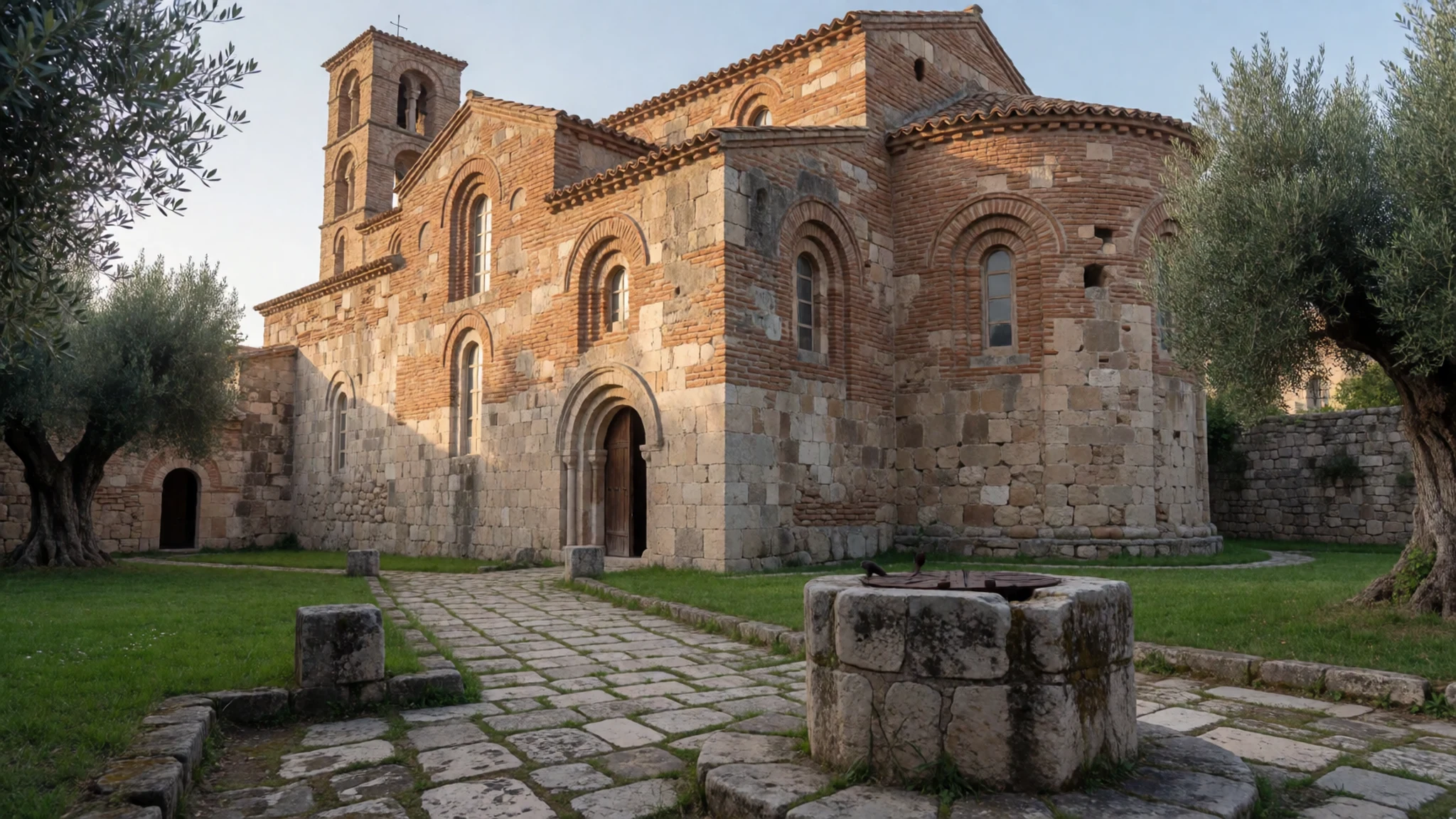
- Church of Saint Mary Perivleptos — Old town, central quarter
Built and painted in 1295, this church is dedicated to the Virgin Mary. Its name comes from a Greek epithet for her, roughly meaning the all-seeing one. The frescoes are the reason to go, and the small interior is easier to appreciate with a printed plan, because some scenes are hard to read at first glance.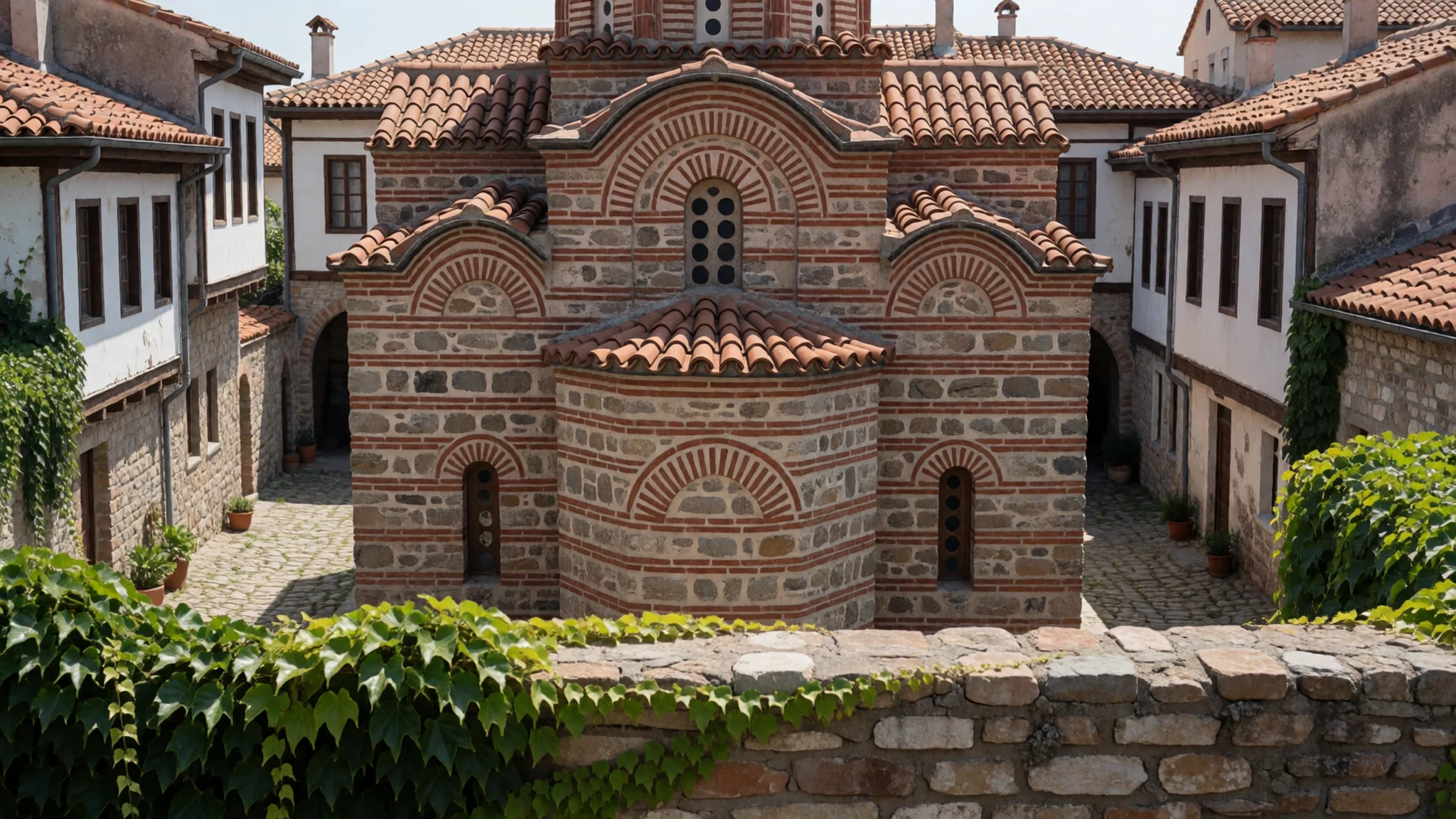
- Church of Saints Constantine and Elena — Old town, beside Saint Mary Perivleptos
Built in 1477, this small single-nave church sits just south-east of Saint Mary Perivleptos. Its whole interior is painted, so walking in feels like stepping into one large illuminated book. Combine it with its neighbours, which are a few steps apart and easy to visit in one loop.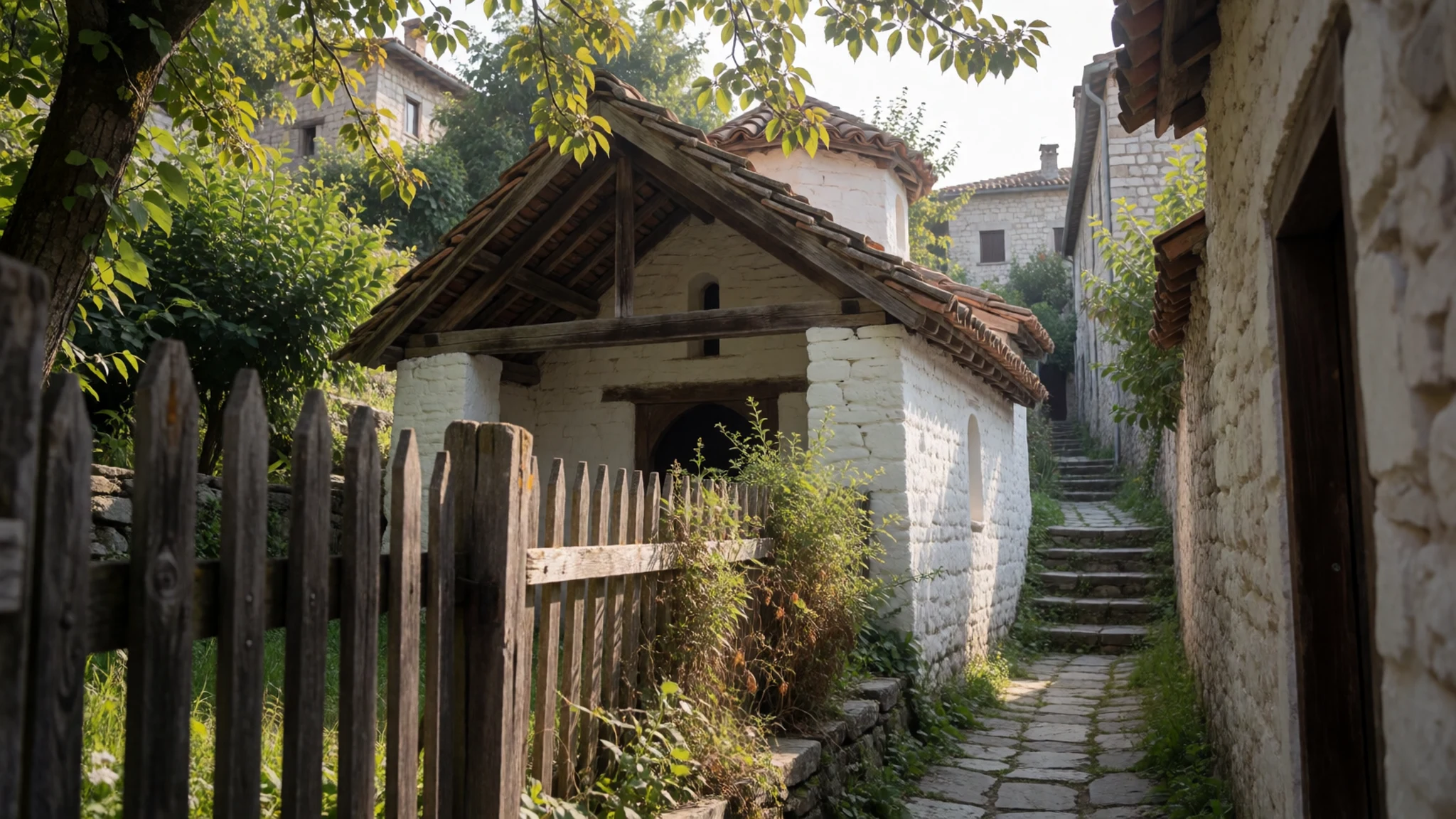
- Church of Saint Demetrius — Old town, beside Saint Mary Perivleptos
This three-aisled church dates from the fourteenth century and is dedicated to Saint Demetrius. It sits just east of Saint Mary Perivleptos. Its frescoes are of high quality, and the layout gives you room to take them in slowly, so do not rush through it just because it looks small from the street.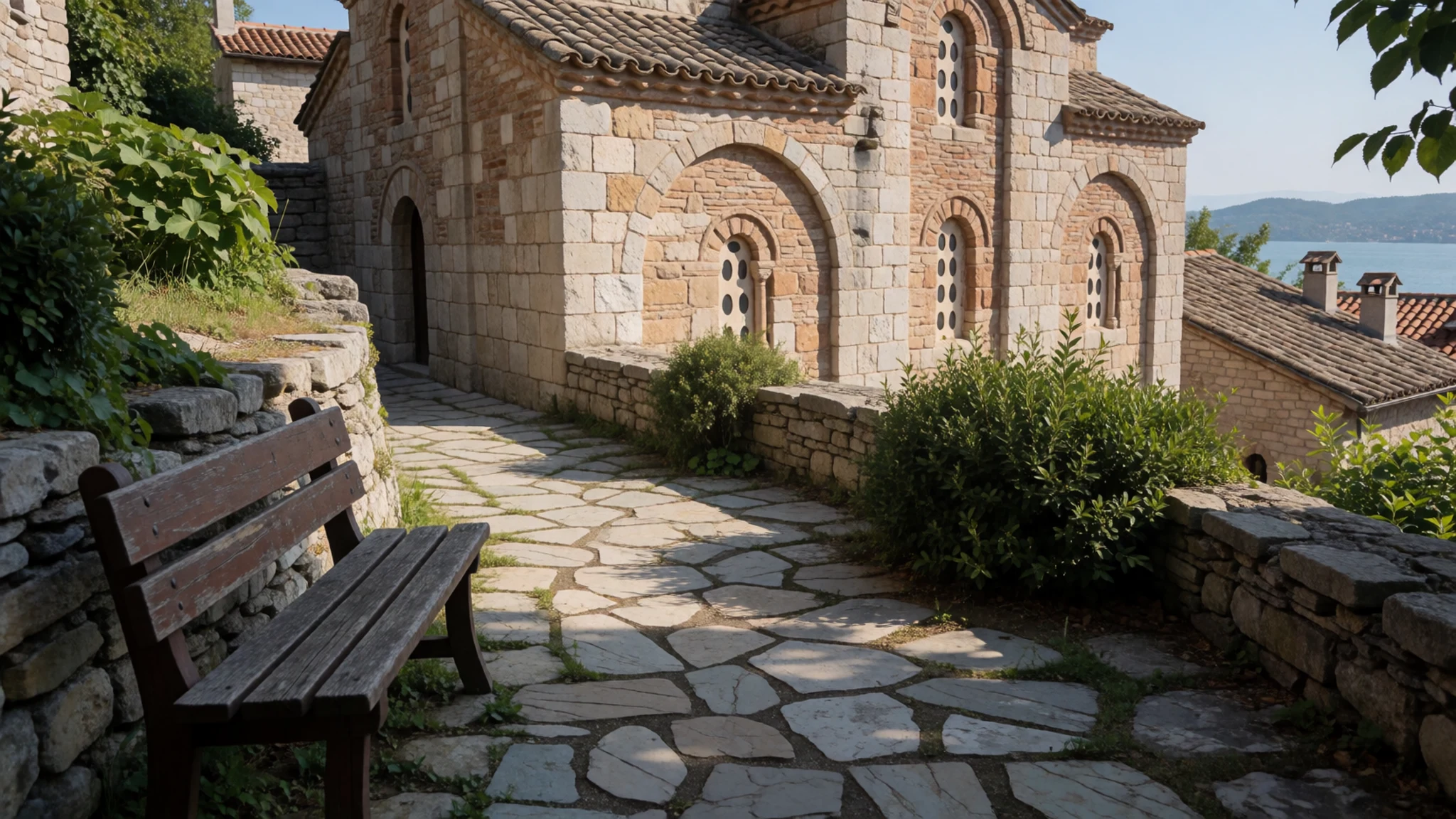
Culture
Ohrid is a town where religious life and summer tourism sit side by side. Most residents are Macedonian Orthodox, and many older people still attend services in the churches of the old quarter, while others are Muslim, reflecting the town's long mixed history. Macedonian is the everyday language, and Albanian is widely spoken too, so a few greetings in both will go a long way in shops and cafés. Meals tend to be unhurried: a coffee can stretch into an hour, and staff seldom rush you out. Lunch and dinner happen later than in northern Europe, with the lakeside terraces filling after sunset. The pace on the street is relaxed, and the sites are small enough to explore without a guide. When entering a church, cover your shoulders and knees, remove any hat, and ask before you photograph a priest or a worshipper.
What to wear
Traditional dress around Ohrid followed the wider pattern of Macedonian folk costume: a white linen or cotton shirt, woven sashes, and aprons decorated with embroidery. Women's outfits were often built in layers, and their colours and embroidery signalled village and family origin. Today these costumes appear mainly at festivals, folk groups, weddings and national celebrations rather than in daily life. Ohrid people now dress much as people in any European city do, in jeans, trainers, simple cotton tops and light jackets, with dressier clothes for church services and evenings out. Visitors should plan for two kinds of day. In summer the lake promenade is warm, so linen, cotton and a sun hat work well, and a swimsuit belongs at the water's edge rather than in churches or cafés. For churches and monasteries, carry a scarf or light shawl that covers your shoulders, and wear trousers or a long skirt that reaches below the knee. The old town's stone lanes and the steps up to Samuel's Fortress are uneven, so sturdy shoes with good grip matter more than fashion. Evenings can feel cool at this altitude, so pack a light layer.
What to eat
- Tavče gravče — A traditional tavern (mehana) in the old town
Baked white beans cooked slowly with onion, peppers and paprika, usually served in an earthenware dish. It is the classic lunch of Macedonian taverns, filling and inexpensive, and it is often eaten with bread and a sharp salad on the side.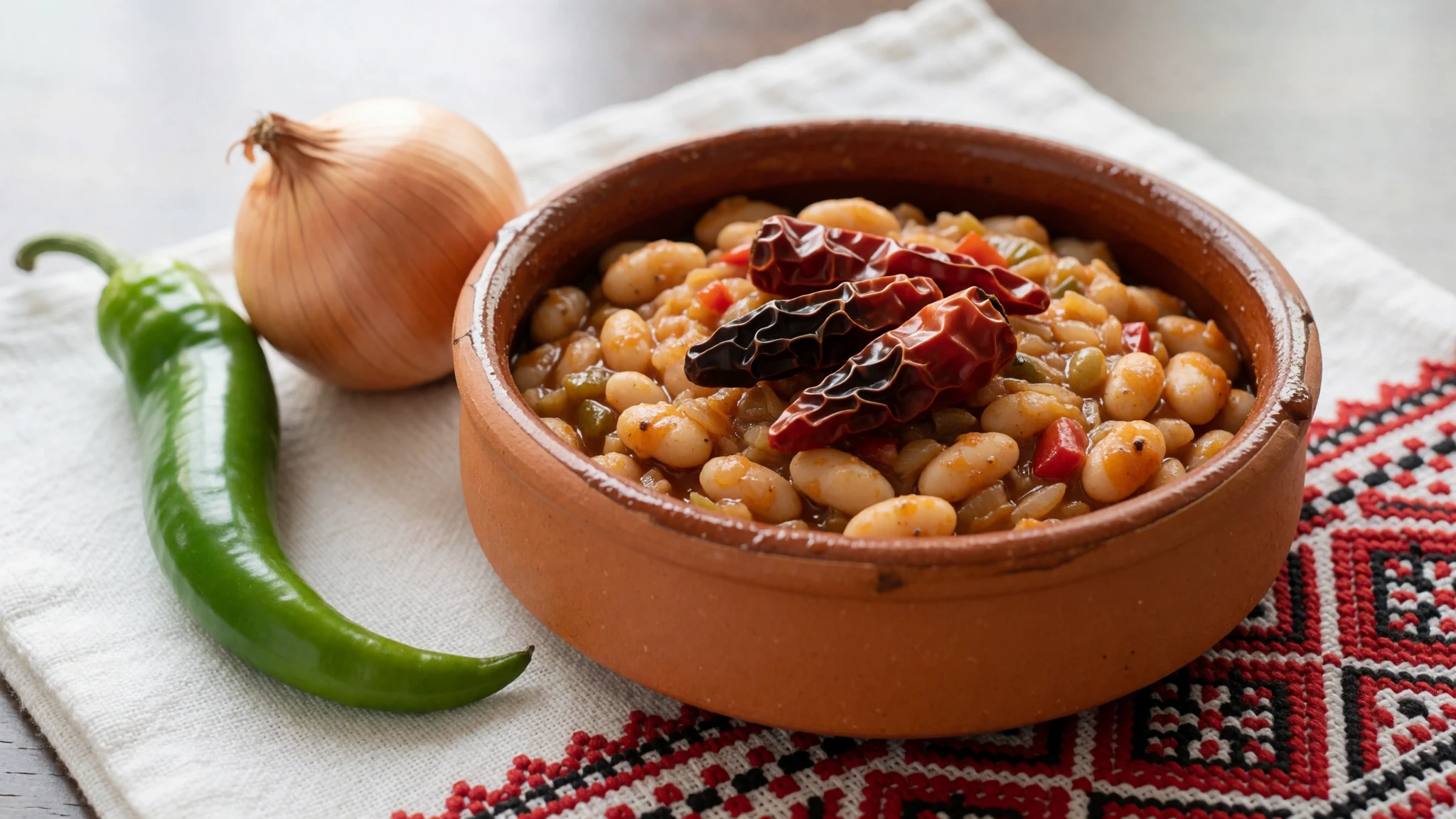
- Ajvar — The central market, among the jars of preserves
A relish of roasted red peppers, sometimes with aubergine, slowly cooked until thick and smoky. Locals spread it on bread, eat it with grilled meat, or buy it in jars to take home as a gift.
- Shopska salad — Any terrace along the lakeside promenade
Chopped tomato, cucumber, onion and peppers, topped with grated white sirenje cheese and parsley. It is a light, cooling starter in summer and the most common salad on any menu.
- Burek — A bakery on the main pedestrian street or near the bus station
A flaky pastry filled with cheese, spinach or minced meat, baked fresh in the morning. It makes a cheap breakfast or snack that you can eat standing up while walking the old town. - Kebapi — A grill house (skara) in the new town
Grilled minced meat shaped into small sausages and served with raw onion, fresh bread and a little kajmak or ajvar. The grill houses serving it are busy at lunchtime and quieter in the late afternoon.
Plan it
Best time. April, May and October suit a visit best, when the days are warm without the punishing heat of June to September. June to September is the hot season, peaking in July, and winter is cold, with December and January the coldest months.
How long. 2–3
Getting there. Fly into Skopje, the usual gateway, then take a bus to Ohrid. Buses run about once an hour and the journey takes about 4½ hours. Shared taxis and local buses also link Struga with Ohrid for the last stretch.
Budget. mid
Tips
- Book the Skopje bus a day or two ahead in summer, when seats can fill up.
- Start your church visits early, when the old town is quieter before late morning.
- Carry cash for small cafés and markets, and keep a card for larger places.
- Take water with you to the fortress and the hill paths, which have little shade.
- Walk the lakeside promenade in the evening, when the light is at its best and the crowds thin.
Etiquette
- Cover your shoulders and knees before you step into any church, and remove your hat.
- Ask before you photograph people, especially at church doors.
- Do not buy or eat Ohrid trout, because catching the fish along the Macedonian shore is illegal and the species is endangered.
Nearby
Sources
- Wikidata Q1223508 (CC0)
- Wikipedia (Ohrid), rev 1379730455 (CC BY-SA 4.0)
- Wikivoyage (Ohrid), rev 5413161 (CC BY-SA 4.0)
- Ohrid seen from Samuel's Fortress (kallerna) (CC BY-SA 4.0)
- Ohrid, Macedonia (xiquinhosilva) (CC BY 2.5)
- Ancient Theatre, Ohrid (Marcin Konsek) (CC BY-SA 4.0)
- Samuel's Fortress, Ohrid (kallerna) (CC BY-SA 4.0)
- Robevci house, Ohrid (Stotosenik) (CC BY 3.0)
- Church of St. John at Kaneo (kallerna) (CC BY-SA 4.0)
- Coat of Arms of the Municipality of Ohrid (CC BY-SA 4.0)
- Ohrid by night (Shermozle) (CC BY 3.0)


