Maroon Bells
Maroon Bells, United States
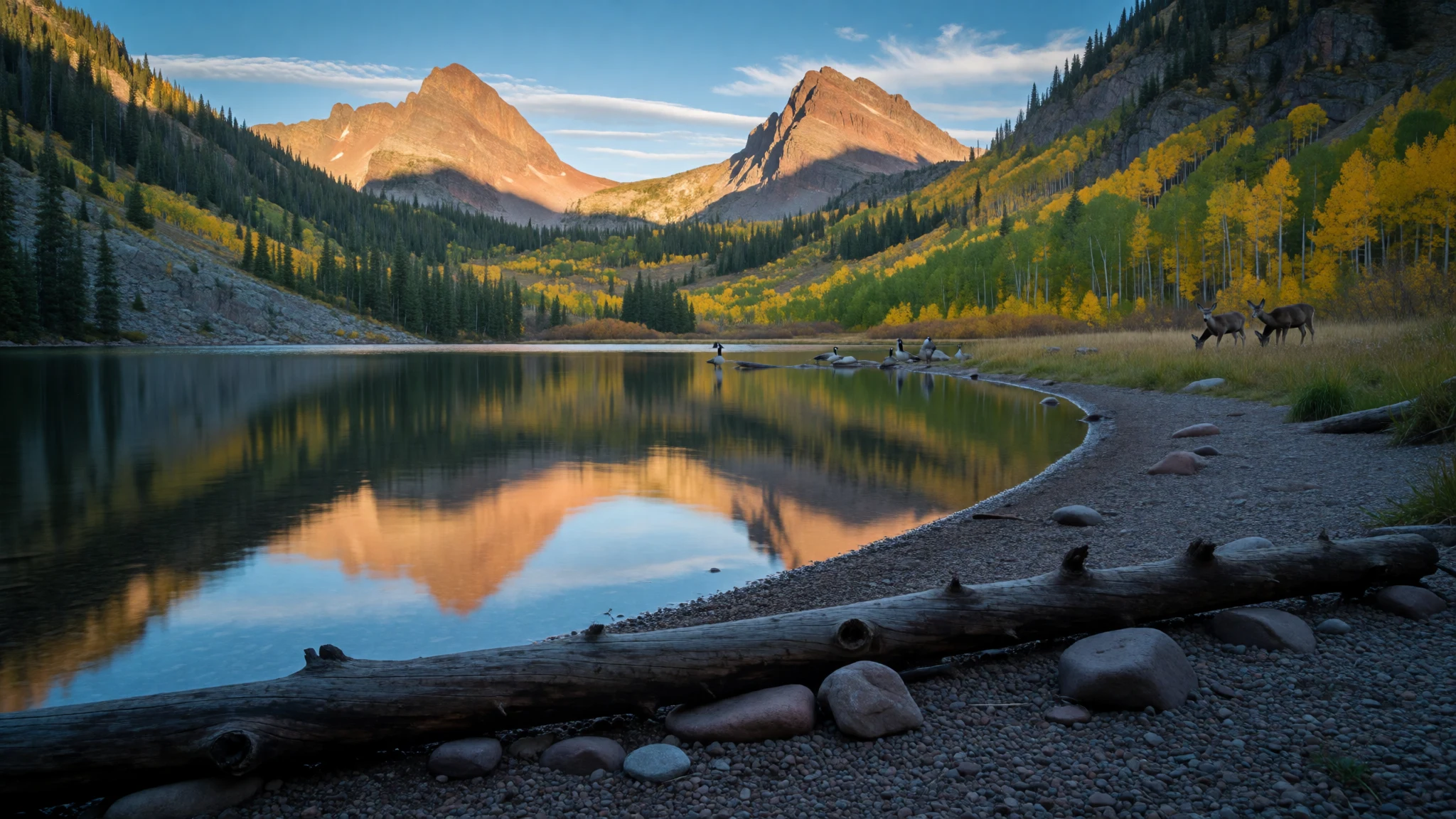
Two rust-red peaks mirrored in a glacial lake above Aspen, Maroon Bells rewards early starts, layers and a slow pace at altitude.
The place
Maroon Bells are a pair of peaks, Maroon Peak and North Maroon Peak, in the Elk Mountains of Colorado, about 19 km southwest of Aspen. Only about half a kilometre separates their summits, which is why they read as one twin-gabled silhouette from the valley below. Both are fourteeners, and Maroon Peak reaches about 4,300 m. The range straddles the line between Pitkin and Gunnison counties, inside the Maroon Bells–Snowmass Wilderness of White River National Forest. A busier, more managed Scenic Area wraps the valley floor and acts as the main gateway into that wilderness. The classic view looks southwest up the Maroon Creek valley, across Maroon Lake at roughly 2,920 m. Mornings here mean still water, thin cold air and a row of photographers along the shore. Later the light flattens and the crowds thicken, especially in high summer and in the weeks when the aspens turn gold. The peaks themselves are not a casual scramble. Their colour comes from a soft, crumbly rock, and that same softness makes climbing hazardous. Most visitors stay on the lakeside paths and valley trails, which give long views without exposure. Altitude, dry air and quick weather changes matter more here than distance. Aspen supplies lodging, food and the road access, which is managed by season, so check official Forest Service information before planning the day.
Its story
Maroon Bells owe their look to two forces: slow geology and ice. The peaks are built from Maroon Formation mudstone, a weak rock that splits easily and gives the mountains their deep reddish-purple tone. Maroon Lake lies in a basin carved by glaciers during the Ice Age. Later, rockfall and a landslide from the slopes of Sievers Mountain blocked the valley, and water gathered behind the barrier. The result is the still, mirror-like foreground that fills so many photographs. Protection arrived in the mid-twentieth century. Colorado's share of the first wilderness designations in 1964 was five areas, and this was one of them. The wilderness has since drawn walkers and climbers towards the valley, which explains why the Scenic Area at its edge is so heavily used. The same rock that colours the peaks also earned them a grim name. In 1965 eight people died in five separate accidents, and a Forest Service sign on the approach trail still cautions climbers about crumbling slopes where holds can give way without notice. That warning is practical, not theatrical. For most visitors the story ends happily at the lake, with the mountains doing their work from a safe distance. The sensible reading is simple: admire the peaks, respect the rock, and leave the summits to experienced mountaineers.
What to see
- Maroon Lake shoreline — Maroon Creek valley, near Aspen
The lakeside path is the obvious first stop, a short, easy walk to the water with the twin peaks rising behind it. On calm mornings the reflection is near perfect. Arrive early, because the best spots at the water's edge fill quickly once the day's visitors arrive.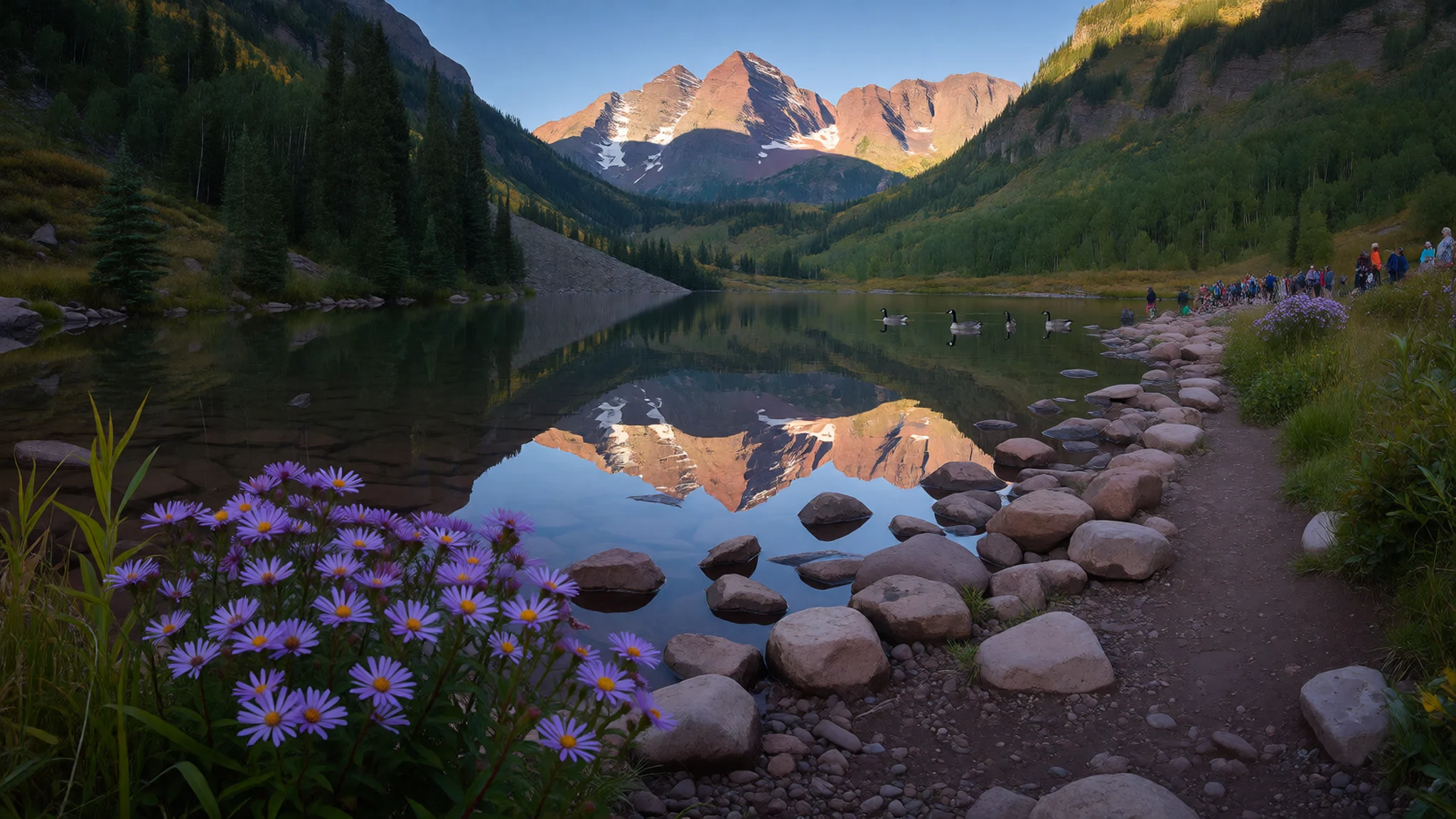
- Alpenglow at first light — Maroon Lake viewpoint
Before the sun clears the ridges, the summits pick up a warm pink glow while the valley is still dark. Photographers gather at the lake for it. Dress warmly, bring a torch for the approach, and expect quiet, cold, patient company rather than solitude.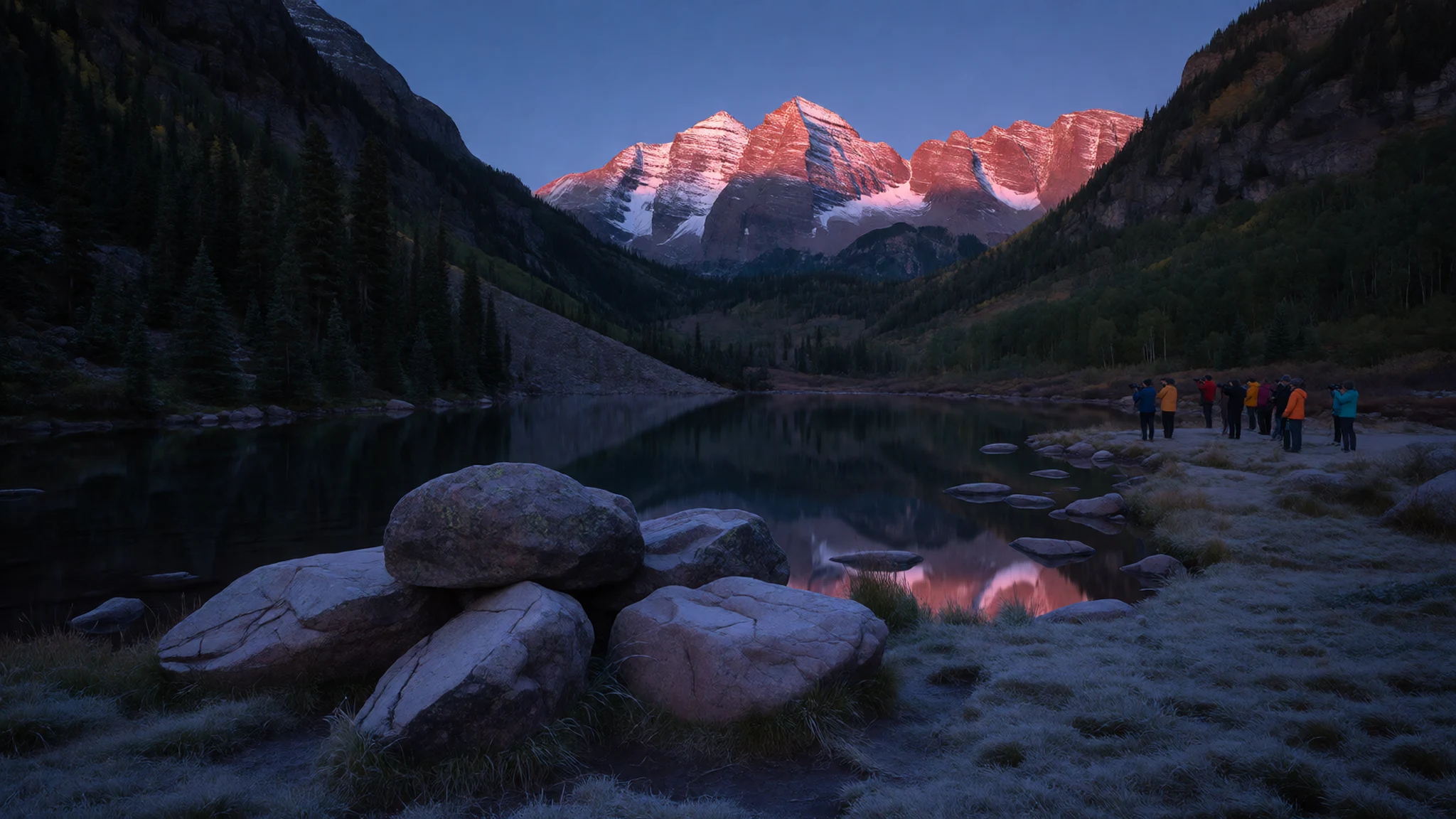
- Aspen groves in autumn — Maroon Creek valley
In late September the valley's aspen stands turn yellow and orange against the dark conifers and the red rock. It is the busiest and most photogenic season. Colour timing shifts from year to year with weather and altitude, so keep dates flexible and check local reports.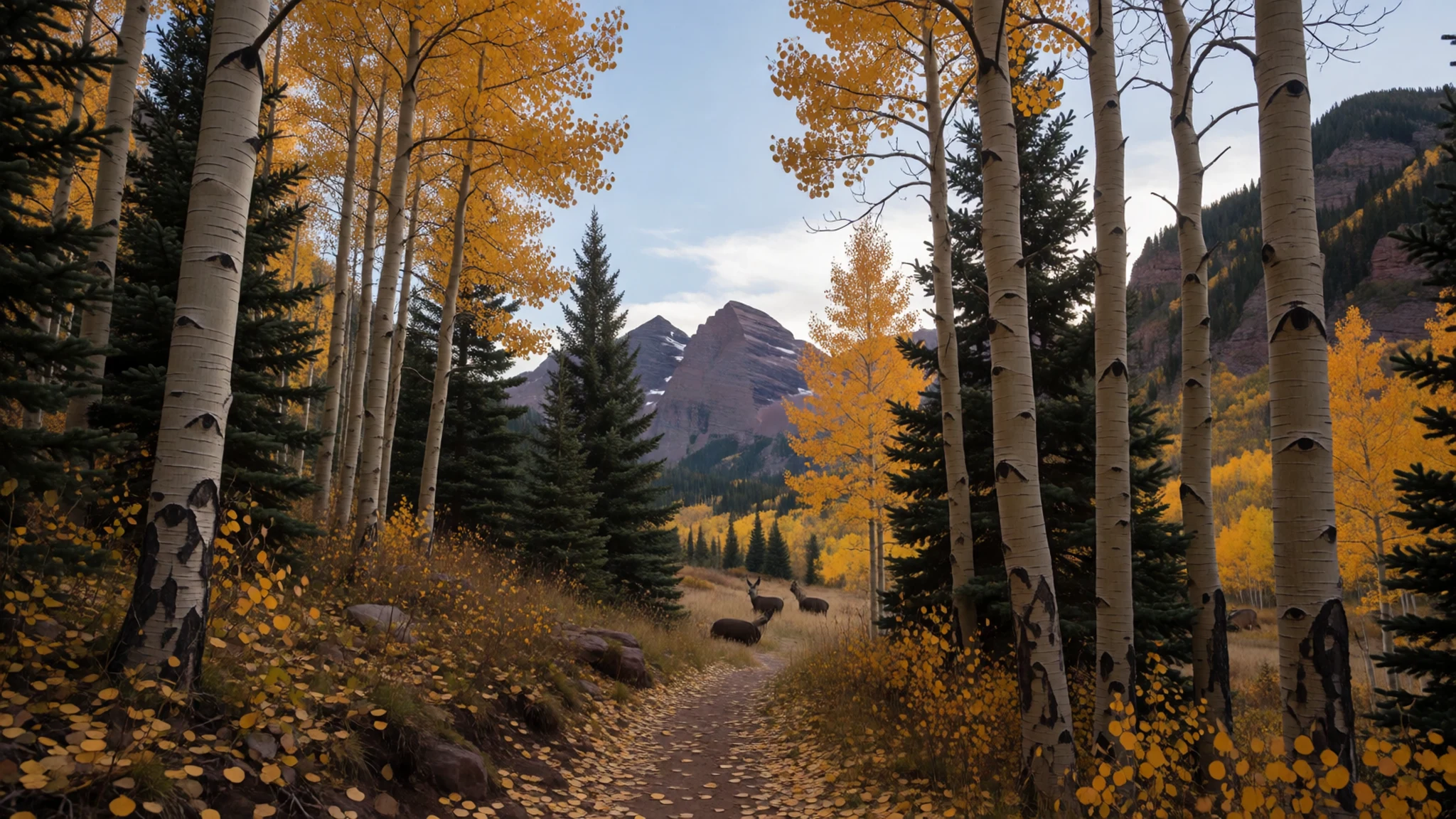
- West Maroon Creek — Southwest of Maroon Lake
Beyond the lake, a trail follows West Maroon Creek into quieter country of meadows, streamside willows and wider views of the peaks. The walk gains height steadily, so go slowly and carry water. Turn back when weather builds, as afternoon storms arrive quickly in summer.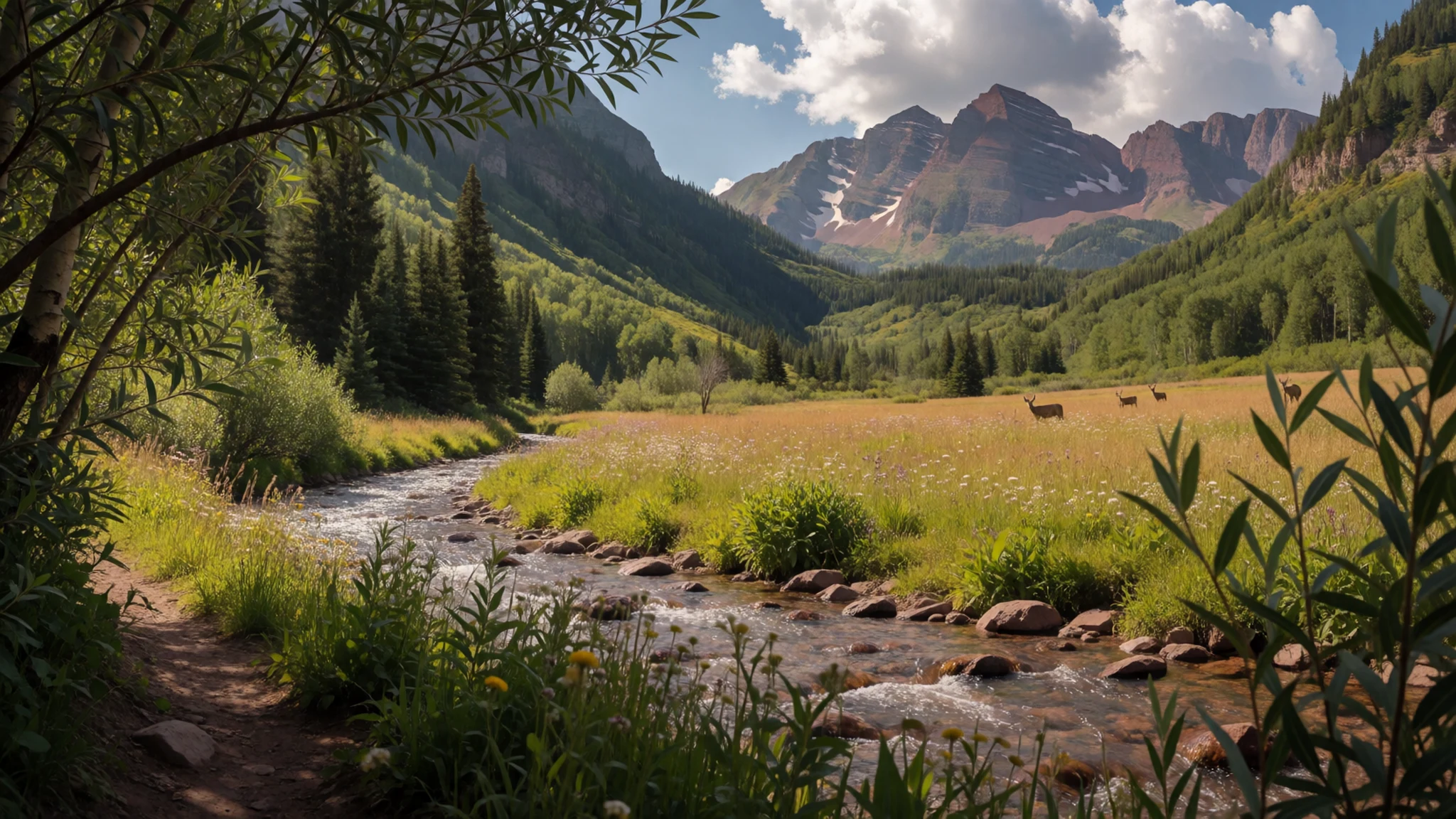
- Evening wildlife around the lake — Maroon Lake and nearby meadows
Late in the day the crowds thin and the shoreline gets livelier. Geese, deer and signs of beaver work are common sights around the water and meadows. Keep well back, never feed animals, and use a long lens rather than creeping closer for the picture.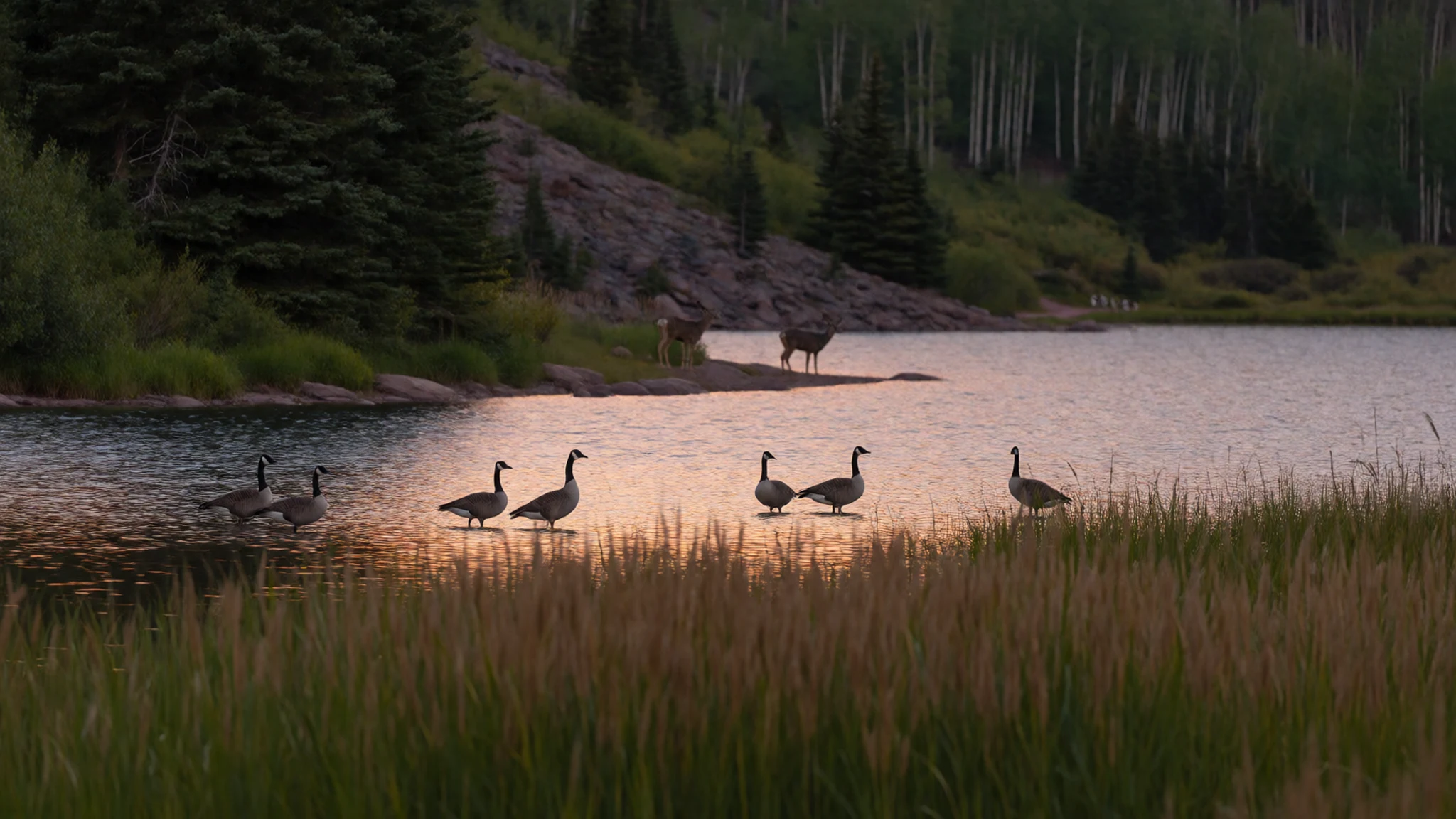
Culture
Maroon Bells sit in country that was Ute homeland long before Aspen existed, and the Ute presence in the Colorado Rockies is a living history, not just a footnote. Aspen itself grew first as a silver-mining camp and later reinvented itself as a ski and arts town, which still shapes its mix of ranch heritage, expensive boutiques and outdoor obsession. The valley's culture today is mostly one of mountain restraint. Visitors arrive to look, walk and photograph, and the local ethos leans heavily on leave-no-trace habits, quiet voices at dawn and respect for a protected wilderness. Mountaineering carries its own culture here. The peaks have a serious reputation, so climbers tend to be experienced, early-rising and sober about risk, and the Forest Service warning sign on the approach is taken at face value. Photographers form a second tribe, setting up tripods before sunrise and generally sharing the shoreline with good humour. Day visitors, hikers and families fill the middle ground, and the general mood is friendly, practical and outdoorsy rather than formal. Keep to marked paths, pack out every scrap of rubbish, and give wildlife plenty of room instead of approaching for a closer photograph.
What to wear
Maroon Bells has no single local costume, but the region's older dress is worth knowing. The Ute people traditionally wore tanned hide garments, decorated with beadwork and fringes, and some of that craft continues in ceremonial and tribal wear. Ranch and cowboy dress later added denim, felt hats, leather boots and wool shirts, and those pieces still show up around Colorado's mountain towns. What people wear now is mostly technical outdoor clothing: fleece, lightweight down jackets, trail shoes and caps. Aspen adds a polished layer on top, with designer outdoor wear and fur-trimmed coats in cold months, though at the lake the dress code is simply practical. Visitors should plan for big swings in temperature. Mornings at about 2,920 m are cold even in summer, and afternoon storms can bring rain or hail, so bring a warm layer, a waterproof shell and a hat. Sun and dry air are strong at altitude, so add sunglasses, sunscreen and a refillable water bottle. Footwear matters more than fashion: sturdy shoes with decent grip suit the lakeside paths and valley trails, and proper hiking boots are better for anything longer. There are no religious sites or modesty rules to worry about, so comfort and weather protection decide the outfit.
What to eat
- Denver omelette — Breakfast diners and cafés in Aspen
A hearty egg dish with cheddar, diced ham, onion and green pepper, probably born on cattle drives. It makes a sensible fuel before an early start. Look for it on the breakfast menu of any diner or café in Aspen and the valley towns.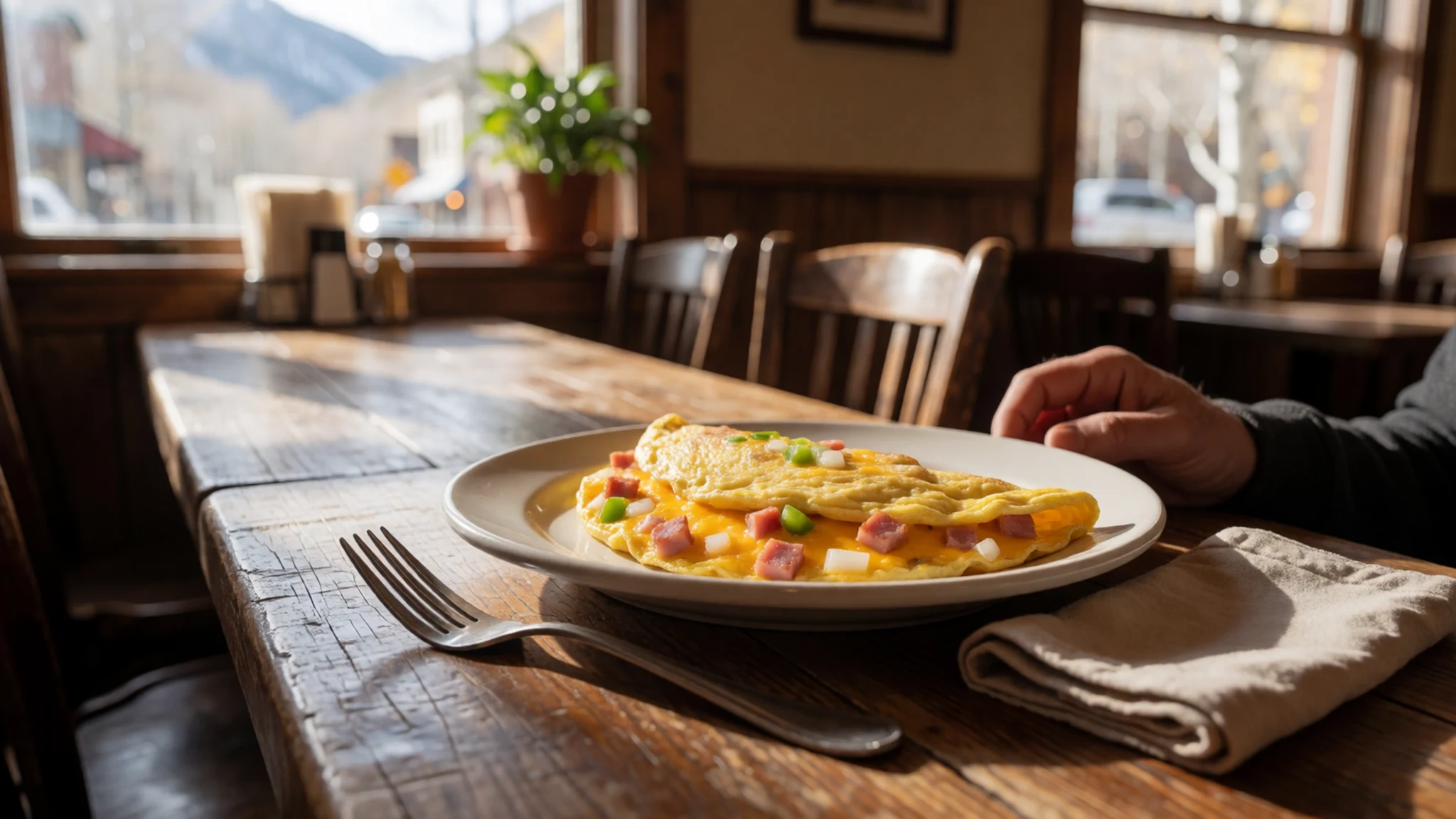
- Duffy roll — Bakeries and coffee counters in mountain towns
A Colorado pastry that sits somewhere between a cinnamon roll and a croissant, with a sticky sweetness and flaky layers. It is easy to carry on a morning walk. Try local bakeries and coffee counters rather than hotel breakfast buffets.
- Cheeseburger — Pubs and grills in Aspen and nearby towns
Colorado is one of several places that claim to have invented the cheeseburger, and a good one is a dependable post-hike meal. Expect a thick patty, melted cheese and a heap of chips at a relaxed pub or grill. - Rocky Mountain trout — Mountain-town restaurants near the rivers
Trout from cold mountain rivers is a regional staple, usually pan-fried or grilled with lemon and herbs. It is lighter than most mountain fare. Ask for it at restaurants that source locally, particularly those near fishing rivers. - Palisade peaches — Farmers' markets and roadside stands, late summer
Western Colorado is known for orchard peaches in late summer, sold sweet and juicy by the roadside. They suit a picnic by the lake. Look for farm stands and farmers' markets on the drive in, in season.
Plan it
Best time. Late June to September for open trails and long daylight, with the second half of September best for gold aspens. Mornings are cold even in summer, afternoon storms are common, and snow closes much of the valley to ordinary visitors in winter.
How long. 1–2
Getting there. Fly into Aspen-Pitkin County Airport (ASE), the nearest, or into Denver International Airport (DEN) and continue by a long mountain drive. The last leg is the road up the Maroon Creek valley from Aspen; in season access is managed by shuttle or reservation, so check the official Forest Service and local information before you travel.
Budget. high
Tips
- Start at dawn for still water, soft light and fewer people
- Book or check access arrangements well ahead in summer and autumn
- Carry water; the dry air at altitude dehydrates you faster than you notice
- Pack layers and a waterproof shell, as weather changes quickly
- Give yourself a slow first day to adjust to the altitude
Etiquette
- Stay on marked paths and take every scrap of rubbish home
- Keep well back from wildlife and never feed animals
- Do not attempt the summits without mountaineering experience, as the rock is loose
Nearby
Sources
- Wikidata Q1400310 (CC0)
- Wikipedia: Maroon Bells (rev 1375152855) (CC BY-SA 4.0)
- Wikivoyage: Colorado (rev 5400360) (CC BY-SA 4.0)
- Photo 01: The Maroon Bells in Aspen, Colorado, with Maroon Lake in the foreground (Rhododendrites) (CC BY-SA 4.0)
- Photo 02: Alpenglow, Maroon Bells, Maroon Lake, Colorado (John Fowler) (CC BY 2.5)
- Photo 03: Colorado Health Club (Zach Dischner) (CC BY 2.5)
- Photo 04: Maroon Bells reflected on Maroon Lake (U.S. Department of Agriculture) (CC BY 2.5)
- Photo 05: West Maroon Creek (Rhododendrites) (CC BY-SA 4.0)
- Photo 06: Maroon Lake at peak fall colour (U.S. Department of Agriculture) (CC BY 2.5)
- Photo 07: Evening at the Maroon Bells (markbyzewski) (CC BY 2.5)
- Photo 08: Evening at the Maroon Bells (markbyzewski) (CC BY 2.5)


Wildlife
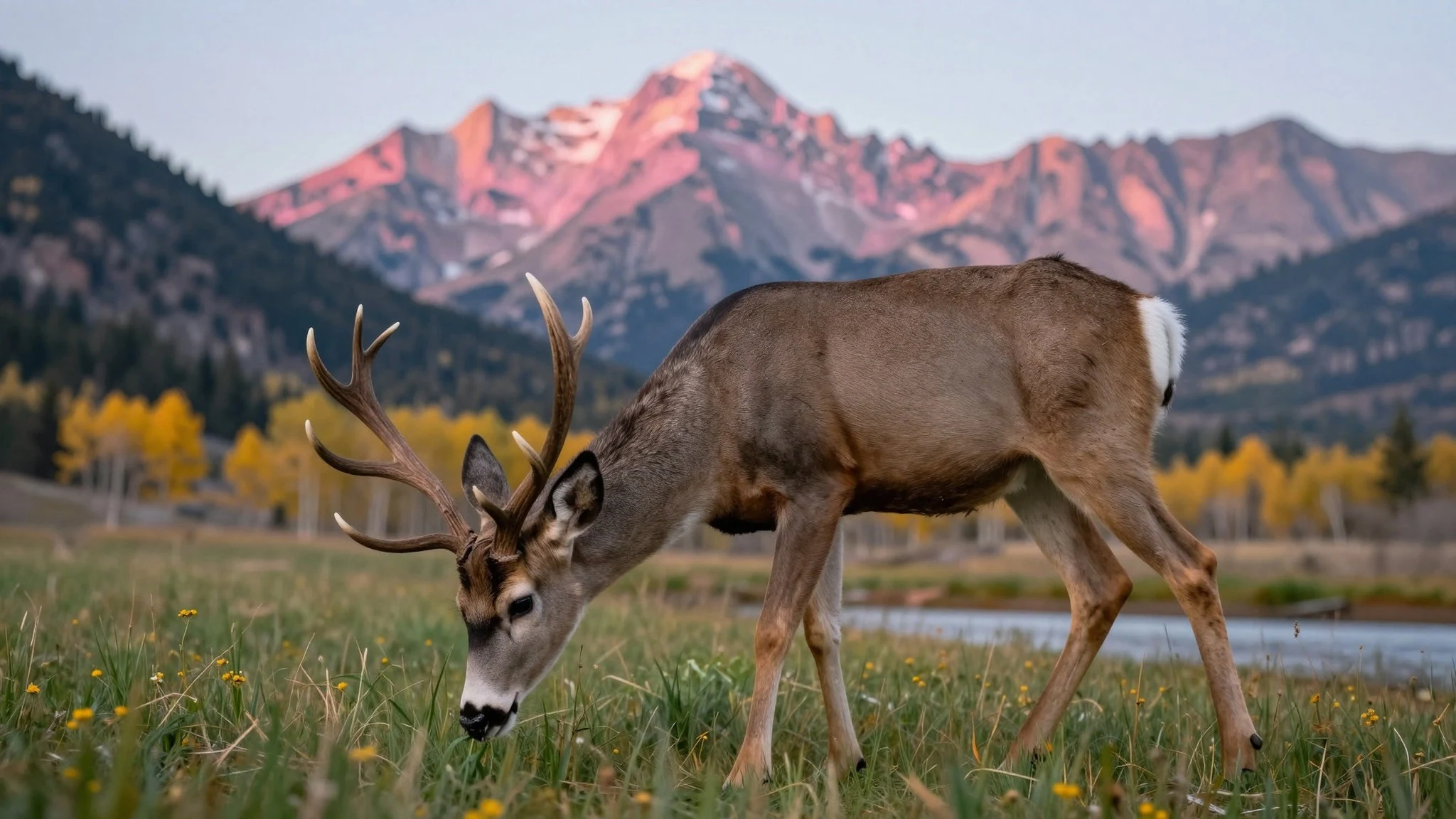
- Mule deer (animal)
The mule deer is a wild deer of western North America, and its name is written on its head: its big ears look just like a mule's. Around Maroon Bells, deer are often spotted beside the water and out on the meadows, though nothing here says which season or hour is best. Watch from a respectful distance, keep quiet and move slowly so it stays calm, and never offer it food, because a wild deer should stay wild.