Luray Caverns
Luray Caverns, United States
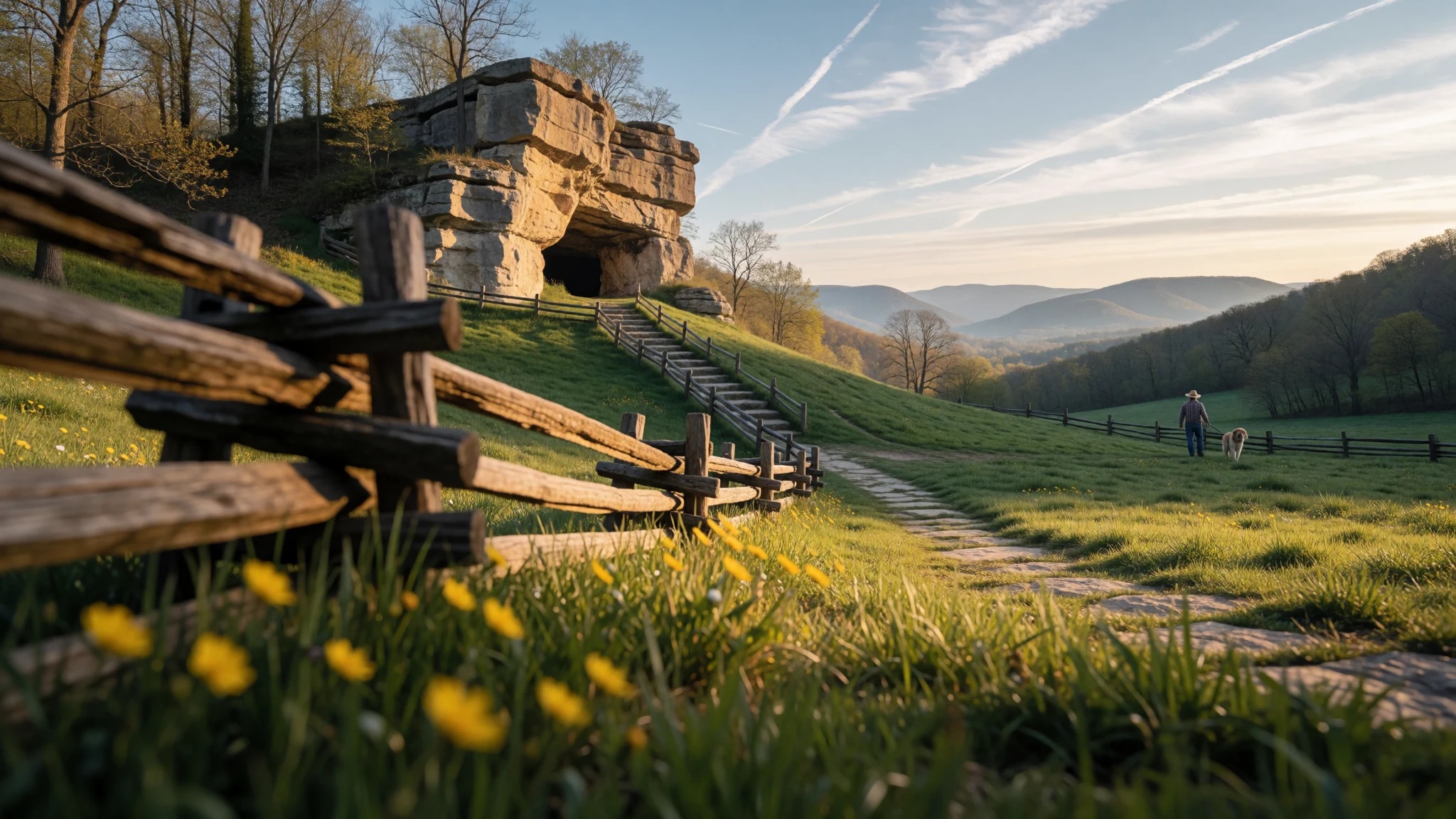
Luray Caverns is a family-owned limestone cave in Virginia's Shenandoah Valley, where still pools mirror the formations and a stone organ plays.
The place
Luray Caverns lies just west of the town of Luray, in Virginia's Shenandoah Valley, in the eastern United States. It is a show cave: a natural limestone system fitted with paved paths and lighting so that ordinary visitors can walk through it. Water seeping and dripping through the rock has built stalactites hanging from the ceiling, stalagmites rising from the floor, columns where the two have joined, sheets of flowstone, and calm pools that mirror the formations above them. The caverns are privately owned by the Graves family, whose ancestor bought the land in 1905, so this is a ticketed, family-run attraction rather than a public park. The walk is a single route of about 2.4 km, and most people finish it in somewhere between 45 minutes and an hour. The path slopes gently downhill from the entrance, passes the large set pieces one after another, then climbs back out by a narrower stretch. Because the route runs one way, the crowd moves at a steady shuffle, and on summer weekends and holidays that shuffle can be slow. Small pets may join the tour, which surprises some first-timers, and leashed pets are allowed on the grounds outside. Inside, the air stays cool whatever the weather above, a relief in July and a reason to carry a jumper in other months. Early weekday arrivals meet the thinnest crowds. For ticket types, opening times and current prices, check the official site.
Its story
Luray Caverns was found in 1878 by a small group of local men, among them a tinsmith named Andrew Campbell and a photographer, Benton Stebbins. A rocky outcrop and a sinkhole exhaling cold air gave them the hint that a cave lay underneath. They dug for hours until the opening was wide enough for the two smallest of them, who were lowered on a rope and explored by candlelight. The first column they met was named after George Washington. Deeper in, in a section called Skeleton's Gorge, they found bone fragments, charcoal and flint locked into calcite, which showed that people had been inside the cave long before. One skeleton, thought to be a Native American girl, was dated by the rate at which the surrounding stalagmite had grown, and judged recent in geological terms. How she came to lie there is unknown, though a collapsing burial hole is one explanation. Ownership then became contested. Sam Buracker, whose land held the entrance, had unpaid debts, and a court ordered all his property sold at auction in September of that same year, so the discovery quickly turned into a legal and commercial scramble. Soon afterwards a Smithsonian Institution report praised how richly the cave was decorated, which helped fix its reputation. Later the Northcott family bought the land in 1905, and their descendants, the Graves family, still own it today.
What to see
- Dream Lake — Main cave route
Dream Lake is a shallow pool whose still surface doubles the formations above it, so the chamber seems twice as deep as it is. The effect depends on calm water and low lighting, and photographs rarely do it justice. Crowds bunch here, so wait a moment for a clear sightline before moving on.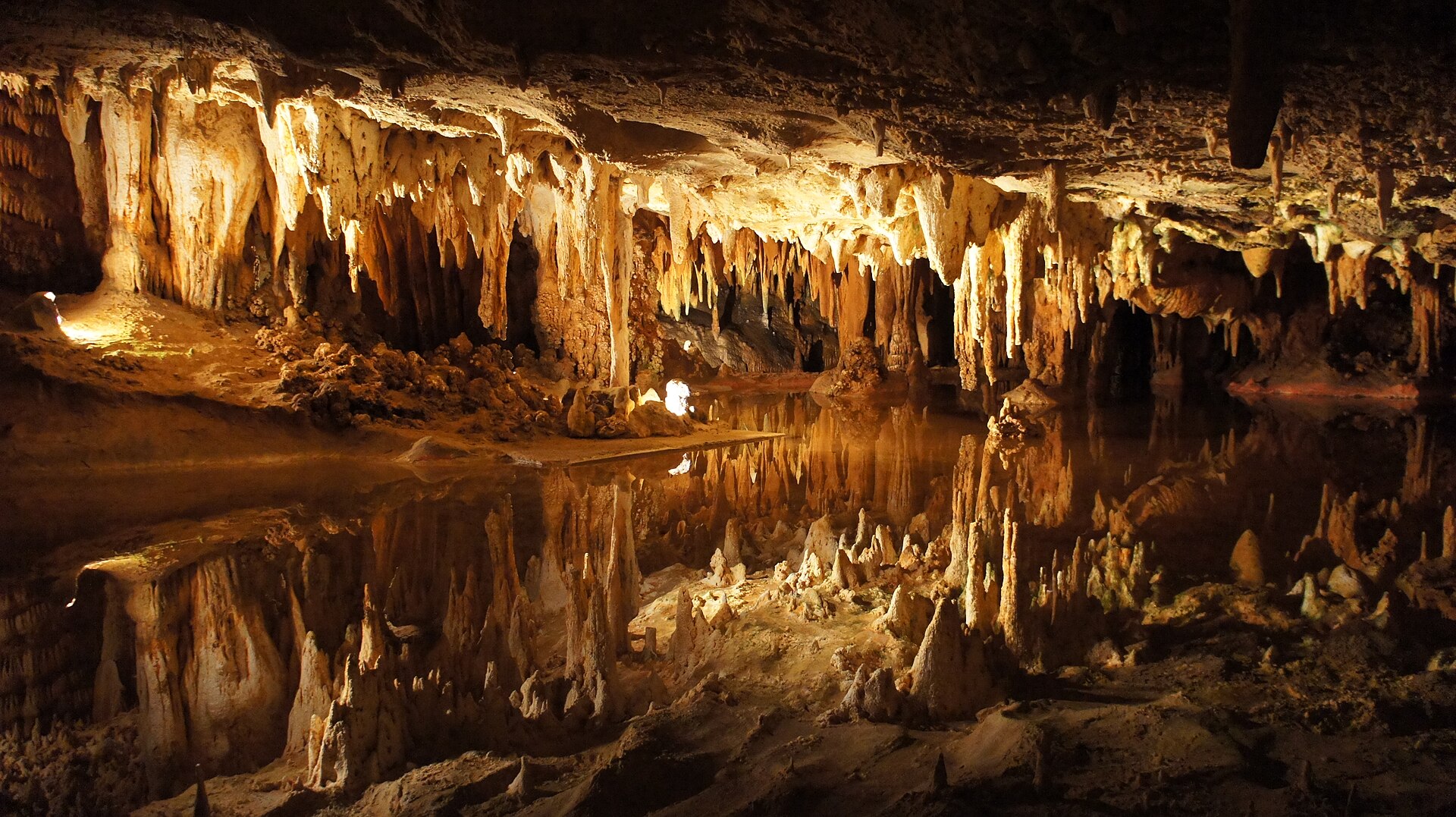
- Saracen's Tent — Main cave route
Saracen's Tent is a ribbon of flowstone and drapery that hangs in folds, banded in browns and creams, like cloth pitched over a pole. Water laid down the mineral over very long spans, and the bands glow when lit from behind. A slow look at the stripes repays the pause.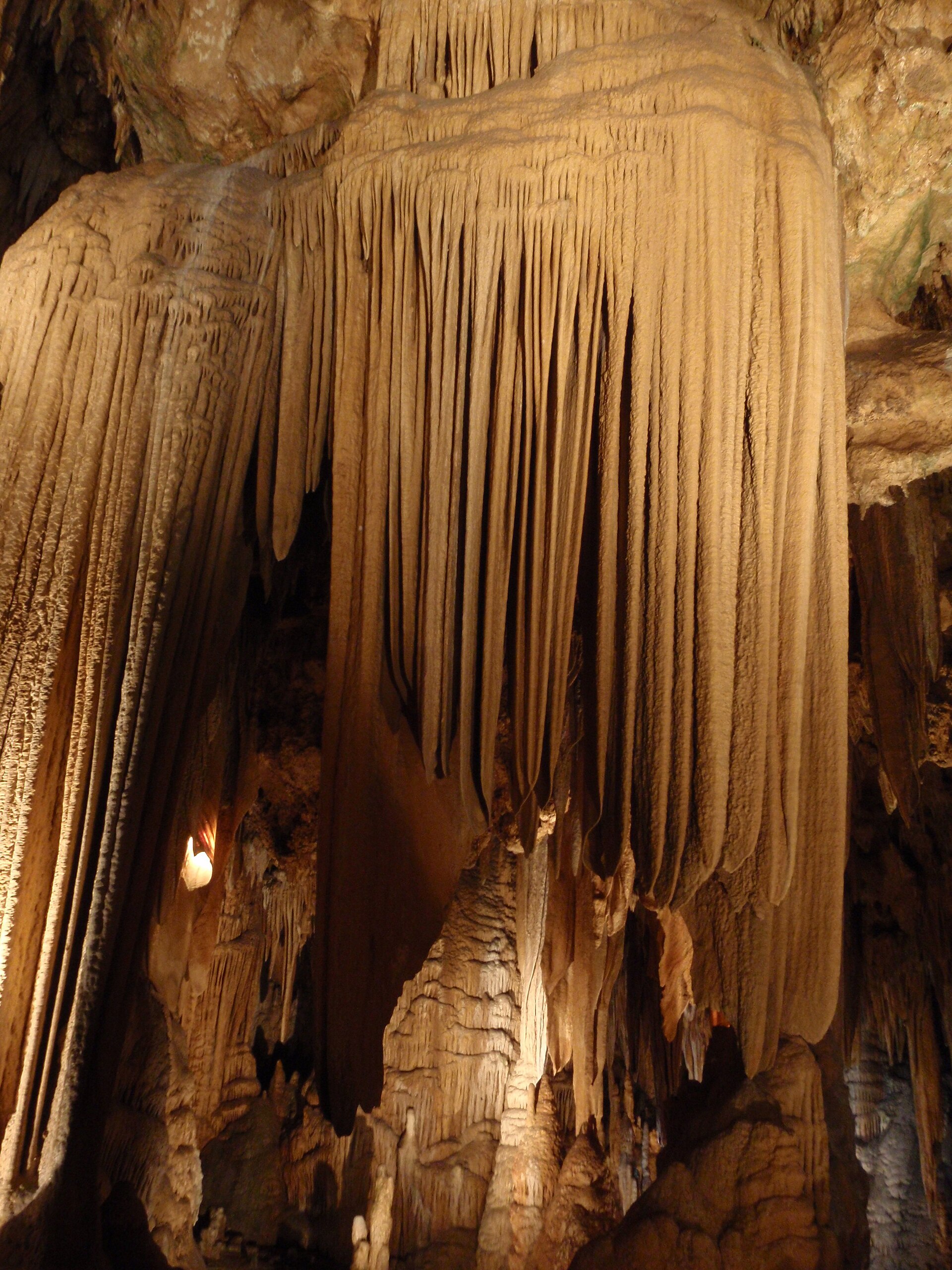
- The Great Stalacpipe Organ — Main cave route
The Great Stalacpipe Organ is a lithophone: small electrically triggered strikers tap stalactites of different lengths, and each rock rings out a note somewhere between a xylophone and a bell. Tunes are played during the visit, so ask at the entrance about timing. The sound carries oddly well through the chamber.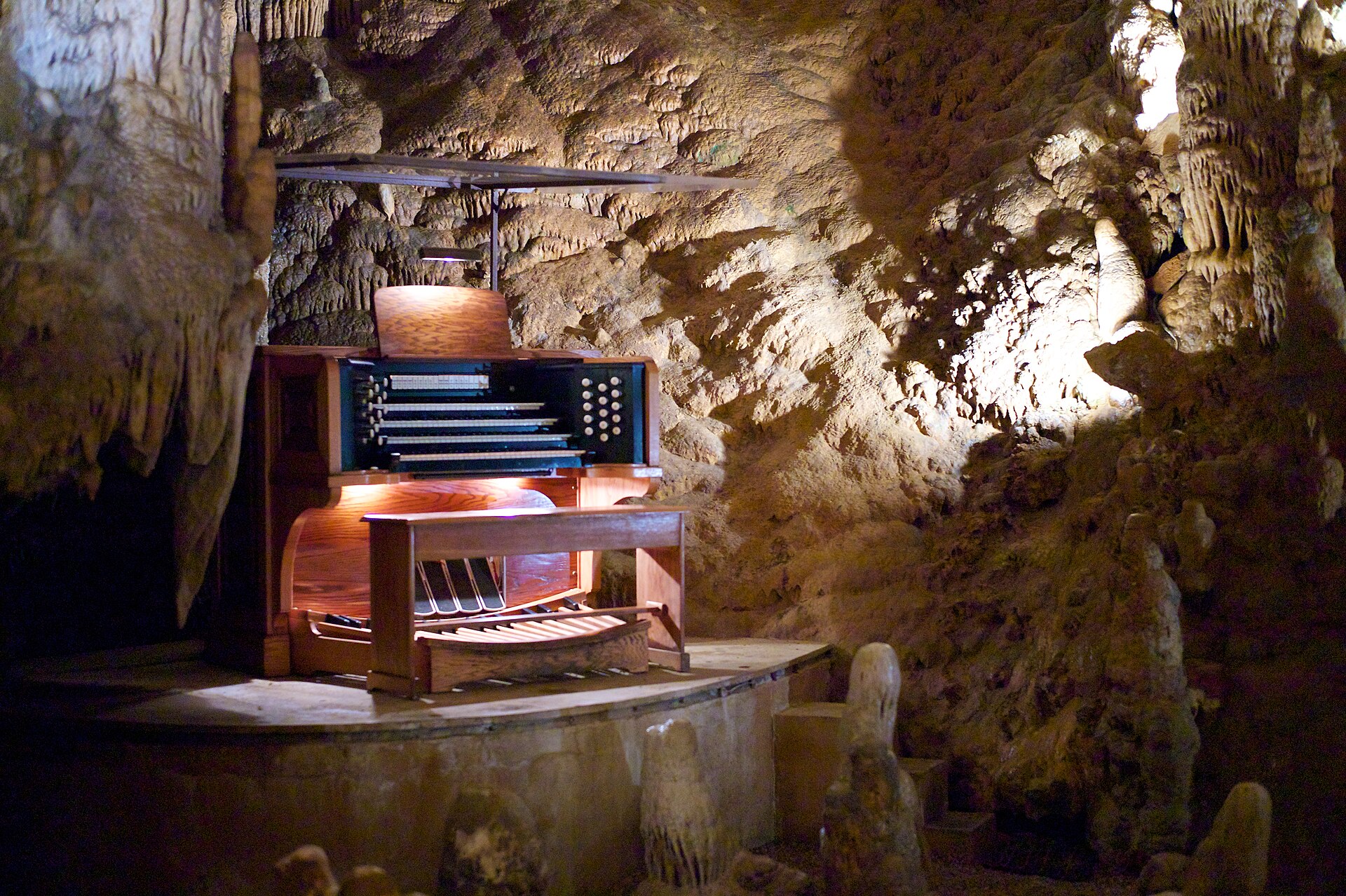
- Columns, stalactites and stalagmites — Main cave route
Along the path, stalactites and stalagmites have met to form thick columns, some chunky as tree trunks. Look for the places where growth from above and below has joined; each join took a very long time. These are the formations that give the cave its basic character, before the named showpieces.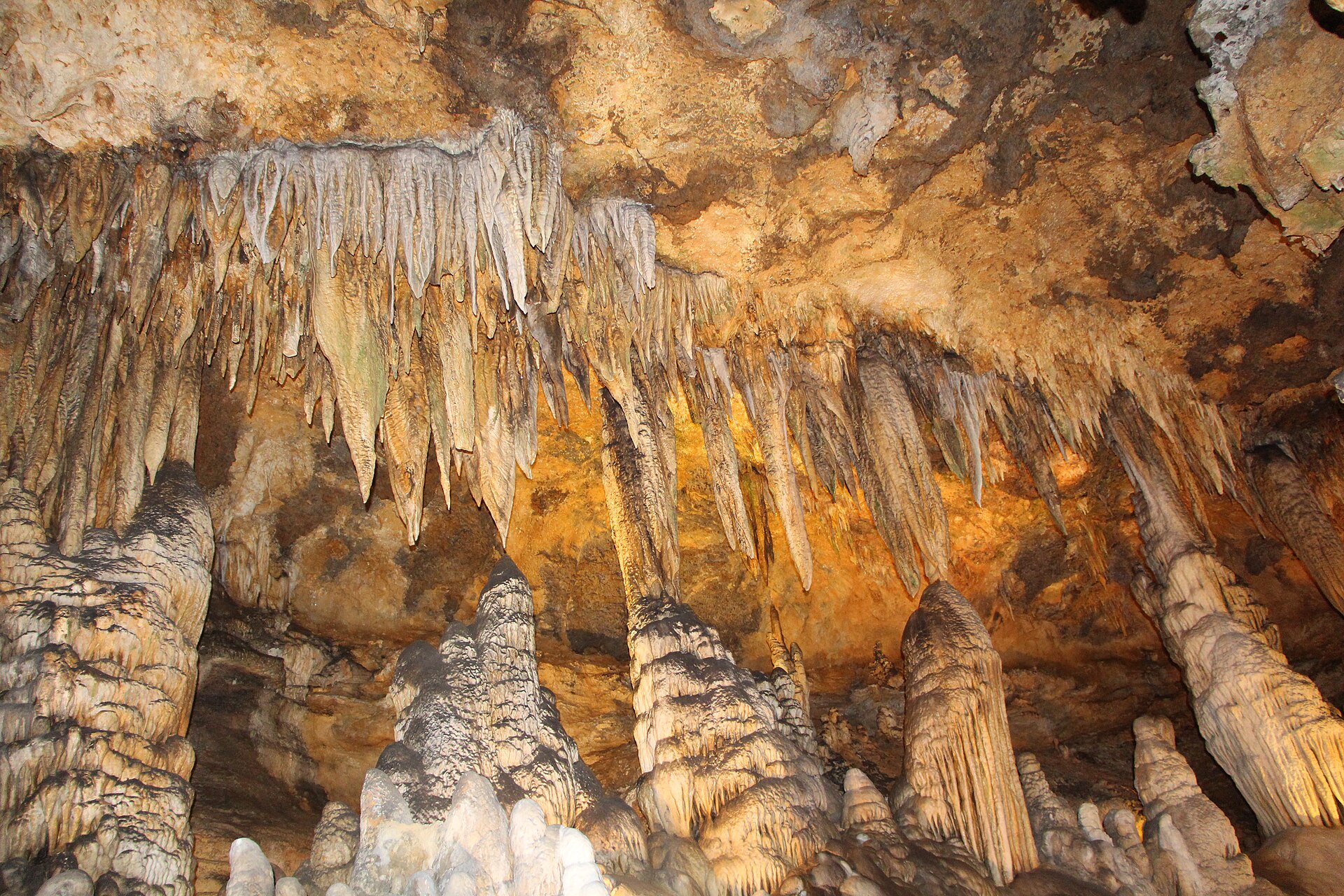
- Wishing Well and veterans' memorial — Main cave route
Past the organ, a wishing well collects coins thrown by visitors, and a sign beside it explains which charities receive the money. A memorial close by honours veterans from Page County. Both make quiet stops after the larger chambers, and a good moment to let the crowd ahead pull away.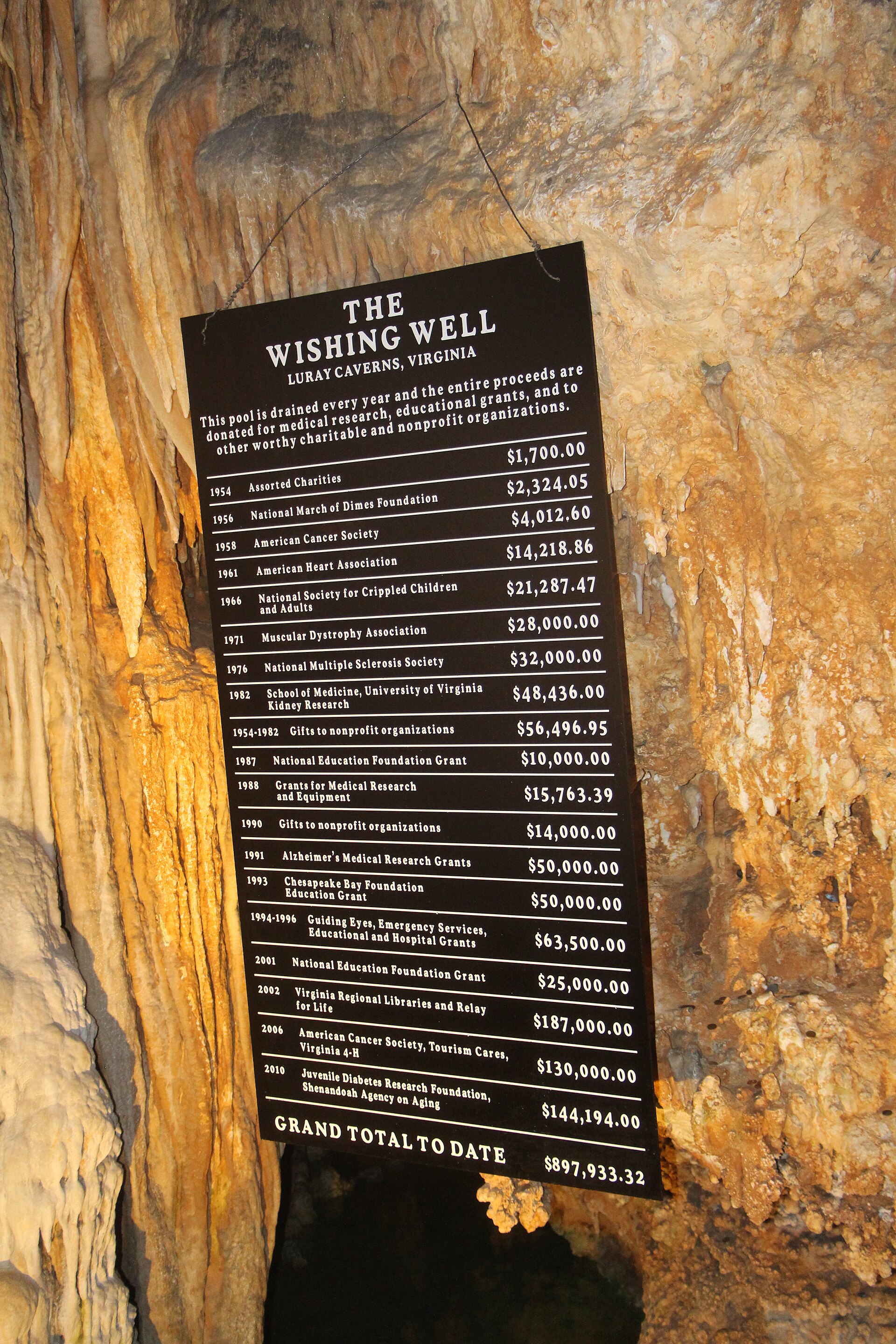
- The Fried Eggs — Main cave route
The Fried Eggs formation sits near the end of the route, where the path climbs towards the exit. Round pale discs with yellow-brown centres lie flat on the rock, and the nickname is fair. Children tend to spot it first. It is a small thing, but a cheerful way to finish the walk.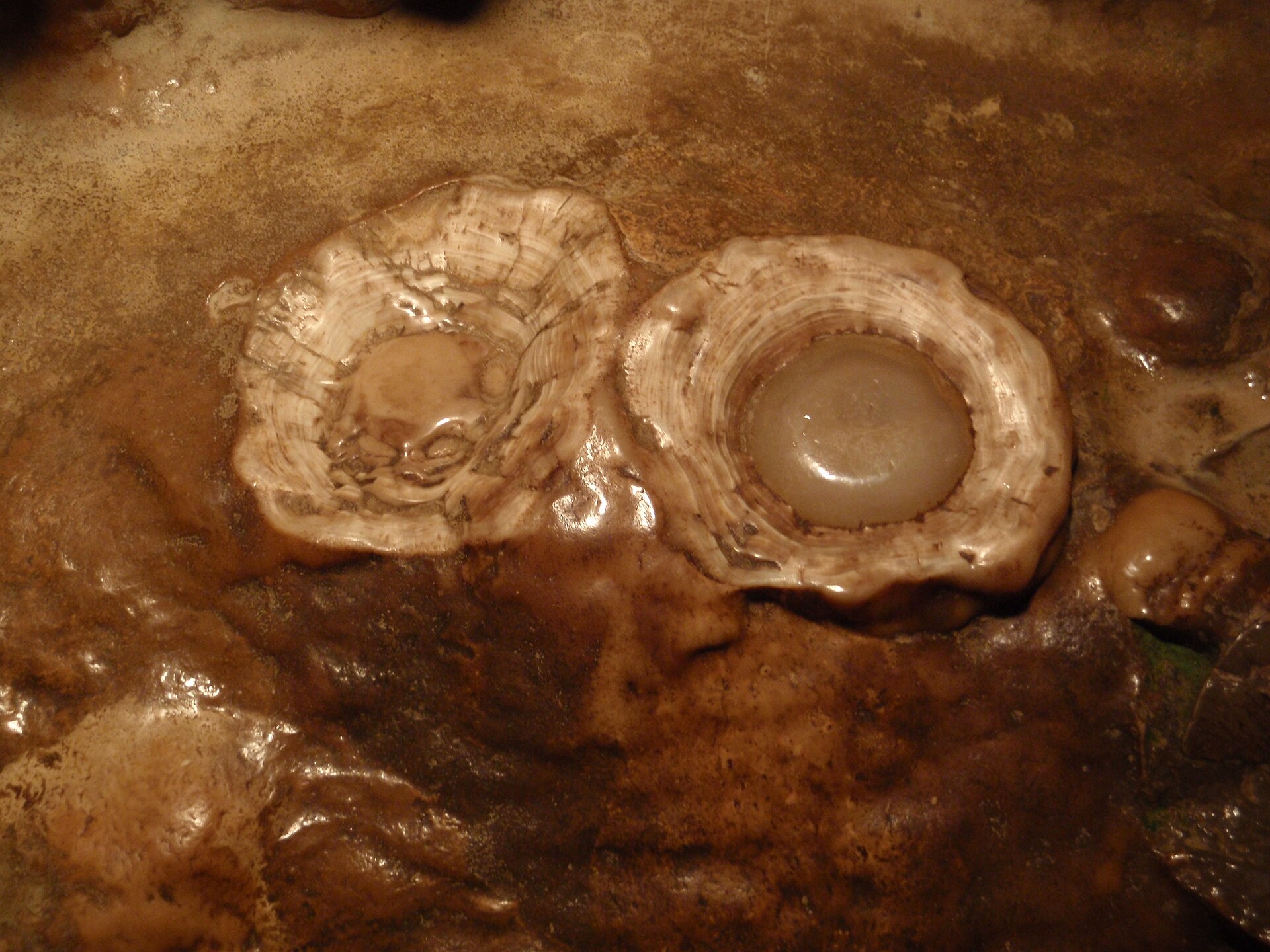
Culture
Luray Caverns sits in Page County, a rural part of the Shenandoah Valley where farming, small-town life and tourism overlap. The caverns are a family business, and the town of Luray draws visitors who come for the cave and then explore the Blue Ridge scenery around it. The attraction belongs to a wider American tradition of show caves, in which natural rock is lit, named and given a little showmanship. The Great Stalacpipe Organ and the wishing well come from that tradition: a dash of theatre and sentiment laid over limestone. The memorial to Page County veterans is a reminder that the place also carries local meaning, and visitors generally lower their voices there. Service in Virginia is friendly and chatty. Staff and strangers will often open with a 'how are you' that does not expect a long answer, and a warm reply and a smile are the right return. Tipping is customary in restaurants and for table service, as across the United States. Weekends bring families, school groups and coach parties, so the mood outside is relaxed and a little noisy, while inside it quietens as people look up. Do not touch the formations, because oils from skin stop them growing and leave dark marks that never wash off.
What to wear
Luray Caverns is in a part of the United States with no single national costume, so the traditional picture is regional. Early settlers in the Shenandoah Valley wore plain, hard-wearing clothes of homespun wool, linen and cotton, often dyed with indigo or plant colours, and today that look appears mainly at living-history events and Civil War re-enactments nearby. What people actually wear now is casual: jeans, T-shirts, trainers or walking boots, fleeces, baseball caps, and checked flannel shirts in the cooler months. Nobody dresses up for a day out, and families arrive in whatever suits the weather. A visitor should dress for contrast. Summers in the valley are warm and humid, yet the cave stays cool, so a light jumper or fleece is worth carrying even in July. Wear closed shoes with a good grip, since paths and steps can be damp and slippery, and leave sandals and heels in the car. A small bag is easier than a bulky rucksack in narrow stretches. There are no modesty rules to worry about, though the veterans' memorial and any small-town church call for ordinary respectful dress. In winter, add a proper coat for the walk between car park and entrance.
What to eat
- Country ham biscuit — Diners and small-town bakeries in the Shenandoah Valley
Country ham is a salt-cured Virginia speciality, often served at breakfast and holiday meals. Try it sliced thin inside a warm biscuit, salty and rich against the soft bread. Look for it at local diners and bakeries in the valley towns. - Brunswick stew — Country restaurants and inns around the valley
Brunswick stew is a thick, slow-cooked dish of meat and vegetables, and several Virginia counties claim it as their own invention. Expect something between a soup and a casserole, served hot with bread. Check which version a restaurant uses before ordering. - Maple pancakes — Community breakfasts and local inns, in festival season
Highland County's maple festival celebrates syrup made high in the Blue Ridge, and pancake breakfasts are its centrepiece. Queues can be long, though the mood is friendly; a nearby inn or restaurant is a quieter way to taste local syrup. - Virginia wine — Wineries along the Blue Ridge foothills
Virginia has dozens of wineries, and the state promotes its wine trails and seasonal festivals. A tasting suits a slow afternoon after the cave, ideally with a designated driver. Opening arrangements vary, so check each winery's own website. - Virginia Grown produce — Roadside farm stands and seasonal markets
The state's Virginia Grown scheme lists local producers, and seasonal stalls sell fruit, vegetables, preserves and baked goods. It is an easy way to assemble a picnic for the drive, tasting what the valley actually grows.
Plan it
Best time. April–May and September–October, when the Shenandoah Valley is mild and green or turning to autumn colour. Summer is warm and humid and the busiest season, though the cave itself stays cool. Winter is quieter, but check the official site for current opening arrangements.
How long. 1–2
Getting there. Washington Dulles International Airport (IAD) is the main gateway for international and long-haul flights; Reagan National (DCA) serves short and medium domestic routes. From either, a hire car is the practical last leg west to Luray, as public transport is thin.
Budget. mid
Tips
- Arrive early on a weekday to meet the smallest crowds on the one-way route
- Check the official site for tickets, opening times and any booking window before you set out
- Carry a light layer, because the cave is cool even on a hot day
- Wear closed shoes with grip for damp paths and steps
- Pair the visit with a drive through the Blue Ridge to fill a second day
Etiquette
- Do not touch the formations; skin oils damage them
- Keep voices low at the veterans' memorial
- Keep small pets under control if you bring them on the tour
Nearby
Sources
- Wikidata Q1476610 (CC0)
- Wikipedia: Luray Caverns (rev 1370235416) (CC BY-SA 4.0)
- Wikivoyage: Virginia (rev 5372253) (CC BY-SA 4.0)
- Photo: Luray Caverns "Dream Lake" — Paulo O, via Wikimedia Commons (CC BY 2.5)
- Photo: Sign for veterans memorial — Tomandjerry211, via Wikimedia Commons (CC BY 3.0)
- Photo: Stalactites and stalagmites — Tomandjerry211, via Wikimedia Commons (CC BY 3.0)
- Photo: Fried Eggs — ZeWrestler, via Wikimedia Commons (CC BY 3.0)
- Photo: Stalacpipe Organ booth — Jon Callas, via Wikimedia Commons (CC BY 2.5)
- Photo: Saracen's Tent — ZeWrestler, via Wikimedia Commons (CC BY 3.0)
- Photo: Reflecting cavern lake — David Jones, via Wikimedia Commons (CC BY 2.5)
- Photo: Sign at the entrance to Luray Caverns — Famartin, via Wikimedia Commons (CC BY-SA 4.0)


