Linville Gorge
Linville Gorge, United States
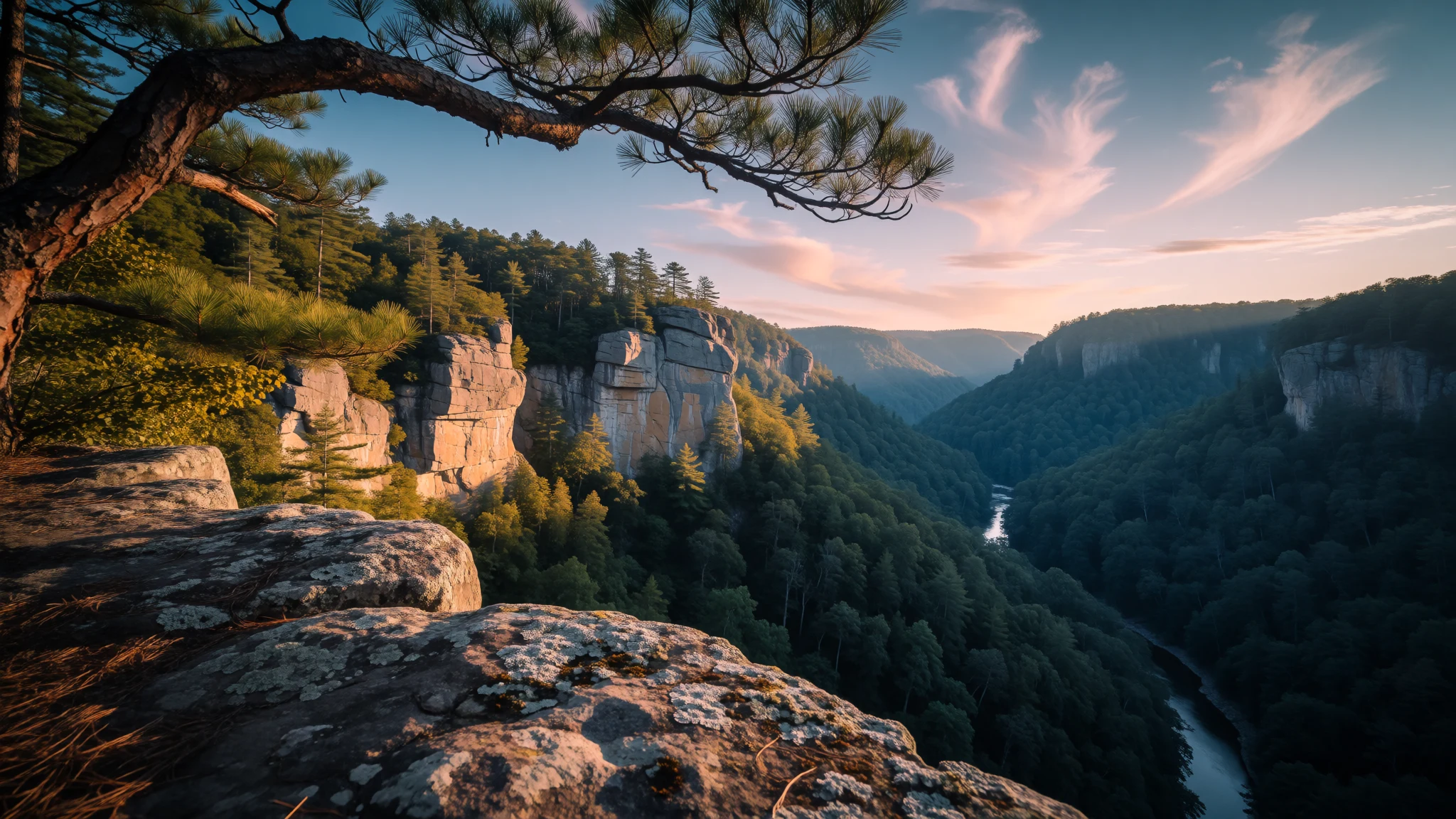
Linville Gorge is a deep, road-free wilderness of cliffs and old forest in the Blue Ridge, for walkers who want steep trails and quiet.
The place
Linville Gorge, in the Pisgah National Forest of western North Carolina, is a federally designated wilderness cut by the Linville River, which runs far below the ridges on either side. It is sometimes called the Grand Canyon of North Carolina, a nickname that overstates the width but not the steepness: the walls drop sharply, and the climb back out is serious work. The Forest Service manages it, and the guiding idea is that almost nothing is built here. Restrooms exist at a handful of trailheads and at the Linville Falls picnic area, but through most of the gorge there are no facilities at all. Dirt roads reach most trailheads and suit an ordinary car, while a paved road leads to Linville Falls. The forest is dense hardwood and pine with smaller trees and shrubs beneath, and it shelters bears, foxes, raccoons, grouse, wild turkeys, owls, hawks and vultures, with trout in the river. Copperheads and timber rattlesnakes live here too. Rock is the real theme: the cliffs and outcrops of Hawksbill, Table Rock and Shortoff, the long line of Jonas Ridge to the east and Linville Mountain to the west. Viewpoints such as Wiseman's View sit roughly in the middle of it all. Linville Falls marks the northern end of the gorge and Lake James the southern, and the Blue Ridge Parkway runs close by.
Its story
Linville Gorge was Cherokee country long before European settlers arrived, and the Cherokee name for the river, Ee-see-oh, translates as river of many cliffs. It is a better description than most maps manage. Settlers later named the river after John and William Linville, explorers killed by Shawnee in the gorge in 1766. The terrain shaped everything afterwards. The slopes were too steep to farm, and the ridges on both sides made settlement impractical for generations. When logging swept through the surrounding mountains in the early twentieth century, the gorge itself was spared, because getting timber out of such ground did not pay. That accident is why this is one of the few remaining stands of old growth forest in the Blue Ridge, with virgin woodland across a large part of the wilderness. It is also why Linville is the only one of North Carolina's major gorges without a road along its floor. The first formal protection came in 1952, after money donated by John D. Rockefeller paid for the land. When the Wilderness Act became law in 1964, signed by President Johnson, Linville Gorge was among the first places designated under the new national system. The story here is less about what was built than about what nobody found profitable to cut down.
What to see
- Linville Falls — Northern end of the gorge, off the Blue Ridge Parkway
Linville Falls sits at the northern end of the gorge, reached by a short but steep trail from the paved road and picnic area. Water thunders over the rock and churns in the pool below. It is free to visit, which means it fills up on fine weekends, so arrive early.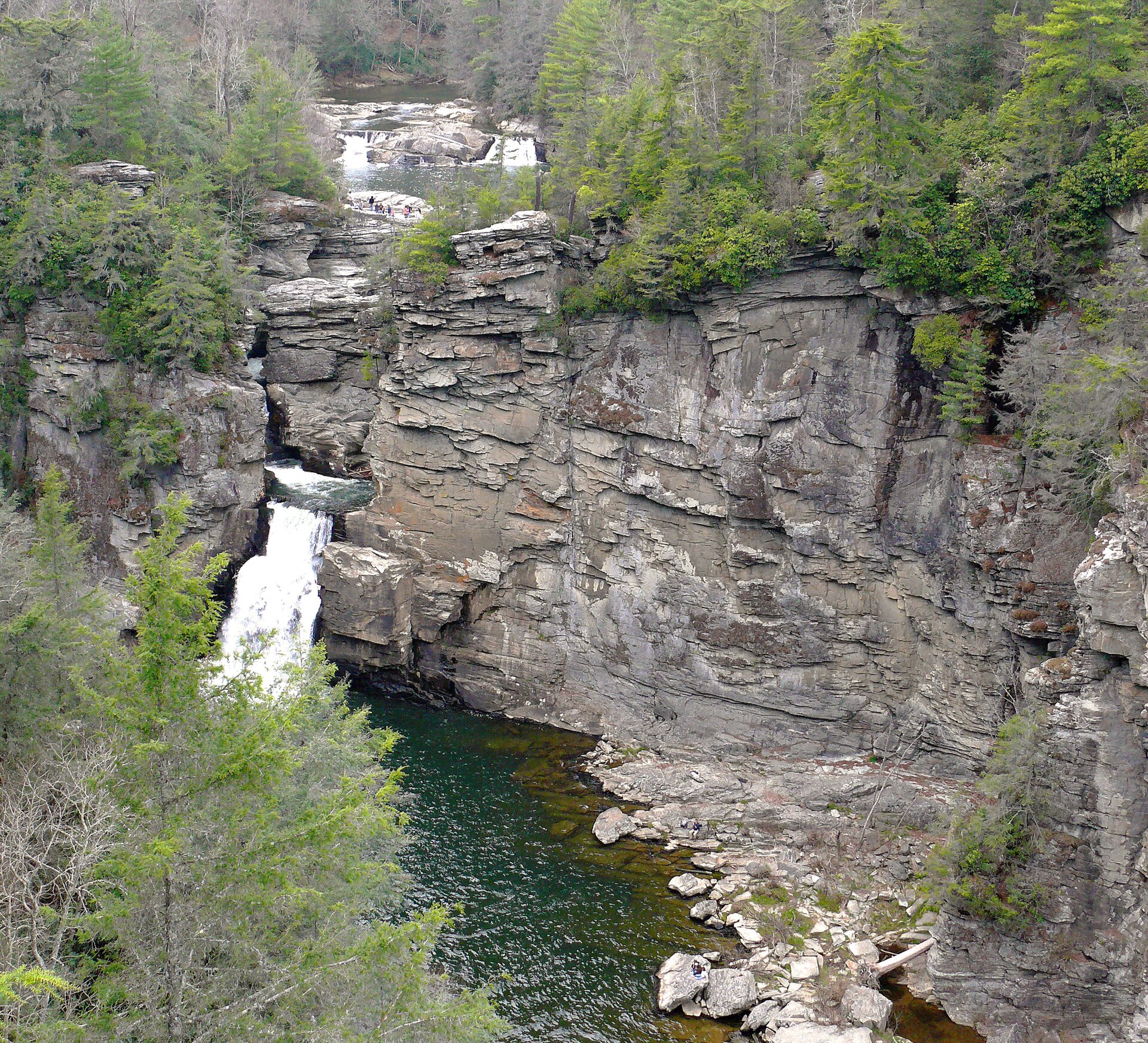
- Wiseman's View — Eastern rim, near the centre of the gorge
Wiseman's View is a rock outcrop near the middle of the gorge, with a trailhead and restrooms close by. From here the interior opens out, with Hawksbill, Table Rock and Dogback Mountain visible across the drop. Photographers come at sunrise, so expect company on clear mornings and a cold wind in the cooler months.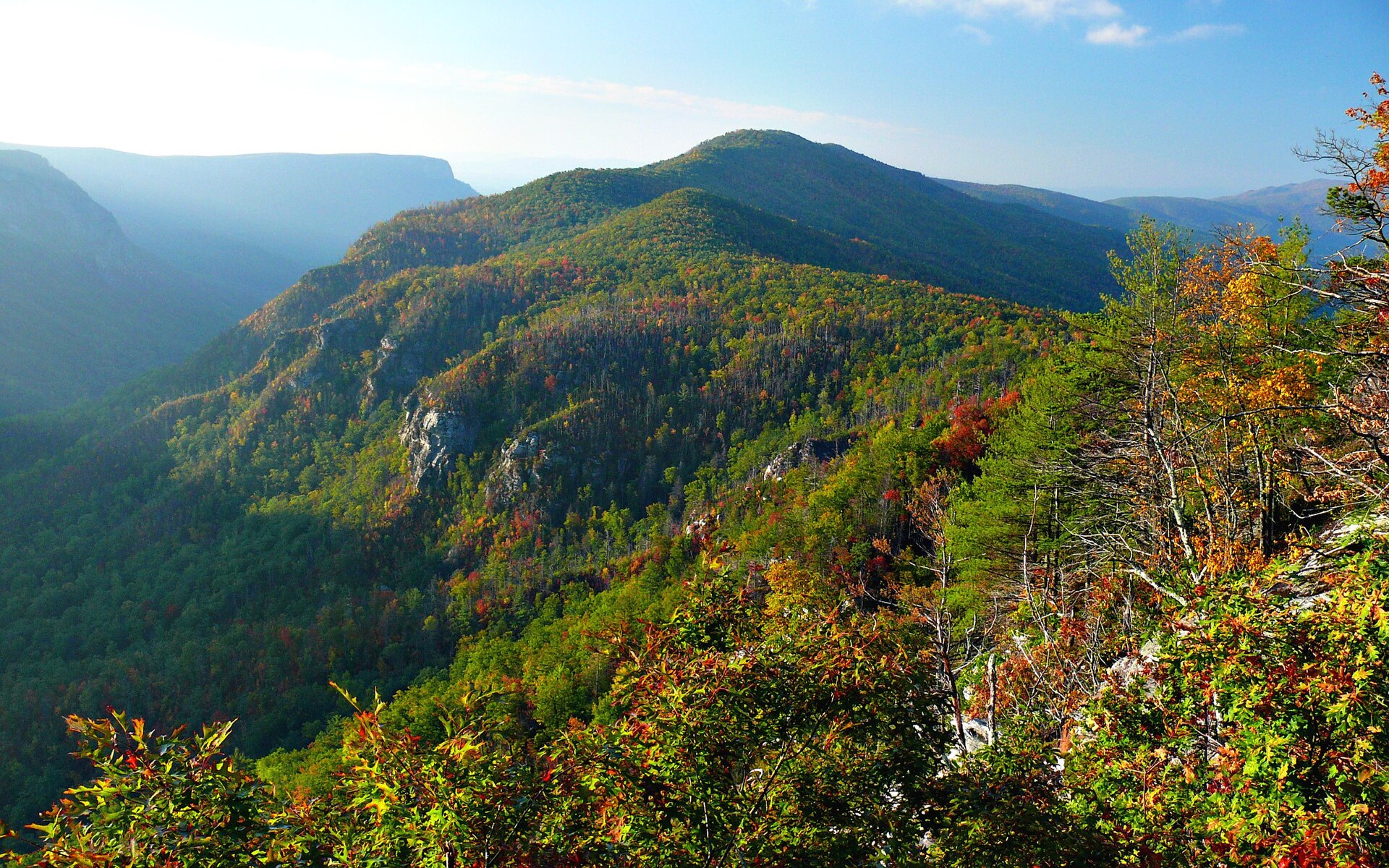
- Hawksbill Mountain — East side of the gorge
Hawksbill Mountain is a short climb on the east side that rewards walkers with views in every direction over the surrounding ridges. The summit is bare rock, so weather matters: wind and cloud can erase the view, and wet stone is slippery. Pick a clear day and carry a warm layer for the top.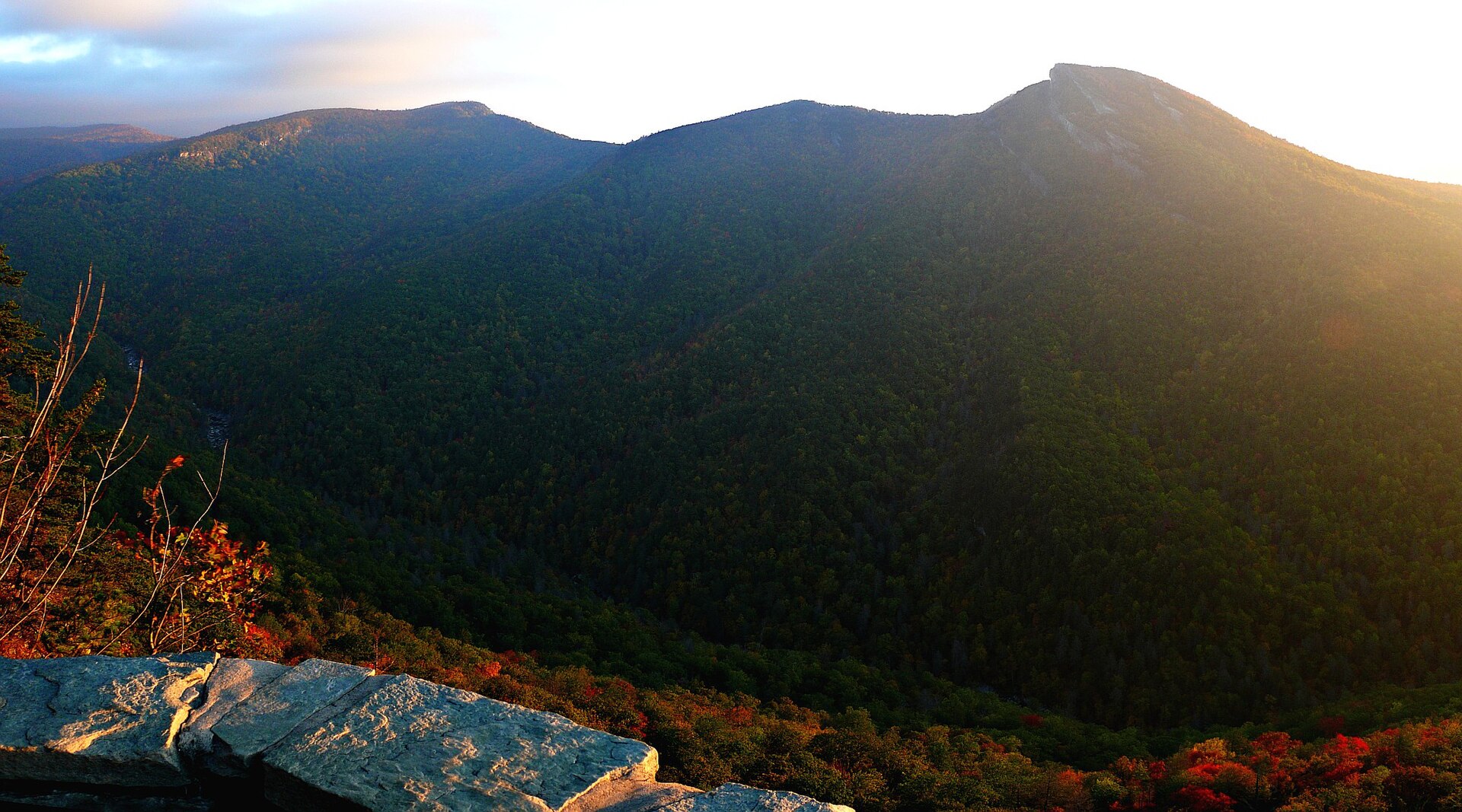
- Table Rock — East side of the gorge
Table Rock is the broad rock mass on the eastern rim, easy to recognise from the other viewpoints across the gorge. Its trails are more demanding than the roadside overlooks, and the summit looks west over the river and ridges. Climbers use the cliffs, so ropes and chalk are a common sight on busy days.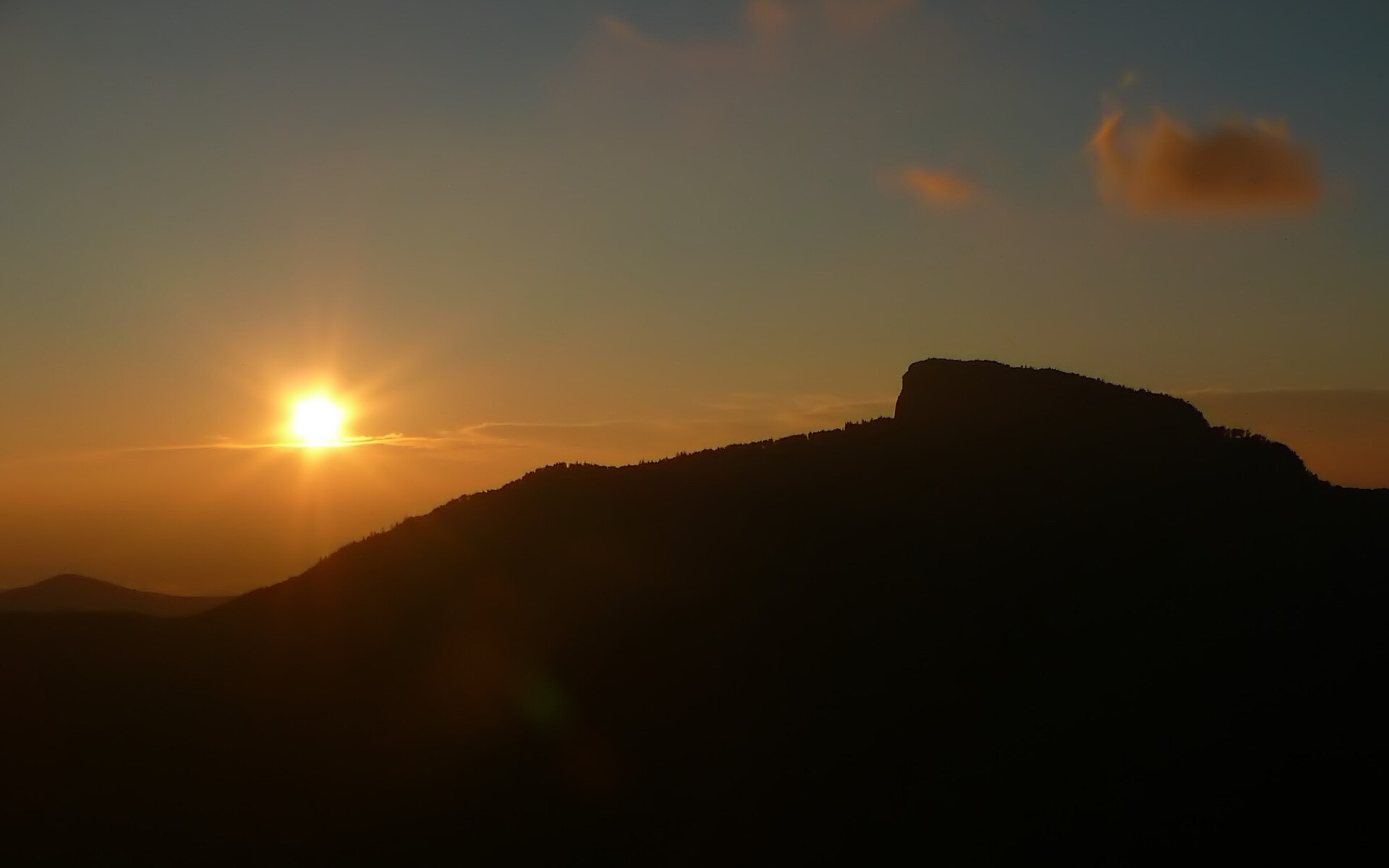
- Shortoff Mountain — Southern end of the gorge, west side
Shortoff Mountain anchors the southern part of the wilderness, with rocky cliffs and a trailhead that has restrooms. Paths here are strenuous and exposed in places, with drops close to the edge. It suits experienced walkers who want long views and fewer people than the falls draw. - Daffodil Flats — Within the wilderness, reached on foot
Daffodil Flats marks where a homestead once stood. Only ruins remain, and daffodils now carpet the clearing. The first week of March is the best moment to catch them in flower, well before the summer foliage closes in. It is a quiet, human-scale stop in a place otherwise defined by cliffs and forest.
Culture
Linville Gorge has a culture shaped by restraint. It is a federal wilderness, so the unwritten code is to leave little trace: there is no road on the valley floor, few signs, and no facilities across most of the gorge. People come to walk, climb, fish with a licence, swim cautiously and camp, and most arrive prepared to look after themselves. Regular visitors share trail knowledge informally, and map apps list the permanent water sources and campsites. The older layer is Cherokee. Ee-see-oh, river of many cliffs, is the name that predates every English one, and the settlers' name for the river commemorates two explorers killed in the gorge. The place also matters to the history of conservation, since protection was paid for and in place before national wilderness law caught up with the idea. That history explains why visitors are asked to carry out their rubbish, use existing fire rings and camp where others have camped before. Wildlife is part of the deal: bears, copperheads and rattlesnakes are residents rather than attractions, and the safest approach is to give them distance and hang food away from the tent. Campers who want privacy do better choosing a spot a little off the trail. Carry out every scrap of rubbish, including food waste, and keep fires to the existing fire rings or use a camping stove.
What to wear
Linville Gorge sits in Cherokee homeland, where traditional dress includes ribbon shirts, ribbon skirts and tear dresses in cotton, along with finger-woven sashes made from wool or cotton yarn. These are worn mainly at ceremonies, dances and community gatherings rather than daily. Settler families in the Appalachian foothills wore homespun wool, linen and cotton, later replaced by denim and factory-made work clothes. What people wear now is plain outdoor kit: hiking boots or trail shoes, quick-drying trousers or shorts, fleece layers, rain shells and caps. Climbers add harnesses and chalk bags, and anglers wear waders. Nobody dresses up, and there are no religious sites or modesty rules to plan around. A visitor should dress for the terrain and the weather. Boots with a firm grip matter most, because the trails are steep, rocky and slippery when wet. Long trousers help against brush and ticks and give some comfort around snakes. Bring layers, since ridgetops are windier and cooler than the river, plus a waterproof jacket, a sun hat and a pair of socks to spare. Bright clothing is useful if the weather turns. Leave anything delicate at home, as the paths can be muddy, narrow and very steep in places.
What to eat
- Wild blackberries — Sunny trail edges and clearings in summer
Wild blackberries ripen along sunny trail edges and clearings in the gorge. They are a seasonal bonus rather than a meal, tart and sweet when ripe. Pick only what is clearly safe to eat, and leave plenty behind for wildlife. - Partridge berries — Forest floors along the walking trails
Partridge berries are small red berries on a creeping forest-floor plant. They are edible but fairly flavourless, so treat them as a curiosity rather than a trail snack. They are best admired, and picked sparingly if at all. - Packed trail lunch — Linville Falls picnic area or any viewpoint
Almost everything eaten in the gorge is carried in, so a packed lunch is the real local meal. Think bread, cheese, fruit, nuts and flasks of tea or coffee, wrapped so nothing needs discarding. It tastes best at a rocky viewpoint. - One-pot camp stove meals — Backcountry campsites, mostly on the west side of the river
Backcountry campers cook on a stove or over an existing fire ring: rice, noodles, lentils or soup prepared in one pan. Food is best stored away from the tent because of the bears. Everything must be packed out again. - Trout from the river — The Linville River and nearby streams
Fishing is allowed with a licence, and trout live in the Linville River. Check current local rules before you cast, and treat any catch as a rare treat rather than a plan. Many visitors simply watch the water.
Plan it
Best time. April–May for fresh green growth and comfortable walking, and October for autumn colour; early March brings the daffodils at Daffodil Flats. Summer can be hot and humid in the gorge, and winter can be cold and icy on exposed rock, so check the forecast before committing to a steep route.
How long. 1–2
Getting there. Drive. Fly into a major regional airport such as Charlotte, then continue by car on mountain roads to the Blue Ridge Parkway. A paved road leads to Linville Falls, and dirt roads suitable for an ordinary vehicle reach most other trailheads.
Budget. low
Tips
- Arrive early at Linville Falls and Wiseman's View, as weekends and clear mornings draw crowds
- Carry all food and water supplies; there is no drinking water in the gorge, so treat any river or stream water before drinking
- Download an offline map such as Avenza Maps before you lose signal, as it marks water sources and campsites
- Plan for the climb out: the river lies far below the ridge, so leave time and energy for the return
- Check the official site for permit rules and current conditions: http://www.fs.usda.gov/recarea/nfsnc/recreation/recarea/?recid=48974
Etiquette
- Pack out all rubbish and use existing fire rings or a camping stove
- Give bears and snakes plenty of distance, and hang food away from your tent
- Camp where others have camped, a little off the trail
Nearby
Sources
- Wikidata Q6555117 (CC0)
- Wikipedia: Linville Gorge Wilderness (rev 1364113811) (CC BY-SA 4.0)
- Wikivoyage: Linville Gorge (rev 5239848) (CC BY-SA 4.0)
- Photo 01-linvillegorge.jpg (Public domain)
- Photo 02-linville-gorge-27527-3.jpg (Ken Thomas) (Public domain)
- Photo 03-usa-edcp-relief-location-map.png (Uwe Dedering) (CC BY 3.0)
- Photo 04-table-rock-pano-27527.jpg (Ken Thomas) (Public domain)
- Photo 05-table-rock-27527.jpg (Ken Thomas) (Public domain)
- Photo 06-babel-tower-at-linville-gorge.jpg (Badgettrg) (CC BY-SA 2.5)
- Photo 07-linville-gorge-27527-2.jpg (Ken Thomas) (Public domain)
- Photo 08-linville-falls-27527.jpg (Ken Thomas) (Public domain)


Wildlife
- American black bear (animal)
The American black bear is a medium-sized, forest-loving bear, the smallest in North America, and it will eat almost anything the seasons offer. In Linville Gorge it shares the thick woods of hardwood and pine with foxes, owls and hawks. Watch from a generous distance, keep your voice low and your movements slow, and think about walking with a local guide who knows the paths. Never offer food. Bears that learn to link people with easy meals wander into settlements, and that rarely ends well for the bear.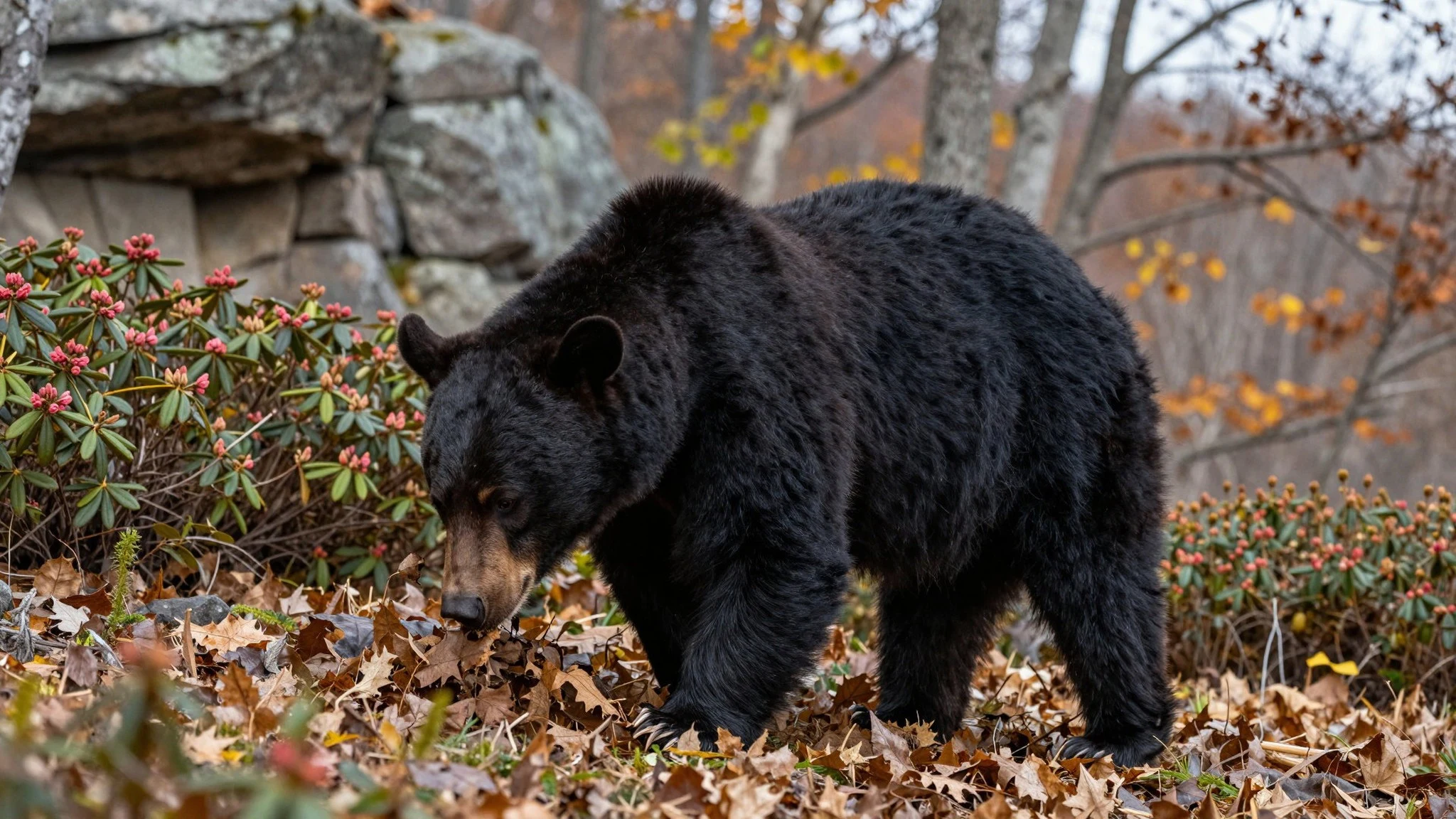
- Wild turkey (animal)
Picture the farmyard turkey's wild forebear: a big, sturdy bird of the uplands, native to North America and the heaviest of its whole bird group. Wild turkeys live in Linville Gorge's wooded slopes, among hardwood, pine and shrubs. Stay at a respectful distance, stand still and keep quiet, and let it go about its business. A guide who knows the gorge will improve your chances. Please never feed it; wild food keeps wild birds wild.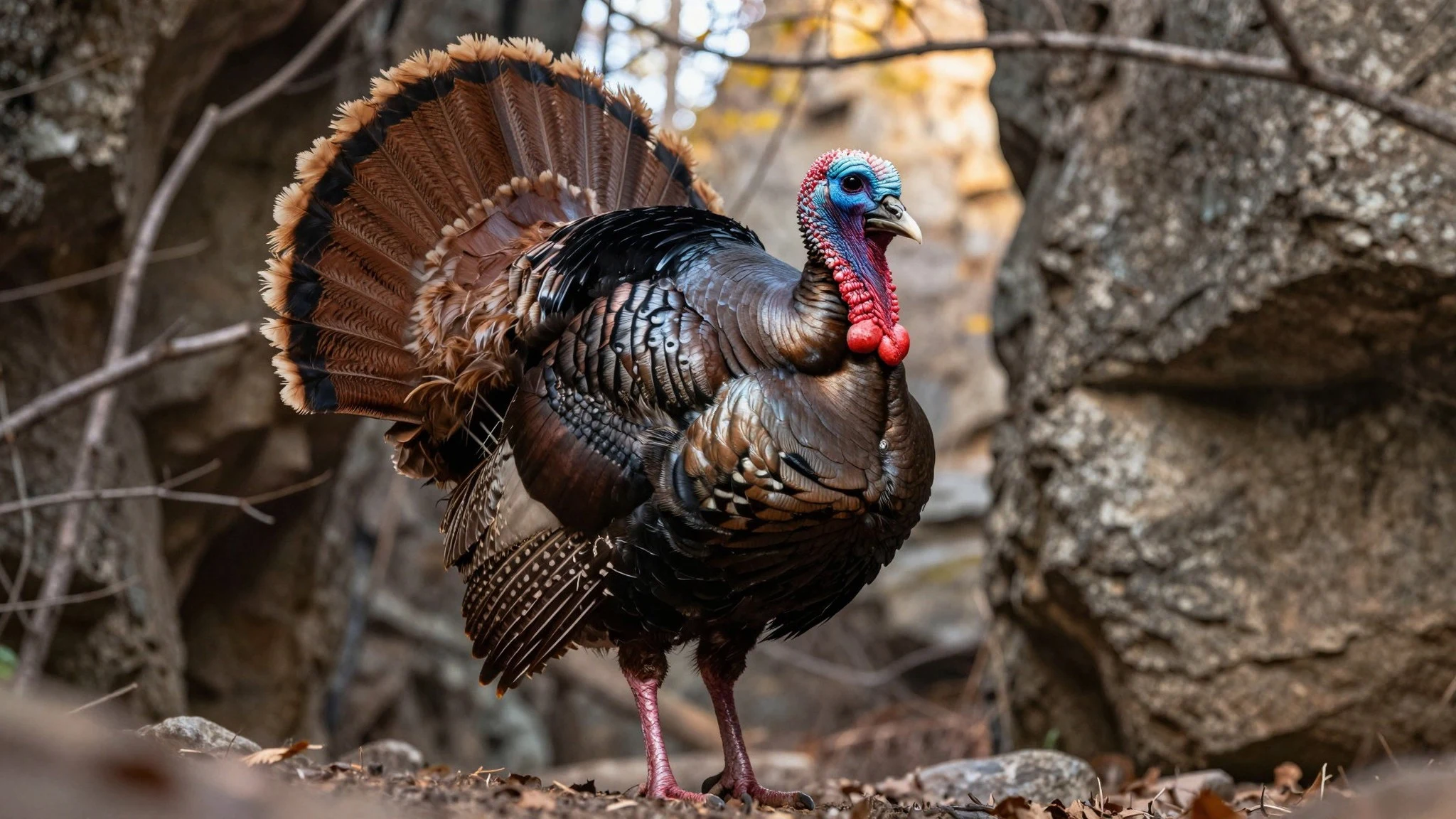
- Wild turkey (bird)
Picture the farmyard turkey's wild forebear: a big, sturdy bird of the uplands, native to North America and the heaviest of its whole bird group. Wild turkeys live in Linville Gorge's wooded slopes, among hardwood, pine and shrubs. Stay at a respectful distance, stand still and keep quiet, and let it go about its business. A guide who knows the gorge will improve your chances. Please never feed it; wild food keeps wild birds wild. - Ruffed grouse (bird)
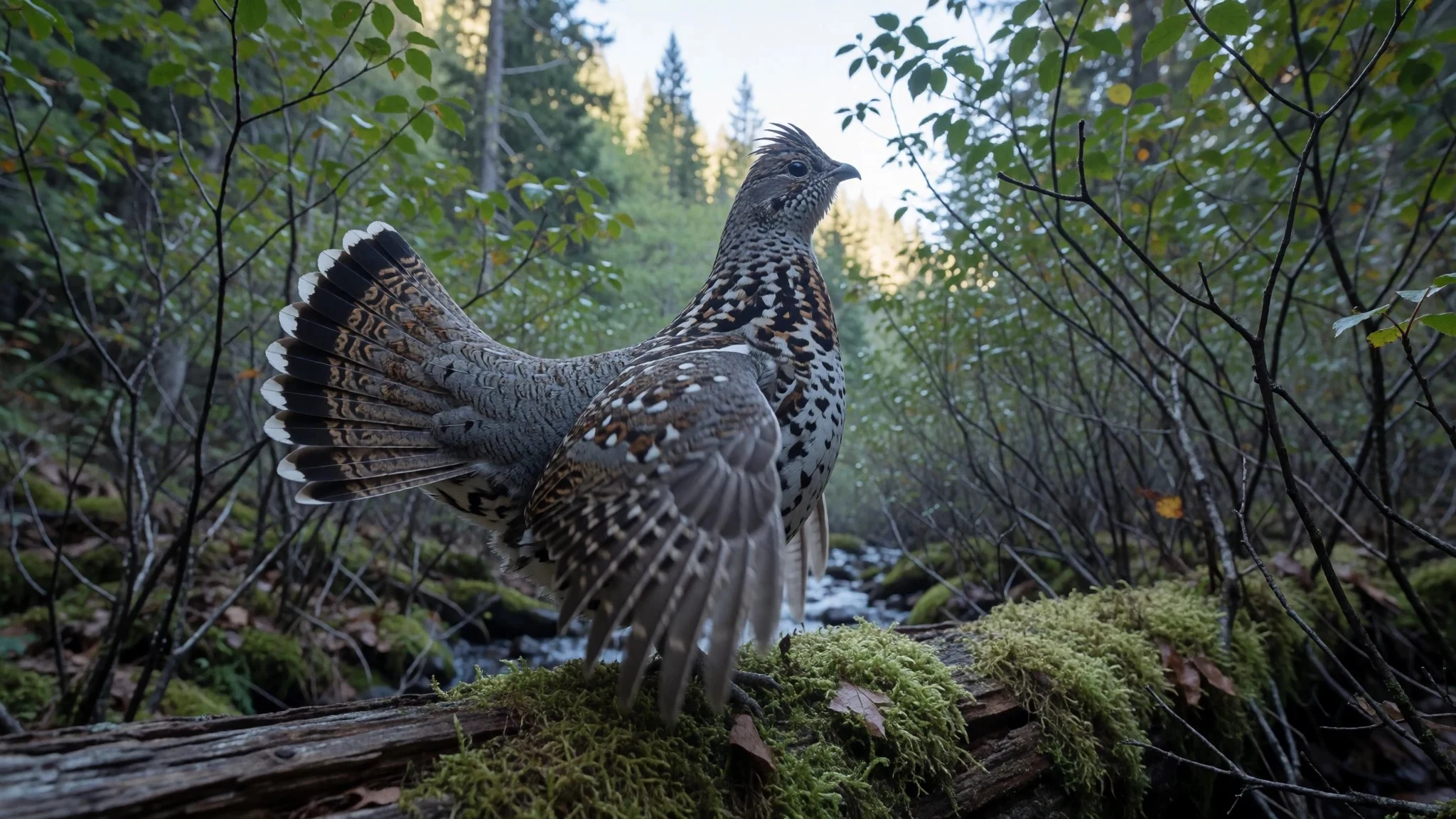
The ruffed grouse is a plump, medium-sized woodland bird that stays in its home forest all year rather than migrating, and people sometimes wrongly call it a partridge. Grouse live in Linville Gorge's woods, so look among the trees rather than in open ground. Keep your distance, walk softly and pause often, so you do not disturb it. A local guide can help you find it. Never feed it.