Lenin Peak
Lenin Peak, Kyrgyzstan
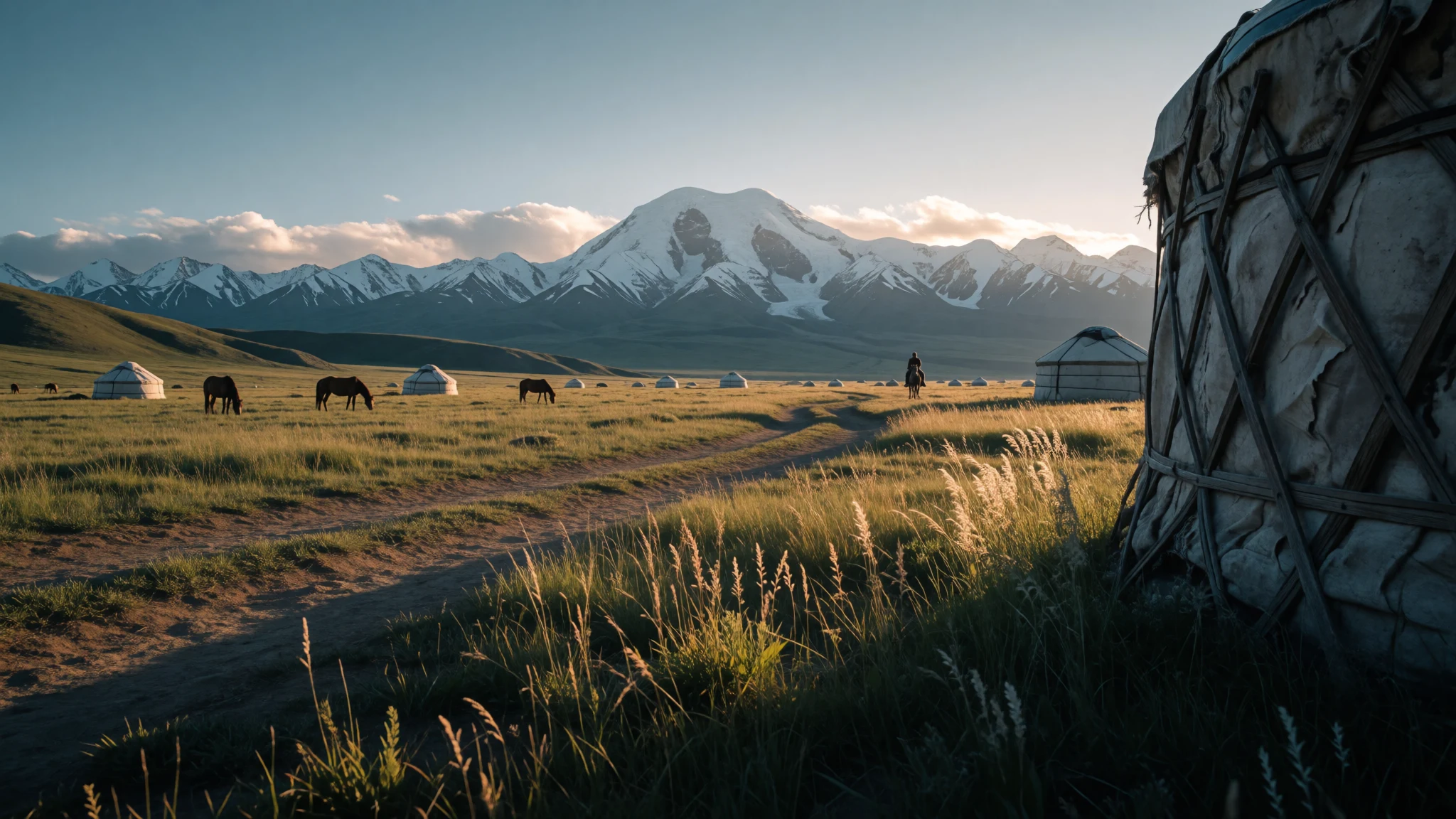
A huge, gentle-looking Pamir giant above a green nomad valley, reachable by walkers and climbers alike, with yurt stays, horses and enormous skies.
The place
Lenin Peak rises on the border between Kyrgyzstan and Tajikistan, in the Trans-Alay Range at the northern edge of the Pamirs. Its summit stands at 7134 metres, and the mountain carries two names: Lenin Peak from the Soviet era, and Ibn Sina, or Avicenna, Peak on the Tajik side. Most visitors use the Kyrgyz approach, which starts from the village of Sary-Mogol in the Alay valley, a wide high pasture where yurts dot the grass and the snowy wall of the range fills the southern horizon. From the valley the peak does not look like a spike. It is a broad, heavily glaciated dome, and that shape explains its reputation: climbing writers usually rank it among the more forgiving mountains of its height, which is why it draws so many expeditions each summer. Forgiving is not the same as easy. Altitude, cold, storms and long days on snow decide most outcomes. Many visitors never go above base camp. They come for the valley walks, the horse trails, a night at a yurt camp beside Tulpar Kol lake, and the view. Osh, the southern Kyrgyz city, is the usual gateway, and the road south crosses high passes and open grassland before the range appears. The setting is remote. Services are simple, mobile signal comes and goes, and the weather turns quickly. Mountaineers normally travel with agencies that arrange permits, food and transport to camp. Walkers can keep things much lighter: the valley rewards slow days, warm layers and a willingness to sit with tea while cloud lifts off the summit.
Its story
Lenin Peak carries the marks of two eras in its name alone. For decades it was a showpiece of Soviet mountaineering, named after the revolution's leader and treated as a great prize of the Pamirs. Climbers believed it was the highest summit in the range until 1933, when a rival peak, then called Stalin Peak and now Ismoil Somoni Peak in Tajikistan, was climbed and found to be clearly taller. Lenin Peak settled into a different role: the accessible giant, where large international climbing gatherings and later commercial expeditions could follow a well-trodden route. The land around it has older stories. Kyrgyz herders have grazed the Alay valley for generations, moving livestock up to summer pasture and back down, and the Kyrgyz people themselves came to this region from the north, in a long migration tied to the Mongol era. Russia absorbed the area in the nineteenth century, the Soviet Union ran it for most of the twentieth, and Kyrgyzstan became independent in 1991. Today the mountain keeps both names. Lenin remains the one on most maps and in most climbing literature, while Ibn Sina honours the medieval scholar known in Europe as Avicenna. A memorial near base camp honours climbers lost in the range, a reminder that the gentle reputation is only relative. The mountain's history is partly one of rivalry, partly one of borders redrawn, and partly just of grass, snow and weather that have changed very little.
What to see
- Sary-Mogol and the Alay valley — Alay valley, Osh region
Sary-Mogol is the small village where most trips begin, and the northern view of Lenin Peak from the valley floor is the classic one. The pasture is broad and treeless, with herds, yurts and a long line of white peaks. Clear mornings give the best light; afternoon cloud often hides the summit.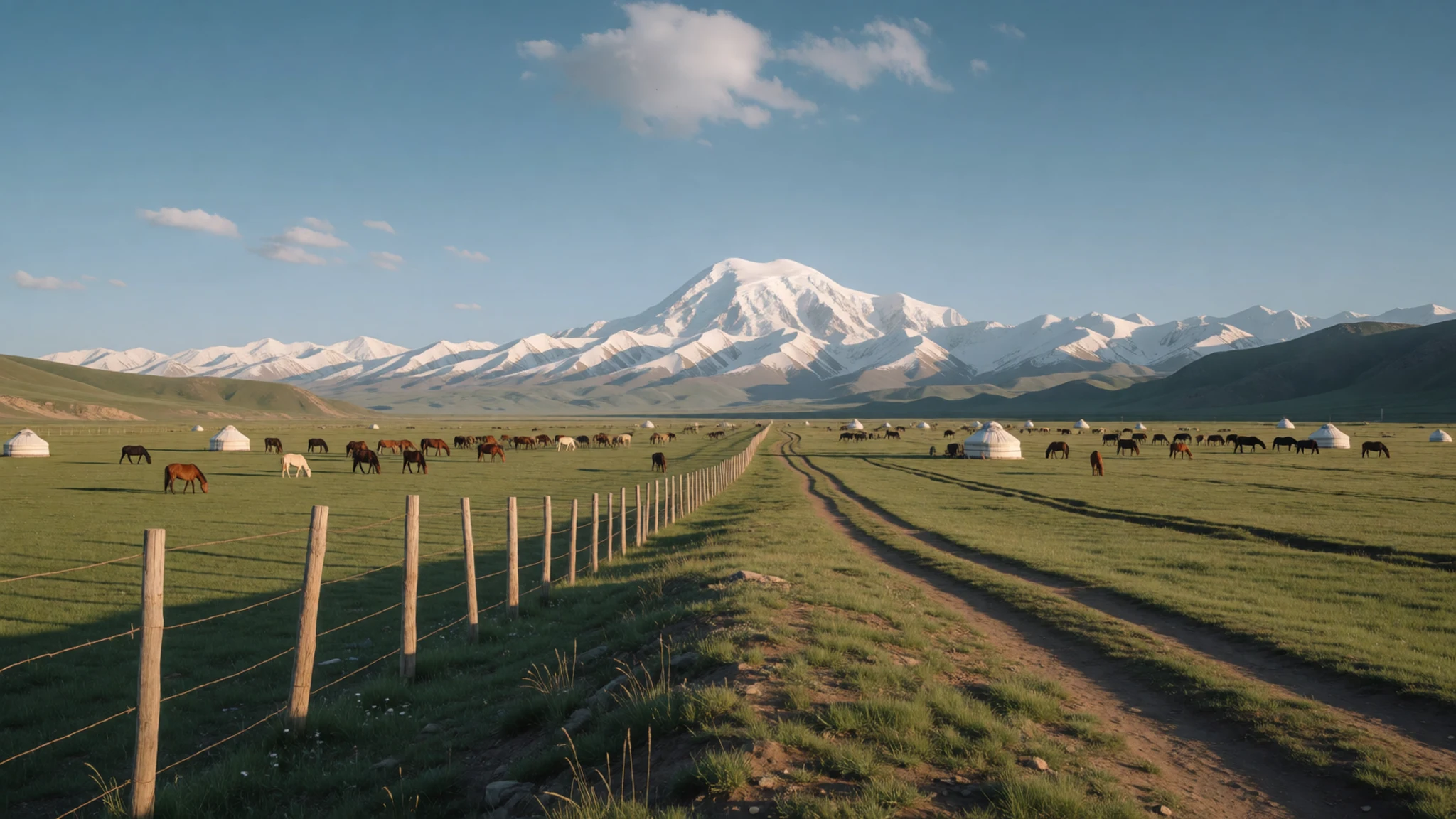
- Lenin Peak base camp — Foot of Lenin Peak, Kyrgyz side
Base camp is a seasonal tent-and-yurt settlement at the foot of the mountain, busy with climbers sorting gear, resting and watching the weather. A memorial nearby honours those who died on the slopes. Even non-climbers can walk up for the atmosphere, but go slowly, because altitude is already serious here.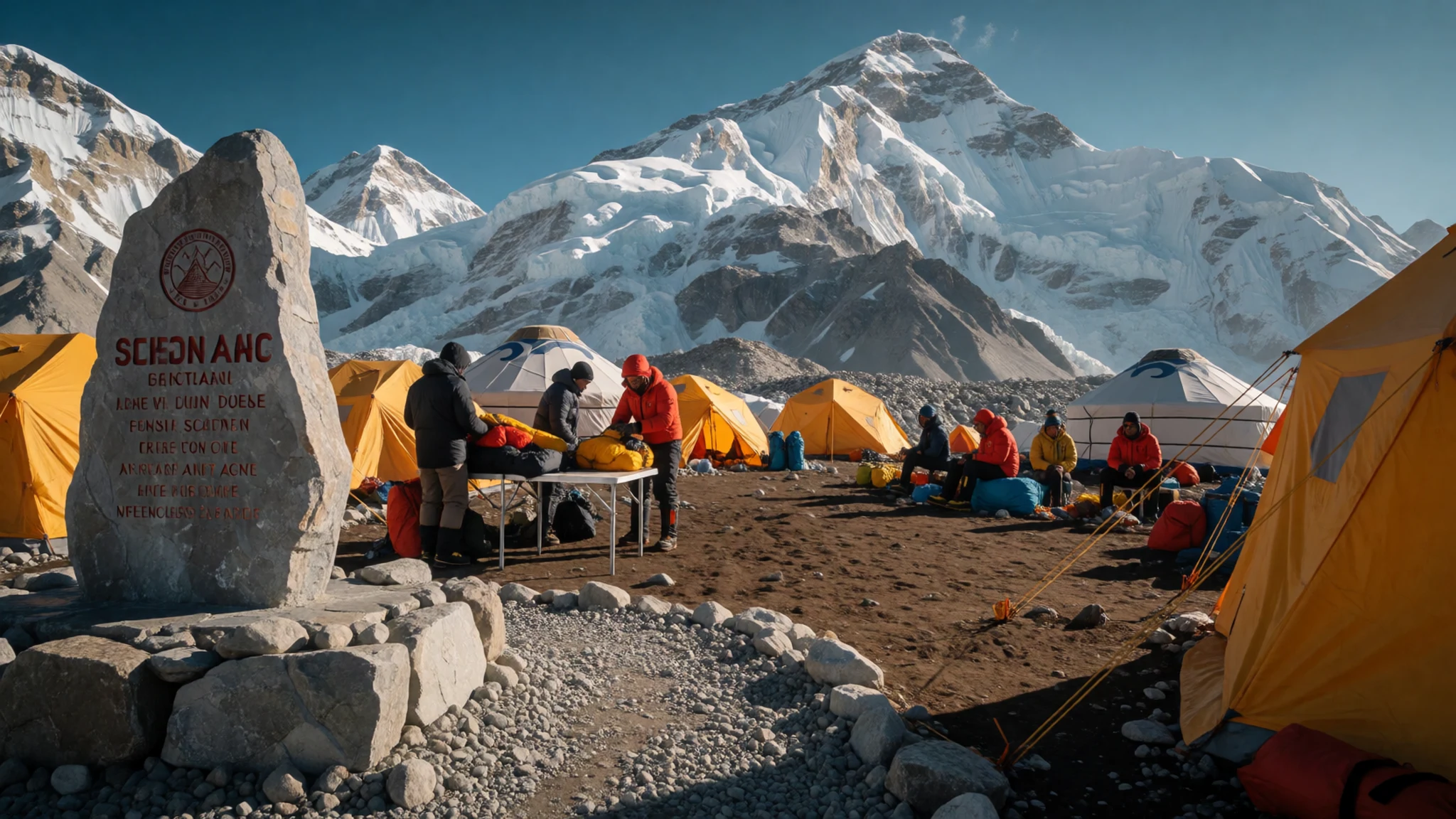
- Tulpar Kol lake and its yurt camp — Near Lenin Peak base camp
Tulpar Kol is a small lake a few kilometres from base camp, with a yurt camp on its shore. It is a gentler place to sleep than the main camp, with felt walls, a stove, simple meals and reflections of the range on calm mornings. Good for acclimatisation walks.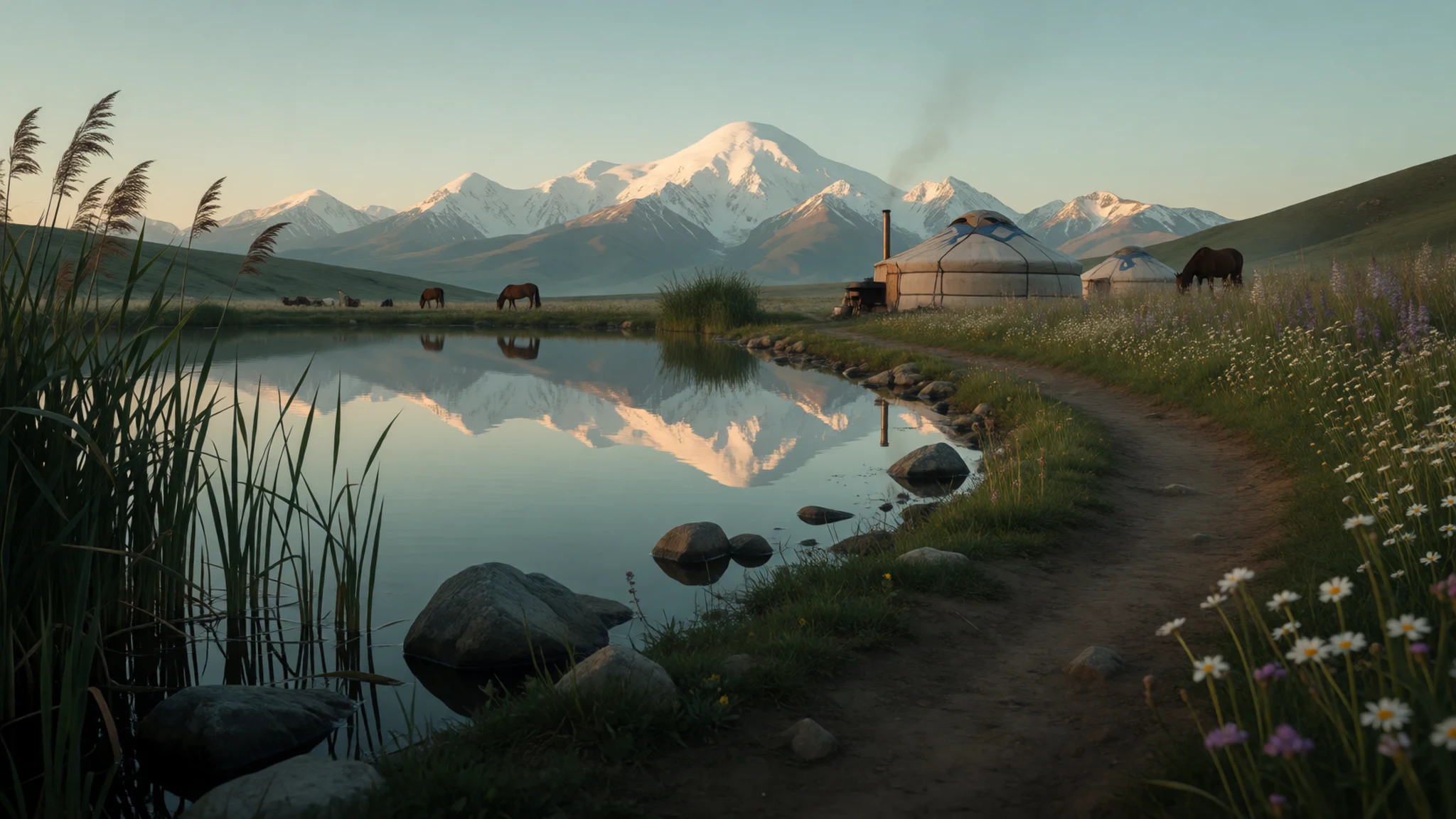
- Climbers' yurt camps — Alay valley and base camp area
Several camps in the valley house mountaineers in large yurts, with shared tables, tea and the usual gear piled by the door. Staying in one is the easiest way to meet expedition members, hear route reports and see how a high-altitude trip is organised before and after the climb.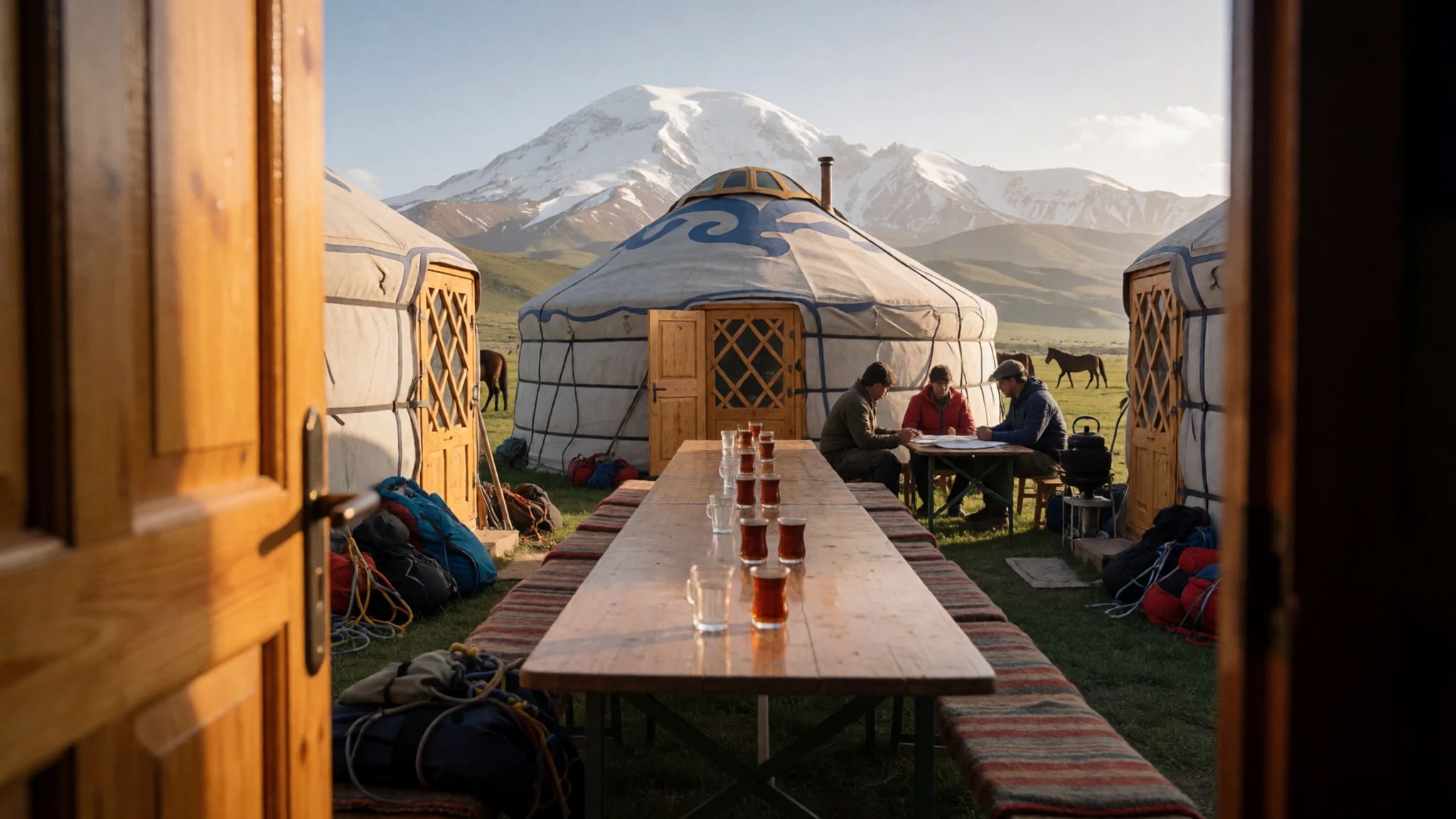
- Osh Bazaar and Sulaiman-Too — Osh city
Osh, the southern gateway city, is worth a day on the way in or out. Its big bazaar sells fruit, nuts, bread and spices, and Sulaiman-Too, the rocky hill that is Kyrgyzstan's only World Heritage Site, gives views over the rooftops. Stock up on snacks here before heading to the mountains.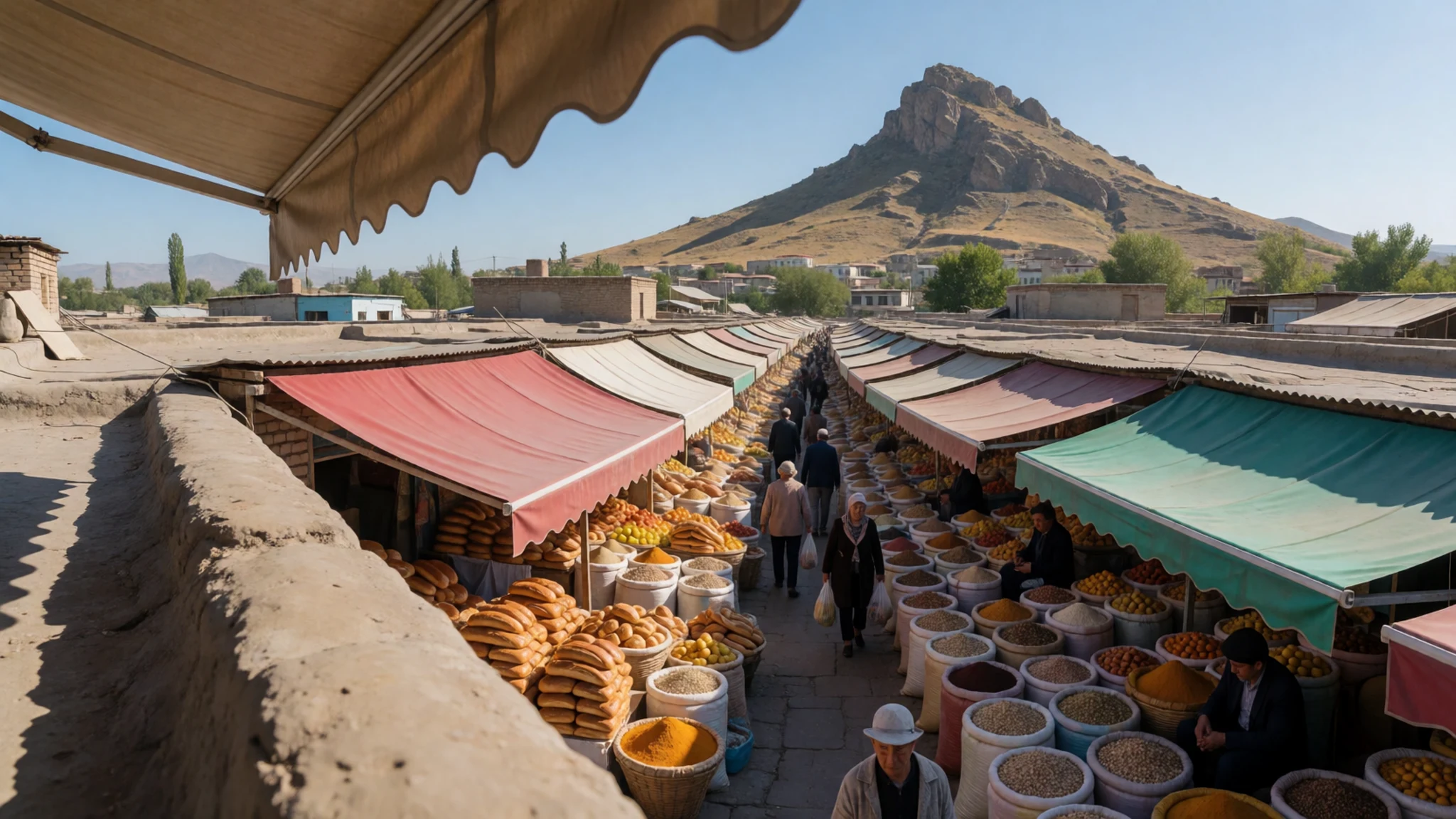
Culture
Lenin Peak sits in southern Kyrgyzstan, where nomadic herding traditions still shape daily life. In summer, families move livestock to high pastures and live in yurts, and the Alay valley is one of the places where that rhythm is easy to see. Kyrgyzstan is nominally Muslim, and everyday life is relaxed compared with many neighbours, but the south is noticeably more conservative than the capital, Bishkek. Hospitality matters a great deal. Being offered tea, bread, sour milk or kymys, the fermented mare's milk, is a sign of welcome, and a guest is expected to sit a while and talk. Meals are shared from common dishes, and age and status count when seats are given. The mountaineering world adds its own layer: base camps bring together climbers from many countries, with shared stoves, language swaps and a strong habit of helping neighbours in trouble. Soviet-era names, Russian as a common second language and Kyrgyz pride in the landscape all sit side by side. Evenings in towns can involve heavy drinking, so a little caution helps. In the mountains, the pace is quieter, and weather, health and altitude decide most plans. Visitors who show interest in local life, learn a few Kyrgyz or Russian words and take time over tea are usually received warmly. Take your shoes off before stepping into a yurt, and accept at least a sip of whatever your host offers.
What to wear
Around Lenin Peak, traditional Kyrgyz dress is built on felt and wool, materials suited to cold, wind and a life with animals. Men's best-known piece is the ak-kalpak, a tall white felt hat with black decoration, worn at celebrations, festivals and on formal occasions. Older men may still wear a long quilted coat, the chapan, and women's festive dress includes embroidered velvet and the elechek, a large white headwrap traditionally worn by married women. Felt also shows up inside yurts as patterned shyrdak rugs. Day to day, people now wear practical modern clothes: jeans, fleeces, rubber boots, headscarves for some women, and sports tops for young people. In Bishkek the look is mostly Western; in the south and in villages, it is more modest. Visitors should dress for mountains first. Bring layers: a warm base layer, fleece, windproof and waterproof shell, and a down jacket for evenings, because nights stay cold even in summer. Sun protection matters at altitude, so pack a hat, sunglasses and high-factor cream. Sturdy, broken-in boots suit the stony tracks. In villages and the city of Osh, women are better off with covered shoulders and knees, and men with long trousers; shorts are fine on the trail but less comfortable among local families. A light scarf is useful for dust, sun and modest dress.
What to eat
- Besh barmak — Family yurts, guesthouses and eateries in Osh
The national dish: boiled meat served over broad noodles, with onion and a rich broth. Its name means five fingers, because it was traditionally eaten by hand. It is a celebration meal, shared from a large dish, and appears when guests are honoured.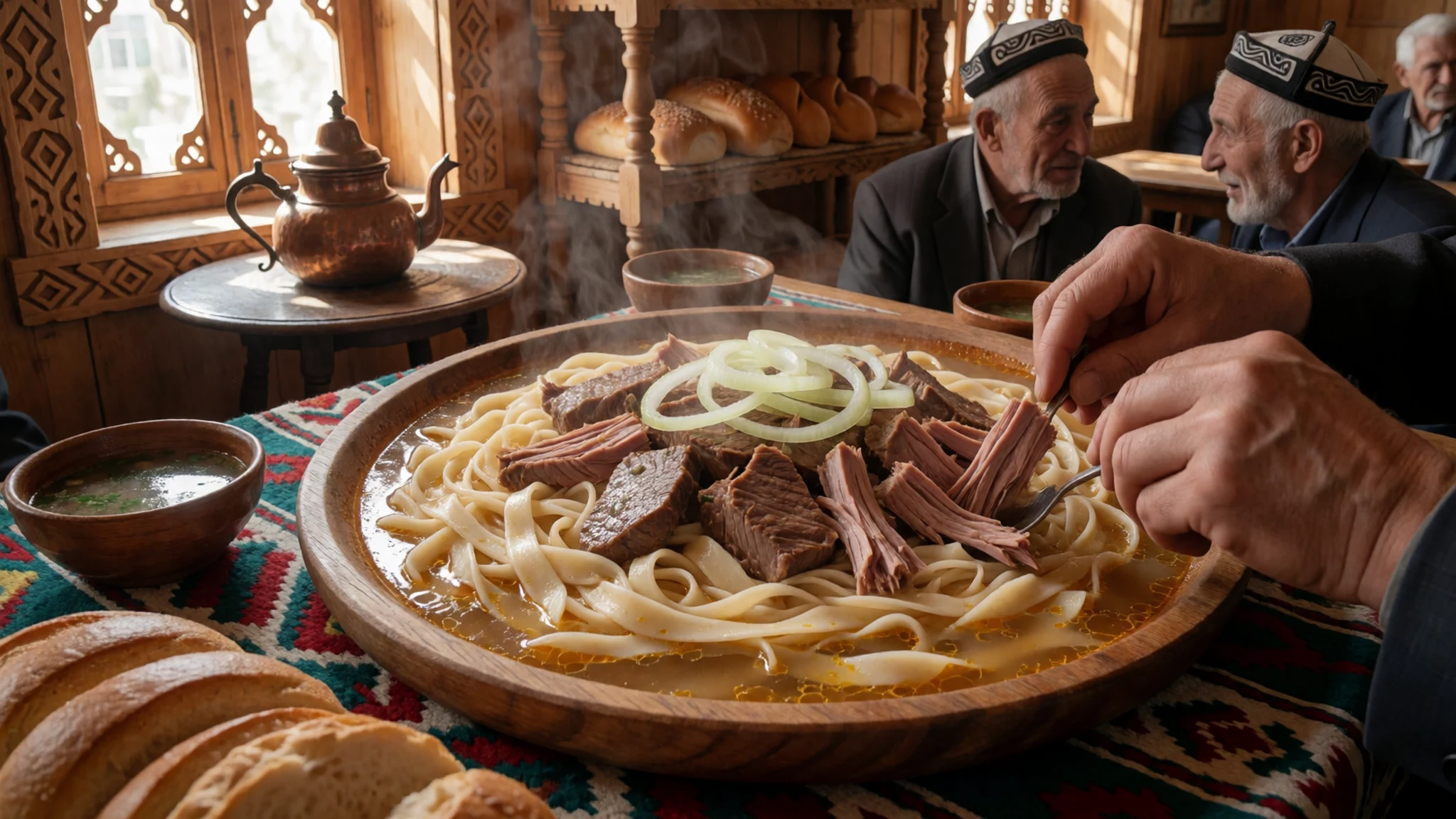
- Lagman — Roadside eateries and the food stalls around Osh Bazaar
A hand-pulled noodle dish in a savoury broth or sauce with meat and vegetables. It is warming after a cold day on the trail and easy to find, with plenty of local variation in spice and thickness.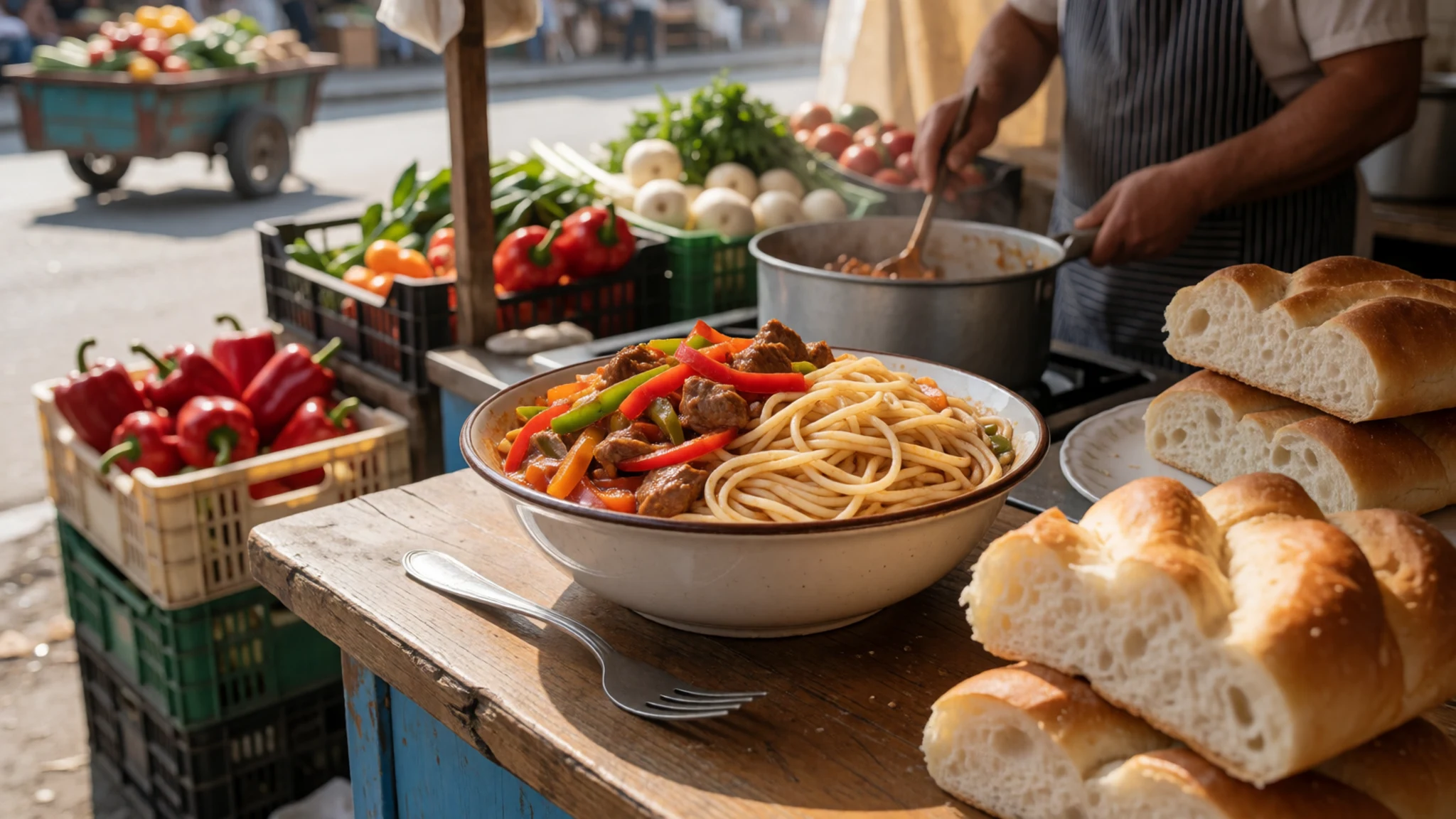
- Plov — Osh canteens and guesthouse meals in the Alay valley
Rice cooked with carrot, onion and meat in a large pan, rich and filling. In Osh it is a point of regional pride, usually served at lunch or at gatherings. Expect a generous plate, often with a salad of sliced tomato and onion. - Kymys — Yurt camps and herders' summer pastures
Fermented mare's milk, lightly sour and slightly fizzy, a traditional summer drink of the herding families. It is an acquired taste, so a small bowl is enough, and refusing politely is also fine. - Borsok — Home tables, tea stops and Osh Bazaar bakery stalls
Small pieces of fried dough, golden and crisp, served with tea, jam, cream or honey. They are a staple of hospitality and a good snack to carry on a walk, as they keep well and give quick energy.
Plan it
Best time. July and August are the main season: the valley is green, the road is open and base camp is staffed, though nights stay cold and afternoon storms are common. Outside summer, snow and cold make the high ground much harder.
How long. 3–5 for the valley and base camp; a summit attempt needs several weeks
Getting there. Fly to Osh Airport (OSS) or Manas Airport in Bishkek (BSZ), then go by road to Sary-Mogol and on to base camp; most visitors arrange this transfer through an agency. Check the Kyrgyz eVisa system for entry rules.
Budget. mid
Tips
- Book a local agency early, especially for permits and transfers
- Allow time to acclimatise before going higher
- Carry cash, as cards rarely work in the valley
- Treat or filter drinking water, and wash fresh produce
- Watch for pickpockets in Osh and Bishkek, particularly at night
Etiquette
- Remove shoes before entering a yurt
- Dress modestly in villages and in the south
- Accept tea or bread when offered, even if only a little
Nearby
Sources
- Wikidata Q838587 (CC0)
- Wikipedia: Lenin Peak (rev 1384373022) (CC BY-SA 4.0)
- Wikivoyage: Kyrgyzstan (rev 5420229) (CC BY-SA 4.0)
- Nihongarden, Lenin peak from Sary-mogol, via Wikimedia Commons (CC BY 3.0)
- Jaan Künnap, Lenini mäetipp, via Wikimedia Commons (CC BY-SA 4.0)
- One half 3544, Memorial near Lenin peak BC, via Wikimedia Commons (CC0 1.0)
- Kondephy, Camp next to Tulpar Kol Lake, via Wikimedia Commons (CC BY-SA 4.0)
- Jaan Künnap, Helikopter Mi-8 Lenin Peak Base Camp, via Wikimedia Commons (CC BY-SA 4.0)
- Jaan Künnap, Alpinistid jurtas (04 VI), via Wikimedia Commons (CC BY-SA 4.0)
- Jaan Künnap, Alpinistid jurtas (05 I), via Wikimedia Commons (CC BY-SA 4.0)
- Jaan Künnap, Alpinistid jurtas (05 II), via Wikimedia Commons (CC BY-SA 4.0)


